Kyushu University Institutional Repository
短寿命化学種の赤外ダイオードレーザー分光研究
住吉, 吉英
九州大学理学研究科化学専攻
Chapter 3.
Infrared Diode Laser Spectroscopy of Transient
Molecules Generated by UV Laser Photolysis
INFRARED DIODE LASER SPECTROSCOPY OF
THE
VsBAND OF H2CCN.
Abstract
Infrared diode laser spectrum for the V 5 (CH2 wagging) band of the cyanomethyl radical
CX
2BI) was observed by the time resolved dual-gated integration method. The radical was generated by 193 nm photolysis of chloroacetonitrile (1 00 mTorr) diluted with Ar (800 mTorr). Spin-rotation splittings were resolved in rR2- and rR3-branch lines.Asymmetry splittings were observed in rR2-branch transitions with higher N quantum numbers. The spectroscopic constants of the Vs state were determined by least-squares analysis as follows; Vo = 663. 7940(3) em -1, A = 272662.0(25) MHz, (B + C)/2 =
10053.940(50) MHz, (B-C) = 344.869(86) MHz, t1N = 4.073(58) kHz, i1NK = 0.3758(49) MHz, L1K = -9.05(14) MHz and the spin-rotation interaction constant Eaa = -642.3(57) MHz. The molecular constants of the vibrational ground state were fixed to the values obtained by microwave spectroscopy. The figures in the parentheses are uncertainties corresponding to one standard deviation to be attached to the last digit. The large vibrational changes of the rotational constant A and the centrifugal distortion constant i1K are caused by a-type Coriolis coupling interaction with the CH2 rocking mode.
Fundamental short-lived hydrocarbon molecules such as CH2 and CH3 play important roles in many organic reactions. The cyanomethyl radical (CH2CN) which is a cyano-derivative of CH3 is also an attractive molecule for chemists because of its reactivity and structure. Cyanomethyl has nine vibrational modes (3N-6, where N is the number of atoms in the molecule) and they were listed in Table 1.
Figure 1 illustrates the structure of the cyanomethyl radical. The ground electronic state of the cyanomethyl radical belongs to B1 species of C2v point group and has doublet electronic spin multiplicity.
A number of electron spin resonance (ESR) studies of the cyanomethyl radical at 77K produced by y-radiolysis [1 - 3] were performed and hyperfine coupling constants of
hydrogen and nitrogen were reported.
Several ab initio calculations have been reported about various properties such as reactivity and structure of the cyanomethyl radical [ 4 - 8]. For example the molecular structure was calculated as follows; r(CN) = 1.159A, r(CC) = 1.392A, r(CH) = 1.072A, a(HCH) = 120.4 °, and a(HCC) = 119.8 ° [8]. The harmonic vibrational frequencies of the nine vibrational modes were also calculated [8] as listed in Table 1.
In 1987, Moran et al. performed photoelectron spectroscopy [8] of the H2CCN- ion.
In this paper the band origin of the CH2 wagging mode of the cyanomethyl radical (produced by electron detachment from the H2CCN- ion) was determined as 680 cm-1 with a large uncertainty of 160 cm-1.
No high resolution IR data on the cyanomethyl radical in the gas phase have been reported. In 1979, Jacox reported low resolution matrix IR spectroscopy of molecules, which were generated by discharge or photolysis of acetonitrile [12]. A medium intensity absorption line at 666 cm-1 was tentatively assigned to the H2CC-out-of-plane deformation mode. However, the lack of isotopic data prevented unambiguous assignment of this absorption line to the cyanomethyl radical.
In this study high resolution IR spectroscopy of the cyanomethyl radical was first performed by diode laser spectroscopy. The cyanomethyl radical was generated by the photolysis of chloroacetnitrile. Rovibrational transitions of the Vs band (H2C-wagging mode) were observed and the band origin and molecular constants in the Vs state were accurately determined.
In this experiment an absorption cell for the detection of photolysis product was combined with the diode laser spectrometer. Figure 2 illustrates the schema of the cell. A Pyrex tube of about 120 mm diameter and 2000 mm length was used. On the flange at one end, two KBr windows (22¢) were placed for the inlet and outlet of the infrared diode laser beam. The diode laser beam passed through a White-type multi-reflection path formed by three Al coated mirrors (R = 2000 ) which was mounted in the cell. After passing through the cell the diode laser beam was focused by a ZnSe lens into an HgCdTe detector (identified by "MCT'' in Fig. 2) cooled to 77K. To avoid the deposition of photolysis product on the AI coated mirrors, Ar was flowed as purge gas through ports with 1/4 inch diameter near the mirrors (these ports were identified as "Purge Gas" in Fig.
2 ).
For the generation of transient species by UV laser photolysis, an ArF 193 nm pulsed excimer laser (Lambda Physik Model 105i) was used. The excimer laser system is designed to be remotely controlled by an accompanying mini-controller assembly, so that the operation of gas filling and the drive of the excimer laser can be automatically accomplished. The width of the excimer laser pulse is about 17 nsec and the output beam
light from the direction opposite to the diode laser beam as shown in Fig. 2. The diode laser beam in the White-type multireflection optical system and the UV laser beam were aligned to overlap each other as close as possible. The diode laser beam traveled sixteen round trips, yielding an effective path length of 18 m. A high speed mechanical booster pump (SINKO SEIKI SMB-200) backed up by a rotary pump (TOKUDA RP-600Z) evacuated the absorption cell from the center of the cell through a 1 inch diameter port.
The outlet port is identified as "Pump" in Fig. 2.
The data acquisition and processing method employed in the present study is known as the dual gated integration technique [ 13] and a block diagram of the detection method is illustrated in Fig. 3. Diode laser light was detected by the HgCdTe detector (identified as "MCT" in Fig. 3). A signal from the detector was amplified by a preamplifier (New England Research Co. PA-S Series) and was further amplified by a high speed amplifier (NF Electronic Instruments Co. NF LI-75). The signal was transformed into 8 bit digital data by a transient digitizer (Graphtech model SD2080), which was triggered by the excimer laser pulse. To synchronize the digitizer with the excimer laser pulse, a photodiode (S 1722-02) received the excimer laser light scattered from the quartz window.
The output from the digitizer was transferred through a 16 bit parallel I/0 interface to a personal computer (NEC PC9801 RX) for further processing. Lower part of Fig. 3 illustrates the procedure of the dual gated integration operation. A digital transient signal which was fed to the personal computer consisted of 1024 x 8-bit data. In the present experiment, time interval for one channel was 0.5 � sec, and the total time span corresponded to 512 �sec (1024x 0.5�sec). The data were processed as follows; the data
low frequency noise, this operation corresponds to the sampling through a band pass filter. The dual gated integration technique is a very powerful technique for sensitive detection in the case that low frequency noise mainly limits the sensitivity such as in diode laser spectroscopy.
In the photolysis experiment
100
mTorr of chloroacetonitrile was introduced into the cell from the middle part of the cell (denoted as "Precursor" in Fig.2)
and wascontinuously pumped out of the cell. Argon of 800 mTorr was introduced from a port (identified as "Purge gas" near the quartz window in Fig.
2)
in order to keep the quartz window free from carbon deposit. When the surface of the quartz window was contaminated by the deposit, the absorption intensity of cyanomethyl became drastically weak.Chloroacetonitrile was purchased from Kishida Kagaku, Co. and was used without further purification. When acetonitrile was used as a precursor, absorption intensity by cyanomethyl decreased to one fifth.
The observed wavenumbers were calibrated against the reference lines of C02
[14]
and C2H2
[15],
using fringes of a vacuum spaced etalon for interpolation. The measured wavenumbers are estimated to be accurate to 0.0005 cm-1.3-1-3. Observed Spectrum and Analysis
The vibration-rotation spectrum for the vs band of the cyanomethyl radical in the f2B 1 state was observed in the region of 659 cm-1 � 729 cm-1. Because of many mode gaps in diode laser oscillation, about 20o/o of this region was covered. Series of Ka = 4 f-- 3, K a = 3 f- 2, and K a = 1 f- 0 transitions were observed. Figure 4 illustrates the K
stacks in the ground and V5 vibrational states and the observed transitions.
Figure 5 shows the observed spectrum of the cyanomethyl radical in the condition of 100 mTorr chloroacetonitrile and 800 mTorr argon. The gate was delayed from the excimer laser shot by 50 ).lsec and had a width of 50 ).lsec. The observed feature was assigned to the rR2(14) transition. Upper trace shows absorption lines of C2H2, which were used as reference lines for wavenumber calibration. In this spectrum, K-type doubling and spin-rotation splitting are both observed, therefore the spectrum was observed as a double doublet.
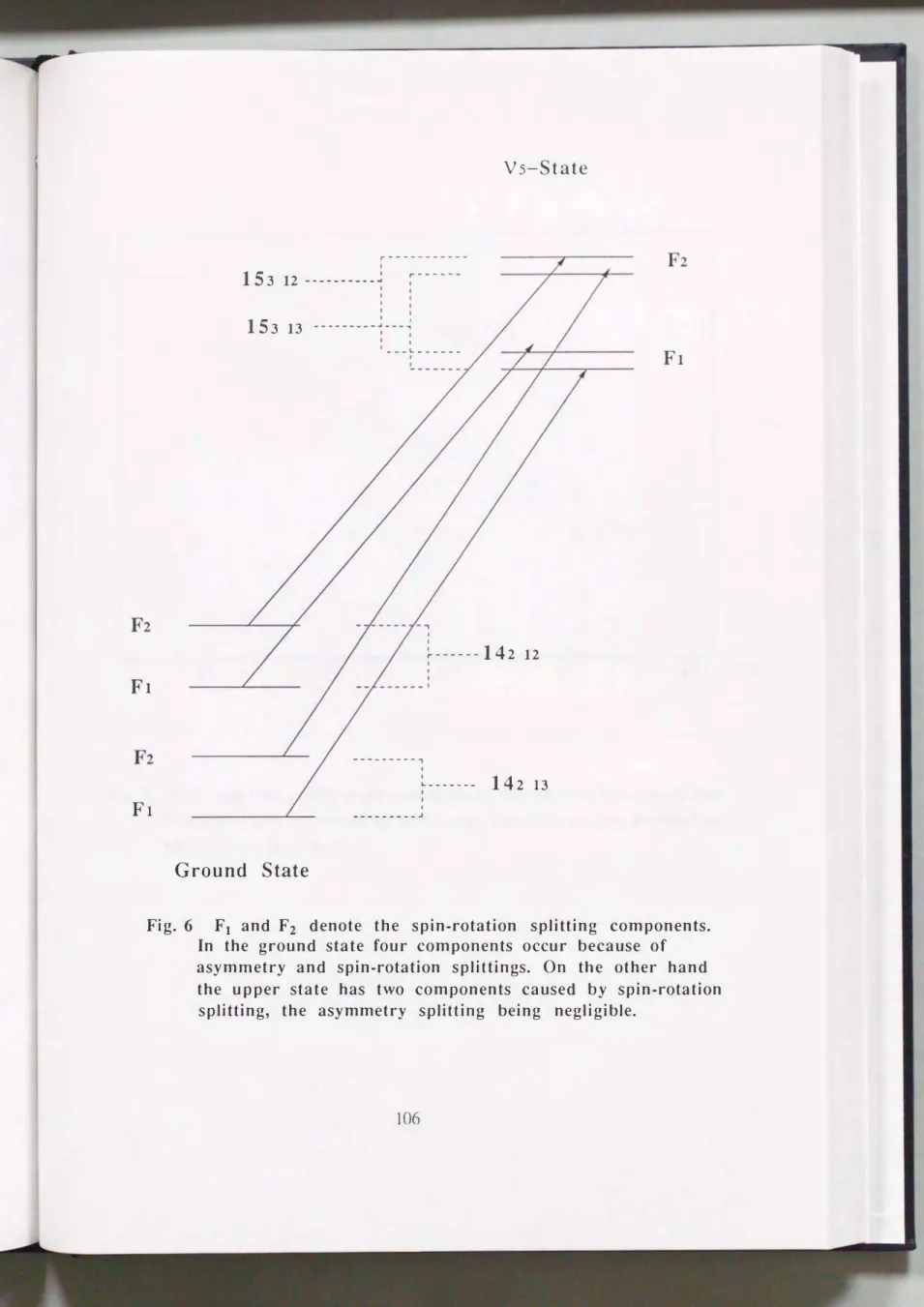
Figure 6 is the energy level diagram relevant to the r R2(14) rovi brational transition.
In the vibrational ground state asymmetry doubling gives rise to the 142 12 and 142 13 rotational levels and each level is further split into the F1 and F2 components of spin
rotation doubling. On the other hand in the upper state splitting into the F1 and F2 components of spin-rotation doubling is only appreciable. The magnitude of the splitting is different from that in the ground state, therefore the rR2(14) transition was observed as a double doublet.
The observed asymmetry splitting in the R-branch line of the Ka = 3 f- 2 series is
dEasym of the Ka = 2 rovibrational level is expressed as follows,
11Easym (Bo-C
a!_
xN(N+l)rN(N+1)- 2]32[A0-B0]
(1)
where Ao, Bo, and Co are rotational constants in the ground state and Bois (Bo + Co)/2.
The ground state rotational constants [ 4] and equation (1) facilitated unambiguous assignment of the rotational quantum number N.
In this experiment, three sets of gates were used to observe time-resolved spectra.
The lower trace of Fig. 5 was obtained with a 50 �sec wide gate delayed by 50 �sec from the excimer laser shot. A delay time longer than 50 �sec also gave a comparable intensity, but a longer gate width of 100 �sec yielded slightly reduced signal to noise ratio. When a 50 Jl.Sec wide gate with no delay from the excimer laser shot was used, the signal to noise ratio became slightly worse because of spiky noise caused by the excimer laser shot.
Figure 7 shows the time profile of absorption by the cyanomethyl radical. In this figure the time scale starts at the excimer laser pulse. The spectrum was obtained by averaging for 3000 excimer laser shots. The time profile of the observed spectrum
rR2(14) lines. Upper trace in this figure is an ab orption line of C02 which was used as standard for wavenumber calibration. The absorption lines with N quantum numbers lower than 4 could not be identified because of insufficient signal to noise ratio, so in the rQo-branch lines the spin-rotation splitting was not observed. In the series of Ka = 1 f-0 transitions, R-,P-, and Q-branch lines were observed. Especially for Q-branch lines, transitions with high and low N quantum numbers were observed, therefore the N assignment could be determined unambiguously. The spectral pattern of Fig. 8 is such that the frequency of the Q-branch transition decreases as the N quantum number increases. This pattern is evidence that the observed transitions are of c-type, i.e., the dipole moment associated with the observed band is parallel to the principal c axis, as discussed in the following.
Figure 9 shows an energy level diagram relevant to the rQo-branch lines which obey the c-type and b-type selection rules. In the upper state asymmetry splitting is very large because the splitting is caused by the first order perturbation. Rotational Hamiltonian Hr for an asymmetric top molecule is expressed as follows,
(2)
where Av, Bv, and Cv are rotational constants in a vibrational state and Na, Nb, and Nc are rotational angular momenta about a, b, and c axes, respectively. In terms of basis functions IN K M >, Hamiltonian H vr is diagonal with respect to N and M and has non vanishing matrix elements with .1K = 0 and .1K = ±2. The matrix elements are
= [Av- (Bv+Cv)I2]K2
+ ±<Bv+Cv)N(N+1)
<N K±2 M I H vr INK M >
=
i<
Bv-Cv)f(N, K, ±)(3)
( 4)
where f(N, K, ±) = [N(N+l)-K(K±1)] 112[N(N+l)- (K±l) (K±2)] 112. When linear combinations of INK M >as defined by INK ±> = (l/2) 1/2{1N K M >±IN-K M >}are chosen for basis functions, the diagonal matrix elements for the K =l levels are
<N K=l ± I Hvr IN K=l± >
=
"i<
Bv+Cv)N(N+l)+ Av-±<Bv+Cv)
±:}cBv-Cv)N(N+l)
(5)The plus and minus signs in the third term are for the N 1 N-l and N lN levels in the upper state in Fig. 9. Equation (5) indicates that three effective rotational constants for the N1 N-
andN1 N levels are (3Bv + Cv)/4 and (Bv +3 Cv)/4, respectively. These are definitely larger
and smaller, respectively, than the effective rotational constant (Bo + Co)/2 for the NoN
the observed band origin of 660 cm-1, the observed c-type band was concluded to be associated with the CH2-wagging vibration.
For this series, absorption lines up toN= 29 could be observed. The Ka = 4 � 3 R- branch lines were observed, but have weak intensity compared with the series of Ka = 1
� 0 and Ka = 3 � 2. Spin statistical weights account for the fact. The ground electronic
state of the cyanomethyl radical belongs to B 1 symmetry and the vibrational ground state belongs to A1 symmetry. In the vibronic ground state, the wave function which is the product of vibrational and electronic wavefunctions \!fe· \!fv is of B1 and antisymmetric with respect to the C2 rotation about the a axis (definition of axes are denoted in Fig. 1).
Since a proton has the nuclear spin, I= 1/2, two types of spin states, triplet state (ortho) and singlet state (para), occur for a pair of equivalent protons. The ortho state is symmetric and the para state is antisymmetric with respect to the C2 rotation about the a axis. Since two equivalent protons (Fermion) are exchanged by the C2 rotation about the a axis, the overall wave function \!fe· \!fv· \!fr" \!fn must be antisymmetric with respect to this operation. Therefore, rotational wave functions symmetric with respect to the C2 rotation about the a axis must be combined with the ortho spin state and antisymmetric rotational wave functions must be combined with the para spin state. After all, (Ka,Kc) = (even, even) and (even, odd) states have a weight of 3, while the (odd, even) and (odd, odd) states have a weight of 1.
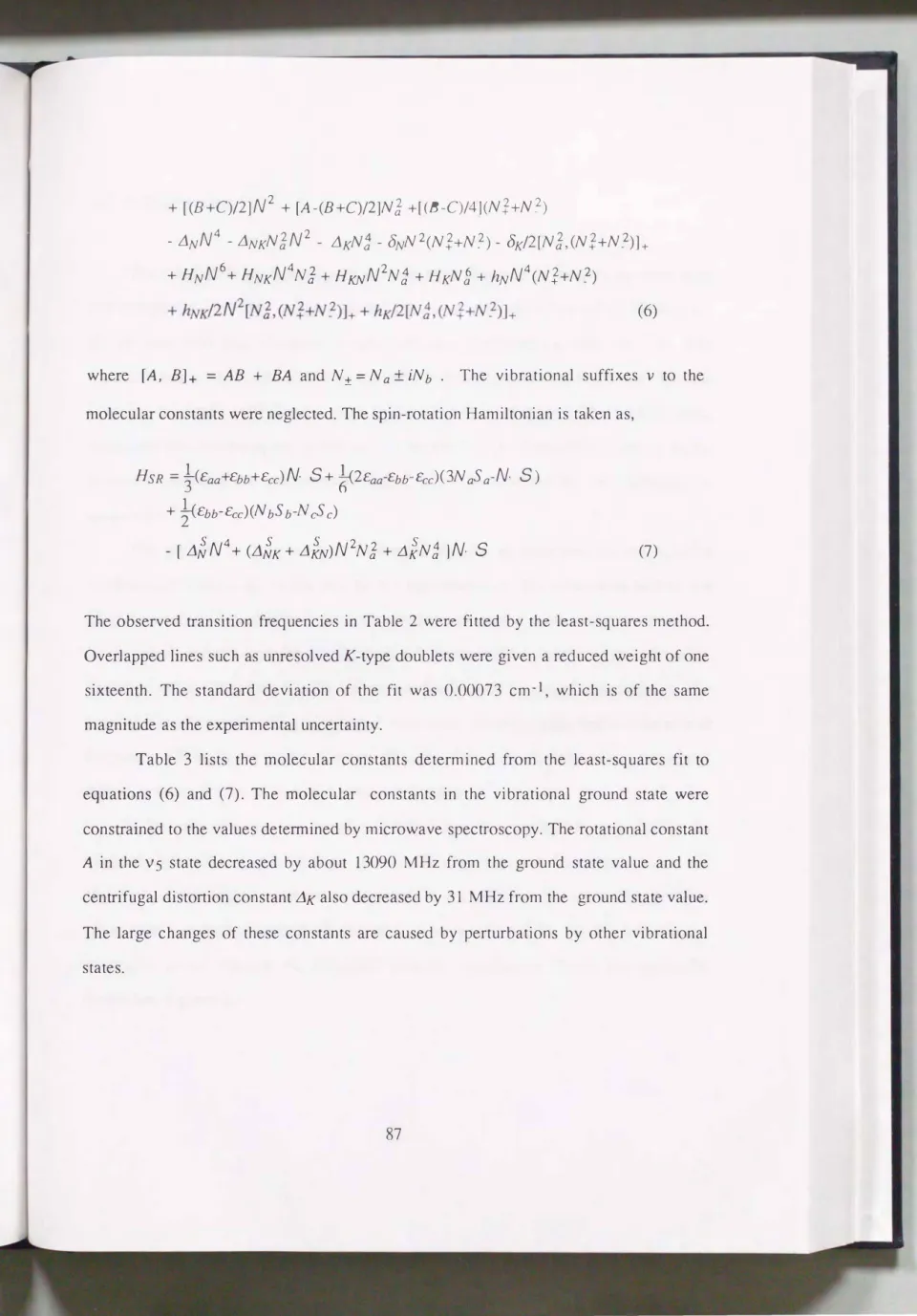
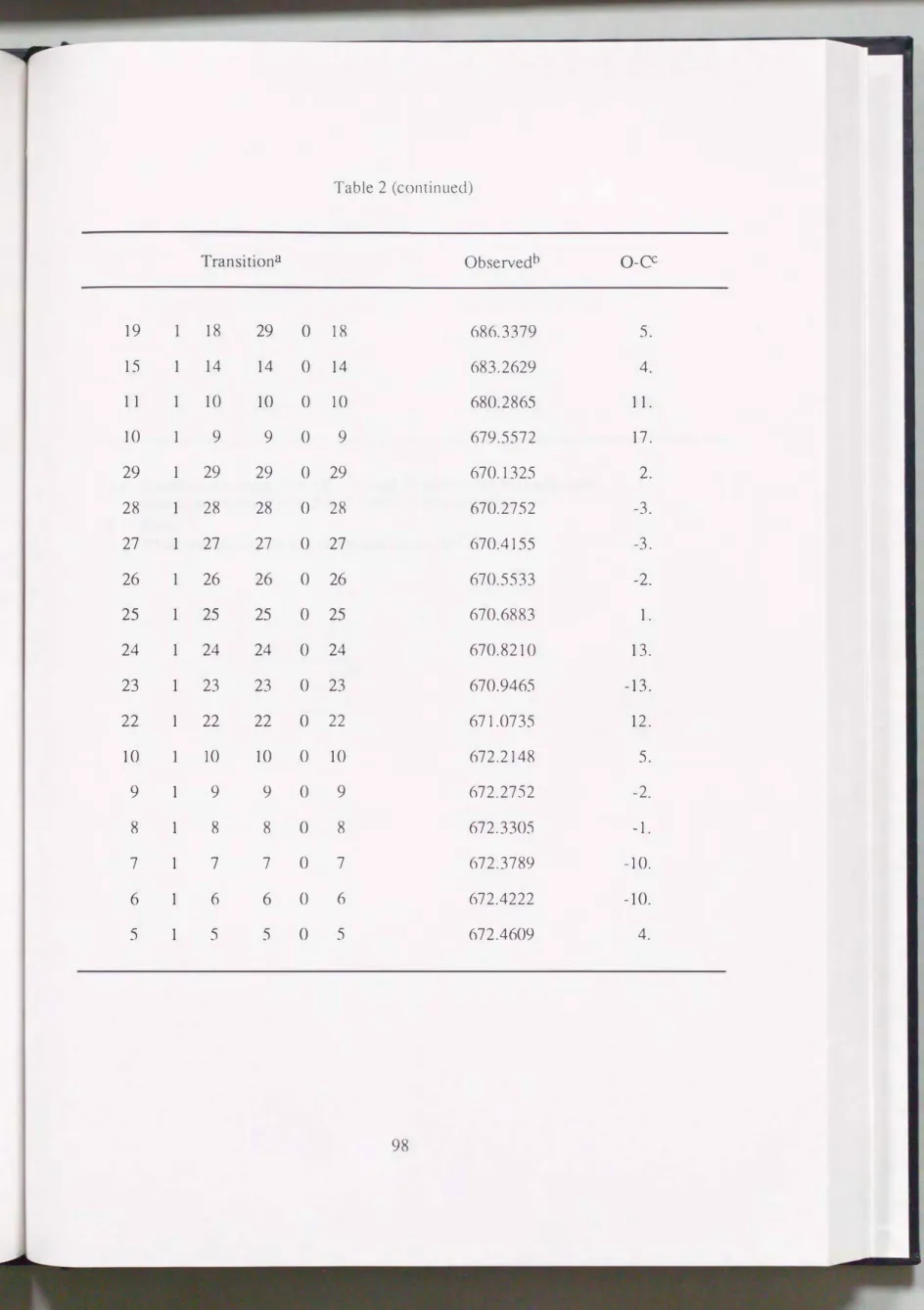
Table 2 lists all the transitions of the cyanomethy I radical observed in the present experiment. Analysis of the observed lines was performed using the asymmetric rotor Hamiltonian added by the spin-rotation Hamiltonian, H = HvR + HsR· HvR is modified
- L1NN4- L1NKN;N2- L1KN�- 8NN2(N�+N�)- 8KI2[N;,(N�+N_2)]+
+ HNN6+ HNKN4N3 + HKNN2N� + HKN3 + hNN4(N�+N�)
(6)
where [A, B]+ = AB
+
BA andN
± =N a± iN b
. The vibrational suffixes v to the molecular constants were neglected. The spin-rotation Hamiltonian is taken as,H
SR =t (Eaa +Ebb +Ecc) N·
S+ -k<2Eaa-Ebb-Ecc)(3N aS a-N·
S)+ }-< Ebb-Ecc)(N bS b-N cS c)
- [ L1 � N4+ (L1 � K + L1 & )N2N; + t1kN� ]N·
S(7)
The observed transition frequencies in Table
2
were fitted by the least-squares method.Overlapped lines such as unresolved K-type doublets were given a reduced weight of one sixteenth. The standard deviation of the fit was
0.0007 3
em -1, which is of the same magnitude as the experimental uncertainty.Table 3 lists the molecular constants determined from the least-squares fit to equations (6) and
(7).
The molecular constants in the vibrational ground state were3-1-4. Discussion
The vibrational mode associated with the band observed in the present experiment was assigned to the CH2-wagging mode. The observed band origin of
663.7940
cm-1agrees well with that observed by photoelectron spectroscopy,
680
cm-1[8].
Thetransition frequency of
666
cm-1 that was tentatively assigned to the H2CC-deformation vibration by Jacox[12]
is very close to the present band origin. The present study confirmed that the absorption at666
cm-1 is ascribed to the cyanomethyl radical. In the present experiment the cyanomethyl radical was also observed by the photolysis of acetonitrile.The present assignment was determind by the observations of the
rQo(N)
rovibrational transitions. In the case of a c-type transition, the absorption line of the
rQo(N)
branch with the higherN
quantum number will appear at the lower wavenumber, on the other hand the opposite phenomenon will occur in the case of a b-type transition.The observed pattern of the
rQo(N)
transitions clearly obey the c-type selection rule. The skeletal out-of-plane bending also obeys the c-type selection rule, but its vibrational frequency will be in the region of about300
cm-1, for lower than the present observed region, as estimated by ab initio calculation in Table 1.In the case of a non-linear molecule which has an unpaired electron such as the cyanomethyl radical, spin-rotation interaction constants are important. Since the electronic orbital angular momentum is quenched, the spin-rotation interaction constants arises from a second-order perturbation term, corresponding to the mixing with excited
spin-rotation coupling constants 1n equation (7) are expressed by the second order perturbation as follows
[ 16],
_ � <0 I A· La I n><n I La I 0>
Eaa--4A soL.,.
n
Eo- E
n_ � <OIB· Lbln><niLbiO>
Ebb- -4Aso.L_.,
n E
o
-En
_ � <0 I C· Lc I n><n I Lc I 0>
Ecc - -4A soL.,.
n
Eo- En
(9)
(10)
(11)
where A , B, and C denote the rotational constants. in> and 10> denote electronic wave functions of the excited and ground states. Eo and
En
denote the energies of the ground and excited electronic states, respectively. The spin-orbit coupling constants A so of the molecule may be approximated by that of an appropriate atom in the molecule, and in this case the value of the carbon atom 27.1 cm-1 [17] was used. Assuming kn I La I 0>12 =1
In>, 10> and La must be totally symmetric (A 1) for the matrix element<n I
La
I 0> to benonvanishing. Considering that the electronic ground state belongs to 81 symmetry, the excited state at about 47000 cm-1 must belong to 82 symmetry. The other spin-rotation constants Ebb and Ecc are very small, and excited states of A 1 or A2 symmetry will not exist near the ground state.
In the vs state the centrifugal distortion constant !JK has an anomalous negative
value. The rotational constant A decreases by 0.4366 em -1 on going from the ground state to the vs state, and the change corresponds to about 5 o/o of the value. These vibrational changes are ascribed to a-type Coriolis interactions with other vibrational states.
The a-type Coriolis interaction is caused by the rovibrational operator Hcori which is expressed as follows,
"" ra Ws
1/2 () (Ws·)
112qs_l_]Na
Hcori =-2Ae L.,; Sss·[(-)
qs·-:::;- -
:'I( ')
s, sWs· uq s Ws uq
s' (12)where
��
s· is a Coriolis coupling constant, and Ws and qs denote the harmonic frequency and dimension less normal coordinate of the s-th vibrational mode. To obtain the correction for equation (12) to the rotational Hamiltonian, equation (6), the matrix element <Vs + 1, Vs' I Hcori I Vs, Vs' + 1 > must be calculated and vibrationally diagonalized by second order perturbation approximation. The matrix element is expressed byW5·· W5(W5-W5·)
for the rotational constant A and
( 15)
for the centrifugal distortion constant L1K [ 18].
The Hamiltonian belongs to A 1 symmetry, and therefore a-type Coriolis interaction can exist if the following equation is satisfied,
r(S)xr(S')xr(N a
)=A
1 ( 16)Since the rotational angular momentum operator Na belongs to A2 symmetry and the v5
mode belongs to B1 symmetry, vibrational states belonging to 82 symmetry can interact with the Vs state through the a-type Corio lis interaction. Figure 10 illustrates vibrational states which will interact with the v5 state through the a-type Coriolis interaction. They are the CH2-rocking mode (vs), the CCN-in-plane bending mode (v9), and the CH-a-
plane bend, respectively, are used and the Coriolis coupling constants
s�s
and(,�9
areassumed to be 0.714 and -0.30 as transferred from ketene [19], the vibrational changes are calculated to be -0.4357 cm-1 and -26.89 MHz for A and f1K, respectively. These values agree well with the observed values of -0.4366 cm-1 for the rotational constant A and -31.05 MHz for the centrifugal distortion constant f1K,.
[1] P.B.Ayscough, R.G.Collins, and J.T.Kemp, J.Phys.Chem. 70 (1966) 2220.
[2] R.J.Egland and M.R.C.Symons, J.Chem.Soc. AS (1970) 1326.
[3] H.G.Benson, A.J.Bowles, A.Hudson, and R.A.Jackson, Mol.Phys. 20 (1971) 713.
[4] F.Bemardi, N.E.Epiotis, W.Cherry, H.B.Schlegel, M.H.Whangbo, and S.Wolfe,
J.Am.Chem.Soc. 98 (1976) 469
[5] A.Hinchliffe, J.Mol.Struct. 53 (1979) 147.
[6] N.C.Baird, R.R.Gupta, and K.F.Taylor, J.Am.Chem.Soc. 101 (191979) 4531.
[7] F.Delbecq, Chem.Phys.Lett. 99 (1983) 21.
[8] S.Moran, H.B.Ellis,Jr., D.J.Defrees, A.D.Maclean, and G.B.Ellis,
J.Am.Chem.Soc. 109 (1987) 5996.
[9] S.Saito, S.Yamamoto, W.M.Irvine, L.M.Ziurys, H.Suzuki, M.Ohishi, and
N.Kaifu, Astrophysical J. 334 (1988) L l I 3.
[10] W.M.Irvine, P.Friberg,
A
.Haj
almarson, S.Ishikawa, N.Kaifu, K.Kawaguchi, S.C.Madden, H.E.Matthews, M.Ohishi, S.Saito, H.Suzuki,P.Thaddeus, B.E.Turner, S.Yamamoto, and L.M.Ziurys, Astrophysical J. 334
(Academic Press, New York, 1986).
[15] A.R.W.McKeller, private communication;
K.M.T.Yamada, private communication.
[16] E.Hirota, "High-Resolution Spectroscopy of Transient Molecules." Springer
Series Chemical Physics 40
[17] "ATOMIC ENERGY LEVELS" Vol. 1. National Bureau of Standards.
[18] E.Hirota and M.Sahara, J.Mol.Spectry. 56 (1975) 21.
[19] L.Nemes, J.Mol.Spectry. 72 (1978) 102.
Vibrational Modes of the Cyanomethyl RadicaP
Mode Symmetry
vl CB-s-stretch Al v2 CN-stretch AI v3 CH2-scisors A1 v4 CC-stretch Al Vs CH2-wagging B1 v6 CCN-out of plane B1 v7 CH-a-stretch B2 Vg CH2-rock B2
v9 CCN-in plane B2
a ) Harmonic frequencies of Ref. [8].
Ab initio3
2984 1848 1402 965 580 383 3085
1004 359
b ) Photoelectron spectroscopy of H2CCN- [8].
c ) Tentative assignment [ 12].
Previous works
680b 666C
cm-1 cm-1 cm-1 cm-1 cm-1 cm-1 cm-1 cm-1 cm-1
Table2
Infrared Transitions in the v 5 Band of the Cyanomethyl Radical
Transition a Observedb 0-Cc
11 4 10 3 F1 728.6503 -10.
11 4 10 3 F2 728.6626 -1.
6 4 5 3 F1 725.3252 7.
6 4 5 3 F2 725.3420 4.
30 3 27 29 2 27 F1 725.4453 1.
17 3 15 16 2 15 F1 717.2034 3.
17 3 15 16 2 15 F2 717.2100 7.
17 3 14 16 2 14 F1 717.] 666 9.
17 3 14 16 2 14 F2 717.1720 4.
15 3 13 14 2 13 F1 715.8776 3.
15 3 13 14 2 13 F2 715.8836 -5.
15 3 12 14 2 12 F1 715.8559 9.
15 3 12 14 2 12 F2 715.8618 1.
14 3 12 13 2 12 F1 715.2138 -1.
14 3 12 13 2 12 F2 715.2211 -1.
14 3 11 13 2 11 F1 715.1961 -11.
14 3 11 13 2 11 F2 715.2035 -8.
Transition a Observedb 0-Cc
13 3 11 12 2 11 F1 714.5497 -5.
13 3 11 12 2 11 F2 714.5574 -5.
13 3 10 12 2 10 F1 714.5377 -2.
13 3 10 12 2 10 F2 714.5447 -8.
9 3 8 2 F1 711.8887 -7.
9 3 8 2 F2 711.8996 -2.
8 3 7 2 F1 711.2232 -5.
8 3 7 2 F2 711.2349 -1.
7 3 6 2 F1 710.5565 -7.
7 3 6 2 F2 710.5697 0.
6 3 5 2 F1 709.8907 8.
6 3 5 2 F2 709.9045 6.
3 3 2 2 F1 707.8370 7.
3 3 2 2 F2 707.9030 3.
Table 2 (continued)
Transitiona Observectb 0-CC
19 18 29 0 18 686.3379 5.
15 1 14 14 0 14 683.2629 4.
11 1 10 10 0 10 680.2865 11.
10 1 9 9 0 9 679.5572 17.
29 1 29 29 0 29 670.1325 2.
28 1 28 28 0 28 670.2752 -3.
27 1 27 27 0 27 670.4155 -3.
26 1 26 26 0 26 670.5533 -2.
25 1 25 25 0 25 670.6883 1.
24 1 24 24 0 24 670.8210 13.
23 1 23 23 0 23 670.9465 -13.
22 1 22 22 0 22 671.0735 12.
10 10 10 0 10 672.2148 5.
9 1 9 9 0 9 672.2752 -2.
8 1 8 8 0 8 672.3305 -1.
7 1 7 7 0 7 672.3789 -10.
6 1 6 6 0 6 672.4222 -10.
5 1 5 5 0 5 672.4609 4.
Transitiona Observedb
4 13 19
1 4
1 12 1 18
4 0 4
14 0 14 20 0 20
672.4925 663.6508 660.1970
a) Quantum numbers, N,Ka,Kc. F1 and F2 denote the fine structure componets with l=N+0.5 and l=N-0.5, respectively.
b) In cm-1.
c) Observed minus calculated frequency in 1 Q-4 cm-1.
0-Cc
8.
-11.
-10.
Table 3
Molecular Constants of the Cyanomethyl Radical3
Constant Ground Stateb Vs State
A 285752. 272662.0(25)
(B+C)/2 10061.385 1 0053.940(50)
B-C 370.27 344.869(86)
jjN 4.004 4.073(58)
jjNK 0.40908 0.3758(49)
jjK 22.0 -9.05(14)
ON 0.167 0.167b
OK 0.148 0.148b
HKN -1.16 -1.16b
Eaa -658.0 -642.3(57)
Ebb -24.11 -24.11 b
Ecc -1.84 -1.84b
11kN
0.0103 0.0103b11I
0.099 0.099bVo 663.7940(3)
a ) In parentheses are 1 a uncertainties to be attached to the last digit. b ) Fixed to the MW data in the analysis.
MHz MHz MHz kHz MHz MHz kHz MHz
kHz MHz MHz MHz MHz MHz cm-1
0
+
I I I I I1f b
I ; ;
J--- �---r--- --- ---7
' I I I
,'' : ,' ,''
, '
, '
H.
,'
,
·.
/
····•• .
;
0
,'/
I
c
, ' ,
,
, 'c
, ,
N
, ,
---�..:---�
,
, , , ,
, , ,
,
// H / // ,..
---:.-?,/ +---
,',
'a
...
0 tv
KBr window
MCT
AMP.
fi
Precursor
Computer
{}
16bitp 1/0 Digitizer SD2080
11
Precursor
�
PumpExt. Trigger
Quartz window Excimer Laser \
Diode
Purge Gas
0 VJ
!
D.L.MCT
UV Laser Beam
J'V'VV\./\.IV'V � Photo Diode S1722-02
Ext. Trigger
New England Research
PA-S Series 40dB NF LI-75 40dB
Graphtech
>---l Signal Digitize SD208 0
8bit AID T ransforn1
p I/0
...
0 +:>.
Ka'
=0
4 Vs
state
3
2
1
F1
F1
r --- 1
153 12 ---� r - -- - -- 1
I I I
I I
153 13 ------�---�
!---�---
1
I
Vs-State
�---142 12
I
---, I
�--- 142 13
I _________ .J
Ground State
F1
Fig. 6 F1 and F2 denote the spin-rotation splitting components.
. . . · . . • .
• 0 ... • • ·:· • 0 • •• • •
I I
0 0.5
. .·.
�.
. ·. "I
. . . . : .. ·'·:
. . ··.. . .... . . .
·. .. � .
·�·.:·:; .·
_: ..·: ��:·:·.:::.� ... ·.·
.. ·
..>· .
. : . :· · .
.
.··. ·'. ·:·:: .. ·
. .. · . . .I I
1.0 1.5 20
msecFig. 7. Observed time profile of the absorption by the cyanomethyl radical. The
10 9 8 7 6
-----,.--.---�--,--�=---�--;_ __
roo(N)
H2CCN
672.30 672.50
Fig. 8. Observed spectrum for rQo-branch transitions in the vs band.
· cm-1
The spectral pattern indicates that the observed transitions are of c-type.
C02 absorption lines (upper trace) were used as reference lines for
V 5 State
b-type
I I
I I
I I
I I
I I
I I
I I
I
I I
I
I c-type
I I
I I
I I I I
I I
NIN-1
NIN
cm·1
1 000
500
Vs 1004 cm·1 CH2-R ock
\
\
\
\
\
\
\
\
\
\
\
V7 3085 cm·1 CH-a-Stretch
/
I I
I I I I I
a-type
\
\
\
\
\
\
\
\ I
I
I I
\ I
I I
\ I
\ I
\ I
' t
a-type
I I I
I I I I
I
�' V s 663 cm·1
a-type
I I I
I I I
I I
I I I
I I I
I I
I I I
V9 359 c1n·1 Fig. 10
INFRARED DIODE LASER SPECTROSCOPY OF THE PROP ARGYL RADICAL PRODUCED IN A
SUPERSONIC JET EXPANSION BY UV LASER
PHOTOLYSIS.
Abstract
The propargyl radical (CH2CCH) was produced in a pulsed supersonic jet expansion by the 193 nm excimer laser photolysis of propargyl chloride, and detected by the method of time-resolved infrared diode laser spectroscopy. Rotational temperature of 16 ± 4 K was obtained in an experiment in which the rQ0-branch lines of the V6 band were observed. The effective rotational constant (B-C)eff and spin-rotation interaction constant Eaa in the V6 state, and the subband origin of the rQ0 branch were determined.
The goal of the present experiment is the observation of transient molecules such as
radicals by the technique of high resolution absorption spectroscopy under the condition of supersonic jet expansion. A supersonic jet expansion gives rise to a collision-free and ultra-low-temperature environment by internal energy transfer into the translational degree of freedom. Hence novel short-lived species formed in a supersonic jet, which would be depleted rapidly at normal temperature and pressure, may survive persistently.
Also this technique allowed practical application to the study of heavy molecules, for which high resolution measurements at room temperature are almost useless because of large rotational partition function. The rotational partition function is a very important factor in the observation of rovibrational transitions with low rotational quantum numbers because it is proportional to T312,where T is the rotational temperature. For example the rotational partition function at 300 K (room temperature) is about 90 times as large as that at 15K.
The author is interested in the application of supersonic jet infrared absorption spectroscopy to the study of van der Waals molecules formed by transient molecules, such as radical clusters. The spectroscopy of van der Waals molecules formed by stable
spectroscopy in the infrared region was rather slower than in the microwave and visible regions, probably because of insensitive detection methods and lack of tunable high resolution infrared optical probes.
Attempts for direct absorption detection of jet-cooled transient species 1n the infrared region have recently been reported [1-7]. Comer and Foster [1] have applied a corona-excited supersonic jet slit discharge combined with concentration modulation to the detection of the v2 infrared band of NH2. Hilpert et al. [2] designed a two dimensional
corona-excited slit nozzle discharge, and applied it to the observation of the N2H+ and NO+ ions in far-infrared and infrared regions, respectively. They observed a rotational temperature as low as 12 K for N2H+. Experiments using glow discharge supersonic nozzles have been performed to observe molecular ions such as H3+, H30+ [3], and N2+
[4].
Another powerful method to produce ultra-cold radicals in a supersonic jet is the UV laser flash photolysis, besides the laser ablation which has been applied to the study of carbon clusters, Cn (n = 3 --7) [5 -- 7]. The UV laser photolysis is advantageous over discharge methods because of higher time resolution. It also provides the selection from different dissociation channels depending on the laser wavelength. Several high power pulsed lasers will be useful for photolysis, for example the Nd: Y AG laser provides very short light pulse (about 5 nsec) and the infrared TEA C02 laser may be also useful in inducing multiphoton dissociation of molecules. The excimer laser is most promising light source for photolysis. A typical excimer laser (ArF 193nm Lambda Physik model 105i, for example) outputs 100 mJ pulses with 17 nsec duration at a repetition rate of up
photolysis can be well detectable by infrared diode laser spectroscopy.
Cohen et al. [9] have combined excimer laser photolysis with a planar supersonic expansion to detect rotational transitions of NH2 in the far-infrared region. Curl et al.[lO]
produced NH2 by excimer laser photolysis combined with a pulsed slit nozzle and observed the VI vibrational band by color center laser spectroscopy. The final goal of these efforts is of course to detect highly reactive free radicals and radical clusters that can only be formed in an ultra-cold supersonic jet. However, the jet-cooled transients so far detected by direct infrared absorption are limited to light radicals already observed by non-jet methods.
In this chapter, the detection of the propargyl radical (CH2C=CH) produced in a
pulsed supersonic jet expansion by the 193 nm ArF excimer laser photolysis is described.
The rQo-branch lines of the V6 (CH2 wagging) band were recorded by time-resolved infrared diode laser spectroscopy. Improved signal to noise ratio was attained by the use of Perry-type multireflection path [11] , in which focused infrared laser beam made several passes through the supersonic jet.
Vibrational spectra of propargyl in the Ar matrix produced by the Lyman-a photolysis of methyl acetylene and allene have been studied by Jacox and Milligan [12]
3-2-2. Apparatus.
Jet and photolysis system
The apparatus used in the present experiment is schematically shown in Fig. 1. A vacuum chamber made of a 10-inch stainless steel tubing (15 lin volume) was evacuated.
Since it is important in a direct absorption jet experiment on a transient species is to make radicals in high density and to cool down the rotational temperature, a high pumping speed was realized by using a 6-inch diffusion pump (ULV AC, ULK-06A), a Roots blower (SHINKO SEIKI SMB-200, 240m3/h) and a rotary pump (TOKUDA, RP-600Z).
This pumping system evacuated the chamber to an attainable pressure of 1 o-s Torr. A solenoid-actuated pulsed valve with 2 mm orifice commercially available from General Valve Co. (model PIN 9-400-900) was used. If we use the same pumping system, we could enjoy a higher stagnation pressure in a pulsed beam experiment than in a continuous beam experiment. Therefore pulsed expansion is used to improve the cooling in the beam by pressurize the carrier gas behind the nozzle. At higher pressure more collisions occur, resulting in lower translational temperature and more efficient equilibration of the rotational temperature with the translational temperature.
In Fig. 1, the valve is illustrated through which gas was injected and the shaded part is the nozzle to be attached to the valve. In the region of the nozzle, precursor molecules are electronically excited by UV light and photolyzed into radicals and then the radicals are therrnarized vibrationally, rotationally and translationally. More effective collisions
diameter bore drilled in the center as shown in the upper part of Fig. 2. The other was a slit-type nozzle. This was also a 10-mm thick brass block with a 2-mm diameter bore, but the bore was enlarged in the lower half to have a rectangular cross section of 2X 10 mm as shown in the lower part of Fig. 2. Two stainless steel plates were bolted on the block to form a slit with an aperture of 0.25X 10 mm. When the slit-type nozzle was used, a narrower Doppler line width was observed than that observed with the circular nozzle.
This phenomenon will be discussed in a later section.
For the UV photolysis, a ArF 193 nm excimer laser (Lambda Physik 1 05i) was used. The radiation from the laser has a pulse width of 17 nsec, and the maximum repetition rate is 50 Hz. At the maximum repetition rate the pulse energy is typically 130 mJ. The beam cross section is 5x23 mm at the exit window of the excimer laser and increases to 7x30 mm at the quartz-made inlet window of the chamber. The excimer laser was driven by an external trigger, because it is more convenient to use a pulse generator as the master clock of the experiment. Figure 3 illustrates the block diagram of a driving system for the excimer laser and the General valve. The pulse signal for driving the valve was delayed by 0.8 msec and used as the external trigger for the excimer laser, so that the excimer laser was fired in the middle of the jet pulse. Transient infrared absorption was
Optical multipass system
To observe a very weak absorption spectrum, it is very powerful to use a multireflection optical system. Two types of optical configurations are available in this set up. One is the conforcal configuration also known as White-type rnultireflection path and the other is the concentric configuration such as Perry-type rn ultireflection path. In the jet experiment the Perry-type is more useful because the laser beam can be aligned to pass back and forth several times through the area within a few mm from a point somewhere downstream of the nozzle. As shown in Fig. 1, infrared laser beam from a diode laser (Laser Photonics LP5615) entered the vacuum chamber through a KBr window from the direction at right angles to the jet, and was guided along a Perry-type multireflection path forrned by two R = 150 concave Al coated mirrors separated by 299 mm in nearly concentric configuration. The spot size of the beam was 0.2 mm in the probed region, whereas 2.8 mm on the surface of the mirrors. The infrared beam made eighteen passes between the mirrors. Midway between the mirrors, the eighteen rays collectively forrned a waist, where the beam probed the supersonic jet with an effective path length of about 20 em. An R = 300 concave mirror, placed inside the vacuum chamber, adjusted the input infrared beam to fit the multireflection path and collimated the output beam and directed it to the KBr window. The output infrared beam was monitored by an HgCdTe detector.
A molecular beam is usually composed principally of an inert carrier gas, such as helium or argon, which has no internal degrees of freedom, providing a cold bath without having to lose any of its own energy into the translation. Argon seeded with a precursor gas was expanded through the pulsed nozzle into the vacuum chamber at a repetition rate of 25Hz. The stagnation pressure was typically 4 atm, when the operating pressure in the chamber was 2 mTorr.
Ultra-violet radiation of 193 nm from an ArF excimer laser entered the vacuum chamber through a quartz window from the direction opposite to the nozzle as shown in Fig. 1. The excimer laser was fired in the middle of the gas pulse and a transient infrared absorption was measured by a time-resolved infrared diode laser spectrometer [15, 16].
The relative timing chart for the valve driver pulse, the absorption of the precursor, the excimer laser shot, and the absorption by propargyl is illustrated in Fig. 4. Excimer laser light can be focused by a quartz lens. Unfocused excimer laser beams, which had a cross section of 7X 30 mm at the entrance window of the chamber, were used in most measurements.
The signal was AID converted by a transient digitizer (Graphtech SD2080) to be
3-2-4. Observations
The test of the nozzle performance was first carried out. Acetylene in natural abundance was diluted to 3% in 4 atm Ar, and absorption by the Q-branch lines of the vs
band of acetylene-13C around 728 cm-1 [17] was observed. In an experiment with the 2 mm circular nozzle, a transient absorption rose with a delay of 0.2 ms from the valve
pulse, and lasted for 0.8 ms (FWHM) as shown in Fig. 5. A rotational temperature of 17
± 5 K was obtained, when the jet was probed at 3 mm downstream from the nozzle:
hereafter we specify the probed region by giving the distance from the nozzle tip to the infrared ray closest to it. Although the collective waist formed by the infrared rays has a thickness of about 4 mm along the jet axis, the part closest to the nozzle is most effective in detection. The beam density at the edge of the collective waist shows a tendency to increase as the cross section of the collective waist becomes more oval.
Rotational temperatures observed in experiments using the slit-type nozzle were somewhat higher, i.e., 66 ± 10 K with the slit formed by sharp-edged plates, 44 ± 10 K with the slit formed by 1-mm thick plates, and 36 ± 10 K with the slit formed by 2-mm thick plates. The time profile of the transient absorption is illustrated in Fig. 6. It had a width slightly larger than that for the circular nozzle and a rather longer tail. The rise of the signal was delayed from the valve pulse by 0.6 ms, which is longer than the delay of 0.2 ms for the circular nozzle. The time profile was not much affected by the thickness of the plates that formed the slit. In the rest of this article, the slit-type nozzle implicitly means that with the slit formed by 2-mm thick plates, unless otherwise noted.
expansion is illustrated in the upper part of Fig. 7. In the case of the slit-type nozzle, a much narrower line width,
0.0012
cm-1 (FWHM), was observed, corresponding to the perpendicular velocity component of250
m/s in the plane of the jet. The lower part of Fig. 7 shows the beam expansion in the case of the slit-type nozzle. These perpendicular velocity components combined with the absolute final velocity calculated for the supersonic expansion of Ar[ 18], 560
m/s, indicate that the jet beam from the slit-type nozzle expands with an effective divergence angle of±30
deg in the plane of the jet, and that the divergence angle for the circular nozzle is about twice as large.Experiments with excimer laser photolysis were carried out using
4
atm Ar seeded with 3% propargyl chloride (ClH2C3H), where we observed the rQo-branch lines of the propargyl radical around696
cm-1. Figure8
shows transient absorption signals of therQo(5)
line observed at 3 mm downstream from the nozzle. Unfocused excimer laser beam with the output of-140
mJ/pulse was introduced from the direction opposite to the jet. The signals were averaged for3000
excimer laser shots.The transient signal observed with the circular nozzle (upper trace) had a peak at 7
J..l.S delay from the laser pulse and decayed almost exponentially with a time constant of
25
J..l.S. The signal intensity decreased to one third when the probed region was displaced
preferred the circular nozzle to the slit-type nozzle in the measurement of the transient signal. Similar observations were made for the
rQo(6)
line.The spectrum in the frequency domain was recorded by the dual-gated integration method, in which 30 �s wide gates were placed immediately after and before the laser pulse. The lower trace of Fig. 9 shows the spectrum of the rQo-branch lines observed with the circular nozzle located at 3 mm upstream of the probed region. The spectrum was averaged for 40 laser shots per data point, and it took 64 min to scan the full range which corresponded to 2400 data points. In comparison, the upper trace of Fig. 9 is the spectrum in the same region recorded in a room-temperature experiment. The propargyl radical was produced by the ArF excimer laser photolysis of a propargyl chloride diluted with argon in a 2-m long Pyrex cell equipped with a White-type multireflection path with an effective length of -20 m. The spectrum was averaged for 20 laser shots per data point. It took
16
min to scan the full range, when the excimer laser was fired at a repetition rate of 50Hz.Figure 9 clearly shows that the propargyl radical produced in the supersonic jet is rotationally cooled to a very low temperature. The lines with
N
less than 3, which are split into doublets due to the spin-rotation interaction, are comparably intense with the strongest lines aroundN
= 5. No lines withN
greater than 10 are seen. The rotational temperature was determined by comparing the peak heights for the jet experiment with those for the room temperature experiment assuming the Boltzmann distribution. The logarithm of the peak height ratio plotted againstN(N+ 1)
forN
= 4 ... 7 resulted in a rotational temperature of16 ±
4 K. It was illustrated in Fig. 10. A lower rotationalfrom the slit.
The line width of the propargyl spectrum was 0.0022 cm-1 FWHM for the circular nozzle, which corresponded to the velocity component of 470 m/s perpendicular to the jet axis. A much narrower line width, 0.0012 cm-1 FWHM, was observed for the slit-type nozzle, corresponding to the perpendicular velocity component of 260 m/s.
The signal due to propargyl disappeared entirely if the excimer laser beam was focused inside of the 2 mm bore. When allene (C3H4) was used as precursor, the methyl
(CH3)
radical was observed instead of propargyl with focused excimer laser beam (Fig.11).
Without focusing laser, the line of propargyl was observed as in the case of propargyl chloride.3-2-5. Analysis
Observed line positions of the rQo-branch lines are listed in Table
1.
The assignment of theN
quantum number was definitely confirmed by the present observation of the rQo(l) line in the jet-cooled spectrum. The splitting due to the spin- rotation interaction is clearly resolved for the lines withN
less than3
in supersonic jet expansion as shown in Fig. 9. Spin-rotation splittings,.1£
upper and.1Elower,
of rovibrational levels in the upper and lower states are illustrated in Fig.12.
Arrows correspond to the observed rQo-branch transitions. Hamiltonian for the spin-rotation splitting H SR are the same as equation(7)
in chapter 2-1. In this figure only diagonal matrix elements in terms of Wang's linear combinations ofINK
M > basis functions inHund's case (b) (see Appendix (b)) were considered for the spin-rotation splitting. If the spin-rotation constants
Ebb
andEcc
were assumed to be the same in the ground and upper states, the splittings.1E(N)
in the rQo-branch transitions are obtained by subtractingM1ower
from.1Eupper ,
and they depend only on the parametersa
and b as follows,.1E(N)
={ 12- 3a } x(N �) 2 N(N+1) 2 '
where each parameter is expressed by
a=
-* (2Eaa- Ebb - Ecc)
, b= - t (Ebb
-Ecr.) .
(1)
(2)
negligible contribution to the splittings. The subband origin for the
rQo
branch,696.0233
± 0.0007
cm-1, and the effective rotational constant,(8-C)eff
=0.01084± 0.00008
cm-1, in the Y6 state were determined from the analysis of therQo
branch lines. The band origin of the Y6 band,686.41
cm-1, is calculated from the subband origin assuming the(A-B)
rotational constant fixed to a calculated value
[19].
This result is very close to687
cm-1 reported by Jacox and Milligan[12]
as derived from the spectrum in the Ar matrix.3-2-6. Discussion
Figure 8 shows that the transient absorption signals observed for the circular and slit-type nozzles have considerably different time profiles. The transient signal for the slit-type nozzle may be interpreted by the passage of a cloud of radicals through the probed region with a finite dimension. The cloud is supposed to fly through the probed region at a speed slightly slower than 560 m/s, which is the final beam velocity for the supersonic expansion of Ar. When the forefront of the cloud arrives at the front end of the probed region, the transient absorption will start. The fact that the actual transient signal starts about 6 ).!S after the laser pulse means that the forefront of the cloud corresponds to the radicals prepared by photolysis at 3 mm upstream of the front end of the probed region, i.e., near the exit of the slit. The radicals produced there with excess energy of ... 3e V are thermalized vibrationally by collisions and rotationally cooled in the supersonic expansion before reaching the probed region. It is certain that photolysis also takes place in the downstream, where the gas density is low, but the radicals produced there probably give no signal, because of incomplete thermalization.
The transient signal will reach the full strength, when the whole range of the probed region is covered by the cloud. The rising slope of the actual signal reaches the top at 6 ).!S after the start of the signal. This implies that the effective dimension of the probed region is about 3 mm, which is deemed consistent with the size of the collective waist formed by the infrared rays. After reaching the top, the signal has a plateau for 4 ).!S, indicating that there is a steady flow of the cloud in the probed region for this period of time. When the
the forefront of the cloud to the end of the steady flow; note that we refer to the length when the cloud is passing near the probed region. We believe that this part of the cloud is ascribed to the radicals produced by photolysis between the 2 mm thick plates that form the slit. The cloud formed there will be stretched to 5 mm when it is expanded into the vacuum. Note that the speed of the gas flow upstream in the slit is much slower than it is in the vacuum.
The falling slope of the signal is not as steep as the rising slope. This indicates that the radicals produced in the enlarged bore (2X 10 mm cross section) upstream of the slit give some contribution to the signal. They constitute the tail of the cloud. The shape of the falling slope is consistent with a 4 mm long tail, of which the density decreases towards the end. The decreasing density is ascribable to dilution by unphotolyzed gas, diffusion of the radical, and/or decay of the radical. In the case of the slit-type nozzle, only the radicals generated at the plates that formed the slit and upstream were well thermalized by collisions and could give the signal. The dotted area in Fig. 13 shows the region where the radicals contributing to the signal are generated.
The transient signal for the circular nozzle is characterized by the steep rising slope and the short delay from the laser pulse. Although the first part of the rising slope may be
around 2 JlS after the laser pulse may be ascribed to the thermalization process, although this part of the signal may not be free from artifacts.
The transient signal reaches the peak at 7 !lS after the laser pulse, when the probed
region is covered most effectively by the cloud of radicals. Then the signal begins to fall, indicating the arrival of the tail of the cloud with the density decreasing towards the end.
The tail is certainly constituted by the radicals formed in the bore, and is estimated to be at least
20
mm long in the vacuum. Photolysis probably takes place all over to the bottom of the10
mm long bore. The decreasing density may be ascribed to the decay of the radicals. The large velocity component of the beam perpendicular to the jet characteristic to the circular nozzle may also be responsible for the rather long time constant of the falling slope of the signal. In Fig.14,
the area where the radicals contributing to the signal are generated is indicated by the dotted part. The chemistry inside the nozzle seems complicated. It is worth noting that we did not observe the signal of propargyl when focused excimer laser light was directed into the 2 mm bore.The phenomenon of the frozen-in rotational excitation as observed for the
NH2
radical
[10]
was not observed in the present experiment. A lower rotational temperature observed when the probed region was displaced to the downstream indicates that the rotational temperature continued to fall. Also, the intensity pattern observed for therQo
branch lines was consistent with the Boltzmann distribution. The separation of rotational levels of the propargyl radical is typically 6 cm-1
(N
-10),
which conesponds to 9 K.Therefore, the phenomenon of the frozen-in rotational excitation may be manifested in experiments where the rotational temperature is cooled down to this range.
alternatively as shown in Fig. 11. This phenomenon can be explained as follows.
The author assumed that a two photon process occurred when the excimer laser was focused. The methyl radical generated through this channel was observed, as shown in Fig. 15. When the excimer laser beam is not focused, allene makes transition from the ground electronic state to an excited state by absorbing the energy corresponding to one photon of 193 nm. If the potential curve of the excited electronic state is repulsive, allene dissociates immediately and then the propargyl radical is generated. On the other hand if this excited state is a bound state, it must cross with a repulsive potential. In this case predissociation will occur, therefore as shown in Fig. 15 excited allene changes from the bound excited potential to the repulsive potential at the rate k3 and then dissociates to the propargyl radical. In the case of photolysis with focused excimer laser, the following stepwise two photon process will occur. The excited allene molecules make transition at the rate of k2*I to a higher excited electronic state which is assumed to be repulsive.
Clearly this rate is proportional to the excimer laser beam power. The larger the rate constant ratio of k2* I to k3 becomes (this condition will be realized by using focused excimer laser beam), the less the propargyl radical is generated because the product density ratio is expressed as follows,
The Perry-type multireflection optical path used in the present experiment should
lead to considerable improvement of sensitivity compared to a single path measurement.
However, even with the multireflection path, the effective path length in the jet is only one hundredth of that attained in the room temperature experiment with a White-type multireflection path ( -20 m). Nevertheless the signal to noise ratios for the low-N lines obtained in the present experiment competed with those in the room temperature experiment, as shown in Fig. 9. No account being taken of the concentration of the radical prepared, the shortness of the path length is compensated by the rotational cooling in the jet, because the rotational partition function calculated at 16 K is about 1/80 of that at room temperature.
In conclusion, the spectrum of the propargyl radical produced in a supersonic expansion by 193 nm excimer laser photolysis was observed with a good signal to noise ratio. Rotational temperatures as low as 11 -16 K were observed. This technique will potentially be useful for the detection of weakly bound complex of free radicals as well as large radicals produced by photolysis.
[1] K.R.Comer and S.C.Foster, Chem.Phys.Letters, 202 (1993) 216.
[2] G.Hilpert, H.Linnartz, M. Havenith, J.J.ter Meulen, and W.Leo Meerts, Chem.Phys.Letters, 219 (1994) 384.
[3] M.Fukushima, M.Chan, Y.Xu, A.Taleb-Bendiab, and T.Amano, Book of abstract, TE'03, 49th International Symposium on Molecular Spectroscopy, Columbus, Ohio, USA (13-17 June, 1994).
[4] K.Harada and T.Tanaka, Chem.Phys.Letters, 227 (1994) 651.
[5] J.R.Heath, A.L.Cooksy, M.H.W.Gruebele, C.A.Schmuttenmaer, and R.J.Saykally, Science, 244 (1989) 564.
[6] J.R.Heath, R.A.Sheeks, A.L.Cooksy,and R.J.Saykally, Science, 249 (1990) 895.
[7] C.A.Schmuttenmaer, R.C.Cohen, N.Pugliano, J.R.Heath, A.L.Cooksy, K.L.Busarow, and R.J.Saykally, Science, 249 (1990) 897.
[8] E.Hirota, "High-Resolution Spectroscopy of Transient Molecules."
Springer Series Chemical Physics 40
[9] R.C.Cohen, KerryL.Busarow, C.A.Schmuttenmaer, Y.T.Lee, and R.J.Saykally, Chem.Phys.Letters, 164 (1989) 321.