• 検索結果がありません。

PREVALENCE OF AIRFLOW LIMITATION IN PRIMARY CARE CLINICS IN AKITA PREFECTURE

N/A
N/A
Protected

Academic year: 2021

シェア "PREVALENCE OF AIRFLOW LIMITATION IN PRIMARY CARE CLINICS IN AKITA PREFECTURE"

Copied!
8
0
0

読み込み中.... (全文を見る)

全文

(1)

PREVALENCE OF AIRFLOW LIMITATION IN   PRIMARY CARE CLINICS IN AKITA PREFECTURE

Masaaki Sano 1) , Takanobu Shioya 2) , Kazuhiro Sato 1) , Hiroshi Ito 3) , Hiroyuki Watanabe 3) and Katsutoshi Nakayama 1)

1) Department of Respiratory Medicine, Akita University Graduate School of Medicine

2) Department of Physical Therapy, Akita University Graduate School of Health Sciences

3) Department of Cardiovascular Medicine, Akita University Graduate School of Medicine (received 8 June 2018, accepted 18 June 2018)

Abstract

Background : The prevalence of chronic obstructive pulmonary disease (COPD) continues to increase worldwide. However, it is often undiagnosed in primary care clinics due to the insuffi- cient use of spirometry.

Objectives : Screening spirometry of patients who attended primary care clinics was performed to estimate the prevalence of airflow limitation in general clinics in Akita prefecture.

Methods : A total of 1,135 patients 40 years of age and older, who attended general clinics in Akita prefecture, were enrolled in this study. We defined airflow limitation as forced expiratory volume in one second (FEV1) over forced vital capacity (FVC) (FEV1/FVC) < 70% in patients without active pulmonary disease. Patients with possible asthma were excluded according to history of bronchial asthma, symptoms specific to asthma, and answers to a patient characteristic question- naire.

Results : Of the patients in primary care clinics who were 40 years of age or older, prevalence of airflow limitation was 9.2%, of which 88% were undiagnosed as COPD in Akita prefecture. Thus, the widespread use of spirometry in general clinics and improved hospital and clinic cooperation are warranted to reduce the number of undiagnosed COPD cases. Furthermore, we demon- strated that patients with gastric ulcers had a high prevalence of airflow limitation.

Key words : airflow limitation, COPD, prevalence, NICE study, primary care clinics

ma tory response in the airways and lungs to noxious par- ticles or gases 1) . The prevalence and mortality rate of COPD have increased worldwide in recent years. Ac- cording to the World Health Organization, COPD is pre- dicted to be the third most common cause of death world- wide by 2030 2) . The Nippon COPD Epidemiology (NICE) study 3) , performed in 2004, determined that 8.6%

of individuals in Japan aged ≥ 40 years had COPD, which is equal to approximately 5.3 million patients. However, only 220,000 patients are actually treated for COPD in primary care clinics and hospitals nationwide. One of the reasons underlying this level of underdiagnosis is that spirometry, which is indispensable for COPD diagno- Introduction

Chronic obstructive pulmonary disease (COPD) is a common preventable and treatable disease characterized by a persistent airflow limitation, which is usually pro- gressive and associated with an enhanced chronic inflam-

Correspondence : Masaaki Sano

Department of Respiratory Medicine, Akita University Graduate School of Medicine, 1

-

1

-

1 Hondo, Akita 010

-

8543, Japan

Tel : 81

-

18

-

884

-

6110 Fax : 81

-

18

-

884

-

6420

E

-

mail : [email protected]

-

u.ac.jp

(2)

sis, is not widely available.

Akita prefecture is one of the region with the highest aging rate in Japan. The prevalence of COPD in Akita prefecture, where spirometry is not commonly performed in primary care clinics, remains unclear 4) . The specific aims of this study were to determine the prevalence of airflow limitation using spirometry among patients at- tending primary care clinics in Akita prefecture ; and to determine any common underlying diseases in patients with airflow limitations in primary care clinics. We also compared standardized prevalence of airflow limitation in Akita prefecture with that presented in the NICE study. 

This is the first spirometry - based epidemiological study to examine the prevalence of airflow limitation in primary clinics in Akita prefecture.

Methods Study participants

This study was conducted in patients who visited 1 of 16 primary care clinics in Akita prefecture, Japan, from September 2007 to March 2008. All doctors were trained cardiologists. Inclusion criteria were ≥ 40 years of age, patients able to undergo spirometry, and patients able to provide informed consent. Technicians were al- located to each clinic for 5 days per clinic to assess spi- rometry and assist the completion of self - reported ques- tionnaires on age, sex, smoking status, pulmonary past history, underlying diseases and treatment, respiratory symptoms (cough, sputum, shortness of breath on exer- tion, and wheeze), and risk of dust inhalation. Exclusion criteria were previous treatment for COPD or bronchial asthma, presence of bloody sputum, diagnosed pneumo- thorax, previous cardiac problems (e.g., arrhythmia and angina), history of surgery to the thorax or stomach in the past year, and active pulmonary disease including tu- berculosis. This study was approved by the Ethics Committee of Akita University Graduate School of Medi- cine (No. 430 ; May 30, 2007).

Spirometry

Spirometry was performed with a portable spirometer (CHESTGRAPH HI - 101 ® , Chest MI, Inc., Tokyo, Japan), which was also used in the NICE study. All patients

were asked to perform a forced vital capacity (FVC) test at least three times, and the highest FVC and forced ex- piratory volume in 1 s (FEV1) values were recorded. In this study, airflow limitation was defined as airflow limita- tion (FEV1/FVC) < 70%. The severity of airflow limi- tation was classified according to the Global Initiative for Chronic Obstructive Lung Disease (GOLD) severity cri- teria 5) . Patients with possible asthma were excluded ac- cording to previous history of bronchial asthma, symp- toms particular to asthma (paroxysmal breathing difficulty and wheezing at night), and responses to the patient characteristic questionnaire.

Statistical analyses

The results are expressed as means ± standard devia- tions (SDs). Associations between underlying diseases

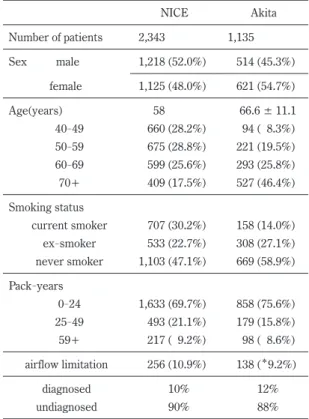
Table 1. Comparison of patient characteristics between the NICE study and the survey of subjects

NICE Akita

Number of patients 2,343 1,135

Sex   male 1,218 (52.0%) 514 (45.3%)     female 1,125 (48.0%) 621 (54.7%)

Age(years)   58 66.6 ± 11.1

40

-

49 660 (28.2%)   94 ( 8.3%) 50

-

59 675 (28.8%) 221 (19.5%) 60

-

69 599 (25.6%) 293 (25.8%) 70+ 409 (17.5%) 527 (46.4%) Smoking status

current smoker 707 (30.2%) 158 (14.0%) ex

-

smoker 533 (22.7%) 308 (27.1%) never smoker 1,103 (47.1%) 669 (58.9%) Pack

-

years

0

-

24 1,633 (69.7%) 858 (75.6%) 25

-

49 493 (21.1%) 179 (15.8%) 59+ 217 ( 9.2%)   98 ( 8.6%) airflow limitation 256 (10.9%) 138 ( 9.2%)

diagnosed 10% 12%

undiagnosed 90% 88%

* Standardized according to age and sex based on the 2005

census. NICE study, the Nippon COPD Epidemiology

study

(3)

and airflow limitation were examined using logistic re- gression analyses, and odds ratios (ORs) and 95% confi- dence intervals (95% CIs) for the prevalence of airflow limitation were calculated. A P value < 0.05 was con- sidered statistically significant. Differences of preva- lence ratio between our study and NICE study were ex- amined using chi test. The prevalence of airflow limitation was standardized according to age and sex based on 2005 census data.

Results

A total of 1,135 subjects were enrolled. The mean age of the subjects was 66.6 ± 11.1 years. The patient characteristics are shown in Table 1. Of the 1,135 sub- jects surveyed, 138 (12.2%) were confirmed to have air- flow limitations. When standardized according to age and sex based on 2005 census data, the prevalence of COPD was 9.2%.

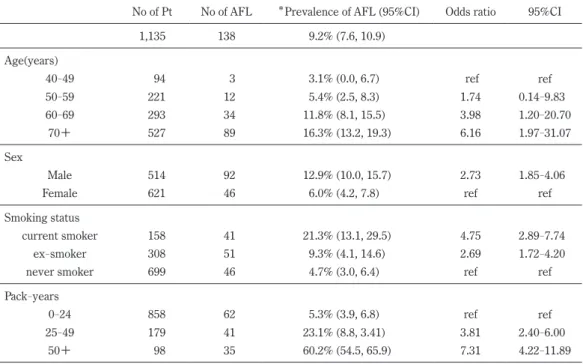
The details of prevalence of airflow limitation and its odds ratio analyzed for age, gender, smoking status or

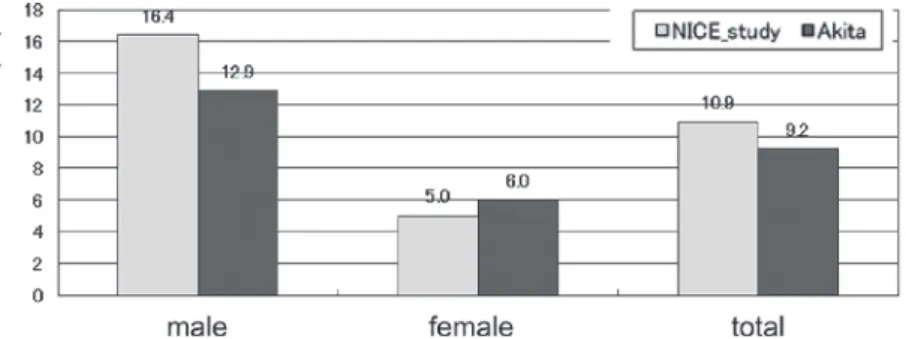
pack - years are shown in Table 2. The proportion of pa- tients with airflow limitations increased with age (3.1% in subjects aged 40 - 49 years vs 16.3% in subjects over 70 years). The prevalence of airflow limitation was much higher in males than females (12.9% vs 6.0%, respective- ly). The distribution patterns of prevalence of airflow limitation by age and gender were similar between this study and NICE study (Fig. 1, Fig. 2, Table 2).

On the other hand, the prevalence of airflow limitation by smoking status was different between this study and NICE study. In this study, the prevalence in current smokers, ex - smokers and never smokers was 21.3%, 9.3% and 4.7%, respectively, whereas that in NICE study was 15.4%, 15.6% and 6.1% (Fig. 3, Table 2). The prev- alence of airflow limitation in this study compared to that in NICE study was significantly higher in current smok- ers with OR of 1.55 (95% CI : 1.01 - 2.37, P=0.04), and significantly lower in ex - smokers with OR of 0.56 (95%

CI : 0.36 - 0.89, P=0.01) (Fig. 4, Table 2). Furthermore, according to analysis by smoking index, a rapid increase in the prevalence rate was observed in this study espe-

Table 2. Prevalence of airflow limitation and odds ratios

No of Pt No of AFL Prevalence of AFL (95%CI) Odds ratio 95%CI

1,135 138 9.2% (7.6, 10.9)

Age(years)

40

-

49   94  3 3.1% (0.0, 6.7) ref ref

50

-

59 221 12 5.4% (2.5, 8.3) 1.74 0.14

-

9.83

60

-

69 293 34 11.8% (8.1, 15.5) 3.98 1.20

-

20.70

70+ 527 89 16.3% (13.2, 19.3) 6.16 1.97

-

31.07

Sex

Male 514 92 12.9% (10.0, 15.7) 2.73 1.85

-

4.06

Female 621 46 6.0% (4.2, 7.8) ref ref

Smoking status

current smoker 158 41 21.3% (13.1, 29.5) 4.75 2.89

-

7.74

ex

-

smoker 308 51 9.3% (4.1, 14.6) 2.69 1.72

-

4.20

never smoker 699 46 4.7% (3.0, 6.4) ref ref

Pack

-

years

0

-

24 858 62 5.3% (3.9, 6.8) ref ref

25

-

49 179 41 23.1% (8.8, 3.41) 3.81 2.40

-

6.00

50+   98 35 60.2% (54.5, 65.9) 7.31 4.22

-

11.89

* Standardized according to age and sex based on the 2005 census. AFL, airflow limitation 95% CI, 95% con-

fidence interval

(4)

cially with a 50 pack - years or more, which showed signif- icant increase compared to that in NICE study with OR of 3.32 (95% CI : 2.04 - 5.39, P<0.0001).

The severity of airflow limitation was classified accord- ing to GOLD criteria, as follows : mild (%FEV1 ≥ 80%), moderate (50% ≤ %FEV1 < 80%), severe (30% ≤

%FEV1 < 50%), and very severe (%FEV1 < 30%) 5) . 

The percentage of patients with mild, moderate, severe, and very severe airflow limitation was 50%, 42.8%, 7.2%, and 0%, respectively (Fig. 5). The proportion of severi- ty in this study was compatible with that in NICE study (56%, 38%, 5%, and 1%, respectively).

Only 12% (NICE 10%) of subjects with airflow limita- tions had already been diagnosed with COPD (Fig. 6), Fig. 1. Prevalence of airflow limitation according to age (comparison with the NICE study).

NICE study, the Nippon COPD Epidemiology study

Fig. 2. Prevalence of airflow limitation according to sex (comparison with the NICE study).

NICE study, the Nippon COPD Epidemiology study

Fig. 3. Prevalence of airflow limitation according to smoking status (comparison with the NICE study).

NICE study, the Nippon COPD Epidemiology study

(5)

yielding a low diagnostic rate, similar to that of the NICE study.

In patients with airflow limitations, shortness of breath was the most common symptom followed by sputum, wheeze, and cough. The OR for airflow limitation by symptom number was as follows : one symptom, OR=

1.44 (95% CI : 0.96 - 2.16), two symptoms, OR=3.64 (95% CI : 2.37 - 5.59), three symptoms, OR=4.41 (95%

CI : 2.41 - 8.08), and four symptoms, OR=5.84 (95% CI : 3.27 - 10.42). Patients with two or more symptoms had a significantly higher risk of acquiring airflow limitation. 

When the prevalence of airflow limitation was analyzed according to the type of underlying disease present, the only significantly high OR was found for gastric ulcer (OR 4.39, 95% CI : 1.43 - 12.31) among the following condi-

Fig. 4. Prevalence of airflow limitation according to smoking index (comparison with the NICE study).

NICE study, the Nippon COPD Epidemiology study

Fig. 5. Airflow limitation severity according to GOLD criteria.

GOLD, Global Initiative for Chronic Obstructive Lung

Disease Fig. 6. Percentage of COPD patients who had been

previously diagnosed.

Fig. 7. Odds ratio of underlying diseases in patients with airflow limitation.

95% CI, 95% confidence interval

(6)

tions : hypertension, diabetes mellitus, hyperlipidemia, chronic hepatitis, gastric ulcer, angina pectoris, myocardi- al infarction, arrhythmia, atrial fibrillation, and ischemic heart disease (Fig. 7).

Discussion

This is the first spirometry - based epidemiological study to examine the prevalence of airflow limitation in primary care clinics in Akita prefecture. The prevalence of COPD was 9.2% (standardized according to age and sex based on 2005 census data) in patients from primary care clinics who were 40 years or older in Akita prefec- ture. This study demonstrated that screening spirome- try in a primary care setting can detect undiagnosed cas- es of airflow limitation. The prevalence of airflow limitation in our study was almost equal to that of the NICE study (unadjusted prevalence of 10.9%) 3) . More- over, the prevalence of COPD in patients who attended general clinics in Nagasaki prefecture (13.6%) 6) and Wakayama prefecture (10.3%) 7) was similar to that in our study.

Smoking is a major risk factor for COPD, and aging in- creases its prevalence, which is in line with the results of our study, as the prevalence of airflow limitation in- creased with age in our participants. The prevalence of COPD in patients > 80 years of age was 16.9% 8) , which is higher than that in our study and others 6,7) in patients

> 40 years old. This suggests that there might be a high percentage of undiagnosed COPD cases in the el- derly population. The prevalence of airflow limitation was higher in heavy smokers, and the prevalence also in- creased in those with a history greater than 25 pack - years. In current smokers, ex - smokers, and never smokers, the airflow limitation prevalence rate was 21.3% (NICE 15.4%), 9.3% (NICE, 15.6%) and 4.7%

(NICE 5.8%), respectively. The OR for airflow limita- tion by smoking status of this study compared to NICE study was significantly higher in current smokers, and significantly lower in ex - smokers. The fact that airflow limitation prevalence is lower in ex - smokers than in cur- rent smokers indicates the potential effects of smoking cessation on COPD. In this study, the prevalence of COPD and OR in current smokers and heavy smokers

with a smoking history greater than 50 pack - years was significantly higher than that in the NICE study. It sug- gests that smokers in this study are more sensitive to cigarette smoke than that in NICE study.

Systemic inflammation may be involved in the patho- genesis of COPD 9

-

11) . COPD patients are at increased risk for several comorbidities including myocardial infarc- tion, osteoporosis, depression, and diabetes 1) . However, it is still unclear whether such diseases affect the preva- lence of COPD. Therefore, it is important to clarify the correlation between the prevalence of COPD and other diseases. In this study, we demonstrated that patients with gastric ulcers had a high prevalence of airflow limi- tation. The relationship between emphysema, peptic ulcers, and smoking has previously been highlighted 12) .  Indeed, hypoxemia and hypercapnia, which are latent in pulmonary emphysema and chronic bronchitis, may be associated with ulcer formation 13) . It has also been shown that gastric mucosal disorders are induced by hy- poxic exposure in rats 14) , and that the pH of the gastric mucosa is lowered by inhalation of carbon dioxide in healthy subjects 15) . Thus, respiratory function deterio- ration and hypoxemia may be related to gastrointestinal mucosal disorders. Moreover, an epidemiological inves- tigation using a questionnaire developed in the Nether- lands showed that 21 (7.2%) of 290 patients with chronic airflow limitations had a comorbid peptic ulcer (OR 7.33, 95% CI : 2.41 - 22.25) 16) .

According to the demographic statistics of the Ministry of Health, Labor and Welfare 17) , the mortality rate in pa- tients with COPD in Akita prefecture was 11.9 per 100,000 in 2014, which is lower than the national average (12.9 per 100,000). On the other hand, lung cancer mortality was 74.4 per 100,000 in Akita prefecture, which is higher than the national average of 58.5 per 100,000. 

Smoking is the major risk factor for both lung cancer and COPD, but there is a large difference in the mortality rate of the two diseases, which may potentially be caused by the low rate of COPD diagnosis in Akita prefecture.  

The screening protocol for lung cancer is well estab- lished, including medical checkups and chest X - rays. 

On the other hand, performing spirometry, which is nec-

essary to diagnose COPD, is difficult in the medical

checkup setting, unless it is done as part of a comprehen-

(7)

sive health examination 18) .

In this study, we performed spirometry on patients al- ready being treated for other diseases at general health clinics. Of these patients, approximately 10% had air- flow limitation, of which 88% were undiagnosed as COPD. In addition, GOLD severity was mild in 50% of patients and moderate in 43% of patients, in total approx- imately 90% of patients are in the early stage of COPD. 

Patients in the early stage of COPD have few or no respi- ratory symptom. Therefore, COPD is underdiagnosed by physicians and derecognized by patients. Our results suggest that widespread use of spirometry for primary care clinics in Akita prefecture is necessary, including re- ferral of patients with suspected COPD to hospitals in a model of “hospital and clinic cooperation.” In addition, awareness of COPD is needed, focusing on those who are over 40 years old, who have a history of smoking, and who have respiratory symptoms 19) . The Ministry of Health, Labor and Welfare aims to set the recognition level of COPD, which was 25% in 2011, to 80% by 2022. 

To achieve this goal, respiratory physicians must partake in educating the public through such things as public lec- tures. Because COPD is thought to be a preventable and treatable disease, early diagnosis promotes early in- tervention before the burden of COPD on society can be- come more substantial. Recent publications demon- strate that early interventions can reduce declines in FEV1 20) . Therefore, ensuring earlier diagnosis and in- terventions may improve the prognosis of COPD and as- sociated comorbidities and reduce the disease burden of COPD on society.

There were some limitations to this study. First, spi- rometry was only performed in a pre - bronchodilator con- dition because the inhalation of bronchodilators was not allowed in patients without respiratory diseases at prima- ry care clinics. Therefore, we may have overestimated the prevalence of COPD. Next, the prevalence of bron- chial asthma and smoking history was determined using only a self - administered questionnaire. Our inclusion criteria do not completely exclude the possibility that some asthmatic individuals and patients with other ob- structive lung diseases, such as diffuse panbronchiolitis, were included in this study.

In conclusion, 9.2% of the patients in Akita prefecture

primary care clinics who were 40 years or older had air- flow limitation, of which 88% were undiagnosed as COPD. Our results suggest that widespread use of spi- rometry in primary care clinics as well as cooperation be- tween hospitals and clinics are warranted to reduce the number of undiagnosed COPD cases. Furthermore, we demonstrated that patients with gastric ulcers had a high prevalence of airflow limitation.

Acknowledgments

The authors would like to thank Drs. Toyohiko Abe, Toshiyuki Awaji, Yoshinobu Ikeda, Hideo Kosokabe, Yo- shiaki Kaga, Hajime Kimura, Mamoru Kimura, Satoshi Kibira, Wataru Sasaki, Masako Sugawara, Katsutake Seki, Takehiko Tajika, Shu Hashimoto, Kenichi Hosoya, Hi- toshi Matsuoka, and Shu Yanagisawa for their help re- cruiting patients for this study.

References

1) Global Initiative for Chronic Obstructive Lung Dis- ease. Global Strategy for the Diagnosis, Manage- ment, and Prevention of Chronic Obstructive Pulmonary Disease. 2018, Availed from http://www.

goldcopd.org

2) World Health Organization : Chronic obstructive pulmonary disease (COPD) 2012, Availed from http://

www.who.int/respiratory/copd/en/

3) Fukuchi, Y., Nishimura, M., Ichinose, M., et al. (2004)  COPD in Japan : The Nippon COPD Epidemiology study. Respirology, 9, 458

-

465.

4) Takahashi, T., Ichinose, M., Inoue, H., Shirato, K., Hattori, T. and Takishima, T. (2003) Underdiagnosis and undertreatment of COPD in primary care set- tings. Respirology, 8, 504

-

508.

5) Global Initiative for Chronic Obstructive Lung Dis- ease. Global Strategy for the Diagnosis, Manage- ment, and Prevention of Chronic Obstructive Pulmonary Disease. 2006, Available from http://

www.goldcopd.org.

6) Fukahori, S., Matsuse, H., Takamura, N., Hirose, H., Tsuchida, T., Kawano, T., Fukushima, C., Mizuta, Y.

and Kohno, S. (2009) Prevalence of chronic

obstructive pulmonary diseases in general clinics in

(8)

terms of FEV1/FVC. Int. J. Clin. Pract., 63, 269

-

274.

7) Minakata, Y., Sugiura, H., Yamagata, T., Yanagisawa, S., Ichikawa, T., Koarai, A., Akamatsu, K., Hirano, T., Matsunag, K. and Ichinose, M. (2008) Prevalence of COPD in primary care clinics : correlation with non

-

respiratory diseases. Intern. Med., 47, 77

-

82.

8) Yoshikawa, M., Yamamoto, Y., Tomoda, K., Fujita, Y., Yamauchi, M., Osa, T., Uyama, H., Okamoto, N., Kurumatani, N. and Kimura, H. (2017) Prevalence of chronic obstructive pulmonary disease in indepen- dent community

-

dwelling older adults : The Fuji- wara

-

kyo study. Geriatr. Gerontol. Int., 17, 2421

-

2426.

9) Agusti, A.G., Noguera, A., Sauleda, J., Sala, E., Pons, J. and Busquets, X. (2003) Systemic effects of chronic obstructive pulmonary disease. Eur. Respir.

J., 21, 347

-

360.

10) Gan, W.Q., Man, S.F., Senthilselvan, A. and Sin, D.D.

(2004) Association between chronic obstructive pulmonary disease and systemic inflammation : a systematic review and a meta

-

analysis. Thorax, 59, 574

-

580.

11) Similowski, T., Agusti, A., MacNee, W. and Schon- hofer, B. (2006) The potential impact of anaemia of chronic disease in COPD. Eur. Respir. J., 27, 390

-

396.

12) Lowell, F.C., Franklin, W., Michelson, A.L. and Schil- ler, I.W. (1956) A note on the association of emphy- sema, peptic ulcer and smoking. N. Engl. J. Med., 254, 123

-

124.

13) Ellison, L.T., Ellison, R.G., Carter, C.H., Daniel, L.D.

Jr. and Moore, V.A. Jr. (1964) The role of hypercap- nia and hypoxia in the etiology of peptic ulceration in patients with chronic obstructive pulmonary emphy-

sema. Am. Rev. Respir. Dis., 89, 909

-

916.

14) Nakazawa, S., Segawa, K., lmai, K., Aichi, M. and Tsukamoto, Y. (1980) A new method for experi- mental study on gastric mucosal damage : changes in gastric mucosa of rat in hypoxemia. Gastroen- terol. Jpn., 15, 173

-

176.

15) Dolinsky, A. (1976) The effect of inhalation hyper- capnia in healthy subjects on the acidity of gastric juice. Bull. Eu. Physiopathol. Respir., 12, 243

-

249.

16) van Manen, J.G., Bindels, P.J., IJzermans, C.J., van der Zee, J.S., Bottema, B.J. and Schadé, E. (2001)  Prevalence of comorbidity in patients with a chronic airway obstruction and controls over the age of 40. 

J. Clin. Epidemiol., 54, 287

-

293.

17) The National Health and Nutrition Survey in Japan. 

Ministry of Health, Labour and Welfare of Japan, 2014.

18) Omori, H., Kaise, T., Suzuki, T. and Hagan, G. (2016)  Prevalence of airflow limitation in subjects undergo- ing comprehensive health examination in Japan : Survey of Chronic Obstructive pulmonary disease Patients Epidemiology in Japan. Int. J. Chron.

Obstruct. Pulmon. Dis., 11, 873

-

880.

19) Ferguson, G.T., Enright, P.L., Buist, A.S. and Hig- gins, M.W. (2000) Office spirometry for lung health assessment in adults : a consensus statement from the National Lung Health Education Program. 

Chest, 117, 1146

-

1161.

20) Decramer, M., Celli, B., Kesten, S., Lystig, T., Mehra, S. and Tashkin, D.P. (2009) UPLIFT investigators. 

Effect of tiotropium on outcomes in patients with

moderate chronic obstructive pulmonary disease

(UPLIFT) : a prespecified subgroup analysis of a

randomized controlled trial. Lancet, 374, 1171

-

1178.

Table 1.   Comparison of patient characteristics between  the NICE study and the survey of subjects
Table 2.  Prevalence of airflow limitation and odds ratios
Fig. 3. Prevalence of airflow limitation according to smoking status (comparison with the NICE study).
Fig. 7. Odds ratio of underlying diseases in patients  with airflow limitation.

参照

関連したドキュメント

熱力学計算によれば、この地下水中において安定なのは FeSe 2 (cr)で、Se 濃度はこの固相の 溶解度である 10 -9 ~10 -8 mol dm

The mGoI framework provides token machine semantics of effectful computations, namely computations with algebraic effects, in which effectful λ-terms are translated to transducers..

An example of a database state in the lextensive category of finite sets, for the EA sketch of our school data specification is provided by any database which models the

A NOTE ON SUMS OF POWERS WHICH HAVE A FIXED NUMBER OF PRIME FACTORS.. RAFAEL JAKIMCZUK D EPARTMENT OF

A lemma of considerable generality is proved from which one can obtain inequali- ties of Popoviciu’s type involving norms in a Banach space and Gram determinants.. Key words

de la CAL, Using stochastic processes for studying Bernstein-type operators, Proceedings of the Second International Conference in Functional Analysis and Approximation The-

[3] JI-CHANG KUANG, Applied Inequalities, 2nd edition, Hunan Education Press, Changsha, China, 1993J. FINK, Classical and New Inequalities in Analysis, Kluwer Academic

Then it follows immediately from a suitable version of “Hensel’s Lemma” [cf., e.g., the argument of [4], Lemma 2.1] that S may be obtained, as the notation suggests, as the m A