B5IM2023
Master’s Thesis
Neural Networks for Fine-grained Entity Type Classification
Sonse Shimaoka
February 10, 2017
Graduate School of Information Science Tohoku University
A Master’s Thesis
submitted to System Information Sciences, Graduate School of Information Science,
Tohoku University
in partial fulfillment of the requirements for the degree of MASTER of ENGINEERING
Sonse Shimaoka Thesis Committee:
Professor Kentaro Inui (Supervisor) Professor Akinori Ito
Professor Kengo Kinoshita
Associate Professor Naoaki Okazaki (Co-supervisor)
Research Associate Pontus Stenetorp (Co-supervisor, University College London)
Neural Networks for Fine-grained Entity Type Classification
∗Sonse Shimaoka
Abstract
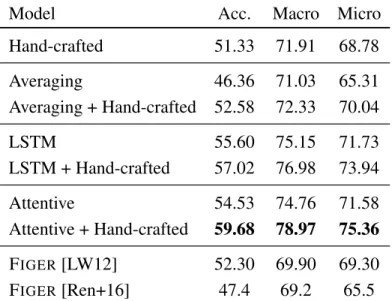
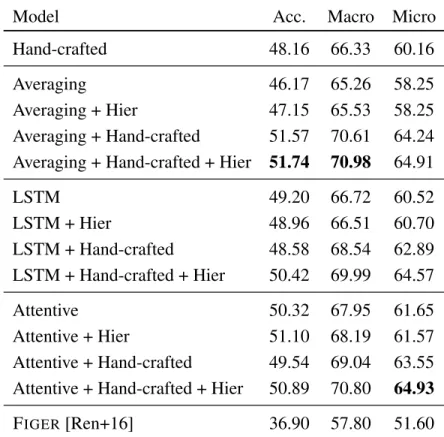
In this thesis, we investigate several neural network architectures for fine-grained entity type classification and make four key contributions. First, we incorporate pre- trained word embeddings to enable our models to use the information of similarities between word meanings and establish that hand-crafted features and word embeddings complement each other. Second, we propose a novel attention-based neural network model for the task that unlike previously proposed models recursively composes repre- sentations of entity mention contexts. Through both qualitative and quantitative anal- ysis we establish that the attention mechanism learns to attend over syntactic heads and the phrase containing the mention, both of which are known to be strong hand- crafted features for our task. Third, despite using the same evaluation dataset, the literature frequently compare models trained using different data. We demonstrate that the choice of training data has a drastic impact on performance, which decreases by as much as 9.85% loose micro F1 score for a previously proposed method. Despite this discrepancy, our best model achieves state-of-the-art results with 75.36% loose micro F1 score on the well-established FIGER(GOLD) dataset and we report the best results for models trained using publicly available data for the OntoNotes dataset with 64.93%
loose micro F1 score. Fourth, We introduce parameter sharing between labels through a hierarchical encoding method, that in low-dimensional projections show clear clus- ters for each type hierarchy.
Keywords:
Fine Grained Entity Type Classification, Neural Networks
∗Master’s Thesis, System Information Sciences, Graduate School of Information Sciences, Tohoku University, B5IM2023, February 10, 2017.
Contents
1 Introduction 1
1.1 Natural Language Processing and Machine Learning . . . . 1
1.1.1 Natural Language Processing . . . . 1
1.1.2 Machine Learning Approach . . . . 3
1.2 Entity type classification . . . . 6
1.3 Applications . . . . 6
1.4 Fine-grained entity type classification . . . . 8
1.5 Characteristics of Fine-grained Entity Type Classification . . . . 8
1.6 Existing machine learning approaches . . . . 10
1.7 Contributions . . . . 10
1.8 Structure of the thesis . . . . 12
2 Related Work 13 3 Models 15 3.1 Shared settings across all models . . . . 15
3.1.1 Task Formulation . . . . 15
3.1.2 Logistic Regression . . . . 15
3.1.3 Inference Procedure . . . . 15
3.2 Sparse Feature Model . . . . 16
3.3 Neural Models . . . . 16
3.3.1 Mention Representation . . . . 17
3.3.2 Averaging Encoder . . . . 18
3.3.3 LSTM Encoder . . . . 18
3.3.4 Attentive Encoder . . . . 19
3.4 Hybrid Models . . . . 20
3.5 Hierarchical Label Encoding . . . . 21
4 Experiments 22 4.1 Datasets . . . . 22
4.2 Pre-trained Word Embeddings . . . . 23
4.3 Evaluation Criteria . . . . 23
4.4 Hyperparameter Settings . . . . 24
4.5 Results . . . . 24
4.5.1 FIGER (GOLD) . . . . 24
4.5.2 OntoNotes . . . . 26
4.6 PCA visualisation of label embeddings . . . . 28
4.7 Attention Analysis . . . . 29
4.7.1 Qualitative Analysis . . . . 29
4.7.2 Quantitative Analysis . . . . 30
5 Conclusions and Future Work 31
Acknowledgements 33
List of Figures
1 Computation of a single neuron. . . . 4 2 Computation of a neural network. . . . . 5 3 Fine-grained Entity Type Classification. Traditional coarse-grained la-
bels are colored in black. Fine-grained labels are colored in red. . . . 6 4 List of features used in FIGER system [LW12]. The mention “Eto” in
the sentence“CJ Ottaway scored his celebrated 108 to seal victory for Eton ” is taken as a running example. . . . . 10 5 An illustration of the attentive encoder neural model predicting fine-
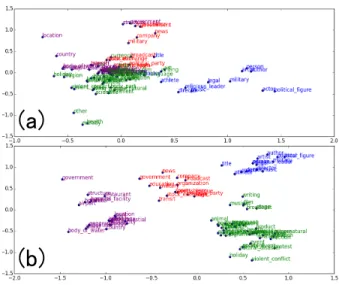
grained semantic types for the mention “New Zealand” in the expres- sion “a match series against New Zealand is held on Monday”. . . . . 19 6 Hierarchical label encoding illustration. . . . 22 7 PCA projections of the label embeddings learnt from the OntoNotes
dataset where subtypes share the same color as their parent type. Sub- figure (a) uses the non-hierarchical encoding, while sub-figure (b) uses the hierarchical encoding. . . . . 29 8 Visualisation of the attention over several mentions in their context. . 30
List of Tables
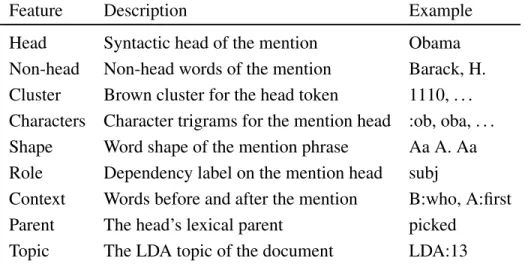
1 Hand-crafted features, based on those of Gillick et al. (2014), used by the sparse feature and hybrid model variants in our experiments. The features are extracted for each entity mention and the example mention used to extract the example features in this table is “. . . who [Barack H.
Obama] first picked . . . ”. . . . 17 2 Training datasets used and its availability. W2M is Wikipedia-based,
+D indicates denoising, and GN1/GN2 are two company-internal Google News datasets. The symbolsXand×indicates publicly available and unavailable data. . . . . 22 3 Performance on FIGER (GOLD) for models using the same W2M
training data. . . . . 25 4 Performance on FIGER (GOLD) for models using different training
data. . . . . 25 5 Performance on OntoNotes for models using thesameW2M training
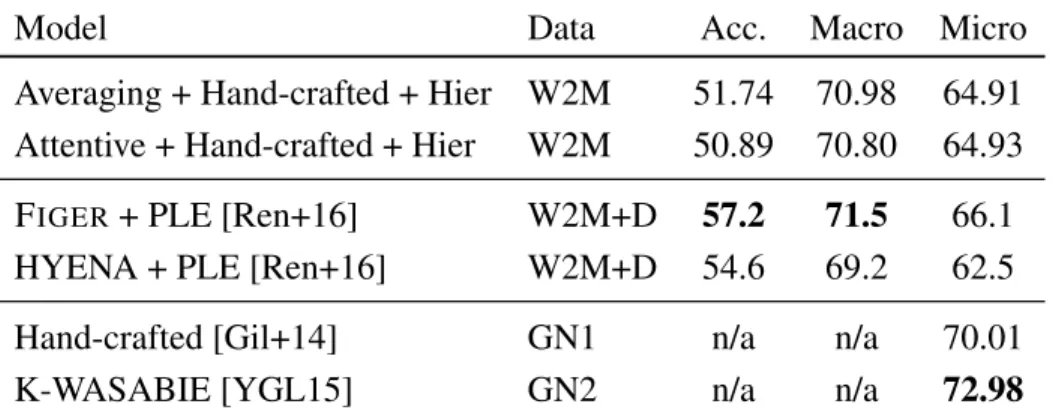
data. . . . . 27 6 Performance on OntoNotes for models usingdifferenttraining data. . 28 7 Quantitative attention analysis. . . . 31
1 Introduction
In this section we explain the objective and background of the research and provide the structure of the thesis.
1.1 Natural Language Processing and Machine Learning
We begin with explaining the general academic field in which the subject of this thesis belongs, namely natural language processing. By doing so we intend to make readers understand how our work is positioned in a broader context. Moreover, we briefly describe machine learning, which currently is the dominant algorithmic approach to solve natural language processing tasks.
1.1.1 Natural Language Processing
Languages that we use in everyday life such as English and Japanese are our most important means of communication. These languages are called natural languages, as opposed to artificial languages such as programing languages. Natural Language Pro- cessing (NLP) is a sub field in computer science that deals with information processing of natural language data.
There are many tasks in NLP that are useful at a societal level. Below, we illustrate some of those tasks that today are widely used for a variety of services. Machine translationautomatically translates text from one human language (like Japanese) to another (like English). This makes individuals capable of reading and writing text in many different languages, thus drastically increasing the potential of worldwide com- munication. Text summarizationproduces a readable summary of a document such as newspaper articles. This enables us to shorten the required time to comprehend im- portant news, which is necessary in today’s world where the society keeps changing at an unprecedented speed. By performingsentiment analysis, computers can automati- cally analyze the emotions put in given words. As an example, sentiment analysis can be used to gather opinions of approval and disapproval on specific issues on products.
Document classification determines the categories of a given document. Thanks to this technology e-mail service providers can automatically filter emails that are clas- sified as a spam. Alternatively, document classification can be used to automatically
organize news paper articles according to their topics (sports, politics, science, econ- omy and so on). Information extractionaims to extract structured information from unstructured text. An example is the extraction from news articles about corporate mergers. Organizing such information in formal knowledge base makes it possible to process the information in rigid ways using database queries. Information retrieval concerns finding documents that contain particular information that the user is looking for. Search engines for finding web pages in the internet is a well-known application.
Question answering is the task of producing human-readable answers to questions described in the form of text. IBM Watson[Fer+10] is the championing example of question answering system.
While above examples of NLP tasks are in themselves acknowledged to be useful for society, in order to perform them effectively, it is necessary to do more basic pro- cessing beforehand. We explain some of those downstream tasks below. Sentences, phrases, and words are considered to be important elements of natural language. The tasks of identifying each of those elements in text are generally calledsegmentation.
Word segmentation is relatively easy for languages such as English where each word is separated with the previous and next words by spaces, but difficult for languages such as Japanese and Chinese, since there are no simple indicator to determine boundaries between words. Once sentences, phrases, words, and other useful elements are iden- tified, a typical subsequent processing step is classifying those elements into several categories. For example, the task of classifying words into parts of speech (POS) such as noun, verb, adjective, determinant, is calledPOS tagging. Segmentation and clas- sification can be executed either separately or jointly, depending on the situation. Seg- menting phrases and classifying them into syntactic categories such as noun phrase, verb phrase, and adjective phrase are together called chunking or shallow paring.
Entities are atomic elements in text that belong to particular semantic types including person,organization,time, andlocation. Identifying and classifying enti- ties are respectively calledentity segmentationandentity type classification. When those two tasks are put together, we call itentity recognition. In this thesis we focus on the advanced variant of entity classification, namely fine-grained entity classifi- cation. After identifying and classifying various elements in text, we can proceed to detect relations between them. For example, dependency parsingdetects the gram- matical subordination relation (dependency) between two words. Another example is
coreference resolutionthat finds a group of expressions that refer to the same entity in a text.
1.1.2 Machine Learning Approach
We have explained upstream and downstream tasks of NLP. Next, we discuss machine learning approach to solve these tasks. Machine learning is a group of algorithmic methods that automatically detects patterns in data, and then uses the uncovered pat- terns to predict future data or other outcomes of interest [Mur12].
The field of machine learning is usually divided into several sub fields such as super- vised learning, unsupervised learning, and reinforcement learning. This thesis mainly make use of supervised learning, which is the most widely used form of machine learn- ing in practice. The goal of supervised learning is to learn a mapping from input vari- ablexto output variablet, using training setD ={(xi, ti)|i= 1, ..., N}that contains pairs of input and output variables whereN is the number of pairs. A simple example is to learn an estimator of the gender given the weight and height of a person. In this case, input variablexis a 2dimensional real vector and output variablet is a binary variable where t = 1 represents the person being female and t = 0 represents the person being male. In general, the domains ofxandtcan be arbitrarily complex. For example,xcan be an image, a sentence, an email message, a time series, a molecular shape, a graph and so on. Similarly, the form oft can be in principal anything, but most methods assume t is either a categorical variable from some finite set (such as female or male) or real-valued scalar variable. Iftis categorical, the problem is called classification, which covers most NLP problems. Common examples of classification problem includes document classification, cancer detection, image classification, and sentiment analysis. Ift is real-valued, the problem is called regression. Well-known instances of regression problems are stock price prediction and real estate value esti- mation.
Supervised learning is typically done in three steps. The first step is to define a model that has parameters to be estimated. A model is formalized as a parametric functiony = f(x;θ)with parameter θ. The second step is to define a loss function L(D;θ) that compares the outputs yi = f(xi;θ) of the model and the actual output variablestiin the training setD ={(xi, ti)|i = 1, ..., N}. The third step is to conduct optimization that minimizes the loss function with respect to the parameter.
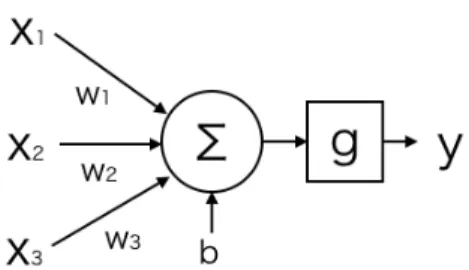
Figure 1: Computation of a single neuron.
Recently, a particular family of parametric function called neural network has at- tracted a great deal of attention. An artificial neural network – commonly referred to as a neural network – is a network of simple computational units called neurons. The typical computation taking place in a neuron is as follows. First, it takes real-valued input vector x and computes an intermediate scalar value a = wTx +b where the parameterw, called weight is a vector of the same dimension as xand the parameter b – called bias – is a scalar. a is called preactivation value. The output of the neu- ron y is computed by applying a nonlinear function g, called activation function, to the preactivationa: y =g(a). Activation function can be any differentiable nonlinear function. The overall computation of a neuron that takes three input variablesx1, x2, x3 and produce the outputyis shown in Fig 1.
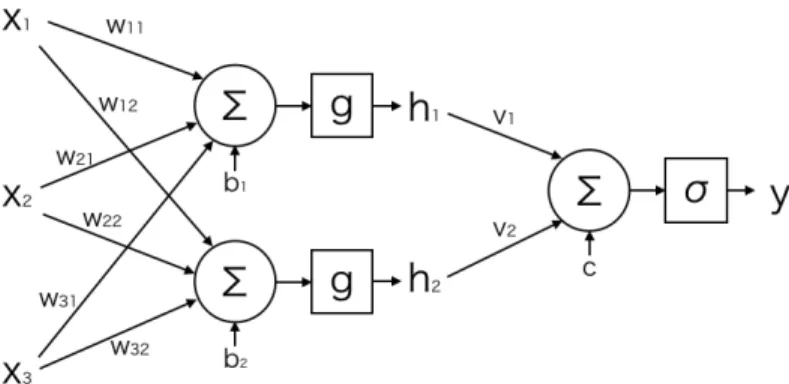
What a single neuron can compute is limited to some simple domain, but when several neurons are connected together, the overall network can perform more complex computation. Fig 2 illustrates an example of such neural networks. As seen in the figure, neural networks are mostly designed to have layerwise structure. Starting from the input layer, each layer takes the output vector of the previous layer, executes the computation, and then passes the resulting output vector to the next layer. The final layer produces the overall output of the network. In this particular example, the output layer consist of a single neuron, and the sigmoid function σ(a) = 1+e1−a is used as the activation function. This setting of the output layer is used to perform a binary classification problem. That is, the outputy of the final layer takes value between0 and 1, so this can be interpreted as the probability of the input classified as t = 1.
When we make the actual classification decision, we can use this probability with a cut off value of0.5such that if y > 0.5, the input is classified ast = 1and otherwise as t= 0.
Figure 2: Computation of a neural network.
A loss function is needed to estimate how good the model output is compared to the actual output values. The choice of an appropriate loss function depends on the type of the model. In the case of the neural network that does a binary classification with the sigmoid activation function, the best choice is the following cross-entropy:
L(D;θ) = 1 N
N
X
i=1
−tilog(yi)−(1−ti) log(1−yi)
Note that above loss function decreases when the values of ti and yi are close and increases when they are separated. Thus this function measures the performance of the model appropriately. From a probabilistic perspective, this function can be seen as the average negative log likelihoodN LL(D;θ) =−N1 logQN
i=1P(ti = 1|xi;θ).
In order to minimize the loss function in neural networks, variants of the gradient decent algorithm are usually used. The key insight of the gradient decent is that the value of the loss function decreases if we adjust the parameters minutely along the (negative) direction represented by the gradient of the loss function with respect to the current parameters. In gradient decent, at first the parameters are initialized with random variables, and then the parameters are iteratively moved toward the direction of the gradients until the loss function converges to the locally optimal value. This iteration can be written as follows:
θnew = θold−α∂L(D;θ)
∂θ θ=θold
Whereαis a small positive scalar called the learning rate.
The gradients of complex neural networks may seem to be difficult to compute, but there is an efficient algorithm called backpropagation that does this job mechanically.
Ultimately, backpropagation is just another name for the chain rule used in the basic calculus. Backpropagation is supported by most of software frameworks for neural networks such as Tensorflow [Mar+15].
1.2 Entity type classification
Figure 3: Fine-grained Entity Type Classification. Traditional coarse-grained labels are colored in black. Fine-grained labels are colored in red.
Next, we explain fine-grained entity classification, which is the task we focus in this thesis.
Entities are atomic elements in text that belong to particular semantic types such as person,organization,time, andlocation. Entity type classification aims to label entity mentions in their context with their respective semantic types. For example, in the sentence “It was won by the Ottawa Senators, coached by Dave Gill.”, our goal is to label “Ottawa Senators” asorganizationand “Dave Gill” asperson.
1.3 Applications
Information regarding entity type mentions have proven to be valuable for several nat- ural language processing tasks.
Information Extraction
Information extraction (IE) is the task of extracting structured information from un- structured text [GS96]. One way of using entity type information in IE is constraint checking of predicate arguments [Car+10]. Consider a hypothetical situation where we want to extract the relation that a person plays for a sport team. It is reasonable to assume that the first argument of this relation should be categorized as person and the second argument should be categorized as organization. Given this assumption, we can use an entity type classification system to decide whether or not the type of an entities satisfy the constraints of the relation argument, which in turn would lead to a performance increase in precision.
Alternatively, entity type information can be directly added to the features of an ex- isting machine learning based information extraction system. It is shown that those ad- ditional features significantly increases the performance of a relation extractor [LW12].
Question Answering
Question answering is another important application of entity type classification. Es- pecially in factoid question answering system in which the form of the answer is re- stricted to be a noun phrase, knowing the semantic types of entity mentions is crucial for correctly answering questions [Lee+06; Fer+10]. For example if the question be- gins with the pronoun “Who”, the answer is very likely to belong to person, which means that entities mentions classified as person are seen as plausible candidates of the answer.
Coreference Resolution
Coreference resolution is the task of linking entity mentions in a document that refer to the same entity. Entity type information is also useful for this task since the system can utilize the fact that if mentions are coreferent, they are very likely to share the same entity type [RMP13].
Entity Linking
Entity linking aims to link entity mentions in text with their corresponding entities in a knowledge base. Entity types of mentions are used in this task to indicate whether the
type of the entity mention in text is consistent with the type of the candidate entity in a knowledge base [SWH15].
Information Retrieval
Finally entity type information enables an advanced form of information retrieval that supports users in querying documents not only by superficial string-based matching, but also by more abstract category-based matching [JW14].
1.4 Fine-grained entity type classification
Unfortunately, most entity type classification systems have focused on a limited num- ber of semantic types. When one of the earliest entity recognition tasks was introduced in the MUC-7 conference, only types ofperson, locationandorganization were considered [CR97]. Then, since type ofmiscellaneouswas added in CoNLL03 [TD03], these 4 types have become the mainstream choice of the entity recognition systems including widely used Stanford Named Entity Recognizer [FGM05] .
In contrast to using a limited number of coarse-grained types, a series of recent work has investigated entity type classification with a large set of fine-grained types [Lee+06;
LW12; Yos+12; YGL15; Del+15]. For example, fine-grained entity type classification might assignsport teamto “Ottawa Senators” in addition toorganizationand coachto “Dave Gill” in addition topersonas seen in Figure 3.
Using fine-grained entity types, as compared to using traditional coarse-grained types, is expected to be beneficial for a wide spectrum of applications [Sek08]. For ex- ample if we want to perform entity linking to the sentence “Michael Jordan is a leading researcher in machine learning.”, it would be better to label the mention “Michael Jor- dan” asscientistin addition topersonin order to avoid the mistake of linking the mention to wrong knowledge base entity such as a basket ball player [SWH15].
1.5 Characteristics of Fine-grained Entity Type Classification
There are several issues that are specific to fine-grained entity type classification.
Hierarchical structure of entity types
First, fine-grained types are typically subtypes of the standard coarse types. For ex- ampleartistis a subtype ofpersonandauthoris a subtype ofartist. This means the type space forms a tree-structured is-a hierarchy. Later we introduce a simple method to exploit this hierarchical nature of the type space that enables the information sharing among different types.
Collapse of the mutual exclusion assumption
Second, the assumption of the standard entity type classification that the labels of en- tities are mutually exclusive, does not hold. For example Magic The Gathering is both game and product. This means that it is more natural to formulate the task as a multi-class, multi-label classification problem, rather than a multi-class single label classification as in the case of normal entity type classification.
Context dependent labeling
Third, typically the set of acceptable labels for a mention is constrained to only those that are relevant to the local context [Gil+14; YGL15]. For example in the sentence
“Madonna starred as Breathless Mahoney in the film Dick Tracy.”, the most appropri- ate label for the mention “Madonna” isactress, since the sentence talks about her role in a film. In the majority of other cases, “Madonna” is likely to be labeled as a musician. The importance of the context gives us the motivation to use complex machine learning models to effectively process the contextual information.
Difficulty of preparing annotated data
Forth, compared to the traditional coarse grained entity classification, it is much more difficult to prepare an enough amount of annotated data to train the machine learning models. To tackle this issue, most works has taken the approach of distant supervision [Min+09] to automatically generate the training data [LW12; Gil+14]. We also follow this approach and use freely available public datasets to train our models.
Figure 4: List of features used in FIGER system [LW12]. The mention “Eto” in the sentence“CJ Ottaway scored his celebrated 108 to seal victory for Eton ” is taken as a running example.
1.6 Existing machine learning approaches
Next we consider the existing machine learning approach to fine-grained entity type classification. Existing systems for the task have mainly used simple linear models such as logistic regression [Gil+14] and perceptron [LW12], using high dimensional sparse hand-crafted features as input. For example in the model from Ling and Weld (2012), to classify the entity mention in a sentence, they firstly extracted features using the features shown in Fig 4.
Based on those features, a perceptron is used to classify labels.
1.7 Contributions
We address three issues that are limited in the previous works.
Introducing pre-trained word embeddings
First, previous models only used sparse handcrafted features. Models that use sparse features only cannot exploit similarities between features. For example, the words
“corpolation” and “campany” are semantically similar whereas the words “corpola- tion” and “avocado” are dissimilar. Since the occurrence of each word is represented as a binary value in the sparse feature vectors, semantically similar words and dissim-
ilar words are treated equally. Therefore previous models fail to make use of semantic similarities between words, which might undermine the performance.
We incorporate pre-trained word embeddings to allow information sharing between words. Word embeddings aims at quantifying and categorizing semantic similarities between linguistic items based on their distributional properties in large samples of language data [TRB10]. Inspite of the recent successes in incorporating pre-trained word embeddings in NLP systems, there are few works that used those embeddings to fine-grained entity type classification. We use openly available word embeddings extensively and show this feature alone can lead to a significant performance improve- ment to the previous state of the art model without using any hand-crafted features.
Moreover we use both word embeddings and hand-crafted features and observe that they complement each other, resulting in the best performance compared to using only one of those.
RNNs and attention mechanism to sequentially process the context
Second, the previous works fail to incorporate the word ordering information. In those works, the words are represented by a bag-of-words features, thus the information about the word ordering is missed. For example, one can see that a phrase “got a degree from” is indicative of the next words being an educational institution, something which would be helpful for fine-grained entity type classification, but the meaning of this phrase seems not to be successfully represented if the word ordering information is not preserved. Especially, we saw that the context plays an important role in fine- grained entity type classification, but no previously proposed system has attempted to learn to recursively compose representations of entity context.
To address this, we introduce a recurrent neural network to sequentially process the mention context, thus make it possible to use the word ordering information.
Next, while RNNs can encode sequential data, it still finds it difficult to learn long- term dependencies. Inspired by recent work using attention mechanisms for natural language processing [Her+15; Roc+15], we circumvent this problem by introducing a novel attention mechanism. Additionally, we perform extensive analysis of the at- tention mechanism of our model and establish that the attention mechanism learns to attend over syntactic heads and the tokens prior to and after a mention, both which are known to be highly relevant to successfully classifying a mention.
Using the same dataset to train and evaluate
Third, despite using the same evaluation dataset, the literature frequently compare models trained using different dataset.
While research on fine-grained entity type classification has settled on using two evaluation datasets, a wide variety of training datasets have been used – the impact of which has not been established. We demonstrate that the choice of training data has a drastic impact on performance, observing performance decreases by as much as 9.85%
loose Micro F1 score for a previously proposed method.
Hierarchical label encoding
We introduce label parameter sharing using a hierarchical encoding that improves per- formance on one of our datasets and the low-dimensional projections of the embedded labels form clear coherent clusters.
1.8 Structure of the thesis
This thesis is organized as follows. In this section, we explained the objective and background of our research. In section 2, we explain the previous work on fine-grained entity classification and attentive neural networks. From section 3, we introduce the machine learning models. In section 4, the settings and results of experiments are presented. Finally, we conclude our research in section 5.
2 Related Work
Our work primarily draws upon two strains of research, fine-grained entity classifica- tion and attention mechanisms for neural models. In this section we introduce both of these research directions.
By expanding a set of coarse-grained types into a set of 147 fine-grained types, Lee et al. (2006) were the first to address the task of fine-grained entity classification. Their end goal was to use the resulting types in a question answering system and they devel- oped a conditional random field model that they trained and evaluated on a manually annotated Korean dataset to detect and classify entity mentions. Other early work in- clude Sekine (2008), that emphasised the need for having access to a large set of entity types for several NLP applications. The work primarily discussed design issues for fine-grained set of entity types and served as a basis for much of the future work on fine-grained entity classification.
The first work to use distant supervision [Min+09] to induce a large – but noisy – training set and manually label a significantly smaller dataset to evaluate their fine- grained entity classification system, was Ling and Weld (2012) who introduced both a training and evaluation dataset FIGER(GOLD). Arguing that fine-grained sets of types must be organized in a very fine-grained hierarchical taxonomy, Yosef et al. (2012) introduced such a taxonomy covering505 distinct types. This new set of types lead to improvements on FIGER(GOLD), and they also demonstrated that the fine-grained labels could be used as features to improve coarse-grained entity type classification performance. More recently, continuing this very fine-grained strategy, Del Corro et al. (2015) introduced the most fine-grained entity type classification system to date, covering the more than16,000types contained in the WordNet hierarchy.
While initial work largely assumed that mention assignments could be done in- dependently of the mention context, Gillick et al. (2014) introduced the concept of context-dependent fine-grained entity type classification where the types of a men- tion is constrained to what can be deduced from its context and introduced a new OntoNotes-derived manually annotated evaluation dataset. In addition, they addressed the problem of label noise induced by distant supervision and proposed three label cleaning heuristics. Building upon the noise reduction aspects of this work, Ren et al.
(2016) introduced a method to reduce label noise even further, leading to significant performance gains on both the evaluation dataset of Ling and Weld (2012) and Gillick
et al. (2014).
Yogatama, Gillick, and Lazic (2015) proposed to map hand-crafted features and la- bels to embeddings in order to facilitate information sharing between both related types and features. A pure feature learning approach was proposed by Dong et al. (2015).
They defined22types and used a two-part neural classifier that used a recurrent neural network to obtain a vector representation of each entity mention and in its second part used a fixed-size window to capture the context of a mention.
To the best of our knowledge, the first work that utilised an attention architecture within the context of NLP was Bahdanau, Cho, and Bengio (2014), that allowed a ma- chine translation decoder to attend over the source sentence. Doing so, they showed that adding the attention mechanism significantly improved their machine translation results as the model was capable of learning to align the source and target sentences.
Moreover, in their qualitative analysis, they concluded that the model can correctly align mutually related words and phrases. For the set of neural models proposed by Hermann et al. (2015), attention mechanisms are used to focus on the aspects of a document that help the model answer a question, as well as providing a way to qual- itatively analyse the inference process. Rockt¨aschel et al. (2015) demonstrated that by applying an attention mechanism to a textual entailment model, they could attain state-of-the-art results, as well as analyse how the entailing sentence would align to the entailed sentence.
Our work differs from previous work on fine-grained entity classification in that we use thesame publicly available training datawhen comparing models. We also believe that we are the first to consider thedirect combination of hand-crafted features and an attentive neural model.
3 Models
In this section we describe the neural model variants used in this thesis as well as a strong feature-based baseline from the literature.
3.1 Shared settings across all models
First, we explain general characteristics that are used in all the models used in this work including the formulation of the task, computation of label probabilities based on logistic regression, and the inference procedure.
3.1.1 Task Formulation
We pose fine-grained entity classification as a multi-class, multi-label classification problem [TKV09] given an entity mention and its left and right context. We process this input to compute a probabilityyk ∈Rfor each of theKtypes.
3.1.2 Logistic Regression
Across all the models, we compute a probabilityyk ∈Rfor each of theK types using logistic regression.
In the logistic regression, we only used a weight matrix and did not use a bias vector to compute the pre-activation since the type distribution in the training and test corpus could potentially be significantly different due to domain differences. That is, in logis- tic regression, a bias fits to the empirical distribution of types in the training set, which would lead to bad performance on a test set that has a different type distribution.
The loss L for a predictiony when the true labels are encoded in a binary vector t∈ {0,1}K×1is the following cross entropy loss function:
L(y, t) =
K
X
k=1
−tklog(yk)−(1−tk) log(1−yk) (1)
3.1.3 Inference Procedure
At inference time, we enforce the assumption that at least one type is assigned to each mention by first assigning the type with the largest probability. We then assign any
additional types based on the condition that their corresponding probabilities must be greater than a threshold of0.5. The motivation of the former is that it enforces the con- straint that each mention is assigned at least one type, while the latter acts as a cut-off.
Variations of the models stem from the ways of computing the input to the logistic regression. We introduce three variants: sparse feature models, neural models, and hybrid models. Each models are explained below.
3.2 Sparse Feature Model
Most previous works in fine-grained entity type classification used high dimensional sparse features as input to the machine learning model. Sparse Feature Model pre- sented here is designed to be similar to those previous models, so that the comparison across different models appropriately fits to the research context.
In this model, we create a binary feature indicator vectorf(m) ∈ {0,1}Df for an entity mentionm, and feed it to the logistic regression layer. The features used are described in Table 1, which are comparable to those used by Gillick et al. (2014) and Yogatama, Gillick, and Lazic (2015). It is worth noting that we aimed for this model to resemble the independent classifier model in Gillick et al. (2014) so that it constitutes as a meaningful well-established baseline; however, there are two noteworthy differ- ences. Firstly, we use the more commonly used clustering method of Brown et al.
(1992), as opposed to Uszkoreit and Brants (2008), as Gillick et al. (2014) did not make the data used for their clusters publicly available. Secondly, we learned a set of 15 topics from the OntoNotes dataset using the LDA [BNJ03] implementation from the popular gensim software package,1 in contrast to Gillick et al. (2014) that used a supervised topic model trained using an unspecified dataset. Despite these differences, we argue that our set of features is comparable.
3.3 Neural Models
The neural models processes embeddings of the words of the mention and its con- text. While both mentions and contexts play important roles in determining the types, the complexity of learning to represent them are different. During initial experiments,
1http://radimrehurek.com/gensim/
Feature Description Example Head Syntactic head of the mention Obama Non-head Non-head words of the mention Barack, H.
Cluster Brown cluster for the head token 1110, . . . Characters Character trigrams for the mention head :ob, oba, . . . Shape Word shape of the mention phrase Aa A. Aa Role Dependency label on the mention head subj
Context Words before and after the mention B:who, A:first Parent The head’s lexical parent picked
Topic The LDA topic of the document LDA:13
Table 1: Hand-crafted features, based on those of Gillick et al. (2014), used by the sparse feature and hybrid model variants in our experiments. The features are extracted for each entity mention and the example mention used to extract the example features in this table is “. . . who [Barack H. Obama] first picked . . . ”.
we observed that our model could learn from mentions significantly easier than from the context, leading to poor model generalization. This motivated us to use different models for modeling mentions and contexts. Specifically, all of our models described below firstly compute a mention representationvm ∈ RDm×1 and context representa- tionvc∈RDc×1separately, and then concatenate them to be passed to the final logistic regression layer with weight matrixWy ∈RK×(Dm+Dc):
y= 1
1 + exp −Wy
"
vm vc
#! (2)
3.3.1 Mention Representation
Let the words in the mention bem1, m2, ..., m|m|. Then the representation of the men- tion is computed as follows:
vm = 1
|m|
|m|
X
i=1
u(mi) (3)
Whereu is a mapping from a word to an embedding. During our experiments we
were surprised by the fact that unlike the observations made by Dong et al. (2015), complex neural models did not work well for learning mention representations com- pared to the simpler model described above. One possible explanation for this would be labeling discrepancies between the training and test set. For example, the label timeis assigned to days of the week (e.g. “Friday”, “Monday”, and “Sunday”) in the test set, but not in the training set, whereas explicit dates (e.g. “Feb. 24” and “June 4th”) are assigned thetimelabel in both the training and test set. This may be harmful for complex models due to their tendency to overfit on the training data.
Next, we describe the three methods for computing the context representations; namely, Averaging, LSTM, and Attentive Encoder.
3.3.2 Averaging Encoder
Similarly to the method of computing the mention representation, the Averaging en- coder computes the averages of the words in the left and right context. Formally, let l1, ..., lC andr1, ..., rC be the words in the left and right contexts respectively, whereC is the window size. Then, for each sequence of words, we compute the average of the corresponding word embeddings. Those two vectors are then concatenated to form the representation of the contextvc.
3.3.3 LSTM Encoder
Long short-term memory (LSTM) networks have recently applied to various sequential tasks including machine translation and language modeling and showed remarkable successes. In order to handle expressions that have long term dependencies to the category membership of the entity mention, we employ LSTM networks.
For the LSTM Encoder, the left and right contexts are encoded by an LSTM [HS97].
The high-level formulation of an LSTM can be written as:
hi, si =lstm(ui, hi−1, si−1) (4) Where ui ∈ RDm×1 is an input embedding, hi−1 ∈ RDh×1 is the previous output, andsi−1 ∈RDh×1is the previous cell state.
For the left context, the LSTM is applied to the sequencel1, ..., lC from left to right and produces the outputs −→
hl1, ...,−→
hlC. For the right context, the sequence rC, ..., r1 is processed from right to left to produce the outputs←−
hr1, ...,←−
hrC. The concatenation of−→ hlC and←−
hr1 then serves as the context representationvc: vc=
" −→ hlC
←− hr1
#
(5) A complete definition of the LSTM variant used in this work can be found in Sak, Senior, and Beaufays (2014).
3.3.4 Attentive Encoder
a match series against New Zealand is held on Monday Output
Word Embeddings LSTM Layers A9en:ons Context Representa:on Men:on Representa:on
/organiza)on, /organiza)on/sports_team
Figure 5: An illustration of the attentive encoder neural model predicting fine-grained semantic types for the mention “New Zealand” in the expression “a match series against New Zealand is held on Monday”.
While LSTM networks can handle sequential data, it is still difficult to learn long term dependencies. We concur this problem by introducing a novel attention mecha- nism. We also hypothesize that by incorporating an attention mechanism, the model can recognize salient local information that is relevant for the classification decision.
The attention mechanism variant used in this work is defined as follows. First, bi- directional LSTMs [Gra12] are applied for both the right and left context. We denote the output layers of the bi-directional LSTMs as−→
hl1,←−
hl1, ...,−→ hlC,←−
hlCand−→ hr1,←−
hr1, ...,−→ hrC,←−
hrC.
For each output layer, a scalar value˜ai ∈Ris computed using a feed forward neural network with the hidden layerei ∈ RDa×1 and weight matrices We ∈ RDa×2Dh and Wa ∈R1×Da:
eli = tanh We
" −→ hli
←− hli
#!
(6)
˜
ali = exp(Waeli) (7)
Next, the scalar values are normalized such that they sum to1:
ali = ˜ali PC
i=1a˜li+ ˜ari (8)
These normalized scalar values ai ∈ R are referred to as attentions. Finally, we compute the sum of the output layers of the bidirectional LSTMs, weighted by the attentionsai as the representation of the context:
vc=
C
X
i=1
ali −→
hli
←− hli
+ari
−→ hri
←− hri
(9) An illustration of the attentive encoder model variant can be found in Figure 5.
3.4 Hybrid Models
To allow model variants to use both human background knowledge through hand- crafted features as well as features learnt from data, we extended the neural models to create new hybrid model variants as follows. Letvf ∈RDl×1 be a low-dimensional projection of the sparse featuref(m):
vf =Wff(m) (10)
Where Wf ∈ RDl×Df is a projection matrix. The hybrid model variants are then defined as follows:
y= 1
1 + exp
−Wy
vm
vc vf
(11)
These models can thus draw upon learnt features throughvmandvcas well as hand- crafted features usingvf when making classification decisions. While existing work on fine-grained entity type classification have used either sparse, manually designed fea- tures or dense, automatically learnt embedding vectors, our work is the first to propose and evaluate a model using the combination of both features.
3.5 Hierarchical Label Encoding
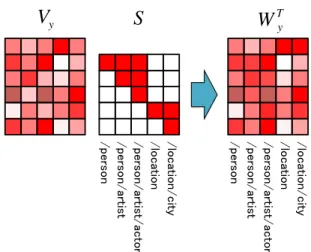
Since the fine-grained types tend to form a forest of type hierarchies (e.g.musician is a subtype of artist, which in turn is a subtype of person), we investigated whether the encoding of each label could utilise this structure to enable parameter sharing. Concretely, we compose the weight matrix Wy for the logistic regression layer as the product of a learnt weight matrixVy and a constant sparse binary matrix S:
WyT =VyS (12)
We encode the type hierarchy formed by the set of types in the binary matrix S as follows. Each type is mapped to a unique column in S, where membership at each level of its type hierarchy is marked by a1. For example, if we use the set of types defined by Gillick et al. (2014), the column for/personcould be encoded as [1,0, . . .], /person/artist as [1,1,0, . . .], and /person/artist/actor as [1,1,1,0, . . .]. This encoding scheme is illustrated in Figure 6.
This enables us to share parameters between labels in the same hierarchy, potentially making learning easier for infrequent types that can now draw upon annotations of other types in the same hierarchy.
/person/artist/actor /person/artist /person /location /location/city
WTy Vy S
/person/artist/actor /person/artist /person /location /location/city
Figure 6: Hierarchical label encoding illustration.
Work W2M W2M+D GN1 GN2
[LW12] X
[Gil+14] ×
[YGL15] ×
[Ren+16] X ×
This work X
Table 2: Training datasets used and its availability. W2M is Wikipedia-based, +D indicates denoising, and GN1/GN2 are two company-internal Google News datasets.
The symbolsXand×indicates publicly available and unavailable data.
4 Experiments
4.1 Datasets
Despite the research community having largely settled on using the manually anno- tated datasets FIGER (GOLD) [LW12] and OntoNotes [Gil+14] for evaluation, there is still a remarkable difference in the data used to train models (Table 2) that are then evaluated on the same manually annotated datasets. Also worth noting is that some data is not even publicly available, making a fair comparison between methods even more difficult. For evaluation, in our experiments we use the two well-established manually annotated datasets FIGER(GOLD) and OntoNotes, where like Gillick et al.
![Figure 4: List of features used in FIGER system [LW12]. The mention “Eto” in the sentence“CJ Ottaway scored his celebrated 108 to seal victory for Eton ” is taken as a running example.](https://thumb-ap.123doks.com/thumbv2/123deta/5996597.2069197/17.918.139.767.187.406/figure-features-mention-sentence-ottaway-celebrated-victory-running.webp)