九州大学学術情報リポジトリ
Kyushu University Institutional Repository
排水処理のための重金属イオンの水中接触酸化/還元 に関する研究
趙, 金仙
http://hdl.handle.net/2324/1806991
出版情報:Kyushu University, 2016, 博士(工学), 課程博士 バージョン:
権利関係:
Study on Catalytic Oxidation/Reduction of Heavy Metal Ions in Aqueous Solution for
Wastewater Treatment
Jinxian ZHAO
A Dissertation
for the Degree of Doctor of Engineering at
Department of Materials Process Engineering Graduate School of Engineering
Kyushu University
2017
Contents
1. Introduction ... 1
1.1 Background ... 1
1.2 Removal of heavy metal ions ... 3
1.2.1 Adsorption ... 3
1.2.2 Ion-exchange ... 6
1.2.3 Membrane separation ... 7
1.2.4 Chemical treatment ... 11
1.2.5 Photo-chemical treatment ... 13
1.2.6 Electro-chemical removal ... 14
1.2.7 Biological treatment ... 15
1.3 Motivation and scope ... 16
References ... 18
2. Oxidation of Fe(II) by Oxygen over Pt/ZrO
2Catalyst... 24
2.1 Introduction ... 24
2.2 Experimental ... 26
2.2.1 Preparation and characterization of catalysts ... 26
2.2.2 Characterization ... 26
2.2.3 Oxidation of Fe(II) ... 27
2.3 Results and discussion ... 27
2.3.1 Influence of Pt loading ... 27
2.3.2 Effect of flow rate of oxygen ... 29
2.3.3 Influence of calcination temperature of catalyst ... 30
2.3.4 Stability of Pt/ZrO
2catalyst ... 35
2.3.5 Analysis of oxidation product ... 36
2.3.6 Kinetic analysis ... 37
2.4 Conclusion ... 43
Reference ... 43
3. Oxidation of As(III) by Oxygen over Pt Catalyst under Mild Condition ... 45
3.1 Introduction ... 45
3.2 Experimental ... 47
3.2.1 Preparation and characterization of catalysts ... 47
3.2.2 Characterization ... 48
3.2.3 Oxidation of arsenite ... 48
3.3 Results and discussion ... 49
3.3.1 Adsorption of As(III) and As(V) on ZrO
2... 49
3.3.2 Effect of flow rate of oxygen ... 50
3.3.3 Effect of initial concentration of As(III) ... 52
3.3.4 Effect of supports ... 53
3.3.5 Influence of Pt loading ... 57
3.3.6 Influence of Pt particle size ... 61
3.3.7 Stability of Pt/ZrO
2catalyst ... 64
3.3.8 Kinetic analysis ... 64
3.4 Conclusion ... 69
Reference ... 70
4. Reduction of Selenate with Hydrazine Hydrate over Pt Catalysts in Aqueous Solution ... 72
4.1 Introduction ... 72
4.2 Experimental ... 74
4.2.1 Preparation of catalysts ... 74
4.2.2 Characterization of catalysts ... 75
4.2.3 Selenate reduction with hydrazine ... 76
4.3 Results and discussion ... 77
4.3.1 Effect of metal-oxide supports on selenate reduction ... 77
4.3.2 Influence of H
2SO
4concentration on selenate reduction ... 80
4.3.3 Selenate reduction with hydrazine over Pt/TiO
2catalyst ... 81
4.3.4 Improvement of Pt/TiO
2catalyst by incorporating with CNT ... 91
4.4 Conclusion ... 101
References ... 102
5. Conclusions ... 104
ACKNOWLEDGEMENT ... 107
Chapter 1
Introduction
1.1 Background
With the rapid and tremendous development of industries in the past few decades, several hazardous contaminants and pollutants were discharged into aquatic streams. Because of anthropogenic activities, for instance, burning of fossil fuels, mining and smelting of metalliferous ores, fertilizer industries, tanneries, battery manufacture, paper industries and pesticides, wastewaters containing heavy metal ions have been excessively released into the environment directly or indirectly, especially in developing countries
[1]. In addition, the natural processes such as geochemical reactions, volcanic deposits and weathering of heavy metal containing minerals, also induce release of heavy metal ions into surface and ground waters
[2]. Heavy metals are elements having atomic weights between 63.5 and 200.6, and a specific gravity greater than 5.0 g/cm
3[3], which includes iron, zinc, copper, mercury, lead, chromium, arsenic, selenium, et al
[4, 5].
Unlike organic contaminants, heavy metals are not biodegradable and are prone to accumulate in living organisms, and many heavy metal ions are known to be toxic, teratogenic or carcinogenic
[6]. Excess consumption of heavy metal ions, such as Cd, Cu, Pb, Fe, As and Se in aquatic and terrestrial ecosystems
[7]can cause detrimental and harmful health problems such as depression, lethargy and neurological signs
[8].
Excessive ingestion of zinc has considerable effect on human health, such as stomach
cramps, skin irritations, vomiting, nausea and anemia
[4, 9]. Large amount of copper also brings
about severe toxicological health problems such as vomiting, cramps, convulsions, or even
The presence of iron brings influence an aesthetic quality and organoleptic nature of water (for instance, metallic taste, odor, turbidity and discoloration) at low concentrations and cause contaminations at high concentrations
[11-13], although iron is an important micronutrient and not hazardous for humans’ health. Moreover, the generation of iron oxides in reservoirs could promote the proliferation of micro-organisms in water
[14]. The oxygen from air induces its rapid oxidation to form ferric hydroxide or oxyhydroxide precipitates for pH > 6, which can generate toxic derivatives and develop infections such as neoplasia, cardiomyopathy, and arthropathy
[15].
Drinking arsenic-contaminated water chronically can cause severe health problems for human, such as skin lesion, cardiovascular and peripheral vascular disease, diabetes, muscular weakness, loss of appetite, and nausea and cancer of brain, liver, kidney and stomach
[16, 17]. The selenium concentration range between nutritional sufficiency and toxicity is extremely narrow
[18, 19]. Selenium and its compounds, especially selenite and selenate, are toxic, carcinogenic and teratogenic at high concentrations
[20, 21]. The lethal dose of sodium selenite is only 1 g for humans
[22]. Long-term exposure to sodium selenate can cause severe lung, kidney, and liver damage
[23].
Considering humans’ health, the guideline levels of heavy metal ions in drinking water
were recommended by the World Health Organization (WHO)
[8]. Hence, the heavy metal ions
beyond their permissible limits should be removed from the wastewater before discharge. The
removal of heavy metal ions from contaminated water, that can protect environment, improve
the equality of water and eliminate the detrimental impact on humans, has attracted worldwide
attention of scientists. A brief summarize of treatment technologies will be introduced in the
following.
1.2 Removal of heavy metal ions
To date, various treatment methods, including adsorption, ion-exchange, membrane separation, chemical precipitation, photo-chemical, electro-chemical and biological treatment technologies, have been applied to the removal of heavy metal ions.
1.2.1 Adsorption
Adsorption is a process that uses solids for the removals of substances from either gaseous or liquid solutions. Adsorption operations employing solids such as activated carbon and metal hydrides are widely used in industrial applications and are expected as an effective and economic method for purification of waters and wastewaters. Additionally, adsorbents could be used repeatedly after regeneration by suitable desorption process because adsorption process is reversible in some cases
[4].
1.2.1.1 Activated carbon adsorbents
Due to high surface areas derived from its lots of micropore and mesopore, activated carbon adsorbents are widely applied to the treatment of heavy metal contaminants in wastewater.
There are a large number of literatures with regard to the use of activated carbon for the recovery of heavy metals
[24-26].
The modified activated carbon by copper-impregnation
[27], alginate
[28], magnesium
[29], surfactants
[30]also are effective adsorbents for removing heavy metals, which was due to the existence of functional groups in modified activated carbon. A. Üçer and A. Uyanik et al
[31]used tannic acid immobilized activated carbon for removal of heavy metal ions, including
Cu(II), Cd(II), Zn(II), Mn(II) and Fe(III). It was proven that these heavy metal ions were more
readily adsorbed on tannic acid immobilized on activated carbon than plain activated carbon.
1.2.1.2 Carbon nanotubes
Carbon nanotubes (CNTs), discovered by Iijima
[32], are categorized into single-walled nanotubes (SWCNTs) and multi-walled nanotubes (MWCNTs). The mechanisms by which the metal ions are sorbed onto CNTs are very complicated because of many interactions between the metal ions and the surface functional groups of CNTs.
[4]In recent years, the application of CNTs to water purification and wastewater treatment have been studied
[33, 34]. K. Pillay et al
[35]investigated the adsorption capabilities of both functionalised MWCNTs and unfunctionalised MWCNTs for the hexavalent chromium. Both two adsorbents showed an outstanding adsorption capability. The desorption of Cr(VI) from the MWCNTs surface could be achieved readily at high pH, which makes them potentially useful in application of removal of chromium repeatedly. Atieh et al
[36]also studied the modified and unmodified MWCNTs for the removal of chromium trivalent from water. The modified MWCNTs possessed a superior adsorption capability to that of unmodified MWCNTs.
1.2.1.3 Metal oxides
Metal oxides, such as manganese oxide
[37, 38], zirconia
[39], iron oxide
[40], alumina
[41, 42]and titania
[17], have been widely used as adsorbents to removal of contaminants from wastewater.
The adsorption capacities of iron oxide for the removal of arsenite and arsenate were investigated by V. Lenoble et al
[43]. Amorphous iron oxyhydroxide, goethite had the outstanding adsorption capacities both towards arsenate and arsenite. The maximal adsorption capacities of goethite for arsenite and arsenate were 22 and 4 mg/g adsorbent, respectively.
The binary oxide mixture, such as the mixture of Al-oxides and SiO
2or Fe-oxides and
SiO
2[44]was also used in the removal of selenium oxyanions. The adsorption capacities of
Al(III)/SiO
2for selenite and selenate were 30 and 13 mg/g-adsorbents, respectively. The
adsorption capacities of Fe(III)/SiO
2were 18 and 2.5 mg/g-adsorbent. The adsorption capacity of selenite and selenate on Al(III)/SiO
2is greater than on Fe(III)/SiO
2under the same conditions.
1.2.1.4 Low-cost adsorbents
Considering the cost of treatment process, many scientists focus their attention on searching for low-cost and easily available adsorbents to remove heavy metal ions and to purify water.
To date, natural substances, agricultural wastes and industrial by-products have been studied as adsorbents for heavy metal wastewater treatment.
The adsorption of heavy metal ions on natural substances, like kaolinite and montmorillonite, was reviewed by Bhattacharyya and Gupta
[45]. The removal of Fe(II) from the wastewater by adsorption onto bentonite clay was also conducted by S. S. Tahir and N.
Rauf
[46]. V. Lenoble et al
[43]studied the removal of arsenite and arsenate by pillared montmorillonite.
Agricultural wastes like hazelnut shells, orange peels, maize cobs, peanut shell and rice straw, were used as potential adsorbents for the removal of heavy metal ions (including chromium, lead, cadmium, nickel, etc) from wastewater
[47]. To elevate the adsorption capacities, the agricultural wastes were chemically modified. The removal of heavy metal ions by modified plant wastes was reviewed by W. Ngah and Hanafiah
[48]. S.R. Shukla et al
[49]also demonstrated that oxidized coir fibres have superior adsorption capacities for nickel, zinc and iron ions to that of plain coir fibres.
Researchers investigated industrial by-products such as lignin, diatomite, aragonite shells,
etc.
[4]1.2.2 Ion-exchange
Ion-exchange processes have been widely used to remove heavy metals from wastewater due to their many advantages, such as high treatment capacity, high removal efficiency and fast kinetics.
[50]There are a large numbers of publications concerned about the removal of heavy metal ions by ion-exchange, including synthetic ion-exchange resin
[51, 52]and natural solid resin
[53, 54].
Synthetic resins are commonly preferred because of their high efficiency of the removal of heavy metal ions from the aqueous solution
[55]. The synthesized ion-exchange resins are effective for the removal of hazardous wastes from industrial effluents.
The ion-exchange capacity of a synthesized novel terpolymer containing various functional groups for the removal of heavy metal ions (iron, cobalt, nickel, copper, zinc and lead) have been measured by R. S. Azarudeen et al
[56]. Since the presence of donor groups like −C=O,
−OH, −NH
2and −NH linkages, the capacity of the synthesized ion-exchange resin, 5.02 mmol/g, is higher than that of some phenolic and polystyrene ion-exchangers.
The uptake capacity of heavy metal ions by ion-exchange resins is affected by electrolytes concentration, pH, and contact time, which is consistent with the results reported by Gode and Pehlivan
[57]. At higher concentrations of the electrolytes the order of metal ion removal by the resin is Cu
2+>Fe
3+>Ni
2+, and at lower concentration, the order is Zn
2+>Co
2+>Pb
2+. Gode and Pehlivan
[57]also indicated that the uptake capacity of Cr
3+was slightly affected by temperature due to the exothermic ion-exchange reactions of Cr
3+ion with resins.
Ionic charge, namely, metal selectivity of the resin is another important influence factor
during ion-exchange process
[50]. Cr
3+ions competitively replaced Co
2+and Ni
2+ions that
results in the desorption of these metals into the solution. Abo-Farha et al
[58]also found that
the metal ions adsorption sequence can be given as Ce
4+> Fe
3+> Pb
2+on cation-exchange resin purolite C100.
To lower the cost of ion-exchange process, natural solid resins such as zeolites
[59, 60], instead of synthetic ion-exchange resins, have been widely used for removal of heavy metal ions from aqueous solution.
As the most frequent study on natural zeolites, clinoptilolite
[53]has received extensive attention because of its high selectivity for heavy metal ions. In addition, its uptake capacity for heavy metal ions can be significantly improved by loading with amorphous Fe-oxide species on the surface
[54].
1.2.3 Membrane separation
Membrane filtration is a pressure-driven process that separates substances by a thin layer of semi-permeable material. Membrane filtration technologies with different types of membranes are increasingly used for removal of bacteria, microorganisms, particulates and heavy metal for their high efficiency, easy operation and space saving. The common membrane processes used to remove metals from the wastewater are ultrafiltration, nanofiltration, reverse osmosis and electrodialysis.
1.2.3.1 Ultrafiltration
Ultrafiltration is a membrane technique working at low transmembrane pressures for the removal of emulsified oils, metal hydroxides, colloids, emulsions, dispersed material, suspended solids, and other large molecular weight materials from water.
The removal efficiency of heavy metal ions from aqueous solution by ultrafiltration was
low, since the pore sizes of ultrafiltration membranes are larger than dissolved metal ions in
the form of hydrated ions or as low molecular weight complexes which results in that ions
could pass easily through ultrafiltration membranes. To obtain high removal efficiency of metal ions, the micellar enhanced ultrafiltration
[61,62]and polymer enhanced ultrafiltration
[63,64]
was proposed.
The micellar enhanced ultrafiltration technique is a surfactant-based separation process.
The surfactant aggregates and forms micelles at a concentration higher than its critical micellar concentration when it is added into polluted aqueous solutions. Heavy metal ions bind to the surface of negatively charged micelles to form large metal-surfactant structures. Then they can be retained by an ultrafiltration membrane with pore sizes smaller than micelle sizes.
[61]During polymer enhanced ultrafiltration process, the metal ions are firstly bound to polymers to form macromolecular complex and rejected by membrane, whereas unbound metal ions pass through the membrane
[65]. Cellulose acetate and polycarbonate
[63], dextrin, polyethylene glycol 5000 and diethylaminoethyl cellulose
[66], maleic acid and acrylic acid
[67], etc., have been applied to the selective separation and recovery of heavy metals with low energy requirements. The polymer type, the ratio of metal to polymer, pH and the presence of other ions in solution also could affect the removal efficiency of heavy metal ions by polymer enhanced ultrafiltration. Camarillo
[64]has removed Cu(II) ions from aqueous effluents by polymer enhanced ultrafiltration at laboratory scale.
Copolymer enhanced ultrafiltration process was also applied into the removal of heavy
metal ions from aqueous solution. Qiu et al
[67]adopted polyvinyl butyral hollow fiber
ultrafiltration membrane combined with maleic acid and acrylic acid to remove heavy metal
ions. Both of the rejection rate and permeate flux were influenced by the mass ratio of
copolymer to metal and pH of the solution. The binding ability of heavy metal ion to
copolymer is another important factor for the selective separation in the future.
1.2.3.2 Nanofiltration
Nanofiltration is generally targeted to remove only divalent and larger ions. Most commercial nanofiltration membranes are thin-film composites made of synthetic polymers containing charged groups which can make them effective in the separation of charged metals from water.
[68]Nanofiltration is a promising technology for the removal of heavy metal ions such as chromium
[69], cobalt and lead
[70], and arsenic
[71]from wastewater.
The feed cross flow velocity, pH of solution, transmembrane pressure, temperature and feed concentration could affect the removal efficiency of heavy metal ions by nanofiltration.
Figoli et al
[71]indicated that an increase in pH, a decrease in operating temperature, and As feed concentration led to higher efficiency of As removal by two commercial nanofiltration membranes (N30F and NF90). The removal efficiency was also affected by transmembrane pressure and feed concentration of solution. Gherasim and PetrMikulášek
[72]also investigated the influence of operating variables on the removal of Pb(II) ions from aqueous solutions by a commercially available nanofiltration membrane (AFC 80). The maximum removal efficiency of lead ions could be up to 98% even for very concentrated feed solutions. The increases of the flow velocity and pressure facilitate to the increase of rejection of lead ions, whereas the increases of the feed concentration and pH of solution lead to the decrease of rejection of lead ions. The removal of cadmium and nickel
[73]by a commercial nanofiltration membrane could be up to 82.69% and 98.94%, respectively, with an initial feed concentration of 5 ppm. The operating conditions, such as applied pressure, initial concentration, flow rate and pH of solution also affected the removal efficiency of both cadmium and nickel.
Generally, nanofiltration is an highly effective for the removal of heavy metal ions because
of its high efficiency.
1.2.3.3 Reverse osmosis
The filtration process using membranes with the smallest pores is reverse osmosis, which involves reversal of the osmotic process of a solution in order to drive water away from dissolved molecules. Compared with traditional cellulose acetate membranes, reverse osmosis membranes are better rejection of dissolved solids and organics, increased productivity at lower operating pressures, great structural stability, the two or three times higher output per unit area, and low-cost.
[74]Reverse osmosis is one of the techniques which can remove a wide range of dissolved species such as arsenic, antimony, copper and nickel
[75-78]from water.
The removal efficiency could be affected by operating pressure, pH of solution, membrane type.
Çimen
[74]investigated the removal of chromium from wastewaters using four types of membranes (SWHR, AG, SE, and SG) under different pH. It is found that the rejection efficiency depending on the membranes followed the order: AG > SWHR > SG > SE. The removal efficiency of chromium achieved the maximum when the pH of solution was 3.
Ning
[76]also indicated that the As(III) species could be removed from water by the reverse osmosis at sufficiently high pH.
Two important influence factors, namely operating pressure and ionic size can affect the removal efficiency of heavy metal ions during the treatment process. The suitable chelating agent could increase the sizes of ions and thereby their rejection efficiency
[78].
1.2.3.4 Electrodialysis
Electrodialysis which requires electrical energy as a driving force is another membrane
process for the separation of ions crossing from one solution to another through charged
membranes. Electrodialysis is a technology that is suitable for pollution prevention and
environment protection.
[79]It is widely applied for separating ionic chemicals and
concentrating the separated chemicals to treat industrial effluents and produce drinking water.
[79]Ion-exchange membranes, including cation-exchange and anion-exchange membranes, are used in most electrodialysis processes.
Nataraj et al
[80]investigated the removal of hexavalent chromium ions using an electrodialysis pilot plant comprising a set of ion-exchange membranes. It was significant that the residual concentration of chromium satisfied the maximum permission contamination level of 0.1 mg/L when the initial concentration of chromium was less than 10 ppm. It was found that the operating parameters, such as applied potential, flow rate, pH and initial concentration of solution, can affect the removal efficiency of heavy metals.
Gherasim et al
[81]successfully removed Pb(II) from model aqueous solution using electrodialysis method. He also indicated other two important influence factors, temperature and the current efficiency.
The removal efficiency could achieve the maximum under the optimization of operating parameters during the separation process, and thereby the concentration of residual ions could meet the limit for the discharging water. It is proved that the electrodialysis process is an effective treatment and has prospective application for the removal of heavy metal ions because of its high efficiency and no generation of toxic by-products during the process.
1.2.4 Chemical treatment
1.2.4.1 Precipitation
Chemical precipitation, which requires chemicals called precipitant, is an effective and the
most widely used process in industry because of the relatively simple and inexpensive
operation. During precipitation processes, heavy metal ions react with precipitant and then
form insoluble precipitates. The formed precipitates can be separated from the water by
sedimentation or filtration. The conventional chemical precipitants include hydroxide, sulfide, et al.
Due to its relative simplicity of operation, low cost and ease of pH adjustment, hydroxide precipitation has been widely applied in the removal of heavy metal ions from wastewater.
Mirbagheri and Hosseini
[82]has evaluated the removal of Cu(II) and Cr(VI) ions from wastewater by hydroxide precipitation process using Ca(OH)
2and NaOH. According to the form of heavy metal ions, the pH of solution was adjusted. Under the optimized pH, the concentrations of copper and chromium were reduced from 48.51 and 30 mg/L to 0.694 and 0.01 mg/L, respectively.
Compared with hydroxide precipitation, sulfide precipitation is another effective process for the treatment of heavy metal ions, which can achieve a high efficiency of metal removal in a broad range of pH, owing to the lower solubility of metal sulfide than metal hydroxide.
[83]Besides, lime is one of the most common precipitant in removing heavy metals from industrial wastewater due to its comparatively low cost. The concentrations of chromium, copper, lead and zinc in effluents were reduced to 0.08, 0.14, 0.03 and 0.45 mg/L, respectively, by lime precipitation combined with fly ash, reported by Chen et al
[84].
The arsenate was successfully removed from drinking water by precipitation- coprecipitation process using aluminum sulfate by Baskan and Pala
[85]. The removal efficiency reached the maximum in the pH range of 6–8. In addition, the removal efficiency was influenced by initial arsenate concentration, and the dose of aluminum sulfate and/or polyelectrolyte.
1.2.4.2 Treatment using strong oxidant or reductant
Treatment using typical oxidant or reductant is the most common chemical method for the
removal of heavy metal ions from wastewater.
The typical oxidant, such as ozone, oxygen, chlorine, hydrogen peroxide and permanganate, is widely applied in the treatment of toxic ions. Kim and Nriagu
[86]investigated the oxidation of As(III) with ozone in groundwater. The oxidation of As(III) to As(V) by air with promotion of KMnO
4in alkaline solution was studied by Li et al
[87]. The mole ratio of Mn/As, the initial pH, reaction temperature and air flow rate significantly affected on the oxidation behavior of As(III).
The common reductants include zero valent iron, iron sulfide, ferrous iron and copper et al.
Kantar and Bulbul
[88]used pyrite for the reduction of hexavalent chromium (Cr(VI)). The solution pH is an important parameter for the reduction reaction. The removal of Cr(VI) decreased with increasing solution pH. The application of bimetallic iron-silver nanoparticles in the reduction of Cr(VI) was also studied as a function of temperature, solution pH, initial concentration of Cr(VI), and dose of bimetallic reductant.
[2]The optimum values of the variables were found to be 65.7 mg/l for the initial Cr(VI) concentration; 2 for initial pH of the solution; 43 °C for reactor temperature; and 0.4 g/l for the bimetallic particles dose for the predicted chromium reduction capacity of 55.96 mg/g.
Generally speaking, the efficient removal of heavy metal ions could be achieved by chemical treatment under the suitable operation conditions, including pH, initial feed concentration, temperature and the dose of additional reagents.
1.2.5 Photo-chemical treatment
Heterogeneous photocatalysis treatment, assisted by semiconductor
[89]or ferrihydrite
[90]et
al, is an efficient and interesting way to promote the removal of heavy metal ions from
contaminated water.
[91]The reduction of Pb(II) ions to zero valent Pb was successfully
achieved by photocatalytic removal over TiO
2(Degussa P-25) in the existence of electron
photocatalytic process in presence of combustion synthesized nano-TiO
2by Aarthi and Madras
[93]. They demonstrated that the photocatalytic rate of Cu(II) and Cr(VI) was affected by pH.
Kabra
[94]also investigated the effect of solution pH on the removal of metal ions from wastewater by photocatalytic treatment. Under UV irradiation, photo-reductive deposition of Cu(II), Ni(II), Pb(II) and Zn(II) ions has been investigated at different pH values of solution.
It was found that the removal efficiency of metal ions could be affected by pH of the solution.
The most suitable pH value for Cu(II) was neutral, whereas the most suitable condition was found to be higher pH for Ni(II) and Zn(II) ions.
However, photocatalytic treatment by TiO
2has its own disadvantages, such as the higher recombination of photo-induced electrons and holes. To enhance photocatalytic activity of TiO
2, the noble metal (especially Pt)
[95], metal oxide
[96]and reduced graphene oxide
[97]were applied to modify TiO
2. Moon et al
[97]demonstrated that the oxidation efficiency of arsenite can be significantly enhanced when using platinum (Pt) and the reduced graphene oxide (rGO) under UV irradiation.
1.2.6 Electro-chemical removal
Electro-chemical treatment, which involves the plating-out of metal ions on a cathode surface and can recover metals in the elemental metal state, is a simple, efficient and promising method without addition of any chemicals.
[98]Electrochemical technologies have employed in the treatment of heavy metal ions
[99, 100]during the past two decades, although it involves great demand of capital investment and electricity supply.
The removal of chromium with six valence was successfully achieved by Bhatti et al
[101]through a electrocoagulation system using Al-Al electrodes in a laboratory scale. The removal
efficiency depended on the operation variables, including pH of solution, initial metal
concentration, voltage and treatment time, which is consistent with the results reported by Heidmann
[102]. The reduction efficiency of Cr(VI) could be up to 90.4% at pH of 5, voltage of 24 V and 24 min treatment time with the initial Cr(VI) concentration of 100 mg/L.
Electrocoagulation technique was also applied by Ghosh et al
[100]to the treatment of the synthetic solutions containing Fe(II) of concentration 5-25 mg/L. It was proved that the current density and the inter electrode distance are important factors affecting greatly the removal efficiency of Fe(II). The removal efficiency was up to approximately 99.2% with the initial Fe(II) concentration of 25 mg/L under the suitable operation parameters. They indicated that it is adaptable for the electrocoagulation process in household use.
Gomes et al
[98]also applied electrocoagulation technique to remove arsenic. The arsenic removal of larger than 95% was obtained after 1 h residence time and the initial pH 6 was found to be the optimum pH for maximum arsenic removal.
1.2.7 Biological treatment
Biological treatment has been demonstrated to be a useful alternative to conventional treatment systems for the removal of toxic metals from dilute aqueous solution.
Microorganisms can mediate the formation of minerals by a biomineralization process. In comparison with inorganically produced minerals, biominerals often have their own specific properties including unique size, crystallinity, isotopic and trace element compositions.
[103]Jong and Parry
[104]removed acidic metal (Cu, Zn, Ni, Fe, Al and Mg), arsenic and sulfate
from contaminated waters at room temperature employing a mixed population of sulfate-
reducing bacteria (SRB). The pH of the contaminated water influenced the activity of SRB
and thereby affected the removal efficiency of toxic ions. More than 97.5% of the initial
concentrations of Cu, Zn and Ni, and more than 77.5% and 82% of As and Fe, respectively,
The removal of nickel, copper, lead, cobalt, zinc and cadmium, using biomineralization process by six metal-resistant bacterial strains, were investigated by Li et al
[103]. The soluble heavy metal ions converted to their carbonates, which is attributed to the carbonate produced by the enzymatic reaction of the bacteria and the increase of soil pH.
Biological treatment by bacteria has its challenges, although it could remove heavy metal ions from contaminated water. This treatment requires long time durations, for instance, over 14 days
[104]. On the other hand, this process is not easily controlled because of the high sensitivity of the bacteria to temperature, acidity, and atmosphere.
1.3 Motivation and scope
As stated in the previous section, each process involves its own disadvantages and challenges. Physical treatments merely concentrate the compounds, hence toxic ions are still present and harmful to humans. Chemical treatments, photo-chemical and electric-chemical treatments require long time durations and involve high costs, owing to the inferior recyclability of reagents and the large demand of extra energy, such as ultraviolet illumination or electric energy. Biological removal methods are not easily controlled because of the high sensitivity of the bacteria to temperature, acidity, and atmosphere, and are only suitable for solutions containing low levels of poisonous ions. Hence, it is of great importance to search an effective and efficient process for the removal of hazardous heavy metal ions from wastewater.
It is well known that the noble metal particles supported on oxides or carbon as catalysts,
especially Pt nanoparticles, have been widely applied to the removal of contaminants, such as
glycerol
[105]and CO
[106], due to its high catalytic activity, selectivity, chemical stability and
resistance to high temperature. Pt nanoparticles also have wide application on the enhancement
of photocatalytic activity of photocatalyst, such as TiO
2.
The application of Pt catalysts is becoming popular in the field of photocatalyst and oxidation of harmful gas and organic solution in the past few decades, because of high recyclability of Pt catalyst. However, to the best of our knowledge, there is little information in literatures with respect to the application of heterogeneous Pt catalyst in the treatment of detrimental inorganic ions from wastewater without any extra energy supply.
The objective of the present study is to develop an effective, efficient and rapid process for the removal of toxic ions from wastewater. The Pt catalysts supported on metal oxides, which is environmentally friendly and recyclable, were prepared by a conventional impregnation method and applied to the removal of arsenite and selenate ions from wastewater under non- irradiation and non-electricity conditions. It is noteworthy that Pt catalyst has a promising application in the removal of toxic ions due to its high catalytic activity and reusability. Based on the above objectives, this dissertation consists of the following five chapters.
Chapter 1 introduces the detrimental effect of heavy metal ions to humans and the common treatment methods for the removal of toxic ions from wastewater, including physical, chemical and biological processes.
Chapter 2 describes the feasibility of application of heterogeneous Pt catalyst on the removal of Fe(II) ions. The catalytic performance of Pt/ZrO
2for oxidation of Fe(II) by oxygen is quantitatively evaluated. The role of Pt catalyst in the oxidation reaction is elucidated from kinetic analysis. The oxidation product is examined by XRD analysis.
Based on the results of chapter 2, Pt catalyst is effective on the oxidation of Fe(II) by oxygen, which means that it is possible to apply Pt heterogeneous catalyst to the removal of detrimental ions under no extra energy supply.
Hence, in chapter 3, the Pt heterogeneous catalyst is applied to the oxidation of detrimental
As(III) ions by oxygen. The reaction conditions, including reaction temperature and oxygen
flow rate, are optimized for the As(III) oxidation. The influences of catalyst supports, Pt loading and Pt particle size on the catalytic performance of Pt catalyst are examined. The reaction rate equation and activation energy of the As(III) oxidation are obtained based on the reactions carried out under different reaction temperatures.
In chapter 4, Pt heterogeneous catalyst is applied to the reduction of Se(VI) with hydrazine hydrate under no UV irradiation. The influences of catalyst supports and pH of the reaction solution are investigated. The reusability of Pt/TiO
2catalyst is also examined after regeneration process. The Pt catalyst is effective on the reduction of selenate, but lost activity within a short time. The underlying reason for deactivation of Pt/TiO
2is illustrated. The hypothetical scheme of the reaction is proposed. The catalytic activity and durability are significantly enhanced by incorporating with carbon nanotubes (CNTs).
The experimental results and discussions with regard to chapter 2, 3 and 4 are summarized in chapter 5.
References
[1] A. Waseem, J. Arshad, F. Iqbal, A. Sajjad, Z. Mehmood, G. Murtaza, Pollution Status of Pakistan:
A Retrospective Review on Heavy Metal Contamination of Water, Soil, and Vegetables, Biomed Res. Int. 2014 (2014) 813206.
[2] K.P. Singh, A.K. Singh, S. Gupta, S. Sinha, Optimization of Cr(VI) reduction by zero-valent bimetallic nanoparticles using the response surface modeling approach, Desalination. 270 (2011) 275–284.
[3] N.K. Srivastava, C.B. Majumder, Novel biofiltration methods for the treatment of heavy metals from industrial wastewater, J. Hazard. Mater. 151 (2008) 1–8.
[4] F. Fu, Q. Wang, Removal of heavy metal ions from wastewaters: A review, J. Environ. Manage. 92 (2011) 407–418.
[5] P.K. Rai, Heavy Metal Pollution in Aquatic Ecosystems and its Phytoremediation using Wetland Plants: An ecosustainable approach, Int. J. Phytoremediation. 10 (2008) 133–160.
[6] K.H. Cheung, J.D. Gu, Mechanism of hexavalent chromium detoxification by microorganisms and bioremediation application potential: A review, Int. Biodeterior. Biodegrad. 59 (2007) 8–15.
[7] A.-M.B. Pahlsson, Toxicity of heavy metals (Zn, Cu, Cd, Pb) to vascular plants, Water. Air. Soil Pollut. 47 (1989) 287–319.
[8] V.K. Gupta, O. Moradi, I. Tyagi, S. Agarwal, H. Sadegh, R. Shahryari-Ghoshekandi, A.S.H.
Makhlouf, M. Goodarzi, A. Garshasbi, Study on the removal of heavy metal ions from industry waste by carbon nanotubes: Effect of the surface modification: a review, Crit. Rev. Environ. Sci. Technol.
46 (2016) 93–118.
[9] N. Oyaro, O. Juddy, E.N.M. Murago, E. Gitonga, The contents of Pb, Cu, Zn and Cd in meat in Nairobi, Kenya, J. Food, Agric. Environ. 5 (2007) 119–121.
[10] A.T. Paulino, F.A.S. Minasse, M.R. Guilherme, A. V. Reis, E.C. Muniz, J. Nozaki, Novel adsorbent based on silkworm chrysalides for removal of heavy metals from wastewaters, J. Colloid Interface Sci. 301 (2006) 479–487.
[11] P. Sarin, V.L. Snoeyink, J. Bebee, K.K. Jim, M.A. Beckett, W.M. Kriven, J.A. Clement, Iron release from corroded iron pipes in drinking water distribution systems: effect of dissolved oxygen, Water Res. 38 (2004) 1259–1269.
[12] S. Bordoloi, S.K. Nath, S. Gogoi, R.K. Dutta, Arsenic and iron removal from groundwater by oxidation–coagulation at optimized pH: Laboratory and field studies, J. Hazard. Mater. 260 (2013) 618–626.
[13] B. Das, P. Hazarika, G. Saikia, H. Kalita, D.C. Goswami, H.B. Das, S.N. Dube, R.K. Dutta, Removal of iron from groundwater by ash: A systematic study of a traditional method, J. Hazard. Mater. 141 (2007) 834–841.
[14] K.U. Ahamad, M. Jawed, Kinetics, equilibrium and breakthrough studies for Fe(II) removal by wooden charcoal: A low-cost adsorbent, Desalination. 251 (2010) 137–145.
[15] A. Hamdouni, G. Montes-hernandez, M. Tlili, N. Findling, F. Renard, C. V. Putnis, Removal of Fe(II) from groundwater via aqueous portlandite carbonation and calcite-solution interactions, Chem. Eng.
J. 283 (2016) 404–411.
[16] M. Lescano, C. Zalazar, A. Cassano, R. Brandi, Kinetic modeling of arsenic (III) oxidation in water employing the UV/H2O2 process, Chem. Eng. J. 211–212 (2012) 360–368.
[17] P.K. Dutta, A.K. Ray, V.K. Sharma, F.J. Millero, Adsorption of arsenate and arsenite on titanium dioxide suspensions, J. Colloid Interface Sci. 278 (2004) 270–275.
[18] D.S. Han, B. Batchelor, A. Abdel-Wahab, Sorption of selenium(IV) and selenium(VI) to mackinawite (FeS): effect of contact time, extent of removal, sorption envelopes., J. Hazard. Mater.
186 (2011) 451–457.
[19] R.A. Zingaro, D.C. Dufner, A.P. Murphy, C.D. Moody, Reduction of oxoselenium anions by iron (II) hydroxide, Environ. Int. 23 (1997) 299–304.
[20] S.C.B. Myneni, T.K. Tokunaga, G.E.B. Jr., Abiotic Selenium Redox Transformations in the Presence of Fe(II,III) Oxides, Science (80-. ). 278 (1997) 1106–1109.
[21] P. Refait, L. Simon, J.-M.R. Génin, Reduction of SeO42- Anions and Anoxic Formation of Iron(II)- Iron(III) Hydroxy-Selenate Green Rust, Environ. Sci. Technol. 34 (2000) 819–825.
[22] T. Kameda, Y. Ishiyama, T. Yoshioka, The effects of KI/Se(VI) molar ratio and initial concentration of Se(VI) on the reduction of Se(VI) to Se(IV) by KI, Environ. Chem. Lett. 6 (2008) 247–249.
[23] H.E. Ganther, C. A. Baumann, Selenium metabolism, J. Nutr. 9 (1966) 408–414.
[24] J. Pattanayak, K. Mondal, S. Mathew, S.B. Lalvani, A parametric evaluation of the removal of As(V) and As(III) by carbon-based adsorbents, Carbon N. Y. 38 (2000) 589–596.
[25] F. Di Natale, A. Erto, A. Lancia, D. Musmarra, Experimental and modelling analysis of As(V) ions adsorption on granular activated carbon, Water Res. 42 (2008) 2007–2016.
[26] K.C. Kang, S.S. Kim, J.W. Choi, S.H. Kwon, Sorption of Cu2+ and Cd2+ onto acid- and base- pretreated granular activated carbon and activated carbon fiber samples, J. Ind. Eng. Chem. 14 (2008) 131–135.
[27] G.B. Jegadeesan, K. Mondal, S.B. Lalvani, Adsorption of Se (IV) and Se (VI) Using Copper- Impregnated Activated Carbon and Fly Ash-Extracted Char Carbon, Water, Air, Soil Pollut. 226 (2015) 234.
[28] E.A. Deliyanni, G.Z. Kyzas, K.S. Triantafyllidis, K.A. Matis, Activated carbons for the removal of heavy metal ions: A systematic review of recent literature focused on lead and arsenic ions, Open Chem. 13 (2015) 699–708.
[29] H. Yanagisawa, Y. Matsumoto, M. Machida, Adsorption of Zn(II) and Cd(II) ions onto magnesium and activated carbon composite in aqueous solution, Appl. Surf. Sci. 256 (2010) 1619–1623.
[30] C.K. Ahn, D. Park, S.H. Woo, J.M. Park, Removal of cationic heavy metal from aqueous solution by activated carbon impregnated with anionic surfactants, J. Hazard. Mater. 164 (2009) 1130–1136.
[31] A. Üçer, A. Uyanik, S.F. Aygün, Adsorption of Cu(II), Cd(II), Zn(II), Mn(II) and Fe(III) ions by tannic acid immobilised activated carbon, Sep. Purif. Technol. 47 (2006) 113–118.
[33] H. Wang, A. Zhou, F. Peng, H. Yu, J. Yang, Mechanism study on adsorption of acidified multiwalled carbon nanotubes to Pb(II), J. Colloid Interface Sci. 316 (2007) 277–283.
[34] C.Y. Kuo, H.Y. Lin, Adsorption of aqueous cadmium (II) onto modified multi-walled carbon nanotubes following microwave/chemical treatment, Desalination. 249 (2009) 792–796.
[35] K. Pillay, E.M. Cukrowska, N.J. Coville, Multi-walled carbon nanotubes as adsorbents for the removal of parts per billion levels of hexavalent chromium from aqueous solution, J. Hazard. Mater.
166 (2009) 1067–1075.
[36] M.A. Atieh, O.Y. Bakather, B.S. Tawabini, A.A. Bukhari, M. Khaled, M. Alharthi, M. Fettouhi, F.A.
Abuilaiwi, Removal of Chromium(III) from Water by Using Modified and Nonmodified Carbon Nanotubes, J. Nanomater. (2010) 232378.
[37] M. Zhu, K.W. Paul, J.D. Kubicki, D.L. Sparks, Quantum chemical study of arsenic (III, V) adsorption on Mn-oxides: Implications for arsenic(III) oxidation, Environ. Sci. Technol. 43 (2009) 6655–6661.
[38] C.M. Gonzalez, J. Hernandez, J.G. Parsons, J.L. Gardea-Torresdey, A study of the removal of selenite and selenate from aqueous solutions using a magnetic iron/manganese oxide nanomaterial and ICP-MS, Microchem. J. 96 (2010) 324–329.
[39] Y. Ma, Y.-M. Zheng, J.P. Chen, A zirconium based nanoparticle for significantly enhanced adsorption of arsenate: Synthesis, characterization and performance., J. Colloid Interface Sci. 354 (2011) 785–792.
[40] C. Su, D.L. Suarez, Selenate and Selenite Sorption on Iron Oxides: an infrared and electrophoretic study, Soil Sci. Soc. Am. J. 64 (2000) 101–111.
[41] K. Wu, T. Liu, W. Xue, X. Wang, Arsenic(III) oxidation/adsorption behaviors on a new bimetal adsorbent of Mn-oxide-doped Al oxide, Chem. Eng. J. 192 (2012) 343–349.
[42] S. Goldberg, Macroscopic Experimental and Modeling Evaluation of Selenite and Selenate Adsorption Mechanisms on Gibbsite, Soil Sci. Soc. Am. J. 78 (2014) 473–479.
[43] V. Lenoble, O. Bouras, V. Deluchat, B. Serpaud, J. Bollinger, Arsenic Adsorption onto Pillared Clays and Iron Oxides, J. Colloid Interface Sci. 255 (2002) 52–58.
[44] Y.T. Chan, W.H. Kuan, T.Y. Chen, M.K. Wang, Adsorption mechanism of selenate and selenite on the binary oxide systems, Water Res. 43 (2009) 4412–4420.
[45] K.G. Bhattacharyya, S. Sen Gupta, Adsorption of a few heavy metals on natural and modified kaolinite and montmorillonite: A review, Adv. Colloid Interface Sci. 140 (2008) 114–131.
[46] S.S. Tahir, N. Rauf, Removal of Fe(II) from the wastewater of a galvanized pipe manufacturing industry by adsorption onto bentonite clay, J. Environ. Manage. 73 (2004) 285–292.
[47] D. Sud, G. Mahajan, M.P. Kaur, Agricultural waste material as potential adsorbent for sequestering heavy metal ions from aqueous solutions–A review, Bioresour. Technol. 99 (2008) 6017–6027.
[48] W. S. W. Ngah, M. A. K. M. Hanafiah, Removal of heavy metal ions from wastewater by chemically modified plant wastes as adsorbents: A review, Bioresour. Technol. 99 (2008) 3935–3948.
[49] S. R. Shukla, R. S. Pai, A. D. Shendarkar, Adsorption of Ni(II), Zn(II) and Fe(II) on modified coir fibres, Sep. Purif. Technol. 47 (2006) 141–147.
[50] S.-Y. Kang, J.-U. Lee, S.-H. Moon, K.-W. Kim, Competitive adsorption characteristics of Co2+, Ni2+, and Cr3+ by IRN-77 cation exchange resin in synthesized wastewater, Chemosphere. 56 (2004) 141–
147.
[51] K. Vaaramaa, J. Lehto, Removal of metals and anions from drinking water by ion exchange, Desalination. 155 (2003) 157–170.
[52] C.-C. Wang, C.-Y. Chang, C.-Y. Chen, Study on Metal Ion Adsorption of Bifunctional Chelating/Ion-Exchange Resins, Macromol. Chem. Phys. 202 (2001) 882–890.
[53] M. K. Doula, A. Dimirkou, Use of an iron-overexchanged clinoptilolite for the removal of Cu 2+ ions from heavily contaminated drinking water samples, J. Hazard. Mater. 151 (2008) 738–745.
[54] M. K. Doula, Simultaneous removal of Cu, Mn and Zn from drinking water with the use of clinoptilolite and its Fe-modified form, Water Res. 43 (2009) 3659–3672.
[55] B. Alyüz, S. Veli, Kinetics and equilibrium studies for the removal of nickel and zinc from aqueous solutions by ion exchange resins, J. Hazard. Mater. 167 (2009) 482–488.
[56] R. S. Azarudeen, M. A. R. Ahamed, R. Subha, A. R. Burkanudeen, Heavy and toxic metal ion removal by a novel polymeric ion-exchanger: synthesis, characterization, kinetics and equilibrium studies, J. Chem. Technol. Biotechnol. 90 (2015) 2170–2179.
[57] F. Gode, E. Pehlivan, Removal of chromium(III) from aqueous solutions using Lewatit S 100: The effect of pH, time, metal concentration and temperature, J. Hazard. Mater. B136 (2006) 330–337.
[58] S.A. Abo-Farha, A.Y. Abdel-Aal, I.A. Ashour, S.E. Garamon, Removal of some heavy metal cations by synthetic resin purolite C100, J. Hazard. Mater. 169 (2009) 190–194.
[59] I.C. Ostroski, M.A.S.D. Barros, E.A. Silva, J.H. Dantas, P.A. Arroyo, O.C.M. Lima, A comparative study for the ion exchange of Fe(III) and Zn(II) on zeolite NaY, J. Hazard. Mater. 161 (2009) 1404–
1412.
[60] T. Motsi, N.A. Rowson, M.J.H. Simmons, Adsorption of heavy metals from acid mine drainage by natural zeolite, Int. J. Miner. Process. 92 (2009) 42–48.
[61] X. Li, G. Zeng, J. Huang, C. Zhang, Y. Fang, Y. Qu, F. Luo, D. Lin, H. Liu, Recovery and reuse of surfactant SDS from a MEUF retentate containing Cd2+ or Zn2+ by ultrafiltration, J. Memb. Sci.
337 (2009) 92–97.
[62] J. Landaburu-aguirre, E. Pongrácz, P. Perämäki, R.L. Keiski, Micellar-enhanced ultrafiltration for the removal of cadmium and zinc: Use of response surface methodology to improve understanding of process performance and optimisation, J. Hazard. Mater. 180 (2010) 524–534.
[63] A. Vijayalakshmi, D.L. Arockiasamy, A. Nagendran, D. Mohan, Separation of proteins and toxic heavy metal ions from aqueous solution by CA/PC blend ultrafiltration membranes, Sep. Purif.
Technol. 62 (2008) 32–38.
[64] R. Camarillo, Á. Pérez, P. Cañizares, A. De Lucas, Removal of heavy metal ions by polymer enhanced ultra fi ltration Batch process modeling and thermodynamics of complexation reactions, Desalination. 286 (2012) 193–199.
[65] R. Molinari, S. Gallo, P. Argurio, Metal ions removal from wastewater or washing water from contaminated soil by ultrafiltration–complexation.pdf, Water Res. 38 (2004) 593–600.
[66] K. Trivunac, S. Stevanovic, Removal of heavy metal ions from water by complexation-assisted ultrafiltration, Chemosphere. 64 (2006) 486–491.
[67] Y.-R. Qiu, L.-J. Mao, Removal of heavy metal ions from aqueous solution by ultrafiltration assisted with copolymer of maleic acid and acrylic acid, Desalination. 329 (2013) 78–85.
[68] B.A.M. Al-rashdi, D.J. Johnson, N. Hilal, Removal of heavy metal ions by nanofiltration, Desalination. 315 (2013) 2–17.
[69] M. Muthukrishnan, B.K. Guha, Heavy metal separation by using surface modified nanofiltration membrane, Desalination. 200 (2006) 351–353.
[70] S. Bouranene, P. Fievet, A. Szymczyk, M.E.-H. Samar, A. Vidonne, Influence of operating conditions on the rejection of cobalt and lead ions in aqueous solutions by a nanofiltration polyamide membrane, J. Memb. Sci. 325 (2008) 150–157.
[71] A. Figoli, A. Cassano, A. Criscuoli, M.S. Islam, M.T. Uddin, M.A. Islam, E. Drioli, Influence of operating parameters on the arsenic removal by nanofiltration, Water Res. 44 (2010) 97–104.
[72] C.-V. Gherasim, P. Mikulášek, Influence of operating variables on the removal of heavy metal ions from aqueous solutions by nanofiltration, Desalination. 343 (2014) 67–74.
[73] Z. V. P. Murthy, L. B. Chaudhari, Separation of binary heavy metals from aqueous solutions by nanofiltration and characterization of the membrane using Spiegler–Kedem model, Chem. Eng. J.
150 (2009) 181–187.
[74] A. Çimen, Removal of Chromium from Wastewater by Reverse Osmosis, Phys. Chem. Solut. 89 (2015) 1238–1243.
[75] M. Kang, M. Kawasaki, S. Tamada, T. Kamei, Y. Magara, Effect of pH on the removal of arsenic and antimony using reverse osmosis membranes, Desalination. 131 (2000) 293–298.
[76] R. Y. Ning, Arsenic removal by reverse osmosis, Desalination. 143 (2002) 237–241.
[77] E. Cséfalvay, V. Pauer, P. Mizsey, Recovery of copper from process waters by nanofiltration and reverse osmosis, Desalination. 240 (2009) 132–142.
[78] M. Mohsen-Nia, P. Montazeri, H. Modarress, removal of Cu2+ and Ni2+ from wastewater with a chelating agent and reverse osmosis processes, Desalination. 217 (2007) 276–281.
[79] T. Mohammadi, A. Moheb, M. Sadrzadeh, A. Razmi, Modeling of metal ion removal from wastewater by electrodialysis, Sep. Purif. Technol. 41 (2005) 73–82.
[80] S. K. Nataraj, K. M. Hosamani, T. M. Aminabhavi, Potential application of an electrodialysis pilot plant containing ion-exchange membranes in chromium removal, Desalination. 217 (2007) 181–190.
[81] C. V. Gherasim, J. Křivčík, P. Mikulášek, Investigation of batch electrodialysis process for removal of lead ions from aqueous solutions, Chem. Eng. J. 256 (2014) 324–334.
[82] S.A. Mirbagherp, S.N. Hosseini, Pilot plant investigation on petrochemical wastewater treatment for the removal of copper and chromium with the objective of reuse, Desalination. 171 (2004) 85–93.
[83] A. Özverdi, M. Erdem, Cu2+, Cd2+ and Pb2+ adsorption from aqueous solutions by pyrite and synthetic iron sulphide, J. Hazard. Mater. 137 (2006) 626–632.
[84] Q. Chen, Z. Luo, C. Hills, G. Xue, M. Tyrer, Precipitation of heavy metals from wastewater using simulated flue gas: Sequent additions of fly ash, lime and carbon dioxide, Water Res. 43 (2009) 2605–2614.
[85] M.B. Baskan, A. Pala, A statistical experiment design approach for arsenic removal by coagulation process using aluminum sulfate, Desalination. 254 (2010) 42–48.
[86] M. Kim, J. Nriagu, Oxidation of arsenite in groundwater using ozone and oxygen, Sci. Total Environ.
247 (2000) 71–79.
[87] Y. Li, Z. Liu, F. Liu, Q. Li, Z. Liu, L. Zeng, Promotion effect of KMnO₄ on the oxidation of As(III) by air in alkaline solution., J. Hazard. Mater. 280 (2014) 315–321.
[88] C. Kantar, M.S. Bulbul, Effect of pH-buffering on Cr(VI) reduction with pyrite in the presence of various organic acids: Continuous-flow experiments, Chem. Eng. J. 287 (2016) 173–180.
[89] D. Chen, A.K. Ray, Removal of toxic metal ions from wastewater by semiconductor photocatalysis, Chem. Eng. Sci. 56 (2001) 1561–1570.
[90] N. Bhandari, R.J. Reeder, D.R. Strongin, Photoinduced Oxidation of Arsenite to Arsenate on Ferrihydrite, Environ. Sci. Technol. 45 (2011) 2783–2789..
[91] A.H. Fostier, M. do S.S. Pereira, S. Rath, J.R. Guimarães, Arsenic removal from water employing heterogeneous photocatalysis with TiO2 immobilized in PET bottles, Chemosphere. 72 (2008) 319–
324.
[92] L. Murruni, F. Conde, G. Leyva, M.I. Litter, Photocatalytic reduction of Pb(II) over TiO2: New insights on the effect of different electron donors, Appl. Catal. B Environ. 84 (2008) 563–569.
[93] T. Aarthi, G. Madras, Photocatalytic reduction of metals in presence of combustion synthesized nano-TiO2, Catal. Commun. 9 (2008) 630–634.
[94] K. Kabra, R. Chaudhary, R.L. Sawhney, Effect of pH on solar photocatalytic reduction and deposition of Cu(II), Ni(II), Pb(II) and Zn(II): Speciation modeling and reaction kinetics, J. Hazard.
Mater. 149 (2007) 680–685.
[95] J. Ryu, W. Choi, Effects of TiO2 Surface Modifications on Photocatalytic Oxidation of Arsenite:
The Role of Superoxides, Environ. Sci. Technol. 38 (2004) 2928–2933.
[96] V. Vaiano, G. Iervolino, D. Sannino, L. Rizzo, G. Sarno, A. Farina, Enhanced photocatalytic oxidation of arsenite to arsenate in water solutions by a new catalyst based on MoOx supported on TiO2, Appl. Catal. B Environ. 160–161 (2014) 247–253.
[97] G. Moon, D. Kim, H. Kim, A.D. Bokare, W. Choi, Platinum-like Behavior of Reduced Graphene Oxide as a Cocatalyst on TiO2 for the Efficient Photocatalytic Oxidation of Arsenite, Environ. Sci.
Technol. Lett. 1 (2014) 185–190.
[98] J.A.G. Gomes, P. Daida, M. Kesmez, M. Weir, H. Moreno, J.R. Parga, G. Irwin, H. McWhinney, T.
Grady, E. Peterson, D.L. Cocke, Arsenic removal by electrocoagulation using combined Al-Fe electrode system and characterization of products, J. Hazard. Mater. 139 (2007) 220–231.
[99] C. Escobar, C. Soto-Salazar, M.I. Toral, Optimization of the electrocoagulation process for the removal of copper, lead and cadmium in natural waters and simulated wastewater, J. Environ.
Manage. 81 (2006) 384–391.
[100] D. Ghosh, H. Solanki, M.K. Purkait, Removal of Fe(II) from tap water by electrocoagulation technique, J. Hazard. Mater. 155 (2008) 135–143.
[101] M.S. Bhatti, A.S. Reddy, A.K. Thukral, Electrocoagulation removal of Cr(VI) from simulated wastewater using response surface methodology, J. Hazard. Mater. 172 (2009) 839–846.
[102] I. Heidmann, W. Calmano, Removal of Zn(II), Cu(II), Ni(II), Ag(I) and Cr(VI) present in aqueous solutions by aluminium electrocoagulation, J. Hazard. Mater. 152 (2008) 934–941.
[103] M. Li, X. Cheng, H. Guo, Heavy metal removal by biomineralization of urease producing bacteria isolated from soil, Int. Biodeterior. Biodegradation. 76 (2013) 81–85.
[104] T. Jong, D.L. Parry, Removal of sulfate and heavy metals by sulfate reducing bacteria in short-term bench scale upflow anaerobic packed bed reactor runs, Water Res. 37 (2003) 3379–3389.
[105] W. Hu, B. Lowry, A. Varma, Kinetic study of glycerol oxidation network over Pt–Bi/C catalyst, Appl. Catal. B Environ. 106 (2011) 123–132.
[106] J. Park, J.H. Cho, S.E. Kang, K.H. Cho, T.W. Lee, H.S. Han, C.-H. Shin, Low-temperature CO oxidation over water tolerant Pt catalyst supported on Al-modified CeO2, Korean J. Chem. Eng. 30 (2013) 598–604.
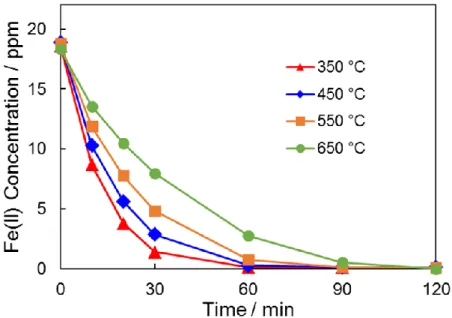
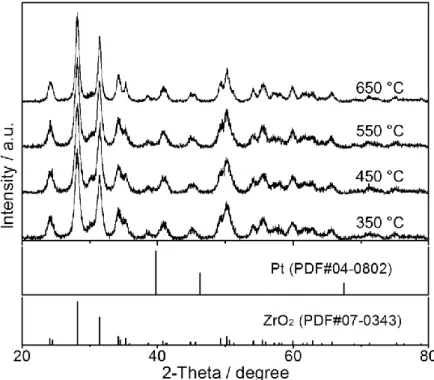

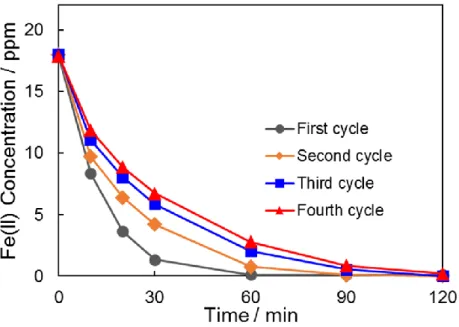
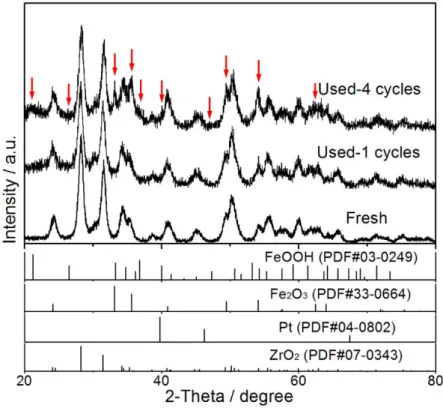
![Figure 2-9 Effect of temperature on the oxidation of Fe(II) over 1.0 wt%-Pt/ZrO 2 . Initial [Fe(II)] ≈20 ppm; 1.0 wt%-Pt/ZrO 2 =30 mg; oxygen flow rate=160 ml/min](https://thumb-ap.123doks.com/thumbv2/123deta/9921077.1921025/44.892.223.668.130.443/figure-effect-temperature-oxidation-zro-initial-zro-oxygen.webp)