キャロル・グラック
武内 進一
幡谷 則子
原口 剛
佐藤 宏
中山 智香子
Carol Gluck
Shinichi Takeuchi
Noriko Hataya
Takeshi Haraguchi
Hiroshi Sato
Chikako Nakayama
東京外国語大学 大学院
国際日本学研究院
東京外国語大学 国際日本学研究 報告Ⅵ
TUFS Program for Japan Studies in Global Context,
supported by Ministry of Education, Culture, Sports, Science and Technology(MEXT)
日本―アフリカ関係を通したグローバル
資本主義の批判的検討:
土地、空間、近代性
東京外国語大学 国際日本学研究プログラム
̶文部科学省 「国立大学の機能強化」 事業̶
Institute of Japan Studies,
Re-examining Global Capitalism from
the Perspective of Afro-Japanese Relations:
東京外国語大学 大学院
国際日本学研究院
東京外国語大学 国際日本学研究 報告Ⅵ
TUFS Program for Japan Studies in Global Context,
supported by Ministry of Education, Culture, Sports, Science and Technology(MEXT)
日本―アフリカ関係を通したグローバル
資本主義の批判的検討:
土地、空間、近代性
東京外国語大学 国際日本学研究プログラム
̶文部科学省 「国立大学の機能強化」 事業̶
Institute of Japan Studies,
Re-examining Global Capitalism from
the Perspective of Afro-Japanese Relations:
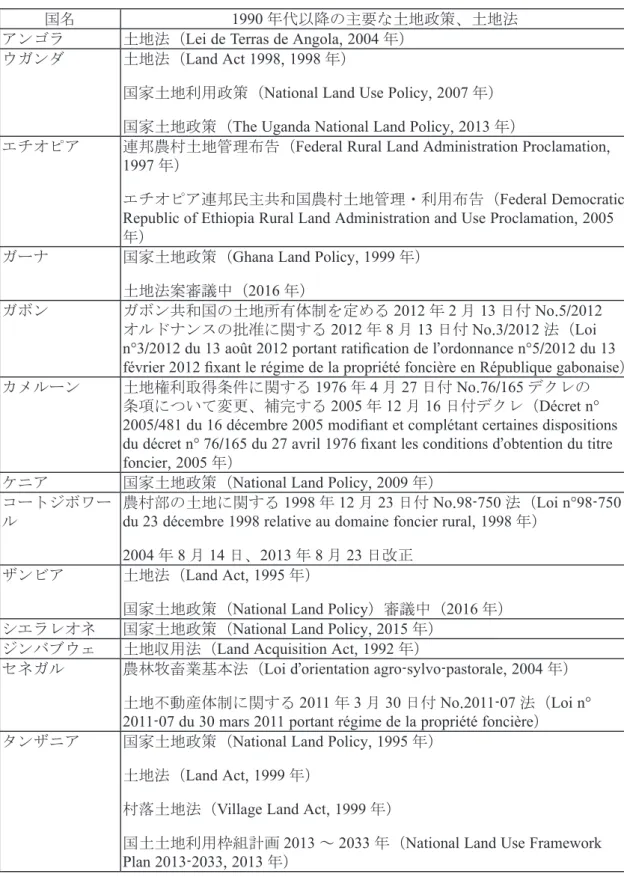
本報告書は 2018 年 1 月 29 日に東京外国語大学で開催された国際シンポジウム「日本 - アフリカ関係を とおしたグローバル資本主義の批判的検討:土地、空間、近代性」( 大学院国際日本学研究院・現代アフリカ地 域研究センター共催 ) の記録である。シンポジウムでは、アフリカ ( 武内進一、以下、敬称略 )、コロンビア ( 幡 谷則子 )、インド ( 佐藤宏 )、日本 ( 原口剛 ) からの事例報告とグローバリゼーション資本主義批判のための問 題提起 ( 中山智香子 ) がなされ、領域横断的で実に刺激的な討論が交わされた。出席がかなわなかったキャロル・ グラック教授にはとてもすばらしいビデオ・プレゼンテーションを送っていただいた。なお司会は坂井真紀子 と友常が担当した。 このシンポジウムの構想は、キャロル・グラック教授による本学大学院での 2016 年度冬期集中講義 (2017 年 1 月 ) “Rethinking Modernity: Japan and World History” に端を発している。グラック教授のセミナーでは、 Marius Jansen らの 1960 年代北米の日本近代化論をふまえ、竹内好、安丸良夫、Arif Dirlik などの議論を通して、 日本、オスマントルコ、中国、現代アフリカの近代化論がとりあげられた。さらに IMF と世界銀行による 1990 年代アフリカにおける「構造調整」を告発するアブデラマン・シサコの映画 Bamako があつかわれた。このセ ミナーをとおして、アフリカからグローバル資本主義を問うことの現代的意義と、戦後世界において、アジア・ アフリカを往還しつつ人々を飲み込んでいく近代性=モダニティを原理的に考え抜いていくことの重要性を私 たちは体感した。 さらに、2017 年 4 月に本学に創設された現代アフリカ地域研究センターと、武内進一教授によって提起 されている「土地改革」という視角がこのシンポジウムを可能にした。モダニティについての原理的批判の視 角をワールド・ヒストリーの観点から学び、それを地域研究の最前線からの報告にくぐらせる。そのような観 点から遂行されるワールド・ヒストリーと地域研究の協働作業は、批判的に現代社会をとらえ返し、リアリティ とアクチュアリティをもって世界との関係を再構築する知的実践である。この国際シンポジウムはそうした視 点を具体化するひとつの試みであった。 こうした知的姿勢は国際日本研究における歴史学と地域研究にとっても不可欠である。2009 年のマダガ スカルのクーデターはアフリカと東アジアをつなぐ一例だろう。このクーデターの背景には韓国の大宇ロジス ティックスがマダガスカルの全農地の半分を、バイオ燃料の原料となるトウモロコシ生産のために 99 年間無償 でリースする契約を結んだという事情があった。この契約を結んだ政権に対する反対運動は軍部の支持を得て 政権を打倒し、暫定政権を生み出すまでになり、その暫定政権はリース契約を破棄したが、今度はその政権が 前政権勢力やアフリカ諸国によって否認され、再び新たな政権が生まれるという事態になった。「リース」とい う手続きをとった土地収奪が一国の政治的危機をもたらし、そこに東アジアの資本が深くかかわっていたので ある。これは韓国の新興財閥を出自とする一企業の土地開発がもたらした事態だとはいえ、そうした土地利用・ 土地開発の慣行を理解するうえで、戦前日本帝国主義による植民統治の影響はけっして無視できない。植民地 主義の歴史はブーメランのように戻ってきて、世界のあちこちで姿を現すのである。 「土地改革」をめぐる世界的な動向という観点からいえば、2020 年東京オリンピック開催を前に展開され ている都市再開発に加えて、2009 年に成立した日本の農地法改正も参照しておく必要がある。明治期の地租改 正、戦後の農地改革に次ぐ「第三の土地改革」「農地法体系の大改正」と呼ばれたこの農地法改正によって、非 農業法人である私企業の農地取得が進み、土地所有者と土地利用者の分離が起きている。土地と空間をめぐる こうした劇的な変動を前にして、原理的なモダニティ批判をふまえたグローバル資本主義批判という立場は、 現代日本を研究していくうえでも必要不可欠の視点なのである。この国際シンポジウム報告集が、そうした課 題についての議論を深めていく手がかりとなることを期待したい。 最後に、国際シンポジウムおよびこの報告集作成にあたってご協力いただいた報告者、また、翻訳や編 集実務にかかわっていただいた皆様に心から感謝申し上げたい。 東京外国語大学大学院国際日本学研究院 友常勉 Reference
Tomotsune Tsutomu. 2019. “Making Heterogeneous Space: Land Development and the Proletarianization of Urban Underclass in Post War Japan,” International Journal of Japanese Sociology, Volume 28. Issue 1.
Tomotsune, Tsutomu
(Tokyo University of Foreign Studies)
This collection of papers is based on the symposium “Re-examining Global Capitalism from the Perspective Afro-Japanese Relations: Land, Space, Modernity,” held by Institute of Japan Studies and African Studies Center in Tokyo University of Foreign Studies, on January 29, 2018. It was very unfortunate that Prof. Carol Gluck, one of the key note speakers, was unable to participate in the symposium However, we had five extraordinary presentations based on case studies and theoretical criticism: African Studies by Prof. Takeuchi, Columbian Studies by Prof. Hataya, South Asian Studies by Mr. Sato, Geographical Studies in Osaka, Japan, by Prof. Haraguchi, and a theoretical approach for criticism against global capitalism by Prof. Nakayama. It was a realized inter-disciplinary and exciting discussion. Prof. Gluck sent us a commendable video presentation, which was greatly appreciated. Prof. Sakai and Tomotsune were in charge of chairs and discussants then.
The idea of the symposium has its roots in Prof. Gluck’s previous seminar, ”Rethinking Modernity: Japan and World History,” which was held as the intensive winter session for post graduate course by Institute of Japan Studies, TUFS, on January 2017. In the seminar, beginning with arguments of modernization in Japan such as Marius Jansen during early 1960, historical and theoretical works such as Yoshimi Takeuchi, Yoshio Yasumaru, Arif Dirlik, we had dealt with various approaches for modernity based on the case studies of Japan, Ottoman empire, China and Africa. Not only these but also, Bamako (2006), a marvelous and deeply critical film by Abderrahmane Sissako, which problematizes notorious Structural Adjustment Programme in Africa conducted by IMF and World Bank during 1990s. Through the seminar, we experienced how it is important to question the global capitalism from the perspective of Africa and to understand modernity principally which has been swallowing people’s aspirations for westernization or modernization and making them homogeneous but unequal world in Asia or Africa.
We should also notice the importance of the perspective of “land reform” in contemporary society as another root of the symposium, which is raised by Prof. Takeuchi and the works of African Studies Center in TUFS. In Sum, we tried to realize the following intellectual practice through the arguments above: re-learning principal criticism against modernity from the perspective of world-history and at the same time, letting the practice pass through the frontier works of area studies. This collaborative practice based on world-history and area studies turns to the critical engagement toward contemporary society to reconstitute the picture of the world keeping with tense reality and actuality. This international symposium would be regarded as one of the attempts to embody the idea.
This intellectual engagement is necessary for Japan studies, especially for history and area studies. The so-called Madagascar political crisis in 2009 could be raised as one of the good examples to understand why Afro-(East) Asian approach is essential. In this incident, Daewoo, a Korean international logistics company, entered into a lease contract with the Malagasy government. Under this usufruct agreement, Daewoo acquired almost half of Madagascar’s national property for 99 years, for the purpose of producing corn for biofuel. Because of this outrageous contract, selling all national resources to a foreign private company, the regime was instantly overturned by a coup d’état. Although the case was triggered by an affiliated company of newly-risen zaibatsu in Korea, it is noticeable that the conventional custom of land reform or land development in Korea is formulated through the strong influence of Japanese colonialism. Historical “legacy” of colonialism would be boomeranged on some places in the world (Tomotsune, 2019).
In terms of the contemporary tendency of “land reform” issue, in addition to the rapid land development at the moment of 2020 Tokyo Olympics, we should also refer to the revised act of Agricultural Land Law enacted in 2009 in Japan, by which agricultural land can be used by private companies through a lease agreement with a maximum of 50 years. This measure intends to expand the separation of land owners from users. This manner of recent land development includes hazardous destruction of land by ignoring historical conditions or residents’ lives (ibid.).
In this sense, it is indispensable to maintain the criticism against global capitalism with principal approach towards modernity to study contemporary Japan. We expect the papers collected in the symposium to be a clue to deepen these issues.
Finally, we honestly appreciate the presenters, discussants, and those who worked for editing and translation. Reference
Tomotsune Tsutomu. 2019. “Making Heterogeneous Space: Land Development and the Proletarianization of Urban Underclass in Post War Japan,” International Journal of Japanese Sociology, Volume 28. Issue 1.
Japanese Relations: Land, Space and Modernity” v
The World Today: Why Modernity Matters More in Lesotho than in London
Carol GLUCK 7
世界はいま――〈モダニティ〉がロンドンではなく、レソトで問われる理由
キャロル・グラック
17
Land and Power in Contemporary Africa:
Understanding Drastic Rural Changes in the Age of Land Reform
Shinichi TAKEUCHI 25
現代アフリカにおける土地と権力――土地法改革と急激な農村変容
武内 進一
44
Land problems in Colombia after the Peace Agreement
Noriko HATAYA 49
和平合意後のコロンビアにおける土地問題
幡谷 則子
61
Struggles Over the Expropriation of Urban Space: The Case of Osaka
Takeshi HARAGUCHI 71
都市空間の略奪をめぐる抗争――大阪のケース・スタディ
原口 剛
75
Politics of Land Acquisition in Contemporary India
Hiroshi SATO 79
インドにおける土地収用の政治学
佐藤 宏
85
Uneven Development in the 21
stCentury
Chikako NAKAYAMA 91
21 世紀の不均等発展を再考する
中山 智香子
95
Panel Discussion
99
Let me begin with a story. The place is Lesotho; the time is 1983. Mr. Lebona has declared his intention to build what he called a “European-style” house: a rectangular house with a cement floor and a steel roof. He mentioned this intention to an American anthropologist — James Ferguson is his name — who was at that time happily lodged in a traditional round house with mud-and-stone walls and a thatched grass roof, a house that stayed cool in summer and warm in winter. The well-meaning anthropologist asked Mr. Lebona why he would want to build a less practical, more expensive house. Why would he want a “European” house, when the ‘’local” Sesotho round house had all the advantages? Mr. Lebona looked the anthropologist in the eye and asked, “What kind of house does your father have, there in America?” “Is it round?” No, it is rectangular, answered the anthropologist. ‘’Does it have a grass roof?” No, it does not. “Does it have cattle dung for a floor?” No. “How many rooms does your father’s house have?” he asked. “About ten, I think,” mumbled the anthropologist. After pausing a moment to let this sink in, Mr. Lebona said, “That
is the direction we would like to move in.”
Chastened, the earnest young anthropologist realized that Mr. Lebona’s aspiration for a Europe-an-style house was not simply a matter of copying Western ways, but it was — I quote the anthropologist again — “a powerful claim to a chance for transformed conditions of life — a place-in-the-world, a stan-dard of living,” In short, “a direction we would like to move in.”1
One name for the direction that moves toward such transformed conditions of life is “modernity.” But what exactly does “modernity” mean? The answer depends not only on time — the time when one asks or answers this question. It also depends on place, the country a person lives in and the person’s status in that country, his or her own “place-in-the-world,” as the anthropologist called it. Moreover, not everyone lives in the same time, even those who live in the same place in the same historical period, including the present one. This is because the unevenness always associated with modern societies and capitalist econ-omies occurs within countries, within cities, within communities, as well as between them. If you live in a well-off country, one of the G-8 for example, and if you and your family are relatively well-off economical-ly (with four rooms, say, rather than ten), you may think you are living in postmodern times, in the period after modernity. And you probably do not think that modernity is something to aspire to or reach out for. Or perhaps you have another name for what it is you aspire to and reach out for. Lucky you, one might say, living in the middle-class equivalent of a ten-room house, but for much of the world, modernity is not at all an antiquated abstraction. Modernity is instead a “folk category,’’ as some anthropologists have come to define it: “a concept that people use to make sense of their own lives, to make certain identity claims, to
1 James Ferguson, Global Shadows: Africa in the Neoliberal World Order (Durham, NC: Duke University Press, 2006), pp. 18-19 (italics mine).
The World Today: Why Modernity Matters More
in Lesotho than in London
Carol GLUCK
give voice to certain kinds of aspirations they have for their lives. And in that sense, one has to take it very seriously. It’s one of the discussions within which very important kinds of political, cultural, social claims are being made.”2
Yet because the definition of modernity is neither monolithic nor static, we also have to take se-riously what exactly such claims might mean. Here I focus broadly on how understandings of the modern have changed over the past several decades and what those changes might mean, not only for Lesotho and London, but for Tokyo, Delhi, Rio, and everywhere else.
Modernity As It Was – and As It Became
Modernity, once so consciously and assertively new, is by now an old idea. The conventional, his-torical definition of the nineteenth and twentieth centuries centered on a collection of characteristics that Narita Ryūichi has called the “grammar of modernity.”3 These characteristics include the nation-state, a
political form that increased in number from fifty nations at the beginning of the twentieth century to near-ly two hundred today; capitalism in its industrial and postindustrial modes, which has changed socio-eco-nomic life across the globe, including in socialist economies; mass society, increasingly urbanized, with accompanying disruptions of communal life; a national citizenry, with the insistence, even if only rhetorical, on national political participation; national identity, knowing that one is Japanese, French, or Nigerian, a knowledge not required before the emergence of modern nation-states; and integration in the world order, what is now called globalization, which is not new, only intensified in recent times.
These characteristics are now numbingly familiar because they constitute a good deal of mo-dernity as it happened. What in the nineteenth century was once prescriptive — momo-dernity must/ought/ will develop in ways described by Marx, Weber and others — has now become descriptive — this is the way modernity is, more or less, in the present-day. We live, for example, in a world of nation-states, with few viable alternative political forms on offer, the recent expansion of deterritorialization and globalization notwithstanding. When it comes to the economy, Hernando de Soto has famously insisted that in the twen-ty-first century “capitalism is the only game in town.”4 Global interdependence, too, has become
inescap-able, anywhere and everywhere on the globe. This by now empirical definition is both macro and national in focus, defining modernization in terms of entire societies, polities, and economies. It is also far too blunt an analytic instrument, assuming a linear and teleological process unfolding globally in the direction of progress, a happy tale from the nineteenth century that we now know not to be true: things can get worse, not better, while inequality remains the ground bass of modern historical change. Nonetheless, according to the canonical definition, the world is now modern, if in profoundly different and unequal ways.
The oft-told tales of becoming modern generally took the form of two master narratives of na-tional history: one of emancipation (France, the United States, for example), the other of development (the majority of countries). Whatever the narrative, these national processes proceeded along two vectors. The first was modernization by force: in the nineteenth and early twentieth century, changes imposed by colonial powers, gunboat threats, and world-order imperatives such as sovereignty, imperialism, and inter-national law; in the second half of the twentieth century changes imposed by the bipolar Cold War powers,
2 James Ferguson, “Theory Talk #34: James Ferguson on Modernity, Development and Reading Foucault in Lesotho,”
http://www.theory-talks.org/2009/11/theory-talk-34.html. Also, Global Shadows, p. 177. 3 Narita Ryūichi, “Kindai no bunpō,” Shisō 845 (November 1994).
international organizations like the IMF and the World Bank, or the norms of neoliberal economics. This is what I call the coercive modern.
The second vector was modernization by aspiration, in which people reached for modernizing change. National and social reformers, militaries seeking national strength, capitalists pursuing expanded markets and profits, portions of the population disadvantaged by class, wealth, or power — a wider range of people than one might think regarded modern ways as desirable in themselves, judging modernity to be not only European in origin but universal in application. People reached for change, not only because circumstances forced them to, but also because they thought it served their individual, family, or commu-nity interests. Japanese peasants paying to send their children to school in great numbers is a late nine-teenth-century instance; Mr. Lebona wanting a house with many rooms is an example from the late twen-tieth century. I call this the aspirational modern. Such people believed in what one scholar has called “the promissory notes” of modernity.5 This is what modern life offers — promises — to you.
If this is modernity as defined and experienced over two centuries of global history, then we might conclude, as some theorists of postmodernism do, that we are all modern now and can therefore move on to something else. But of course the promissory notes of modernity were either unevenly fulfilled, or for some people in some places, never fulfilled at all. And over the past several decades the definitions of modernity have gradually changed. In the second half of the twentieth century one can say that the two master narratives continued to hold sway, with the story of emancipation focused on liberation from colo-nial rule in much of Africa and South and Southeast Asia; and tales of development retaining their force in the Global South and beyond. But in recent years the main locus of action has shifted. Modernizing change — or change for the better — has come also to be described in terms that are less national than individual in focus; less as GDP-centered national economic growth than as jobs and livelihood; less as economic de-velopment than as human dede-velopment; less as abstract freedom than as the possibility of personal choice. For this reason, such aspects as gender, health, and education have become central to the idea of develop-ment.
Everyday Modernity
We might think of this as everyday modernity: modernity in everyday life, modernity as a “folk category,” the kind of modernity Mr. Lebona in Lesotho wished to move in the direction of.
The discourse on development now includes a number of indices of such an everyday modernity. Perhaps the best known is the Human Development Index of the United National Development Program (UNDP), which ranks countries by three criteria: life expectancy (health), access to knowledge (educa-tion) and standard of living (per capita income), with the goal of “human development for everyone.” Since 1990 the focus of the index has shifted from “pursuing material opulence to enhancing human well-being, from maximizing income to expanding capabilities, from optimizing growth to enlarging freedoms.” The stated emphasis falls on “the richness of human lives rather than on simply the richness of economies.”6 Despite efforts to escape “the tyranny of GDP,” the list of countries in the 2016 Human Development Re-port (for the year 2015) was headed by Norway, Australia, and Switzerland; the United States was tenth,
5 Bjorn Wittrock, “One, None, or Many? European Origins and Modernity as a Global Condition,” Daedalus, v. 129, no. 1 (Winter, 2000), pp, 37-38.
6 United Nations Development Programme, Human Development Report 2016: Human Development for Everyone (New York: United Nations Development Programme, 2016), p. 2.
http://hdr.undp.org/sites/default/files/2016_human_de-the United Kingdom sixteenth, and Japan seventeenth, all ranked in http://hdr.undp.org/sites/default/files/2016_human_de-the top group of 51 countries with “very high human development,” out of a total of 188 countries. The majority in the group of 41 nations with “low human development” were in Sub-Saharan Africa, suggesting that decoupling the richness of human lives from the richness of economies will not be an easy task, the more so since the top 1% of the population holds 46% of the world’s wealth.7
The United Nations program in Human Security, a term introduced in the 1990s, declares a sim-ilar objective in its attempt to expand the traditional notion of national security into a “people-centered” approach that includes human rights, human dignity, and basic needs.8 The Global Social Progress Index,
produced by the Social Progress Imperative, a non-profit organization based in the United States, mea-sures basic human needs (food, water, sanitation); foundations of well-being (access to knowledge, health care, safe environment); and opportunity (rights, choice, inclusion, advanced education). Echoing others, the index seeks to avoid “traditional measurements of success like income and investment” and instead assess “the capacity of a society to meet the basic human needs of its citizens…. enhance and sustain the quality of their lives…and create the conditions for all individuals to reach their full potential.” In the 2017 report on 128 countries, the United States and Japan were in the second group (High Social Progress), while the Scandinavian countries, Canada, and others were in the first (Very High Social Progress), and Sub-Saharan African nations ranked in the lowest two categories.9
The World Happiness Index, first published in 2012 by the United Nations Sustainable Develop-ment Solutions Network, ranks 155 countries based on Gallup World Polls, which brings subjective percep-tions to bear on the subject. The results are ranked according to six key variables: GDP per capita (income), healthy years of life expectancy, social support (having someone to count on in times of trouble), trust
7 Ibid., pp. 198-201; wealth, p. 7. The “tyranny of GDP” is frequently mentioned by Helen Clark, UNDP administrator from 2009-17, e.g., http://www.undp.org/content/undp/en/home/presscenter/speeches/2017/02/11/helen-clark-keynote-speech-at-the-global-dialogue-for-happiness-where-is-happiness-on-the-global-agenda-.html
8 E.g. Introduction by UN Secretary General to the Report on Human Security to the General Assembly, May 20, 2010.
https://www.un.org/press/en/2010/ga10942.doc.htm
9 Michael E. Porter and Scott Stern with Michael Green, Social Progress Index 2017 (Washington, Social Progress Im-perative, 2017); rankings, pp.4-5 ; map, p. 23. http://www.socialprogressimperative.org/wp-content/uploads/2017/06/ English-2017-Social-Progress-Index-Findings-Report.pdf
(perceived absence of corruption in government and business), perceived freedom to make life decisions, and generosity (recent donations to others). In the 2017 report Scandinavian countries and Switzerland ranked at the top, the United States 14th (the U.S. has never made the top ten, sliding further in 2018 to 18th
place), the United Kingdom, 19th, Japan 52nd, South Korea 56th, China 80th. Taiwan, the happiest country in
East Asia, ranked 33rd.10 Many of the nations in Africa, while far too diverse to wrap up in a single continental
package, had what the report calls a “happiness deficit.”11
Initially greeted by critics (and cynics) as soft news, the World Happiness Index has gained in cre-dence in recent years, not least because its results are similar to those of the other indices that have sprung up. Many of these initiatives were influenced by prominent critics of GDP-ism such as the economists Joseph Stiglitz, Amartya Sen, and Jean-Paul Fitoussi, whose 2009 report proposed well-being, quality of life, environ-mental sustainability, and the like, as better metrics for economic performance than statistics based solely on GDP.12 In sum, these several indices and others like them betoken at least a discursive, if not a decisive, shift
in definitions of development, a better life, and, in many places, a more “modern” one.
The increasingly important place of gender appears in nearly every recent measure of social well-being. The Global Gender Gap Report, published annually by the World Economic Forum, tracks data on women in the economy, education, health, and politics in societies around the world. The 2017 report had (no surprise) Scandinavia ranked the highest, with Rwanda as number 4 between Finland and Sweden; the United Kingdom 15th; the United States, 49th; and Japan, extremely low on the list, at 114th of 144 countries.13
There are other such indices, such as the Better Life Index of the OECD, Afrobarometer, Americas
10 John Helliwell, et al., World Happiness Report 2017 (New York: Sustainable Development Solutions Network, 2017), pp. 20-22. https://s3.amazonaws.com/happiness-report/2017/HR17-Ch2.pdf
11 Valerie Møller, et al., “`Waiting for Happiness’ in Africa,” ibid., pp. 85, 108-9
12 Joseph E. Stiglitz, Amartya Sen, Jean-Paul Fitoussi, Report by the Commission on the Measurement of Economic
Perfor-mance and Social Progress (2009). http://ec.europa.eu/eurostat/documents/118025/118123/Fitoussi+Commission+report
(SDGs) adopted by the United Nations in 2015 to be reached by 2030. (These replaced the Millennium Development Goals of 2000, which were meant to be achieved by 2015). The new set has seventeen Goals, beginning with No Poverty and Zero Hunger on through Good Health and Well-being, Gender Equality, to Climate Action and Peace, Justice and Strong Institutions.
The SDGs are intended to be “universal” (applying to developed and developing countries alike) — which is new (the Millennium Development Goals targeted only developing countries) — “inclusive” (leaving no one behind), and “planetary” (sustaining the natural resources on which human society depends).14
Al-though the word “modern” is used here primarily as an adjective (modern technology, modern health care, modern energy), in fact the SDGs envision a program of social, national, and international development in the name of progress and a better life. As promissory notes, the SDGs are likely to prove as unattainable as the goals of modernity of the nineteenth and twentieth century, but their focus clearly lies elsewhere, less centered on national economy and security than on the well-being of individual human beings and their so-cial lives in the spaces of everyday modernity.
Africa and the Global Modern
Where does Africa fit in the revised definitions of what might be regarded as a new global modern? A continent of fifty-four countries, with 1.2 billion people who constitute 16% of the world’s population — 70% of whom are younger than thirty years old — Africa by 2050 will have 2.5 billion people and a quarter of the earth’s population. The world often subsumes these vastly diverse countries under a single continental per-spective, often negative, with frequent references to failed states, kleptocracy, HIV/Aids, abject poverty, and the like. Similar views underlay the requirements of Structural Adjustment for World Bank and IMF loans in the 1980s and the conditions of good governance and open economies required for debt forgiveness in the 1990s and 2000s. The generally pessimistic neoliberal view of the “hopeless continent” was countered in the first decade of the twenty-first century by the image of “Africa Rising,” a narrative of economic growth that itself became something of a stereotype, which was more recently counter-countered by depictions of terror-ism and civil war.
The economic fortunes of the poorest parts of the developing world continue to be a topic of debate.
14 E.g., “Transforming our World: the 2030 Agenda for Sustainable Development” (Resolution adopted by the General As-sembly, September 25, 2015). http://www.un.org/ga/search/view_doc.asp?symbol=A/RES/70/1&Lang=E,
from their own government or from international aid, which often failed reach its target populations.15 In
2015, in contrast, a cheerful economist celebrated the present as “a time of the Greatest Development Progress among the Global poor in the history of the world,” including many countries in Sub-Saharan Africa.16 This division of opinion is nothing new, but in terms of the indices quoted here and reflected in the
UN Sustainable Development Goals, many countries in Subsaharan Africa are still beset by extreme pover-ty, a fact recognized even by the cheerful economists. And while child mortality rates have declined sharp-ly, African women and girls are still deprived of health care, education, and other social goods included in the Human Development Index.
In the World Happiness Index Africa is the unhappiest continent. Its chapter in the 2017 report is entitled “Waiting for Happiness,” from the title of a 2002 film by the Mauritanian director, Abderrahmane Sissko. Unsurprisingly, the more “lived poverty” (the term used by Afrobarometer), the less happiness. Mr Lebona’s Lesotho ranks 139 of 155 countries. In the Human Development Index, Lesotho is 160th out
of 188 countries, with violence-riven Central African Republic at the bottom. In the Social Progress Index, Lesotho ranks 103 of 128, followed by mostly Sub-Saharan African countries, with Central African Republic again in the lowest place. But in the Gender Gap Report, Lesotho ranks quite high, at 57th of 144 countries,
not much below Italy at 50th and far, far above Japan at 114th. Women in Lesotho have miserably low scores
in health and education, but high scores in political empowerment (women in government) and in eco-nomic participation and opportunity. This means that women are less unequal compared to men, not neces-sarily that their wages, jobs, or livelihoods are improved, rather that some half of the men and women are either doing better while the rest remain impoverished, only more equally so than in other places.
If one asks what Africans want, the answer is exactly what the new global goals say they should have: basic human needs (food, water); access to health care; employment (for a surging youth population without work and no industrial sector to absorb them); a decent standard of living; education; infrastruc-ture (roads, etc.); less corruption and more democracy. There is also an expressed desire for “inclusion” — a word heard almost as often among Africans discussing their future as “sustainable” is heard in
devel-15 Paul Collier, The Bottom Billion: Why the Poorest Countries are Failing and What Can Be Done About It (New York: Oxford University Press, 2007), p. 7.
opment circles at the United Nations. “Inclusion” stands against inequality, powerlessness, and a lack of indi-vidual or familial choice. And what do Africans get, in their view? At home, civil war, corrupt leaders, epidem-ics, and encroaching climate change; from the world, international aid that often misses the mark because it does not lay down local roots (in health care delivery, for examples), foreign direct investment, including land grabs and exploitation of resources, including labor, not only by the former imperial powers but by Chi-nese, South Korean, and Japanese enterprises. The explosive expansion of China in investment, infrastruc-ture funding, trade, Chinese workers, and the like is both welcomed and bemoaned, the attitudes varying by country and socio-economic status.17 Investment and economic benefits on the one hand, exploitation and
disempowerment on the other repeats a pattern familiar from the long years of European colonial rule. Yet it is also true that expectations for the future are higher among Africans, and even higher among African youth, than is the case in “happier” societies elsewhere. According to one study, optimism is frequently strong among the poorest and least secure, where it often correlates with more positive attitudes about democracy than about the market. Critics argue that material wealth in itself is not enough and that consumerist modernity can be as much a burden as a promise for the future. Such a view is expressed in a work of video art by Wangechi Mutu entitled “The End of Carrying All.” It features a woman walking across an African landscape carrying a basket on her head. As she trudges along the basket fills with the trappings of modern life: first household objects, a bicycle wheel and satellite dish, then oil rigs and skyscrapers. The burden of material modernity gradually grows so heavy that it weighs her down to the ground, representing both the negative aspects of development and the role of women in African life and labor. As the woman and her burden meet the future – or the end of the world – the basket of modern objects, now a large and un-wieldly blob, topples off a cliff into the abyss.18
17 Fei-Ling Wang and Esi A. Elliot, “China in Africa: Presence, Perceptions and Prospects,” Journal of Contemporary China, 23, no. 90 (2014), pp. 1012-32.
18 Wangechi Mutu, “The End of Carrying All,” Venice Biennale 2015: All the World’s Futures. Born in Kenya in 1972, the artist lives and works in the U.S.
In contrast to this powerful if bleak vision of the future of uneven capitalist development, sometimes a different, often buoyant future can feel as if it has already arrived. In large cities in Africa as in India, for example, youth (and others) are connected electronically, in what has been called “pirate modernity,” or “recycled modernity,” in which cell phones and other devices are taken apart, and repurposed, producing a shadowy but dynamic economic zone of internet connectivity and ingenious chargers that outwit the lack of electricity and capital. Such technological failures as computer breakdowns and degradation of well-worn digital media produce not only obstacles but spurs to creativity. Studies of the way contemporary media both impede and enable locally created music and video in urban sites like Kano in Nigeria and Soweto in South Africa reveal new technologies of everyday — and aspirational — modernity.19
Everyday Modernity and Global Responsibility
If we are indeed to pursue the goal of “human development for everyone,” as declared by the United Nations, it will require considerably transformation of thought and action, both at home and in the interna-tional arena. Modernity means more in Lesotho than in London in part because we have yet to revise our understanding of the meaning of modernity in the twenty-first century. Most people agree that London and Tokyo are modern in the older definition of the term, but if everyday modernity is the goal, then it remains far from achieved, precisely because so many are excluded from it. And everywhere the excluded tend to be the same parts of society: minorities and marginal groups, the indigent and the indigenous, women and foreigners, and so on. Uneven modernity across the globe is matched by uneven modernity at home. The goals of everyday modernity hold not only for the developing world but for the poor, disenfranchised, and unempowered in the heart of the global North. Just as Africans deserve our attention to their aspirations for a better life, so, too, do all those left behind who live down the street or across the county.
What are the conditions that impede the aspirational modern in places like Lesotho, and how does Japanese (or any other) foreign aid, policy, and investment make things better or worse for people like Mr. Lebona? And what are the conditions at home that make Japan rank so (unmodernly) low in the gender gap, so much lower than Lesotho? While it may seem that such comparisons are odious, that is precisely the point: no one occupies a privileged position in terms of fulfilling the aspirations for progress and a better life. The task, it seems to me, is to try to improve our global modernity, at home and abroad, in order to impel it, as Mr. Lebona said, toward “a direction we would like to move in” — toward a better, more humane “place-in-the-world” — for everyone, everywhere, in the everyday.
19 Ravi Sundaram, “Recycling Modernity: Pirate Electronic Cultures in India,” Third Text 13, no. 47 (Summer, 1999), pp. 59-65; Brian Larkin, Signal and Noise: Media, Infrastructure, and Urban Culture in Nigeria (Durham, NC: Duke University Press, 2008); Gavin Steingo, “Sound and Circulation: Immobility and Obduracy in South African Electronic Music,”
まず、ひとつの話をしよう。1983 年、アフリカ南部に位置するレソト王国でのことだ。レボナ という一人の男性が、あたらしく家を建てることについて話をしていた。セメントの床と鉄骨の屋根から なる四角形の家を、彼は〈ヨーロピアン・スタイル〉だと考えていた。レボナがそのように語っていた相 手は、アメリカから来た文化人類学者ジェームス・ファーガソン。彼がそのとき寝泊まりしていたのは、 泥と石でつくった壁や、草の屋根からなる、丸い形をした伝統的な家で、夏は涼しく冬は暖かい。ファー ガソンにとっては幸運なことだった。良心的な研究者である彼は、なぜレボナがそのような家を、すなわ ちレソトでは実用性が低いのにコストばかり高くかかってしまう家を建てたいのかと、問いかけた。あら ゆる面で、この〈地方〉のソト族が住む丸い伝統的な家に利点があるというのに、なぜ〈ヨーロッパ〉の 家をつくりたいのかと尋ねたのだ。レボナは、この学者の目を見て問い返した。「きみの父さんはアメリ カでどんな家を持ってるんだ?」、「丸い家か?」と。ファーガソンは、長方形だと答えた。「草の屋根か?」 ―「いや、違う」/「床に牛のフンが転がっていたりする?」―「いや」/「部屋の数はどれくらい?」 ―「だいたい 10 くらいだと思う」。その文化人類学者は、レボナからの問いに小さくつぶやいて答えてい た。少し考える間をおいて、レボナはこう言った。「そこに向かって、私たちは進んでいきたいんだ4 4 4 4 4 4 4 4 4 4 4 4 4 4 4 4 4 4 4 4」と。 若く誠実な文化人類学者であるファーガソンが、このことを反省してみて気付いたのは、〈ヨー ロッパ〉の家をレボナが熱望していることが、西欧の模倣といった単純なことがらでなく、ファーガソン の言葉をひくなら、「それまでとは違う生活条件――世界における自身の立ち位置、すなわち生活水準― ―を得る機会への強い権利主張」であるということだった。「そこに向かって、私たちは進んでいきたい」 という言葉は、そのことを端的に言い表したものだ1。 ここで語られているような、一変した生活条件へと向かう方向性にたいして与えられた言葉のひ とつが〈モダニティ〉である。しかし、〈モダニティ〉とは、正確には何を意味しているのだろうか。こ の問題への答えは、問答がなされるタイミングによってのみ異なるだけではない。場所、すなわち、ある 人が暮らしている国によっても変わるし、当人がその国のなかで占めている地位、ファーガソンの言う、 「世界における自身の立ち位置」によっても異なりうるのだ。さらに、すべての人が同質の時代を生きて いるのではない。同じ場所で、現在を含む、同じ歴史の期間を過ごしている人びとであってもだ。なぜな ら、近代的な諸社会と資本主義的な諸経済に必ずつきまとう不均等性が、国内、都市内、共同体内、さら にこれら相互の間に存在しているからである。G8 参加国のように裕福な国で暮らしているか、あるいは、 自分や家族が割に経済的な余裕 (10 部屋の家とまでは言わずとも 4 部屋ほどの家にあたるような ) を持っ ているとしたら、自分はポストモダンの時代を、すなわち〈モダニティ〉の過ぎ去った時代を生きている
1 James Ferguson, Global Shadows: Africa in the Neoliberal World Order (Durham, NC: Duke University Press, 2006), pp. 18-19.(傍点引用者)
世界はいま――〈モダニティ〉がロンドン
ではなく、レソトで問われる理由
キャロル・グラック
のだと考えるかもしれない。そしておそらく、切望したり、得ようと手を伸ばす先のものとして〈モ ダニティ〉があるとは思わないだろう。あるいはひょっとすると、そこに〈モダニティ〉ではない別 の言葉をあてているのかもしれない。10 もの部屋がある家に住むことができるだなんて幸運じゃな いか、という人がいるだろう。しかし、世界の大部分の人びとにとって、〈モダニティ〉とは決して 時代遅れの抽象概念ではない。〈モダニティ〉とはひとつの〈習俗的な範疇 folk category〉であり、 文化人類学では次のように定義されるようになっている。「人びとが自分の生活を理解するため、何 らかのアイデンティティを主張するため、自身の生活に対して抱いているある種の熱望に言葉を与え るために使用する概念である。こうした意味で、〈モダニティ〉についてよく考えなければならない。 これをめぐる討議のなかから、政治的、文化的、社会的な権利主張のきわめて重要なものが形成され ていくのである」 。 しかしながら、〈モダニティ〉の定義は一枚岩でも普遍的なものでもないため、この概念が 正確に何を意味しているのかを、真摯に検討していく必要がある。ここでは、近代というものの理解 がここ数十年の間にどう変容したのか、そして、レソトやロンドンだけでなく、東京やデリー、リオ デジャネイロなどあらゆる場所にとって、その変容がどのようなことを意味するのかに、広く焦点を あてていきたい。
〈モダニティ〉の、かつての理解とその変容
かつては敢えてその新しさが取り上げられてきた〈モダニティ〉が、いまや古びた概念のよ うになっている。19-20 世紀という時代についての、これまでの歴史的な定義は、その特殊性を集め て積み重ねることに重点が置かれていた。これは成田龍一が「近代の文法」と呼んだものだ3。この特 殊性のうちには、たとえば以下の諸点がある。まず国民国家という政治形態。これは 20 世紀はじめ に 50 ほどだったところから、現在は 200 近くまでその数をのばした。そして、工業化および脱工業 化時代の生産様式である資本主義は、全世界の社会経済的な生活を変化させ、社会主義経済もそのう ちに含まれていた。次第に都市化がすすみ、共同体における生活の崩壊を経た大衆社会。国政へ参加 するという権利主張をともなう、国民という概念。ある人が日本人かフランス人か、はたまたナイジェ リア人なのかを弁別するナショナル・アイデンティティ。これは近代的な国民国家の登場以前に必要 とされることのなかった知である。そして、国際秩序への統合。今ではグローバリゼーションと呼ば れているが、近時の傾向として強まりを見せているのみで、新しいものではない。 これらの特質が、われわれにとって無感覚なほどに馴染んでいるのは、これらが〈モダニ ティ〉の大部を、実際に起きたものとして構成しているからだ。〈モダニティ〉はマルクスやヴェーバー らが叙述したように発展しなければならない/するべきである/するだろうという具合に、19 世紀 においては規範的だったものが、いまでは、これが現在における〈モダニティ〉のありようだという ように、記述的なものとなった。たとえば、わたしたちは国民国家の世界に生きており、これに代わ るような政治形態を提起できそうな見込みもほとんどない。近年における脱領土化やグローバリゼー ションの広がりにもかかわらず、である。経済にかんしては、ヘルナンド・デ・ソトが、21 世紀に おいて「資本主義は都市における唯一の選択肢だ」と主張したことがよく知られている4。グローバル な相互依存の関係から抜け出すことも、世界のどこにいようと逃れがたいものになった。このような2 James Ferguson, “Theory Talk #34: James Ferguson on Modernity, Development and Reading Foucault in Lesotho,”
http://www.theory-talks.org/2009/11/theory-talk-34.html. あるいは , Global Shadows, p. 177. 3 成田龍一「近代の文法」『思想』845 号(1994 年 11 月)
4 Hernando de Soto, The Mystery of Capitalism: Why Capitalism Triumphs in the West and Fails Everywhere Else (London: Bantam, 2000), Ch. 7.
経験的な定義が、マクロおよびナショナルなスケールで焦点化されており、社会全体、政治形態、経済 といった観点から近代化を意味づけている。近代化というものは分析概念としてあまりに鈍く、世界 中で発展にむかって進行しているという単線的かつ目的論的な過程――19 世紀以来のめでたい物語が、 嘘にすぎないとうことを、いまや私たちは知っている――を前提としている。状況は悪くなり、良くなっ てはいない。近代の歴史的な変化は、不均等をこそ、その基盤としつづけているのだから。 近代へ移っていくというよくある話は、たいていの場合、ナショナル・ヒストリーの 2 つの定 型をとって語られてきた。ひとつは解放 ( たとえばフランス、アメリカ合衆国 ) の物語で、もうひとつ は発展 ( 多数の国々 ) の物語だ。いずれにせよ、これらのナショナルな過程は 2 つのベクトルに沿って 進んでいった。まず、暴力による近代化がある。19 世紀と 20 世紀初頭において、変化は宗主国や武力 の脅威、主権といった世界秩序上の責務、帝国主義、国際法によって引き起こされてきた。20 世紀後 半には冷戦下の東西両権力、IMF や世界銀行といった国際組織、あるいは新自由主義経済という規範 のもとで変化が生じた。これを私は、強圧的な近代4 4 4 4 4 4 coercive modern と呼んでいる。 もう一方のベクトルは、熱望に導かれた近代化だ。そのなかで人びとは、近代化を遂げる変化 へと手を伸ばす。国家および社会の改革者、国力を追求する軍人、市場と利潤の拡大を追求する資本家、 階級や富、あるいは権力によって劣位にある人びと――近代という進路を自身にとって望ましいものと 考え、それがヨーロッパに起源を置くだけでなく普遍的に応用できるものとみなしている人びとは、一 般に考えられているよりも幅広い。変革を得ようとする人びとは、状況がそうさせたのみではなく、彼 /彼女ら個人、家族、または共同体にとって有益であると考えたからだ。日本の農民がきわめて多くの 子どもたちを学校に送ったことが 19 世紀後半の一例である。レボナが部屋の多い家を欲しいと思うの は、20 世紀末の例だ。これを私は「熱望の近代4 4 4 4 4 aspirational modern」とする。これらの人びとは、あ る研究者が「約束手形 the promissory notes」と呼ぶものが〈モダニティ〉には存在していると信じて いた5。近代的な生活が人びとに差し出し、示しているのはこのこと――すなわち約束――なのである。 2 世紀にわたるグローバル・ヒストリーを経て定義、経験された〈モダニティ〉がこのようなものだと すると、わたしたちはポストモダニストの理論家のように、こう言うだろう。今やわたしたち全員が近 代的であり、それゆえ、何か別のものへと進んでいくことができる、と。しかし当然ながら、〈モダニティ〉 の「約束手形」は不均等に、ある場所の一部の人びとのもとでのみ履行されるか、全く履行されないか のどちらかである。すると、過去数十年のあいだに〈モダニティ〉の定義が変化してきた。20 世紀後 半には、先にのべた 2 つの定型に沿った語りが支配的で、そこにはアフリカや南・東南アジアの多くの 国々が植民地支配から離れていくことに焦点をあてた解放の物語があった。また、それらの国々がグロー バルサウスや、これを越えて力を得つつある発展の物語もあった。しかし、物語の中心が近年のあいだ に変化しているのだ。近代化という変化――あるいは、より良きものへの変化――が、国民国家という よりも個々人に焦点をあてた視点で記述されるようにもなっている。GDP から見た国家経済の成長よ りも仕事や暮らしぶりから、または経済発展よりも人間の発展から、さらには、自由を抽象的に語るの ではなく個人の選択可能性といった観点からの記述がなされている。だからこそ、ジェンダーや健康、 そして教育といった側面が、発展という考えにとって重要なものになったのである。
日常的な近代
わたしたちはこのことを、「日常的な4 4 4 4近代性4 4 4 everyday modernity」として考えてもよいだろう。 これは日々の生活における〈モダニティ〉、民俗範疇としての〈モダニティ〉であって、レソトに住む レボナがすすもうと望んでいた方向性でもある。発展にかんする言説は、いまでは「日常的な近代性」5 Bjorn Wittrock, “One, None, or Many? European Origins and Modernity as a Global Condition,” Daedalus, v. 129, no. 1 (Winter, 2000), pp, 37-38.
といったことについての指標を数多く含んでいる。おそらく最もよく知られているのが国連開発計画 (UNDP) の人間開発指数だ。これは世界の国々を、平均寿命 ( 健康 )・知識へのアクセス ( 教育 )・生 活水準 (1 人あたりの収入 ) という 3 つの尺度で格付けして、「すべての人のための人間開発」という目 標を掲げている。1990 年から、指標の焦点が「物質的な豊かさの追求」から「人間の福祉の拡充」へと、 また「所得の最大化」は「能力拡大」へ、さらに「経済成長の最適化」が「自由の拡大」へと移った。 国連開発計画の報告は、「単純な経済的豊かさよりも人間生活の豊かさ」を強調している6。「GDP の専横」 から抜け出そうという努力にもかかわらず、人間開発報告書 2016(2015 年についての報告 ) ではノル ウェー・オーストラリア・スイスが先頭にたち、アメリカが 10 位、イギリスと日本がそれぞれ 16・17 位となり、計 188 か国中の上位 51 か国が「非常に高度な人間開発度」となっている。「低度の人間開発 度」とされている 41 か国のうち多数はサブサハラ・アフリカ地域にあり、人間生活の豊かさを経済的 豊かさとを分けるという課題の困難さを示唆している。最上位 1%の人口が世界の富のうち 46%を握っ ているという状態であるのだから、なおさらのことだ7。 国連のプログラム「人間の安全保障」――この言葉は 1990 年代になって導入された――は、 国家の安全保障という従来の考えを、人権や人間の尊厳、基本的欲求をふくむ「人間中心」のアプ ローチへと拡充させるという試みで、類似の目標を公表している8。アメリカに拠点を置く NPO、Social Progress Imperative( 社会進歩の責務 ) が作成した世界の「社会的進歩指標」は、人間生活の基本的欲 求 ( 食料・水・衛生 )、福祉基盤 ( 知識へのアクセス・医療・安全な環境 )、機会 ( 権利・選択・参画・ 高等教育 ) を測っている。ほかのものに呼応して、この指標は「収入や投資といった、成功の従来の尺 度」を避け、そうではなく「市民の基本的な欲求を満たし、生活の質を高めて持続させ、すべての個人 が潜在能力を十全にひらくことのできる社会の可能性」を評価している。128 か国についての 2017 年 報告では、アメリカと日本が第 2 グループ ( 高い社会的進歩 )、スカンディナヴィア諸国やカナダなど が第 1 グループ ( 非常に高い社会的進歩 ) に属し、サブサハラ・アフリカ地域の国々は下位 2 グループ へと位置づけられた9。 国連の「持続可能な開発ソリューション・ネットワーク」が 2012 年にはじめて発表した「世 界幸福度指数」は、主観的な認識を幸福度に関連付けた世界世論調査 (Gallup World Polls) にもとづい て 155 か国を格付けしている。調査結果は、一人当たり GDP( 収入 )、健康寿命、社会的支援 ( トラ ブル時の相談相手がいるか )、信用 ( 政府や企業に汚職が無いという認識 )、人生決定をおこなう自覚 的な自由、寛大さ ( 必要性に応じた他者への贈与 ) という、6 つの変数にしたがって評価されている。 2017 年報告ではスカンディナヴィア諸国とスイスがトップに立ち、アメリカ 14 位 ( この国は上位 10 か国に入ったことがなく、2018 年報告では 18 位になった )、イギリス 19 位、日本 52 位、韓国 56 位、 中国 80 位となっている。東アジアで最も幸福な国だとされる台湾は 33 位に入っている10。アフリカ諸
6 United Nations Development Programme, Human Development Report 2016: Human Development for Everyone (New York: United Nations Development Programme, 2016), p. 2.
http://hdr.undp.org/sites/default/files/2016_human_development_report.pdf
7 Ibid., pp. 198-201; wealth, p. 7. The “tyranny of GDP” is frequently mentioned by Helen Clark, UNDP administrator from 2009-17, e.g., http://www.undp.org/content/undp/en/home/presscenter/speeches/2017/02/11/helen-clark-key-note-speech-at-the-global-dialogue-for-happiness-where-is-happiness-on-the-global-agenda-.html
8 E.g. Introduction by UN Secretary General to the Report on Human Security to the General Assembly, May 20, 2010.
https://www.un.org/press/en/2010/ga10942.doc.htm
9 Michael E. Porter and Scott Stern with Michael Green, Social Progress Index 2017 (Washington, Social Progress Im-perative, 2017); rankings, pp.4-5 ; map, p. 23. http://www.socialprogressimperative.org/wp-content/uploads/2017/06/ English-2017-Social-Progress-Index-Findings-Report.pdf
国の多くは、単一の大陸としてまとめあげるにはあまりに多様だが、この報告が「幸福の欠損」と呼ぶ 問題を抱えている11。 当初は軽々しいニュースだとして批判 ( と皮肉 ) を受けた「世界幸福度指数」は、近年になっ て信頼を得つつあるが、それはとりわけ、調査結果がほかの指標から得られた結果に近似しているから である。これらの率先した取り組みは、ジョゼフ・スティグリッツやアマルティア・セン、ジャン=ポール・ フィトゥンなどによる GDP 中心主義への重要な批判から影響を受けている。彼らは 2009 年に発表し た報告で、幸福や生活の質、環境の持続性などが、経済のパフォーマンスを測る基準として GDP の統 計にのみ依拠するよりも適していると提起したのである12。 社会的な幸福を測った最近のものでは、ほぼすべてにおいてジェンダーの重要性がましつつあ るように見える。世界経済フォーラムから毎年発行されている「世界男女格差報告書」は、全世界のさ まざな社会における経済、教育、健康、政治について女性に関わるデータを追跡している。2017 年の 報告書では、スカンディナヴィア諸国が最上位にあり ( 想像どおりだ )、フィンランドとスウェーデン にはさまれてルワンダが 4 位となっている。イギリスは 15 位で、アメリカが 49 位、日本は表のかなり 下のほう、144 か国中 114 位である13。 指標はほかにもある。経済協力開発機構の「より良い暮らし指標」や「アフロ・バロメーター」、 「アメリカ・バロメーター」などだ。これらの指標のカテゴリーは、2030 年に達成すべきものとして国
連が 2015 年に採択した「持続可能な開発目標」(SDGs:the Sustainable Development Goals) に、なん らかの点で関連している。( この目標は、2015 年までに達成されることになっている「ミレニアム開発 目標」という 2000 年の目標に代わるもの )。新たに設定された「持続可能な開発目標」は 17 の項目を 挙げていて、「貧困をなくそう No Poverty」や「飢餓をゼロに Zero Hunger」にはじまり、「健康と福祉 Good Health and Well-being」と「ジェンダー平等 Gender Equality」などを含み、「気候変動に具体的対 策を Climate Action」や「平和と公正をすべての人に Peace, Justice and Strong Institutions」といったも のに至る。
SDGs は、「普遍的」( 先進国にも発展途上国にも同等に適用する )――これは発展途上国のみ を対象にした「ミレニアム開発目標」に対して新たな点だ――、「包摂的」( 誰一人取り残さない )、そ して「地球的」( 人間社会の依存する地球資源を維持する ) であろうという意図を持っている14。「近代
modern」という言葉は主として形容詞 ( 近代技術 modern technology や近代医療 modern health care、 近代エネルギー modern energy) として用いられているが、実際に SDGs で明確に思い描かれているの は、発展という名の社会的、国家的、国際的な発展のプログラムと、よりよい生活なのである。約束手 形としての SDGs は、19 世紀や 20 世紀の〈モダニティ〉が目指したもののように実現しがたいものと なりそうだが、SDGs の焦点は異なるところにある。国家の経済や安全保障よりも、「日常的な近代性」 という場における、個々の人間の幸福や社会的生活に重点を置いているのだ。
アフリカと、グローバルな近代
以上をふまえて、新しい、グローバルな近代ということができるだろう。このように改められ た定義からすると、アフリカはどういった位置づけを得るのだろうか。44 か国からなり、12 億という11 Valerie Møller, et al., “`Waiting for Happiness’ in Africa,” ibid., pp. 85, 108-9
12 Joseph E. Stiglitz, Amartya Sen, Jean-Paul Fitoussi, Report by the Commission on the Measurement of Economic
Perfor-mance and Social Progress (2009). http://ec.europa.eu/eurostat/documents/118025/118123/Fitoussi+Commission+re-port
13 Global Gender Gap Report 2017 (Geneva: World Economic Forum, 2017), pp. 10-11.
14 E.g., “Transforming our World: the 2030 Agenda for Sustainable Development” (Resolution adopted by the General Assembly, September 25, 2015). http://www.un.org/ga/search/view_doc.asp?symbol=A/RES/70/1&Lang=E
人口は全世界の 16%を占めている。また、そのうち 7 割は 30 歳未満である。このアフリカは 2050 年 までに人口が 25 億人まで増加し、世界総人口の 4 分の 1 に達すると言われている。これらのそれぞれ 全く異なる国々を、世界の人びとはしばしば、ひとつの大陸という視座のうちに組み込んでしまう。し かも、腐敗した国家や泥棒政治、HIV、悲惨な貧困といったことに頻繁に言及しながらだ。これに似 た見方が、世界銀行や IMF による 1980 年代の融資を受けるための構造調整の要求や、1990 年代から 2000 年代の債務免除のために、「優れた統治」および開放経済という条件を求めるということの根拠に なっていた。この「救いのない大陸」という、一般に悲観的で新自由主義的な見方は、21 世紀はじめ の 10 年で「立ち上がるアフリカ」というイメージとともに反証された。ただし、アフリカの経済成長 をめぐるこの語りは、それ自体がある種のステレオタイプとなり、最近においてはテロリズムや内戦の 描写によってさらに反証されてしまった。 発展途上にあって最も貧困である地域の経済的な命運は、いまも議論の争点でありつづけてい る。2007 年には、世界の貧困層である「最底辺の 10 億人」のうち 7 割がアフリカに居住していた。自 身が暮らす地域の政府や国際的な救済を受ける事のできる見込みはかすかで、それらの救済が真に対象 としているところまでたどり着くのもしばしば失敗していた15。対照的に、2015 年には上機嫌のエコノ ミストらが、「世界史上、地球上の貧困に対してこれほど大きな開発の進展が起きた時代はない」と、 サブサハラ・アフリカ地域を含めた状況を言祝いでいた16。このような意見の分離はなにも新しいこと ではない。ただ、先に触れた指標に関連して、また国連の「持続可能な開発目標」に照らして考えれば、 サブサハラ・アフリカ地域の国々の多くは依然として極度の貧困に苦しんでいる。これは、ごきげんな エコノミストらにすら認識されている事実である。乳幼児死亡率が著しく低下している一方で、アフリ カの女性や子どもたちは未だに医療や教育、そのほか人間開発指数に含まれているような公共財から疎 外されているのだ。 世界幸福度指数によれば、アフリカは最も不幸な大陸となっている。2017 年の報告に収めら れた章のタイトルは、モーリタニアの映画監督アブデラマン・サシコが 2002 年に発表した作品から引 いて、「幸福を待ちわびて Waiting for Happpiness」と名付けられている。「生活貧困 lived poverty」( こ れはアフロバロメーターで使用されている用語 ) が増すほどに幸福が減じていくということは、驚くに 値しない。レボナが暮らすレソト王国は 155 か国中 139 位だ。人間開発指数では、レソト王国は 188 か 国中 160 位に立っており、暴力によって分裂している中央アフリカ共和国が最下位となっている。社会 的進歩指標については、レソト王国が128か国中103位で、これに多くのサブサハラ・アフリカ地域の国々 が続き、ここでも中央アフリカ共和国が最下位に立っている。しかし、世界男女格差報告書でのレソト 王国はかなり上位の 55 位/ 144 か国にあり、50 位のイタリアからそう遠くない位置におり、114 位の 日本のはるか上にいる。レソト王国の女性は医療や教育面で悲惨なほどに低いスコアとなっているが、 政治的な権限 ( 政府における女性 ) や経済的な参画とその機会について高いスコアを記録している。こ れは、男性に比して女性の方が不均等の度合いが小さいということを意味している。それは必ずしも女 性の賃金や仕事、生活状況が改善されたということではなく、ある部分の男性と女性がどちらもうまく 生活している一方でほかの人びとが貧困化しているものの、他の場所よりは平等に近いということであ る。 アフリカの人びとは何を欲しているのか、という質問に対する答えは、新たに設定されてきた グローバルな目標のなかで、彼/彼女らが有するべきものと言われる内容に一致する。すなわち、人間 生活の基本的欲求 ( 食料や水 )、医療へのアクセス、雇用 ( 無職の若年層と、これを吸収する産業の欠
15 Paul Collier, The Bottom Billion: Why the Poorest Countries are Failing and What Can Be Done About It (New York: Oxford University Press, 2007), p. 7.