
WebアプリケーションへのICカードサービスの適用に関するアプローチ
6
0
0
全文
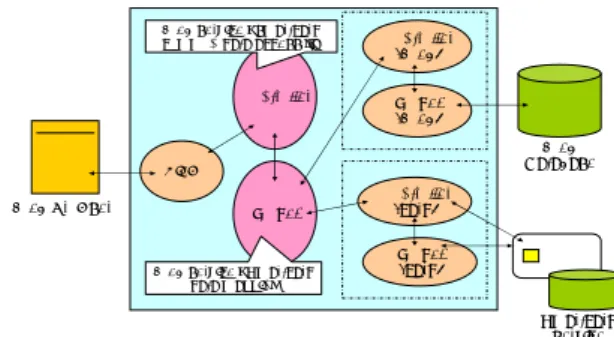
(2) upgraded in the form of Web applications. The. applications, the Controller is a servlet.. MVC (Model View Controller) design pattern is Web service / smartcard common data access I/F. mostly used as it is well adapted to that case. Data and business logic is often described with EJB, the. Controller (Web). Controller. Model (Web). view is realized with JSP/HTML pages and the. Web Database. View. service transactions are executed with controller Web Browser. servlets. On the other hand, considerations are different. Controller (card). Model. Model (card). Web service / Smartcard data mapping. for smartcards as specific management concerning. Smartcard service. smartcard’s contained data is necessary. Therefore,. Figure 1. MVC model applied to smartcards. when existing Web applications wants to make use of smartcards functionalities it is necessary to: ・ ・ ・. 3.3. Smartcard data management. Provide mapping a scheme between Web. Web. applications. generally. accesses. data. services and on-card applications.. located in remote databases through SQL queries. Make each smartcard service related data. or Java Beans. On the other hand, the data. and Web service data consistent for process.. contained. Provide a session oriented scheme that. JICSAP-based[6] in our case, is accessed via. encompasses all service processes.. APDU. It appears that smartcard and Web applications integration is not a simple task.. in. commands. smartcards (Application. applications, Protocol. Data. Units). The way to access these smartcard data is dependent on the type of smartcard considered and the specifications of applications loaded onto it.. 3. Approach. Thus, a change in smartcard specifications leads to. We chose to use the well accepted and MVC compliant technology to build such dynamic Web. incompatibility problems: the APDU that get on-card data needs to be modified.. services: the JSP/Servlets/JDBC technology.. We propose a method to make a one-to-one mapping of the data located on the card with the data located in the service server database. It is. 3.1. Requirements Our architecture must satisfy the following:. thus possible to reduce and localize the code. ・. A library of functions must be offered for. changes in a Web application based on our. Smartcard related operations.. architecture.. ・. Processing sequence must be flexible and. Smartcard. benefit from smartcard security to allow. Point value update. secure service use. ・. Web pages construction and design should. ID=FFFF. 100. 200. Mapping table Data Name. remain easy for web designers.. Video points Canteen points User PIN. Our architecture adapts the MVC design pattern. AID 1111 1111 2222. Database update(SQL). concepts to smartcards concepts.. PIN application (AID: 2222) FID:0001. Points application (AID: 1111) FID:0001 FID:0002. Service logic. FID 0001 0002 0001. 1234. Command generation (APDU). type Record Record PIN. SELECT FILE 00A4040A0A1111 SELECT FILE 00A4020C020002 UPDATE RECORD 00DC01040164. Smartcard management server CardID=FFFF Data. 3.2. Adapting the MVC model. Web application databases. Data name Video points Canteen points User PIN. value 100 200 1234. When Smartcards functionalities are mounted on top of the MVC model, the Model, View and. Figure 2. Service mapping with smartcard We also propose an XML based scheme to. Controller entities becomes the following: Model:the data stored into the card and the data. collect or update via APDU commands any data located on the card in a flexible way.. stored into the application server database. View: Web application’s GUI Controller: As in traditional MVC based Web. −88−.
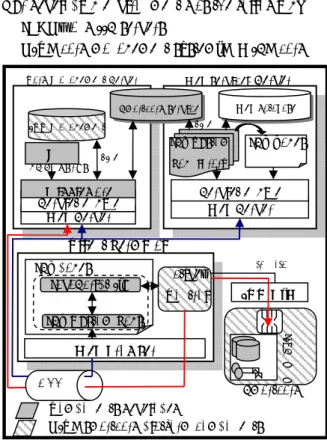
(3) 3.4. Session management for smartcards. custom tag library to support Smartcard services from within JSP pages. To interface smartcards. services Smartcards are well-known for being tamper. from the local terminal browser, an ActiveX. resistant devices; sensitive information like secret. control was chosen. This library’s aims to become. keys data is securely confined into the card’s. a tool to build Web applications that, although. memory. A web application that needs secure. very different in shapes and contents, use this very. session management makes the best use of this. same library to deliver smartcard enabled services. Our developing environment was the following:. feature.. ・ JRUN4 and IIS servers. A service needs to create and maintain a secure. ・ NICE card management system/ELWISE card. and persistent connection over several contents, from login to logout. Although the smartcard. Web services Server. Car d Ma nag e me nt S er ver. holder authentication credentials can be checked at JDB C. I CC Manag e me nt. authentication state: most often the HTTP session. JSP Custo m. AML. ID is used. However, there is no direct link session. id.. A bridge. between. the. implement such bridge with a session oriented. JSP Custom Tags. Error. Web Page 2. Web browser. Service Use. HTTP. Service Logic. 1003. Error. Session Management Table Card ID 1001 1002 1003. Figure 4. Prototype system overview. Session ID Auth Status Point value NULL NULL 100 12345 TRUE 200 67890 FALSE 100. Gotten from Web application access. The different elements depicted in the above figure fall into one category of the MVC model. Gotten from smartcard access. described in figure 1. Table 1: MVC model correspondence. Figure 3. Session management. Controller Model. 4. Implementation 4.1. Overview In order to confirm the utility of our research, prototype. system. based. Smartcard. Components developed NICE smartcard platform components. Wrong Session ID. a. ICC R/W JI CS AP AP. Web Page 1. Session ID. built. ActiveX Control. 1002. we. PC/ S C I / F. JSP pages JavaScript I/F. management table.. Smartcard Management System. Servlet engine Web Server. Client Terminal. mechanisms is thus necessary. We propose to. 1001. JSP Pages. TagLib rary. Middleware Servlet engine Web Server. card. management system and the Web services security. Authenticate. JDB C. XM L PAR S ER. between the card authentication credentials and the. We b d at abase. S mart car d ser v ic e. login time, a mechanism is needed to maintain the. on. Custom tags Smartcard service database. Web Card Web Card. Custom tags Middleware/AML Web database On card data JSP. View. our. architecture. We tried to identify the smartcard. 4.1.1. Integration. with. the. NICE. Smartcard platform. functionalities that could be of use for Web smartcard. Although our system can probably cohabit with. service mapping databases. We also chose the card. any kind of smartcard management system, for. applications internals to be compatible and defined. commodity and in order to develop a prototype, we. card data access and update mechanisms. Then, we. used the NICE card management platform and. developed individual functions in form of a JSP. ELWISE card developed by NTT Laboratories.. designers. and. defined. accordingly. −89−.
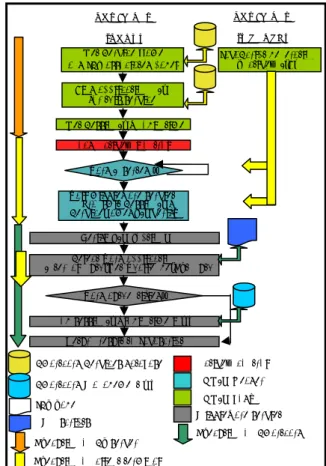
(4) Ba cku p ( * ). 4.1.2. Smartcard application architecture Among the variety of smartcard specifications,. Get o n- car d d at a and sa ve t he r esu lt s in t he ser v ice d at aba ses. Re- per so na l ize t he o n- car d d at a w it h t he d at a co nt a ined in t he ser v ice r e lat ed d at aba ses. Ret r ie ve d at a fr o m t he ser v ice r e lat ed d at abase s.. Up da t e( *). we chose to use the JICSAP specifications, which the. Japanese. Smartcard. specifications. G et DB Dat a. S erv er d at a m an a g em. are. counterpart of the well-known ISO 7816 smartcard specifications. It allows definition of file structure. Upd at e d at a in t he ser v ice r e lat ed d at aba ses.. Up da t eDBd a ta. within an application and defines data access next.jsp. security mechanisms.. <HTML> <Head>Login success</Head> <NICETAG:SecureBody> Welcome Mr/Mrs<NICETAG:getServerData name=“userName”/>. </NICETAG:SecureBody> </HTML>. index.jsp <HTML> <Head>Hello Login</Head> Please login. <NICETAG:Login ErrorPage=“error.html” NextPage=“next.jsp”/> </HTML>. 4.2. Smartcard services support library JSP. custom. tags. encapsulate. transactions logic into simple and. complex. error.html <HTML> <Head>Login error</Head>. accessible. Login failed.. components. Once defined in a tag library, it is. </HTML>. possible to use them in JSP pages like standard HTML. tags.. dynamically encourage. Customs the. page. division. of. tags. can. contents. labor. manipulate Custom. between. Figure 5. Custom tag use in JSP pages. tags. The. tags. signaled. with. (*). indicates. that. Web. actually two tags are used: a body tag to place in. designers and developers and factors recurring. the page’s body and a header tag to place in the. processes for reuse across projects. This smartcard. header. The header generates JavaScript code to. services library aims to let Web designers use. interface. smartcards mechanisms as described in figure 5.. communicates with the card applications.. the. local. library. custom. tags. are. partitioned. according to different purposes: ・. Authentication. ・. Smartcard applications management. ・. Server and on-card data management. Lo ad Act iveX Co nt ro l. hard-coded or resulting of JSP code execution. Ca ll mid d lewar e ser v let Tr an s mit S ess io nI D, S er v ic eNa me, P I Nver if y. (session variables, HTML form data, etc…). Table 2. Custom tags definition. Aut h en ti ca t i o n. S ecu reCo n t en t s. PIN Ch a n g e( * ) PIN In i t (* ) AP d o wn lo a d ( *) Sm a rt ca rd a pp l i ca t i on m an a g em ent. AP Delet i o n ( * ). Sm a rt ca r d. Da t a Ma n a g em ent. Pe rso n a li ze ( *). Jav aS cr ipt g ener at io n ( Act iv eX I/ F). Get S ess io nI D, Lo g in t ime. Car d I nser t ed ?. Lo g o ut. (H EADER). (B O DY) Get S er v ice Na me and JS P asso c iat ed pag es. attributes, passed from calling page, that can be. Ta g Na me Lo g i n( * ). that. F ind ap p l icat io n AI D fo r t h is ser v ice. The tags defined here below are customized via. Ty p e. control. LO G IN TAG. LO G IN TAG. 4.2.1. JSP custom tag library The. ActiveX. Ver if y P I N (o pt io n). Desc ri p t i o n Reg ist er br o wser sess io n I D w it h t he lo g in t ime. P I N ver if icat io n and PK aut he nt icat io n is po ss ib le. Reset t he aut he nt icat io n st at u s and d at e. D isp la y t he t ag ’s bo d y co nt ent s if and o n ly if t h is u ser has lo g g ed . Ver if y fo r sess io n t imeo ut . Cha ng e car d ’s P I N lo ca ll y. I n it car d ’s P I N d ir ect ly fr o m t he ser v er. Re mo t e ly d o wn lo ad a new car d ap plic at io n. T h is car d ap p licat io n is asso c iat ed t o a ser v ice, and t he car d ap p licat io n d at a ar e map ped t o t he ser v ice d at a. Re mo t e ly d e let e a car d ap p licat io n. S e lect Car d ap p licat io n I nt er na l Au t h/ Get Cha l le ng e/ E xt Au t h Car d aut he nt ifie d ? Lo g sess io nI D, lo g in t ime inDB Ret u r n r esu lt t o Java scr ipt S mart car d S er v ices d at abase. Act iveX co nt ro l. S mart car d Ma nag e me nt DB. LOGI N Head er. JS P P ag e AM L scr ipt s. LOGI N bo d y M id d lewar e ser v let E xecut io n o n S mart car d. E xecut io n o n S P ser ver E xecut io n o n c lie nt t er mina l. Figure 6. LOGIN tag execution flow. P er so na l ize o n- car d d at a u s ing w it h t he d at a co nt a ined in ser v ice r e lat ed d at aba ses.. −90−.
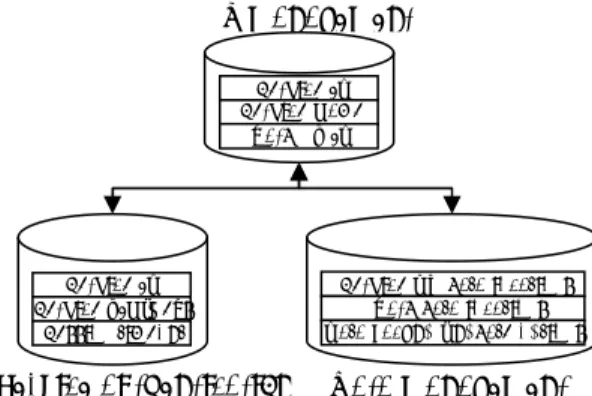
(5) 4.2.2. Custom tag execution flow. AP management. On figure 6, we detail the behavior of the S er v ic e I D S er v ic e Na me Car d AP I D. LOGIN custom tags.. 4.2.3. Smartcard interface control To access smartcard locally (ChangePIN) or remotely. from. the. middleware. servlet. S er v ic e I D S er v ic e PI N/ Ke ys S ess io n t imeo ut. (BackupAPData, etc…) we need a mechanism to access locally or remotely on-card data. We choose to. use. an. ActiveX. control. that. aims. S er v ic e DB d at a lo cat io ns Car d d at a lo cat io ns Dat a back u p / u pd at e o pt io n s. Service authentication. to. Data management. Figure 7. Smartcard service oriented tables. communicate with card applications and offer functions entry points accessible with JavaScript. The AP Management performs a one-to-one. to perform: ・. Multipurpose APDU Transmission. mapping between a Web service and a smartcard. ・. PIN Verification/Update. application.. ・. Connection to the smartcard server servlet. The service authentication table describes the. The results returned from this control are handled. smartcard featured security options to use for each service.. with Javascript event callback functions:. The Data management table defines the data. ・ Card APDU Response event ・ Smartcard Server servlet response event. referenced by a service and maps these data’s. The Javascript code to interface the control is. location with on-card embedded application’s data.. generated by [Header] custom tags (ex: Login). On the server side, the Middleware servlet. 4.3.2. Service mapping. located on the Smartcard Management server. The AP management database assigns each. performs remote card access using AML files.. on-card JICSAP application, represented by its. AML scripts are resource files written according. AID identifier, to one Web service.. to the XML syntax [7]. For each card application, and thus each Web service, two AML files are. 4.3.3. Service authentication The service authentication database defines. used: ・. An APDU dictionary file. security mechanisms for service login or data. ・. A service-oriented file that refers to the. access. APDU dictionary file and defines execution. security mechanisms include PIN verification, PK. processes. (data. authentication and Secure Messaging.. Web. 4.3.4. Service data management. for. smartcard. service. during. a. session.. Smartcard. provided. personalization /backup). This. mechanism. is. transparent. for. designers.. The data mapping in each on-card application’s file record is defined in the service Web server. 4.3. Smartcard services databases. databases. Access to this data is protected by. 4.3.1. Definition. Mutual Authentication and Secure Messaging.. The smartcard service database described in the figure 4 is actually made of the following tables:. Only the middleware servlet has the right to access these card applications’ data. The way to access is described with AML scripts.. 4.4. Session management The session ID returned by the middleware servlet is used as it is. The service authentication. −91−.
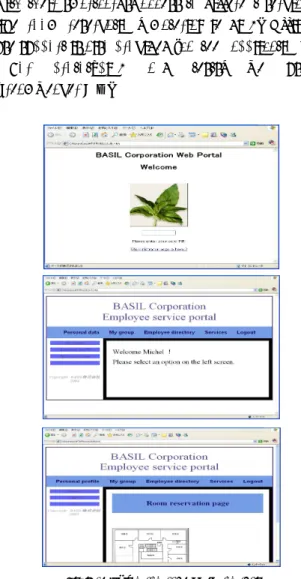
(6) table 4.3 is used for authentication. Security level for each service can be parameterized: ・. Authentication necessity. ・. Secure messaging necessity. Authorization. level. check. is. Table 3. Prototype evaluation results. performed. Nu mber Nu mber Nu mber Aver ag e. o f ad d it io na l ser v ice t able s o f JS P pag es o f cu st o m t ag s u sed nu mber o f cu st o m t ag s per pag e. Co r po r at e We b po rt a l 3 12 30 2. 5. automatically by the tag library and spares the Web designers from these session management hurdles.. According to these results, we believe it is possible. to. deploy. smartcard. enabled. Web. applications with little JSP code overhead. Other prototypes development is on-going at the time we. 5. Evaluation prototype : corporate employee portal. 5.1. Web. application. A. write this document and will be presented later. The. This prototype is a corporate Web portal. Employees can connect to the in-house system. future. results. will. determine. if. further. smartcard service tags have to be deployed for better functionality.. with their smartcards, access to different services like room reservation, material lending. Offline. 6. Summary The architecture we developed in our research. use support is also provided (canteen application). For. prototyping. and. tests,. we. used. try to make use of all smartcard functionalities when using Web applications. The prototypes. Dreamweaver MX.. based on our smartcard service library show that with little effort Web applications and smartcards synergy in various contexts is possible.. References [1] “IC Card Souran 2003-2004”, Seamedia, 2004 (In Japanese). [2] http://www.soumu.go.jp/c-gyousei/daityo/ (In Japanese) [3] “Suica”, http://www.jreast.co.jp/e/development/activiti es/satisfaction/ticketless.html [4] R. Toji, Y. Wada, S. Hirata and K. Suzuki, “A Network-based Platform for Multi-application Smart Cards”, Proc. 5 t h International Enterprise Distributed Object Computing Conference (EDOC 2001), IEEE Computer Society Press, 2001. [5] M. Yoshizawa, H. Unno, T. Fukuzawa, and H. Ban, “ELWISE – A super multi-purpose smart card”, NTT Review, Vol. 16, No. 1, pp.23-27, 2002. [6] “JICSAP”, http://www.jicsap.com/ [7] Junko HASHIMOTO, Katsuhiko SUZUKI, Shinichi HIRATA, “Definition on smart card service process sequence using XML”, IEICE KBSE2002-21, pp 1-6, 12/2002. Figure 8. Corporate Web portal. 5.2. Discussion We dress the results of our prototype in the table here below.. −92−.
(7)
図
+2
関連したドキュメント
Keywords: continuous time random walk, Brownian motion, collision time, skew Young tableaux, tandem queue.. AMS 2000 Subject Classification: Primary:
We present sufficient conditions for the existence of solutions to Neu- mann and periodic boundary-value problems for some class of quasilinear ordinary differential equations.. We
Maria Cecilia Zanardi, São Paulo State University (UNESP), Guaratinguetá, 12516-410 São Paulo,
Then it follows immediately from a suitable version of “Hensel’s Lemma” [cf., e.g., the argument of [4], Lemma 2.1] that S may be obtained, as the notation suggests, as the m A
We construct a sequence of a Newton-linearized problems and we show that the sequence of weak solutions converges towards the solution of the nonlinear one in a quadratic way.. In
To derive a weak formulation of (1.1)–(1.8), we first assume that the functions v, p, θ and c are a classical solution of our problem. 33]) and substitute the Neumann boundary
This paper presents an investigation into the mechanics of this specific problem and develops an analytical approach that accounts for the effects of geometrical and material data on
The object of this paper is the uniqueness for a d -dimensional Fokker-Planck type equation with inhomogeneous (possibly degenerated) measurable not necessarily bounded
