Title Bioregulation Potential of AMF on Heat Stress and DiseaseTolerance in Cyclamen Plants( 本文(Fulltext) )
Author(s) MAYA, MOSLAMA AKTAR
Report No.(Doctoral Degree) 博士(農学) 甲第609号 Issue Date 2013-09-10 Type 博士論文 Version ETD URL http://hdl.handle.net/20.500.12099/47820 ※この資料の著作権は、各資料の著者・学協会・出版社等に帰属します。
Bioregulation Potential of AMF on Heat Stress and
Disease Tolerance in Cyclamen Plants
(シクラメンにおける高温ストレス耐性及び耐病性の AMF による制御)
2013
The United Graduate School of Agricultural Science
Gifu University
Science of Biological Production
(Gifu University)
i
Abstract
Mycorrhizal associations imply a remarkable reprogramming of functions in both plant and fungal symbionts. This consequent alteration on plant physiology has a clear impact on the plant responses to biotic and abiotic stress management. As a consequence, a pot experiment was conducted to study the bioregulation potentials of arbuscular mycorrhizal fungus (AMF) to combat heat stress and disease management in cyclamen plants. Thus a series of experiments were conducted simultaneously both in the greenhouse and under growth chamber condition. The effect of AMF on plants normal growth and development, both in the physical and biochemical changes, under abiotic and biotic stress conditions were observed very distinctly in those experiments. However, the first study was relevant to the influence of the arbuscular mycorrhizal fungus (AMF), Glomus fasciculatum, to combat heat stress through changes of antioxidative activity in cyclamen (Cyclamen persicum Mill.) plants. In this experiment, cyclamen plants (both inoculated and non-inoculated with AMF) were placed in commercial potting media at 17 20°C for 12 weeks in a greenhouse and subsequently subjected to a growth chamber under different temperature conditions. Initially, the plants were grown at 20°C (constant) for 4 weeks as a no heat stress (HS-) condition, followed by 30°C (constant) for another 4 weeks as a heat stress (HS+) condition. Different morphological and physiological growth parameters were compared between AMF-inoculated and non-inoculated (control) plants. AMF symbiosis markedly enhanced biomass production and HS+ responses in plants compared with the control plants. The severe leaf-browning rate (80-100%) was observed in the control plants, whereas the mycorrhizal plants showed a minimum rate of leaf browning under HS+ conditions. The AMF-inoculated plants showed an increase in the activities of different antioxidative enzymes, such as superoxide dismutase (SOD) and ascorbate peroxidase (APX), and the ascorbic acid (AA) and polyphenol content was also increased in these plants. The DPPH (2,2-diphenyl-1-picrylhydrazyl) radical scavenging activity also showed greater
ii
responses to antioxidants in mycorrhizal plants than in the control plants under each temperature condition. The results indicate that AMF alleviates the heat stress damage on cyclamen plants through increased antioxidative activity in plants, and the AMF association strongly enhanced temperature stress tolerance in cyclamen plants, which promoted plant growth and increased the host biomass under heat stress.
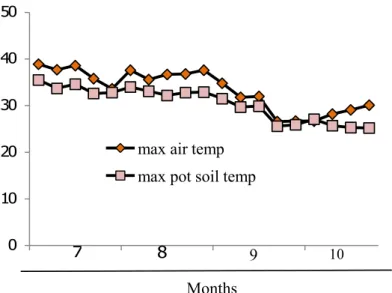
Another study in relation to the first experiment was conducted in the greenhouse to observe the efficacy of AMF on plants survival rate and the enhanced antioxidative activity on its development under natural heat stress during hot summer season. The temperature both inside the greenhouse air and pot soil were recorded in every hours throughout the experimental period. The maximum temperature was recorded 40°C and observed to fluctuate between 32-40°C during the peak summer season. AMF symbiosis markedly enhanced the biomass production as well as high temperature stress responses in plants compared to the controls. Severe leaf browning rate (80-100%) was observed more in the control plants, whereas mycorrhizal plants showed minimum rate of leaf browning under the same temperature condition. Plants survival rate under hot summer season found more in mycorrhized plants compared to the controls. The visible flower bud production was higher in mycorrhizal plants than the control plants. SOD and APX activities were increased with AMF-inoculation. The
plants than the controls under high temperature condition. The results indicate that AMF is
capable of alleviating the damage caused by temperature stress on cyclamen by increasing antioxidative activity of plants and AMF association highly enhanced the temperature stress tolerance in cyclamen plants under greenhouse.
The final study was relevant to the biotic stress (Fusarium wilt and anthracnose diseases) management of cyclamen plants through changes of antioxidative activity with mycorrhizal association. Here, the interactions between the AMF (Glomus fasciculatum) and the two pathogens Fusarium oxysporum and Colletotrichum gloeosporioides and subsequent effects
iii
on growth, disease tolerance and the changes in antioxidative ability in cyclamen plants under growth chamber condition were investigated. At plant maturity, inoculation with F. oxysporum and C. gloeosporioides, responsible for Fusarium wilt and anthracnose of cyclamen respectively, significantly reduced shoot and root dry weights, increased both the disease incidence percentage and showed lower antioxidative activity viz. SOD, APX, AA and polyphenol contents in plants. In contrast, the growth response and biomass production of cyclamen plants inoculated with AMF was significantly higher than the non-mycorrhizal control plants, both in the presence and absence of the pathogens. Mycorrhization enhanced plants to reduce the Fusariam wilt and anthracnose incidence compared to non-mycorrhizal controls. In every case,
without and with pathogen association, plants inoculated with AMF increased the antioxidants
production compared to control plants. The results demonstrate that AMF have the ability to induce resistance against Fusarium wilt and anthracnose in cyclamen by increasing the antioxidative activity in plants, which promoted plant growth, biomass production and drastically reduced the disease incidence in cyclamen.
iv
Acknowledgments
It was really very challenging for the author to complete her doctoral study and research in abroad within the 3 years timeframe. The surroundings of the author and many other people really deserve recognition for their contineous direct or indirect support to successfully carry out the research and to submit the desertation. However, in this section the author could particularly mention only few of them.
The author wishes to express her deepest sense of gratitude and respect to her research supervisor associate professor Dr. Yoichi Matsubara, Faculty of applied biological sciences, Gifu University for his scholastic guidance, supervision, innovative suggestions and constructive criticism throughout the period of research work and preparation of the thesis.
The author expresses her greatfulness and gratitude to her two research co-supervisor professor Dr. Mitsuro Hayakumachi and associate professor Dr. Yoshikazu Kiriiwa for their valuable suggestions and comments to improvise the experimental accuracy and to prepare the manuscript in time. The author also wish to thanks Dr. Haruhisa Suga for his valuable time to review the thesis and make comments which really help to improve the contents of the thesis.
The author would like to greatfully acknowledge all the past and present laboratory members for their cooperation especially during the experiment setup and sampling time and continuous support by making a friendly environment in the laboratory throughout the study period. Special thanks are due to Dr. Marry grace Saldajeno, former member of Hayakumachi laboratory for her kind cooperation and support during data analysis.
The author feels much pleasure to convey profound thanks to her friends, well wishers for their cooperation and continious encouragements of her parents from home during the research work. Gifu city Bangladeshi community is greatfully acknowledged which never let the author feel staying far from home.
Last but not the least; the author is very greatful to her lovely two years baby girl Manha Mahboob and beloved husband Dr. Md. Golam Mahboob for their endless sacrifice and cooperation from the beginning to the end of this study. Without their help and patience, this thesis would not have been possible to make.
v
List of Contents
Page No. Abstract i Acknowledgement iv List of Contents v List of Figures ixList of Abbreviations xvi
Chapter 1: General Introduction 1
Chapter 2: General Methodology 3
2.1 Colonisation 3
2.2 Antioxidative analysis 3
Chapter 3: Influence of Arbuscular Mycorrhiza on the Growth and Antioxidative Activity in Cyclamen Under Heat Stress
11
3.1 Summary 11
3.2 Introduction 12
3.3 Materials and methods 15
3.3.1 Plant materials, growth conditions and AMF inoculations
15
3.3.2 Experimental design 16
3.3.3 Evaluation of AMF colonisation level 16
vi
Page No.
3.3.5 Analysis of antioxidative abilities 17
3.3.6 Statistical analysis 19
3.4 Results 19
3.4.1 AMF root colonization 19
3.4.2 Effects of AMF on plant growth 20
3.4.3 Antioxidative abilities in plants 22
3.5 Discussion 23
Chapter 4: Tolerance to Fusarium Wilt and Anthracnose Diseases and Changes of Antioxidative Activity in Mycorrhizal Cyclamen
33
4.1 Summary 33
4.2 Introduction 34
4.3 Materials and methods 37
4.3.1 Plant material and mycorrhizal inoculation 37
4.3.2 Pathogen inoculation 38
4.3.3 Experimental design 39
4.3.4 Plant growth and mycorrhizal colonisation 39 4.3.5 Disease incidence and severity range assay 40
4.3.6 Antioxidative analysis 41
4.3.7 Statistical analysis 42
vii
Page No.
4.4.1 Mycorrhizal root colonisation 42
4.4.2 Plant growth responses 42
4.4.3 Disease incidence and severity 45
4.4.4 Changes in antioxidative ability 46
4.5 Discussion 50
Chapter 5: Enhanced antioxidative activities of mycorrhizal cyclamen facilitate its development under natural heat stress
55
5.1 Summary 55
5.2 Introduction 56
5.3 Materials and Methods 58
5.3.1 Plant materials and growth conditions 58
5.3.2 AMF inoculation and colonisation 59
5.3.3 Morphological observations 59
5.3.4 5.3.5
Enzyme extraction and assay of antioxidant activity Statistical analysis and design of the experiment
60 61
5.4 Results 61
5.4.1 Greenhouse temperature 61
5.4.2 Plants growth and development 61
viii
Page No.
5.5 Discussion 65
Chapter 6: General conclusions 68
ix
List of Figures
Page No.
Fig. 2.1 Steps involved in mycorrhizal root colonisation (a) and the arbuscule observed inside the root cortex of cyclamen during experiment (b)
4
Fig. 2.2 Protocol for SOD analysis assay 6
Fig. 2.3 Protocol for APX analysis assay 7
Fig. 2.4 Protocol for ascorbic acid analysis assay 8
Fig. 2.5 Protocol for polyphenol content analysis assay 9
Fig. 2.6 Protocol for DPPH radical scavenging activity analysis assay 10
Fig. 3.1 Mycorrhizal root colonisation rate of cyclamen plants after 14, 16 (no heat stress condition, HS-) and 20 weeks (heat stress condition, HS+) of Glomus fasciculatum (Gf) inoculation. The mean pairs followed by the same letters are not significantly
n=4.
20
Fig.3.2 Dry weight (DW) of shoots, roots and tubers of control (C) and
Glomus fasciculatum (Gf)-inoculated cyclamen plants under
HS- (a, b, c) and HS+ (d, e, f) conditions, respectively. HS- = no heat stress; HS+ = heat stress. The data represent the means, and the lines indicate the standard error. The asterisks (*) indicate that the values are significantly different between the treatments (t test, ); ns= nonsignificant.
x
Page No.
Fig.3.3 Percentage leaf browning in cyclamen plants under heat stress (HS+) at 30°C for 4 weeks in control (C) and Glomus
fasciculatum (Gf)-inoculated plants.
21
Fig.3.4 Glomus fasciculatum (Gf)-inoculated and control (C) plants
under HS- (a) and HS+ (b) conditions
22
Fig.3.5 Superoxide dismutase (SOD) activity in the leaves, roots and tubers of control (C) and Glomus fasciculatum (Gf)-inoculated cyclamen plants under HS- (a, b, c) and HS+ (d, e, f) conditions, and ascorbate peroxidase (APX) activity in the same under HS- (g, h, i) and HS+ (j, k, l) conditions, respectively. HS- = no heat stress; HS+ = heat stress. The data represent the means, and the lines indicate the standard error. The asterisks (*) indicate that the values are significantly different between the treatments (t test, ); ns= nonsignificant
xi
Page No.
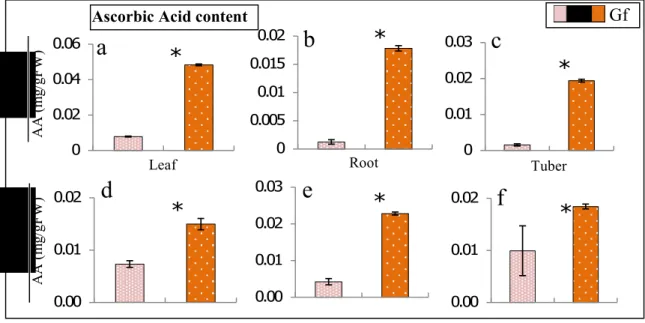
Fig.3.6 Ascorbic Acid (AA) content in the leaves, roots and tubers of control (C) and Glomus fasciculatum (Gf)-inoculated cyclamen plants under HS- (a, b, c) and HS+ (d, e, f) conditions, and the polyphenol content in the same under HS- (g, h, i) and HS+ (j, k, l) conditions, respectively. HS- = no heat stress; HS+ = heat stress. The data represent the means, and the lines indicate the standard error. The asterisks (*) indicate that the values are significantly different between the treatments (t test, ); ns= nonsignificant
26
Fig.3.7 DPPH activity in leaves, roots and tubers of control (C) and
Glomus fasciculatum (Gf)-inoculated cyclamen plants under
HS- (a, b, c) and HS+ (d, e, f) conditions, respectively. HS- = no heat stress; HS+ = heat stress. The data represent the means, and the lines indicate the standard error. The asterisks (*) indicate that the values are significantly different between the treatments (t test, ); ns= nonsignificant
xii
Page No.
Fig. 4.1 Mycorrhizal root colonization of cyclamen plants without and with Fusarium oxysporum (Fo) and Colletotrichum
gloeosporioides (Cg) association, inoculated with Glomus fasciculatum (AMF). Fo-Cg- = 20 weeks after AMF inoculation
without Fo and Cg; Fo+ = 6 weeks after Fo and 20 weeks after AMF inoculation; Cg+ = 6 weeks after Cg and 20 weeks after AMF inoculation. Mean pairs followed by different letters are
significantly different ( n=
4.
44
Fig.4.2 Dry weight (DW) of shoots (a) and roots (b) of cyclamen plants both without and with Fusarium oxysporum (Fo) and
Colletotrichum gloeosporioides (Cg) association, inoculated
with Glomus fasciculatum (AMF) and control (C). Fo-Cg- = 20 weeks after AMF inoculation without Fo and Cg; Fo+ = 6 weeks after Fo and 20 weeks after AMF inoculation; Cg+ = 6 weeks after Cg and 20 weeks after AMF inoculation. Mean
pairs followed by different letters are significantly different n= 4.
xiii
Page No.
Fig.4.3 Disease incidence and disease indices of Fusarium wilt (a,c) and anthracnose (b,d) in cyclamen plants, inoculated with
Glomus fasciculatum (AMF) and control (C), 6 weeks after Fusarium oxysporum and Colletotrichum gloeosporioides
inoculation.
46
Fig. 4.4 Superoxide dismutase (SOD) activity in shoots (a) & roots (b) and ascorbate peroxidase (APX) activity in shoots (c) & roots (d) of cyclamen plants both without and with Fusarium
oxysporum (Fo) and Colletotrichum gloeosporioides (Cg)
association, inoculated with Glomus fasciculatum (AMF) and control (C). Fo-Cg- = 20 weeks after AMF inoculation without Fo and Cg; Fo+ = 6 weeks after Fo and 20 weeks after AMF inoculation; Cg+ = 6 weeks after Cg and 20 weeks after AMF inoculation. Mean pairs followed by different letters are
significantly different n=
4.
xiv
Page No.
Fig.4.5 Ascorbic acic (AA) content in shoots (a) & roots (b) and polyphenol content in shoots (c) & roots (d) of cyclamen plants both without and with Fusarium oxysporum (Fo) and
Colletotrichum gloeosporioides (Cg) association, inoculated
with Glomus fasciculatum (AMF) and control (C). Fo-Cg- = 20 weeks after AMF inoculation without Fo and Cg; Fo+ = 6 weeks after Fo and 20 weeks after AMF inoculation; Cg+ = 6 weeks after Cg and 20 weeks after AMF inoculation. Mean
pairs followed by different letters are significantly different n= 4.
49
Fig.5.1 The maximum air and pot soil temperature inside the greenhouse during the experimental period from mid July to early October under hot summer period in Japan.
62
Fig.5.2 Dry weight (DW) of shoots (a), roots (b) and tubers (c) of cyclamen plants under hot summer season. C = control; Gf =
Glomus fasciculatum (Gf)-inoculated plants. The data represent
the means, and the lines indicate the standard error. The asterisks (*) indicate that the values are significantly different between the treatments (t test, ).
xv
Page No.
Fig.5.3 Percentage of heat injured plants (a), the degree of leaf browning percentage (b) and the number of flower buds production (c) in the control (C) and Glomus fasciculatum (Gf)-inoculated cyclamen plants under high temperature condition (30-40°C) in greenhouse. The data represent the means, and the lines indicate the standard error. The asterisks (*) indicate that the values are significantly different between the treatments (t test, ).
63
Fig.5.4 SOD (a), APX (b) and DPPH (c) activities in leaves, roots and tubers of control (C) and Glomus fasciculatum (Gf)-inoculated cyclamen plants. The data represent the means, and the lines indicate the standard error. The asterisks (*) indicate that the values are significantly different between the treatments (t test,
).
xvi
List of abbreviations
AM : Arbuscular Mycorrhiza
AMF : Arbuscular Mycorrhizal Fungus ANOVA : Analysis of Varience
APX : Ascorbate peroxidase
APX : Ascorbate Peroxidase
BSA : Bouvine Syarum Albumin C : Control
CAT : Catalase
Cg : Colletotrichum gloeosporioides
DCIP : 2,6 Dichloroindophenol Sodium, n-hydrate DNP : 2,4 - dinitrophenyl hydrazine
DPPH : 2,2-diphenyl-1-picrylhydrazyl DW : Dry Weight
EDTA : Ethidium Dibromide Trihydro Acetic acid Fo : Fusarium oxysporum
Gf : Glomus fasciculatum GR : Glutathione reductase H2O2 : Hydrogen Per-oxide
xvii HS : Heat stress
mM : Millimole
Nacl : Sodium Chloride NBT : Nitroblue Tetrazolium PDA : Potato Dextrose Agar POD : Peroxidase
PS : Potato Sucrose
RFCSL : The ratio of AM fungal colonisation in 1-cm segments of the lateral roots
ROS : Reactive Oxygen Sepcies
SOD : Superoxide dismutase
1
CHAPTER 1
General Introduction
In nature, plants have to face a series of biotic and abiotic stress factors. Thus production of plants with enhanced yields without proper management is difficult. There are increasing environmental concerns over the widespread use of biocontrol measures in general and alternatively, more sustainable methods to cope with stresses are now being preferred. Different approaches are used for prevention and control of both biotic and abiotic stress factors for sustainable plant production. Among all of these alternatives the most obvious and apparently biological control is a potent means of reducing the damage caused by stress factors. The potential agents for biocontrol activity are rhizosphere-competent soil microbs, which are capable of inducing growth responses by either controlling minor pathogens or by producing growth-stimulating factors.
Mutually beneficial interactions between plants and microbs are frequent in nature. Common benefits for the plant are improved plant nutrition and or increased capability to cope with adverse conditions. Several authors reported a higher tolerance of mycorrhizal plants to both biotic (pathogen infection) and abiotic (drought, salinity, heavy metal toxicity, high and low temperature stress etc) stresses. In the case of arbuscular mycorrhizal (AM) associations, the symbiosis alter plant physiology, leading to a better mineral nutrition and to increased resistance/ tolerance to biotic and abiotic stress. It is widely accepted that AM symbiosis reduce the damage caused by soil-borne
2
pathogens in plants (Whipps, 2004). Furthermore, the symbiosis can also impact plant interactions with above ground attackers. But the outcome of those interactions is not clear enough to easily understand the mechanism underlaying to the resistance development in host plants. Mutual benefits are the basis of the evolutionary success of the interactions. In host plant, this regulation implies remarkeable changes in primary and secondary metabolism and regulate the plant defense mechanisms, which have . However, the exact mechanisms involved for host resistance development is not clearly explained for mycorrhizal symbiosis. Therefore, understanding the effect of AMF on host plant resistance/tolerance development under stress condition is necessary and as a consequence we set our specific objectives as below
1. To determine the effects of AMF (Glomus fasciculatum) on growth, reactive oxygen species (ROS) metabolism and changes in antioxidative activity in cyclamen under heat stress (HS) condition as well as to better understand heat tolerance mechanisms in mycorrhizal plants.
2. To understanding the effect of AMF on ROS metabolism and antioxidative activity of plants under pathogen (Fusarium oxysporum and Colletotrichum
gloeosporioides) infection condition.
3. To determine the different morphological and physiological adaptations in mycorrhizal cyclamen under hot summer season to better understand the efficacy of AMF as a biocontrol agent to combat high temperature stress under green-house condition in cyclamen.
3
CHAPTER 2
General Methodology
2.1 Colonisation
The process starts with germination of fungal spores and hyphal ellongation started towards the root cell. Subsequently, appressoria (swallowen structure formed at the tip of fungal hyphe) are developed to easily penetrate into the root surface and colonizes the intracellular space of root cortex. In the root cortex hausteria like structure are formed called arbuscule which is known as the nutrient exchange site between the host plant and the mycorrhizal fungi. Fig.2.1 showes the steps involve in root colonization of AMF and the cyclamen root colonization rate that we observed in our study.
2.2 Antioxidative analysis
Reactive Oxygen Species (ROS) are formed in biological systems as part of normal metabolism. Adverse environmental factors like heat stress, drought, salinity, disease and pathogen infection in plants result in increased levels of ROS that are detrimental to the plant (Tonou et al. 2009) to avoid damage caused by these excess ROS. Plants have developed elaborate mechanisms to manage them at sustainable levels. Antioxidative enzymes play an important role in lowering the ROS levels and helping avoid oxidative stress. SOD, APX, catalase, glutathion reductase play a vital role in combating oxidative stress. Different non-enzymatic antioxidant compounds such as, ascorbic acid and polyphenol contents also have a major role to limiting oxidative stress in plants during
4
stress condition. Measuring these antioxidative activities spectrophotometrically provides researchers an easy and precise way to study and understand an important part of the defense against oxidative stress. This section provides the details of the assayes we used to determine the antioxidative activities spectrophotometrically. Antioxidant activity (both enzymatic and non-enzymatic) responses to moderate biotic and abiotic stress were studied. All assays were calculated using cyclamen plant tissue. The protocol that we used in our experiments to calculate the value of antioxidative activity (SOD, APX, polyphenol content, ascorbic acid content) and DPPH radical scavenging activity is given below. All the protocols were followed throughout the experimental period and the total SOD activity was measured according to Beyer and Fridovich (1987) after a little modifications (Fig. 2.2). The ascorbate peroxidase (APX) activity was estimated according to Nakano and Asada (1981) (Fig. 2.3). The ascorbic acid
Fig. 2.1 Steps involved in mycorrhizal root colonisation (a) and the arbuscule observed
inside the root cortex of cyclamen during experiment (b). Spore Hypha Appressorium Elongated hypha 1. Hyphal elongation Arbuscule 2. Appressorium formation 3. Hyphal elongation inside of cortex 4. Arbuscule formation
b
a
5
content was analysed as previously described by Mukherjee and Choudhuri (1983) with some modifications (Fig. 2.4). The spectrophotometric method of MacDonald et al. (2001) was adopted for the determination of the polyphenol contents in the prepared extracts (Fig. 2.5) and the DPPH radical scavenging activity test was performed in accordance with Burtis and Bucar (2000) with some modifications (Fig. 2.6).
6
50 mM Sodium Carbonate buffer 2.3 ml
1.0 mM NBT Solution 0.1 ml
Test tube Test tube (blank)
4.0 mM xanthine 0.1 ml
Measurement of absorbance with spectrophotometer @560 nm 14 mM Copper chloride 0.2 ml
30 min keep in room temperature
Xanthine Oxidase (100 times dilution with distilled water) 0.1 ml
Extracted enzyme 0.1 ml Distilled water 0.1 ml 0.15% BSA Solution 0.1 ml 3.0 mM EDTA solution 0.1 ml
7
Fig. 2.3 Protocol for APX analysis assay
Test tube
50 mM H2PO4 buffer 3ml
10 mM Ascorbic Acid 0.2 ml
Extracted/rough enzyme liquid 0.2 ml
10 mM H2O2 0.2 ml
Measurement of absorbance with spectrophotometer @290 nm wavelength
Keep 1 min.
Measurement of absorbance with spectrophotometer @290 nm wavelength
8
Fig. 2.4 Protocol for Ascorbic acid analysis assay
Extracted enzyme 0.5 ml
0.03% DCIP solution 0.5ml
2% thiourea- 5% metaphosphoric acid solution 0.5ml
0.2% DNP Solution 0.25 ml
In water bath at 50 °C, 70 minutes (or at 37 °C, 3 hrs)
Test tube Test tube (blank)
85% sulphuric acid 1.25ml
Measurement of absorbance with spectrophotometer @ 520 nm Keep at room temperature for 30 minutes (in dark place)
9 Distilled water 4 ml
Extraction enzyme 0.25 ml
Saturated sodium carbonate solution 0.5 ml
30 degrees Celcius, 30 minutes (in dark room)
Test tube (blank) Test tube
Measurement of absorbance of the reaction mixture with spectrophotometer @700 nm wavelength
Distilled water 0.25 ml Folin Denis solution 0.25 ml
10
Fig. 2.6 Protocol for DPPH radical scavenging activity analysis assay
DPPH-MES buffer- ethanol mix solution 2.7 ml
Extracted enzyme 0.15 ml
30 degrees Celcius, 30 minutes (in dark room)
Test tube (blank) Test tube
Measurement of absorbance of the reaction mixture with spectrophotometer @520 nm wavelength
11
Chapter 3
Influence of Arbuscular Mycorrhiza on the
Growth and Antioxidative Activity in Cyclamen
under Heat Stress
3.1 Summary
The influence of the arbuscular mycorrhizal fungus (AMF), Glomus fasciculatum, on the growth, heat stress responses and the antioxidative activity in cyclamen (Cyclamen
persicum Mill.) plants was studied. Cyclamen plants (both inoculated and
non-inoculated with AMF) were placed in commercial potting media at 17 20°C for 12 weeks in a greenhouse and subsequently subjected to a growth chamber under different temperature conditions. Initially, the plants were grown at 20°C (constant) for 4 weeks as a no heat stress (HS-) condition, followed by 30°C (constant) for another 4 weeks as a heat stress (HS+) condition. Different morphological and physiological growth parameters were compared between AMF-inoculated and non-inoculated (control) plants. AMF symbiosis markedly enhanced biomass production and HS+ responses in plants compared with the control plants. The severe leaf-browning rate (80-100%) was observed in the control plants, whereas the mycorrhizal plants showed a minimum rate of leaf browning under HS+ conditions. The AMF-inoculated plants showed an increase in the activities of different antioxidative enzymes, such as superoxide dismutase and
12
ascorbate peroxidase, and the ascorbic acid and polyphenol content was also increased in these plants. The DPPH (2,2-diphenyl-1-picrylhydrazyl) radical scavenging activity also showed greater responses to antioxidants in mycorrhizal plants than in the control plants under each temperature condition. The results indicate that AMF alleviates the heat stress damage on cyclamen plants through increased antioxidative activity in plants, and the AMF association strongly enhanced temperature stress tolerance in cyclamen plants, which promoted plant growth and increased the host biomass under heat stress.
3.2 Introduction
Cyclamen (Cyclamen persicum Mill.) is a popular potted flowering plant used as a cut flower (Karlsson and Werner 2001b; Yesson and Culham 2006). This bulbous plant is native to the Mediterranean region (Elmer and McGroven 2004) and has a longer growing season. Temperature is one of the most important environmental factors that affect the growth, development and distribution of cyclamen plants (Yesson and Culham 2006). Cyclamen plants are highly susceptible to various temperature conditions, and the recommended temperature for cyclamen production from seeding to the appearance of the flower bud is 20°C (Ball 1991). The cyclamen leaf-unfolding rate increases with increasing temperature to an optimum 19°C (Karlsson and Werner 2001a). A reduced temperature is expected to improve the plant quality, post-harvest life, flower colour and size without adversely affecting time to flower, and temperatures lower than 20°C improve the post-production and marketing quality of cyclamen plants (Karlsson and Werner 2001a). However, garden type cyclamens are intolerant to high temperatures, and their growth is stunted during the summer in southwest Japan (Goto
13
et al. 2011). In recent years, global temperatures have sharply varied due to climate changes, which severely affects cyclamen production across the globe (Yesson and Culham 2006). Hence, human activity and the threat of global warming induced through the greenhouse effect have made plant responses to high temperatures a major area of concern.
With the recent advent of global warming, heat stress has become a curse to crop production. Extensive research is being conducted worldwide to develop strategies to cope with abiotic stresses through the development of heat and drought tolerant varieties, shifting crop calendars and resource management practices, etc. (Venkateswarlu and Shankar 2009). While most of these practices are time consuming and costly, recent studies indicate that microorganisms help crops cope with abiotic stresses (Grover et al. 2011). Therefore, arbuscular mycorrhizal fungi (AMF) have received considerable attention from crop scientists due to its numerous benefits to host plants. Arbuscular mycorrhizal (AM) symbiosis is formed between the roots of the majority of terrestrial plants (Smith and Read 2008; Zhu et al. 2010b), and fungi of the phylum glomeromycota reduce environmental stress for the host plant (Baumann et al. 2005). AMF are obligate symbionts that acquire carbon from their host plant for the completion of their life cycle (Bago et al. 2000). In return, the fungus provides multiple benefits to the host plant, including enhanced water and mineral nutrition absorption and tolerance to different environmental stress factors (Smith and Read 2008). AMF association stimulates plant growth in soils and substrates with lower fertility through improving nutrient (phosphorous) uptake in host plants (Smith and Read 2008) and enhancing plant tolerance to various abiotic stresses, such as high or low temperature
14
(Miransari et al. 2008; Zhu et al. 2010b), drought (Augé 2001),salinity, (Ben Khaled et al. 2003) etc. Studies concerning AMF association with cyclamen have rarely been reported. However, studies concerning the influence of mycorrhizal association on the growth of cyclamen plants under stress conditions or the elucidation of the mechanisms underlying tolerance development have not been reported.
Heat stress is defined as a rise in temperature beyond a threshold level for a period of time sufficient to cause irreversible damage to plant growth and development (Wahid et al. 2007). In general, a transient elevation of typically 10 15°C above the ambient temperature is considered as heat stress. Heat is a complex function of the intensity (temperature in degree), duration and rate of increase in temperature. Heat stress due to high ambient temperatures is a threat to crop production worldwide. When a plant undergoes heat stress, several toxic reactive oxygen species (ROS) are generated in cells during the process of cell metabolism, and the oxidative stress caused by these ROS is one of the major damaging factors in plants (Wahid et al. 2007). Under extreme abiotic stress conditions, high levels of ROS production might lead to cell death as a result of oxidative processes, such as membrane lipid peroxidation, DNA/RNA nicking, protein denaturation and enzyme inhibition (Tonou et al. 2009). To limit oxidative damage under stress conditions, plants have developed a series of detoxification systems involving several antioxidative enzymes, such as superoxide dismutase (SOD), ascorbate peroxidase (APX), peroxidase (POD), catalase (CAT), glutathione reductase (GR) and low molecular weight antioxidant compounds, such as ascorbic acid, glutathione and different polyphenols (Asada 1999; Sairam 2000; Zhu et al. 2010b). AM symbiosis alters plant physiology under stressful conditions to cope with stresses
15
(Miransari et al. 2008). AMF-protected host plants against oxidative damages through increasing antioxidant activities in soybean (Porcel et al. 2003), shrub (Alguacil et al. 2003), asparagus (Nahiyan and Matsubara 2012), maize (Zhu et al. 2011), and strawberry (Matsubara 2010). However, the mechanisms underlying the influence of AM symbiosis on the ROS metabolism of host plants under heat stress remain undefined. Therefore, understanding the effect of AMF on ROS metabolism and the antioxidative activity of plants under heat stress is important.
The objective of this study was to determine the differential responses of mycorrhizal and non-mycorrhizal plants to heat stress. Specifically, plant growth and changes in the antioxidative activity in cyclamen were assessed to better understand heat tolerance mechanisms in mycorrhizal plants.
3.3 Materials and methods
3.3.1 Plant materials, growth conditions and AMF
inoculations
The 3 month old seedlings of cyclamen (Cyclamen persicum Mill cv. Pastel) plants were sown in plastic pots (7.5 cm in diameter) containing commercial potting media (peat moss mixed) after autoclaving (121°C; 1.2 kg/ cm2; 15 min). The seedlings were inoculated with AMF (3 g/plant) inoculum for mycorrhizal plants and an equal amount of autoclaved inoculum for the nonmycorrhizal (control) plants. A commercial AMF inoculum was obtained from Idemitsukosan Co. Ltd. (Tokyo, Japan), containing the species Glomus fasciculatum (spore density is unknown). The mycorrhizal and
16
autoclaved inocula were placed at 4 cm below the tuber prior to planting the seedlings. The plants were transferred into poly silver pots (9 cm in diameter) after 12 weeks of AMF inoculation. The plants were fertilised monthly using a slow release granular fertiliser (N:P:K= 5:10:15, Ube Industries Ltd., Japan).
3.3.2 Experimental design
The experiments were conducted using two mycorrhizal treatments (non- mycorrhizal as control and Glomus fasciculatum-inoculated as AM plant) under two temperature conditions (no heat stress at 20°C and heat stress at 30°C). A completely randomised design with four replicates was used. Both temperatures were maintained under growth chamber conditions. Before that the plants were initially grown in a greenhouse at 17 20°C with 14 hrs daylight and 60 70% relative humidity for 12 weeks. After transferring to a growth chamber, the plants were alternatively grown at 20°C for 12 hrs (day and night conditions) at a 60% moisture level for 4 weeks for the no heat stress (HS-) condition. Subsequently, the temperature was increased to 30°C constantly for day and night conditions for the heat stress condition (HS+), keeping all other conditions the same for another 4 weeks.
3.3.3 Evaluation of AMF colonisation level
The level of AMF colonisation was assessed after 14, 16 and 20 weeks of AMF root inoculation. The roots were sampled and stained according to Phillips and Hayman (1970), and the ratio of AM fungal colonisation in 1-cm segments of the lateral roots (RFCSL) was calculated. Hence, the RFCSL represents the percentage of 1-cm
AMF-17
colonised segments, and approximately 50 samples of 1-cm segments were examined per plant. The average was calculated from the values of 4 plants each time.
3.3.4 Plant biomass and heat stress symptom observation
The dry weight of the leaves, roots and tubers of every 4 plants were assessed under both HS- and HS+ conditions. The total dry weights of the samples were determined after oven drying at 100°C for 24 hrs. In addition, the different morphological growth parameters, such as plant height, total number of leaves/plant, maximum size of the leaves/plant, total number of roots/plant, etc. were measured, and the rate of leaf browning, as a heat stress symptom in plants, was also determined. The leaf browning was determined based on the symptoms (yellowing of leaves) appearing on the leaves of the plants. The leaves of the plants were divided into three groups: (i) whole green leaves, (ii) half-browned leaves, and (iii) full-browned leaves. Subsequently, the percentage of leaf browning of a plant was calculated, and the rate of leaf browning was categorised into five groups: (i) 0% as no browning; (ii) 20% as less than 20% browning; (iii) 20% 40%; (iv) 40% 80%; (v) 80% 100% browning.
3.3.5 Analysis of antioxidative abilities
Different antioxidative enzymes, such as superoxide dismutase (SOD) and ascorbate peroxidase (APX), non-enzymatic antioxidant compounds (ascorbic acid and polyphenol) and the total antioxidant activity, i.e., DPPH (2,2-diphenyl-1-picrylhydrazyl) radical scavenging activity, were analysed twice under both HS- and HS+ condition. The total SOD activity was measured according to Beyer and Fridovich
18
(1987), the ability of SOD to inhibit the reduction of nitro blue tetrazolium (NBT) through photochemically generated superoxide radicals. The absorbance was recorded at 560 nm, and one unit of SOD was defined as the amount of enzyme required to inhibit the reduction rate of NBT by 50% at 25°C. The ascorbate peroxidase (APX) activity was estimated as the reduction in the absorbance due to ascorbic acid at 290 nm according to Nakano and Asada (1981). The 3-ml reaction mixture contained 50 mM potassium phosphate buffer (pH 7.0), 0.5 mM ascorbic acid, 0.1 mM EDTA, 0.1 mM H2O2 and 0.1 mM enzyme. The reaction was initiated upon the addition of 0.1 mM
H2O2. A reduction in the absorbance was measured for 60 sec at 290 nm in a
spectrophotometer (Hitachi U- 1900). The enzymes were extracted using 0.15 g of plant sample in 3 ml of phosphoric acid buffer solution. The concentration of the buffer solution was 50 mM, pH 7.0. The extract was centrifuged at 12,000 rpm for 12 min at 5°C. The supernatant was used to analyse the activity of both SOD and APX. The same procedure was used to extract the enzyme from the plant sample for the analysis of other antioxidants, except different extraction buffers were used. The ascorbic acid content was analysed as previously described (Mukherjee and Choudhuri 1983). The samples were extracted using 5% metaphosphoric acid at a ratio of 0.15 g/5 ml. The absorbance was recorded at 520 nm, and the concentration of ascorbic acid was calculated from a standard curve plotted with different known concentrations of ascorbic acid. The spectrophotometric method of MacDonald et al. (2001) was adopted for the determination of the polyphenol contents in the prepared extracts. Folin Denis reagent was used, and a standard calibration curve was prepared using different concentrations of quercetin in 80% ethanol (0.02 0.10 mg/ml). The sample extracts used to determine the polyphenol contents were prepared using a 0.15-g plant sample in
19
4 ml of ethanol, and the absorbance was measured at 700 nm. The DPPH radical scavenging activity test was performed in accordance with Burtis and Bucar (2000). The samples were extracted with ethanol at a ratio of 0.15 g/3 ml, and the extracts (150 µl) were mixed with 2.7 ml of a 20% ethanol solution of DPPH. After incubating for 30 min, the absorbance of the samples was read at 520 nm using a (Hitachi U-1900) spectrophotometer.
3.3.6 Statistical analysis
The data were subjected to the two-sample t-test. The means were compared at the 5% level using XLSTAT 2012 pro statistical analysis software (Addinsoft, New York).
3.4 Results
3.4.1 AMF root colonisation
The microscope assessment confirmed that the non-inoculated plants were not colonised by AMF. The rate of AMF colonisation was determined after 14, 16 (under HS-condition) and 20 weeks (at HS+ HS-condition) of AMF inoculation. The AMF colonisation rate was 42% after 14 weeks of AMF inoculation and 54% after 20 weeks of AMF inoculation. However, the differences observed were not statistically significant (Fig. 3.1).
20
3.4.2 Effects of AMF on plant growth
Mycorrhizal (Gf) plants had greater shoot, root and tuber dry weights than the control plants under HS- treatment (Fig. 3.2a, b, c). However, under HS+ conditions, the shoot dry weight significantly increased in mycorrhizal plants compared with that in the control plants (Fig. 3.2d), whereas the observed increases in the root and tuber dry weights were insignificant (Fig. 3.2e, f). The plant growth (shoot, root, tuber) was inhibited under heat stress conditions. The symptoms of temperature stress, such as narrow and yellowing leaves, were observed in cyclamen plants under HS+ conditions.
Fig. 3.1 Mycorrhizal root colonisation rate of cyclamen plants after 14, 16 (no heat
stress condition, HS-) and 20 weeks (heat stress condition, HS+) of Glomus
fasciculatum (Gf) inoculation. The mean pairs followed by the same letters n=4.
Under similar temperature conditions, the leaf injury was more severe in the control plants than in the mycorrhizal plants. Here, the percentage of leaf injury was recorded according to the rate of leaf browning (%) both in the control and mycorrhizal plants (Fig. 3.3). Different morphological growth parameters, such as plant height, total number of leaves/plant, maximum size of the leaves/plant, and total number of roots/plant, were also increased in mycorrhizal plants compared with the control plants
a a a 0 20 40 60 80 14 16 20
Weeks after AMF inoculation
C ol on is at io n (% )
21
under both HS- and HS+ conditions (data not shown). Vigorous plant growth was observed in mycorrhizal plants compared with that of the control plants under both temperature conditions, and severe leaf injury due to heat stress was visible in the control plants (Fig. 3.4).
*
0.0 0.5 1.0 1.5 S ho ot D W ( g/ pl an t)*
0.00 0.05 0.10 0.15 0.20 R oo t D W ( g/ pl an t)*
0.0 0.1 0.2 0.3 T ub er D W ( g/ pl an t)*
0.0 0.4 0.8 1.2 S ho ot D W ( g/ pl an t) ns 0.0 0.1 0.2 0.3 R oo t D W ( g/ pl an t) ns 0.0 0.2 0.4 0.6 T ub er D W ( g/ pl an t) 0 20 40 60 80 100 C Gf 80 100% 40 80% 20 40% L ea f br ow ni ngFig. 3.3 Percentage leaf browning in cyclamen plants under heat stress (HS+) at 30°C
for 4 weeks in control (C) and Glomus fasciculatum (Gf)-inoculated plants.
Fig. 3.2 Dry weight (DW) of shoots, roots and tubers of control (C) and Glomus
fasciculatum (Gf)-inoculated cyclamen plants under HS- (a, b, c) and HS+ (d,
e, f) conditions, respectively. HS- = no heat stress; HS+ = heat stress. The data represent the means, and the lines indicate the standard error. The asterisks (*) indicate that the values are significantly different between the treatments (t test, ); ns= nonsignificant
a
b
c
C Gff
e
22
3.4.3 Antioxidative abilities in plants
The G. fasciculatum root colonisation enhanced the activity of all antioxidants in plants under HS- conditions compared with the control plants. However, the plants under HS+
Fig. 3.4 Glomus fasciculatum (Gf)-inoculated and control (C) plants under HS- (a) and
23
conditions, plants associated with AMF also showed more antioxidant activity. AMF-association significantly increased SOD activity in all the plant parts, including the leaves, roots and tubers, under both HS- (Fig. 3.5a, b, c) and HS+ (Fig. 3.5d, e, f) conditions compared with the control plants. The leaves and tubers exhibited significantly different APX activity between the controls and the mycorrhizal plants under HS- (Fig. 3.5g, i) and HS+ (Fig. 3.5j, l) conditions. However, the root APX activity increased significantly in mycorrhizal associations under HS- conditions (Fig. 3.5h), whereas the activity of this antioxidant was insignificant under HS+ (Fig. 3.5k) conditions. The AMF-association induced ascorbic acid production in plant parts (leaf, root, and tuber) under both temperature conditions (Fig. 3.6a, b, c, d, e, f). Similarly, the polyphenol contents were also significantly increased in all mycorrhizal plants compared with control plants under both HS- (Fig. 3.6g, h, i) and HS+ (Fig. 3.6j, k, l) conditions in each of the plant parts. The DPPH radical scavenging activity was also increase in AMF-associated plants than in the controls under both temperature conditions (Fig. 3.7).
3.5 Discussion
Increased tolerance to abiotic stress in plants is necessary to increase productivity under conditions of high and low temperatures, high salinity, drought and salt stress conditions. In this study, the morphological (data not shown) and physiological responses under two different temperature conditions were examined to identify the factors responsible for heat stress tolerance in cyclamen plants. Temperature stress affects the growth of plants and mycorrhizal symbiosis (Zhu et al. 2010a; Zhu et al. 2011). High temperature soil conditions affect AMF activity (Martin and Stutz 2004),
24
and many investigations have reported that low temperatures strongly influence AM fungal development (Liu et al 2004; Zhu et al 2010a, b).
Conversely, high temperature stress had a negative effect or no effect on mycorrhizal colonisation (Compant et al. 2010). The present study showed that heat stress and time intervals had no significant effect on the mycorrhizal colonisation rate, which might reflect the selection of newly developed lateral roots for the assessment of colonisation. Mycorrhizal symbiosis and environmental temperatures can affect the growth of plants. The present study showed that cyclamen plants inoculated with Glomus fasciculatum grew better than the nonmycorrhizal (control) plants under different temperature conditions and heat stress. This result is consistent with the data from studies in maize (Zhu et al. 2010a), tomato (Latef and Chaoxing 2011), pepper (Martin and Stutz 2004), and asparagus (Matsubara and Harada 1996).
25
*
0 0.1 0.2 0.3 A P X ( U ni t/ gF W )*
0 0.1 0.2 0.3*
0 0.04 0.08 0.12 0.16*
0 0.2 0.4 0.6 0.8 A P X ( U ni t/ gF W )ns
0 0.02 0.04 0.06*
0 0.02 0.04 0.06Fig. 3.5 Superoxide dismutase (SOD) activity in the leaves, roots and tubers of control
(C) and Glomus fasciculatum (Gf)-inoculated cyclamen plants under HS- (a, b, c) and HS+ (d, e, f) conditions, and ascorbate peroxidase (APX) activity in the same under HS- (g, h, i) and HS+ (j, k, l) conditions, respectively. HS- = no heat stress; HS+ = heat stress. The data represent the means, and the lines indicate the standard error. The asterisks (*) indicate that the values are significantly different between the treatments (t test, ); ns= nonsignificant.
*
0 100 200 300 400 S O D ( U ni t/ gF W)*
0 100 200 300*
0 100 200 300*
0 100 200 300 S O D ( U ni t/ gF W )*
0 100 200 300*
0 100 200 300Leaf Root Tuber
a
b
c
e
f
d
C Gf C Gf SOD Activity APX Activity Tuber Root Leafh
k
i
l
g
j
26
*
0 0.02 0.04 0.06 0.08 P ol yp he no l (m g/ gF W )g
*
0 0.04 0.08 0.12 0.16*
0 0.02 0.04 0.06*
0 0.1 0.2 0.3 P ol yp he no l ( m g/ gF W )*
0 0.05 0.1 0.15 0.2*
0 0.04 0.08 0.12 0.16*
0 0.02 0.04 0.06 A A ( m g/ gF W )*
0 0.005 0.01 0.015 0.02*
0 0.01 0.02 0.03*
0.00 0.01 0.02 A A ( m g/ gF W )*
0.00 0.01 0.02 0.03*
0.00 0.01 0.02Ascorbic Acid content C Gf
e
b
f
d
a
c
Polyphenol content C Gfk
h
l
j
i
Leaf Root Tuber
Root Tuber
Leaf
Fig. 3.6 Ascorbic Acid (AA) content in the leaves, roots and tubers of control (C) and
Glomus fasciculatum (Gf)-inoculated cyclamen plants under HS- (a, b, c) and
HS+ (d, e, f) conditions, and the polyphenol content in the same under HS-(g, h, i) and HS+ (j, k, l) conditions, respectively. HS- = no heat stress; HS+ = heat stress. The data represent the means, and the lines indicate the standard error. The asterisks (*) indicate that the values are significantly different between the treatments (t test, ); ns= nonsignificant.
27
Heat stress has been reported as one of the most important causes of reductions in yield and dry biomass production in many crops. High temperatures and radiation limit plant productivity through direct effects on the biological processes of a plant. The temperature also influences nutrient uptake and the substrate mineralisation rate through microbes (Weih and Karlsson 1999). In the present work, the AMF benefits under heat stress were defined as the biomass ratio and percentage of leaf browning between
*
0 0.05 0.1 0.15 D P P H ( g/ gF W )*
0 0.05 0.1 0.15 0.2*
0 0.05 0.1 0.15 0.2*
0 0.05 0.1 0.15 D P P H ( g/ gF W )*
0 0.01 0.02 0.03*
0 0.05 0.1 0.15Fig. 3.7 DPPH activity in leaves, roots and tubers of control (C) and Glomus fasciculatum
(Gf)-inoculated cyclamen plants under HS- (a, b, c) and HS+ (d, e, f) conditions, respectively. HS- = no heat stress; HS+ = heat stress. The data represent the means, and the lines indicate the standard error. The asterisks (*) indicate that the values are significantly different between the treatments (t test, ); ns= nonsignificant.
a
b
c
d
e
f
28
mycorrhizal and control plants. The AMF colonisation significantly increased dry matter production in the shoots under both HS- and HS+ conditions, but after HS+ treatment, the dry weight was insignificant in the roots and tubers. Notably, the effect of AMF on dry matter, under both HS- and HS+, was more pronounced in aerial biomass than in the root and tuber biomasses, potentially reflecting mycorrhizal colonisation through a proportionally greater allocation of carbohydrates to the shoot than to root and tuber tissues (Shokri and Maddi 2009). The leaf browning percentage was also more reduced in the AMF plants than in the controls. We proposed that increased shoot biomass due to enhanced carbohydrate production might be correlated with the reduced browning rates in the leaves of mycorrhizal plants than in those of the control plants under HS+ conditions.
Diverse environmental stresses differentially affect the plant processes that lead to the loss of cellular homeostasis, accompanied by the formation of reactive oxygen species (ROS), which causes oxidative damage to the membrane, lipids, proteins and nucleic acids (Jaleel et al. 2009). Temperature stress causes physiological disorders in plants, and induces the production of ROS (Mittler 2002). Plants induce effective antioxidant systems for protection against oxidation damage. The antioxidant defence systems include enzymatic and non-enzymatic antioxidants, where SOD and APX are the important enzymatic antioxidants and ascorbic acid and polyphenol are the effective nonenzymatic antioxidants, as these antioxidants efficiently prevent the accumulation of O2-, H2O2 and minimise the deleterious effects of ROS (Jaleel et al.
2009; Latef and Chaoxing 2011; Zhu et al. 2010a, b). The increased expression of different antioxidants in mycorrhizal plants compared with the controls under both the temperature treatments were observed in this study. Tolerance to heat stress in crop
29
plants has been associated with an increase in antioxidant enzyme activity (Sairam et al. 2000). In the present study, under HS+ conditions, a considerable and significant increase in the activity of SOD was observed in all mycorrhizal plants. A greater increase in leaf and tuber APX was also observed in mycorrhizal plants compared with that in the controls. Both SOD and APX were increased in mycorrhizal plants under HS+, consistent with the results of previous studies obtained for the leaves and roots of citrus seedlings colonised by G. versiforme during drought (Wu et al. 2006), the shoots of tomatoes colonised by G. intraradices subjected to NaCl salinity (Hajiboland et al. 2010), leaves of tomato colonised by G. mosseae under low temperature stress (Latef and Chaoxing 2011) and from leaves and roots of maize colonised by G. etunicatum during temperature stress (Zhu et al. 2010a). Furthermore, this induction was not observed in soybean roots colonised by G. mosseae under drought stress conditions (Porcel et al. 2003). Therefore, the effect of AMF on different plants is not always the same.
Ascorbic acid is one of the most extensively studied antioxidant compounds in plant cells (Borland et al. 2006), which is involved in cell expansion (Horemans et al. 2000; Tabata et al. 2001), cell division and growth (Horemans et al. 2000; Potters et al. 2002), defence (Horemans et al. 2000; Noctor 2006) and antioxidant metabolism (Noctor 2006). Ascorbic acid also serves as a co-factor for many enzymes, including ascorbate peroxidase (Noctor 2006). In plant cells, the most important reducing substrate for H2O2 removal is ascorbic acid (Wu et al. 2007). In the present
investigation, the AMF colonisation significantly increased the ascorbic acid content in cyclamen plants under both temperature conditions compared with the control plants. Previous studies of asparagus subjected to biotic stress also showed that AMF
30
colonisation increased the ascorbic acid content in plants (Nahiyan and Matsubara 2012). Polyphenols are excellent oxygen radical scavengers because the electron reduction potential of the phenolic radical is lower than the electron reduction potential of oxygen radicals (Grace 2005) and also because phenoxyl radicals are typically less reactive than oxygen radicals (Bors et al. 1994). Therefore, phenolic compounds scavenge reactive oxygen intermediates without promoting further oxidative reactions (Grace 2005). In the present study, we showed that mycorrhizal plants produce higher polyphenols than the control plants under both temperature conditions. Matsubara (2010) also reported that mycorrhizal strawberry enhanced the production of polyphenol and ascorbic acid compared with non-mycorrhizal strawberry leaves under heat stress conditions.
Antioxidant compounds, such as polyphenols, ascorbic acid, phenolic acids, flavonoids, etc., scavenge free radicals, such as peroxide, hydroperoxide or lipidoxyl, and inhibit the oxidation in plant cells (Marxen et al. 2007). There are several analytical methods, which are routinely used to evaluate the capacity of antioxidant compounds in biological systems (Prior and Cao 1999). Among them, the DPPH procedure is commonly used to measure the free radical scavenging capacity of total antioxidants (Sánchez-Moreno et al. 1999). DPPH radical scavenging activity is a rapid, simple and inexpensive method to measure antioxidant capacity in biological compounds and involves the use of the free radical DPPH (Marxen et al. 2007). The results in the present study showed that mycorrhizal cyclamen induced higher DPPH radical scavenging activity under both HS- and HS+ conditions. Thereafter, the increased DPPH radical scavenging activity also supported the enhancement of antioxidative activity of the plant samples in this experiment. Several studies have also reported an
31
increase in DPPH radical scavenging activity in mycorrhizal asparagus under biotic stress (Nahiyan and Matsubara 2012) and in maize under salt stress conditions (Hichem et al. 2009).
In this work, the increased activity of enzymatic antioxidants and higher production of non-enzymatic antioxidant compounds in mycorrhizal plants compared with control plants were associated with the higher plant biomass, indicating lower oxidative damage in the colonised plants under heat stress conditions. Although AMF symbiosis affects antioxidant production, the exact mechanisms involved remain unclear. Thus the results of the present study have shown that the growth of mycorrhizal plants was more vigorous than that of control plants, while the antioxidant production was higher in AM plants. Indeed, plant size affects the overall plant physiology. Alguacil et al. (2003) reported that AMF inoculation increased the activities of several antioxidants, which was associated with AMF-induced increases in shoot biomass and phosphorus or nitrogen. Thus, the presence of higher amounts of antioxidants in AM plants could be associated with plant growth or plant nutrition. The results therefore implied that AMF colonisation could alleviate ROS damage, protect plants against oxidation and improve heat tolerance in cyclamen plants. Moreover, the increased activity of some antioxidants may reflect the non-specific defence responses of plants under heat stress. Hence, further experiments and the index measurement of oxidation damage in plants are needed to obtain a better understanding of the actual function of AMF in ROS metabolism and antioxidant production under heat stress.
In conclusion, AMF colonisation enhances both the activities of antioxidant enzymes (SOD and APX) and the levels of non-enzymatic antioxidants (ascorbic acid and polyphenols) in cyclamen plants. The DPPH radical scavenging activity promotes
32
increased antioxidant production in mycorrhizal plants under ambient and heat stress conditions. The overall plant growth and heat stress tolerance was enhanced in AM plants, indicating the beneficial effects of AMF under adverse climatic conditions in cyclamen production.
33
Chapter 4
Tolerance to Fusarium Wilt and Anthracnose
Diseases and Changes of Antioxidative Activity in
Mycorrhizal Cyclamen
4.1 Summary
Mycorrhizal associations imply a remarkable reprogramming of functions in both plant and fungal symbionts. This consequent alteration on plant physiology has a clear impact on the plant responses to biotic stress management. As a consequence, a pot experiment was conducted to study the interactions between the arbuscular mycorrhizal fungus (AMF) Glomus fasciculatum and the two pathogens Fusarium oxysporum and
Colletotrichum gloeosporioides and subsequent effect on growth, disease tolerance and
the changes in antioxidative ability in cyclamen plants under growth chamber condition were investegated. At plant maturity, inoculation with F. oxysporum and C.
gloeosporioides, responsible for Fusarium wilt and anthracnose of cyclamen
respectively, significantly reduced shoot and root dry weights, increased both the disease incidence percentage and showed lower antioxidative activity viz. superoxide dismutase (SOD), ascorbate peroxidase (APX), ascorbic acid (AA) and polyphenol contents in plants. In contrast, the growth response and biomass production of cyclamen plants inoculated with AMF was significantly higher than the non-mycorrhizal control plants, both in the presence and absence of the pathogens. Mycorrhization enhanced
34
plants to reduce the Fusariam wilt and anthracnose incidence compared to non-mycorrhizal controls. In every case, without and with pathogen association, plants inoculated with AMF increased the antioxidant (SOD, APX, AA and polyphenol) production compared to control plants. The results demonstrate that AMF have the ability to induce resistance against Fusarium wilt and anthracnose in cyclamen by increasing the antioxidative activity in plants, which promoted plant growth, biomass production and drastically reduced the disease incidence in cyclamen.
4.2 Introduction
Cyclamen is a herbaceous perennial used as a flowering pot plant (Karlsson and Werner 2001b; Elmer and McGovern, 2004). In the genus Cyclamen, Cyclamen
persicum Mill is the major species that has been used for commercial cultivation
(Ishizaka et al., 2002). It is the most economically important flowering crop in different temperate countries throughout the world (Takamura, 2007). Cyclamen has a longer growing season and began to be a popular commercial plant in the nineteenth century. Currently with the increasing incidence of different biotic (pathogen, pests, nematodes etc) and abiotic (heat, salinity, drought etc) stresses, quality flower production is hampered day by day (Grover et al., 2011; Maya and Matsubara, 2013a). Among all the biotic stress agents Fusarium oxysporum, responsible for Fusarium wilt in cyclamen, is one of the highly destructive soil-borne pathogen which can economically limit the production of quality cyclamen (Elmer and McGovern, 2004). The disease has been reported in almost all the cyclamen producing regions in the world and the damage caused by this disease has steadily increased with many other production facilities (Elmer and McGovern, 2004). Apart from this, another emerging biotic stress agent for
35
commercial cyclamen production is Colletotrichum gloeosporioides responsible for anthracnose in cyclamen (Maya et al., 2013). Anthracnose symptoms consist of extensive lesions on aerial parts of the plant. Rounded irregular dark brown spots develop on leaves and later the necrotic centers of leaf lesions fill out in many mature leaves which cause great loss in marketable plant production. Recently C. fragariae was also reported as anthracnose causing agent of cyclamen in North Carolina (Liu et al., 2011).
Adequate control strategies are yet to be identified for Fusarium wilt and anthracnose of cyclamen. There are no commercially resistant cultivars currently available and the fungicides presently used have very poor curative properties against the disease. Only few studies have been conducted to control soil-borne diseases in cyclamen (Elmer and McGovern, 2004; Someya et al., 2000) while researches corresponding to anthracnose control are rarely reported for cyclamen. Furthermore, agrochemicals have negative impact on human health and ecosystem. Therefore, it is very urgent to develop a sustainable ecofriendly strategy to overcome all the biotic stresses in quality cyclamen production as well as safe agricultural production.
Recent studies regarding stress management in plants indicate microorganisms can help plants to cope with biotic stresses (Jung et al., 2012). Thus, arbuscular mycorrhizal fungi (AMF) have drawn a considerable attention to many crop scientists for its numerous benefits to host plants. AMF are obligate biotrophs that require host plant to complete their life cycle. The fungus colonizes the root cortex and forms intracellular structure called arbuscule, as a nutrient exchange site between the partners. The extracellular hyphal network spreads into the surrounding soil, thereby reaching out