敗⾎症にビタミンC+チアミン+
ヒドロコルチゾン療法は有効か?
2020年3⽉10⽇
浦添総合病院 救急集中治療部 勝⽥充重
今回の論⽂
EffectofVitaminC,Hydrocortisone,andThiaminevsHydrocortisoneAlone onTimeAliveandFreeofVasopressorSupportAmongPatients
WithSepticShock
The VITAMINS Randomized Clinical Trial
Tomoko Fujii, MD, PhD; Nora Luethi, MD; Paul J. Young, MBChB, PhD; Daniel R. Frei, BSc, MBChB; Glenn M. Eastwood, PhD; Craig J. French, MB, BS;
Adam M. Deane, MB, BS, PhD; Yahya Shehabi, MB, BS, PhD; Ludhmila A. Hajjar, MD, PhD; Gisele Oliveira, MD; Andrew A. Udy, MBChB, PhD;
Neil Orford, MB, BS, PhD; Samantha J. Edney, BSN, PGDipNS; Anna L. Hunt, BN, PGDipHSM, PGDipClinRes; Harriet L. Judd, BSN, PGDipHC;
Laurent Bitker, MD; Luca Cioccari, MD; Thummaporn Naorungroj, MD; Fumitaka Yanase, MD; Samantha Bates, BN, PGDipCritCare;
Forbes McGain, MB, BS, PhD; Elizabeth P. Hudson, MD; Wisam Al-Bassam, MBChB; Dhiraj Bhatia Dwivedi, BScNsg, MBA;
Chloe Peppin, BN, PGDipCritCare; Phoebe McCracken, MPH; Judit Orosz, MD; Michael Bailey, PhD; Rinaldo Bellomo, MD, PhD;
for the VITAMINS Trial Investigators
IMPORTANCE It is unclear whether vitamin C, hydrocortisone, and thiamine are more effective than hydrocortisone alone in expediting resolution of septic shock.
OBJECTIVETo determine whether the combination of vitamin C, hydrocortisone, and
thiamine, compared with hydrocortisone alone, improves the duration of time alive and free of vasopressor administration in patients with septic shock.
DESIGN, SETTING, AND PARTICIPANTSMulticenter, open-label, randomized clinical trial conducted in 10 intensive care units in Australia, New Zealand, and Brazil that recruited 216 patients fulfilling the Sepsis-3 definition of septic shock. The first patient was enrolled on May 8, 2018, and the last on July 9, 2019. The final date of follow-up was October 6, 2019.
INTERVENTIONSPatients were randomized to the intervention group (n = 109), consisting of intravenous vitamin C (1.5 g every 6 hours), hydrocortisone (50 mg every 6 hours), and
thiamine (200 mg every 12 hours), or to the control group (n = 107), consisting of intravenous hydrocortisone (50 mg every 6 hours) alone until shock resolution or up to 10 days.
MAIN OUTCOMES AND MEASURESThe primary trial outcome was duration of time alive and free of vasopressor administration up to day 7. Ten secondary outcomes were prespecified, including 90-day mortality.
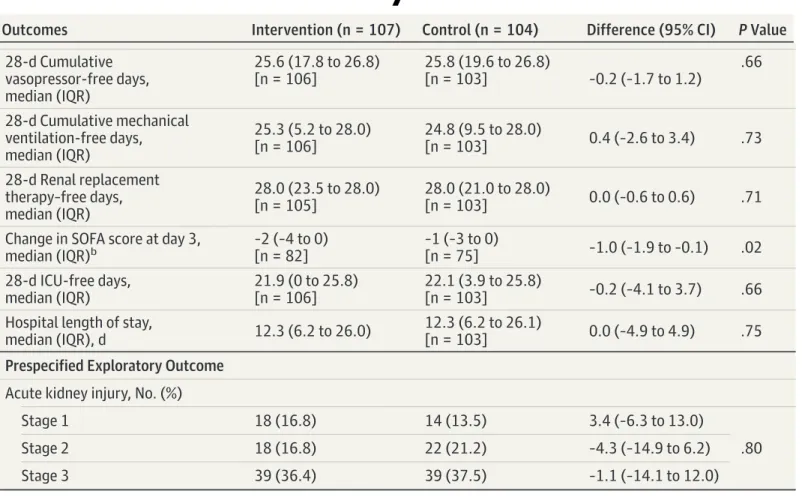
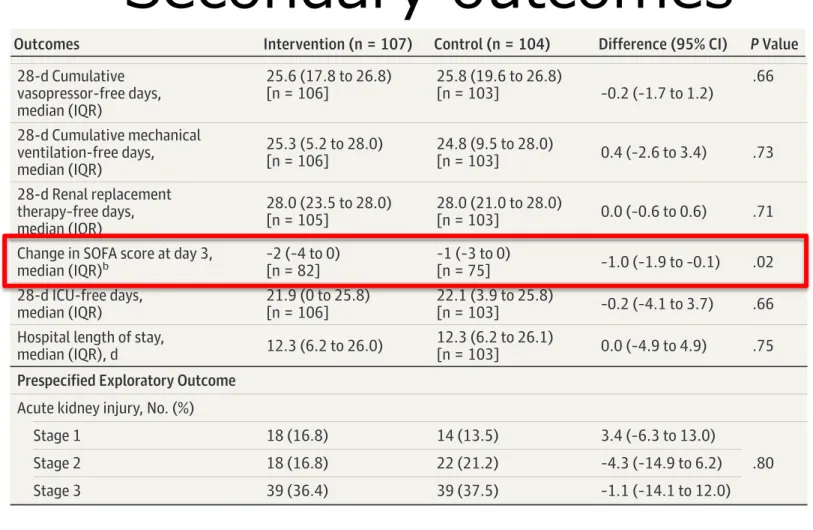
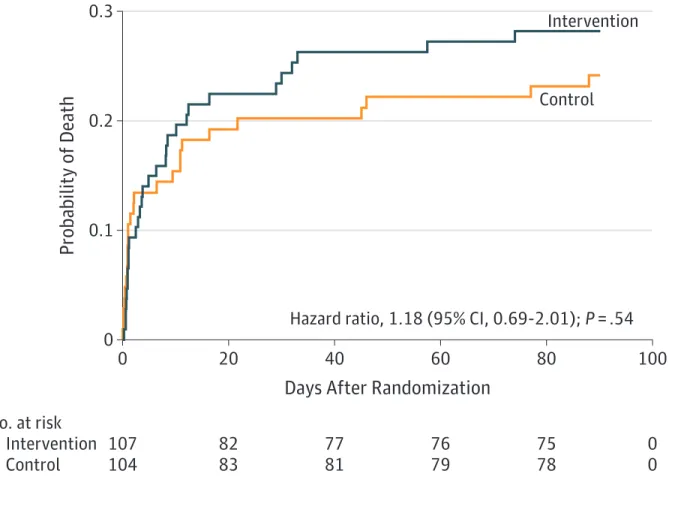
RESULTSAmong 216 patients who were randomized, 211 provided consent and completed the primary outcome measurement (mean age, 61.7 years [SD, 15.0]; 133 men [63%]). Time alive and vasopressor free up to day 7 was 122.1 hours (interquartile range [IQR], 76.3-145.4 hours) in the intervention group and 124.6 hours (IQR, 82.1-147.0 hours) in the control group; the median of all paired differences was –0.6 hours (95% CI, –8.3 to 7.2 hours;P= .83). Of 10 prespecified secondary outcomes, 9 showed no statistically significant difference. Ninety-day mortality was 30/105 (28.6%) in the intervention group and 25/102 (24.5%) in the control group (hazard ratio, 1.18; 95% CI, 0.69-2.00). No serious adverse events were reported.
CONCLUSIONS AND RELEVANCEIn patients with septic shock, treatment with intravenous vitamin C, hydrocortisone, and thiamine, compared with intravenous hydrocortisone alone, did not significantly improve the duration of time alive and free of vasopressor administration over 7 days. The finding suggests that treatment with intravenous vitamin C, hydrocortisone, and thiamine does not lead to a more rapid resolution of septic shock compared with
intravenous hydrocortisone alone.
TRIAL REGISTRATIONClinicalTrials.gov Identifier:NCT03333278
JAMA. doi:10.1001/jama.2019.22176 Published online January 17, 2020.
Visual Abstract Editorial
Supplemental content
Author Affiliations:Author
affiliations are listed at the end of this article.
Group Information:A list of the VITAMINS Trial Investigators appears at the end of this article.
Corresponding Author:Rinaldo Bellomo, MD, PhD, Austin Hospital, 145 Studley Rd, Heidelberg, VIC 3084, Australia (rinaldo.bellomo@
austin.org.au).
Section Editor:Derek C. Angus, MD, MPH, Associate Editor,JAMA ([email protected]).
Research
JAMA | Preliminary Communication | CARING FOR THE CRITICALLY ILL PATIENT
(Reprinted) E1
© 2020 American Medical Association. All rights reserved.
Downloaded From: https://jamanetwork.com/ by a Urasoe Sogo HP User on 02/04/2020
JAMA. 2020;323(5):423-431.
敗⾎症に伴うショックに対して、
ビタミンC+チアミン+ヒドロコルチゾン投与群
vs
ヒドロコルチゾン単独群
昇圧剤⾮使⽤⽣存期間に差は認めるか?
Clinical Ques;on
敗⾎症
• 世界中で敗⾎症は年間1300万例、
重症敗⾎症は年間1900万例が治療 されている
Fleischmann C,et al.Am J Respir Crit Care Med.2016,193(3):259-72.
• 中所得国でも敗⾎症性ショックの 死亡率は50%
Kaukonen KM, et al. JAMA.2014;311:1308-1316.
敗⾎症
•
世界の⼈⼝の87%が低から中所得国に居住•
効果的で、安全な治療戦略が早急に必要•
低コストな治療がより望ましいMetabolic resuscita;on
•
細胞内代謝・酵素の利⽤障害•
ミトコンドリアの機能不全効果的で安全、低コストの
敗⾎症治療戦略を考える上で
Leite HP, de Lima LF. J Thorac Dis. 2016 Jul;8(7):E552-7.
が⼤切となる
Metabolic resuscita;on
Crit Care. 2018; 22: 283.
丸で囲ったマイナス記号は抑制作⽤を⽰す
⽮印は活性化作⽤を⽰す
緑枠は、薬の組み合わせの有益な効果を⽰す
⾚枠は、その薬の組み合わせによって弱められる潜在的に有害な影響を⽰す
・ビタミンC(アスコルビン酸)は、グルココルチコイド受容 体の酸化を逆転する
Biochem Pharmacol 1998,56(1):79-86 Crit Care. 2018; 22: 283.
Metabolic resuscita;on
ヒドロコルチゾンとビタミンC ヒドロコルチゾン
• 炎症性サイトカインの誘発性応答を抑制 ↓
• SVCT2の発現を増強
Sodium-VitaminC transporter-2 ビタミンCの細胞内輸送
↓
• ビタミンCの細胞内取り込み増加
⾎管内⽪や上⽪細胞のtight junction増加 微⼩循環機能、昇圧剤反応性の改善
Crit Care. 2018; 22: 283.
Metabolic resuscita;on
・チアミンは、細胞の代謝とATP⽣成に必須
神経シグナル伝達、ホメオスタシス、コリン作動性活性、
塩素チャネル活性化および免疫応答における⾮補因⼦
・チアミン投与群は⾎清クレアチン値が低く、RRTへの進⾏率 が低く、腎保護的役割がある可能性がある
Ann Am Thorac Soc 2017,14(5):737-741
Metabolic resuscita;on
チアミンはシュウ酸への代謝を抑制する働きがあり 2剤を併⽤することは理にかなっている
ビタミンCとチアミン
ビタミンC グリオキシル酸 シュウ酸
CO2 還元
チアミンピロリン酸 酸化
オキシル酸
Crit Care. 2018; 22: 283.
Metabolic resuscita;on
・ROS(活性酸素)は細胞障害、細胞分裂の抑制に関連する →⾎管内⽪の損傷、内因性カテコールアミンの放出増強
・ヒドロコルチゾン ビタミンC チアミンはROS(活性酸素)の 発⽣を抑制する
↓
・動物モデルでは、臓器損傷が減少し、⽣存率が上昇した
Crit Care. 2018; 22: 283.
Metabolic resuscita;on
JAMA. 2019;322(13):1261-1270
敗⾎症に関連したARDS患者においるビタミンC投与の効果
P 敗⾎症かつARDS患者
I ビタミンC投与 50mg/kgを6時間毎 合計200mg/kg(N=84⼈)
C ビタミンC⾮投与(N=83⼈)
O primary outcome:96時間時点でのSOFA、168時間でのCRP、TM secondary outcome:OI、28⽇死亡率, ⼈⼯呼吸器⾮使⽤期間など
outcomes
28⽇時点での死亡率 有意差あり
Vit.C 群 29.8 % vs placebo 群 46.3 % HR 0.55 (0.33-0.90), p=0.03
96時間のSOFAスコア、168時間でのCRP、TMに有意差なし
敗⾎症に対するVit.C投与のPhase1試験
単施設、ランダム化、プラセボ対照⼆重盲検試験 P 重症敗⾎症患者
I ⾼⽤量ビタミンC(200mg/kg)、低⽤量ビタミンC(50mg/kg) C プラセボ投与
O primary outcome:ビタミンCの安全性、耐⽤性、合併症など
Seconday outcome:SOFAスコア、アスコルビン酸濃度、バイオマーカー
● SOFA score
ビタミンCの投与でSOFA scoreが改善
Donnino MW, et al. Crit Care Med. 2016 Feb; 44(2): 360–367.
敗⾎症とチアミンの関連性
P 敗⾎症性ショックで乳酸(>3mmol/l)の患者(N=715⼈)
I チアミン投与(N=88⼈)
C チアミン⾮投与(N=627⼈)
O Primary outcome:初期投与から24時間の乳酸値
Secondary outcome:ショックからの回復時間、疾患の重症度と死亡率
・2010年から2014年
・アメリカの2施設
Donnino MW, et al. Crit Care Med. 2016 Feb; 44(2): 360–367.
チアミン⽋乏患者のサブグループ解析
チアミン投与群で乳酸クリアランス、死亡率は有意に低下した
→チアミン⽋乏患者ではチアミン投与が有効な可能性?
乳酸クリアランス,ショック回復時間,死亡率に有意差なし
Jordan A, et al. Crit Care Med. 2018 Nov; 46(11): 1747–1752.
Downloadedfromhttp://journals.lww.com/ccmjournalbyBhDMf5ePHKbH4TTImqenVBK1ADxQ4bnrkMiUaRD7m/gxGFFZLzyscCfQ170hjbltPpsGwB7TdZo=on02/04/2020
Downloadedfrom
http:
//journals.
lww.com/
ccmjournalby
BhDMf
5ePHK bH4TTImqenV
BK
1ADxQ 4bnrkMiUaRD7m/gxG
FFZLzyscCf
Q170hjblt
PpsG
wB7T dZo=
on02/
04/2020
Copyright © 2018 by the Society of Critical Care Medicine and Wolters Kluwer Health, Inc. All Rights Reserved.
Critical Care Medicine www.ccmjournal.org 1747
Objectives: Mounting evidence has shown that critically ill patients are commonly thiamine deficient. We sought to test the hypoth- esis that critically ill patients with septic shock exposed to thiamine would demonstrate improved lactate clearance and more favorable clinical outcomes compared with those not receiving thiamine.
Design: Retrospective, single-center, matched cohort study.
Setting: Tertiary care academic medical center.
Patients: Adult patients admitted with an International Classifi- cation of Diseases, 9th Edition, or International Classification of Diseases, 10th Edition, diagnosis code of septic shock to either the medicine or surgery ICU.
Interventions: None.
Measurements and Main Results: Patients who received IV thiamine supplementation within 24 hours of hospital admission were identi- fied and compared with a matched cohort of patients not receiving thiamine. The primary objective was to determine if thiamine admin- istration was associated with a reduced time to lactate clearance
in septic shock. Secondary outcomes included 28-day mortality, acute kidney injury, and need for renal replacement therapy, and vasopressor and mechanical ventilation-free days. Two-thousand two-hundred seventy-two patients were screened, of whom 1,049 were eligible. The study consisted of 123 thiamine-treated patients matched with 246 patients who did not receive thiamine.
Based on the Fine-Gray survival model, treatment with thiamine was associated with an improved likelihood of lactate clearance (subdistribution hazard ratio, 1.307; 95% CI, 1.002–1.704). Thia- mine administration was also associated with a reduction in 28-day mortality (hazard ratio, 0.666; 95% CI, 0.490–0.905). There were no differences in any secondary outcomes.
Conclusions: Thiamine administration within 24 hours of admission in patients presenting with septic shock was associated with improved lactate clearance and a reduction in 28-day mortality compared with matched controls. (Crit Care Med 2018; 46:1747–1752)
Key Words: critical care; intensive care; lactate; sepsis; septic shock; thiamine
S
eptic shock is a metabolically demanding state that pos- sesses a clinical presentation very similar to thiamine defi- ciency. Not surprisingly, a collective amount of evidence has shown that critically ill patients are commonly thiamine deficient, with metabolic stress, decreased or poor nutritional intake, and the presence of comorbidities likely serving as risk factors for the deficient state (1–5).A recent pilot study by Donnino et al (3) evaluated thiamine administration in 88 patients with septic shock and found no benefit in the overall cohort of patients. However, in those patients with septic shock and a laboratory-confirmed thia- mine deficiency, thiamine administration was associated with a reduced lactate at 24 hours and possibly a reduction in mor- tality (3). In clinical practice, clinicians administer thiamine for suspected thiamine deficiency, particularly in patients with prolonged alcohol ingestion or other risk factors for thiamine deficiency. We sought to evaluate a larger number of patients
DOI: 10.1097/CCM.0000000000003311
*See also p. 1869.
1Department of Pharmacy Services, University of Kentucky HealthCare, Lexington, KY.
2University of Kentucky College of Public Health, Lexington, KY.
3Center for Health Services Research, University of Kentucky HealthCare, Lexington, KY.
4Department of Pharmacy Practice and Science, University of Kentucky College of Pharmacy, Lexington, KY.
5Division of Pulmonary, Critical Care, and Sleep Medicine, University of Kentucky College of Medicine, Lexington, KY.
This work was performed at University of Kentucky HealthCare.
Supplemental digital content is available for this article. Direct URL citations appear in the printed text and are provided in the HTML and PDF versions of this article on the journal’s website (http://journals.lww.com/ccmjournal).
Drs. Bastin and Flannery disclosed off-label product use of thiamine sup- plementation in septic shock. Dr. Flannery received funding from Nova Biomedical (speaking fees). The remaining authors have disclosed that they do not have any potential conflicts of interest.
For information regarding this article, E-mail: [email protected] Copyright © 2018 by the Society of Critical Care Medicine and Wolters Kluwer Health, Inc. All Rights Reserved.
Effect of Thiamine Administration on Lactate Clearance and Mortality in Patients With
Septic Shock*
Jordan A. Woolum, PharmD1; Erin L. Abner, PhD, MPH2; Andrew Kelly, MAS, MS3; Melissa L. Thompson Bastin, PharmD, BCPS1,4; Peter E. Morris, MD5;
Alexander H. Flannery, PharmD, BCCCP, BCPS1,4
敗⾎症性ショックにおけるチアミンの効果
P 敗⾎症性ショックの患者
I ⼊院24時間以内にチアミン投与を受けた(N=123⼈)
C チアミン投与を受けていない(N=246⼈)
O primary outcome:乳酸クリアランス値
secondary outcome:28⽇死亡率, 急性腎障害, 昇圧剤・⼈⼯呼吸器⾮使⽤期間
Jordan A, et al. Crit Care Med. 2018 Nov; 46(11): 1747–1752.
Primary outcome
乳酸クリアランス値の改善 Secondary outcome
28⽇死亡率の低下
チアミン投与との関連性がある
Copyright © 2018 by the Society of Critical Care Medicine and Wolters Kluwer Health, Inc. All Rights Reserved.
Clinical Investigations
Critical Care Medicine www.ccmjournal.org 1751
the renal injuries seen in septic shock patients. Additionally, we did not discover any potential benefits regarding thiamine supplementation and improvements in vasopressor-free days, ventilator-free days, or change in SOFA scores from day 1 to day 5.
Nearly two thirds of the thiamine group received high-dose thiamine, which is consistent with a common practice at the study institu- tion of prescribing 500 mg IV every 8 hours for 72 hours.
This is a higher dosing of thia- mine than evaluated in prior studies of thiamine in septic shock. Higher thiamine doses may offer the advantage of improved passive absorption into the CNS and improve- ments in thiamine exposure due to the rapid elimination of thiamine from the serum into the urine (21–23). Thiamine is a particularly safe and inex- pensive therapy, and although it remains an investigational agent for septic shock, now deserves a larger clinical trial to confirm these findings. The long turnaround time for thia- mine assays likely precludes isolation of thiamine-deficient patients for randomization in a clinical trial of patients with septic shock. Until reli- able, rapidly available testing to identify thiamine-deficient patients is available, overtreat- ment with thiamine is likely to occur. However, given the safety profile and low cost of thiamine, the potential bene- fits may far outweigh the risks.
One surprising finding was the interaction between gen- der and thiamine response, with females responding more favorably. This could repre- sent a greater likelihood of thiamine deficiency among female patients with septic shock, an improved response to thiamine for another reason or simply be a chance find- ing. Although women may be at risk of thiamine deficiency during pregnancy and lactation due to increased require- ments, this is the first association of a gender interaction with response to thiamine that has been described (24). This should be considered hypothesis generating and addressed in future studies of thiamine in septic shock.
Figure 2. Probability of lactate clearance over time. 0 = no thiamine, 1 = thiamine.
Figure 3. Cumulative hazard of death over time. 0 = no thiamine, 1 = thiamine.
Copyright © 2018 by the Society of Critical Care Medicine and Wolters Kluwer Health, Inc. All Rights Reserved.
Clinical Investigations
Critical Care Medicine www.ccmjournal.org 1751
the renal injuries seen in septic shock patients. Additionally, we did not discover any potential benefits regarding thiamine supplementation and improvements in vasopressor-free days, ventilator-free days, or change in SOFA scores from day 1 to day 5.
Nearly two thirds of the thiamine group received high-dose thiamine, which is consistent with a common practice at the study institu- tion of prescribing 500 mg IV every 8 hours for 72 hours.
This is a higher dosing of thia- mine than evaluated in prior studies of thiamine in septic shock. Higher thiamine doses may offer the advantage of improved passive absorption into the CNS and improve- ments in thiamine exposure due to the rapid elimination of thiamine from the serum into the urine (21–23). Thiamine is a particularly safe and inex- pensive therapy, and although it remains an investigational agent for septic shock, now deserves a larger clinical trial to confirm these findings. The long turnaround time for thia- mine assays likely precludes isolation of thiamine-deficient patients for randomization in a clinical trial of patients with septic shock. Until reli- able, rapidly available testing to identify thiamine-deficient patients is available, overtreat- ment with thiamine is likely to occur. However, given the safety profile and low cost of thiamine, the potential bene- fits may far outweigh the risks.
One surprising finding was the interaction between gen- der and thiamine response, with females responding more favorably. This could repre- sent a greater likelihood of thiamine deficiency among female patients with septic shock, an improved response to thiamine for another reason or simply be a chance find- ing. Although women may be at risk of thiamine deficiency during pregnancy and lactation due to increased require- ments, this is the first association of a gender interaction with response to thiamine that has been described (24). This should be considered hypothesis generating and addressed in future studies of thiamine in septic shock.
Figure 2. Probability of lactate clearance over time. 0 = no thiamine, 1 = thiamine.
Figure 3. Cumulative hazard of death over time. 0 = no thiamine, 1 = thiamine.
Chest. 2017 Jun;151(6) :1229-1238
単⼀施設、後ろ向き研究、Before-after研究
P 重症敗⾎症もしくは敗⾎症性ショックの患者 I Vitamin C プロトコール (N=47⼈)
C Vitamin C プロトコールをうけていない (N=47⼈)
O 院内死亡率、ICU期間、昇圧薬使⽤期間など
・ビタミンC:1.5g 6時間毎 4⽇間またはICU退室まで
・ヒドロコルチゾン:50mg 6時間毎
7⽇間またはICU退室+3⽇で漸減off
・チアミン:200mg 12時間毎 4⽇間またはICU退室まで
Vitamin C Protocol
• 院内死亡率が有意に改善(8.5% vs 40.4%)
• 昇圧薬使⽤期間、ΔSOFAで有意差あり (p<0.001)
• AKIに対するRRTでも有意差あり (p=0.02)
• コルチコステロイドおよびチアミン、ビタミンC の早期投与は重症敗⾎症および敗⾎症性ショック 患者の進⾏性臓器不全を予防し、死亡率を低下さ せる可能性があることを⽰唆している
• 3剤投与の治療法は安価であり、多数の患者の⽣
命を救う可能性がある
単⼀施設かつBefore-after研究であり 多施設ランダム化による検討が必要である
European Journal of Pharmacology 2020;868:172889.
敗⾎症患者におけるビタミンCの効果のメタ解析
Contents lists available at ScienceDirect
European Journal of Pharmacology
journal homepage: www.elsevier.com/locate/ejphar
Efficacy of vitamin C in patients with sepsis: An updated meta-analysis
Xue-biao Wei1, Zhong-hua Wang1, Xiao-long Liao, Wei-xin Guo, Jian-Yi Wen, Tie-he Qin∗, Shou-hong Wang∗∗
Department of Critical Care Medicine, Guangdong Provincial Geriatrics Institute, Guangdong Provincial People's Hospital, Guangdong Academy of Medical Sciences, Guangzhou, 510080, China
A R T I C L E I N F O Keywords:
Meta-analysis Sepsis Vitamin C
A B S T R A C T
Previous studies have suggested the beneficial effects of vitamin C in patients with sepsis. However, the results could not be reproduced in the subsequent studies. This meta-analysis aimed to reevaluate the value of vitamin C treatment in patients with sepsis. Electronic databases were searched from inception to August 2019 for the studies comparing the effect of vitamin C versus non-vitamin C infusion in patients with sepsis. Data from 10 studies (4 randomized controlled trials [RCTs] and 6 retrospective studies) involving 1671 patients (495 in the vitamin C treatment group and 1176 in the control group) were included. The use of vitamin C did not reduce the risk of 28-day (OR = 0.84, P = 0.611, I2 = 56.3%), intensive care unit (ICU; OR = 0.79, P = 0.319, I2= 46.2%), or in-hospital mortality (OR = 0.76, P= 0.251, I2= 51.0%). No difference in the duration of vasopressor usage and the length of ICU or hospital stay was present. The subgroup analysis for two RCTs suggested that vitamin C treatment showed reduced 28-day mortality (OR = 0.22, P = 0.014, I2= 35.7%), whereas this beneficial effect did not occur in subgroup analysis for three retrospective studies (OR = 1.11, P= 0.527,I2= 0%). Retrospective meta-analysis could not reveal the beneficial effect of vitamin C on patients with sepsis. Therefore, in order to clarify the role of vitamin C in sepsis the high-quality RCTs will be required in the future study.
1. Introduction
Sepsis is a life-threatening critical disease triggered by a dysregu- lated immuno-inflammatory response to an infection (Hotchkiss et al., 2016; Singer et al., 2016). It is a major health care problem affecting 31.5 million people globally each year, including 19.4 million people with severe sepsis (Fleischmann et al., 2016). In spite of earlier diag- nosis and improvement in management, sepsis was still associated with high mortality. Data from high-income countries indicated that the number of sepsis-related deaths was 2.8 million per year (Cecconi et al., 2018). In addition, patients with sepsis suffer from numerous other complications, reducing their quality of life (Yende et al., 2016; Ou et al., 2016). Given the great danger of sepsis, more effective ther- apeutic approaches were required.
A significant low vitamin C level was common in patients with sepsis (Belsky et al., 2018). Vitamin C, also known as ascorbic acid, is an important antioxidant that participates in several kinds of biosyn- thetic and metabolic processes in the human body (Marik, 2018a,b).
Supplementation of exogenous vitamin C might be a potential treat- ment for sepsis. In animal studies, the infusion of vitamin C reduced organ injury and prevented the deleterious consequences in a septic condition (Gao et al., 2017; Fisher et al., 2014). Therefore, a large number of clinical studies were performed to investigate the ther- apeutic effect of vitamin C in patients with sepsis. A meta-analysis conducted by Li (2018) demonstrated that the use of vitamin C could significantly reduce the mortality caused by sepsis. However, these results could not be reproduced in the subsequent studies (Mitchell et al., 2019; Ahn et al., 2019; Litwak et al., 2019; Shin et al., 2019).
Thus, the role of vitamin C in patients with sepsis remains controversial.
Due to the contrasting results, this updated meta-analysis, including newly published studies, was performed to further assess the value of vitamin C in patients with sepsis.
https://doi.org/10.1016/j.ejphar.2019.172889
Received 21 October 2019; Received in revised form 30 November 2019; Accepted 19 December 2019
∗Corresponding author.
∗∗Corresponding author.
E-mail addresses:[email protected](T.-h. Qin), [email protected] (S.-h. Wang).
1These authors are considered co-first authors.
(XURSHDQ-RXUQDORI3KDUPDFRORJ\
$YDLODEOHRQOLQH'HFHPEHU
(OVHYLHU%9$OOULJKWVUHVHUYHG
7
Contents lists available atScienceDirect
European Journal of Pharmacology
journal homepage:www.elsevier.com/locate/ejphar
Efficacy of vitamin C in patients with sepsis: An updated meta-analysis
Xue-biao Wei1, Zhong-hua Wang1, Xiao-long Liao, Wei-xin Guo, Jian-Yi Wen, Tie-he Qin∗, Shou-hong Wang∗∗
Department of Critical Care Medicine, Guangdong Provincial Geriatrics Institute, Guangdong Provincial People's Hospital, Guangdong Academy of Medical Sciences, Guangzhou, 510080, China
A R T I C L E I N F O
Keywords:
Meta-analysis Sepsis Vitamin C
A B S T R A C T
Previous studies have suggested the beneficial effects of vitamin C in patients with sepsis. However, the results could not be reproduced in the subsequent studies. This meta-analysis aimed to reevaluate the value of vitamin C treatment in patients with sepsis. Electronic databases were searched from inception to August 2019 for the studies comparing the effect of vitamin C versus non-vitamin C infusion in patients with sepsis. Data from 10 studies (4 randomized controlled trials [RCTs] and 6 retrospective studies) involving 1671 patients (495 in the vitamin C treatment group and 1176 in the control group) were included. The use of vitamin C did not reduce the risk of 28-day (OR = 0.84,P= 0.611,I2= 56.3%), intensive care unit (ICU; OR = 0.79,P= 0.319, I2= 46.2%), or in-hospital mortality (OR = 0.76,P= 0.251,I2= 51.0%). No difference in the duration of vasopressor usage and the length of ICU or hospital stay was present. The subgroup analysis for two RCTs suggested that vitamin C treatment showed reduced 28-day mortality (OR = 0.22, P = 0.014,I2= 35.7%), whereas this beneficial effect did not occur in subgroup analysis for three retrospective studies (OR = 1.11, P= 0.527,I2= 0%). Retrospective meta-analysis could not reveal the beneficial effect of vitamin C on patients with sepsis. Therefore, in order to clarify the role of vitamin C in sepsis the high-quality RCTs will be required in the future study.
1. Introduction
Sepsis is a life-threatening critical disease triggered by a dysregu- lated immuno-inflammatory response to an infection (Hotchkiss et al., 2016;Singer et al., 2016). It is a major health care problem affecting 31.5 million people globally each year, including 19.4 million people with severe sepsis (Fleischmann et al., 2016). In spite of earlier diag- nosis and improvement in management, sepsis was still associated with high mortality. Data from high-income countries indicated that the number of sepsis-related deaths was 2.8 million per year (Cecconi et al., 2018). In addition, patients with sepsis suffer from numerous other complications, reducing their quality of life (Yende et al., 2016;Ou et al., 2016). Given the great danger of sepsis, more effective ther- apeutic approaches were required.
A significant low vitamin C level was common in patients with sepsis (Belsky et al., 2018). Vitamin C, also known as ascorbic acid, is an important antioxidant that participates in several kinds of biosyn- thetic and metabolic processes in the human body (Marik, 2018a,b).
Supplementation of exogenous vitamin C might be a potential treat- ment for sepsis. In animal studies, the infusion of vitamin C reduced organ injury and prevented the deleterious consequences in a septic condition (Gao et al., 2017; Fisher et al., 2014). Therefore, a large number of clinical studies were performed to investigate the ther- apeutic effect of vitamin C in patients with sepsis. A meta-analysis conducted byLi (2018)demonstrated that the use of vitamin C could significantly reduce the mortality caused by sepsis. However, these results could not be reproduced in the subsequent studies (Mitchell et al., 2019;Ahn et al., 2019;Litwak et al., 2019;Shin et al., 2019).
Thus, the role of vitamin C in patients with sepsis remains controversial.
Due to the contrasting results, this updated meta-analysis, including newly published studies, was performed to further assess the value of vitamin C in patients with sepsis.
https://doi.org/10.1016/j.ejphar.2019.172889
Received 21 October 2019; Received in revised form 30 November 2019; Accepted 19 December 2019
∗Corresponding author.
∗∗Corresponding author.
E-mail addresses:[email protected](T.-h. Qin),[email protected](S.-h. Wang).
1These authors are considered co-first authors.
(XURSHDQ-RXUQDORI3KDUPDFRORJ\
$YDLODEOHRQOLQH'HFHPEHU
(OVHYLHU%9$OOULJKWVUHVHUYHG
7
2. Materials and methods
2.1. Search strategy and study selection
The PubMed, Web of Science, ClinicalTrials.gov, and Cochrane Library databases were searched from inception to August 2019 for relevant studies. The following search terms were used: (vitamin C or ascorbic acid) and (sepsis or septic). Also, the reference lists in the in- cluded studies and previous relevant meta-analyses were reviewed. The language was restricted to English.
The studies comparing the effect of vitamin C versus non-vitamin C infusion in patients with sepsis were included. The exclusion criteria were as follows: (1) duplicate publications; (2) pediatric studies; (3) non-sepsis; (4) studies involving oral or enteral vitamin C treatment;
and (5) lacking the data of predefined endpoints. After excluding the duplicate publications, two reviewers (Wx G and Xl L) independently reviewed the titles and abstracts of all identified studies. Following the assessment of titles and abstracts, all identified studies were acquired as full-text. A third reviewer (Sh W) resolved any disagreements by dis- cussion and consensus.
2.2. Data abstraction and study endpoints
The key information from individual eligible studies was extracted:
first author's name, publication year, study design and population, number of participants, and patients' characteristics; medicine in the intervention group; vitamin C regimen; and outcomes. The study end- points included 28-day, intensive care unit (ICU), and in-hospital mortality; duration of vasopressor usage; length of ICU or hospital stay, acute kidney injury (AKI); and new use of renal replacement therapy for AKI.
2.3. Quality evaluation for the included studies
Two authors (Xb W and Zh W) independently assessed the study- level risk of bias. Disagreements in ratings were resolved by the third reviewer (Sh W). Randomized controlled trials and retrospective studies were apraised, respectively.. The quality of randomized controlled trials was assessed using the Cochrane Risk-of-Bias Tool (Higgins et al., 2011). The Newcastle-Ottawa scale was used to assess the risk of bias for retrospective studies (Stang, 2010).
2.4. Statistical analysis
Data were analyzed using Stata version 12.0 (StataCorp, College Station, TX, USA). The Q statistic was calculated, and heterogeneity was quantified using theI2statistic. Random-effect models were used when I2 was > 50%; otherwise, a fixed-effects model was used. The pub- lication bias was evaluated using the Egger's linear regression test. The results of categorical variables were reported as forest plots with odds ratio (OR) and 95% confidence interval (CI). Forest plots with stan- dardized mean difference (SMD) and 95% CI were used for continuous variables. The dose-dependent actions of vitamin C was also analyzed.
Doses < 2.5 g/day were defined as low, ≥10 g/day as high, and 2.5–10 g/day as medium. APvalue < 0.05 was considered to indicate statistical significance.
3. Results
3.1. Study characteristics
Theflow diagram of screening strategy for inclusion in the meta- analysis is displayed inFig. 1. A total of 946 references were identified according to the search strategy: PubMed (n= 281), Web of Science (n = 531), ClinicalTrials.gov (n = 20), and Cochrane Library (n = 114). Among these, 188 were excluded because they were
duplicate studies and 657 were excluded because they did not associate with the research topic, after reviewing their titles and abstracts. The remaining 102 studies were considered to be of relevance, and full papers were carefully screened. Five meta-analyses, 24 review studies, 1 case report, 18 comments, 2 studies in Chinese language, and 42 having no available data were discarded. Finally, 10 studies (four randomized controlled trials and six retrospective studies) met the se- lection criteria (Sadaka et al., 2019; Marik et al., 2017; Zabet et al., 2016;Fowler et al., 2014;Ferron-Celma et al., 2009;Galley et al., 1997;
Ahn et al., 2019;Litwak et al., 2019;Mitchell et al., 2019;Shin et al., 2019). The main characteristics of the studies are shown inTable 1. The sample sizes ranged from 20 to 1144. A total of 1671 patients with sepsis were included in the analysis (495 in the treatment group and 1176 in the control group). The severity level of sepsis was not exactly the same. Two studies did not focus on septic shock or severe sepsis (Mitchell et al., 2019;Ferron-Celma et al., 2009). One study focus on septic shock or severe sepsis and a procalcitonin (PCT) level > 2 ng/mL (Marik et al., 2017). Vitamin C was administered with other medicines in six studies with the length of treatment ranging from 1 to 4 days (Mitchell et al., 2019; Litwak et al., 2019; Shin et al., 2019; Sadaka et al., 2019;Marik et al., 2017;Galley et al., 1997). The dose of vitamin C was 6.0 g/day in six retrospective studies (Mitchell et al., 2019;Ahn et al., 2019;Litwak et al., 2019;Shin et al., 2019;Sadaka et al., 2019;
Marik et al., 2017). The risk-of-bias assessment is listed inTables 2 and 3.
3.2. Vitamin C and mortality
The 28-day mortality was reported infive studies (two randomized controlled trials and three retrospective studies) (Mitchell et al., 2019;
Ahn et al., 2019; Shin et al., 2019; Zabet et al., 2016; Fowler et al., Fig. 1.Flow chart of study selection.
X.-b. Wei, et al. (XURSHDQ-RXUQDORI3KDUPDFRORJ\
患者1671⼈
ビタミンC投与群495例、対照群1176例
・10の研究
ランダム化⽐較試験[RCT] :4件 レトロスペクティブ研究 :6件
Contents lists available atScienceDirect
European Journal of Pharmacology
journal homepage:www.elsevier.com/locate/ejphar
Efficacy of vitamin C in patients with sepsis: An updated meta-analysis
Xue-biao Wei1, Zhong-hua Wang1, Xiao-long Liao, Wei-xin Guo, Jian-Yi Wen, Tie-he Qin∗, Shou-hong Wang∗∗
Department of Critical Care Medicine, Guangdong Provincial Geriatrics Institute, Guangdong Provincial People's Hospital, Guangdong Academy of Medical Sciences, Guangzhou, 510080, China
A R T I C L E I N F O
Keywords:
Meta-analysis Sepsis Vitamin C
A B S T R A C T
Previous studies have suggested the beneficial effects of vitamin C in patients with sepsis. However, the results could not be reproduced in the subsequent studies. This meta-analysis aimed to reevaluate the value of vitamin C treatment in patients with sepsis. Electronic databases were searched from inception to August 2019 for the studies comparing the effect of vitamin C versus non-vitamin C infusion in patients with sepsis. Data from 10 studies (4 randomized controlled trials [RCTs] and 6 retrospective studies) involving 1671 patients (495 in the vitamin C treatment group and 1176 in the control group) were included. The use of vitamin C did not reduce the risk of 28-day (OR = 0.84,P= 0.611,I2= 56.3%), intensive care unit (ICU; OR = 0.79,P= 0.319, I2= 46.2%), or in-hospital mortality (OR = 0.76,P= 0.251,I2= 51.0%). No difference in the duration of vasopressor usage and the length of ICU or hospital stay was present. The subgroup analysis for two RCTs suggested that vitamin C treatment showed reduced 28-day mortality (OR = 0.22, P = 0.014,I2= 35.7%), whereas this beneficial effect did not occur in subgroup analysis for three retrospective studies (OR = 1.11, P= 0.527,I2= 0%). Retrospective meta-analysis could not reveal the beneficial effect of vitamin C on patients with sepsis. Therefore, in order to clarify the role of vitamin C in sepsis the high-quality RCTs will be required in the future study.
1. Introduction
Sepsis is a life-threatening critical disease triggered by a dysregu- lated immuno-inflammatory response to an infection (Hotchkiss et al., 2016;Singer et al., 2016). It is a major health care problem affecting 31.5 million people globally each year, including 19.4 million people with severe sepsis (Fleischmann et al., 2016). In spite of earlier diag- nosis and improvement in management, sepsis was still associated with high mortality. Data from high-income countries indicated that the number of sepsis-related deaths was 2.8 million per year (Cecconi et al., 2018). In addition, patients with sepsis suffer from numerous other complications, reducing their quality of life (Yende et al., 2016;Ou et al., 2016). Given the great danger of sepsis, more effective ther- apeutic approaches were required.
A significant low vitamin C level was common in patients with sepsis (Belsky et al., 2018). Vitamin C, also known as ascorbic acid, is an important antioxidant that participates in several kinds of biosyn- thetic and metabolic processes in the human body (Marik, 2018a,b).
Supplementation of exogenous vitamin C might be a potential treat- ment for sepsis. In animal studies, the infusion of vitamin C reduced organ injury and prevented the deleterious consequences in a septic condition (Gao et al., 2017; Fisher et al., 2014). Therefore, a large number of clinical studies were performed to investigate the ther- apeutic effect of vitamin C in patients with sepsis. A meta-analysis conducted byLi (2018)demonstrated that the use of vitamin C could significantly reduce the mortality caused by sepsis. However, these results could not be reproduced in the subsequent studies (Mitchell et al., 2019;Ahn et al., 2019;Litwak et al., 2019;Shin et al., 2019).
Thus, the role of vitamin C in patients with sepsis remains controversial.
Due to the contrasting results, this updated meta-analysis, including newly published studies, was performed to further assess the value of vitamin C in patients with sepsis.
https://doi.org/10.1016/j.ejphar.2019.172889
Received 21 October 2019; Received in revised form 30 November 2019; Accepted 19 December 2019
∗Corresponding author.
∗∗Corresponding author.
E-mail addresses:[email protected](T.-h. Qin),[email protected](S.-h. Wang).
1These authors are considered co-first authors.
(XURSHDQ-RXUQDORI3KDUPDFRORJ\
$YDLODEOHRQOLQH'HFHPEHU
(OVHYLHU%9$OOULJKWVUHVHUYHG
7
Fig. 2.Forest plot of OR and 95% CI for 28-day mortality fromfive studies including 1347 patients (332 in vitamin C treatment group and 1015 in control group). The incidence of 28-day mortality was 25.8% and 20.2% in the treatment and control groups, respectively. The pooled data based on the random-effects model indicated that the use of vi- tamin C did not reduce the 28-day mortality (OR = 0.84, 95% CI: 0.43–1.65, P = 0.611, I2= 56.3%).
Fig. 3.Forest plot of OR and 95% CI for ICU mor- tality fromfive studies including 337 patients (167 in vitamin C treatment group and 170 in control group). The incidence of ICU mortality was 32.9%
and 37.6% in the treatment and control groups, re- spectively. The pooled estimate showed that vitamin C administration was not associated with a sig- nificant difference in ICU mortality (OR = 0.79, 95%
CI: 0.51–1.25,P= 0.319,I2= 46.2%).
Fig. 4.Forest plot of OR and 95% CI for in-hospital mortality from seven studies including 1565 patients (437 in vitamin C treatment group and 1128 in control group). The incidence of in-hospital mor- tality was 25.2% and 23.0% in the treatment and control groups, respectively. The meta-regression results with the random-effects analysis suggested no difference in the in-hospital mortality in the treat- ment and control groups (OR = 0.76, 95% CI:
0.47–1.22,P= 0.251,I2= 51.0%).
X.-b. Wei, et al. (XURSHDQ-RXUQDORI3KDUPDFRORJ\
Fig. 2.Forest plot of OR and 95% CI for 28-day mortality fromfive studies including 1347 patients (332 in vitamin C treatment group and 1015 in control group). The incidence of 28-day mortality was 25.8% and 20.2% in the treatment and control groups, respectively. The pooled data based on the random-effects model indicated that the use of vi- tamin C did not reduce the 28-day mortality (OR = 0.84, 95% CI: 0.43–1.65, P = 0.611, I2= 56.3%).
Fig. 3.Forest plot of OR and 95% CI for ICU mor- tality fromfive studies including 337 patients (167 in vitamin C treatment group and 170 in control group). The incidence of ICU mortality was 32.9%
and 37.6% in the treatment and control groups, re- spectively. The pooled estimate showed that vitamin C administration was not associated with a sig- nificant difference in ICU mortality (OR = 0.79, 95%
CI: 0.51–1.25,P= 0.319,I2= 46.2%).
Fig. 4.Forest plot of OR and 95% CI for in-hospital mortality from seven studies including 1565 patients (437 in vitamin C treatment group and 1128 in control group). The incidence of in-hospital mor- tality was 25.2% and 23.0% in the treatment and control groups, respectively. The meta-regression results with the random-effects analysis suggested no difference in the in-hospital mortality in the treat- ment and control groups (OR = 0.76, 95% CI:
0.47–1.22,P= 0.251,I2= 51.0%).
X.-b. Wei, et al. (XURSHDQ-RXUQDORI3KDUPDFRORJ\
Fig. 2.Forest plot of OR and 95% CI for 28-day
mortality fromfive studies including 1347 patients (332 in vitamin C treatment group and 1015 in control group). The incidence of 28-day mortality was 25.8% and 20.2% in the treatment and control groups, respectively. The pooled data based on the random-effects model indicated that the use of vi- tamin C did not reduce the 28-day mortality (OR = 0.84, 95% CI: 0.43–1.65, P = 0.611, I2= 56.3%).
Fig. 3.Forest plot of OR and 95% CI for ICU mor- tality fromfive studies including 337 patients (167 in vitamin C treatment group and 170 in control group). The incidence of ICU mortality was 32.9%
and 37.6% in the treatment and control groups, re- spectively. The pooled estimate showed that vitamin C administration was not associated with a sig- nificant difference in ICU mortality (OR = 0.79, 95%
CI: 0.51–1.25,P= 0.319,I2= 46.2%).
Fig. 4.Forest plot of OR and 95% CI for in-hospital mortality from seven studies including 1565 patients (437 in vitamin C treatment group and 1128 in control group). The incidence of in-hospital mor- tality was 25.2% and 23.0% in the treatment and control groups, respectively. The meta-regression results with the random-effects analysis suggested no difference in the in-hospital mortality in the treat- ment and control groups (OR = 0.76, 95% CI:
0.47–1.22,P= 0.251,I2= 51.0%).
X.-b. Wei, et al. (XURSHDQ-RXUQDORI3KDUPDFRORJ\
28⽇死亡率 (OR= 0.84,P=0.611,I2=56.3%) ICU死亡率 (OR= 0.79,P=0.319,I2=46.2%)
院内死亡率 (OR=0.76,P=0.251,I2=51.0%)
3つの死亡率の低下と関連性なし