The effects of peripheral compression,
side-dominance and age on knee joint position
sense
著者
JANOS NEGYESI
学位授与機関
Tohoku University
学位授与番号
11301甲第19156号
博士論文
The effects of peripheral compression, side-dominance and age on knee joint position sense (膝関節の位置覚に対する末梢圧迫、利き手・利き足、および年齢の影響)
東北大学大学院医学系研究科医科学専攻 機能医科学講座運動学分野 János NÉGYESI
The effects of peripheral compression, side-dominance and age on
knee joint position sense
A thesis submitted in fulfillment of the requirements for the degree of Doctor of Philosophy (PhD)
János NÉGYESI
Tohoku University Graduate School of Medicine
Supervisor: Professor Ryoichi NAGATOMI, MD, PhD
Vice Dean of Graduate School of Biomedical Engineering Tohoku University
Academic advisor: Professor Tibor HORTOBÁGYI, PhD Professor of Movement and Healthy Ageing
Center for Human Movement Sciences, University Medical Center Groningen Thesis Committee: Professor Masayoshi ICHIE, MD, PhD
Professor Motoaki SUGIURA, MD, PhD Nobuyuki YAMAMOTO, MD, PhD Tomokazu OHSHIRO, PhD
Table of Contents
ABBREVIATIONS ...5
1. ABSTRACT (要約) ...6
2. INTRODUCTION (研究背景) ...8
2.1 Effects of compression garments on knee joint position sense ... 8
2.2 Effects of side-dominance on knee joint position sense ... 11
2.3 Effects of age on knee joint position sense ... 13
3. THESIS AIMS, OBJECTIVES, AND HYPOTHESES (研究目的) ...13
3.1 Effects of above-knee CG on passive knee JPS ... 13
3.2 Effects of CG placement around the knee on active knee JPS ... 14
3.3 Effects of side-dominance on passive knee JPS ... 14
3.4 Effects of age on passive knee JPS ... 15
4. MATERIALS AND METHODS (研究方法) ...15
4.1 Participants ... 15
4.2 Experimental design ... 16
4.2.1 Position sense measurements ... 16
4.2.1.1 Passive target-matching task ... 16
4.2.1.2 Active target-matching task ... 17
4.2.2 Compression garment ... 18
4.2.3 MRI measurement... 18
4.3 Data analyses... 19
4.4 Statistical analyses ... 20
5. RESULTS (研究結果) ...20
5.1 Effects of above-knee CG on passive knee JPS ... 20
5.2 Effects of CG placement around the knee on active knee JPS ... 21
5.3 Effects of side-dominance on passive knee JPS ... 22
5.4 Effects of age on passive knee JPS ... 23
6. DISCUSSION (考察) ...24
6.1 Which is more suitable: passive or active target-matching task? ... 26
6.2 Which type of error to use? ... 28
6.3 Placement of CG affects knee JPS ... 30
6.4 Under-garment force level affects knee JPS ... 33
6.5 Differences in position sense acuity in different target angles... 34
6.6 Effects of side-dominance on JPS ... 35
7. CONCLUSIONS (結論) ...46 8. REFERENCES (文献) ...47 9. FIGURES (図) ...55 10. TABLES (表) ...68 SUPPLEMENTARY MATERIALS ...72 LIST OF PUBLICATIONS ...82 CONFERENCE CONTRIBUTIONS ...84 ACKNOWLEDGEMENTS (謝辞) ...85
ABBREVIATIONS
AK - Above-Knee (Compression Garment)
ANOVA - Analysis of Variance
BK - Below-Knee (Compression Garment)
CG - Compression Garment
CMJ - Countermovement Jump
CON - Control Condition
CSA - Cross-sectional Area
EXP - Experimental Condition
JPS - Joint Position Sense
LD - Participants with Left-side Dominance
M - Torque
MVC - Maximal Voluntary Isometric Contraction
MRI - Magnetic Resonance Imaging
rANOVA - Repeated Measures Analysis of Variance
RD - Participants with Right-side Dominance
ROM - Range of Motion
SD - Standard Deviation
1. ABSTRACT (要約)
Background (研究背景): Sensory inputs, including proprioceptive, somatosensory and visual
information, are key determinants of motor output and aberrations in sensory function contribute to motor dysfunction. Experimental studies examined the possibility that increased afferent input in the form of compression, mechanical vibration and electrical stimulation could potentiate proprioceptive motor control. However, results are contradictory concerning the effects of peripheral compression on knee joint position sense, and the mechanisms that underlie these effects are incompletely understood. Athletes use compression garments (CGs) to improve sport performance, accelerate rehabilitation from knee injuries or to enhance joint position sense (JPS). However, its position around the knee may affect knee JPS. Furthermore, right- and left-side dominant individuals reveal target-matching asymmetries between joints of the dominant- and non-dominant upper limbs. However, it is unclear if such asymmetries are also present in lower limb’s joints. Although right-handed young adults perform target-matching tasks more accurately with the non-dominant compared to the dominant limb, it is unclear if age affects this disparity.
Aims (研究目的): The aim of the present thesis was therefore to examine the effects of
peripheral compression, side-dominance and age on knee joint position sense. To that purpose, I determined the effects of an above-knee CG on passive knee joint position sense, and also examined the effects of CG position around the knee on active knee joint position sense in healthy populations. Moreover, the effects of side-dominance and age on passive knee joint repositioning behaviour is also described in the thesis.
Materials and Methods (研究方法): To test these models, I performed a series of experiments
using an isokinetic dynamometer (HUMAC NORM, Computer Sports Medicine Inc., Stoughton, MA). In each study, healthy subjects performed active or passive knee joint
knee JPS, I also determined the magnitude of tissue compression by measuring anatomical thigh and calf cross sectional area (CSA) in standing using magnetic resonance imaging (MRI).
Results (研究結果): While applying an above-knee CG failed to improve passive knee JPS,
the placement of CG around the knee joint modifies active knee JPS so that a below-knee CG reduced absolute repositioning errors without limiting the knee range of motion and mobility. Although right-side dominant participants tended to perform this passive target-matching task more accurately with the non-dominant leg compared to left-side dominant participants, it is more likely that healthy aging and leg dominance interact and produce age-specific modifications in JPS by producing less absolute and relative errors when matching with their dominant leg.
Conclusion (結論): Overall, the present thesis help us better understand how the application
of a CG can decrease the risk of musculoskeletal injuries during sport activities by influencing active knee JPS and how age and side-dominance affects passive target matching behaviour. In conclusion, the present thesis provides clear evidence that optimal peripheral compression, side-dominance and age affect knee JPS.
2. INTRODUCTION (研究背景)
Proprioception is an essential element of joint stability [1-4], defined as the afferent information arising from peripheral areas of the body that contributes to joint stability, postural control, and motor control [5-7]. Activation of muscle, skin and joint receptors makes it possible to sense the orientation of body and body parts even in the absence of vision (for review, see [1]). Proprioception has three submodalities: joint position sense (JPS), kinesthesia, and sensation of force. Kinesthesia is the ability to appreciate and interpret joint motions [6], while sensation of force is the ability to appreciate and interpret force applied to or generated within a joint [8]. JPS is the appreciation and interpretation of information concerning one’s position and orientation in space [6]. Proprioceptive target matching behaviour through JPS measurements is a widely investigated area (for review, see [9]). In the last decade it has been recognized that not only primary afferent fibers innervating muscle spindles (Ia afferent fibers) [2, 3], but mechanoreceptors in joint capsules (thinly myelinated group III fibers, and unmyelinated group IV (C) fibers) [10], cutaneous tactile receptors (primary Aα afferent fibers, and secondary Aβ afferent fibers) [10], Golgi tendon organs (Ib afferent fibers, and primary Aα afferent fibers) [11], and skin stretch receptors (for review see [4]) also play a principal role as signalers of position sense.
2.1 Effects of compression garments on knee joint position sense
External supports in the form of braces, neoprene sleeves, and compression garments (CG) are commonly used with the assumption that such devices improve performance (for review, see [12]), reduce risks for injuries, and facilitate recovery from injuries [13]. It is speculated that CGs improve the sense of limb in space by stretching the skin which in turn augments the sense of movement [14], proprioceptive acuity [15], and by relieving muscle fatigue [15, 16].
joint proprioception [15, 17], results are contradictory concerning the effects of compression on knee joint position sense (JPS), the perceived sense of knee joint position, and joint movement per se [18] in healthy participants [19, 20] most probably due to the type and the placement of the braces. Nevertheless, the favourable effects of soft tissue compression are not consistent because limb compression and ischemia, phenomena also produced by CGs, reduced the discharge rate of Ia afferents and impaired joint position sense [21]. Paralleling the inconsistencies of the physiological mechanisms of limb compression, the results are also contradictory concerning the effects of compression on knee joint position sense in individuals with [22, 23] and without an anterior cruciate ligament injury [19, 24, 25]. While some authors contend that the benefits of using CGs are related to the magnitude and uniformity of compression in the muscle produced by a CG [26, 27], others suggest the effectiveness of CGs and pressure are unrelated [13]. For instance, it was shown that CGs and sleeves could improve performance through proprioception-mediated effects related to an increase in afferent input from skin, muscle and joint receptors due to the pressure and contact afforded by the garments [28]. Afferent signals from tactile and muscle receptors set joint position and the cutaneous component of the afferent signal contributes to the neuromuscular control of the limb covered by the garment [29]. It is possible that the conflicting data between studies, concerning the proprioceptive effects of CGs on performance, may be related to the barrage of afferent input caused by the CG. CGs may in fact cause a sensory conflict and the abundance of afferent input becomes unhelpful, producing interference and ultimately reducing performance [30, 31]. It is therefore important to determine if the placement of the CG differentially affect neuromuscular control and knee JPS.
As stated above, placement of the CG around the knee might be one of the main factors contributing to the contradictory results concerning the effects of compression on JPS. Previous
studies used whole knee bracing [15, 24, 32, 33] or applied a below-knee CG [17] to examine its effect on knee JPS. What little is known about the effects of garment position along the leg is inconsistent. It is thought that a below-knee compared with over the knee garment would minimize interference with knee range of motion and mobility of the knee [34]. However, there is also evidence [15, 24, 32, 33] that proprioception is enhanced when the garment is on the knee joint most probably due to skin stretching which in turn augments the sense of movement [14]. In my recent study [35], an above-knee CG failed to reduce passive target-matching errors. Indeed, JPS was actually more accurate without the garment. One reason could be that the target-matching task was performed in a passive manner in this particular study. Active instead of passive repositioning could increase sensory input through the fusimotor drive and muscle receptor activation [36]. In addition, active compared with passive repositioning evaluates afferent input in a more functional way due to general attenuation and selective gating of kinesthetic awareness during voluntary movements [20]. Compared with passive testing paradigms [20], in active testing conditions muscle spindles appear to play a role in the conscious perception of limb movement by detecting changes in muscle length [3]. Therefore, active compared to passive repositioning of the joint seems to be a more functional assessment of proprioception. Nevertheless, the methodological heterogeneity between studies makes it difficult to determine if CGs enhance JPS. Therefore, I also aimed to detect if placement of CG may affect knee JPS [37]. Overall, knee bracing may be beneficial for lower limb JPS that can be exploited in athletes to increase performance through positively affecting balance and in the rehabilitation of patients suffering from neuromuscular disfunctions, however, it is important to detect the possible underlying mechanism of such beneficial effects.
2.2 Effects of side-dominance on knee joint position sense
Another source of the inconsistencies in knee JPS could be related to mixing data from dominant versus non-dominant limbs in the analyses. Due to the evolutionary specialization of the left hemisphere for skilled motor activities [38-40], 90% of healthy adults are right-hand dominant and perform fundamental manual motor tasks with the right hand [41-43]. This behavioural asymmetry is known as “right-handedness”. It was shown that right-handed participants perform proprioceptive target-matching tasks more accurately when using the non-dominant left thumb [44, 45], elbow [46-48] or multiple joints of the upper limb (ankle, knee, shoulder, finger) [49] compared with left-handed participants performing the same task with the non-dominant right hand, suggesting that right hemisphere specialization underlies proprioceptive feedback [50, 51].
Kinesthesia is associated with a network of active brain areas (e.g. motor areas, cerebellum, high-order somatosensory areas) in right-handed healthy participants, providing evidence for a right hemisphere dominance for perception of limb movement [51]. Although the non-preferred arm/hemisphere system is specialized for static limb position control, whereas the preferred arm/hemisphere system is responsible for dynamic limb trajectory control [52, 53], this asymmetry appears to be selective for right-handers, but not for left-handers [54]. Moreover, results from neuroanatomical studies also support the limb asymmetry-effects in knee JPS because while proximal muscles are innervated by both hemispheres, distal muscles are innervated predominantly by the contralateral hemisphere [55, 56]. Therefore, proprioceptive asymmetry may be more likely to be evident in the distal than in the proximal joints [44, 57]. These data suggest that right hemisphere specialization underlies proprioceptive feedback [50, 51].
On the other hand, in a few cases left-handed individuals also had smaller target-matching task errors when matching with the non-dominant compared to the dominant arm [58], and some previous studies even failed to present target-matching asymmetry between upper limb joints on the right and left sides of the body. However, the results are contradictory due to the different experimental modalities [44, 59, 60] and the low (3-5) testing trials [59, 61]. It is however also possible that asymmetries in JPS predominantly result from a difference in perception and/or reproduction between the sensory-motor systems of the two hemispheres [62]. Most previous studies examined the effects of handedness on upper limb joints’ proprioception [44-49], so it is unclear if right hemisphere specialization for proprioceptive target-matching tasks [50, 51] is also evident in lower limb joints.
The effects of footedness on leg proprioception has been poorly investigated, even though it might be a better indicator of brain lateralization [63], being less affected by external and societal factors than handedness [64]. Although it was shown that knee joint position sense is not more accurate in the non-preferred left limb under non-bearing, partial weight-bearing and full weight-weight-bearing conditions [59], strongly right-side dominant participants consistently sense movements more accurately using the left joints on both the upper- and lower limbs [49]. Despite the large quantity of data on upper limb target-matching behaviour, it remains unknown whether lower limb proprioceptive asymmetry is different between right– and left-side dominant individuals, further work is therefore needed to systematically determine whether proprioceptive asymmetry is evident in lower limb. Conferring with the data on upper limb proprioception, answering this question would provide a deeper insight into the mechanism of laterality. Therefore, I determined if side-dominance affects knee joint target-matching asymmetries between the dominant and non-dominant legs.
2.3 Effects of age on knee joint position sense
It is well known that neuromuscular function declines with age, therefore, it is reasonable to expect that JPS also declines with age even in the absence of disease [65]. For example, there is a reduction in the number of motor neurons and functioning motor units [66, 67] and the ability to control automatic movements also becomes impaired [68-70]. Although early studies failed to demonstrate age-effects on JPS [71, 72] recent studies [61, 73-75] reported age-related decreases in proprioception acuity and efficiency of feedback processing [76, 77]. Although there is some evidence for an age-related decline in JPS, it remains unknown whether age affects target-matching asymmetries between the right-dominant and left non-dominant knee. Based on the preponderance of studies showing that right-handed participants perform proprioceptive target-matching tasks with greater accuracy when using the left non-dominant limb, it is important to detect whether ageing increases the disparity in target-matching asymmetries between the right-dominant and left non-dominant knee.
3. THESIS AIMS, OBJECTIVES, AND HYPOTHESES (研究目的)
3.1 Effects of above-knee CG on passive knee JPS
I aimed to determine the effects of an above-knee CG on passive joint position sense in the right dominant and left non-dominant knee. The second aim was to determine the magnitude of soft tissue compression produced by an above-knee CG using magnetic resonance imaging (MRI). Based on the preponderance of studies showing positive effects of CG on motor performance and proprioception, I hypothesized that 1) an above-knee CG may reduce knee joint position sense errors, 2) it may affect the dominant- and non-dominant leg’s position sense differently and 3) the pressure produced by the garment reduces the cross-sectional area (CSA) of the thigh.
3.2 Effects of CG placement around the knee on active knee JPS
Second, I aimed to determine if the position of a CG around the knee affects healthy adults’ knee JPS measured by an active repositioning task. Based on the contradictory results of studies showing different effects of CG on proprioception according to the position of the CG around the knee, I hypothesized that active target-matching errors of the knee joint would be more accurate when the CG is positioned below the knee. In line with my previous study, I also aimed to determine the magnitude of soft tissue compression produced by the above- and below-knee CGs using magnetic MRI.
Moreover, I aimed to determine if subjects performed target-matching task more accurately with their non-dominant left leg. Concerning the effects of leg dominance on proprioception I expected that proprioception tends to be worse in dominant as compared to non-dominant leg and below-knee CG improves proprioception. Along these lines, I hypothesized that CG has a preferential effect on proprioception so that the leg with poorer proprioception, i.e., dominant vs. non-dominant, would benefit most from wearing the garment [30, 31, 78, 79]. However, it is unclear if such benefits would vary with the position of the CG, i.e., above, below or on the knee. In this study, subjects therefore wore the CGs on their right dominant or the left dominant lower limb to detect if the position of the CG may affect the dominant- and non-dominant leg’s position sense differently.
3.3 Effects of side-dominance on passive knee JPS
Furthermore, I aimed to determine if side-dominance affects knee joint target-matching asymmetries between the dominant and non-dominant legs. I hypothesized that right-side dominant participants perform knee joint target-matching tasks more accurately with their non-dominant leg compared with left-side non-dominant participants.
3.4 Effects of age on passive knee JPS
Finally, I aimed to determine the effects of age on passive JPS in the right-dominant and left non-dominant knee. Based on the preponderance of studies showing that right-handed participants perform proprioceptive target-matching tasks with greater accuracy when using the left non-dominant limb, I hypothesized an age-related increase in the asymmetry in target-matching accuracy so that young compared with older participants would perform knee joint target-matching tasks more accurately with their left non-dominant leg as compare with the right-dominant leg.
4. MATERIALS AND METHODS (研究方法)
4.1 Participants
Sample size calculations (G*Power 3.1.7 [80]), assuming type I error of 0.05 and power of 0.80, were done for each study using effects sizes from previous studies.
In each study, strongly right- or left side-dominant healthy participants were enrolled. Side-dominance was determined based on hand and leg Side-dominance. Handedness was determined using the Edinburgh Handedness Inventory [81], a scale that is used to measure the degree of hand laterality in daily activities such as writing, drawing, throwing, using scissors, brushing teeth, opening a box, striking a match and using a pair of scissors knife, spoon, and a broom. Leg dominance was determined by one- or two-foot item skill tests such as kicking a ball or stepping up on a chair [82]. Laterality index for both handedness and footedness were calculated by summing the number of tasks performed with the right limb and the number of tasks performed with the left limb (L) as follows: (R - L)/(R + L).
None of the participants had a history of neurological or orthopaedic disorders. To determine general cognitive function, and lower extremity function, each participant completed the mini-mental state examination (MMSE) and the short physical performance battery (SPPB). After giving both verbal and written explanation of the experimental protocol, participants signed the informed consent document in accordance with the declaration of Helsinki.
4.2 Experimental design
4.2.1 Position sense measurements
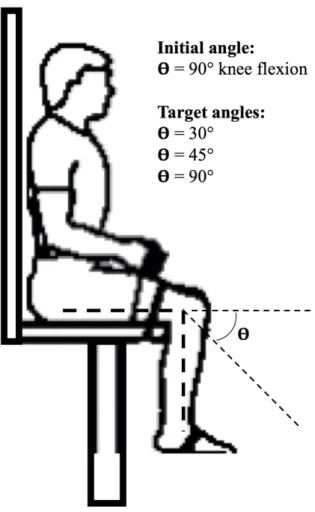
Selection of the leg first used (right dominant, left non-dominant) was randomized. Position sense was measured on an isokinetic dynamometer (HUMAC NORM, Computer Sports Medicine Inc., Stoughton, MA) (Fig. 1). Participants wore a blindfold to eliminate visual cues. Moreover, during a passive target-matching task, white noise in the headphones eliminated auditory cues. Participants sat on the dynamometer seat in an upright position. One leg hanged freely over the edge of the dynamometer seat and the other leg was attached to the dynamometer’s lever arm. Based on the manufacturer’s instructions, external straps were provided for optimal stabilization to avoid compensation at the lower extremities, pelvis, and trunk while the load cell ensemble was set perpendicular to the limb being tested. The center of the knee joint was aligned with the dynamometer’s head and the hip angle was kept constant (90° of hip flexion) during the measurement.
4.2.1.1 Passive target-matching task
JPS was measured based on a passive limb positioning protocol [83]. First, participants performed a test trial to become familiar with the task. In a random order, the dynamometer moved the leg passively from the start position of 90° knee flexion to the target angles, 30°, 45° and 60° of knee flexion (Fig. 2). Participants were asked to focus on the position of the leg.
The dynamometer was programmed to move the participant’s leg attached to the lever arm passively at 4°/s toward the target angle, which was then held for 5 s before the dynamometer’s lever arm with the subject’s leg attached to it, returned to the initial starting position. After 5 s, the knee joint was passively extended again at 4°/s and participants were instructed to press the stop button at the target previously practiced. Participants received no feedback about their performance through the measurement. To maintain attentional alert, after every 5 trials participants counted backwards by seven, starting from a two-digit number selected at random by the investigator. Each target angle was repeated five times that were then averaged to calculate a mean absolute error for each target for each participant and leg.
4.2.1.2 Active target-matching task
In one of my study [37], I measured limb proprioception by an active limb positioning protocol. After one familiarization trial, I collected data in a random order at seven targets, 30, 35, 40, 45, 50. 55 and 60° of knee flexion, to reduce learning effects. The initial starting position was 90° of knee flexion. Participants were instructed to focus on the position of the leg. The dynamometer was programmed to move the participant’s leg attached to the lever arm passively at 4°/s toward the target angle, which was then held for 5s before the dynamometer’s lever arm with the subject’s leg attached to it, returned to the initial starting position. Following a 5s interval the participant attempted to actively reposition the leg at the same joint angle. The participant was required to hold the leg at the perceived target angle for 4s and then return it to the starting position. Participants received no feedback about their performance through the measurement. Each target angle was repeated twice. To maintain attentional alert, after every 5 trials participants counted backwards by seven, starting from a two-digit number selected at random by the investigator.
4.2.2 Compression garment
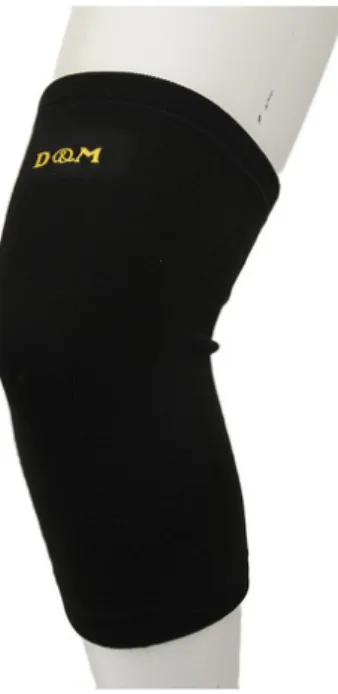
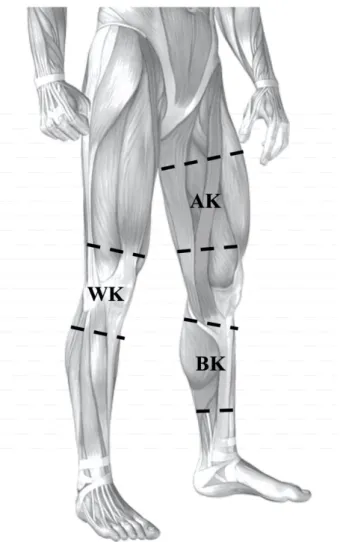
The application (EXP, CON) and the placement (AK, BK, WK) of the CG were randomized. A standard unisex compression sleeve (D&M Co., Tokyo, Japan) (Fig. 3) was worn by the participants. The compression garment extended between the proximal two-thirds and the distal two-thirds of the femoral shaft in AK garment position; between the superior aspect of the tibial tuberosity and the proximal two-thirds of the tibial shaft in BK garment position; and between the distal two-thirds of the femoral shaft and the superior aspect of the tibial tuberosity in WK garment position (Fig. 4). Participants wore the same best fitting CG of the three available sizes (S, M, L) for each garment position based on the company’s recommendations. Participants had no history of wearing CG before the experiment.
4.2.3 MRI measurement
On the day after the proprioception measurement, participants underwent an MRI measurement to determine the effects of the CG on calf and/or thigh CSA. The measurement was done in the standing position (G-Scan Brio, ESAOTE, Genova, Italy) by rotating the participant by ~87º without creating the feeling of instability. 3D SHARC images of 4 mm thickness were acquired under repetition time (TR) of 28.0 ms and echo time (TE) of 14.0 ms, with a pixel size of ~0.35×0.35 mm2, using a dedicated thigh surface coil. First, participants lay in scanner and
were moved from a supine to a standing position. The acquisition time was about 40 ± 5 min, including preparation, positioning and scanning with and without wearing the CG only on the right dominant leg. For AK garment position, thigh CSA was measured at ~15cm above the upper edge of the patella guided by the contour of the rectus femoris muscle. For BK garment position, calf CSA was measured where the circumference was the greatest without the CG. The images were digitized to determine CSA by the ImageJ software [84] as described previously [85].
4.3 Data analyses
JPS was evaluated using three types of error: 1) absolute error, i.e. the measure of the magnitude of the error, without directional bias; 2) constant error, i.e. the measure of the deviation from the target with directional bias and 3) variable error, i.e. the measure of the consistency in performance, determined as the standard deviation from the mean of the relative errors. Although most of the previous studies have measured only absolute repositioning error [86, 87], evaluating variable and constant errors might provide a different information on the integrity of the sensorimotor system by reflecting how accurately the target is represented in the nervous system [88, 89].
In my studies, any deviation from the target position, discounting direction, was defined as the absolute position error:
1) Eabsolute = | Xparticipant - Xtarget |
For constant error, the difference between reproduced and actual target angle was used, considering the direction of the error:
2) Econstant = ( Xparticipant - Xtarget )
The variable error was calculated as the overall standard deviation (SD) of constant error from 14 trials, irrespective of the target range:
3) Evariable = !∑( %constant −∑ *constant+ )2
In one of my study [90] I also calculated relative errors, i.e. % of error, considering the range of motion between the initial position and the target angle.
4.4 Statistical analyses
All data were checked for normal distribution using the Shapiro–Wilk test. In case of non-normality, variables were log transformed. The analyses were done on the transformed data using SPSS Statistics Package (version 22.0, SPSS Inc., Chicago, IL) but the non-transformed data are reported. Series of repeated measures analysis of variance (rANOVA) were done. When significant differences were detected, the multiple comparison test (Bonferroni correction) was performed. Compound symmetry was evaluated with the Mauchly's test and the Greenhouse-Geisser correction was used when required. The effects of CG on thigh CSA of the thigh was examined with a paired samples t-test. In order to determine if position sense errors were associated with the magnitude of compression produced by the CG, Pearson’s correlation was computed. Cohen’s effect size, d, was also computed as appropriate. Additionally, effect sizes of repetition factors were expressed using partial eta squared (ηp2)
[91]. Statistical significance was set at p < 0.05. Results were interpreted by 95% confidence intervals.
5. RESULTS (研究結果)
5.1 Effects of above-knee CG on passive knee JPS
Table 1 shows the descriptive data for proprioceptive target-matching. rANOVA showed a main effect of target angles (F2, 22 = 26.569; p < 0.001; ηp2 = 0.707) and condition (F1, 23 =
7.151; p = 0.014; ηp2 = 0.237). The main effect of leg (F1, 23 = 0.954; p = 0.339; ηp2 = 0.040)
and the interaction effects of target angles × leg (F2, 22 = 0.083; p = 0.921; ηp2 = 0.007), target
angles × condition (F2, 22 = 0.876; p = 0.430; ηp2 = 0.074), condition × leg (F1, 23 = 0.429; p =
0.519; ηp2 = 0.018), and target angles × condition × leg (F2, 22 = 0.687; p = 0.513; ηp2 = 0.059)
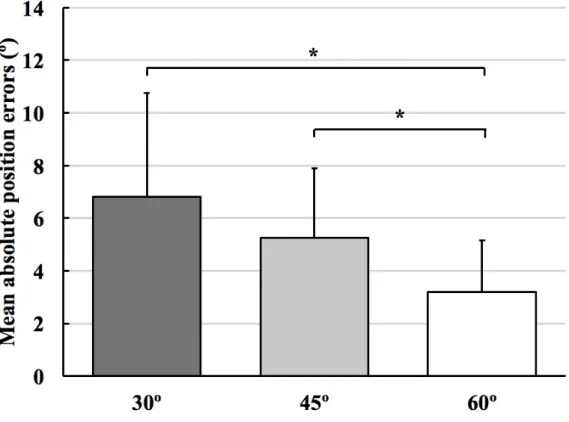
were not significant. A post-hoc analysis using the Bonferroni correction revealed that accuracy of passive target matching was greater at 60° compared with 30° and 45° (p < 0.001;
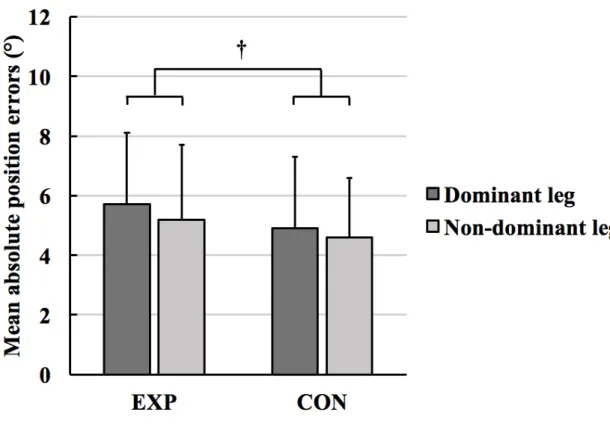
Fig. 5). Furthermore, position errors were less in CON condition compared with EXP condition (p = 0.014, Fig. 6).
The analysis of the direction of error (constant error) showed the same results. There was a condition main effect (F1,23 = 8.759, p = 0.007, ηp2 = 0.276) with the post-hoc analysis revealing
less JPS errors in CON compared with EXP condition, however, no differences were found between the dominant- and non-dominant leg (F1,23 = 0.025, p = 0.875, ηp2 = 0.001). The results
also indicated that subjects tended to mostly underestimate the target position in each condition. Finally, variable position errors also showed a condition main effect (F1,23 = 5.782, p = 0.025,
ηp2 = 0.201) so that participants target-matching accuracy was less variable in CON compared
with EXP condition. Similar to absolute- and constant JPS errors, I found no differences between the two leg in variable JPS errors (F1,23 = 0.727, p = 0.403, ηp2 = 0.031).
The MRI data revealed that the garment reduced CSA by 3.2cm2 or 2% (CON: 187.5 ±
14.4cm2, EXP: 184.3 ± 13.9cm2, p = 0.010, Cohen’s d = 0.68). The magnitude of compression
produced by the CG did not correlate with the position sense errors (p > 0.05).
5.2 Effects of CG placement around the knee on active knee JPS
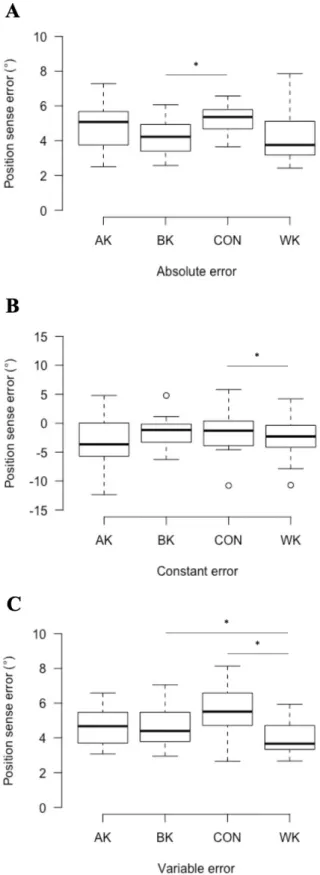
Table 2 shows the descriptive data for proprioceptive target matching. I found evidence for less absolute target-matching errors when CG was placed below the knee. Statistical analysis, performed by ANOVA revealed a significant main effect of CG position (F3,12 = 4.8, p = 0.021,
ηp2 = 0.54), with the post-hoc analysis showing a significantly smaller error in BK position
compared with the CON condition (p = 0.026, Fig. 7A). The analysis of the direction of error (constant error) showed significantly larger underestimation in WK compared to CON condition (p = 0.029, Fig. 7B). The results also indicated that subjects tended to mostly
underestimate the target position in each condition (AK, BK and CON: 75%; WK: 94%). Finally, variable position errors also showed a CG position main effect (F3,12 = 9.6, p = 0.002,
ηp2 = 0.71). Post-hoc testing using Bonferroni correction revealed that subjects tended to
perform the active target-matching task with significantly lower variability in WK position compared to BK (p = 0.023) and CON (p = 0.004) conditions (Fig. 7C).
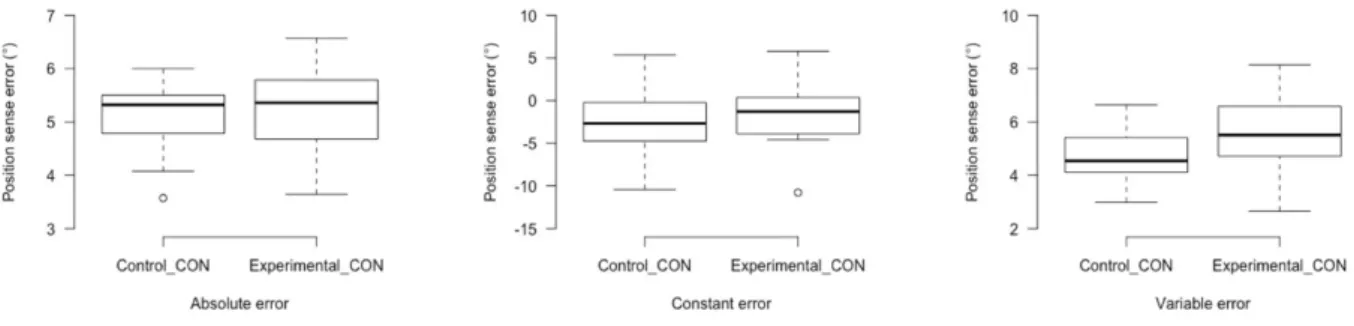
Furthermore, I failed to find differences between subjects’ dominant and non-dominant leg in the absence of the CG, as shown by non-significant pairwise comparisons of Experimental_CON and Control_CON for all types of repositioning errors (all p > 0.05) (Fig 8). Exploratory rANOVAs failed to detect modulation of the effect of placement of CG on target-matching behaviour by leg dominance, that is, interactions between CG position and groups were not significant, regardless of type of the error (all p > 0.05).
Evidentially, the MRI data revealed that the garment reduced thigh CSA by D4.5cm2 or 3%
(CON: 144.4 ± 16.8cm2, AK: 139.9 ± 17.2cm2, p < 0.001, Cohen’s d = 0.27) and calf CSA by
D1.3cm2 or 1% (CON: 95.5 ± 10.2cm2, BK: 94.1 ± 10.2cm2, p = 0.016, d = 0.13).
5.3 Effects of side-dominance on passive knee JPS
Table 3 shows the proprioceptive target-matching data for both legs. There were differences in proprioceptive target-matching asymmetries based on side-dominance (F2, 21 = 7.819, p =
0.003; Wilk's Λ = 0.573, partial η2 = 0.43). Side-dominance affected knee joint absolute
position errors in the non-dominant leg (F1, 22 = 12.398; p = 0.002; partial η2 = 0.36) but not in
the dominant leg (F1, 22 = 2.196; p = 0.153; partial η2 = 0.09). Subsequent t-tests showed that
RD participants produced less (p = 0.002) absolute position errors with the non-dominant leg (2.82 ± 0.72º) compared with participants in the LD group (3.53 ± 0.32º; Cohen’s d = 1.27)
(Fig. 9A). Furthermore, LD group (p = 0.003) produced less absolute position error with the left-dominant (2.92 ± 0.38º) compared to the right non-dominant (3.53 ± 0.32º; Cohen’s d = 1.73) leg (Fig. 9B). No significant interactions were found between the position target angles in the dominant and in the non-dominant leg neither in RD (F2,33 = 0.015, p = 0.985; F2,33 =
1.024, p = 0.370; respectively), nor in LD groups (F2,33 = 0.254, p = 0.777; F2,33 = 0.216, p =
0.807; respectively).
5.4 Effects of age on passive knee JPS
Table 4 shows the descriptive data for each type of proprioceptive target-matching errors in each leg, target angles, and age group. A three-way rANOVA with age as a between subject variable and leg, and target angles as within subjects variables revealed a significant effect of age (F1, 22 = 8.5, p = 0.008, ηp2 = 0.279) but no overall effect of leg (F1, 22 = 0.2, p = 0.895, ηp2
= 0.001) or target angles (F2, 44 = 0.9, p = 0.410, ηp2 = 0.040) and no age group by leg (F1, 22 =
3.2, p = 0.085, ηp2 = 0.129) or age group by target angles (F2, 44 = 1.6, p = 0.206, ηp2 = 0.069)
interactions for the mean absolute repositioning errors.
When analyzing relative JPS errors, no significant effect of age (F1, 22 = 3.8, p = 0.063, ηp2 =
0.149) or leg (F1, 22 = 0.2, p = 0.676, ηp2 = 0.008), but an overall effect of target angles (F2, 44 =
5.1, p = 0.012, ηp2 = 0.190) were found without the interaction with age (F2, 44 = 1.5, p = 0.232,
ηp2 = 0.065) or leg (F2, 44 = 15.4, p = 0.963, ηp2 = 0.390). To further explore the significant
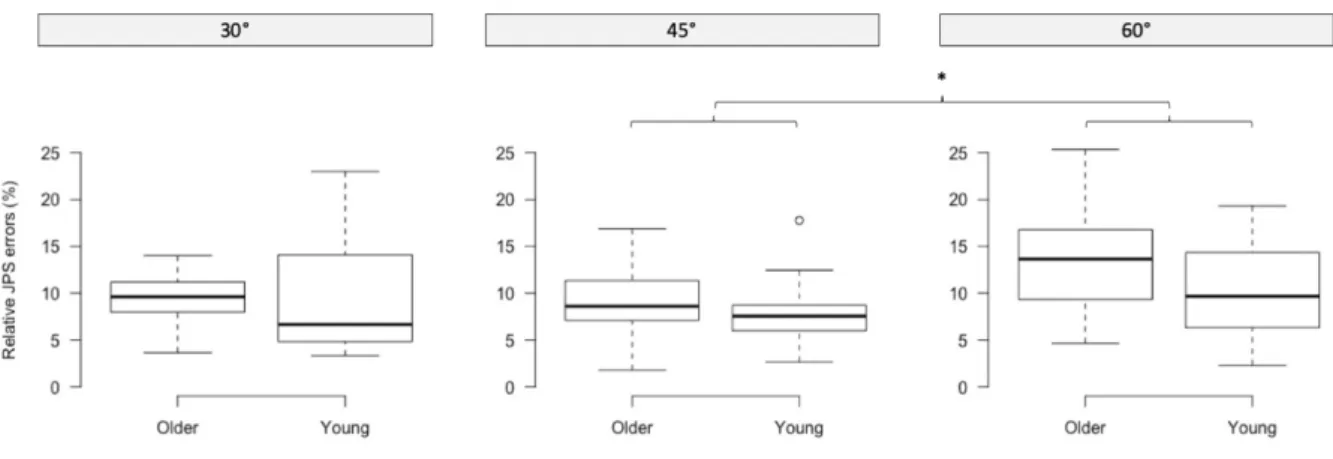
effect of block on overall performance, planned Bonferroni post-hoc test was conducted and revealed lower relative JPS errors when matching 45° (8.6 ± 0.6%) as compared with 60° (12.1 ± 1%), irrespective of leg or age (Fig. 10).
The analysis of the direction of error (constant error) revealed a significant effect of age (F1, 22
= 10.2, p = 0.004, ηp2 = 0.317, Fig. 10) but no overall effect of leg (F1, 22 = 1.1, p = 0.305, ηp2
= 0.048) or target angles (F2, 44 = 2.4, p = 0.102, ηp2 = 0.099). Furthermore, age group by leg
(F1, 22 = 4.4, p = 0.047, ηp2 = 0.167) and leg by target angles (F2, 44 = 3.8, p = 0.031, ηp2 = 0.148)
interactions were found. Post-hoc analyses showed that although both young and older subjects performed target-matching task more accurately with their non-dominant leg, young adults tended to overestimate-, while older subjects tended to underestimate more with their dominant (3 ± 0.9°, -1.9 ± 0.9°, respectively) compared to their non-dominant knee joint (1.1 ± 0.9°, -1.2 ± 0.9°, respectively) (Fig. 11).
Finally, a two-way rANOVA with age as a between subject variable and leg as a within subjects variable revealed a significant effect of age (F1, 22 = 8.0, p = 0.010, ηp2 = 0.267) but no overall
effect of leg (F1, 22 = 1.9, p = 0.177, ηp2 = 0.081) and no age group by leg (F1, 22 = 0.008, p =
0.929, ηp2 < 0.000) interaction for the variable position errors. Older subject tended to perform
the passive target-matching task with significantly larger variability (5.1 ± 0.3°) as compared with young adults (3 ± 0.9°).
6. DISCUSSION (考察)
The present thesis aimed to determine the effects of peripheral compression, side-dominance and age on passive or active knee JPS (Fig. 12). Specifically, I detected that applying an above-knee CG fails to improve passive above-knee JPS in a target-matching task and that the CG compressed the thigh significantly but minimally by 3.2cm2 or 2% [35]. Contrary to
expectations, absolute and constant JPS errors were less without than with the garment. Moreover, subjects tended to have lower variable error in the absence of the garment. These
data do not support the idea that CG improves healthy adults’ joint position sense but support the notion that the type of CG I used can compress soft tissue of the thigh.
I also detected that the placement of CG relative to the knee modifies active knee JPS [37]. In agreement with my hypotheses, I found that subjects had less absolute repositioning error when wearing a below-knee CG. On the other hand, results also indicated that subjects constantly produced less JPS errors in the absence of the CG, but tended to perform the active target-matching task with significantly lower variability when the CG was applied on the knee joint. Furthermore, CG reduced thigh CSA by 4.5cm2 or 3% and calf CSA by 1.3cm2 or 1%. However,
contrary to my hypothesis, no differences occurred in target-matching behaviour between the dominant and non-dominant leg, and CG position did not interact with leg dominance.
In contrast with previous studies [46-48], which reported more accurate target-matching in the non-dominant compared with dominant joints, my results revealed no differences in accuracy between dominant and non-dominant legs [92]. On the other hand, I found that right-side dominant compared to left-side dominant participants were more accurate in the target-matching task with the non-dominant leg.
Although right-side dominant participants tend to perform this passive target-matching task more accurately with the non-dominant leg compared to left-side dominant participants, it is more likely that healthy aging and leg dominance interact and produce age-specific modifications in JPS by producing less absolute and relative errors when matching with their dominant leg. I found significant age-effect when analyzing absolute, constant, and variable errors. Both older and young subjects performed target-matching tasks more accurately with their non-dominant as compared to the non-dominant leg hence age did not affect JPS
asymmetry between the two knees. However, in contrast to young participants’ overestimation of the target angles, older adults tended to underestimate target angles more with their dominant compared to their non-dominant knee joint. Moreover, older subjects tended to perform the passive target-matching task with greater variability.
Overall, findings described in the thesis help us better understand how the application of a CG can decrease the risk of musculoskeletal injuries during sport activities by influencing active knee JPS and how age and side-dominance affects passive target-matching behaviour. I will discuss the main findings and focus on the parameters that may affect JPS, and the practical implications of the findings.
6.1 Which is more suitable: passive or active target-matching task?
It is important to discuss the reason of heterogeneity in experimental modalities within the thesis. While three [35, 37, 92] out of my 4 studies presented in this thesis provide information about passive knee joint repositioning behaviour, one of my study [90] was investigating JPS errors during active target matching tasks. Because there were previously no data on the effects of CGs on passive proprioception, I wished to address this gap in the literature in my study which aimed to detect the effects of an above-knee CG on JPS. Moreover, using passive target matching tasks eliminate input from muscle contractions that could influence the perception of joint position, and it may also contribute to the different target matching behaviour between young and old participants. This method was therefore more likely to use in my two other studies [90, 92] because I involved elderly subjects as well. Along these lines, voluntarily moving the leg (active repositioning) measures 1) movement and 2) stopping (position) of the leg, so that movement precedes the stopping action. However, in my study that aimed to detect the age-specific modifications on knee JPS [90] I was particularly interested in the effects of
age on the ability to sense purely joint position per se without the added influence of voluntarily moving the limb on joint position. For this reason I used a passive JPS task. Although this method eliminates input from muscle contractions that could influence the perception of joint position, it may also contribute to the different target matching behaviour between young and older participants. MMSE scores (27.1 ± 1.4) suggest that older participants were cognitively healthy, however, is might be not sufficient enough to remove such confounding factors like reaction time and cognitive process that could impact JPS, as participants had to push a button while their knee was passively extended at 4°/s. Moreover, memory can be also a confounding factor and it is therefore impossible to detect if the age-related difference is due to proprioceptive differences or ability to remember [93]. A contralateral concurrent matching paradigm would therefore have been a better test for JPS in older individuals. Nevertheless, I found lower relative JPS errors when matching at 45° (ROM: 45°) as compared with 60° (ROM: 30°), irrespective of leg or age.
On the other hand, because sensory input may increase fusimotor drive and muscle receptor activation during active repositioning trials [36], such trials may also be more appropriate for functional assessment of afferent pathways due to a general attenuation and selective gating of kinesthetic awareness during active voluntary movements [20]. Muscle spindle activation appears to be higher during conscious perception of active rather than passive limb movements by detecting changes in muscle length during voluntary contractions [3]. Therefore, it seems that active vs. passive repositioning measurement paradigms are more suitable to assess CGs effects on proprioception. However, when the leg is moved and held in the target angle, the effects of gravity are presumably counteracted by the dynamometer but when the subject actively moves and holds the target angle the muscle force is required to maintain leg position vary with joint angle. Thus, the quadriceps muscle activity associated with target position is
quite different in the active movement compared with when the dynamometer moves and holds limb position in the target, which in turn may also contribute to the observed position sense errors. A different target angle can produce a different moment effect, which may proportionally influence the activity of the quadriceps muscle.
Along this line, I discussed that a lack of improvement in JPS that I found in my first study [35] may be due to an ineffective modulation of Ia afferents by the CG when the knee joint was moved passively during the repositioning task, I therefore used an active repositioning task in the study in which I aimed to detect if placement of CG may affect knee JPS [37]. However, just like in my previous study, I have to interpret that the compression applied by the above-knee CGs was insufficient to afford significant physiological changes regardless of repositioning paradigm (active or passive) per se.
Taken together, using active target-matching tasks seems to be more suitable for the functional assessment of proprioception, however, when the study aims to involve elderly participants, measuring passive target-matching behaviour may be a better choice. Nevertheless, when an isokinetic dynamometer is used to assess JPS, reaction time and cognitive process could impact the results as participants had to push a button while their knee was passively extended at 4°/s. Even if elderly participants are cognitively healthy, this may explain part of the difference between young and older adults. Therefore experimenters need to consider these factors when choosing between active vs. passive experimental modalities.
6.2 Which type of error to use?
Unlike most previous studies, I evaluated not only the absolute but also the constant and variable errors, making it possible to detect the direction and the variability of the errors,
respectively [37, 90]. Besides the often used mean absolute position error, I found it important to calculate the constant and variable errors as well:
Any deviation from the target position was defined as the absolute position error: Absolute error = | positionparticipant - positiontarget |
For constant error, the difference between reproduced and actual target angle was used: Constant error = ( positionparticipant - positiontarget )
The variable error was calculated as the overall standard deviation (SD) of constant error from 14 trials, irrespective of the target range:
Variable error = !∑( %constant −∑ *constant+ )2
Detecting the constant error may help us better understand whether participants tend to use a constant motor control strategy through the different trials, while calculating the variability of active target-matching behaviour as it may contribute to the central organization of voluntary movement [94]. Although variability in movements is essential for flexibility and stability [95], the neuromuscular system gets noisier and less adaptable when increasing beyond its optimal level [96], increasing the chance of injury.
Taken together, giving the direction of errors at each angle and overall constant and variable error measures across all target angles is very important to detect JPS. For example, if a subject consistently undershoots all angles by about 5° they would have a -5° overall constant error and near zero variable error. In contrast, if a subject overshoots some target angles and undershoots others, they would have a near 0° constant error and a very large variable error,
indicating very poor JPS. Good position sense is indicated by low constant and variable errors. Therefore, I strongly encourage researchers to analyze not only absolute but also constant and variable errors to clearly detect target-matching behaviour.
6.3 Placement of CG affects knee JPS
One of the main aim of this thesis was to detect if placement of a CG affects knee JPS. My study [35] was the first to report on the effects of above-knee CG on passive JPS errors. Contrary to the expectations the garment did not improve proprioception in a passive knee joint position sense test. In fact, in the right-dominant leg the absolute and constant JPS errors were actually less when it was passively moved without the CG. While no previous studies investigated the effect of above-knee CGs on passive joint position sense, many previous studies examined the effects of CGs on physical performance and proprioceptive position-matching errors during the task. Using a knee CG during exercise can presumably reduce microtrauma and muscular damage [97] and improve comfort [98]. In addition to knee CGs, which cover the knee joint, athletes started to use below-knee and above-knee CGs with the expectation of improving proprioception without affecting range of motion. Indeed, wearing a below-knee CG improved position sense in an active joint repositioning task [17]. Wearing an above-knee CG also decreased muscle oscillation in the sagittal plane during a countermovement jump test (CMJ) [99] and increased mean power output during 10 repeated vertical jumps performed by volleyball players [100]. Nevertheless, wearing an above-knee, whole leg, or a below-knee CG did not improve maximal muscular strength, jump performance, subjective feelings, and thigh/calf circumferences [101].
A previous study [17] presented that wearing a below-knee (BK) CG improved position sense in an active joint repositioning task, therefore I raised the hypothesis that placement of the CG
may have an influence on knee JPS. Indeed, I found that compression by the BK garment used in my study [37] seems to enhance healthy adults’ knee joint proprioceptive acuity compared with the control condition, in the absence of the garment (BK: 4.2 ± 1.0° vs. CON: 5.2 ± 0.8°). Although subjects tended to underestimate the target positions in each CG conditions, JPS data considering the direction of the errors (constant error) showed that subjects constantly produced less JPS errors in the absence of the garment (CON: -1.6 ± 3.7°) compared with the condition when CG compressed the whole knee joint (WK: -2.7 ± 3.4°). Moreover, participants tended to perform the active target-matching task with significantly lower variable error when a whole-knee CG was applied (4.0 ± 0.9°) compared to BK (4.6 ± 1.2°) and CON (5.6 ± 1.4°) conditions. Although the differences were minimal (1 to 2 degrees), this outcome may help us better understand how the application of a whole-knee CG can decrease the risk of musculoskeletal injuries during sport activities.
Although a previous study [101] investigated if exercise performance and muscle damage are affected by a CG wearing at different areas of the lower limb (above-knee, whole leg, below-knee), my study was the first to report on the effects of the position of a CG on active knee joint position sense. While often studied [15, 24, 32, 33], practitioners suspected that knee bracing would limit ROM and athletes started to place CGs above or below the knee with the expectation to improve proprioception without affecting range of motion. The results of the my study are in line with this expectation and with a previous study [17] showing that the position of the CG does affect absolute JPS errors so that below-knee CG vs. the absence of CG improves JPS. This favorable effect may be related to an increase in Golgi tendon organ activation and feedback from proprioceptors to muscle [15, 17, 19]. If there is true deformation of the muscle due to compression applied by the CG, such a mechanical effect could excite Golgi tendon organs which in turn inhibit the synergistic agonist motoneuron via disynaptic
connections through the Ib inhibitory interneurons and excite the motoneurons in the antagonist muscle via di- or trisynaptic connections. The absolute force threshold for tendon organs may be as little as 4 mg [102]. Therefore, high compression forces due to CGs could conceptually interfere with limb movement if used for active JPS measurements. Thus, it is possible that subjects may use a constant motor control strategy without the application of a CG, which resulted in less variability in JPS errors in each of my study. In my study, I found small but significant reductions in CSA of the thigh and calf (D4.5cm2 or 3%, D1.3cm2 or 1%,
respectively) due to the compression produced by the CGs that might have been just sufficient to induce negative effects on knee JPS. This idea is supported by the results, showing that subjects constantly produced less JPS errors in the absence of the garment.
In a target-matching task, any error in JPS derives from two possible sources: 1) not sensing the start or 2) not sensing the target position of the limb due to the incorrect sensing of the movement threshold and/or the magnitude of movement. In my studies, no feedback was given to the subjects about their performance, it is therefore possible that the process was slow for the subject to learn the correct sensing of limb positioning and needed many more trials to reduce the error effect. Thus, it was important to determine if CG placement may affect the variability of active target-matching behaviour as variability may contribute to the central organization of voluntary movement [94]. Variability in movements is essential for flexibility and stability [95]. However, when increased beyond its optimal level, the neuromuscular system gets noisier and less adaptable [96]. On the other hand, when it is reduced below its optimal value, the individual cannot have all the beneficial effects of redundancy in the motor system [103]. Therefore, each condition leads to an increased chance of injury. It is possible that compression produced by the CG may induce a fatigue effect through blood flow restriction transiently bringing about the state of deafferentation. Poor or a lack of feedback
due to compression-induced deafferentation effect could increase variability under the conditions of my studies. This is in line with my data, showing that subjects tended to perform the active target-matching task with significantly lower variable error in WK position compared to BK and CON conditions, suggesting that the compression, applied by the CG when it was placed on the knee, had favorable effects on the variability of target-matching errors compared to the CON condition (in the absence of the garment), without inducing deafferentation through the compression of the muscle. Although the differences were minimal (1 to 2 degrees), this outcome may help us better understand how the application of a whole-knee CG can decrease the risk of musculoskeletal injuries during sport activities.
6.4 Under-garment force level affects knee JPS
Besides the position of the garment, pressure is also an important factor contributing to the inconsistencies [104] between studies that make it difficult to determine whether CGs could improve proprioceptive acuity [17, 19, 25]. I interpret the 2% compression of the thigh as insufficient to afford meaningful physiological changes regardless of a compression effect per se. However, the same amount of compression on the knee joint or below the knee produced less variable or absolute JPS errors, respectively [37]. A previous study [17] reported that interface pressure measurements of the garments they have used produced average pressures ranging between 10-15 mmHg. We may interpret that such amount of compression is feasible to produce beneficial effects on knee JPS, however, a previous review suggested no relationship between the magnitude of compression by CGs and motor performance [13].
Moreover, even cutaneous effects seem trivial, suggesting that CG, as employed in [35], influences Ia afferent functions ineffectively when the joints are moved passively. However, sensory input may increase fusimotor drive and muscle receptor activation, during active
repositioning trials [36], such trials may therefore also be more appropriate for functional assessment of afferent pathways due to a general attenuation and selective gating of kinesthetic awareness during active voluntary movements [20]. Muscle spindle activation appears to be higher during conscious perception of active rather than passive limb movements by detecting changes in muscle length during voluntary contractions [3]. While there were previously no data on the effects of CGs on passive proprioception and I wished to address this gap in the literature, it seems that active vs. passive repositioning measurement paradigms are more suitable to assess CGs effects on proprioception. Therefore, I wished to determine whether compression via CG would affect active JPS differently when it covers different areas of the leg. Results from my study [37] indicate that the pressure level by an above-knee and a below-knee CG was sufficient to significantly modify thigh and calf CSA, respectively, which in turn influenced knee joint active repositioning behaviour. Nevertheless, future studies need to resolve the inconsistencies reported previously [15, 17, 19] and separate compression and placebo effects [105] by detecting the physiological mechanisms underlying the effect of compression on target-matching behaviour through the application of under-garment pressure sensors during the experiment.
6.5 Differences in position sense acuity in different target angles
I found that target matching was more accurate at 60° compared to 30° and 45° of knee flexion [35]. This idea is supported by the results of my other study [37], however, JPS errors were lower at a more flexed knee joint position only when the absolute values were used, which were calculated without considering the range of motion bias. Although I randomized the target positions, it is still possible that the short path and time from the starting position of 90° to 60° required participants to explore the target in a narrower range, reducing the probability for error. In this more flexed knee position compared with 30° and 45°, the quadriceps is also more
stretched, resulting in greater background Ia discharge and feedback, reducing error. It is however possible that these results were due to the increase in ROM from a constant initial position so that the short path and time from the starting position of 90° to 60° required participants to explore the target in a narrower range, reducing the probability for error.
In contrast, without the application of a CG, I found that relative target matching errors were less at a more extended knee joint position, i.e., 45° (8.6 ± 0.6%) compared with 60° (12.1 ± 1%), irrespective of leg or age (Fig. 10), suggesting that our findings are not related to the Weber–Fechner law [106], which states that linear increments in sensation S are proportional to the logarithm of stimulus magnitude I, such that S = k × log(I).
Nevertheless, kinesthetic movement reproduction [107], that implies knowledge of the starting position and movement path for accuracy, as a proxy for JPS might be more sensitive than target matching tasks with constant initial knee angles [17, 35] to determine the effects of interventions and CGs on JPS in healthy humans. This experimental set up therefore more likely to be used in future studies that aim to investigate target matching accuracy without a potential bias of memory.
6.6 Effects of side-dominance on JPS
To the best of my knowledge, my study [92] was the first, which determined whether target-matching was more accurate when using the non-dominant leg, just as it was shown in thumb [44, 45], elbow [46-48], or in multiple joints of the upper limb (ankles, knees, shoulders, and fingers) [49] in right-handed individuals; and in elbow [58] in left-handed individuals. In contrast to my hypothesis, I found no asymmetry in the knee joint target-matching task in right-side dominant participants. However, my results showed that right-right-side dominant participants
were able to produce less absolute position errors with their non-dominant leg compared to left-side dominant young participants, suggesting that the non-dominant arm/contalateral hemisphere specialization for the utilization of proprioceptive feedback [50, 51] seems to be selective only for right-handers, but not for left-handers [54].
A great review paper on laterality [108] pointed out that the evolutionary differentiation of the left and right hemispheres resulting in hemispheric specialization was likely out of necessity permitting quick processing of multiple forms of ecologically relevant stimuli in environments with increasing complexity. Although several previous studies aimed to detect the genetic contributions to laterality [109-112], the heritability of laterality of the brain and behaviour [113-116], and further environmental and gene-by-environment interaction effects [117-120], further studies are needed to detect and fully understand the biological characteristic of laterality. While adaptive explanations for the evolution and development of human handedness has been also proposed by several studies (for review see [121]), further research is needed to resolve the extent of co-lateralization of functions in the human brain [122]. For instance, silent word generation lateralizes to the left cerebral hemisphere in both left- and right handed participants (76% and 96% of participants, respectively), but right-hemisphere participation is frequent (10%) in normal left-handed subjects [123]. The degree of language laterality could however not be linked to face laterality, handedness or language performance [124]. Talking about laterality in proprioception, the lack of asymmetry between the dominant and non-dominant legs in my study might be most probably due to the specific organization of the motor system [55, 56]. Second, position sense tends to be better for the more proximal than distal joints [125], reflecting differences in the number of muscle spindles present in the joints [57]. It has been argued that proprioceptive asymmetry may be evident only at distal joints, not at proximal joints due to the specific organization of the motor system. While proximal
musculature is innervated by both hemispheres, more distal musculature has been thought to be innervated largely by the contralateral hemisphere [55, 56]. Nevertheless, future studies need to detect the possible underlying mechanisms of target-matching asymmetry, if any, existing between left- and right-side dominant participants’ dominant and non-dominant lower limb joints by performing fMRI and EEG data acquisition during JPS measurements.
In my study, right-side dominant participants produced less absolute position errors (2.82 ± 0.72º) with the non-dominant leg compared to left-side dominant young participants (3.54 ± 0.33º), suggesting that the non-dominant arm/contalateral hemisphere specialization for the utilization of proprioceptive feedback [50, 51] seems to be selective only for right-handers, but not for left-handers [54]. In right-handed healthy participants, kinesthesia is associated with a network of active brain areas including motor areas, cerebellum, and the right fronto-parietal areas including high-order somatosensory areas, providing evidence for a right hemisphere dominance for perception of limb movement [51]. The results from previous studies are controversial whether handedness is related to activation asymmetries in different parts of the brain. For example, there is a strong relationship between handedness and activation asymmetries in the motor [126, 127] and somatosensory cortex [128]; others found that motor cortex asymmetry was less pronounced in left than right-handers [129, 130] and the size of hand sensory representation from thumb to little finger was similar in the two hemispheres [131]. Although weaker lateralization in left-handed than right-handed individuals is often suggested, reversed asymmetries were also reported for the left-handed population [58]. The nature of side-dominance, including handedness is a consequence of brain lateralization through complex motor control processes (for reviews, see [132, 133]). Left-handedness is a marker of atypical cerebral lateralization, therefore left-handed individuals have cognitive functions distributed more evenly across the left and right cerebral hemispheres. This can be
one of the reasons why left-handed individuals are less likely to exhibit the functional asymmetries seen in right-handed individuals. Moreover, right-handed individuals have lower left than right hand thresholds, however, the asymmetry is based on cerebral lateralization, therefore left-handed participants may not exhibit the same central and peripheral asymmetry [134]. Nevertheless, in my study [92] neither right- nor left-handed participants produced target matching asymmetries between their dominant- and non-dominant leg.
6.7 Effects of age on JPS
In line with the well-documented age-related deterioration in neuromuscular and central nervous system function [66, 67, 135] that could affect JPS, I also found an age-effect on proprioception as measured by a passive target-matching task [90]. However, my results showed that age altered the above mentioned target-matching asymmetry by performing knee joint target-matching tasks more accurately with their right-dominant vs. left non-dominant leg.
Although the effects of age on proprioceptive target-matching asymmetry is a poorly investigated area, a previous study found similar asymmetries in kinesthetic awareness of the wrist joint in elderly with better right dominant than left non-dominant hand performance [136], which might be due to a lifetime of dominant hand use. It is possible that bilateral activation of sensorimotor areas [137] may be a hallmark of the aging process, reflecting neurodegenerative processes such as a reduction in cortical inhibition and/or compensation for less efficient contralateral function [138, 139]. In line with this, growing number of studies have documented age-related shifts in lateralization patterns. Specifically, functions that show strongly lateralized patterns in young adults are often found to elicit bilateral activity in older adults (for reviews see [140, 141]). This age-related decrease in neural asymmetry might be
explained with the recruitment of more neural processing resources, leading to more widespread brain activation during cognitive tasks. This increase in activation is thought to act in a compensatory way, reducing age-related decline in function [142-144]. An alternative explanation suggests that bihemispheric patterns seen in older adults reflect dedifferentiation, wherein there is a loss of specificity in neural representations of cognitive processes resulting in less efficient processing [145]. This idea suggests that cognitive abilities that are distinct in young adults become more generalized with age, and evidence for this comes from increased correlations between cognitive abilities seen with advancing age [146]. Despite these findings, the effects of age on brain laterality is still a matter of debate. Handedness have been proven to have an influence on language lateralization, which continues to evolve with age [123, 147, 148]. It is therefore would be interesting to detect how brain laterality changes with age in terms of lower limb joints’ proprioception, and to determine whether such changes in hemispheric asymmetry, if any, would correlate with handedness and language lateralization.
The age-related increased deterioration on limb-target control found in my study [90] may be explained by impaired proprioceptive acuity [149] and feedback processing efficiency [76, 77]. Nevertheless, results from some previous studies showed no age-effects on JPS [150, 151]. One reason for the inconsistent data among studies is the differences in the methods used to measure JPS. For example, low (3-5) trial numbers [59, 61] can reduce the sensitivity of the target-matching tests, therefore may be insufficient to determine parameters in proprioceptive tests [152]. Another reason could be related to the excessive inter-subject variability in JPS [73, 153]. Individual JPS values at the hip and knee joints can range from 0.6° up to 8.8° [154, 155] making the detection of an age-effect inconsistent. Age, musculoskeletal dysfunctions, neurological impairments, and physical activity history can all affect JPS and increase between-subject variation [156]. Although I also found considerable inter-subject variability