• 検索結果がありません。

Study of Fall and Fracture Risk in Menopausal Women Living in Urban Areas for the Prevention of Osteoporotic Fractures

N/A
N/A
Protected

Academic year: 2021

シェア "Study of Fall and Fracture Risk in Menopausal Women Living in Urban Areas for the Prevention of Osteoporotic Fractures"

Copied!
10
0
0

読み込み中.... (全文を見る)

全文

(1)

Abstract

The purpose of this study was to clarify whether preventive measures against falling, which leads to bone fractures, should be started in the senile stage or peri-menopausal period, when the bone mass decreases markedly.

In a total of 395 females aged 45, 50, 55, 60, and 65, we measured bone density of the lumbar spine by DXA, calcaneus bone density by SXA, and they answered a questionnaire regarding their health status during a medical check-up at their public health care center. We conducted a questionnaire survey by mail 2 years after the check-up, and investigated their experiences of falling and bone fractures and the situation in which these incidents happened, and analyzed the occurrence of falling and bone fractures in menopausal women and associated factors. (The number of subjects involved in the analysis was 265.)

A total of 23% experienced falls, 3.4% (9 people) occured fractures over the period of 2 years, and no significant difference was noted among the ages. Most falls occurred outdoors, on steps while they were walking. The reasons for falling were mostly related to external factors, such as slipping and tripping. The risk factors associated with falling for menopausal women were a high BMI and body fat percentage, weak

grip strength. These results suggest that the prevention of falling in the menopausal period is essential, and that maintaining an appropriate physique and improving bone density and body strength are important measures. It was suggested that the promotion of concrete measures against falling not only for the elderly but also for menopausal women is essential.

Introduction

Falling is one of the main causes of bone fracture, which can lead to a bedridden status, and the importance of its prevention has attracted attention. The status of falling in the elderly has been reported inside/outside Japan (Aoyama, Ross, Davis, Wasnich, Hayashi, & Takemoto, 1998; Suzuki, Sugiura, Furuna, Nishizawa, Yoshida, Ishizaki et al., 1999; Tromp, Smit, Deeg, Bourter & Lips, 1998). however, it has not been clarified in menopausal women. Therefore, whether preventive measures against falling, which leads to osteoporotic bone fractures, should be started in the senile stage or menopausal period, when the bone mass decreases markedly, has remained unclarified. We conducted a prospective study in women aged 45 to 65 who live in urban areas by mail 2 years after their bone mass was measured, and they answered a questionnaire regarding their lifestyle. We also

Study of Fall and Fracture Risk in Menopausal Women Living in Urban Areas for the Prevention of Osteoporotic Fractures

Noriko Tsukahara

1

,  Noriko Koitaya

2

, Kazuto Sato

3

and Ikuko Ezawa

4

Key words : Fall, Fracture, Menopausal women, Bone mineral density, Physique, Lifestyle

1 Department of Health and Nutrition, Niigata University of Health and Welfare 2 Department of Health and Nutrition Sciences, Kokusai Gakuin Saitama Junior College 3 Health Administration Center of Japan Women’s University

4 Toita Women’s College

Department of Health and Nutrition, Niigata University of Health and Welfare, 1398, Shimami-cho, Niigata, 950-3198, Japan

Tel/Fax; 047-257-4413, E-mail; [email protected]

(2)

investigated their experience of falling and bone fracture and the situation in which they occurred.

The purpose of this study was to analyze the status and associated factors of falling and bone fracture in menopausal women, and consider the necessity of measures to prevent falls and bone fractures in them.

Subjects and Methods Subjects

A total of 395 females aged 45, 50, 55, 60, and 65 underwent bone examinations as part of medical check-ups at the public health care center in Tokyo Bunkyo Ward in 1996. We conducted a mail-based questionnaire survey 2 years after the check-up in 1998, and investigated their fall and bone fracture experiences over 2 years and the situation in which they occurred. We received answers from 328 of them (83%). Those who had osteoporosis, diseases that affect bone metabolism, artificial menopause, or those with incomplete answers were excluded, and a total of 265 females were analyzed in the study.

This study has been approved by the Ethics Committee of Japan Women's University, and informed consent was obtained from each subject after a thorough explanation using written documents. This investigation was conducted in accordance with the guideline of the Helsinki Declaration.

Methods

In 1996, as part of a health check-up at a health care center, the following investigations were carried out;

・  The bone mineral density (BMD) of the lumbar spine at L2-L4 was measured by the DXA (dual energy X-ray absorptiometry) method

・  The calcaneus BMD was measured by SXA (single X-ray absorptiometry)

・Urinary bone absorption marker:

D-Pyr/Cr (deoxypyridinorine/creatinine)

・Body measurements:

The height and weight were measured and the BMI (body mass index) was calculated. The body fat percentage was measured by the impedance method (bioelectrical impedance analysis; Japan Light Service Co., Ltd. Model SIF-891). The weight minus the fat mass was defined as the lean body mass (LBM).

・Grip strength

・Questionnaire regarding lifestyle habits

・  Dietary survey for 3 days:

Each subject was given a dietary record- keeping form and asked to keep a food diary for 3 days.

In 1998, 2 years after the medical check-up, we conducted a questionnaire survey by mail, investigated their experiences of falling and bone fractures, and the situation in which falls occurred.

Statistical Analysis

The unpaired t test and one-way analysis of variance (ANOVA) were used for comparison regarding the mean rate of falling and bone fracture occurrence among the groups. The rates of falling and bone fractures in each category were used to the chi-square test,using SPSS ver.

11.0. A p value <0.05 was considered significant for all statistical analyses.

Results

The mean age, height, weight, BMI, and fat percentage of the 265 subjects were 55.6 ± 6.6 years old, 154.3 ± 4.9 cm, 53.4 ± 6.7 kg, 22.4 ± 2.7kg/m2, and 27.6 ± 5.9%, respectively. The mean bone mineral density of the lumbar spine and calcaneus bone were 0.886 ± 0.150 g/cm

2

and 337 ± 70 mg/cm

2

(mean ± SD), respectively.

The Difference in the Rate of Falling and Bone Fractures among the Age Groups

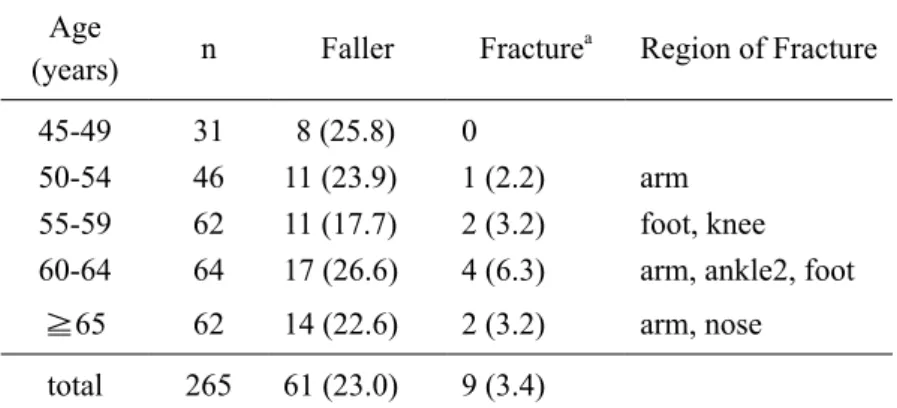
The occurrence of falling and bone fracture in

each age group is shown in Table 1. The overall

(3)

rate of falling was 23.0%, varying from 17.7 to 26.6% over the 2 years, and no significant difference was observed among the age groups.

In total, 3.4% of the subjects (9 people), ranging from 2.2 to 6.3%, had experienced bone fractures over the 2 years, and there was no significant difference among the age groups. Common fracture sites were the arm, ankle, foot, knee, and nose, observed in 3, 2, 2, 1, and 1 person, respectively. The situations in which falling occurred are shown in Fig. 1. A total of 47 people (77.4%) experienced falls outdoors, while 14

people (22.6%) did indoors. Fifteen of the subjects (23.1%) fell when they were walking, and 12 (25.6%) when they were going up/down stairs. Twenty (24.6%) slipped, 16 (24.6%) tripped, and 15 of them (23.1%) fell after failing to notice an obstacle.

Comparison of the Characteristics of Subjects with and without Experiences of Falling/Bone fracture

The physical characteristics of the 265 subjects with/without experience of falling and bone fracture are shown in Table 2. The BMI and LBM

Table 1 Number of people reporting falls over the two years.

Age

(years) n Faller Fracture

a

Region of Fracture

45-49 31 8 (25.8) 0

50-54 46 11 (23.9) 1 (2.2) arm

55-59 62 11 (17.7) 2 (3.2) foot, knee 60-64 64 17 (26.6) 4 (6.3) arm, ankle2, foot

≧65 62 14 (22.6) 2 (3.2) arm, nose

total 265 61 (23.0) 9 (3.4)

a : Incidence fracture of either point of the body during 2 years There was no significant difference among the fall rate in each group.

Figure1. The items of the falling situation

(4)

were significantly higher in the subjects who had experienced falling (p<0.01, p<0.05); however, no other significant difference was observed.

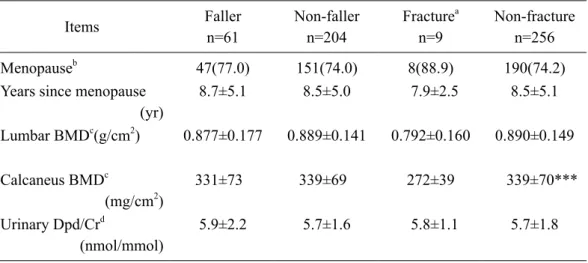
Table 3 shows the levels of bone mineral

density and urinary bone absorption markers. The calcaneus BMD was significantly lower (p<0.001) in people who had experienced bone fractures.

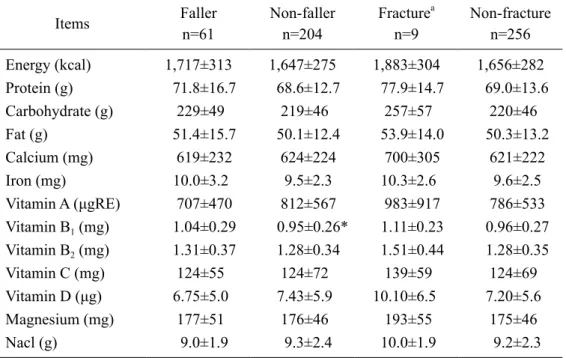
Major nutrient intakes are shown in Table 4.

Table 2 Comparison in physical characteristics between fallers and non-fallers/fractures and non- fractures during 2 years.

Items Faller

n=61 Non-faller

n=204 Fracture

a

n=9 Non-fracture n=256

Age (yr) 55.6±6.8 55.6±6.6 58.2±4.8 55.5±6.6

Body height (cm) 153.5±5.4 154.6±4.7 153.4±6.3 154.4±4.8

Body weight (kg) 54.8±6.9 52.9±6.6 50.4±6.3 53.4±6.7

Body Mass Index (kg/m

2

) 23.2±2.4 22.2±2.8** 21.4±2.1 22.4±2.7

Body fat (%) 29.0±4.7 27.1±6.1 27.6±3.4 27.6±6.0

Lean Body Mass (kg) 38.7±4.2 38.3±3.8* 36.5±4.4 38.5±3.9

Grip strength (kg)

Right 23.4±5.9 24.6±5.1 24.9±3.8 24.3±5.4

Left 22.2±5.5 23.4±5.2 24.6±5.6 23.1±5.3

Values are Mean±SD, *p<0.05, **p<0.01

a : Incidence fracture of either point of the body during 2 years

Table 3 Comparison in menopausal status, bone, mineral density and bone metabolic markers between fallers and non-fallers/fractures and non-fractures during 2 years.

Items Faller

n=61 Non-faller

n=204 Fracture

a

n=9 Non-fracture n=256

Menopause

b

47(77.0) 151(74.0) 8(88.9) 190(74.2)

Years since menopause

(yr) 8.7±5.1 8.5±5.0 7.9±2.5 8.5±5.1

Lumbar BMD

c

(g/cm

2

) 0.877±0.177 0.889±0.141 0.792±0.160 0.890±0.149 Calcaneus BMD

c

(mg/cm

2

) 331±73 339±69 272±39 339±70***

Urinary Dpd/Cr

d

(nmol/mmol) 5.9±2.2 5.7±1.6 5.8±1.1 5.7±1.8

Values are Mean±SD, ***p<0.001

a : Incidence fracture of either point of the body during 2 years b : Number(%)

c : Bone mineral density

d : Free deoxypylidinoline adjusted for creatinine

(5)

No significant differences were observed among the groups, and the overall nutritional intake was favorable.

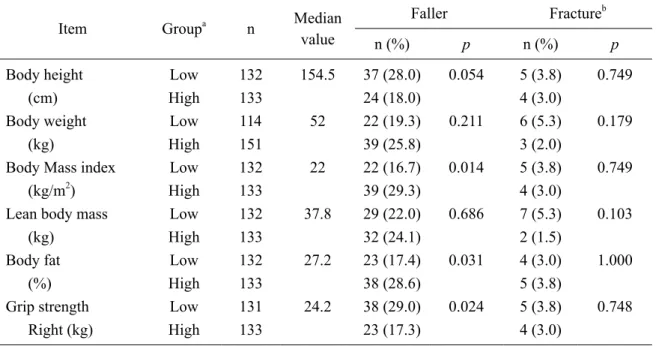
Physique, Grip Strength, Rates of Falling and Bone Fracture

Table 5 shows the relationship between the physique, grip strength (the right hand), and rates of falling and bone fracture. They were divided into high- and low-groups by median value, and the rates of falling and bone fracture were compared. The occurrence of falling was significantly higher in the high-group regarding the BMI and body fat percentage (p=0.014, p=0.031). No significant difference was observed concerning the occurrence of bone fracture. In the low-group for grip strength, the occurrence of falling was significantly higher (p=0.024);

however, there was no significant difference in the incidence of bone fracture. In this study,

because of body weight was no significant differences between the subjects with/without experiences of falling, a grip strength didn't adjusted body weight as compared fall-group with non-fall group.

Bone Mineral Density, Rates of Falling and Bone Fracture

Subjects were divided into high- and low- groups by median value of bone mineral density of the lumbar spine and calcaneus bone, and the rates of falling and bone fracture were compared (Table 6). There was no significant difference in the occurrence of falling in groups regarding the bone density of the lumbar spine; however, it was non-significantly higher in the low- compared to the high-group for the calcaneus bone (p=0.088).

The occurrence of bone fracture was significantly higher in the low-group for the calcaneus bone (p=0.018). To consider the influence of Table 4 Comparison of the situation of nutritional intake between fallers and non-fallers/

fractures and non-fractures during 2 years.

Items Faller

n=61 Non-faller

n=204 Fracture

a

n=9 Non-fracture n=256

Energy (kcal) 1,717±313 1,647±275 1,883±304 1,656±282

Protein (g) 71.8±16.7 68.6±12.7 77.9±14.7 69.0±13.6

Carbohydrate (g) 229±49 219±46 257±57 220±46

Fat (g) 51.4±15.7 50.1±12.4 53.9±14.0 50.3±13.2

Calcium (mg) 619±232 624±224 700±305 621±222

Iron (mg) 10.0±3.2 9.5±2.3 10.3±2.6 9.6±2.5

Vitamin A (μgRE) 707±470 812±567 983±917 786±533

Vitamin B

1

(mg) 1.04±0.29 0.95±0.26* 1.11±0.23 0.96±0.27 Vitamin B

2

(mg) 1.31±0.37 1.28±0.34 1.51±0.44 1.28±0.35

Vitamin C (mg) 124±55 124±72 139±59 124±69

Vitamin D (μg) 6.75±5.0 7.43±5.9 10.10±6.5 7.20±5.6

Magnesium (mg) 177±51 176±46 193±55 175±46

Nacl (g) 9.0±1.9 9.3±2.4 10.0±1.9 9.2±2.3

Values are Mean±SD, *p<0.05

a : Incidence fracture of either point of the body during 2 years

(6)

menopause on the bone mineral density (Koitaya, Tsukahara, & Ezawa, 1999), we divided the subjects into pre- and post-menopausal groups and conducted a comparative analysis (Table 7).

There was no significant difference in the occurrence of falling and bone fracture.

The Relationship between a History of Bone Fracture, Physical Condition, Lifestyle, and Rates of Falling and Bone Fracture

The relationships between a history of bone fracture, an exercise habit, presence/absence of back pain, and the occurrence of falling and bone fracture were analyzed (Table 8). There was no significant difference in the occurrence of falling.

Table 5 Physique and fall/fracture rates.

Item Group

a

n Median

value

Faller Fracture

b

n (%) p n (%) p

Body height Low 132 154.5 37 (28.0) 0.054 5 (3.8) 0.749

(cm) High 133 24 (18.0) 4 (3.0)

Body weight Low 114 52 22 (19.3) 0.211 6 (5.3) 0.179

(kg) High 151 39 (25.8) 3 (2.0)

Body Mass index Low 132 22 22 (16.7) 0.014 5 (3.8) 0.749

(kg/m

2

) High 133 39 (29.3) 4 (3.0)

Lean body mass Low 132 37.8 29 (22.0) 0.686 7 (5.3) 0.103

(kg) High 133 32 (24.1) 2 (1.5)

Body fat Low 132 27.2 23 (17.4) 0.031 4 (3.0) 1.000

(%) High 133 38 (28.6) 5 (3.8)

Grip strength Low 131 24.2 38 (29.0) 0.024 5 (3.8) 0.748

Right (kg) High 133 23 (17.3) 4 (3.0)

a : Divided into ‘Low’ and ‘High’ groups by a median value for each factors.

b : Incidence fracture of either point of the body during 2 years

Table 6 Bone mineral desity and fall/fracture rates.

Item Group

a

n Median

value

Faller Fracture

b

n (%) p n (%) p

Lumbar- Low 132 0.882 33 (25.0) 0.445 7 (5.3) 0.103

BMD

c

(g/cm

2

) High 133 28 (21.1) 2 (1.5)

Calcaneus- Low 131 332 36 (27.5) 0.088 8 (6.1) 0.018

BMD

c

(mg/cm

2

) High 134 25 (18.7) 1 (0.7)

a : Divided into ‘Low’ and ‘High’ groups by a median value for each factors.

b : Incidence fracture of either point of the body during 2 years

c : Bone mineral density

(7)

The occurrence of bone fracture was significantly higher in people with a history of bone fracture (p=0.026). No difference was observed regarding exercise habits or the presence/absence of back pain.

Discussion

In Japan, measures to prevent falls and bone fractures are targeted for the elderly to lower the incidence of those with a bedridden status, and it

has not yet been clarified whether measures to prevent falling and bone fractures in women in the menopausal period are necessary. Few studies have been conducted regarding falling and bone fractures in women in the menopausal period (Chen, Miller, Barrett-Connor, Weiss, Sajjan &

Siris, 2007). In the present study, we conducted a questionnaire survey by mail 2 years after a medical check-up, investigated experiences of falling and bone fracture and the situation in Table 7 Bone mineral density and fall/fracture rates specific to menopausal condition.

BMD Group

a

n Median

value

Faller Fracture

b

n (%) p n (%) p

Pre menopause (n=67)

Lumbar BMD

c

Low 33 1.011 4 (12.1) 0.132 – –

(g/cm

2

) High 34 10 (29.4) 1 (100)

Calcaneus BMD

c

Low 33 402 5 (15.2) 0.255 – –

(mg/cm

2

) High 34 9 (26.5) 1 (100)

Post menopause (n=198)

Lumbar-BMD

c

Low 99 0.843 27 (27.3) 0.242 6 (6.1) 0.279

(g/cm

2

) High 99 20 (20.2) 2 (2.0)

Calcaneus-BMD

c

Low 99 314 28 (28.3) 0.133 7 (7.1) 0.065

(mg/cm

2

) High 99 19 (19.2) 1 (1.0)

a : Divided into ‘Low’ and ‘High’ groups by a median value for each BMD.

b : Incidence fracture of either point of the body during 2 years c : Bone mineral density

Table 8 Retrospective history, lifestyle and fall/fracture rates.

Item Group n Faller Fracture

a

n (%) p n (%) p

Fracture history No 256 56 (21.9) 0.082 7 (2.7) 0.026

Yes 8 4 (50.0) 2 (25.0)

Exercise habit No 128 33 (25.8) 0.317 4 (3.1) 1.000

Yes 136 28 (20.6) 5 (3.7)

Low and upper No 219 47 (21.5) 0.171 7 (3.2) 0.625

back pain Yes 38 12 (31.6) 2 (5.3)

a : Incidence fracture of either point of the body during 2 years

(8)

which they occurred, and analyzed the occurrence and related factors in 265 menopausal women.

The rate of falling in the 2 years was 23% in women aged between 45 and 65, living in urban areas. Nine of them (3.4%) experienced bone fractures due to falling. A study reported that the fall rate of home-dwelling elderly in the community was 10-20%/year (Yasumura, 1999).

Therefore, it was suggested that the risk of falling in daily life may be as high in menopausal women as it is in the elderly, although even a long case (during 2 years) is conceivable that the survey period is influencing.

Common fracture sites in the present study were the arm, ankle, foot, knee, and nose, observed in 3, 2, 2, 1, and 1 person, respectively.

Vertebral fracture and femoral neck fracture (hip fracture) are the most frequently occurring fractures caused by osteoporosis in the elderly (Hagino, 2008). In addition to, these fractures are often observed in the distal radius, proximal humerus. The incidence of vertebral fracture increased exponentially with age and the annual incidence for women is 4,000 per 100,000 person in their 70’s, and more than 8,400 in their 80’s (Fujisawa et al., 2003). The incidence of hip fracture increased exponentially with age after 70 years old, and reaches a peak in the 80’s (Orimo

& Sakata, 2004; Hagino et al., 2005). The subjects of the present study were menopausal women, and no vertebral fracture or hip fracture, which commonly occur in the elderly, was noted.

A study by Hagino (Hagino et al., 1999) reported that the occurrence of fracture of the distal side of the radius starts increasing from the 50’s, but reduces beyond 80.

It was clear that bone fractures in menopausal women occur more in the upper and lower extremities. It was suggested that bone fractures in menopausal women are strongly affected by risk factors of falling with the decreasing bone strength. Therefore, measures against falling in menopausal women would prevent bone fractures.

Concerning the relationship between falling and the physique, the rate of falling was significantly higher in those with a high BMI and body fat percentage, which suggested that, in people with a high BMI, those who has less muscle mass and a high body fat percentage were especially likely to fall. Concerning the relationship between falling/bone fracture and the bone mineral density, those with a low density of the calcaneus bone showed a significantly higher bone fracture rate. No significant differences were observed in those with a low bone density of the lumbar spine. At this stage, whether or not bone density levels can be used as predictive factors for falling remains to be clarified in menopausal women, and further investigation is awaited.

It was reported that a past experience of falling affects the likelihood of another fall, and a past history of bone fracture influences the future occurrence of fracture (Yasumura et al., 1991;

Suzuki et al., 1999). This study also showed a significantly higher bone fracture rate in those with a history of bone fracture.

Regarding the mean value on a grip strength, no significant differences were observed among the faller group (N=61, 23.4±5.9kg) and non- faller group (N=204, 24.6±5.1kg;mean value on the right hand :Table 2). However as a result that the high grip strength group and the low grip strength group by median value (mean value on the right hand was 24.2kg) was compared, the low-group for grip strength was significantly higher falling rate. This result suggested that there were many the grip lower persons than the median value and the grip strength is a weak trend, in most of the subjects with experience of falling. On the other hand, it suggested that there were many higher persons than the median value and the grip was a strong trend, although there was a weak person, in most of the subjects without experience of falling.

A strong grip force, which is one of the

physical indexes, because of correlating

(9)

comparatively well with the muscle strengthening of the whole body, was suggested to be one of the fall-preventive factors. Therefore, it was reported that one of interventional approach to preventing falls is increasing muscle strength (Orimo et al., 2006). Measurement of the grip strength, which can be conducted easily, may be useful as screening for those with a high fall risk.

These results suggest that it is important to employ measures against falling and bone fractures while taking the characteristics of falling/bone fracture in menopausal women into consideration. It is essential to support menopausal women’s bone-health promotion such as maintaining an appropriate physique and maintaining and improving the bone mineral density and physique. The promotion of measures against falling and bone fracture not only in the elderly but in menopausal women is necessary.

Acknowledgement

We would like to acknowledgement the people cooperating in this long-term study at the public health center of Tokyo Bunkyo Ward, and the subjects, menopausal women living in Bunkyo Ward.

References

Aoyagi, K., Ross, P. D., Davis, J. W., Wasnich, R.

D., Hayashi, T., & Takemoto, T. (1998).

Falls among community-dwelling elderly in Japan. Journal of Bone Mineral Research, 13, 1468-1474.

Chen, Y. T., Miller, P. D., Barrett-Connor, E., Weiss, T. W., Sajjan, S. G., & Siris, E. S.

(2007). An approach for identifying postmenopausal women age 50-64 years at increased short-term risk for osteoporotic fracture. Osteoporosis International, 18, 1287-1296.

Fujiwara, S., Kasagi, F., Masunari, N., Naito, K., Suzuki, G., & Fukunaga, M. (2003). Fracture prediction from bone mineral density in

Japanese men and women. Journal of Bone Mineral Research 18, 1547-155

Hagino, H., Katagiri, H., Okano, T., Yamamoto, K., & Teshima, R. (2005). Increasing incidence of hip fracture in Tottori prefecture, Japan: trend from 1986 to 2001.

Osteoporosis International 16, 1963-1968 Hagino, H., Yamamoto, K., Ohshiro, H.,

Nakamura, T., Kishimoto, H., & Nose, T.

(1999). Changing incidence of hip, distal radius, and proximal humerus fractures in Tottori Prefecture, Japan. Bone, 24, 265-270.

Hagino, H. (2008). Muscle and Bone Health as a Risk Factor of Fall among the Elderly- Epidemiology of falls and fractures.

CLINICAL CALCIUM 18, 747-753.

Koitaya, N., Tsukahara, N., & Ezawa, I. (1999).

5-year longitudinal study on bone mineral density in lumbar spine among menopausal Japanese women. Journal of Japanese Society of Nutrition and Food Science, 52, 13-19, (in Japanese)

Orimo, H., Nakamura, T., Fukunaga, M., et al.

(2006). A multidirectional intervention approach to preventing falls as the primary cause of hip fractures. p. 44-46. Japanese Guidelines for the Prevention and Treatment of osteoporosis 2006 edition. P141. Life Science Publishing, Tokyo.

Orimo, H., & Sakata, K. (2004). The results of the fourth nationwide survey of femoral neck fracture (hip fracture) -estimated number of new patients in 2002 and changes over 15 years. Japan Medical Journal, 4180, 25-30.

Suzuki, T., Sugiura, M., Furuna, T., Nishizawa, T., Yoshida, H., Ishizaki, T., et al. (1999).

Analystical research on physical factors

associated to falls occurrence among

community-dwelling elderly form the 5

year-follow-up study. Japanese Journal of

Geriatrics, 36, 472-478, (in Japanese)

Tromp, A. M., Smit, J.H., Deeg, D. J., Bouter, L.

(10)

M., & Lips, P. (1998). Predictors for falls and fractures in the longitudinal aging study Amsterdam. Journal of Bone Mineral Research, 13, 1932-1939.

Yasumura, S. (1999). Falling in the elderly and measures against it. In Y. Mano (Ed), Fall and bone fracture in the elderly (pp. 40-45).

Tokyo: Ishiyaku Pub, Inc.

Yasumura, S., Haga, H., Nagai, H., Shibata, H., Iwasaki, K., Ogawa, Y., et al. (1991). Falls occurrence rate and falls situation among home dwelling elderly in community.

Japanese Journal of Public Health, 38,

725-742, (in Japanese).

Table 1  Number of people reporting falls over the two years.
Table 2   Comparison in physical characteristics between fallers and non-fallers/fractures and non- non-fractures during 2 years.
Table  5  shows  the  relationship  between  the  physique, grip strength (the right hand), and rates  of  falling  and  bone  fracture
Table 5  Physique and fall/fracture rates.
+2

参照

関連したドキュメント

H ernández , Positive and free boundary solutions to singular nonlinear elliptic problems with absorption; An overview and open problems, in: Proceedings of the Variational

In this, the first ever in-depth study of the econometric practice of nonaca- demic economists, I analyse the way economists in business and government currently approach

Keywords: Convex order ; Fréchet distribution ; Median ; Mittag-Leffler distribution ; Mittag- Leffler function ; Stable distribution ; Stochastic order.. AMS MSC 2010: Primary 60E05

Therefore, with the weak form of the positive mass theorem, the strict inequality of Theorem 2 is satisfied by locally conformally flat manifolds and by manifolds of dimensions 3, 4

In Section 3, we show that the clique- width is unbounded in any superfactorial class of graphs, and in Section 4, we prove that the clique-width is bounded in any hereditary

Keywords: continuous time random walk, Brownian motion, collision time, skew Young tableaux, tandem queue.. AMS 2000 Subject Classification: Primary:

Inside this class, we identify a new subclass of Liouvillian integrable systems, under suitable conditions such Liouvillian integrable systems can have at most one limit cycle, and

Then it follows immediately from a suitable version of “Hensel’s Lemma” [cf., e.g., the argument of [4], Lemma 2.1] that S may be obtained, as the notation suggests, as the m A