• 検索結果がありません。

Information-Seeking Behavior Factors Related to Consent for Treatment Decisions in Parents of Children with Cancer

N/A
N/A
Protected

Academic year: 2021

シェア "Information-Seeking Behavior Factors Related to Consent for Treatment Decisions in Parents of Children with Cancer"

Copied!
18
0
0

読み込み中.... (全文を見る)

全文

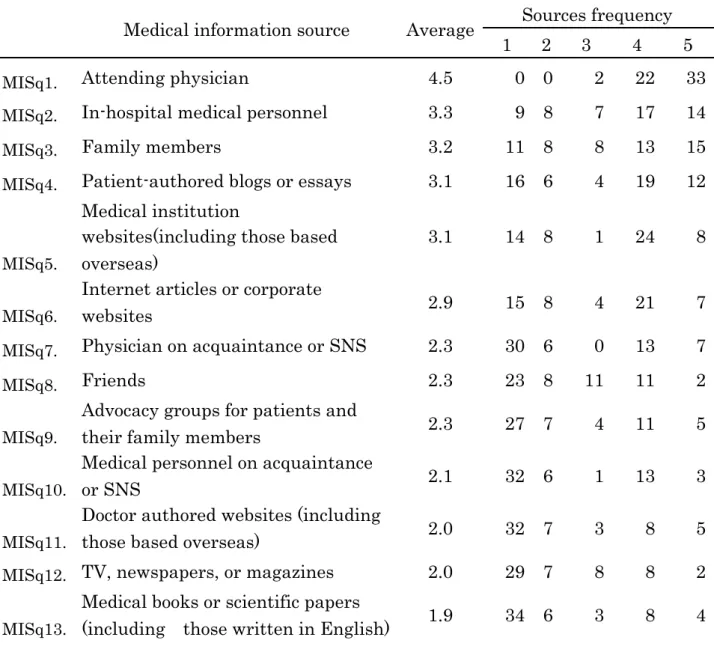
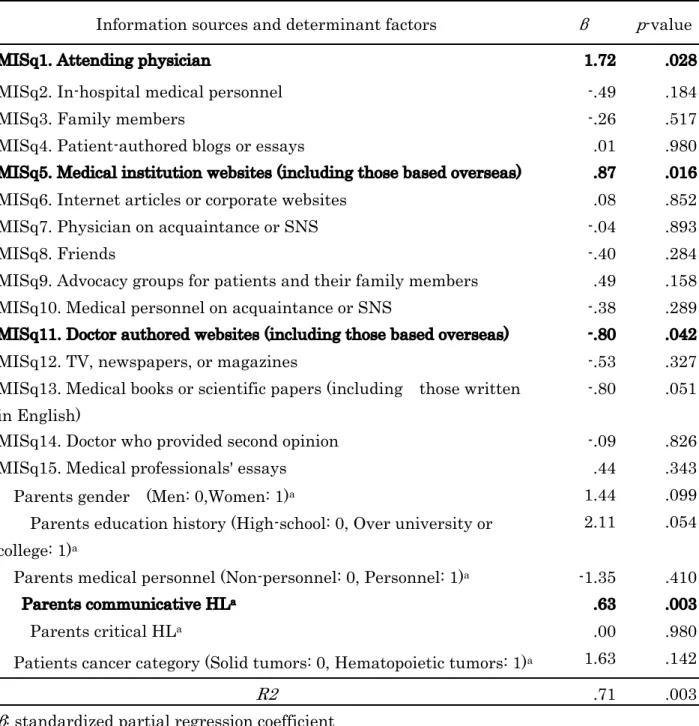
-1-. 【論文】. がん患児の親における情報探索行動と治療選択同意との関連. 渡辺真希子*,****, 後藤裕明**, 中山伸一***. *神奈川県立こども医療センター臨床研究所*, **神奈川県立こども医療センター血液腫瘍科, ***筑波大 学図書館情報メディア系, ,****筑波大学図書館情報メディア研究科. *[email protected], ** [email protected], *** [email protected]. 疾患を持つ子どもの親とその家族は, 医療者との治療に関する意思決定において情報を必要とする. ことが分かっているものの, 小児がんの子どもを持つ親の情報探索行動については殆ど明らかとなっ ていない. 本研究は, 親の治療決定の同意との関連から親の情報探索行動を明らかにすることを目的 とする. さまざまな医療情報源の使用頻度と他の決定要因との調査を行い, どの種類の情報源が子ど もの治療決定に関する親の同意に影響を与えるかについて重回帰分析を用いて評価した. 僅かではあ るが主治医(β= 1.72, p = .028)と, 主治医が所属する機関に関わらず広く医療機関のウェブサイト (β= 0.87, p = .016)が治療決定の同意に正の影響を与えること, 医師が発信するウェブサイト(β= -0.8, p = .042)が治療決定の同意に負の影響を与えること, 親の批判的ヘルスリテラシーよりも伝達 的ヘルスリテラシー(β= 0.63, p = .003)が情報探索行動の決定的要因としての治療決定の同意に関 連することが分かった. これらの結果は, 医師が発信するウェブサイトを利用する親は, 複数の医師 からの情報についても探索し, 情報源として主治医及び医療機関のウェブサイトを利用する親より治 療選択の同意に慎重である可能性を示唆した. 親の情報探索における伝達的ヘルスリテラシーが治療 選択の同意において関連が深いことは, 親が診断の初期段階に幅広い情報源を使用したことを示唆し ている. そのため医療スタッフ及び情報提供の専門家は, 小児がんの子どもを持つ親の情報探索行動 が個人属性に影響されることを考慮し, 診断の初期段階で親の識字能力や学歴に応じた情報を提供す る必要があることを考察した.. Information-Seeking Behavior Factors Related to Consent for Treatment Decisions in. Parents of Children with Cancer. Makiko Watanabe, MLIS*,****; Hiroaki Goto, MD, PhD**; Shin-ichi Nakayama, PhD**. **Clinical Research Institute, Kanagawa Children’s Medical Center ** Department of Hematology and Oncology, Kanagawa Children’s Medical Center. *** Faculty of Library, Information and Media Science, University of Tsukuba **** Graduate School of Library, Information and Media Studies, University of Tsukuba. Although it is known that parents and families of children with cancer need information in. making decisions about treatment with medical professionals, little is known about the information-seeking behavior of parents of children with cancer. The purpose of this study is to clarify the information-seeking behavior of parents in relation to their consent for treatment decisions. The frequency of use of various medical information sources and other determinants. 渡辺・後藤・中山:がん患児の親における情報探索行動と治療選択同意との関連. -2-. were investigated, and multiple regression analysis was used to evaluate which types of information sources influence parental consent for their children's treatment decisions. . The results showed a small but positive influence of attending physicians (β = 1.72, p = .028). and medical institution websites which are belong to their attending physician or not, (β = 0.87, p = .016) on consent for treatment decisions, a negative influence of doctor-authored website (β = - 0.8, p = .042) on consent for treatment decisions, and a negative influence of parents' critical communicative health literacy (β = 0.63, p = .003) rather than parental critical health literacy was associated with consent to treatment decisions as a determinant of information seeking behavior. These results suggest that parents who use physician-directed websites may access online information delivered by various doctors and be more cautious about consenting to treatment choices than parents who use the websites of their physicians and medical institutions as information sources. Therefore, medical staff and information professionals should consider that the information-seeking behavior of parents of children with cancer is influenced by personal attributes and that information should be provided in the early stages of diagnosis according to the literacy and educational background of the parents.. 1. Introduction. There are three types of decisions affiliated with treatment in health care: decisions taken by providers on behalf of patients and shared decisions between patients and healthcare providers. The health outcomes of these are probabilistic, as treatment decisions are taken under conditions of uncertainty [1].. Prior studies have proposed that access to medical information has positive effects on patients, especially regarding types of decision- making, prevention behavior, coping, and other factors [2-4]. However, patients’ treatment decisions include various challenges such as misunderstood diagnoses from physicians and a disparity in knowledge between experts and non-experts. According to a study [5], with findings supported by a survey by the Ministry of Internal Affairs and Communications, 88.8% of Japanese citizens between 20 and 70 years of age and 96.9% of the population in the United States use the Internet to solve daily problems. Information-seeking behavior is not just an. “activity” but a “series of behaviors” that support high-level activities, such as decision- making and problem-solving. Without appropriate information, decision-making and problem-solving often results in uncertainty. Information-seeking behaviors reduce ambivalence in resolving these issues [6-8]. . In another study conducted in Japan by Nakajima et al. (2012), 144 breast cancer patients were inquired about their need and difficulties in acquiring information; their information seeking was determined by analyzing the association between positive or shared decision preference [9]. . Consequently, 92% of patients reported that gathering information about breast cancer was a strenuous process. Moreover, 53% reported having negative experiences during information retrieval, and 50% reported difficulty understanding the data they had acquired [9]. Concerning the treatment choice, patients who expressed their emotions to doctors, wanted more information, and underwent breast resection were more likely to. 情報メディア研究 第 20 巻 第 1 号. -3-. be more aggressive in their treatment choices. Research on treatment decisions and. information useful for parents of children with cancer has advanced overseas, but not in Japan.. Regarding information retrieval and use by parents of children with cancer, Hashimoto (2016) reported that no studies have assessed the understanding and utilization of the information collected through the Internet by parents of children with cancer in Japan [10].. Miwa [11] posits that information sharing is a phenomenon involving disseminating information among multiple people by exchanging it through daily conversations or formal communication; Miwa further states that “information sharing has not been explicitly handled so far, but all sources of information are created with the aim of sharing information among people (p.82).” . Research on information usage has been conducted for adult patients with cancer using cross-sectional surveys and according to the specific type of cancer [12, 13]. For example, patients with prostate cancer use anonymous information on the Internet. Moreover, patients with breast cancer use social networks [12]. However, far fewer studies have examined information-seeking behavior regarding childhood cancer when compared to those that have studied adults with cancer. The research conducted by Kostagiolas et al. [14] is the only major study that deals with information- seeking behavior and treatment decisions of parents having a child with cancer. The researchers reported that these parents engaged in information-seeking behavior in order to reduce their anxiety about their child’s treatment; moreover, doctors were the most important source for information, followed by the Internet. However, Kostagiolas et al.’s study. was limited as it focused on information-seeking behavior and relevant factors and did not touch on the relation between sources of information and treatment decisions. Moreover, Kostagiolas et al. did not discriminate between the online information provided by experts and other online information readily available on popular search engines such as Yahoo! and Google. . In Japan, approximately 3,200 children were diagnosed with pediatric cancer in 2014 [15]. Even though this represents nearly one in 10,000 children, and considering cancer is the leading cause of death in children, related research in this field is absent. Therefore, the present study investigated the following research questions (RQs) to examine effective information-seeking behavior related to consent for treatment decisions by parents of children with cancer.. RQ1: Which medical information sources are used most frequently by parents of children with cancer? . RQ2: Which medical information sources are related to determinant factors of parental information-seeking behavior?. RQ3: Considering the relationship between the frequency of use of information sources and determinant factors, which type of medical information sources influence parents’ to consent for treatment decisions for their children?. 2. Methods 2.1 Research Frame and Statistical Analysis. This research was based on a cross- sectional study; it used an exploratory framework and quantitative results to explore RQs 1 through 3. The questionnaire items collected information about concepts related to. 渡辺・後藤・中山:がん患児の親における情報探索行動と治療選択同意との関連. -4-. parents’ information-seeking behavior concerning the use of medical information sources, parental consent for treatment decision, parents’ socioeconomic demographics and health literacy (HL), and children’s clinical characteristics. . In the present study, treatment decision is defined as decisions made by parents in obtaining appropriate treatment for their children. Information-seeking behavior is defined as a series of actions that include browsing or searching websites or materials and information sharing among people [6,8].. Medical information sources were chosen as the independent variables and socioeconomic demographics and clinical characteristics as control variables in attempting to answer RQ3 based on the results of RQ1 and RQ2. The determinant factors were the control variables of parents’ socio-demographic characteristics (parent’s gender, educational history, job category, HL); the child’s clinical characteristics (cancer category, second opinion status) were determined by referring to prior studies.. A study by Jung [2] selected only individual determinant factors, including individuals’ own HL, self-efficacy, and so on, to examine related personal effects. It provided insights in selecting individual determinant factors to understand the linked individual effects of information-seeking behavior [2].. In analyzing RQ1, we counted the total usage frequency of medical information sources by parents. RQ2 verified the relationship between parents’ medical information sources and the determinant factors of information- seeking behavior using a Mann–Whitney U test for variables including two groups and a Kruskal-Wallis test for variables including three groups. RQ3 verified the effects of medical. information sources on parental treatment decision consent to particular treatment methods using multiple regression analysis. These independent variables and control variables were used as selection criteria and depended on the findings of RQ1 and RQ2.. 2.2 Measurement 2.2.1 Dependent Variable: Consent for Treatment Decision. The authors developed a treatment decision scale related to “consent” and “understanding.” This scale was created to evaluate treatment-decision appropriately and the vital scales are only “regret” or “satisfaction” [19-20]. The scale evaluates and rates the extent of parental decision-making by focusing on the process of treatment decision-making. Notably, the scale measures parent consent for treatment decisions using six objective variables developed for this study. The measure focuses on parent involvement and the acceptance of their decision [21]. Its items were based on a review conducted by Chen [22], and interviews conducted by Watanabe et al. [23] measured the level of consent granted in treatment decisions. Higher scores indicated higher levels of consent for treatment decisions. The scale was named the Treatment Decision-Making Consent Scale (TDCS), and the responses were provided on a 5-point Likert scale of 1 (Strongly disagree), 2 (Disagree), 3 (Neither), 4 (Agree), or 5 (Strongly agree). The sum of scores on each variable provided a total score for the scale. The reliability coefficient and correlation matrix for treatment decision consent on this scale are provided in the results section below.. 2.2.2 Independent Variable: Medical. 情報メディア研究 第 20 巻 第 1 号. -5-. Information Source. The medical information source was used as an independent variable in this study. Additionally, the variables for this concept were not scaled but were used individually. The items used to assess this variable were created based on the interviews conducted by Watanabe et al. [23], which identified Internet resources, and were created to acquire a wide range of information. The medical information source consisted of 15 variables, with responses provided using a 5-point Likert scale of 1 (not at all used), 2 (not used very much), 3 (neither), 4 (used quite a bit), or 5 (used a lot). The total points for each source type were used to score each variable. The 15 variables can be referred to in the column of "Medical information source" on Table 4.. 2.2.3 Determinant Factors: Parents’ Socioeconomic Demographics, Patients’ Clinical Characteristics, and Health Literacy. Parent’s gender, age, educational history, employment status, and medical personnel status were measured for their socioeconomic demographics. Meanwhile, health literacy (HL) and overlapping disease, cancer category, therapy, second opinion, and prognosis of a child’s clinical characteristics were the control variables for RQ3. These variables were analyzed to address RQ1 and RQ2. The study used some of the parents’ socioeconomic demographics (gender, education level, job status, and communicative and critical HL) and patients’ clinical characteristics as control variables to examine determinant factors for information-seeking behavior (RQ3).. Communicative and critical HL were. used as control variables to examine determinant factors for information-seeking behavior (RQ3). These literacy scales were adopted from FCCHL: Functional, Communicative, and Critical Health Literacy Scale by Ishikawa et al. [24]. Higher scores reflected higher self-perceived capability for using information. Responses were provided in the same manner as TDCS.. 2.3 Participants. The questionnaires were distributed between November 2017 and February 2018 and were kept anonymous; they were delivered in person during visits to the medical center or via mail if patients did not visit during the study period. The target population comprised of the parents of children who had been diagnosed with cancer within the preceding five years and those who had visited the Kanagawa Children’s Medical Center in Yokohama, Japan.. After excluding 50 of the 155 children during consultations at the host hospital between 2012 and 2017, the final sample size was 105. The exclusion criteria for this decision were: patients had died, been transferred, had family conflicts, or had a serious prognosis based on the opinion of the attending physician. . In total, we explained to 105 parents, either orally or via an explanatory document, the following: information-seeking is the process from the diagnostic phase to the early treatment decision, encompassing the period of treatment decision consent which as remind of past decision during that period.. Additionally, the questionnaire included the statement: “Please remember your state when your child contracted his/her illness and the beginning of the treatment.”. 渡辺・後藤・中山:がん患児の親における情報探索行動と治療選択同意との関連. -6-. 2.4 Ethical Considerations. In the questionnaire, we clarified that returning it implied consent to participate and that the participation could not be revoked after returning it. Since this questionnaire was anonymous, it did not collect personal information. When the completed questionnaires were returned, they were marked “Confidential” considering the child’s privacy. The study was approved by the ethics committee at the Kanagawa Children's Medical Center (No.1705-01) and the Graduate School of Library, Information and Media Science at the University of Tsukuba (No.29-70).. 3. Results. 58 of 105 questionnaires were returned.. The response rate was 55%. Results for each variable, scale, and the analyses of RQ1 and RQ2 are reported below.. 3.1 Determinant Factors. 3.1.1 Parents’ Socioeconomic Demographics and Children’s Clinical Characteristics. The parents included 17 (29%) men and 41 (71%) women, and their ages ranged from 30 to 50 years. Ninety-six percent of the respondents were in their thirties (53%) or forties (43%). Regarding the parents' educational history, nearly one-half (42%) of them had completed junior college or graduated from a university. Consider revising it to “Almost all participants (93%) except four parents (7%) were non-medical personnel (Table 1).”. Table 1: Parents’ social attributes and Patients’ clinical characteristics. Parents’ socio demographics n. (%) Gender Men 17(29) Woman 41(71) Age 30s 31(54) 40s 25(43) 50s 2(3) Education history -High school 14(24). Jr. College-University (Graduate school) 44(76) Employment states Officer-Self employed 5(8) Employee 27(47) Part-time job-Housewife-Unemployed 26(45) Medical personnel states. Medical personnel 4(7). Non-medical personnel 54(93). 情報メディア研究 第 20 巻 第 1 号. -7-. Patients’ clinical characteristics n. (%) Age 0-6y 31(53) 7-12y 20(35) 13-15y 7(12) Overlapping disease Yes 12(21) No 41(71) N/A 5(8) Cancer category Hematopoietic tumors 28(48) Solid tumors 30(32) Therapy Chemo-therapy (CT) 25(43). . Resection and more options (CT + Resection, CT + Resection + RT, CT + Resection + RT + BMT) 25(43). CT + BMT 4(7) CT + RT 4(7) Second opinion Yes 11 No 47 Prognosis Under treatment 8 Remission 40 Others 6 N/A 4 CT: Chemo-therapy, RT: Radiation-therapy, BMT: Bone marrow transplantation . The disease characteristics of the children were as follows: Thirty-one children were between 0 and 6 years of age (about 53%), and 12 had overlapping diseases (21%). Concerning the types of cancer represented among the children in the sample, the response rate for children with solid tumors was slightly higher: 28 (48%) with hematopoietic tumors and 30 (52%) with solid tumors. Chemotherapy (CT) was the most common type of treatment, with 25 patients (43%) undergoing it; 10 patients. (17%) underwent CT and resection, and 10 patients (17%) underwent chemotherapy, resection, and RT. 40 patients (69%) were in remission when the questionnaire was completed (Table 1).. 3.1.2 Health Literacy. The mean score for communicative HL was 17.4 out of a maximum possible score of 25 (Standard Deviation [SD] = 3.4), and the proportion of the variance explained by this component was 12%. The mean score for critical. 渡辺・後藤・中山:がん患児の親における情報探索行動と治療選択同意との関連. -8-. HL was 13.1 out of a maximum possible score of 20 (SD = 3.1), and the proportion of the variance explained by this component was 10%. Cronbach’s alpha (α) for the two factors were .81, indicating acceptable reliability, and no ceiling- floor effects were observed for any variables.. 3.1.3 Treatment Decision-Making Consent Scale (TDCS). As a result of analyzing the reliability of the consent scale of treatment selection, which is the dependent variable, two factors were extracted (Tables 2 and 3).. The reliability was reported with the reliability coefficient and the correlation matrix,. and the internal validity was examined with a factor analysis of the six variables (Tables 2 and 3). The mean score for the scale was 24.4 out of a maximum (SD = 3.4); the proportion of the variance explained by the scale was 12%, and Cronbach’s α was .72. The mean scores for the six variables ranged from 3.6 to 4.4 (SDs 0.6– 1.1), and a ceiling effect was observed for three items: doctor in charge, in-hospital medical doctor, and doctor who provided a second opinion. No floor effects were observed for any variables. Each of the six variables showed moderate mutual correlations, but there were no correlations between Items 5 and 3 or Items 5 and 6.. Table 2: Correlation matrix of treatment decision consent. Variables Participation Acceptance q5. I selected my treatment enough to carefully .93 -.16. q6. I had collected information enough to treatment option by myself. .70 -.10. q4. I had discussed to my treatment choice with attending physician. .61 .13. q1. I can accept result of the choice .03 .90. q2. I can agree (understand) with own treatment decision .24 .74. q3. I entrusted my treatment choice to attending physician -.29 .52. Table 3: Correlations between subscale of TDCS, participation and acceptance, and description of. the TDCS indices. Participation Acceptance Average SD α Participation - 11.46 2.47 .78 Acceptance .33a - 13.00 1.74 .73 a p< .05 . We used this scale as a ratio scale by adding six variables. Contingent to its development, a. 情報メディア研究 第 20 巻 第 1 号. -9-. review of the preceding scale and analysis of its reliability, and the TDCS deemed to have a certain degree of reliability as a scale for measuring the consent of patients to treatments. Moreover, reports suggested that its validity could be ensured and that it had "involvement," in addition to "acceptance" as a subscale, which was effective in judging patients’ consent regarding treatment decisions [21]. The mean, SD, and Cronbach’s α for each group are provided in Table 3. Consider revising it to “The content validity was established from the interview survey after the co-authors discussed. the parents’ comments on consent for treatment decisions . 3.1.4 RQ1: Frequency of Medical Information Sources Usage. The frequencies of using the various information sources are shown in Table 4. The results show that, except for the value for the attending physician, the average frequencies expressed for the next four most popular information sources did not differ substantially. . Table 4: Usage frequencies for medical information sources . Medical information source Average Sources frequency. 1 2 3 4 5 . MISq1. Attending physician 4.5 0 0 2 22 33. MISq2. In-hospital medical personnel 3.3 9 8 7 17 14. MISq3. Family members 3.2 11 8 8 13 15. MISq4. Patient-authored blogs or essays 3.1 16 6 4 19 12. MISq5.. Medical institution websites(including those based overseas). 3.1 14 8 1 24 8. MISq6. Internet articles or corporate websites. 2.9 15 8 4 21 7. MISq7. Physician on acquaintance or SNS 2.3 30 6 0 13 7. MISq8. Friends 2.3 23 8 11 11 2. MISq9. Advocacy groups for patients and their family members. 2.3 27 7 4 11 5. MISq10. Medical personnel on acquaintance or SNS. 2.1 32 6 1 13 3. MISq11. Doctor authored websites (including those based overseas) . 2.0 32 7 3 8 5. MISq12. TV, newspapers, or magazines 2.0 29 7 8 8 2. MISq13. Medical books or scientific papers (including those written in English). 1.9 34 6 3 8 4. 渡辺・後藤・中山:がん患児の親における情報探索行動と治療選択同意との関連. -10-. MISq14. Doctor who provided second opinion 1.7 41 2 2 8 2. MISq15. Medical professionals' essays 1.5 41 6 2 5 1. 3.1.5 RQ2: Medical Information Sources, Parents’ Socioeconomic Demographics, and Patients’ Clinical Characteristics. In clarifying parents’ socioeconomic demographics, their gender, educational history, and medical employment status were compared with the information sources they had accessed (Table 5). . Mothers were more likely to consult with medical professionals on a social network service (SNS) than were fathers (p = .028). Parents with college or university degrees were more likely to seek out a second opinion as an information source compared to other parents (p = .013). Additionally, parents employed in the medical field also sought second opinions of doctors more frequently than non-medical parents (p = .032).. Concerning the children’s clinical characteristics, cancer categories and second opinions, they were compared with to the accessing information sources (Table5). Parents of children with hematopoietic tumors accessed information more frequently than those of children with solid tumors, particularly from the following sources: in-hospital medical personnel (p = .004), family members (including patient advocacy for SNS) (p = .028), friends (p = .027), and doctor-authored websites (p = .032). Parents who sought a second opinion accessed information more than parents who did not seek a second opinion, particularly from these sources: attending physicians (p = .048), doctor who provided second opinion (p = .000), family members (p = .015), and doctor-authored websites (p = .050).. Table 5: Difference test between medical information sources, parent's social demographics and. child’s clinical characteristics. 3.1.6 RQ3: Medical Information Sources and Consent for Treatment Decisions. The independent variables for RQ3 included 15 information sources (Table 4). Determinant factors as control variables included: gender and educational history of parents’, socioeconomic demographics, communicative and critical HL, and cancer type (hematopoietic or solid tumors) as clinical. characteristics of the child (RQ5). We excluded one item: multicollinearity taking a second opinion as clinical characteristics of the child and the doctor who provided a second opinion.. Multiple regression analysis showed that the attending physician β = 1.72 (p = .028), medical institution websites β = 0.87 (p = .016), and communicative HL β = 0.63 (p = .003) were determinant factors that influenced consent for treatment decisions. However, doctor-authored. 情報メディア研究 第 20 巻 第 1 号. -11-. websites β = -0.8 (p = .042) were negatively affected for consent (Table 6).. Table 6: Multiple regression analysis of Medical information resources affected treatment decision. making satisfaction. Information sources and determinant factors β p-value. MISq1. Attending physician 1.72 .028. MISq2. In-hospital medical personnel -.49 .184 MISq3. Family members -.26 .517 MISq4. Patient-authored blogs or essays .01 .980 MISq5. Medical institution websites (including those based overseas) .87 .016 MISq6. Internet articles or corporate websites .08 .852 MISq7. Physician on acquaintance or SNS -.04 .893 MISq8. Friends -.40 .284 MISq9. Advocacy groups for patients and their family members .49 .158 MISq10. Medical personnel on acquaintance or SNS -.38 .289 MISq11. Doctor authored websites (including those based overseas) -.80 .042 MISq12. TV, newspapers, or magazines -.53 .327 MISq13. Medical books or scientific papers (including those written in English). -.80 .051. MISq14. Doctor who provided second opinion -.09 .826 MISq15. Medical professionals' essays .44 .343 Parents gender (Men: 0,Women: 1)a 1.44 .099 Parents education history (High-school: 0, Over university or college: 1)a. 2.11 .054. Parents medical personnel (Non-personnel: 0, Personnel: 1)a -1.35 .410 Parents communicative HLa .63 .003 Parents critical HLa .00 .980. Patients cancer category (Solid tumors: 0, Hematopoietic tumors: 1)a 1.63 .142. R2 .71 .003 β: standardized partial regression coefficient dependent variable: treatment decision consent scale a : control variable p < .05 . -12-. 4. Discussion. This study developed a new treatment decision consent scale because, a standard scale to assess parental consent for treatment decisions had not been developed in previous researches. As pre-research, this scale was based on similar scales and interview data of 15 Japanese parents of children with cancer, who responded to a survey concerning their information-seeking behavior during the early diagnosis phase. [19, 23-26]. Based on the factor analysis, two factors extracted from the scale were used in this study. This treatment decision consent scale exhibited moderate validity as shown by its alpha coefficients and the correlation matrix in our study (see Tables 2 and 3). Future research could improve and strengthen this scale by establishing concurrent validity.. Walsh et al. [27] reported that 31.9% of the study’s participants who were adult cancer patients, gathered information from the Internet. This is consistent with our results (Table 3). Although nearly 32% of Walsh et al.’s patients indicated that they obtained information from the Internet and books, only 13% stated that these sources influenced their treatment decisions [27]. This moreover confirms the findings of our study (Table 5).. In the study by Kostagiolas et al. [14], which involved parents of children with cancer, the most frequently used information sources were medical staff, the Internet or search engines, and family members. These results too are consistent with our study; the attending physician, in-hospital medical personnel, family, and website sources were the most frequently used information sources in our study (Table 4). . In the previous research, the range of. information sources examined only included medical providers, the parents’ personal/social network community, the Internet, or mass media [14, 22, 25, 27]. However, we were able to categorize medical information sources in greater depth when comparing media types. These medical information sources were created based on Chen’s [22] and Watanabe et al.’s [23] analysis of interview data.. Kostagiolas et al. [14] found that parents with a baccalaureate degree or a higher qualification engaged in search engine and medical portal use more frequently than those with lower educational qualifications who preferred to rely on their family resources. Walsh et al. [27] also reported that participants who have college degrees were more likely to use the Internet (OR 3.7; 95% CI 1.5-9.0) and scientific research reports (OR 3.3; 95% CI 1.6- 6.9) to influence treatment decisions compared to those who do not have a college degree.. Our study confirmed the findings of Walsh et al. [27] and Kostagiolas et al. [14] concerning parents’ medical personnel status. Parents who were medical personnel used the second opinion of doctors more than parents who were non-medical personnel. Moreover, the results of our detailed examination of the information sources accessed show that the most frequently used Internet information sources were patient-authored blogs or essays and medical institutions’ websites.. Few studies are examining the relationship between website content and cancer patients in Japan [29]. Morita et al.’s [29] results show that patient association websites, diaries and blogs by patients and/or their families, and medical and research institutions’ websites make up over half of the Japanese medical information sources on the Internet.. 情報メディア研究 第 20 巻 第 1 号. -13-. However, almost no research in Japan provides a quantitative analysis of patients’ application of medical information sources. Our findings help clarify the situation as we highlight the relevance of the frequency of use of specific Internet-based medical information sources— that is, patient-authored blogs or essays and medical institution websites—by parents of children with cancer. Walsh et al.’s [27] survey on adult patients with cancer showed that at least one information source influenced their treatment decisions; moreover, 60% of 1,841 participants reported that at least one information source other than the treatment staff influenced their treatment decisions. A total of 86.7% patients reported that the treatment staff influenced their treatment decisions, and 42.7% of patients specified that family members influenced their treatment decisions. Akin to Walsh's study [27], we found an association between seeking information from attending physicians or medical institution websites and parental consent for treatment decisions of children with cancer. . Our results indicate that attending physicians are the most frequently consulted source of information regarding treatment decisions and consent in the case of children and adults with cancer; In addition, we found two patterns of medical information sources the treatment decision for patients as a result used the TDCS. For instance, our study suggests that doctor authored websites had a negative influence on treatment decision consent. It suggests that the parent using several information sources is more likely to participate in decision consent. Their activity was the relation to their information sources used by them frequently, and parents who used the. various information sources are careful for their child's treatment decision.. However, some information sources were used very often, and previous studies have reported that medical books and scientific papers were influencers for information source for their treatment [30, 31]. This result was not proved in our study but it will be possible to vary by the number of participants.. An analysis of the sources used by German prostate cancer patient’s partners showed that patient’s partners consulted an average of 4.6 sources during diagnosis, showing a high percentage used papers similar to websites, friends or family. The usage rate of academic papers was 92%, which is higher than the 90% of the usage rate of the website [31]. Moreover, Walsh et al. reported that using medical information is related to the personal attribute of educational history.. Besides, the relevance of communicative HL to consent to communication with healthcare providers has been highlighted in a previous study [32] using the same HL scale as in our study. Our findings supported those of the previous study, which found that parental self- perception of their utilization ability suggested the possibility of positively affecting their consent for treatment decisions. Our findings also indicated that self-perception of communicative HL was stronger than the critical HL.. Tan and Goonawardene [33] conducted a systematic review of the influence of the Internet on doctor-patient relationships and showed that information searches on the Internet can help patients gain knowledge; moreover, the researchers suggested that information retrieval is a key to improving relationships with clinicians, as patients use the. 渡辺・後藤・中山:がん患児の親における情報探索行動と治療選択同意との関連. -14-. information that they gather through consultation with their doctors. Ishikawa et al. [24] stated that the information provided by physicians to patients depends on patients’ providing information which in turn reflects their level of knowledge; in other words, the information physicians can communicate to patients is influenced by the information provided by patients. Further, given the need for a trusting and emotionally positive relationship between patients and physicians, patients must understand that they can freely ask questions.. Our findings show that in-hospital medical personnel, patient-authored blogs or essays, and advocacy groups for patients were used frequently but were not directly related to consent for treatment decisions. Moreover, Kostagiolas et al. [14] situate parental Internet use as an action to reduce patients’ anxiety levels. The influence of information exposure at the beginning of diagnosis on the patients and their parents can be considerable. Therefore, research is required to identify the effects of frequently used information sources.. In light of these findings, it is important to support parents who exhibit a tendency towards negative communication; moreover, guidelines for the appropriate use of the Internet as a source of medical information are required. The guidelines should address the information provider and the characteristics of each information source. In addition, it is necessary to clarify details such as the influence of factors related to consent for treatment decisions this is particularly true of the tangible contents of medical institutions’ HP. However, we could not verify the detailed contents of parents’ information-seeking behaviors related to medical institution websites and patient-authored blogs. . This study was conducted in a single facility; therefore, the generalizability of our findings is limited. We recognize the need for future study to expand our scope by including multiple facilities and even other countries. Future studies should include more participants, as well as adults and patients with other diseases, to increase the accuracy of the scale.. Concerning the study’s research methods, the period of treatment decision was limited because it was a self-assessment, which suggests that it was answerable to the participants’ subjective perspectives. We created a scale to enable us to evaluate various types of information, with the aim of sharing this scale for the measurement of behaviors related to health information. Since it is new, this scale must be verified in a future study regarding treatment decision consent.. 5. Conclusion and Future Work. In conclusion, the medical information. sources on the Internet were not used with equal frequency. Patient-authored blogs or essays and medical institution’s HP were frequently used in the early phase of diagnosis. Human information sources included attending physicians, in-hospital medical personnel, and patients’ families. These results suggest that the parents used wide information sources for the early phase of diagnosis. . The primary medical information source in this study that was found to influence consent for treatment decisions was the attending physician. Not all information sources with a high frequency of usage were related to the consent for treatment decision but, from our result it suggests that parents who use various information sources are more vigilant about. 情報メディア研究 第 20 巻 第 1 号. -15-. their child's treatment decision. Our study also suggests that medical. staff and information professionals should consider that the information-seeking behavior of parents of children with cancer is influenced by personal attributes, like adult cancer patients, and that information should be provided in the early stages of diagnosis according to the literacy and educational background of the parents [27].. Future studies should explore the treatment decision process from the perspective of the information sources of parents of children with cancer. In addition, there was a relation of information sources to parents' occupations (Table 5) which has not been reported in adult cancer patients, and thus, it needs to be investigated with wide participants.. Acknowledgments. We would like to express our sincere gratitude to all the participating patients and their families from the Blood and Oncology Department of Kanagawa Children's Medical Center. Kanagawa Prefectural Children Medical Center supported the research enormously. Professor Emeritus Natsuo Onodera, Professor Emeritus Nobuyuki Midorikawa, and Professor Atsushi Toshimori of the University of Tsukuba provided us with assistance in terms of statistics along with their valuable guidance. I am also grateful to Dr. Daisuke Son, Assistant Professor Fumi Katayama, Dr. Morihito Takita, Dr. Tomoko Matsumura, and Mr. Zenshiro Tosaka for their support. We are grateful to anonymous reviewers for their valuable comments.. Funding. This work was supported by the. Kanagawa Public Health Association Foundation (2018).. Conflict of Interest Statement. The authors declare that they have no competing interests.. References. 1. Kaplan RM, Frosch DL. Decision making in medicine and health care. Annu Rev Clin Psychol 2005, no.1, p.1525-56. 2. Jung M. Determinants of health information-seeking behavior: implications for post-treatment cancer patients. Asian Pac J Cancer Prev 2014, vol.15, no.16, p.6499-504. 3. Ishikawa H, Takeda Hiroko (translated), Debora L, Judith AH. Doctors Talking with patients/patients talking with doctors 2nd ed., Shinohara-shinsha Publishing; 2007. ISBN: 978-4884123048 (Japanese) 4. Carter SR, Moles R, White L, Chen TF. Medication information seeking behavior of patients who use multiple medicines: how does it affect adherence? Patient Educ Couns 2013, vol.92, no.1, p.74-80. 5. Ministry of General Affairs. The spreading of smart phone and ICT utilization: Usage rate of the ICT services, 2016. URL: http://www.soumu.go.jp/johotsusintokei/whitep aper/ja/h28/html/nc132120.html [accessed 2018_03_30] (Japanese) 6. Wilson, TD. A re-examination of information seeking behavior in the context of activity theory. Infor Res 2006, vol.11, no.4, p.260. . 渡辺・後藤・中山:がん患児の親における情報探索行動と治療選択同意との関連. -16-. 7. Case DO. Information needs and information seeking: Looking for information 3rd ed., Emerald, 2012. ISBN: 978-1780526546 8. Talja S, Hansen P. Information sharing. (Information Science and Knowledge Management book series, vol. 8). Springer, Dordrecht, 2006. 9. Nakajima M, Kuroki S, Shinkoda, H. Information-Seeking Experiences and Decision- Making Roles of Japanese Women with Breast Cancer. Fukuoka Med. J. 2012, vol.103, no. 6, p.120-130. 10. Hashimoto H, Tani Y. A Literature Review of the Information Collected by Parents of Children with Cancer and How it was Used. International nursing care research 2016, vol.15, no. 3, p.81-89. 11. Miwa M. Information behavior, Bensei Publishing; 2012. ISBN: 978-4585054320 (Japanese) 12. Davies NJ, Kinman G, Thomas RJ, Bailey T. Information satisfaction in breast and prostate cancer patients: implications for quality of life. Psycho-Oncology 2008, vol.17, no.10, p.1048-52. doi: 10.1002/pon.1305 13. Hilger C, Otto I, Hill C, Huber T, Kendel F. “Dr. Google”-information-seeking behavior and disease-specific anxiety among men with localized prostate cancer. Urologe A 2019, vol.58, no.9, p.1050-56. doi: 10.1007/s00120-018-0769-1 14. Kostagiolas P, Martzoukou K, Georgantzi G, Niakas D. Information seeking behaviour of parents of paediatric patients for clinical decision making: The central role of information literacy in a participatory setting. Infor Res 2013, vol.18, no.3, p.1-30. 15. Foundation for Promotion of Cancer Research. Cancer statistics in Japan -2017; 2017. URL:. https://ganjoho.jp/data/reg_stat/statistics/broch ure/2017/cancer_statistics_2017.pdf [accessed 2018_03_30] (Japanese) 16. National Cancer Institute. Childhood cancers. URL: http://www.mhlw.go.jp/file/05- Shingikai-10901000-Kenkoukyoku- Soumuka/0000095429.pdf [accessed 2018_03_30] 17. Atherton PJ, Smith T, Singh JA, Huntington J, Diekmann BB, Huschka M, Sloan JA. The relation between cancer patient treatment decision-making roles and quality of life. Cancer 2013, vol.119, no.12, p.2342-9. 18. Davison BJ, Breckon EN. Impact of health information-seeking behavior and personal factors on preferred role in treatment decision making in men with newly diagnosed prostate cancer. Cancer Nurs 2012, vol.35, no.6, p.411-18. 19. Symes Y, Song L, Heineman RG, Barbosa BD, Tatum K, Greene G, Weaver M, Chen RC. Involvement in decision making and satisfaction with treatment among partners of patients with newly diagnosed localized prostate cancer. Oncol Nurs Forum 2015, vol.42, no.6, p.672-9. 20. Brehaut JC, O'Connor AM, Wood TJ, Hack TF, Siminoff L, Gordon E, Feldman- Stewart D. Validation of a decision regret scale. Med Decis Making 2003, vol.23, no.4, p.281-92. 21. Watanabe M, Narimatsu H. The development of “Treatment decision consent scale”: Exploratory factor analysis of treatment decision-making for cancer patients. Japanese Journal of Public Health (Preparing for submission) 22. Chen S. Information needs and information sources of family caregivers of cancer patients. Aslib Journal of Information Management 2014, vol.66, no.6, p.623-639. . 情報メディア研究 第 20 巻 第 1 号. -17-. 23. Watanabe M, Katayama F, Kajiyama Y. Information needs of and resources for parents of children in the diagnostic phase of cancer. J Japanese Soc Ped Oncol Nurs 2018, vol.13, no.1, p.7-16. (Japanese). 24. Ishikawa H, Takeucchi T, Yano E. Measuring functional, communicative, and critical health literacy among diabetic patients. Diabetes Care. 2008, vol.31, no.5, p.874-9. 25. Matsuyama RK, Kuhn LA, Molisani A, Wilson-Genderson MC. Cancer patients' information needs the first nine months after diagnosis. Patient Educ Couns 2013, vol.90, no.1, p.96-102. 26. Kilicarslan-Toruner E, Akgun-Citak E. Information-seeking behaviours and decision- making process of parents of children with cancer. Eur J Oncol Nurs 2013, vol.17, no. 2, p.176-83. 27. Walsh MC, Trentham-Dietz A, Schroepfer T, Reding DJ, Campbell B, Foote ML, Kaufman S, Barrett M, Remington PL, Cleary JF. Cancer information sources used by patients to inform and influence treatment decisions. J Health Commun 2010, vol.15, no.4, p.445-63. 28. Lewis N, Martinez LS. Does the number of cancer patients' close social ties affect cancer-related information seeking through communication efficacy? Testing a mediation model. J Health Commun 2014, vol.19, no.9, p.1076-97.. 29. Morita T, Narimatsu H, Matsumura T, Kodama Y, Hori A, Kishi Y, Kusumi E, Hamaki T, Kobayashi K, Yuji K, Tanaka Y, Nakata Y, Kami M. A study of cancer information for cancer patients on the internet. Int J Clin Oncol 2007, vol.12, no.6, p.440-7.. 30. Sakai Y, Kunimoto C, Kurata K. Health Information Seeking Behavior in Japan: Results of the 2008/2013 Survey 2015. Journal of Japan Society of Library and Information Science. 2015, vol.61, no.2, p.82-95. 31. Bansal A, Koepl LM, Fedorenko CR, et. al. Information Seeking and Satisfaction with Information Sources Among Spouses of Men with Newly Diagnosed Local-Stage Prostate Cancer. J Cancer Educ 2018, vol.33, no.2, p.325- 331. 32. Riklin E, Talaei-Khoei M, Merker VL, Sheridan MR, Jordan JT, Plotkin SR, Vranceanu AM. First report of factors associated with satisfaction in patients with neurofibromatosis. Am J Med Genet Part A. 2016, vol.173, no.3, p.671-7. 33. Tan SS, Goonawardene N. Internet health information seeking and the patient- physican relationship: a systematic review. J Med Internet Res 2017, vol.19, no.1, p.e9.. (2020 年 5 月 20 日 受付) (2021 年 2 月 19 日 採録) (2021 年 5 月 21 日 出版). -18-. M IS. q1 M. IS q2. M IS. q3 M. IS q4. M IS. q5 M. IS q6. M IS. q7 M. IS q8. M IS. q9 M. IS q1. 0 M. IS q1. 1 M. IS q1. 2 M. IS q1. 3 M. IS q1. 4 M. IS q1. 5. Z -0. .5 6. -0 .4. 6 -0. .0 9. -1 .2. 7 -0. .9 4. -0 .5. 0 -0. .8 9. -1 .5. 9 -0. .4 6. -2 .1. 9 -0. .3 6. -0 .3. 5 -0. .8 3. 0. 00. -0 .6. 0. r -0. .0 7. -0 .0. 6 -0. .0 1. -0 .1. 7 -0. .1 2. -0 .0. 7 -0. .1 2. -0 .2. 1 -0. .0 6. -0 .2. 9 -0. .0 5. -0 .0. 5 -0. .1 1. 0. 00. -0 .0. 8. p -.5. 72 .6. 46 .9. 26 .2. 06 .3. 45 .6. 15 .3. 74 .1. 13 .6. 45 .0 28. .7 21. .7 29. .4 09. 1. 00. 0 .5. 51. Z -0. .6 5. -1 .2. 7 -1. .1 8. -0 .3. 8 -0. .3 4. -1 .2. 4 -0. .9 1. -0 .4. 5 -1. .2 0. -0 .5. 0 -1. .6 2. -1 .0. 4 -0. .8 2. -2 .4. 8 -1. .8 8. r -0. .0 9. -0 .1. 7 -0. .1 6. -0 .0. 5 -0. .0 5. -0 .1. 6 -0. .1 2. -0 .0. 6 -0. .1 6. -0 .0. 7 -0. .2 1. -0 .1. 4 -0. .1 1. -0 .3. 3 -0. .2 5. p .5. 13 .2. 03 .2. 39 .7. 01 .7. 36 .2. 15 .3. 61 .6. 56 .2. 31 .6. 16 .1. 05 .2. 99 .4. 12 .0 13. .0 60. Z -0. .7 4. -0 .1. 2 -0. .0 3. -0 .3. 6 -0. .3 4. -1 .6. 9 -0. .8 0. -0 .4. 3 -0. .0 4. -0 .9. 9 -0. .9 6. -0 .6. 0 -0. .6 7. -2 .1. 4 -1. .1 9. r -0. .1 0. -0 .0. 2 0.. 00 -0. .0 5. -0 .0. 5 -0. .2 2. -0 .1. 1 -0. .0 6. -0 .0. 1 -0. .1 3. -0 .1. 3 -0. .0 8. -0 .0. 9 -0. .2 8. -0 .1. 6. p .4. 59 .9. 07 .9. 74 .7. 22 .7. 32 .0. 91 .4. 22 .6. 71 .9. 72 .3. 24 .3. 36 .5. 51 .5. 03 .0 32. .2 35. A ge. : χ2. 1. 83. 3. 15. 1. 98. 4. 19. 2. 52. 1. 56. 2. 21. 3. 50. 1. 80. 2. 11. 2. 29. 1. 57. 0. 25. 2. 99. 0. 68. p .4. 01 .2. 07 .3. 72 .1. 23 .2. 83 .4. 58 .3. 31 .1. 74 .4. 06 .3. 47 .3. 18 .4. 56 .8. 83 .2. 24 .7. 12. χ2 2.. 77 0.. 44 2.. 40 2.. 87 2.. 69 1.. 65 0.. 14 3.. 36 1.. 57 5.. 72 0.. 41 1.. 20 0.. 95 2.. 62 0.. 06. p .2. 51 .8. 01 .3. 00 .2. 38 .2. 61 .4. 38 .9. 31 .1. 87 .4. 56 .0. 57 .8. 17 .5. 50 .6. 23 .2. 70 .9. 73. Z -1. .9 2. -2 .8. 7 -0. .6 9. -1 .4. 7 -0. .6 3. -1 .6. 0 -0. .2 4. -2 .2. 2 -2. .2 0. -0 .0. 6 -2. .1 5. -1 .1. 3 -0. .7 5. -1 .9. 2 -0. .6 9. r -0. .2 5. -0 .3. 8 -0. .0 9. -0 .1. 9 -0. .0 8. -0 .2. 1 -0. .0 3. -0 .2. 9 -0. .2 9. -0 .0. 1 -0. .2 8. -0 .1. 5 -0. .1 0. -0 .2. 5 -0. .0 9. p .0. 55 .0 04. .4 88. .1 43. .5 32. .1 09. .8 08. .0 27. .0 28. .9 55. .0 32. .2 59. .4 55. .0 55. .4 93. Z -1. .0 2. -0 .3. 8 -0. .1 5. -1 .8. 4 -0. .4 6. -0 .9. 4 -0. .3 6. 0. 00. -1 .1. 4 -1. .6 8. -0 .5. 7 -0. .2 2. -1 .0. 9 -0. .7 9. -0 .6. 0. r -0. .1 3. -0 .0. 5 -0. .0 2. -0 .2. 4 -0. .0 6. -0 .1. 2 -0. .0 5. 0. 00. -0 .1. 5 -0. .2 2. -0 .0. 8 -0. .0 3. -0 .1. 4 -0. .1 0. -0 .0. 8. p .3. 07 .7. 05 .8. 84 .0. 65 .6. 49 .3. 47 .7. 16 1.. 00 0. .2 54. .0 94. .5 66. .8 25. .2 74. .4 30. .5 45. Z -1. .9 7. -1 .4. 4 -2. .4 4. -0 .4. 1 -0. .0 6. -1 .0. 5 -1. .7 6. -0 .1. 7 -1. .1 1. -1 .1. 5 -1. .9 6. -0 .8. 1 -0. .3 7. -6 .6. 6 -0. .8 8. r -0. .2 6. -0 .1. 9 -0. .3 2. -0 .0. 5 -0. .0 1. -0 .1. 4 -0. .2 3. -0 .0. 2 -0. .1 5. -0 .1. 5 -0. .2 6. -0 .1. 1 -0. .0 5. -0 .8. 8 -0. .1 2. p .0 48. .1 50. .0 15. .6 83. .9 56. .2 92. .0 78. .8 68. .2 67. .2 50. .0 50. .4 18. .7 08. .0 00. .3 78. χ2 0.. 15 0.. 30 0.. 02 3.. 87 1.. 49 2.. 05 1.. 30 0.. 10 3.. 54 0.. 61 1.. 46 2.. 39 0.. 58 1.. 45 0.. 93. p .9. 30 .8. 59 .9. 91 .1. 45 .4. 75 .3. 59 .5. 22 .9. 51 .1. 70 .7. 37 .4. 83 .3. 03 .7. 47 .4. 85 .6. 27. χ2 6.. 46 12. .2 1. 6. 58. 8. 84. 4. 66. 6. 69. 5. 49. 5. 34. 6. 92. 4. 00. 10 .7. 7 6.. 12 5.. 09 10. .7 6. 4. 23. p .3. 74 .0. 57 .3. 61 .1. 83 .5. 88 .3. 51 .4. 82 .5. 01 .3. 28 .6. 76 .0. 96 .4. 09 .5. 32 .0. 96 .6. 46. χ2 0.. 21 1.. 17 4.. 27 0.. 21 3.. 27 0.. 70 2.. 16 0.. 10 1.. 10 0.. 07 2.. 08 0.. 54 1.. 60 1.. 20 5.. 03. p .9. 01 .5. 57 .1. 18 .9. 01 .1. 95 .7. 04 .3. 40 .9. 50 .5. 77 .9. 66 .3. 53 .7. 62 .4. 49 .5. 50 .0. 81. C T. : C he. m o. th er. ap y,. R es. : R es. ec ti. on , R. T : R. ad ia. ti on. th er. ap y,. B M. T : B. on e. m ar. ro w. tr an. sp la. nt at. io n. p< 0. .0 5. P ar. en ts. so ci. o de. m og. ra ph. ic s. G en. de r:. M en. / W. om an. E du. ca ti. on h. is to. ry :. J r . H. ig h. S. - H. ig h. S. /J r.. C ol. le ge. . U ni. v. o. r U. ni v.. -. E m. pl oy. m en. t s ta. te s:. O ffi. ce r,. S el. f-e m. pl oy. ed /. E m. pl oy. ee /. O th. er s. P at. ie nt. s cl. in ic. al ch. ar ac. te ri. s ti. cs. C an. ce r. ca te. go ry. : H. em at. op oi. et ic. tu m. or s. / So. lid tu. m or. s. P at. ie nt. s ag. e: 0-. 6y /. 7- 12. y /1. 3- 15. y. T he. ra py. : C T. / R es. / C. T +. B M. T /. C T. + R. T /C. T +. R es. /C T. + R. es +. R T. / C. T +. R es. + R. T +. B M. T. P ro. gn os. is : u. nd er. tr ea. tm en. t / r. em is. si on. / ot. he rs. M W. -U. K W. M W. -U. K W. M ed. ic al. p er. so nn. el st. at es. :. O ve. rl ap. pi ng. d is. ea se. : Y. es /. N o. Se co. nd o. pi ni. on :. Y es. / N. o

Table 1: Parents’ social attributes and Patients’ clinical characteristics
Table 3: Correlations between subscale of TDCS, participation and acceptance, and description of  the TDCS indices
Table 4: Usage frequencies for medical information sources
Table 6: Multiple regression analysis of Medical information resources affected treatment decision  making satisfaction

参照

関連したドキュメント

 The aims of this study were to explore the trends in research on support for the siblings of children with diseases/disabilities and discuss future challenges related to this topic.

Let us consider a switch option, the payoff of which at maturity is set to equal the value at that time of an investment project with possible entry and exit.. The underlying

H ernández , Positive and free boundary solutions to singular nonlinear elliptic problems with absorption; An overview and open problems, in: Proceedings of the Variational

In the previous section, we revisited the problem of the American put close to expiry and used an asymptotic expansion of the Black-Scholes-Merton PDE to find expressions for

Let us consider a switch option, the payoff of which at maturity is set to equal the value at that time of an investment project with possible entry and exit.. The underlying

Keywords: Convex order ; Fréchet distribution ; Median ; Mittag-Leffler distribution ; Mittag- Leffler function ; Stable distribution ; Stochastic order.. AMS MSC 2010: Primary 60E05

Inside this class, we identify a new subclass of Liouvillian integrable systems, under suitable conditions such Liouvillian integrable systems can have at most one limit cycle, and

Then it follows immediately from a suitable version of “Hensel’s Lemma” [cf., e.g., the argument of [4], Lemma 2.1] that S may be obtained, as the notation suggests, as the m A