• 検索結果がありません。

Comparison of Anti-Inflammatory Analgesics for Mechanical Stress-induced Inflammation in a Human Synovial Sarcoma Cell Line

N/A
N/A
Protected

Academic year: 2021

シェア "Comparison of Anti-Inflammatory Analgesics for Mechanical Stress-induced Inflammation in a Human Synovial Sarcoma Cell Line"

Copied!
12
0
0

読み込み中.... (全文を見る)

全文

(1)

Comparison of Anti-Inflammatory Analgesics for Mechanical Stress-induced Inflammation in a Human Synovial Sarcoma Cell Line

Haruna S

HIRAKO*1,2)

, Yuko U

DAKA1)

, Akiko S

ASAKI1)

, Shota N

AKAMURA1,2)

, Mayumi T

SUJI1)

and Yuji K

IUCHI1)

Abstract : Osteoarthritis is a complicated clinical condition affected by age, mechanical stress, cartilage hypertrophy, cytokines, and genetic predisposition. In this study, we compared the effects of various anti-inflammatory analgesics on mechanical stress-induced inflammation in a synovial sarcoma cell line (SW982 cells) . SW982 cells exposed to mechanical stress by shaking with hydroxyapatite- simulating bone chips were treated with acetaminophen, ketoprofen, triamcinolone acetonide, celecoxib, or neurotrophin for 48 hr. The expression of integrin α 5 β 1 receptor, observed in fibroblasts and synovium, was evaluated. Levels of the transcription factor, nuclear factor- κ B, the inflammatory cytokine, tumor necrosis factor-α , the proteolytic enzyme, matrix metalloproteinase-3, and prostaglandin E

2

, which is associated with pain and arachidonate cascade product levels, were measured by ELISA. The expression of integrin α 5 β 1 was significantly increased by mechanical stress. Activation of nuclear factor- κ B by mechanical stress was significantly suppressed by celecoxib only. Mechanical stress-induced increases in tumor necrosis factor-α and matrix metalloproteinase-3 levels were significantly suppressed by acetaminophen, triamcinolone acetonide, and neurotrophin. The mechanical stress-induced increase in prostaglandin E

2

levels was significantly suppressed by acetaminophen, ketoprofen, and celecoxib. SW982 exposed to mechanical stress is proposed as a model for arthritis, and indeed, the expression of integrin α 5β 1, a membrane receptor protein that binds to fibronectin and the extracellular matrix, and is involved in cell proliferation, differentiation, and neovascularization in osteoarthritis, was significantly upregulated. Following evaluation using this model, acetaminophen was found to possess anti-inflammatory, analgesic, and joint-destruction suppression properties. This drug may, therefore, have applications in the treatment of mechanical stress-induced inflammation.

Key words : osteoarthritis, anti-inflammatory agents, pain, inflammation

Introduction

 Osteoarthritis (OA) is an age-related degenerative disease that affects various joints of the whole body, including knee and hip joints. In this disease, synovitis occurs at an early stage Original

1)

Department of Pharmacology, Showa University School of Medicine, 1-5-8 Hatanodai, Shinagawaku, Tokyo 142-8555, Japan.

2)

Department of Orthopedic Surgery, Showa University School of Medicine.

To whom corresponding should be addressed.

(2)

and the cartilage is worn out by mechanical stress over time. In Japan, the incidence of this disease is increasing as the elderly population increases. Hence, it is a common disease in orthopedic clinics. A joint is covered with a capsule lined by a synovial membrane, and the joint space surrounded by the membrane is filled with synovial fluid. Additionally, the epiphysis is covered with articular cartilage, which is composed of chondrocytes and extracellular matrix

(ECM) . However, the cellular component is limited, and the ECM constitutes approximately 95% of the cartilage. The ECM is mainly composed of proteoglycan, collagen, and hyaluronic acid with embedded water molecules

1)

. Nerves, blood vessels, and lymph vessels do not exist in the cartilage ; therefore, when cracks or partial damage occurs, nutrients are not transported effectively to cells at the injured site. Consequently, natural restoration of cartilage is difficult

2)

.  In OA, degeneration of cartilage, abrasion of subchondral bone, production of matrix metalloproteinase (MMP) and synovial inflammation are induced by mechanical stress (MS)

resulting from obesity, trauma, and the composition of the cartilage

3-5)

. It is a complicated condition in which the disease state is influenced by factors such as aging, MS, cartilage hypertrophy, cytokines, and genetic predisposition.

 In this disease, activated T cells invade the synovial membrane and produce cytokines, including interleukin (IL) -17, and cause synovitis. In the proliferated synovium, inflammatory cytokines, such as tumor necrosis factor- α (TNF-α) , IL-1, and IL-6 are produced, and receptor activator of nuclear factor- κ B (NF-κ B) ligand is induced, together with IL-17, to activate osteoclasts

6)

. This mechanism results in the formation of a granulation tissue called pannus, which include macrophages and osteoclasts as its cellular components, resulting in substrate degradation and bone resorption by proteolytic enzymes such as MMP-3

7,8)

.

 Anti-inflammatory analgesics are used to alleviate pain and inflammation in OA. Some studies have reported in vitro experiments that examined changes in various cytokines and inflammatory markers, using IL-1 β as an inflammatory substance

9)

. However, to the best of our knowledge, there has been no report of MS-induced inflammation in cell lines, even though MS is essential for the clinical condition of OA. Therefore, we developed an MS-induced model of arthritis that simulates fine bone fragments and motion in a human synovial sarcoma cell line (SW982)

10)

. In the present study, we compared the effects of various anti-inflammatory analgesics at the cellular level.

Materials and methods Materials and cell culture

 We purchased the human synovial sarcoma cell line, SW982

11)

, from the American Type Culture Collection (Manassas, VA, USA) . The SW982 cells were cultured in Dulbeccoʼs modified Eagle medium high glucose (FUJIFILM Wako Pure Chemical Corp., Osaka, Japan)

containing 10% fetal bovine serum (Sigma Aldrich Co., Tokyo, Japan) under humidified

conditions at 37 C, with 5% CO

2

. The following reagents were purchased from FUJIFILM

Wako Pure Chemical Corp. : acetaminophen (50 µM ; 015-13942) , ketoprofen (50 µM ; 115-00381) ,

triamcinolone acetonide (10 µM ; 209-10961) and celecoxib (10 µM ; 032-24841) . Neurotrophin

(3)

(3.6 10

­3

neurtrophin unit(N.U.)) injection solution (3.6 N.U. ; 874420) was purchased from Nippon Organ Pharmaceutical Co. Ltd., Osaka, Japan.

MS exposure

 SW982 cells were cultured in a CO

2

incubator for 48 hr and exposed to two kinds of stress.

First, stress was induced by the addition of 5 µg/ml hydroxyapatite in the form of Micro-SHAp

(IHM-10010 ; Sofsera Co., Ltd., Tokyo, Japan) to mimic the effect of foreign bodies in the joint

(bone destruction) . Second, mechanical load stress was induced by shaking the microplates on a mini-shaker (PSU-2T ; Funakoshi Co., Ltd., Tokyo, Japan) at 2 mm amplitude and 1,000 rpm as described previously

10)

.

Cell culture

 Cells were seeded at a density of 3 10

4

or 3 10

5

cells/ml and cultured for 24 hr in 6-well plates. The medium was replaced with either standard culture medium or medium containing various anti-inflammatory analgesics, and the cells were cultured for a further 48 hr under MS conditions.

Evaluation of integrin α 5 β 1 expression by fluorescence immunocytochemical staining

 To evaluate integrin α 5 β 1 receptor expression, cells were adjusted to 1 10

4

cells/ml following MS exposure for 48 hr and reacted with anti-integrin alpha V + beta1 antibody (bs-2016R ; Bioss Antibodies Inc., Woburn, MA, USA) at room temperature for 2 hr. The mixture was then reacted with secondary (TRITC-conjugated anti-rabbit IgG ; A 21428 ; Life Technologies, Carlsbad, CA, USA) and nuclear-staining antibodies (bisBenzimide H33342 ; FUJIFILM Wako Pure Chemical Corporation) for 1 hr, subjected to fluorescence immunocytochemical staining, and analyzed using a microscope (BZ-X700 : Keyence, Osaka, Japan) .

Measurement of phospho NF- κ B / total NF- κ B ratios

 Cells were seeded at a density of 3 10

4

cells/ml in a 6-well plate and cultured for 24 hr.

The culture medium was replaced with a medium containing anti-inflammatory analgesics, and cells were subjected to MS for 48 hr. Following this, NF- κ B p65 (Phospho / Total) was analyzed in the cell lysate using the Instant One ELISA Kit (Thermo-Fisher Scientific Co., Ltd., Tokyo, Japan) . Absorbance was measured at 450 nm in a microplate reader.

Measurements of NF- κ B, TNF- α , MMP-3, and prostaglandin E

2

(PGE

2

production

 Cells were seeded at a density of 3 10

4

cells/ml in a 6-well plate and cultured for 24 hr.

The culture medium was replaced with medium containing each of the anti-inflammatory

analgesics, and cells were subjected to MS for 48 hr. The amount of NF- κ B p65 (Phospho /

Total) , TNF- α , MPP-3, and PGE

2

protein in the culture supernatants was determined using

the Quantikine ELISA kit (R&D Systems, Minneapolis, MN, USA) and by measuring the

absorbance at 450 nm in a microplate reader.

(4)

Statistics

 Experimental results are expressed as the mean standard error for n = 7­16. The luminance in the immunocytochemical staining was analyzed using t-tests, and the data for the MS and non-MS groups were analyzed using an ANOVA-Dunnett multiple comparison test. Values of P

< 0.05 were considered significant.

Results

Immunocytochemical staining of integrin α 5 β 1 fluorescence following MS exposure

 Quantification of α 5 β 1 protein expression in SW982 cells by area of luminance revealed that the expression of α 5 β 1 protein was significantly higher in the MS group (91.6 6.6 µm

2

; n = 10) than in the non-MS group (39.8 9.1 µm

2

; n = 10 ; P < 0.01 ; Fig. 1) .

Effect of anti-inflammatory analgesics on MS-induced NF- κ B ratios

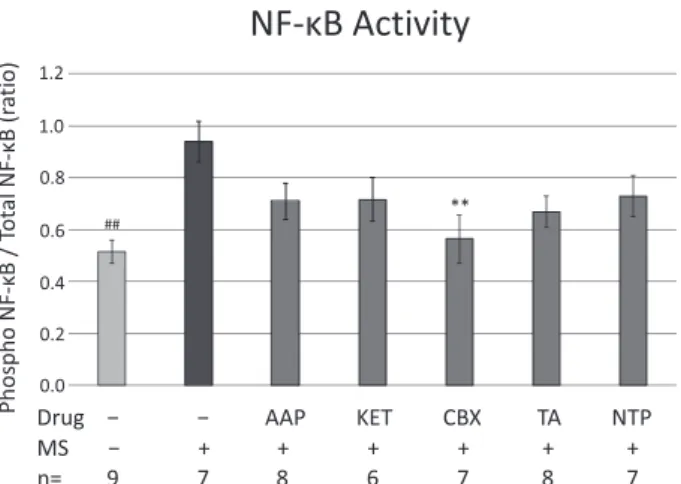
 The activation of transcription factor, NF- κ B, induces various inflammatory factors following exposure of SW982 cells to MS and anti-inflammatory analgesics for 48 hr, indicated by the ratio of phosphorylated NF- κ B to total NF- κ B (Fig. 2) . The ratio of phosphorylated NF- κ B to total NF- κ B in the MS group (0.937 0.078 ; n = 7) was higher than in the non-MS group (0.514 0.045 ; n = 9 ; P < 0.01) . In the celecoxib-treated group, a significant suppression in the ratio was observed (0.562 0.093 ; n = 8) , compared to the MS group (P < 0.01) . However, while

Fig. 1.   Effect of mechanical stress exposure on integrin α 5β 1 protein expression. Fluorescence

immunocytochemical staining of human synovial sarcoma (SW982) cells. Mechanical

stress for 48 hr (shake)vs. no mechanical stress (control) . Data in histogram represent

the mean standard error (n = 10) ; t test,

**

P < 0.01.

(5)

suppression was also induced by the other drugs, it was found to be not significant.

Effect of anti-inflammatory analgesics on MS-induced TNF- α level

 Figure 3 shows the levels of the inflammatory cytokine, TNF- α , is one of the most rapidly secreted in inflammation and powerful biological response mediators, in the medium after exposure of SW982 cells to MS and anti-inflammatory analgesics for 48 hr. The level of TNF- α was significantly increased in the MS group (5.140 0.521 pg/ml ; n = 12) compared to the non- MS group (2.534 0.245 pg/ml ; n = 13 ; P < 0.01) . In the acetaminophen- (2.445 0.407 pg/ml ; n = 12) , triamcinolone acetonide- (1,593 0.284 pg/ml ; n = 13) , and neurotrophin-treated (2.454

0.507 pg/ml ; n = 12) groups, this MS-induced increase was significantly suppressed (P < 0.05, P0.01 and P < 0.05, respectively) . Conversely, the concentration of TNF- α was significantly increased in the celecoxib-treated group (9.434 1.680 pg/ml ; n = 10 ; P < 0.01 vs. MS) .

Effect of anti-inflammatory analgesics on MS-induced MMP-3 level

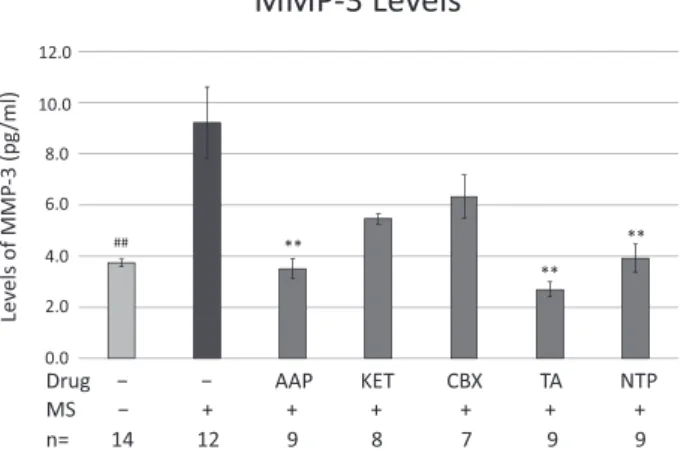
 Figure 4 shows the amount of MMP-3 product, a marker of joint destruction, in the culture medium following exposure of SW982 cells to MS and anti-inflammatory analgesics for 48 hr.

There was a significant increase in the MMP-3 level in the MS group (9.210 1.402 pg/ml ; n = 12) compared to the non-MS group (3.767 0.144 pg/ml ; n = 14 ; P < 0.01) . In the acetaminophen- ( 3.503 0.390 pg/ml ; n = 9) , triamcinolone acetonide- (2.703 0.292 pg/ml ; n = 9) , and neurotrophin-treated (3.921 0.547 pg/ml ; n = 9) groups, significant suppression of MMP-3 expression was observed, compared to MS alone (P < 0.01 for all) .

Fig. 2.   Effect of anti-inflammatory analgesics on MS-induced NF- κ B activation. SW982 cells (3 10

4

cells) were cultured in 6-well plates for 24 hr followed by exposure to 48 hr of MS in the absence or presence of each anti-inflammatory analgesic. Cell lysates were analyzed by the Instant One ELISA kit to determine the ratios of phosphorylated NF- κ B p65 to total NF- κ B p65. Data are expressed as pg/ml and represent the mean standard error (n = 7­

14) ;

**

P < 0.01,

##

P < 0.01 vs. MS. MS, mechanical stress ; NF- κ B, nuclear factor kappa B ;

SW982, human synovial sarcoma cell line ; AAP, acetaminophen ; KET, ketoprofen ; CBX,

celecoxib ; TA, triamcinolone acetonide ; NTP, neurotrophin.

(6)

Estimation of PGE

2

production after MS loading

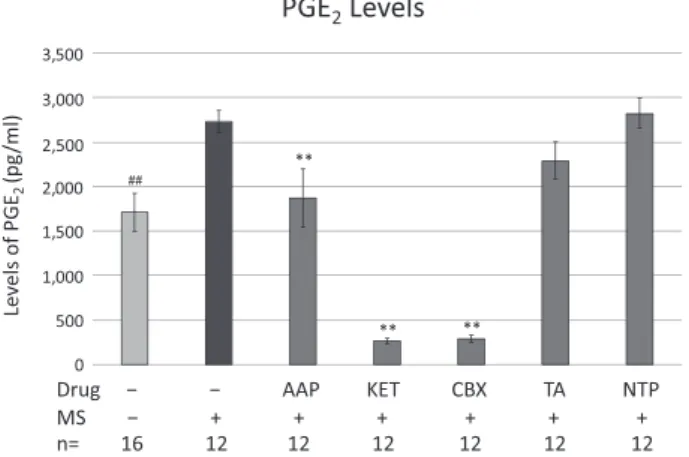
 Figure 5 shows PGE

2

production, which is pain-related, after SW982 cells were exposed to MS and anti-inflammatory analgesics for 48 hr. PGE

2

concentration in the medium was significantly increased by MS (MS, 2732.41 123.57 pg/ml ; non-MS, 1712.10 212.56 pg/ml ; n = 12, 9 ; P < 0.01) , and significantly decreased after MS by treatment with acetaminophen (1871.22 327.97 pg/

ml ; n = 12 ; P < 0.01) , ketoprofen (264.67 29.79 pg/ml ; n = 12 ; P < 0.01) , and celecoxib

(291.28 40.61 pg/ml ; n = 12 ; P < 0.01) .

Fig. 4.   Effect of anti-inflammatory analgesics on MS-induced MMP-3 level. SW982 cells (3 10

4

cells)

were cultured in 6-well plates for 24 hr followed by exposure to 48 hr of MS in the absence or presence of each anti-inflammatory analgesic. Supernatants were analyzed by ELISA using the Quantikine ELISA kit. Data are expressed as pg/ml and represent the mean standard error (n = 8­14) ;

**

P < 0.01,

##

P < 0.01 vs. MS. MS, mechanical stress ; MMP-3, matrix metalloproteinase-3 ; SW982, human synovial sarcoma cell line ; AAP, acetaminophen ; KET, ketoprofen ; CBX, celecoxib ; TA, triamcinolone acetonide ; NTP, neurotrophin.

Fig. 3.   Effect of anti-inflammatory analgesics on MS-induced TNF-α level. SW982 cells (3 10

4

cells)

were cultured in 6-well plates for 24 hr followed by exposure to 48 hr of MS in the absence

or presence of each anti-inflammatory analgesic. Supernatants were analyzed by ELISA using

the Quantikine ELISA kit. Data are expressed as pg/ml and represent the mean standard

error (n = 9­14) ;

**

P < 0.01,

P < 0.05,

#

P < 0.05 vs. MS. MS, mechanical stress ; TNF- α ,

tumor necrosis factor alpha ; SW982, human synovial sarcoma cell line ; AAP, acetaminophen ;

KET, ketoprofen ; CBX, celecoxib ; TA, triamcinolone acetonide ; NTP, neurotrophin.

(7)

Discussion

 OA is a chronic inflammatory disease with a long clinical course. In 2009, as an extrapolation of an epidemiological study in Japan, it was assumed that 25.3 million people aged 40 years and older, about one-fourth of the total Japanese population, would be affected by radiographic knee OA

12)

. It has been reported that chronic inflammation is caused by damage-associated molecular patterns, which are biomolecules released from injured tissues and cells

13)

. In OA, the microscopic debris resulting from the destruction of the cartilage become damage- associated molecular patterns, and as they accumulate, the friction inside the joint gradually increases, ultimately manifesting as chronic inflammation and promoting synovitis and cartilage destruction

14)

.

 The synovium contains various cells, such as osteoclasts, fibroblasts, macrophages, T cells, and B cells. The SW982 cells used in the present study are derived from fibroblasts and have been reported to be useful for analyses involving inflammatory cytokines and MMPs

15)

. Integrin α 5 β 1 is a membrane receptor protein that binds to the ECM and fibronectin and is expressed in the synovium

16,17)

.

 In the physiological state, articular cartilage is an avascular tissue, i.e., even under normal conditions it is in a low oxygen state compared to most other tissues

18)

. Oxygen partial pressure may further decrease due to MS or increased O

2

consumption caused by inflammation. It is known that hypoxia-inducible factor-1 α , activated by hypoxia, induces the expression of vascular endothelial growth factor and other vascular growth factors

19)

.

 Fibronectin is proteolyzed by MMP-3 and binds to integrin α 5β 1 on the cell surface, thereby activating tyrosine kinases such as integrin-linked kinase and focal adhesion kinase in cells.

Fig. 5.   Estimation of PGE

2

production after MS loading. SW982 cells (3 10

4

cells) were cultured in 6-well plates for 24 hr followed by exposure to 48 hr of MS in the absence or presence of each anti-inflammatory analgesic. Supernatants were analyzed by ELISA using the Quantikine ELISA kit. Data are expressed as pg/ml and represent the mean standard error

(n = 9­16) ;

**

P < 0.01,

##

P < 0.01 vs. MS. MS, mechanical stress ; PGE

2

, prostaglandin E

2

;

SW982, human synovial sarcoma cell line ; AAP, acetaminophen ; KET, ketoprofen ; CBX,

celecoxib ; TA, triamcinolone acetonide ; NTP, neurotrophin.

(8)

Fibronectin is therefore involved in cell proliferation, differentiation, and neovascularization in OA

20)

.  Thus, it is possible that activation of the integrin receptors on the cell membrane by MS triggers inflammation-induced signal transduction through NF- κ B, thereby enhancing TNF- α production and inducing MMP-3. TNF- α further increases inflammation by binding to TNF receptors on the cell membrane. Furthermore, it is thought that MS activates the arachidonic acid cascade by modulating the conformation of membrane phospholipids to increase the accessibility of phospholipase A

2

to its substrate phospholipids and promotes the production of PGE

2

.

 The antipyretic analgesic, acetaminophen, activates the descending pain modulatory system. It has both an analgesic effect and a weak cyclooxygenase (COX) antagonism, but the detailed mechanism remains unknown

21)

. In clinical practice, the use of acetaminophen is relatively safe for elderly patients, who often have prescriptions for multiple drugs to treat lifestyle- related diseases and cardiovascular diseases. Ketoprofen and celecoxib, which are non- steroidal anti-inflammatory drugs (NSAIDs) , inhibit the activity of COX and synthesis of PGs

(especially PGE

2

, which is an agent for enhancing inflammation and pain) in the arachidonic acid cascade

22)

. They are known to exhibit analgesic, antipyretic, and anti-inflammatory effects.

Ketoprofen is mainly used in pain relief topical patches in Japan, and its effectiveness has been clinically evaluated

23)

. Celecoxib demonstrates COX-2 selective inhibitory activity when administered orally and possesses the advantage of reducing gastrointestinal disturbances that may occur as a side effect of NSAIDs. Triamcinolone acetonide, a corticosteroid, inhibits the activation of mitogen-activated protein kinase and suppresses the activation of phospholipase A

2

, thereby suppressing the release of arachidonic acid, and the activity of activator protein-1 and NF- κ B. Moreover, it inhibits the production of COX-2, inducible nitric oxide synthase and many other cytokines and chemokines, thus exhibiting strong anti-inflammatory properties

24-26)

. The analgesic adjuvant (biological tissue extract) neurotrophin is a non-opioid, non-COX inhibiting, descending pain inhibitory system-activated pain therapeutic agent. Its mechanism of action has not yet been elucidated, but it is also effective against pain, such as neuralgia, and is used clinically in Japan

27)

.

 The MS-induced inflammatory state of SW982 resembles the inflammatory state in human

joints. Therefore, in this study, we compared the effects of five kinds of clinical anti-

inflammatory analgesics on MS-induced inflammation in SW982 cells. We found that the

transcription factor, NF- κ B, was significantly suppressed only by celecoxib treatment. This finding

can be explained by the fact that transcription factors other than NF- κ B, for example, CCAAT-

enhancer-binding protein β , are involved in the anti-inflammatory mechanism of other drugs. In

chondrocytes of OA, substrate degradation is thought to occur by various cytokines, including

IL-1 β and TNF- α

28)

. Some reports indicate that the expression of inflammatory cytokines and

substrate-degrading enzymes is induced by excessive MS on chondrocytes

3,29)

. CCAAT-enhancer-

binding protein β is induced by stimulation of inflammatory signals such as IL-1b and TNF- α ;

moreover, it triggers the expression of MMP-1, -3, -13, vascular endothelial growth factor, and

receptor activator of NF- κ B ligand, among others. As it is a transcription factor, it participates

in various pathological processes, including inflammation, enhancement of substrate-degrading

(9)

enzymes, suppression of cartilage matrix protein, and hypertrophy of osteocytes

30)

.

 In contrast to our observed results with NF- κ B, the inflammatory cytokine, TNF- α , and the joint destruction marker, MMP-3, were significantly suppressed by acetaminophen, triamcinolone acetonide, and neurotrophin treatment. PGE

2

was significantly inhibited in the acetaminophen, ketoprofen, and celecoxib treatment groups. As expected, celecoxib exhibited a potent analgesic activity, and it strongly inhibited PGE

2

. However, TNF- α responded to celecoxib in an opposite manner to the other drugs. Therefore, we cannot exclude the possibility that celecoxib has an inflammation-spreading effect per se. Based on the above findings, and the data in Table 1, NSAIDs have robust analgesic effects, but weak anti-inflammatory and joint destruction suppression properties. Conversely, triamcinolone acetonide and neurotrophin exert a weak analgesic effect via PGE

2

suppression, but their anti-inflammatory and joint destruction inhibitory effects are considered reliable. Our results indicate that acetaminophen significantly inhibited markers of pain, inflammation, and joint destruction in a well-balanced manner. This suggests the possibility that acetaminophen could be useful for relieving arthritis symptoms in OA.

 According to the evidence-based expert consensus guidelines formulated in 2012 by the Osteoarthritis Research Society International, it is strongly recommended that treatment of knee OA involves a combination of drug and non-drug therapy. For non-drug therapy, several approaches, including gait, muscle strengthening, joint range exercise training, and weight loss, are supported by strong evidence and should, therefore, be encouraged

31-33)

. However, if the patient exhibits pain, non-drug therapy cannot be carried out to the required degree. The muscular strength of the patient reduces, causing a burden on the joint and subsequent inflammation, leading to further pain in a vicious cycle.

 Therefore, pain management is critical and is treated with acetaminophen, NSAIDs, and similar drug therapies. Each drug, having its advantages and disadvantages, is selected according to the experience of the prescribing physician. For pain and inflammation, the guideline recommends using anti-inflammatory analgesics for OA patients.

 As indicated previously, while NSAIDs are recommended for OA, their side effects should be monitored closely. In this regard, acetaminophen, another anti-inflammatory analgesic, should be used besides NSAIDs. Acetaminophen is considered a relatively safe drug, and it can generally be used for elderly patients. Dosages of up to 4 g/day are safe and effective as oral medicine,

Table 1.  Effect of various anti-inflammatory analgesics on markers of inflammation

TNF- α MMP-3 PGE

2

Acetaminophen ↓ ↓↓ ↓↓

Ketoprofen ↓↓

Celecoxib ↑↑ ↓↓

Triamcinolone acetonide ↓↓ ↓↓

Neurotrophin ↓ ↓↓

Significant differences are indicated by arrows. For↓↓ or↑↑ , P < 0.01 ; for ↓, P < 0.05. PGE

2

,

prostaglandin E

2

; TNF- α , tumor necrosis factor alpha ; MMP-3, matrix metalloproteinase-3.

(10)

but caution is required against liver dysfunction, which is dose-dependent. In contrast, oral NSAIDs may cause severe complications including peptic ulcers, gastrointestinal perforation, and bleeding

31)

. Therefore, in Japan, NSAIDs are often used in pain relief topical patches because they have few side effects in this form. Intra-articular injection of adrenal corticosteroids may be used mainly for patients for whom oral medications are not effective, although safety data are limited ; hence, four or more treatments in a year are not usually recommended

31)

. For celecoxib, the same analgesic effects as those seen with nonselective NSAIDs, as well as alleviation of gastrointestinal disorders, have been observed. However, there have been no studies recommending administration methods, while accounting for adverse events and complications

34)

. Therefore, due attention is required for the dosage and administration interval of celecoxib.

 The results of the present study suggest that using acetaminophen to suppress inflammation, pain, and joint destruction may be effective in alleviating MS-induced inflammation.

Acknowledgments

 Haruna Shirako, who is independent of the commercial funder, had full access to all the data and is responsible for the integrity of the data and analyses.

Conflict of Interest Disclosure

 The authors have no financial conflicts of interest to disclose concerning this study.

References

1) Aigner T. Osteoarthritis. Curr Opin Rheumatol. 2007;19:427-428.

2) Tiku ML, Sabaawy HE. Cartilage regeneration for treatment of osteoarthritis: a paradigm for nonsurgical intervention. Ther Adv Musculoskelet Dis. 2015;7:76-87.

3) Sellam J, Berenbaum F. The role of synovitis in pathophysiology and clinical symptoms of osteoarthritis. Nat Rev Rheumatol. 2010;6:625-635.

4) Felson DT. Osteoarthritis as a disease of mechanics. Osteoarthritis Cartilage. 2013;21:10-15.

5) Kapoor M, Martel-Pelletier J, Lajeunesse D, et al. Role of proinflammatory cytokines in the pathophysiology of osteoarthritis. Nat Rev Rheumatol. 2011;7:33-42.

6) Sato K, Suematsu A, Okamoto K, et al. Th17 functions as an osteoclastogenic helper T cell subset that links T cell activation and bone destruction. J Exp Med. 2006;203:2673-2682.

7) McInnes IB, Schett G. The pathogenesis of rheumatoid arthritis. N Engl J Med. 2011;365:2205-2219.

8) Smolen JS, Aletaha D, McInnes IB. Rheumatoid arthritis. Lancet. 2016;388:2023-2038. Erratum in: Lancet. 2016.

9) Tanaka M, Masuko-Hongo K, Kato T, et al. Suppressive effects of hyaluronan on MMP-1 and RANTES production from chondrocytes. Rheumatol Int. 2006;26:185-190.

10) Kobayashi Y, Udaka Y, Shirako H, et al. Establishment of mechanical stress load arthritis model in a human synovial sarcoma cell line. Showa Univ J Med Sci. 2018;30:63-72.

11) Mori H, Nakanishi T. Signal transduction of inflammatory synoviocytes in rheumatoid arthritis. Yakugaku Zasshi.

2008;128:263-268. (in Japanese) .

12) Yoshimura N, Muraki S, Oka H, et al. Prevalence of knee osteoarthritis, lumbar spondylosis, and osteoporosis in

(11)

Japanese men and women: the research on osteoarthritis/osteoporosis against disability study. J Bone Miner Metab.

2009;27:620-628.

13) Medzhitov R, Janeway CA Jr. Decoding the patterns of self and nonself by the innate immune system. Science.

2002;296:298-300.

14) Liu-Bryan R. Synovium and the innate inflammatory network in osteoarthritis progression. Curr Rheumatol Rep.

2013;15:323.(accessed 2017 November 14) Available from: https://www.ncbi.nlm.nih.gov/pmc/articles/PMC3643293/

pdf/nihms458446.pdf

15) Mihara M, Nishimoto N, Ohsugi Y. The therapy of autoimmune diseases by anti-interleukin-6 receptor antibody.

Expert Opin Biol Ther. 2005;5:683-690.

16) Miura Y. Functions of integrins on rheumatoid arthritis. Clin Rheumatol Relat Res. 2007;19:204-206.

17) Pulai JI, Del Carlo M Jr, Loeser RF. The alpha5beta1 integrin provides matrix survival signals for normal and osteoarthritic human articular chondrocytes in vitro. Arthritis Rheum. 2002;46:1528-1535.

18) Lund-Olesen K. Oxygen tension in synovial fluids. Arthritis Rheum. 1970;13:769-776.

19) Lin C, McGough R, Aswad B, et al. Hypoxia induces HIF-1alpha and VEGF expression in chondrosarcoma cells and chondrocytes. J Orthop Res. 2004;22:1175-1181.

20) Brown RA, Weiss JB. Neovascularisation and its role in the osteoarthritic process. Ann Rheum Dis. 1988;47:881-885.

21) Mallet C, Barriere DA, Ermund A, et al. TRPV1 in brain is involved in acetaminophen-induced antinociception.

PLoS One. 2010;5:e12748. (accessed 2017 November 14) Available from: https://www.ncbi.nlm.nih.gov/pmc/articles/

PMC2941447/pdf/pone.0012748.pdf

22) Vane JR, Bakhle YS, Botting RM. Cyclooxygenases 1 and 2. Annu Rev Pharmacol Toxicol. 1998;38:97-120.

23) McAlindon TE, Bannuru RR, Sullivan MC, et al. OARSI guidelines for the non-surgical management of knee osteoarthritis. Osteoarthritis Cartilage. 2014;22:363-388.

24) Jonat C, Rahmsdorf HJ, Park KK, et al. Antitumor promotion and antiinflammation: down-modulation of AP-1

(Fos/Jun) activity by glucocorticoid hormone. Cell. 1990;62:1189-1204.

25) Newton R, Kuitert LM, Slater DM, et al. Cytokine induction of cytosolic phospholipase A

2

and cyclooxygenase-2 mRNA is suppressed by glucocorticoids in human epithelial cells. Life Sci. 1997;60:67-78.

26) Ray A, Prefontaine KE. Physical association and functional antagonism between the p65 subunit of transcription factor NF-kB and the glucocorticoid receptor. Proc Natl Acad Sci USA. 1994;91:752-756.

27) Tomoshi M, Ryohei O, Hiroyuki Y, et al. Comparison of pharmacological action of neurotropin and nonsteroidal anti-inflammatory drugs on chronic inflammatory pain in adjuvant-induced arthritic rat. PAIN RES. 2007;22:171-177.

(in Japanese) .

28) Tetlow LC1, Adlam DJ, Woolley DE. Matrix metalloproteinase and proinflammatory cytokine production by chondrocytes of human osteoarthritic cartilage: associations with degenerative changes. Arthritis Rheum.

2001;44:585-594.

29) Guilak F, Fermor B, Keefe FJ, et al. The role of biomechanics and inflammation in cartilage injury and repair.

Clin Orthop Relat Res. 2004;423:17-26.

30) Tsushima H, Okazaki K, Hayashida M, et al. CCAAT/enhancer binding protein beta regulates expression of matrix metalloproteinase-3 in arthritis. Ann Rheum Dis. 2012;71:99-107.

31) Zhang W, Moskowitz RW, Nuki G, et al. OARSI recommendations for the management of hip and knee osteoarthritis, partⅠ : critical appraisal of existing treatment guidelines and systematic review of current research evidence. Osteoarthritis Cartilage. 2007;15:981-1000.

32) Zhang W, Moskowitz RW, Nuki G, et al. OARSI recommendations for the management of hip and knee osteoarthritis, part Ⅱ : OARSI evidence-based, expert consensus guidelines. Osteoarthritis Cartilage. 2008;16:137-162.

33) Zhang W, Nuki G, Moskowitz RW, et al. OARSI recommendations for the management of hip and knee

osteoarthritis: part Ⅲ : changes in evidence following systematic cumulative update of research published through

(12)

January 2009. Osteoarthritis Cartilage. 2010;18:476-499.

34) Kirwan JR, Bijlsma JW, Boers M, et al. Effects of glucocorticoids on radiological progression in rheumatoid arthritis. Cochrane Database Syst Rev. 2007;24:CD006356. (accessed 2017 October 17) Available from: https://www.

cochranelibrary.com/cdsr/doi/10.1002/14651858.CD006356/epdf/full

[Received November 14, 2018 : Accepted December 21, 2018]

Fig. 1.   Effect  of  mechanical  stress  exposure  on  integrin  α 5β 1  protein  expression
Fig. 2.   Effect  of  anti-inflammatory  analgesics  on  MS-induced  NF- κ B  activation
Fig. 3.   Effect  of  anti-inflammatory  analgesics  on  MS-induced  TNF-α   level.  SW982  cells  (3 10 4   cells)
Fig. 5.   Estimation  of  PGE 2   production  after  MS  loading.  SW982  cells  (3 10 4   cells)   were  cultured  in  6-well  plates  for  24 hr  followed  by  exposure  to  48 hr  of  MS  in  the  absence  or  presence  of  each  anti-inflammatory  anal
+2

参照

関連したドキュメント

We observed that gemcitabine induced senescence phenotypes characterized by enhanced senescence-associated β-galactosidase (SA β-Gal) staining and increased expression

PBMC from the patient did not produce HO-1 even when they were stimulated by an optimum concentration of cadmium, further indicating that the patient has a genetic abnormality in

NELL1 (a) and NELL2 (b) mRNA expression levels in renal cell carcinoma cell lines OS-RC-2, VMRC-RCW, and TUHR14TKB and control HEK293T cells were analyzed using quantitative

To mimic RAGE-dependent tumor malignant behaviors and assess the inhibitory effects of papaverine, the present study used an established human fibro- sarcoma cell line HT1080

Accordingly, our results showed that kahweol acetate and cafestol inhibited the proliferation and migration of both ACHN and Caki-1 cells, with their synergistic effects apparent

The immunostaining with two monoclonal anti-phosphorylated α-synuclein antibodies and a monoclonal anti-aggregated α-synuclein antibody revealed Schwann cell cytoplasmic in-

However, VPA prevented the morphological changes characteristic for activation and inhibited the expres- sion of collagen type 1 α 1 (COL1A1) and TGF- β 1 in activated LI90 cells

学位授与番号 学位授与年月日 氏名