
URLにおける数字パターンとその派生
6
0
0
全文
(2) 情報処理学会研究報告 IPSJ SIG Technical Report. Vol.2011-GN-78 No.1 2011/1/21. 2. Introduction. 3. Name and Purpose of 1M project. I look for different approach of creating the classification. I believe that url itself contains more information than just a locator to a resource. I do look into the syntax of an url and try to extract the information, which do url contains aside. I could find certain things that are repeating in hyperlinks. But not literary. In certain patterns. I want to search for these patterns. Identify them, describe them and quantify their frequency. For this purpose I use program called Sumid. The patterns have another interesting consequence. In the Internet there is a lot of resources, which cannot be accessed from another resource via hyperlink. You can retrieve them only when you know exact url. Also there are resources, which are accessible in standard ways, but they could be also accessible in different ways. And it could be beneficial to access them in another way. Pattern could be helpful in accessing the resource in other way. That means pattern could help us discover previously unknown resources. The easiest example of a pattern is the numeric pattern.. Name 1M project is inspired by Operational research. In simplex algorithm is in some cases used so called "M-number". M-number is generally a big number. So 1M project goal is to go trough 1M of hyperlinks [Currently I set M to 2500, but I aim to much higher number.]. Word "project" implies that 1M project is just a part of "The Analysis of possibility patterns appearance in url". In motivation I state without any proof that many urls do contain a pattern based just on my observation. 1M project is my way how to get a broader base for my next steps. Of course it is still an observation, but done in larger scale. It is suitable for statistics, but still it is not a proof. So I do not claim to either confirm or deny any ideas proposed in motivation. Primary purpose is to get an insight, how hypothesis of "The Analysis of possibility patterns appearance in url" work for the simplest pattern.. 4. Input data. 2.1. Research questions:. For my analysis I have to collect input data fist, a list of links. Due to need of large amount of hyperlinks I decided to use an automatic way of their collection. I also prefer a variety of hyperlinks. So the traditional crawler, looping over a page and collecting all urls that it could find, wouldn't suit my purpose. After observing some possibilities I decided to use a web-service provided by digg.com. Digg is kind of a social network. It collects resources in web based on user preferences. If a reader considers a web page useful, he diggs it. The more diggs the page receives, the more useful is considered and the more is recommended to other users. With this approach I'll receive data various enough. These data do already carry some signs of behavior of users in the Internet. Thus my input data are not random.. How often we could identify a numeric pattern in a url? How often could change in url according to pattern lead to different resource?. 2.2. Hypothesis: The numeric pattern can be identified in url very often. In several cases modification of url can lead to a different resource.. 2. ⓒ 2011 Information Processing Society of Japan.
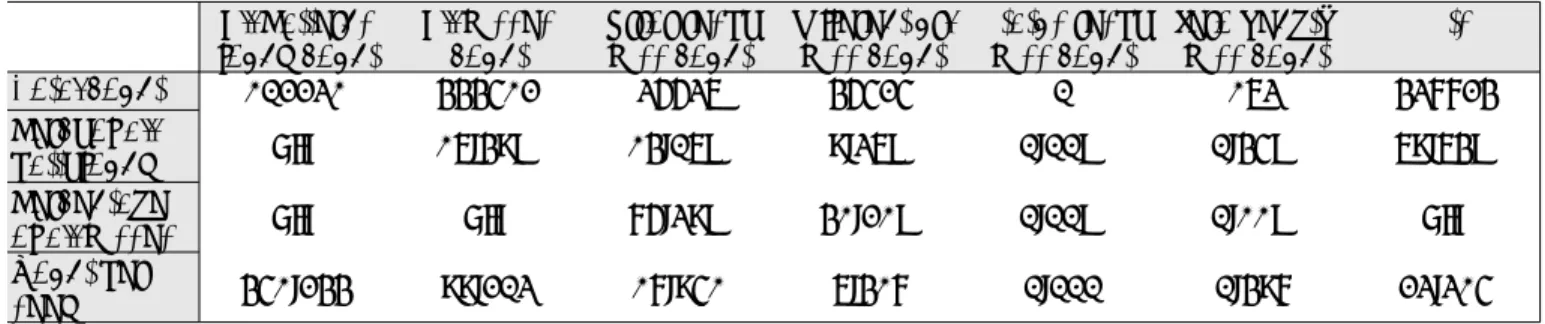
(3) 情報処理学会研究報告 IPSJ SIG Technical Report. Vol.2011-GN-78 No.1 2011/1/21. I have to consider the question, if my input data shall be random or not. Different input data will produce different outputs. I will find different frequency of pattern occurrence. It is impossible to search through the whole Internet. So I always have to Table 1: Counts of hits select certain subset. I consider better to frequency go for preselected subset. Count of hits Frequency Internet is ever-changing, but I want to keep my input data stable in order to 0 1103 have comparable results every time I run the analysis. This brings an issue that 1 914 linklist is getting old and many >1 471 hyperlinks do not work anymore. >2000 73 The issue is illustrated by the table on left. From 2500 hyperlinks more than 1100 is already obsolete.. employ limits of count of pattern modification for each pattern concurrence as well as per seed. [If the limit to url modification by pattern is set to 50, it applies to 2% of all patterns.] Verification of existence resource with seems like trivial matter, the resource either exists or not. I do call the result of operation for every particular newly created url hit or miss. But in real world servers do response in various ways. The non-triviality of a decision between hit and miss was for me the biggest surprise in the 1M project. The easiest variant of server response is an error response. When server returns a response 4xx or 5xx, I can easily state that result is a miss. But not always server returns clear status response and often returns OK even if requested resource does not exist. With resources that are of an different MIME type than a hypertext, I can easily uncover miss with checking MIME type. For hypertext this rule unfortunately does not work, because the incorrect response is always hypertext. I also observe many cases when a url returned resource differs from resource requested. Usually this means that I was redirected from the requested page to some common page, which is doubtlessly a miss.. 5. Sumid operation. The core of 1M project is conducted with my own program called Sumid. I take every url from linklist as a seed. First I search trough it, if it contains a pattern. Then I modify each pattern occurrence. I get a Table 2: Different kinds of misses new url by that method. I verify if this url leads to another resource. This table illustrates how are the misses structured. Please note that no Then I change the url again. miss was identified from the http status response. I can find the pattern instance at multiple places in one hyperlink and each instance modify multiple times. Thus for each seed I can get thousands of All Patterns All misses Error resp. Different url Status resp. zero Length Hits newly created hyperlinks to verify. This found count count miss count miss count miss count miss count makes the procedure very time Total count 307793 111237 95596 15272 0 369 198871 demanding. I have to employ certain Perc. of all N/A 36,14% 31,06% 4,96% 0,00% 0,12% 64,61% technical constraints. First I stop patt. found modification of a pattern concurrence Percentage N/A N/A 85,94% 13,73% 0,00% 0,33% N/A of all misses after some verification negative results. Count per 123,711 44,709 38,423 6,138 0,000 0,148 79,932 But this is not sufficient. So I have to seed 3. ⓒ 2011 Information Processing Society of Japan.
(4) 情報処理学会研究報告 IPSJ SIG Technical Report. Vol.2011-GN-78 No.1 2011/1/21. But in some cases that could mean that I received another full sensible resource. When I mark all responses with url different from the requested one as misses I might loose a few hits, but generally I avoid counting misses as hits. So far I have no method how to decide most accurately, when url in response differs from requested one. Last category of misses I found so far is a server response with zero sized reply. Doubtlessly a miss. When none of rules mentioned above does not apply to the server response I consider the response to be hit. This is not accurate, because some of the misses could bypass these filters. But it gives me statistically small enough error.. 6.1. Outputs and Statistics for M=2500 As was already stated Sumid currently operates with quantity of hyperlinks around 2500. The aim is to get the quantity of higher-order number. The minimal computation time for M=2500 is ca 8 hours. But in different configurations might exceed several days. The main cause of the length of the computation is the request response/time. Taken into account 100 modifications per url (123 shown in table below), we get 250000 request/responses for this quantity. But with the limiting value it would be 2.5 milion. Sum of just request/response time for M=2500 is about 20 hours. But in multithreaded environment is possible to to whole computation in cca 8 hrs. The sum of content-length is several gigabytes. The maximal speed of computation is 330 seeds per hour, but doesn't grow lineary. Some of the results of computation with M=2500 were already shown in table2. Following table shows the rest of the results.. 6. Output data Based on what is for me the result operation I define also overall outputs. Basically I do categorize and quantify server responses for modified urls. I do count how many patterns I found (or actually how many modifications I did). Certainly I count how many times a url modification led to hit. For misses I do count all particular kinds of misses. This helps me produce the statistics. I also can save to disk the resources which I received as a response from servers in order to check results manually.. Table 3: Verification of modified urls. This table clearly show that simple average is insufficient to assess the pattern occurrence in url. Median gives better insight. Also is important to filter out the hyperlinks which are already obsolete.. Graph of hits 3000. Total count Average per seed Median per seed Average per seed (hit>1) Median per seed (hit>1). Count of hits. 300. 30. 3. 0,3. 4. Individual seeds. Pattern Found 307793. Pattern NOT found 407. Hits. Misses. 198871. 111237. 123,711. 0,164. 79,932. 44,709. 8. 1 420,291 49. ⓒ 2011 Information Processing Society of Japan.
(5) 情報処理学会研究報告 IPSJ SIG Technical Report. Vol.2011-GN-78 No.1 2011/1/21. 6.2 Histograms of hits and modifications. 7. Manual miss check As I mentioned before, it is not trivial to make a difference between hit and miss. But that applies only to a programmatic way to make the difference. There is also another way. Simply open the seed url and modified url in web browser and I'll see instantly if result is hit or miss. Or in other words - manual miss check. This is basically the way how did I develop the filters for misses. But this way has one limitation. It cannot be used in large scale. I picked several hyperlinks processed by Sumid and checked manually if the results generated by Sumid are accurate. From this point of view I could divide the hyperlinks in two categories. The hyperlinks, which do contain only one pattern occurrence were assessed accurately by Sumid. The hyperlinks which do contain more than one pattern occurrence showed various results. Some were assessed correctly in all pattern occurrences. Others marked misses as hits in one pattern occurrence and were correct in another. In some cases was Sumid's assessment completely incorrect.. Hits histogram. Hit frequency. 50. 5. 6 90 174 258 342 426 510 594 678 762 846 930 1014 1098 1182 1266 1350 1434 1518 1602 1686 1770 1854 1938 2022 2106 2190 2274 2358 2442 2526 2610 2694. 0,5. Hits count. 8. Issues and challenges Histogram of modifications count. First issue is that this analysis does focus only on one kind of pattern, numeric. Aside the results I got for numeric pattern I don't have similar data for any other pattern. Further challenge is to find, describe and quantify another patterns. I also referred about in-triviality of deciding between hit and miss. The challenge here is to observe the results and make the decision more accurate. Among technical issues is most prominent the performance of the analysis. Every response takes some time, which has tremendous impact, when I sending requests in large scale. This leads to small number M and the statistics is not as good as it could be. Also I running into issues with keeping the same linklist for long time and also more generally which set of hyperlinks I should include in it.. 20. 2. 0,2 5 95 185 275 365 455 545 635 725 815 905 995 1085 1175 1265 1355 1445 1535 1625 1715 1805 1895 1985 2075 2165 2255 2345 2435 2525 2615 2705 2795. Modification frequency. 200. Modification count 5. ⓒ 2011 Information Processing Society of Japan.
(6) 情報処理学会研究報告 IPSJ SIG Technical Report. Vol.2011-GN-78 No.1 2011/1/21. 9. Conclusion I certainly could say that numeric pattern is important component of an url. With numeric pattern found in almost every url and with one fifth of urls whose modification leads to discovery of another resource, I consider research questions answered and the hypothesis of this article confirmed. It also shown some interesting points like decision issues between hit and miss and unexpected count of url seeds with more than 2000 hits. It also clearly points out the further challenges and ways to direct further research on this topic.. 10. References [1] Cun-He, Li; Ke-qiang, Lv Hyperlink classification: A new approach to improve PageRank IEEE COMPUTER SOC (2007) [2] Roman Hujer The Analysis of possibility patterns appearance in a Uniform resource locator. CTU in Prague (2009). 11. Used software Debian GNU/Linux 6.0 squeeze Sumid 0.25 Eclipse SDK 3.6.0 PyDev 1.6.2 OpenOffice.org 3.2.1. 6. ⓒ 2011 Information Processing Society of Japan.
(7)
図

関連したドキュメント
In our previous papers, we used the theorems in finite operator calculus to count the number of ballot paths avoiding a given pattern.. From the above example, we see that we have
This paper presents an investigation into the mechanics of this specific problem and develops an analytical approach that accounts for the effects of geometrical and material data on
While conducting an experiment regarding fetal move- ments as a result of Pulsed Wave Doppler (PWD) ultrasound, [8] we encountered the severe artifacts in the acquired image2.
In the proofs of these assertions, we write down rather explicit expressions for the bounds in order to have some qualitative idea how to achieve a good numerical control of the
But in fact we can very quickly bound the axial elbows by the simple center-line method and so, in the vanilla algorithm, we will work only with upper bounds on the axial elbows..
Above the peak gain frequency, the input impedance of the resonant network is inductive and the input current of the resonant network (I p ) lags the voltage applied
Changing valley as the load decreases is a way to limit the maximum switching frequency in QR power supplies. Lots of equations to predict the efficiency of the power supply,
C ontinuing to learn during this pandemic has been a challenge for all OIS students, but every day I have been impressed by the strength of their unstoppable ‘will to learn'. It
