論 文
Hebrew Verbs in Dependency Morphology
Thomas GROSS
要 旨
この論文では,現代ヘブライ語動詞の形態論を論じる。ヘブライ語は,
セム語派の言語で,その語族の共通する特徴は非連成的造語法である。本
文では,現代ヘブライ語動詞を依存形態論から見る。依存形態論は,過程
を元にせず,部分を認めるが,表面構造を記述する学説なので,形態素で
はなく,素形態を認める。ヘブライ語のような言語に関して,依存形態論
は語根と接超辞を部分(素形態)と見なし,部分が依存関係でつながって
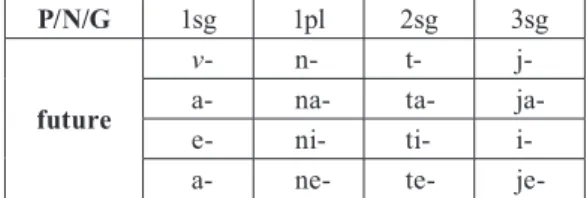
いるとする。本文では,現代ヘブライ語動詞の造語法に必要な接頭辞,接
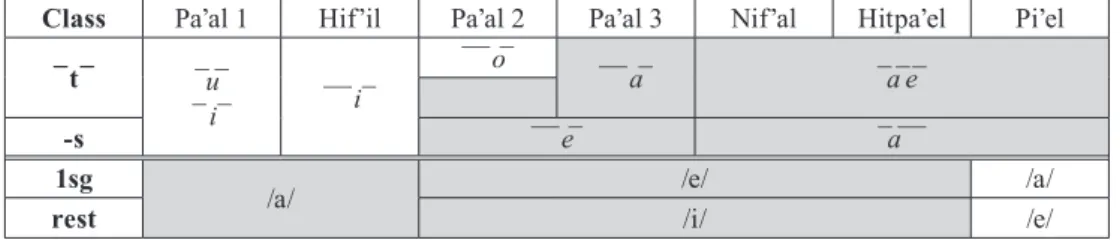
中辞,接超辞,接尾辞を紹介し,現代ヘブライ語動詞の分類を設ける。本
文で述べる研究内容はイスラエルのテル・アビブ大学で調べたもので,愛
知大学の海外研修の成果によるものである。
Keywords: dependency morphology, infix, Modern Hebrew, radical, transfix, verb
キーワード:依存形態論,現代ヘブライ語,語根,接中辞,接超辞,動詞
1 Overview
Hebrew is known as a language with non-concatenative morphology (Berman 1978, 1987; Bolozky 1978; Schwarzwald 1981; Goldenberg 1985). The current account assumes, based on a number of authors (Ornan 1983; Bat-El 1986; McCarthy 1981; McCarthy &
Prince 1986; Yip 1988; Faust & Hever 2010; etc.) that roots and patterns constitute
distinct meaning-bearing entities.
1) Nevertheless, the literature rejecting the root-pattern
approach is substantial (Bolozky 1978, 1999; Horvath 1981; Lederman 1982; Bat-El 1994,