Surface Chemical Reactions of Mesoporous Metal Oxides for
Environmental and Energy Systems
July 2013
Mohamed Khairy Mohamed ABOELALLA
Surface Chemical Reactions of Mesoporous Metal Oxides for
Environmental and Energy Systems
July 2013
Waseda University
Graduate School of
Advanced Science and Engineering Department of Nanoscience and
Nanoengineering
Research on Nano-device
Mohamed Khairy Mohamed ABOELALLA
MEMBERS OF THE DISSERTATION JURY
1- Professor Hiroshi Kawarada
Professor Nano-Science & Nano-engineering, Waseda University
2- Professor Shuichi Shoji
Professor Nano-Science & Nano-engineering, Waseda University
3- Professor Takanobu Watanabe
Professor Nano-Science & Nano-engineering, Waseda University 4- Professor Sherif A. El-Safty
Professor Nano-Science & Nano-engineering, Waseda University
II
ACKNOWLEDGEMENT
Sincere gratitude is expressed to my supervisor, PProfessor Sherif A. El Safty, for his professional guidance and continuous encouragement throughout my thesis work. His dedication and enthusiasm for scientific research is unsurpassed, and his vast knowledge and incisive insight have been inspiring. I sincerely thank my supervisor for his support in both research work and other aspects.
At the same time, I wish to express my thanks to Dr. Mohamed Ismael and Dr. Mohamed A. Shenashen, for their assistance during the experiments and helpful discussions. In addition, I would like to thank my colleagues, Ms. Ryoko Onizawa for here great assistance.
Finally, I would like to express my gratitude to the National Institute for Materials Science for providing me a research scholarship to pursue this degree.
Before all, thanks to Allah for finishing this important step in all my life
Mohamed Khairy
III
LIST OF ABBREVIATIONS
A
AAM Anodic alumina membrane
ALD Atomic Layer Deposition APTMS 3-Aminopropyltrimethoxysilane APMS Amino propyl trimethoxy silane
o-AP o-Aminophenol
o-ATP o-Aminothiophenol α-Amy α-Amylase
C
CVD Chemical Vapor Deposition
CytC Cytochrome C
CTAB Cetyltrimethyl ammonium bromide CHES 2-(Cyclohexylamino) ethane sulfonic acid CAPS N-cyclohexyl-3-aminopropane sulfonic acid D
DSAHMP 4,5-Diamino-6-hydroxy-2-mercaptopyrimidine
DZ Diphenylthiocarbazone
CS-DAT N-Dodecyl-N,N-dimethyl-1-dodecanaminium bromide DTA Differential thermal analyses
E
EG Ethylene glycol
Kc Equilibrium constant
IV
ΔH Enthalpy
EDS Energy-dispersive X-ray spectroscopy G
ΔG Gibbs Free energy
H
k Heterogeneous catalytic reaction HMDS Hexamethyldisilazane
Hb Hemoglobin
HEPES N-2-Hydroxyethylpiperazine-N-2-ethanesulfonic acid I
Ins Insulin
M
MPTMS 3-Mercaptopropyltrimethoxysilane
Mb Myoglobin
My Myosin
MOPS 3-Morpholinopropane sulfonic acid P
PEO Polyethylene oxide
P123 Pluronic
PEI Polyethyleneimine
Brij 98 polyoxyethylene(20) oleyl ether S
NaAc Sodium acetate
SEM Scanning electron microscopy
V SAXS Small angle X-ray scattering
STEM Scanning transmission electron microscopy T
TEOS Tetraethyl-orthosilicate TMOS Tetramethyl-orthosilicat
TEM Transmission electron microscopy TGA Thermogravimetric analysis
W
WXRD Wide angle X-ray diffraction X
XPS X-ray photoelectron spectroscopy
VII
TABLE OF CONTENTS
ACKNOWLEDGEMENT III
LIST OF ABBREVIATIONS IV
TABLE OF CONTENT VII
CCHAPTER 1
GENERAL INTRODUCTION 1.1.Preparation s of porous metal oxides 3
1.1.1. Preparation of porous metal oxides using soft template 3
1.1.2. Preparation of porous metal oxides using hard template 9
1.1.3. Nanoparticle self-assembly 11
1.1.4. Template-free methods 11
1.2.Application of porous metal oxides 12
1.2.1. Catalysis 13
1.2.2. Adsorption and separation 14
1.2.3. Sensing applications 16
1.2.3.1. Gas sensor 16
1.2.3.2. Chemosensor 17
1.2.3.2.1. Fabrication of solid mesoporous carrier. 18
1.2.3.2.2. Surface activation 18
1.2.3.2.3. Optical sensing 18
VIII
1.2.3.2.4. Advantage of optical mesoporous sensor 20
1.2.4. Electrochemical applications 23
1.2.4.1. Electrochemical sensors 23
1.2.4.2. Electrochemical Energy storage devices 24
1.2.4.3. Energy conversion 26
1.3.References 27
CCHAPTER 2
EXPERIMENTAL SECTION 2.1.Materials 32
2.2.Fabrication of mesoporous metal oxides and control experiment 2.2.1. Mesoporous nickel oxides with hexagonal nanoplatelet mosaics 33
2.2.2. Mesoporous nickel oxides with flower-like morphology 33
2.2.3. Mesoporous nickel oxides with sphere-like morphology 33
2.2.4. Mesoporous nickel oxides with rectangular nanoplatelet 34
2.2.5. Fabrication of magnetic mesoporous Fe3O4 nanoparticles 34
2.2.6. Mesoporous nickel oxides with rose-like morphology 34
2.2.7. Microwave -assisted synthesis of NiO nanoflakes. 35
2.2.8. Microwave -assisted synthesis of hexagonal NiO nanoplatelets. 35
2.2.9. Microwave -assisted synthesis of rectangular NiO nanoslices. 35
2.2.10. Synthesis of mesoporous aluminosilica mesocages and optical sensor 35
2.2.11. Optical detection/recovery of Cu(II) and Zn(II) ions 36
2.2.12. Synthesis of mesoporous core/double silica 37
IX
2.2.13. Synthesis of 4-dodecyl-6-(2-pyridylazo) phenol (AC-LHT) 37
2.2.14. Synthesis of the hierarchically organic–inorganic multi-shelled sphere sensor 38
2.2.15. Preparation of NiO supercapacitor electrodes 39
2.3.Characterization of porous metal oxides 40
2.3.1. Scanning electron microscopy 40
2.3.2. Transmission electron microscopy 40
2.3.3. X-ray analysis 40
2.3.4. N2 adsorption/desorption isotherm 41
2.3.5. 27Al MAS NMR 41
2.3.6. X-ray photoelectron spectroscopy 42
2.3.7. Thermogravimetric and differential thermal analyses 42
2.3.8. Spectral analysis 42
2.4. Mathematical equations
2.4.1.
Heterogeneous catalytic reactions 432.4.2. Adsorption of pollutants or pathogens 43
2.4.3. Analytical quantifications of optical sensor 45
2.4.4. Evaluation of pseudo-capacitors 46
CCHAPTER 3
3. Catalytic hand-safe chemical transformation of organic contaminants 3.1. Introduction 48
3.2. Multidirctional NiO pores nanoplatelets as catalyst for green chemical transformation. 49
X
3.2.1. Formation of porous NiO nanoplatelet catalysts 51
3.2.2. Design of multidirectional micro-, meso-, and macroporous NiO nanoplatelet mosaic catalysts 51
3.2.3. Structural features of the NiO nanoplatelet-like mosaic catalysts. 54
3.2.4. Catalytic transformations of organic pollutants to hand-safe chemicals 58
3.2.4.1. Batch chemical transformation method of organic pollutants 58
3.2.4.2. Heterogeneous catalytic assay of porous NiO nanoplatelet catalysts 58 3.2.4.3. Physical studies of chemical transformation of phenolic pollutants 60 3.2.4.4. Mechanistic studies of the chemical transformation of o-AP and o-ATP pollutants 62
3.2.4.5. Theoretical models of the catalytic transformation reactions 64
3.2.4.6. Efficiency and Reusability of NiO nanoplatelet catalysts 66
3.3. Mesoporous NiO nanomagnets as catalysts and separators of chemical agents sdc 68
3.3.1. Design of mesoporous NiO nanomagnets (NMs) 69
3.3.2. Structural features of magnetic mesoporous NiO (NM) catalyst 72
3.3.3. Magnetic characteristic of mesoporous NiO (NPs) 73
3.3.4. NiO nanomagnetic catalysts 74
3.3.5. Kinetic and thermodynamic studies of magnetic catalysts 76
3.3.6. NiO NM catalysts for separation of chemical agents. 76
3.3.7. Applicability and structural features of NiO nanomagnet after recycling. 77 3.4. References 79
XI
CCHAPTER 4
4. Nanomagnet selective adsorption and removal of biological molecules 4.1. Introduction 84
4.2. Selective encapsulation of heme-proteins using mesoporous metal oxide nanoparticles. 86
4.2.1. Formation mechanism of mesoporous metal oxides 86
4.2.2. Textural and physicochemical features of metal oxide NPs 88
4.2.3. Structural geometry and particle morphology of metal oxides 91
4.2.4. The Batch adsorption method of proteins over nanoscale porous metal oxides 93
4.2.5. Key components in the adsorption assay 94
4.2.6. Theoretical modeling of hemoprotein adsorption onto metal oxides 98
4.2.7. Diffusion, kinetic and thermodynamic parameters of hemoproteins. 98
4.2.8. Real applicability of NiO NPs in adsorption and separation of hemeproteins sd 100
4.2.9. Visual assessment of adsorbed Hb onto NiO NRS 101
4.2.10. Workability and stability of the adsorption system 102
4.3. References 104
CHAPTER 5
5. Sequestering and optical detection of toxic metal ions
XII
5.1.Introduction 106
5.2.Optical monitoring and removal of ultra-trace concentration of Zn(II) and Cu(II) ions from water. 106
5.2.1. Fabrication of cubic mesocage aluminosilica carriers. 109
5.2.2. Batch contact-time experiments of Cu(II) and Zn(II) ion captures 114
5.2.3. Cu(II) and Zn(II) ion-selective captors at neutral conditions 116
5.2.4. Multiparticulate mesocaptor systems for visual removal and detection of Zn (II) and Cu(II) ions 118
5.2.5. Effect of captor mesostructures on the optical sensing assays 120
5.2.6. Adsorption performance of the metal ion captures system 121
5.2.7. Selective recovery of Cu(II) and Zn(II) ions in real aqueous samples 122
5.3.Hierarchically inorganic–organic multi-shelled nanospheres for intervention and treatment of lead-contaminated blood. 127
5.3.1. Control design of the hieratically multi-shelled sphere sensor 129
5.3.2. Selective, sensitive detection and removal assay of Lead ions. 132
5.3.3. Capture of lead from the blood 133
5.3.4. Hemolysis assay 133
5.3.5. Toxicity control and selective removal of Pb2+ ion in water 135
5.4.References 139
CCHAPTER 6
6. Possible and future application for efficient energy storage devices 6.1. Introduction 144
XIII 6.2. Superior pseudo-capacitor mesoporous NiO nanoarchitectures for
electrochemical energy storages.. 146
6.2.1. Formation mechanism of mesoporous NiO nanostructure. 146
6.2.2. Features of mesoporous NiO samples. 147
6.2.3. Electrochemical measurements 153
6.3.References 162
CHAPTER 7
GENERAL CONCLUSIONS 165
SUMMARY 169
CCHAPTER 1
GENERAL INTRODUCTION
1
1. GENERAL INTRODUCTION
The research in the field of porous materials has a great importance for fundamental research and potential applications ranging from catalysis, adsorption, separation, sensing, energy and biotechnology. The presence of voids of controllable dimensions at the atomic, molecular or nanometer scale makes them of high scientific and technological importance.
The International Union of Pure and Applied Chemistry (IUPAC) classifies porous materials according to their pore sizes as: (i) microporous, with pores less than 2 nm; (ii) mesoporous, with pores from 2 to 50 nm; and (iii) macroporous, with pores between 50 and 1000 nm.1 The pore size controls the accessibility to the pore volume, while the capacity is determined by the ratio between the skeleton and the empty space. A consequence of porous organization is the high specific surface area of porous materials, which can vary from several hundred to several thousand square meters per gram of solid.
Another important characteristic that determines the properties of porous materials is their structural organization. Based on this last criterion, porous solids are divided into two major groups, that is, crystalline and amorphous. It is important to note that the properties of porous materials depend on their chemical nature. Thus, the combination of pore characteristics, structural organization and chemical composition determines the overall properties of a porous material and its possible areas of application.
Porous materials were already known by the ancient Egyptians. Since 1756, zeolites are crystalline inorganic materials commonly used as commercial adsorbents mainly consisting of alumina silicates, with well-defined microporous structures.2 They still form a field of very intense research on academic and industrial level and recently, unique zeolites frameworks have been identified. The exciting discovery of the novel family of ordered mesoporous silicas (e.g., MCM-41 and SBA-15), was reported by the researchers at Mobil Research and Development Corporation in 1990; through combination of sol–gel chemistry with surfactant liquid crystal micelles.3,4 A worldwide explosion of research efforts turned towards mesoporous materials. As a result, the researchers now finally had the ability to synthesize materials with well defined pores with the same size as most pharmaceuticals or biochemical molecules, opening a whole range in different domains such as catalysis, separation, adsorption, sensor technology, gas storage, nanocasting, chromatography, medicine…. etc. Due to outstanding surface properties, including high surface areas, periodically arranged mono-dispersed mesopore
2 space, tunable pore sizes, alternative pore shapes, uniform nanosized frameworks, large particle sizes, and abundant compositions.
Among mesoporous materials, mesoporous metal oxides are particularly important because they possess a nanosized walls, active internal surfaces, and connected pore networks. With these attributes, they exhibit a great utility in different domains. Since the number of their potential applications has continued to grow in those different applications during the last two decades, there has been an increasing need to develop more environmental sustainable procedures for the manufacture of mesoporous metal oxides taking into consideration the increasing concern for environmental protection.
Indeed, governments and environmental groups keep on pushing for the development of processes and products with a minimal impact on the environment (EuP (Energy using product) 2005/32/CE and REACH). Since 2006, the REACH European Union Regulation ((EC) No. 1907/2006) has been addressing the production and use of chemical substances, and their potential impacts on both human health and the environment. Considerable efforts have therefore been undertaken to propose greener synthesis routes with sustainable applications, which take into account the whole lifecycle of mesoporous materials from raw material extraction to disposal at the end of their lifetime and consider environmental criteria such as consumption of raw materials, water and energy, emissions in water and air, waste...etc.
Although numerous methods have been developed to prepare metal oxide mesostructures particularly silica oxide, the fabrication of non-silica mesoporous materials is more challenging. Whilst the hydrolysis and condensation of silica precursors can be well controlled, and the resulting silicas are thermally stable during calcination, the hydrolysis and condensation of non-silica precursors (e.g., metal alkoxides) are generally difficult to control precisely.5 Recently, considerable progress in the preparation of non-silica mesoporous materials has been reported. The obtained metal oxides usually exhibit very poor structural ordering and low thermal stability after the removal of the surfactant templates. Thus, this dissertation research work summarized the fabrication approaches of various mesoporous metal oxides targeting environmental remediation based monitoring, sensing, and decontamination, in addition to possible applications in the energy systems.
3 1.1.Preparation of porous metal oxides
Synthesis using a nanostructured template is one of the most effective strategies towards achieving high degrees of synthetic control. There are two types of synthetic approaches used; hard and soft templates. In general, route for templated synthesis of nanostructured porous materials includes the following steps:
I. Template preparation,
II. Directed synthesis of target materials using the template, III. Template removal (if necessary).
Figure1.1: Systematic formation of ordered (path A) and disordered (path B) mesoporous silica monoliths (HOM type) by adopting the instant direct-templating method of microemulsion liquid crystal phases of nonionic surfactants.
1.1.1. Preparation of porous metal oxides using soft template
Several templating agents have been used since the discovery of mesoporous materials.
Classical surfactants, well known for their ability to form lyotropic liquid crystalline phases, were first used. Cationic alkylammonium surfactants were the first to be reported, and then structuring agents were quickly extended to nonionic amine surfactants and neutral amphiphilic block copolymers based on polyethylene oxide. Silica based mesoporous materials with different mesostructures have been synthesized usually using silica precursors such as tetraethyl-orthosilicate or tetramethyl-orthosilicate (TEOS or
4 TMOS) as the hydrolysable silica building block, and long chain ammonium surfactants, amines or triblock copolymers as templating agents via directed self-assembly as shown in Figure 1.1. Some of the well known materials are MCM-41 (p6mm), MCM-48 (Ia3d) (MCM = Mobil Composition of Matter), HMS and MSU (wormlike), KIT-6 (Ia3d), SBA- 1 and SBA-6 (Pm3n), SBA-2 and SBA-12 (P63/mmc), SBA-15(p6mm) and SBA-16 (Im3m) (SBA = Santa Barbara Amorphous).6 Besides the mesoscale structures, there are great efforts in controlling the materials in different morphologies by changing the fabrication process conditions. Various forms including thin films, fibers, monoliths, particles and other interesting shapes have been obtained (Figure 1.2).7-11.
Figure 1.2: Representative 3D TEM surface micrographs of ordered and disordered silica monoliths (HOM) fabricated by using an instant direct-templating method of lyotropic and microemulsion phases of nonionic surfactants: (a) hexagonal/lamellar mesophase (HOM-8) monoliths synthesized by using Brij 97 phase domains at a Brij 97:TMOS ratio of 75 wt %, (b) ordered cubic Pm3n (HOM-9) monoliths synthesized by using Brij 56 phase domains at a Brij 56:TMOS ratio of 50 wt %, (c) 3D wormlike (HOM-13) monoliths synthesized by using Brij 35 phase domains at a Brij 35:TMOS ratio of 50 wt %, (d) 2D disordered (HOM-14) monoliths synthesized by using Triton X-100 phase domains at a Triton X-100:TMOS ratio of 50 wt %. Note: Arrows indicate the orientationally distorted domains or wormlike pore surfaces of HOM framework networks.
5 In general, the self-assembly is mainly driven by non-covalent weak interactions between their polar group and the hydrolyzed metal precursors such as hydrogen bonding, van-der Waals forces, and electrostatic interaction between the surfactants or their supermolecular structures and the building blocks. Cationic surfactants are efficient directing agents owing to the strong ionic interactions between their cationic head-group and the negatively charged silica precursors under basic conditions (synthetic route S+I- where S+ = surfactant cations and I- = inorganic precursor anions). In this case, the synthesis mechanism relies on the formation of H-bonds between primary amines and neutral inorganic species (synthetic route S0I0, where S0= nonionic surfactants and I0 = neutral silica species). Stabilization of the hybrid interface is also possible via the formation of H-bonds between the silicic acid and the ether oxygens of a PEO chain of nonionic surfactants (synthetic route S0I0 or S0H+X-I+ under strong acidic conditions, where X- = inorganic counter ions such as Cl-, Br-, I-, SO42- or NO3-). The higher molecular weight and the wide variability in size and composition of this family of surfactants (that includes the commercial oligomeric acid alkyl–PEO, alkyl–phenol–PEO, sorbitan ester and PEO-based block copolymers) considerably extend the range of accessible pore size as well as the diversity of mesopore structures attainable. A last synthetic route consists in using surfactants with an anionic polar head under basic conditions. The charge matching effect is ensured by the addition of cationic amino groups of organoalkoxysilanes to the reaction mixture (synthetic route S-N+–I-, where S-= anionic surfactants, I-= silicate species and N+ = cationic amino groups).12
The advantages of the soft templating method are that the templates can be of low cost, the synthesis is relatively easy and can be carried out under mild conditions, and a variety of mesoporous structures are possible depending on the template and the composition of the solution. The main disadvantages are that their syntheses are based on complicated sol–gel processes, and the hydrolysis and polymerization of transitional metal ions are difficult to control. Their products usually have amorphous or semi- crystalline walls and poor thermal stability, as well as the synthesis is generally sensitive to the environment. 18 In order to, overcome the amorphous or semi-crystalline walls, Kondo and Domen 19 suggested that, the mesopores are first filled with a carbon percursor (e.g. sucrose), followed by calcination in an inert atmosphere for crystallization, and the formed carbon can stabilize the mesostructure. Then the filled carbon is removed by calcination in air.
6 Recently, it was found that the incorporation of aluminum into the silica framework provides materials with acidic active sites. These aluminosilica materials were reported to show an exciting range of catalytic applications, despite the existence of the structural disorder that is being similar to those amorphous alumina and aluminosilicas. The acidity of these solid materials produced from cationic Brønsted or Lewis acid sites of tetrahedrally coordinated aluminum species (AlO4-) in the aluminosilica frameworks.
Significant key factors controlled the extent of acidity such as the fabrication strategy of aluminosilicas, and the nature and amount of incorporated aluminum in the framework matrices. In principle, the acidity of aluminosilicas results from the charge imbalance created by substitution of a Si4+ atom by an Al3+ atom in the silica-rich host lattice. The generated AlO4- units localize a negative charge, which could be compensated by a proton or a cation. Thus, the aluminosilicas acquire acidic and ion exchange properties (Figure1.3). It is reasonably believed that the high aluminum contents in frameworks led to increase the acidity of the resultant solid acid aluminosilica materials, but the ordering and hydrothermal stability of these materials were drastically decreased with low Si/Al ratio. Therefore, control over the local aluminum structure, structural integrity, and thermal/hydrothermal stability of aluminosilica frameworks, particularly with low Si/Al ratio, remains a significant challenge.13 In order to introduce aluminum into mesoporous silica frameworks; there are two common pathways as follows;
I. Direct synthesis in which an aluminum precursor was mixed to the sol–gel prior to the hydrothermal synthesis.
This approach was used to control the structural ordering and to produce tetrahedral aluminum coordination in the framework, particularly at low aluminum contents. In addition, the resultant aluminosilicas exhibited homogenous wall, and moderate acidity.
II. Post grafting/incorporation of aluminum onto the mesoporous silica molecular sieves via isomorphous substitution.
This pathway provided aluminosilica materials with higher Brønsted acidity and better hydrothermal stability than that of materials synthesized via direct synthesis route.
7 Figure1.3: Simple design of instant, one-pot synthesis in microemulsion systems (A and B) of cubic Ia3d structures (C) with aluminosilica monoliths (D)
The preparation of non-silica mesostructured metal oxides (NiO, WO3, Sb2O5, Fe2O3,…. etc.) using soft templates such as cationic and anionic surfactants was first reported in 1994. Two general synthetic pathways have been explored: direct co- condensation with surfactants of opposite charges and indirect co-condensation of similarly charged species mediated by the intercalation of counter ions (Na+ and K+) at the surfactant–inorganic interface. However, the mesostructures collapsed when the surfactant was removed by calcination.14
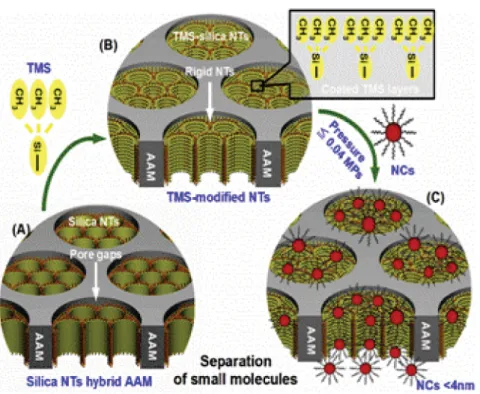
8 Figure 1.4: Schematic design of ultrafine separation of nanoparticles (C) based on the coating of silica nanotubes (NTs) (A) by trimethylchlorosilane (TMS) groups to form a TMS–silica NTs filter (B).
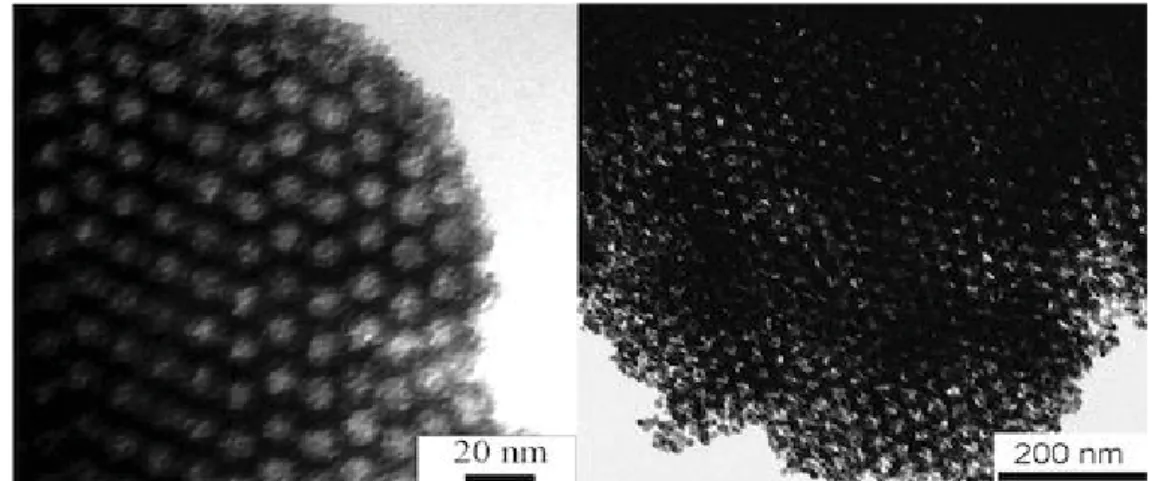
Figure 1.5: FE-SEM cross section (A) and HR-TEM (B, C, D) micrographs of nanofilters after removing the AAM using 5% H3PO4 for 600 min. The HR-TEM and FTD patterns (C) recorded along the [100] direction. D) TEM image recorded on the top-view of mosaic cage silica NTs hybrid AAM, and the FTD pattern (inset).
9 1.1.2. Preparation of porous metal oxides using hard template
The use of hard templates to synthesize mesoporous materials has brought new possibilities for the preparation of novel mesostructured materials. The hard templating method is also called nanocasting, exotemplating, or the repeated templating method.
Porous Al2O3 membranes prepared by anodic oxidation (AAO) were used initially as a mold to prepare carbons, metals, or other nanostructures by electrodeposition, Chemical Vapor Deposition (CVD), or Atomic Layer Deposition (ALD). The pore sizes of the resulting materials are typically between 15 and 150 nm. Based on this methodology, Direct and simple synthesis of the hexagonal mesoporous silica nanotubes,15 and 3D mesocage16 structures through vertically aligned inside AAM by means of direct templating method of microemulsion phases with cationic dilauryldimethylammonium bromide or cetyltrimethylammonium bromide and Pluronic F108 surfactants is reported recently by us. Penetration of the precursor solution into the membrane was achieved by means of vacuum at a starting pressure of ≤ 0.04 MPa, thus allowing control of the silica- NTs inside the membrane pores as shown in Figures 1.4 and 1.5.
Mesoporous silicas with different pore architectures (e.g., MCM-41, MCM-48, SBA-15, SBA-16, KIT-6, FDU-12) or mesoporous carbons (CMK-1, CMK-3) have been used as hard templates. 17 In fact, it is possible to obtain mesoporous metal oxides via hard template however; it is not easy to fill the mesoporous silica template completely, because there are complex interactions between the silica and filtrated metal ion precursor: hydrogen bonding, Coulombic interactions, coordinating interaction, and van- der Waals interaction. Therefore, different methods have been developed to improve the impregnation and minimize the loading outside pores as follows;
I. The functionalization (post synthesis grafting or one-pot preparation) of the mesoporous templates by certain organic groups (–NH2, –CH=CH2).
II. Without surface functionalization II.1. Two-solvent method;
A suspension of mesoporous silica in dry hexane is mixed with a concentrated aqueous solution of metal nitrate. Generally, the solution volume is equal to the silica pore volume to maximize the impregnation quantity and prevent the growth of metal oxides out of the pores. The precursor ions will be ‘‘pushed into’’ pores as much as possible by the hexane.
10 II.2. Solvent evaporation method;
Involves fully mixing the mesoporous silica with a selected metal nitrate in ethanol. The nitrate precursor is expected to migrate into the pores by capillary condensation during the slow evaporation of ethanol.
II.3. Solid–liquid method;
A metal nitrate is ground with a mesoporous silica template, and is expected to move into the pores of silica after melting when the mixed solid is heated to a temperature above the melting point of the precursor.
The method is limited to precursors (e.g., Ce(NO3)3.H2O, Cr(NO3)3.9H2O, Co(NO3)2.6H2O, Ni(NO3)2.6H2O) with melting points lower than their decomposition temperatures.
II.4. Impregnation–precipitation–calcination method;
Employs low cost metal chlorides as the starting materials. First, mesoporous silica is impregnated with a metal chloride and dried, treated with NH3 (gas or solution) to convert the chloride into hydroxide, and then calcined to form the corresponding metal oxide. The whole process is generally repeated several times and a mesoporous metal oxide is obtained after removing the silica template. That method was first developed to prepare mesoporous CeO2 and The hard templating procedure offers some advantages. The mesostructures of the target materials can be controlled by choosing hard templates with desired structures. In addition, mesoporous metal oxides with highly crystalline walls may be obtained because the hard templates usually are stable to suffering high temperature to allow many metal oxides to crystallize. However, the hard templating method also has disadvantages. The targeting mesoporous metal oxides must be stable to NaOH or HF solutions used to remove the mesoporous silica template. Despite, mesoporous carbon can be used as a hard template and it can be easily removed by calcinations. It has a poor wetting of the pore walls by the aqueous precursor solution.20
It is important to note that, after fabrication of mesoporous metal oxides, it is possible to synthesis a series of mesoporous materials have a different oxidation states. For instance, mesoporous Fe3O4 was prepared by reducing mesoporous α-Fe2O3 in 5% H2
(balanced with 95% Ar) at 350 oC for 1 h.21
11 1.1.3. Nanoparticle self-assembly
The self-assembly processing is based on monodisperse nanoparticles, the process will be less sensitive to the variable reaction conditions.22 Such a method has four steps:
I. Formation of monodisperse metal oxide nanoparticles;
II. Mixing of the template and nanoparticles;
III. Assembly of nanoparticles into ordered mesoporous metal oxides;
IV. Removal of the template by calcination, etc.
The self-assembly of 5 nm CeO2 nanoparticles using Pluronic P123 as a template to prepare ordered mesoporous CeO2 with high surface area is reported (Figure 1.6).23 Moreover, mesostructured materials using CeO2, ZrO2, and CeO2–Al(OH)3 nanoparticles functionalized by di-functional amino acid species as building blocks. Alternatively, CeO2
and SnO2 nanoparticles without surface functionalization were self-assembled into ordered crystalline mesoporous metal oxides.24
Figure 1.6: The self-assembly of 5 nm CeO2 nanoparticles using Pluronic P123 as a template to prepare ordered mesoporous CeO2 .
1.1.4. Template-free methods
In fact, the template methods are arguably the most effective and certainly the most common means of synthesizing porous metal oxides, However, the removal of the hard templates by either thermal (sintering) or chemical (etching) means is very complicated and energy-consuming in addition to poorly controlled morphology and size due to the deformability of the soft template. Recently, template-free approach has been proposed for fabrication of porous metal oxide nanostructures via the hydrothermal decomposition
12 of a metal-source precursor with room-temperature water stability under the effect of high temperature and high pressure. The growth of some porous metal oxides nanostructures with complex morphologies (especially hollow nanostructures) formed via the organic additive- and template-free hydrothermal synthetic routes can also be given a reasonable explanation by Ostwald ripening. 25 Ostwald ripening process is that the larger crystals grow from those of smaller size, which have higher solubility than the larger ones. When the crystals grow in solution, the concentration of growth units varies across the mother solution, due to the size difference of resultant nanocrystals. With the driving force of the minimization of surface energy, metastable nanoparticle aggregates occur first due to the reduction of super-saturation in solution. Once the particles with different sizes are attached to each other, the large particles begin to grow, drawing from smaller ones. Voids gradually form and grow in the cores of large aggregates, and the shell thickness increases owing to the outward diffusion of solutes through the permeable shell. The inside-out Ostwald ripening mechanism has been used to synthesize hollow spheres of a wide range of materials, such as, Fe3O4,26 SnO2,27 Co,28 Sb2S3,29 Bi2WO6,30 TiO2,31 NiO and other materials.32
1.2.Application of porous metal oxides
The mesoporous nanomaterials have shown great potentials in various fields. A large number of reaction/interaction sites are related with the high surface area, which benefit for the interface related processes regarding to environmental clean-up systems. This dissertation highlighted on the applications of mesoporous metal oxides in catalysis, sorption, separation, sensing, and electrochemistry application. The uniform and tunable large pores afford enough mono-dispersed void spaces for large molecules and hence break through the size restriction of conventional microporous materials, showing advantages in large molecule involved catalysis, adsorption, separation, drug and DNA delivery, etc. The uniform nano-sized framework structures bring nano-effects (surface and quantum effects), which endow the materials good performance in sensors, Li-ion batteries and nanodevices. In general, the entire particle sizes of mesoporous materials are in the micrometer range, favoring industrial processes, for example adsorption and filtration separation, but without losing their nanoscale advantages. The diversified pore wall compositions lead to wide applications in luminance, photovoltaic, and electronic devices.
13 1.2.1. Catalysis
In recent years, environmental and economic factors have spurred a strong interest in redesigning commercially important chemical or petrochemical processes so that the use of harmful substances and/or the generation of toxic waste could be avoided. For this reason, heterogeneous catalysts, which do not generate or require harmful or disposable waste materials, are of particular interest. The use of mesoporous supports is advanced to minimize diffusion limitation commonly observed for microporous materials. Significant enhancements in in-pore accessibility can be achieved via the use of 3D interconnected mesopore architectures over 2D ones, for example by stabilizing high active site dispersion, or enhancing reagent diffusion during catalytic reactions when bulky substrates are employed.33
The incorporation of macropores into mesoporous architectures offers an alternative strategy to minimize diffusion barriers, and potentially enhance the distribution of active sites during catalyst preparation. Simulations suggest that in the Knudsen diffusion regime, where reactants/products are able to enter/exit mesopores but experience attendant diffusion, such bi-modal pore structures can significantly improve active site accessibility. The first hierarchical macroporous–mesoporous material was report in 1998 by Yanget al.,34 although only recently has their application in catalytic processes been exploited. Degradation of organic dye molecules in aqueous solutions, such as rhodamine B, methylene blue, and sulforhodamine B, is widely used to evaluate the photocatalytic performance of the porous metal oxides. The catalyst creates electron–hole pairs under light radiation, which in aqueous media generates free radicals (hydroxyl radicals: OH.
) able to undergo secondary reactions. Photoelectrolysis of water (water splitting) for the production of H2 and O2 by semi-conductor metal oxides (e.g., TiO2, Ta2O5, WO3, BiVO4) has been intensively studied.35 A micro-meso-macroporous titanium silicate has shown excellent activity in the chemically demanding oxidation of saturated hydrocarbons to alcohol and ketones,36 with conversions five-times that of mesoporous analogues, and twice that of micro-porous equivalents.
Amino-functionalized silica exhibiting sea urchin morphology,37 having mesoporosity and limited macroporosity, has been used to support Au nanoparticles via deposition–precipitation. This catalyst can reduce 2-nitroaniline, and is superior to Au
14 deposited on amino-functionalized SBA-15 and MCM-41, possibly due to the sea urchin superstructure facilitating more efficient diffusion. Ordered mesoporous chromium (III) oxide–phosphotungstic acid nanocomposite structures with controllable composition (17 to 49 wt% in PWA) have been successfully prepared via an ultrasound-assisted nanocasting route, using mesoporous SBA-15 silica as a rigid mold.38 The integration of regular porosity, large internal surface area, and Cr2O3–PWA composition makes these materials highly promising for applications in oxidation catalysis of selected secondary benzyl alcohols, giving good-to-high yields within a short reaction time. The mesoporous CeO2, Co3O4, Cr2O3, CuO, Fe2O3, ß-MnO2, Mn2O3, Mn3O4, NiO, and NiCoMnO4 were investigated as catalysts for CO oxidation.39Among them, mesoporous Co3O4, ß-MnO2, and NiO showed appreciable CO conversions. El-Safty, et al,40 reports NiO-supported cage silica monoliths as effective catalysts toward the oxidation of phenolic pollutants.
The NiO nanoparticles with irregular sizes might be embedded, to some extent, into the pore cavity (Chapter 2)
1.2.2. Adsorption and separation
Porous materials used as stationary phases in high performance liquid chromatography 41 or as adsorbents for heavy metals, anions, organic pollutants, and gases. Adsorption by solid adsorbents shows promising and efficient methods for environmental remediation, purification and separation of contaminants. Commonly activated carbon used as adsorbents for dyes due to its immense active surface area. For example, a highly mesoporous activated carbon fiber (Y-ACF) has been used to adsorb various types of dyes such as acid dyes (acid blue 9, acid blue 74, acid orange 10, and acid orange 51), direct dyes (direct black 19, direct yellow 11, and direct yellow 50), and basic dyes (basic brown 1 and basic violet 3). Then, silica-based materials employed to adsorb dyes due to their high specific surface. The modification of the silica surface by a cationic polyelectrolyte (chitosan) enabled to produce composed materials, which may be capable of adsorbing both cationic (rhodamine B) and anionic (tectilon blue) dyes. In addition, mesoporous aluminosilicate investigated to adsorb dyes based on colorimetric adsorption methods, in which the monitoring process of the dye removal could be easily controlled through the colorimetric recognition.42
Ferrihydrite prepared by using silica gel as a hard template is an excellent sorbent for the removal of heavy metals from waste streams.43 Various organo-functionalized
15 mesoporous materials such as thiol, thioether, and amino groups have been reported for metal-ion removal and dye adsorption, and the adsorption capacity and selectivity are good. If these functionalized hybrid materials possessed magnetic properties, the composite adsorbents would be easily separated from aqueous systems by an external magnetic field, and lower operational costs in absorbent separation and the recycling of adsorbent materials could easily be achieved. 44 Through a vacuum nanocasting route, Shi and coworkers synthesized a kind of thioether functionalized mesoporous aluminosilicate hollow spheres with magnetic cores. These nanocomposites exhibited highly selective adsorption for Hg2+ and natural magnetic separation.45
The NO adsorption and release behavior of various mesoporous metal oxides was investigated. Mesoporous α-Fe2O3, β-MnO2, Mn2O3, Mn3O4, and NiO exhibited little or no adsorption of NO. Mesoporous Cr2O3 and Co3O4 demonstrated modest adsorption capacities (0.12 and 0.58 mmol/g, respectively). On the other hand, the adsorption capacities of mesoporous Cu–Cu2O and CuO were much higher (0.97 and 1.25 mmol/g, respectively). CO adsorption on mesoporous CuO was also investigated between 30 and 120 oC. These copper oxides particles containing porous network are active for CO adsorption and have potential medical applications.14
The pore size and pore uniformity of mesoporous materials may make them suitable for the separation of macromolecules. Recently, El Safty et al., suggested a size – selective encapsulation approach of proteins with different shapes, sizes, and functions using mesocage alumina46 or mesocylindrical aluminosilica.47 The unique physical properties and surface functionality of the mesocaptors enhanced protein adsorption characteristics in terms of loading capacity and quantity of the sample. These tunable pore cavities ensuring a higher concentration of adsorbed proteins, interior pore diffusivity, and encapsulation in a short period. on the other hand, super-paramagnetic silica/iron oxide nanocomposites with mesostructured porosity have been used for immobilization and separation of biomolecules such as lysozyme, cytochrome C.48 Hyeon et al., found the exposed NiO NPs possess selective adsorption towards Histidine tagged (His-tagged) protein from the mixed-protein solution, as well as Escherichia coli ( E. coli) lysate, and the magnetic core allows the particles to be separated from the solution by applying an external magnetic field (Chapter 3).49
16 1.2.3. Sensing applications
1.2.3.1.Gas sensor
The capacitive sensor approaches used for gases with high permittivity values, such as water vapour or ammonia, but not so much for, e.g., methane (CH4). Therefore, humidity sensing is the main application of mesoporous materials within the field of capacitive sensing. The main advantage of using mesoporous silica for capacitive humidity sensing instead of the commonly used organic polymers lies in its stability at high temperature (>200oC). These features allow the fabrication of humidity sensors capable of controlling industrial processes under harsh conditions, such as in textile drying.50 In a resistive gas sensor the sensitive layer, most frequently a semiconducting metal oxide, changes its electronic (or ionic) resistance upon interaction with the respective target gas. This is the most common type of gas sensor due to the simple and robust function and low-cost of manufacturing; first devices were introduced as early as 1962. The impact of the target gas on the overall electronic resistance of the sensing material is a complex process.
Starting from pure mesoporous silica, the next-simplest synthesis strategy to create a resistive sensor is to incorporate semiconducting metal oxide particles inside the silica pores. These need to be in sufficient contact with each other while at the same time leaving a substantial pore volume unoccupied. Such systems have been reported to exhibit promising gas sensing properties. For example, a (non-ordered) porous silica material with palladium-doped SnO2 nanoparticles inside its pores showed good sensitivity to CO. Recently, El Safty and co workers51 suggested highly sensitive and selective volatile organic compound (acetone, benzene, and ethanol) gas sensors based on mesoporous silica nanocomposite monoliths. Monoliths with various loadings of semiconducting metal oxides (SnO2, ZnO, NiO, CuO, and Fe2O3) were prepared through instant direct-templating method. Moreover, the sensor response was not only dependent on the specific surface area, but also on the geometries and crystal size of materials. In Optical gas sensor, the mesoporous silica materials with their optical transparency are ideally suited as host matrices for embedding dye molecules in order to create optical sensors. For example, a very efficient oxygen sensor was fabricated by embedding a Pt- porphyrin system in the pores of mesoporous MCM-41 silica; strong sensitivity to oxygen in low concentrations as well as fast response and recovery were observed (Figure 1.7)
17 Figure 1.7: Schematic setup of (A) capacitive sensor, B) resistive sensor, and C) optical gas sensnors.
1.2.3.2.Chemosensor
Environmental pollution is a constant problem, since it affects human health and the sustainable development of both society and the economy. The selective sensing of cyanide anions in water by using a hybrid biomaterial composed of a mesoporous TiO2
film of crystalline nanoparticles and the protein hemoglobin has also been reported. Low levels of cyanide (0.2 ppm) can be detected by monitoring the absorption changes of the hybrid biomolecular films upon cyanide binding to the hemegroups.52 Owing to the stability, selectivity, high density of binding sites and ease of modification, mesoporous organosilicas are suitable candidates to be employed as optical indicators of target binding. The mesoporous organosilicas containing porphyrins showed extremely sensitive to TNT(2,4,6-trinitrotoluene), RDX (cyclotrimethylenetrinitramine), p-nitrophenol and p- cresol, with selective adsorption of TNT over the other analytes.53
In order to monitor metal ions in environment, a simple, inexpensive, rapid responsive and portable sensors or collectors should be developed. Selective optical sensing is attracting strong interest due to the use of "low-tech" spectroscopic instrumentation to detect relevant toxic chemical species in biological and environmental processes. Various rational strategies for developing the optical sensors based different types of reagents such as chromogenic, fluorescent and ionophoric compounds. A highly sensitive, low cost, simple nanosensor designs were successfully developed by the immobilization of hydrophobic and hydrophilic chromophore molecules into spherically nanosized pore cavities and surfaces. These new classes of optical mesoporous sensors exhibited long-term stability of signaling and recognition functionalities that in general provided extraordinary sensitivity, selectivity, reusability, and fast kinetic detection and
18 quantification of various metal ions in our environment and biological samples. Generally, the binding sites for the metal ions interaction with selected receptor were incorporated either through non-covalent bonding, such as hydrogen bonding, metal coordination, hydrophobic forces, van der Waals forces, π-π interactions, and electrostatic and/or electromagnetic effects. Figure 1.7 shows the fabrication routs for the optical sensors, which involved direct-grafting approach, Dispersion approach, post-grafting approach, and building-block approach. The general fabrication design of optical sensors can be concluded in three steps as follows;54
1.2.3.2.1. Fabrication of solid mesoporous carrier.
The fabrication strategies have been described briefly in the previous section 1.1.1.
1.2.3.2.2. Surface activation;
The mesoporous silica has been activated through many routes via cationic or anionic surfactant in order to design hybrid mesoporous silica. Silanol groups at the surfaces of mesoporous silicas can be grafted with organosilanes, common examples of which are 3- aminopropyltrimethoxysilane (APTMS), 3-mercaptopropyltrimethoxysilane (MPTMS), and hexamethyldisilazane (HMDS).
1.2.3.2.3. Optical sensing
Successful design of chemical sensors, in principle, requires controlled assessment processes, which involve evaluation of intrinsic properties of the sensors (i.e. sensitivity, selectivity, reversibility and stability) and their fabrication and operating cost. Recent developments illustrate the capability of several grafting strategies that use hard or soft modifier coupling agents of carriers in developing optical mesoporous sensors for metal ions in environmental systems as follows (Figure 1.8);
1. Direct grafting approach 2. Dispersion approach 3. Building-block approach 4. Post - grafting approach
19 Figure 1.8: Systematic design of nanosensors 1–4 by various synthesis protocols based on the immobilization of TMPyP, DPAP, DTAR, and DPC probes into the 3D cubic Fm3mcage monoliths (HOM-C10). The 3D TEM surface micrograph of cubic Fm3m carriers (HOM-C10) recorded along the [110] zone axis with 45° tilt.
Facile and reliable synthetic designs for mesoporous optical sensors can be achieved through these pathways, namely, the covalent functionalization approach and Incorporation of indicator molecules into inorganic scaffolding by electrostatic and hydrogen bonding interactions. The later has a clear advantage, i.e., it can dispense with the tedious synthesis of a reactive silylated probe derivative. Among all the techniques for nanosensor synthesis, the linker approach is ideal for constructing sensing systems with high loading capacity and controllable flexibility of electron acceptor/donor strength of probes on the pore surfaces. This approach enables the formation of pool-on-surface sensing systems, in which a high flux and rapid diffusion of metal ions was achieved, particularly at trace-analyte levels (Figure 1.9).55
20 Figure 1.9: Schematic model of hybrid mesocaptor ensembles via the functionalization of the aluminosilica scaffolds with (DDAB and DPC) organic moieties for a wide range of binding site–guest (Hg2+,Cd2+,Cr6+, and Fe3+) stability during the sensing or capture of metals in acidic or basic media, as evidenced from the color profiles.
1.2.3.2.4. Advantage of optical mesoporous sensor
El-Safty et al., 56 used the synthesized nanostructured cage monolith as an optical sensor for the highly sensitive and selective detection and removal of sub-nanomolar concentrations of toxic metal ions, including Cd(II), Hg (II), Zn (II), Cu (II), Co (II), Sr (II), Cr(III),… etc . This quantitative and qualitative detection method is based on the color changes of probe sensors. In general, optical nanosensors based on mesoporous silica monoliths have numerous advantages and significant features, which are summarized as follows:
21 1) Simple synthesis of microsized mesoporous monoliths, which result in low
operating costs and easy-to-use optical sensors with different morphologies, such as rings or discs.
2) Optical sensors with multidirectional mesopore cavities as platforms enable the development of pool- or sink-like sensing assays through the easy accessibility of toxic ions and rapid ligand-metal binding events.
3) High surface area as well as large, open, cylindrical cage pores, which result in high loading and accommodation of activated surface agents and organic moieties and lead to the detection and removal of low metal ion concentrations.
4) Precise modification of the nanoscale-pore surfaces of mesoporous monoliths with organic moieties in well-defined, homogenous, and dense-patterned organization arrays, which leads to the efficient detection and removal of a wide range of concentrations of target speciesvwithout the need for any pre-concentration process.
5) Surface functionality and good adsorption characteristics of monoliths, which enable the high flux of metal analytes across the probe molecules without significant kinetic hindrance. The resultant mesosensors lead to a facile generation and transduction of optical color signals as a response to probe-metal binding events.
6) Chemical and mechanical stability of mesostructured sensors with sensing/removal assays; two key factors affect the efficient sensing functionality of the nanosensors for metal ions.
The strong electrostatic interactions (Coulombic type) of the probes such as molecules with charged carriers lead to an increased stability of probe-based nanosensors for signal response of receptor–metal binding events.
The ability to create highly accessible, flexible, and fine-tuned surface probes might lead to retention of the specific activity of the electron acceptor/donor strength of the probe functional group, as evidenced by the facile generation and transduction of an optical color signal as a response to complexbinding events after long-term storage (on the order of months).
22 7) Long-term stability under storage without care for several years. No significant change in the sensing/removal efficiency and mesostructured properties has been observed;
8) High sensitivity and simple workability with fast response time and high flux of metal analytes across the probe molecules. In such mesosensor systems, the sensing signal
9) Applicability of optical nanosensors for the selective discrimination of trace levels of toxic ions from environmental samples and waste disposal systems; Thus, the efficient metal ion-selective mesosensors offer the following features:
¾ high tolerance level for interfering matrix concentrations, indicating the specificity of the strips to metal target at ultra-trace concentrations;
¾ high response speed and confidence during the detection of analytes from samples containing chemically-complex matrices;
¾ The calibration plot of the analytes in the presence of matrix species shows evidence of a significant correlation of the determination and precise sensing procedure of metal ions by the fabricated mesosensor strips with that of the metal ion-sensing data obtained in the presence of a high concentration of active multi-ion matrix species; and,
¾ Conspicuous divergence in the behavior of the probe-decorated monolith mesosensors to the metal analyte and its matrix environments from their solution chemistry.
10) Reversibility through the use of a simple chemical treatment to strip the toxic ions (Figure 1.9). Hence, these sensors are practical and inexpensive, particularly in waste water management;
11) Fully controlled assessment processes, sensitive quantization with high-level precision (i.e., standard calibration curves), and simple recognition and detection of a broad range of toxic metal ions through color changes or fluorescence signals at the frequency utilized by human eyes. Sophisticated methodologies or techniques are generally not required for detection, and sample clean-up procedures that minimize sample matrix interferences during the removal of metal ions are not necessary;
23 12) Simple separation and visual detection over a wide, adjustable range, as well as sensitive quantification, selective discrimination, reversibility, and fast-response signaling of ions at trace levels. These characteristics offer real-time applications, such as in the recycling of metals from urban mining, water treatment, and high- grade environmental chemistry.
13) pH-dependent signaling response
The development of chemosensors for the colorimetric recognition of different transition metal ions using chemically responsive dyes exhibit signaling ‘‘color changes’’ with the addition of metal ions at controlled pH solutions. 57 At specific pH values, the flexibility of the electron-acceptor/donor strength of the molecular probes on the membrane discs for a specific activity can lead to easy generation and transduction of optical color signals in response to probe-metal analyte- binding events (Chapter 4).
1.2.4. Electrochemical applications 1.2.4.1.Electrochemical sensors
Mesoporous materials have attracted increasing interest from the electrochemists community due to their plenty of unique properties and functionalities that can be effectively exploited in electrochemical devices. The three main intersection areas are:
I. The development/use of electrochemical methods to characterize the properties of mesoporous materials (i.e., charge and mass transfer processes);
II. The generation of mesostructured solids by electro-assisted deposition using appropriate templates; and
III. The application of these novel materials for electrochemical purposes.
The straightforward detection scheme is the direct detection of target analytes at mesoporous materials modified electrodes. One can basically distinguish between the electronically conductive materials (mesoporous metals and carbons) and the nonconductive metal oxides (mainly mesoporous silica), which can be used as such or functionalized with appropriate catalysts. In this regard, mesoporous metal oxides have taken much interest. The mesoporous Ni(OH)2 /NiO or Fe3O4/Fe2O3 exhibiting electrocatalytic properties towards H2O258 The immobilization of redox protein
24 (hemeproteins) on the mesoporous metal oxides (TiO2 and Nb2O5) was investigated as biosensor for hydrogen peroxide.
Mesoporous silica-based materials were used to host mediators and deposited as thin films on electrodes or dispersed in carbon paste electrodes for electrocatalytic purposes.
Zinc phthalocyanine adsorbed on Ag/Au NPs anchored onto thiol-functionalized MCM-4, which exhibited synergistic effects for the electrocatalytic reduction of molecular oxygen.
A 12-tungstophosphoric heteropolyacid anions (in FSM-16) and 1:12-phosphomolybdic anions (in MCM-41) have been used as charge-transfer co-factors for the amperometric detection of NO2- and ClO3-/BrO3-respectively.59 On the other hand, Several analytes have been detected using electrodes modified with mesoporous organic–inorganic hybrid materials,60 such as Ag(I), Cu(II), Cd(II), Hg(II), Pb(II), Eu(III), U(VI). The preconcentration step was enhanced using organo-functional groups such as quaternary ammonium, sulfonate, glycinylurea, salicylamide, carnosine, acetamide phosphonic acid, benzothiazolethiol, acetylacetone, cyclam derivatives, β-cyclodextrin, 5-mercapto-1- methyltetrazole, or ionic liquids.
1.2.4.2.Electrochemical Energy storage devices
Finding innovative electrode mesoporous materials with architecturally tailored nanostructures was triggered by the need for systems (batteries, supercapacitors, fuel cells, dye-sensitized solar cells) exhibiting always better performance (extraordinarily high energy densities, high rate capabilities, high yields). Batteries and supercapacitors are two kinds of typical electrochemical energy storage devices, both of which store electricity in electrochemical processes. A rechargeable battery is usually composed of an anode, a cathode, a separator, and an electrolyte. During discharge, electrochemical reactions occur at the electrodes, generating electrons that flow through an external circuit; during charge, an external voltage across the electrodes was applied, driving the movements of electrons and reactions at the electrodes. The principles of supercapacitors include an electrical double layer and pseudo-capacitive charge-storage modes. The former is based on the separation of charges at the interface between a solid electrode and an electrolyte and the latter is a fast faradaic process involving electrochemical redox reactions.
Among the various alternative energy storage technologies, electrochemical energy storage shows advantages of high efficiency, versatility, and flexibility. Li-ion batteries
25 are the most important and widely used rechargeable battery with advantages of high voltage, low self-discharge, long cycling life, low toxicity, and high reliability.
Supercapacitors have attracted increasing interest because of their high power storage capability, which is highly desirable for applications in electric vehicles and hybrid electric vehicles. The performance of Li-ion batteries and supercapacitors is intimately related to the electrode materials used. With the development of materials design strategies, synthesis techniques, and characterization methodologies, electrode materials and consequently the performance of batteries and supercapacitors have been progressing rapidly. Dealing with EDLCs, ordered mesoporous carbons with controlled pore sizes are promising materials to further improve the power and energy densities of capacitors as they meet two important requirements:
I. they are likely to ensure good dynamic charge propagation by facilitating fast ion and electron transportation;
II. they can be manufactured with micropores which have been recently reported to be of major importance for efficient electrical double layer formation (the pore size should ideally match the size of the ions)
As mentioned above recently, pseudo-capacitors based on mesoporous transition metal oxides have taken particular interest. Attempting to go one-step further, recent efforts have been directed to the preparation of ordered mesoporous carbon–metal oxide composites as electrode materials for supercapacitors. Examples are available for mesoporous carbon modified with ruthenium oxide, bismuth oxide, lead oxide, molybdenum oxide, cobalt oxide, or mixed metal oxides (e.g., cobalt and vanadium oxides). Following the same strategy, nanoporous metal–metal oxide hybrid electrodes have been prepared as electrochemical supercapacitors, giving rise to additional double layers and pseudo-capacitive behaviors. The interest in using pseudocapacitor-based materials for electrochemical capacitors is to overcome the limited energy densities usually obtained with EDLCs (10–20mFcm-2) by exploiting faradaic reactions that are characterized by much higher energy density (~100mFcm-2). Various successful examples are available, including, e.g., electrogenerated mesoporous cobalt hydroxide or nickel oxide films, mesoporous TiO2 films obtained by Evaporation-Induced Self-Assembly (EISA), a mesoporous film of iso-orienteda-MnO3, ordered mesoporous β-MnO2 or Co3O4 prepared by nanocasting, and CeO2 films. In conclusion, the key requirements to
26 maximize power and energy densities of supercapacitors are configuring redox-active materials in specific architectures that:
I. Maximize electrolyte–electrode contact area,
II. Minimize transport distances for both electrons and charge compensating species, III. Minimize transport barriers (Chapter 5).
1.2.4.3.Energy conversion.
The two main devices for electrochemical energy conversion are fuel cells and solar cells.
Fuel cells are electrochemical devices that convert the chemical energy of a fuel (e.g.
hydrogen, methanol, etc.) and an oxidant (air or pure oxygen) in the presence of a catalyst into electricity, heat and water. Solar cells are usually divided into two categories:
photovoltaics in which light is directly transformed into electricity, and dye-sensitized solar cells that utilize a light adsorbing dye (usually accommodated onto a semiconductor) with electron transfer to a counter electrode through an electrochemical reaction involving an electron transfer mediator, thus sending out a current. For fuel cells, mesoporous binary metal oxides with supported metal nanoparticles (Pt on yttria supported zirconia,Au on CeO2/TiO2-ZrO2,or Ni–Fe on CeO2-ZrO2) were also of interest for improving the performance of fuel cell electrodes recently. On the other hand, dye- sensitized solar cells (DSSCs) are photoelectrochemical solar cells functioning based on photoinduced charge separation at a dye-sensitized interface between a nanocrystalline, porous metal oxide electrode and a redox electrolyte. Most DSSCs consist of mesoporous TiO2 electrodes sensitized with organic dyes such as ruthenium dyes, Pt counter- electrodes, and I-/I3- redox electrolytes. The role of TiO2 is adsorption of dye molecules and transport of photo-excited electrons from the dye to the transparent conductive oxide electrode.