Acta Med. Nagasaki 34 : 246-249
Long-term Trend of Decreasing Frequency of Hepatitis B Virus Infection in Hepatitis, Cirrhosis,
and hepatocellular carcinoma
Masachika SENBA * and Tsuyoshi NAKAMURA **
* Depertment of Pathology, Institute of Tropical Medicine, Nagasaki University, Nagasaki 852, Japan
** School of Medicine Health Technology, Nagasaki University, Nagasaki 852, Japan
Received for publication, December 26, 1987
SUMMARY : Statistical and histopathological analysis was carried out to determine whether hepatitis B surface antigen with the necropsy diagnosis of hepati- tis, cirrhosis, and hepatocellular carcinoma declined during 1964-1984. In this study, the liver specimens from 500 necropsy cases at Nagasaki University Hospital were used, and these materials were stained for hepatitis B surface antigen with immuno- peroxidase method. For statistical calculations, we used Cochran's chi-squared test with one degree of freedom for linear trend for proportions. We investigated hepati- tis B surface antigen positive rates for the three times periods, 1964-1970, 1971-1977, and 1978-1984, and those in the three diagnosis of hepatitis, cirrhosis, and hepatocell- ular carcinoma. The decreasing linear trend of hepatitis B surface antigen positivity with time was significant for hepatocellular carcinoma (and also for all three diagnosis combined ). This suggests that infection by hepatitis B virus in blood transfusion had fallen over the period in question.
INTRODUCTION
Hepatocellular carcinoma becomes clinically manifest after cirrhosis has been well formed, and the major factor predisposing hepatocellu- lar carcinoma in a population appears to be the presence of cirrhosis caused by chronic hepatitis B virus infection in that population.
The oncogenic potential of hepatitis B virus in the development of hepatocellular carcinoma has been reported .7-10) The landmark discovery of the hepatitis B surface antigen and the link- ing of this antigen to viral hepatitis provided the cornerstone for the rapid acceleration of our understanding of viral hepatitis in general, and posttransfusion hepatitis in particular. 1,2)
Hepatitis B surface antigen was widely assum- ed that development of efficient screening tests would detect type B hepatitis infection carriers and make possible the eradication of the pro- blem of posttransfusion type B hepatitis by preventing transfusion of hepatitis B virus positive blood. Therefore, the objective of this study is to know whether hepatitis B surface antigen positive rates in hepatitis, cirrhosis, and hepatocellular carcinoma have changed or not during 1964-1984.
MATERIALS AND METHODS
The liver epecimens were collected at Nagasaki University Hospital from 500 necro- psy cases of various liver diseases, including
hepatitis (52 cases), cirrhosis (177 cases), and hepatocellular carcinoma (271 cases). The materials were fixed in formalin, and embedded in paraffin for histochemical and immunohisto- chemical study. Sections were cut at 4 micron, and stained with hematoxylin-and-eosin, Mallory's method for collagen fibers, and silver impregnation method for reticulum fibers.
For immunohistochemical study, these speci- mens were stained with hepatitis B surface antigen (Dako PAP Kit) by immunoperoxidase method. Statistical calculation was performed using the BMDP 3 ) on the IBM 4341 system in the Data Center of A-bomb Disaster in Nagasaki University. The statistical method for this study is the Cochran's chi-square test with one degree of freedom for trend of propor- tions.
RESULTS
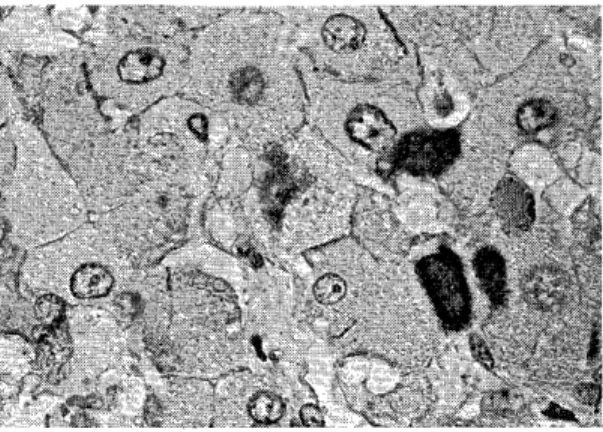
Table 1 shows hepatitis B surface antigen positive results obtained by immunoperoxidase
procedure (Figs. 1-3). Of the 18 hepatitis cases in 1964-1970, of the 16 in 1971-1977, and of the 18 in 1978-1984, 3 (17%), 2 (13%), and 2 (11%) were hepatitis B surface antigen positive, respectively. As for the cirrhosis cases, 23 (34
% ) cases were hepatitis B surface antigen positive out of 67 in 1964-1970, 15 (28%) out of 53 in 1971-1977, and 12 (21%) out of 57 in 1978-1984. Of the 87, 102, and 82 hepatocellular carcinoma cases in 1964-1970, 1971-1977, and 1978-1984, 56 (64%), 57 (56%), and 37 (45%) were hepatitis B surface antigen positive, respectively. Results of the statistical analysis on the positive rates of hepatitis B surface antigen, in hepatitis, cirrhosis, and hepatocellular carcinoma are as follows : The Cochran's chi-square test for the linear trend of hepatitis B surface antigen positive rate in hepatitis during the periods resulted in x 2 = 0.238 (p>0.50), that in cirrhosis x2 =2.671 (p
<0.10), that in hepatocellular carcinoma x2 = 6.312 (p<0.01), and that in total of these diseases x2 =7.710 (p<0.01).
Table 1. Long-term trend of decreasing frequency of hepatitis B virus infction in hepatitis, cirrhosis, and hepatocellular carcinoma
1964-1970 1971-1977 1978-1984
Hepatitis 3/ 1807%) 2/ 16(13%) 2/ 1801%)
Cirrhosis 23/ 67(34%) 15/ 53(28%) 12/ 57(21%)
Hepatocellular 56/ 87(64%) 57/102 (56%) 37/ 82 (45%) carcinoma
Total 82/172 (48%) 74/171 (43%) 51/157 (32%)
Fig. 1. Inclusion type of hepatitis B surface antigen are seen in the hepatocytes.
Immunoperoxidase method for hepatitis
B surface antigen ( x400).
Fig. 2. Peripheral type of hepatitis B surface antigen are seen in the hepatocytes.
Immunoperoxidase method for hepatitis
B surface antigen (X400).
Fig. 3. Membrane type and inclusion type of hepatitis B surface antigen are seen in
the hepatocytes. Immunoperoxidase
method for hepatitis B surface antigen ( X400).
DISCUSSION
Hepatocellular carcinoma becomes clinically manifest after cirrhosis is well advanced, and the major factor predisposing to hepatocellu- lar carcinoma in a population seems to be cirrhosis due to chronic hepatitis B virus infect- ion. It has been widely assumed that the development of efficient screening test for hepatitis B surface antigen would detect type B hepatitis infection carriers and make possible the eradication of posttranfusion hepatitis B. The decreasing trend of hepatitis B surface antigen positive rates in hepatocellu- lar carcinoma during 1964-1984 was highly significant (p<0.01), but marginally signifi- cant (p<0.10) in cirrhosis, and was highly significant (p<0.01) in total. Therefore, in this study, proportions of hepatitis B surface antigen carrier in cirrhosis and hepatocellular carcinoma in the last 21 years were found to have been decreasing. The decrease trend of hepatitis B surface antigen positive rates might suggest that infection of type B virus caused by posttransfusion was more prevented in the latter period.
Widespread application of serologic tests for hepatitis B surface antigen has underscored the significance of hepatitis B as a clinical and public health problem. Hepatitis B surface antigen in the blood of a patient or of an
apparently healthy person raises quetions not only of the presence of liver disease but also of the risk of transmitting infection to others.
The likelihood of transmitting hepatitis B virus to susceptible contacts is related to many factors including personal and environ- mental hygiene, public education, and the safety of blood transfusion. They have been partially sucessful.6) Furthermore, definitive control or prevention of hepatitis B awaits development of biologic for active and passive immuniz- ation or other specific measures. Specifically, intervention with hepatitis B vaccine may lead to a reduction in the incidence of hepatitis, cirrhosis, and hepatocellular carcinoma caused by hepatitis B virus infection.
ADDENDUM
The summary of this investigation was published in the March 12, 1988 issue of the Lancet.
REFERENCES
1) BLUMBERG, B. S., ALTER, H. J., VISNICI-I, S. : A
"New" antigen leukemia sera . JAMA, 191 101-105, 1965.
2) BLUMBERG, B. S., GERSTLEY, B. J. S., VisNICH, S.
: A serum antigen (Australia antigen) in
Down's syndrome, leukemia and hepatitis.
Ann. Intern. Med., 66 :924-931, 1967.
3) DIxoN, W. J., BROWN, E. L., FRAME, J. W., HILL, M. A., JENNRICH, R. I., TOPOREK, J. D. :
BMDP statistical software. University of California Press, Berkeley, 1981.
4) GIBSON, J. B., SOBEN, L. H. : Histological typ- ing of the liver, biliary tract and pancreas :
Internation histological classification of tumor No. 20. World Health Organization,
Geneva, 1978.
5) LEEVY, C. M., POPPER, H., SHERLOCK, S. ; Disease of the liver and biliary tract : Stand-
ardization of nomenclature, diagnostic
criteria and diagnostic methodology. Castle House Publications, Guidford, 1979.
6) RAY, M. B. : Hepatitis B virus antigens in tissues. MTP press, Lancaster, 1979.
7) SENBA, M., NAKAMURA, T., ITAKURA, H. ; Statis- tic analysis of relationship between hepatitis
B surface antigen, cirrhosis, and hepatocellu-
lar carcinoma. Trop. Med., 26: 117-122, 1984.
8) SE.NBA, M., NAKAMURA, T., ITAKURA, H. : Statis- tical analysis of relationship between iron
accumulation and hepatitis B surface antigen.
Am. J. Clin. Pathol., 84: 340-342, 1985.
9) SH-wruoCK, S., Fox, R. A., NIAZI, S. P., Sci-rruER, P. J. : Chronic liver diseases and primary
liver-cell cancer with hepatitis-associated
(Australia) antigen in serum. Lancet, i :1243:
1247, 1970.
10) VOGEL, C. L., ANTHONY, P. P, MoDY, N., BARKER, L. F. : Hepatitis-associated antigen
in Ugandan patients with hepatocellular
carcinoma. Lancet, i i : 621-624, 1970.