Development of microbiological deammonification system for
water treatment in developing countries
開発途上国での水処理に向けた
新規アンモニア除去装置の開発と検討
山梨大学大学院
医学工学総合教育部
博士課程学位論文
2016 年 3 月
亀井 樹
ii
Abstract
Groundwater is a major water resource in various geographic areas. Recent population growth and geological features induced serious contamination with inorganic nitrogen, particularly with ammonium nitrogen (NH4-N) in the groundwater body. High concentrations of NH4-N give water a bad smell and cause formation of toxic nitrogen compounds such as nitrite nitrogen (NO2-N) and nitrate nitrogen (NO3-N) via an oxidation process. Thus, NH4-N removal should be conducted. Electricity, funds, and materials for operation of a treatment system are insufficient in developing countries, and groundwater contamination is prevalent. The drawback of current NH4-N removal systems such as nitrification and denitrification is substantial energy consumption for aeration, induction of excess sludge production, and addition of organic carbon, resulting in increased operational costs. Thus, current NH4-N removal systems are not suitable for operation in developing countries, even though such systems are urgently needed there.
In this study, I developed an NH4-N removal system for developing countries by combining several microbiological activities: nitrification, anaerobic ammonium oxidation (anammox), and hydrogenotrophic denitrification (HD). The resulting system consists of two nitrogen conversion steps—nitrification and denitrification processes—just as the current systems do. Nevertheless, NH4-N can be oxidized to NO3-N by a dropping nitrification (DN) system without aeration. In the denitrification process, subsequently, NO3-N and NH4-N that are formed in raw groundwater are simultaneously removed by combined anammox and hydrogenotrophic denitrification (CAHD). During the CAHD process, NO3-N is reduced to NO2-N via partial inhibition of denitrification activity of the HD process by means of H2 gas as an electron donor. Then, the anammox process, which can simultaneously remove NH4-N and NO2-N, converts each nitrogen compound to N2 gas. A combination of these two treatment systems (named the “DN-CAHD system”) requires a smaller operational cost as compared to the current systems because aeration is not required, and no secondary contamination is produced at the nitrification and denitrification steps. Thus, the DN-CAHD system seems to be an adaptation of a groundwater treatment system to developing countries. To implement the DN-CAHD system, three different experiments were conducted to elucidate a) applicability of freshwater environmental samples as
microbial sources for enrichment of anammox bacteria, b) performance of the DN system at a high NH4-N concentration, and c) feasibility of the CAHD process as a system for removal of NH4-N and NO3-N.
Applicability of freshwater environmental samples as microbial sources
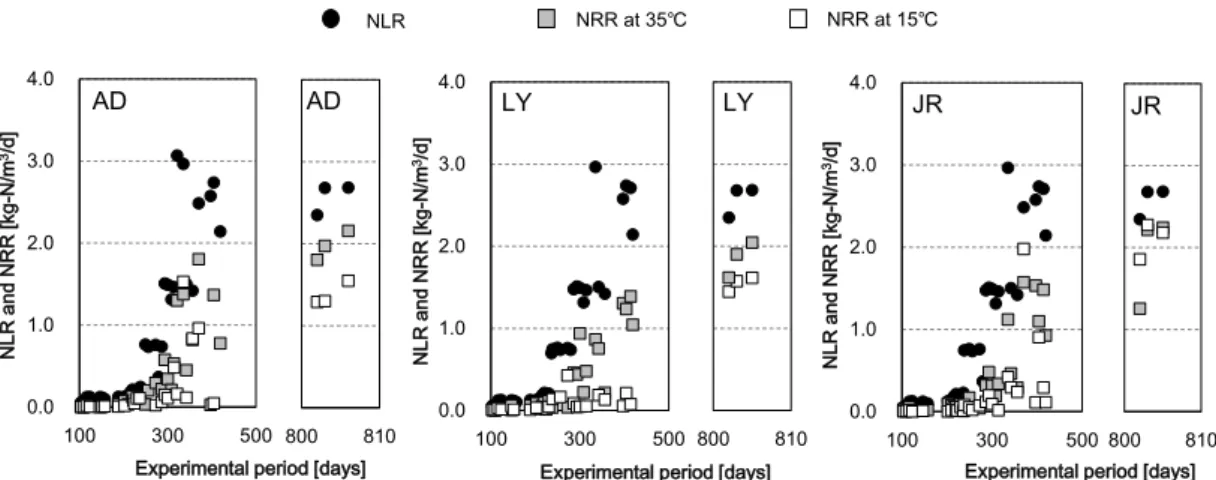
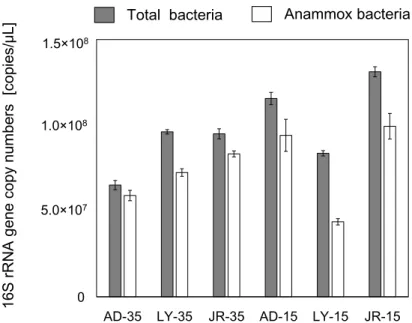
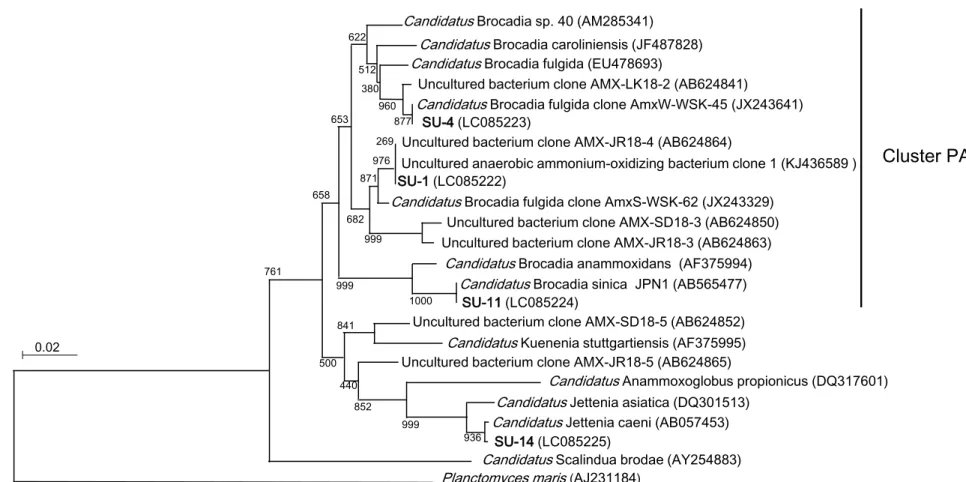
Enrichment with anammox bacteria should be conducted in developing countries for implementation of the CAHD process. Activated sludge is a well-known microbial source for enrichment of anammox bacteria but may not be available in a developing country due to the absence of a functioning wastewater treatment plant. Thus, applicability of freshwater environmental sludge as an alternative microbial source for enrichment with anammox bacteria was examined here by cultivating three types of freshwater environmental sludge: river, lake, and dam reservoir samples collected in Yamanashi prefecture, Japan, as model samples. Furthermore, cultivation was conducted at two temperatures: 35°C, which is suitable for anammox bacterial growth (mesophilic), and 15°C (psychrophilic) for assessment of the effects of temperature on the tendency of the nitrogen removal rate (NRR) for an increase and on characteristics of the anammox bacterial community. Mesophilically cultivated samples showed that NRRs increase after 400 d of cultivation, while the psychrophilic sample showed no tendency for an increment. After 800 d of cultivation, NRRs of psychrophilically enriched samples reached 1.55−2.18 kg-N/m3/d, which is similar to NRR levels of mesophilic samples (e.g. 2.05−2.25 kg-N/m3/d) during the same period. Molecular analysis targeting anammox bacterial 16S ribosomal RNA showed that anammox bacteria were enriched and constituted 52−91% of all bacteria in the enriched samples after 800 d of cultivation. Phylotypes of the mesophilic samples had 99% and 100% identity with Candidatus Jettenia caeni strain KSU-1 and Candidatus Brocadia sinica strain JPN1, respectively, whereas phylotypes of psychrophilic samples showed lesser identity (94% and 96%) with Candidatus Brocadia fulgida and Candidatus Brocadia sp. 40, respectively. Thus, cultivation temperature obviously affects the anammox bacterial community. Furthermore, psychrophilic samples can be subjected to processing by the group of psychrophilic anammox bacteria with previously detected clones from a low-temperature environment. Empirical analysis showed that freshwater environmental sludge is useful as a microbial source for enrichment of anammox bacteria. Mesophilic temperature induces a rapid increase in the NRR in comparison with the psychrophilic conditions, whereas long-term cultivation enhanced NRRs even at a low temperature. Furthermore, empirical results yielded a new finding about the existence of psychrophilically adapting anammox bacteria. This information is useful for the
iii
development of a low-temperature anammox treatment system for future practical applications.
Performance of the DN system at a high NH4-N concentration
The DN system was developed and examined regarding basic performance characteristics in a previous publication. Less information is available about stability of the DN system during treatment of NH4-N-rich groundwater. In this study, performance stability of a DN system was re-evaluated in a long-term continuous experiment (more than 750 d) during on-site operation in Lalitpur, Nepal, where 45−60 mg-N/L NH4-N was detected in groundwater. Scaled up and multistage DN systems were constructed on the basis of the information from previous research. Performance of the DN systems showed NH4-N removal without aeration. Latest operational data during days 701–750 of operation showed that 45 mg-N/L NH4-N can be reduced to 13 mg-N/L, revealing that NH4-N removal efficiency reached 70% with the NH4-N removal rate of 151 g-N/m3/d. Along with the nitrification process, there was NO
3-N production, and its rate reached 86 g-N/m3/d; thus, it can be applicable to an NO
3-N production system for the next CAHD process. Furthermore, the NRR was also determined in DN systems: it reached 56 g-N/m3/d, indicating that the nitrogen removal process coexisted with the DN system. During on-site operation, the DN system showed NH4-N removal performance that was independent of changes in on-site temperature. Therefore, groundwater NH4-N purification can be achieved by means of the DN system without aeration and temperature control. Empirical research showed that the DN system can be applied to treatment of NH4-N-rich groundwater in developing countries and can operate without aeration and temperature control. Furthermore, the DN system is an applicable NO3-N production system for the next CAHD process.
Testing of feasibility of the CAHD process
CAHD is a novel combined microbial process; therefore, little information has been available until now. Accordingly, feasibility of the CAHD process was examined here in cultivation experiments with anammox bacterial sludge, which was enriched from activated sludge beforehand. The CAHD process was developed in a lab scale reactor with a synthetic medium for cultivation of anammox bacteria with a supply of H2 gas. Efficiency of removal of NH4-N, NO3-N, and dissolved inorganic nitrogen (DIN) reached 95%, 90%, and 89%, respectively, and the NRR was 0.25 kg-N/m3/d. In contrast, simultaneous removal of NH4-N and NO3-N also occurred under conditions of artificial groundwater, resulting in execution of the CAHD process regardless of water quality. Nonetheless, the growth of HD bacteria was 100-fold faster than that of
anammox bacteria; therefore, the anammox process was inhibited by a lack of an NO2-N source during the sufficient H2 gas supply. Additionally, NO2-N reduction by HD also increased pH to a level unsuitable for anammox bacteria. Therefore, the anammox process was suppressed, and the CAHD process failed. For maintaining the CAHD process, suppression of the NO2-N-reducing activity and maintenance of pH at values suitable for anammox bacteria (i.e., pH 6.8−8.3) should be performed. Although pH was maintained at a level suitable for the anammox process, pH control by CO2 gas suppressed NH4-N removal without changes in the NRR in comparison with control by 0.1N HCl addition. This means that suppression of the anammox process was caused by enhancement of HD activity. Thus, pH control methods also affect performance stability of a CAHD process. Additionally, control factors for NO2-N reduction by HD activity were examined by changing the flow rate of H2 gas and the supply pattern. Under conditions of artificial groundwater, a decrease in the flow rate of H2 gas with a continuous supply suppressed NO3-N-reducing activity with deterioration of nitrogen removal by the CAHD process. In contrast, an intermittent supply of H2 gas could maintain the CAHD process for more than 180 d of operation with a synthetic medium, yielding NRRs up to 0.13−0.21 kg-N/m3/d, with DIN removal efficiency of 48−78% on operational day 179. Furthermore, the intermittent supply of H2 gas reduced H2 gas volume (necessary for removal of 1 kg of nitrogen) by ~11% relative to the continuous supply. Experiments showed that the CAHD process is feasible and applicable to a groundwater treatment system. In addition, nitrogen removal performance of the CAHD process can be maintained by pH control and an intermittent supply of H2 gas.
For enrichment of anammox bacteria, freshwater environmental sludge can be useful as a microbial source, meaning that enrichment of anammox bacteria and implementation of a CAHD process are possible in developing countries. Additionally, the information about psychrophilic anammox bacteria is useful for operation of the anammox reactor including the CAHD system without temperature settings; thus, further detailed research should be conducted. In contrast, the DN system was capable of treatment of NH4-N-rich groundwater as a nitrification process without aeration and temperature control. As a denitrification step, the CAHD process can be used in conjunction with control of pH and an intermittent H2 gas supply; further detailed research on the conditions suitable for NO2-N accumulation is needed. In conclusion, my experiments show that both the DN system and CAHD are useful; therefore, the DN-CAHD system is a new version of a groundwater treatment system for removal of NH4-N contamination.
v
Acknowledgments
I wish to express my deepest gratitude to supervisor Prof. Futaba Kazama for her guidance, constant encouragement, and constructive criticism, which helped me to complete my studies and thesis. I would also like to thank my thesis committee members—Prof. Hidehiro Kaneko, Kazuhiro Mori, and Dr. Kei Nishida—for warm and comprehensive guidance.
I want to extend my sincere thanks to Dr. Yasuhiro Tanaka for his advice and critical comments. I am also very grateful to the Interdisciplinary Centre for River Basin Environment (ICRE) of the University of Yamanashi (UY) for the scholarship.
I would like to acknowledge my collaborator: the Center of Research for Environment Energy and Water (CRREW), Nepal, director Dr. Rabin Malla, and assistant Mr. Sarad Pthak for maintaining the on-site groundwater treatment system.
I would also like to thank Ms. Yuki Yoneyama, Ms. Eamarat Rawintra, and all of the Kazama lab members for their help as well as all of the ICRE family for warm encouragement, suggestions, and support. Finally, I wish to thank my parents for encouraging and assisting me with continuation of the research work.
Table of contents
Chapter1 Introduction ... 2
1.1 Research background ... 2
1.2 Research objectives ... 4
1.3 The scope of this research ... 7
Chapter2 Literature review ... 11
2.1 Inorganic nitrogen dynamics ... 11
2.2 HD ... 12
2.2.1 HD bacterial species ... 13
2.2.2 The NO2-N accumulation condition ... 14
2.3 Anammox ... 15
2.3.1 Anammox bacterial species ... 17
2.3.2 Physiological characteristics of anammox bacteria ... 18
2.3.3 Application of the anammox process to a wastewater treatment system ... 20
Chapter3 Examination of applicability to enrichment of anammox bacteria in environmental samples ... 25
3.1 Introduction ... 25
3.2 Methodology ... 26
3.2.1 The synthetic cultivation medium for enrichment of anammox bacteria ... 26
3.2.2 Cultivation setup ... 27
3.2.3 Water sampling and analysis ... 27
3.2.4 Molecular analysis of changes in the anammox bacterial community in each condition ... 28
3.3 Results and discussion ... 30
3.3.1 Enrichment in freshwater environmental sludge ... 30
3.3.2 Molecular analysis of the enriched sludge ... 34
3.4 Summary ... 38
Chapter4 Examination of feasibility of the novel denitrification system: CAHD ... 41
4.1 Introduction ... 41
4.2 Methodology ... 42
4.2.1 Enriched anammox sludge ... 42
4.2.2 The synthetic inorganic medium ... 42
4.2.3 Water sampling and analysis ... 42 4.2.4 Incubation of anammox sludge during a supply of H2 gas in the presence of NH4-N
vii
and NO3-N ... 42
4.2.5 Comparison of anammox and HD activity changes under conditions suitable for growth of each bacterial species ... 43
4.3 Results and discussion ... 45
4.3.1 Incubation of anammox sludge during the supply of H2 gas in the presence of NH4-N and NO3-N ... 45
4.3.2 Comparison of changes in anammox and HD activity under conditions suitable for growth of each bacterial species ... 48
4.4 Summary ... 52
Chapter5 Reassessment of performance of the DN system under conditions of high-NH4-N loading during on-site operation ... 54
5.1 Introduction ... 54
5.2 Methodology ... 55
5.2.1 On-site operation for evaluation of the DN system’s performance ... 55
5.2.2 Water sampling and analysis ... 58
5.3 Results and discussion ... 59
5.3.1 On-site operation of scaled up DN systems... 59
5.4 Summary ... 63
Chapter6 Startup of the CAHD process under conditions of artificial groundwater ... 65
6.1 Introduction ... 65
6.2 Methodology ... 66
6.2.1 Laboratory experiments for analysis of the startup of the CAHD process on artificial groundwater ... 66
6.2.2 Preparation of artificial groundwater for laboratory experiments ... 68
6.2.3 Water sampling and analysis ... 68
6.3 Results and discussion ... 70
6.3.1 Startup of the CAHD process in laboratory scale reactors ... 70
6.3.2 Examination of operational conditions suitable for maintenance of the CAHD process ... 74
6.3.3 Design of the on-site DN-CAHD system ... 76
6.4 Summary ... 78
Chapter7 Evaluation of conditions suitable for maintenance of stable performance of the CAHD process ... 81
7.1 Introduction ... 81
7.2 Methodology ... 82
7.2.2 Continuous operation of a laboratory CAHD reactor with an intermittent H2 gas
supply ... 83
7.2.3 Water sampling and analysis ... 86
7.3 Results and discussion ... 87
7.3.1 Startup of the CAHD reactor during the continuous H2 gas supply ... 87
7.4 Summary ... 96
Chapter8 Conclusions and recommendations ... 99
8.1 Conclusions ... 99
8.2 Future recommendations ... 102
ix
Figure list
Fig. 1-1 An outline of the DN-CAHD process for NH4-N removal ... 7
Fig. 1-2 The flowchart of this research project... 9
Fig. 2-1 Schematic depiction of inorganic-nitrogen dynamics ... 11
Fig. 2-2 A schematic (flow) diagram of nitrogen transformations ... 12
Fig. 2-3 An outline of the predicted nitrogen pathway of the anammox process ... 16
Fig. 2-4 An outline of the denitrification process combining anammox with nitrification or denitrification ... 23
Fig. 3-1 An outline of the cultivation setup... 27
Fig. 3-2 The NLR and NRR tendencies in cultivated sludge samples from Lake Yamanaka (LY), Arakawa Dam (AD), and Jyurou River (JR) (adapted from Kamei et al., 2016) ... 32
Fig. 3-3 Correlation between NLR and NRR during 400 d of cultivation ... 32
Fig. 3-4 Quantification of the anammox bacteria in all the samples of enriched sludge ... 35
Fig. 3-5 Phylogenetic differences among anammox bacterial communities in mesophilically and psychrophilically enriched sludge (adapted from Kamei et al., 2016) ... 37
Fig. 4-1 An outline of the reactor setup for feasibility analysis of the CAHD process in Chapter 4. (Adapted from Kamei et al., 2015) ... 44
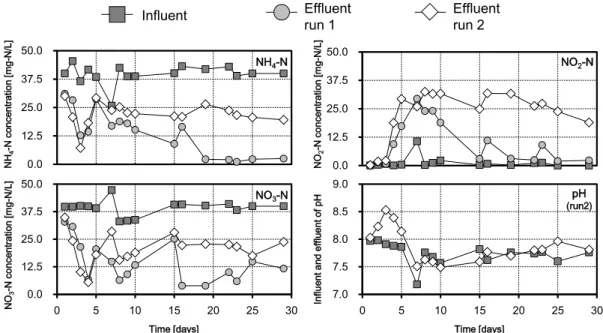
Fig. 4-2 The trends for NH4-N, NO2-N, and NO3-N concentrations and pH during continuous experiments of run 1 and run 2. (Adapted from Kamei et al., 2015) ... 46
Fig. 4-3 NLR and NRR tendencies in run 1 and run 2. (Adapted from Kamei et al., 2015) ... 47
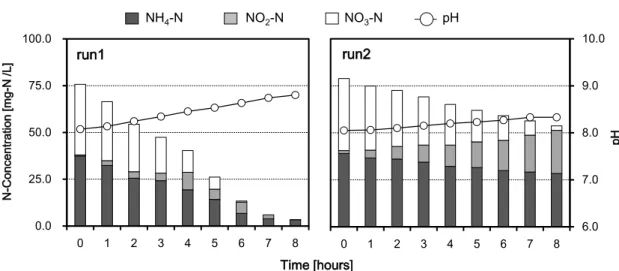
Fig. 4-4 Trends for NH4-N, NO2-N, NO3-N, and pH during batch experiments with run 1 and run 2. (Adapted from Kamei et al., 2015) ... 47
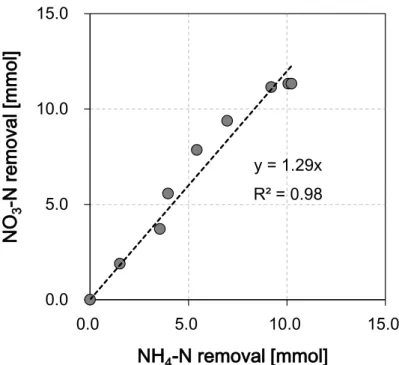
Fig. 4-5 A correlation between NH4-N and NO3-N removal during the batch experiment in run 1 ... 48
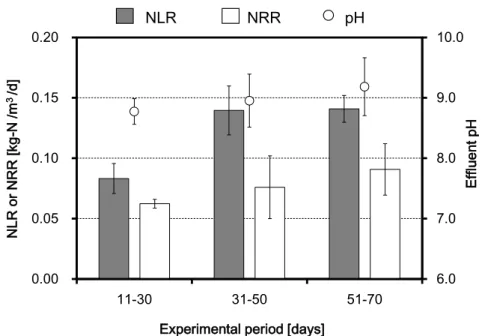
Fig. 4-6 Average NLR, NRR, and pH in the continuous experiment.(Adapted from Kamei et al., 2015) ... 50
Fig. 4-7 Sludge color changes during the continuous cultivation experiment for comparison of changes in activity of anammox and HD bacteria. (A): Initial day, (B): after 12 d, (C): after 36 d, (D): after 55 d ... 50
Fig. 4-8 NH4-N, NO2-N, and pH changes under the conditions of H2 or Ar gas supply. NO3-N concentration changes are not presented because they were below the detection limit. (Adapted from Kamei et al., 2015) ... 51
Fig. 4-9 An outline of the estimated mechanism of negative effects of HD bacteria on anammox bacteria ... 51
Fig. 5-1 The flowchart of the water pathway at an on-site water treatment facility in Lalitpur, Nepal ... 56 Fig. 5-2 An outline of the structure of scaled up DN systems and details of the water flow .... 57 Fig. 5-3 Tendencies of the average NH4-N concentration and NH4-N removal rate during an
on-site experiment. Error bars show standard deviation (a: changes in NH4-N
concentration, b: changes in the NH4-N removal rate) ... 60
Fig. 5-4 The average NO3-N concentration and NO3-N removal rate during an on-site
experiment (a: NO3-N concentration changes, b: changes in the NO3-N removal rate).... 61
Fig. 5-5 Seasonal changes in the NH4-N removal rate in scaled up DN units during days 200–
750 of operation. The experimental period was subdivided into cold and warm seasons on the basis of the average temperature. Error bars show standard deviation. The asterisk indicates statistically significant differences ... 62 Fig. 6-1 Trends for the NLR and NRR during pre-cultivation for anammox bacteria in RA (reactor with pH control) and in RB (reactor without pH control) ... 70 Fig. 6-2 Tendencies for the removal efficiency of NH4-N and NO3-N as well as the NO2-N
concentration in RA and RB during the continuous experiment ... 71 Fig. 6-3 The trends for the NLR and NRR in RA and RB during the continuous experiment .. 72 Fig. 6-4 Correlation of the NRR with NH4-N and NO3-N removal rates in RA and RB. The
dashed line shows the regression line based on the actual data, and the theoretical ratio is denoted by the solid line ... 73 Fig. 6-5 The tendencies for NH4-N, NO2-N, NO3-N, and pH during the batch experiment in RA
and RB ... 74 Fig. 6-6 Comparison of the NRR, NH4-N and NO3-N removal rates, and the NO2-N
concentration between addition of 0.1N HCl and CO2 gas supply in RA ... 75
Fig. 6-7 The effects of a decrease in the H2 gas flow rate on the NRR, on NH4-N and NO3-N
removal rates, and on the NO2-N concentration in RA ... 76
Fig. 6-8 An outline of the designed DN-CAHD process for on-site water treatment... 77 Fig. 7-1 An outline of the experimental setup in Chapter 7 ... 84 Fig. 7-2 Trends for the NLR and NRR during the initial cultivation period of Runs 1, 2, and 388 Fig. 7-3 Trends for NH4-N, NO2-N, NO3-N, and pH during the batch experiment in Runs 1–3 88
Fig. 7-4 Correlation between the NH4-N and NO3-N removal rates during batch experiments in
Runs 1–3... 88 Fig. 7-5 NO3-N removal tendencies at various H2 gas supply ratios (50–100%) in Runs 1–3 .. 90
Fig. 7-6 Tendencies for NH4-N, NO2-N, NO3-N, and the H2 gas supply ratio for Runs 1, 2, and
3 ... 93 Fig. 7-7 Trends for NLR, NRR, and for the H2 gas supply ratio during continuous experiments
xi
in Runs 1, 2, and 3 ... 94
Table list
Table 2-1 Physiological differences among anammox bacterial species ... 19Table 2-2 The list of previously developed systems for nitrogen removal combined with anammox and several microbial activities ... 22
Table 3-1 Concentrations of supplements for the synthetic inorganic medium ... 26
Table 3-2 Concentration of supplements in trace elements 1 and 2 ... 26
Table 3-3 Comparison of NRRs from the present study with those of published reports. (*The results were calculated from the data in the publication; ABF, anaerobic biological filtered; UASB, up-flow anaerobic sludge blanket; SBR, sequencing batch reactor; MBR, membrane bioreactor). (Adapted from Kamei et al., 2016) ... 33
Table 3-4 Distributions of phylotypes and homology search results regarding tentative clones from RFLP groups in each environmental sample and at each cultivation temperature. Sample names are presented as follows: Arakawa Dam (AD), Lake Yamanaka (LY), and Jyurou River (JR). (Adapted from Kamei et al., 2016) ... 36
Table 5-1 Operational datasets for analysis of performance stability of scaled up DN systems 56 Table 6-1 The experimental setup for operation of laboratory scale CAHD reactors (Chapter 6) ... 67
Table 6-2 Datasets for designing the on-site CAHD reactor ... 77
Table 6-3 Calculation results on the on-site CAHD reactor ... 77
Table 7-1 Details of the experimental setups in Chapter 7 ... 85
Table 7-2 Comparison of operational results and requirements for H2 gas in this chapter and in Chapter 4 ... 95
List of acronyms and abbreviations
AD Arakawa dam
Anammox Anaerobic ammonium oxidation
CAHD Combined anammox and hydrogenotrophic denitrification
COD Chemically oxygen demand
DIN Dissolved inorganic nitrogen
DN Dropping nitrification
DO Dissolved oxygen
HD Hydrogenotrophic denitrification
HRT Hydraulic retention time
JR Jyurou river
LY Lake yamanaka
NH4+ Ammonium
NH4-N Ammonium nitrogen
NLR Nitrogen loading rate
NO2-N Nitrite nitrogen NO3-N Nitrate nitrogen
NRR Nitrogen removal rate
PCR Polymerase chain reaction
RFLP Restriction fragment length polymorphism WWTP Wastewater treatment plant
Chapter 1
Introduction
Chapter1
Introduction
1.1 Research background
Groundwater is a major water resource and constitutes approximately 30% of fresh water resources (Shiklomanov and Rodda, 2003). Because it is a familiar water resource, groundwater is utilized for several purposes, such as thermal power water, irrigation, manufacturing, and the public water supply (Zektser and Everett, 2004). The proportions of groundwater use for each propose are as follows: 65% for drinking water, 20% for irrigation and livestock, and 15% for industry and mining, meaning that groundwater is mainly extracted for drinking water (Zektser and Everett, 2004). Despite being an important water resource, groundwater is often contaminated in various geographic areas (Zaporozec et al., 2002). The major contaminants in groundwater are heavy metals (e.g., iron, arsenic, and manganese), organic matter (e.g., dissolved organic carbon [DOC] and pesticides), nitrogen compounds (e.g., dissolved organic nitrogen, and DIN), and pathogenic bacteria such as fecal bacteria. These contaminants result from geological features and human activities.
Inorganic nitrogen compounds, in the form of ammonium nitrogen (NH4-N), nitrite nitrogen (NO2-N), and nitrate nitrogen (NO3-N) are major contaminants in groundwater. Furthermore, several studies showed that groundwater contamination is especially prevalent in developing countries of the Asian region, such as India, Thailand, Indonesia, and Nepal (Bouman et al., 2002; Khatlwada et al., 2002; Suthar et al., 2009; Umezawa et al., 2009). For example, 20 mg-N/L ammonium and 10 mg-N/L nitrate were detected in groundwater in Bangkok (Thailand) and Jakarta (Indonesia), respectively (Umezawa et al., 2009). Moreover, serious contamination was detected in Kathmandu, Nepal. Other researchers reported that deep and shallow groundwater is strongly contaminated by a high concentration of NH4-N: ~20−100 mg-N/L (Chapagain et al., 2010). A negatively charged soil particle can adsorb positively charged NH4+. Then, this adsorbed NH4+ is utilized by a plant and microbiological enzymes such as nitrification enzymes, resulting in NH4-N that is basically removed and not dissolved in groundwater. On the other hand, recent population growth increased NH4-N load on the soils. Furthermore, elution from geological features is also one of the contributing factors of NH4-N contamination in the case of deep groundwater.
3
Water quality related to concentration of nitrogen compounds should comply with the standards established by the World Health Organization (WHO). The standard upper limits for NH4-N, NO2-N, and NO3-N are 1.5, 0.9, and 11 mg-N/L, respectively (WHO, 2011). Higher levels, especially in terms of NO2-N and NO3-N, cause harm to the human body. NO2-N can oxidize hemoglobin in the human body, thus causing cyanosis and methemoglobinemia (WHO, 2011). Moreover, NO2-N reacts with organic matter and turns to nitrosamine, which is a carcinogen (WHO, 2011). Because of these negative effects on the human body, the contaminants NO2-N and NO3-N need to be removed from groundwater. Although it has no negative effects on the human body at high concentrations, NH4-N produces toxic compounds NO2-N and NO3-N via the oxidation process in the environment. Furthermore, NH4-N contamination gives water a bad smell, suggesting that this concentration should be decreased to under the standard levels before personal use.
Numerous efforts have been devoted to the development of nitrogen removal systems, and those systems are classified into two categories: with chemicophysical treatment and with biological treatment. The chemicophysical treatment is a system based on chemical and physical processes such as sedimentation, filtration, ion exchange, and electron transfer (Hell et al., 1998; Jorgensen and Weatherley, 2003; Lin and Wu, 1996). A biological treatment system (utilizes plant and microbiological activities) is used in numerous systems for nitrogen removal (Stottmeister et al., 2003). Microbiological wastewater treatment is widely applied to treatment systems. To remove nitrogen contaminants, two microbial activities, nitrification and denitrification, are used in such systems. The nitrification process is a chemoautotrophic microbial activity that can oxidize NH4-N to NO3-N via NO2-N under aerobic conditions via nitrifiers (Sharma and Ahlert, 1977). Then, oxidized NO3-N is reduced to N2 gas via NO2-N, nitric oxide (NO), and nitrous oxide (N2O) under anaerobic conditions by the denitrification process. Denitrification is performed by heterotrophic bacteria (autotrophic denitrifiers), which affect the operational conditions of a system for wastewater treatment. Under organic conditions, heterotrophic denitrification is a well-known process for NO3-N removal, and NO3-N is removed (with reducing organic carbon) as an electron acceptor (Knowles, 1982). Furthermore, a novel microbiological process for removal of NH4-N under anaerobic conditions was found and named anaerobic ammonium oxidation (anammox) (Jetten et al., 1998; Mulder et al., 1995; Strous et al., 1998). Chemoautotrophic bacteria, so-called anammox bacteria, are responsible for the anammox process. NH4-N is directly converted to N2 with utilization of NO2-N as an electron acceptor and the
resulting NO3-N as a byproduct under anaerobic conditions (Jetten et al., 1998). Because aeration and organic carbon are not required for NH4-N transformation into N2 gas, the anammox process can obviate 100% of the cost of organic carbon addition and 60% of the total operational cost (Sumino et al., 2006; Tsushima et al., 2007).
Groundwater is major water resource for domestic and drinking water in developing countries, but it is seriously contaminated by inorganic nitrogen, especially NH4-N. Thus, implementation of a nitrogen removal system adapted to NH4-N contamination is urgently needed. Due to local issues in developing countries, for instance, insufficient electricity supply, funding, and materials for operation of water treatment systems, the groundwater treatment systems should be simple and cost-effective with efficient nitrogen removal. Furthermore, the operational system should be a stand-alone process because groundwater is used at various locations. A simple and decentralized groundwater treatment system for removal of nitrogen contaminants needs to be developed and deployed in developing countries.
1.2 Research objectives
The nitrogen removal system should have lower energy consumption and the ability to operate in a decentralized place or at household levels because of the living conditions in developing countries. In this study, a simple nitrogen system for groundwater purification was designed. Microbiological processes—nitrification, anammox, and denitrification—are utilized in this system. An outline of the nitrogen pathway in the designed systems is summarized in Fig. 1-1. Inflow of NH4-N is first oxidized to NO3-N by the nitrification process. The resulting NO3-N is subsequently reduced to NO2-N by a denitrification process. Finally, the resultant NO2-N and partially bypassing NH4-N in groundwater are simultaneously removed by the anammox process. By means of the designed system, multiple inorganic nitrogen contaminants can be removed because of individual nitrification and denitrification steps. Because nitrogen removal is mainly conducted by the anammox process, operational costs can be eliminated, in contrast to a combination of nitrification and denitrification processes.
The bottleneck for application of a nitrification process to groundwater treatment is believed to be the aeration cost. Thus, a dropping nitrification (DN) system, which was previously examined, was selected as the nitrification step. The performance of the DN system was examined during on-site operation by some researchers, and the study showed stable performance in terms of NH4-N removal without aeration
5
(Khanitchaidecha et al., 2012a). Groundwater is provided from the top part of the reactor, and flows down on the surface of a bacterial carrier, which is exposed to air. Then, nitrification occurs by means of O2 from the air. The DN system that was applied to on-site treatment of groundwater containing ~15 mg-N/L NH4-N showed NH4-N removal efficiency of 95−100% during on-site operation (Khanitchaidecha et al., 2012a). Thus, a DN system can remove NH4-N without any consumption of aeration costs, indicating that this approach is more suitable than current nitrification systems for groundwater treatment in developing countries.
The combination of denitrification and the anammox process was examined elsewhere (Chen et al., 2009; Langone et al., 2014; Sumino et al., 2006), indicating that co-occurrence of denitrification and the anammox process is a feasible idea. Most researches tried to combine anammox with heterotrophic denitrification for use in a wastewater treatment system (Ni et al., 2012). Despite feasibility of combined processes, groundwater does not contain organic carbon for heterotrophic denitrification to take place. For promotion of the denitrification activity, organic carbon is added to groundwater but is unsuitable because second-hand contamination and costs increase. Therefore, in this study, a combination of a denitrification process with anammox and a chemo-autotrophic denitrification process (so-called hydrogenotrophic denitrification; HD) is considered as another option. The HD process can reduce NO3-N to N2 gas via NO2-N with utilization of H2 gas as an electron donor. H2 gas is harmless and can be removed from water easily. Furthermore, the anammox process is not inhibited by H2 gas itself (Waki et al., 2013), indicating that removal of NO3-N and NH4-N by HD and by the anammox process is likely to be a suitable combined system for NH4-N removal from groundwater. The combination of anammox and HD activity for simultaneous removal of NH4-N and NO3-N is a novel idea; thus, our laboratory named it “combined anammox and hydrogenotrophic denitrification” (CAHD). The stoichiometry of the CAHD process can be calculated based on the anammox process equation (1-1) (Sliekers et al., 2002; Strous et al., 1998) and the NO3-N reduction pathway of HD in equation (1-2) (Lee and Rittmann, 2002). The entire reaction is shown in equation (1-3) (Kamei et al., 2015). Here, 1 molar NH4-N and 1.06 molar NO3-N are converted to 1.02 molar N2 gas without formation of nitrogenous byproducts.
Using two microbial removal systems, DN and CAHD, I was able to implement so-called DN-CAHD and achieved purification of NH4-N-contaminated groundwater. Nevertheless, there is limited information about the DN system performance with
groundwater containing a high NH4-N concentration and about feasibility of the CAHD process. It is worth mentioning the microbial source for enrichment of anammox bacteria in the CAHD system. Although activated sludge is a famous microbial source, it may not be available in developing countries due to the absence of functioning wastewater treatment plants (WWTPs). Furthermore, effects of cultivation temperature were also examined because temperature may not be maintained continuously due to the insufficient electricity supply. The study on the alternative microbial source such as freshwater environmental samples for enrichment of anammox bacteria also needs to be conducted to elucidate the effects of the cultivation temperature. The main objectives of this study were to examine feasibility of the DN-CAHD process and each system’s performance and applicability to a groundwater treatment system. The major objective and specific objectives are summarized as follows. To accomplish each objective, several experiments were conducted in the laboratory and on-site.
Major objective
To elucidate feasibility of a DN-CAHD system for groundwater treatment. Specific objectives
To clarify the possibility of enriching anammox bacteria in the freshwater environment for use in the on-site system, with evaluation of the temperature effect on enrichment duration and on characteristics of the anammox bacterial community.
To evaluate performance of the DN system under conditions of high NH4-N loading in an on-site experiment.
To examine feasibility of the CAHD process as a novel system for simultaneous removal of NH4-N and NO3-N.
Anammox
NH4+ + 1.32NO2 → 1.02N2 + 0.26NO3 + 2H2O (1-1) The process of NO3-N reduction by HD
7
CAHD
NH4+ + 1.06NO3 + 1.32H2 → 1.02N2 + 3.32H2O (1-3)
Fig. 1-1 An outline of the DN-CAHD process for NH4-N removal
1.3 The scope of this research
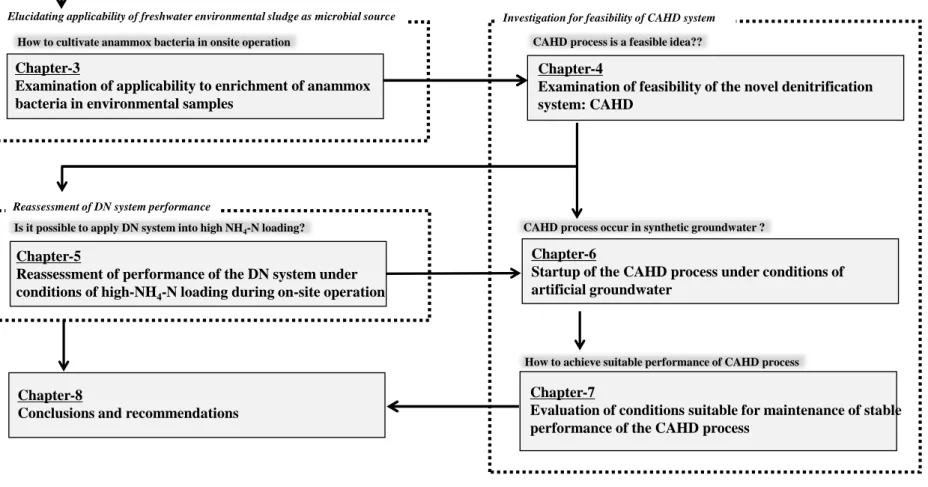
The scope of this research is summarized in Fig. 1-2. To examine feasibility of the DN-CAHD process, several experiments were conducted. The aims of each chapter are summarized below.
Chapter 3
Freshwater environmental sludge as a model sample is cultivated to determine its suitability as a microbial source for anammox bacteria, with evaluation of temperature effects on cultivation duration and on the anammox bacterial community.
Chapter 4
Basic information for implementation of the CAHD process is evaluated by cultivating anammox bacteria with an H2 gas supply in laboratory scale reactors.
Chapter 5
Performance of the DN system is examined to assess performance stability under conditions of strong NH4-N loading during long-term operation of an actual groundwater treatment experiment in Nepal.
Chapter 6
Performance stability of the CAHD process is examined during artificial groundwater treatment in laboratory scale reactors. Effects of operational factors (i.e., H2 gas flow rate and the method of pH control) on the stability of the CAHD process are examined.
NO3-N Anammox bacteria N2 Hydrogen gas Hydrogenotrophic Denitrifier NO2-N CAHD process NO3-N NH4-N NH4-N NO3-N Nitrifies DN-system
Chapter 7
Performance stability of the CAHD process is examined during long-term operation of the reactor. Effects of an intermittent H2 gas supply on stability of the CAHD reactor performance in a long-term continuous experiment are evaluated in this chapter.
Chapter 8
Empirical results are summarized and a new groundwater treatment system is proposed for removal of NH4-N contamination. Furthermore, the limitations of this study and recommendations for future research are summarized.
9
Fig. 1-2 The flowchart of this research project Objective: To elucidate feasibility of a DN-CAHD system for groundwater treatment
Chapter-7
Evaluation of conditions suitable for maintenance of stable performance of the CAHD process
Chapter-3
Examination of applicability to enrichment of anammox bacteria in environmental samples
Chapter-6
Startup of the CAHD process under conditions of artificial groundwater
Is it possible to apply DN system into high NH4-N loading? CAHD process occur in synthetic groundwater ?
How to achieve suitable performance of CAHD process How to cultivate anammox bacteria in onsite operation
Chapter-8
Conclusions and recommendations
CAHD process is a feasible idea??
Chapter-4
Examination of feasibility of the novel denitrification system: CAHD
Elucidating applicability of freshwater environmental sludge as microbial source Investigation for feasibility of CAHD system
Reassessment of DN system performance
Chapter-5
Reassessment of performance of the DN system under conditions of high-NH4-N loading during on-site operation
Chapter-1: Introduction Chpater-2 Literature review
Chapter 2
11
Chapter2
Literature review
2.1
Inorganic nitrogen dynamics
Inorganic nitrogen is circulating in the natural environment and assumes various forms. From NH4-N to N2 gas, nitrogen dynamics resulting from microbiological activities are described in Fig. 2-1. Basically, three types of microbial activity—nitrification, denitrification, and anammox—are related to the nitrogen dynamics. Briefly, NH4-N is oxidized to NO2-N and NO3-N by a nitrification activity by means of O2 under aerobic conditions. Oxidized NO3-N is then reduced to N2 via NO2-N, NO, and N2O by the denitrification process under anaerobic conditions. Additionally, the anammox process, which can reduce NH4-N to N2 directly via NO2-N under anaerobic conditions, also plays a big role in the nitrogen dynamics (Kuypers et al., 2003). Through these activities, NH4-N is converted to N2 gas. By means of these three microbial activities, a groundwater treatment system is developed in this study. Basic studies on a DN system, especially the nitrification process, have already been conducted (Khanitchaidecha et al., 2012a); accordingly, details of the HD and anammox processes are summarized in this chapter.
Fig. 2-1 Schematic depiction of inorganic-nitrogen dynamics
NH
4-N
NO
2-N
NO
3-N
N
2 Anammox Denitrification Nitrification2.2
HD
HD is a chemoautotrophic denitrification process that can convert NO3-N to N2 via NO2-N, NO, and N2O by means of H2 gas as an electron donor (Lee and Rittmann, 2002; Mansell and Schroeder, 2002; Smith et al., 2005). The stoichiometry of nitrogen reduction during HD is shown in equations (2-1) to (2-6) below (Karanasios et al., 2010; Lee and Rittmann, 2003); this process is almost identical to the well-known denitrification pathway. Reduction of NO3-N to N2 via NO2-N, NO, and N2O is performed by several enzymes: nitrate reductase (NaR), nitrite reductase (NiR), nitro oxide reductase (NOR), and nitrous reductase (N2OR; Fig. 2-2) (Knowles, 1982). The difference of the HD process from other hetero- or autotrophic denitrification processes is the use of H2 gas as an electron donor. H2 gas is oxidized by an enzyme called “hydrogenase”; as a result, a proton is produced (Carrieri et al., 2011). Then, the resultant protons are utilized in the NO3-N and NO2-N reduction process. One-molar NO3− is reduced to NO2−, by means of 1 molar H2 gas for the NO3−-reducing activity. Subsequently, NO2 is reduced to NO, N2O, and N2 with the help of H2 gas. Due to consumption of a proton in the NO2 reduction process, pH increases after the reaction. According to the equation of the HD process, 0.14 mgH2/mg-N for NO3− reduction and 0.21 mgH2/mg-N for NO2− reduction are needed (Karanasios et al., 2010). Because the denitrification process occurs autotrophically, an excessive biomass increase does not occur. Furthermore, H2 gas is a harmless electron donor and is easily removed from water, meaning that a special treatment system is not required. Thus, it is suitable for inorganic wastewater treatment, and numerous efforts have been devoted to application of HD activity to drinking-water treatment systems (Chang et al., 1999; Khanitchaidecha et al., 2012b; Smith et al., 2005; Szekeres et al., 2001).
Fig. 2-2 A schematic (flow) diagram of nitrogen transformations
NO3− reduction: NO3− + H2 → NO2− + H2O ··· (2-1) NO2− reduction: NO2− + H+ + 0.5H2 → NO(gas) + H2O ··· (2-2) NO reduction: 2NO(gas) + H2 → N2O(gas) + H2O ··· (2-3) N2O reduction: N2O(gas) + H2 → N2(gas) + H2O ··· (2-4) Denitrification from NO3− to N2: 2NO3− + 5H2 + 2H+ → N2(gas) + 6H2O ··· (2-5)
NO3− NO 2− NO N2O N2 NaR Nitrate reductase NiR Nitrite reductase NOR Nitro oxide reductase Nitrous reductase N2OR
13
2.2.1 HD bacterial species
Several studies were conducted for characterization of microbial species in HD systems; many types of bacteria were detected in HD systems. Other studies showed that the bacterial phyla Proteobacteria, Flavobacteria, and Sphingobacteria are present in HD systems (Mansell and Schroeder, 2002; Park et al., 2006; Sahu et al., 2009). Particularly, most of HD bacteria are categorized into the phylum Proteobacteria, which is one of the biggest bacterial phyla. In this phylum, Paracoccus (Vasiliadou et al., 2006b) is in the α-subclass; Alcaligenes (Chang et al., 1999), Rhodocyclus (Smith et al., 2005), Acidovorax (Vasiliadou et al., 2006b), and Hydrogenophaga (Zhang et al., 2009) are in the β-subclass; Pseudomonas (Liessens et al., 1992) and Acinetobacter (Vasiliadou et al., 2006b) are in the γ-subclass and are capable of HD. Many genera of HD bacteria were found under the conditions of H2 gas. Furthermore, several research groups examined denitrification activity by means of a pure culture of HD bacteria. Some researchers used Paracoccus denitrificans, Alcaligenes eutrophus, and Pseudomonas flava for analysis of their denitrification rates under various conditions (e.g., pH, temperature, and hydrogen gas pressure) (Myoga et al., 1994). Another group examined characteristics of denitrification activities of Acidovorax sp. strain Ic3, Paracoccus sp. strain Ic1, and Acinetobacter sp. strain Ic2 (Vasiliadou et al., 2006b). These other studies involved a pure culture of HD bacteria and showed that denitrification rates and physiological characteristics are different in each phylum and genus, even though the same denitrification process takes place by means of H2 gas as an electron donor. For example, Paracoccus sp. strain Ic1 and Acidovorax sp. strain Ic3 showed less NO2-N accumulation during their denitrification process from NO3-N and turned it into N2 gas, whereas Acinetobacter sp. strain Ic2 showed NO2-N accumulation and degradation (Vasiliadou et al., 2006b). Thus, several studies showed that some HD bacteria are suitable for the CAHD process due to their physiological characteristics related to NO2-N accumulation.
2.2.2 The NO2-N accumulation condition
For implementation of the CAHD process, operational conditions for NO2-N accumulation are summarized below. Because in numerous studies, an HD system was operated with a sufficient H2 gas supply, not many researchers examined suitable conditions for NO2-N accumulation. Some studies showed that NO2-N accumulation in an HD reactor is significantly affected by several operational factors (e.g., phosphate concentration, pH, and H2 gas) (Chang et al., 1999; Lee and Rittmann, 2003). The tentative operational factors for NO2-N accumulation are summarized below.
The pH effect
Two researchers reported that nitrite accumulation is significant in single-batch reactors when pH is in the range of 8.5 to 9.0 (Glass and Silverstein, 1998). Furthermore, another research group reported that NO2-N accumulation proceeds substantially with suppression of NO3-N-reducing activities at pH above 8.6−9.5 (Lee and Rittmann, 2003). These data indicate that high pH (above 8.5) is a negative factor for HD bacteria, especially for the NO2-N reduction process.
The effect of H2 gas
H2 gas is the most important factor for the HD process. Several studies showed that an insufficient H2 gas supply causes suppression of NO3-N reduction as well as NO2-N accumulation in HD systems (Chih et al., 1999; Lee and Rittmann, 2002; Lee et al., 2010). Most of researchers utilized NO3-N as a sole nitrogen source for their experiments. An insufficient supply of H2 gas causes suppression of NO2-N reduction, whereas NO3-N reduction proceeds weakly. There is a report that nitrite reductase inhibition and nitrite accumulation take place when dissolved H2 concentration is 0.2 mg/L in a pure culture of Alcaligenes eutrophus (Chang et al., 1999). Another group also examined the effects of H2 gas pressure on the performance of a fiber biofilm reactor system, showing that NO2-N accumulates and reaches 0.9 mg-N/L at 0.2 atm of H2 gas pressure (Lee and Rittmann, 2002). Furthermore, a packed bed reactor that is operated at various H2 gas flow rates (and hydraulic retention time; HRT) shows longer HRT (e.g., 30 min) at a high flow rate of H2 gas (e.g., 80 or 100 mL/min) and yields 1 mg-N/L of nitrite (Lee et al., 2010). An insufficient H2 gas supply or a low concentration of H2 gas in the HD system may cause NO2-N accumulation.
15
2.3
Anammox
Anammox is an anaerobic microbial activity that can simultaneously remove NH4-N and NO2-N while producing NO3-N as a byproduct (Jetten et al., 1998; Mulder et al., 1995). More than a decade ago, an anammox process was discovered in a landfill leachate treatment reactor by a research group of the Delft University of Technology (Jetten et al., 1998; Mulder et al., 1995). Until now, numerous efforts have been devoted to identification of anammox bacterial species, their physiological characteristics, and a suitable system for application to wastewater treatment. Stoichiometry of the anammox process is summarized in equation (2-8), where 1 molar NH4+ reacts with 1.32 molar NO2− and produces 1.02 and 0.23 molar N2 gas and NO3−, respectively. Recent reports predicted that the anammox process occurs in an organelle of a bacterial cell, so-called anammoxosome bounded by a membrane (van Niftrik et al., 2004). Although a pure anammox culture has never been obtained, several studies were conducted to elucidate the molecular mechanism of the anammox process. According to numerous studies to date, hydroxylamine (NH2OH), hydrazine (N2H2), and NO are intermediates of the anammox process (Van De Graaf et al., 1997; Jetten et al., 2001; Kartal et al., 2011; Hira et al., 2012; Irisa et al., 2014). The outline of the estimated details of the anammox process are presented in Fig. 2-3 (Kartal et al., 2011; Irisa et al., 2014). First, NO2− is reduced to NO by NiR, and partially, NO2− is oxidized to NO3− as a byproduct. Subsequently, NH4+ and NO are converted to N2H2 by hydrazine hydrolase. Finally, N2H2 is reduced to N2 gas by hydrazine oxidizing enzyme. Furthermore, some researchers predicted that NH2OH, which is produced from NO by hydroxylamine oxidoreductase, is a factor regulating the hydrazine dehydratase activity (Irisa et al., 2014). During the anammox process, NH2OH is gradually accumulating with production of N2H2 and inhibits the activity of hydrazine dehydratase. Due to inhibition of hydrazine dehydratase, hydroxylamine oxidoreductase starts to reduce NH2OH to NO, with initiation of N2H2 production to set potential differences between the enzymes. By reducing N2H2, anammox bacteria can get protons for production of ATP with N2 gas (van Niftrik et al., 2004). Through this microbial metabolism, simultaneous removal of NH4 and NO2 may occur.
The anammox process
NH4+ + 1.32NO2− + 0.066HCO3− + 0.13H+
Fig. 2-3 An outline of the predicted nitrogen pathway of the anammox process Hydrazine synthase
NO
2−NH
4+ Nitrite reductaseNO
Nitrate reductaseNO
3−N
2H
2 Hydrazine oxidizing enzymeN
2 Hydroxylamine oxidreductaseNH
2OH
17
2.3.1 Anammox bacterial species
Because a pure culture of anammox bacteria has not been obtained, the species name contains “Candidatus.” To date, five candidate genera, Candidatus Brocadia, Candidatus Scalindua, Candidatus Kuenenia, Candidatus Jettenia, and Candidatus Anammoxoglobus have been found and attributed to the class Candidatus Brocadiales in Planctomycetes on the basis of their 16S ribosomal RNA (rRNA) analysis. Among these five genera, one to six species were found in each (e.g., Brocadia anammoxidans, Scalindua wagneri, Kuenenia stuttgartiensis, Jettenia caeni, and Anammoxoglobus propionicus) (Ali et al., 2015; Kartal et al., 2008; Oshiki et al., 2011; Schmid et al., 2003; Woebken et al., 2008). Most of anammox bacteria have been found in activated sludge from WWTPs but also detected in several types of environmental samples (e.g., sea water or freshwater sediments and the oxygen minimum zone of a sea), indicating that anammox bacteria are ubiquitous in the environment. Furthermore, physiological analysis has been performed on several species and revealed that the characteristics are slightly different among the species. For example, an anammox species of the phylum Scalindua was originally discovered in a sea sediment (Schmid et al., 2003) and showed salinity tolerance (Awata et al., 2015; Liu et al., 2009). Moreover, Candidatus Anammoxoglobus propionicus, which was originally found in a reactor operating with organic compounds, revealed organotrophic NO3-N reduction by means of propionate (Guven et al., 2005; Kartal et al., 2007). Further research showed that organotrophic NO3-N reduction by means of polysaccharide is a common ability in several anammox bacterial species, such as Candidatus Brocadia anammoxidans and Candidatus Brocadia sinica (Oshiki et al., 2011), suggesting that characteristics of anammox bacteria are slightly different among the genera and species.
2.3.2 Physiological characteristics of anammox bacteria
To date, numerous studies have been conducted to clarify the physiological characteristics of anammox bacteria in a mixed culture because a pure culture of anammox bacteria has never been obtained. The anammox process is inhibited by several water quality indicators, such as water temperature, Dissolved oxygen (DO), pH, NO2-N concentration, and organic acids (Dapena-Mora et al., 2007; Guven et al., 2005; Kimura et al., 2011). One group reported that the NRR of an anammox process is suppressed by an increase in DO concentration, and that the DO concentration should not exceed 2.5 mg/L (Kimura et al., 2011). A high nitrite concentration also inhibits the anammox process (Dapena-Mora et al., 2007; Kimura et al., 2010; Lotti et al., 2012). There is a report that 350 mg-N/L NO2-N suppresses anammox activity by 50% (Dapena-Mora et al., 2007). One research group reported that 430 mg-N/L NO2-N suppresses anammox activity by 37% (Kimura et al., 2010). Organic carbon, e.g., in the form of alcohol, significantly inhibits anammox activity (Guven et al., 2005; Isaka et al., 2008b; Jensen et al., 2007). Some of these investigators examined the effect of the carbon source on nitrite-reducing activity in batch experiments and found that methanol and ethanol significantly suppress the NO2-N-reducing activity (by ~30−100%) when these concentrations are in the range of 0.5 to 3.0 mM (Guven et al., 2005).
Other researchers examined methanol’s inhibitory effect on the anammox process in a batch experiment and reported that 5 mM methanol causes 71% suppression of this activity (Isaka et al., 2008b). Although numerous researchers reported effects of an inhibitor on the anammox process, the results vary among the anammox species and under the influence of coexisting bacteria, as discussed elsewhere (Jin et al., 2012). Therefore, to obtain more definitive information, several research groups examined suitable conditions for growth of anammox bacteria by means of physically separated anammox organisms (which showed high cell density) and elucidated the details of the growth of anammox bacteria (Table 2-1) (Ali et al., 2015; Awata et al., 2013; Oshiki et al., 2011; Strous et al., 1999). For example, Candidatus Brocadia anammoxidans can grow at 20°C to 43°C and pH approximately 6.7 to 8.3 (Strous et al., 1999). In contrast, Candidatus Brocadia sinica (the same genus) showed different characteristics, especially at suitable pH (i.e., 7.0−8.8) (Oshiki et al., 2011). Furthermore, growth rates of the anammox bacterial species were also different. For example, Candidatus Brocadia sinica can grow twofold faster than the other anammox bacterial species can. Thus, physiological characteristics such as tolerance levels for inhibitors and the optimal temperature and pH for growth are slightly different among the anammox
19
species.
Table 2-1 Physiological differences among anammox bacterial species
Parameter Candidatus Brocadia anammoxidans Candidatus Brocadia sinica Candidatus Scalindua sp. Candidatus Jettenia caeni Growth Temperature [°C] 20−43 25−45 10−30 20−42.5 Growth pH 6.7−8.3 7.0−8.8 6.0−8.5 6.5−8.5 μmax [h−1] 0.0027 0.0041 0.0020 0.002
2.3.3 Application of the anammox process to a wastewater treatment system Numerous studies were conducted regarding application of the anammox process to WWTPs. For implementation of the anammox process, several treatment systems were designed (Table 2-2). Because of the inhibitors, the anammox process is suitable for treatment of inorganic and NH4-N-rich water such as landfill leachate and night soil digested water (Van Hulle et al., 2010). For stable operation of the anammox process, production of NO2-N and maintenance of the suitable ratio of NO2-N to NH4-N should be performed. In this sense, a combination with partial nitrification was designed for production of NO2-N (Fig. 2-4A). Under the influence of ammonium-oxidizing bacteria (AOB), a half of NH4-N is oxidized to NO2-N with appropriate control of DO concentration in the reactor (Furukawa et al., 2006; Guo et al., 2009; Lackner et al., 2014; Sliekers et al., 2002; Third et al., 2001). For instance, some of the above researchers examined the performance of single-stage nitrogen removal by means of anammox and partial nitrification (SNAP) by cultivating nitrification-activated sludge. Their results indicated that 60−80% of NH4-N is removed by nitrification and the anammox process, with nitrogen removal efficiency of 40−50% at the DO concentration 2−3 mg/L (Furukawa et al., 2006). The system of completely autotrophic nitrogen removal over nitrite (CANON) showed 85% conversion of NH4-N to N2 when enriched anammox sludge was cultivated under hypoxic conditions (Third et al., 2001). Furthermore, the DEAMON® system was developed and applied to WWTPs as a commercial module. Therefore, these reports showed that the use of anammox via combination with nitrification is feasible and efficient.
In contrast, several studies were conducted regarding application of the anammox system to an NO3-N removal system (Chamchoi et al., 2008; Chen et al., 2009; Sumino
et al., 2006; Wang et al., 2010). Although NO3-N was not removed, application of the anammox process to treatment of NH4-N-contaminated and NO3-N-contaminated water was found to be more efficient than the denitrification process in terms of cost-effectiveness. An outline of the conceptual nitrogen pathway of the combination of anammox and NO3-N-reducing activity is shown in Fig. 2-4B. NO3-N is reduced to NO2-N by the denitrification process. Then, the resulting NO2-N and NH4-N are simultaneously removed by anammox. Along with nitrogen removal, organic carbon removal can be achieved when heterotrophic denitrification occurs. Thus, the system can be applied to municipal wastewater treatment. One report showed that simultaneous nitrification, anammox, and denitrification are successfully attained in a single rector, whereas the presence of organic carbon inhibits the anammox process (Chen et al.,
21
2009). They found that 79% of NH4-N with 94% of Chemical Oxygen Demand (COD) as a parameter of organic carbon concentration can be removed in the reactor. Another research group reported that simultaneous removal of NH4-N with COD was discovered at a full-scale landfill leachate treatment plant (Wang et al., 2010). In contrast, others examined effects of COD concentration on the performance of anammox and denitrification in an up-flow anaerobic sludge blanket (UASB) system; they found that COD concentration exceeding 300 mg/L inactivates the anammox process (Chamchoi et al., 2008). These reports showed that a combination of the anammox process with denitrification can be used for wastewater treatment, while inhibition of the anammox process by organic carbon occurs at a high concentration of COD.
Table 2-2 The list of previously developed systems for nitrogen removal combined with anammox and several microbial activities
Combined system Microbial process Reference
CANON (completely autotrophic nitrogen removal over nitrite) Nitrification / Anammox (Third et al., 2001) SNAP (single-stage nitrogen removal using anammox and partial
nitrification) Nitrification / Anammox (Furukawa et al., 2006)
DEAMON ® (DEamMONification) Nitrification/ Anammox (Innerebner et al., 2007)
SNAD (simultaneous nitrification, anammox, and denitrification) Nitrification / anammox /
Denitrification (Chen et al., 2009)
DEAMOX (DEnitrifying AMmonium OXidation) Sulfide reduction of NO3-N /
anammox
(Kalyuzhnyi and Gladchenko, 2009)
23
Fig. 2-4 An outline of the denitrification process combining anammox with nitrification or denitrification NO3-N Anammox bacteria N2 NH4-N NO2-N Ammonium Oxidizing Bacteria (AOB) Partial nitrification NO3-N Anammox bacteria N2 NH4-N NO2-N Denitrifier NO3-N Organic carbon Partial denitrification
A:Partial nitrification with anammox
Chapter 3
Examination of applicability to enrichment of anammox
bacteria in environmental samples
25
Chapter3
Examination of applicability to enrichment of
anammox bacteria in environmental samples
3.1
Introduction
Application of the anammox process to groundwater treatment in developing countries can reduce the total operational cost, even though a sensitive operation should be conducted. Numerous studies showed that anammox bacteria can be enriched from activated sludge from WWTPs (Dapena-Mora et al., 2004; Fujii et al., 2002; Tsushima et al., 2007). On the other hand, in developing countries, activated sludge may be hard to obtain due to the absence of functioning WWTPs. Thus, alternative microbial sources for enrichment of anammox bacteria need to be used. On the one hand, enrichment of anammox bacteria is conducted at a suitable temperature ~30−37ºC (Ali et al., 2015; Oshiki et al., 2011), suggesting that this approach is not suitable for developing countries because an electricity supply is needed to maintain the temperature. Several reports showed the effects of temperature changes on the performance and enrichment of anammox bacteria (Isaka et al., 2007; Osaka et al., 2012): anammox bacteria were enriched and maintained their valuable characteristics at a low temperature. Nonetheless, there is limited information regarding comparison of an anammox bacterial community and the tendency for increasing nitrogen removal between optimal and low-temperature conditions. Accordingly, the effects of a microbial source and cultivation temperature on the anammox bacterial community and their characteristics are examined in this chapter. Freshwater environmental samples—river, lake, and dam reservoir sludge—were selected as models of microbial sources. Cultivation experiments were conducted under anaerobic conditions at two temperatures: 35ºC (mesophilic) and 15ºC (psychrophilic). The objectives of this chapter are summarized below.
Experimental objectives in Chapter 3
To examine applicability of freshwater environmental samples as a microbial source for enrichment of anammox bacteria.
To determine the effects of cultivation temperature on the tendency for increasing NRR and on characteristics of the anammox bacterial community.
3.2
Methodology
3.2.1 The synthetic cultivation medium for enrichment of anammox bacteria This medium was used in the experiments below. The medium was prepared from tap water as previously reported (van de Graaf et al., 1996). The concentrations of supplements in the medium were as summarized in Table 3-1 and Table 3-2. For the growth of anammox bacteria, same amount of (NH4)2SO4 and NaNO2 were added as nitrogen courses. Concentrations of NH4-N and NO2-N were increased with NRR changes, and set around 5 to 80 mg-N/L, respectively. The DO concentration of the medium was set to less than 0.3 mg/L to prevent inhibition of anammox bacterial activities.
Table 3-1 Concentrations of supplements for the synthetic inorganic medium
Compounds Concentration [g/L] NaHCO3 0.50 MgSO47H2O 0.30 CaCl22H2O 0.18 KH2PO4 0.027 Trace Elements 1 1 mL Trace Elements 2
Table 3-2 Concentration of supplements in trace elements 1 and 2
Compound Concentration [g/L] Trace Elements 1 EDTA(C10H14N2Na2O82H2O) 5 FeSO4 5 Trace Elements 2 EDTA(C10H14N2Na2O82H2O) 15 ZnSO47H2O 0.43 CoCl26H2O 0.24 MnCl24H2O 1 CuSO45H2O 0.25 NaMoO42H2O 0.22 NiCl26H2O 0.19 NaSeO410H2O 0.21 H3BO4 0.014
27
3.2.2 Cultivation setup
Environmental-sludge samples were collected from a fresh water environment of Jyurou River (JR), Lake Yamanaka (LY), and Arakawa Dam reservoir (AD), as bacterial sources. All of the sampling areas were located in Yamanashi prefecture in Japan. An outline of the cultivation setup and incubation reactor are shown in Fig. 3-1. The collected sludge was inoculated into up-flow sealed reactors with nonwoven fabric serving as a bacterial attachment carrier. Approximately 100 mL of fresh environmental sludge was added to the 500-mL reactor. The reactors were placed in incubators maintaining the temperature at 15ºC and 35ºC, respectively. To enhance the bacterial growth, HRT was gradually changed to 1.5 to 21 h, with changing NH4-N and NO2-N concentrations in the synthetic cultivation medium. The cultivation experiment was conducted continuously for more than 400 d. Because the NRR increase was not observed in the psychrophilic condition during initial cultivation, the experiment was continued for more than 400 additional days. In the mesophilic condition, cultivation was also continued for comparison of features of the anammox community at both temperatures, but NRR changes were not monitored.
Fig. 3-1 An outline of the cultivation setup
3.2.3 Water sampling and analysis
Influent and effluent water samples were collected and passed through Omnipore membrane filters with 0.45-µm pores (Merck Millipore, Darmstadt, Germany). The samples were frozen and stored until water quality analysis. As for measurement of inorganic nitrogen concentrations, the phenate method was used to determine NH4-N concentration (JWWA, 1993), and colorimetric and ultraviolet methods were used to
35℃ 15℃ P Synthetic medium Incubator