caregivers of older adults with diabetes mellitus regarding a development model
著者 ファム ティ トゥ フォン
著者別表示 PHAM THI THU HUONG journal or
publication title
博士論文本文Full 学位授与番号 13301甲第415号
学位名 博士(保健学)
学位授与年月日 2020‑09‑28
URL http://hdl.handle.net/2297/00061289
Introduction
According to International Diabetes Federation (2019), diabetes mellitus (DM) was found in 135.6 million people in aging population in 2019. It has been
estimated to rapidly increase by 1.5 and 2 fold in 2030 and 2045, respectively
1). In Vietnam, 11.7% of older adults have DM
2), and this disease is one of the top 10 diseases causing death and disabilities in 2017
3). DM
Doctoral course, Graduate School of Medical Sciences, National University Corporation Kanazawa University, Japan/ Hai Phong University of Medicine and Pharmacy, Vietnam
1 ) Health Sciences, Institute of Medical, Pharmaceutical and Health Sciences, National University Corporation Kanazawa University, Japan
2 ) Medicine, Institute of Medical, Pharmaceutical and Health Sciences, National University Corporation Kanazawa University, Japan
* Corresponding author
Examining the factors of burden among family caregivers of older adults with diabetes mellitus regarding a development model
Huong Thi Thu Pham, Mayumi Kato
1) *, Miho Shogenji
1), Hiromasa Tsujiguchi
2), Yoshimi Taniguchi
1)Abstract
The present study aimed to examine the factors contributing to burden among family caregivers of older adults with diabetes mellitus (DM), with regard to the characteristics of older adults as well as those of caregivers, caregiving self-efficacy and caregiver behavior toward diabetes support and social supports based on a conceptual development model.
In total, 151 family caregivers who were children or spouses responded (93.8%). In this cross-sectional study, primary family caregivers were personally interviewed using a set of anonymous structured questionnaires for data collection from one hospital in Northern Vietnam. We examined the factors contributing to caregiver burden via linear regression analysis and pathway analysis.
Most family caregivers were under 60 years old (66.9%) and female (74.2%). Linear regression analysis indicated that family caregivers with chronic illness status (β = .20), the number of hours of caring for older adults (β = .15), self-efficacy (β =-.16), and caregiver behavior toward DM care support (β =-.39) were all significant factors contributing to caregiver burden (F = 10.395, p < .001, AdjR
2= .41). Pathway analysis showed that chronic illness status was a significant direct predictor of caregiver burden, whereas the number of hours of caring for older adults both directly and indirectly predicted caregiver burden via mediators including self-efficacy and caregiver behavior toward DM care support (χ
2= 1.021, df=1, p = .312, CFI = 1.000, GFI = .997, SRMR =.000, and RMSEA = .000).
The characteristics of caregivers and their responsibility for older adults should be considered to decrease the burden of caregivers. Nursing intervention, social support, increased self-care and the acquisition of caregiving knowledge and skills might help in reducing family caregiver burden.
KEY WORDS
burden, caregiver, diabetes mellitus, self-efficacy, pathway
increases the risks of cardiovascular disease, stroke, renal failure, retinopathy, and peripheral vascular disease
4). In addition, older adults with DM are associated with cognitive impairment such as dementia and physical mobility disability such as amputation
5, 6). With a decline in the health status of older adults with DM, their activities of daily living (ADLs), self-care
7, 8), and diabetes self-care
9)also decline. Therefore, these older adults require assistance to execute their ADLs and efficiently manage their DM
10).
Family caregivers who provide caregiving activities to older adults with DM increasingly experience burden.
These family caregivers are involved in caregiving activities such as providing assistance for performing ADLs, taking medication, checking DM complications, supporting physical exercise, and making decision
11, 12). These responsibilities require a substantial amount of time
13), and performing hand-on care restricts the caregivers from having private time and exposes them to physical harm. In addition, several family caregivers are unaware regarding the accurate manner to provide the appropriate care because of lack of DM knowledge, caregiving skill, and support from professional health staff and other family members
12, 13). Consequences of caregiving issues that are prone to both physical and psychological burden include poor health status, depression, anxiety, and stress
14, 15).
In Vietnam, most older adults live with their families, and 90% of the older adults need daily care
16). Family caregivers not only play a role as supporting care at home but also as supporting care at hospital when older adults have illness and fatigue due to the traditions of Vietnamese family
16). The limitation of supportive environment, such as facilities in home environment, and place for physical activities was pointed out as a burden for people with diabetes in Vietnam
17). Furthermore, the incidence of lack of awareness about diabetes was more than 50%, indicating poor self- management among these patients with DM
17).
Determining the factors of burden is essential to prevent caregiver burden and improve their competence in providing care. Several literature reviews regarding certain aspects such as the caregiver burden in patients with cancer, heart failure, and Alzheimer’s disease have been conducted
18, 19, 20). With regard to caregiving in patients with DM, only one study investigated the
factors contributing to the burden of family caregivers in providing diabetic care. However, this study particularly surveyed caregivers dealing with a patient with type 2 DM who was amputated after operation and analyzed factors of burden without pathway analysis
21). Therefore, there is a need for a study on family caregivers of older adults with DM, who experience various challenges, with regard to maintaining their responsibilities in providing assistance and reducing their caregiving burden.
Family caregiver burden involves various potential factors. The characteristics of patients were considered as important factors
19, 22). Furthermore, the characteristics of family caregivers were reported as substantial factors of caregiver burden
21, 23). Social support reportedly reduces caregiver burden
19, 24). On the other hand, the individual’s belief of their abilities in providing care as well as their behavior can aid in coping with caregiving-related issues
25), indicating that caregiver self-efficacy and caregiver behavior toward DM support are important resources while experiencing psychological challenges such as depression and burden
25, 26). The present study was designed to elucidate the knowledge gap related to factors of caregiver burden and to provide helpful advice for alleviating such burden and improving the caregiver self-efficacy and behavior. We hypothesized that the family caregiver burden was affected from factors including the characteristics of older adults and family caregivers as well as social support, caregiver self-efficacy, and caregiver behavior toward DM care support. This study aimed to examine the factors of burden among family caregivers of older adults with DM with focus on characteristics of older adults as well as those of caregivers, caregiving self-efficacy, and caregiver behavior toward diabetes support and social supports based on a conceptual development model.
Methods
1. Conceptual framework
We developed a hypothetical model for the present
study to investigate the factors of burden (Figure 1)
according to the stress process model by Pearlin
27), self-
efficacy theories by Bandura
28, 29), and caregiver behavior
toward DM support by Scarton
26). Burden comprises
four dimensions—the caregiver’s emotional, physical,
social, and financial distress
30, 31). The stress process model helps clarify the various dimensions of burden, emphasizing an influence by various factors
27). Such a model was adopted in the present study to investigate different stressor factors including the characteristics of patients, caregivers, and social support. The mediator factors comprised caregiver self-efficacy and caregiver behavior toward DM care support.
These factors constitute the core of this conceptual framework because these variables were considered as motivations influencing the caregiver burden. Self- efficacy is conceptualized as the belief of the individual in confidently performing their tasks
32). Caregivers with high self-efficacy can better improve their well- being, thereby reducing stress and burden
28). However, various factors, including resources from family and society, might influence the caregiver self-efficacy
29). Caregiver behavior toward DM care support involves caregiver perception regarding DM and their coping mechanism in response to caregiving as well as handling patient emotion and behavior and providing physical care
26, 33). We used the findings of a study by Scarton
26)to add more critical factors measuring caregiver behavior during DM care for older adults; that study indicated that the impairment of caregiver behavior is associated with an increase in depression status. A poor behavior in the caregiving role may primarily require
DM knowledge, caregiving skill, and social support to overcome the difficulties in caregiving.
2. Study design and participants
An anonymous structured questionnaire was given via face-to-face interview with a researcher because some respondents were expected illiterate. The hospital is a healthcare center for the northern coastal region, which includes five cities, namely Hai Phong, Quang Ninh, Thai Binh, Nam Dinh, and Ninh Binh. There are 1000 patient beds in this hospital, which are used by the departments of internal medicine and surgical medicine and the intensive care unit; there were no nurses who had advanced certification associated with DM care.
Convenience sampling was performed for 3 months, from April to June 2018. The inclusion criteria were participants who were the primary family caregivers, were children or spouses, were ≥20 years old, were living with older adults with DM, and were responsible for caring for older adults as caregivers. We defined older adults as those who were ≥ 60 years old because many studies have adapted this age
34, 35, 36). Exclusion criteria were family caregiver with DM and who were unable to answer the self-reported sheet.
The nurses employed at the abovementioned hospital were trained to assess participant candidates and provided study information. These nurses assessed the participants based on the inclusion and exclusion
Fig 1: Hypothetical model of burden among family caregivers of older adults with diabetes mellitus (DM)23
Fig 1: Hypothetical model of burden among family caregivers of older adults with diabetes mellitus (DM)
Stressor factors Mediator factors Outcome
Characteristics of older adults with DM
-Demographic information (age, sex, education level, working status, insurance status)
-Duration DM of older adults -Number of hospitalizations / last year -Length of hospital stay
Characteristics of family caregivers -Demographic information (age, sex, educational status, marital status, working status, chronic illness status)
-Relationship to patient -Years as a caregiver -Diabetes knowledge
Characteristics of social support -Caregiving education received from professional health staffs -Family type
-Number of family members as caregivers
Self-efficacy
Caregiver behavior toward DM care support
Burden
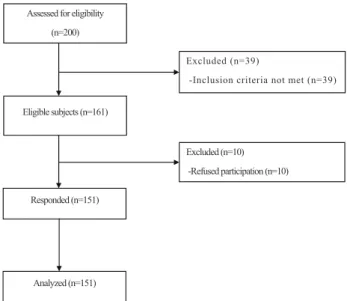
criteria and then introduced the eligible participants to the researcher. A total of 161 eligible participants were recruited from 200 older adults with DM by selecting one patient–one participant approach. A researcher thoroughly explained the study information to all eligible participants. We obtained formal consent from all eligible participants before conducting a face-to-face interview. Subsequently, 151 participants responded, obtaining a response rate of 93.8% (Figure 2).
3. Measurements
1 ) Characteristics of older adults with DM
Characteristics of older adults included demographic information such as age, sex, educational status, working status, insurance status, DM duration, hospitalization frequency in the previous year, and hospitalization length.
The independent status of older adults has an influence on the caregiver burden
14). Barthel index (BI) contains 10 items that examine patient’s ability with regard to self-care in ADLs. These 10 items include feeding, bathing, grooming, dressing, transferring, toilet use, stair climbing, controlling bowel, controlling bladder, and mobility. Raw 10 BI scores can range from 0–100; higher scores reflect minor activity limitations.
A total score of 100 presents the highest level of dependence with Cronbach’s alpha = .93
37).
2 ) Characteristics of family caregivers
Characteristics of family caregivers comprised demographic information such as age, sex, educational status, marital status, working status, chronic illness
status, relationship to the patient, years as a caregiver, and the number of hours of caring for older adults.
To measure the caregiver’s DM knowledge, we used the 24-item version of the Diabetes Knowledge Question, which has a reliability coefficient of 0.78. The items were scored with 1 point for a correct answer and 0 point for an incorrect answer or unknown. The total score ranges from 0 to 24 points. A high score indicated a high DM knowledge
38). The scale was forward- and back-translated by the Foreign Language Department- Hai Phong University of Medicine and Pharmacy. In this study, the reliability of this scale was calculated to be a Cronbach’s alpha value of .76.
To measure the self-efficacy of a family caregiver, we employed the Revised Scale for Caregiving Self-efficacy.
This 15-item scale assesses caregivers’ belief about their own ability to complete caregiving activities. The score ranged from 0 (cannot do it at all) to 100 (certain can do it); a higher score indicated higher confidence in completing caregiving activities. Participants responded to three subscales such as obtaining self- care, responding to disruptive patient behavior, and controlling upsetting thoughts, with Cronbach’s alpha of .86, .79, and .82, respectively
39).
To examine the caregivers’ behavior toward DM support, we used the Diabetes Caregiver Activity and Support Scale (D-CASS) that includes 11 items. This scale was valid and reliable for measuring the extent of difficulty or ease of caregiving activities and supportive behaviors for their family caregivers of patients with DM. The items of this scale were rated on a range of – 3 (extremely difficult) to + 3 (extremely easy);
low total scores indicate more difficulty in performing caregiving activities. The internal consistency was calculated according to the Cronbach’s alpha of .82
26). To measure caregiver burden, we employed the Zarit Burden Interview (ZBI) comprising 22 items scored on a 5-point scale ranging from 0 to 4, sequentially corresponding to “never,” “rarely,” “sometimes,” “often,”
and “always.” The total scores ranged from 0 to 88, with 0 indicating minimum burden and 88 indicating maximum burden. A higher score indicated more severe caregiver burden. The ZBI scale was reliable, with a Cronbach’s alpha of .93
40). This scale is widely used for family caregivers of people with dementia, heart failure, lung cancer, and so on. In this study, the
Fig 2: Flow diagram of the subjects24
Fig 2: Flow diagram of the subjects Assessed for eligibility
(n=200)
Responded (n=151)
Excluded (n=10) -Refused participation (n=10) Eligible subjects (n=161)
Excluded (n=39)
-Inclusion criteria not met (n=39)
Analyzed (n=151)
Cronbach’s alpha score of the scale that was used for family caregivers of older adults with DM was 0.94.
3 ) Characteristics of social support
We determined the social support using variables such as the caregiving education received from professional health staff, the family type, and the number of family members as caregivers.
4. Data analysis
Data were analyzed using the IBM SPSS Statistics version 21 and IBM SPSS-Amos version 21.
Preliminarily, we examined the frequency by descriptive statistic. The normality of variable distribution was assessed using the Kolmogorov–Smirnov statistic with a significance level of p<.05. For abnormal variable distribution, we used the Mann–Whitney or Kruskal–
Wallis tests with one-way ANOVA to explore the different significance levels between the variables and the caregiver burden. Thereafter, we selected the appropriate variables according to multicollinearity before performing a linear regression, which was then used to predict the factor variables of caregiver burden. Finally, the goodness-of-fit information for the overall model was obtained using pathway analysis, which indicated the structural relationships among the investigated variables. Consistency of pathway analysis with structural equation modeling (SEM) was interpreted using the comparative fix index (CFI), goodness-of-fit index (GFI), standardized root mean square residual (SRMR), and root mean square errors of approximation (RMSEA)
41).
We divided variables into groups based on former studies
34,35,36). We chose high school to divide education levels into two groups according to the national education system in Vietnam
42). The low educational group comprised those who studies till high school.
The high education group included those who had attended college and had an undergraduate, masters, or doctorate degree. The number of hours of caring for older adults was divided into three groups based on the regulations of national labor law
43), which states no more than 8 hours for daily work per day and no more than 12 hours for total hours of daily and-extra work per day. Years as caregiver and DM duration of the older adults were divided according to a previous study.
The variables including length of stay in hospital, older adult ADLs abilities, DKQ, self-efficacy, and caregiver
behavior toward DM care support were all abnormally distributed using the median point as the cutoff point for dividing the groups for each variable.
Ethical consideration
This study was approved by the Medical Ethics Committee of Kanazawa University (approval No.832-
1), dated on March 15, 2018. We obtained approval from the managing board of Viet Tiep General Hospital and obtained the informed consent of all the participants. This study complies with Helsinki Declaration (2013.10, World Medical Association), and ethical guidelines for research on medical science for people (Ministry of Education, Culture, Sports, Science and Technology, Ministry of Health, Labor and Welfare, December 22, 2014).
Results
1. Preliminary analysis
The characteristics of family caregivers are presented in Table 1. Of 151 family caregivers (25.8% male, 74.2%
female), 101 (66.9%) was aged <60 years, and their mean (standard deviation, SD) was 52.9 (12.4), ranging from 24 to 85 years. Most caregivers were married (136, 90.1%) and had low educational status (111, 73.5%).
Moreover, 94 (62.3%) family caregivers were employed, 47 (31.1%) had a chronic illness, and 136 (90.1%) had caregiving experience of ≤ 5 years. Moreover, 72.2% of the family caregivers reported a high number of hours of caring for their older adult patients, spending at least 8 h per day. Additionally, 92 (60.9%) of them exhibited minimal DM knowledge. Significant differences were observed between caregiver burden and their characteristics of age (p < .001), educational status (p
= .013), working status (p = .023), chronic illness status (p = .002), relationship to older adults (p = .007), the number of hours of caring for older adults (p < .001), self-efficacy (p = .003), and behavior toward DM care support (p < .001). The mean (SD) score of ZBI of the low-score group in D-CASS was 42.7 (12.9), whereas it was 29.1 (13.0) in the high group, indicating the low- score group of D-CASS showed ten score higher than the high-score group.
Table 2 shows that most of the older adults (64.2%)
were aged ≥70 years, and their mean age (SD) was
73.7 (8.8), ranging from 60 to 95 years. More than
-24-
half of them were female (79, 52.3%) and most were currently unemployed (143, 94.7%). Furthermore, 63 (41.7%) of the older adults had DM for ≥10 years, and approximately half of them (67, 44.4%) were being hospitalized at least twice per year. Regarding the characteristics of older adults with DM, DM duration of the older adults and caregiver burden were significantly different (p = .002).
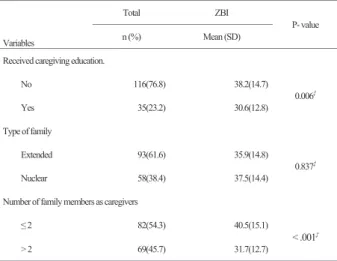
Regarding social support, a high proportion of family caregivers responded that they did not receive caregiving education from professional health staff (116, 76.8%). An extended family was the most prevalent family type observed (93, 61.6%). In addition, 82 (54.3%) families had ≤ 2 family members as caregivers.
The caregiver burden showed a significant difference in terms of factors such as the acquisition of caregiving education (p = .006) and the number of family
members as caregivers (p < .001) (Table 3).
2. Linear regression analysis
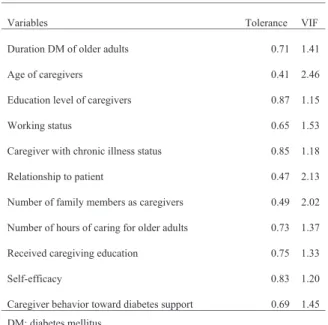
Overall, 11 independent significant variables associated with caregiver burden (Tables 1– 3) were obtained based on the appropriate multicollinearity, with a VIF ≤10, or tolerance ≥ .10 (Table 4); all these variables were included in this model. The result of
Table 1: Characteristic of family caregivers with burden17
n=151 Variables
Total ZBI p-value
n (%) Mean (SD) Age
< 60 101 (66.9) 33.5(13.7) < .001 ‡
≥60 50(33.1) 42.6(14.7)
Sex
Male 39(25.8) 34.5(13.1)
0.458‡
Female 112(74.2) 37.2(15.2)
Education level
Low 111(73.5) 38.2(15.0)
0.013‡
High 40(26.5) 31.7(12.6)
Marital status
Single 12(7.9) 42.6(19.4)
0.303†
Married 136(90.1) 35.8(14.3)
Widow 3(2.0) 44.0(3.0)
Working status
Not working 57(37.7) 40.3(16.6) 0.023‡
Working 94(62.3) 34.2(12.9)
Caregiver with chronic illness status
No 104(68.9) 33.5(12.6)
0.002‡
Yes 47(31.1) 43.1(16.8)
Relationship to patient
Spouse 53(35.1) 40.4(14.1)
0.007‡
Child 98(64.9) 34.3(14.6)
Number of hours as responsible for older adults
˂ 8 hours 42(27.8) 27.8(9.5)
< .001† ˂ 8 hours ˂ > 12 hours§ 8-12 hours ˂ > 12 hours§ 8-12 hours 41(27.2) 35.5(14.3)
>12 hours 68(45.0) 42.4(14.6) Years as a caregiver
≤ 5 years 136(90.1) 36.5(14.6) 0.783† 6 - 10 years 13(8.6) 37.1(15.8)
≥ 11 years 2(1.3) 32.0(16.9)
DKQ
Low DKQ 92(60.9) 38.3(15.4) 0.073‡
High DKQ 59(39.1) 33.7(13.1)
Self-efficacy
Low SE 76(50.3) 40.2(15.1) 0.003‡ High SE 75(49.7) 32.7(13.3) Caregiver behavior toward DM care support
Low 82(54.3) 42.7(12.9) < .001‡
High 69(45.7) 29.1(13.0)
† Kruskal Wallis test
‡ Mann Whitney U test
§ Pairwise comparation by Kruskal Wallis one- way ANOVA ZBI; Zarit Burden Interview Scale
DKQ; Diabetes Knowledge Questions SE; self-efficacy
DM; diabetes mellitus
Table 3: Characteristic of social supports with burden
n=151
Variables
Total ZBI
P- value
n (%) Mean (SD)
Received caregiving education.
No 116(76.8) 38.2(14.7)
0.006‡
Yes 35(23.2) 30.6(12.8)
Type of family
Extended 93(61.6) 35.9(14.8)
0.837‡
Nuclear 58(38.4) 37.5(14.4)
Number of family members as caregivers
≤ 2 82(54.3) 40.5(15.1)
< .001‡
> 2 69(45.7) 31.7(12.7)
‡ Mann Whitney U test ZBI; Zarit Burden Interview scale
Table 2: Characteristic of older adults with burden
3
Table 2: Characteristic of older adults with burden n=151
Variables Total ZBI
P- value
n (%) Mean (SD) Age
60-69 54(35.8) 37.8(13.2) 0.428†
70-79 54(35.8) 34.6(15.2)
80-89 37(24.5) 37.8(14.9)
≥90 6(4.0) 34.2(17.4)
Sex
Male 72(47.7) 36.6(13.0) 0.642‡
Female 79(52.3) 36.4(16.1)
Education level
Low 135(89.4) 37.3(14.8) 0.095‡
High 16(10.6) 29.8(10.9)
Working status
Not working 143(94.7) 36.6(14.5) 0.485‡
Working 8(53.0) 33.7(11.9)
Insurance status
No 11(7.3) 39.5(14.3) 0.505‡
Yes 140(92.7) 36.2(14.7)
Duration DM of older adults
≤ 5 years 57(37.7) 41.2(14.6) 0.002†
≤5 years > 6- 9 years§ ≤5 years > ≥ 10 years§ 6 - 9 years 31(20.5) 32.2(13.7)
≥ 10 years 63(41.7) 33.8(13.8) Number of hospitalizations / last year
< 2 times 84(55.6) 35.4(15.8) 0.137‡ ≥ 2 times 67(44.4) 37.9(13.1) Length of stay in hospital
< 12 days 95(62.9) 37.1(14.7) 0.512‡ ≥ 12 days 56(37.1) 35.5(14.7) Older adult ADLs abilities
Low ADLs 83(55.0) 37.6(14.7) 0.238‡ High ADLs 68(45.0) 35.1(14.6)
† Kruskal Wallis test
‡ Mann Whitney U test
§ Pairwise comparation by Kruskal Wallis one- way ANOVA ZBI; Zarit Burden Interview scale
ADLs; activities Daily Living DM; diabetes mellitus
linear regression analysis showed that the regression model for caregiver burden was significant (F = 10.395, p < .001, AdjR
2= .41). Therefore, caregivers with chronic illness status (β = .20), the number of hours of caring for older adults (β = .15), self-efficacy (β = -.16), and caregiver behavior toward DM care support (β =
-.39) were all significant factors of caregiving burden (Table 5).
3. Pathway analysis
For testing the hypothesis, the characteristics of older adults and social support, which were not related to caregiver burden, were included in this model (Tables
1–3,5). In the model, the characteristics of family caregiver such as chronic illness status (β = .23, p <
.001), the number of hours of caring for older adults (β
= .19, p = .006), self-efficacy (β = -.18, p = .005), and caregiver behavior toward DM care support (β = -.40, p < .001) were significant direct predictors of caregiver burden. Interestingly, the association between the number hours of caring for older adults and caregiver burden was mediated by caregiver self-efficacy (β =
-.27, p < .001) and caregiver behavior toward DM support (β = -.32, p < .001) (Figure 3).
Using the goodness-of-fit model, we examined the relationship between the factors and caregiver burden.
The results showed that the model fit statistic obtained the following values: χ
2=1.021, df=1, and p = .312.
Moreover, the analysis statistic presented the following:
CFI = 1.000, GFI = .997, SRMR = .000, and RMSEA = .000.
Discussion
1. Family caregivers with chronic illness and higher number of hours of caring for older adults as direct factors of caregiver burden We found that family caregivers with chronic illness status might be one of the major factors contributing to caregiver burden. Family caregivers with chronic illness have to take care of themselves as well as of older adults with DM. Therefore, these family caregivers do not have enough time for self-care, resulting in psychological and physical distress. In fact, low self-care among family caregivers was associated with psychological distress, such as depression, and anxiety
44). Regarding this aspect, Orem (2011)
45)stated that self-care can maintain a balance between activities
Table 4. Multicollinearity among the variables21
Variables Tolerance VIF
Duration DM of older adults 0.71 1.41
Age of caregivers 0.41 2.46
Education level of caregivers 0.87 1.15
Working status 0.65 1.53
Caregiver with chronic illness status 0.85 1.18
Relationship to patient 0.47 2.13
Number of family members as caregivers 0.49 2.02
Number of hours of caring for older adults 0.73 1.37
Received caregiving education 0.75 1.33
Self-efficacy 0.83 1.20
Caregiver behavior toward diabetes support 0.69 1.45 DM; diabetes mellitus
VIF; variance inflation factor
Table 5. Factors of care burden by Linear Regression analyses
22
Variables B SE β t
Duration DM of older adults -0.25 0.15 -0.13 -1.72
Age of caregivers 4.86 3.05 0.16 1.59
Education level of caregivers -3.66 2.22 -0.11 -1.65
Working status -2.11 2.33 -0.07 -0.91
Caregiver with chronic illness status 6.38 2.14 0.20 2.97**
Relationship to patient 4.51 2.79 0.15 1.62
Number of family members as caregivers 0.08 0.91 0.01 0.09
Number of hours of caring for older adults 2.67 1.28 0.15 2.08*
Received caregiving education -1.79 2.49 -0.05 -0.72
Self-efficacy -0.01 0.01 -0.16 -2.37*
Caregiver behavior toward DM care support -0.83 0.16 -0.39 -5.20***
R2 0.45
AdjR2 0.41
F(p) 10.395 (p<0.001)
*:p<.05 **:p<.01 ***:p<.001 SE; Standardized Error β; β Standardized Coefficients DM; diabetes mellitus
Figure 3: Pathway diagram for burden.
25
Outcome .23***
Figure 3: Pathway diagram for burden.
Storessor factors Medicator factors
Caregiver behavior toward DM care
support
e: error variable, Model fit index: χ2 = 1.021, p=.312, CFI = 1.000, GFI
= .997, SRMR = .000, and RMSEA = .000. **p < .01; ***p < .001.
Burden -.18**
-.40***
.19**
Self-efficacy Caregiver with chronic
illness status
Number of hours of
caring for older adults -.27***
-.32***
e
e e
and rest, thus helping in maintaining individual well- being. Also, aging further contributes to psychological as well as physical distress, since there was a significant difference between the ZBI score of those aged <60 and ≥60 years in this study. It has also been shown that caregivers aged ≥60 years contributed to high caregiver burden
46). This suggests that nursing practice should assess the health status and should support implementation on self-care of caregiver, especially in aging population.
This study indicated that the number of hours of caring for older adults was the other major risk of caregiver burden. Goldsworthy (2008)
47)stated that insufficient respite time increases caregiver burden.
This study revealed that most family caregivers spent
≥8 h to provide care. Such long duration caregiving hours cause fatigue to the caregiver, resulting in burden.
We considered two reasons for interpreting why the family caregivers need to spend many hours to care for older adults. Although we did not explore amputation rate, amputation (39%)
48)is a serious disability and complication of DM, adding to the load of caregiver assistance for these individuals, such as assistance for transferring, moving, and toileting. Older adults with DM need to avoid having further complication from aging syndrome, declining muscle strength, as well as DM. To avoid these complications, family caregivers need to have knowledge regarding techniques for assisting in ADLs and caring diabetes. The other reason for burden is inadequate support in daily life environments, such as lack of handrails for walking, which makes assistance of older adults difficult for family caregivers. Bonnefoy (2007)
49)demonstrated that most older adults have insufficient home environment.
A quasi-experimental study indicated that modification of home environment could increase self-care in older adult by themselves
50). Therefore, the number of hours of caring for older adults might reduce as older adults can perform their ADLs by themselves. Nurses should give advice to improve home environments, such as the use of handrails, nonslip carpets, and appropriate light in home. This intervention will have a couple of effects, such as encouraging self-care in older adults and reducing load on family caregivers.
2. The influence of number of hours of caring for the older adults on caregiver burden via self- efficacy and caregiver behavior toward DM care support as mediator factors
This study found that the number of hours of caring for older adults with DM has an influence on self- efficacy among family caregivers. We considered two reasons for this finding. First, Bandura (1997)
29)stated that the family has a substantial resource effect on self-efficacy. Similarly, Yi Liu & Hua Huang (2016)
51)pointed out that the lack of family support for caregiver indicated less caregiver self-efficacy. In this study, although an extended family was the most prevalent family type, the number of family members acting as caregivers was ≤2. Therefore, family caregivers find it difficult to seek help from other family members, resulting a low self-efficacy. It should be considered as an improvement in family function to focus on sharing the caregiving role among family members. Second, the family caregivers, who take care for older adults with
≤5 years of DM duration, have a higher burden than others, indicating that these family caregivers have a lack of knowledge regarding caregiving skills for ADLs support. Bandura (1997)
29)stated that the low self- efficacy among caregivers is due to the lack of personal experiences. Similarly, a previous study supported that the caregivers do not have the appropriate skills and knowledge to provide care for patient with illness, so they lack confidence (self-efficacy) and feel unprepared
52). Thus, family caregivers need adequate understanding of caregiving experiences to improve their confidence in handling older adults without feeling threatened.
Similarly, the number of hours of caring for older
adults affected caregiver behavior toward DM care
support in this study. The family caregivers take
care of older adults for long duration hours without
support from others and knowledge, resulting in low
caregiver behavior DM care support. In fact, social
support is one of the elements that can help family
caregivers have private time to relax, take care of own
their health when they provide care
53). Moreover, the
family caregivers showed a lack of DM knowledge,
since 76.8% of the family caregivers responded to not
having caregiving education. The limitation of DM
knowledge causes more difficulties especially when the
family caregivers perform activities regarding DM care.
A previous study pointed that the family caregivers who received nursing skill training would be better in providing care as well as controlling the burden
54). In addition, psychological support has also been indicated to be useful for behavior and depression management
55). For these reasons, we considered that nurses should provide an intervention with triple aspects including providing DM knowledge, training diabetes activities support, and supporting for reducing psychological distress. This can improve the caregiver behavior DM care support.
The present study revealed that the mediator factors including self-efficacy and caregiver behavior toward DM care support had an impact on caregiver burden.
To begin with self-efficacy, a literature review suggested that intervention with coping strategies may be useful in controlling depression, anxiety, and burden among caregivers
56). According to cognitive appraisal of transactional theory of stress and coping, self-efficacy as a personal coping resource could enhance individual abilities of overcoming distress
25). Self-efficacy is an individual’s belief in his or her abilities to perform their role
32), and it also reduces negative mood and increases positive mood
57)when they cope with threatening situations while providing care to older adults, resulting in overcoming caregiver burden. Another previous study confirmed that self-efficacy helps individual improve coping with distress and overcome it
58). Durmaz (2014)
59)also revealed a negative correlation between caregivers’
self-efficacy and their burden. It helps an assertion for this finding that over a half of the family caregivers have low self-efficacy, buffering a high risk of caregiver burden in this study. Turning to the other aspect, caregiver behavior toward DM care support is related to caregiving activities and support such as medication adherence, preventing and managing diabetes complications, glucose control, meal preparation, emotional support
26). Lazarus and Folkman (1984)
25)and Scarton et al. (2017)
26)also supported that this caregiver behavior factor can affect the coping abilities of family caregivers, thereby reducing their distress.
This coping ability deserves an attribution from learning how to cope with distress, such as finding appropriate knowledge to coping, handling their distress, dealing with older adult behavior, seeking emotional support,
finding appropriate resource support. Li et al. (2014)
60)pointed out the family caregivers who received a coping strategies intervention had less caregiver distress. In sum, the caregivers coping skills should be considered for nursing assessment of caregivers to control burden.
The caregiver self-efficacy and behavior toward DM care support regarding handling with distress and finding knowledge could be considered as elements of nursing assessment for caregiver coping skill.
Limitations
The present study has several limitations that should be acknowledged. Convenience sampling was applied, and the participants were selected from one hospital of one area, thereby limiting the generalization of the study. Furthermore, the cross-sectional design resulted in difficulty in causal interpretation. The face-to-face interview method in this study may have resulted in the Hawthorne effect. Uncollected data such as of HbA1c, blood sugar value, medications, insulin injection, complications might relate to caregiver burden.
Conclusion
This study provided an insight into the factors of caregiver burden based on a development model. In short, family caregivers with chronic illness was a direct factor of caregiver burden; whereas number of hours of caring for older adults was a direct and indirect factor of caregiver burden through self-efficacy and caregiver behavior toward DM care support as mediator factors.
This study suggested that nurses should assess the family caregivers’ health status and support to improve their self-care. Furthermore, a nursing intervention should consider perception of self-efficacy with respect to DM knowledge, DM care knowledge, and training diabetes care activities to support to help reduce the risks of caregiver burden.
Acknowledgment
The authors acknowledge the support of the nurse in Viet Tiep General Hospital, Vietnam, for collecting data, thanks to all family caregiver for participation in our study.
Conflict of interest
The authors declare that there are no conflicts of interest.
Funding
This study received funding from Research fundation of Kanazawa University.
References
1 ) International Diabetes Federation (2019): IDF diabetes atlas, 9th edition, https://www.idf.org/
e-library/welcome/copyright-permission.html.
2 ) Minh N, Eggleston K (2016): Prevalence and determinants of diabetes and prediabetes among Vietnamese adults, Diabetes Res Clin Pract, 113, 116-24.
3 ) Institute of Health Metrics and Evaluation Vietnam (2017): What risk factors drive the most dealth and disability combined, http://www.healthdata.org/
vietnam, accessed on 2019.11.15.
4 ) Corriere M, Rooparinesingh N, Kalyani RR (2013): Epidemiology of diabetes and diabetes complications in the elderly: an emerging public health burden, Curr Diab Rep, 13, 805–813.
5 ) Cholerton B, Baker LD, Montine TJ, et al. (2016):
Type 2 diabetes, cognition, and dementia in older adults: Toward a precision health approach, Diabetes Spectr, 29, 210–219.
6 ) Wong E, Backholer K, Gearon E, et al. (2013):
Diabetes and risk of physical disability in adults:
A systematic review and meta-analysis, Lancet Diabetes Endocrinol, 1, 106–114.
7 ) Borhaninejad V, Iranpour A, Shati M, et al. (2017):
Predictors of self-care among the elderly with diabetes type 2: Using social cognitive theory, Diabetes Metab Syndr Clin Res Rev, 11, 163–166.
8 ) Santos T, Lovell J, Shiell K, et al. (2018): The impact of cognitive impairment in dementia on self-care domains in diabetes: A systematic search and narrative review, Diabetes Metab Res Rev, 34, e3013.
9 ) Weinger K, Beverly EA, Smaldone A (2014):
Diabetes self-care and the older adult, West J Nurs Res, 36, 1272–1298.
10) Pesantes MA, Del-Valle A, Diez-Canceco F, et al. (2018): Family support and diabetes: patient’s experiences from a public hospital in Peru, Qual Health Res, 28, 1871–1882.
11) Noureldin M, Plake KS (2017): Correlates of caregivers’ involvement in the management of older adults’ medications, Res Soc Adm Pharm, 13, 840–848.
12) El-Mallakh P, Yates BE, Adkins S (2013): Family caregiving for adults with schizophrenia and
diabetes mellitus, Issues Ment Health Nurs, 34, 566–577.
13) Sinclair AJ, Armes DG, Randhawa G, et al. (2010):
Caring for older adults with diabetes mellitus:
characteristics of carers and their prime roles and responsibilities, Diabetes Med, 27, 1055–1059.
14) Riffin C, Van Ness PH, Wolff JL, et al. (2019):
Multifactorial examination of caregiver burden in a national sample of family and unpaid caregivers, J.
Am Geriatr Soc, 67, 277–283.17.
15) Anaforoglu I, Ramazanogullari I, Algün E, et al.
(2012): Depression, anxiety and quality of life of family caregivers of patients with type 2 diabetes, Med Princ Pract, 21, 360–365.
16) Ngoc TTB, Barysheva GA, Shpekht LS (2015): The care of elderly people in Vietnam, The European Journal of Social and Behavioral Sciences, eISSN, 2357-1330.
17) WHO (2016): The growing burden of diabetes in Viet Nam. https://www.who.int/vietnam/news/
feature-stories/detail/the-growing-burden-of- diabetes-in-viet-nam, accessed on 2017.4.7.
18) Ge L, Mordiffi SZ (2017): Factors associated with higher caregiver burden among family caregivers of elderly cancer patients: A systematic review, Cancer Nurs, 40, 471–478.
19) Hu X, Dolansky MA, Hu X, et al. (2016): Factors associated with the caregiver burden among family caregivers of patients with heart failure in southwest China, Nurs Health Sci, 18, 105–112.
20) Sousa MF, Sontus RL, Turró-Garriga O, et al.
(2016): Factors associated with caregiver burden:
comparative study between Brazilian and Spanish caregivers of patients with Alzheimer’s disease (AD), Int Psychogeriatrics, 28, 1363–1374.
21) Costa MSA, Machado JC, Pereira MG (2018):
Burden changes in caregivers of patients with type 2 diabetes: A longitudinal study, J Adv Nurs, 74, 2322–2330.
22) Kim H, Chang M, Rose K, et al. (2012): Predictors of caregiver burden in caregivers of individuals with dementia, J Adv Nurs, 68, 846–855.
23) Seo YJ, Park H (2019): Factors influencing caregiver burden in families of hospitalized patients with lung cancer, J Clin Nurs, 28, 1979–1989.
24) Shiba K, Kondo N, Kondo K (2016): Informal and
formal social support and caregiver burden: The AGES Caregiver Survey, J Epidemiol, 26(12), 622- 25) Biggs A, Brough P, Drummond S (2017): Handbook 628.
of Stress and Health: Lazarus and Folkman’s psychological stress and coping theory, John Wiley
& Sons, 352–363.
26) Scarton L, Bakas T, Miller WR, et al. (2017):
Development and psychometric testing of the diabetes caregiver activity and support Scale, Diabetes Educ, 43, 465–475.
27) Pearlin LI, Mullan JT, Semple SJ, et al. (1990):
Caregiving and the stress process: An overview of concepts and their measures, Gerontologist, 30, 583–594.
28) Mowat J, Laschinger HK (1994): Self-efficacy in caregivers of cognitively impaired elderly people: a concept analysis, J Adv Nurs, 191, 1105–1113.
29) Bandura A (1995): Self-efficacy in changing societies, Cambridge University Press, United Kingdom, 12–109.
30) George LK, Gwyther LP (1986): Caregiver well- being: A Multidimensional examination of family caregivers of demented adults, Gerontologist, 26, 253–259.
31) Zarit SH, Reever KE, Bach-Peterson J (1980):
Relatives of the impaired elderly: correlates of feelings of burden, Gerontologist, 20, 649–655.
32) Bandura A (1994). Self-efficacy. Encyclopedia of human behavior, Academic press, New York, 71–
33) Scarton LJ, Bakas T, Miller WR, et al. (2014): 81.
Needs and concerns of family caregivers of persons with type 2 diabetes. Diabetes Educ. 40, 444–452.
34) Han C, Jo SA, Jo I, et al. (2008): An adaptation of the Korean mini-mental state examination (K-MMSE) in elderly Koreans: Demographic influence and population-based norms (the AGE study), 3, 302–310.
35) United Nations Population Fund (2011): The Aging population in Viet Nam: Current status, prognosis, and possible policy responses. https://www.
researchgate.net/publication/230750835, accessed on 2018.12.6.
36) Nilsson J, Rana M, Kabir ZN (2006): Social Capital and Quality, Journal of Aging and Health, 3, 419–
37) Shah S, Cooper B, Maas F (1992): The Barthel 434 Index and ADL evaluation in stroke rehabilitation in Australia, Japan, the UK and the USA, Aust Occup Ther J, 39, 5–13.
38) Garcia AA, Villagomez ET, Brown SA, et al.
(2001): The Starr county diabetes education study:
development of the Spanish-language diabetes
knowledge questionnaire, Diabetes Care, 24, 16–21.
39) Steffen AM, McKibbin C, Zeiss AM, et al. (2002):
The Revised Scale for caregiving self-efficacy:
Reliability and Validity Studies, Journals Gerontol Ser B Psychol Sci Soc Sci, 57, 74–86.
40) Hébert R, Bravo G, Préville M (2000): Reliability, validity and reference values of the Zarit Burden Interview for assessing informal caregivers of community-dwelling older persons with dementia, Can J Aging / La Rev Can du Vieil, 19, 494–507.
41) Ho R (2014): Handbook of univariate and multivariate data analysis with IBM SPSS, second edition, CRC Press, New York, 421-502.
42) Jonathan DL (2011): education in Vietnam, ISEAS, Singapore, 20–48.
43) Persol HR Data Bank in APAC (2018): Vietnam:
labor laws, https://rc.persol-group.co.jp/hr-data/_
materials/pdf/en/vietnam_labor-laws.pdf. accessed on 2020.2.5.
44) Dionne-Odom JN, Demark-Wahnefried W, Taylor RA, et al. (2017): The self-care practices of family caregivers of persons with poor prognosis cancer:
differences by varying levels of caregiver well- being and preparedness, Support care cancer, 25, 2437–2444.
45) Taylor SG, Renpenning K (2011): Self- care science, nursing theory, and evidence- based practice, Springer, New York, 3–25.
46) Souza ALR, Guimarães RA, Vilela DDA, et al.
(2017): Factors associated with the burden of family caregivers of patients with mental disorders:
a cross-sectional study, BMC Psychiatry, 17, 353–
363.
47) Goldsworthy B, Knowles S (2008): Caregiving for Parkinson’s disease Patients: An Exploration of a stress-appraisal model for quality of life and burden, Journal of Gerontology, 63, 372–376.
48) Jiang Y, Ran X, Jia L, et al. (2015): Epidemiology of type 2 diabetic foot problems and predictive factors for amputation in China, Int J Low Extrem Wounds, 14, 19–27.
49) Bnnefoy X (2007): Inadequate housing and health:
an overview, Int J Environment and Pollution, 30, 411–429.
50) Stark S, Landsbaum A, Paimer J, et al. (2009):
Client-centered home modifications improve daily activity performance of older adults, can Jaccup Ther, 76, 235–245.
51) Liu HY, Huang LH (2016): The relationship between family functioning and caregiving appraisal of dementia family caregivers: caregiving self- efficacy as a mediator, Aging Ment Health, 22, 558–567.
52) Given B, Sherwood PR, Given C, et al. (2008):
What knowledge and skills do caregivers need, Am J Nurs, 108, 28–34.
53) Strang VR, Haughey M, Gerdner LA, et al. (1999):
Respite-a coping strategy for family caregivers, West J Nurs Res, 21, 450–466.
54) Mollica MA, Litzelman K, Rowland J, et al.
(2018): The role of medical/nursing skills trainingin caregiver confidence and burden: A CanCORs study, Cancer, 123, 4481–4487.
55) Gallagher-Thompson D, Coon DW (2007):
Evidence-based psychological treatments for distress in family caregivers of older adults, Psychol aging, 22, 37–51.
56) Monteiro AMF, Santos RL, Kimura N, et al. (2018):
Coping strategies among caregivers of people with alzheimer disease: A systematic review, Trends in Psychiatry and Psychotherapy, 40, 258–268.
57) Keefe FJ, Ahles TA, Porter LS, et al. (2003): The
self-efficacy of family caregivers for helping cancer patients manage pain at end-of-life, Pain, 103, 157–
58) Mausbach BT, Roepke SK, Chattillion EA, et al. 162.
(2012): Multiple mediators of the relations between caregiving stress and depressive symptoms, Aging Ment Heal, 16, 27–38.
59) Durmaz H, Okanli A (2014): Investigation of the effect of self-efficacy levels of caregiver family members of the individuals with schizophrenia on burden of care, Arch Psychiatr Nurs, 28, 290–294.
60) Li R, Cooper C, Barder J, et al. (2014): Coping
strategies as mediators of the effect of the
START (strategies for RelaTives) intervention on
psychological morbidity for family carers of people
with dementia in a randomised controlled trial, J
Affect Disord, 168, 298–305.
開発モデルにおける糖尿病高齢患者の家族介護者の介護負担要因の検討
フォン ティ トゥ ファム , 加藤 真由美
1) *, 正源寺 美穂
1), 辻口 博聖
2), 谷口 好美
1)要 旨