Quantifying free-roaming domestic cat predation using animal-borne
video cameras
Kerrie Anne T. Loyd
a,⇑, Sonia M. Hernandez
a,b, John P. Carroll
a, Kyler J. Abernathy
c, Greg J. Marshall
caWarnell School of Forestry and Natural Resources, The University of Georgia, Athens, Georgia, USA
bSoutheastern Cooperative Wildlife Disease Study, Department of Population Health, College of Veterinary Medicine, The University of Georgia, Athens, Georgia, USA
cNational Geographic Remote Imaging, National Geographic Society, Washington, DC, USA
a r t i c l e i n f o
Article history:
Received 19 August 2012
Received in revised form 4 January 2013 Accepted 7 January 2013
Keywords: Domestic cats
Free-roaming cat predation Cat-wildlife interactions Crittercam
KittyCam Suburban wildlife
a b s t r a c t
Domestic cats (Felis catus) are efficient and abundant non-native predators. Predation by domestic cats remains a topic of considerable social and scientific debate and warrants attention using improved meth- ods. Predation is likely a function of cat behavior, opportunity to hunt, and local habitat. Previous preda- tion studies relied on homeowner reports of wildlife captures from prey returns to the household and other indirect means. We investigated hunting of wildlife by owned, free-roaming cats in a suburban area of the southeastern USA. Specific research goals included: (1) quantifying the frequency of cat interac- tions with native wildlife, (2) identifying common prey species of suburban cats, and (3) examining pre- dictors of outdoor behavior. We monitored 55 cats during a 1-year period (November 2010–October 2011) using KittyCam video cameras. Participating cats wore a video camera for 7–10 total days and all outdoor activity was recorded for analysis. We collected an average of 38 h of footage from each pro- ject cat. Forty-four percent of free-roaming cats hunted wildlife, of which reptiles, mammals, and inver- tebrates constituted the majority of prey. Successful hunting cats captured an average of 2.4 prey items during 7 days of roaming, with Carolina anoles (Anolis carolinensis) being the most common prey species. Most wildlife captures (85%) occurred during the warm season (March–November in the southern USA). Twenty-three percent of cat prey items were returned to households; 49% of items were left at the site of capture, and 28% were consumed. Our results suggest that previous studies of pet cat predation on wild- life using owner surveys significantly underestimated capture rates of hunting cats.
Ó2013 Elsevier Ltd. All rights reserved.
1. Introduction
Domestic cats are abundant generalist predators that may ex- ploit a wide range of prey. Cats are thought to pose a significant threat to the birds, herpetofauna, and small mammals upon which they prey (Crooks and Soulé, 1999; Dauphiné and Cooper, 2009; Lepczyk et al., 2004; Nogales et al., 2004). While feral domestic cats are deemed responsible for much of the documented decline in some wildlife populations (especially on islands), the contribution of owned domestic cat predation is in need of further attention. Previous studies of pet cat predation (Baker et al., 2005; Barratt, 1997; Churcher and Lawton, 1987; Crooks and Soulé, 1999; Lep- czyk et al., 2004; Tschanz et al., 2011; van Heezik et al., 2010; Woods et al., 2003) collected information from homeowners on the type and frequency of prey returned to the home by cats. The methodology used in these studies inherently underestimates pre-
dation as cats do not bring all prey items home; some animals are eaten or abandoned on site.Kays and DeWan (2004)observed the behavior of 11 indoor–outdoor cats and suggested actual cat pre- dation rates may be more than three times higher than rates mea- sured by prey returns to owners. Additionally, previous cat capture data are subject to sources of error including: misidentifying prey, under-reporting predation, and lack of willingness by participants to report predation on rare or native species (Baker et al., 2008; van Heezik et al., 2010).
In general, prior studies found mammals to be the most com- mon prey item of domestic cats, followed by birds, reptiles, amphibians and invertebrates (Table 1). While Lepczyk et al. (2004) identified several suburban bird species of conservation concern that were depredated by cats in southern Michigan [including Ruby-throated Hummingbirds (Archilochus colubris) and American Bluebirds (Sialia sialis)], predation is likely to affect numerous other resident backyard wildlife as well as migratory bird species. Recent research in suburban Washington, DC reported domestic cats to be responsible for nearly half of all documented predation events on nestling and juvenile Gray Catbirds (Dumatella carolinensis) (Balogh et al., 2011). Domestic cats were also found to 0006-3207/$ - see front matter Ó 2013 Elsevier Ltd. All rights reserved.
http://dx.doi.org/10.1016/j.biocon.2013.01.008
⇑ Corresponding author. Address: Arizona State University Colleges at Lake Havasu, 100 University Way, Lake Havasu City, AZ 86403, USA. Tel.: +1 678485 7544.
E-mail address:[email protected](Kerrie Anne T. Loyd).
Contents lists available atSciVerse ScienceDirect
Biological Conservation
j o u r n a l h o m e p a g e : w w w . e l s e v i e r . c o m / l o c a t e / b i o c o n
be a dominant nest predator of urban Northern Mockingbirds (Mi- mus polyglottos) in Florida (Stracey, 2011). Because of their visibil- ity and popularity, depredation of songbirds has received some attention in the literature and media (see review in Dauphiné and Cooper, 2009; Williams, 2009) but information on predation of other taxonomic groups remains deficient. Lizards constitute a significant part of feral cat diets on some islands [e.g., Canary Is- lands, (Nogales and Medina, 1996); Galapagos (Konecny, 1987)] however, the number of herpetofauna taken seasonally in the sub- urban, southeastern USA has never been studied. The number and type of suburban prey captured may be influenced by factors such as habitat, time spent roaming, or demographic factors of the cats. Cat hunting behavior may differ by season in temperate climates as seasonal variation in capture rates has been reported in the UK (Churcher and Lawton, 1987), Australia (Barratt, 1997) and New Zealand (van Heezik et al., 2010). Pet cats may be more active during mild weather months than during periods of extreme cold or mid- day summer heat. The amount of time spent hunting varies widely by individual (van Heezik et al., 2010) and some cats appear to be more active or successful hunters than others (Kays and DeWan, 2004).Churcher and Lawton (1987)andBarratt (1998)reported that older cats in Europe and Australia tended to hunt less.
Given the significance to wildlife conservation and the current problematic evidence, domestic cat predation necessitates research using improved methods to reduce error and accurately represent the hunting behavior of free-roaming cats.Baker et al. (2008)stressed the need to validate current estimates of predation by prey returns through new methods in future investigations.Woods et al. (2003) andBaker et al. (2005)suggested that detailed observations of cats in the field are needed to substantiate previous studies that rely on prey returns andLongcore et al. (2009)encouraged scientists to con- duct research to address a critical need for information on the inter- actions and adverse ecological effects of domestic cats in the environment. Due to the decline of natural areas and the rapid expan- sion of developed areas (Grimm et al., 2008), urban and suburban habitats are critical to the future protection of biodiversity. Quantify- ing the prey of suburban free-roaming cats has potential to identify new conservation threats to some wildlife species, identifying signif- icant future research needs. Understanding predictors of cat hunting behavior will help inform management recommendations and public education efforts. The objectives of this study were (1) to quantify the frequency of cat interactions with native wildlife, (2) to identify com- mon prey species of suburban cats, (3) to determine the proportion of prey consumed, left on site and returned to the household, and (4) to examine predictors of outdoor behavior (including cat age, sex, hours roaming outside, cat roaming habitat and season).
2. Methods
2.1. Study area
Athens-Clarke County (ACC) is a unified city-county located at 33.9608°N, 83.3781°W in northeastern Georgia. It covers 125
square miles (201.2 km2), is the 5th largest city in the state of Georgia and is home to The University of Georgia. The most recent USA Census estimate (2010) placed the population at 116,714. The number of owned, free-roaming cats is estimated to be 13,500 ani- mals [calculated using ACC data, Humane Society estimates of pet ownership and our own survey data (Loyd and Hernandez, 2012)]. The weather in this region is typical of the Southern Piedmont Physiographic Region with relatively hot summers and mild win- ters; inclement weather is rarely a reason to keep pet cats indoors.
2.2. Technology
Animal-borne video systems (CrittercamsÒ) have previously been used to study habitat use, food habits and general animal behavior in a variety of species, including marine mammals (Heit- haus and Marshall, 2002; Herman et al., 2007), sea turtles (Hays et al., 2007), penguins (Ponganis et al., 2000) and lions (Moll et al., 2007). CrittercamÒvideo systems record an animal-eye view of activities without disrupting behavior. We used point-of-view cameras (from here forward, KittyCams) to monitor 60 roaming cats. Recording took place from November 2010–October 2011 to cover all four seasons and 12–15 cats participated each season. We mapped all participating cat households (Fig. 1). Thirteen households enrolled more than one cat. Because housemate cats did not interact frequently outside the household and because cats are solitary hunters, we assumed independence for the purpose of analysis.
Volunteer cat owners placed a KittyCam on their pet for up to 10 days during a 4 week period (Fig. 2). Volunteers switched the camera on before placing it on their pet, charged the camera at the end of each recording day and downloaded video to a portable external hard drive. We recruited volunteer cat owners through a human dimensions survey (Loyd and Hernandez, 2012), as well as through advertisements in two local newspapers. We did not mention ‘‘hunting behaviors’’ as a research focus during recruit- ment; instead, materials mentioned ‘‘examining cat activities while roaming’’. As incentive for participation, we offered a free to- tal feline health screen and annual vaccinations. At the time of the exam, we collected information relevant to each cat’s health and activity, including their age and sex.
The KittyCam system (National Geographic Remote Imaging, Washington, DC) is 7.5 cm by 5 cm by 2.5 cm, weighs 90 g and is mounted on commercially available break-away cat collars. For an average cat, this is well below the most conservative weight requirement percentage (3% of body weight) for mammal trans- mitters. Participating cats were observed indoors for a short accli- mation period to be certain that normal behavior continued while outfitted with the monitoring system. The lithium-ion battery of the KittyCam can record 10–12 h of cat activity before recharging. The camera contains a motion-sensor to stop recording while cats are inactive or resting. Video data were stored onto a 16 GB mi- croSD card. The KittyCam plastic casing slides open so volunteers can access the USB charger, flash storage card and turn the unit Table 1
Percentages of alternative prey types of owned domestic cats reported in the published literature. Averages and standard deviations included.
Reference Location Mammals Birds Reptiles Invertebrates Amphibians
Baker et al. (2008) UK 75 24 0.01 0 0.01
Barratt (1998) Australia 68 25 6 0 0
Crooks and Soulé (1999) California, USA 52 33 37 0 0
Kays and deWan (2004) New York, USA 86.4 13.6 0 0 0
Mitchell and Beck (1992) Virginia, USA 57 21 22 0 4
Tschanz et al. (2011) Switzerland 76.1 11 0 0 0
van Heezik et al. (2010) New Zealand 34.3 37 8.1 19.7 1
Woods et al. (2003) UK 69 24 4 1 0
AVERAGE 64.7 23.6 9.6 2.6 0.6
STDEV 16.4 8.7 13.2 6.9 1.4
on and off. The camera has LED lights for exploration of cat activity in dimly lit places and at night. KittyCams also include a VHF trans- mitter so each may be located if a cat loses its collar outdoors. The KittyCams are water resistant though required some care to pre- vent water damage.
2.3. Video analysis
We reviewed all outdoor recordings for each participating cat. We recorded weather, roaming habitat, video recording hours, and predation events for each cat for each day. Roaming habitat was categorized as rural or suburban based upon percentage of greenspace identified via 2006 National Land Use Dataset for Clarke County, Georgia and proximity (to the household) of neigh- bors or other urban structures. ‘‘Rural’’ locations were considered households isolated from other significant structures by a mini- mum 0.4-km radius and with open space as the primary land- use cover. We summed the video hours collected for each partici- pating cat to define a ‘‘total video hours’’ variable. We identified cat prey to species and grouped them by class and natural history traits (terrestrial, arboreal, or fossorial species).
2.4. Statistical analysis
We calculated descriptive statistics for hunting cats and prey and conducted tests of equal proportions to examine differences by group of prey fate (whether prey was brought home, eaten or left at the capture site; multiple comparisons conducted), and prey season of capture (reduced to two seasons). We considered March– November the ‘‘warm’’ season in Georgia, while December–Febru- ary was labeled the ‘‘cool’’ season.
We used multinomial regression to examine the influence of predictors (habitat and season) on the type of prey captured (ter- restrial, arboreal, and fossorial). These categories reduced the groups of prey to allow a sufficient sample size for analysis. We Fig. 1. Location of residences housing owned, free-roaming cats monitored by KittyCams video cameras for 7–10 days in Athens-Clarke County, Georgia 2011. Larger dots indicate two cats per household. Land use and cover classes (NLCD) are also shown.
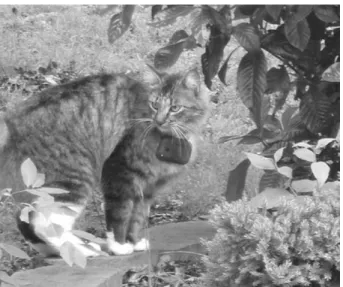
Fig. 2. Owned, free-roaming cat wearing a KittyCam video camera on a break-away collar in Athens-Clarke County, Georgia, 2011.
Kerrie Anne T. Loyd et al. / Biological Conservation 160 (2013) 183–189
also used multinomial regression to investigate the influence of predictors (prey size and habitat) on prey fate (whether prey was eaten, left at the capture site or brought home). We organized prey into three categories by weight for the size predictor: small (<5 g, included invertebrates and most reptiles); medium (5–17 g, in- cluded amphibians, some reptiles and a shrew) and large (>18 g, included birds and mammals). We used binomial (logistic) regres- sion to examine the influence of predictors (cat age, sex, roaming season and roaming habitat) on hunting behavior (whether a cat was detected hunting). We estimated that detection of hunting behavior was 100% for each recording day, assuming that cats roamed only while wearing cameras on recording days (i.e. they were not allowed outside when not wearing a KittyCam on these days).
Total video hours recorded was included in the model to exam- ine influence of recording time on detection of hunting behavior. Due to biological significance to wildlife, our definition of hunting cats included those witnessed stalking, chasing and/or capturing prey (i.e., exhibiting hunting behavior). We used Poisson regres- sion to examine the influence of demographic predictors (including age, sex and video hours) on the number of prey captured by cats exhibiting hunting behavior.
We used a Hosmer–Lemeshow Goodness-of-Fit test to evaluate the binomial regression model. An adequate fit is observed with P > 0.05 (Hosmer and Lemeshow, 1989). Pearsonv2and deviance Goodness-of-Fit measures were used to evaluate multinomial and Poisson models respectively. To interpret the multinomial and binomial logistic regression estimates, we calculated Odds Ra- tios for each model parameter. Inferences were made from param- eters with P < 0.05. We used R (R Development Core Team, 2011) to conduct statistical analysis.
3. Results
We collected 7–10 days of footage from 55 of our 60 cats and included these 55 in our video analyses. The remaining five col- lected very little or no video due to various factors including two not tolerating the collar and lack of effort by cat owners. We had an average of 38 ± 16 h of outdoor footage per roaming cat (Range 18–82 h). Thirty participants were male, 25 female, ages ranged from 0.5 to 19.5 years with a mean of 5.8 years and all participants were sterilized. Eight cats (15%) roamed in a rural area and 47 roamed in suburban neighborhoods. Twenty-four cats were wit- nessed stalking or chasing prey, but only 16 (30%) made a total of 39 successful captures. We recorded 30 independent stalking or chasing events that did not result in a capture. The number of hours monitored before witnessing hunting behavior varied widely by cat (Mean = 19.3 ± 6.4 h, Range 2–55) (Fig. 3). Due to the loca- tion of the cameras (around the neck, just below each cat’s chin), stalking, chasing and capture events were easy to identify. If prey was unable to be clearly viewed before a capture event, the item was easily identified while hanging from each hunter’s mouth (with a few exception). Often several attempts at capture were made, or cats played with prey (repeatedly chasing and recaptur- ing, batting, antagonizing prey) offering multiple opportunities to identify items to species.
Most successful hunters (n = 16) captured just one or two prey items in 7 days of roaming footage (37%), whereas a smaller per- centage (17%) captured 4 or 5 items during a week (Fig. 4). Fre- quent hunters did not appear to specialize in a particular prey type (Fig. 4). The majority of prey (56%) weighed less than 5 g, 45% weighed 6–100 g and just 10% weighed more than 100 g (Fig. 5). The average capture rate was 2.4 items/successfully hunt- ing cat/week of footage, or 0.06 ± 0.01 prey captured/successfully hunting cat/hour monitored.
Reptiles were the most common taxa of prey captured (n = 14; 36%) and 8 of these prey items were Carolina anoles (Anolis carolin- ensis; 21% of total captures). The second most common taxa of prey included mammals (26%, n = 10), followed by invertebrates (21%, n = 8), birds (13%, n = 5), and amphibians (5%, n = 2) (Table 2). Only one of the 31 vertebrates was a non-native species (a house mouse, Mus musculus). The majority of prey (85%) was captured during the warm season (March–November,Fig. 6), with a significant differ- ence (v2= 34.667, df = 1, P < 0.001) between the proportions of prey captured during the warm and cool seasons. The multinomial logistic regression model used to examine the influence of season or habitat on prey type was an adequate fit (P = 0.51). The model revealed that prey was more likely to be terrestrial than fossorial Fig. 3. The number of recorded video hours monitored via KittyCams before witnessing hunting behavior (stalking, chasing or capture) by owned cats (n = 24) roaming in Athens-Clarke County, Georgia, 2011.
Fig. 4. Prey captures by 16 owned cats in 7 days of roaming. Activities monitored via KittyCam video cameras in Athens-Clarke County, Georgia, 2011.
Fig. 5. Weight (in grams) of captures by 16 owned free-roaming cats monitored by KittyCams video cameras in Athens-Clarke County, Georgia, 2011.
in warm seasons (b = 2.822, SE b = 1.241, odds ratio = 16.667, P = 0.023). There was no effect of habitat or season on the ratio of arboreal to terrestrial prey.
Forty-nine percent of prey items was left at the capture site, 28% was eaten and 23% was brought home to the residence. The pro- portions of prey brought home versus abandoned were signifi- cantly different (v2= 4.51, df = 1, P = 0.03). Individual cats manipulated different prey in more than one way, such that a cat might eat one item, and bring the next one home. The multinomial regression model is estimated to be of adequate fit (P = 0.53). The model suggests that prey size has a significant influence on prey fate (i.e., what the cat did with the item); as prey size increased it was more likely to be left onsite than consumed (b = 1.261, SE b = 0.063, odds ratio = 3.533, P = 0.037). Neither habitat nor prey size were related to leaving prey versus bringing prey home.
The binomial logistic regression model used to examine the influences of predictors on whether a cat was a hunter also was
found to fit the data (P = 0.35). Participating cats roaming during the warm season were more likely to exhibit hunting behavior than those roaming during the cool season (b = 1.738, SE b= 0.867, odds ratio = 5.867, P = 0.045). The total number of video hours recorded was also related to cat hunting behavior; an in- crease in video hours was correlated with increased detection of a hunting behavior (b = 0.035, SE b = 0.017, odds ratio = 1.035, P = 0.04). Cat age, sex, and roaming habitat did not influence hunt- ing behavior, the estimates for these predictors were close to zero and had confidence intervals crossing zero. However, cat age was found to be a significant influence on the number of prey captured by hunting cats; the number of captures is predicted to decrease with increasing cat age [(b = 0.132, SE b = 0.064, P = 0.039 (Good- ness of Fit: Residual Deviance: 31.341, df = 20, P = 0.05)].
4. Discussion
KittyCams recorded cats bringing less than a quarter of their captures back to their residence. These results suggest that previ- ous studies of cat predation, including those inTable 1, which de- pended on information collected from prey returns, may have vastly underestimated the total take of successfully hunting cats. Our predation rate is similar to the only other direct observation of hunting activity (Kays and DeWan, 2004). In contrast to prior work documenting mammals and birds as the most prevalent prey classes (Table 1), KittyCam recordings found that the largest pro- portion of captures in suburban Athens were reptiles. Lizards have been recorded as domestic cat prey in numerous diet studies but were found to be a minority food item in each (Coman and Brun- ner, 1972; Dickman, 2009; McMurry and Sperry, 1941; Molsher et al., 1999; Paltridge et al., 1997).
Prey type and prey fate may be intimately connected and this may explain some of the discrepancies between our results and some previous work. For example, prior prey counts may have underestimated captures because studies were based on prey re- turns; our study found that 14 of 16 reptiles and amphibians (88%) were either eaten or left at the capture site. Owned cat habits may also influence prey captures; 76% of our sample roamed exclu- sively during the day, remaining indoors at night. This limits po- tential captures of nocturnal species and increases the susceptibility of diurnal and crepuscular species. Lastly, discrepan- cies may also be due to our study site characteristics. Carolina an- oles are abundant and widely available in suburban habitats in the southeastern US, but this specific species is not present in previ- ously studied urban areas of the UK (including: Baker et al., 2008; Woods et al., 2003) and similarly sized reptiles may not be as abundant. Additionally, ACC cats were more likely to exhibit hunting behavior during warm weather seasons, increasing anole vulnerability to predation because these reptiles are more active during warm weather seasons.
Our observations may confirm previous suggestions that cats are opportunistic predators and that prey selection is correlated with prey availability (Liberg, 1984; Molsher et al., 1999). In addi- tion to captures of common herpetofauna, four of the 10 depre- dated mammals in our study were Woodland Voles (Microtus pinetorum), another common suburban vertebrate. While song- birds are common in suburban habitats, specific life history charac- teristics or stages may make some bird groups more susceptible to cat predation (for example, nestlings, use of feeders, and ground- foraging behavior) (Cooper et al., 2012). The nestlings, Hermit Thrush (Catharus guttarus) and American Robin (Turdus migratori- us) (birds which are ground foragers), depredated in our study pro- vide an example of this susceptibility. Generally, songbirds may have increased mobility and unpredictability in movements as compared to other groups of taxa (Fitzgerald and Turner, 2000), Table 2
Animal species captured by 16 successfully hunting owned, free-roaming cats monitored with KittyCam video cameras for 7–10 days in Athens-Clarke County, Georgia 2011, by taxonomic group.
Species Number captured
Reptiles
Ringneck Snake (Diadophis sp.) 1
Brown Snake (Storeria dekayi) 1
Unidentified small snake 1
Carolina Anole (Anolis carolinensis) 8
SE Five-lined Skink (Eumeces fasciatus) 2
Unidentified lizard 1
Mammals
House Mouse (Mus musculus) 1
Woodland Vole (Microtus pinetorum) 4
Short-tailed Shrew (Blarina brevicauda) 1
Eastern Chipmunk (Tamias striatus) 3
Grey Squirrel (Sciurus carolinensis) 1
Invertebrates
Unidentified Butterfly 1
Walking Stick 1
Unidentified Dragonfly 2
Worm 3
Unidentified flying insect 1
Avian
Robin (Turdus migratorius) 1
Unknown nestling 2
Hermit Thrush (Catharus guttatus) 1
Eastern Phoebe (Sayornis phoebe) 1
Amphibians
Southern Leopard Frog (Lithobates sphenocephalus) 2
Fig. 6. Prey type and season of capture for owned, free-roaming cat prey (n = 39) identified by KittyCam video cameras over 7–10 days of roaming in Athens-Clarke County, Georgia, 2011.
Kerrie Anne T. Loyd et al. / Biological Conservation 160 (2013) 183–189
making them more difficult to capture. Since the hunting approach of the domestic cat is very slow, including lengthy waiting periods, birds frequently fly away before the pounce (Fitzgerald and Turner, 2000). Ten cats were witnessed watching birds at feeders or baths yet KittyCams recorded just five total predation events involving birds (from three of these cats).
Interestingly, we found no influence of age, sex or habitat on cat hunting behavior. These findings contradict some prior reports. In general, older cats in Europe (Churcher and Lawton, 1987) and Australia (Barratt, 1998) were less likely to be hunters. However, our results do substantiate prior findings in the UK and New Zea- land that younger pet cats are more likely to capture a significantly greater number of prey than older cats (van Heezik et al., 2010; Woods et al., 2003).
Examining the predation behavior and prey selection of hunting cats (only) would likely result in a larger sample of captures, allow- ing further analysis and comparison of prey. Studying prey by tax- onomic groups may identify patterns with important management implications, for example, confirming a seasonal influence on dep- redation of songbirds. Specifically, depredation of suburban rep- tiles should receive further research attention to determine if there is any population-level impact due to this mortality factor. Urban herpetofauna are under a wide range of pressures due to urbanization [Hamer and McDonnell (2010) and Van Heezik and Ludwig (2012), including road accidents and predation by domes- tic animals (Koenig et al., 2002)]. The necessary habit of basking in warm sunlight allows skinks, anoles and small snakes to be very visible to domestic predators, increasing risk of mortality. As afore- mentioned, many owned cats regularly roam during the day (Barr- att, 1997; George, 1974). Seventy-six percent of our participants collected daytime footage exclusively (they do not roam at night), exposing them to this wider prey base. The effect of cats on herpe- tofauna has been overlooked in the past and warrants further attention. To corroborate our findings, similar technology could be used to study free-roaming cats in other geographic areas and for longer periods of time.
As with all studies of this type, our research had some limita- tions. Our study results suggest that increased recording time may have captured additional hunting behaviors or revealed that a slightly higher percentage of roaming cats are hunters. It took more than 50 monitored video hours for us to witness the first hunting behavior from a few participating cats. Additionally, we only monitored each cat during 1 month of one season. Collecting video from the same participants over multiple seasons could help determine whether behavior of individuals differs by season, again, providing important management implications.
One limitation to the interpretation of our results involves the somewhat homogenous sample of indoor–outdoor housecats. All participating cats were well-cared for, valued pets (e.g. were pro- vided regular veterinary care). Additionally, our recruiting tech- niques may have attracted a sample of cats representing more active pets than the norm. For example, some cat owners with less active cats may not have deemed their pets inappropriate for this study. The time spent outdoors and the nature of activities re- corded while roaming are unlikely to represent all owned cats. Barn cats or strictly outdoor cats may spend additional time hunt- ing wildlife and our results may not be applicable to these types of owned cats. Improving KittyCam technology to allow recording of large amounts of footage from feral cats will help determine how behavior of unowned domestic cats differs from free-roaming pets.
5. Conclusions and management recommendations
A minority of owned, free-roaming cats in ACC were witnessed hunting, similar to the findings ofBaker et al. (2008)in the UK, but
it is also important to consider the impact of non-successful hunt- ing behavior on native wildlife. Even if an animal was not depre- dated, indirect negative effects on fecundity and behavior (due to cat stalking and chasing) are possible.Beckerman et al. (2007) andBonnington et al. (2013)suggest that there are sub-lethal ef- fects on urban birds as a result of cat presence in the system, including: reduced reproductive performance, increased nest de- fense, and reduced parental provisioning (decreasing nestling growth rates). As such, adopting the precautionary principle for cat management (Calver et al., 2011) is a valid suggestion while further research addresses the magnitude of impact on particular species as well as on the ecosystem (through loss of these prey items, now unavailable as food for native predators or to perform relevant ecosystem services).
One of our KittyCam project objectives included utilizing impactful video and still images to promote responsible pet cat management (viawww.kittycams.uga.edu). Additional public edu- cation efforts should be developed to encourage cat owners to min- imize the impact of hunting cats by keeping pets indoors, supervising outdoor roaming time or providing outdoor enclosures for their pets. Cats which are known to be avid hunters should be kept either completely indoors or supervised while outdoors if at all possible to protect wildlife. Cat pounce protectors (CatBibsÒ; www.catgoods.comSpringfield, Oregon, USA) are another option to reduce potential impacts of roaming pets. These inexpensive de- vices attach to cat collars and have been found to significantly re- duce mean prey captures of birds and mammals by hunting cats (Calver et al., 2007). Because we found predation events to be more common during warmer seasons, special efforts should be made to restrict the roaming or predation behavior of hunting cats during warm weather.
Acknowledgements
Support from the following organizations made this research possible: UGA Warnell School of Forestry and Natural Resources, National Geographic Remote Imaging, Morris Animal Foundation, Kenneth A. Scott Charitable Trust, Pender Pet Caring Foundation, and the Oconee Rivers Audubon Society. Study design, analysis and interpretation were the products of the authors and not influ- enced by others affiliated with funding organizations. We also thank our KittyCam volunteer cat owners and University of Georgia wildlife and veterinary students for their assistance with aspects of this research.
References
Baker, P.J., Bentley, A.J., Ansell, R.J., Harris, S., 2005. Impact of predation by domestic cats Felis catus in an urban area. Mammal Rev. 35, 302–312.
Baker, P.J., Molony, S.E., Stone, E., Cuthill, I.C., Harris, S., 2008. Cats about town: is predation by free-ranging pet cats Felis catus likely to affect urban bird populations? Ibis 150, 86–99.
Balogh, A.L., Ryder, T.B., Marra, P.P., 2011. Population demography of Gray Catbirds in the suburban matrix: sources, sinks and domestic cats. J. Ornithol. 152, 717– 726.
Barratt, D.G., 1997. Predation by house cats, Felis catus (L), in Canberra, Australia. 1. Prey composition and preference. Wildl. Res. 24, 263–277.
Barratt, D.G., 1998. Predation by house cats, Felis catus (L.), in Canberra, Australia. II. Factors affecting the amount of prey caught and estimates of the impact on wildlife. Wildl. Res. 25, 475–487.
Beckerman, A.P., Boots, M., Gaston, K.J., 2007. Urban bird declines and the fear of cats. Anim. Conserv. 10, 320–325.
Bonnington, C., Gaston, K.J., Evans, K.L., 2013. Fearing the feline: domestic cats reduce avian fecundity through trait-mediated indirect effects that increase nest predation by other species. J. Appl. Ecol. 50, 15–24.
Calver, M., Thomas, S., Bradley, S., McCutcheon, H., 2007. Reducing the rate of predation on wildlife by pet cats: the efficacy and practicability of collar- mounted pounce protectors. Biol. Conserv. 137, 341–348.
Calver, M.C., Grayson, J., Lilith, M., Dickman, C.R., 2011. Applying the precautionary principle to the issue of impacts by pet cats on urban wildlife. Biol. Conserv. 144, 1895–1901.
Churcher, P.B., Lawton, J.H., 1987. Predation by domestic cats in an English-village. J. Zool. 212, 439–455.
Coman, B.J., Brunner, H., 1972. Food habits of the feral house cat in Victoria. J. Wildl. Manag. 36, 848–853.
Cooper, C.B., Loyd, K.A.T., Murante, T., Savoca, M.S., Dickinson, J.L., 2012. Natural history traits associated with detecting mortality within residential bird communities: can citizen science provide insights? J. Environ. Manage. 50, 11–20.
Crooks, K.R., Soulé, M.E., 1999. Mesopredator release and avifaunal extinctions in a fragmented system. Nature 400, 563–566.
Dauphiné, N., Cooper, R.J., 2009. Impacts of free-ranging domestic cats (Felix catus) on birds in the United States: A review of recent research with conservation and management recommendations. In: Fourth International Partners in Flight Conference. McAllen, TX. <http://www.partnersinflight.org/pubs/McAllenProc/ articles/PIF09_Anthropogenic%20Impacts/Dauphine_1_PIF09.pdf>.
Dickman, C.R., 2009. House cats as predators in the Australian environment: impacts and management. Hum. Wildl. Conflicts 3, 41–48.
Fitzgerald, B.M., Turner, D.C., 2000. Hunting behavior of domestic cats and their impact on prey populations. In: Turner, D.C., Bateson, P. (Eds.), The Domestic Cat: The Biology of its Behavior. Cambridge University Press, Cambridge, UK, pp. 152–175.
George, W., 1974. Domestic cats as predators and factors in winter shortages of raptor prey. Wilson Bull. 83, 384–396.
Grimm, N.B., Faeth, S.H., Golubiewski, C.L., Redman, J., Wu, X.B., Briggs, J.M., 2008. Global change and the ecology of cities. Science 391, 756–760.
Hamer, A.J., McDonnell, M.J., 2010. The response of herpetofauna to urbanization: inferring patterns of persistence from wildlife databases. Austral Ecol. 35, 568– 580.
Hays, G.C., Marshall, G.J., Seminoff, J.A., 2007. Flipper beat frequency and amplitude changes in diving green turtles, Chelonia mydas. Mar. Biol. 150, 1003–1009. Heithaus, Dill, Marshall, Buhleier, 2002. Habitat use and foraging behavior of tiger
sharks in a seagrass ecosystem. Mar. Biol. 140, 237–248.
Herman, E.Y.K., Herman, L.M., Pack, A.A., Marshall, G., Shepard, M.C., Bakhtiari, M., 2007. When whales collide: Crittercam offers insight into the competitive behavior of humpback whales on their Hawaiian wintering grounds. Mar. Technol. Soc. J. 41, 35–43.
Hosmer, D.H., Lemeshow, S., 1989. Applied Logistic Regression. Wiley, New York. Kays, R.W., DeWan, A.A., 2004. Ecological impact of inside/outside house cats
around a suburban nature preserve. Anim. Conserv. 7, 273–283.
Koenig, J., Shine, R., Shea, G., 2002. The dangers of life in the city: patterns of activity, injury and mortality in suburban lizards. J. Herpetol. 36, 62–68. Konecny, M.J., 1987. Food habits and energetics of feral house cats in the Galapagos
Islands. Oikos 50, 24–32.
Lepczyk, C.A., Mertig, A.G., Liu, J.G., 2004. Landowners and cat predation across rural-to-urban landscapes. Biol. Conserv. 115, 191–201.
Liberg, O., 1984. Food-habits and prey impact by feral and house-based domestic cats in a rural area in southern Sweden. J. Mammal. 65, 424–432.
Longcore, T., Rich, C., Sullivan, L.M., 2009. Critical assessment of claims regarding management of feral cats by trap-neuter-return. Conserv. Biol. 23, 887–894. Loyd, K.A.T., Hernandez, S.M., 2012. Public perceptions of domestic cats and
preferences for feral cat management in the southeastern United States. Anthrozoos 25, 337–351.
McMurry, F.B., Sperry, C.C., 1941. Food of feral house cats in Oklahoma, a progress report. J. Mammal. 22, 185–190.
Mitchell, J.C., Beck, R.A., 1992. Free-ranging domestic cat predation on native vertebrates in rural and urban Virginia. Virginia J. Sci. 43, 197–207.
Moll, R.J., Millspaugh, J.J., Beringer, J., Sartwell, J., He, Z., 2007. A new ‘view’ of ecology and conservation through animal-borne video systems. Trends Ecol. Evol. 22, 660–668.
Molsher, R., Newsome, A., Dickman, C.R., 1999. Feeding ecology and population dynamics of the feral cat in relation to the availability of prey in central-eastern New South Wales. Wildl. Res. 26, 593–607.
Nogales, M., Martin, A., Tershy, B.R., Donlan, C.J., Witch, D., Puerta, N., Wood, B., Alonso, J., 2004. A review of feral cat eradication on islands. Conserv. Biol. 18, 310–319.
Nogales, M., Medina, F.M., 1996. A review of the diet of feral domestic cats on the Canary Islands, with new data from the laurel forest of LaGomera. Int. J. Mammal. Biol. 61, 1–6.
Paltridge, R., Gibson, D., Edwards, G., 1997. Diet of the feral cat in central Australia. Wildl. Res. 24, 67–76.
Ponganis, P.J., Van Dam, R.P., Marshall, G., Knower, T., Levension, D.H., 2000. Sub-ice foraging behavior of emperor penguins. J. Exp. Biol. 203, 3275–3278. R Development Core Team, 2011. R: A Language and Environment for Statistical
Computing. R Foundation for Statistical Computing, Vienna, Austria. Stracey, C.M., 2011. Resolving the urban nest predator paradox: the role of
alternative foods for nest predators. Biol. Conserv. 144, 1545–1552.
Tschanz, B., Hegglin, D., Gloor, S., Bontadina, F., 2011. Hunters and non-hunters: skewed predation rate by domestic cats in a rural village. Eur. J. Wildl. Res. 57, 597–602.
Van Heezik, Y., Ludwig, K., 2012. Proximity to source populations and untidy gardens predict occurrence of a small lizard in an urban area. Lands. Urban Plann. 104, 253–259.
van Heezik, Y., Smyth, A., Adams, A., Gordon, J., 2010. Do domestic cats impose an unsustainable harvest on urban bird populations. Biol. Conserv., 143. Williams, T., 2009. Feline Fatales: In: Audubon. pp. 30–38.
Woods, M., McDonald, R.A., Harris, S., 2003. Predation of wildlife by domestic cats Felis catus in Great Britain. Mammal Rev. 33, 174–188.
Kerrie Anne T. Loyd et al. / Biological Conservation 160 (2013) 183–189