取干可年取 取
Annual Report of Pro Natura Fund Vol.19 2010
Study of Breeding Cranes and Storks and of Wetland Ecosystem Response
to Changing Hydrology and Climate at Muraviovka Park, Russia
Sergei M. Smirenski
Muraviovka Park for Sustainable Land Use Amur Region, Russia
The majority of nesting sites of the mainland population of the Red-crowned and White-naped Cranes and the Oriental White Stork see Photo1 have not been surveyed for a long time. According to the recent winter survey data, numbers of Red-crowned Cranes in the Korean Peninsula have appeared stable ~1000 birds , but in China the number has dropped during the last decade from 800 birds to 450 in 2009. These data should be taken with caution since the recent situation for wintering cranes in the Democratic People's Republic of Korea is unclear. Known sites have been abandoned due to local people gleaning waste grain on farm fields that formerly provided food for the cranes; the cranes from these areas now winter along the Demilitarized Zone in Republic of Korea DMZ . Yet an influx of cranes in February 2009 compared to January 2009 suggests that some Red-crowned Cranes are still spending at least part of each winter in DPR Korea. The China counts also show some fluctuation year to year. Overall, however, the mainland population has been declining.
Color banding and satellite tracking data have shown that cranes and storks arrive in Korean Peninsula from eastern parts of the Heilongjiang Province of China and from Primorski, Khabarovski and, probably, Jewish Autonomous Regions of Russia. Cranes nesting in the Amur and Chita Regions of Russia, as well as in Inner Mongolia Province of China, spend the winter in Yancheng Nature Reserve and in the Yellow River delta of China. Eastern and western populations are not completely isolated from each other. For example, Red-crowned Cranes hatched at Khanka Lake were sighted in later years in the Amur Region.
Different status of wintering populations is consistent with the data on different impacts of climate change for eastern and western breeding areas although these data need confirmation. Annual amount of precipitation fluctuates but stays relatively high in the eastern areas west to the Lesser Khingan Mountain ridge. To the west of this ridge the situation is different in different areas. Since 2002, southern parts of the Zeya-Bureya Plain have been suffering very dry conditions. In the northern parts of Zeya-Bureya Plain, as well as in upper reaches of the Argun River and in Inner Mongolia Province of China some years were dry while some other years were very wet.
In the early 1990s, a large-scale development began in the Three River Plain and, to a lesser extent, at Zhalong Nature Reserve - the most important breeding areas of Red-crowned Cranes in China. From the mid-1990s to 2001 this was followed by fast growth of Red-crowned Crane numbers in the south of the Amur Region of Russia and in the Chinese Province of Inner Mongolia two areas that received plenty of precipitation during that period of time . New breeding grounds of the Red-crowned Crane were discovered in upper reaches of the Argun River and even as far west as Toreya Lakes. It looks possible that some cranes moved to more favorable western areas from shrinking habitats in China that were under economic development. But soon after the onset of prolonged drought in these western areas, the numbers of cranes there began to decline rapidly.
取干可ィ取 取
During dry years crane habitats not only shrank but also underwent fragmentation. Impact of other factors - wild fires, predators, poaching, disturbance, - therefore became greater. Fires eliminate dry grass that serves as cover for incubating birds, thus preventing cranes from nesting even in otherwise suitable wetlands with sufficient water level. During the incubation time if the water level drops, especially in dry years, the nests become easily accessible to predators - badgers, feral dogs, foxes Photo2 . People fishermen, herdsmen with dogs, poachers also receive easy access to wetlands in dry years disturbing the nesting cranes and storks and causing abandonment and loss of eggs.
In the south of the Zeya-Bureya Plain some nesting habitats used by several pairs of Red-crowned and White-naped Cranes still remain on the terrace. The condition of these sites depends on local precipitation. Most of them dry out during the periods of dry climate but as soon as the wet period sets in, cranes resume using these sites for nesting. In recent years, however, such sites began to experience human pressure Photo3 that makes it impossible for these habitats to become available for cranes and storks even in wet years. Such uncontrolled development of the endangered species habitats is happening due, first of all, to the lack of comprehensive research data about their location and the significance of these locations for rare cranes and storks. When such data become available it will be possible to request that these habitats be put under protection.
In the past, wetlands in mid and upper reaches of the Amur River could retain sufficient amounts of water even in dry years because they were regularly replenished by the Amur River floods caused by ample rainfall in the Amur tributaries basins in late summer - early autumn. High floods of the Amur River when water covered lowlands in Muraviovka Park happened only due to heavy rains in the watershed of Zeya River. Catastrophic floods in this area happened only when high water from all three tributaries Zeya, Argun, and Shilka rushed into the Amur River near Blagoveshchensk at the same time. These high water levels happened in the past every 8-12 years Fig1 but since the construction of the Zeya River Hydroelectric Dam 25 years ago there have been no high floods.
In 2007 and 2008 rainfall in upper reaches of Zeya River was so abundant that an emergency discharge of water from the Zeya reservoir was arranged to prevent the damage to the dam. Without the dam and reservoir these two years would have become the years of catastrophic flooding of the Park area, including parts of the city of Blagoveshchensk. But because the rain water was stopped by the dam the water did not even reach the lowlands in the mid-Amur Basin and lower reaches of Zeya River.
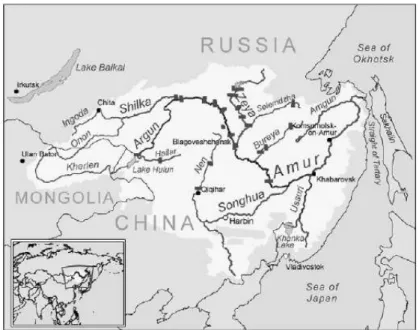
Current construction of a water-storing dam and locks in the upper flow of the Argun River for agricultural purposes and planned construction of a cascade of new hydroelectric dams Fig2 on Amur, Bureya, Zeya and Zeya's tributaries will permanently stop any flooding in the middle Amur River Basin.
Floods maintain and refresh healthy ecosystems of old lakes and wetlands that serve as important habitats to numerous and diverse wildlife. Flood waters flush away bottom sediments and floating mats of reeds and other water plants, create favorable conditions for fish reproduction and exchange of specimens and species among wetlands that otherwise are isolated from each other in dry seasons and years.
Negative impact on genetic diversity of populations in the past was compensated for by the fact that cranes and storks can reproduce over a significant period of years that was much longer than the longest drought. Even though the cranes and storks could not breed in certain extremely dry or extremely wet years, their longevity allowed them to produce enough offspring over the lifespan and thus maintain the genetic diversity of their species. Now that the natural flow of the Amur River's major tributaries can no longer happen, the wetlands in the Amur Basin do not restore to their former glory even during periods of wet climate. As a result, many birds capable of reproduction cannot breed and the population numbers and genetic diversity steadily decline.
取干可イ取 取
Fig1取 Dynamics of Zeya River water level near Blagoveshchensk in 1975-1992
Notes: Vertical axis - Water level, mm; horizontal axis - months. Bold line - average water level for the research period.
Fig2取 Existing, under construction, and planned dams in the Amur River Basin
取干可ゥ取 取
Due to the dams on Zeya, Bureya and upper reaches of Argun Hailar Rivers, wetlands in the Amur River Basin experience shrinking and fragmentation. These wetlands thus become less suitable for breeding and feeding of cranes and storks. In dry periods, the negative impacts of fires, predators and disturbance increase. These conditions create a
“bottleneck effect” and critical decrease in nesting success. But since the quantitative analysis of the comparative impacts of climate change and human pressure on population status of Red-crowned and White-naped Cranes, Oriental White Storks and other endangered waterbirds has not been conducted, it is difficult to evaluate the situation properly or to develop measures to buffer and offset these negative impacts.
This project set up and completed the first field season of research designed to show the links between breeding success of Red-crowned and White-naped Cranes, Oriental White Storks and hydrological conditions in the Muraviovka Park area.
With the grant from PRO NATURA FUND, a modern hydrological and weather monitoring station was purchased, installed and is now fully operating. Until recently, all climate and weather monitoring in the Amur Region was conducted manually, using obsolete primitive equipment and there were no technicians who knew how to install and operate modern equipment. That caused serious delays with purchasing, installation, adjustments, and maintenance of the new automatic weather station and automatic water level meter and during a long period of time we had to measure water level in the lake manually.
Four staff of the Amur Region Climate and Weather Center became part of our team, learned all they could about the modern weather and climate monitoring equipment, then helped us to select and purchase the proper station for the Park, as well as to install and adjust the equipment.
Analyses of historical data accumulated by the Amur Climate and Weather Center show a gradual increase in annual average air temperatures in Blagoveshchensk Fig3 .
At the same time, although average annual precipitation fluctuates from year to year, these figures stay within the long-term 97 years average Fig4 .
Fig3取 Annual air temperatures in Blagoveshensk in 1911-2008
取干可可取 取
The 2009 spring was very dry as it has been for the last seven years. The top soil layer in the wetland dried to the point where badgers, who do not tolerate water in their homes, have begun making their borrows in the middle of the wetlands. Peat bogs kept burning non-stop for 7 weeks in April and May they began burning in the fall of 2008 but the Park staff extinguished the fires at that time.
The characteristic feature of the summer weather in 2009 was early formation of the summer far-eastern depression in the mid Amur basin that resulted in unstable weather defined by atmospheric cyclones, with frequent abundant rains and air temperatures below average in June and July.
June was the wettest month with 226 mm of precipitation 2.5 times more than the monthly average with air temperature below average by 20℃. July also had frequent rains 140 mm total that was 1.4 times more than the norm with air temperature below the norm by 10℃. The second decade of July was the coolest in the last 20 years. The warmest and driest part of the summer was the first half of August with 74 mm of precipitation 60% of the norm and average air temperature 20℃ above the norm. The sum of summer precipitation was 442 mm 29% higher than the norm .
Maximal water level in the Amur River was 312 cm in June, 442 cm in July, 447 cm in August, and 458 cm in September. Between June and September there were five low-level floods that brought some water to the lowlands near Amur but did not reach nesting sites of cranes and storks.
The water level in our model Lake Kapustikha Fig5 kept dropping throughout May; in June the water began to rise due to melting of the top soil layer and unusually abundant rains. These rains that continued until August caused further rise of water in the lake. The rain water stayed for two months even on the terrace land with higher elevation, above the river floodplain with heavy clay soil. In September the water level in the lake became stable.
Monitoring of flora and fauna dynamics, as well as of population numbers and dates of seasonal phenomena, is very important for evaluation of climate change impact on the Park's natural communities. Some plants and animals are
Fig4取 Annual precipitations in Blagoveshchensk in 1911-2008
取干可拠取 取
important food items for cranes and storks, while some other represent formidable enemies - predators. During the drought numbers of snails, fishes, amphibians, small mammals and birds that cranes and storks use as food items decrease. At the same time, numbers of predators badgers, red foxes, and raccoon dogs increase.
In the course of the project implementation the existing lists of birds and plants of Muraviovka Park were supplemented; lists of amphibians, reptiles and mammals were compiled and placed on the Park's website www.muraviovkapark.ru ; counts of small mammals have begun; and bird migration monitoring and bird banding have been resumed after a 20-year lapse.
Computer GIS maps were developed for relief, plants and hydrology of the Park that allowed us to put crane and stork nests on the maps and describe characteristics of the sites where cranes and storks nested successfully. New breeding sites of Red-crowned and White-naped Cranes were found in Tambovka District of the Amur Region.
Our hydrological and hydrochemistry studies of a model wetland within the Park, Lake Kapustikha Fig6 revealed high PH value of 10.43. Mineralization varied from 58-63 to 108-110 mg/liter. The most active algal blooming processes were observed in the area with highest mineralization of water 110 mg/l , where a creek that flows along the terrace runs into the lake. The highest correlation coefficients were found between values of mineralization and PH Fig7 .
We are also very pleased to report that the analysis of data received from the automatic weather station in 2009 had allowed us to choose the most optimal day and hour in early November to conduct a prescribed burning in out wetland. This burning was the most successful and efficient late fall burning in the Park's history and created a firebreak that protected the Park's headquarters and adjacent breeding sites of cranes and storks from late fall and spring grassfires.
Continued monitoring of these parameters will allow us to evaluate aging processes in the Park's wetlands.
In 2009, because of the drought, wetlands became accessible to predators and people. We recorded the lowest numbers of cranes in the entire Park’s history. In April-May two nests of White-naped Cranes were located; the nests were built near small open water sites where the surface water was 10 to 30 cm deep.
Red-crowned Cranes are very sensitive to disturbance. Since their bright white plumage makes them easy to spot from afar, they nest only in areas well removed from and inaccessible to predators and people. It is very important to them to have patches of tall old grass around their nest that hides them from the eyes of potential intruders during Fig5取 Water Level Fluctuations in model Lake Kapustikha May-July 2009 in mm
取干可拡取 取
incubation. A pair of Red-crowned Cranes made an attempt to nest on one of the same sites as the White-naped Cranes but soon abandoned its attempt. However, the same pair was able to nest and successfully raise their chicks in a little over two months after the beginning of breeding period, when the Park's wetland were filled with water and the new vegetation sprouted and grew tall.
Fig6取 Distribution of minerals in Lake Kapustikha water based on 5 August 2009 survey data
Fig7取 Horizontal profile of distribution of mineralization mg/l in Lake Kapustikha water based on 5 August 2009 survey data
Notes: Vertical axis --◆-- content of minerals M in water, mg/l; --■-- T - water temperature,℃; --▲-- pH
取干拠0取 取
Red-crowned Cranes are more dependent on surface water because of their diet. During incubation and the first months after hatching the families practically never leave the wetlands, feeding mostly on fish, mollusks, water insects and juicy parts of water plants. Therefore they require large wetland areas with water above the ground.
White-naped Cranes are more flexible in their habitat requirements. They are not so obvious on the nest and we know cases of successful breeding even in areas frequently visited by people. But White-naped Cranes also require areas of standing water around their nests that protect eggs and chicks from ground predators. Like their chicks, the adults also feed on insects that represent a considerable portion of their diet later in the breeding season. For feeding they often use elevated dry areas with steppe-like vegetation and croplands as much as they use the wetlands. Families with chicks also rather often come out to the crop fields to feed, where chicks pick insects and their parents feed on grain.
The top layer of water in wetlands serves as major habitat for numerous food objects of cranes and storks. Khinganski Nature Reserve staff reported about the similar situation in 2009 Table1 . White-naped cranes were less affected by the scarcity of food because during the first weeks of chick raising the bulk of their chicks’ diet consists of insects that are still available in dry weather, and the adults feed mostly on grain left in the crop fields adjacent to the wetland.
Breeding success of the Oriental White Stork is also closely connected with the level of water in their wetland habitats. Storks prefer to build their nests in areas far away from places that are frequently visited by people. For their nests they often pick trees that grow on elevated dry areas amidst wetlands. Such nests are not approachable by predators, but in dry years wild fires often damage the trees and the nests. Storks lay more eggs than cranes and their diet mostly consists of animal food items that they catch in flooded swamps or in shallow waters of lakes and rivers. Due to lack of water in spring and insufficient food resources, egg clutches of the Oriental White Storks in 2009 were smaller average 1.3 than long term average 3.1 and later we observed elevated chick mortality and cases when the hungry parents threw the chicks out of the nest.
When floods cease to come, wetlands experience sedimentation and overgrowth by reeds and other shore vegetation. Water at the edge of a floating mat of vegetation is in most cases too deep for cranes and storks, which prevents them from using their most important feeding habitat.
Our interviews with local people showed the majority of the Amur Region population is not aware about climate change impacts on nature and economy. The local government, on the other hand, sees the ongoing loss of wetlands and decline of the endangered species populations as natural consequences of global environmental changes and believes that this situation cannot be helped. Such passive attitudes can result in elimination of the majority of the
Table1取 Numbers of Red-crowned Cranes at Muraviovka Park and Khinganski Nature Reserve in 1983-2009
取干拠干取 取
mainland population of Red-crowned Cranes breeding in the western part of the species’ distribution range.
To change this situation, the project staff put much effort and time into reaching out to the local people through public education and awareness programs. Lectures, interactive classes and press conferences about climate change and effects of the prolonged drought on wetland wildlife were conducted for over 250 students in seven schools of Tambovka District, over 300 students at the Amur State University and Blagoveshchensk Teacher’s University; for 50 participants of the AmurExpoForum; for over 2,500 visitors and 110 participants of summer ecological schools at Muraviovka Park; and for over 200 children at a summer camp for orphans. We also discussed impact of drought with Amur Region governmental officials Ministry of Nature Resources, Ministry of Agriculture, Ministry of Education .
Staff of the Project made presentations about the combined impacts of climate change, dam construction and wetland reclamation on cranes and storks, emphasizing support that we received from Pro Natura Fund, at the International Congress of the Society for Conservation Biology Beijing, China, July 2009 , International Workshop
“Establishment of a Feasible International Project for Protection of Tancho Grus japonens ” Kushiro, Japan, October 2009 , and International Symposium “Health Issues of Wild and Captive Birds” Muraviovka Park, Russia, October-November 2009 . Research conducted by the Park’s staff and partners with support from Pro Natura Fund has attracted attention and coverage of the Amur Region television and newspaper media.
Participants of the Project: S.M. Smirenski, M.V. Kolodina, G.V.Nosachenko, S.A. Kazachinskaya, N.E. Tihutin, A. Stein, C. Love, Natalia A.Gromova, Lubov D. Kasyan, S.M. Yakovenko, N.I. Lukyanova, S.V. Lebedeva, O.I. Nikitina, O.V. Stanovova, V.A. Kalinina and A.I.Kolotyi.
Until recently the Park, located in the wetlands of the Amur River, has been a prime breeding area for the Red-crowned Crane. Now, however, higher average annual temperatures, drought and a drop in water levels due to dam construction have led to breeding failures for cranes. Reduction in water supply for wetlands has been occurring through much of the mainland range of this species.
Field studies established a baseline for further evaluation and testing of methods aimed to reduce negative impact of climate change on the endangered birds. Preliminary analyses of the collected data have allowed us to make the following conclusions.
1 Degradation and shrinking of wetlands in lowlands middle and upper Amur River Basin has been caused by the combined impacts of climate change and change in water flow regime of the Amur River tributaries after the construction of dams.
2 Due to the latter, restoration and maintenance of the Amur Basin wetlands cannot occur through natural processes; special measures must be developed and implemented to secure sustainability of these wetlands.
The Park will continue this research program in the following years even after the completion of activities under the Pro Natura Fund project work plan. This continued work has become possible by using the obtained climate monitoring equipment, the data on flora and fauna collected in 2009, developed GIS and other maps, and established cooperation with local organizations and experts. This problem raised concern among experts and in June 2010 an International Symposium “Climate, Cranes, and Agriculture” will be held at Muraviovka Park sponsored by the Trust for Mutual Understanding, USA with participation of experts from Russia, Japan, USA, Canada, China, South Africa,
取干拠平取 取 Germany, Hungary, and some other countries.
We also have actively participated in preparation of the grant proposal “Sustaining wetland biodiversity through climate change adaptation in Amur/Heilong River Basin” submitted to the Darwin Initiative United Kingdom . The Amur Region government has expressed interest in this international project and would like to participate in its implementation. These activities have created favorable conditions in the region for long-term monitoring of climate and studies of climate change impact on endangered species and their habitats.
Further research should help to clarify what is happening at the Park and other wetlands in the region, including the impacts of fire magnified by dry conditions and climate change.
Thanks to Pro Natura Fund, the Park, that has previously pioneered new approaches to protected areas management in Russia such as community involvement in conservation and use of controlled burning as a management tool , now has the opportunity to adjust management to the changing water regime and in part mitigate its impacts through small-scale water control structures. Establishment of the monitoring and research efforts at the Park, and the concurrent public education programming, have been essential step toward these long-term objectives.
Equipment purchased with support from Pro Natura Fund 2008-2009 helped us to built a foundation for the new Pro Natura Fund project in 2009-2010.
Photo1 Red-crowned Crane Photo John Henderson
Photo2 Red-crowned Crane and Red Fox Photo John Henderson
Photo3 Land reclamation
Photo Sergei M.Smirenski
取干拠年取 取
ハュンヂダゝヴメンネ゙ルチ第19期 助成成果報告書 2010
要約
ュク゚ ヘメレ゛アネィ自然保護区 る
水環境 変 や気候変動 ゼャ類 カゞテダモ
並 原生態系 及 影響 い
Sergei M. Smirenski
取 ゚ ヘ ヴ ャ 流 域 長 期 渡 る 畢 魅 い
経 発展 影響をう いる 気候変動やジヘ
や 地 拓 よ う 影 響 を 及 あ い
る い 明ら 無い 効果的 保護並
再生 対策を り 困難 ある 当ハ
ュグゟェダ より シルスミゞ ブヂソャ カゞテ
ダ モ 繁 殖 成 当 自 然 保 護 区 る 水 環 境
関 連 を 明 ら く 計 れ 調 査 研 究 最
初 外クヴゲル 開始 完了 ハュン
ヂ ダ ゞ ヴ メ ン ネ ゙ ル チ ら 助 成 最 新 式 水 環
境ン気象観測装置を購入ン設置 観測 られ
いる ヘメレ゛アネィ自然保護区 職員 気候やダ
モ 渡り ペッシモルエを始 型 乳類 ィゞ
ルダを初 行 い 乳類ン両生類 虫類 モケ
ダを作成 ペタャ いる湖 水環境並
学物質 析を行 い 当自然保護区内 地形
高 や 地や植生 地 を作成 地
ゼャ カゞテダモ 営巣地 を れら
調査活動を通 絶滅 機 瀕 いる鳥類
る 気 候 変 動 起 因 る ブ ゜ ヂ ケ 影 響 を 減
ら 方向 向 手汝 ら る評価ン検証
パヴケメ゜ル くられ れら 問題 対
る一般 人々 意識をより高 る 学校 大学
国際会議 い 発表を ゚ヘヴャ地方
府 ハ ュ グ ゟ ェ ダ 調 査 研 究 活 動 を よ り 進
る 支援を表明
推薦者:百瀬 邦和
取干拠ィ取 取