Hong Kong, China
Bond Market Guide
Acknowledgement ... vii
I. Structure, Type, and Characteristics of the Market ...1
A. Overview ... 1
B. Types of Bonds ... 2
C. Methods of Issuing Bonds ... 7
D. Credit Rating Agencies and Credit Rating of Bonds ... 8
E. Bond-Related Systems for Investor Protection ... 8
F. Governing Laws of Bond Issuance ... 8
G. Transfer of Interests in Bonds ... 9
H. Definition of Securities ... 11
I. Self-Governing Rules behind the Market... 14
J. Bankruptcy Procedures ... 14
K. Meetings of Bondholders ... 14
L. Event of Default ... 15
M. Options Available on the Bond Market ... 16
N. Parties in a Bond Issue and Their Respective Roles ... 17
O. Major Participants in the Market ... 18
II. Primary and Secondary Markets Regulatory Framework ...20
A. Hong Kong Market Regulatory Structure ... 20
B. Regulation of the Hong Kong Securities Markets ... 22
C. Regulations and Rules Related to Issuing Debt Instruments ... 24
D. Related Rules and Regulations on Investment in Debt Securities ... 24
E. Investor Protection ... 25
F. Taxation Framework and Tax Requirements ... 25
G. Offers of Bonds to Professionals ... 28
H. Definition of “Professional Investors” in the Hong Kong, China ... 29
I. Challenges and Expected Changes ... 32
III. Trading of Bonds and Trading Market Infrastructure ...35
A. Over-the-Counter Market Trading ... 36
B. Over-the-Counter Market Business Process ... 36
C. Hong Kong Bond Transaction Flow (For Foreign Investors) ... 39
Contents
IV. Future Developments ...41
A. Repo Market ... 41
B. Liquidity in the Secondary Market ... 41
C. Renminbi-Denominated Bond Market ... 41
D. Conclusion ... 42
V. Description of the Securities Settlement System ...43
A. Securities Settlement Infrastructure ... 43
B. Definition of Clearing and Settlement... 44
C. Challenges/ Expected Changes ... 45
VI. Cost and Charging Methods ...46
A. Initial Fees... 46
B. Maintenance (Ongoing) Costs ... 46
VII. Market Size and Statistics ...47
A. Market Size ... 47
B. The Renminbi Bond Market ... 47
C. Debt Issuance and Syndicated Loans vs. Equity Market ... 47
D. Market Data from AsianBondsOnline.com ... 48
VIII. Presence of an Islamic Finance (Islamic bond [Sukuk]) Market ...56
A. Regulatory Framework for Islamic Finance ... 56
B. Types of Available Instruments, Segments, and Tenure ... 56
C. Basic Market Infrastructure for Islamic Finance ... 56
D. Tax-Related Issues ... 56
IX. History of Debt Market Development ...58
A. Overview 58 B. The Development of Hong Kong Debt Markets ... 58
X. Next Step Future Direction ...63
A. Offshore Renminbi Bond Market (Dim-Sum Bond) ... 63
B. Enhancements to Post-Trade Processing in Asian Bond Markets ... 63
C. Group of Thirty Compliance ... 64
D. Group of Experts Barrier Report Market Assessment - Hong Kong (April/2010) ... 65
Appendixes ...66
References ...72
Box, Figures, and Tables
Box
Box A2.1. Appendix 8 Listing Fees, Transaction Levies and Trading Fees on New Issues and Brokerage ...69
Figures Figure 3.1 Bond Settlement Infrastructure in Hong Kong, China ...37
Figure 3.2 Business Process Flowchart Hong Kong Bond Market (Over-the-Counter Market/Delivery versus Payment) ...37
Figure 3.3 Hong Kong Bond Transaction Flow for Foreign Investors ...39
Tables Table 2.1 Current Levy on Exchange-Trade Product Transactions ...25
Table 2.2 Duties and Taxes in the Hong Kong Market ...26
Table 6.1 Market Charges in the Hong Kong, China Market ...46
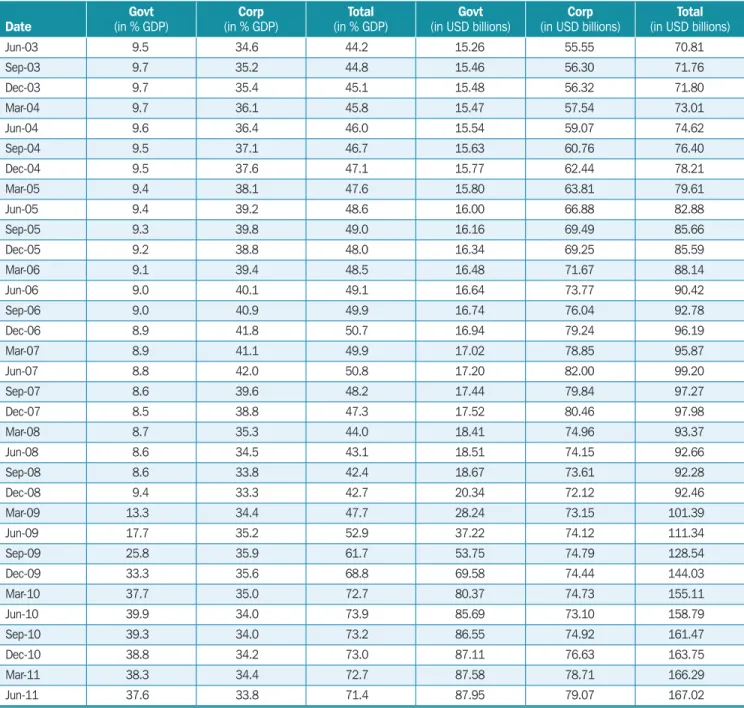
Table 7.1 Size of Local Currency Bond Market in Percentage of Gross Domestic Product (Local Sources) ...48
Table 7.2 Foreign Currency Bonds to Gross Domestic Product Ratio ...50
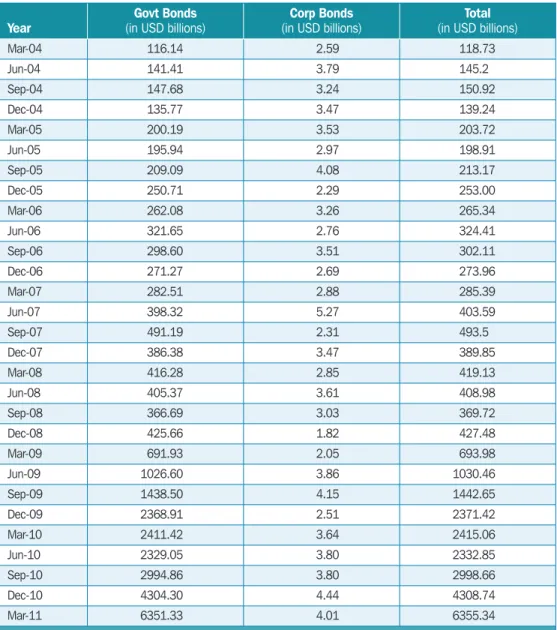
Table 7.3 Foreign Currency Bonds Outstanding (Local Sources) (USD billion) ...51
Table 7.4 Issuance Volume of Local Currency Bond Market (USD billion) ...51
Table 7.5 Domestic Financing Profile ...53
Table 7.6 Trading Volume ($ billion) ...54
Table 10.1 Group of Thirty Compliance Recommendations ...64
Table 10.2 Group of Experts Barrier Report Market Assessment on Hong Kong, China ...65
Table A1.1 Central Moneymarkets Unit Tariff (CMU Instruments) ...66
Table A1.2 General Debt Securities ...69
Table A1.3 Debt Issuance Programme Securities ...71
T
he Asian Development Bank (ADB) Team, comprising Satoru Yamadera (Economist, ADB Office of Regional Economic Integration, - September 2011), Seung Jae Lee (Principal Financial Sector Specialist), Shinji Kawai (Senior Financial Sector Specialist, Banking), Shigehito Inukai (ADB consultant), Taiji Inui (ADB consultant), and Matthias Schmidt (ADB consultant), would like to express their sincere gratitude to National Member and Expert Institution, Hong Kong Monetary Authority (HKMA) for its comments on the Central Moneymarkets Unit (CMU) and RTGS systems in Hong Kong.The ADB Team also would like to express special thanks to Citibank, Deutsche Bank AG, HongKong Shanghai Banking Corporation (HSBC), J.P. Morgan, and State Street for their contribution as International Experts, and the Asia Capital Markets Association as supporter, in providing information from their respective market guides, as well as their valuable expertise. Because of their cooperation and contribution, the ADB Team started the research on solid ground.
Last but not least, the Team would like to thank all the interviewees who provided their comments and responses to questions during the market consultations.
It should be noted that any part of this report does not represent the official views and opinions of any institution which participated in this activity as the ASEAN+3 Bond Market Forum members and experts. The ADB Team bears responsibility for the contents of this report.
February 2012
Asian Development Bank (ADB) Team
Acknowledgement
List of Interviewees: Hong Kong, 18 May 2011
Hong Kong Monetary Authority (HKMA) Slaughter and May, Hong Kong
HSBC, Hong Kong State Street Bank J.P. Morgan
A. Overview
The bond market in Hong Kong, China, has for some time been a significant market place for issuers and investors, in both domestic and foreign currencies. The range of product offerings, the open access for issuers and investors, both domestic and international, and the increasing significance of offshore RMB bond issuances make Hong Kong, China one of the most frequented international bond markets in Asia. Public sector bonds come in the form of (a) government bonds; (b) Exchange Fund Bills and Notes (EFBNs) issued by the Hong Kong Monetary Authority (HKMA); (c) bonds issued by statutory bodies (e.g., Hong Kong Airport Authority and Hong Kong Housing Authority); and (d) bonds issued by government-related corporations (e.g., Bauhinia Mortgage-Backed Securities Limited, Hong Kong Mortgage Corporation, Hong Kong Link 2004 Limited, etc.).
The Central Moneymarkets Unit (CMU) was set up primarily to provide computerized clearing and settlement facilities for EFBNs, which provide benchmark yields that guide private debt pricing. In December 1993, the HKMA extended the service to other Hong Kong dollar debt securities. Beginning in December 1994, the CMU has been linked to international clearing systems such as Euroclear. This has helped promote Hong Kong dollar debt securities to overseas issuers and investors who can make use of these links to participate in the Hong Kong dollar debt market. In December 1996, an interface between the CMU and the real-time gross settlement (RTGS) interbank payment system was established. This enables the CMU system to provide its members with real-time and end-of-day delivery versus payment (DVP) services.
The CMU Service provides a central depository for CMU Instruments held within the CMU and an electronic book-entry system which eliminates the physical delivery of CMU Instruments. CMU Instruments lodged with the CMU Service are held with a sub-custodian appointed by the HKMA. Where instruments are lodged with the CMU Service by a CMU Member as the authorized agent of an issuer/acceptor, the lodging CMU Member must have obtained an appropriate authority from the issuer/acceptor authorizing the CMU Member to lodge on its behalf.
I. Structure, Type, and
Characteristics of the Market
Bond trading takes place mostly through over-the-counter (OTC) markets. However, some bonds are traded on the securities market of the Hong Kong Stock Exchanges and Clearing (HKEx), which is the holding company that operates the stock exchange. In addition, three-year Exchange Fund Note (EFN) futures are traded on the HKEx derivatives market.
Hong Kong, China is a preferred location in Asia for bond issues by foreign and domestic corporations—as well as supranational borrowers—because of the easy access to the market for investors and via international clearing systems.
A wide range of asset classes is available for securitization. The two main asset classes securitized are i) residential and commercial mortgages, and ii) HKMA claims on central governments and central banks. For instance, the Hong Kong Mortgage Corporation (HKMC), which was established by the HKMA, and Hong Kong Link 2004 Limited were set up to facilitate securitization of residential mortgages and toll facilities, respectively.
To promote the development of the local debt market, authorities introduced a number of new products, expanded and improved market infrastructure, and provided a tax and regulatory environment conducive to market development.
B. Types of Bonds
1. By Issuer Category
a. Public Entity Issuers
i. Hong Kong Government (for Government bonds) ii. Hong Kong Monetary Authority
iii. Statutory Bodies1
iv. Government-Related Corporations2
b. Private Entity Issuers
i. Authorized Institutions3 ii. Local Corporates
iii. Multilateral Development Banks4
iv. Non-Multilateral Development Banks, Overseas Borrowers
1 Statutory bodies that issue bonds include the Hong Kong Airport Authority (HKAA), Hong Kong Housing Authority (HKHA), Kowloon-Canton Railway Corporation (KCRC), Mass Transit Railway Corporation (MTRC), and Hong Kong Mortgage Corporation (HKMC), among others.
2 Government-related corporations that issue bonds include Bauhinia Mortgage-Backed Securities Hong Kong Mortgage Corporation (HKMC), Hong Kong Link 2004, Kowloon-Canton Railway Corporation (KCRC), and the Mass Transit Railway Corporation (MTRC).
3 Authorized institution means a bank, a restricted-licence bank, or a deposit-taking company as defined in Section 2 of the Banking Ordinance.
4 Multilateral development banks (MDB) refer to the Asian Development Bank, the Council of Europe Social Development Fund, the European Company for the Financing of Railroad Rolling Stock, the European Investment Bank, the European Bank for Reconstruction and Development, the Inter-American Development Bank, the International Bank for Reconstruction and Development, the International Finance Corporation, the African Development Bank, and the Nordic Investment Bank.
2. By Type of Bonds
a. Straight Bonds (Government Bonds and Corporate Bonds) b. Floating Rate Notes
c. Corridor Notes d. Index-Linked Bonds e. Loan Stocks
f. Exchange Fund Notes (EFN)
The EFN Programme commenced in 1993. EFNs are Hong Kong dollar fixed-income debt securities issued by the government of Hong Kong, China under the Exchange Fund Ordinance (Chapter 66 of the Laws of Hong Kong) and for the account of the exchange fund.
Currently, EFNs of 2 years, 3 years, 5 years, 7 years, 10 years and 15 years are being issued at such times as the HKMA may determine. Notes of other maturities may be offered from time to time at the discretion of the Financial Secretary.
The EFNs are issued in multiples of HKD50,000 in computerized book-entry form only.
To enhance the liquidity of the secondary market of EFNs and facilitate access by retail investors to the EFN market, the HKMA has listed the EFNs on the Stock Exchange of Hong Kong.
EFBNs and government bonds are in scripless form, while other papers are either bearer or registered and held in physical form.
All government bonds and most corporate bonds are eligible for clearing at the CMU and maintained in book-entry form.
3. Money Markets Instruments
Some of the common money market instruments are listed below: a. Certificate of Deposit
b. Commercial Paper c. Exchange Fund Bills
The Exchange Fund Bills Programme was introduced in March 1990. Bills of 91 days (or 90 or 92 days, as the calendar may fall), 182 days, and 364 days are issued under this program.
4. By Listing Status
Between listed and unlisted bonds, unlisted bonds are typically retail bonds that are publicly available. When considering listing, a cost-benefit trade off (fees versus visibility) may exist for an issuer. Fund managers may appreciate access to official pricing but can also determine a realistic price through modelling.
a. Bonds Listed and Traded on the Hong Kong Stock Exchange
Exchange listing of some bonds may probably be due to separate requirements for mutual funds or unit trusts only to buy listed bonds.
b. Bonds (Tap Issue) and Listed Debt Issuance Programmes5 that can be Traded Over the Counter
c. Selectively Marketed Securities Status Listing
Selectively marketed securities refer to debt securities marketed to or placed with any number of registered dealers or financial institutions who will either resell such securities as principals off-market or place such securities with a limited number of such investors, thus, “selective marketing” shall be construed accordingly. Nearly all of these securities, because of their nature, will normally be purchased and traded by a limited number of investors who are particularly knowledgeable in investment matters.
d. Non-Listed Bonds that can be Traded Over the Counter
An issuer may choose to issue listed bonds by filing a listing application with the Hong Kong Stock Exchange (HKSE) for the listing of and permission to deal in the bonds on the HKSE, and satisfy certain qualifications for listing as stated in Chapters 23 to 26 of the Listing Rules.
Issuers having debt securities listed or seeking to list debt securities on the HKSE must comply with the requirements set out in the Listing Rules as promulgated by the HKSE. For details, refer to Chapters 22-37 of the Listing Rules.6 Chapter 37 of the Listing Rules sets out the requirements for the listing on the exchange of selectively marketed securities.
Most bonds in the Hong Kong domestic bond market are traded OTC. In most cases, the purposes of bonds listing or the Debt Issuance Programme listing on the HKSE are profiling, regulations, and price discovery.
HKEx listed bonds include EFN issues. 5. By Note Forms
(a) Bonds may either be in bearer or registered form, represented by definitive or global notes.
(b) The most common form of bonds is global notes which are deposited with the CMU Service in either bearer or registered form.
(c) There is a proposal for dematerialization by 2013, but this would require amendments to the Companies Ordinance (CO).
Bonds in Hong Kong, China may be held within the CMU Service operated by the Hong Kong Monetary Authority (HKMA) in either definitive or global-instrument form. The CMU Service provides a central depository service for CMU Instruments held within the CMU and an electronic book-entry system, which eliminates the physical delivery of CMU Instruments between CMU Members.
5 Issues of debt securities where only part of the maximum program’s principal amount or aggregate number of securities under the issue is issued initially, and a further tranche (or tranches) may be issued subsequently.
6 Hong Kong Stock Exchanges and ≠Clearing (HKEx). “Chapter 29 (Debt Securities, Tap Issues, Debt Issuance Programmes and Asset-Backed Securities),” Rules Governing the Listing of Securities on the Stock Exchange of Hong Kong. http://www.hkex.com.hk/eng/rulesreg/listrules/mbrules/vol1_4.htm.
The bond instruments must be lodged with a sub-custodian appointed by the HKMA. The bond issuer must either be a CMU Member or a CMU Member authorized as a Lodging Agent to use the depository services of the CMU Service.
While the bonds are represented by global notes, the CMU Lodging Agent holds the legal title of these bonds, which are then “immobilized” via the CMU accounts. The holders of the CMU accounts hold the bonds in the Main Account for their own benefit, and the bonds in the General/Specific Custody Accounts for and on behalf of their own customers. For bonds held in the General/Specific Custody Accounts, CMU Members have to refer to their own internal records to ascertain the beneficial ownership of the bonds held in such accounts. The Issuer and the Paying Agent directly make payments of principal, interest or any amounts to the persons for whose account interests in the global bond are credited (as set out in a CMU Instrument Position Report, or as notified to the CMU Lodging Agent by the CMU Service). The individual beneficial holders have to rely on the CMU Member or the CMU Lodging Agent for the delivery of payments and notices to them.
On certain bond issues, a temporary global note is produced where a 40-day lock- up period is required under United States (US) tax and securities laws (Regulation S of the Securities Act 1933), during which interest in the securities cannot be traded or paid. After the 40-day period, the temporary global note may be exchanged for a permanent global note (which may be conditional upon the CMU Service having received certification as to the non-US beneficial ownership of the CMU Instruments for compliance with Regulation S). The permanent global note may be exchanged into definitive notes in limited circumstances (e.g., closure of the clearing systems or events of default of the issuer or guarantor).
The CMU Service has linkages with other clearing systems. An investor holding an interest through an account with either Euroclear or Clearstream in any CMU Instruments held in the CMU Service will hold that interest through the respective accounts which Euroclear and Clearstream each have with the CMU Service.
6. By Structure of Bond Issue
There are generally two structures for bond issues—the fiscal agent structure and the trustee structure. The rights and obligations of bondholders and an issuer are different depending on the structure.
It is possible to appoint a trustee but this is not a legal requirement in the Hong Kong bond market under the professional nature of the investors in the Hong Kong market. Only about 10% of bond issues feature a trustee, and no recent such appointment has been observed. Between a trustee and a fiscal agent, the choice typically revolves around the question of cost and may be influenced by the limited number of trustees in the market. The issuer may, however, appreciate having a central party to handle matters.
Many issuers are using the fiscal agent system. However, a fiscal agent may not have fiduciary responsibilities as opposed to a trustee. From a foreign institutional investor’s point of view, a trustee can be considered as safer compared with a fiscal agent.
No recent issues or programmes featured trustees. Trustee provisions under Hong Kong law are considered out-dated in comparison with the English Trustee Act (2000). a. Fiscal Agent Structure
A fiscal agency agreement is executed between the issuer and the fiscal agent as the principal paying agent of the issuer. The issuer pays the interest or the principal to the fiscal agent and the fiscal agent instructs other paying agents to pay the amounts of interest or principal to the bondholders. The fiscal agent then reimburses the paying agents the amounts paid out.
The fiscal agent also has other functions, such as keeping records of payments on the bonds, calling and holding bondholders’ meetings when necessary, sending notices to bondholders, and issuing replacements for lost or destroyed bonds.
As fiscal agents are the agents of the issuer, they do not represent the interests of the bondholders. The issuer would generally execute a deed of covenant,7 under which bondholders are given direct rights of enforcement against the issuer for default in payment or delivery of definitive bonds.
An example of a fiscal agent structure is the Swire Pacific MTN Financing and Swire Properties Offshore Financing’s USD3.5 billion medium-term note (MTN) program dated 18 October 2010.
b. Trustee Structure
Bonds may be constituted in a trust deed, under which the issuer covenants with the trustee to perform its duties under the terms and conditions of the bonds, including to pay any amount due under the bonds and to notify the trustee of any event of default.
The trustee is the representative of the bondholders and exercises the bondholders’ rights on behalf of the bondholders and monitors the issuer’s performance of its obligations under the bonds.
A paying agency agreement is executed between the issuer, the trustee and the paying agent, under which the paying agent (as agent for the issuer) receives payments due the bondholders from the issuer and pays the relevant interest or principal to the bondholders.
Although, in practice, payments to bondholders are effected through paying agents, the trust deed usually provides power to the trustee, if it declares that an event of default has occurred, to require the issuer to make payments directly to it rather than to the paying agent, or to require the paying agent to act as the trustee’s agent, rather than the issuer’s agent, when making payments. This protects the bondholders where the issuer is insolvent; the money held by the paying agent would belong to the trustee, rather than being vulnerable to claims by the issuer or the issuer’s liquidators.
7 A deed of covenant is an arrangement under which a party promises to pay a certain sum regularly to another party within a specified timeframe.
An example of a trustee structure is the MTR Corporation Limited USD3 billion debt issuance program dated 16 November 2010.
C. Methods of Issuing Bonds
1. Government Bonds
Government bonds are issued through competitive tender on a bid-price basis. Tenders must be submitted through recognized dealers, which are also appointed as primary dealers as announced by the government from time to time.
Underwriting arrangements are in place by which recognized dealers, which are also appointed as primary dealers, may be required to subscribe for bonds that have not otherwise been subscribed pursuant to valid tenders.
For details, refer to the Information Memorandum of the Government Bond Programme.8
2. Exchange Fund Bills and Notes issued by the Hong Kong Monetary Authority
Exchange Fund Bills are issued through competitive tender on a bid-yield basis, whereas EFNs are issued either through competitive tender on a bid-price basis or through non-competitive tender. The tender and underwriting arrangements are similar to those applicable to the Government Bond Programme.
For details, refer to the Information Memorandum of Exchange Fund Bills Programme and the Information Memorandum of Exchange Fund Notes Programme published in the HKMA website.9
3. Bonds Issued by Other Statutory Bodies and Government-Owned Corporations Methods are similar to those of issuing corporate bonds stated below. 4. Methods of Issuing Corporate Bonds
Private entities generally adopt one of the following methods to issue corporate bonds:
(a) A public offer for bonds intended to be sold to the public; or
(b) A private placement for bonds intended to be sold to a small group of investors. There are some differences in the requirements for the two methods. For instance, a more comprehensive and detailed prospectus is generally required for public offer whereas a relatively simple form of offer document or term sheet suffices for private placement.
For details, refer to Part 2 of the Companies Ordinance (CO). For public offers, specific
8 Government of Hong Kong Special Administrative Region. Hong Kong Monetary Authority. 2011. Government Bond Programme: Institutional Bond Issuance Programme, Information Memorandum. http://www.hkgb.gov.hk/ en/others/documents/Information_Memorandum.pdf
9 Hong Kong Monetary Authority. http://www.hkma.gov.hk/eng/key-functions/international-financial- centre/debt-market-development/exchange-fund-bills-notes.shtml
reference is made to sections 38 to 41A, and the 17th Schedule of Part 2, in addition to the full prospectus.10
For bonds to be listed on the HKSE, issuers should also observe the requirements of the Listing Rules, as well as Parts II and XII of the CO including section 44B.11
D. Credit Rating Agencies and Credit Rating of Bonds
There are no credit rating agencies (CRAs) based exclusively in Hong Kong, China. However, the three largest CRAs have offices in this jurisdiction, alongside several smaller multinational CRAs.
In view of the revised Code of Conduct Fundamentals for Credit Rating Agencies issued by the International Organization of Securities Commissions (IOSCO) in May 2008 and the Declaration on Strengthening the Financial System made by the Group of Twenty on 2 April 2009, the Securities and Futures Commission (SFC) is proposing to introduce a regulatory framework to strengthen its oversight of CRAs.
Refer to the Consultation Paper and Consultation Conclusions Concerning the Regulatory Oversight of Credit Rating Agencies published in SFC’s website for details.12
E. Bond-Related Systems for Investor Protection
Investor protection for investment into debt instruments traded or listed on the Stock Exchange of Hong Kong in the Hong Kong market is evident through, among other measures, the existence of a trustee system and the Investor Compensation Fund (ICF) introduced under the SFO.
While the use of a trustee is not mandatory, the ICF is very much an integral part of the market risk mitigation mechanism and is supported by the Investor Compensation Company Limited (ICC) for the administration of any claims received.
Please refer to details on both trustee regulations and the ICF in the further course of this document.
F. Governing Laws of Bond Issuance
Unless otherwise specified in the prospectus, offer document, or term sheet, the issuance of bonds in Hong Kong, China is governed by and construed in accordance with the laws of Hong Kong, China. Specific references to provisions in other jurisdictions and issue conditions for an offer cannot breach the laws of Hong Kong, China.
10 Hong Kong Legal Information Institute. http://www.hklii.org/eng/hk/legis/ord/32/s38.html
11 Footnote 11. http://www.hklii.org/eng/hk/legis/ord/32/s44B.html
12 Securities and Futures Commission. http://www.sfc.hk/sfc/html/EN/speeches/consult/consult.html
Specific laws governing different types of bonds are summarized as follows: 1. Government Bonds
The issuance of government bonds is governed by the Loans Ordinance (Chapter 61 of the Laws of Hong Kong). On 8 July 2009, the Legislative Council passed a resolution under section 3 of the Loans Ordinance authorizing the Government to borrow up to a maximum principal amount outstanding at any time of HKD100 billion or its equivalent under the Government Bond Programme. For details, refer to the resolution and the Loans Ordinance at the Hong Kong Government Bond Programme website.13
2. Exchange Fund Bills and Notes issued by the Hong Kong Monetary Authority
EFBNs are issued for the account of the Exchange Fund under the Exchange Fund Ordinance (Chapter 66 of the Laws of Hong Kong). For details, refer to the HKMA website.14
3. Bonds Issued by Other Statutory Bodies and Government-Related Corporations
Issuance of bonds is governed by the respective ordinances governing the statutory bodies and/or the CO where applicable. For instance, bonds issued by the Hong Kong Airport Authority, which is a statutory body established under the Airport Authority Ordinance (Chapter 483 of the Laws of Hong Kong), are governed by the same ordinance.
4. Bonds Issued by Private Entities
The issuance of bonds by private entities is governed by sections 41, 44A, 44B and 48A of the CO (Chapter 32 of the Laws of Hong Kong), in addition to the SFO. The terms and conditions of the offers are set out in the offer documents, such as the prospectus. In addition to these, an offer cannot be in breach of other Hong Kong law. For details, refer to the Hong Kong Legal Information Institute (HKLII) website.15 If the bonds are to be listed on the HKSE, in addition to the CO, issuers have to observe the Listing Rules as mentioned above and other relevant rules promulgated by the HKSE.
If participants use the clearing, settlement and custody services provided by the CMU, the debt securities settlement system operated by the HKMA, they should observe the relevant rules promulgated by the HKMA.
G. Transfer of Interests in Bonds
The transfer of title can be evidenced through registration.
13 Hong Kong Government Bond Programme. http://www.hkgb.gov.hk/en/overview/legal.html
14 Footnote 10.
15 Footnote 11. http://www.hklii.org/eng/hk/legis/ord/32/
1. Transfer of Entitlement and Ownership of Securities
Transferees and transferors should send transfer instructions to the CMU for matching and settlement. The transfer of ownership becomes effective upon matching a debit instruction with the corresponding credit instruction and registration in the book entries in the securities accounts of CMU Members within the CMU Service. 2. Entitlement Perfection against a Third Party (Finality of Transactions)
a. Real-time securities transfer transactions on the CMU Members’ Terminal or SWIFT16 are immediately completed upon successful debiting of funds from the buyer and debiting of securities from the seller, and are deemed final (not subject to waiting time).
b. End-of-day securities transfer transactions are balanced during the CMU end-of- day settlement processing.
c. Notwithstanding the mode or means of transfer, all local securities transfer instructions effected through the CMU Service shall be settled by the HKMA, debiting or crediting the relevant securities accounts of the CMU Members concerned; once debited or credited to such securities accounts, such securities transfer instructions shall be deemed made, completed, irrevocable and final. d. The situation can be more complex where the securities transfer instructions
are effected through linkages with other regional central securities depositories (CSDs) including the Korea Securities Depository, AustraClear, and China Central Depository and Clearing (CCDC), or with international CSDs (ICSDs), including Clearstream or Euroclear.
e. It is also worth noting that the finality of the transactions settled through the CMU system is protected from insolvency laws (including liquidators and receivers) under section 19 of the Clearing and Settlement Systems Ordinance (Cap 584). For example, securities transactions, once settled, may not be set aside on grounds of unfair preference.
3. Prohibited transfers
a. On-exchange naked short selling of listed securities is prohibited in Hong Kong, and all CMU Members must undertake not to incur a short position in any of the CMU Instruments. Securities may only be sold at or through a recognized stock market if the seller (as principal) or his principal (himself as agent) has, or has reasonable grounds for believing that he or the principal has, a presently exercisable and unconditional right to vest the securities in the purchaser (section 170 of the Securities and Futures Ordinance [SFO]).
b. The concept of “presently exercisable and unconditional right to vest the securities in the purchaser” is interpreted with some flexibility. For further illustration, see the SFC’s Guidance on Short Selling Reporting and Stock Lending Record Keeping Requirements available at the SFC website.17
16 SWIFT stands for Society for Worldwide Interbank Financial Telecommunication.
17 Securities and Futures Commission. http://www.sfc.hk/sfcRegulatoryHandbook/EN/displayFileArchServ let?docno=H141
c. On-exchange covered short sales (i.e., short-selling orders) in “designated securities” (as designated by the HKSE pursuant to the Short Selling Regulations in the Eleventh Schedule to the Listing Rules) are permitted provided that (i) the seller (whether acting as principal or agent) must, at the time of
placing a short-selling order, identify it as a short-selling order and provide documentary assurance that the sale is “covered” and
(ii) An intermediary who receives a short-selling order must ensure that he has obtained a documentary assurance that the sale is “covered”.
d. The maximum penalties for contravention of section 170 of the SFO are a fine of HKD100,000 and imprisonment for 2 years.
e. The Hong Kong Securities Clearing Company (HKSCC) charges a default fee of 0.50% of the market value of failed transactions.
H. Definition of Securities
As far as the legal definition of debt instruments is concerned, for bonds to be listed on the HKSE or cleared through the CMU, they must satisfy the criteria set out in, among others, the Listing Rules18 and the CMU Service Reference Manual (which is accessible to CMU members only), respectively. A definition of securities is also laid down in the SFO.
1. Definition of “CMU Instruments” in the Central Moneymarkets Unit Service Reference Manual
CMU Instruments are money market and capital market instruments, which are specified in the CMU Service Reference Manual as capable of being held within the CMU Service. CMU Instruments include:
(i) Asset-backed securities, (ii) Equity linked instruments, (iii) Fixed-rate certificates of deposit, (iv) Government bonds,
(v) Floating-rate certificates of deposit, (vi) Bonds,
(vii) Fixed-rate notes, (viii) Floating-rate notes, (ix) Commercial papers,
(x) Mortgage-backed securities, (xi) Fixed-rate linked securities, (xii) Floating-rate linked securities, (xiii) Zero coupon certificates of deposit, (xiv) Zero coupon notes,
(xv) Bills of Exchange other than trade bills, and
(xvi) Any other Hong Kong dollar money market and capital market instruments as the HKMA may specify from time to time
18 Footnote 3. http://www.hkex.com.hk/eng/rulesreg/listrules/mbrules/vol1_4.htm
2. Definition of “Securities” in the Securities and Futures Ordinance and the Listing Rules
a. Section 1 of Part 1 of Schedule 1 to the Securities and Futures Ordinance
“Securities” means
(i) shares, stocks, debentures, loan stocks, funds, bonds or notes of, or issued by, a body, whether incorporated or unincorporated, or a government or municipal government authority;
(ii) rights, options or interests (whether described as units or otherwise) in, or in respect of, such shares, stocks, debentures, loan stocks, funds, bonds or notes; (iii) certificates of interest or participation in, temporary or interim certificates
for, receipts for, or warrants to subscribe for or purchase, such shares, stocks, debentures, loan stocks, funds, bonds or notes;
(iv) interests in any collective investment scheme;
(v) interests, rights or property, whether in the form of an instrument or otherwise, commonly known as securities;
(vi) interests, rights or property which are interests, rights or property, or are of a class or description of interests, rights or property, prescribed by notice under section 392 of the SFO as being regarded as securities in accordance with the terms of the notice;
(vii) a structured product that does not come within any of paragraphs (i) to (vi), but in respect of which the issue of any advertisement, invitation or document that is or contains an invitation to the public to do any act referred to in section 103(1) (a) of the SFO is authorized or required to be authorized, under section 105(1) of the SFO,
but does not include–
(1) shares or debentures of a company that is a private company within the meaning of section 29 of the CO (Cap 32);
(2) any interest in any collective investment scheme that is -
(A) a registered scheme as defined in section 2(1) of the Mandatory Provident Fund Schemes Ordinance (Cap 485), or its constituent fund as defined in section 2 of the Mandatory Provident Fund Schemes (General) Regulation (Cap 485 sub. leg. A);
(B) an occupational retirement scheme as defined in section 2(1) of the Occupational Retirement Schemes Ordinance (Cap 426); or
(C) a contract of insurance in relation to any class of insurance business specified in the First Schedule to the Insurance Companies Ordinance (Cap 41);
(3) any interest arising under a general partnership agreement or proposed general partnership agreement unless the agreement or proposed agreement relates to an undertaking, scheme, enterprise or investment contract promoted by or on behalf of a person whose ordinary business is or includes the promotion of similar undertakings, schemes, enterprises or investment contracts (whether or not that person is, or is to become, a party to the agreement or proposed agreement);
(4) any negotiable receipt or other negotiable certificate or document evidencing the deposit of a sum of money, or any rights or interest arising under the receipt, certificate or document;
(5) any bill of exchange within the meaning of section 3 of the Bills of Exchange Ordinance (Cap 19) and any promissory note within the meaning of section 89 of that ordinance;
(6) any debenture that specifically provides that it is not negotiable or transferable (excluding a debenture that is a structured product in respect of which the issue of any advertisement, invitation or document that is or contains an invitation to the public to do any act referred to in section 103(1)(a) of the SFO is authorized, or required to be authorized, under section 105(1) of the SFO);
(7) interests, rights or property which are interests, rights or property, or are of a class or description of interests, rights or property, prescribed by notice under section 392 of the SFO as not being regarded as securities in accordance with the terms of the notice;
b. Section 7 of Part 1 of Schedule 1 to the Securities and Futures Ordinance
In the SFO, a reference to securities (however described) as those of a corporation shall, unless the context otherwise requires, be construed as a reference to securities (having the applicable meaning, whether under section 1 of Part 1 of Schedule 1 to the SFO or otherwise) which are –
(i) issued, made available or granted by the corporation;
(ii) proposed to be issued, made available or granted by the corporation; or
(iii) proposed to be issued, made available or granted by the corporation when it is incorporated.
c. Rule 1.01 of Chapter 1 of the Rules Governing the Listing of Securities on The Stock Exchange of Hong Kong
(i) “Debt securities” means debenture or loan stock, debentures, bonds, notes and other securities or instruments acknowledging, evidencing or creating indebtedness, whether secured or unsecured and options, warrants or similar rights to subscribe or purchase any of the foregoing and convertible debt securities.
(ii) “Equity securities” means shares (including preference shares and depositary receipts), convertible equity securities and options, warrants or similar rights to subscribe or purchase shares or convertible equity securities, but excluding interests in a collective investment scheme.
I. Self-Governing Rules behind the Market
Self-governing rules are not applicable in the Hong Kong context.
J. Bankruptcy Procedures
Any bond issuers declaring bankruptcy are subject to the relevant rules set out in the Bankruptcy Ordinance (Chapter 6 of the Laws of Hong Kong).
The ranking of a bond vis-à-vis other indebtedness of the bond issuer is determined taking into account the terms and conditions set out in the prospectus, offer documents, term sheets, or similar form of documents as well as section 38 (Priority of Debts) of the Bankruptcy Ordinance.
“The Asia-Pacific Restructuring and Insolvency Guide 2006” provides more information on the restructuring and insolvency frameworks of Asia-Pacific countries. The report on Hong Kong, China can be found in the Asian Development Bank (ADB) website.19
The insolvency law in Hong Kong, China is contained in the CO, the Bankruptcy Ordinance and the Companies (Winding-up) Rules. It is based on the law of the United Kingdom (UK), prior to the introduction of the Cork Report. Like the regimes in Australia and New Zealand—also UK law-based jurisdictions—it is generally creditor friendly.
Out-of-court restructuring, schemes of arrangement, compulsory liquidations, creditors’ voluntary liquidations, and receiverships are available under the insolvency law. No corporate rescue procedure is currently available.
K. Meetings of Bondholders
1. Resolution of a Meeting of Bondholders
The terms on the rights to convene meetings of bondholders and quorum requirements may be stated in the trust deed or the fiscal agency agreement, and depend on the agreement of the parties.
a. Fiscal Agent Structure
(i) The issuer or noteholders holding not less than 10% in nominal amount of the bonds for the time being outstanding may convene a meeting of noteholders.
19 Asian Development Bank. 2006. The Asia-Pacific Restructuring and Insolvency Guide 2006. Malaysia: Shearn Delamore & Co. and PricewaterhouseCoopers.
(ii) The quorum is one or more persons holding or representing not less than 50% in nominal amount of the notes for the time being outstanding.
(iii) An example of a fiscal agent structure is Swire Pacific MTN Financing and Swire Properties Offshore Financing’s USD3.5 billion MTN program dated 18 October 2010.
b. Trustee Structure
(i) Noteholders holding not less than 10% in principal amount of the notes for the time being outstanding may convene a meeting of noteholders.
(ii) The quorum is two or more persons holding a clear majority in principal amount of the notes for the time being outstanding (except where the business of the meeting covers certain “reserved matters”, a higher threshold is required). (iii) An example of a trustee structure is the Standard Chartered/Standard Chartered
Bank/Standard Chartered Bank (Hong Kong) /Standard Chartered First Bank Korea USD35 billion debt issuance program dated 10 November 2010.
(iv) Resolutions passed in a meeting of bondholders, or simply written resolutions of holders holding a specified percent of aggregate principal amount of outstanding bonds, would be binding on all holders of the bonds.
(v) Usually any changes to the terms would have to be agreed to by the issuer. Bondholders’ meetings are generally only convened by the issuer.
2. Appointment of a Trustee
There is no mandatory requirement for the appointment of a trustee to represent the interests of bondholders in Hong Kong. The most common structure for bond issues is the fiscal agent structure with the issuing-cost consideration for the issuers. Protection of bondholders and representation of their interests are discussed above.
L. Event of Default
1. Terms of Events of Default
Events of default are a matter of negotiation but, generally, cover non-payment of principal or interest by the issuer; non-compliance with obligations under the bond instruments; non-payment of other indebtedness of the issuer or guarantor when due; and the occurrence of certain specified events, for example, change of control, commencement of proceedings against the issuer, passing of an effective resolution for the winding up, administration or dissolution of the issuer or guarantor.
Events of default are usually found in the trust deed, fiscal agency agreement, or deed of covenant (executed by the issuer and guarantor).
2. Declaration of Default
a. Fiscal Agent Structure
Noteholders may give written notice to the issuer to declare that the notes would become forthwith due and payable. This direct right is contained in a deed of covenant.20
b. Trustee Structure
The trustee may, at its discretion, give notice of default by:
(i) Declaring the notes immediately due and repayable (with a certified opinion that the event is materially prejudicial to the interests of the holders of the notes); or (ii) If so directed in writing by the holders of at least 25% in principal amount of the
notes, or by an extraordinary resolution of the holders of the notes, declaring all the notes immediately due and repayable.
The trustee may institute proceedings against the issuer to enforce repayment of the principal of the notes with accrued interest and to enforce the provisions of the trust deed. However, the noteholders are not entitled to proceed directly against the issuer unless the trustee fails to do so within a reasonable period and such failure is continuing. The noteholders’ interests are represented by the trustee.21
c. Event of Default
The default may happen at any time during the day.
M. Options Available on the Bond Market
1. Currency
The most common currencies in which bonds are denominated are Hong Kong dollar, renminbi, US dollar, and euro. The CMU Service is linked to the Hong Kong dollar, US dollar, euro and renminbi RTGS settlement systems in Hong Kong to provide real- time DVP capability for settlement of debt securities denominated in these currencies. 2. Convertible Bonds
As far as convertible bonds are concerned, the issuer will engage a Conversion Agent, who is responsible for handling on behalf of the issuer the conversion notices sent by the bondholders, receiving payments from bondholders and the issuer in respect of the conversion, and cancelling the original bonds upon conversion.
The Conversion Agent will also be responsible for calculating the number and aggregate principal amount of new shares to which the bondholders exercising the conversion rights will be entitled.
The Conversion Agent is normally a bank.
20 See Swire Pacific MTN Financing and Swire Properties Offshore Financing’s USD3.5 billion MTN program dated 18 October 2010.
21 See MTR Corporation’s USD3 billion debt issuance program dated 16 November 2010.
3. Retail Bonds
Retail bonds are usually represented by a single global bond certificate issued in a principal amount equal to the total principal amount of the bond units issued. The placing banks will hold these bonds in their securities accounts with the CMU Service for and on behalf of individual investors.
CMU Account holders are treated as the bondholders. Interest and principal payments will be made to the CMU Account holders (i.e., the placing banks).
Individual investors hold their interests only indirectly in book-entry form through the securities accounts they hold with the placing banks. Individual investors have to rely on the placing banks to ensure that payments are credited to their securities or investment accounts with the placing banks. Individual investors also have to rely on CMU Participants to enforce any rights against the issuer on their behalf.
Where the bonds are listed, the bonds may be traded on the Exchange. Where the bonds are not listed, secondary markets may be established between the placing banks.
An issue of bonds to the public is required to comply with the prospectus requirements under the CO (Cap. 32), including the contents as specified in Third Schedule to the CO, and the offer of investments regime under the SFO (Cap. 571).
An example of such case is the Bank of China Limited retail 2.65% and 2.90% renminbi bonds due on 2012 or 2013 dated 7 September 2010, which adopted the fiscal agent structure.
N. Parties in a Bond Issue and Their Respective Roles
1. Issuer2. Guarantor
3. The CMU and its appointed sub-custodian for safekeeping of physical global notes
4. Trustee, Paying Agent and/or Fiscal Agent
a. The trustee, paying agent and/or fiscal agent are responsible for paying the interest and principal under, and sending notices pursuant to, the notice provisions of the CMU Instruments.
(i) The Paying Agent receives an Issue Position Report from the CMU Service on the interest payment dates of the relevant CMU Instruments, the aggregate nominal value of the relevant CMU Instrument held by each CMU Member based on the Interest Payment Record Date, the maturity date of the relevant CMU Instruments, the aggregate nominal value of the relevant CMU Instrument held by each CMU Member based on the Maturity Record Date.
(ii) The CMU Member is responsible for further distributing interest payments received from the paying agent to beneficial holders of the bonds.
b. They are also responsible for organizing and holding meetings of bondholders.
5. CMU Member and/or CMU Lodging Agent
The CMU Member or CMU Lodging Agent holds the legal title of the bonds held within the CMU Service.
With regard to payment of interest, if the CMU Member holds the CMU Instrument for and on behalf of its customers, it should arrange for the relevant amount of interest to be paid to the customers according to the standing arrangements between the CMU Member and the customers.
The CMU Member or CMU Lodging Agent receives the Account Position Report, confirming the balances in their securities accounts with the CMU Service.
CMU Membership is open to members of the Asia Capital Markets Association,22
“authorised institutions” under the Banking Ordinance of Hong Kong, China and local and overseas financial entities at the discretion of the HKMA. All CMU Members are required to sign a CMU Membership Agreement with the CMU Service.
6. Arrangers 7. Dealers 8. Legal advisers 9. Auditors 10. CMU Service
11. Participating banks of the respective RTGS settlement systems
O. Major Participants in the Market
1. Issuers
The HKMA is the main issuer of Hong Kong-dollar debt instruments, followed by non-MDB overseas borrowers and authorized institutions.
In 2009, the amount of Exchange Fund Bills issued by the HKMA amounted to HKD1,048 billion, which accounted for 84% of the aggregate amount of Hong Kong-dollar debt instruments issued by any party. Such portion was exceptionally high in 2009 due to the reasons set out in part IX of this report on “History of Debt Market Development”.
22 Established in 1986, the Hong Kong Capital Markets Association (HKCMA) is an industry association founded by a group of financial institutions active in the Hong Kong market to help promote the development of the local and regional debt capital markets. Since its inception, the HKCMA has performed four main functions: i) Providing various professional recommendations and feedback to regulators with respect to developmental issues of the debt markets; ii) Providing a forum for market professionals to discuss and implement best practices guidelines; iii) Organizing regular functions for market participants to network; iv) Providing bond market education and training to the public. http://www.hkcma.org/
In other typical years, the HKMA was still the main issuer and accounted for around 50% of total Hong Kong-dollar debt instruments issued. As of the end of 2009, the outstanding amount of bonds issued by public entities including the Government, the HKMA, statutory bodies, and government-owned corporations accounted for 55%; private entities including authorized institutions, local corporates, MDBs, and non-MDB overseas borrowers accounted for the remaining 45%.
In terms of the domicile of issuers (excluding the HKMA), in 2009, 51% were from Hong Kong, followed by Australia (8%), France (7%), and the UK (4%). In terms of the industry of issuers (excluding the HKMA), financial institutions remained the major issuers in the private sector in 2009, and the utilities industry recorded the highest growth (1,514%) as the base was relatively small in 2008.
2. Investors
Pension funds including the Mandatory Provident Fund schemes, Hong Kong banking institutions, and government-related institutions are the major institutional investors of bonds issued in Hong Kong. However, the breakdown of their investment amounts is not available.
For details, refer to the feature article “Hong Kong-dollar debt-market development in 2009” of the Quarterly Bulletin March 2010 issue.23
23 Government of Hong Kong SAR. 2010. “Hong Kong-dollar debt-market development in 2009,” Quarterly Bulletin. March. http://www.info.gov.hk/hkma/eng/public/qb201003/qb_all_index_new.htm
A. Hong Kong Market Regulatory Structure
1. Market Entry Requirements
There are no market entry requirements or prior registration for foreign market participants to enable them to commence trading in the Hong Kong bond market. 2. Market Regulatory Bodies
a. Hong Kong Monetary Authority
The Hong Kong Monetary Authority (HKMA) is Hong Kong’s de facto central bank. The HKMA was established on 1 April 1993 by merging the Office of the Exchange Fund with the Office of the Commissioner of Banking. Its main functions and responsibilities are governed by the Exchange Fund Ordinance and the Banking Ordinance, and it reports to the Financial Secretary.
The HKMA is the government authority in Hong Kong responsible for maintaining monetary and banking stability. Its main functions are:
(i) Maintaining currency stability within the framework of the Linked Exchange Rate System;
(ii) Promoting the stability and integrity of the financial system, including the banking system;
(iii) Helping maintain Hong Kong’s status as an international financial center, including the maintenance and development of Hong Kong’s financial infrastructure; and
(iv) Managing the Exchange Fund.
The HKMA solely operates the Central Moneymarkets Unit (CMU), which provides clearing, settlement and depository services for both HK dollar-denominated and international debt securities available for trading in the Hong Kong market.
II. Primary and Secondary
Markets Regulatory Framework
The HKMA has developed external infrastructure linkages with other regional and international central securities depositories (ICSDs) to settle securities lodged with the CMU.
b. Securities and Futures Commission
The principal regulator of Hong Kong’s securities and futures market is the Securities and Futures Commission (SFC), which is an independent statutory body established in 1989 by the Securities and Futures Commission Ordinance (SFCO). The SFCO and nine other securities and futures-related ordinances were consolidated into the Securities and Futures Ordinance (SFO), which came into effect on 1 April 2003. The SFC is responsible for administering the laws governing the securities and futures market in Hong Kong. Its regulatory objectives as set out in the SFO are:
(i) to maintain and promote the fairness, efficiency, competitiveness, transparency and orderliness of the securities and futures industry;
(ii) to promote understanding of the public of the operation and functioning of the securities and futures industry;
(iii) to provide protection for members of the public investing in or holding financial products;
(iv) to minimize crime and misconduct in the securities and futures industry; (v) to reduce systemic risks in the securities and futures industry; and
(vi) to assist the Financial Secretary in maintaining the financial stability of Hong Kong by taking appropriate steps in relation to the securities and futures industry. In addition to regulating the Hong Kong Stock Exchange (HKEx), listed companies and share registrars, the SFC oversees licensed corporations and individuals carrying out the regulated activites listed below24, with a direct relevance for the bond market indicated by an asterisk:
(i) Dealing in securities* (ii) Dealing in futures contracts
(iii) Leveraged foreign exchange trading (iv) Advising on securities*
(v) Advising on futures contracts (vi) Advising on corporate finance* (vii) Providing automated trading services* (viii) Securities margin financing*
(ix) Asset management*
(x) Providing credit rating services*
24 Securities and Futures Commission. http://www.sfc.hk/sfc/html/EN/aboutsfc/regulate/regulate.html.
c. Hong Kong Stock Exchanges and Clearing
The Hong Kong Stock Exchanges and Clearing Limited (HKEx) is a recognized exchange controller under the SFO. It owns and operates the only stock exchange and futures exchange in Hong Kong and their related clearing houses, namely Hong Kong Securities Clearing Company (HKSCC), HKFE Clearing Corporation (HKCC), and the SEHK Options Clearing House (SEOCH).
For securities identification, the National Numbering Agency (NNA) appointed the HKEx to assign and update the International Securities Identification Number (ISIN) codes for securities listed on the Stock Exchange of Hong Kong (SEHK) and registered in Hong Kong, China.
For other Hong Kong listed securities registered outside Hong Kong, the ISIN codes assigned and updated by the NNAs or their substitute agencies in the corresponding countries will be used. The ISIN codes are available for ordinary shares, debt securities, warrants and trusts.
SEHK also uses local five-digit codes to identify listed securities. d. The Stock Exchange of Hong Kong
The Stock Exchange of Hong Kong (SEHK), a wholly-owned subsidiary of HKEx, is a recognized exchange company under the SFO. It operates and maintains a stock market in Hong Kong and is the frontline regulator of Stock Exchange Participants with respect to trading matters and of companies listed on the Main Board and Growth Enterprise Market of the Stock Exchange.
e. Hong Kong Futures Exchange
Hong Kong Futures Exchange (HKFE), a wholly-owned subsidiary of HKEx, is a recognized exchange company under the SFO. It operates and maintains a futures market in Hong Kong and is the frontline regulator of Futures Exchange Participants with respect to trading matters.
f. Clearing Houses
HKSCC, SEOCH and HKCC, wholly-owned subsidiaries of HKEx, are recognized clearing houses for the purposes of the SFO. HKSCC and SEOCH provide services for the clearing and settlement of securities and stock option transactions, respectively, including trades and transactions effected on, or subject to the rules of, the Stock Exchange. HKCC provides services for the clearing and settlement of transactions on the Futures Exchange.
B. Regulation of the Hong Kong Securities Markets
1. Legislative Framework
The key legislations governing the Hong Kong capital market are the SFO and the Companies Ordinance (CO). The SFO consolidates and modernizes 10 previous ordinances regulating the securities and futures market. The primary legislation and the subsidiary legislation came into effect on 1 April 2003.
The provisions of the SFO provide the SFC with the ability to, amongst others and so far as reasonably practicable, supervise, monitor and regulate the activities carried on by:
(a) persons carrying out activities regulated by the SFC under the SFO relating to: (i) dealing in securities and futures contracts;
(ii) leveraged foreign exchange trading;
(iii) advising on securities, futures contracts and corporate finance; (iv) providing automated trading services;
(v) securities margin financing; (vi) asset management; or
(vii) providing credit rating services.
(b) persons carrying out activities regulated by the SFC under certain parts of the CO relating to:
(i) prospectuses;
(ii) the purchase by a corporation of its own shares; and
(iii) a corporation giving financial assistance for the acquisition of its own shares.
(c) recognized exchange companies (e.g., The Stock Exchange and Hong Kong Futures Exchange).
(d) recognized exchange controllers (e.g., HKEx).
(e) recognized clearing houses (e.g., HKSCC, HKCC and the SEOCH).
(f) recognized investor compensation companies (e.g., Investor Compensation Company).
(g) persons authorized by the SFC to provide automated trading services. 2. Trading Rights
By law, any person carrying on a business dealing in securities, or carrying on a business dealing in futures contracts in Hong Kong,China, has to be licensed by the SFC or fall within one of the licensing exemptions. In addition, the rules promulgated by the Stock Exchange and Futures Exchange require any person who wishes to trade on or through their respective facilities to hold a Trading Right. The Trading Right confers on its holder the eligibility to trade on or through the relevant exchange. However, holding a Trading Right does not, of itself, permit the holder to actually trade on or through the relevant exchange. To be able to actually trade on or through the relevant exchange, it is also necessary for the person to be registered as a participant of the relevant exchange in accordance with its rules, including those requiring compliance with all relevant legal and regulatory requirements. Stock Exchange Trading Rights and Futures Exchange Trading Rights are issued by the Stock Exchange and Futures Exchange at a fee and in accordance with the procedures set out in their respective rules.
C. Regulations and Rules Related to Issuing Debt Instruments
1. For bonds to be listed on the HKSE, bond issuers should observe, among others, the Listing Rules which set out the qualifications for listing, application procedures and requirements, and listing documents and arrangements. For details, refer to Chapters 22-37 of the Listing Rules.25
2. Issuers of bonds to be listed on the HKSE should also observe the Trading Rules promulgated by the HKEx.26
3. For bonds to be listed on the HKSE, issuers should also observe the requirements, of the Listing Rules, as well as Parts II and XII of the CO, including section 44B.27 4. Save for the above and the specific laws mentioned above on bonds issued by
different types of entities, other regulations governing the issuance of listed or non-listed bonds in Hong Kong include the following.
(a) Both domestic and foreign entities are eligible to issue debt instruments in Hong Kong.
(b) Foreign entities interested in raising funds in Hong Kong should, however, ascertain whether it is permitted under the law of their jurisdictions. (c) If the debt instruments are to be listed on the HKSE, issuers have to comply
with the requirements for reporting and disclosure of information as set out in the Listing Rules and other relevant documents of the HKSE.
D. Related Rules and Regulations on Investment in Debt Securities
Unless otherwise stated in the prospectus, offer document, term sheet or similar document, there is no restriction on the types of investors who are eligible for investing in particular debt instruments. Foreign investors, whether institutional or retail, should, however, ascertain whether it is permitted under the law of their jurisdictions.
From intermediaries’ point of view, when selling unlisted securities to retail investors, they are required to observe, among others, the Code of Conduct for Persons Licensed by or Registered with the SFC; the Management, Supervision and Internal Control Guidelines for Persons Licensed by or Registered with the SFC; the Frequently Asked Questions on Suitability Obligations issued by the SFC; and, where applicable. Intermediaries which are registered institutions under the supervision of the HKMA are also required to observe the guidelines issued by the HKMA. For details, refer to the HKMA guidelines and the SFC Regulatory Handbook for the Code of Conduct for Persons Licensed by or Registered with the SFC.28
25 Footnote 3. http://www.hkex.com.hk/eng/rulesreg/listrules/mbrules/vol1_4.htm
26 Footnote 3. http://www.hkex.com.hk/eng/rulesreg/traderules/tradingrules.htm
27 Footnote 11. http://www.hklii.org/eng/hk/legis/ord/32/s44B.html
28 Footnote 10. http://www.info.gov.hk/hkma/eng/guide/circu_date/20100520e1.pdf; Footnote 18. http:// www.sfc.hk/sfcRegulatoryHandbook/EN/displayFileServlet?docno=H652
E. Investor Protection
1. Existence of the Non-Mandatory Trustee System
Many issuers are choosing to appoint a fiscal agent. However, trustees have a fiduciary responsibility while a fiscal agent does not. From a foreign institutional investors’ point of view, a trustee is a ‘safer’ option than a fiscal agent.
2. The Investor Compensation Fund
Prior to the enactment of the SFO, there were two separate investor compensation schemes called the Unified Exchange Compensation Fund (UECF) and the Commodity Exchange Compensation Fund (CECF) managed respectively by the SEHK and the Hong Kong Futures Exchange. The CECF wound up in May 2006 and the residual monies were transferred to the Investor Compensation Fund (ICF) subsequently. The UECF is applicable to the claims submitted before 1 April 2003 and no longer covers the claims submitted after that. The prevailing ICF was introduced on 1 April 2003 under the SFO.
The maximum compensation limit for each claimant was pegged at HKD150,000. The main aim of the ICF is to pay compensation to investors (any nationality) who suffer financial losses on account of a default on the part of a licensed intermediary or an authorized financial institution in relation to exchange-traded products in Hong Kong.
The Investor Compensation Company was established for the administration and determination of claims received against the ICF. The main source of income for the ICF is from the Investor Protection Levy imposed on each exchange-traded product transaction. The current levy is as follows:
Table 2.1 Current Levy on Exchange-Trade Product Transactions
Nature of Transaction Amount Payable
Securities transactions 0.002% payable by both buyer and seller
Futures contract HKD0.5 per side of a contract or HKD0.1 per side of a mini contract or stock futures contract
Source: Deutsche Bank AG Domestic Custody Services Market Guide Hong Kong, October 2009.
A levy trigger mechanism came into effect on 28 October 2005. As the net asset value of the compensation fund exceeded the limit of HKD1.4 billion in 2005, the payment of Investor Compensation Levy has been suspended by the SFC according to the levy trigger mechanism beginning on 19 December 2005. Other funding sources of ICF include investment income, bank interest earned on deposits maintained, and transfers from the UECF and CECF.
F. Taxation Framework and Tax Requirements
Residents and non-residents investing in the Hong Kong, China market are not charged with withholding tax on dividends and fixed income. Interest income derived from bond holding is not taxable for individuals. For corporations, interest on bonds