
グラフ上のボロノイゲームとその困難性
8
0
0
全文
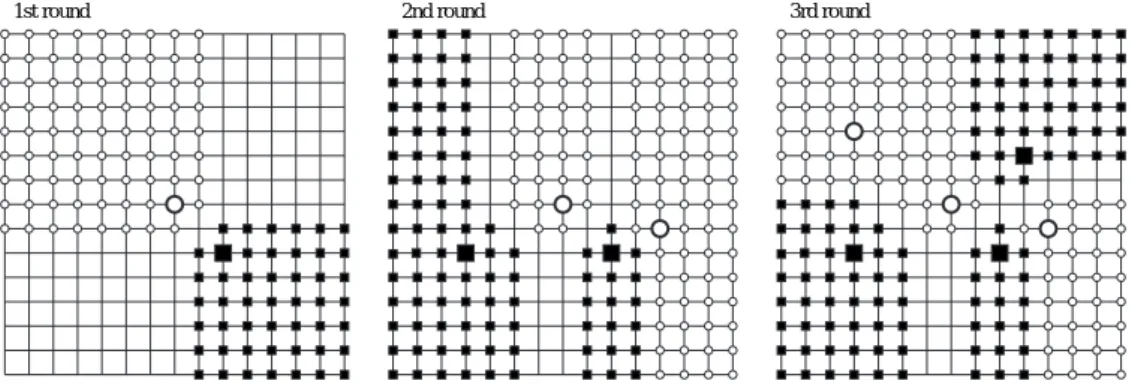
(2) strongly restricted case; the game arena is an arbitrary graph, the first player W occupies just one vertex which is predetermined, the second player B occupies n vertices in any way. The decision problem for the strongly restricted discrete Voronoi game is defined as follows; the problem is to determine if B has a winning strategy for given graph G with the occupied vertex by W. This restricted case seems to be advantageous for B. However, the decision problem is NP-complete. This result is also quite different from the previously known results in the 2-dimensional problem (i.e. B can always dominate the fraction 12 + ε of the 2-dimensional domain) by Cheong et al. [2] and Fekete et al. [3].. 2 Problem definitions In this section, we formulate the discrete Voronoi game on a graph. Let denote a Voronoi game VG(G, n), where G is the game arena, and the players play n rounds. Hereafter, the game arena intends an undirected and unweighted simple graph G = (V, E) with N = |V| vertices. For each round, the two players, W (white) and B (black), alternately occupy an empty vertex on the graph G (W always starts the game, as in Chess). The empty vertex is defined as a vertex which has not been occupied so far. This implies that W and B cannot occupy a same vertex simultaneously. Hence it is implicitly assumed that the game arena G contains at least 2n vertices. Let Wi (resp. Bi ) be a set of vertices occupied by player W (resp. B) at the end of the i-th round. We define the distance d(v, w) between two vertices v and w as the number of edges along the shortest path between them if such path exists, otherwise d(v, w) = ∞. Each vertex of G can be assigned to the nearest vertices occupied by W and B, according to the nearest neighbor rule. So, we define a dominance set V(A, B) (or Voronoi regions) of a subset A ⊂ V against a subset B ⊂ V, where A ∩ B = ∅ as V(A, B) = {u ∈ V | min d(u, v) < min d(u, w)}. v∈A. w∈B. The dominance sets V(Wi , Bi ) and V(Bi , Wi ) represent the sets of vertices dominated at the end of the i-th round by W and B, respectively. Let VW and VB denote V(Wn , Bn ) and V(Bn , Wn ), respectively. Since some vertex can be ”tie” when it has the same distance from a vertex occupied by W and another vertex occupied by B, there may exist set Ni of neutral vertices, Ni := {u ∈ V | minv∈Wi d(u, v) = minw∈Bi d(u, w)}, which does not belong to both of V(Wi , Bi ) and V(Bi , Wi ). Finally, the player who dominates larger number of vertices wins, in the discrete Voronoi game. More precisely, W wins if |VW | > |VB |, B wins (or W loses) if |VW | < |VB |, and tie otherwise, since the outcome for each player, W or B, is the size of the dominance set |VW | or |VB |. In our model, note that any vertices in Nn do not contribute to the outcomes VW and VB of both players (see Fig. 1). 1st round. 2nd round. 3rd round. Fig. 1. Example for a discrete Voronoi game VG(G, 3), where G is the 15 × 15 grid graph; each bigger circle is a vertex occupied by W, each smaller circle is an empty vertex dominated by W, each bigger black square is a vertex occupied by B, each smaller black square is an empty vertex dominated by B, and the other are neutral vertices. In this example, the 2nd player B won by 108–96.. 3 Discrete Voronoi game on a complete k-ary tree In this section, we consider the case that the game arena G is a complete k-ary tree, which is a rooted tree whose inner vertices have exactly k children, and all leaves are in a same level, or the highest level. 2 −10−.
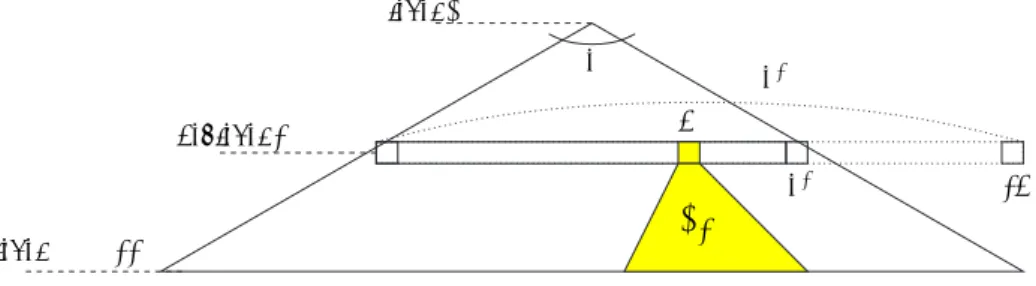
(3) Firstly, we show a simple observation for Voronoi games VG(T, n) which are satisfied 2n ≤ k. In this game of a few rounds, W occupies the root of T with his first move, and then W can dominate at least N−1 k n + 1 vertices. Since B N−1 dominate at most k n vertices, W wins. More precisely, we show the following algorithm as W’s winning strategy.. Algorithm 1: Simple strategy Stage I: (W’s fist move) W occupies the root of T ; Stage II: W occupies the empty children of the root for his remaining rounds;. In the strategy of Algorithm 1, W alternately pretends to occupy the empty children of root, though W may occupy any vertex. This strategy is obviously well-defined and winning strategy for W, whenever the game arena T is satisfied 2n ≤ k. Proposition 1. Let VG(G, n) be the discrete Voronoi game such that G is a complete k-ary tree with 2n ≤ k. Then the first player W always wins. We next turn to more general case. We call a k-ary tree an odd (resp. even) if k odd (resp. even). Let T be a complete H+1 k-ary tree as a game arena, N be the number of vertices of T , and H be the height of T . Note that N = k k−1−1 and H ∼ logk N ? . For this game, we show the following theorem. Theorem 1. In the discrete Voronoi game VG(G, n) where G is a complete k-ary tree such that N ≥ 4n2 , the first player W always wins if G is odd k-ary tree, otherwise the game ends in tie when the players do their best. In section 3.1, we first show winning strategy for the first player W when k is odd and the complete k-ary tree contains at least 4n2 vertices. In idea of any winning strategy, it is necessary to deliberate the relation between the number of children k and the game round n. Indeed, W chooses one of two strategies according to the relation between k and n. We next consider the even k-ary tree in section 3.2, which completes the proof of Theorem 1. 3.1 Discrete Voronoi game on a large complete odd k-ary tree We generalize the simple strategy to Voronoi games VG(T, n) on a large complete k-ary tree, where 2n > k and k is odd (k ≥ 3). We define that a level h is keylevel if the number kh of vertices satisfies n ≤ kh < 2n, and a vertex v is a key-vertex if v is in the keylevel. Let T i denote the number of vertices in the subtree rooted at a vertex in level i (i.e., T 0 = N, T i = kT i+1 + 1). Let {V1h , V2h , . . . , Vkhh−1 } be a family of vertices in the keylevel h such that set Vih consists of k vertices which have the same parent for each i. level 0 k. αk h n. keylevel h. kh. 2n. Th level H(≥ 2h) Fig. 2. The notations on the game arena T .. As mentioned above, a winning strategy is sensitive for the relation between k, h, and n.So, we firstly introduce a magic number α = 2n , 1 < α < k (see Fig. 2). We note that since k is odd, we have neither α = 1 nor α = k. By kh assumption, we have that the game arena T is sufficiently large such that the subtrees rooted at level h contain sufficient vertices comparing to the number of vertices between level 0 and level h. More precisely, by assumption N ≥ 4n2 , we 2 have H ≥ 2h and N ≥ 4n . We define γ := H − 2h, and hence γ ≥ 0. α2 The winning strategy for W chooses one of two strategies according to the condition whether the magic number 1 + kh+γ1(k−1) or not. The strategy is shown in Algorithm 2. α is greater than 1 + 2k − k−1 ?. In this paper, we denote by f (x) ∼ g(x) when lim x→∞. f (x) g(x). = 1.. 3 −11−.
(4) Algorithm 2: Keylevel strategy for W if α > 1 + − + then Stage (a)-I: W occupies an empty key-vertex so that at least one vertex is occupied in each Vih ; (Stage (a)-I ends after the last key-vertex is occupied by either W or B. Note that the game may finish in Stage (a)-I.) end Stage (a)-II: W occupies an empty vertex which is a child of the vertex v, such that v is occupied by B, and v has the minimum level greater than or equal to h; (W dominates as much vertices as possible from B.) end else Stage (b)-I: W occupies an empty vertex in level h − 1; (Stage (b)-I ends when such empty vertices are not exists.) end Stage (b)-II: W occupies an empty key-vertex whose parent is not occupied by W; (Stage (b)-II ends when such empty key-vertices are not exist.) end Stage (b)-III: if there exists an empty vertex v in level h + 1 such that the parent of v is occupied by B then W occupies v; else W occupies an empty key-vertex in level h + 1 whose parent is occupied by W; end end 2 k. 1 k−1. 1 kh+γ (k−1). Lemma 1. The keylevel strategy is well-defined in a discrete Voronoi game VG(T, n), where T is a sufficient large complete k-ary tree so that N ≥ 4n2 . Proof. By assumption, there exists the keylevel h. In the Stage (a)-I, if B occupied a key-vertex in Vih and W has not occupied any vertex in Vih , W occupies an empty key-vertex in Vih rather than occupies the other empty key-vertices. This implies that W can occupy at least one key-vertex in each Vih , i = 1, 2, . . . , kh−1 . Since the situation W follows the Stage (a)-II is happened when B occupies at least one key-vertex, there exists such a children. If W follows the case (b), then this is obviously well-defined. So, the keylevel strategy is well-defined. t u Lemma 2. The keylevel strategy is a winning strategy for W in a discrete Voronoi game VG(T, n), where T is a sufficient large complete odd k-ary tree so that N ≥ 4n2 . 1 Proof. We first argue that W follows the case (a), or α > 1 + 2k − k−1 + kh+γ1(k−1) . When the game ends in the Stage (a)-I (i.e., B never occupies any key-vertices, or does not occupy so many key-vertices), the best strategy of B follows, occupying all vertices in level h − 1 for the first kh−1 rounds, and then occupying a child of key-vertex dominated by W to dominate as much vertices as possible with his remaining moves. In fact, the winner dominates more leaves than that of the opposite. So, it is not so significant to occupy the vertices in a level strictly greater than h + 1, and strictly less than h − 1.. Now, we estimate their outcomes |VW | and |VB |. Firstly, W dominates nT h vertices and B dominates (kh − n)T h + h−1 vertices, k−1 vertices. Since B dominates the subtrees of W with his remaining n − k. kh −1. |VW | = nT h − (n − kh−1 ) T h+1 , |VB | ≤ (kh − n) T h + (n − kh−1 ) T h+1 + 4 −12−. kh − 1 . k−1.
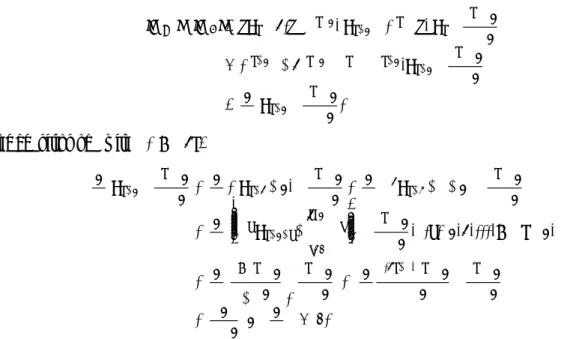
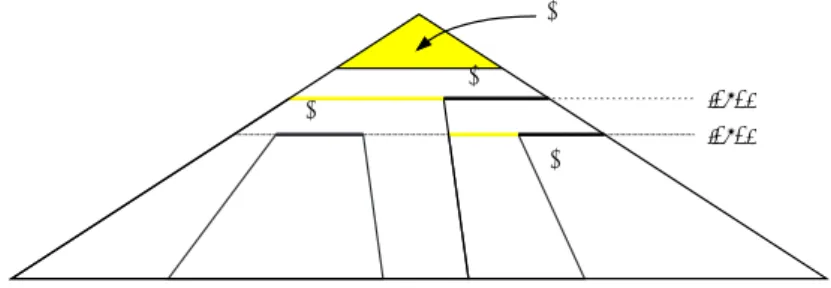
(5) 1 Since 2n = αkh and α > 1 + 2k − k−1 + kh+γ1(k−1) ,. kh − 1 k−1 h k −1 > (kh+1 α + 2kh−1 − kh α − kh+1 )T h+1 − k−1 1 kh − 1 ≥ γ T h+1 − . k k−1. |VW | − |VB | ≥ nT h − 2(n − kh−1 ) T h+1 − (kh − n) T h −. (1). By the definition of γ with γ = H − 2h, ) kh − 1 1 1 1 ( kh − 1 kh − 1 = γ (kT h+2 + 1) − = γ k2 T h+3 + k + 1 − T h+1 − γ k k−1 k k−1 k k−1 i−1 h ∑ k − 1 1 = γ ki T h+1+i + , (i = 1, 2, . . . , H − h − 1) k j − k k−1 j=0 1 k H−h − 1 kh − 1 1 k(2h+γ)−h − 1 kh − 1 − = γ − γ k k k−1 k−1 (k − 1 ) k − 1 1 1 = 1 − γ > 0. k−1 k =. Next, we consider the case that W follows Stage (a)-II. At level greater than h, there are three types of B’s occupation (see Fig. 3). In cases (2) and (3) of Fig. 3, B has no profits. Therefore, when B uses his best strategy, we. W. empty vertex. B. level h B. B (1). B (2). level h + 1 (3). Fig. 3. B’s occupations at the level greater than h.. can assume that B only occupies vertices under W’s vertices. This implies that B tries to perform the similar strategy of W, that is to occupy much key-vertices. More precisely, B chooses his move from following ways at every round: – B occupies an empty key-vertex, or – occupies a vertex v in level h + 1, where the parent of v is a key-vertex of W, or – occupies a vertex w in level h + 1, where the parent of w is a key-vertex of B. This implies that almost all key-vertices are occupied by either W or B, and then the subtree of T consisted by the vertices in level 0 through h − 1 is negligible small so that these vertices cannot have much effect on outcomes of W and B. It is not significant to the occupation of these vertices for both players. Let xi (resp. yi ) be the number of vertices occupied by W (resp. B) in level i. Let y+i (resp. y−i ) be the number of vertices occupied by B in higher (resp. lower) than or equal to level i. h When Stage (a)-I ends, W has xh key-vertices and B has yh key-vertices. Note that xh + yh ≤ kh and yh < d k2 e ≤ 0 xh < n. xh+1 is the number of vertices occupied in Stage (a)-II. Let yh+1 be the number of occupations used to dominate 0 0 vertices of W’s dominance set by B in level h + 1, and y00 h+1 be yh+1 − yh+1 . (see Fig. 4). Note that xh − yh ≥ yh+1 − xh+1 00 − + (it has equality if yh+1 + yh−1 + yh+2 = 0.) Now, we estimate their outcomes. Since W can dominate at least xh T h + (xh+1 − y0h+1 )T h+1 vertices, and W dominates yh T h + (y0h+1 − xh+1 )T h+1 vertices, the difference between the outcomes of W and B is |VW | − |VB | = xh T h + (xh+1 − y0h+1 )T h+1 − yh T h − (y0h+1 − xh+1 )T h+1 ( ) ≥ k(xh − yh ) − 2(y0h+1 − xh+1 ) T h+1 > T h+1 > 0. 5 −13−.
(6) y xh y0 h+1. − h−1. yh xh+1. level h y 00 h+1. level h + 1. Fig. 4. The notations in the case (a) of keylevel strategy.. W can dominates at least T h+1 vertices more than that of B, which is more vertices dominated by B using y0 vertices 1 between level 0 and h. So, W wins when α > 1 + 2k − k−1 + kh+γ1(k−1) . 1 We next argue that W follows the case (b), or α ≤ 1 + 2k − k−1 + kh+γ1(k−1) . When xh−1 = kh−1 , the best strategy for B is to occupied as much key-vertex as possible. So, the differences of outcomes are estimated as follow;. kh − 1 k−1 kh − 1 ≥ (kh+1 − 2kh−1 − kh (k − 1)α)T h+1 + 2 · k−1 ( ) kh − 1 1 kh − 1 1 kh+γ − 1 1 1 ≥ 2· − γ T h+1 = 2 − γ = kh − 2 + γ k−1 k k−1 k k−1 k−1 k > 0.. |VW | − |VB | = (kh − 2n) T h + 2(n − kh−1 ) T h+1 +. 1 Finally, we consider the case of α < 1 + 2k − k−1 + kh+γ1(k−1) and xh−1 < kh−1 (or xh−1 + yh−1 = kh−1 ). In this case, the similar arguments in which W follows Stage (a)-II can be applied. Each xh−1 , xh , and xh+1 is the number of vertices occupied in Stage (b)-I, (b)-II, and (b)-III, respectively. As mentioned above, y−h−2 and y+h+2 should be 0 to maximize his outcome |VB |. Let y0h be the number of key-vertices occupied by B whose parent is occupied by W, and 0 0 y00 h = yh − yh . Fig. 5 shows these notations. If W does not follows Stage (b)-III, then W wins since xh−1 − yh−1 ≥ yh − xh. y xh−1. y0 h xh+1. yh−1 xh. − h−2. y 00 h xh+1. level h − 1 level h level h + 1. Fig. 5. The notations in the case (b) of keylevel strategy.. 00 and k(xh−1 − yh−1 ) − 2(xh − y0h ) > 0. If W follows Stage (b)-III, then we have yh−1 + y0h + y00 h ≤ n, xh + yh = yh−1 , and 1 h−1 xh−1 > 2 k > yh−1 by the keylevel strategy. We can estimate the outcome of W as follows;. |VW | − |VB | = xh−1 T h−1 + (xh − 2y0h − y00 h )T h + 2xh+1 T h+1 0 00 > kxh−1 + xh − 2yh − yh ≥ kh + 2(kh−1 − xh−1 ) − αkh ≥ > 0.. kh−1 1 − γ k − 1 k (k − 1). Therefore, the first player W wins when he follows case (b) in the keylevel strategy. This completes the proof of Lemma 2. u t 6 −14−.
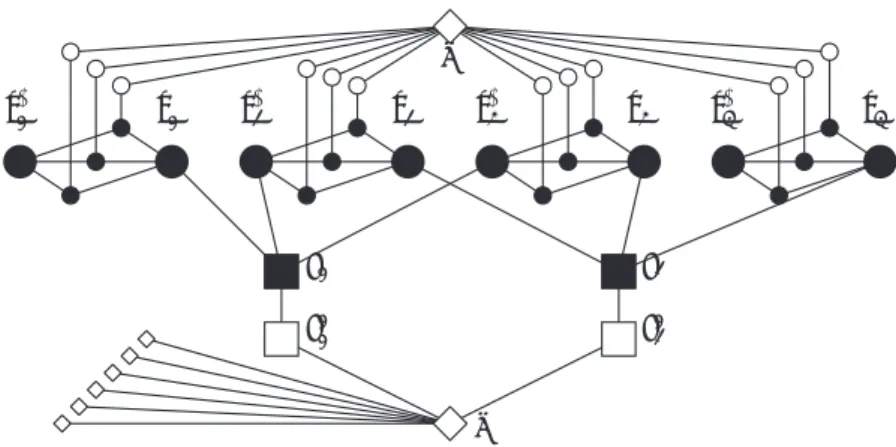
(7) 3.2 Discrete Voronoi game on a large complete even k-ary tree We consider the case that the game arena T is a large complete even k-ary tree. We assume that the game VG(T, n) is sufficed k > 2n, since W always wins if k ≤ 2n as mentioned above. Moreover, we assume that game arena T contains at least 4n2 vertices. Hence the first player W always loses if he occupies the root of T , since the second player B can use the keylevel strategy of W and W cannot drive B in disadvantage. In fact, since T is an even k-ary tree, B can take the symmetric moves of W if W does not occupy the root. Therefore, B never loses. However, we can show that W also never loses if he follows the keylevel strategy. If B has a winning strategy, then the strategy must not be the symmetric strategy of W. However, such a strategy does not exist, since W can occupy at least half of vertices on the important level, although the important level is 1 varied by the condition α > 1 + 2k − k−1 + kh+γ1(k−1) . This implies that W can dominate at least half vertices of T if he follows the keylevel strategy. Therefore, if both players do their best, then the game always ends in tie.. 4 NP-hardness for general graphs In this section, we show that the discrete Voronoi game is intractable on general graphs even if we restrict ourselves to the one-round case. To show this, we consider the following special case: Problem 1: Input: A graph G = (V, E), a vertex u ∈ V, and n. Output: Determine whether B has the winning strategy on G by n occupations after just one occupation of u by W. That is, W first occupies u, and never occupy any more, and B can occupy n vertices in any way. Then we have the following Theorem: Theorem 2. Problem 1 is NP-complete. Proof. It is clear Problem 1 is in NP. Hence we prove the completeness by showing the polynomial time reduction from a restricted 3SAT such that each variable appears at most three times in a given formula [5, Proposition 9.3]. Let F be a given formula with the set W of variables {x1 , x2 , . . . , xn } and the set C of clauses {c1 , c2 , . . . , cm }, where n = |W| and m = |C|. Each clause contains at most 3 literals, and each variable appears at most 3 times. Hence we have 3n ≥ m. j Now we show a construction of G. Let W + := {xi+ | xi ∈ W}, W − := {xi− | xi ∈ W}, Y := {yi | i ∈ {1, 2, . . . , n}, j ∈ 1, 2, 3}, j Z := {zi | i ∈ {1, 2, . . . , n}, j ∈ 1, 2, 3}, C 0 := {c01 , c02 , . . . , c0m }, D := {d1 , d2 , . . . , d2n−2 }. Then the set of vertices of G is defined by V := {u} ∪ W + ∪ W − ∪ Y ∪ Z ∪ C ∪ C 0 ∪ D. The set of edges E is defined by the union of the following edges; j j j j j j {{u, z} | z ∈ Z}, {{yi , zi } | yi ∈ Y, zi ∈ Z with 1 ≤ i ≤ n, 1 ≤ j ≤ 3}, {{xi+ , yi } | xi+ ∈ W + , yi ∈ Y with 1 ≤ i ≤ n, 1 ≤ j ≤ 3}, j j {{xi− , yi } | xi− ∈ W + , yi ∈ Y with 1 ≤ i ≤ n, 1 ≤ j ≤ 3}, {{xi+ , c j } | xi+ ∈ W + , c j ∈ C if c j contains literal xi }, {{xi− , c j } | xi− ∈ − W , c j ∈ C if c j contains literal x¯i }, {{c j , c0j } | c j ∈ C, c0j ∈ C 0 with 1 ≤ j ≤ m}, {{c0j , u} | c0j ∈ C 0 with 1 ≤ j ≤ m}, and {{u, di } | di ∈ D with 1 ≤ i ≤ 2n − 2}. An example of the reduction for the formula F = ( x¯1 ∨ x2 ∨ x3 ) ∧ ( x¯2 ∨ x¯3 ∨ x¯4 ) is depicted in Fig. 6: Small white and black circles are the vertices in Z and Y, respectively, large black circles are the vertices in W + ∪ W − , black and white rectangles are the vertices in C and C 0 , respectively, two white large diamonds are the same vertex u, and small diamonds are the vertices in D. It is easy to see that G contains 10n + 2m − 1 vertices, and hence the reduction can be done in polynomial time. Now we show that F is satisfiable if and only if B has a winning strategy. We first observe that for B, occupying the vertices in W + ∪ W − gives more outcome than occupying the vertices in Y ∪ Z ∪ C ∪ C 0 . More precisely, occupying either xi+ or xi− for each i with 1 ≤ i ≤ n, B dominates all vertices in W + ∪ W − ∪ Y, and it is easy to see that any other ways archive less outcome. Therefore, we can assume that B occupies one of xi+ and xi− for each i with 1 ≤ i ≤ n. When there is an assignment (a1 , a2 , . . . , an ) that satisfies F, B can also dominates all vertices in C by occupying xi+ if ai = 1, and occupying xi− if ai = 0. Hence, B dominates 5n + m vertices in the case, and then W dominates all vertices in Z, C 0 and D, that is, W dominates 1 + 3n + m + 2n − 2 = 5n + m − 1 vertices. Therefore, B wins if F is satisfiable. On the other hand, if F is unsatisfiable, B can dominate at most 5n + m − 1 vertices. In the case, the vertex in C corresponding to the unsatisfied clause is dominated by u. Thus W dominates at least 5n + m vertices, and hence W wins if F is unsatisfiable. Therefore, Problem 1 is NP-complete. t u 7 −15−.
(8) u x1+. x1−. x2+. x2−. x3+. x3−. c1. c2. c01. c02. x4+. x4−. u. Fig. 6. Reduction from F = ( x¯1 ∨ x2 ∨ x3 ) ∧ ( x¯2 ∨ x¯3 ∨ x¯4 ). Next we show that the discrete Voronoi game is NP-hard even in the one-round case. More precisely, we show the NP-completeness of the following problem: Problem 2: Input: A graph G = (V, E), a vertex set S ⊆ V with n := |S |. Output: Determine whether B has the winning strategy on G by n occupations after n occupations of the vertices in S by W. Corollary 1. Problem 2 is NP-complete. Proof. We use the same reduction in the proof of Theorem 2. Let S be the set that contains u and (n − 1) vertices in D. Then we immediately have NP-completeness of Problem 2. t u Corollary 2. The (n-round) discrete Voronoi game on a general graph is NP-hard.. 5 Concluding Remarks and Further Researches We give winning strategies for the first player W on the discrete Voronoi game VG(T, n), where T is a large complete k-ary tree with odd k. It seems that W has an advantage even if the complete k-ary tree is not large, which is a future work. In our strategy, it is essential that each subtree of the same depth has the same size. Therefore, considering general trees is the next problem. The basic case is easy: When n = 1, the discrete Voronoi game on a tree is essentially equivalent to find a median vertex of a tree. The deletion of a median vertex partitions the tree so that no component contains more than n/2 of the original n vertices. It is well known that a tree has either one or two median vertices, which can be found in linear time (see, e.g. [4]). In the former case, W wins by occupying the median vertex. In the later case, two players tie. This algorithm corresponds to our Algorithm 1. We also show that the discrete Voronoi game is intractable on a general graph even if we restrict to the one-round case. We conjecture that the discrete Voronoi game on a general graph is PS PACE-complete in n-round case.. References 1. H.-K. Ahn, S.-W. Cheng, O. Cheong, M. Golin, R. van Oostrum. Competitive facility location: the Voronoi game, Theoretical Computer Science, vol. 310, pp. 457–467, 2004. 2. O. Cheong, S. Har-Peled, N. Linial, J. Matousek. The one-round Voronoi game, Discrete and Computational Geometry, vol. 31, pp. 125–138, 2004. 3. S. P. Fekete, H. Meijer. The one-round Voronoi game replayed: Computational Geometry Theory and Applications, vol. 30, pp. 81–94, 2005. 4. F. Harary. Graph Theory, Addison-Wesley, 1972. 5. C.H. Papadimitriou. Computational Complexity, Addison-Wesley Publishing Company, 1994.. 8 −16−.
(9)
図
+2
関連したドキュメント
A second way involves considering the number of non-trivial tree components, and using the observation that any non-trivial tree has at least two rigid 3-colourings: this approach
This paper gives a decomposition of the characteristic polynomial of the adjacency matrix of the tree T (d, k, r) , obtained by attaching copies of B(d, k) to the vertices of
Given T and G as in Theorem 1.5, the authors of [2] first prepared T and G as follows: T is folded such that it looks like a bi-polar tree, namely, a tree having two vertices
The number in the lower box in each row is the multiplicity for each tree when outdegree r ≥ 1 vertices are taken (r + 2)-ary. The 20 unordered rooted trees.. These trees are shown
If the category P (C) of small presheaves on C is finitely complete, then its K-canonical topology is K-ary and induces the trivial K-ary topology on C, while every small presheaf
The paper is organized as follows: in Section 2 is presented the necessary back- ground on fragmentation processes and real trees, culminating with Proposition 2.7, which gives a
Some of the above approximation algorithms for the MSC include a proce- dure for partitioning a minimum spanning tree T ∗ of a given graph into k trees of the graph as uniformly
, n is called a recursive tree if the vertex labelled 1 is the root and, for all 2 ≤ k ≤ n, the sequence of vertex labels in the path from the root to k is increasing (Stanley
