This paper explores the notion of sustainable urban metabolism and “zero waste”. There is now a growing interest in understanding the complex interactions and feedbacks between urbanization, material consumption and the depletion of our resources. The link between increasing urbanization and the increase of waste generation has been established for some time. However, the impact of urban form and density on resource consumption is still not fully understood. Human population on the planet has increased fourfold over the last hundred years, while – in the same time period – material and energy use has increased tenfold. Beyond energy efficiency, there are now urgent challenges around the supply of resources, materials, food and water. After debating energy-efficiency for the last two decades, the focus has shifted to include resource and material-efficiency.
The topic of reducing urban household consumption and strategies to reducing the material requirements for buildings (in fact, of the entire construction sector) has only recently emerged as an urgent field. While there is a general acknowledgment that there is a need for improved urban governance processes and rethinking of urban development patterns to reduce material consumption and optimize material flows, this is still a relatively new research field and there is still a lack of reliable data and comparative methodologies. One of the findings of this paper is that embedding “zero-waste”
requires strong industry leadership, new policies and effective education curricula, as well as raising awareness (education) and refocusing research agendas to bring about attitudinal change and the reduction of wasteful consumption.
Optimizing Material Flows
Resource Recovery, Zero Waste and Sustainable Consumption as Paradigms in Urban Development
マテリアルフローの適正化
資源循環・ゼロ廃棄・持続可能な消費:都市発展の新しいパラダイム Steffen Lehmann
Professor & Director, Research Centre sd+b, University of South Australia, Adelaide レーマン , ステッファン
南オーストラリア大学持続可能デザイン+行動研究センター所長・教授
◆特集*招待論文◆
本論は持続可能な都市新陳代謝とゼロ廃棄を論じたものである。都市化、マテリアル消費、資源 枯渇の間に複雑な関係があり、互いのフィードバックに対して関心は高まっている。都市化と都市 廃棄物の産出との間に関連性が強いことは一般に知られているが、都市の形態と密度がマテリアル の消費にどのような影響を与えるかに関してまだよくわかっていない。世界人口は最近 100 年の間 に4倍増えた。一方、マテリアルとエネルギー消費は 10 倍も増えた。エネルギー効率に加えて、資源、
物資、食糧、水の供給にも重大な挑戦が待ち受けている。過去 20 年間、私たちはエネルギー効率 をよく議論してきた。近年、それに資源とマテリアル消費も含まれる方向へシフトしている。
都市における世帯消費の削減と建築物のマテリアル需要の削減を緊急な課題として一緒に議論す るようになったのは最近のことである。都市ガバナンスを改善し、都市開発の形態を再考し、資源 消費を減らし、マテリアルフローを適正化させることに関して、一般的知見がかなり増えてきたが、
信頼できるデータと比較できる研究方法はまだない。結論として、ゼロ廃棄を都市発展の主流に乗 せるためには、産業界の強いリーダーシップ、新しい政策、有効な教育カリキュラムが必要である。
また、普及啓蒙を強化し、研究課題を再検討し、基本的姿勢を変え、浪費的消費を削減しなければ ならない。
Keywords: Material flows and waste streams in the urban context, Closed-loop urban metabolism, Zero waste concepts, Resource recovery, Recycling and reuse, Reducing consumption, Waste avoidance, Changing behavior
Introduction
Waste was once seen as a burden on our industries and communities; however, shifting attitudes and better understanding of global warming and the depletion of resources have led to the identification of waste as a valuable resource that demands responsible solutions for collecting, separating, managing, and recovering. In particular, over the last decade the holistic concept of a “zero waste” lifecycle has emerged as part of a cultural shift and a new way of thinking about the age-old problem of waste and the economic obsession with endless growth and consumption.
A global understanding has emerged, which widely accepts that the broad impact of climate change — which includes biodiversity loss:
increasing air, water, and soil pollution; deforestation;
and a shortage of resources and materials — is a consequence of over-consumption and unsustainable production processes. Emerging complex global issues, such as health and the environment, or lifestyles and consumption, and development require approaches that transcend the traditional boundaries between disciplines. Today, it is increasingly understood that we need to discuss resource- efficiency and resource-recovery in the same way that we currently discuss energy-efficiency. This includes waste minimization strategies and the concept of “designing waste out of processes and product[s].” 1
At the local level, every municipality or company can take immediate action to identify its own particular solutions. Separating recyclable materials, such as paper, metals, plastics, and glass bottles, and consolidating all identified waste categories into one collection point are some basic measures. However, a waste stream analysis should be conducted, involving an inventory of the entire waste composition, measurement of the volumes of different material categories, and their origins and
destinations. Municipalities can create databases to track all waste types and to cross reference by facility type, so the amount and type of waste each facility, district, or precinct generates can be identified, thus pinpointing where reductions are most feasible.
The concept of “zero waste” directly challenges the common assumption that waste is unavoidable and has no value by focusing on waste as a “misallocated resource” that has to be recovered. It also focuses on the avoidance of waste creation in the first place.
In Australia for instance, households throw out approximately five billion dollars of food every year.2 This raises much wider social questions of attitude and behavior, and has further implications on urban development. How will we design, build, and operate cities in the future? What role will materials flow and waste play in the “city of tomorrow”? How will we better engage sustainable urban development principles and “zero waste” thinking? These are some of the topics discussed in this paper.
1 The Link Between Waste, Material Consumption, and Urbanization
1.1 Limits to growth: Understanding waste as a resource and part of a closed-cycle urban ecology In recent years, the need for more sustainable living choices and a focus on behavioral change has been increasingly articulated. The estimated yearly world waste production is now around four billion metric tons of waste, of which only twenty percent is currently recovered or recycled.3 Globally, waste management has emerged as a huge challenge, and we must take a fresh look at how we can best manage the waste and material streams of cities and urban developments. The issue of our cities’ ever growing waste production is of particular significance if we view the city as a living eco-system with closed-loop management cycles (See: Figures 1 and 3).
Anna Tibaijuka notes that “managing solid waste is always in the top five of the most challenging
problems for city managers and it is somewhat strange that it receives so little attention compared to other urban management issues. The quality of waste management services is a good indicator of a city’s governance.”4 Clearly there are some serious implications around the topic of waste. It is obvious that it is not just about waste recycling, but also waste prevention. Avoidance is the priority, followed by recycling and “waste engineering” (up-scaling) to minimize the amount that goes to waste incineration and landfills.
1.2 Waste Disposal in Landfills
Landfill runoff and leachate are a threat to soil and groundwater, and methane gas discharges — mainly from organic waste in landfills — are a threat to the atmosphere. At the same time, many large cities are producing astronomical amounts of waste daily and are running out of landfill space. The land available for filling with rubbish is running out and the situation worldwide is similar, where cities are running out of space to bury their waste. In the European Union (“EU”), legislation from Brussels is making the burial of rubbish in landfill sites more expensive and increasing the pressure to re-use and recycle.5 Unfortunately several countries, such as the United Kingdom, are unlikely to meet the EU deadlines on landfill diversion, as they are not diverting waste away from landfill quickly enough.6 Beijing will run out of space in its thirteen landfill sites in the next three years.7 New Delhi is opening a new landfill site, as existing sites’ capacity has been exhausted.8 San Francisco has only enough landfill capacity to last until 2014, and the same applies to Sydney.9 To transport waste on trucks to distant landfill sites would be very inefficient and damaging for the environment.10
1.3 E-Waste
A particular concern is disposal of electrical and
electronic equipment, known as e-waste. Of about 16.8 million televisions and computers that reached the end of their useful life in Australia in 2008 and 2009, only about ten percent were recycled.11 Most of the highly toxic e-waste still goes into landfills, threatening ground water and soil quality, and an unknown proportion is shipped overseas (legally and illegally), mainly to China. About thirty-seven million computers, seventeen million televisions, and fifty-six million mobile phones have already been buried in landfills around Australia.12 This waste contains high levels of mercury and other toxic materials common to electronic goods, such as lead, arsenic, and bromide. Several countries are actively pushing for industry-led schemes for collecting and recycling televisions, printers, and computers, known as extended producer responsibility (“EPR”) and product stewardship.13 In addition, we must expect that the amount of e-waste created in the developing world will dramatically increase over the next decade.
1.4 Waste Incineration
Incineration of waste has finally gone out of fashion, as it is a waste of finite resources and has the disadvantage that it releases poisonous substances, such as dioxins and toxic ash, into the environment.14 Incinerator ash can often be categorized as hazardous waste because it is extremely toxic, containing concentrated amounts of lead, cadmium, and other heavy metals.15 Companies producing incinerator technology had to face shrinking markets in pollution-conscious northern countries and as consequence have been turning to Asia and Latin- America where they still see a lucrative market for their out-dated technology. 16
Burning waste with very high-embodied energy is generally not an efficient way of dealing with materials and resources, and therefore ranks rightly at the bottom of the waste management hierarchy. Environmental groups have successfully
prevented the construction of new waste incinerators around the world; there is resistance by society to the development of new landfills and incineration facilities.17
Outdated linear systems like burning waste or dumping waste on landfill sites will have to be replaced with circular systems, taking nature as its model. A combination of recycling and composting organic waste is much more appropriate. The transformation of waste management has emerged as a lucrative field: in 2006, for example, Sita UK, a subsidiary of the French group Suez Environment, signed a £1 billion contract with Cornwall county council to manage its waste for the next thirty years, followed by a twenty-eight year, £690 million deal with Northumberland. Cumbria county council made Shanks its preferred bidder for a £400 million contract to manage its waste for twenty-five years in November 2010. Many other local authority contracts are up for grabs.18
1.5 Alternatives to Waste Disposal
In the available literature, one can frequently find a recommended split for a city’s municipal waste management where no waste goes to landf ill is as follows:
• Recycling and reusing minimum sixty percent • Composting of organic waste
thirty to forty percent
• Incineration of residual waste (waste-to-energy) maximum twenty percent19
Organic waste is playing an increasingly important role, and composting is an effective way to bring back nutrients into the soil. But also for energy generation: the small Austrian town of Güssing, for instance, activates the biomass from its agricultural waste and has reached energy autonomy
by composting and using the bio-energy to generate its power.20
Today, recycling fifty to sixty percent of all waste has become an achievable standard figure for many cities. For example, the Brazilian model city of Curitiba has managed to recycle over seventy percent of its waste since 2000.21 San Francisco boasts the highest diversion rate in the United States, at seventy- seven percent; the city has set a “zero waste” goal by 2020.22
However, recent research from Veolia shows that recycling in itself is inefficient in solving the problem as it does not deliver the necessary “decoupling” of economic development from the depletion of non- renewable raw materials.23 Grosse and others argue that “the depletion of the natural resource of raw material is inevitable when its global consumption by the economy grows by more than 1 percent per annum . . . . The only effect of recycling is that the curve is delayed.”24 There is evidence that recycling can only delay the depletion of virgin raw materials for a few decades at best. Research shows that only recycling rates above eighty percent would allow a significant slowdown of the depletion of natural resources.25 Therefore, the role of recycling to protect resources is not significant for non-renewable resources whose consumption tends to grow at a rate of more than one percent per year.
Even though recycling is an important com- ponent of reducing waste going to landfills and incinerators, sustainable development policies cannot rely solely on recycling. Policies must aim at reducing the consumption of each non-renewable raw material so that the annual growth rate remains under one percent. Decoupling economic development from materiality seems to be the only long term solution. Recycling is not so much the primary goal since the objective is not merely to reduce the amount of waste in general, but rather to encourage a reduction in the quantities of materials used to make
the products that will later become waste.
Increasingly, countries are collecting reliable data and publishing annual waste reports to monitor the development of waste management. For instance, the National Waste Report 2010 of Australia brings together for the first time in one document, data and information on waste management (including recycling, reuse, and resource recovery) from across Australia.26 The production of the National Waste Report was part of the Australian Government’s Strategy 16 of the National Waste Policy: Less Waste More Resources, which was launched by the Environment Protection and Heritage Council (“EPHC”) in November 2009.27
1.6 Constantly Growing Amounts of Waste
Global urban population growth is expected to stabilize in 2050 at around nine billion human beings.28 However, population growth is far from being the main driver of recent economic expansion and the increase of consumption of materials, water, fossil fuels, and resources. The process by which emerging countries catch up with the standard of living of more advanced economies is, in fact, an even more powerful actuator.29 While the worldwide international average for waste generation is about 1 to 1.5 kg per capita per day, countries like Kuwait and United Arab Emirates top the list by generating an average of over 3.5 kg of waste per capita per day. By comparison, Australia creates around 3 kg per capita per day of solid waste.30
With the constant increase in the world’s economic activity, there has been a large increase in the amount of solid waste produced per person.31 The mix of industrial and urban waste has become ever more complex, and often contains large amounts of toxic chemicals, or is contaminated with organic waste and food waste, making it impossible to recover and recycle. For instance, the United Nations Environment Programme (“UNEP”) has
explored the various waste categories with the urban waste mix, and their potential public health impacts.32
1.7 Waste in the Oceans
As a consequence of increasing global pro- duction, waste is accumulating in the oceans. In recent years, our oceans have devolved into vast garbage dumps. Every year, around 250 million metric tons of plastic products are produced, some of which take up to 200 years to degrade, and much of which ends up in the oceans.33 The “Great Pacific Garbage Patch” is half the size of Europe (some call it cynically the world’s largest man-made structure), and in the Atlantic huge amounts of plastic garbage have recently been discovered; the highest concentration found close to Caribbean islands has over 200,000 plastic pieces per square kilometer.34 In the North and Baltic Seas, dumping has been illegal for over two decades, yet the amount of waste found in them has not improved.35 It is estimated that each year 20,000 metric tons of waste enters the North Sea, primarily from ships and the fishing industry.36
The thousands of metric tons of waste thrown into the sea each year are endangering humans and wildlife.37 Wildlife consumes small pieces of plastic, which causes many of them to die.38 Experts warn that we have reached a point where it could become dangerous for humans to consume seafood.39 One problem is the throwaway plastic water bottles made of polyethylene terephthalate (“PET”), not only because they significantly contribute to waste creation and CO2 emissions from transporting drinking water around the globe, but because the bottles also release chemicals suspected of being harmful to humans and animals into the water.40 This, together with the devastating oil spill in the Gulf of Mexico in 2010, shows how advanced humanity’s destruction of entire ecosystems in the oceans has become.41
The international community has been pushing
for four decades for massive bureaucratic efforts aimed at clearing the oceans of waste. In 1973, the United Nations sponsored a pact for protecting the oceans from dumping, and in 2001, the EU established directives that forbade any dumping of maritime waste into the ocean while in port.42 However, such directives have been ineffective and many experts agree that laws and international efforts aimed at protecting the oceans have failed across the board.
2 Emerging and Innovative Approaches to Waste Reduction and Management
Obviously, the first aim of a sustainable future is to avoid the creation of waste and to select materials and products based on their embodied energy, their life-cycle assessment, and supply chain analysis.
Transportation of input materials, as well as the transportation of the final product to consumers (or to the construction site), is a common contributor to greenhouse gas emissions. The way in which a product uses resources, such as water and energy, influences its environmental impact, while its durability determines how soon it must enter the waste stream. Care needs to be taken in the original selection of input materials, and the type of assembly used influences end-of-life disposal options, such as ease of recyclability or take-back by the manufacturer.
Construction components in steel can relatively easily be recycled; steel is therefore by far the most recycled material worldwide and has the longest
“residence time.” However, with a huge amount of waste from the construction and demolition sector still going to landfills and incinerators, drastic action is required in urban planning to develop intelligent circular metabolisms for new districts, and waste collection and treatment systems.
Mal Williams, CEO of Cylch, a major recycling company in Wales, points out that “ninety percent of household waste is actually reusable without the
need for incineration. Waste means inefficiency and lost profit. A large amount of waste from households is organic. Even so, a lot of it ends up in waste dumps on the edge of the city where it produces methane gas for many years thus causing further damage to the climate. This cannot continue.”43
According to the “polluter pays” principle, those who generate large amounts of waste should be responsible for bearing the costs. Collecting, sorting, and treating waste incurs huge costs,44 so the focus has to be on avoiding and minimizing waste creation in the first place. Waste management and recycling schemes have greatly reduced the volume of waste being landfilled, while waste segregation and recycling have substantial economic benefits and create new “green” jobs.45
Today, no other sector of industry uses more materials, produces more waste, and contributes less to recycling than the construction sector.46
2.1 Zero Waste and Closed Loop Thinking in the Construction Sector
There is a growing interest from architects and urban planners in “zero waste” concepts. Cities are the areas where these concepts can be embedded into practice by redesigning urban systems with
“zero waste” and material flow in mind, transforming existing cities and upgrading recycling infrastructure in low-to-no carbon city districts. It is time to include prefabrication and “design for disassembly” building resilience into urban systems. This will change the design, building, and operation of city districts in the future.
Energy cost is not limited to heating or cooling energy or lighting energy; it is also related to all material flows relevant to buildings. Building materials too often use primary resources that eventually end up in landfills and waste from the production of construction materials and components can be much greater than all other waste streams.47
Façade systems made of composite materials currently create recycling and resource recovery problems.48 No building debris should go to landfills; therefore, manufacturers must change the composition of materials to make them reusable or recyclable. In addition, concrete companies could switch to using recycled concrete aggregates to make their products more sustainable.49 To make it easier for architects and planners to specify materials according to their impact (including impacts caused by material extraction, or waste creation from the production process), information on materials and components needs to be readily available.
Urban planners frequently raise the question about which is the best scale to operate on for introducing “zero waste.” The city district as a unit appears to be a good, effective scale. Neighborhood and precinct planning must consider the climate crisis, which will mean linking the urban with the rural community. Planning better cities will also require that composting facilities and recycling centers are in close proximity to avoid transporting materials over long distances. Keeping the existing building stock is important, as the most sustainable building is always the one that already exists.
Retrofitting existing districts is, therefore, essential.50 Re-using building components and integrating existing buildings (instead of demolition) is a basic principle of any eco-city and eco-building project.
2.2 Changing manufacturing and packaging processes New agreements with industry have to be made to dramatically reduce waste from packaging. On the way towards a “zero waste” economy, manufacturers will increasingly be made responsible for the entire life-cycle of their products, including their recyclability, by introducing an “extended producer responsibility” (“EPR”) policy.
In the future, with EPR, the creator of packaging will have to pay for the collection of that packaging.
EPR, or Product Stewardship, policies come at a cost to manufacturers, as they must take financial ownership of their products from creation to disposal.
The rising costs of waste from landfill levies will likely become a main driver. Essentially, one needs to ask how much packaging is really necessary. Can the product be packed in another way? For instance, in Germany eighty-two percent of all packaging is recycled, an outcome of the legislation Gruener Punkt (the “Green Dot”), introduced as early as 1991 and legislated in 1993.51 Economic growth has been decoupled from the amount of waste for the first time in Germany in 2008. There is a need for leadership from government and a select group of companies (this is usually not more than five percent of all companies) to show how packaging can be reduced or how products can be taken back from the consumer once the end of life-cycle has been reached, as is done with old tires.52
Fortunately, many companies are now doing extraordinary things in the area of recycling and are prolonging the life-cycle of products. For instance, Ohio-based firm Weisenbach Recycled Products, a manufacturer of consumer goods made from recycled materials holds numerous patents on recycling awareness and pollution prevention products. It is both a specialty printing firm and an innovative recycler of waste and scrap, repurposing and “up-cycling” such materials as plastic caps, glass bottles, and circuit boards into over six hundred promotional items and retail consumer products.53 According to the company’s president, Dan Weisenbach, there has been a changing perception in the business world, where you are more valued if your company is a certified green business, with a history of environmental leadership: “Even though conservation has been a core principle in our culture since we started, we believe it is important that we take a step to formalize our commitment to sustainable business. The competitive landscape has
shifted and as more competition enters the field, we want to help our business partners and customers understand how distinctive we truly are. We created this report as much for them as for ourselves.”54
Ikea and Woolworth have been setting new standards in this area, and BASF, a chemical company, only puts new products on the market when there is evidence that the new product has a better life-cycle assessment than the previous one.55 There have been innovative recycling initiatives for mattresses, bicycles, carpets, paints, construction timber, and furniture.56 Products will need to be manufactured differently, with “zero waste” concepts and EPR principle in mind.
While there are a handful of outstanding examples of EPR, the global picture looks unfortunately different: too many companies are still resisting the necessary change in production methods, waste management, and EPR. One major reason is the costs involved: product stewardship comes at a cost to the manufacturers, who are now becoming responsible for the whole life-cycle of their products, from creation to disposal.
But a cultural shift is now occurring. While for centuries, waste was regarded as pollution that had to be collected, hidden, and buried, today, waste is no longer seen as something to be disposed of, but as a resource to be recycled and reused. It is clear that we need to close the material life-cycle loop by transforming waste into a material resource. Over the next decades, the Earth will be increasingly under pressure from population growth, continuing urbanization, and shortages of food, water, resources, and materials. Waste management and material flows are some of the major challenges concerning sustainable urban development. There is a growing consensus that waste should be regarded as a
“valuable resource and as nutrition.”57 It has been argued that the concept of “waste” should be substituted by the concept of “resource.” Michael
Braungart points out that the practice of dumping waste into landfill is a sign of a “failure to design recyclable, sustainable products and processes.”58 In his research, Braungart focuses on flows of energy, water, materials, nutrients and waste.
Process-integrated technology, as advocated by the
“cradle-to-cradle” approach, includes the cascading use of resources in which high-grade flows are used in high-grade processes and residual waste flows are used in lower-grade processes, thus utilizing the initial value of a resource in the most efficient way. It becomes obvious: all eco-cities have to embed “zero waste” concepts as part of their holistic, circular approach to material flows.
Forty-four percent of all greenhouse gas (“GHG”) emissions in the U.S. result from transporting and packaging products, illustrating the large potential in this field.59 Bill Sheehan, the executive director of the Product Policy Institute, noted: “Climate action has so far largely focused on transportation, heating and cooling, and food. Now we know that reducing waste offers the largest opportunity to combat global warming.”60 Joshuah Stolaroff “emphasized the importance of improving product design to address climate change ‘[b]ecause product design influences all stages of the product life cycle. Improving product design has the most potential to reduce greenhouse gas emissions associated with products.’”61
“Design for Disassembly” means the possibility of reusing entire building components in another future project, possibly twenty or thirty years after construction.62 It means deliberately enabling
“chains of reuse” in the design. Recycling resources that have already entered the human economy uses much less energy than does mining and manufacturing virgin materials from scratch. For instance, there is a ninety-five percent energy saving when using secondary (recycled) aluminum; eighty- five percent for copper; eighty percent for plastics;
seventy-four percent for steel; and sixty-four percent
for paper.63 Through reuse and recycling, the energy embodied in waste products is retained, thereby slowing down the potential for climate change. If burned in incinerators, this embodied energy would be lost forever. It becomes obvious that all future eco-cities will have to integrate existing structures and buildings for adaptive reuse into their master planning.
In closed-loop systems, a high proportion of energy and materials will need to be provided from re-used waste, and water from wastewater. We can now move the focus to waste avoidance, behavioral change, and waste
reduction.
2.3 A Closed-Cycle Urban Economy Will Deliver a Series of Further Advantages
The advantages of the “zero waste” economy include the reduction in waste generation, which will therefore reduce CO2 emissions. Moreover, benefits will include the creation of closed-loop eco-economies and urban eco-systems with “green collar” jobs;
the transformation of industries towards better use of resources, non-toxic and cleaner production processes, and EPR; creation of economic benefits
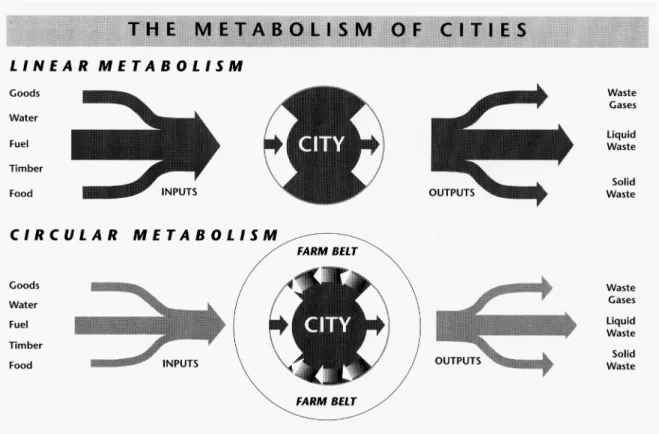
Figure 1 The flow of natural resources into cities and the waste produced represents one of the largest challenges to urban sustainability. Circular metabolisms are more sustainable, compared to linear ones. This also has economic advantages. Recycling will continue to be an essential part of responsible materials management, and the greater the shift from a “river” economy (linear throughput of materials), towards a “lake” economy (stock of continuously circulating materials), the greater the material gains and greenhouse gas reductions. Even so, recycling is only halfway up the waste hierarchy. The greenhouse gains lying in the upper half (waste avoidance and reduction) are, largely, yet to be tapped. The focus of attention needs now to expand from the downstream of the materials cycle, from a post-consumer stage, to include the upstream, pre-consumer stage, and behavioral change.64 (Diagram source:
Herbert Girardet, Creating Sustainable Cities, 2 Schumacher Briefings 34 (1999).65
through the more efficient use of resources; an increase in support to research durable, local goods, and products that encourage reuse; more green purchasing; and creation of a product stewardship framework.
The key issue is whether such a system is feasible.
What are the costs associated with EPR? It places the responsibility of the future disposal of an item on the initial producer of that product instead of on the last owner, as in traditional segmentation.66 This will lead an increasing number of manufacturers to include an additional fee in the price to the consumer for the future recovery and the processing of the product at the end of its useful life. It also includes extending the responsibilities to consumers to participate in recycling schemes. A recent survey showed that eighty-three percent of Australians wanted a national ban on non-biodegradable plastic bags, while seventy- nine percent wanted electronic waste (“e-waste”) to be legally barred from landfills.67
Cities will always be a place of waste production, but there are possibilities available that will help them achieve “zero waste,” where the waste is recycled, reused, or composted (using organic waste for biomass). The Masdar-City project in the United Arab Emirates is a good example of a project of a “zero waste” city, as is the large Japanese city of Yokohama, which reduced its waste by thirty- nine percent between 2001 and 2007, despite the city growing by 165,000 people during this period.68 They reached their goal by raising public awareness about wasteful consumption and through the active participation of citizens and businesses.69 In Australia, the Zero Waste SA initiative by the South Australian government, discussed below, is also highly commendable.
2.4 Behavior Change for Waste Prevention
The growth of the economy cannot continue endlessly as was pointed out by The Club of Rome in
1972, in their report Limits to Growth.70 Therefore, the core question is about how to best change behavior to reduce consumption, therefore avoiding the creation of waste in the first place. How do we convince society to consume less? Education programs aimed at all levels of schooling have proven effective. Public education aimed at “zero waste”
participation is a key to success. Changing behavior may be easier in smaller towns than in large cities because of the scale of education efforts needed to achieve measurable results.
The increase in world flows of scrap, e-waste, recovered plastics, and fibers has turned developed countries into a source of material supply for informal trade in emerging countries.
Research around the United Nations’ ini- tiative, A Decade of Education for Sustainable Development (2005-2014), clearly shows that an important age group for applying behavioral change is schoolchildren and adolescents, particularly in relation to their consumption and waste. The initiative aims to educate them to become environmental citizens, rather than consumers, and to act as agents of change within their families and schools.71 Several studies have found that environmental education raises awareness of environmental issues, but does not necessarily lead to changes in young people’s behavior or an increased level of concern for the environment. When adolescents decide on how much to consume and what to consume, they usually do not take into account how much waste they produce.72 For instance, one study found the high importance of convenience in the waste management process for adolescents living in multi-apartment dwellings.73 The impact of income on waste disposal and recycling behavior is well documented.74 It is obvious that more research is required into the social mechanisms that will trigger necessary behavioral and attitudinal changes, particularly in schoolchildren and adolescents.
As has already been pointed out, education to raise awareness is essential, but equally important is that the rules of waste separation are well explained.
The real problem may not be technology, but rather acceptance and behavior change. What is needed is social innovation rather than a sole focus on technological innovation. The necessary connection between waste policies and emission reductions are not always well understood and made. The main barriers to “zero waste” include the following:
short term thinking of producers and consumers, lack of consistency in legislation across the states, procurement versus sustainability, the attitude that the cheapest offer gets commissioned, and lack of community willingness to pay.75
The following case studies include details of how some cities and regions are trying to overcome the barriers to achieving “zero waste.” The cases are looking at the developed world (Australia and Denmark) and at two large cities in the developing world (Delhi and Cairo, both rapidly expanding cities).
2.5 Case Studies of Waste Management
Case 1: South Australia’s Leadership in Waste Management and Resource Recovery After five years of development, South Australia (“SA”) has produced the Draft South Australia’s Waste Strategy 2010-2015, which incorporates “zero waste”
principles.76 The strategy offers strong guidelines for SA’s waste recycling and waste avoidance efforts.
The strategy focuses on two objectives: “Firstly it seeks to maximize the value of our resources, and secondly it seeks to avoid and reduce waste.”77 These two objectives are inter-related, and some of the actions contained in the Strategy apply to both objectives, including new proposed targets for municipal solid waste, commercial and industrial waste, and construction and demolition waste streams.78 Zero Waste SA is one of the few “zero waste” government agencies in the world and is at
the forefront of waste avoidance in Australia. Zero Waste SA was established in 2003 and is financed by levies from landfills.79 The agency pioneered the introduction of the ban on checkout style plastic bags in Australia in May 2009.80
Increasing recycling and reducing consumption will require a better understanding of the composition of household waste. Recent research at the University of South Australia indicates that the composition of waste varies according to the income level of the people producing the waste. For instance, the amount of food waste tends to be less among lower-income earners.81 Such research is pioneering and can help reach higher recycling rates by aiding in the development of programs for separation at the source point of waste creation.
Although the SA Draft Waste Strategy is at the forefront of “zero waste” planning, it is by no means unique. Each of the EU member states must compile a waste prevention program by the end of 2013, as required by the 2008 revision of the “Waste Framework Directive.”82 The EU guidelines are intended to support the formulation of such programs based on thirty best practices identified by the European Commission.83
Case 2: The Waste Situation in New South Wales, Australia: A Looming Crisis?
Australia is the third highest generator of waste per capita in the world.84 During 2006-2007, only around fifty percent of waste collected in the state of New South Wales (“NSW”) was recycled.85 Landfilling waste is an inexpensive option compared to treating and recycling, but has dangerous side effects. For instance, electronic waste is still filling up Australian and U.S. landfills (something not allowed in the EU for ten years), contaminating soil and groundwater with toxic heavy metals.86 In the meantime, a waste crisis is looming: the City of Sydney’s four landfill sites (Eastern Creek,
Belrose, Jacks Gully, and Lucas Heights) are reaching capacity and will be full by 2015.87 After the landfills reach capacity, the city’s annual two million metric tons of waste will have to be moved 250 kilometers south, by rail, to Tarago.88 The state government has been inactive and has failed to make the recycling shift. It lacks recycling policies and investment in recycling technology. Recycling needs to be less expensive for citizens than disposal in landfills, and strong economic incentives are required, as are strategies to get households to dramatically reduce the creation of waste. This can be achieved, for instance, by reducing bin sizes, raising awareness and by introducing the three-bin system to separate organic/garden waste, recycling, and residual waste.
While Sydney’s landfill sites are rapidly filling up, and the NSW government has currently no clear plan to address the crisis, Sydney’s waste is forecast to keep growing by at least 1.4 percent a year due to population increase and increasing consumption.89 Although curbside recycling collected in NSW increased from 450,000 metric tons in 2000 to 690,000 metric tons in 2007, this increase must be much greater to have any significant impact on the waste problem.90 To make things worse, the NSW government has “raised over $260 million in waste levies but returned just $40 million of that to local councils for recycling initiatives.”91 By contrast, the state government of Victoria provides better support:
it raised $43 million in landfill levies and channeled it straight back to the agencies responsible for waste management. Despite the smaller levy, Victoria recycled almost twenty percent more waste than NSW in 2009.92 The federal government will introduce a National Waste Policy in 2011 aiming for a sixty-six percent landfill reduction by 201493 and hopes are high that this will bring about the urgently required changes.
Case 3: Waste Management Case Study from Aalborg, Denmark
Developed countries such as Germany, The Netherlands, Japan, Switzerland, and Denmark have been called the “worldwide leaders in advanced waste management technologies.”94 For instance, in some Japanese municipalities up to twenty-four different categories of waste are separated.95
It is time that we better integrate the linkages between material flow, use, and recovery with energy and water consumption. To date, little research has been done on measuring the impact of waste treatment systems themselves and waste management changes over the longer term.
However, the Danish city of Aalborg has proven that better waste management can reduce greenhouse gas (“GHG”) emissions and that a municipality can produce significant amounts of energy with sustainable waste-to-energy concepts.96 Two Danish researchers, Poulsen and Hansen, used historical data from the municipality of Aalborg to gain a longer-term overview of how a “joined-up” approach to waste can impact a city’s CO2 emissions.97 Their assessment included sewage sludge, food waste, yard waste, and other organic waste. In 1970, Aalborg’s municipal organic waste management system showed net GHG emissions by methane from landfill of almost one hundred percent of the total emissions.98 Between 1970 and 2005, the city changed its waste treatment strategy to include yard waste composting, and the city’s remaining organic waste was incinerated for combined-heat and-power (“CHP”) production.99 Poulsen stated that “[o]f this, waste incineration contributed eighty percent to net energy production and GHG turnover, wastewater treatment (including sludge digestion) contributed another ten percent, while other waste treatment processes (composting, transport, and land application of treated waste) had minor impacts.”100 “Generally, incineration with or without energy production, and biogas
production with energy extraction, are the two most important processes for the overall energy balance.
This is mainly due to the substitution of fossil fuel- based energy,” says Poulsen.101 The researchers calculated “that the energy potential tied up in municipal organic waste in Denmark is equivalent to 5 percent of the country’s total energy consumption, including transport.”102 They also predicted that further improvements by 2020 were possible, “by reducing energy consumed by wastewater treatment (for aeration), increasing anaerobic digestion and incineration process efficiency and source separating food waste for anaerobic co-digestion.”103
Alborg has shown that with an understanding of natural systems, technology can be harnessed to resolve environmental challenges. “Aalborg’s progress shows how far reaching waste management can be in reaching energy and GHG reduction goals, and should offer encouragement to other cities embarking on greener waste management strategies for the future.”104 The potential for emission reduction in waste management is very large. It is estimated that within the EU, municipal waste management reduced GHG emissions from
“64 to 28 million metric tons of CO2 per year between 1990 and 2007, which is equivalent to a drop from 130 to 60 kilograms CO2 each year per capita.”105 With such innovation in waste treatment, the EU municipal waste sector will achieve eighteen percent of the reduction target set for Europe by the Kyoto agreement before 2012.106
2.6 Using Fewer Materials to Better Exploit the Value of Waste
In contrast to the Club of Rome’s warning of 1972,107 today, the “limits to growth” are defined by climate change and the depletion of material resources. The scarcity of raw materials presents an increasing challenge. With natural resources and materials running out, we need better resource
protection and more effective ways to use them.
Several essential metals and resources are already becoming less available — including platinum, zinc, tantalum, lead, copper, cadmium, wolfram, and silicon — and supplies are concentrated in a handful of countries, under the control of a few companies.108 This will soon create major challenges for industries in Europe and the United States that use many of these metals in their manufacturing, such as televisions or computers.
The depletion of several natural deposits is drawing closer. In 2008, the Institut der Deutschen Wirtschaft (“IDW”) estimated the availability and coverage of essential resources and selected metals, as part of a risk assessment for the German industry in response to the threat caused by scarcity of raw materials. It found:
Raw Material Reserves Available (estimated) Lead 20 years Zinc 22 years Tantalum 29 years Copper 31 years Cadmium 34 years Wolfram 39 years Nickel 44 years109
These metals are becoming scarce and consequently more expensive, e.g., iron ore, lithium, and copper are already much rarer than oil.110 In addition, it is also important to know what resources are used in the products we buy. Many of the extractive processes for obtaining minerals are harmful to the environment. In addition, forty percent of the products in our weekly shopping basket contain palm oil, which, if not produced sustainably, can cause deforestation of ecologically precious rainforests.111 A more conscious use of materials, metals, resources, and products is imperative when supported by reuse and recycling.
A resource-constrained future can therefore help lead to recycling-friendly designs with extended producer responsibility; multiple-use devices and expanded product lifecycles; long-life products and buildings, with optimized material use; products using less packaging; reduced loss of resources during the product’s life-cycle; and resource recovery through reuse, remanufacturing and recycling.
In his research on sustainable consumption, Paul- Marie Boulanger came to the following conclusion:
“There is a gradually emerging consensus that transition towards sustainability will need innovations and changes at three different levels:
• at the technological level where products and services with a lighter ecological footprint must replace less eco-efficient ones;
• at the institutional level where non-market based modes of provision can be promoted alongside marked-based ones;
• at the cultural level where less materialistic values and lifestyles should be developed and fostered without a loss in the welfare of people.”112
Only holistic and integrated approaches will lead to this desirable shift at the technological, institutional, and cultural level. Waste that contains precious minerals, rare earth metals, and other nutrients is now fully understood to be valuable.
The survival path and rebound effect of materials is understood as extremely critical. Faulstich asks if our landfill sites of today “will become the urban mines of the future?”113 Girardet predicts that in future “we will observe the emergence of a new sustainable industrial society, where new industrial systems are introduced that better reuse and recycle waste, and which are based on a new circular flow economy.”114
2.7 Composting Organic Waste and Improving Urban Ecology
Organic waste is increasingly viewed as a precious resource, which must be returned to the soil. Compost is an important source of plant nutrients and is a low- cost alternative to chemical fertilizers. It has become a necessary part of contemporary landscape management and urban farming, as it uses “reverse supply chain”
principles, giving organic components back to the soil, thus improving the quality of agriculture. Paying attention to the nutrient cycle and to phosphorus replacement is part of sustainable urban agriculture. Although industrial composting can help to improve soils, a proper composting infrastructure needs to be established first.
In Sweden, for instance, the dumping of organic waste to landfill has been illegal since 2005.115 All organic waste should be used for composting, returned to the soil, or for anaerobic digestion to generate energy.
Food waste is another major concern. Twenty- two percent of all waste in Australia is food waste.116 New biodegradable packaging helps to facilitate processing of food waste. Biodegradable and compostable solutions for food waste recovery systems, such as using a kitchen caddy with a biodegradable bag that is collected weekly, has become a common solution. Iain Gulland, director of Zero Waste Scotland, points out that “over sixty percent of food waste is avoidable. However, if all unavoidable food waste in Scotland was processed by anaerobic digestion, it could produce enough electricity to run a city the size of Dundee.”117 In South Australia more than 90,000 metric tons per annum of food waste goes to landfill and on average, each household throws out three kilograms of food waste per week.118 The food waste needs to be taken out of the waste stream and diverted into composting or anaerobic digestion systems, which are best done through public–private partnerships.119
In 2002, William McDonough and Michael Braungart began promoting their “Cradle-to-Cradle”
Figure 2 Diagram illustrating the input and output of cities, comparing the “conventional” city with the more sustainable city. (Diagram source: 1 Blue: Water, Energy and Waste, 29; Andrew Whalley ed., 2010)
closed-loop system, arguing for “adapting production to nature’s model.”120 They argue that “[w]aste equals food. In nature, the processes of every organism contribute to the health of the whole. One organism’s waste becomes food for another, and nutrients flow perpetually in regenerative, cradle- to-cradle cycles of birth, death, decay, and rebirth.
Design modeled on these virtuous cycles eliminates
the very concept of waste: products and materials can be designed of components that return either to soil as a nutrient or to industry for remanufacture at the same or even a higher level of quality.”121
2.8 Informal Waste Management Approaches in the Developing World
A staggering ninety-seven percent of global
growth over the next forty years will happen in Asia, Africa, Latin America, and the Caribbean.122 The following cities provide examples of how developing countries are addressing urban waste problems.
2.8.1 Curitiba, Brazil
There are ways to improve waste management and change behavior in developing countries, even if there is no budget for it. For instance, in Curitiba innovative waste collection approaches were developed, such as the
“Green Exchange Program,” to encourage slum dwellers to clean up their areas and improve public health.123 The city administration offered free bus tickets and fresh vegetables to people who collected garbage and brought waste to neighborhood centers.124 In addition, children were allowed to exchange recyclables for school supplies or toys.125
2.8.2 Delhi, India
Cities always need to find local solutions for waste management appropriate to their own particular circumstances and needs. In Delhi there is an army of over 120,000 informal waste collectors (so-called Kabari) in the streets, collecting paper, aluminum cans, glass, and plastic who sell the waste to mini-scrap dealers as part of a secondary raw materials market.126
It is an informal industry which processes fifty- nine percent of Delhi’s waste and supports the livelihood of countless families.127 In Delhi, the private sector does the waste management and the business of collecting and recycling is a serious one for many of the poor, and a relatively lucrative source of income. According to Bharati Chaturved, one out of every 100 residents in Delhi engages in waste recycling.128 Chaturved also estimated that a single piece of plastic increases 700 percent in value from start to finish in the recycling chain before it is reprocessed.129 This informal sector of waste collectors saves the city’s three municipalities a
large amount of costs of otherwise arranging waste collection, particularly in inaccessible slum areas.
In Delhi, more than ninety-five percent of homes in Delhi do not have formal garbage collection.130
For countries like India or Bangladesh, the introduction of an industrialized clean-up system and perfected infrastructure like in the developed world would take jobs from thousands of poor peasants who are willing to work hard and get dirty collecting and recycling the waste of the metropolis in order to feed themselves. An estimated six million people in India earn their livelihood through waste recycling.131 On top of a low standard of living, they now face joblessness with India’s new business- model approach to waste management — replacing the preexisting informal Kabari system with a model from developed countries.132 It is an area where India could probably learn from their neighbor China, since their cities have similar population densities.
2.8.3 Cairo, Egypt
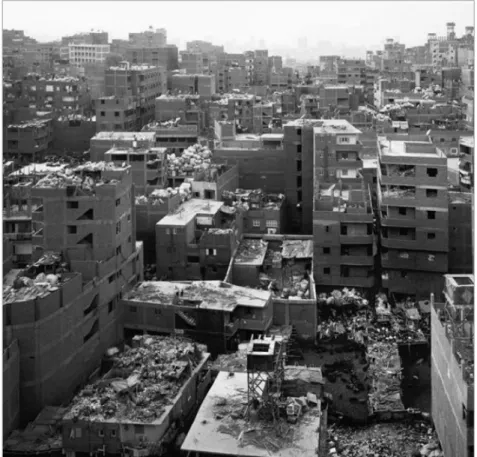
Another interesting example is the Egyptian city of Cairo, which has grown to over fifteen million people and is one of the most densely populated cities in the world with 32,000 people per square mile.133 The economy of the “Garbage City,” a slum settlement on the outskirts of Cairo, revolves entirely around the collection and recycling of the city’s garbage, mostly through the use of pigs by the city’s minority Coptic Christian population.134 In “Garbage City” “[f]amilies typically specialize in a particular type of garbage that they sort and sell—one room of children sorting out plastic bottles, while in the next room women separate cans from the rest.”135 Typically for the urban poor involved in the informal waste management sector, anything that can somehow be reused or recycled is saved. Various recycled paper and glass products are made and sold to the city, while metal is sold to be melted down and reused.
The involvement of the informal sector in a
city’s waste management can lead to amazing results and high recycling rates. The circular economic system in “Garbage City” is classified as an informal sector, where people do not just collect the trash but live among it. Garbage City is home to over 15,000 people and most families typically have worked for generations in the same area and type of waste specialization, and they continue to make enough money to support themselves.136 They collect and recycle the garbage they pick up from apartments and homes in wealthier neighborhoods. This includes thousands of metric tons of organic waste, which is fed to the pigs.137 By raising the pigs, the people provide a service to those who eat pork in the predominantly Muslim country, while the pigs help to rid neighborhoods of metric tons of odorous waste that would otherwise accumulate on the streets.138
At no cost to the municipality, the informal recycling sector provides livelihoods to huge numbers of the urban poor, while they save the city as much as twenty percent of its waste management budget by reducing the amount of waste that would otherwise have to be collected and disposed of by the city.139 Like the famous “Smokey Mountain” rubbish dump in Manila, Philippines, could this place become an official recycling center?
3 Conclusion and Outlook: Building the Cities of the Future - Making “Zero Waste” a Reality
3.1 Decoupling Waste Generation from Economic Growth
Increased material and energy consumption in all nations, coupled with an inadequate and
Figure 3 Many developing countries have such active informal sector recycling, reuse, and repair systems, which are achieving recycling rates comparable to those in developed countries, at no cost to the formal waste management sector, saving the city as much as twenty percent of its waste management budget. (Image: courtesy of Bas Princen)