(30 − 4月国際IB)
Instructions
1 The essay test written in English is from page four to six. 2 The content of the question is the same in Japanese and English. 3 The examination duration is 50 minutes.
4 Do not read anything aloud.
5 Be sure to answer in the language for which you applied. If you answer in other languages, your answer sheet will not be marked.
6 If you have selected to write the essay in English, write it in about 300 words. 7 Write your examinee number in the designated space.
8 If you change answers, erase the original answers neatly and write the new answers. 9 The answer sheet is printed on both sides. One side is the answer sheet for Japanese and the
other side is for English. When the examination is finished, submit only the answer sheet.
小論文
Essay
注 意 1 日本語の問題は1ページから3ページまでです。 2 日本語の問題と英語の問題は同じ内容です。 3 検査時間は50分です。 4 声を出して読んではいけません。 5 必ず出願時に申請した言語で解答しなさい。それ以外の言語で解答した場合は,採 点の対象となりません。 6 日本語の小論文は,問題文の指示に従って600 字程度で記述しなさい。なお,句読点 などもそれぞれ字数に含めます。 7 受検番号を解答用紙の決められた欄に記入しなさい。 8 答案を直すときは,きれいに消してから,書き直しなさい。 9 解答用紙は両面印刷されています。片面が日本語,片面が英語の解答用紙です。 試験終了後,解答用紙だけを提出しなさい。問題 国際協力機構(JICA)*によればこの20年間で,アフリカは「貧困と紛争の大陸」から「希望 の大陸」へと変わりました。しかし,アフリカの社会経済が発展するためにはいまだに多くの問題を 抱えており,JICAは国内,国外の支援者と協力してアフリカの持続可能な発展のために様々な 支援を実施しています。 資料1は「ブルキナファソで暮らす一家の一日」のお話を示しています。資料2はJICAのアフ リカに対する支援実績を示しています。資料3はJICAが提供する各種支援の詳細と具体例を示し ています。 資料1より,お話に登場する一家が直面している問題のうち,あなたが一番重要だと思うものを 一つ,その理由とともに説明しなさい。さらに,JICAのアフリカに対する支援がどのようにその 問題を改善できるか,資料2と資料3の情報を参考に,あなたの考えを述べなさい。 * JICAとは,日本の政府開発援助(ODA)を一元的に行う実施機関であり,開発途上国への国際協力 を行っています。
資料1 ブルキナファソで暮らす一家の一日 ブルキナファソはアフリカ大陸の西側に位置しています。その首都ワガドゥグから近い農家にナナ さん一家は暮らしています。ナナさんの家族は13人で,ナナさんと妻、そして6人の子どもがいま す。ナナさんの弟が病気で亡くなったので,その奥さんと4人の子どもも一緒に暮らしています。 ナナさん一家は農業を営んでいます。忙しい時期は,お父さん(ナナさん)とお母さんは朝 5 時に 起きて,畑仕事を始めます。3番目の息子は家から学校まで2時間かけて通っています。彼は,朝ご はんを食べずに,遠くの学校まで歩いて向かいます。弟,妹たちは,家の手伝いをするために,昨年 学校を辞めてしまいました。 家に残された弟は,家畜のヤギをえさのある場所へ連れていきます。家の周りからえさになる緑が 段々減ってしまったので,家畜を連れて遠くまで行かなくてはなりません。妹は水を汲むために一台 しかない自転車に50リットル入るタンクをくくりつけて井戸へ向かいます。一番上のお姉さんは, 蓄えてあった作物を売るために,マーケットに行きます。 この地域唯一の小学校では,昔は学校給食がありましたが,政府から食材を提供してもらえなくなっ たので,なくなってしまいました。そのため生徒たちは,家までお昼ご飯を食べに帰るので,お昼休 みは3時間になりました。ナナさんの息子のように遠くから通ってくる子どもたちは,家に帰ると午 後の授業に間に合わないので,木陰で暑さをしのいで空腹を我慢します。 畑作業をするお母さんは,「最近,雨季でも雨があまり降らないので,作物が育たなくなった。」と 感じています。長年,畑を準備する時期,種をまく時期,雨が降る時期と季節ごとに気候を読み取り ながら農業を営んできました。しかし,最近では,雨が降るはずの時期に雨が降らなかったり,逆に, 種をまいたばかりの時期に大雨に見舞われて,種が流されてしまったりしています。雨量が少なく, 不作な年は昔からありました。でも,最近さらに頻繁に起こるようになってきています。 女性が土地を持つことが許されていないこの村では,土地はお父さんのもので,作物を売買したお 金はお父さんが管理します。でも,毎日の生活で必要となる調味料の塩などは,お母さんが持ってい るお金で買わなければなりません。お母さんは何とか自分でも収入を得たいと考えていましたが,資 金がなく,実行に移すことができないでいました。 夕食では,家の食料庫の穀物の量も減ってきている上に,マーケットでは,食料の値段が上ったと 聞き,お母さんは食事の量をいつもより減らしました。一回に食べる食事の量が少なくなってしまう と,子どもたちの健康状態が心配です。お母さんのお腹にも,もうすぐ生まれる赤ちゃんがいます。 資料2 アフリカに対する開発援助の内訳(2014年度) ■ 技術協力 ■ 有償資金協力(円借款) 約
447
億円1025
電力・ガス 37.1% 灌漑・治水・干拓 15.9% 社会的サービス 8.1%(82.9億円) 公共・公益事業 公共・公益事業 19.7% 19.7% (88.3億円) (88.3億円) 農林水産 24.5% (109.5億円) 人的資源 13.6% (60.9億円) 鉱工業 2.2%(9.7億円) 商業・観光 2.5%(11.1億円) エネルギー 保健・医療 10.3% (46.1億円) その他 7.8% 社会福祉 0.5%(2.0億円) 6.2% 6.2% (27.9億円) (27.9億円) 計画行政 12.7% (56.9億円) 運輸 37.4% (34.9億円) かんがい資料3 JICAが提供する各種支援の詳細と具体例 技術支援 技術協力とは,開発途上国への専門家派遣,人材育成,必要な機材の提供等を含む支援のことを 示します。 計画行政 地方自治体が地域活動の活性化を推進するための支援を行う 公共・共益事業 電力供給の改善のための技術支援を行う 農林水産 稲の収穫量向上と収穫後の損失削減のための支援を行う 鉱工業 新たな資源発見のための支援を行う エネルギー 太陽光発電装置を郊外に設立する 商業・観光 日本のビジネス改善モデルを共有する 人的資源 ICTを活用した小規模ビジネス用の勤務管理システムを導入する 保健・医療 現地の医療スタッフにHIVの検査が行えるようになるための研修を行う 社会福祉 障害者の職場への参画のための方法を提案する 有償資金協力 長期返済期間・低金利という比較的緩やかな融資条件で開発途上国へ資金を提供することにより, その成長・発展を下支えしています。 運輸 インフラ整備にかかる費用を融資する 灌 かん 漑 がい ・治水・干拓 農業地域に対して安定した水の供給をするために,灌 かん 漑 がい 工事にかかる費用を 融資する 社会的サービス 社会的弱者の独立を支援するために,医療保険などの費用を融資する 商品借款 工業用機械,原料,肥料,殺虫剤などを輸入する費用を融資する 電力・ガス 郊外の都市への電力・ガス供給を改善するための費用を融資する 無償資金協力 無償資金協力とは,開発途上国へ返済義務を課さずに開発資金を提供する支援です。基礎インフラ の整備や,経済的・社会的発展のために必要な機材や物品の調達にあてられます。 計画・行政 開発途上国の財政的・経済的課題の改善の費用を助成する 公共・公益事業 地域の衛生設備や安全な飲み水へのアクセスの改善の費用を助成する 農林水産 森林の保護,野菜の移植,水土保全施設の設立などの費用を助成する エネルギー 新たなエネルギー資源の開発の費用を助成する 人的資源 地方と都市部の格差を減らすために,地方における教育プログラム設立の 費用を助成する 保健・医療 保健所でより多くの人が働けるよう研修を行うための費用を助成する 資料1,資料2,資料3はJICAより作成
Question
According to The Japan International Cooperation Agency (JICA)*, Africa has shifted from a “continent of poverty and conflict” to a “continent of hope”. JICA is cooperating with domestic and international partners to support sustainable growth in Africa.
Figure 1 is a story titled “A day in the life of a family living in Burkina Faso”. Figure 2 shows JICA’s allocation of overseas development aid in Africa in the fiscal year 2014. Figure 3 provides more details and examples of the different types of assistance that JICA provides.
Decide which problem facing the family in the story in Figure 1 is the most significant, and explain why you think so. Then, with reference to the information in Figure 2 and Figure 3, suggest a way in which JICA’s assistance for Africa could alleviate the problem you have identified.
* JICA is a governmental agency that coordinates official development assistance (ODA) for the government of Japan, and promotes international cooperation with developing countries.
Figure 1 A day in the life of a family living in Burkina Faso
Burkina Faso is located in western Africa. The Nana family live near the capital city of Ouagadougou. 13 people live in Mr. Nana’s house, including his wife and six children, as well as the wife and four children of his brother, who died from disease.
The Nana family are farmers. During the busy times, Mr. and Mrs. Nana wake up at 5.00 a.m. and start work on the farm. The elder son walks to school without breakfast, and it takes him 2 hours to get there. The other siblings have stopped going to school in order to help on the farm.
The other son takes the family goat out to graze wherever he can find grass. He has to travel further and further each day as the amount of grass nearby the home has gradually decreased. The family owns one bicycle, which the youngest daughter uses each day to ride to the well to collect water in a 50 liter drum. The eldest daughter goes to the market to sell the crops that the family farm has produced.
The only elementary school in the area used to provide free lunch, however, the government could not maintain this provision and the service has since stopped. The school now needs to give three hours for lunch break, to allow students the time to return home for lunch. Mr. Nana’s son, and others in the same situation, live too far away from school to allow them to return home for lunch and make it back in time for afternoon classes. All they can do is rest in the shade to avoid the heat, and endure their hunger.
Mrs. Nana is worried about this year’s crop. It hasn’t rained as much as usual, even during the rainy season. They used to be able to read the climate, then prepare the soil and plant the seeds in time for the onset of the rain. However, recently, the rainy seasons have had reduced and irregular rainfall. In some cases, ironically, heavy downpours have actually washed away the newly planted seeds. The family has experienced low-yielding years in the past, but they feel that these poor seasons have become more frequent.
Women are not allowed to own land in this village. Therefore, Mr. Nana is the one who owns the farmland and keeps the money earned from the crops sold. Mrs. Nana wants to be able to earn some money for herself somehow, so that she can purchase daily necessities such as salt by herself.
At dinner time, Mrs. Nana prepares less than usual, because the amount of grain at the food storage is decreasing and she has heard that food prices at the market have gone up. She is worried about the condition of her children’s health, with less and less food intake at every meal. Furthermore, she is pregnant with a baby to be born soon.
Figure 2 Achievements of JICA’s assistance for Africa dring Japanese Fiscal Year 2014
■ Technical Cooperation
■ Loan Aid (Yen Loans)
■Grant Aid
Approx.
¥44.7
billionApprox.
¥102.5
billionElectric Power and Gas
37.1%
(¥38.08 billion)
Irrigation and Flood Control 15.9%
(¥16.25 billion)
Social Services 8.1%(¥8.29 billion)
Commodity Loans, Etc. 1.5%(¥1.5 billion)
Public Works and Utilities Public Works and Utilities Public Works and Utilities Public Works and Utilities 19.7% 19.7% (¥8.83 billion) (¥8.83 billion) 56.7% 56.7% (¥25.13 billion) (¥25.13 billion)
Human Resources 7.0%(¥3.12 billion)
Energy Energy 8.3% 8.3% 14.5% (¥6.45 billion) Health and Medical Care 9.9% (¥4.39 billion) Agriculture, Forestry, and Fisheries 24.5% (¥10.95 billion) Human Resources 13.6% (¥6.09 billion)
Mining and Manufacturing 2.2%(¥0.97 billion) Business and Tourism 2.5%(¥1.11 billion)
Energy Health and Medical Care 10.3% (¥4.61 billion) Others 7.8% (¥3.49 billion)
Social Welfare 0.5%(¥0.2 billion)
6.2% 6.2%
(¥2.79 billion) (¥2.79 billion)
Planning and Administration
3.6% 3.6% (¥1.58 billion) (¥1.58 billion) Planning and Administration 12.7% (¥5.69 billion) Transportation 37.4% (¥38.38 billion) Approx.
¥44.4
billion Agriculture, Forestry, and Fisheries (¥3.69 billion) (¥3.69 billion)Figure 3 Detail and examples of the different types of assistance that JICA provides Technical Cooperation
Technical cooperation describes practical assistance to developing countries including dispatch of experts, the training of local officials, and the supply of equipment.
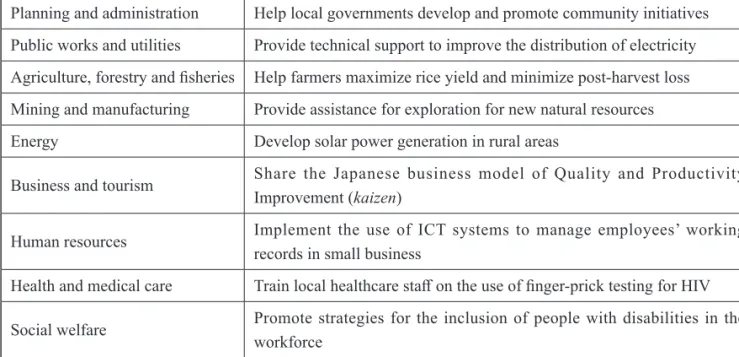
Planning and administration Help local governments develop and promote community initiatives Public works and utilities Provide technical support to improve the distribution of electricity Agriculture, forestry and fisheries Help farmers maximize rice yield and minimize post-harvest loss Mining and manufacturing Provide assistance for exploration for new natural resources Energy Develop solar power generation in rural areas
Business and tourism Share the Japanese business model of Quality and Productivity Improvement (kaizen) Human resources Implement the use of ICT systems to manage employees’ working records in small business Health and medical care Train local healthcare staff on the use of finger-prick testing for HIV Social welfare Promote strategies for the inclusion of people with disabilities in the
workforce Loan Aid
JICA Loans support developing countries by providing low-interest and long-term funds to finance development efforts in developing countries.
Transportation Loans to support the construction of roads
Irrigation and flood control Loans to build irrigation systems to provide stable water supply for agricultural regions
Social services Loans to provide support for the independence of socially vulnerable people, e.g. healthcare
Commodity loans, etc. Loans to import commodities such as industrial machinery, raw materials, fertilizer and pesticide
Electric power and gas Loans to improve the distribution of electric power and gas supply for rural townships
Grant Aid
Grants are types of financial assistance with no obligation for repayment. The funds are granted to a developing country to support construction works or services such as procuring equipment and materials that are necessary for economic and social development.
Planning and administration Grants to help improve the way developing countries handle fiscal and financial matters Public works and utilities Grants to improve local sanitation systems and access to clean water Agriculture, forestry and fisheries Grants to help fund forest maintenance, replanting of vegetation, and
construction of water and soil conservation facilities Energy Grants to develop alternative sources of electricity