
中炭素マルテンサイト鋼の焼戻し軟化抵抗に及ぼすSi,Cr,Moの影響
6
0
0
全文
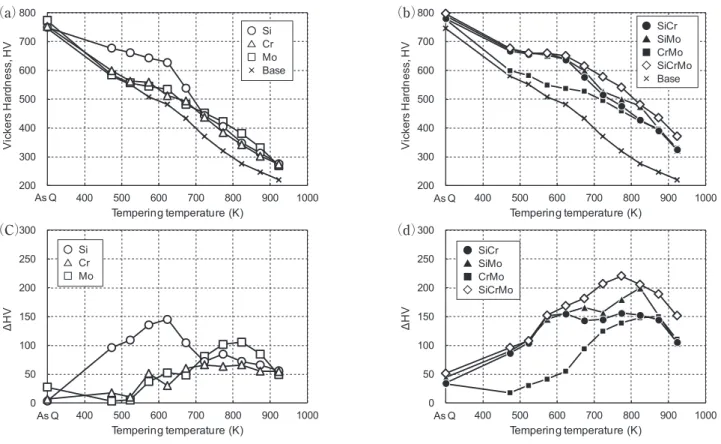
(2) 2. を 1523K 以上に加熱した後, φ 30mm まで熱間で鍛伸した. この棒鋼からφ 6mm,高さ 30mm の円柱を切り出して試 験片を作製した.これら試験片を 1223K,1.8ks で加熱後. 60K-80K,測定電圧は 10kV-15kV,パルス比は 20%とした.. 3. 実験結果及び考察. 油 冷 し, マ ル テ ン サ イ ト 組 織 を 得 た. そ の 後 473K ∼. 3.1 焼戻し軟化抵抗に及ぼす合金元素の影響. 923K の温度(50K 間隔)で 7.2ks の焼戻し処理を行い水冷. Fig.1(a) (b) , に中炭素マルテンサイト鋼の焼戻し硬さ. した.. の変化を示す.焼戻し軟化抵抗を定量的に示すパラメータ. Table 1 Chemical composition of steels. (mass%). として合金元素添加材と Base 材の硬度差Δ HV を用いて,. No. Steel 1 Base 2 Si 3 Cr 4 Mo 5 SiCr 6 SiMo 7 CrMo 8 SiCrMo. C 0.60 0.61 0.60 0.59 0.60 0.60 0.60 0.60. Si <0.01 1.97 <0.01 <0.01 1.97 2.00 <0.01 1.98. Mn 1.00 1.01 1.02 0.99 1.00 0.99 1.00 1.00. P 0.001 0.002 0.002 0.001 0.002 0.002 0.002 0.002. S 0.003 0.002 0.002 0.004 0.002 0.004 0.004 0.002. Cr <0.01 <0.01 1.00 <0.01 1.00 <0.01 1.01 1.01. Mo <0.01 <0.01 <0.01 0.51 <0.01 0.51 0.51 0.50. N 0.0041 0.0031 0.0037 0.0041 0.0035 0.0042 0.0042 0.0034. 焼 戻 し 軟 化 抵 抗 に 及 ぼ す 合 金 元 素 の 作 用 を 比 較 し た. Fig.1(c) (d) , に各試料のΔ HV の焼戻し温度に対する変 化を示す.過去の知見同様に,Si は 673K 以下の低温焼戻 しで,Cr は 723K 以上の高温焼戻しで軟化を顕著に抑制す る.また 773K ∼ 823K に Mo 添加による焼戻し軟化抵抗 量の極大が認められる.これら 3 元素の複合添加は全ての 焼戻し温度で最も大きな軟化抵抗となり,特に 723K ∼ 873K で焼戻し軟化抵抗量の極大となり,ばねの窒化処理 温度(673K ∼ 773K)と重なる.これは窒化処理による焼. 2.2 硬さ測定. 戻し軟化を抑制するのに,Si,Cr,Mo の複合添加材が有. ビッカース硬度計を用いて,焼入れ又は焼戻し後の硬さ. 効であることがわかる.. を試験荷重 98N で測定した.. 3.2 水素トラップ量の測定. 2.3 水素トラップ量の測定. 水素放出曲線は昇温途中で鋼材から放出された水素量を. 最近の研究10)∼ 12)では,鋼材中に析出した V,Mo,Ti. 測定したものであり,水素が放出された温度域から水素を. などの微細な合金炭化物は環境からの水素をトラップさせ. 捕捉(トラップ)していた主たるサイト(例えば,格子欠陥,. る効果があり,この水素トラップ量は合金炭化物による析. 粒界や微細析出物)が推測でき,放出水素量(水素トラッ. 出強化量と良い相関関係があることが報告されている.そ. プ量)からトラップサイト量の大小が比較できる.Fig.2. こで,焼戻し処理したサンプルの水素トラップ量を測定す. に SiCr 材と SiCrMo 材の水素トラップ量の焼戻し温度依. ることにより鋼中の炭化物の析出挙動を推定した.試験片. 存 性 を 示 す.SiCr 材 は 673K で,SiCrMo 材 は 673K と. は熱間鍛伸した棒鋼からφ 7mm,高さ 100mm の円柱を. 773K で水素トラップ量のピークが認められる.焼戻し温. 切り出して作製した.これら試験片を 1223K,1.8ks 加熱. 度の上昇とともに水素トラップ量が増減する特異な現象. した後, 油焼入れした.その後 473K ∼ 923K の温度で 7.2ks. は,焼戻しによる炭化物の析出,粗大化に対応することが. の 焼 戻 し 処 理 を 行 い 水 冷 し た. 水 素 チ ャ ー ジ は 3g/. 知られており10)∼ 12),Fig.2 の水素トラップ量のピークは微. lNH4SCN を添加した 3% NaCl 水溶液中で 0.2mA/cm2 の. 細炭化物による水素トラップが起因していることが考えら. 電流密度で 42h の陰極チャージを行った.その後,室温. れる.Fig.3 と Fig.4 にこれら水素トラップ量のピーク前. で 96h 放置してから,ガスクロマトグラフを用いて,昇. 後の水素放出曲線を示す.いずれも焼戻し温度の上昇とと. 温速度が 100K/h の条件で水素量を測定した.本研究では. もに水素トラップ量が増える場合(例えば,Fig.3 におけ. 鋼中に水素チャージして室温で 96h 放置後,鋼中に残っ. る SiCr の 623K 焼戻し材と 673K 焼戻し材),水素放出ピー. た水素量を「水素トラップ量」として定義した.. ク温度は変化しないのに対して,焼戻し温度の上昇ととも. 2.4 透過電子顕微鏡による析出物観察. に 水 素 ト ラ ッ プ 量 が 減 る 場 合( 例 え ば,Fig.3 に お け る. 焼 戻 し 処 理 し た 試 料 か ら FIB( 集 束 イ オ ン ビ ー ム;. SiCr の 673K 焼戻し材と 723K 焼戻し材),水素放出ピー. FB2100,Hitachi)を用いて透過電子顕微鏡(TEM)観察用. ク温度が低温側へシフトしている.前者の水素放出ピーク. 試験片を作製した.その後,FIB によるダメージ層を除去. 温度は 425K ∼ 450K,後者の水素放出ピーク温度は 400K. するために低エネルギーイオンミリング装置. 前後であり,過去の文献10)∼ 13)から前者の主たる水素ト. (GentleMillHI,Hitachi)で観察面を研磨した.TEM 観察. ラップサイトは微細炭化物で,後者は転位などの格子欠陥. には JEOL 社製 JEM-2100F を用い,加速電圧 200kV にて. と推察される.Fig.2 における 673K の水素トラップ量の. 観察及び分析を行った.炭化物の同定は制限視野電子回折. ピークはいずれの鋼種でも認められることから,Fe 炭化. 図形の解析により行った.. 物εに起因してトラップした水素であると考えられる.一. 2.5 3 次元アトムプローブによる析出物観察. 方,Fig.2 に お け る 773K の 水 素 ト ラ ッ プ 量 の ピ ー ク は. 3 次元アトムプローブ(3DAP)観察用の針試料は電解研. SiCrMo 材のみで認められることから,Mo 炭化物あるい. 磨法によって作製した.3DAP 測定には,遅延ライン型位. は Mo 複炭化物に起因してトラップした水素であると考え. 置 検 出 器 を 搭 載 し た エ ネ ル ギ ー 保 障 型 3DAP 装 置. られる.したがって,水素トラップ量の挙動から SiCrMo. (OxfordNanoScience)が 用 い ら れ た. 測 定 温 度 は. の 673K 焼戻し材では Fe 炭化物εが析出し,773K 焼戻し.
(3) ばね論文集 第 65 号(2020). 3. (b)800 ○ △ □ ×. 700 600. Si Cr Mo Base. Vickers Hardness, HV. Vickers Hardness, HV. (a)800. 500 400 300. 400. 500. 600. 700. 800. 900. 500 400. 200 300 As Q. 1000. Tempering temperature (K). 300 (C). 100. 50. 50. 400. 500. 600. 700. 800. 900. 0 300 As Q. 1000. Hydrogen evolution rate (ppm/min.). Trapped hydrogen content (mass ppm). ○ SiCr ● SiCrMo. 2.0 1.5 1.0 0.5 0.0 As Q 300. 400. 500. 600. 700. 800. 900. 1000. 0.03. 1000. 400. 500. 600. 700. 800. 900. 1000. Tempered at 673K. Tempered at 623K Tempered at 723K 0.01. 0.00. Tempered at 673K Tempered at 623K Tempered at 723K 0.01. 300. 400. 500. 600. 400. 500. 600. 700. 700. Temperature (K). Fig. 3 Hydrogen evolution cur ves of the specimens tempered at 673 K, 623 K and 723 K for the SiCr steel. The heating rate was 100 K/h.. (d) Hydrogen evolution rate (ppm/min.). SiCr. 0.02. 300. Temperature (K). Effect of alloying elements on trapped hydrogen content.. 0.03. SiCrMo. 0.02. Tempering temperature (K). Hydrogen evolution rate (ppm/min.). 900. Effect of alloying elements on the hardness change of martensite tempered for 7.2 ks: (a) effect of each alloy element; (b) combined effect of alloying elements; (c) (d) resistance to softening by the addition of alloying elements tempering for 7.2 ks at each temperature; Δ HV=HV−HVBase. (a). 2.5. 0.00. 800. Tempering temperature (K). 3.0. Fig. 2. 700. SiCr SiMo CrMo SiCrMo. Tempering temperature (K). Fig. 1. 600. 150. 100. 300 As Q. ● ▲ ■ ◇. 200. 150. 500. Tempering temperature (K). 250. ΔHV. 200. 400. (d)300. ○ Si △ Cr □ Mo. 250. ΔHV. 600. SiCr SiMo CrMo SiCrMo Base. 300. 200 As Q 300. 0. ● ▲ ■ ◇ ×. 700. 0.03. SiCrMo Tempered at 773K. 0.02. Tempered at 723K. 0.01. 0.00. Tempered at 873K. 300. 400. 500. 600. 700. Temperature (K). Fig. 4 Hydrogen evolution cur ves of the specimens tempered (a) at 673 K, 623 K and 723 K, (b) at 773 K, 723 K and 873 K for the SiCrMo steel. The heating rate was 100 K/h..
(4) 4. 材では Mo 炭化物あるいは Mo 複炭化物と Fe 炭化物θが 析出していると推定した. 3.3 析出物の観察 TEM または 3DAP を用いて,鋼中の析出物を観察した. Fig.5 に SiCr の 673K 焼 戻 し 材,Fig.6 に SiCrMo の 623K 焼戻し材の TEM 組織を示す.電子線回折図形の解析によ り,いずれも Fe 炭化物εが析出していることがわかる. 観察された Fe 炭化物εはフェライトに対して,Jack が報 告した方位関係14)に近い方位関係を有している. Fig.7 に SiCr の 773K 焼 戻 し 材,Fig.8 に SiCrMo の 773K 焼戻し材の 3DAP による元素マップを示す.SiCr 材 では 15nm 超の球状セメンタイトが析出している.一方, SiCrMo 材では 5nm ∼ 20nm の不定形状のセメンタイトが 高密度に分散している.またセメンタイトの析出位置から 離れた領域に,100 原子∼ 1000 原子の C,Cr,Mo 及び Mn 原子から構成された(Cr,Mo,Mn)2C のクラスタ又は析 出物が観察される.ここで,本データをもってクラスタか 析出物か判断できないため,クラスタ又は析出物と記載す る. 通 常 合 金 炭 化 物 が 析 出 す る 焼 戻 し 温 度 は 823K ∼ 873K であるのに対して,このクラスタ又は析出物はそれ よりも低温で形成することがわかる.以上の結果から, SiCrMo 材の 773K における大きな焼戻し軟化抵抗は,微 細なセメンタイトと(Cr,Mo,Mn) 2C のクラスタ又は析出物 に由来すると考えられる.. 4. 結 言 本研究では Si,Cr,Mo の単独ならびに複合添加した中. Fig. 5 TEM images of carbides in the SiCr martensitic steel tempered at 673 K for 7.2 ks, (a) bright field image, (b) dark field image, (c) selected area diffraction pattern taken from (a), (d) corresponding key diagram to (c).. 炭素マルテンサイト鋼の焼戻し軟化抵抗について検討し, 以下の結論を得た. (1)Si,Cr,Mo の複合添加鋼は,ばねの窒化処理温度で ある 673K ∼ 773K で焼戻し軟化抵抗量が極大となる. これは窒化処理による焼戻し軟化を抑制するのに,Si, Cr,Mo の複合添加が有効であることわかった. (2)Si,Cr,Mo の複合添加鋼の 773K における大きな焼 戻し軟化抵抗は,微細分散したセメンタイトと通常合 金炭化物が析出する温度(823K ∼ 873K)より低温で生 成した(Cr,Mo,Mn) 2C のクラスタ又は析出物に由来す ると考えられた. 参考文献 1 ) 寺床圭一郎,特殊鋼,62-4 (2013) ,28. 2 ) 村上敬宜,高橋宏冶,高田昌幸,鳥山寿之,日本機械 学会論文集 (A 編) ,64-618 (1998) ,271. 3 ) 安田 茂,中野 修,伊澤佳伸,近藤 覚,小野田光 芳,鎗田 博,子安善郎,内田尚志,ばね論文集,42 (1997),1. 4 ) 吉原 直,黒田武司,佐藤仁資,茨木信彦,ばね論文 集,45(2000) ,15. 5 ) 圧縮コイルばねのへたりに関する研究委員会,ばね論 文集,59(2014) ,47.. Fig. 6 TEM images of carbides in the SiCrMo martensitic steel tempered at 623 K for 7.2 ks, (a) bright field image, (b) dark field image, (c) selected area diffraction pattern taken from (a), (d) corresponding key diagram to (c)..
(5) ばね論文集 第 65 号(2020). 5. 6 ) Bain,E.C. and Paxton,H.W.,”Alloying elements in steel second edition” , (1961) ,P.182,American Society for Metals. 7 ) Grange,R.A.,Hribal,C.R. and Porter,L.F.,Metallurgical Transactions,8A (1977) ,1775. 8 ) 古 原 忠, 牧 正 志, 材 料 と プ ロ セ ス,14 (2001), 1114. 9 ) 木村勇次,原 徹,津. 兼彰,材料とプロセス,14. (2001) ,1307. 10)土田武広,原 徹,津. 兼彰,鉄と鋼,88-11 (2002),. 771. Fig. 7 3D elemental maps of the SiCr steel tempered at 773 K for 7.2 ks. The box size is 34 nm×37 nm× 52 nm.. 11)Wei Fu-Gao,Hara Tor u,Tsuchida Takehiro and Tsuzaki Kaneaki,ISIJ International,43-4( 2003), 539. 12)小坂 誠,吉田 卓,樽井敏三,材料とプロセス,17 (2004) ,1371. 13)Enomoto Masato, Hirakami Daisuke and Tarui Toshimi, Metallurgical and Materials Transactions A, 43(2012), 572. 14)Jack,K.H.,Journal of the Iron and Steel Institute,169 (1951) ,26.. Fig. 8 3D elemental maps of (a) the area where cementite is precipitated and (b) the area where cementite is not precipitated in the SiCrMo steel tempered at 773 K for 7.2 ks..
(6)
(7)
図


関連したドキュメント
Distributions of Histiopteris incisa on Miyake-jima Islands:(a) before the eruption, (b)in 2002, (c) in 2003 and(d)dense cover of H.. incisa(painted
In the first part we prove a general theorem on the image of a language K under a substitution, in the second we apply this to the special case when K is the language of balanced
Let X be a smooth projective variety defined over an algebraically closed field k of positive characteristic.. By our assumption the image of f contains
The study of Yang-Mills-Higgs equations within the framework of the geomet- rical structure of ˜ S (2) (M )-bundle that contains the one-dimensional fibre as an internal deformed
A class of nonlinear fourth-order telegraph-di ff usion equations TDE for image restoration are proposed based on fourth-order TDE and bilateral filtering.. The proposed model
Local class field theory gives a complete description of all abelian ex- tensions of a p-adic field K by establishing a one-to-one correspondence between the abelian extensions of K
We study the theory of representations of a 2-group G in Baez-Crans 2- vector spaces over a field k of arbitrary characteristic, and the corresponding 2-vector spaces of
For a complete valuation field k and a topological space X, we prove the universality of the underlying topological space of the Berkovich spectrum of the Banach k-algebra C bd (X,
