
An example of applying an organizational management model to clinical nursing leadership
7
0
0
全文
(2) 甲南女子大学研究紀要第 5号. 26. 看護学. リハ ビ リテ ー シ ヨン学 編. (20H年 3月. ). older hospital patients are a nlaJor issue of concern in. samc ward for more than five ycars.The nursing staff,in―. countries such as Australia and Japan which have large. cluding the manager, had their own work traditions. For. ageing populationso The tool is employed to analyze the. instance,the workplacc had a short morning tea break for. issues and identify possible strategies that could improve. all moming shift nursing staff including the manager.This. ward function, nursing practicc and patient outcomcs.. meant that there was no nursing staff on the ward during. Firstly,as an example of a clinical setting,the functioning. that period.Another example involved the tradition of the. of the ward will be describedo Secondly, the Bollnan and. `super nurse' designationo rrhe manager had deterⅡ lined. Deal refranling technique will be employed to describe. that so called `super nurses' could finish their shifts carly. the situation as `a picture', and to critically exarrline and. and those nurses' priorities seemed to focus on inishing. analyze nursing management issueso Lastly,possible solu―. early rather than providing quality of care.. tions based on the outcome of the critical analysis will be. Falls in work place. explored and discussed.. Falls in older patients were frequent in the ward and their. incidence seemed to be increasingo ln some of the more IIo Description of clinical setting example. serious cases the patients required additional surgery. Fall. risk assessments were expected in each shift for all pa―. The ward environment. tients and the risk scores were recorded in each patient's. A Registered Nursc(RN)emp10yed in a large tertiary. nursing care plan by nursing staff. However, the tailored. hospital in Australia observed the work environment in an. nursing care plans designed to address individual patient's. orthopedic ward whilst engaged in pre―. and post― operative. needs and to Πlininlize the risk of falls were often not fol―. nursing care.As the facility operated as an acute hospital,. lowed.In addition, strategies to nlinilnize the risk of falls. most of the patients were adΠ litted with serious conditions. that were suggested by new or overscas― qualified nursing. and required complicated surgery.In addition, hip and. staff were often undervalued and ignored。. knee replacements resulting from fractures among older. The attitude. patients were also common procedureso The range of pa―. Single falls and recurring falls among older patients were. tients' ages Ⅵ/as wide, from teenagers to patients aged. allnost considered nonmal in this work environment.. over ninety and the area health servicc had a large older. When falls incidents were raised during the nursing staff. population. As in most publicly funded health environ―. handover, `Again!' was a conllnon responseo Although in―. ments, government policy. Ⅵ/as to discharge patients as. cident forims were completed by staff, there were no on―. early as possibleo However, this policy of shortened. going discussions or strategies to nlininlize the problem。. length of hospital stay and early discharge led to an in―. Individual staff often attempted to hide their errors or to. creased proportion of acute patients and higher nursing. transfer blame to others. For instance, staff would often. workloadso Whilst acute care received priority among the. clailn that `they(the elderly patients)did nOt listen to us'. nursing staff,less attention was provided to less acute pa―. or that`they did not wait for us',or suggest that the cause. tients, such as elderly patients with hip or knee replace―. of a fall was dementia.`Just send them(baCk)tO a nurs_. mentso The RN observed that whilst the ward was effec―. ing home' was another common phrase used by the nurs―. tive in dealing with emergencies such as traffic accident. ing manager and the staffo Some nursing staff were impa―. itturies,inpatient incidents such as falls among the eld―. tient, sometilnes saying to frail elderly patients `I am so. erly were relatively common.It is widely recognized that. busy.I do not have tilne to spend with you!', or silnilar. falls itturies among older people in hospital settings rep―. statements.. resent a serious public health issuc。. Safety issues. The nursing team. Most of the orthopedic patients were dependent and re―. The nursing team consisted of a nursing unit manager, a. quired assistance fronn nursing staff or special devices.. clinical nurse educator, clinical nurse specialists, regis―. There was insufficient equipment compared to demand. tered nurses and enrolled nurseso Most were permanent. and patlents were sometlmes requlred to share devlces. staff and more than one― third had been working in the. such as walking frames when walking to the bathroom..
(3) NAKANO Mika:An Example of Applying an Organizational Management Model to Clinical Nursing Lcadership. 27. Much of the equipment was in any case old or worn out. cludes reducing falls in older patients in acute care set―. and maintenance of the equipment was also poor. On one. tings.With an increasing life expectancy and the ageing. occasion the nursing teanl received a donation to purchase. of the Australian population it is anticipated that an in―. something useful for the patientso However, the manager. creasingly significant proportion of the population will be. bought less essential equipment for patients and staff。. at risk of falls related itturies.The National Hcalth Prior― ity Report indicates that there will be an additional de―. IIIo Application of Bollnan. mand of 886,000 hospital bed days and the equivalent of. and]Deal's refranling tool. 2,500 additional beds required for falls ittury treatment by 205110).. Applying Bollnan and]Deal's four frames Bollnan and Deal's four main frames: the structural frame;the human resources frame;the political frame and. Pθ Jli″ Jθ αJ Frα. θ “. Poor safety management for patients and star. the symbolic frame, were first applied to the management. Assistance devices are essential for orthopaedic patients,. issues in the clinical ward to provide a picture of the situ―. particularly those who are not independent. Insufficient. ation(Table l)。 POSSible interactions between the frames. supply and/or poor maintenance of such assistance de―. are identified by arows within the table.The second step. vices increases the risk of ittury amOng patients as well. in the process employed the four frames as `lenses' to fo―. as staff. Falls risks are also exacerbated by inappropriate. cus on the management issues identified within each. use of assistance devices,incorectly sized equipment and. fralnc(Table 2)。. The next step involved detailed exalmina―. tion and analysis of the issues within each frame.. insufficient instruction to patientsH)。. Curent public health. strategies that encourage carly discharge increase the pro―. portion of acute patients and increase nursing workloads. Analysis of lnanagement issues. in clinical settings. The latter issuc also adds to the com―. S″ ε″ ]り J Fra“ θ “ “. Low awareness of lnanagement and health issues. Table 2. Although the ward priority was acute care nursing for emergency cases, the nursing manager also had a respon― sibility to nlininlize problems in the workplace such as. Human]Resource Frame Structural Frame 一Low awareness of rLanage― 一Misa1location of budget ment and health issues― → Political. falls among elderly patients. The increasing number of older people in the community suggests that falls are likely to be an increasing problenl for hospitalso Reducing fall iIゴ. urieS in 01der people has been identified as a na―. Symbolic Frame Political Fralme ―Poor safety management for ―Poor work ethics → Political, Patients and staff ―→ Human Human Resource Resource. 一Poor role lnodels 一Lack of organizational skills. Key points related to management issucs. Human Resource Frame. Structural Frame ―An orthopedic ward ―Focusing on acute patient only→ 一Falls in older patients conlinon. ―Inappropriate staffing ―Lack of equity ― ・ Political, cultural. tional health priority action area in Australia9). This in―. Table l. Management issucs. ―Insufficient assistance devices― → Political 一Poor maintenance of equipment一 → Political. Symbolic,Political. ―Falls in older patients increasing ―After falls,some patients required further surgery→ 一Increasing number of older patients. ―Staff working in same place long tiine→ Symbolic 一Suggestions from new staff often undervalued and ignored Political. Symbolic Frame. Political Frattle. ―Shortened length of hospital stay and early discharge tural. ―Increasing proportion of acute patients→ Structural ―Falls risk assessments not utilized in patients' care plans. Symbolic. ―→ Struc―. ―Less attention to older patients→ Political,Human Resource ―Staff tea break:all nursing staff together. ―Super nurse=finish job early ―Work till tilne = not good worker ―Pride in cunient culture ―Falls in older patients = blame the patients ―Inappropriate attitude to older patients by the managcr and staff. → ―.
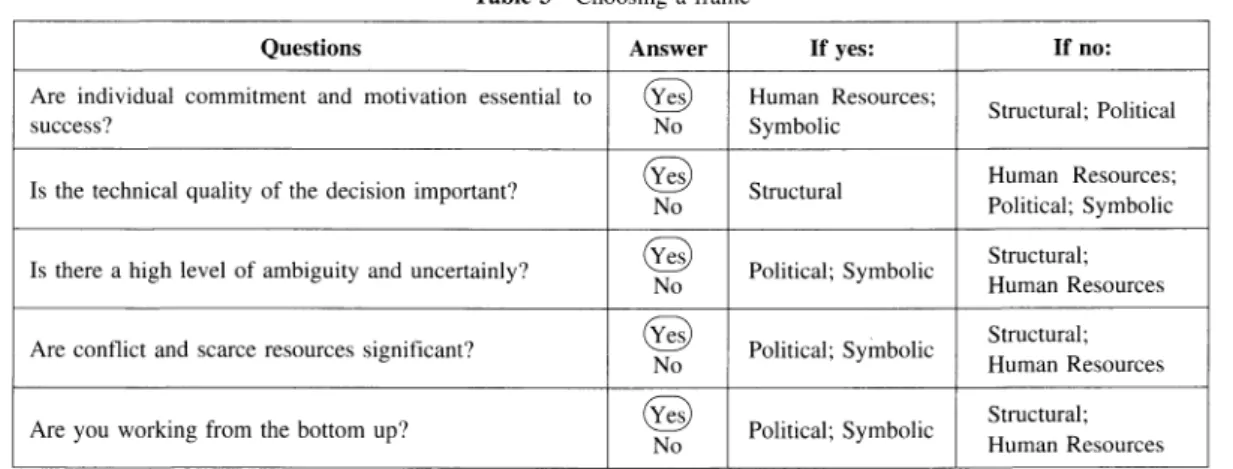
(4) 甲南女子大学研 究紀要 第 5号. 看護学 ・ リハ ビ リテ ー シ ョン学編. (20H年 3月. ). plexity of implementing and evaluating falls preventions. people physically and psychologically.Victilns of a fall. in clinical settings.Acute lllness and/or surgery often. are likely to lose their conidence and decrease their level. limit the ability of nursing staff to identify falls risks and. of activity in order to prevent further fallsi6)。 Furthermore,. to institute appropriate intervention strategies for individu―. the nursing manager secmed oblivious to their position as. als in acutc care12)。. a role model and did not possess sufficient evaluation or organizational change skills.One― third of the nursing staff. ″. Frα θ ακ Rθ sθ κθ」 “ “ ““. Budget lnisallocation. Although the budget was lilnited in the orthopedic ward,. had worked in the same ward for over five years, thus many staff held sinlilar values. This is likely to be a bar― rier to changing attitudes and culture in the workplace.. the cost of maintain existing equipment properly or of purchasing new equipment would be lower than the cost. IV.Possible solutions to the management issues. of additional surgery as a result of falls.Both ittury and. infections extend the length of hospital stays, impacting. The means of achieving the desired outcome will become. significantly on health care costs. The Commonwealth. clear fonowing an analysis of the nursing management is―. Departinent of Hcalth and Aged Care reported that falls. sues and after the most effectivc frame to addrcss the is―. itturies result in prolonged periods of hospitalization. sucs has been identified.. which incur high financial costs. The annual cost of fans in terms of health, functioning and quality of life is esti―. Desired outcomes. mated to be$2.369 billlon in Australia13).. θ Potential desired outcomes in this situation could be: ″. Inappropriate star a11。 cation The absence of nursing staff on the ward during morning. jι ″ α4グ S協√ αJttrα J4 ρα′ “. Jη J“ Jて. “. θttι. jれ. sψ ヶ. Jれ. θ ′ んθWθ 滅 ′Jα θιメ ′. j偽 ′ Js′ ′ θ jん ε″αsι θJグ ι んε θのβ. Jj〃 (√ 9“ α. ′α―. θj“ ρrθ ソ ι 刀′クИα ン′′ れたαれε θ αηαgι ι ん′ε αrθ「 ′ θι “ “. breaks, regardless of whether the ward was busy or not,. rJθ. was not appropriate in tenns of patient safetyo Post―. rθ α θ SSげ λ θ αん,s― θjκ θ sθ α ″α″ん η グ′ 滋ι″θrA/θ ttJε「α. operative patients in particular require constant care and a. S“ θ∫。. JJι. J′. continuous nursing presence on the wardo Rubenstein and colleagues reported an increasc in falls when staffing is. Identifying the most erect市 e frame. low, such as during breaks or at shift changes when pa―. Bollnan and Deal suggested using five questions to assist. tients are not as closely observed14)。. in identifying the most effect市 e frame for a patticular. Lack of equity for star. situation: `Choosing a frame, or understanding others'. Suggestions to ilnprove nursing practice made by staff. perspectives,involves a combination of analysis,intuition,. who were new or from non― English speaking backgrounds. and artistry'17).The questions assist in identifying the. were often undervalued or ignored. The nursing manager. frame that is likely to be most effective in addressing the. thus did not apply Equa1 0pportunity to all staff. The ln―. identi■. dustrial Relations Act 199615)is designed to prevent such. tained in this nursing management case study are pre―. inequity in the workplace.. sented in Table 3.According to the situational analysis re―. ed issues. The questions employed and results ob―. ported in Table 3,the symbolic frame is the most applica―. Sy″ bθ ″θF“. θ “. Poor work ethics,poor role models and lack of or‐ ganizational skills. ble to four of the five situational analyses. The second most effective frame is the political frame, followed by the human resources frame and the strtlctural frame.. The RN observed a lack of nursing role models and a poor work ethic among the nursing staff. The nursing. Possible solutions. manager's general attitude and the commonly expressed. Possible solutions and strategies to address the manage―. attitude that older patients should be sent to a nursing. ment issues were developed and are presented in Table 4.. home are likely to influence the values held by other staff. The key potential solutions are:. and their attitudes to older patients.Falls impact on older. O Education for the nursing manager and nursing staff;.
(5) 29. NAKANO Mika:An Example of Applying an Organizational Management]Model to Clinical Nursing Leadership. Table 3 Choosing a frame. Answer. QueStiOns Are individual comnlitinent and motivation essential to. ① No. success?. Human Resources Symbolic. Is the technical quality of the decision important?. ③. Structural. Is there a high level of ambiguity and uncertainly?. ③. Political;Symbolic. Are conflict and scarce resources signiicant?. ③. Political;Symbolic. Are you working from the bottom up?. ③. Political;Symbolic. (Bα S`グ. Symbolic. Political. Management problemis. Structural;. Human Resources Structural;. Human Resources. Possible solutions to the management issues. Barriers to change. Solutions and strategies after reframes. ―Tradition and values. Education for inanager and staff. Resource. staff. 一Absent role inodel 一Poor cultural skills. Human Resource. ―Poor patient and. ―Inadequate activation. ―Training to develop new skills ―Set and maintain appropriate goals ―Share the goals with staff ―Develop appropriate values and share with staff Empower】 ment of staff ―Encourage participation and involvement 一Provide a role model ―Psychological support ―Appropriate and productive colrlinunlcatlon. →. Political,. Human Resource. of the safety political ―→. Human Resource. control. 一Misuse of budget ―Inappropriate staff a1location ―→ Political. ―Lilnited budget → Political. 一Lack of equity → Symbolic Structural. Stmctural;. Human Resources. of the manager and. ―→. (HR). Human Resources; Political;Symbolic. ―Poor work ethic → Political,Human. 一Insufficient infection. Resources. No No. staff safety management. Human. No. Structural;Political. jθ θれ′Bollnan L,Deal To Rψ α jれ g θrgα れjzα ′ れSr αr′ Js″γ,θ んθJθ ιαれグ Jι αグιrsん なフ ′2θ θ3,ρ 27ノ ) “. Table 4 Fra】 mes. No. If no:. If yes:. ―Lack of awareness of. skills. ―Appropriate staffing ioe。 , split staff morning breaks for patient. health care issucs. ―Lack of vision 一や Symbolic,. →. Political. Symbolic,Political. ioc.regular meetings,staff in― servlces. ―Tcam work ―Good humor(aS appropriatc) ―Provide cqual opportunity for all staff Maintain patient and staff safety ―Invest in safety ioc。 ,maintenance ―Improve manager and staff Occupational Hcalth Safety(OHS). safety. lncrease awareness of health care issues ―Obtain and exchange information and data ―Create strategics to coOrdinate resources 一Network within thc hospital and other sectors; ioc。 , professional organizations,area and state health organizations. (→ :Possible interactions). ・Ernpowerment of the nursing staff; O Maintenance of patients and clinical staff safety;. ・Increased awareness of health care issues.. among older patients)。 These goals were unbalanced.For. instance, whilst the manager and staff focused on patient health outcomes during hospitalization, they paid less at―. tention to poor patient safety outcomes. The manager re―. V.E)iscusslon. quires training in the four frame model and assistance to apply it to the situation to achieve a better balance. Bol―. As a result of viewing the situation fronl the perspective. man and Deal noted that for both management and leader―. of the four frames, a number of management issues were. ship,balancing the frames by making attuStments to the. revealed. It became apparent that the manager was em―. situation is an essential skill18).. ploying the personal frame and making decisions to achieve her specific goals. The manager also focused on. Management weaknesses and lil「 litations were also identi―. one particular issuc(aCute care nursing)at the expense of. fied by each of the four frames(Table 4)。. other issues such as patient safety (i.e。 , increasing falls. the results presented in Table 3, the symbolic frame was. According to.
(6) 30. 甲南女子大学研究紀要第 5号. 看護学 。リハ ビリテーシ ヨン学編 (20H年 3月. ). the most effcctive framc to addrcss the issues in this. risk management plan'. Thc health rcfornl actions in―. workplaceo Tablc 4 demonstrates how the four frames in―. cluded formal accrcditation for `aged friendly' hospitals24).. teract and hoⅥ / combining the results from each can lead. Thcse new policies may encourage changes in the other. to more effective solutions.The management issues iden―. frames of reference, for instancc in the symbolic and hu―. tified in the symbolic frame were identified as the absence. man resources frames.. of rolc models and a work ethic and a lack of organiza― Finally, Inanagers require analytical and evaluation skills,. tional skill. The banriers identified in this frame were the. workforce's traditions and values.`The entctive manager. as IBolinan and Deal emphasized that refranling skills im―. needs first to recognizc his or her own strengths and. prove management and leadership.Using multiple frames,. weakness and then to accept that basic skllls can be iln―. diagnostic maps and flexibility are essentia125)。. proved'!9)。. obtaining and maintaining these skllls requires practice.. However,. VI.Conclusion. The risks associated with refranling when using the sym―. bolic frame must be considered when managers have to deal with changing situations.Bollnan and]Deal noted that. This paper introduced Bollnan and Deal's refranling tool. “effectiveness depends on the artistry of the usero Sym…. and described the application of the tool to nursing man―. bols are sometilnes mere fluff or camouflage,the tools of. agement using an example of a clinical setting in a hospi―. a scoundrel who secks to manipulate the unsuspecting, or. tal ward in Australia.As a result of applying Bollnan and. an awkward attempt that embarasses more than energize. Deal's four frames to the situation the management issues. people at work"20)。 changing values,ethics and culture are. were identified and analyzed to develop a `picture' and. difficult.Bolman and Deal identify two important respon―. possible solutions were discussed.The frames became. sibilities for a manager attempting to reframe ethics. One. windows, a1lowing the management issues to be seen. is to `not answer every question' and the other is to `al―. clearly, whilst the four lenses a1lowed the problenl to be. ways make the right decision'21)。. viewed from alternative perspectives.It is a challenge to. change management and leadership within complex mod― Instead of changing the culture or values, changing goals. ern organizations. However, versatile managers who em―. nlight be an alternative. ]Bollnan and Deal suggest four. phasize certainty and artistic leaders who are creative, as. options for organizational change22)。 For example, devel―. nurses and as health professionals, must be included in. oping symbols(e.g。 ,rOle models)and Sharcd values(C.g。. ,. any holistic approacho Bollnan and Deal's rcfranling tech―. ilnproving conditions for patients and maintaining their. niquc can be an effective and powerful tool for changing. safety)in line with hospital policy and providing equal. and improving management and leadership in clinical en―. opportunity for an staff to makc contributions via open. vironments. This paper applied Bollnan and Deal's re―. conllnunicationo For effective conllnunication,role models. franling technique to an example of an Australian clinical. could discuss goals,influence other staff and exchange in―. setting, however the tool has the potential to be useful. formation in order to achieve positive outcomes.. and valuable in complex nursing clinical contexts in Japan and may assist in improving nursing leadership。. 「Fhere is a. Bollnan and Deal suggested the use of `power' to change. need to conduct rescarch and to evaluate the tool in a. direction and/or make decisions in difficult situations23)。. Japanese clinical context.. Recently, Australia's Hcalth Ministers agreed to take ilΥ. L―. mediate action to progress rcforin and to ilnprove patient. References. safety and health care quality in public hospitals.The key. l)Bolman L, Deal T: Reframing organizations: artistry,. identified issues were cost effectiveness, quality and. choicc and leadership. 3rd edo Jossey― ]Bass, San Francisco,. 2003. safety,and equity and affordability,particularly for people. 2)Ibid. at risk.All public hospitals were required to implement a. 3)Pusser B: Beyond Baldridge: Extending thc Political. new `incident management systenl' and `patient safety. 卜4odel of Higher Education C)rganization and Governance..
(7) NAKANO Mika:An Example of Applying an Organizational Management Model to Clinical Nursing Lcadership. Educational Politica1 2003; 17(1), 121-140. 4)Baker cM,Reising DL,Johnson DR,ct al.: Organiza―. 31. 12)Commonwealth Department of Hcalth and Aged Care:An analysis of research on preventingね lls and falls ittury in. tional effectiveness:Toward an integrated model for schools. older people: acute care settingso National Ageing Rescarch. of nursingo Journal of Professional Nursing 1997; 13(4),246. lnstituteo Commonwealth Department of Hcalth and Aged. -255 5)Mockett L,Horshll J,0'Callaghan W:Education leader― ship in the clinical health care setting: A framework for nursing education development. Nurse Education in Practice. 2006;6(6),404-410. Care,Canbera,2000 19 Sce吻 14)Rubenstein L Z,Josephson KR,Robbins AS:Falls in the nursing homeo Annals of lnternal Medicine; 121,442-451 15)Parliamentary Counscl's Office 2004:Industrial Relation. 6)Seel)p12. Act 1996 in Public hospital nurses' state award.NSW Nurs―. 7)Bolman LG。 ,Deal TE:Lcadership and Management Ef―. cs' association,2002. fectiveness: A Multi― frame, Multi― sector Analysis. Human. Resourcc Management。 1991;30(4),509-534. 16)Burke MM,Walsh MB:Gerontologic Nursing。. 8)Secl)p.X五. 17) Scel)p309. 9)Department of Hcalth and Ageing:Hcalth Minister's con―. 18)Scel). ferenceo Commonwealth of Australia,Canbera,2004 10)Moller J:PraCcted costs of fall related ittury tO older persons due to demographic change in Australia: Report to. 2 nd ed.. Mosby― Year Book,St Louis,1997. 19)Lawson J,Rotem A,Bates PW:From clinician to man― ager: an introduction to hospital and health services manage―. mento McGraw― Hill,Sydney,2003. the Commonwealth Departinent of Hcalth and Ageing under. 20)SeeD p 332. the National Falls Prevention for C)lder People lnitiative.. 21)SeeD. Commonwealth of Australia,Canbera,2003. 22)Ibid. 11)Templer J,Connell BR:Geriatrics:En宙 ronmental and be―. 23)Ibid. havioral factors in falls among the elderlyo Rchabilitation. 24)Sec9). 1994:30:92-93. 25) Secl).
(8)
図
関連したドキュメント
The purpose of this study was to examine the invariance of a quality man- agement model (Yavas & Marcoulides, 1996) across managers from two countries: the United States
We generalized Definition 5 of close-to-convex univalent functions so that the new class CC) includes p-valent functions.. close-to-convex) and hence any theorem about
We generalized Definition 5 of close-to-convex univalent functions so that the new class CC) includes p-valent functions.. close-to-convex) and hence any theorem about
First we use explicit lower bounds for the proportion of cyclic matrices in GL n (q) (obtained in [9, 14, 20]) to determine a lower bound for the maximum size ω(GL n (q)) of a set
administrative behaviors and the usefulness of knowledge and skills after completing the Japanese Nursing Association’s certified nursing administration course and 2) to clarify
Showing the compactness of Poincar´e operator and using a new generalized Gronwall’s inequality with impulse, mixed type integral operators and B-norm given by us, we
Here we only present and prove an Orlicz norm version of the inequality (1.5) [and of its extension to the power weight case see, e.g., (2.6) with/3 1 + Zp and give an example of
Applications of msets in Logic Programming languages is found to over- come “computational inefficiency” inherent in otherwise situation, especially in solving a sweep of
