INVITED PAPER
Special Section on Information and Communication System SecurityCyber Physical Security for Industrial Control Systems and IoT
Kazukuni KOBARA†a),Member
SUMMARY Cyber-attacks and cybersecurity used to be the issues for those who use Internet and computers. The issues, however, are expanding to anyone who does not even use them directly. The society is gradually and heavily depending on networks and computers. They are not closed within a cyberspace anymore and having interaction with our real world with sensors and actuators. Such systems are known as CPS (Cyber Phys- ical Systems), IoT/E (Internet of Things/Everything), Industry 4.0, Indus- trial Internet, M2M, etc. No matter what they are called, exploitation of any of these systems may cause a serious influence to our real life and appro- priate countermeasures must be taken to mitigate the risks. In this paper, cybersecurity in ICS (Industrial Control Systems) is reviewed as a leading example of cyber physical security for critical infrastructures. Then as a future aspect of it, IoT security for consumers is explained.
key words: security, Cyber Physical System, Industrial Control System, IoT, M2M
1. Introduction
Future society will heavily depend on computers and net- works in any aspect. This has already been or is becoming true in most of social infrastructures based on ICS (Indus- trial Control Systems), which include critical manufactur- ing, chemical industry (dealing hazardous materials), smart systems for power grid, energy-networks, cities, home, agri- cultures, healthcare, automotive and so on. In a broad sense, they are also known as CPS (Cyber Physical Sys- tems), IoT/E (Internet of Things/Everything), Industry 4.0, Industrial Internet, M2M and so on, and have a common feature that they consist of sensors and actuators, and have interfaces and interactions with our physical world. The consequences of cyberattacks on such systems will not be confined within a cyberspace but flood into our real life.
Taking this situation into account, this paper reviews the cybersecurity in ICS as a leading example of such cyber physical security, and then considers the future of them. In Sect. 2, the situation of ICS is explained. In Sect. 3, their security threats and their countermeasures are summarized.
Then, cyber physical security in future, especially of IoT for consumers, is considered in Sect. 4, and finally concluded in Sect. 5.
Manuscript received October 22, 2015.
Manuscript revised December 19, 2015.
Manuscript publicized January 13, 2016.
†The author is with National Institute of Advanced Industrial Science and Technology (AIST), Tsukuba-shi, 305–8568 Japan.
a) E-mail: kobara [email protected] DOI: 10.1587/transinf.2015ICI0001
2. Industrial Control System
In this section, we explain the situation and features of ICS in terms of security by introducing an example of a typical ICS configuration.
2.1 Example of ICS Configuration
Even though ICS configurations are rich in variety in prac- tice, an example is shown in Fig. 1 to grab a rough image of ICS. In this figure, actuators and sensors are connected to the field/sensor networks (or data buses), which are usually pro- prietary and industry specific. The sensors and actuators are controlled and managed by controllers such as PLC (Pro- grammable Logic Controller) and DCS (Distributed Control System). These controllers are also connected to a control system network, which is used to manage the sensors, actua- tors and their controllers, e.g. to change the set point by way of HMI (Human Machine Interface), to update their logic or programs by way of EWS (Engineering Work Station), to collect logs by Historian, and to supervise them by SCADA (Supervisory Control And Data Acquisition) systems and so on.
Control system networks usually consist of Industrial Ethernet that is compatible with standard Ethernet protocols but their hardware is designed for real time processing and
Fig. 1 An example of ICS configuration
Copyright c2016 The Institute of Electronics, Information and Communication Engineers
Fig. 2 OS ratio in ICS[1]
harsh environments. To manage the production or opera- tion, some information is usually exchanged between cor- porate networks and control system networks, and some of the maintenances might be performed remotely, which are called remote maintenance.
2.2 Features of ICS in Terms of Security
One of the most significant features of ICS is that they have interfaces with the real world and due to this they might cause a serious problem to our real life after exploitation by attackers and crackers. Other features include:
1) Availability is usually higher priority than confidential- ity and integrity.
2) Life cycle is longer than usual ICT (Information and Communication Technologies).
3) Loosely isolated from the Internet.
4) Proprietary and/or specific purpose protocols and oper- ating systems are used.
Due to 1) and 2), conventional ICT countermeasures are not necessarily applicable as they are. E.g. rapid and frequent patching to bugs is not suitable for some sensitive ICS since patching may deteriorate the compatibility with minor device drivers or the performance the system must satisfy, though patching is a must and a fundamental coun- termeasure in ICT.
Due to 3) and 4), ICS did not used to be a major target of cyberattacks. The situation, however, has been chang- ing. Proprietary and/or specific purpose protocols and op- erating systems are gradually replaced with general purpose ones with which adversaries are familiar. Isolated environ- ments are gradually getting connected to other networks. As shown in Fig. 2 and Fig. 3, the major OS in ICS was Win- dows followed by Unix, Linux and RTOS (Real Time OS), and then more than one third of them were connected to a network as of 2008[1]. This trend will be inherited to smart manufacturing, Industry 4.0, Industrial Internet and so on where more ICT technologies are introduced.
On the other hand, trend of cyberattacks is also chang- ing. Their purposes are shifting from fun and curiosity to moneymaking, terrorism, cyberware and so on to impose ad- versaries’ demands. Their methodologies are becoming per- sistent rather than casual while changing their targets from general public to intended organizations such as critical in- frastructures and their related organizations. Their system
Fig. 3 Network connectivity of ICS[1]
Fig. 4 Number of reported ICS incidents and vulnerabilities for Fiscal Years
targets are covering even isolated environments, propri- etary and industry specific protocols, software and operating systems.
In fact, the number of incidents and vulnerabilities re- ported to ICS-CERT[2]is increasing as shown in Fig. 4 af- ter the epoch-making incident Stuxnet[3], which targeted industry specific software and closed network and then ru- ined centrifuges for nuclear material in Iran in 2010. Similar trend can also be observed in the repository of industrial se- curity incidents[4].
3. Cybersecurity Threats and Countermeasures in ICS In this section, major cybersecurity threats and their coun- termeasures for ICS are summarized in Sect. 3.2 to 3.4 while introducing a visualization method for their relationship in Sect. 3.1.
Publicly available major tools are introduced in Sect. 3.2 to 3.4. While these tools might be abused for at- tacks and some of the readers might think that these infor- mation should be hidden, this is not a recommended strat- egy. These tools are fundamental for adversaries and they use more powerful and tailored ones. Protection side should recognize this, and confirm that the potential targets can re- sist against at least these fundamental tools.
3.1 Relationship between Security Risks and Countermea- sures
One of the most difficult parts of managing potential secu- rity risks is to identify an optimal set of effective counter- measures against security threats taking their costs, perfor- mance deterioration, interoperability with current and future systems and management styles and so on. Inappropriate or few countermeasures may cause security problems and the cost of expensive over-spec countermeasures may ex- ceed the expected damage by the security threats. In order to look for an optimal set of countermeasures, it is impor- tant to grasp the relationship between security threats and their countermeasures, and this can be intuitively depicted by visualization.
Fig. 5 Example of enrichment for attack tree
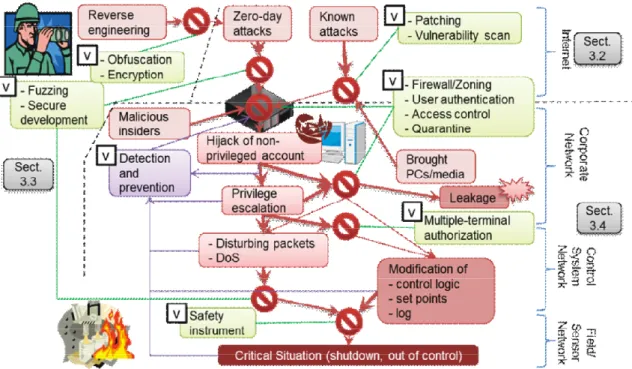
Fig. 6 An example of relationship between cybersecurity threats and countermeasures
One approach to express security risks visually is to create an attack tree, which shows a problem as the root and its sources as the leaves. Weaknesses of attack trees, how- ever, are that they do not express which paths are most risky and which are not, which countermeasures are effective to which paths. To overcome these weaknesses, we propose to improve the attack tree by adding the following expressions (we call it extended attack tree):
1) The severity level of each stage (node).
2) The transferability from one stage to another.
3) Countermeasures and their effects.
In the examples Fig. 5 and Fig. 6, the red part represents an attack tree and then the above expressions are added as follows. The severity is expressed as the darkness of the color of the stages. The transferability is expressed as the thickness of the line between stages. While the severity and the transferability in Fig. 5 are divided into four and three levels, respectively, their precision should be customized de- pending on the application. Countermeasures are divided into prior and posterior. In Fig. 5, they are colored in green and purple, respectively, with arrows or lines they are re- lated to. In the case of monochrome, their texture should be changed instead of the colors. Gray boxes are used for notes, and in Fig. 6 the notes show the related subsections in this paper with the dotted black lines as the separators.
The risks are expressed as the combination of the sever- ity level and the transferability to reach at the severity level.
Once risks are identified, one can take the actions: 1) Re- duce, 2) Accept, 3) Transfer and 4) Avoid, to them. Reduc- tion of risks is achieved by application of prior and posterior countermeasures. If the residual risks are small, they may
be acceptable by preparing risk finances for them. If they are not acceptable even after the reduction, they should be transferred to insurance or outsourcing. If even transfer is not possible, one should consider avoiding the services or projects causing the unacceptable residual risks.
Figure 6 is an example to image this concept, and pre- cise relationship among security threats and their counter- measures should be created in each industry or application area with collaboration among its stakeholders. The created one should, then, be used in the area or industry as a com- mon reference. Optimal sets of countermeasures, however, vary in each organization or product depending on the man- agement policy so on. It is not necessarily recommended to apply all the available countermeasures without taking the cost, performance deterioration, compatibility with current and future systems and management styles and so on into account, especially in a constraint environment like ICS.
The check box in the upper left corner in each coun- termeasure is to show which countermeasures are not taken and instead which ones are taken to look for an optimal set of countermeasures. While conventional security check lists assume that all the terms should be satisfied and it is not clear what will happen and what to do when some of the terms are not satisfied, the check boxes here in the extended attack tree are to support risk control by looking for alterna- tives, or deciding whether its residual risks are acceptable or not when some countermeasures are hard to satisfy.
In the following subsections, security risks and their countermeasures are explained more concretely.
3.2 Risks and Countermeasures around Remote Access This subsection corresponds with the upper right area in Fig. 6. Some of the ICS open communication ports that are accessible from the Internet for remote maintenance and these will be the target to analyze.
In most cases, the first step of cyberattacks is recon- naissance of targets[5], which remotely scouts the targets’
profile and configurations including not only networks and systems but also internal information such as operators and their operational roles. In the case of APT (Advanced Per- sistent Threats), this phase is performed elaborately and persistently.
While port and vulnerability scanners such as Nmap[6]
and Nessus[7]/OpenVAS[8], have been popular for looking for open ports, services and their vulnerabilities from In- ternet, another approach utilizing dedicated search engines such as SHODAN[9]and ERIPP†[10], has been becoming serious since they can easily list up vulnerable targets right after a vulnerable is discovered in a service. They create a database of IP addresses, port numbers and their contents displayed after connection such as banner, HTML title tags, etc. Then IP addresses and port numbers can be searched from a key word related to the service. ERIPP currently covers only port 80, and SHODAN is covering more ports
†As of August 2015, this service is unavailable.
including the port numbers used in ICS. To enhance the us- ability of these search results, some projects map the rough location of identified vulnerable services and devices[11]–
[13].
If the targets do not have publicly known vulnerabil- ities, further vulnerabilities are examined. Some of the modern ICS devices or services provide Web interfaces, which might be vulnerable to SQL/OS command injections or cross site exploits including cross site scripting, cross site request forgery and so on. They may also equip inappro- priate remote access control such as default IDs and pass- words, bypassing mechanism to their authentication and ac- cess control schemes. ICS and embedded devices tend to be used with their default IDs and passwords, which are publicly available at various sites including[14]. Bypassing mechanisms may be prepared to deal with password loss, and these information may be either written in a manual, or discussed in the Internet[15],[16].
Needless to say, a must countermeasure against recon- naissance from Internet is to place devices and servers be- hind a firewall or a security gateway. While this is basic, a considerably high number of them are still accessible from Internet as shown by SHODAN etc.
To grasp the reconnaissance activities on them, ICS/SCADA honeypots are useful. They mimic the behav- ior of common industrial control protocols and then mon- itor the activities on them. Such honeypots can be con- structed using CONPOT[17], etc. For telnet-based devices, which are common in certain types of IoT devices, IoTPOT is available[18].
Against Web exploitation, Web applications should be created ideally to avoid the above vulnerabilities. If they have already been created, their vulnerabilities should be examined with Web application penetration tools including OWASP ZAP[19]that can work with external tools such as Nikto[20], Burp Suite[21], sqlmap[22], sslscan[23], etc.
For remote access for remote maintenance, user au- thentication and access control should be reviewed and strengthened. Default IDs and passwords must be changed and bypassing mechanisms that are available from remote must be disabled, though these are fundamental as well.
For ICS embedded devices and services, there are certi- fication programs called Functional Security Assessment for Embedded Device Component (FSA-E) and System (FSA- S), respectively. They are parts of ISASecure’s Embedded Device Security Assurance (EDSA)[24]and System Secu- rity Assurance (SSA)[25]certifications, respectively. They are being or has standardized as IEC 62443 (Industrial com- munication networks) in Part 4-2 (Technical security re- quirements for IACS components) and Part 3-3 (System se- curity requirements and security levels), respectively.
3.3 Risks and Countermeasures around Software
This subsection corresponds with the left area in Fig. 6. Dis- covery of new vulnerabilities by adversaries is a serious is- sue since they are used for zero-day attacks. For software,
fuzzing (or fuzz testing) and reverse engineering are used for this purpose. Fuzzing gives data in unusual format to the target and then checks its behavior. If it gets stuck or acts strangely, it may have some mal memory handling that leads to a buffer overflow to hijack the target. Comprehensive list of fuzzing tools (fuzzers) is available at[26] and some of them support ICS specific communication protocols. ICS and embedded systems tend to rely on legacy software and it has such vulnerabilities with non-negligible probability.
In the case of ICS and embedded systems, the tar- get of reverse engineering includes firmware whose im- ages may be downloadable from Web sites or extracted from on-chip debug interfaces using hardware tools such as JTAGulator[27]. The obtained firmware is then analyzed, vulnerabilities and hardcoded passwords may be revealed and then mal functions might be inserted to it if no coun- termeasure is taken. Structure analyses of firmware and then extraction of executable files are performed by using firmware tools such as binwalk[28]. Once executable files are extracted, they are analyzed further by using usual disas- sembler, debugger, etc. For this purpose, IDA[29], which is a disassembler and a debugger, supports various processors including those used for ICS. These analyses may eventu- ally identify new vulnerabilities used in zero-day attacks.
Against vulnerabilities caused in software develop- ment, there exist ISASecure’s certification programs called Software Development Security Assessment (SDSA), Se- curity Development Lifecycle Assurance (SDLA)[31]and Communication Robustness Testing (CRT). CRT certifi- cation program is available in Japan too since April of 2014[30]and CRT and SDSA are parts of EDSA certifica- tion program. CRT, SDSA and SDLA are also under stan- dardization as IEC 62443 Part 4-1 (Product development re- quirements) as of July 2015.
Against reverse engineering of firmware and soft- ware, obfuscation or encryption should be applied to them.
Against modification of them, alteration detection should be added to them. Alteration detection can be realized using ei- ther a digital signature such as RSA signature and ECDSA, or a Message Authentication Code (MAC) such as HMAC and CMAC. These cryptographic approaches, however, re- quire the devices to hold cryptographic keys securely. While public keys (for signature verification and encryption of symmetric keys) and root certificates to verify them do not need to be protected against reveal, their processing speed is around 100 to 1000 times slower than that using a sym- metric key. Therefore algorithms using a public key might not be suited to low-end embedded devices without crypto accelerators. On the other hand, while the algorithms using a symmetric key such as AES (Advanced Encryption Stan- dard) are faster than that using a public key, symmetric keys must be protected against not only modification but also re- veal. Protection of keys is usually provided by a tamper resistant module, whose validation or certification is pro- vided as EAL (Evaluation Assurance Level) of CC (Com- mon Criteria) that is in accordance with ISO/IEC 15408, or by CMVP (Cryptographic Module Validation Program)
or JCMVP (Japan CMVP)[32]that are in accordance with FIPS 140[33]†.
3.4 Risks and Countermeasures in LAN
This subsection corresponds with the lower and middle right area in Fig. 6. In Fig. 1, corporate networks, control system networks and field/sensor networks correspond with Local Area Networks (LAN). They are usually placed behind a firewall or a security gateway, and their levels of counter- measures tend to be lower than those accessible from Inter- net. Therefore, an adversary or malware, which succeeds in intrusion there, may proceed to next attack stages relatively easily if no countermeasures are taken. Intrusion into LAN is plotted by way of various channels including an attached file, a Web link in an e-mail, a shared folder, a brought PC, removal media such as USB memory, or even by a mali- cious insider. In case of ICS, engineering PCs or removal media may be brought in LAN to set-up or maintenance the systems and so on.
Activities after intrusion include communication with C&C (Command and Control) servers, investigation of the LAN while downloading and utilizing tools and/or modules necessary for further activities, escalating privilege, setting up backdoors, deleting logs, migrating to another network and so on. If an adversary or a malware reaches at a tar- get, they try to collect secrets from it, modify its behavior or destroy it to reduce it to a critical situation or out of op- eration. In factories, secrets to protect include recipes for production. Mal-operations are attempted by way of HMI or by modifying control logics and set points for automatic control.
Basically, countermeasures in LAN should be taken by assuming that adversaries may exist there. One fundamental countermeasure is to divide both LAN and physical space into small zones to restrict or block unnecessary access to critical systems in a zone from other zones. To do this, one has to start with grasping the current network topol- ogy and configurations correctly. This may be completed instantly while running the systems with active scan using Nmap. It would, however, disturb or disrupt sensitive ICS.
ANTFARM (Advanced Network Toolkit for Assessments and Remote Mapping)[35]is one of the tools for this pur- pose, which can parse and analyze multiple sources of net- work information including network device configuration files, traffic logs and so on, and then create a visual depic- tion of the network without disturbing or disrupting sensitive systems in ICS networks.
While zoning may restrict or block unnecessary access to critical systems from other zones, it cannot restrict ac- cesses from privileged or legitimate combinations of a ter- minal and an account for operation. For example, HMI and EWS in one zone need to have access to controllers in
†FIPS 140-3 is under development[34] as of August 2015, which corresponds with ISO/IEC 19790 (Security requirements for cryptographic modules).
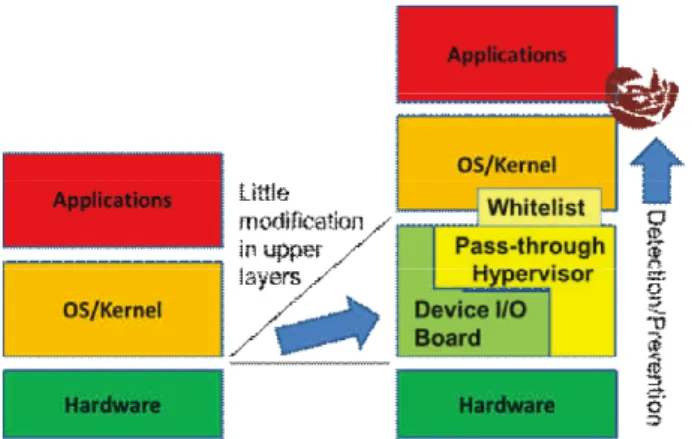
Fig. 7 Monitoring in deeper system layers
other zones to change their set points and control logics, re- spectively. Zoning itself cannot restrict or block accesses from such legitimate terminals and accounts when they are hijacked.
There are two directions to deal with this. One is to enhance detection and prevention ability against terminal hijacking by monitoring the symptoms and anomaly with IDS/IPS (Intrusion Detection/Prevention System) or more holistically UTM (Unified Threat Management) or SIEM (Security Information and Event Management). The other is to enhance the authorization mechanism against system modifications by using multiple terminal authorization and safety installment.
As the former approach to detect and exclude hijacked terminals, we have studied monitoring and prevention in deeper system layers, which are device I/O, hypervisor and kernel as shown in Fig. 7. The approach in kernel[36],[37]
checks the parent-child relationship of created processes to detect maliciously created or inserted processes by adver- saries, in addition to the integrity check of binaries to detect their modification and replacement. It can also control the access to computing resources such as files, directories, de- vices, IP addresses and port numbers. The approach using lightweight pass-through type hypervisor[38],[39]provides monitoring function for system calls invoked in the guest OS, and hiding function for unnecessary peripheral devices to the guest OS to prevent data leakage and/or malware infection via removal media or peripheral devices brought from outside. The approach using a device I/O board[40]
monitors I/O of HDD/SSD, USB and Ethernet, and then blocks unpermitted actions.
These approaches might not be suitable for general purpose computers that are used in various ways and hard to determine allowed/disallowed actions in advance. They, however, are applicable to computers dedicated to a specific purpose where most operation rules are fixed in advance.
They also have an advantage that they can be applied to pre- installed and pre-configured OSes later on without changing their configurations whereas the approach using non pass- through type hypervisors require to reinstall device drivers or even abandon minor devices they do not support.
Depending on the system layer to be used, there exist pros and cons. While the deeper layer is better to prevent in- truders from disabling the monitoring and prevention func- tions, available data become more raw and primitive and harder to analyze.
Even if the above approaches fail to detect hijacked terminals, mal-operations can still be rejected if multiple terminal authorization is used, which is realized by let- ting an operator input a command or order by one terminal and then confirm that with the other independent terminals.
The requirements for the independent terminals are given as follows[41]:
1) [Separation:] To avoid simultaneous hijacking of all the multiple terminals, they must be placed in different zones (or built as different systems).
2) [Independent Authentication:] Credentials to au- thenticate the terminals must be unique to each terminal to prevent impersonation using the stolen credentials.
Needless to say, independent authentication cannot be realized with only the same credential, i.e. the same pass- word and the same private key among the terminals for the multiple terminal authorization since an adversary who has hijacked one terminal may send both requests and their con- firmations by using the same credential. While independent authentication can be realized using unique secret to each terminal or distinguishing terminals with physical ports of routers or hubs the terminals are connected, these cannot distinguish and trace the operators who committed mali- cious operations. In addition, when authentication servers are used, it is important to protect their databases as well since they hold verification data for all the terminals and users. LR-AKE (Leakage-Resilient Authenticated Key Es- tablishment)[42]not only satisfies independent authentica- tion but also provides operator authentication and resiliency against leakage of stored secrets from any side of servers (or their databases) and terminals without relying on expensive tamper resistant modules.
If either multiple terminal authorization or zoning is not employed or compromised, safety instrumented systems will be the last resort to maintain a safe state against mal- operations. Safety instrumented systems including failsafe, limit, interlock, foolproof and so on used to be designed mainly against accidental non-intended errors. They should furthermore take intentional mal-operations by adversaries into account. Study in [43] constructed a miniature pro- cess control system with safety mechanisms and zoning, an- alyzed consequences of modification of its set points and alarms, and then investigated how they can be detected and prevented.
4. Cyber Physical Security in Future
Needless to say, one of the most significant features of cyber physical systems is that they have interfaces with real world, and these interfaces might be abused from cyberspace to
attack on the real world. This threat is not only specific to ICS or more widely Industry 4.0 and Industrial Internet, but also becoming common even in consumer areas with IoT (Internet of Things). They have the following additional features:
1) [Physical Access:] While sensors, actuators and con- trollers in factories and critical infrastructures are placed mainly in physically protected areas, those for IoT especially for consumers or small enterprises will be placed or distributed through outside of the physi- cally protected areas. Adversaries may have physical access to them, and some of them might be cracked, and then form which they may intrude or input mali- cious data or programs into a network while imperson- ating the cracked devices.
2) [Privacy:] While sensors for ICS are mainly used for measuring equipment and materials, those for IoT, es- pecially for healthcare, wearable and so on, will be used to collect privacy related or personal data around users.
3) [Intelligence:] Systems will be more intelligent with the help of Cloud, Big Data Analyses, Machine Learn- ing, AI (Artificial Intelligent) and so on. While users will be more dependent on the intelligence, the intel- ligence might be abused or maliciously controlled by adversaries.
To preserve privacy while collecting necessary data for the intelligence, the privacy preserving methods will play more important roles than ever. They include:
1) [ID Anonymization:] Either removing or replacing Personally Identifiable Information (PII) from a data set, or collecting data not identifying individuals but verifying that they belong to a certain group with cer- tain attributes. The latter can be realized using anony- mous authentications[44], [45] or group signatures over an anonymous channel[46],[47].
2) [Data Anonymization:] Modification of data sets by adding noise, rounding, suppressing and generalizing their attributes to satisfy a certain level of privacy metrics such as k-anonymity[48], l-diversity[49], t- closeness[50] and differential privacy[51], or to re- sist against de-anonymization attacks[52]while main- taining their statistical characteristics. To brush up these skills, anonymization and de-anonymization con- test was held in Japan[53].
3) [Encrypted Data Processing:] Processing secrets or encrypted data without revealing or decrypting them until the final result is obtained. This can be performed using homomorphic encryptions, PPDM (Privacy-Preserving Data Mining)[54],[55], SMC (Se- cure Multiparty Computation)[56]–[59]and so on.
The above cryptographic solutions require devices to hold keys, which must be protected against steal of the de- vices by adversaries who will then analyze them both inva- sively and non-invasively. Keys in a stolen device can be
protected, e.g. by using a tamper resistant module or LR- AKE Credential Service[60]. An advantage of the latter is that it does not rely on an expensive tamper resistant mod- ule. Another way of protection is to generate keys using PUF (Physically Unclonable Functions)[61],[62]instead of storing them on a nonvolatile memory, which can be read and copied easily. The generated keys can be used to en- crypt or deliver other keys used in applications. Advantages of using PUF for key generation include: 1) the generated keys are not stored in the module when the power is off, 2) it is difficult to copy a PUF so that the copied PUF can generate the same keys for new challenges due to the phys- ical unclonable properties of PUF, and 3) revealed keys can be replaced with fresh ones by changing the challenges to them or by using uncontrollable noises intrinsically caused in PUFs[63]and by correcting the noises at the other party (whereas delivering a new key after encrypting it with the revealed old key compromises the freshness of the new key).
Frequent and uncontrollable change of keys can miti- gate the risk of keys to be extracted from the modules us- ing side-channel information such as power consumption, electro-magnetic leakage, etc. If a PUF is deployed in a de- vice, it can also be used to distinguish the genuine module from its counterfeits to enhance the traceability in supply chains when a hardware Trojan is discovered.
5. Conclusion
In this paper, the security in ICS is reviewed as a leading example of cyber physical security especially for infrastruc- tures where identification of optimal sets of countermea- sures is significant taking their restrictions and constraints into account. The necessity of cyber physical security in future will expand not only to various infrastructures, but also to consumer area with IoT where preserving privacy and physical protection of devices will play more important roles especially when adversaries can have physical access to them.
I hope this paper helps the readers who are not nec- essarily familiar with this area understand the situation of cyber physical security especially of ICS and IoT for consumers.
Acknowledgments
The author would like to thank the reviewers for their useful comments and suggestions. This research was partly sup- ported by JST, Infrastructure Development for Promoting International S&T Cooperation.
References
[1] “Actual condition survey project on a threat and a measure caused by the general-purpose IT technological application which can be put equipment for industry (in Japanese),” Report of the maintenance project on a computer security early warning system in fiscal year 2008, http://iss.ndl.go.jp/books/R100000002-I025571148-00, 2009.
[2] ICS-CERT, “Year in Review 2014,” https://ics-cert.us-cert.gov/Year- Review-2014, accessed June 30, 2015.
[3] D. Kushner, “The Real Story of Stuxnet,” IEEE Spectrum, http://spectrum.ieee.org/telecom/security/the-real-story-of-stuxnet/, Feb. 2013.
[4] RISI, “The Repository of Industrial Security Incidents,” http://www.
risidata.com/Database/, accessed June 30, 2015.
[5] Lockheed Martin, “Cyber Kill ChainR,” http://www.
lockheedmartin.com/us/what-we-do/information-technology/ cyber-security/cyber-kill-chain.html, accessed June 30, 2015.
[6] Nmap, https://nmap.org/, accessed June 30, 2015.
[7] Nessus, http://www.tenable.com/products/nessus-vulnerability- scanner, accessed June 30, 2015.
[8] OpenVAS, http://www.openvas.org/, accessed June 30, 2015.
[9] SHODAN, http://www.shodanhq.com/, accessed June 30, 2015.
[10] Every Routable IP Project, http://beta.eripp.com, accessed June 30, 2015.
[11] ´E. Leverett, “The last gasp of the industrial air gap. . . ,” BlackHat US, 2012.
[12] SCADACS, https://www.scadacs.org/, accessed June 30, 2015.
[13] “Introducing Shodan Maps,” https://shodanio.wordpress.com/2014/ 02/18/introducing-shodan-maps/Feb. 2014, accessed June 30, 2015.
[14] “Default Passwords,” https://cirt.net/passwords, accessed June 30, 2015.
[15] D. Tentler, “Drinking from the caffeine firehose we know as shodan,”
Defcon 20, 2012.
[16] R.W. McGrew, “SCADA HMI & Microsoft Bob Modern: Vulnera- bilities, With a 90’s Flavor,” Defcon 20, 2012.
[17] CONPOT, http://conpot.org/, accessed June 30, 2015.
[18] Y.M.P. Pa, S. Suzuki, K. Yoshioka, and T. Matsumoto, “IoTPOT:
Analysing the Rise of IoT Compromises,” 9th USENIX Workshop on Offensive Technologies (WOOT 15), https://www.usenix.org/ conference/woot15/workshop-program/presentation/pa, Aug. 2015.
[19] OWASP, “Zed Attack Proxy Project,” https://www.owasp.org/index.
php/OWASP Zed Attack Proxy Project, accessed June 30, 2015.
[20] Nikto, https://cirt.net/Nikto2, accessed June 30, 2015.
[21] Burp Suite, https://portswigger.net/burp/, accessed June 30, 2015.
[22] Sqlmap, http://sqlmap.org/, accessed June 30, 2015.
[23] sslscan https://github.com/rbsec/sslscan, accessed June 30, 2015.
[24] ISASecure, “IEC 62443-4-2 - EDSA Certification,” http://www.
isasecure.org/en-US/Certification/IEC-62443-4-2-EDSA- Certification, accessed June 30, 2015.
[25] ISASecure, “IEC 62443-3-3 - SSA Certification,” http://www.
isasecure.org/en-US/Certification/IEC-62443-3-3-SSA-Certification, accessed June 30, 2015.
[26] IPA, “Fuzzing Guide (in Japanese),” http://www.ipa.go.jp/security/ vuln/documents/fuzzing-guide.pdf, accessed June 30, 2015.
[27] JTAGulator, http://www.grandideastudio.com/portfolio/jtagulator/, accessed June 30, 2015.
[28] Binwalk, http://binwalk.org/, accessed June 30, 2015.
[29] IDA https://www.hex-rays.com/products/ida/, accessed June 30, 2015.
[30] CSSC Certificaiton Laboratry, “Japan’s First Certification Body for ISASecureR EDSA,” http://www.cssc-cl.org/en/index.html, ac- cessed June 30, 2015.
[31] ISASecure, “IEC 62443-4-1 - SDLA Certification,” http://www.
isasecure.org/en-US/Certification/IEC-62443-4-1-SDLA- Certification, accessed June 30, 2015.
[32] IPA/ISEC, “Japan Cryptographic Module Validation Program,”
http://www.ipa.go.jp/security/english/jcmvp.html, accessed June 30, 2015.
[33] NIST, “Security requirement for cryptographic modules,” FIPS PUB 140-2, May 2001.
[34] NIST, “FIPS 140-3 DEVELOPMENT,” http://csrc.nist.gov/groups/ ST/FIPS140 3/, accessed June 30, 2015.
[35] “ANTFARM: Advanced Network Toolkit for Assessments and Remote Mapping,” http://energy.sandia.gov/wp/wp-content/gallery/
uploads/ANTFARM-Fact-Sheet.pdf, accessed June 30, 2015.
[36] K. Suzaki, T. Yagi, K. Kobara, Y. Komoriya, N. Inoue, and T.
Kawade, “OS Lockdown on Industrial Control Systems with Pro- cess White List and Resource Access Control,” Poster session at 22nd USENIX Security Symposium, Aug. 2013.
[37] K. Suzaki, M. Kiuchi, H. Seki, and Y. Komoriya, “Whitelisting Technology Which Considers Attack Vectors and System Complex- ity on Industrial Control Systems,” ICSJWG Fall Meeting 2014.
[38] K. Suzaki, T. Yagi, K. Kobara, and T. Ishiyama, “Kernel Memory Protection by an Insertable Hypervisor which has VM Introspec- tion and Stealth Breakpoints,” Proc. IWSEC, LNCS 8639, pp.48–51, 2014.
[39] K. Suzaki, “DeviceDisEnabler: A hypervisor which hides devices to protect cyber espionage,” CODE BLUE, Dec. 2014.
[40] K. Toda, I. Ebihara, K. Segawa, K. Takahashi, and K. Kobara, “Se- curity Barrier Device Protects Critical Data Regardless of OS or Ap- plications by Just Attached,” CODE BLUE, Feb. 2014.
[41] T. Sekino, K. Kobara, and H. Imai, “Anti-malware Order System Us- ing Multiple Independent Terminals and Authentication Schemes,”
Proc. WPMC ’09, S43, 2009.
[42] S.H. Shin, K. Kobara, and H. Imai, “A Simple Leakage-Re- silient Authenticated Key Establishment Protocol, Its Extensions, and Applications,” IEICE Trans. Fundamentals, vol.E88-A, no.3, pp.736–754, March 2005.
[43] Y. Hashimoto, T. Toyoshima, S. Yogo, M. Koike, T. Hamaguchi, S.
Jing, and I. Koshijima, “Safety securing approach against cyber-at- tacks for process control system,” Computers & Chemical Engineer- ing, vol.57, pp.181–186, Oct. 2013.
[44] S.H. Shin, K. Kobara, and H. Imai, “Anonymous Password-Au- thenticated Key Exchange: New Construction and Its Extensions,”
IEICE Trans. Fundamentals, vol.E93-A, no.1, pp.102–115, Jan.
2010.
[45] ISO/IEC JTC1, “Anonymous entity authentication,” ISO/IEC 20009.
[46] Tor, “The Onion Router,” https://www.torproject.org/, March 2005.
[47] H. Fathi, S.H. Shin, K. Kobara, and H. Imai, “Protocols for pur- pose-restricted anonymous communications in IP-based wireless networks,” Elsevier Computer Communications Journal, vol.31, Is- sue 15, pp.3662–3671, Sept. 2008.
[48] L. Sweeney, “k-anonymity: a model for protecting privacy,” Interna- tional Journal on Uncertainty, Fuzziness and Knowledge-based Sys- tems, vol.10, Issue 5, pp.557–570, Oct. 2002.
[49] A. Machanavajjhala, D. Kifer, J. Gehrke, and M.
Venkitasubramaniam, “L-diversity: Privacy beyond k-anonymity,”
ACM Trans. on Knowledge Discovery from Data (TKDD), vol.1, Issue 1, no.3, pp.1–12, March 2007.
[50] N. Li, T. Li, and S. Venkatasubramanian, “t-closeness: Privacy be- yond k-anonymity and l-diversity,” Proc. IEEE 23rd International Conference on Data Engineering (ICDE), pp.106–115, 2007.
[51] C. Dwork, “Differential Privacy,” Proc. International Colloquium on Automata, Languages and Programming (ICALP), LNCS 4052, pp.1–12, 2006.
[52] A. Narayanan and V. Shmatikov, “Robust de-anonymization of large sparse datasets,” Proc. IEEE Symposium on Security and Privacy, pp.111–125, May 2008.
[53] Privacy Workshop WG, “Anonymization and De-anonymization Contest (in Japanese),” http://www.iwsec.org/pws/2015/pwscup.
html, accessed Aug. 30, 2015.
[54] R. Agrawal and R. Srikant, “Privacy-Preserving Data Mining,” Proc.
ACM SIGMOD Conference on Managament of Data, pp.439–450, 2000.
[55] Y. Lindel and B. Pinkas, “Privacy Preserving Data Mining,” Journal of Cryptology, vol.15, no.3, pp.177–206, 2002.
[56] Sharemind, https://sharemind.cyber.ee/, accessed June 30, 2015.
[57] SecureSMC, http://sesar.di.unimi.it/Sesar/securescm, accessed June 30, 2015.
[58] K. Hamada, “MEVAL: A Practically Efficient System for Secure
Multi-party Statistical Analysis,” Workshop on Applied Multi-Party Computation, 2014.
[59] AIST, “A Search Technology for Databases of Compounds Using Secure Computation,” http://www.aist.go.jp/aist e/list/latest research/2012/20120220/20120220.html, accessed June 30, 2015.
[60] S.H. Shin, K. Kobara, and H. Imai, “A Secure Authenticated Key Exchange Protocol for Credential Services,” IEICE Trans. Funda- mentals, vol.E91-A, no.1, pp.139–149, Jan. 2008.
[61] G.E. Suh and S. Devadas, “Physical Unclonable Functions for De- vice Authentication and Secret Key Generation,” Proc. 44th Design Automation Conference, pp.9–14. IEEE, 2007.
[62] H. Kang, Y. Hori, T. Katashita, M. Hagiwara, and K. Iwamura,
“Cryptographic Key Generation from PUF Data Using Efficient Fuzzy Extractors,” Proc. 16th International Conference on Ad- vanced Communications Technology (ICACT 2014), pp.23–26, Feb.
2014.
[63] Y. Hori, T. Katashita, H. Kang, A. Satoh, S. Kawamura, and K.
Kobara, “Evaluation of Physical Unclonable Functions for 28-nm Process Field-Programmable Gate Arrays,” Journal of Information Processing, vol.22, no.2, pp.344–356, April 2014.
Kazukuni Kobara received his Ph.D. de- gree in engineering from the University of To- kyo in 2003. He joined the Institute of In- dustrial Science of the University of Tokyo in 1994, and then moved to the National Insti- tute of Advanced Industrial Science and Tech- nology (AIST) in 2006. His research interests include cryptography, cryptographic protocols, cybersecurity, security risk assessment, etc. He received the SCIS Paper Award and the Vigen- tennial Award from IEICE in 1996 and 2003, re- spectively. He also received the Best Paper Award of WISA, the ISITA Paper Award for Young Researchers, the IEICE Best Paper Award and Inose Award, the JSSM Best Paper Award and RISONA Industry- Academia-Government Coordination Award in 2001, 2002, 2003, 2006 and 2013, respectively. He served as a member of ETC (Electronic Toll Collec- tion System) security committees from 1999 to 2015, CRYPTREC (Cryp- tography Research and Evaluation Committees) from 2000 to 2008, the vice chairperson of MIC WLAN security committee in 2003, the chief in- vestigator of INSTAC identity management committee from 2007 to 2010, ISO/IEC JTC1 SC27 WG2 expert from 2012 to present and IEC ACSEC (Advisory Committee on Information Security and Data Privacy) member and JP NC chair from 2015 to present.

![Fig. 2 OS ratio in ICS [1]](https://thumb-ap.123doks.com/thumbv2/123deta/5631049.1501033/2.892.472.812.120.580/fig-os-ratio-in-ics.webp)