
近畿大学学術情報リポジトリ
12
0
0
全文
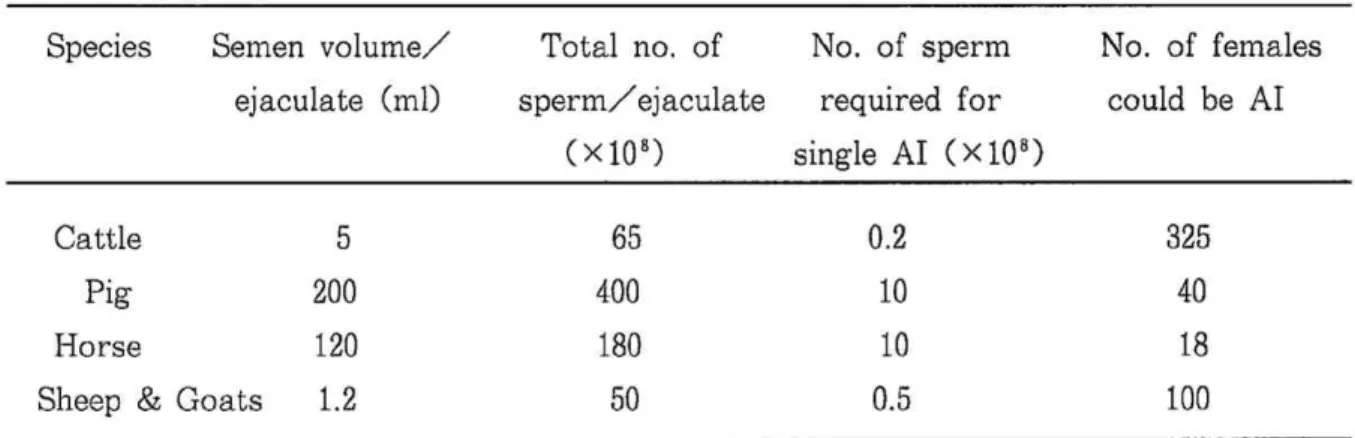
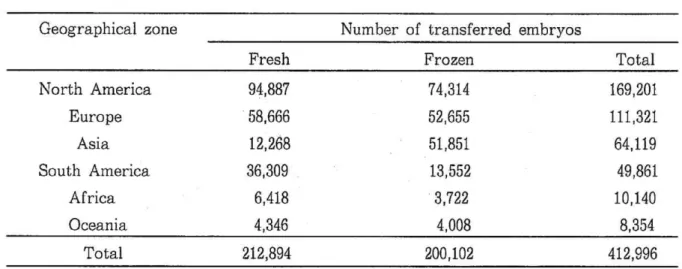
(2) 2. Memoirs. of the. Research. Institute. of. B.O.S.T.. Kinki. University. No.1 (1998). and 90% of them were with frozen semen. In Japan, we have preserved about 500 semen specimens collected from an excellent beef bull, which were filled in a plastic straw for 36 years in a liquid nitrogen container, and have still used for practical breeding. And about 2.2 millions of cows are inseminated annually exclusively with frozen semen. Al in cattle has been applied throughout the world, pig Al in European countries and USA, and Al in sheep and goats in Russia, China, Oceania, Middle East and some North African countries'. Volume and sperm concentration of an ejaculate vary with animal species, and the number of live sperm necessary for single insemination also varies with species. As shown in Table 1. a single ejaculate could be used for insemination of about 300 cows, about 40 sows, about 100 ewes or goats. These data clearly demonstrate the efficient use of excellent male animals by Al. Furthermore, along lines with frozen zoo project, semen samples of more than 100 wild and zoo animal species have been preserved at the Cincinnati, Henry Dooley (Omaha) , Sandiego and Smithsonian National zoos in the USA. Our department and some zoos in Japan started a frozen zoo project.. Table. 1. Effects. of. Al. in. farm. animals. This project has been propagated throughout many countries of the world for conservation of endangered species. Offspring has already obtained by AI with fresh or frozen semen in 30 species of wild and zoo animals". Embryo. transfer. (ET). The technique of ET has been applied effectively for wide use of genetically excellent cows. The average cow can produce 10 calves by natural breeding throughout her life. On the other hand, donor and recipient animals are clearly separated in ET of farm animals. By the application of this technique, a donor cow can produce 20 transferable embryos ( 5 embryos x 4 treatments for superovulation at 3 -month intervals) in a year. Thus, a genetically excellent cow can produce about 100 calves in her life (20 embryos x 8 years, 60% pregnancy rate) . The most popular routine procedure for ET in cattle is as follows. Donor cows are superovulated by treatments with follicle-stimulating hormone (FSH) and prostaglandin F 2 a (PGF 2 a). Al is done at estrus, and blastocysts are recovered by flushing both uteri using a balloon catheter 7 days after insemination. Flushing medium is 250 to 500m1/horn of Eagles minimum essential medium. The worldwide average number of embryos recovered is 8 per cow ( 5 to 15), and 5 of 8 embryos are transferable. As shown in Table 2 4), about 410 thousands of embryos (each 210,000 fresh and 200,000 frozen embryos) were transferred annually in cattle throughout the world. During past several years a new technique, ultrasound-guided oocyte aspiration 2 - 3 times a week from genetically superior cows followed by IVM, IVF and ET has been developed. Dr. Hasler and co-workers (1995) 5? reviewed the results obtained from large scale application.
(3) of this technique. They reported that an average of 4.9 oocytes with 4.1 classified as usable was collected. Following IVM, IVF and culture in vitro, transfer of 2,268 blastocysts in total resulted in 1,220 pregnancies (53.6%). This technique is much more powerful than conventional ET for animal improvement and is also very relevant for transgenic production systems, supplying large numbers . of good quality pronuclear eggs into which foreign genes are introduced. Table. (from. 2. Statistical. IETS Newsletter,. data. of ET. COWS. in the. world. in 1996. Vol. 15, No. 4 , 1997)1). Furthermore, the technique of ET has been applied to the increase in the number of endangered species, the conservation biology in general. Offspring has been already obtained by ET in 5 carnivorous species including tiger, 10 herbivorous species including zebra and 5 species of primate. Production. of identical. animals. Producing identical animals is important for the following reasons : (a). Identical are valuable as experimental animals because of their genetic identity and (b). Rapid in the number of genetically excellent special animals. (. animals increase. ). Early works of producing identical animals by blastomere separation : Since the discovery of the technique of agar embedding of the separated blastomere before transfer into the temporary recipient, production efficiency of identical twins was greatly improved in the domestic animals. The separated blastomere is introduced into an evacuated zona pellucida and then embedded in agar, whereby the hole in the zona pellucida is sealed. By this agar-coating method, Dr. Willadsen produced monozygotic twins in sheep". Afterwards 3 - 5 identical animals were produced by separating blastomeres of 4 - 8 cell stage embryos in sheep, pig and cattle.. (II).. Production of identical twins by splitting blastocysts or morulae : Splitting blastocysts is a more conventional method for production of identical twins than separating blastomeres ; both procedures of agar embedding and culture in the temporary recipient are not necessary in case of splitting morulae or blastocysts. Many identical twin animals have been produced after transfer of split embryos in various species of farm animals such as sheep, goats and cattle. A brown hair-coated Tokara goat was superovulated, and 6 good quality blastocysts were recovered 7 days after insemination. Three of the 6 embryos were frozen-stored, and the other 3 embryos were bisected with metal microblade. Each of three pairs of bisected embryos was transferred into uterine horn of the three recipient goats. All of the three recipients were pregnant, and two pairs of twins and one single kid were born (Plate 1) 6).
(4) Plate. 1 . Production. of. monozygotic. identical. twins. goat : Two sets and a kid of monozygotic of three pairs of bisected blastocysts into. by. splitting. twins each. obtained of three. blastocysts. in the. after transfer recipients.. ( iii). Production of identical animals by nuclear transplantation') : A technique of producing identical animals from a blastomere of 32-cell embryos by nuclear transplantation, cloning has been in progress for the practical application in cattle breeding (See Text-Fig. 1 ). By this method identical 3 - 7 calves have already been produced, however, this technique has not been completely established for the practical breeding due to the following reasons : (a). Pregnancy rate after transfer of the nuclear transplanted embryos is still low although the developmental rate of the reconstituted embryos into blastocysts has been improved, ( b ) . Proportions of both early embryonic mortality and abortions are considerably high even after the successful pregnancy, (c). In many cases prolongation of gestation periods and large size calves have been reported following transfer of embryos derived from reconstitution by nuclear transfer, and causes of these disturbances have not been clarified yet. However, it has been reported that occurrence of large size calves could be much reduced by improving culture media during the process of nuclear transplantation at INRA, France". As shown in the Text-Fig. 1 , morula stage embryos are generally used as nuclear donor and a blastomere is combined by electrofusion with a rescue cell cytoplasm, enucleated M-II oocytes. The reconstituted embryos are cultured in vitro up to the blastocyst stage; blastulation rate is 30-40 % . Then blastocysts are transferred into recipient cows or frozen-stored until transfer into the recipients. Some embryos are used as nuclear donor at morula stage for the second generation. We could produce 100-1,000 genetically identical excellent blastocysts from one excellent embryo by repeating this nuclear transplantation procedure through 3 "d, 4 `" generations and so on. At the present situation, it is necessary to establish an ideal reconstruction and culture conditions of embryos adjusting the cell cycles of donor nucleus and recipient oocyte cytoplasm for the development of practically applicable technique of cloning..
(5) Text-Figure. 1. Methods transfer. of producing genetically derived from embryonic. identical animals by nuclear cells. (Drawn by Iritani). of clone animals by nuclear transfer derived from somatic cells (Text-Fig. (iv) . Production 2 )10) : An epoch-making achievement in the field of developmental biology was reported by Dr. Wilmut and co-workers of the Roslin Institute, United Kingdom' ; that is, production of lambs derived from somatic cells such as mammary gland epithelial cells and fetal fibroblast cells collected from adult sheep. It has long been known that in amphibians, nuclei transferred from adult keratinocytes established in culture support development to the juvenile, tadpole stage by Dr. Gurdon and co-workers (1975)w. Although this involves differentiation into complex tissues and organs, leaving the question of whether a differentiated adult nucleus can be fully reprogrammed. On the other hand, there were many successful reports on the early works of producing genetically identical animals after transfer of reconstituted embryos by nuclear transfer using blastomeres of early embryos such as morula, which retain totipotency in sheep (Willadsen, 19866'; Smith and Wilmut, 1989") and cattle (Robl et al., 198712'; Robl and Stice, 198913'; Bondioli et al., 1990")) . After that, many active works have been accumulated on the technical improvement of producing identical animals in cattle aiming the practical application of nuclear transfer technique using blastomeres of early embryos as was described previously. Dr. Wilmut and co-workers thought that inducing the donor cell to exit the cycling growth phase causes changes in chromatin structure that facilitate reprogramming of gene expression and that development would be normal if nuclei are used from a variety of differentiated donor cells and they investigated whether normal development to term is possible when donor cells derived from fetal or adult tissues are induced to exit the growth cycle and enter the G 0 phase of the cell cycle before nuclear transfer. In their work, adult tissue cells were collected from mammary gland and a fetus recovered at autopsy on day 26 of pregnancy..
(6) Adult tissue cells (Mammary cell). Mammary epithelial cells. Induce into Go cell cycle under declined nutritional. stage level. Cloned. sheep. Transfer into recipients. Text-Fig. 2 . Production. of clone sheep by somatic. cell nuclear transfer (Drawn by Iritani). Text-Fig. 2 shows the schematic drawing of the process of producing a lamb originated from a mammary gland cell. Cells from mammary gland epithelium were collected from a 6 -year old Fin Dorset ewe at the 3 months of pregnancy. Separated mammary epithelial cells were cultured for 3 - 6 generations ( 1 generation = 1 passage is 1 week) changing culture dish containing new fresh medium every week. This cell line could be maintained through 6 passages, but these cells still have no capacity to develop to an offspring; in other words, they do not have totipotency. Thus it is a most important process to offer these cells "totipotency" . Quiescent, diploid donor cells to be fused with oocytes were prepared by reducing the concentration of nutrients in the culture medium, serum concentration from 10 to 0.5% for 5 days, causing the cells to exit the growth cycle and arrest in G 0 stage; thus the cells acquire the "totipotency" escaping from a locked phase in which the mammary gland cells could only secret the milk. Fusion of a donor totipotent cell to the enucleated oocyte and activation of the oocyte were induced by the same electrical pulses as in the case of fusion of embryonic cells. Success fusion rate was 64% (277/433), and these were cultured in oviducts of temporary recipient ewes for several days, and 89% (247/277) of them were recovered, and 12 % (29/247) of them had been developed to the morula-blastocyst stage. These 29 embryos were transferred into the uteri of 13 final recipient ewes. One of the 13 ewes was pregnant, and a normal lamb was born. Although production efficiency was quite low, 1 /277. Considering the effect of practical application of this technique, cloning in cattle, we can produce genetically identical cows to a mother cow from which adult tissue cells such as mammary gland cells were collected. Thus produced clone cows have genetically almost the same performances as their mother cow. However, we have to recognize that mitochondrial DNA included in the recipient oocyte cytoplasm may have some effects on the genetic identity of clone animals derived from the reconstituted embryos with different enucleated oocytes and donor nuclei from a single animal. Another case of application of this technique is for preparation of totipotent somatic cell lines instead of embryonic stem cell (ES) line used for gene transfer..
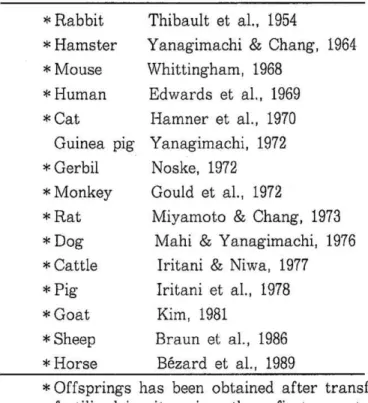
(7) Sex control of offspring It was a dream for long years to control the sex of offspring, and tremendous number of works have been accumulated to separate X- and Y-bearing spermatozoa by electrophoresis and centrifugation. However, majority of the works were unsatisfactory for separation of spermatozoa. ( ). Separation of X- and Y-bearing spermatozoa by flow cytometry Dr. Johnson' first reported a separation method of X- and Y-bearing spermatozoa by judging a small difference in the amounts of DNA between X-and Y sperm ( 3 % difference in boar sperm, 3.9% in bull sperm, 8 % in chinchilla sperm, no difference in human sperm). There is a big difference in the DNA contents in chinchilla sperm, so that the separation efficiency is quite high. In contrast, there is no difference in the DNA contents in human spermatozoa, and could not separate in human. At the Animal Biotechnology Cambridge, they applied IVF in beef cattle by insemination with X-sperm separated by this method, and produced female embryos to be transferred at their farm in Scotland. ( ii ) . Sexing of embryos Traditionally, the sex of the embryo has been predicted by the histological detection of sex chromosome or sex chromatin for embryonic cells. And the male specific antibody has been also applied to embryo sexing by indirect immunofluorescence in situ hybridization, Southern blotting or by preventing blastocoel formation. However, efficiency of sex prediction by both histological methods and antibody assay is considerably low, and effective method has not been established. But Y-chromosome-specific DNA has been available as a probe for sex determination of embryos (Higashi et al., 1991)16),and has been used for sexing of bovine embryo. One of the routine methods is as follows (Utsumi et al., 1992)17'. Bovine blastocysts were recovered from a superovulated donor cow. The trophoblastic cells of an embryo ( 5 -10 cells) are biopsied with a metal microblade, and DNA is extracted from the biopsied cells. Then extracted DNA, primer (BOV97M etc.), dNTP, PCR buffer and Taq polymerase are mixed, and amplify the DNA by PCR. The amplified product of the DNA sample is separated by electro-phoresis on agarose gel with a marker, and stained to be visualized under ultraviolet light. If the Y-chromosome specific (140 base pair) products except females samples were visible, the cell samples are considered to be derived from a male. As the results, high efficiency and accuracy for embryo sexing was attained from biopsied embryos, and this technique has already applied on a commercial base in some cases of ET in dairy cattle. In vitro fertilization in mammals After the discovery of the phenomenon, "capacitation of spermatozoa" by Austin1® and Chang1® in 1951, IVF was successful in various mammals : rabbit") , hamster') , mouse"' mouse2®, human23', cat24?, guinea pig"' , mongolian gerbil"' gerbil2®, monkey2) , rat"), dog23' cattle"' dog2®, , pig3j , goat32? goat3®, sheep®) and horse") as shown in Table 3 ..
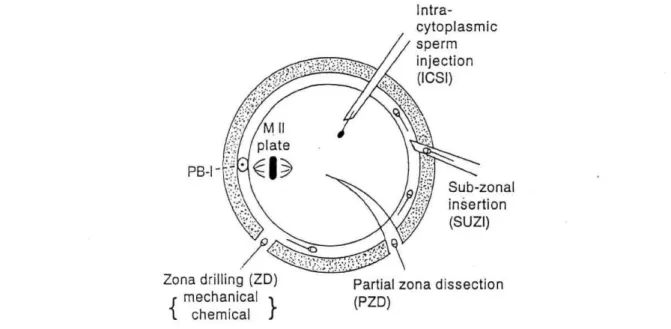
(8) Main. purpose. of IVF. in cattle. was. also. to investigate. the. sperm. capacitation. and. early. process of fertilization in this species as in the cases of other mammalian species. In case of human IVF, the technique was soon applied to the test tube baby. However, the technique of cattle IVF was applied to the practical cattle production almost 10 years later of the first report on the successful IVF as shown in Table 4.30).30),36) Table. 1977= _ =Sperm cow for. capacitation. 4. Chronological. (incubation. of cattle. overview. of sperm in the isolated. IVF. uteri or oviduct. of estrous. 3 hrs). Oocytes (follicular oocytes * Physiologically important. were matured in culture for 24 hrs) work, but not practically applied (Iritani. & Niwa, Kyoto. University)29) 1982= = =First IVF calf was born using in vitro matured. oocytes. (Brackett,. Pennsylvania)") 1984 = = = IVF calf was born using in vitro matured. (Hanada. et al., National. of Animal. oocytes. Univ. Institute. Industry)"). Since 1985 IVF was applied. to the practical. IVF by assisted. cattle. micromanipulation. production. in Ireland,. UK and Japan.. of gametes"). As shown in Text-Fig. 3 , various methods of microfertilization have been investigated, and finally intracytoplasmic sperm injection ( ICSI ) has been recommended to be the most efficient technique, especially for the clinical use. Originally the purpose of IVF by microinjection of spermatozoa into oocytes was to investigate the interaction of gametes at the site of sperm penetration from the physiological view point. This technique was then applied to the practical production of offspring in various species as shown in Table 5 ..
(9) Zona drilling (ZD) mechanical tt chemical I Text-Figure. Partial zona dissection (PZD). 3 . Microfertilization by various methods. PB ; Polar body, MII, second metaphase. Table. 5. Chronological. (from. overview on the IVF by sperm. Iritani. et al., 1991). microinjection. Sperm was microinjected into cytoplasm and decondensation of sperm head was found in sea urchin (Hiramoto)38' 1966= _ _ Pronuclear formation was found by frog sperm injection (Graham)39 1976-77 = Hamster or human sperm was injected into hamster oocytes and pronuclear formation was observed (Uehara and Yanagimachi)4o, 41) 1986 = = = First mammal (rabbit) was born by sperm injection (Hosoi and Iritani)42, 1987=== Normal monospermic pronuclear embryos were obtained by sperm injection in the pig (Iritani et al.)43) 1991= = = Calves were born by injection of killed sperm into cytoplasm (Goto et a1.)44' 1993=== Productibn of female beef embryos by injection of X-bearing spermatozoon separated by flow cytometry (Iritani, Cran and Polge; unpublished data) = =Clinical application of microinsemination for severe oligospermic patients Since 1990 1962===. Since. (more than 10,000 babies were born; no exact figure is available) = = Experiments have been in progress on the embryo production in wild and 1994 zoo animals by injection of dead sperm (Iritani et al.)45,. Production. of transgenic. animals. Since the first report of producing super mouse into which rat or human growth hormone gene was introduced by Palmiter et al. (1982)46), many experiments have been accumulated to produce large size animals and to improve the meat quality in sheep and pig. However, desirable farm animals have not been produced by introduction of growth related genes in pig and sheep except for the production of less fat pigs. And in many cases of sheep and pigs expressed growth related genes showed some troubles of their health. On the other hand, there could be found several reports on the production of transgenic sheep (Wright et al., 1991)") and goats (Ebert et al., 1993)A8', those animals expressed human protein in the milk. Wright et al. reported that a transgenic sheep expressed halAT in the milk at approximately 35 g/L throughout the lactation period. In addition, all of the transgenic.
(10) 10. Memoirs. of the Research. Institute. of B.O.S.T.. Kinki. University. No.1 (1998). sheep and goats were quite healthy. Wall (1996)") recently reviewed on the transgenic farm animals. We have 6,000 scientific papers on gene transfer (mostly in mice) , 289 papers (livestock) and 69 review articles. Wall summarized examples of gene transfer from several laboratories. He pointed out that the problems of TG farm animals are : (i) high production costs; single founder pig ( $ 25,000), single functional founder calf ( $ 500,000) , (ii) integration efficiency is 1 % in farm animals and (iii) expressed in about half transgenic, expressed at unintended tissues and expressed at unintended timing. It is necessary to improve the efficiency of integration rate especially in farm animals and in addition, we have to establish a good embryonic stem cell lines for future gene transfer. Future. direction. of the work in the field of animal. biotechnology. Strategy for the improvement and further development of techniques in the field of animal biotechnology are considered as follows : 1 ) . Freeze-drying preservation of semen in the AI section, 2 ). Deep freezing of unfertilized oocytes in various mammals and development of more efficient technique of frozen storage of pig embryos. 3 ). With regard to the production of clone animals derived from embryonic blastomere, the most important problem to be solved is the prevention of occurrence of large size animals. High proportions of abortion in the early and later stages (100-150 days) of gestation of fetuses derived from the nuclear transplantation of somatic cells should be greatly reduced for the practical application of this technique. 4) . It is important to pay attention to utilize the somatic cell nuclear transplantation technique to improve the efficiency of producing transgenic animals especially in large size domestic species in which the ES cell line has not been established. Acknowledgements Some portions of related research works appeared in this review article were financially supported by the grant from the Ministry of Education. The author would like to express gratitude to Sumitomo Chemical Co., Ltd., Environmental Health Science Laboratory for the support given to the related research works of this review article. References 1. 2. 3.. 4. 5.. 6. 7.. 8.. 9.. Polge, C., A. U. Smith and A. S. Parks, 1949. Revival of spermatozoa after vitrification and dehydration at low temperatures. Nature, 164 : 666. Iritani, A., 1980. Problems of freezing spermatozoa of different species. Proc. 9 `h Int. Cong. Anim. Reprod. Al (Madrid), 1 : 115-132. Loskutoff, N. M. and K. J. Betteridge, 1992. Embryo technology in pets and endangered species. In Embryonic Development and Manipulation in Animal Production. (Lauria and Gandolfi.), Portland Press, London, pp.235-248. Thibier, M., 1997. The International Embryo Transfer Society World Statistics of Embryo Transfers : The 1996 Report. JETS Embryo Transfer Newsletter, 15 : No. 4 , 10-13. Hasler, J. F., W. B. Henderson, P. J. Hurtgen, Z. Q. Jin, A. D. McCauley, S. A. Mower, B. Neely, L. S. Shuey, J. E. Stokes and S. A. Trimmer, 1995. Production, freezing and transfer of bovine IVF embryos and subsequent calving results. Theriogenology, 43 : 141-152. Willadsen, S. M., 1979. A method for culture of micromanipulated sheep embryos and its use to produce monozygotic twins. Nature (London), 277 : 298. Utsumi, K., M. Miyake, Y. Hosoi, K. Matsumoto and A. Iritani, 1988. Effective production of monozygotic identical twins from 3 split embryos. Memoirs Coll. Agri., Kyoto Univ., 131 : 1-6. Smith, L. C. and I. Wilmut, 1989. Influence of nuclear and cytoplasmic activity on the develop-ment in vivo of sheep embryos after nuclear transplantation. Biol. Reprod., 40 : 1027-1035. Gall, L., T. Dedieu, P. Chesne, Y. Heyman and J. P. Renard, 1995. Bovine nuclear transfer : Biochemical characterization of the recipient oocyte cytoplasm. Theriogenology, 43 : 215 (Abstr)..
(11) 11. Wilmut, I., A. I. Schnieke, J. McWhir, A. J. Kind, K. H. S. Campbell, 1997. Viable offspring derived from fetal and adult mammalian cells. Nature, 385 : 810-813. Gurdon, J. B., R. A. Laskey, 0. R. Reeves, 1975. J. Embryol. Exp., 34 : 93-112. Robl, J.M., R. Prather, F. Barnes, W. Eyestone, D. Northey, B. Gilligan and N. L. First, 1987. Nuclear transplantation in bovine embryos. J. Animal Sci., 67 : 642-647. Robl, J. M. and S. L. Stice, 1989. Prospects for the commercial cloning of animals by nuclear transplantation. Theriogenology, 31 : 75-84. Bondioli, K. R., M. E. Westhusin and C. R. Looney, 1990. Production of identical bovine offspring by nuclear transfer. Theriogenology, 33 : 165-174. Johnson, L. A., J. P. Flook, M. V. Look and D. Pinkel, 1987. Flow sorting of X- and Y-chromosome bearing spermatozoa into two populations. Gamete Res. 16 : 1 - 9 . Higashi, Y., M. Iwaya and S. Ogawa, 1991. Newly founded bovine male-specific DNA fragment amplified by polymerase chain reaction. Jap. J. Anim. Reprod., 37 : 115-120. Utsumi, K., K. Kawamoto, J. H. Kim and A. Iritani, 1992. Sex determination of bovine embryos by the polymerase chain reaction using Y-specific primers. J. Reprod. Development, 38 : 35-43. Austin, C. R., 1951. Observations on the penetration of the sperm into the mammalian egg. Aust. J. Sci. Res., Ser. B, 4 , : 581-596. Chang, M. C., 1951. Fertilizing capacity of spermatozoa deposited into the fallopian tubes. Nature (London), 168 : 697. Thibault, C., L. Dauzier and S. Winterberger, 1954. Etude cytologique de la fecondation in vitro de l'euf de la Lapine. C. R. Soc. Biol. (Paris), 148 : 789-790. Yanagimachi R. and M. C. Chang, 1964. In vitro fertilization of golden hamster ova. J. Exp. Zool., 156 : 361-376. Whittingham, D. G., 1968. Fertilization of mouse eggs in vitro. Nature, 220 : 592-593. Edwards R. G., B. D. Bavister and P. C. Steptoe, 1969. Early stages of fertilization in vitro of human oocytes matured in vitro. Nature, 221 : 632-635. Hamner, C. E., L. L. Jennings and N. J. Sojka, 1970. Cat (Felis catus, L.) spermatozoa require capacitation. J. Reprod, Fert., 23 : 477-480. Yanagimachi, R., 1972. Fertilization of guinea pig eggs in vitro. Anat. Rec., 174 : 9 -20. Noske, I. G., 1972. In vitro fertilization of mongolian gerbil egg. Experientia, 28 : 1348-1350. Gould, K. G., E. M. Cline and W. L. Williams, 1973. Observation on the induction of ovulation and fertilization in vitro in the squirrel monkey (saimiri scurens). Fert. Steril., 24 : 260-268. Miyamoto, H. and M. C. Chang, 1973. Fertilization of rat eggs in vitro. Biol. Reprod., 9 : 38-393. Mahi, C. A. and R. Yanagimachi, 1976. Maturation and sperm penetration of canine ovarian oocytes in vitro. J. Exp. Zool., 196 : 189-195. Iritani, A. and K. Niwa, 1977. Capacitation of bull spermatozoa and fertilization in vitro of cattle follicular oocytes matured in culture. J. Reprod. Fert., 50 : 119-121. Iritani, A., K. Niwa and H. Imai, 1978. Sperm penetration of pig follicular oocytes matured in culture. J. Reprod. Fert., 54 : 379-383. Kim, C. I., 1981. In vitro fertilization of goat oocytes with capacitated spermatozoa. PhD thesis, Kyoto Univ. Kyoto. Braun, J., A. Iritani and W. Leidl, 1986. Fertilization in vitro of ovine follicular oocytes with ejaculated spermatozoa capacitated in a chemically defined medium. Zuchthyg., 21 : 59-63. Beard, J., M. Magistrini, G. Duchamp and E. Palmer, 1989. Chronology of equine fertilisation and embryonic development in viva and in vitro. Equine Vet. J. (Suppl), 8 : 105-110. Brackett, B. G., D. Bousquet, M. L. Boice, W. J. Donawick, J. F. Evans and M. A. Dressel, 1982. Normal development following in vitro fertilization in the cow. Biol. Reprod., 27 : 147-158. Hanada, A., Y. Shioya and T. Suzuki, 1986. Birth of calves from non-surgical transfer of blastocysts originated from in vitro fertilized oocytes matured in vitro. 78th Annu. Meet. Jpn. Soc. Zootech. Sci., 1 : 18..
(12) 12. Memoirs. of the Research. Institute. of I3.O.S.T.. Kinki. University. No 1 (1998). 37. Iritani, A., 1991. Micromanipulation of gametes for in vitro assisted fertilization. Mol. Reprod. Dev., 28 : 199-207. 38. Hiramoto, Y., 1962. Microinjection of the live spermatozoa into sea urchin eggs. Experimental Cell Res., 27 : 416-426. 39. Graham, C. F., 1966. The regulation of DNA synthesis and mitosis in multinucleate frog eggs. J. Cell Sci., 1 : 363-372. 40. Uehara, T. and R. Yanagimachi, 1976. Microsurgical injection of spermatozoa into hamster eggs with subsequent transformation of sperm nuclei into male pronuclei. Biol. Reprod., 15 : 467-470. 41. Uehara, T. and R. Yanagimachi, 1977. Behavior of nuclei of testicular, caput and cauda epididymal spermatozoa injected into hamster eggs. Biol. Reprod., 16 : 315-321. 42. Hosoi, Y., M. Miyake, K. Utsumi and A. Iritani, 1988. Development of rabbit oocytes after microinjection of spermatozoa. Abstracts of the 11`h International Congress on Animal Repro-duction and Al, Dublin, vol. 3 , no. 331. 43. Iritani, A., Y. Hosoi and Y. Takahashi, 1991. In vitro fertilization by micromanipulation of gametes. In Baccetti B (ed.) Comparative Spermatology 20 Years After, pp. 853-859. Serono Symposia Publications, vol. 75. Raven Press. 44. Goto, K., A. Kinoshita, Y. Takuma and K. Ogawa, 1991. Birth of calves after the transfer of oocytes fertilized by sperm injection. Theriogenology, 35 : 205(Abstr). 45. Iritani, A., Y. Hosoi and C. Polge, 1995. In vitro fertilization by assisted microinjection of sperm head or dead sperm in domestic and non-domestic animals. Proc. 30`h Int. Sympo. Soc. Italiana per ie progresso della Zootecnica, Milan, pp. 197-202. 46. Palmiter, R. D., R. L. Brinster, R. E. Hammer and M. E. Trumbauer, 1982. Dramatic growth of mice that develop from eggs microinjected with metallothionein-growth hormone fusion genes. Nature, 300 : 611-615. 47. Wright, G., A. Carver, D. Cotton, D. Reeves, A. Scott, P. Simons, I. Wilmut, I. Garner and A. Colman, 1991. High level expression of active human alpha- 1 -antitrypsin in the milk of transgenic sheep. Bio/Technology, 9 : 830-834. 48. Ebert, K. M. and J. E. S. Schindler, 1993. Transgenic farm animals : Progress report. Therioge-nology, 39 : 121-135. 49. Wall, R. J., 1996.Transgenic livestock : Progress and reports for the future. Theriogenology, 45 : 57-68..
(13)
図
関連したドキュメント
The edges terminating in a correspond to the generators, i.e., the south-west cor- ners of the respective Ferrers diagram, whereas the edges originating in a correspond to the
H ernández , Positive and free boundary solutions to singular nonlinear elliptic problems with absorption; An overview and open problems, in: Proceedings of the Variational
An easy-to-use procedure is presented for improving the ε-constraint method for computing the efficient frontier of the portfolio selection problem endowed with additional cardinality
Keywords: Convex order ; Fréchet distribution ; Median ; Mittag-Leffler distribution ; Mittag- Leffler function ; Stable distribution ; Stochastic order.. AMS MSC 2010: Primary 60E05
W ang , Global bifurcation and exact multiplicity of positive solu- tions for a positone problem with cubic nonlinearity and their applications Trans.. H uang , Classification
It is suggested by our method that most of the quadratic algebras for all St¨ ackel equivalence classes of 3D second order quantum superintegrable systems on conformally flat
In Section 3, we show that the clique- width is unbounded in any superfactorial class of graphs, and in Section 4, we prove that the clique-width is bounded in any hereditary
Inside this class, we identify a new subclass of Liouvillian integrable systems, under suitable conditions such Liouvillian integrable systems can have at most one limit cycle, and
