九州大学学術情報リポジトリ
Kyushu University Institutional Repository
Pathways to Indigenous Disempowerment: The Russian State, Arctic Regions and Corporate Strategies
リュボフ, スリヤンジガ
https://doi.org/10.15017/2534512
出版情報:九州大学, 2019, 博士(学術), 課程博士 バージョン:
権利関係:
A dissertation submitted in partial fulfillment of the requirements for the degree of Doctor of Philosophy in Integrated Sciences for Global Society
at Kyushu University, Japan
Pathways to Indigenous Disempowerment:
The Russian State, Arctic Regions and Corporate Strategies
Liubov Suliandziga
3GS16028W
Abstract
By the end of the second decade of the 21st century, one of the most hidden groups on the planet - Russian indigenous communities - have found themselves outcast in their own lands.
Inhabiting the country's richest area, the Arctic, they got trapped between the unmatched severity of extractive industries’ activities and destructive government policy. Current research invites readers to examine the complexity of pathways to Russia’s indigenous disempowerment and explore a whole variety of instruments that the federal state, regional authorities and industrial companies do not hesitate to use in order to weaken already modest indigenous peoples’ rights protection.
Referencing the previous works and questionnaires results, the study offers insight into the paradoxical nature of Russia’s response to indigenous problematics, that is characterized by powerful lobby of extractive industry, full and direct engagement of state authorities, and aggressive policies directed at purposeful destruction of indigenous peoples.
The study begins with the historical trajectory of Russian indigenous disempowerment of Imperial and Soviet times, followed by the brief wave of democratization in the 1990’s. The analysis proceeds with case studies selected to capture diverse dynamics and a range of broader patterns of indigenous disempowerment in the Russia’s Arctic. Research findings challenge readers to consider that instead of rupturing the practice of extremely successful indigenous colonization, the Russian state is far more incline to remove the “last obstacle” standing on the way of its “Arctic dream.” As a result, a comprehensive policy designed to address indigenous accommodation is neither an aspiration nor a political ideal for the Russian federal and regional governments.
Table of Contents
Abstract
List of Graphs & Tables ... 8
List of Abbreviations ... 9
Definition & Use of Terms ... 10
Note on Russian Language Terms ... 12
Study Area ... 14
Introduction ... 15
Rationale & Problem Statement ... 15
Research Question(s) & Hypothesis ... 18
Research Goals & Frameworks ... 19
Research Methodology & Limitations ... 21
Outline of the Chapters ... 23
Significance of the Study ... 25
CHAPTER I LITERATURE REVIEW: Major Debates & Previous Findings ... 27
1.1.Postcolonial studies ... 27
1.2. Indigenous peoples’ rights ... 35
CHAPTER II CONCEPTUAL FRAMEWORK: Indigenous Empowerment within Western Liberal Framework ... 38
2.1. Who are Indigenous Peoples? ... 38
2.1.1. Indigenous Peoples vs Ethnic Minorities ... 39
2.2. Historical Development: From discrimination to empowerment? ... 40
2.3. Rights Granted ... 42
2.3.1. What do Indigenous Peoples demand? ... 42
2.3.2. Indigenous Land Rights: What is at risk? ... 43
2.3.3. Threat posed by Extractive industry ... 44
2.4. The International Labor Organization & the United Nations ... 46
2.5. Business & Indigenous Rights ... 49
2.5.1. CSR & Benefit-Sharing Agreements ... 52
2.5.2. What is Benefit-Sharing? ... 54
2.5.3. Types of Benefits & Participants ... 55
CHAPTER III INDIGENOUS POLICY IN RUSSIA: A look back ... 57
3.1. Soviet Union & Russia: From discrimination to? ... 57
3.1.1. Russian Empire & Early Soviet Union: Indirect Management and Cooperation ... 57
3.1.2. Domination & Assimilation ... 62
3.1.3. Rupture? ... 67
3.2. Who are Russian Indigenous Peoples? ... 71
3.2.1. Russian legislation on Indigenous Peoples ... 74
3.2.2. Federal Laws on Indigenous Peoples ... 77
3.2.3. Sectoral Laws ... 81
3.2.4. Law on Ecological Expertise ... 82
CHAPTER IV METHODS: Case Studies ... 85
4.1. Putting Arctic in the context ... 85
4.2. Sakha (Yakutia) & Komi Republics ... 88
4.2.1. Indigenous peoples ... 90
4.2.2. Indigenous legislation ... 93
4.2.3. Created TTNU & Obshchinas ... 96
4.2.4. Type of industry ... 96
4.2.5. Companies involved ... 98
4.2.6. Agreements between indigenous peoples & companies: Sakha (Yakutia) ... 101
4.2.7. Agreements between indigenous peoples & companies: Komi Republic ... 108
4.3. Khanty-Mansi & Chukotka Autonomous Okrugs ... 111
4.3.1. Indigenous peoples ... 113
4.3.2. Regional legislation ... 115
4.3.3. Created TTNU & Obschinas ... 118
4.3.4. Type of industry ... 119
4.3.5. Companies Involved ... 119
4.3.6. Agreements between indigenous peoples & companies: KHMAO ... 120
4.3.6.1. Numto case: “Sacred Oil” ... 123
4.3.7. Agreements between indigenous peoples & companies: Chukotka AO ... 127
4.4. Murmansk & Sakhalin Oblasts ... 131
4.4.1. Indigenous Peoples ... 132
4.4.2. Regional legislation ... 136
4.4.3. Created TTNU & Obschinas ... 140
4.4.4. Type of industry ... 141
4.4.5. Companies Involved ... 143
4.4.6. Agreements between Indigenous peoples & Companies: Murmansk Oblast ... 144
4.4.7. Agreements between Indigenous peoples & Companies: Sakhalin Oblast ... 147
CHAPTER V FINDINGS & DATA ANALYSIS: Trends & Countertrends ... 156
5.1. Republics & Autonomous Okrugs: Bigger population, Better legislation? ... 157
5.1.1. Levels of Indigenous Representation ... 159
5.2. Regions Without Autonomous Status ... 163
5.3. Legal Disempowerment: TTNU & Obshchinas ... 164
5.3.1. Law on TTNU: Amendments & Contradictions ... 165
5.3.2. Law on Obshchinas: Amendments & Contradictions ... 170
5.3.3. Sectoral Laws: Amendments & Contradictions ... 171
5.3.4. Indigenous Voices on TTNU, Obshchinas & Legislative Amendments ... 173
5.4. Federal Inaction ... 175
5.5. Economic Disempowerment: Agreements & Extractive Pluralities ... 177
5.5.1. Socioeconomic Agreements with regional authorities: State Paternalism Model ... 179
5.5.2. Benefit-sharing Agreements ... 183
5.5.2.1. Preferred model or Partnership ... 183
5.5.2.2. Corporate Paternalism Model: Limited & Moderate CSR ... 185
5.5.3. Indigenous Voices on Relationships with Industrial Companies ... 187
5.6. Indirect benefits ... 189
5.7. Major Shortcomings of Agreements between Indigenous population & Companies ... 194
5.8. Intricacies of Case Studies: ... 199
5.8.1. Status & Number of Indigenous population: Tragedy of Disappearing Nations ... 199
5.8.2. Significance of the region in terms of economy ... 201
5.8.3. History ... 201
5.8.4. Border-Transcending nature ... 202
5.8.5. Local Leader ... 205
5.8.6. Type of companies ... 205
5.8.7. Civil organizations involvement ... 209
5.8.8. Reaction & Protests ... 213
CHAPTER VI DISCUSSIONS & IMPLICATIONS OF RESULTS: Reconciliation (Im)possible? ... 224
6.1. History repeats itself: New Context, Old Challenges ... 225
6.1.1. Endless Empire ... 225
6.1.2. Devalued Identity ... 226
6.1.3. De-politicization of Russia’s indigenous issues ... 227
6.2. Legal Stagnation: Rights That Do Not Exist ... 228
6.2.1. Conflicting Terminology & Deliberate Misrecognition ... 231
6.2.2. Misleading Impression & Unfulfilled Promise of Indigenous Legislation ... 232
6.3. The Russian State in the Time of Putin ... 237
6.3.1. Rise of Business & OILigarchs ... 238
6.3.2. Russia’s Obsession with the Arctic: Small People & Big Oil ... 241
6.3.3. Criminalization ... 246
6.4. Companies, CSR & Indigenous peoples: Development at the cost of rights ... 248
6.4.1. Change & Continuity ... 248
6.4.2. Rightsholders, stakeholders or charity recipients? ... 253
6.5. International instruments & Why they fall short ... 256
6.6. Indigenous Organizations & Indigenous mobilization ... 258
CONCLUSION Textbook Case of Successful Colonization ... 262
Contribution & Further research ... 268
Bibliography ... 272
Annexes ... 348
List of Graphs & Tables
TABLE 1 COUNTRIES RATIFIED THE ILO CONVENTION 169
FIGURE 1 ALROSA, GAZPROM AND TRANSNEFT AREAS OF OPERATION IN
SAKHA REPUBLIC
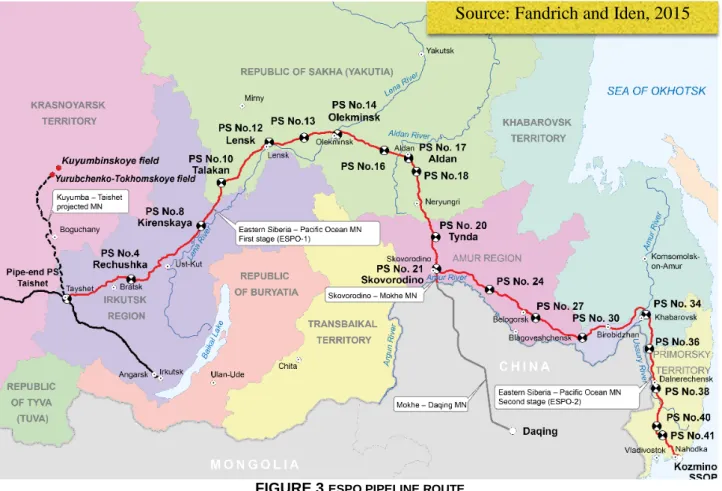
FIGURE 2 ALROSA STRUCTURE FIGURE 3 ESPO PIPELINE ROUTE
FIGURE 4 POWER OF POWER OF SIBERIA PROJECT
TABLE 2 STRENCHTHS AND WEAKNESSES OF COMMUNITY RELATIONS IN ALROSA
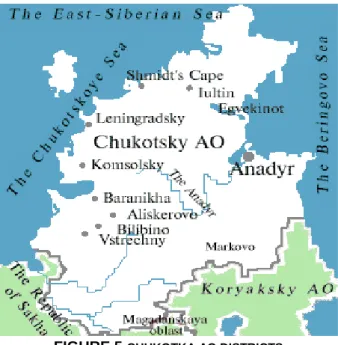
FIGURE 5 CHUKOTKA AO DISTRICTS
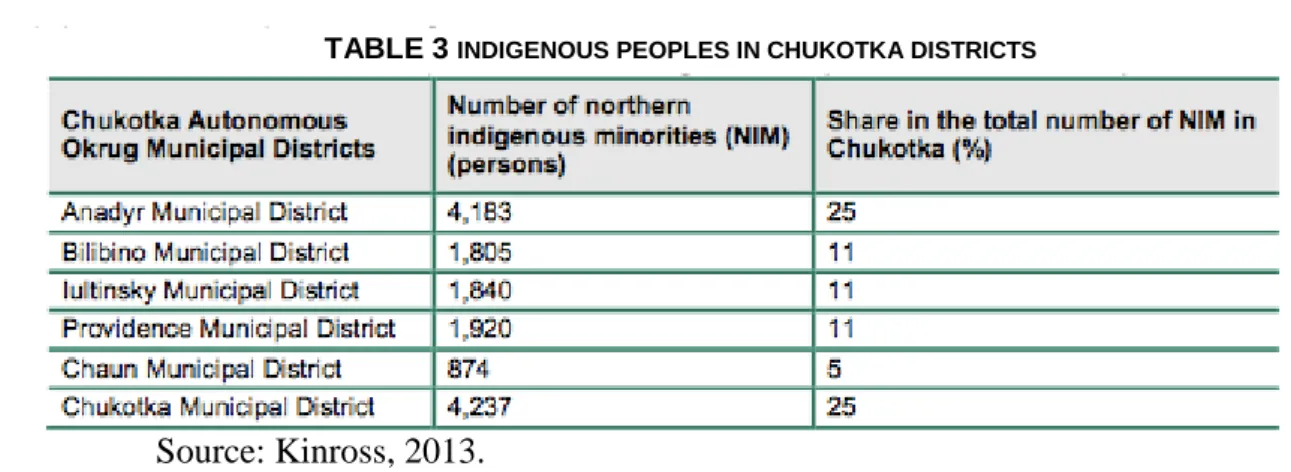
TABLE 3 INDIGENOUS PEOPLES IN CHUKOTKA DISTRICTS FIGURE 6 INDIGENOUS PEOPLES IN KHMAO
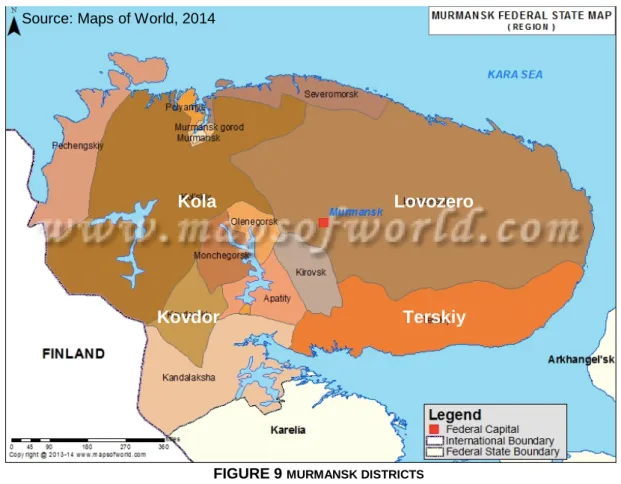
FIGURE 7 GOLD PRODUCTION IN CHUKOTKA AO FIGURE 8 KUPOL AND DVOINOYE MINING SITES FIGURE 9 MURMANSK DISTRICTS
FIGURE 10 SAKHALIN ISLAND DISTRICTS AND PIPELINES ROUTES FIGURE 11 RIVER WATERS IN NORILSK TURNED BRIGHT RED FIGURE 12 SAKHALIN-I AND SAKHALIN-II OPERATION SITES FIGURE 13 SAKHALIN-II SIMDP STRUCTURE
TABLE 4 RUSSIAN REGIONS, GDP P.C TABLE 5 TYPES OF BENEFITS
FIGURE 14 REVENUES FROM SAKHALIN-II PROJECT
TABLE 6 ALLOCATION OF THE MINERAL TAX BETWEEN FEDERAL AND REGIONAL BUDGETS
TABLE 7 INDIGENOUS GROUPS AT RISK FIGURE 15 BERING STRAIT
TABLE 8 DIFFERENT MODELS OF COMPANIES’ INTERACTION WITH INDIGENOUS PEOPLES
FIGURE 16 INDIGENOUS PEOPLES, STATE AND BUSINESS RELATIONSHIPS’
CIRCLE
List of Abbreviations
CBD - Convention on Biological Diversity CHAO - Chukotka Autonomous Okrug CSR - Corporate Social Responsibility
EBRD - European Bank for Reconstruction and Development EIA - Environmental Impact Assessment
EPs - Equator Principles
ESPO - Eastern Siberia-Pacific Ocean pipeline FPIC - Free, Prior and Informed Consent GRI - Global Reporting Initiative
IFC - International Finance Corporation
KHMAO - Khanty-Mansi Autonomous Okrug – Yugra PSAs - Production-sharing agreements
RAIPON - Russian Association of Indigenous Peoples of the North RSFSR - Russian Soviet Federative Socialist Republic
SAPI - Sakha Diamond Province Investment company SIMDP - Sakhalin Indigenous Minorities Development Plan SPC – Save Pechora Committee
TTNU - Territories of Traditional Nature Use
UNDRIP - United Nations Declaration on the Rights of Indigenous Peoples USSR - Union of Soviet Socialist Republics
Definition & Use of Terms
The definition “indigenous” is highly contested with different terms used in various countries.
This paper uses the expressions “indigenous peoples,” “indigenous population,” “aboriginal population,” “small-numbered indigenous peoples, “indigenous communities,” “tribal communities” interchangeably. These terms refer to the indigenous peoples of the Russian Federation recognized by international institutions and, are inclusive of small-numbered indigenous peoples as defined in the Russian constitution.
Since the paper aims at examination of the process of disempowerment of Russia’s indigenous peoples, the definition and conceptual borders of the term, as well as its opposite –that of empowerment, should be clarified. In relation to indigenous peoples’ movements the term empowerment usually refers to legal empowerment of indigenous peoples, i.e., indigenous peoples’ protection through the implementation and guarantee of their inherent rights (self- determination, self-government, land rights, etc.) that are conceived as the pillars of indigenous empowerment. Craig (2002) defines empowerment as “the creation of sustainable structures, processes, and mechanism, over which local communities have an increased degree of control, and from which they have a measurable impact on public and social policies affecting these communities” (p. 3). Legal empowerment is an overreaching goal of all indigenous movements and is also one of the key concepts in the field of human rights. Thus, closely related to legal empowerment, the human rights-based approach is defined as “accountability of the duty- bearers (primarily the state and its representatives) and a greater role to participating agents of the rights-holders (such as representatives of local communities)” (Broberg and Sano, 2018, p.670). The term disempowerment, therefore, refers to the prevention from having rights, authority, or influence in policies affecting indigenous communities. To adapt the UN Secretary General’ (2009) and Craig’ (2002) wording, disempowerment is the process aimed at creation
of structures, processes, and mechanisms through which indigenous peoples are left unprotected and unable to use the law to advance their rights and interests.
The terminology of Arctic is highly ambiguous. In Russia, various terms are used to describe the Arctic region, including Russian North, Far North, Territories equivalent to those of the Far North, or the Arctic. The Far North is defined as an area from the Urals to Chukotka. The status is attributed according to the climatic criteria (permafrost), and other characteristics such as remoteness, distance, and accessibility. “Arctic” entered the Russian vocabulary in the 2000s when the state recognized Arctic as a key priority area of development. Now it tends to replace the term Far North. At the political and legal levels, scholars and politicians often turn to the
“Arctic” notion, settled in the international agenda (Zaikov, Tamitskiy and Zadorin, 2017).
Territories equivalent to those of the Far North, although being geographically situated in sub- Arctic regions, rather than in the Arctic, are, nevertheless, characterized by the same climatic conditions and remoteness, as the regions located in the North. In compensation for the difficult working conditions, people who work in these territories receive higher wages, referred to as the “Northern Bonus.” Additional preferences include extra vacation, a lower retirement age, housing benefits, etc. Such compensation was initiated under the Soviet Union and has been maintained by the Russian Federation.
Geographical definition of Russia’s Arctic and its exact delineation is also highly contested.
While Russia’s Arctic Western and Eastern boundaries are clearly defined (border with Finland and Norway on one side and the Bering Sea on the other), Southern border with country’s multiple domestic territories remains imprecise. According to the 2008 Arctic Policy of the Russian Federation until 2020, the Arctic zone of the Russian Federation means a part of the Arctic which includes, in full or in part, the territories of the Republic of Sakha (Yakutia), Murmansk and Arkhangelsk provinces, Krasnoyarsk territory, Nenets, Yamal-Nenets and Chukotka autonomous districts. The state program, “Socio-economic development of the
Russian Arctic zone until 2020” also includes part of Komi Republic. For the purposes of the paper, Khanty-Mansi Autonomous Okrug located in West Siberia and Russia's largest island Sakhalin in the Far East of the country are included in case studies albeit geographically they belong to the sub-Arctic.
Note on Russian Language Terms
The federal subjects of Russia (referred to as “subjects of the Russian Federation,” “federal subjects” or “regions”) are the constituent entities all of which are equal subjects of the Russian Federation.In 1993 the Russian Federation comprised 89 federal subjects. By 2008, as a result of several mergers, the number of federal subjects had decreased to 83.1 According to the Russian Constitution, federal subjects enjoy wide-ranging powers and consist of:
Territorially-defined entities:
• Oblasts: Oblasts are provinces with locally elected governor and legislature. They serve as a first-level of administrative division. Oblasts are divided into districts, cities of oblast significance and autonomous okrugs, which are legally federal subjects equal to an oblast but are administratively subservient to one.
• Krais are legally identical to oblasts and the difference between a political entity with the name "oblast" or krai is purely traditional.
• Cities of federal importance (Moscow and Saint Petersburg) Ethnically-defined entities:
• Republics are nominally autonomous and usually economically strong entities with their own constitution, elected head of republic, and parliament. Republics are also allowed to establish
1 In 2014 Sevastopol and Crimea Republic became federal subjects of Russia, although the two are not recognized by most countries.
their own official language alongside Russian. Initially, republics were created to accommodate specific ethnic minorities.
• Autonomous oblasts and okrugs: These are originally autonomous entities with traditionally population mix of various ethnic groups, created for ethnic minorities. In the 1990s their status was elevated to that of federal subjects.
Obshchina (or obshchinas for plural) is a form of kinship or territory-based community organization of indigenous peoples, usually translated as “community” or “commune” that is modeled after the pre-Soviet form of socio-territorial organizations of traditional economies of most indigenous peoples of the North. Historically, organization of obshchinas was based on the principle of kinship as the key norm for managing property and land (Stamatopoulou, 2017).
Study Area
“In the past, indigenous peoples were living peacefully in their homelands, in harmony with nature. Then came ‘civilization’... They conquered the land, we lost our homes, our sacred sites, our agricultural areas, our hunting fields, our fishing waters. They called it development, we called it destruction. They said it would raise living standards, we said it brings humiliation. They earned money, we got poor. They founded big companies, we became cheap labor. They ruined the biodiversity; we lost our sources of traditional medicines. They spoke of equality, we saw discrimination. They said infrastructure, we saw invasion. They thought civilization; we lost our cultures, our language, and our religion. They subjected us to their laws; we saw them claiming our land. They brought illness, weapons, drugs and alcohol, but not equal education and health care. It has been going on for more than 500 years. And it still goes on” (Ooft, 1995, p.15).
Introduction
Rationale & Problem Statement
In 2011, the Russian mining company “Yuzhnaya” started its activities near Kazas settlement in Kemerovo region in Southwest Siberia – one of the major coal districts of the Russian Federation. Kazas, the territory of traditional residence of Russia’s indigenous peoples - the Shors, has been subject to decades of environmental destruction and fatal effects of the coal industry (IWGIA et al., 2017). At the end of 2012, “Yuzhnaya” started buying households in Kazas to expand its industrial activities. By 2013, only five families refused to sell their houses and leave the ancestral lands. On 2 November 2013, at the meeting with the villagers, the CEO of the company threatened to set on fire all the remaining houses if the families refuse to sell them to the company. The first house was burnt a week later. At the end of December, the second one was set on fire. In January 2014 two houses burnt down. The last one was struck in March 2014 (Sulyandziga, 2016).
In 2012, Sergei Nikiforov, the leader of the Amur Evenki people, was sentenced to four years in prison for allegedly extorting money from the “Petropavlovsk” gold mining company after he led a protest movement against company’s attempts to take over native reindeer pastures and hunting grounds (IWGIA et al., 2017).
In 2013, 1 million tons of oil was discovered on the bottom of Lake Imlor in Khanty-Mansi Autonomous Okrug, Russia’s leading oil-producing region. The same year, Surgutneftegaz company obtained a license to explore oil and gas deposits under the lake which happen to be sacred for the indigenous Khanty people. With their land under threat and alternative job prospects, the majority of Khanty people has left the ancestral land. In 2015, Sergei Kechimov, a Khanty shaman, the only person left living near the lake, got accused of uttering death threats to a worker of Surgutneftegas oil company and sentenced to imprisonment (Stamatopoulou, 2017; Lerner et al., 2017).
Just a couple of months before the launch of criminal investigation against Kechimov, the 113th Session of UN Human Rights Committee was attended by an unprecedented number of representatives of the Russian Federation, “presenting their shadow reports denouncing a wide range of human rights violations” (IWGIA, 2015). A couple of months after Kechimov’s hearings in the court, the Russian Federation also attended the Third Committee of UN General Assembly, where it was stated that the “Russian Federation has always supported and continue to support indigenous peoples in full and effective implementation of their rights…. We are confident that the main instrument for the practical implementation of the UNDRIP provisions and the outcome document of the World Conference on Indigenous Peoples should be the goodwill of states, coupled with the daily hard work to support the indigenous population and protect their rights and freedoms, as it is done in Russia.” (Statement by the representative of the Russian Federation/Agenda Item 70 “Indigenous peoples rights” of the Third Committee of UN General Assembly, 2015).
How do the described cases fall into place? Or, more importantly, how does Russia’s approach to its indigenous peoples fit in the four decades of what was labeled “the most progressive stage in the history of development of indigenous peoples’ rights and freedoms” (Garipov, 2013, p.19)?
Among indigenous peoples’ achievements, native communities of the Arctic region have set themselves apart as a non-state political agency “with the capacity to help steer and guide Arctic and global political processes” (Tennberg and Shadian, 2016, p.43). Arctic indigenous groups comprise approximately 10% of the estimated four million people living in the region (Fondahl, 2015; Tishkov, 2014, Annex 1). They are citizens of eight different countries who speak dozens of distinct languages. These communities have inhabited the Arctic for thousands of years, evolving rich cultural heritage and knowledge systems and pursuing the traditional way of life based on hunting, fishing, reindeer herding, and gathering. Through the recent decades, despite a delicate environmental, economic and political balance that composes the Arctic and makes it one of the most dynamic and hotly contested regions on the planet, indigenous voices in Arctic states have become influential in shaping region’s future. The Arctic region has been even claimed to be a unique place where “for arguably the first time in history, indigenous peoples are engaged in foreign policy and international politics on almost equal par with nation-states” (University of Washington, 2014).
Yet, evolvement of the Arctic into the site for meaningful engagement between the government and indigenous peoples has occurred with one notable exception – the Russian Federation:
despite a rather promising beginning of professional indigenous activism in the 2000s, Russian indigenous groups saw even further division — yet more separate paths in contrast to international indigenous development (Eckert, 2012). Thus, the task of placing within the context of increasing complexity and sophistication of Arctic governance deserves specific attention.
Research Question(s) & Hypothesis
Under those circumstances, the paper proposes an overall research question, as follows:
Where are Russia’s Arctic indigenous peoples now, or why, 28 years after the demise of the Soviet Union have Russia’s Arctic indigenous peoples been virtually invisible at both national political agenda and international scene? What might stand behind this striking silence?
The research question establishes a starting point for defining the major problematics and setting the context for further analysis. Sub-questions guiding the development of the study and specific objectives of the research, have been identified as well and included in the Outline of the Chapters section.
Given the international status of the Arctic, an examination of the growing influence of international actors in the region is of major importance. Interestingly, despite an increasing number of competing interests and competition over strategic shipping routes and resources, common challenges, such as climate change, as well as shared interests, such as in developing the region’s abundant natural resources, led to extensive international, regional, and sub- regional cooperation (Zojer and Hossain, 2017). One can notice that recent conversations around regional affairs are centered around the notion of “Arctic exceptionalism” referring to the unusual degree of cooperation between Russia and the seven Arctic states despite emerging security issues (O'Rourke, 2016). 2 In other words, Arctic has been pictured as a unique zone of peace and a territory of dialogue where contrary to other areas involving national interests, Russia’s behavior is largely cooperative. This has prompted observers to say that the Arctic is
“the only region left in the world where Russian and Western leaders meet on an equal level,
2 Some of the Arctic states, particularly Russia, have announced an intention or taken actions to enhance their military presences in the the region. U.S. military forces have begun to pay more attention to the region in their planning and operations as well. Additionally, the Ukrainian conflict has created tensions within the region that have been intensified further with the introduction of sanctions against Russia.
promising to abide by international accords in demarcating boundaries, concluding binding agreements on softer security measures, and encouraging people-to-people contacts” (Closson, 2017, p. 8).Indeed, from international perspective, the region has been described as immune, detached, or “isolated from global political competition,” and thus “characterized primarily as an apolitical space of regional governance, functional co-operation, and peaceful co- existence” (Käpylä and Mikkola, 2015, p.4). In this regard, hypothesis can be described as follows: If the Arctic is framed as a zone of negotiation and cooperation, Russia will be more willing to engage multilaterally in the Arctic that will eventually lead to significant impacts on indigenous policy.
Given the problem statement, the Arctic offers a fruitful ground for testing the research question and hypothesis. Region's distinctiveness is a promising point of departure for conceptualizing the process of indigenous disempowerment and placing indigenous narrative at the intersection of governance issues and resource politics in Russia.
Research Goals & Framework
The paper is designed to address the rapidly changing Arctic by connecting the dots between indigenous peoples, governance, and economy, and seeks to produce a comprehensive study on contemporary policies on Russia’s indigenous peoples within the broader spectrum of challenges, both old ones and those brought by the new era. In particular, this research is an attempt to raise fundamental questions about the nature of contemporary Russian policy towards its indigenous population and shed light upon the various characteristics that have come to define Russia’s response to indigenous problematics. The study positions Russia’s Arctic indigenous peoples’ development within the broader dimension of state political and economic aspirations and, by applying the notion of a rights-based approach, develops a critical discussion of pathways to indigenous disempowerment in Russia. Given these points, the research
examines strategies undertaken by various interests at play to address indigenous issues and relationships between them, and tries to understand why the Russian government fails to reconcile the interests of industrial companies, federal and regional authorities and indigenous communities.
In order to examine Russia’s contemporary stance towards its indigenous groups, it is crucial to look at indigenous peoples’ development through the reference to the historical background of these societies. Seeking to examine the problematic relationship between the Soviet past and modern history, the discussion, therefore, takes place in the context of past and contemporary paths of Russia’s indigenous peoples. In that behalf, the research turns to the postcolonial ground that can strengthen and provide a solid foothold for critically examining the historical trajectory of Russia’s indigenous groups.
The postcolonial framework gives an opportunity to question the effectiveness of current strategies to indigenous development and historical foundations of indigenous peoples’
movement in several interrelated ways. First and foremost, it challenges us to find new sources and new ways of reading them. In other words, by recovering the hidden and lost voices, postcolonial perspective is capable of resurrecting the untold stories of indigenous peoples.
Such tools are necessary for developing a history able to account for the experience and perspective of the suppressed groups. Secondly, it is directed to critical analysis of continuities between the past and the present — that is, to articulate how sociohistorical conditions shaped and continue to shape indigenous peoples’ lives. Thirdly, by engaging with postcolonial discourses, we confront both the possibilities and limitations for detrimental consequences mitigation. Furthermore, since for large parts of the world colonialism involved significant economic exploitation of resources, the case of Russia’s Arctic whose abundant resources is a stepping stone for the Russian state, sorts well with the above-mentioned framework. Another asset of postcolonial approach is its explicit dedication to exposing various strategies used by
colonizers in exercising their power. By looking at the legislative system and existing institutions, a postcolonial perspective envisions the potential fragmentation of governmental systems which, instead of providing an opportunity for responsive change, becomes an instrument for control. As such, it helps to understand the role of law in indigenous disempowerment (Cunneen, 2011). Finally, by focusing on institutional change and multiplicity of power relations, postcolonial narrative also draws critical attention to issues of multiple agents participating in indigenous rights’ implementation, that are not limited to the state legislative system, but involve a range of institutions and norms that shape, contribute and determine the process of empowerment/disempowerment itself (Balaton-Chrimes and Stead, 2017).
Research Methodology & Limitations
Research methodology on which this paper is based were primarily collected via two methods.
The framework was developed based, first of all, on qualitative analysis based on both primary and secondary sources. Literature reviewed the evidence of challenges facing indigenous communities in the Arctic and included:
• Constitution and legislative documents of the Russian Federation.
• International documents (treaties, agreements, resolutions, etc.).
• Governmental/official publications and materials (Russian and Western).
• Published interviews with officials, politicians, NGO leaders, and experts; official statements by key people, where appropriate.
• Statistical information, guides, and reference books.
• Scholarly literature: monographs, analytical papers, and articles from peer-reviewed journals and books.
• Media publications and internet websites on the actual subject.
In the paper, we will look at various instruments of indigenous disempowerment that federal/regional governments and companies do not hesitate to use, and major set of strategies pursued by different actors to regulate relations between indigenous people and national and regional legislation and corporate policies of companies. In order to bring a methodological consistency to this project, the paper uses a multiple case study approach and includes six case studies on indigenous policies, divided into two Republics (Komi and Sakha Yakutia Republics), two Autonomous regions (Khanty-Mansi and Chukotka Autonomous Areas) and two Oblasts (Murmansk and Sakhalin). Such comparison can be of great value since the comparison of conditions in various regions can contribute to a wider understanding of the great differences within Russian indigenous people.
Methodological tools for this part of the study were participatory observations and lessons learned from discussions in seminars and workshops. Additionally, findings were supported and complemented by the perspectives of relevant actors and individuals in the form of questionnaires. The main purpose of questionnaires is to give a voice to direct witnesses and document participants’ understanding of the scope of the current and expected changes and the effect on the future of their communities. Guiding questions (Annex 2) focused on major challenges indigenous groups face in relation to implementation of their rights, with particular focus on land issues and relations with extractive companies.
The potential limitations of the project include the lack of accurate data on indigenous population and absence of specific questions on indigenous ethnic identity in national census survey questionnaires leads to difficulties in the examination of current indigenous policy of Russia and in quantifying the number of ethnic groups. On the top of that, due to the lack of disaggregated data based on ethnicity it is hard to establish trends in the relationship between poverty, education, health and ethnic membership. Very little information on the state of indigenous communities can therefore be discerned from census results since no systematic
data collection on the indigenous peoples has been organized. Additionally, in a case of a lack of available data on certain companies’ operations, especially those related to violations of indigenous rights, the research turns to media sources. In terms of questionnaires’ conduction, question of anonymity among respondents arose, which does not allow to include their real names and occupations, and refer to them directly in the dissertation.
Outline of the Chapters
The paper is organized as follows:
First chapters are dedicated to the search of theoretical clarity and exploration of historical background of indigenous peoples’ accommodation throughout Russian history timeline.
Literature review (Chapter I) explores debates and previous findings in the field with a major focus on indigenous rights, establishes a theoretical framework and places Russia’s response to indigenous peoples’ problematics within the context of the Soviet colonialism.
Chapter II provides a brief introduction to the evolution of indigenous rights movement and indigenous empowerment in the West and explore how international organizations’ strategies have affected indigenous communities over time. Furthermore, Chapter III focuses on how the Russian government addresses indigenous peoples’ issues via the state legislation and identifies a number of recent legal developments that have potential to protect indigenous peoples. The Chapter aims at answering the following question: What shaped the path of indigenous peoples through the history of the Russian state? What was the Russian Imperial, Soviet and post-Soviet approach to indigenous problematics? How to position its response to diversity within post- colonial context? What indigenous rights are granted by the Russian legislation?
Chapter IV and V focus on case studies and results’ analysis. We start with a legal and socio- political overview of indigenous peoples living in six regions. In these sections, we consider
different set of strategies implemented by the Russian state, regions and companies to disempower indigenous peoples. The Chapters examine the place indigenous rights occupy in the reality guided by the logic of resource exploitation, and explore why indigenous communities do not have an opportunity to obstruct or stop new industry entering the Arctic.
Chapters explore unique characteristics of indigenous-industrial negotiations, and analyze different conditions, trends and countertrends, and factors that influence indigenous peoples position in six regions (status of the region, legislation, actors, economy, etc.). Chapters focus on a multitude of challenges indigenous peoples face arising from extractive industry and implications of extractive activities to concrete local/regional contexts, and try to understand the political dynamics of resource exploitation. By examining the typology of company benefit- sharing modes, the Chapters try to find advantageous models for meeting indigenous needs.
Taking into account the sets of actors involved (state, regional government, company and indigenous communities), the study reveals asymmetrical power relations sustained between the Arctic indigenous nations, state and extractive industries.
The following sub-questions are to be answered:
Have the Republics and Autonomous okrugs provided better conditions than other regions of the Russian Federation, for its indigenous population? What about lower-level administrative- territorial divisions?
What are the factors that account for variance in indigenous rights in different regions or Why do companies vary in their tendency to incorporate indigenous players in negotiations?
Who is responsible for implementation of indigenous rights: state, regions or companies?
Whose support (state, regions, companies) is more comprehensive?
As powerful industrial actors expand their resource extraction industries in the Arctic, is resource extraction a zero-sum game with only one winner? Can benefit-sharing actually
counterbalance an ‘extractivist’ logic? Does it represent the most promising practice toward which to aspire?
Finally, Chapter V is followed by Discussions and Implications of Results Chapter. It positions the results within the broader framework of post-Soviet history and Russia’s current political developments. It includes answers for broader questions such as what is Arctic for the Russian state, and specific issues such as what indigenous peoples are willing/have to sacrifice in negotiations with various actors. The Chapter sheds the light on the state-driven de-emphasis of indigenous claims and includes reflections on current centralization policy of the Russian state that affects not only indigenous peoples, but regional power structure as well (militarization, tax legislation). Main findings, existing gaps and future directions of the research are identified.
Significance of the Study
Arctic indigenous peoples continue to gain the ground and drive the current conversations on the region’s future. While other Arctic states have taken a course towards empowerment of native populations, the progress in indigenous policy in the Russian Arctic has been less sound.
Under those circumstances, the cross-cutting issue of how to approach the case of Russia’s indigenous peoples that has followed its own logic and represents a strongly deviating case on its own account deserves specific attention.
Despite extensive, vast and multidisciplinary literature on Arctic studies, it is often focused and limited to the Canadian, European and the US Arctic realities, leaving behind other important players in the region. Similarly, indigenous perspective is present primarily by Inuit and Sámi communities. While indigenous voices in other Arctic states become influential in shaping region’s development, Russia is characterized by the absence of visible indigenous-led research. In sum, in modern Russian society indigenous studies remain a peripheral field of
science. By the same token, there has been a clear distinction between Western knowledge located within disciplines such as philosophy, history and literature, and corresponding indigenous forms that were “denied the access in these academic subjects and instead, are constrained within fields of anthropology, ethnography and folklore” (Kuokkanen, 2006, pp.
251-252). Indeed, for a long time, Russian literature focused primarily on Arctic indigenous anthropology while examination of indigenous policy, including relationships of indigenous peoples with extractive companies, remained marginal despite the fact that the most extensive and spectacular resource development in the Arctic is taking place in Russia (Tishkov, 2016).
Accordingly, since rich territories of the Arctic are fragile ecosystems and homeland for many indigenous communities, it is a timely puzzle to reconcile the quest for natural resources and at-risk indigenous peoples.
By and large, international indigenous rights’ debates left Russia aside from the critical revision of how the recognition of indigenous rights was understood in different contexts, at both political and academic level. As such, there is a lack of both theoretical and practical background on how non-Western societies have traditionally debated and managed indigenous problematics. Analysis of Soviet/Russian theoretical tradition that developed under specific historical, geopolitical, demographic circumstances and took a different trajectory is, therefore, of major importance. In other words, examination of largely hidden indigenous communities and Russia’s multicultural possibilities can be conceived as a clue for the development of modern Russian indigenous studies.
CHAPTER I
LITERATURE REVIEW: Major Debates & Previous Findings
1.1. Postcolonial studies
As it is examined further below, over the last centuries indigenous peoples all over the world have been victims of profound historical injustices and violations of human rights that can be partially understood in the context of the modern state development. A postcolonial vision, whereas engaging with debates on public policy formulation, draws critical attention to the long-term implications of colonization and imperialism (Cunneen, 2011). With this in mind, postcolonial perspective offers a helpful testing ground for analyzing how indigenous claims to human rights protections and state’s response to them develop within historical narrative, and what impact this historical path has on current indigenous policies (ibid.). By placing indigenous peoples’ problematics at the intersection of state, institutions, legislative framework and corporate policies, the postcolonial theoretical ground can, therefore, be useful for the analysis of the current structures that come to (pre)determine the trajectory of indigenous empowerment or disempowerment.
The indigenous movement emerged out of the political struggles of the late 1960s and early 1970s. The world community’s attention to indigenous peoples concerns and wide popularization of the issues connected to their rights has contributed to the development of vast and multidisciplinary academic works. As a result, the last twenty years saw a growing body of scholarly literature - in method, scale, sophistication and quantity - on still emergent discipline of indigenous peoples.
The theoretical foundations of an existing body of indigenous studies have their basis in ideas developed in the Western philosophy after the Second World War when discriminative ideologies of fascism became the subject of widespread intellectual doubt (Judd, 2014).
Coincident with the national liberation movements of the 1960s, indigenous studies are thus frequently viewed within the broader framework of postcolonial studies. Grown from the backdrop of European political domination, anticolonial struggles and the era of decolonization, postcolonialism came to be perceived as “a cultural, intellectual, political, and literary movement of the twentieth and twenty-first centuries characterized by the representation and analysis of the historical experiences and subjectivities of the victims, individuals and nations, of colonial power. Postcolonialism is marked by its resistance to colonialism and by the attempt to understand the historical and other conditions of its emergence as well as its lasting consequences.” (Fajardo-Acosta, 2006).
The field of study traces its origins back to notable theorists of postcolonial thought such as Edward Said (who developed the idea and coined the term “Orientalism” in his book, Orientalism, 1978), Gayatri Chakravorty Spivak (known for analyzing questions of colonial and ‘native’ representation in her highly influential essay, “Can the Subaltern Speak?”
and defining terms such as “subaltern” and “essentialism”), and Homi K. Bhabha (especially known for his discussion of cultural hybridity).
Despite the numerous contestations around definition and stature of postcolonialism, its theories converge on several key points: focus on addressing the legacy of imperialism and colonialism, criticism of their structures, purposes and processes; critical analysis of the experiences of colonialism and their current manifestations; deliberate decentralization of dominant culture and knowledge construction of marginalized groups; constructions of race, racialization, and culture within particular historical contexts; a heightened consciousness and resistance to all forms of control (Maringe, 2015; Browne, Smye and Varcoe, 2005).
Absence of definitive boundaries of postcolonial theorizing has resulted in diverse applications and interdisciplinary nature of the field that came to encompass works from anthropology,
international relations, legal, sociopolitical, economic, cultural and area studies (Oleszczynski, 2016). With time, the central focus of postcolonialism that was previously limited to examination of liberated nation-states, has been enriched with the analysis of the so-called
‘internal colonialism’ applied to struggles of subjugated groups within the boundaries of the state.
The dialogue between postcolonial and indigenous studies started with a massive growth of liberation sentiments by the middle 1990s when the concept “postcolonial” has come to be the principal designator in much of the Western academia for the emergent minority studies (Moore, 2001). As a result, by offering a powerful critique of colonialism and its effects on the colonized societies, these theories have also been embraced by indigenous scholars. Since both movements examine decolonizing and liberating strategies, political reclamation of indigenous rights and power struggles, postcolonial studies came to be seen as an important conceptual tool for indigenous scholars (Byrd and Rothberg, 2011). Chatterji (2001) claims that indigenous research is indeed a postcolonial research that “seeks to create knowledge relevant to the communities” (p.1), addresses colonial problematics and confronts existing tensions between colonial power and oppressed groups. Indigenous movements or aboriginal nationalism (as McGregor describes it) “was an anti-colonial nationalism seeking a liberated future for the Aboriginal people along with an expansion of their rights and entitlements” (2009, p. 345).
At the crossroads with postcolonial narratives, the foundational texts of indigenous studies openly criticize colonizing practices and prioritize issues such as sovereignty, unequal power relations, concept of indigeneity and self-determination, political rights, land titles, traditional knowledge, capacity-building and cultural revitalization (Anderson, 1999; Smith, 1999;
Taiaiake and Corntassel, 2005; Corntassel, 2008; Maaka and Fleras, 2005; Stewart-Harawira, 2005; Moreton-Robinson, 2007; Desai and Nair, 2005).
In the wake of the United Nations’ 1993 ‘Year of Indigenous Peoples’ and further reinforced with the adoption of the UN Declaration on the Rights of Indigenous Peoples in 2007, the indigenous-related analysis has proven to be best conceptualized through a human rights-based approach defined as “accountability of the duty-bearers (primarily the state and its representatives) and a greater role to participating agents of the rights-holders (such as representatives of local communities)” (Broberg and Sano, 2018, p.670). The right-based approach is often presented under the guise of legal empowerment - a key concept in the field of the human rights-based approach - through their rights to self-determination, political participation in the management of their lands and resources and decision-making process (ibid; Gisselquist, 2018). Furthermore, in line with individual scholars, international organizations provided a normative justification for indigenous policies which ensure indigenous rights. A current manifestation of global trend towards indigenous empowerment is found guidelines, policies and documents adopted by international organization such as the UN, ILO Organization, World Bank, etc.
The origins of the term empowerment date back to the civil rights and women’s movements of the 1960s. In the early use of the term, the term was described as a process through which people gain control over their lives (Rappaport, 1987). The concept is highly contested, and its ‘fluidity’ is well examined in the literature (Palacio, 2006, p. 15). In the field of political science, empowerment refers to as is ‘‘strengthening physical and intellectual opportunities and [finally] orienting these toward the gaining of power’’ (Hyung Hur, 2006, p. 526). In social science, empowerment includes ‘‘mobilizing the poor and then transforming their social power to political power’’ (ibid, p. 527). Despite multiple variations, the term always refers to disadvantaged populations who use legal services and “related development activities to increase […] control over their lives” (Golub, 2003, p. 3).
During the 1980s, the concept was recognized as highly relevant for addressing indigenous experience with oppression and powerlessness, and has been, therefore, embraced by indigenous peoples, who see empowerment as a means of remediating the trauma experienced from their diverse, yet parallel, histories of social injustices and oppression and develop “new representations of reality” (Dudgeon et al., 2014, p. 440). The UN Secretary General refers to empowerment as “the process of systemic change through which the poor are protected and enabled to use the law to advance their rights and their interests as citizens and economic actors” (United Nations, 2009). In other words, it implies that, as the rights-holders indigenous nations are legally empowered to claim their rights against the duty-bearer (the state or company), acquire political, social and/or economic power and the ability to think and to act freely, to take decisions and to fulfil his or her own potential as a full and equal member of society.
The early 1990s scholars made attempts to position indigenous rights in the prism of multiculturalism by developing theories of how liberal democracies address indigenous rights.
Proponents of liberal multiculturalism such as Will Kymlicka and Amy Gutmann argued for differentiated rights for minority groups and elaboration of egalitarian forms of diversity accommodation within liberal tradition of Europe and the Americas. It has been argued that the West has framed and channeled ethnic politics in a way that is compatible with the promotion of democracy and has managed to integrate the collective rights into the framework that supports individual human rights. As a result, liberalism became the champion in accommodating indigenous claims within the framework of the liberal theory of Multiculturalism or (“liberal policies of multiculturalism, minority rights and indigenous rights”) (Kymlicka, 2007, p. 41). Specific attention deserves the works of Will Kymlicka on multicultural policy in Western democracies and Donna Van Cott’s writings on the experience of Latin America countries. The two scholars are among the few who have addressed the need
for the comprehensive methodology in indigenous studies and seek to fill this gap. Will Kymlicka, while having put indigenous diversity in a separate group of multicultural policies, made the first systematic project to go from the theory into practical policy recommendations by constructing a multiculturalism policy index that assesses indigenous policy in Western states. The index proposed in Van Cott’s ‘multicultural model’ focused on the evidence collected in Latin American countries. Complementing Kymlicka’s research, Van Cott's model of multiculturalism argues for the recognition of collective minority rights.
Despite progress in indigenous rights’ recognition, backed up by the development of international law, scholars continue to critically analyze issues of state power and policies towards peoples who are often left neglected. As such, an asset of the dialogue between postcolonial and indigenous frameworks is its critical gaze on the unequal relations of power.
Following influential postcolonial intellectuals, postcolonialism demands to recognize the ongoing and enduring effects of colonialism and critically assess and question the notion of
“post” in “postcolonial.” The main argument of supporters of this narrative is that despite dedicated and substantive progress toward indigenous empowerment, confronting the ongoing colonization of native lands remains at the top of the agenda for many indigenous peoples worldwide (Kennedy, 2013; Balaton-Chrimes and Stead, 2017). As a result, indigenous scholars “have been reluctant to sign on to a theoretical project that appears to relegate their dilemmas to the past or an achieved ‘after’” (Byrd and Rothberg, 2011, p.4). The misleading suggestion that colonialism is over has been often and productively discussed by scholars such as Young who claims that colonialism continues to shape people’s lives, and, in fact, the very definition of postcolonialism “is difficult to capture because some argue that colonialism never ends, it only transforms” (Young, 2001). Cunneen argues, for instance, that a postcolonial perspective forces indigenous debates to leave the zone of definitions of empowerment and critically consider how marginalized peoples continue to view structures governing them as
unjust (2011). Colonization and postcolonialism, he continues, “are not historical events but continuing social, political, economic and cultural processes. The postcolonial exists as an aftermath of colonialism and it manifests itself in a range of areas from the cultures of the former imperial powers to the psyches of those that were colonized.” (Cunneen, 2011, p.249).
Browne, Smye and Varcoe, in turn, emphasize that “postcolonial theory draws attention to the ways in which the past is present in every moment of every day, in every policy and practice and in the very language we use.” (2005, p.29). Similarly, Smith (1999) explains: “[To name]
the world as ‘postcolonial’ is, from indigenous perspectives, to name colonialism as finished business….There is rather compelling evidence that in fact this has not occurred…the institutions and legacy of colonialism have remained” (p. 98). Hall also argues about emergent, new forms of inequities that exist today as a result of colonialism (1996). Other scholars claiming that the world structures of colonial relations continue include McClintock (1992), Shohat (1992), Silva (2004), Womack, Weaver and Warrior (2006) and many others. According to these scholars, while ‘postcolonialism’ as a generic term for colonial period is historically over, it continues in more sophisticated forms, reflected in state development assistance programs, extractive companies’ strategies in regard to resource development on indigenous lands, etc. (University of Massachusetts, 2017). Changes in form and strategies of modern colonialism also manifests in the growing range of players involved in power relations’
structures: whereas previous focus of the literature on recognition and indigeneity privileged the state as “the primary recognizing agent”, recently other agents of recognition including financial institutions, global governance systems and corporations came under academic scrutiny (Balaton-Chrimes and Stead, 2017).
Specific attention deserves the works of Alexander Etkind (2001, 2014) and David Moore (2001) dedicated to examining history of the Russian state in terms of postcolonial lens.
Generally, however, attempts to cross-reference postcolonial concepts and Russian contexts,
have been characterized by a peculiar uncertainty and unsatisfaction among scholars (Briggs and Sharp, 2004).First of all, vast majority of scholars who analyze Russia in the context of postcolonial narrative, tend to focus on former Soviet states, instead of internal colonization of indigenous peoples. Secondly, scholars also question whether the Soviet Union and its satellite states can be located within the postcolonial paradigm. Some argue that the development of Russian Imperial and Soviet histories was distinct from that of other European powers (the matter of race central in the postcolonial analysis was not determent in the Soviet drive for power; the lack of ocean between Russia and colonized territories) and, as such, the Soviet narrative cannot be described as strictly colonial. Klyuchevsky claimed that Russian colonization deviates from Western models because “the history of Russia is the history of a country that colonizes itself” (1956, p. 31). Saïd, similarly, admits that “Russia, however, acquired its imperial territories almost exclusively by adjacence. Unlike Britain or France, which jumped thousands of miles beyond their own borders to other continents, Russia moved to swallow whatever land or peoples stood next to its borders, which in the process kept moving farther and farther east and south” (1993, p.10). It has been, therefore, argued that the post- Soviet history is clearly constructed into an independent narrative, impossible to be taken reduced to postcolonial or other models (Tlostanova, 2014). Others, on the contrary, argue that the former USSR fits the terminology of an empire with a clearly defined core (Moscow and the Russian Soviet Federative Socialist Republic) and peripheries (other Soviet republics) (Kuzio, 2002). Thirdly, in Western thought, the term “post-Soviet” often exists in the time, not space, paradigm – as a temporal succession to the Soviet regime, whereas the spatial aspect of the problem—the post-Soviet as a place, and especially people within these post-Soviet boundaries have been left ignored (Tlostanova, 2014).
In spite of the flourished body of indigenous research, very little attention has been given to engaging indigenous perspectives in non-Western postcolonial realities. In particular, these
ideas have not been taken up to any great extent or as a systematic approach within indigenous studies in Russia. Few postcolonial theorists have examined the effects of Russian and Soviet domination on indigenous peoples. As a result of the failure to find a middle ground for deciding on the nature of Russian colonialism, is, therefore, remains unclear how indigenous discourse is positioned, conceived, implemented, and articulated within post-colonial narratives of the Russian state. This paper argues that the postcolonial theoretical ground provides meaningful insights into several crucial sectors curial for examination of indigenous peoples: power structures, use of law, multiple actors and new methods of disempowering policies. As such, this paper approaches postcolonial theorizing as a perspective that can offer new theoretical insights and significantly enhance examination of the complex process of current struggles of Russia’s Arctic peoples.
1.2. Indigenous peoples’ rights
In Russia, the dissolution of USSR and adopted course on democratization sparked an unprecedented scope of scientific works dedicated to indigenous peoples and their rights. As a result, since the beginning of the 21st century Russian and foreign scholars have dedicated their works to examination of a vast range of issues on indigenous rights and political and legal mechanisms of interaction between the state and indigenous population (Andrichenko, 2005;
Fondahl and Sirina, 2006; Fondahl and Poelzer; 1997; Murashko, 2008; Xanthaki, 2004;
Kryazhkov, 2010, 2012, 2013; Sleptsov, 2017; Khariuchi and Zharomskikh, 2005;
Bogoslovskaya, 2015).
Since the 1960s, with the new stage of industrial development and increasing presence of resource extraction activities on Russian Arctic territories, a significant number of researches have raised issues of management of nature use and industrial development of the Northern territories in the context of ethnic and environmental problems. Fondahl and Sirina (2006), Xanthaki (2004), O’Faircheallaigh (2013), Wilson (2003), Tulaeva and Tysiachniouk (2017)
analyze the impact of extractive industry on culture and economies of local communities and observe that many destructive processes amongst indigenous populations – such as deterioration of living standards, degradation of reindeer herding, high levels of unemployment, destruction of culture, poor living conditions – are linked to the legacy of state development policies. Since the beginning of the 2000s, discussions of indigenous participation in the management of their lands, resources and economic development and indigenous peoples’
relationships with industrial companies have been on the rise. However, the research on the specific outcomes of industries on indigenous communities remains largely unexplored.
Similarly, analysis of industrial companies’ strategies in relation to indigenous rights with a major focus on corporate social responsibility (CSR)3- the corporate parallel to an international regulatory and monitoring system developed within the private sector – seen as a counterbalance to an ‘extractivist’ imperative has recently gained the ground (Wilson and Stammler, 2016). Generally viewed as a way of holding corporations accountable and addressing the corporate world’s responsibility for its actions in a number of fields, including environmental issues, workers’ rights, universal human rights and, most recently, indigenous peoples’ rights, CSR represents the effort to balance out economic, environmental, and social concerns and contribute to creation of sustainable society (Kumar and Wati, 2017).The idea behind the concept is that companies are responsible not only for maximizing profits, but also
3 Corporate social responsibility (CSR) is also known by a number of other names. These include corporate responsibility, corporate accountability, corporate ethics, corporate citizenship or stewardship, responsible entrepreneurship, and “triple bottom line,” to name just a few.
Contemporary definitions of CSR include:
‘the continuing commitment by business to contribute to economic development while improving the quality of life of the workforce and their families as well as of the community and society at large’, and “CSR is generally defined as the voluntary activities undertaken by a company to operate in an economically, socially and environmentally sustainable manner”.3
the responsibility of an organization for the impacts of its decisions and activities on society and the environment through transparent and ethical behavior that contributes to sustainable development, takes into account the expectations of stakeholders, complies with applicable law and is consistent with international norms of behavior, is integrated into the activities of the organization and practiced in its relationships.
The European Union defines CSR as “A concept whereby companies integrate social and environmental concerns in their business operations and in their interaction with stakeholders on a CSR represents corporate self-regulation, which involves companies’ compliance with both national legislation and international standards and is often regarded as the business contribution to sustainable economic development.
for recognizing for their impact on and the needs of employees, customers, demographic groups and even the regions they serve (Tysiachniouk and Petrov, 2018; Kumar and Wati, 2017).
Existing literature on benefit-sharing and indigenous communities primary focuses on Canadian and American experience (Keeping, 1998; Sosa and Keenan, 2001; Berkes, 2009;
Berkes and Armitage, 2010; Forbes and Kofinas, 2014; O’Faircheallaigh, 2008; Hitch and Fidler, 2007; Evengard, Nymand Larsen and Paasche, 2015). To the contrary, relatively little research has been conducted on benefit-sharing agreements between Russian indigenous peoples and extractive industries. Scholars such as Tysiachniouk (2016), Maksimov (2005), Funk, (2018), Kryazhkov (2010, 2012, 2013), Garipov (2013, 2014), Wilson (2000), Kryukov and Tokarev (2005) are among the few researchers examining a history of industrial companies’
rights violations against indigenous communities in the Russian context. The phenomenon of
“resource curse” or “the anthropology of oil” is often a recurring theme in the literature dedicated to the analysis of interaction between business and indigenous groups in Russia (Wilson and Stammler, 2016; Wilson, 1999; Stammler and Wilson, 2006; Funk, 2018).