SIERRA PRODUCTIVA: LEADERSHIP DEVELOPMENT AND
KNOWLEDGE SHARING FOR COMMUNITY CAPACITY DEVELOPMENT: A CASE STUDY OF ENTREPRENEURIAL INDIGENOUS PEASANTS IN
CUZCO, PERU
By
Fernandez Escliar, Valeria March 2013
Thesis Presented to the Higher Degree Committee of Ritsumeikan Asia Pacific University
in Partial Fulfillment of the Requirements for the Degree of Master in Science International Cooperation Policy
ACKNOWLEDGEMENTS
To reach the point of writing this thesis has taken so long and in one way or another has involved the support of so many people that I won’t be able to thank them all. Instead, I will thank those who have contributed directly and significantly.
First, I would like to thank to my adviser, Professor Koichi Miyoshi for his support and patient guidance; regardless of the day and the time, he was always there with his generous way of sharing his experience and knowledge. And although it has not always been easy, I want to thank him for pointing the direction allowing me to get it right and wrong, making my own path.
My study in Japan wouldn't have been possible without the financial support of the Ministry of Education, Culture, Science and Technology of Japan. Thus I would like to thank the Japanese government for its generosity. I would also like to thank the Graduate Student Research Support Program of the Ritsumeikan Centre for Asia Pacific Studies in Asia Pacific University, whom along with MEXT, contributed financially to make possible the data collection in Peru. This research was carried out with the strong support of the IAA. Especially, its managers Carlos Paredes and Haydee Romero, who opened the doors of the institution, the community and looked after me during the process of gathering data. Also their technicians, María Peralta Mamani and Lucía Huaman Congora who disinterestedly gave me all the resources necessary to support my research. I also have to thank to all the yachachics and peasants who interrupted their work or
rest to open the doors of their homes and share their experiences with me, kindly answering all my questions. To Paloma Bellatino as well, and all her practical advices to conduct fieldwork in the Sierra, which were very helpful.
To Yumiko Okabe, my senpai and valuable interlocutor for discussing this work, who also made sure that I go to the fieldwork with the necessary equipment. To all my seminar mates, whose questions, comments and suggestions enriched this work. Among them, I have to specially thanks those that were before me and left their work so I could use it as a model, as a guide, but fundamentally as a source of inspiration.
To my family, who supported me in each one of my ventures, encouraging me to follow my heart and do what I believe; that during almost three years of being away from home took care of making me feel beloved, cheering me up to do my best at this stage. To Todd Beuckens and Nadia Zaid, that have thoroughly proofread this paper. I also have to give special thanks to Mirna, my friend, who was beside me throughout the whole process, doing what she could -from emotional support to conceptual discussions, including grammar checks and doing the dishes- for me to concentrate and write.
DECLARATION
I, hereby declare that, the contents of this work are the results of my own research, conducted under the supervision of Professor Miyosi Koichi, and that every source of information utilized in this paper has been properly acknowledged and referenced. Therefore, I accept full responsibility for the contents of this work.
TABLE OF CONTENTS
Acknowledgements ... ii
Declaration ... iv
List of Tables, Figures and Images ... vii
List of Acronyms and Terms ... ix
Abstract ... xi Introduction ... 1 Chapter 1: 1.1 Research Problem ... 1 1.2 Research Questions: ... 2 1.3 Research Objectives ... 3
1.4 Significance of the Research ... 3
1.5 Scope and Limitations of the Research ... 4
1.6 Structure of the Thesis ... 4
LITERATURE REVIEW ... 7
Chapter 2: 2.1 Community Capacity ... 7
2.1.1 The need of an alternative approach and the reasons for community capacity 7 2.1.2 Community capacity, an operational definition ... 9
2.2 Community ... 12
2.3 Evaluation ... 13
2.3.1 Why evaluate community capacity? ... 14
2.3.2 Planning an evaluation of community capacity ... 14
2.3.3 The subject of the evaluation ... 15
2.3.4 Questions ... 16
2.4 Knowledge ... 16
2.4.1 Knowledge attributes and dimensions ... 17
2.4.2 Knowledge management ... 17
2.4.3 Knowledge management activities ... 18
2.5 Leadership ... 23
2.5.1 Training strategies for building leaders ... 24
2.5.2 Whose skills to develop? ... 25
2.5.3 Leadership development and community capacity ... 26
METHODOLOGY ... 28
Chapter 3: 3.1 Research Paradigm ... 28
3.2 Methodological Philosophy and Strategy of Enquiry ... 29
3.3 The Research Process ... 31
3.4 Data Collection ... 33
3.4.1 Study site ... 33
3.4.2 Population ... 36
3.4.3 Instrumentation ... 37
3.4.4 Data validation and analysis ... 41
3.4.5 Methodological limitations ... 41
PERU, THE MCJM AND SIERRA PRODUCTIVA ... 43
Chapter 4: 4.1 Peru and the MCJM ... 43
4.1.1 Social conditions of Peru ... 44
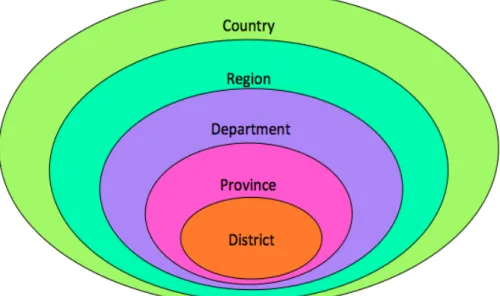
4.1.2 Administrative organization of Peru ... 47
4.1.3 Microwathershed of Jabon de Mayo ... 48
4.2 Sierra Productiva ... 52
4.2.1 Foundations ... 53
4.2.2 Validation Stage - PIC II: Comprehensive Canas ... 58
4.2.3 Replication ... 77
LEADERSHIP DEVELOPMENT AND KNOWLEDGE Chapter 5: MANAGEMENT ACTIVITIES FOLLOWED BY THE IAA AS COMMUNITY CAPACITY BUILDING STRATEGIES ... 81
5.1 The Peasant School, a School for Peasants Leaders ... 82
5.1.1 The peasant organization in Cuzco ... 83
5.1.2 The Peasant School in Cuzco ... 84
5.1.3 Topics ... 88
5.1.4 Yachachics and the Peasant School ... 88
5.1.5 Internship ... 89
5.1.6 The school as a link between several actors ... 90
5.1.7 Community capacity building and the strategy of the Peasant School ... 91
5.1.8 Peasant School, a summary ... 94
5.2 Training by context: Pacha Mama Raymi and the Dairy Cow Contest ... 95
5.2.1 Pacha Mama Raymi ... 96
5.2.2 The Dairy Cow Contest ... 98
5.2.3 Community capacity building and the strategy of training by contest .... 104
5.2.4 Training by contests, a summary ... 108
5.3 The Yachachics, Technological Leaders ... 109
5.3.1 The first yachachics ... 110
5.3.2 The families that implement Sierra Productiva ... 112
5.3.3 Community capacity building and the strategy of training yachachics ... 113
5.3.4 The yachachics, a summary ... 117
5.4.1 Organization of groups by line of production, general aspects ... 119
5.4.2 The training for the group of vegetables of Pampamarca ... 121
5.4.3 The Guinea pig breeders group training and “Inside Export” ... 127
5.4.4 Cheese, Alodia ’s yogurt and the milk caramel of Lucía ... 129
5.4.5 Community capacity building and the strategy of training by line of production/ learning groups ... 129
5.4.6 Training by learning groups/ lines of productions, a summary ... 132
5.5 Summary of the Development Strategies ... 132
COMMUNITY CAPACITY CASE STUDY, THE DAIRY PRODUCT Chapter 6: PRODUCERS OF COLLIRI COMMUNITY ... 137
6.1 The Policy Structure of the Community of Colliri ... 138
6.1.1 The policy structure of the community of Colliri after the introduction of Sierra Productiva ... 139
6.1.2 Community Activities of Colliri and the changes in the policy structure 144 6.2 The Attributes of the Capacity of the Community of Colliri ... 146
6.2.1 In depth interviews ... 147
6.2.2 Mapping of the Community of Colliri ... 149
6.2.3 Summary of the attributes of the capacity of Colliri community ... 151
6.3 Small case study, preliminary conclusions ... 153
CONCLUSIONS ... 154
Chapter 7: 7.1 Recommendations and Prospects for Future Research ... 159
List Of References ... 161
Apendices ... 166
LIST OF TABLES, FIGURES AND IMAGES
Tables TABLE 2-‐1 KNOWLEDGE MANAGEMENT PRINCIPLES ... 18TABLE 2-‐2 SUMMARY OF KNOWLEDGE MANAGEMENT ACTIVITIES IDENTIFIED IN THE LITERATURE ... 18
TABLE 3-‐1 DATA COLLECTION SCHEDULE ... 35
TABLE 3-‐2 INTERVIEW SCHEDULE ... 38
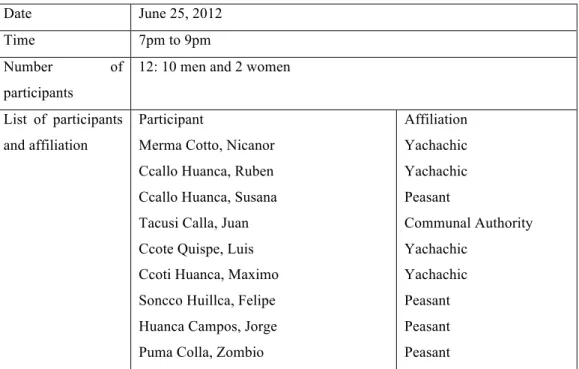
TABLE 3-‐3 DETAILS OF FOCUS GROUP ... 40
TABLE 4-‐1 PERU IN FIGURES ... 46
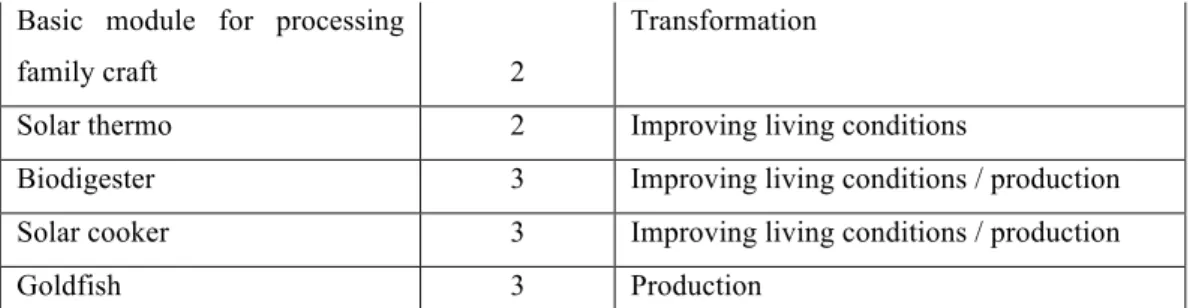
TABLE 4-‐2 THE 18 TECHNOLOGIES ... 74
TABLE 5-‐1 PARTICIPANTS OF THE PEASANT SCHOOL BY ORGANIZATIVE LEVEL ... 86
TABLE 5-‐2 COMMUNITY CAPACITY AND THE PEASANT SCHOOL ... 94
TABLE 5-‐4 COMMUNITY CAPACITY AND TRAINING YACHACHICS ... 116
TABLE 5-‐5 SIERRA PRODUCTIVA’S TECHNOLOGIES AND LINES OF PRODUCTION ... 119
TABLE 5-‐6 COMMUNITY CAPACITY AND TRAINING BY LINE OF PRODUCTION/ LEARNING GROUPS ... 131
TABLE 5-‐7 DEVELOPMENTAL STRATEGIES FOLLOWED BY THE IAA IN THE MCJM, SUMMARY CHART ... 135
TABLE 6-‐1 POLICY STRUCTURE OF THE COMMUNITY OF COLLIRI ... 141
TABLE 6-‐2 COMMUNITY ACTIVITIES ... 145
TABLE 6-‐3 CHARACTERIZATION OF THE COMMUNITY CAPACITY’S ATTRIBUTES OF COLLIRI ... 148
Figures FIGURE 2-‐1 COMMUNITY CAPACITY DEVELOPMENT AND POLICY STRUCTURE MODEL ... 12
FIGURE 2-‐2 POLICY STRUCTURE ... 15
FIGURE 3-‐1 THE RESEARCH PROCESS ... 32
FIGURE 4-‐1 ADMINISTRATIVE ORGANIZATION OF PERU ... 47
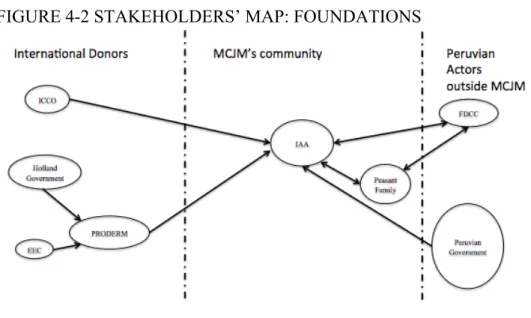
FIGURE 4-‐2 STAKEHOLDERS’ MAP: FOUNDATIONS ... 57
FIGURE 5-‐1 PEASANT SCHOOL AS A NETWORK ... 91
Images IMAGE 4-‐1 BARREN LANDS ... 49
IMAGE 4-‐2 MAP OF DEPARTMENTS OF PERU ... 51
IMAGE 4-‐3 MAP OF THE COMMUNITIES OF THE MCJM ... 51
IMAGE 4-‐4 IRRIGATION SYSTEM ... 63
IMAGE 4-‐5 AGROFORESTRY ... 65
IMAGE 4-‐6 FIXED ORCHARD WITH SHADE ... 66
IMAGE 4-‐7 IMPROVED BARN ... 67
IMAGE 4-‐8 GOLDFISH ... 69
IMAGE 4-‐9 SODIS: EASY SAFE WATER ... 70
IMAGE 4-‐11 IMPROVED STOVE ... 72
IMAGE 4-‐12 BIODIGESTER ... 72
IMAGE 4-‐13 SOLAR KITCHEN ... 73
IMAGE 5-‐1 VEGETABLE GROUP, TRAINING ... 126
IMAGE 5-‐2 GUINEA PIGS GROUP, TRAINING ... 128
IMAGE 6-‐1 MEMBERS OF THE COMMUNITY OF COLLIRI PARTICIPATING IN THE FOCUS GROUP ... 144
IMAGE 6-‐2 MAP OF COLLIRI ... 150
LIST OF ACRONYMS AND TERMS
BBVAC S.A.: Bank Bilbao Vizcaya Argentaria Colombia S.A. CAF: Development Bank of Latin America
CCP: Confederation of Peasants of Peru EEC: European Economic Community
FDCC: Federation of Peasants of the Department of Cuzco FOS: Fonds voor Ontwikkelingssamenwerking1.
HDI: Human Development Index
HOI: Human Opportunity Index
Intermon OXFAM: Oxford Committee for Famine Relief, Spain
IICD: International Institute for Communication and Development Holland IAA: Institute for the Agrarian Alternative
IADB: Inter American Development Bank
ICCO: Interchurch Organization for Development Cooperation MCJM: Micro-watershed of Jabon Mayo
MINCETUR: Ministry of Foreign Trade and Tourism
NGO: Non-Governmental Organization
OXFAM America: Oxford Committee for Famine Relief America PIC I: Comprehensive Canas Project I
PIC II: Comprehensive Canas Project II IPIP: Research Institute for the Productivity
PRODERM: Project for the Rural Development in Micro regions. Funding by Holland, EEC and Peruvian Government
PUCP: Catholic University of Peru
SOMUC: Secretary of the Woman Peasant of Cuzco
WB: World Bank
ABSTRACT
The underdevelopment of rural areas and its inability to compete with urban areas is a common situation in both developed and developing countries. The Peruvian Sierra is not an exception. After the land reform at the beginning of the 1980’s, the land was distributed among peasants, who were unable to make a living from it. It s hard to imagine, especially in the Sierra, a way of achieving development under such circumstances: lack of basic infrastructure, services and alternative sources of income beyond agriculture, poor education and small parcels located 4000 meters above sea level with water scarcity. However, living conditions of rural dwellers of the Peruvian Sierra have improved considerably since the land reform. Since that time, the Institute for the Agrarian Alternative has implemented several development strategies, mainly related to leadership and human resource development.
The alternative rural development approach of community capacity building for rural development is a holistic approach that contemplates not only economic and formal aspects of life but also its social, political and informal aspects. According to this approach, the more capable a community is, the more sophisticated, well-being oriented the policy structure that this community can introduce. Moreover, the community capacity can be further developed by stimulating its strategic components: human resources, leadership, organization and networking (Miyoshi & Stenning, 2008).
This paper explores the case of community capacity development in the Peruvian Sierra through IAA’s developmental strategies. The main question that guides this research is: How do the developmental strategies followed in the Peruvian Sierra contribute to overcoming rural underdevelopment through community capacity building?
This paper seeks to interpret a culturally significant phenomenon: the development of the Peruvian sierra, while giving voice to its protagonists. The strategy of inquiry, although mainly narrative, is a combination of approaches. Regarding the type of collected data, most of it is qualitative, although not exclusively.
The argument is that each of the developmental strategies followed in the MCJM by the IAA contribute to the community capacity by stimulating the strategic components allowing the introduction of more complex, well being oriented policy structure.
The conclusion of this work is that the stimulation of strategic components of the community capacity, especially leadership and human resource development, lead to the sophistication of the policy structure of the target communities, with the consequent improvement in living conditions of the rural dwellers.
Finally, the significance of this research consists of being the first systematic research about the development of the Peruvian Sierra from a community capacity building perspective.
INTRODUCTION
Chapter 1:
1.1 R
ESEARCHP
ROBLEMThe underdevelopment of rural areas and their inability to compete with urban areas is a common situation in both developed and developing countries. The Peruvian Sierra is not an exception. The problem here is multifaceted. There is a lack of basic infrastructure and alternative sources of income beyond agriculture, add to this the hardship of the geography (the Sierra is over 4000 meters above sea level and it only rains three months per year) and you have the complete picture. Needless to say that there is no running water and sanitation is lacking. Its peasants are impoverished spiritually and materially. Until the beginning of the 80’s, the hacienda was the land tenure system of Peru. In this system, peasants living conditions were similar to slavery: they didn't own the land; the product of their work was for the landlord and they did not receive a salary for their work. Furthermore, they would attend school if the landlord decided to allow them. After land reform, the land was distributed among peasants, but they were unable to make a living out of it. The parcels they received were less than two hectare, the altitude was not a minor issue, water was scarce and they didn’t have the required knowledge to make the best out of this situation. Moving to urban areas is not a good option for these people. In their homes, they are peasants that belong to a community; when they move to the cities most of the time they end up living
in a shantytown, doing some sort of informal work. They don't have the qualifications required for a quality professional integration in the cities. Besides, in the city, they most likely will be seen as “cholos” a pejorative name for indigenous people.
1.2 R
ESEARCHQ
UESTIONS:
In order to address the problem of rural underdevelopment and the effects of the following developmental strategies on the community capacity in the Peruvian Sierra the following research question has been posed:
How do the developmental strategies followed in the Peruvian Sierra contribute to overcoming rural underdevelopment through community capacity building? To answer the main question, the following sub-questions have been posed:
Which developmental strategies are followed in the Peruvian Sierra? How do these developmental strategies stimulate the strategic components
of the community capacity?
How do these developmental strategies affect the attributes of the community capacity?
Chapter 5 aims to answer the above questions in terms of strategies, while chapter 6 shows the effects of developmental strategies in a particular community.
1.3 R
ESEARCHO
BJECTIVESThe main objective of this research is to clarify how the strategies followed in the Peruvian Sierra contribute to overcoming its rural underdevelopment. To achieve this objective is necessary to achieve minor but related objectives such as:
To identify developmental strategies followed in the Peruvian Sierra. To identify the changes in the strategic components of the community
capacity that have arisen from the developmental strategies followed in the Peruvian Sierra.
To identify the changes in the community capacity attributes that arise from the developmental strategies followed in the Peruvian Sierra.
1.4 S
IGNIFICANCE OF THER
ESEARCHAlthough the case of Sierra Productiva hasn't been systematically studied yet, it seems to be a successful case of rural development through community capacity building. Therefore, a systematic study will provide not only an assessment of the experience but also valuable lessons for the field of rural development and capacity building.
1.5 S
COPE ANDL
IMITATIONS OF THER
ESEARCHAlthough the same developmental strategies were introduced in different departments of the Peruvian Sierra, these experiences can be grouped into two types: those with a strong guidance of the Institute for the Agrarian Alternative (IAA) and those with minimal intervention of this organization, like the experience in the department of Huancavelica, where there are no offices of the aforementioned organization.
This research was conducted in the department of Cuyo, where the IAA has a strong presence. Therefore, the limitation of this research is not covering the introduction of these developmental strategies without strong guidance of the IAA.
1.6 S
TRUCTURE OF THET
HESISThis thesis is organized as follows: after the introduction the second chapter contains the Literature Review. In this chapter, all the concepts utilized in this research are detailed. In the third chapter, the methodological aspects of this work are explained. The explanation includes the followed research paradigm, the strategy of enquiry and a description of the research process. Finally, the data collection methods are detailed together with the limitations of this research.
Chapter four contains the necessary background information while chapters five and six contain data. The goal of these chapters is to answer the research questions posed in the introduction.
The fourth chapter has two sections: the first one contains a description of general aspects of Peru as well as descriptions of the Micro-watershed of Jabon Mayo, hereafter MCJM, the place where Sierra Productiva, a developmental strategy was initiated, the second section is an explanation of Sierra Productiva. Besides a general explanation, the different stages of the project are explained. Briefly speaking, three stages can be identified: foundations, validation and replication. “Foundations” is the stage when the events that led to what today is known as Sierra Productiva took place. “Validation” is the stage of development where consolidation of technologies and knowledge transmission strategy takes place. Finally, the “Replication” stage is when Sierra Productiva is implemented beyond the MCJM and the yachachics (peasant community leaders) travel throughout different departments of Peru sharing the knowledge needed for implementation. This chapter also includes a description of the different technologies that entail Sierra Productiva.
The fifth chapter describes the different developmental strategies followed by the IAA in the MCJM. At the end of each section the different strategies are framed into a community capacity building model, in an attempt to find out how these strategies contribute to building capacity. The named strategies are: the Peasant School -a leadership development project- training by contests -an attempt to motivate peasants to introduce different productive practices and technologies-
training “yachachics” and, finally, training of peasant groups according to lines of production.
The sixth chapter is a small case study of the dairy milk producers of the community of Colliri, one of the communities of MCJM. Its policy structure and community capacity attributes and strategic component are clarified in an attempt to assess the impact of the developmental strategies on the development of the community capacity.
LITERATURE REVIEW
Chapter 2:
The purpose of this chapter is to describe the main concepts utilized in this research and its discussions. I will start by explaining the reasons why an alternative approach for rural development is needed along with the reasons for community capacity. Next, the concept of community capacity will be detailed provided its relevance in this research. Related to this concept are the concepts of community and evaluation. Other core concepts of this research that are explained in this chapter are knowledge and leadership.
2.1
C
OMMUNITYC
APACITY2.1.1 THE NEED OF AN ALTERNATIVE APPROACH AND THE REASONS FOR COMMUNITY CAPACITY
The rural areas of underdeveloped and developing countries alike lag behind urban areas and find it very difficult to compete. The traditional approach for assessing the development of both, urban and rural areas is only focused on the economical aspects of life, such as markets and income generation. However, ‘… development is people’s behaviours and activities with each case uniquely depend on the circumstances and context of the particular location’ (Miyoshi, 2012c, p. 40). In other words, the traditional approach is missing all the social, political and informal aspects of life that also contribute to the well being of the rural dwellers. Furthermore, this approach has resulted useless to better living conditions in rural
areas. Therefore, an alternative approach that considers not only the economical but also the social, political and informal aspects of life is needed (Miyoshi & Stenning, 2008).
This alternative development approach
‘… must be granted in reality and must have a holistic and, practical and operationable perspective to ensure benefits to the people of rural community. … In response to this requirement I provide an alternative development approach focusing on community capacity development that benefits rural communities. This approach seeks a dual function aiming at developing community capacity, and introducing and implementing a higher value added and better well-being policy structure, which consists of economic, social and political activities to change the life of the community’s population’ (Miyoshi, 2012c, p. 42).
Community capacity is defined by Chaskin et al. (2001, p. 7) as
‘… the interaction of human capital, organizational resources, and social capital existing within a given community that can be leverage to solve collective problems and improve or maintain the well-being of that community. It may operate through informal social processes and/or organized efforts by individuals, organizations, and social networks that exist among them and between them and the larger systems of which the community is a part. … In simple words, community capacity is what makes a community work’.
For Miyoshi and Stenning (2008), community capacity is not only what makes a community “work” but also is what allows the introduction of more complex and sophisticated policy structure. In this approach, there is a virtuous circle between the development of community capacity and the complexity and sophistication of the policy structure. It is this complexity and sophistication that in turn improves the welfare of the community.
2.1.2 COMMUNITY CAPACITY, AN OPERATIONAL DEFINITION
According to the above-mentioned authors, the concept of community capacity can be divided into features, strategies and functions. The features are: sense of community, commitment, ability to set and achieve objectives and ability to recognize and access to resources. The strategies to boost community capacity are related to: human resources, leadership, organization and network development. Finally, the functions are: planning, implementation and evaluation (Chaskin et al., 2001; Miyoshi & Stenning, 2008; Miyoshi, 2012).
2.1.2.1 THE FEATURES
The level of community capacity is a function of its attributes. In other words, the importance of these attributes is to be the foundation for action. Finally, different levels of sense of community, commitment, ability to set and achieve objectives and ability to recognize and access to resources may be found in every community (Chaskin et al., 2001; Miyoshi & Stenning, 2008; Miyoshi, 2012).
2.1.2.1.1 SENSE OF COMMUNITY
Sense of community is the degree of connection among members of a community and is related to shared values, norms and future vision. If this sense of belonging grows, the capacity of the community grows as well.
2.1.2.1.2 COMMITMENT
Commitment is the responsibility for the destiny of the community and it has two aspects: to recognize oneself as a stakeholder and to have the willpower to participate as a stakeholder. In other words, if community members are aware of their roles, and realize the values, norms and visions of the community, the capacity of the latter grows.
2.1.2.1.3 ABILITY TO SET AND ACHIEVE OBJECTIVES
Ability to set and achieve objectives is the capability to set goals, translate values, norms and visions into actions, and ultimately achieve goals to enhance community capacity.
2.1.2.1.4 ABILITY TO RECOGNIZE AND ACCESS TO RESOURCES
Resources might be economic, natural, organizational, political, etc. and they exist in every community. If a community is able to recognize and access them, its capacity is further developed.
2.1.2.2 THE STRATEGIES
In the alternative approach for rural development, the strategies to foster community capacity are: to develop human resources, to promote leadership, to set and/or enhance community organization and to encourage networks, within
and outside the community. The implementation of activities that changes the strategic elements leads to changes in the community capacity. It is worth noting that, although the strategic elements are intrinsic to the community, they may be externally influenced (Stenning & Miyoshi, 2012a).
2.1.2.3 FUNCTIONS OF COMMUNITY CAPACITY
The aforementioned community characteristics become community capacity once they are converted into functions. In other words, the attributes of the community become capacity when planning, implementing and evaluating the community policy structure is a community activity.
The community policy structure is the connection between means and ends, and its aim is to reach the envisioned future for the community. Although not always explicit, every community has a policy structure. ‘The planning, implementation and evaluation of community activities can be conceptualized as a collective, systematic, and strategic policy structure, which is delivered through the enhancement of community capacity’ (Stenning & Miyoshi, 2012a, p. 54).
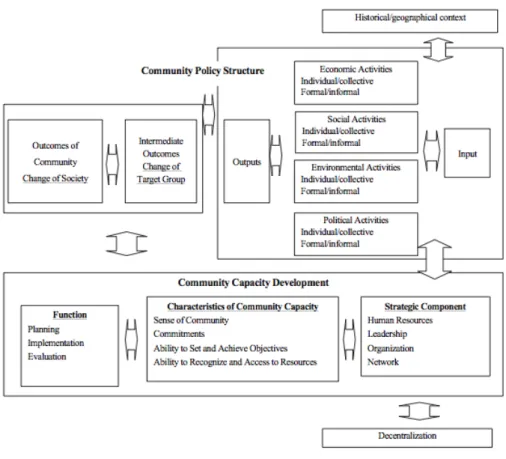
All the previously mentioned aspects of the definition of Community Capacity, as well as its interactions, are brought together in the model of Community Capacity Development and Community Policy Structure (Stenning & Miyoshi, 2007). According to the model, there is a virtuous circle between community capacity and community policy structure on one hand, and between these and the outcomes on the other. To better understand the model, it is worth mentioning that community policy structure refers to all the activities (economical, social and political) conducted by a community, its inputs, and the outputs that come from
performing these activities. On the other hand, the outcomes are changes in the society, beginning with the changes of the target group, as a consequence of performing activities (Miyoshi & Stenning, 2008). Figure 2-1 illustrates Community Capacity Development and Policy Structure Model.
FIGURE 2-1 COMMUNITY CAPACITY DEVELOPMENT AND POLICY STRUCTURE MODEL
Data Source: Miyoshi, 2011
2.2 C
OMMUNITYGiven the multiplicity of definitions of community, it is worth clarifying the definition of community behind the model of community capacity development and policy structure. Community ‘… is a relative aggregation constructed by
individuals, groups and organizations acknowledged by a specific area, generally defined by administrative boundaries, and within this boundary, these individuals, groups and organizations recognize themselves as being a member of the community’ (Miyoshi, 2012c, p. 43). Within these boundaries, people share circumstances, lifestyles, common topics of conversation and it is the participation in this common life that entitles membership (Mac Iver, 1970; Wenger, 1998).
2.3 E
VALUATIONEvaluation is defined by Miyoshi ‘as the organized assessment of the implementation and effects of various policies, programs and projects’ (2012b, p. 67).
The main purposes of evaluation are learning and accountability, and given the overlap among them it is necessary to clarify the goals of an evaluation before its implementation. In other words, before implementing the evaluation we should have the answers to these questions: What do we want to know? Who is going to utilize the results of the evaluation and for what purpose?
This, in turn, makes it more straightforward to define the framework of the evaluation: subject, questions and method (Miyoshi, 2012b; Miyoshi & Stenning, 2008).
2.3.1 WHY EVALUATE COMMUNITY CAPACITY?
The importance of evaluation -one of the functions of community capacity- is that, together with planning, it brings the possibility of improvement through the utilization of its results. With standard-based tools, an analysis of the situation can be done and the results of this analysis might be utilized to guide the tasks and activities necessary to achieve goals.
‘In the context of community it is necessary to clarify the subject of evaluation and planning by conceptualizing people’s daily lives and the activities of organizations that are part of the community. This conceptualization process encompasses the community policy structure, in addition to establishing and examining what must be clarified to create a better future for the community’ (Miyoshi, 2012a, p. 78).
2.3.2 PLANNING AN EVALUATION OF COMMUNITY CAPACITY
To conduct an evaluation of the community capacity, the following aspects should be defined:
The subject of evaluation, meaning to clarify the policy structure. Questions, in other words, we should define what we want to know.
Methods for conducting evaluation, in other words, how are we going to find out what we want to know?
2.3.3 THE SUBJECT OF THE EVALUATION
The policy structure, the subject of evaluation, illustrates the relationship between means and objectives, the causes and effects between end outcomes and policies, programs and projects. Therefore, to clarify the policy structure it is necessary to conceptualize the policies, programs and projects. Hereafter, Figure 2-2 illustrates the Policy Structure.
FIGURE 2-2 POLICY STRUCTURE
Source: Miyoshi, 2012b, p. 69
A policy is an intervention whose end outcomes are changes in the society. These end outcomes, are consequence of the changes in the target groups, the intermediate outcomes of the programs.
In the same way that a policy is a sum of programs, a program is a sum of projects. In turn, a project encompasses the following components:
Outputs: the goods and services resulting from activities. Activities: the actions taken to produce outputs.
Inputs: the needed resources to conduct the activities that in turn will lead to the outputs.
2.3.4 QUESTIONS
Defining the questions entails defining what we want to know, or the purpose of the evaluation. One of the purposes, in this case, is to evaluate the community capacity; therefore, the policy structure of the community should be clarified. Another purpose is to characterize the features of the community capacity of the community under study. In summary, the desired results of the evaluation are a clarification of the policy structure and a richer understanding of the attributes of the evaluated community.
2.4 K
NOWLEDGEKnowledge might be defined as ‘… a fluid mix of framed experience, values, contextual information, and expert insight that provides a framework for evaluating and incorporating new experiences and information. It originates and is applied in the minds of knowers. In organizations, it often becomes embedded not only in documents or repositories, but also in organizational routines, processes, practices, and norms’ (Davenport & Prusak, 1998, p. 5).
Other knowledge related terms, like data and information, tend to generate confusion. Data becomes information when it has meaning. In turn, humans use information to create knowledge by doing knowledge-creating activities such as:
comparing situational information, analysing the implications of information -for making decisions and actions- and making connections. Finally, conversations are also a knowledge creation activity. It is through experiences that knowledge is developed, moreover, knowledge can be found only in individuals (Davenport & Prusak, 1998).
2.4.1 KNOWLEDGE ATTRIBUTES AND DIMENSIONS
Knowledge not only has several attributes but also is multidimensional. Two of the most important dimensions are: type and mode. The type is related to the nature of the knowledge while mode is related to the idea that knowledge is the outcome of the process of interpretation and cognitive construction.
Type of knowledge refers to featuring defining characteristics. There are three types of knowledge: descriptive (know what), procedural (know how) and reasoning (know why). All of them can not only be created but also utilized in the creation of knowledge. When it comes to mode, knowledge might be: tacit, explicit or cultural; the latter associated with knowledge in organizations (Holsapple, 2003).
2.4.2 KNOWLEDGE MANAGEMENT
Knowledge management matters because it makes the right knowledge available to the right person, in the right way, and at the right cost (Davenport & Prusak, 1998). For knowledge management to prosper, organizations must ensure the existence of roles in charge of capturing, distributing and using knowledge. ‘Thus, organizations need people who will extract knowledge from those who have it,
put it in structured form, and maintain or refine it over time’ (Davenport & Prusak, 1998, p. 110). Table 2-1 details the principles of knowledge management. TABLE 2-1 KNOWLEDGE MANAGEMENT PRINCIPLES
Knowledge originates and resides in people’s mind. Knowledge sharing requires trust.
Technology enables new knowledge behaviours. Knowledge sharing must be encouraged and rewarded. Management support and resources are essential. Knowledge initiatives should begin with a pilot program.
Quantitative and qualitative measurements are needed to evaluate the initiative. Knowledge is creative and should be encouraged to develop in unexpected ways. Data Source: Davenport & Prusak, 1998, p. 24
2.4.3 KNOWLEDGE MANAGEMENT ACTIVITIES
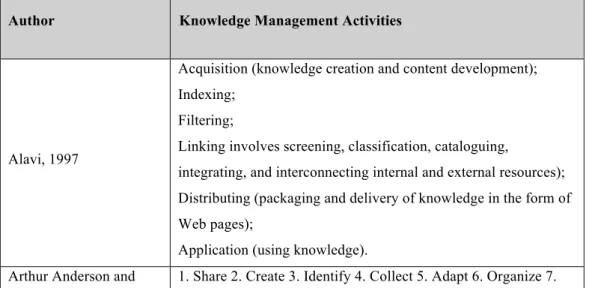
The various knowledge management activities identified in the literature by different authors are listed in Table 2-2 below:
TABLE 2-2 SUMMARY OF KNOWLEDGE MANAGEMENT ACTIVITIES IDENTIFIED IN THE LITERATURE
Author Knowledge Management Activities
Alavi, 1997
Acquisition (knowledge creation and content development); Indexing;
Filtering;
Linking involves screening, classification, cataloguing,
integrating, and interconnecting internal and external resources); Distributing (packaging and delivery of knowledge in the form of Web pages);
Application (using knowledge).
APOC, 1996 Apply. Choo, 1996
Sensemaking (includes “information interpretation”); Knowledge creation (includes “information transformation”); Decision-making (includes “information processing”). Hosapple and Whinston,
1987
1. Procure 2. Organize 3. Store 4. Maintain 5. Analyze 6. Create; 7. Present 8. Distribute 9. Apply.
Leonard-Barton, 1995
Shared and creative problem solving;
Importing and absorbing technological knowledge from the outside of the firm;
Experimenting prototyping;
Implementing and integrating new methodologies and tools.
Nonaka, 1996
Socialize (convert tacit knowledge to tacit knowledge); Internalize (convert explicit knowledge to tacit knowledge); Combine (convert explicit knowledge to explicit knowledge); Externalize (convert tacit knowledge to explicit knowledge).
Szulanski, 1996
Initiation (recognize knowledge need and satisfy that need); Implementation (knowledge transfer takes place);
Ramp-up (use the transferred knowledge); Integration (internalize the knowledge). Van der Spek and
Sppijkervet, 1997 In the Act Process1. Develop 2. Distribute 3. Combine 4. Hold Wiig, 1993 1. Creation 2. Manifestation 3. Use 4. Transfer
Source: Holsapple, 2004, p 103-104
Among all the knowledge management activities identified in the literature, generation, creation, sharing and transfer appear as the most named and they will be explained hereafter.
2.4.3.1 KNOWLEDGE GENERATION
According to (Davenport & Prusak, 1998) some of the ways for generating knowledge are: acquisition, dedicated resources, adaptation and knowledge networking.
Acquiring knowledge might be done by hiring knowledgeable people or by buying an organization. Knowledge doesn't have to be new knowledge but new for the organization.
Dedicating resources to the generation of knowledge usually takes the shape of setting up groups or units for that purpose. After being created, this knowledge should be transferred but this is not always easy to accomplish. A common barrier in the transfer of knowledge is language: creators and users of knowledge do not necessarily speak the same language.
Crisis and periods of stress incite adaptation, leading to generation of new knowledge. Networks, whether they are informal and self-organizing or formal and organized within organizations also generate knowledge.
The abovementioned knowledge generation activities need time and place to occur. The acknowledgement of the importance of knowledge for an organization and the understanding that knowledge can be nurtured are essential for organizations to succeed.
2.4.3.2 KNOWLEDGE CREATION
Knowledge creation can boost the success and economic well being of an organization. It might happen by chance, or as a consequence of an intentional act. This is the case of individuals or organizations reacting to rectify a lack of knowledge. Knowledge of any type or mode can be used to produce new knowledge either through knowledge discovery or through knowledge derivation. The former has to do with finding new knowledge, the latter with the application
of procedures to reach new conclusions from existing knowledge. According to Holsapple (2003, p. 373) ‘… important characteristics for knowledge creation are having processes that allow individuals to share skills and knowledge, and fostering a culture that values knowledge building and sharing.’
2.4.3.3 KNOWLEDGE SHARING OR TRANSFER
The aim of transferring knowledge is to enhance the capabilities of a person, a community or an organization. The transference is made up of two parts: the transmission and the absorption. Meaning that it is not enough for the transference of knowledge to be available for the target but it also has to be utilized, put it in action.
Nonaka and Takeuchi (cited in Holsapple 2003) describe four processes through which knowledge is shared: socialization, externalization, combination and internalization. In the process of socialization, the tacit knowledge of an individual becomes the tacit knowledge of another through personal exchanges. In externalization, tacit knowledge became explicit. In combination, explicit knowledge becomes another type of explicit knowledge. Lastly, internalization is the process through which explicit knowledge became tacit.
2.4.3.3.1 STRATEGIES FOR KNOWLEDGE TRANSFER
There is agreement in the literature that face-to-face interactions are among the best channels for knowledge transfer. When talking among each other, knowledge holders discover what they know and share it. Moreover, knowledge is created. Beyond the transference of knowledge, Stenning and Miyoshi (Stenning & Miyoshi, 2012b, p. 168) establish that ‘Networking that builds bonding social
capital promotes knowledge sharing through increased face-to-face interactions and communication between community members as well as knowledge creation arising from the creative synergies of such interactions’.
Transferring can be also done through apprenticeship or mentoring and in this case, tacit knowledge is captured.
Narratives are also a strategy for knowledge transfer. People learn from stories. ‘The value of narratives: Human beings learn best from stories … “people think narratively rather than argumentatively or paradigmatically”’ (Davenport & Prusak, 1998, p. 81). ‘A good story is often the best way to convey meaningful knowledge’ (Davenport & Prusak, 1998, p. 82).
Another strategy for sharing knowledge is demonstration. As popular wisdom says, “one picture is worth more than a thousand words”, when it comes to knowledge transfer, seeing is believing ‘… they may have felt that seeing is believing: only an actual demonstration of the new technique and its advantages was likely to convince them. Why should a few sheets of paper that come from the other side of the world persuade them there’s a better way to do what they’ve been doing for years’ (Davenport & Prusak, 1998, p. 99).
Finally, and regarding knowledge transfer or sharing, it is worth mentioning that the status of the knower matters, since one of the main criteria for judging knowledge is who is delivering it.
2.4.3.3.2 KNOWLEDGE TRANSFER INHIBITORS
Some of the main factors that inhibit the transfer of knowledge are: lack of trust, differences in culture, vocabulary and frames of reference, and lack of time and meetings places. Common language seems to be crucial for the successful transfer of knowledge since its absence easily leads to lacks of trust and/ or understanding.
2.5 L
EADERSHIPOn the topic of a community’s capacity development and leaders as main players Chaskin et al. (2001, p. 27) state that they ‘… advocate for community interests and catalyse the formation of informal groups to address emerging problems or capitalize on opportunities. The more active the leaders are, the richer the body of activities the community can support.’
According to Chaskin et al. (2001, p. 28), within community capacity building, leaders are vehicles of change in charge of the followed tasks:
Define objectives and maintain the goal direction. Provide and maintain the group structure.
Facilitate group action and task performance. Represent the group to external actors. Facilitate adaptive work.
The development of leaders usually involves the enrichment of the human capital, resources and perspectives of the community’s current or potential leaders. It seeks to identify and stimulate as many individuals as possible that are capable
and willing to be responsible for the well being of their communities. Moreover, leader development for community capacity looks for individuals to be the spearhead that brings the necessary changes.
2.5.1 TRAINING STRATEGIES FOR BUILDING LEADERS
Different strategies for building leaders result from combining two dimensions: process and target. Process is related to the type of training, either formal or “on the job”, while the target may be individuals or groups.
Regardless of the target, Chaskin et al. (2001) establish that formal training oriented to build community capacity, usually focus on one or more of the following areas:
Information dissemination.
Personal empowerment/self esteem building. Building skills useful for civic participation. Cultivation of behaviours and perspectives.
The strategy of training “on the job”, also called “engagement approach”, is based on developing leadership by “doing something”, instead of using formal training. This approach has multiple advantages, such as providing volunteers with an immediate connection to the community capacity building agenda and understanding of the community’s issues while learning how to work together, and providing volunteers with legitimacy due to the visibility of their accomplishments. Furthermore, this approach ‘also has the virtue of being much better suited than formal classes to adult styles of learning; lessons are usually
better internalized by participants and hence last longer. This approach also provides group members with a shared set of experiences and, over time, a history that can be referred back to as a way of reinforcing lessons learned earlier, sometimes in very powerful ways’ (Chaskin et al., 2001, p. 36).
Regarding the target, and although leadership can be exercised individually or as a group, collaborative approaches seem to be more promising for building community capacity, ‘… as the difficulty of effecting meaningful change to benefit disadvantaged groups becomes more widely apparent, community capacity building initiatives are giving greater attention to the strategy of preparing groups of individuals in a community for leadership roles’ (Chaskin et al., 2001, p. 41). The advantage of this approach goes far beyond the power of numbers: cadres of leaders that share language and vision can support each. Moreover, the message is reinforced by the different voices that bring it, increasing the chances of being heard in the community.
The other side of the coin is that this approach requires more resources: time, energy, commitment, and perhaps money. This is especially true when training is intensive and requires volunteers to be absent from their homes for certain periods of time.
2.5.2 WHOSE SKILLS TO DEVELOP?
Besides deciding the approach, it is also necessary to decide whose skills to develop. Naturally, the questions that pop up are: Who is going to choose the candidates? And what will be the selection criteria? The candidates can be chosen
either by the development promoter, by a committee or through an application procedure; current and or prospective leaders can be selected. When it comes to selection criteria, the most common are commitment, knowledge of the community, energy, time, availability, integrity, etc.
At this point it is worth mentioning that burnout is common among committed leaders, therefore, for the sake of sustainable community capacity building, leadership development should be institutionalized. Developing a mechanism for permanently expanding the pool of potential participants is easier said than done. 2.5.3 LEADERSHIP DEVELOPMENT AND COMMUNITY CAPACITY
Within interventions intending to build community capacity, leadership development is not an end in itself but a way of achieving other community betterment goals. Furthermore, those goals are what attract and motivate participants. Therefore, leadership development strategies work best when they are clearly oriented to support participants in pursuing those goals.
Leadership skills development is not equal to community capacity development per se. To improve community capacity, leadership’s skills must be utilized for the betterment of their communities. In other words, leaders contribute to the community capacity ‘when they learn and practice a style of leadership that is inclusive and collaborative. Practicing this type of leadership can include seeking ways to mobilize people who are willing to participate; spreading and delegating tasks so that as many people as possible can contribute, … [and] looking for opportunities to connect people… It means making efforts to strengthen the
community characteristic that lie at the heart of capacity...’ (Chaskin et al., 2001, pp. 57-58).
METHODOLOGY
Chapter 3:
This chapter presents the research paradigm behind this research, the methodological philosophy and strategies of enquiry, a description of the research process as well as every detail related to the data collection, including schedule, research site and methods employed for collecting data.
3.1
R
ESEARCHP
ARADIGMIn social sciences, there are two main epistemological orientations or paradigms: the positivism and the constructionism. Claiming for the unity of sciences, positivism ‘…argue[s] that people and things are sufficiently similar for them both to be studied in the same way. …Constructionists, in contrast, argue that while positivism may be an appropriate epistemology for the natural world, it is inadequate for the understanding of the human world’ (Thomas, 2004, p. 42). In Qualitative Inquiry, Butler-Kisber (2010, p. 5) states that ‘Social constructivism is predicated on the idea that lived experience is socially constructed, understood in context, and influenced by historical and cultural experiences known to individual. Social Constructivist researchers situate themselves in their work, use open-ended questions, emergent analysis and develop close relationships with participants in order to explain in great detail the particular experience or phenomenon under study’. This research can be framed within the constructivism paradigm given the intention of explaining the
phenomenon under study from the point of view of its protagonists, the use of open-ended questions and the development of close relations with the participants.
3.2 M
ETHODOLOGICALP
HILOSOPHY ANDS
TRATEGY OFE
NQUIRYThe most fundamental goal of social researchers is ‘to identify order and regularity in the complexity of social life; try to make sense of it’ (Ragin, 1994, p. 31). There are others more specific goals in social research that lead to the achievement of the fundamental goal. Some of these specific goals are: identifying general patterns and relationships, either testing and refining or advancing theories, exploring diversity, interpreting culturally or historically significant phenomena, giving voice, etc. The diversity of these specific goals has to do with the diversity of the society (Ragin, 1994).
This research seeks to interpret a culturally significant phenomenon while giving voice to its protagonists. The culturally significant phenomenon is the improvement in living conditions of the peasants of the Peruvian Sierra. The value of interpreting this event lies in its oddity. The second goal of this research, to give voice, aims to tell the story of the Peruvian peasants of the Sierra, thus enhancing its visibility.
The research strategy is the outcome of pairing goals and research methods. Therefore, once the goal of the research is defined, the next step is to define the research method. In other words, after defining what we want to achieve, it is
necessary to define how to achieve it. Broadly speaking, research methods can be grouped into two categories: qualitative and quantitative. Not every method serves for every goal and for certain goals some methods are more suitable than others.
While Quantitative methods are more commonly used in natural sciences, qualitative methods are more suitable for social science research.
Qualitative research is defined as ‘… multi method research that uses an interpretive, naturalistic approach to its subject matter. This means that qualitative researchers study things in their natural settings, attempting to make sense of, or interpret, phenomena in terms of the meanings people bring to them’ (Denzin & Lincoln, 1994, p. 2). In qualitative research few cases are studied, but many aspects of each case are covered (Ragin, 1994). ‘Qualitative research is an inquiry process of understanding based on distinct methodological traditions of inquiry…. The researcher builds a complex, holistic picture; analyses words, reports detailed views of informants, and conducts the study in a natural setting’ (Creswell J. W., 1998, p. 15). The philosophical position of qualitative research is broadly “interpretive”. Its analysis and explanations are more holistic: The data generation methods are flexible and sensitive to the data’s context and its explanation and data analysis methods involve an understanding of the complexities and contexts (Mason, 2002).
According to Ragin (1994), the goals of giving voice and interpreting culturally or historically significant phenomena are best served with qualitative methods. Given the nature of this research, most of the collected data is qualitative, although not exclusively.
3.3 T
HER
ESEARCHP
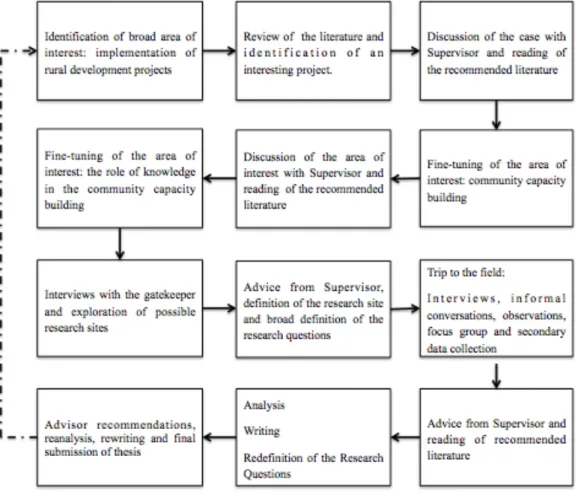
ROCESSThe first step in the process of this research was to identify a broad area of interest: successful rural development projects. In particular, what enthralled me the most was the replication of endogenous developmental experiences beyond its context. In turn, and thanks to the guidance of my supervisor, this led me to the alternative approach of Community Capacity Building for Rural Development. While looking for a successful case study of rural development, I found the experience of Sierra Productiva in Peru that, beyond its interest, has the advantages of shared language and cultural similarity. The data collection would be easier in Spanish, my mother tongue, than in a foreign language and since I come from South America, the understanding of the culture allows me to better interpret the phenomena. Once the framework and the case study were decided, I had to choose the aspects that interested me the most in order to deepen the literature review. At this point, the aspect that guided my research, in terms of data collection and literature review, was the transmission and creation of knowledge for community capacity building.
With these ideas in mind, and some tentative research questions, I went on a field trip to Cuzco, Peru. There, I had access to IAA’s documents and was able to interview IAA’s staff and the peasants involved in Sierra Productiva. During the fieldwork, new aspects of the case arose, such as Sierra Productiva related previous development projects and leadership development. After writing the fieldwork reports, I came back to the readings, this time attempting to find in the literature what I had experienced in the field.
Throughout the process, the research questions were evolving to become the questions that will be answered in the chapters containing the data. In turn, the gathered data was analyzed to reach the conclusions detailed in the last chapters of this thesis. Finally, as the dashed arrow indicates, this led me to the next starting point of this process, this time a PhD research project. All this process is illustrated in Figure 3-1.
FIGURE 3-1 THE RESEARCH PROCESS
3.4 D
ATAC
OLLECTIONIn this section I will detail the data collection methods and instruments that I utilized for collecting primary data. This description includes references of where, when and how this data was collected as well as who participated in this research. Regarding secondary data, it was gathered through books, brochures, videos, and IAA’s internal documents, such as external evaluations and strategic plans. This documentation was kindly provided by the directors of the institution. I also utilized government and international organization statistics.
3.4.1 STUDY SITE
The research site was selected according to my personal interest: rural development and the Peruvian culture. Among other aspects, it grabs my attention that Peru was a very advanced civilization up to the arrival of the Spanish in the XV century, and now is one of the poorest countries of South America (United Nations Development Program, 2011).
Regarding Sierra Productiva, I came to know about it in 2011 when the World Challenge selected it as a semi-finalist. The world challenge is ‘a competition organised by BBC World News Limited ("BBC World News") and Newsweek, aimed at finding projects or small businesses from around the world that have shown enterprise and innovation at a grassroots level’ (The World Challenge, 2012).
I got the email address of Carlos Paredes, the National Coordinator of Sierra Productiva, from a magazine article and I wrote to him requesting additional
information. As simple as that, a mail correspondence began that last from January 2010 up to the moment of writing this thesis.
Since Sierra Productiva is present in more than 10 departments of Peru, and given the time and funding restrictions, I had to choose one for my fieldwork. With the support of Carlos Paredes and my adviser, who recommended me to go where everything began, I chose the MCJM for doing most of my fieldwork. I also visited the Catholic University of Peru, to have some informal conversations with professors researching the topic and to go through its library.
Once I reached Cuzco city I met IAA’s Director, who provided me with internal documentation of the organization, made suggestions of people to speak with, arranged meetings and provided me with transportation.
I collected data and wrote this thesis throughout 2012, the process had three different stages: the pre fieldwork, the fieldwork and writing and analysis.
The pre fieldwork was the exploratory stage in which I gathered general information about Sierra Productiva, and then narrowed down the site and the topic. The main activities during this first stage were email exchanges and telephone conversations with the coordinator of Sierra Productiva - my key point of contact throughout this phase of the research - and revision of materials such as websites, videos, documents and books.
The fieldwork was the data collection stage; here the main objective was gathering primary data, though I gathered secondary data as well. For gathering primary data I travelled to Peru and spent three weeks in Lima and Cuzco, with
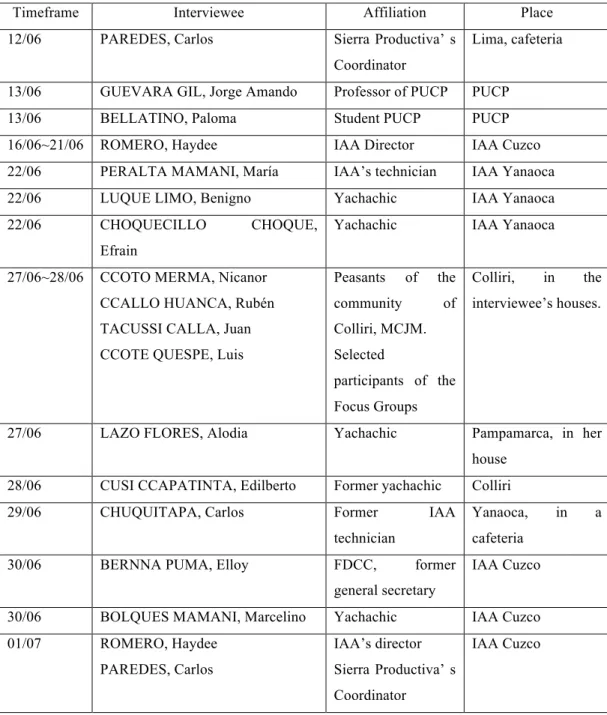
most of the time spent in Cuzco. The activities of the fieldwork had to do with the selected data collection methods: interviews, informal conversations, observations and a focus group. Table 3-1 provides a precise schedule of the data collection. TABLE 3-1 DATA COLLECTION SCHEDULE
Stage Objective Period
(Month/day) Place
Field Research Method/ activity Pre fieldwork Gather general information and decide the site of the fieldwork 01 ~ 05 Japan
Informal conversations and telephone interviews with my doorkeeper.
Gather secondary data
Fieldwork Gather primary and secondary data 06/12~06/14 Lima.
PUCP Interview key informants 06/15 Travelling Travel from Lima to Cuzco
06/16~06/17
Cuzco City. Institute for the Agrarian Alternative
Obtain and read internal documents of the IAA. Obtain a list of key informants and arrange meetings 06/18~07/02 Cuzco city and the Sierra. Interviews, informal conversations, observations and focus group.
07/03 Travelling Travel from Cuzco to Lima 07/03~07/04 Lima. PUCP Interview professors. Source: Created by author.
Finally, I did the writing and analysis of the data from August till November 2012.
3.4.2 POPULATION
Giving that ‘We can’t study every case of whatever we’re interested in …’ (Becker, 1998, p. 67) researchers use sampling. There are two types of sampling methods: probability and non-probability.
In a non-probability sampling, participants are chosen based on the researcher’s judgment rather than following statistical procedures that support the representatives of the sample in the target population. This type of sampling method best serves qualitative research not aimed for generalization.
Snowball sampling is a non-probability method of sampling commonly used when locating the members of the population is difficult. In theses cases, the researcher collects data from the located members and asks them to help him/her to find other members of the same population. I built the sample of this research using Carlos Paredes’s network and using snowball sampling.
Professor 1 Paloma Professor 2
Carlos IAA technicians
Haydee peasants
Yachachics
3.4.3 INSTRUMENTATION
The utilized methods were interview and informal conversations, observations, focus group and photos.
3.4.3.1 INTERVIEW
Questioning is a central tool of the research process and interviewing is one of the main technics for building data in qualitative research. ‘If there is one thing that distinguishes the social sciences from natural science, it is that while both rely on questions to guide inquiry, only social scientists ask questions in order to produce data. We may want to know about atoms and molecules, but asking them how and why they behave as they do is not an option’ (Thomas, 2004, p. 150).
There are two types of interview: open-ended and semi-structured interview. Open-ended interviews are a more conversational and informal type of interview. Semi-structured interviews, in spite of having some level of flexibility and being conversational, include a list of topics and sub-topics (Mason, 2002). The first was mostly utilized at the beginning of the research while semi-structured interview was more utilized in the second stage of the fieldwork, when the topics to cover during the interviews were more defined.
All the interviews were recorded and transcribed in Spanish. The transcripts were used as raw material for writing the data chapters. Some information was summarized into charts to give a schematic view of the process.