
近畿大学学術情報リポジトリ
77
0
0
全文
(2) Doctoral Dissertation. Utilization of Corn Fiber for Sawdust-based Cultivation of Mushrooms. YasueArai. Graduate School, Kinki University Division of Agricultural Science (Major: Applied Bioscience).
(3) Utilization of Corn Fiber for Sawdust-based Cultivation of Mushrooms YasueArai March, 2004 Graduate School, Kinki University Division of Agricultural Science Major : Applied Bioscience (Advisor: Prof. Takao Terashita). ilIlI~*~*1IJC. lI*iJfJtM. Jtm~tIt(t:*.Ji. 7I!# Ii. (~I_. : ~""F.~. fiji).
(4) ABBREVIATIONS. Avicel. crystalline cellulose. CMC. carboxymethyl cellulose. CNF. com fiber. CNF-HWSF. hot-water soluble fraction from com fiber. OMSO. dimethylsulfoxide. GPYL. glucose-peptone-yeast extract liquid. HPLC. high performance liquid chromatography. IFO. Institute for Fermentation, Osaka. MW. molecular weight. POA. potato-dextrose agar. POL. potato-dextrose liquid. PMML. partly modified matsutake liquid. TCA. trichloroacetic acid. TLC. thin-layer chromatography.
(5) CONTENTS. 1. INTRODUCTION CHAPTER I. Waste By-product, Corn Fiber (CNF) for Use as a. 4. Substrate in the Sawdust-based Cultivation of Edible Mushrooms Section 1. Utilization of CNF for the cultivation of Pleurotus spp.. 4. Section 2. Effect of CNF on the fonnation and yield of fruit-body. 10. in the sawdust-based cultivation of Lentinula edodes. CHAPTER II. Promoting Effect of the Hot Water Soluble Fraction. 15. (HWSF) from CNF on Vegetative Mycelial Growth in Edible Mushrooms Section 1. Effect of the CNF-HWSF on vegetative mycelial growth. 15. in edible mushrooms including mycorrhizal fungi Section 2. Rhizomorphs production on Annillaria genus by hot. 23. water soluble fraction from CNF. CHAPTER III. Utilization of CNF-HWSF for Mushroom Cultivation. 28. Section 1. Effect of CNF-HWSF on fruit-body development of. 28. Lentinula edodes and Flamulina veltipes in liquid medium. Section 2. Utilization of CNF-HWSF for sawdust based cultivation. 34. of Pleurotus ostreatus. CHAPTER IV. Growth-Promoting Mechanisms on Edible Mushrooms. 37. byCNF-HWSF Section 1. Chemical analysis of CNF-HWSF and the effect of each fractions from CNF-HWSF on the vegetative mycelial growth. 37.
(6) of mushrooms Section 2. The stimulation of extracellular carbohydrases of edible. 51. Mushrooms by hot-water extract from com fiber SYNOPSIS. 60. REFERENCES. 63. ACKNOWLEDGEMENT. 70. PUBLICATIONS. 71.
(7) INTRODUCTION. Mushrooms are an important crop in Japan.. Also, the mushroom industry is a. global expanding industry with world production greater than 2 million tones annually (KUes and Liu 2(00), and the mushroom production and consumption are increasing every year.. The chief mushroom varieties produced in Japan are champignon. (Agaricus bisporus), shiitake (Lentinula edodes) and the oyster mushroom (Pleurotus ostreatus).. Techniques using sawdust mixed with various ingredients as a substrate and growing under controlled environmental conditions, for the cultivation in sawdustbased culture gradually have been developed (Yamanaka 1995).. Many kinds of. mushrooms, except for L. edodes, are cultivated with sawdust-based cultivating methods.. Indoor cultivation utilizing sawdust has the advantage of producing. mushrooms throughout the year, and the potential for greatly increased yields through manipulation of substrates and environment.. Although L. edodes traditionally has. been cultivated on hard wood logs outdoors in a natural environment, alternatively, more intensive sawdust cultivation techniques recently have been developed because the shape produced by sawdust-based cultivation is more appealing than that produced by log cultivation. However, the serious shortage of hardwood sawdust has happened as a result of the rapid expansion of mushroom cultivation and the rapid decrease in the amount of wood cuts.. Hence, a few research groups have started to cultivate mushrooms with. agricultural and industrial wastes or the other materials, but which had been hardly used on practical cultivation of edible mushrooms. Sawdust-based culture generally is contains more nutrious than hardwood logculture because nutrious supplements such as rice bran, wheat bran and the other carbon or nitrogen source are added to the sawdust-based culture.. Therefore it is. important for stable mushroom cultivation to understand the nutritional requirement of mushrooms in the sawdust-based culture.. Also, there are a variety of extracellular. enzymes among several fungi, and many enzymes are appeared in the mycelial growth The changes in the amount or property of. and deVelopment processes of mushrooms.. 1.
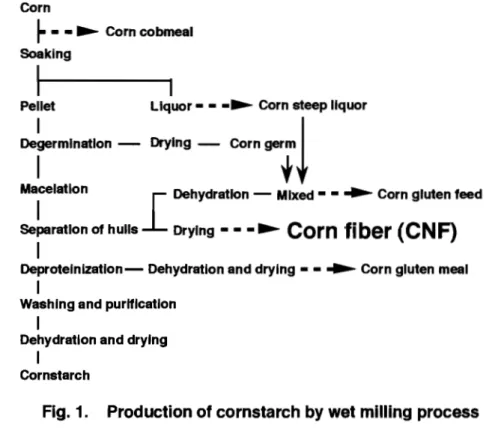
(8) vanous enzymes. In. the cultures of some basidiomycetes and fungi have been. correlated with fungal growth and fruit-body formation.. Ohga (1992) described that. the cellulase and xylanase activities of the well-fruiting strains increased rapidly in the early exponential growth phases in the cultures of L. edodes, whereas these enzyme activities of non-fruiting strains maintained very low revel throughout the culture period.. It was well known that the fructification-formation of L. edodes was. enhanced with the treatment of lower temperature and osmotic pressure.. Then it has. been indicated that the treatment for fructification inducement changed the expression of laccase and cellulase in cultures of L edodes (Ohga and Royse 2001).. Terashita et. al. (1978) reported that the fruit-body yield of some mushrooms was enhanced by the addition of an acid-protease inhibitor (Streptomyces-Pepsin Inhibitor) to the culture medium.. Thus, mycelial growth and fruit-body formation of mushrooms were. regulates by some enzymes produced by mushrooms.. Therefore, it is very valuable to. increase the yield of fruit-body of mushrooms and to improve the quality of the fruitbody that the enzymes involved in the formation and quality of the fruit-body are clarified. Corn. ~. - -. ~. Corn cobmeal. Soaking. I. Pellet. Liquor - - -~ Corn steep liquor. Dejrmlnatlon -. Drying -. I. Il&Ilon Separation of hulls. eMn. Dehydration -. J. ~t. Mixed - -. Drying - - - ~. ~ Corn gluten feed. Corn fiber (CNF). I. Deprotelnlzatlon- Dehydration and drying - - ~ Corn gluten meal. I Washing and purification. I Dehydration and drying. I Cornstarch. Fig. 1.. Production of cornstarch by wet milling process. Com fiber (CNF) is a by-product of the wet com milling process used to produce. 2.
(9) cornstarch in factories, as shown in Fig. 1.. The amount of CNF as a by-product is. about 200,000 tons per year in Japan, and 4 million tons in the world (Doner and Hicks 1997).. However, at present CNF is not used efficiently. The main components of CNF are shown in Table 1.. Table 1. The main components of CNF. CNF includes 50%. Content(%). hemicellulose, 20% each of cellulose and. Hemicellulose. 47. starch and 10% protein (a research by Oji. Cellulose. 19. cornstarch Co. Ltd.; unpublished data).. Starch. 20. Thus CNF has rich nutrients for culture. Crude protein. 12. substrate of mushrooms.. Ingredient. Crude fat and ash. Therefore, it. seems that the CNF is a promising. 2. mushroom cultivation substrate. The author has been attracted to the utilization of organic wastes and to develop a new culture substrate and an efficient cultivation method for mushroom production, and to research on utilization of CNF and clarify the components in CNF involved in mushroom cultivation.. Moreover, observation on the mechanisms of the function of. CNF to mushrooms was added. Chapter I covers CNF for use as a substrate in the sawdust-based cultivation of three edible mushrooms including L. edodes, which is the most important and popular edible mushroom in Japan. Chapter II deals with the effects of CNF hot-water soluble fraction (HWSF) on vegetative mycelial growth of edible mushrooms including mycchorizal fungi such as. Tricholoma maisutake and Lyophyllum shimeji.. The effect of CNF-HWSF on the. rhizomorph formation of Armillaria mellea was also indicated. In chapter III, the effects of CNF-HWSF on the fruit-body formation of mushrooms are described.. This chapter includes the application studies on utilization. of CNF-HWSF for sawdust-based cultivation of P. ostreatus. Chapter IV describes the promoting mechanisms in the growth of mushrooms by CNF.. Section 1 indicates the results in the chemical analysis of CNF-HWSF and the. effect of each fractionated components from CNF-HWSF on the mycelial growth of mushrooms.. Section 2 describes the stimulation of CNF-HWSF in the production of. extracellular enzymes in cultures of edible mushrooms.. 3.
(10) CHAPTER I Waste by-product, Corn fiber (CNF) for Use as a Substrate in the Sawdust-based Cultivation of Edible Mushrooms. Section 1.. Utilization of CNF for the cultivation of Pleurotu. spp.. The indoor cultivation of many kinds of mushrooms using sawdust beds has an advantage in that mushrooms can be produced steadily throughout the year.. In. additi<?n to the decrease in the amount of wood cut, the rapid expansion of mushroom production resulted in the shortage of wood sawdust, which is now a serious problem in mushroom cultivation.. Hence, the usage of agricultural and industrial wastes as. cultivation substrates of mushrooms has been increasing in recent years.. For example,. the cultivation of Lentinula edodes uses the residue of bamboo grass leaves (Katou et al. 1999); Armillaria ostoyae can be cultivated with carrot juice residue (Togashi et al. 1999); and utilized sake lees (Okumura et al. 1996), olive oil mill wastes (Zervakis et al. 1996), and coffee pulp are used for the culturing Pleurotus ostreatus (Gonzales et al. 1993).. Corn fiber (CNF) is a by-product of the wet corn milling process used to produce cornstarch in factories.. By-products such as corn cobmeal (Corn cob.), corn. steep liquor (CSL) and corn gluten meal are produced during this process. the utilization of these by-products has been examined.. Recently,. Corn cobmeal has been put. to good use in the cultivation of mushrooms on a commercial scale.. The amount of. CNF as a by-product is about 200,000 tons per year in Japan, and four million tons worldwide (Doner and Hicks 1997).. Most is used to make livestock feed after. combining corn germ with corn steep liquor except for that utilized as functional food material, such as dietary fiber (Takeuchi 1997, Egashira 1999).. The composition of. CNF is about 50% hemicellulose, about 20% each of cellulose and starch and about 10% protein.. Xylan is the major component of hemicellulose.. Mushrooms have. many strains that have high xylanase activity during the growth of fruit-bodies (Kawai 1973). Therefore, CNF is a possible alternative mushroom cultivation substrate.. 4.
(11) The present section deals with the effect of CNF on the fruit-body formation of Pleurotus spp. in a sawdust-based cultivation.. Materials and Methods. Strains. The strains used in this study were Pleurotus ostreatus (Pc 89-1) and P. cornucopiae (Pc 98-3) stock culture of Hokkaido Forest Products Research Institute.. CuUure media. Com fiber was obtained from Oji cornstarch Co... For mushroom production. substrate, ingredients (sawdust of Abies sachalinensis, com fiber and wheat bran) were mixed in the ratio as shown in Table 1-1 and water was added to raise final moisture content to 65%. bottle.. The mixture 460 g was packed into a 850 ml capacity polypropylene. A hole of diameter 2.0 cm and depth 13 cm was made at the center of the. upper surface of substrate.. The bags were sterilized at 121°C for 30 min.. Table I-I. Compositions of sawdust based media in Pleurotus ostrealus and P. comucopioe Experimental plot. Control. a. b. c. d. e. f. g. h. 0. 'ifJ.5. 75.0. 62.5. 50.0. 37.5. 25.0. 12.5. 37.5. 25.0. 12.5. Sawdust(%). 50.0. 0. 0. 0. 0. 12.5. 25.0. 37.5. 50.0. 50.0. 50.0. Wheat bran (%). 50.0. 12.5. 25.0. 37.5. 50.0. 50.0. 50.0. 50.0. 12.5. 25.0. 37.5. CNF(%). Culture materials were curculated by dry weight bases.. CuUure condition. In P. ostreatus, five grams of the spawn were inoculated into the hole of substrate in the bottle and incubated at 22°C, relative humidity 70% in the dark. When the mycelia were grown throughout in the bottle, the surface of mycelia was. 5.
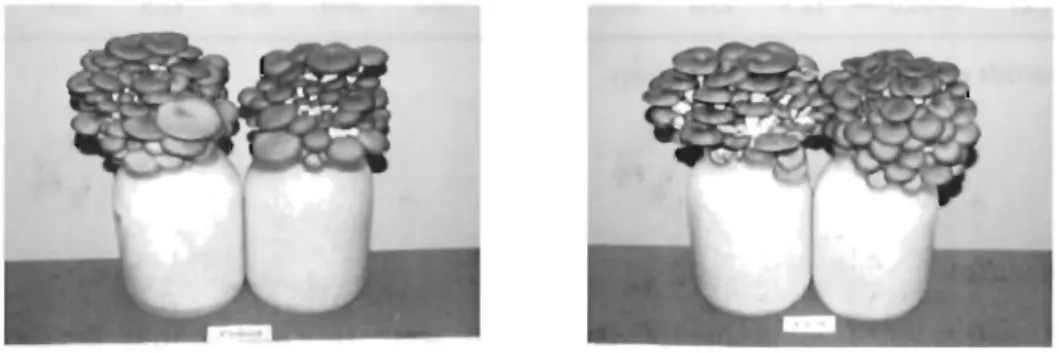
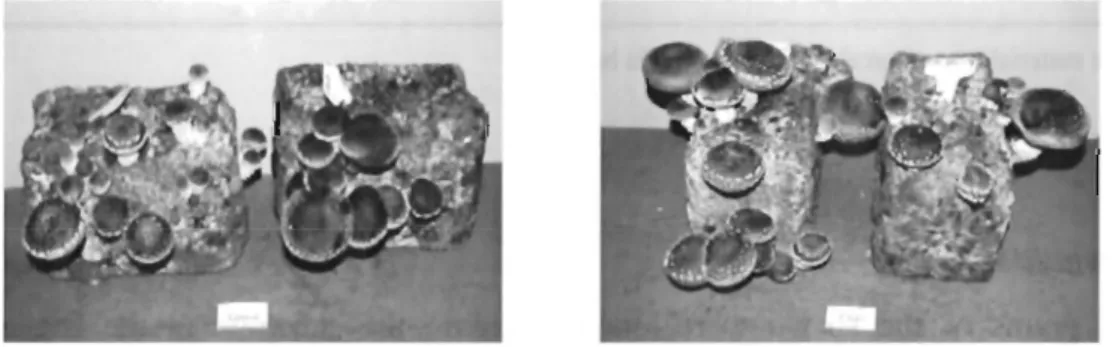
(12) removed (Kinkaid). (2 h).. Then the colonized substrate in the bottle was poured into water. Then fruit-body formation was performed at 12°C, relative humidity 85% and. 350 lux illumination was provided for 12 h daily. In P. cornucopiae, five grams of the spawn were inoculated into the hole of substrate in the bottle and incubated at 22°C, relative humidity 70% in the dark until formed of fruit-bodies primordia.. Then fruit-body formation were performed at 16°C,. relative humidity 85% and 350 lux illumination was provided for 12 h daily.. Evaluation offruit-bodies Fruit-body yields were measured as fresh weight grams, each average and standard division (SD) were calculated.. Results. Effect of eNF on sawdust-based cultivation of Pleurotus ostreatus To examine the utilizable possibility of CNF for fruit-body production of mushroom, Pleurotus ostreatus was cultivated on sawdust-based medium with CNF. Fig. 1-1 shows the picture of one example as to the fruit-body development of P.. ostreatus.. The fruit-bodies obtained from the medium with CNF were by no means. inferior to control without CNF, moreover, the number of fruit-body development has increased by the addition of CNF.. Fig. 1-1. The effect of CNF on fruit-body formation of Pleurotus ostreatus Left shows control. Right shows experimental plot c: 25 % and 100% of CNF instead of wheat bran and sawdust, respectively.. 6.
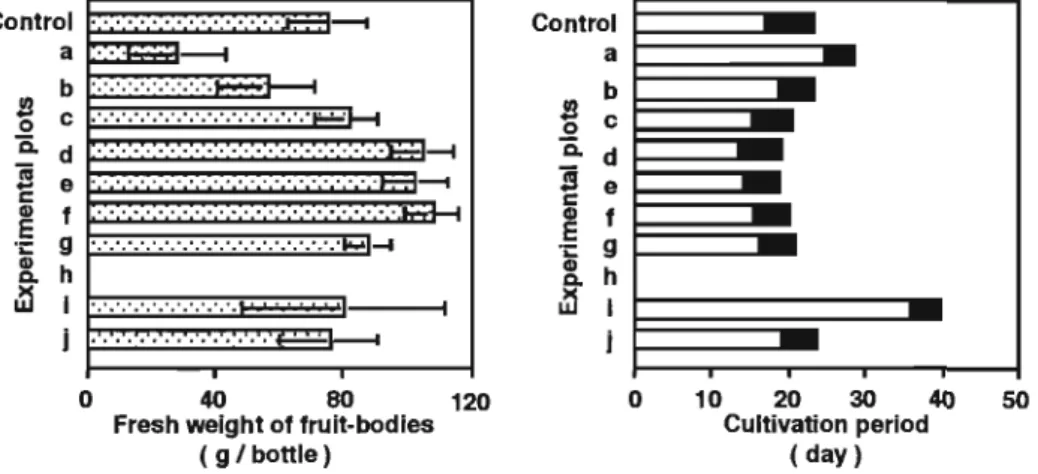
(13) The fruit-body yield and the cultivation period of P. ostreatus were shown in Fig. 1-2.. When this mushroom was cultivated on medium of only CNF and bran without. sawdust, the fruit-body yield was increased.. Especially, on the medium of which the. ratio of CNF to bran was 5 to 3 or 1 to1 as shown in experimental plot c and d, fruitbody yield increased about 1.6 times that of the control.. Also, the terms up to. germination were shortened about 3-9 days and the days required for harvest were reduced about 4-11 days by supplementation with CNF.. On the medium in which 25-. 75% of bran was replaced by CNF (experimental plot h-j), however, the decrease of fruit-body yield and a delay of cultivation period were appeared.. ' 0, ' 0 • • • • • • •• ••• '. 0' ' .. 0. '0'. a . ..... . ... ... .. ., o. b············································. S. e .......................................... .. c. Q. d. 51. . ..... .... ..... .... . ..... -. .. ........................................... E. ..................................... i. g .E" h. ........ .. ......'lI.I. o. o. 40 80 120 160 Fresh weight of fruit-bodies (g I bottle). 10. 20 30 40 Cultivation period (day). 50. Fig. 1-2. The effect of CNF on fruit-body yield and cultivation period of Pleurotus ostreatus. Left: fruit-body yields are expressed as means plus standard errors (n=16) . Right: D shows for spawn running days, 0 shows the days from soaking to germination days, _ shows the period of fruit-body growing. For symbols refer to Table 1-1.. Effect of eNF on sawdust-based cultivation of Pleurotus cornucopiae The effect of CNF on the production of Pleurotus cornucopiae, which is being cultivated mainly in Hokkaido and is on the market in Japan, was examined.. Fig. 1-3. shows the picture of one example as to the fruit-body development of P. cornucopiae. The fruit-bodies obtained from the medium with CNF were by no means inferior to. 7.
(14) those obtained from the control medium without CNF.. The fruit-body yield and the. cultivation period of P. cornucopiae, are shown in Fig. 1-4.. The fruit-bodies yields on. the medium in which 25-100% of sawdust was replaced by CNF (experimental plots cg) increased to 88.2-107.7 g / bottle from 75.4 g / bottle of the control medium. Also, the terms required for germination were shortened about 1-3 days and the periods required for harvest were reduced about 2-4 days by supplementation with CNF. However, on the medium in which 25-75% of bran was replaced by CNF (experimental plot 1 and j) , the fruit-body yields decreased the cultivation periods were delayed.. While, no fruit-body formation was recognized on the medium 37.5% of. bran was replaced by CNF (h).. Fig. 1-3. Effect of CNF on fruit - body formation of Pleurotus cornucopiae (Left shows control, Right shows experimental plot f: 50% of CNF instead of sawdust) .. Control···· · ·· · ····· · "~--1. a .. ~. b······· ·············. b. c. · .·. · .· . · .·.· . · . · .·. · .·. ·. ·.···.··~. J!! c 0. Q. d ............ ..... ... . ... ~ ia C e ....................... . ~ f ................... ......~ '1:. 8.. ~. --. Control a. Q. d. S c e GI. f. '1:. 9. E. 9 ·.·.·.·.·.·.·.·.·.·.·.·.·.·.·.·.·.·.·.·.· ....1-1. GI D.. h. ~. I ....................... .. h. J .. . ....... . .. ... o. o. 40 80 120 Fresh weight of fruit-bodies ( 9 I bottle ). . -. 10. 20 30 40 Cultivation period (day). 50. Fig. 1-4. Effect of CNF on fruit-body yields and cultivation period of Pleurotus cornucopiae Left: fruit-body yields are expressed as means plus standard errors (n=16). Right: 0 shows for germination days, • shows the period of fruit-body growing. For symbols refer to Table I-I.. 8.
(15) Discussion. Altering various factors, e.g., genotype, culture substrate, nutrient supplement and environmental condition have an influence on the fruit-body yield of mushrooms. Especially, carbon-nitrogen (C/N) ratio and concentration of nitrogen source in sawdust culture influence significantly fruit-body production (Suzuki 1979, Boyle 1998).. In P. ostreatus and P. cornucopiae, about 30-40 of initial C/N ratio were most. suitable for fruit-body production and their fungi were required much nitrogen source at fruiting developments (Harada et al. 1999).. When 50-100% of CNF instead of. sawdust, the fruit-body yield of these fungi increased markedly.. And also in P.. ostreatus, on the medium the ratio of CNF to bran was 3 tol or 5 to 3 without sawdust,. the fruit-body yield increased and shortened the cultivation period.. Because CNF. included much more protein than sawdust, it seemed that the increase of fruiting yields was owing to high concentration of nitrogen source in the medium. In this section, the author described CNF is a useful culture material for sawdust-based cultivation of P. ostreatus and P. corunicopiae.. Also, possibility that. CNF has a component to promote the growth of fungi was indicated from reduction in cultivation period.. Summary. With Pleurotus ostreatus and P. cornucopiae the production of fruit-body on CNF based substrate were examined.. The fruit-body yield increased at 1.2-1.6 times. by using CNF instead of sawdust or wheat bran.. In addition, the cultivation period. was shortened 2-11 days compared to that of the control without CNF.. CNF is useful. in producing the fruit-body, which increases yield and shortens the cultivation period.. 9.
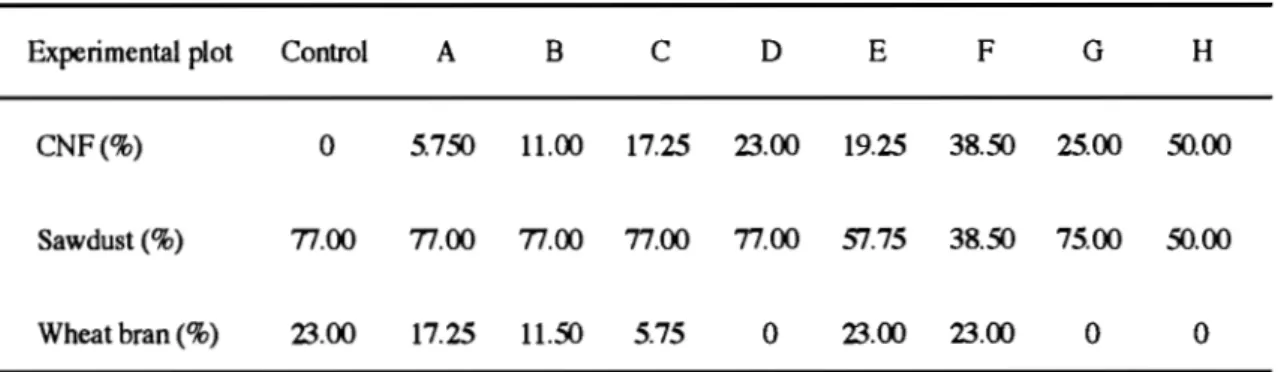
(16) Effect of CNF on the formation and yield of fruit-body in the. Section 2.. sawdust-based cultivation of Lentinula edodes. Lentinula edodes, shiitake mushroom, is one of the traditionally important edible mushrooms cultivated in the world.. In 1997, the worldwide production of L. edodes. reached 1,564,400 ton, which was about 25.4% of the total mushroom supply in the world.. Altering various factors, e.g., genotype, culture substrate (natural logs and. sawdust-based substrate), nutrient supplement and environmental condition have improved cultivation efficiency of L. edodes.. These improvements have contributed. to a consistent market supply of high quality mushrooms.. In particular, sawdust-. based cultivation has contributed to expanding production and consumption of L.. edodes.. Sawdust-based substrates usually consist of hardwood sawdust, rice bran and. wheat bran.. The decrease in the amount of wood sawdust produced in the world and. a rapid expansion of the mushroom production resulted in a shortage of hardwood sawdust.. The shortage has being become a serious problem in mushroom cultivation.. In section 1, CNF was proved to be useful in the formation and yield of the fruitbody of Pleurotus ostreatus and P. cornucopiae in sawdust-based cultivation. The present section deals with the effect of CNF on the fruit-body formation of L. edodes in sawdust-based cultivation.. Materials and Methods. Strain A commercial strain of Lentinula edodes Hokken No. 600 (Hokken Co.) was used in this study.. CuUure media CNF was obtained from Oji cornstarch Co. (about 10% of moisture content). For mushroom production substrate, ingredients (sawdust of Betula ermanii, CNF and wheat bran) were mixed in the ratio as shown in Table 1-2 and water was added to raise. 10.
(17) final moisture content to 65%.. The mixture 2.5 kg was packed into a polypropylene. bag, forming the final size 12 X 12 X 15 cm.. Two holes of diameter 2.5 cm were. made at the center of the upper surface of the substrate.. The bags were sterilized at. 121°C for 30 min.. Table 1-2. Compositions of sawdust based media in Lentinula edodes Control. A. B. C. D. E. F. G. H. 0. 5.750. 11.00. 17.25. 23.00. 19.25. 38.50. 25.00. 50.00. Sawdust (%). 77.00. 77.00. 77.00. 77.00. 77.00. 57.75. 38.50. 75.00. 50.00. Wheat bran (%). 23.00. 17.25. 11.50. 5.75. 0. 23.00. 23.00. 0. 0. Experimental plot CNF(%). Culture materials were curculated by dry weight bases.. Culture condition Ten grams of the spawn were inoculated onto the substrate in the bag and incubated at 22°C and relative humidity 70% in the dark for 30 days, then 350 lux illumination was provided for 12 h daily for 60 days.. At the end of the incubation. period, the bags were removed, and placed at 16°C, relative humidity 85% and with alternate 12 h illumination (350 lux) and 12 h darkness treatment to induce fruit-body formation.. After the 1-4 th flushes, the substrates were soaked in water and cultures. were carry out until 5 th flush.. Evaluation offruit-bodies The size of fruiting was classified into five groups by the diameter of the pileus as follows: LS (less than 3 cm and malformation), S (3-4.5 cm), M (4.5-6 cm), L (6-8 cm) and LL (more than 8 cm).. Fruit-body yields were measured as fresh weight. grams, these averages and SD (Standard division) were calculated.. 11.
(18) Results. Utilization ofCNF for the cultivation of Lentinula edodes The effects of CNF on the production of L. edodes, which is the most important and popular edible mushroom in Japan, were examined.. Fig. 1-5 shows the picture of. one example as to the first flush of fruit-body development of L. edodes.. The sizes of. fruit-bodies developed from the medium supplemented with CNF (Right) were larger those from the control medium (Left).. Fig. 1-5. Effect of CNF on fruit - body formation of Lentinula edodes (Left: control, Right shows experimental plot E: 25% of CNF instead of sawdust) .. ~. 800. E. CI. li ~. ~. ~ ...... 600. CI. I. 400. '0 0 .c .!.. ~. 200. '0 "C. li. >. 0 Control A. B. C. 0. E. F. G. H. Experimental plots. Fig. 1-6. Effect of CNF on the fruit-body yield of Lentinula edodes Size of pileus diameter D : LS (3 em or less and monstrosity), D : S (3 -4.5 em) , D : M (4.5-6 em), 0 : L (6-8 em), . : LL (8 em or more).. For symbols refer to Table 1-2.. 12.
(19) The effects of CNF on the total fruit-body yield and size of pileus diameter were shown in Fig. 1-6.. The total fruit-body weight up to fifth flush produced on the. substrate with 25% CNF instead of sawdust (683.8 g) or wheat bran (628.6 g) was almost same as that on the control substrate (662.8 g).. Moreover, many large size. fruit-bodies such as LL and L were obtained from these substrates.. However, when. the concentration of CNF was over 50%, fruit-body yields were declined.. Discussion. The properties of CNF seem to be intermediate between those of sawdust and wheat bran in the sawdust-based cultivation because the protein content of CNF is mostly about 10%, this quantity is much larger than sawdust, less than that of wheat bran, and CNF is similar to a chip of wood in form, and has the ability to maintain water inside. It was reported that the high concentration of nitrogen source was inhibited the. growth of L. edodes (Katou et al. 1999).. In cultivation of L. edodes, the fruit-body. yield decreased little when 50% of CNF was used instead of wheat bran, while, that markedly declined when 50% of CNF was used instead of sawdust.. The result may. be caused by a rise of nitrogen source with CNF. In this section, the utilization of CNF for sawdust-based cultivation of L. edodes was described. body.. As the results, CNF was effective in improving the quality of fruit-. The more remarkable effect of CNF on the reduction of the cultivation period. required for the fruit-body development of L. edodes could be expected by the treatment to induce the fruit-body formation in an early stage because the cultivation period required for the fruit-body development of P. ostreatus or P. cornicopiae was shortened by adding of CNF to the culture substrates.. 13.
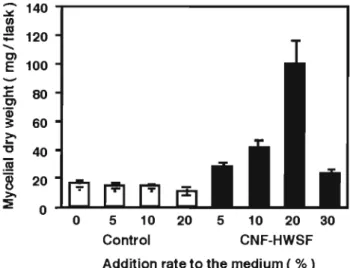
(20) Summary. The effect of com fiber (CNF), which is a by-product of the wet com milling process of the production of cornstarch in factories on the fruit-body formation of. Lentinula edodes in a sawdust-based cultivation, was examined.. The increase in. fruit-body yield was not observed, but the pileus diameter of fruit-body tended to enlarge with added CNF.. CNF is effective in improving the quality of fruit-body of L.. edodes.. 14.
(21) CHAPTER II Promoting Effect of the Hot Water Soluble Fraction (HWSF) from CNF on Vegetative Mycelial Growth in Edible Mushrooms. Section 1.. Effect of the CNF-HWSF on vegetative mycelial growth in edible mushrooms including mycorrhizal fungi. In chapter I, the author showed that the CNF useful culture material for sawdustbased cultivation of Pleurotus ostreatus, P. cornucopiae and Lentinula edodes. Therefore, it was suggested that the growth promoting component for fungal in CNF material was contained from the reduction in cultivation period and the increase of fruit-bodies yields.. Terashita et al (1997) have reported that the yield of fruit-bodies. on Pholiota nameko and Hypsizygus marmoreus increased with CNF as a growth substrate for the sawdust based cultivation, and they suggested that the existence of mycelial growth promoting components in the hot water soluble extracts from CNF. This section describes the promoting effects of CNF-HWSF upon vegetative mycelial growth containing mycorrhizal fungi.. Material and Methods Strains Lentinula edodes (Mori No. 465), Hypsizygus marmoreus (Takara No.1), Pleurotus ostreatus (Kitamura; obtained from Kin-ki Nyugyo Co.), P. eryngii (axenic isolate from a commercial mushroom), Flammulina velutipes (lFO 7777), Grifola /rondosa (Mogami), and Pholiota nameko (Meiji) were used in these experiments.. In. addition, two species fungi, LyophyUum shimeji (MH 01721) and Tricholoma matsutake (IFO 30605), mycorrhizal mushrooms, were also used. stored on potato dextrose agar medium (Nissui Co.) in a test tube.. 15. These fungi were.
(22) Culture media. Potato-dextrose liquid (POL) medium consists of potato extract (200 g boiled in 500 ml distilled water), 15 g glucose and 1mg thiamine hydrochloride per liter of distilled water.. Partly modified matsutake liquid (PMML) medium was prepared. according to the method of Terashita et al. (2000).. This medium consists of 22.7 g. glucose, 5 g dried beer yeast (Wako Pure Chern.), and 5 g Sunpeal CP (commercially available) per liter of distilled water. The mixture was heated for 30 minutes, and then 1.0 ml thiamine hydrochloride solution (0.1 g thiamine hydrochloride per 10 ml distilled water) was added after the residue was removed. The initial pH of this medium was adjusted to 5.1 with 1 N HCl.. Preparation of CNF· HWSF. Com fiber (100 g) was mixed with 1L distilled water and extracted for 3 h at 80°C.. After the residue was removed by centrifugation at 10,000 g (O°C, 10 min) the. supernatant solution was concentrated at 40°C to 100ml by a rotary evaporator.. Inoculations and culture conditions. The POL medium was supplemented with 5, 10, 20 and 30% (v/v) CNF-HWSF and dispensed in 16-ml aliquots in 100-ml Erlenmeyer flasks before autoclaving at 121°C for 10 min.. As inoculum, a mycelial block (diameter 5 mm) was cut from a. plate culture that had grown on a POA medium for 14 days at 24°C in a Petri dish (diameter 90 mm).. The incubation was carried out at 24°C for 15 days.. For the. mycorrhizal mushrooms that grew on the POL and PMML media, the incubation was carried out at 24°C for 30 days (L. shimeji) or 60 days (T. matsutake).. Measurement of vegetative mycelial growth. The vegetative mycelia after incubation were separated from the medium by filtration and washed thoroughly with distilled water, after which they were dried at 80°C for 24 h.. Their dry weight was measured after cooling in a desiccator.. 16.
(23) Results. Effect of CNF -HWSF on the mycelial growth of edible mushrooms Fig. II-I illustrates the picture of growth obtained with CNF-HWSF tested. The vegetative mycelial growth of L. edodes on the PDL medium with added CNFHWSF is shown in Fig. 11-2.. Mycelial growth was enhanced by adding 5-20% CNF-. HWSF to the medium; but at 30% CNF-HWSF the results were almost identical to the control (without CNF-HWSF).. In particular, addition of 20% CNF-HWSF to the. medium increased the mycelial dry weight to 98.6 mg/tlask.. This weight was about. 9.5 times more than that of the control (lOA mg/tlask).. Control. Fig. II-I. Mycelial growth of Lentinula edodes on a PDL medium with CNF-HWSF The vegetative mycelia were cultured for 15 days at 24°C in a PDL medium with or without 20% of CNF-HWSF or disttiled. Distilled water CNF-HWSF. oX. 140. (/). --. .!!! 120. ,. C). E 100. .c. C). 'a;. ...==>"tJ ~. "8. >:!. 80. 60 40 20 0. o. 5 10 Control. 20. 5. 10 20 30 CNF-HWSF. Addition rate to the medium ( % ). Fig. 11-2. The Promotive effect of CNF-HWSF on the vegetative mycelial growth of Lentinula edodes The vegetative mycelia were cultured for 15 days at 24°C. Values are means ± S. D. (n=8) . Open bars, potato-dextrose liquid (PDL) medium with added distilled water (control) ;jilled bars, PDLmedium with added CNF-HWSF.. 17.
(24) The promotive effect of CNF-HWSF on vegetative mycelial growth of several species of mushrooms is shown in Table 11-1.. When these fungi were cultured on. PDL medium with CNF-HWSF added, the mycelial dry weight was greater than that of the. control. (without. CNF-HWSF).. The. optimal. experimentally. derived. concentrations for mycelial growth were 10% for H. marmoreus (2.56 times), P. eryngii (2.23 times) and 20% for L. edodes (9.46 times), P. nameko (6.94 times), G. frondosa (3.68 times), P. ostreatus (2.82 times) and F. velutipes (2.23 times).. Table II-I.. Promotive effect of CNF-HWSF on the vegetative mycelial growth of several edible mushrooms. Mushroom. Concentration of supplement ( % ). Lentinula edodes. 5. 10. 20. 1.86. 2.78. 9.46. 6.41. 6.94. Pholiota nameko Hypsizygus marmoreus. 1.86. 2.56. 2.19. Grifola jrondosa. 1.48. 3.66. 3.68. Pleurotus ostreatus. 1.40. 1.90. 2.82. Pleurotus eryngii. 1.71. 2.23. 1.84. Flammulina velutipes. 1.48. 1.70. 2.23. Growth ratio obtained for control (distilled water) was set at 1.00. Vegetative mycelia were cultured for 15 days at 24°C in potato-dextrose liquid (PDL) medium. Data represent averages of triplicate experiments, with six Erlenmeyer flasks per experiment.. Effect of CNF -HWSF on mycelial growth of myco"hizal mushrooms Table 11-2 shows the effect of mycelial growth on L. shimeji forming mycorrhiza. On the PDL medium for 30 days at 24°C, the dry weight of mycelia increased by 3.72 times when 5% CNF-HWSF was added to the medium.. However, the promotive. effect of CNF-HWSF in PMML medium was only 1.37-fold (5% supplemented) or 1.65-fold (10% supplemented).. 18.
(25) Table 11-2.. Promotive effect ofCNF-HWSF on the vegetative mycelial growth of Lyophyllum shimeji Dry weight of mycelium (mg / flask). Addition to the medium (%). PDLmedium. PMMLmedium. Distilled water ( Control). 5. 3.15. 120.68. ±. 14.81. 7.00. 124.20. ±. 20.76. 29.35. ± ± ±. 83.35 45.70. ± ±. 33 .86 17.06. 165.93 205.54. ± ±. 15.06 30.91. 22.42. 10. 23 .20. 20. 7.19. CNF-HWSF 5 10. o. 20. Vegetative mycelia were cultured for 30 days at 24°C in PDL and partly modified matsutake liquid (pMML) medium. Data represent the average of duplicates with six Erlenmeyer flasks (means ± S. D).. 200. POL medium 150 ~ ~. a:J. ;:. ....... 100. OJ. E. -. 50. .c. OJ. 'CD. 0. ...>-. 150. Fig. 11-3. Promotive effect of CNF-HWSF on the vegetative mycelial growth of Tricholoma. ~. " :!. ~>-. IIwtsutak.e. 100. ~. 50 0. o. 0.1 0.51 .25 2.5. 5. 0.1 0.51 .25 2.5. Control CNF-HWSF Addition rate to the medium (%). 5. The vegetative mycelia were cultured for 60 days at 24°C. Values means ± S. D. (n=6) . PMML, partly modified matsutake For symbols liquid medium. refer to Fig. II- I.. The effects of CNF-HWSF on mycelial growth of T. matsutake are shown in Fig. 11-3.. The preliminary experiments examined the same concentrations (10% and 20%). of additives for this mushroom, but the hyphae did not grow with these CNF-HWSF concentrations.. The effect of mycelial growth of T. matsutake was then tested again. 19.
(26) at lower CNF-HWSF concentrations.. As a result, the best promotive effect of CNF-. HWSF was shown to be at a concentration of 1.25% (3.33 times that of the control) in PDL medium and at concentration of 0.5% (1.53 times) and 1.25% (1.51 times) in PMML medium.. Discussion. The effects of CNF-HWSF on mycelial growth of seven edible mushroom species were examined.. The results showed that the mushrooms tested grew well. when CNF-HWSF was added.. The promotive effect of CNF-HWSF (10-20%) was. more efficient on the slow-growing mushrooms such as L. edodes and P. nameko than in the rapid-growth species such as F. velutipes and P. ostreatus.. However, mycelial. growth was inhibited in the 30% of the CNF-HWSF sample of L. edodes.. This effect. was confirmed using mycorrhizal mushrooms (L. shimeji and T. matsutake).. CNF-. HWSF showed a stronger promotive effect on mycelial growth of these fungi in PDL medium than in PMML medium.. It was thought that PMML medium is richer in. nutrition for mycorrhizal species than PDL medium.. Hence, these mushrooms did. not necessarily utilize the CNF-HWSF (especially the macromolecular substances as nutritional substrate) in PMML medium.. The increase in the mycelial dry weight of. T. matsutake when 1.25% CNF-HWSF was added to the PDL medium can be. explained by the promotive factor in the CNF-HWSF supplied. In previous reports of growth-enhancing agents for mushrooms, lignin sulfonate of MW 1,000-2,000 daltons, which is fractionationed from sulfite pulp waste (Inaba et al. 1981, 1983), and lignin from commercial suppliers (Azuma and Kitamoto 1994) have demonstrated positive effects.. Moreover, it has been recognized that lignin. sulfonate is involved in the enhanced mycelial growth on T. matsutake (Inaba et al. 1993). Generally, mushrooms use glucose as their primary carbon source; but when the glucose and nitrogen source concentrations are high in the medium, mycelial growth is inhibited (Azuma and Kitamoto 1994, Boyle 1998).. The mycelial growth of L.. edodes is also impeded by the presence of acetic acid, which is generated from beech. 20.
(27) sawdust sterilized by autoclaving (Meguro et al. 1991).. However, acetic acid. enhances the hyphal growth on G. jrondosa, Woljiporia cocos and Dendropolyporus umbellatus (Mizutani 20(0).. The effect of CNF-HWSF, as mentioned above, was greater on the slow-growing species.. This result is similar to the reports from Terashita et al. (1997), who noted. that the increased yield of fruit-bodies due to CNF supplement in sawdast-based cultivation was more remarkable on mushrooms that take a long time to cultivate. Kitamoto et al. (1971) reported that rapidly growing species rely on mycelium and medium nutrients, whereas slow-growing species depend almost entirely on nutrients These differences of nutritional physiology. in mycelia for fruit-body development. were suggested to reflect mycelial growth.. Many studies have explored the relation between the mycelial growth and the carbon source of the medium.. Azuma and Kitamoto (1994) reported that glucose,. maltose and starch were the most suitable carbon sources for L. edodes, and fructose and sucrose regulated mycelial growth. concentration was 2-3%.. They stated that the optimal glucose. Coriolus pubescens and L. tigrinus are also reported to. grow well on xylan and celluloses (avicel and CMC), and growth is almost the same as when glucose is added to the medium (Elisashvili et al. 1999).. Moreover, in the case. of Volvariella volvacea, when 13 carbon sources (e.g., glucose, starch and xylan) were added to the medium, only arabinose and sorbose could not be utilized (Cai et al. 1999). CNF-HWSF. IS. thought to contain numerous components which growth. substrates for mushrooms because CNF includes protein, starch, arabinoxylan, cellulose and the other ingredients.. Though it is also considered that the positive. effect is shown for the growth of mushrooms by these components doing with the growth substrates, it is difficult to be considered that the so remarkable promoting effect only in this nutrient composition is obtained.. It is thought that promoting. component expect for the nutrition substrates may exist for CNF-HWSF. Based on the results obtained here, it is thought that CNF-HWSF is sufficient for promoting vegetative mycelial growth of edible mushrooms.. Further research is. necessary concerning the isolation and characterization of promotive substances to reveal the mechanisms involved.. 21.
(28) Summary The effects of adding a hot water-soluble fraction (HWSF) from CNF to a medium on the vegetative mycelial growth of nine edible mushrooms such as Lentinula edodes and Pholiota nameko were investigated.. The results showed that. the mycelial growth of these fungi was markedly increased (1.4-9.5 times that of the control) by adding 5%-20% CNF-HWSF to the medium.. These promotive effects. were also showed on mycorrhizal mushrooms, such as Tricholoma matsutake (3.3fold) and Lyophyllium shimeji (3.7-fold).. The promotive actions were more effective. on slow-growing mushrooms (L. edodes and P. nameko) than on rapidly growing mushrooms (Pleurotus ostreatus and Flammulina velutipes).. The results obtained in. this experiment suggest that CNF-HWSF can be used as a promotive substance for cultivating edible mushrooms.. 22.
(29) Section 2.. Rhizomorphs production on Armillaria genus by hot water soluble fraction from CNF. The vegetative mycelia of mushrooms were classified roughly into two groups by the difference of their organization and function.. One is aerial hyphae which. produced energy and the other is a submerged hyphae which has the abilities of decomposed and assimilated nutriment.. It was difficult to distinguish the difference. with visually in many mushrooms, but the mycelia of Armillaria genus on a synthetic medium such as potato dextrose agar medium is able to recognize between aerial hyphae and submerged hyphae that was called rhizomorphs.. The term "rhizomorph". is means "having the form of a root". In this section described the effect of CNF-HWSF on rhizomorph production of endomycorrhiza, Armillaria mellea and A. tabescens.. Material and Methods. Spawn strains Armillaria mellea (axenic isolate from a commercial mushroom), A. tabescens. (FPF-A. t. 9705 B and FPF-A. t. 0007 C; obtained from Fukuoka Pref. Forest Res.) were used in this study.. These fungi were stored on potato dextrose agar (PDA). medium (Nissui Co.) in a test tube.. Preparation of CNF- HWSF. Com fiber (100 g) was mixed with 1 L distilled water and extracted for 3 h at 80°C.. After the residue was removed by centrifugation at 10,000 g (O°C, 10 min) the. supernatant solution was concentrated at 40°C to 100 ml by a rotary evaporator.. Inoculations and cuUure conditions. The PDA medium was supplemented with 5%, 10%,20% and 30% (v/v) CNFHWSF, and dispensed in 13-ml aliquots in 20-ml test tube, before autoclaving at 121°C for 15min.. As inoculum, a mycelial block of 5 mm square was cut from a. 23.
(30) slant culture that had grown on a PDA medium for 30 days at 24°C in a test tube. The incubation was carried out at 24°C for 20 days.. Measurement of vegetative mycelial growth After incubation, the agar in the medium was melted in boiling water and washed thoroughly with distilled water.. Then aerial hypae and rhizomorphs were. separated and their dried at 80°C for 24 h and dry weight measured after cooling in a desiccator.. Results. Effect ofCNF-HWSF on the rhizomorphs productions ofArmillaria mellea Fig. 11-4 illustrates the growth of A. mellea obtained with or without CNFHWSF tested. HWSF.. The rhizomorphs of A. mellea were remarkably extended with CNF-. The aerial mycelial growth on the PDA medium was almost identical to the. control at added CNF-HWSF.. While, as shown in Fig. 11-5, A. mellea produced. abundant rhizomorphs when cultured on a PDA medium that is supplemented with 5%-20% of CNF-HWSF, and addition of 20% CNF-HWSF to the medium increased the rhizomorph dry weight to 133.52 mgt test tube (control; 12.96 mg/test tube) .. Control. CNF-HWSF. Fig. 11-4. Effects of CNF-HWSF on mycelial growth of Armillaria mellea The vegetative mycelia were cultured in PDA medium for 16 days at 24°C (Left: control, right; 10% of CNF-HWSF was added).. 24.
(31) ... ... ~. 150~---------------------~. B. ~. C'I. 0). 'iii. 'CD. ~. ~. ~;-100. ~. ,,~. "..a ~a. -~a....... ~ ....... GlO). 00). ~E E_. E E 50. 0-. ,~. ca. ~. 'i:. a:. GI. <C. Control. Fig. 11-5.. 0 .........---1.--Control 5. 5 10 20 CNF-HWSF (%). 10. 20. CNF-HWSF (%). Effects of CNF-HWSF on aerial mycelial growth (A) and. rhizomorph productions (B) of Arm.illaria m.ellea The vegetative mycelia were cultured for 16 days at 24°C. Values are means ± S. D. (n=5) . Open bars, potato dextrose agar (PDA) medium (control) ;. filled bars, PDLmedium added CNF-HWSF.. Effect ofCNF-HWSF on the rhizomorphs productions of Armillaria tabescens. Table 11-3.. Strain A. t. 9705 B. A. t. 0007 C. Effect ofCNF-HWSF on aerial mycelial growth and rhizomorph production of ArmiUaria tabescens Addition to the medium (%). Dry weight of mycelium ( mg / tube ) Aerial hypha. Rhizomorph. 0. 44.78 ± 11.98. 24.05 ± 12.98. 5. 47.90 ± 5.33. 36.98 ± 5.50. 10. 38.82 ± 9.41. 74.85 ± 16.36. 20. 36.66 ± 6.26. 60.68 ± 15.62. 30. 47.85 ± 6.17. 96.50 ± 15.54. 0. 69.46 ± 14.84. 9. 1O ±. 5. 69.92 ± 7.54. 37.25 ± 15.41. 10. 66.22 ± 14.33. 41.84 ± 11.28. 20. 61.82 ± 14.49. 106.03 ± 22.14. 30. 68.94 ± 12.96. 70.40 ± 7.06. 0.52. The vegeta.tive mycelia were cultured for 21 days at 24°C in PDA medium. Data represent averages of diplicate with 5 test tubes . means ± S. D. (n=5). 25.
(32) The promotive effect of CNF-HWSF on rhizomorphs production of A. tabescens, A. T. 9705-B and A. T. 0007-C is shown in Table 11-3.. When these fungi were. cultured on PDA medium with CNF-HWSF added, the dry weight of rhizomorph was greater than that of the control, but no influence on aerial hypha was detected in two strains.. Discussion. A. mellea can be grown in culture on several media.. The production of. rihizomorphs in culture, however, has depended upon the presence of a complex substrate such as extract of malt, yeast, potato or wood of several tree species.. This. has prevented an investigation of the nutritional requirements for rhizomorph production.. The determination of factors affecting their production is of particular. interest since the rihizomorphs function in the penetration of host roots. Previous reports has shown that A. mellea will grow vigorously and produce abundant rihizomorphs when cultured on a synthetic medium that is supplemented with relatively low concentrations of ethanol, propanol or butanol (Weinhold 1963), and the effects of these alcohols were appeared only at the existence of amino acids in the medium (Weinhold 1966).. The growth-promoting effect of alcohol reported on. Fusarium solani (Cohrane et al. 1963) and for certain aliphatic aldehydes and alcohols with several Hymenomycetes (Fries 1961). The effectiveness of natural material. In. production by A. mellea is well known.. promoting growth and rhizomorph Also, a substance produced by. Aureobasidium pullulans has been shown to be very action in stimulating rhizomorph formation (Pentland 1965). It is a common observation that many fungi supplied with a natural substrate. respond by increased activities such as growth, sporulation, fruiting development and rhizomorph production.. However, often the identity of the active ingredients and the. mechanism of action are not knowm.. As A. mellea and A. tabescens was pathogeneic. fungi, an understanding of factors that affect the production and development of. 26.
(33) rhizomorphs is also important.. Summary The effect of CNF-HWSF on rhizomorph production of Armillaria mellea and A. tabescens in agar medium were examined.. Although no growth-promoting affects of. CNF-HWSF were recognized for aerial hyphae, when CNF-HWSF was present in PDA medium, the rhizomorphs were extended too much.. From these results, CNF-. HWSF was thought affecting the supply of the growth substrates of mushrooms.. 27.
(34) CHAPTER III Utilization of CNF-HWSF for Mushroom Cultivation. Effect of CNF-HWSF on fruit-body development of Lentinula. Section 1.. edodes and FlammuUna velutipes in liquid medium. In chapter II, the author described that the hot water soluble fraction (HWSF) from CNF has a promoting effect on mycelial growth of various edible mushrooms (1.4-9.5 times that of the control) including mycorrhizal fungi such as Tricholoma matsutake (3.3-fold) and Lyophyllium shimeji (3.7-fold) (Arai et al 2003).. In this. section, effect of CNF-HWSF on the fruit-body formation of Lentinula edodes and Flammulina velutipes in a liquids medium were examined in laboratory scale with the. object of utilizing of CNF and CNF-HWSF in practical culture application.. Material and Methods. Strains Lentinula edodes (Mori No. 465) and Flammulina velutipes (IFO 7777) were. used in this study.. These fungal strains were transferred annually on PDA medium.. Culture media The glucose-peptone-yeast extract liquid (GPYL) medium was used as the basic medium.. It was composed of 50 g glucose, 2.5 g poly peptone, 2.5 g yeast extract,. 1.0 g KHZP04, 0.5 g MgS04 • 7HzO and 0.5 g CaClz ·2HzO in 1 liter distilled water and 20 ml of mineral solution (0.25 g FeClz • 6HzO, 0.36 g MnCl z • 4HzO, 0.2 g ZnClz and 0.05 g CuS04 • 5HzO I L) was added.. Preparation o/CNF- HWSF Com fiber (100 g) was mixed with lL distilled water and extracted for 3 h at. 28.
(35) 80°C.. After the residue was removed by centrifugation at 10,000 g (O°C, 10 min) the. supernatant solution was concentrated at 40°C to 100 ml by a rotary evaporator.. Inoculations and culture conditions. The GPYL medium was supplemented with 10% (F. velutipes), 20 % (L.edodes) CNF-HWSF, and dispensed in SO-ml aliquots in a tall Petri dish (diameter 11 cmX 7cm), before autoclaving at 121°C for 5 min.. For the mycelial inoculum, a mycelial. block (diameter 10 mm) was cut from a plate culture which had been grown on a PDA medium at 24°C in a Petri dish (diameter 90 mm) for 14 days.. The mycelial cultures. were incubated statically for 23 days (L. edodes) or 16 days (F. velutipes) at 24°C, and they were then placed at 15°C to induce fruit-body formation.. In another set of. experiments in L. edodes, cultures were subjected to fructification at 16 days because mycelial growth was enhanced by the CNF-HWSF.. Results and Discussion. Effect of CNF -HWSF on fruit-body formation of Lentinula edodes. Fig. 111-1 shows the picture of L. edodes at 16 days and 56 days after inoculation. The days required for reproduction growth period of L. edodes on with or without CNF-HWSF were 16 or 23 days, respectively.. The cultivation process from low. temperature treatment to fruit-body formation on the medium with CNF-HWSF were shortened about 7 days than that of the control, the total days to crop harvest were 56 days on the addition of CNF-HWSF and 70 days on the control.. While, the. cultivation period for fruit-body formation of the other medium with CNF-HWSF that temperature shift down were occurred at the same times as the control was in need of 70 days.. This result suggested that the CNF-HWSF has positive effect not only. vegetative mycelial growth stage but also on the fruit-body development process. Table 111-1 shows the effects of CNF-HWSF on fruit-body development of L. edodes.. Fresh fruit-body weights on liquid medium with added CNF-HWSF of L.. edodes increased to about 2-3 times than that of the control, and 80% of the culture. 29.
(36) dish supplemented with CNF-HWSF were fruit-body formation as against 40% in the control.. It was indicated that fruit-body formation induced by adding CNF-HWSF.. Fig. III-I.. Mycelial growth (A) and fruit-body development (B) of Lentinula. edodes on a liquid medium with or without CNF-HWSF The days of the pictures were indicated at 16 days (A) and 56 days (B) after inoculation, respectively. Fructification was induced at 16 days (CNF-HWSF) or 23 days (control).. Table III-I. Effect ofCNF-HWSF on the fruit-body development in liquid medium on Lentinula edodes Number of culture dish. Number of Total yield of fruiting dish fruit-bodies (g). Yield (g / dish). Control. 10. 4. 39.42. 3.94 (1.0). CNF-HWSF 16 days. 10. 8. 103.20. 10.32 (2.6). 23 days. 10. 9. 79.22. 7.92 (2.0). The vegetative mycelial growth were cultured for 23 days at 24°C. Fructification was induced at 16 and 23 days after inoculation. The yield of fruit-body represented fresh weight.. Also, to research for what stage appeared the effect of CNF-HWSH, we examined to the addition of CNF-HWSF to the medium at various stages. resulting was shown in Table III-2.. The. The crop of fruit-bodies and rate of fruit-body. development increased only when CNF-HWSF was added at the stage of primordia. 30.
(37) except for addition at before inoculation.. No influence on the cultivation period for. fruit-body formation were observed when the supplemented with CNF-HWSF at the stage of mycelial growth, temperature shift down treatment and primordia. Mushrooms are in need of many nutritional components at fruit-body development. It was reported to the fruit-body was formed after almost the carbon sources in the. medium were consumed in F. velutipes (lGtamoto et al. 1976) and Coprinus. atramentarius (Robert 1977), suggesting that these fungi might make use of the components in mycelium for fruit-body development.. Although, Yoshida et al.. (1986) were reported to the both constituent of mycelium and medium were utilized for fruit-body formation because the fruit-body weight were higher than decrease of mycelium weight and the quantity of glucose and nitrogen source in the medium decreased during developmental period on P. ostreatus.. In this experiment, the. increase of fruit-body weights was confirmed at not only before inoculation but also CNF-HWSF was added to the primordial formation stages.. This result was suggested. that CNF-HWSF components also acted as nutritional substrates for the fruit-body formation.. Table 111-2.. The influence of CNF-HWSF on fruit-body formation at ditTerent addition phases on Lentinula edodes Nwnber of culture dish. Nwnber of Total yield of fruiting dish fruit-bodies (g). Yield (g I dish). 10. 5. 33.30. 3.33 (1.00). A. 10. 9. 120.83. 12.83 (3.85). B. 10. 5. 31.84. 3.18 (0.96). C. 10. 4. 40.16. 4.16 (1.25). D. 10. 8. 139.33. 13.93 (4.18). Control CNF-HWSF. The vegetative mycelia were cultured for 23 days at 24°C. Symbols were indicated phase of supplemented CNF-HWSF: A; before inoculation (0 days), B; mycelial growth (13 days), C; inducement of fryiting (23 days), 0; primordia formation (35 dayd). Fructification of symbol A was induced at 16 days after inoculation. The yield of fruitbody represented fresh weight.. 31.
(38) Effect of CNF -HWSF on fruit-body formation of FlammuUna velutipes The same experiment as L. edodes was carried out using F. velutipes.. As shown. in Table III-3, the fruit-body yield with CNF-HWSF were increased about 1.5 times as against the control, but the cultivation process for fruit-body formation of the medium with CNF-HWSF was late than that of the control.. In F. velutipes, the inducement of. fruit-body formation as to all dishes was performed at the same time, because both mycelial growths with or without CNF-HWSF were almost the same on visually. However, the mycelial dry weight of with CNF-HWSF and control at 16 days after inoculation on F. velutipes were about 870.55 mg and 442.25 mg, respectively. Judging from the influence on difference of low temperature treatments was observed in L. edodes, it seems that the medium with CNF-HWSF on F. velutipes were also in need of treatment for induce of fruit-body at early times.. Table 111·3. EtTect ofCNF·HWSF on the fruit· body formation in liquid medium on Flammulina velutipes Nmnberof Nmnber of Total yield of Yield ( g / dish) Days required for fruiting culture dish fruiting dish fruit-bodies (g) Control. 10. 9. 11.32. 1.13 (1.0). 30. CNF-HWSF. 10. 8. 14.58. 1.46 (1.3). 33. The vegetative mycelia were cultured for 23 days at 24°C. Fructification was induced at 23 days after inoculation. The yield of fruit -body represented fresh weight.. Summary. The effects of CNF-HWSF on fruit-body developments in liquid medium were tested using L. edodes and F. velutipes, which has been able to be made fruit-body. 32.
(39) development in liquid medium easy.. Growth-promoting effect of CNF-HWSF. indicated not only the period in mycelial growth but also fruit-body formation phases. A bioactive substance for fruiting was existed in CNF-HWSF because of fruit-body developments of L. edodes were obviously increased on the medium supplemented CNF-HWSF than that of the control.. 33.
(40) Utilization of CNF·HWSF for sawdust based cultivation of. Section 2. Pleurotus ostreatus. Commercial production of most mushrooms is on synthetic substrate contained in bottles. yard.. The main material used for mushroom production is sawdust from mill. Rice bran, wheat bran and corncob meal are widely used as nutrient. supplements.. The rapid increase of mushroom production in Japan has focused the. need to develop more efficient substrate formulas to improve yield and to shorten the crop cycle. In section 1, the author described that the CNF-HWSF was proved to be useful in the formation and yield of the fruit-body of Lentinula edodes and Flamulina veltipes in glucose peptone yeast-extract liquid medium. The present section deals with the effect of CNF-HWSF as nutrient supplements on the fruit-body formation of Pleurotus ostreatus in sawdust-based cultivation.. Materials and Methods. Strains Pleurotus ostreatus (Kitamura; obtained from Kin-ki Nyugyo Co.) were used in. this experiment.. This fungus was stored on potato dextrose agar (PDA) medium. (Nissui Co.) in a test tube.. Preparation o/CNF. HWSF Com fiber (100 g) was mixed with 1 L distilled water and extracted for 3 h at 80°C.. After the residue was removed by centrifugation at 10,000 g (O°C, 10 min) the. supernatant solution was concentrated at 40°C to 100 ml by a rotary evaporator.. CuUure media For mushroom production substrate, ingredients (soft wood and rice bran) were. 34.
(41) mixed in the ratio of 4: 1 (gig) and water was added to raise final moisture content to 70%.. The mixed substrate was supplemented with 0.5 g, 1.0 g, 2.0 g and 3.0 g. freeze-dried CNF-HWSF per a bottle, and the mixtures 130 g were packed into a 200 ml capacity glass bottle.. A hole of diameter 1.5 cm and depth 7 cm was made at the. center of the upper surface of substrate.. The bottles were sterilized at 121°C for 30. min.. Culture condition. As inoculum, a test tube of mycelia for a bottle were cut from a slant culture that had grown on a PDA medium for 14 days at 24°C in a test tube.. When the mycelia. were grown throughout in the bottle, the surface of mycelia was removed (KinkaId). Then the colonized substrate in the bottle was poured into water (2 h).. Then fruit-. body formation was performed at 16°C, relative humidity 70% and 350 lux ill umination.. Evaluation offruit-bodies. Fruit-body yields were measured as fresh weight grams, each average and standard division (SD) were calculated.. Results and Discussion. Effect of CNF -HWSF on sawdust-based cultivation of Pleurotus ostreatus. Table 111-4 shows the effect of CNF-HWSF on fruit-body formation of P. ostreatus in sawdust-based medium.. Fresh fruit-body weights on the medium with. added 1.0 g and 2.0 g CNF-HWSF of P. ostreatus increased to about 1.3 times than that of the control, and 90-100% of the culture bottle supplemented with 0.5-2.0 g CNFHWSF were fruit-body formation as against 70% in the control. supplement the results were almost identical to the control.. 35. But at 3.0 g of.
(42) Table 111-4.. Effect ofCNF-HWSF on the fruit-body development in sawdust-based medium of Pleurotus ostreatus.. Addition to the medium (g). Number of Number of Total yield of culture bottle fruiting bottle fruit-bodies (g). Yield (g / bottle). Control. 10. 7. 79.39. 7.94 (1.0). 0.5. 10. 9. 82.81. 8.28 (1.0). 1.0. 10. 9. 103.43. 10.34 (1.3). 2.0. 10. 10. 100.7. 10.07 (1.3). 3.0. 10. 7. 78.94. 7.89 (0.9). The vegetative mycelia were cultured for 23 days at 24°C. The yield of fruit-body represented fresh weight.. Summary. Pleurotus ostreatus was examined fruit-body production on sawdust-based substrate supplemented with CNF-HWSF.. The yield of fruit-bodies and fruiting ratio. increased by supplemented with CNF-HWSF.. CNF-HWSF is useful as supplement. for sawdust-based cultivation of P. ostreatus in producing the fruit-body which increases yield.. 36.
(43) CHAPTER IV Growth-Promoting Mechanisms on Edible Mushrooms byCNF-HWSF. Section 1.. Chemical analysis of CNF-HWSF and the effect of each fraction from CNF-HWSF on the vegetative mycelial growth of mushrooms. In chapter II and III, the author described that mycelial growth and fruit-body development of edible mushrooms promoted with CNF-HWSF.. Mycelial growth and. fruit-body development of mushrooms were affects by several nutriments (carbon and nitrogen source and the others) in the medium.. Many studies have explored the. relation between the mycelial growth and the carbon source of the medium.. Azuma. and Kitamoto (1994) reported that glucose, maltose and starch were the most suitable carbon sources for L. edodes, and fructose and sucrose regulated mycelial growth. Coriolus pubescens and L. tigrinus are also reported to grow well on xylan, avicel and. CMC (Elisashvili et al. 1999).. Moreover, Cai et al. (1999) described that the only. arabinose and sorbose could not be utilized in Volvariella volvacea when 13 carbon sources (e.g., glucose, starch and xylan) were added to the medium.. Also, a few. study about the effect of nitrogen source for growth of fungi were reported, that had complex nitrogen source was suitable for growth on mushrooms than simple nitrogen source (Boyle 1998).. CNF-HWSF is also thought to contain nutritious components. for growth of mushrooms because of the CNF is natural material. In the present section, the author investigated its fractionation by organic solvent and molecular weight and by a chemical analysis that revealed the promotive substances of CNF-HWSF.. Also, the growth-promoting activity of CNF-HWSF. component(s) on the mycelium of L. edodes under the condition in the absence of carbon or nitrogen source was examined using the synthetic medium.. 37.
(44) Materials and Methods. Strains Lentinula edodes (Mori No. 465), Hypsizygus marmoreus (Takara No.1), Pleurotus ostreatus (Kitamura; obtained Kin-ki Nyugyou Co.), Flammulina velutipes (IFO 7777), were used in these experiments.. These fungi were stored on potato. dextrose agar medium (Nissui Co.) in a test tube.. Preparation o/CNF - HWSF Com fiber (100 g) was mixed with 1 L distilled water and extracted for 3 h at 80°C.. After the residue was removed by centrifugation at 10,000 g (O°C, 10 min) the. supernatant solution was concentrated at 40°C to 100 ml by a rotary evaporator.. Fractionation 0/polysaccharides from CNF -HWSF Freeze-dried CNF-HWSF extract with 2% NaOH centrifugation ( 13, 000 g for 15 min ) extract neutralization with acetic acid deproteinization with TCA centrifugation ( 13, 000 g for 15 min ) supernatant dialysis for distilled water precipitation with 4 volume of ethanol centrifugation ( 13, 000 g for 15 min) precipitate lyophilization Arabinoxylan. Scheme IV-1.. Fractionation of arabinoxylan from CNF-HWSF. 38.
(45) As shown in Scheme IV-I, arabinoxylan from the CNF-HWSF was isolated by the methods of Takeuchi (1997).. To 3.5 g freeze-died CNF-HWSF (this weight is. equivalent to 100 ml of CNF-HWSF) was added 50 ml of 2% NaOH. was performed at room temperature for 18 h.. The extraction. After removing the residues by. centrifugation at 13,000 g, 5°C for 15 min, the supernatant solution was neutralized with IN acetic acid, and trichloroacetic acid (TCA) was added to make the final concentration 7% for deproteinization.. The solution was dialyzed for 3 days at 4°C. and added to 4 volumes of 99.5% ethanol.. The precipitate was lyophilized.. Freezed-dried CNF-HWSF extract with distilled water at 95"C centrifugation ( 13, 000 g for 15 min). extract. residue. deproteinization with TCA. extract with 2% NaOH. centrifugation ( 13, 000 g for 15 min). deproteinization with TCA. supernatant centrifugation ( 13, 000 g for 15 min) precipitation with 4 volume of ethanol precipitate. centrifugation ( 13, 000 g for 15 min). lyophilization precipitat solvle in DMSO centrifugation ( 13, 000 g for 15 min) supernatant. reCiPitation with. ~. 4 volume of ethanol. lyophilization. Starch. Scheme IV-2.. Fractionation of starch and cellulose from CNF-HWSF. The preparation of cellulose was performed as follows: Dried CNF-HWSF 3.5 g was washed with 5Om1 of distilled water at 90°-95°C for 3 h and with 50 ml of 2% NaOH at room temperature for 18 h.. This manipulation was repeated three times, and. 39.
(46) the collected precipitate was then lyophilized. Starch was obtained in a manner similar to the preparation of cellulose: 3.5 g of CNF-HWSF was extracted with 50ml of distilled water at 90°_95°C for 3 h.. The. extract solution obtained by filtration was deproteinized with TCA solution and then added to 4 volumes of methanol.. The precipitate was dissolved in 20 ml of. dimethylsulfoxide (DMSO) and the insoluble component was removed by centrifugation (13,000 g, 25°C, 15 min).. The starch was then reprecipitated in 4. volumes of ethanol (Scheme IV-2).. Fractionation ofpromoting component in CNF -HWSF CNF-HWSF precipitation with 4 volume of ethanol centrifugation ( 13, 000 g for 15 min) - - - - - - - - -I Precipitate fraction. 1. supernatant - - - - - - ISupernatant fraction. 1. concentration by evaporation ultrafiltration with 500 cut of membrane non-filtrate - - - - -1500-M fraction 1 filtrate - - - - - - - - - - - - - - - - - - - -1500-L fraction 1 added hexane. Hexane layer 1. added benzene. Benzene layer 1. added diethyl ether. ---------------. D ichloromethane layer. added dichloromethane - - - - - - - - - - - - - - - Diethyl ether layer added chloroform - - - - - - - - - - - - - - - Chloroform layer. I. I. I. Water layer. Scheme IV-3.. Fractionation of CNF-HWSF. The preparations of crude promoting components from CNF-HWSF were shown in Scheme IV-3.. Four hundred ml of ethanol was added to 100 ml of CNF-HWSF,. 40.
(47) and left overnight.. The sample was separated by centrifugation (O°C, 15 min at. 13,000 g) into the supernatant and the precipitate.. The ethanol was removed by. distillation from water, the mixture solution was further separated into MW 500 (molecular weight) or less and more fractions by molecular sieving using ultrafiltration membranes (YC 05, Amicon Co. Ltd.).. Then the low-molecular-weight (MW 500. daltons or less) fraction was extracted successively two times with hexane, benzene, diethyl ether, dichloromethane and chloroform of twice the volume of 5OO-L fraction solution, and respective organic layers and water layer were obtained.. Gel filtrate chromatography. One ml of water layer, which concentrated the quantity by 20 times, was applied to a Sephadex G-lO (Amersham Pharmacia) column (1.5X 100 cm) equilibrated with distilled water.. The column was eluted by distilled water at flow rate of 1 mllmin and. fractions of 3 ml were collected.. The obtained solution was made a qualitative and. quantitative analysis about sugars and amino acids by Somogyi-Nelson method, HPLC and ninhydrin reaction, and was separated five fractions for assay as follows: 1-20, containing oligosaccharides (A); 21-24, containing oligosaccharides (B); 25-34, containing. monosaccharides. and. amino. acids. (C);. 35-60,. no-containing. monosaccharides and amino acids (D); 60-80, non-containing monosaccharides and amino acids (E).. CuUure media. Potato-dextrose liquid (PDL) medium consists of potato extract (200 g boiled in 500 ml distilled water), 15 g glucose and 1 mg thiamine hydrochloride per liter of. distilled water. The basic medium was composed of 1.0 g KHZP04, 0.5 g MgS04 • 7H zO and 0.5 g CaCl z • 2HzO, in 1 liter distilled water and 20 ml of mineral solution (0.25 g FeCl z • 6HzO, 0.36 g MnCl z • 4HzO, 0.2 g ZnCl z and 0.05 g CuS04 • 5HzO I L) was added. Glucose and ammonium tartrate were added to give 50 g I liter and 5.0 g I liter, respectively.. 41.
(48) Inoculations and cuUure conditions The PDL medium was supplemented with 10% or 20% (v/v) CNF-HWSF or separated each fractions from it, soluble starch (Kanto Chern.), com starch (Wako Pure Chern.), CMC (Wako Pure Chern.), avicel (Asahikasei Co. Ltd.), and xylan (Nakalai tesq.) solution of the same concentration as that of CNF-HWSF. Mycelial growth of L. edodes by basic medium supplemented with fraction D (this fraction obtained from gel filtrate chromatography, and that has no sugars and amino acids) was tested with and without glucose as a carbon source or ammonium tartrate as a nitrogen source. These medium were dispensed in 16 ml aliquots in 100 ml Erlenmeyer flasks, before autoclaving at 121°C for 10 min.. As inoculum, a mycelial block (diameter 5. mm) was cut from a plate culture that had grown on a PDA medium for 14 days at 24°C in a Petri dish (diameter 90 mm).. The incubation was carried out at 24°C for 15. days.. Measurement of vegetative mycelial growth The vegetative mycelia after incubation were separated from the medium by filtration and washed thoroughly with distilled water, after which they were dried at 80°C for 24 h.. Their dry weight was measured after cooling in a desiccator.. Chemical analysis ofCNF -HWSF The concentration of reducing sugars in the CNF-HWSF was analyzed by the Somogyi-Nelson method (Somogyi 1952) using a calibration curve obtained with glucose as a standard.. Free amino acid was estimated using the ninhydrin reaction. with leucine as standard.. The crude protein was determined in freeze-dried CNF-. HWSF by the micro- Kjeldahl method (Kamiya M 1992). The reducing sugars were analyzed and characterized using thin-layer chromatography (TLC) and high-performance liquid chromatography (HPLC).. The. TLC analysis was carried out with a Silicagel G chromatography plate (Anal tech) at room temperature.. Chloroform and methanol (6:4) were the developing solvents.. The plate after development was sprayed with a dyeing reagent of 20% sulfuric acid in. 42.
(49) the methanol solution, and kept at 110°C for 10-15 min.. HPLC was performed using. a Shimadzu type LC-lOAS and a RID-lO differential refractive index detector.. The. separation by HPLC was performed in an Ultron PS-SOP column (Shinwa Chemical Industries, 300X8 mm) using Milli-Q water as a development eluent at a flow rate of 1.0 mllmin and 80°C. standards.. Arabinose, xylose, galactose and glucose were used as internal. The qualitative analysis of amino acids was performed with an amino acid. automatic analyzer (Hitachi 8500 Type).. Results. Chemical analysis o/CNF-HWSF Table IV-l shows the results of the chemical analysis of the components from CNF-HWSF.. The protein, free amino acid, and reducing sugar contents were 0.6%,. 0.2% and 0.4%, respectively.. Table IV-t. Chemical components ofCNF-HWSF Content ( mg I 100 ml ) a. parameter Protein. Free amino acid. Reducing sugar. 559.8. 225.9. 425.3. 219.7. 330.0. SOO-L. 198.0. 326.3. SOO-M. 10.2. 14.1. CNF-HWSF Supernatant obtained from ethanol treatment Ultrafiltration b. Protein, free amino acid, and reducing sugar contents were analyzed by the microkjeldahl method, ninhydrin method, and Somogyi-Nelson method, respectively. 500-1-, MW ~500 daltons fraction; 500-L MW >500 fraction; MW, molecular weight. 'The amount was converted to 100 ml (dry weight 3.5 g ) CNF-HWSR bUltrafiltration was done using membrane YC OS, (Amicon Co.) for the supernatant after the ethanol treatment.. 43.
(50) Fig. IV-l shows the resulting of analysis of reducing sugars by high performance liquid chromatography (HPLC), and amino acids analysis in CNF-HWSF with amino acid automatic analyzer is shown in Fig. IV-2.. Also, the characterization of. polysaccharides, amino acids and reducing sugars is shown in Table IV-2. HWSF contained 0.82 g starch, 0.70 g arabinoxylan and 0.07 g cellulose.. CNF-. The main. components of the reducing sugars were glucose (126.78 mg), arabinose (123.74 mg) and xylose (75.48 mg).. Among the amino acids, the fraction was rich in leucine.. 135 .......... 6. o. 5. 15 20 Retention time (min). 25. 10. Leu. Ala. 30. FIg. IV-t. HPLC analysis of CNF-HWSF Ten microliters of sample was subjected to HPLC analysis as described in Materials and Methods. The elution tomes of the standards oligosaccharides (I), disaccharides (2), glucose (3), Xylose (4), arabinose (5), and fructose (6) are indicated. Nit,. Ph.. A8P. v-ARA. SIr. IV-. VIi. Gly. ThJ p-SIr. ~8PNIt,. au. '". o. Arg. Ie. 10. Met. ~~J lAw 20. 30. 40 50 80 70 Retention time (min). It ... 80. 80 100 110. 44. Fig. IV-2. Free amino acids analysis ofCNF-HWSF Five microliters of sample was subjected to analysis as described in Materials and Methods..
(51) Table IV-2. Main components of polysaccharides, free amino acids, and reducing sugars in CNF-HWSE Amount a. Component Polysaccharides (g) b Starch Arabinoxylan Cellulose. 0.82 0.70 0.07. Reducing sugars (mg) C Glucose Arabinose Xylose. 126.78 123.74 75.48. Free amino acids (mg) d p-serine Asparagine Threonine Serine Glutamic acid Alanine Valine Isoleucine Leucine Tyrosine Phenylalanine Arginine. 3.9 4.0 3.2 3.2 3.3 8.3 5.7 3.6 15.2 5.8 1.4 6.8. Amount converted to lOOml (dry weight 3.5g) CNF-HWSF. Polysaccharides are reported as dry weight of component fractionated from CNF-HWSF. C Reducing sugars were measured with thin-layer chromatography and high-performance liquid chromatography. d Free amino acids were determined by amino acid automatic analyzer. a. b. Effect of each fractions from CNF -HWSF on the vegetative mycelial growth of Lentinula edodes After CNF-HWSF was separated into components by ethanol treatment and ultrafiltration, the promotive effect of the fractions on mycelial growth were examined. The results are shown in Fig. IV-3.. The promotive effect was indicated in the. supernatant solution after ethanol treatment and in low-molecular-weight components after ultrafiltration (500-dalton membrane).. There were no effects when starch,. cellulose, arabinoxylan fraction or chemical reagents were added.. 45.
(52) 120 ..:.r::. T. 1/1. ..!!!. 90. ........ C). E. -. .c C) 60 'a; ~. ...>-. " :!. 30. ~. >:::!:. 0 Control a. c. b. d. e. a. h. k. Fig. IV-3. Effect of CNF-HWSF components on the vegetative myceliak growth of Lentinulo. edodes The vegetative mycelia were cultured for 15 days at 24°C in PDL mediwn with added CNF-HWSF (20%), Values are means±S, D .. a, CNF-HWSF; b, supernatant of ethanol treatment; c, precipitate of ethanol treatment; d, 500-L by ultrafIltration; e, 5OO-M by ultrafiltration; f, g and h, starch, cellulose and xylan isolated polysaccharide from CNF-HWSF, respectively. I, j , k and I, commercial sample, soluble starch, com starch, aviceU and xylan, respectively. MW, molecular weight; 5OO-L, MW ~ 500 fraction; 500-M> 500 fraction.. 150. .... •. ....~. III. E. 100. ~. III. 'i ~. >-. -6. 50. ii. 'iu. >-. ~. 0. Control. A. B. C. 0. E. B+C C+O+F. Fig. IV-4. Influence of CNF-HWSF components on the vegetative mycelial growth of Lentinulo. edodes The vegetative mycelia were cultured for 15 days at 24°C in PDL mediwn with added CNF-HWSF (20%). Values are means ± S. D.. A, CNFHWSF; B, supernatant after ethanol treatment; C, precipitate after ethanol treatment; D, 500-L by ultrafiltration; E, 5OO-M by ultrafiltration. MW, molecular weight; 5OO-L, MW ~ 500 fraction; 500-M> 500 fraction.. To examine the promotive components of CNF-HWSF, mixture of two fractions (c and d) or three fractions (d, e and f) from CNF-HWSF were added again to the POL medium ; and L. edodes mycelia were then cultured.. 46. The results indicated that the.
(53) promotive effect on the vegetative mycelial growth recovered to the most effective level, corresponding to that of the CNF-HWSF (Fig. IV-4).. These results suggested. that the enhanced ingredients contained in CNF-HWSF were dispersed by fractionation.. 80 ..lI:. • II. ~. ..... at. Fig. IV-S. Effect of each fraction from CNF-HWSF with organic solvent extracts on the mycelial growth of Le1lti1lula edodes The vegetative mycelia were cultured for 15 days at 24°C in PDL medium with added CNF-HWSF (20%). Values are means± S. D. (n=5). H, hexane; B, benzene; E, diethyl ether; D, dichloromethane; C, chloroform; W, water layer.. 60. E ...... ... ~. at. 40. ... 20. 1 ~ ":! u >:::E. 0 Control 500-L. H. B. E. D. W. C. 80 ..lI:. 1/1. -...'" ;::. 60. CI. E. s::.. CI. a;. 40. ~. ...>-. -c ~. ~. 20. >-. ~. Control. A. B. C. o. E. 500-L Water layer. Fig. IV-6. Influence of the gel filtration fraction from CNF-HWSF components on the vegetative mycelial growth of Le1lti1luia edodes The vegetative mycelia were cultured for 15 days at 24'C in a PDL medium added to each fraction (20%; 500-L and water layer, 40%; gel filtration samples). Values are means ± S. D. (n=5) . Symbols indicate fraction No. by gel fIltration using Sephadex G-IO (A: 1-20, B: 21-24, C: 25-34, D: 35-60 and E: 60-80). Experimental conditions of chromatography are described in Materials and Methods.. 47.
図


+7


Outline
関連したドキュメント
An easy-to-use procedure is presented for improving the ε-constraint method for computing the efficient frontier of the portfolio selection problem endowed with additional cardinality
The inclusion of the cell shedding mechanism leads to modification of the boundary conditions employed in the model of Ward and King (199910) and it will be
In [3], the category of the domain was used to estimate the number of the single peak solutions, while in [12, 14, 15], the effect of the domain topology on the existence of
It is suggested by our method that most of the quadratic algebras for all St¨ ackel equivalence classes of 3D second order quantum superintegrable systems on conformally flat
The main problem upon which most of the geometric topology is based is that of classifying and comparing the various supplementary structures that can be imposed on a
Then it follows immediately from a suitable version of “Hensel’s Lemma” [cf., e.g., the argument of [4], Lemma 2.1] that S may be obtained, as the notation suggests, as the m A
Zhang; Blow-up of solutions to the periodic modified Camassa-Holm equation with varying linear dispersion, Discrete Contin. Wang; Blow-up of solutions to the periodic
We study the classical invariant theory of the B´ ezoutiant R(A, B) of a pair of binary forms A, B.. We also describe a ‘generic reduc- tion formula’ which recovers B from R(A, B)
