EFL Reading Practice and a Self-Determination
Theory Approach to the Students' Intention
著者
Somayeh Fathali
学位授与機関
Tohoku University
学位授与番号
11301甲第18180号
Doctoral Dissertation
A Web-Based e-Portfolio System Supporting Japanese
Undergraduate Students' Out-of-Class EFL Reading
Practice and a Self-Determination Theory Approach to the
Students’ Intention
(日本人大学生のクラス外 EFL 読解訓練を支援する web ベ
ースの e ポートフォリオシステムと学習意欲への自己決
定論に基づくアプローチ)
Somayeh Fathali
2018
A Web-Based e-Portfolio System Supporting Japanese
Undergraduate Students' Out-of-Class EFL Reading Practice and a
Self-Determination Theory Approach to the Students’ Intention
A dissertation submitted in partial fulfillment of the requirements for the
degree of Doctor of Philosophy
Graduate School of International Cultural Studies (GSICS)
Department of Applied Linguistics
Somayeh Fathali
B5KD1014
Supervisor
ب
یرف آ ناج دنوادخ منا ه
ن
یرف آ نباز رد نسخ یمکح
ن
هب میدقت
مزیزع ردام و ردپ
،
یگدنز ناملعم نیرتهب و نیلوا
ما
Dedicated to my dearest parents, who have been my first and best teachers
I
First and foremost, I would like to thank God Almighty for giving me the knowledge and ability to undertake this research and complete it. Without His blessings, this achievement would not have been possible.
I would like to express my sincere gratitude to my supervisor, Professor Takeshi Okada for his endless support, kind encouragement, and careful guidance throughout this study. I am also indebted to my two sub-supervisors, Professor Mitsuhiro Shigaki and Professor Kensuke Sugiura for their complementary comments and suggestions.
I would also like to thank all my friends, professors and faculty members of the department of Applied Linguistics, Graduate School of International Cultural Studies at Tohoku University. They have all supported me constantly, and sorry that I cannot thank them all by name here.
Last but not least, my earnest and deepest thanks are given to my family, especially my devoted parents for whom I cannot find enough words to express my gratitude. And this dissertation is dedicated to them.
II
Regardless of the importance of out-of-class language learning (OCLL), there is no specific field of study focusing on learning beyond the actual borders of the classroom. This study was an attempt to show the significance of the development of OCLL modes as the third mode of blended learning environments; it also tried to explain Japanese EFL undergraduate students’ intention to continue OCLL through the framework of self-determination theory (SDT). To this end, two individual studies were conducted. A web-based e-portfolio system was developed as the OCLL mode, in particular, aiming for the enhancement of reading proficiency. Two hundred twelve Japanese EFL undergraduate students participated in the first study. Using a pretest-posttest controlled group design the effectiveness of the OCLL mode (the e-portfolio system) on the students’ reading proficiency was investigated. In addition, an end of the term semi-structured interview sought the experimental group students’ attitudes towards the effectiveness of the system.
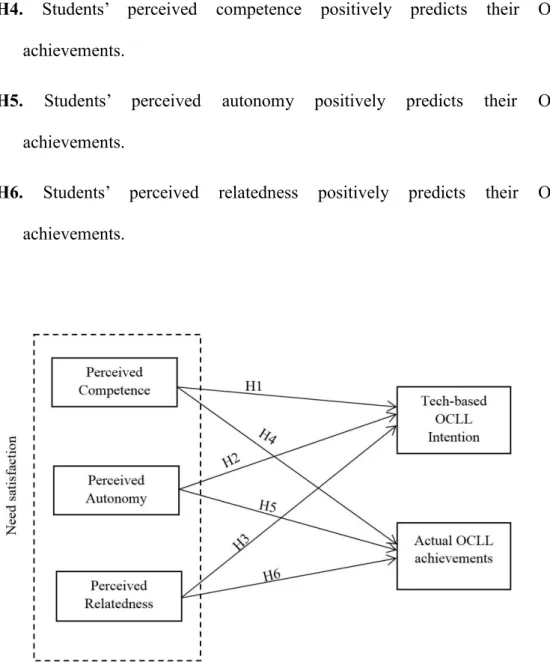
The second study proposed and tested a model of the relationship between the motivation determinants introduced by SDT and the students’ intention towards technology-enhanced OCLL as well as their actual OCLL achievements. The hypothesized model included three principal antecedents of perceived competence, perceived autonomy, and perceived relatedness. Path analysis was conducted to find the multivariate relations between the constructs in the model based on the collected data from 164 Japanese EFL students. The data were collected using an end-of-the-term online questionnaire.
The two studies resulted into the following findings. First, the web-based e-portfolio system could significantly improve the experimental group students’ reading
III
data demonstrated that the students emphasized on the importance of adequate instruction and support for using a new learning technology at the beginning stages. It was also identified that the biggest barrier to the students’ OCLL was their lack of information about the available technologies and materials. More importantly, the students considered peer-feedback as the most challenging and less useful aspect of OCLL in the e-portfolio system. Finally, it was indicated that the majority of the students intended to continue OCLL mainly because of their observable TOEFL ITP® score progress. Furthermore, the findings of the model indicated the positive effect of motivation determinants (competence, autonomy, and relatedness) on the students’ intention to continue OCLL, among which perceived competence was the most significant predictor. Additionally, the model indicated that perceived relatedness could not influence the students’ OCLL achievements which also reflected the students’ preference for teacher-supported language learning to peer-supported learning.
IV
Chapter 1: Introduction
Chapter 2: Review of the related literature
2.1. Introduction 13
2.2. Out-of-class Language Learning (OCLL) 14
2.2.1 Out-of-class Reading Practice 22
2.3. e-portfolio as Personal Learning Environments (PLEs) 26 2.3.1 Online Interactions (expert- and peer-feedback) 30
2.4. Motivation and Intention 36
2.4.1. Self-determination Theory (SDT) 37
Acknowledgements I
Abstract II
List of Tables VII
List of Figures VIII
List of Abbreviations IX
1.1. Overview 2
1.2. Statement of the Problem and Purpose of the Study 4
1.3. Significance of the Study 6
1.4. Research Questions and Hypotheses 7
1.5. Definitions of Key Terms 8
1.5.1. Electronic Portfolio (e-portfolio) 8
1.5.2. Out-of-class Language Learning (OCLL) 8
1.5.3. Out-of-class Reading 9
1.5.4. Self-determination Theory (SDT) 10
1.5.5. Intention 10
V
Chapter 4: Study 2
3.1. Introduction 43
3.2. Methodology 45
3.2.1. Participants 45
3.2.2. Instruments and Materials 45
3.2.2.1. Quantitative Phase 45
3.2.2.2. Qualitative Phase 47
3.2.2.3. Web-based e-portfolio System 48
3.2.3. Design 56
3.2.4. Procedure 56
3.2.5. Data Analysis 57
3.3. Results 59
3.3.1. Analysis of the Results of the First Research Question 59 3.3.1.1. Experimental Group TOEFL ITP® Pre and Post-test Scores 59 3.3.1.2. Experimental and Comparison Group Gain Scores 61 3.3.2. Analysis of the Results of the Second Research Question 65 3.3.2.1. Describing the Results of the Interview Questions 65
3.4. Discussion 82
4.1. Introduction 92
4.1.1. Research Model 93
4.2. Methodology 96
4.2.1. Participants 96
4.2.2. Instruments and Material 96
4.2.2.1. Online Questionnaire 96
4.2.2.2. Web-based e-portfolio System 98
4.2.3. Design 98
VI
Chapter 5: conclusions
References
Appendices
4.4. Discussion 104 5.1. Overview 110 5.2. Conclusions 112 5.3. Pedagogical Implications 1165.4. Limitations and Suggestions for further research 119
Appendix A. Semi-structured interview questions (study 1) 135
Appendix B. A sample of the instructor’ reflection board, Week 4 136
Appendix C. Interpretation of the Cambridge English language test scores
according to CEFR
137
Appendix D. Weekly self-assessment sheet / Individual goal setting and
scoresheet
138
Appendix E. Group A webpage (links to the group A students’ personal pages
on the system) / A sample of a students’ personal webpage on the system
140
Appendix F. Personal introduction form according to the European Language
Portfolio (ELP)
142
Appendix G. Samples of the content of the students’ e-portfolios in Google
Drive
144
Appendix H. Online questionnaire items (study 2) 147 121
VII
Table 3.1. One-Sample K-S Test of Reading Pre-test and post-test
of the experimental group
60
Table 3.2. The descriptive statistics of pre-test and post-test scores 60
Table 3.3. Paired samples t-test of the pre-test and post-test scores 61
Table 3.4. One-Sample K-S Test of Reading Pre-test, experimental
and comparison group
62
Table 3.5. The descriptive statistics of experimental and comparison
group pre-test scores
62
Table 3.6. Independent samples t-test of the reading pre-test scores 63
Table 3.7. The descriptive statistics of experimental and comparison
group gain scores
64
Table 3.8. Independent samples t-test of the reading gain scores 64
Table 3.9. Themes of the First Interview Question 66
Table 3.10. Themes of the Second Interview Question 68
Table 3.11. Themes of the Third Interview Question 70
Table 3.12. Themes of the Fourth Interview Question 72
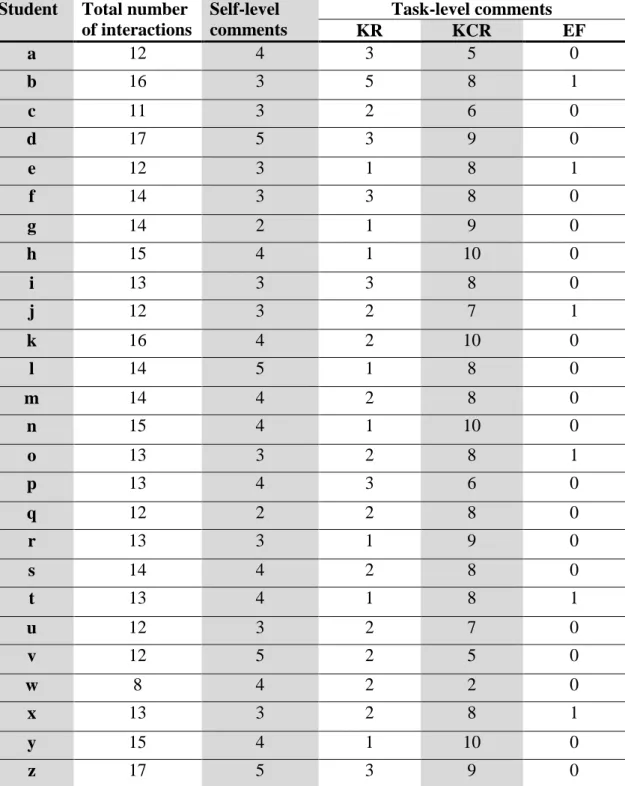
Table 3.13. Analysis of the students’ interactions 74
Table 3.14. Themes of the Fifth Interview Question 79
Table 3.15. Themes of the Sixth Interview Question 81
Table 4.1. The descriptive statistics of the measurement constructs 102
VIII
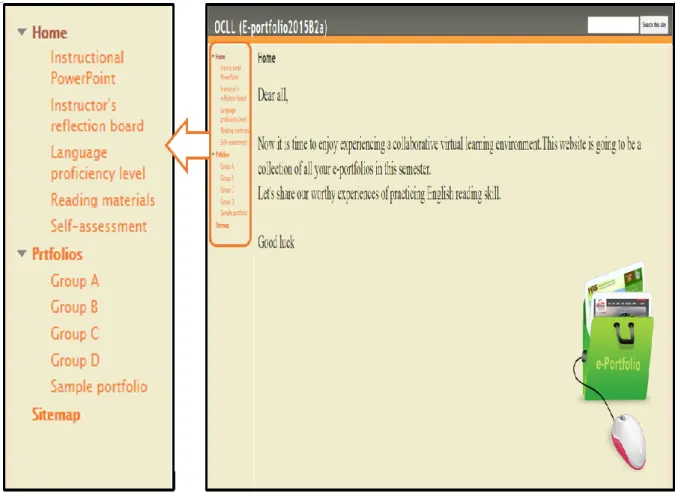
Figure 3.1. Homepage of the web-based e-portfolio system 49
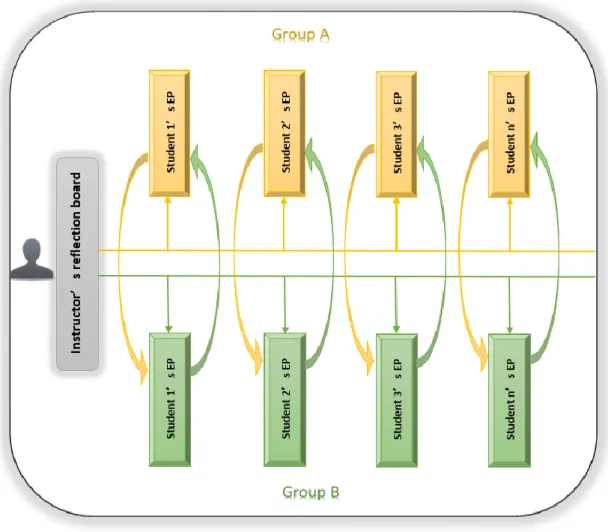
Figure 3.2. Instructor and peer-feedback process 55
Figure. 4.1. Hypothesized model of the research 95
IX
CALL Computer-assisted language learning
CEFR Common European Framework of Reference for Languages
EFL English as a foreign language
ICT Information and communication technology
LMS Learning management system
OCLL Out-of-class language learning
PLE Personal learning environment
SDT Self-determination theory
TOEIC Test of English for International Communication
TOEFL ITP Test of English as a Foreign Language Institutional testing program
Chapter 1:
2
1.1. Overview
The rapidly growing interest in technology-based learning contexts among EFL teachers and learners has resulted in the combination of traditional classrooms with the vast use of computerized teaching and learning methods known as blended learning environments. As noted by Neumeier (2005), blended learning environments are normally composed of two modes of delivery: face-to-face (F2F) and computer assisted language learning (CALL). However, these two modes are combined within the class and lack the effective out-of-class language learning (OCLL) opportunities (Benson, 2001; Borrero & Yeh, 2010), especially in EFL learning contexts where learners have very little or no exposure to the target language beyond the class.
According to Richards (2015), “there are two important dimensions to successful second language learning: what goes on inside the classroom and what goes on outside of the classroom” (p.1). Findings from previous studies provide evidence that out-of-class learning has a significant role in language learning process (Lai & Gu, 2011; Pearson, 2004; Pickard, 1996), and it enhances learning outcomes in multiple ways (Chang, 2007; Inozu, Sahinkarakas, & Yumru, 2010; Sundqvist, 2011). Since much of effective learning can happen free of the classroom boundaries through informal learning contexts, learning should not be restricted to the formal classroom contexts (Chatti et al., 2012), and technology should be employed in a way to support the optimization of both inside and beyond the classroom learning environments (Chapelle, 2010; Zhao & Lai, 2007). Therefore, Whittaker (2013) emphasizes on defining blended learning environments as the combination of three major modes: F2F, CALL, and self-study mode which occurs outside of the actual classroom.
3
The technology-enhanced OCLL requires teachers’ continuous and accurate support. There are various kinds of information and communication technology (ICT) applicable to OCLL. However, some technologies may not be as beneficial as others, students may not have enough information about the available technologies, and they may lack the required skill to implement those technologies (Lai & Gu, 2011). Accordingly, it is important that in addition to the development of inside class blended learning environments, teachers introduce or design OCLL contexts appropriate to the learners’ basic needs and skills. This study tries to explain the successful implementation of a technology-based OCLL mode in an EFL blended learning context.
On the other hand, since OCLL takes place beyond the actual classroom and it is not easily observable or assessable (Benson & Reinders, 2011; Stevens & Shield, 2010), students are not willing to continue learning. Therefore, learners’ intention to continue technology-enhanced OCLL learning becomes a crucial issue (Lai, Li, & Wang, 2017; Lee & Lehto, 2013; Mobarhan, Majidi & Abdul Rahman, 2014; Reinders, 2014; Richards, 2015). Davis (1989) states that learners’ intention for an activity reflects the extent to which they intend to do that activity which is normally followed by the occurrence of the action.
Based on the cognitive theories of motivation and action, according to Deci (1975), being motivated to act is equal to having an intention and desire to engage in an action. Due to the strong relationship between the learners’ motivation and their intention for an activity, motivation is considered as the key to increasing learners’ intention for OCLL (Deci, Vallerand, Pelletier, & Ryan, 1991). Although so far several motivation theories have been proposed by different researchers, the
self-4
determination theory (SDT, Deci & Ryan, 1985) is one of the most appropriate theories for OCLL. The self-determination theory refers to the individual’s ability to choose how to satisfy their needs and perform actions that need some degree of self-regulation (Deci & Ryan, 1985).Therefore, since OCLL is mainly influenced by self-determined behaviors and self-regulated actions (Mobarhan et al., 2014; Reinders, 2014), this study tries to investigate how this theory applies to and explains Japanese EFL students’ intention to continue technology-enhanced OCLL.
1.2. Statement of the Problem and Purpose of the Study
As stated in the previous section, one of the crucial issues in blended learning environments is lack of teachers’ attention to the importance of the self-study contexts. In Japan, the setting of the present research, in spite of numerous CALL related studies there is still a need to investigate and enhance Japanese students’ language learning beyond the borders of the actual classroom (Stockwell, 2013; Thomas, 2017).
Although Japan is ranked among the top ten countries in terms of ICT access and usage and most of the universities are equipped with well-designed CALL classrooms, Japanese students’ digital literacy lag behind those of other developed countries. As stated in Cote and Milliner (2016), “the Organization for Economic Co-operation and Development (OECD, 2015) released a critical statement on the literacy of Japanese youth, noting that 25% (age 16-29) lack basic computer skills” (p.127). These findings clearly reflect the significant role of teachers to support students with using technology for learning. It is believed that Japanese students use ICT excessively in their everyday life, but they can hardly implement their daily life ICT skills to make
5
use of technology for learning (Cote & Milliner, 2016; Doyle & Parrish, 2012; Gobel & Kano, 2014; Lockley & Promnitz-Hayashi, 2012). Lack of adequate ICT engagement in high school education results in very low confidence for using digital technologies upon entering universities, which in turn strongly affects the students’ independent use of technology for language learning (Doyle & Parrish, 2012; Lockley & Promnitz-Hayashi, 2012).
Moreover, Japanese students have very little intention to continue OCLL. Fukuda and Yoshida (2012) found that Japanese students are not motivated enough to expand their out-of-class language learning time which ranges only between zero to an hour a week. Accordingly, EFL teachers and instructors need to find the effective ways to boost students’ technology-enhanced OCLL by providing appropriate resources in addition to enhancing the students’ intention to continue OCLL. In this regard, this study first introduces a web-based e-portfolio system developed and implemented as the OCLL mode of the blended learning environment, which specifically focused on the reading skill, and then, examines the effectiveness of this system. Finally, the study tests a hypothesized model of the effect of motivation determinants defined by SDT (i.e., perceived competence, perceived autonomy, perceived relatedness) on the students’ intention to continue OCLL. The model aims to investigate how the satisfaction of the three motivation determinants predict the students’ intention towards technology-based OCLL, as well as their actual OCLL achievements, using the successfully implemented web-based e-portfolio system.
6
1.3. Significance of the Study
This study is conducted to enrich researchers’ and teachers’ understanding of the importance of designing OCLL contexts as one of the indispensable parts of the blended learning environments (Hall, 2009; Lai & Gu, 2011; Lai, Zhu, & Gong, 2015; Whittaker, 2013). Limited exposure to the target language inside the classroom highlights the importance of providing learners with additional teacher-supported learning chances beyond the classroom (Barrs, 2012; Richardson, 2010). Although the use of technology inside the classroom is effective for improving learning outcomes, limited learning opportunities in the class add to the significance of learning beyond the classroom (Chapelle, 2010; Lai, 2015; Zhao & Lai, 2007). In line with the few number of previous studies (Chang, 2007; Inozu et al., 2010; Lai & Gu, 2011; Pearson, 2004), this empirical study also tries to put emphasis on the significant influence of well-organized language practice beyond the classroom.
The successfully implemented web-based e-portfolio system in this study represents an example of the use of free and user-friendly technology for learning. Recently many language instructors benefit from personal learning environments (PLEs) such as e-portfolios, wikis, or blogs to improve the quality of their teaching contexts. However, despite the numerous supportive features of e-portfolios for second language learning both inside and outside of the class, very few studies investigated the effectiveness of e-portfolio as a tool to support OCLL (Barrett, 2006; Chau & Cheng, 2010; Gerbic, Lewis, & Amin, 2011).
Furthermore, despite the effectiveness of motivational factors on the students’ intention towards learning (Roca & Gagné, 2008), SDT as one of the inclusive motivation theories has not received enough empirical scrutiny within out-of-class
7
learning contexts (Chen & Jang, 2010; Mobarhan et al., 2014). The determinants of SDT (i.e., competence, autonomy, and relatedness) highly correspond to the features of online learning environments such as challenges for learning technical skills, flexible learning, and computer mediated communication and social interaction (Chen & Jang, 2010). Therefore, it is hoped that examining this theory in a technology-enhanced OCLL context will shed light on the importance of the fulfillment of motivational needs.
1.4. Research Questions
In order to conduct the present study, the following three research questions were imposed at the beginning:
1. Is there any significant difference between the proficiency of the students who
practice reading outside of the class through the web-based e-portfolio system and that of those who have out-of-class reading practice without the e-portfolio system?
2. What are the students’ attitudes towards the effectiveness of the web-based
e-portfolio system with regards to the different aspects of the system such as content of the system, peer-feedback, and post-reading activities?
3. Do the determinants of SDT (i.e., perceived competence, perceived autonomy,
and perceived relatedness) predict Japanese EFL students’ intention to continue OCLL using the web-bases e-portfolio system and their actual achievements?
8
1.5. Definition of Key Terms
1.5.1. Electronic Portfolio (e-portfolio)
According to Reinders (2014), PLEs enhance lifelong learning by going beyond the formal academic environments. He introduces different tools that may be used for creating PLEs such as e-portfolios, communication tools (wiki), and social networking tools (Facebook). Among these tools, e-portfolios are very useful to connect out of class learning achievements with the formal inside class progress (Goldsmith, 2007; Barrett, 2006). Abrami and Barrett (2005) define an e-portfolio as “a digital container capable of storing visual and auditory content including text, images, video and sound” (p.1). They emphasize the usefulness of e-portfolios to change teacher-directed instructions to student-directed learning methods in which students are as active agents taking control of their own learning.
In the present study, a web-based e-portfolio system was developed with the integration of Google Drive as the students’ PLEs and Google Sites as a collaborative virtual learning environment (VLE). The system is explained in details in section 3.2.2.3. Due to the accordance of OCLL with inside class teaching curriculum, reading skill enhancement was particularly chosen as the target of the system. However, this system can also be implemented for the practice of the other language learning skills and sub-skills as well.
1.5.2. Out-of-class Language Learning (OCLL)
Although this study specifically focuses on out-of-class reading practice, it is necessary to first define the general term of the technology-enhanced OCLL. So far,
9
the scope of learning beyond the actual classroom is referred to by several terms such as ‘non-formal learning’, ‘informal learning’, ‘self-instructed learning’, and ‘naturalistic learning’ with an identical overall idea, but different in some minor aspects (Benson & Reinders, 2011). However, in this study the term OCLL is defined as the students’ intentional and autonomous use of ICT beyond the actual classroom in favor of language learning. We concentrate on the intentional OCLL because unintentional learning from daily life activities can hardly take place in EFL contexts.
1.5.3. Out-of-class Reading
Day and Robb (2015) believe that one of the ideal OCLL opportunities is reading and extensive reading has the most similar characteristics to out-of-class reading practice to which West (1995) refers as ‘supplementary reading’ (p. 26). Day and Bamford (2002) introduced ten principles for extensive reading and Day and Robb (2015) state that five of these principles are appropriate for out-of-class reading practice (see section 2.2.1). Despite the different approaches to extensive reading, Day (2015) examined the studies conducted on extensive reading and he emphasized that “there is no single approach to the practice of extensive reading” (p. 296). Accordingly, due to the significant effect of students’ engagement with the text (Rivas, 1999), in this study out-of-class reading practice is conducted based on the five relevant principles of extensive reading introduced by Day and Bamford (2002), in addition to the post-reading activity approach to help the students actively interact with the texts. The post-reading activities include writing summaries, listing newly learned words, and making questions (Rivas, 1999).
10
1.5.4. Self-determination Theory
Self-determination theory refers to the individual’s ability to choose how to satisfy their needs and perform actions that need some degree of self-regulation (Deci & Ryan, 1985). This theory focuses on competence, autonomy, and relatedness as the three basic psychological human needs that can facilitate intrinsic motivation. The need for competence is the individual's need to feel capable of effective performance and achieving one’s goals. The need for autonomy implies the intention to feel free to choose and control one’s own actions. Finally, the need for relatedness is to feel connected to others through proper interaction and cooperation (Deci & Ryan, 1985; Vallerand, 1997).
1.5.5. Intention
In technology-based environments, Davis (1989) refers to the fundamental issue of the users’ behavioral intention to continue using a system. He states that the intention for an activity is the extent to which the users intend to do that activity which is normally followed by the occurrence of the actual action. In other words, if the students intend to continue using a system, then the system is likely to be used. Therefore, this study tries to investigate if the motivation determinants of SDT can predict the students’ intention to continue using the web-based e-portfolio system for OCLL (as a real-use experience of technology) in addition to their actual usage of the system.
11
1.6. Overview of the Chapters
This dissertation consists of five chapters. Chapter one provides an overall picture of the dissertation with introductory information about the purpose and objectives of the study. Chapter two reviews previous related studies in three major sections including a) class language learning (with the subsection of out-of-class reading practice), b) electronic portfolios as personal learning environments, and c) motivation and intention (based on the self-determination theory approach). Chapter three explains the first study conducted to find the answers to the research question one and two. These questions examined the importance of OCLL through the implementation of the web-based e-portfolio system that was developed to support Japanese EFL undergraduate students’ reading proficiency. Chapter four describes the second study of this dissertation which aimed to find the answer to the research question three. This chapter focuses on a self-determination theory approach to technology-enhanced OCLL intention through testing a hypothesized model. Chapter five is the concluding section in which the results of the two studies are brought together and practical and pedagogical implications are suggested. The limitations of the study and suggestions for the further research in technology enhanced OCLL contexts are also referred to in this chapter.
Chapter 2:
13
2.1. Introduction
Following the recent technological advancements, language learning opportunities can also be maximized by incorporating learning technologies into the teaching contexts both inside and outside of the classroom (Chapelle, 2010; Zhao & Lai, 2007). This incorporation leads to the creation of blended learning environments in which the traditional face-to-face classrooms are combined with computer-assisted learning environments (Neumeier, 2005). However, even though many EFL teachers try to use technological tools in their teaching contexts and benefit from the effectiveness of information and communication technologies (ICTs), this attempt is mostly restricted to the inside classrooms and technology is not efficiently implemented in designing teacher-supported learning contexts beyond the classroom (Stockwell, 2013; Whittaker, 2013).
Although both inside and outside of the classroom are the two important and influential scopes of successful language learning, out-of-class language learning (OCLL) has received very little attention (Benson, 2011b; Richards, 2015). While there are thousands of published studies focusing on what goes on inside the technologically-equipped language classrooms, very few studies are devoted to the investigation of what goes on beyond the classroom (Benson, 2011; Richards, 2015; Stockwell, 2013). As indicated in many recent studies, the new technology offers several resources to enhance self-regulated language learning beyond the classroom (Nunan & Richards, 2015; Reinders, 2014), and successful language learners are usually the ones who search and take advantage of OCLL opportunities (Borrero & Yeh, 2010; Lai et al., 2015). Consequently, the blended learning environments should not only be defined as the combination of face-to-face and CALL environments, but
14
they rather need to have a third component that covers language learning outside of the classroom as well.
2.2. Out-of-class Language Learning (OCLL)
Benson (2011b), an advocate of OCLL, believes that regardless of the importance of OCLL, there is no specific field of study focusing on learning beyond the actual borders of the classroom. So far researchers have used several terms to refer to the scope of learning beyond the classroom such as ‘non-formal learning’, ‘informal learning’, ‘self-instructed learning’, ‘naturalistic learning’, etc. (Benson & Reinders, 2011). These terms follow an identical overall idea about OCLL, but they differ in some minor aspects, therefore, there is no straightforward definition of OCLL. Benson (2011b) believes that language learning researchers have an almost clear definition of a language learning classroom, but defining the extended scope of out of class language learning first needs identifying four major dimensions: ‘location’, ‘formality’, ‘pedagogy’, and ‘locus of control’.
Location
As indicated by the term, ‘location’ or ‘setting’ of the OCLL refers to the places where language learning takes place, including both inside or outside of the school (Benson, 2011b). It is believed that learning beyond the classroom refers to the achievements accomplished at any time and in any place, regardless of the conventional classroom borders (Benson, 2001; Hyland, 2004). Therefore, locations of OCLL include computer labs, libraries, home, cafés, virtual spaces on the internet, restaurants, etc.
15 Formality
The term ‘formality’ distinguishes between ‘formal’, ‘non-formal’ and ‘informal’ language learning. Formal learning is typically provided by educational institutions with specific and identified objectives and evaluations (Benson, 2011b; Stevens & Shield, 2010), however, formal and informal learning refer to non-institutional training and education. Stevens and Shield (2010) argued the distinction between non-formal and informal learning in terms of learning objectives and learning intention. They state that non-formal learning often follows certain objectives and it is intentional, yet informal learning does not follow any identified objectives and it may be intentional and unintentional. Unlike the formal learning, non-formal and informal learning include no certification.
Pedagogy
Benson (2011b) refers to the term instruction as a specific type of pedagogy which is implemented differently in learning inside and outside of the classroom. Benson (2011a) classified learning beyond the classroom into three types of learning: a) self-instruction learning (i.e., learners deliberately plan to learn a language), b) naturalistic learning (i.e., learners learn a language while they are engaged in an activity without a specific focus on learning), and c) self-directed naturalistic learning (i.e., learners intentionally engage in activities to learn a language, however after the engagement their intention would change to the enjoyment of the activity rather than focusing on language learning). In this view, self-instructed learning takes place through the use of specifically developed materials or activities for language learning
16
which act as the instructors, while naturalistic learning involves no specific materials, instruction, and intention for learning. Therefore, it is the use of materials and activities having ‘instructional content’ that identifies the distinction between self-instructed learning and naturalistic learning.
For example, Leese (2009) in a study focused on engaging 1st-year undergraduate students to do out of class activities between their taught sessions through the use of a virtual learning environment (VLE). The main objective of the study was enhancing collaborative learning in groups and enabling students to connect between the face-to-face classroom sessions. Students were supposed to collaboratively do certain tasks and post their assignments on the virtual space to receive the teachers’ feedback. Then, on the following face-to-face session, they taught the assignments to the class and explained how they completed them. The students’ perceptions towards this type of instruction was collected through a questionnaire, focus groups, and module feedback forms. The findings indicated that students had positive attitudes towards collaborative learning, and they had improved in using technology and group work. The average of their final scores also showed a significant progress which added to the effectiveness of the treatment.
Fagerlund (2011) argues that different types of activities may result in different outcomes and beliefs about OCLL. In her study, the comparison between the Finnish learners’ English and Swedish OCLL activities revealed that, in terms of English language, the learners found OCLL activities helpful and effective, both for productive and receptive skills. However, they mostly had out-of-class Swedish language learning activities for the receptive skills and they did not find them as effective as the English activities. In another study, Inozu et al. (2010) investigated Turkish students’ nature of
17
out-of-class language learning experiences and their contributions to learning outcomes and self-directed learning developments. The findings indicated that students found out-of-class activities mostly useful for the improvement of their receptive skills of reading and listening rather than productive skills of speaking and writing.
In terms of OCLL pedagogy and activities, Doyle and Parrish (2012) also conducted a study to find Japanese students’ ideas about good and bad ways of learning English outside of the class. The findings indicated that the students had very little preference for using electronic devices for learning English beyond the classroom. In addition, the students preferred ‘traditional ways’ of learning English such as studying for TOEFL and TOEIC tests rather than showing ‘creativity and resourcefulness’ in their ways of learning such as making an English conversation (p. 200).
Locus of control
The third domain of OCLL that needs investigation is locus of control. Locus of control refers to the degree of autonomy in language learning that is identified by some terms such as independent learning, autonomous learning, self-directed learning, etc. (Benson, 2011b). Even though the concept of learner autonomy is mostly associated with OCLL contexts, teachers also attend to the improvement of autonomous learning inside the classrooms. The main reason is that the concept of autonomy does not refer to taking all the learning responsibilities and making all the decisions for language learning, but it is focusing on the ability to make the major decisions. In other words, autonomy refers to the learners’ ability to take responsibility of their own learning and control their own actions (Vallerand, 1997).
18
Knowles (1975) refers to this autonomy by the term self-directed learning. He defines self-directed learning as a “process in which individuals take the initiative, with or without the help from others, in diagnosing their learning needs, formulating goals, identifying human and material resources, choosing and implementing appropriate learning strategies, and evaluating learning outcomes” (p. 18). Moreover, Hall (2009) refers to self-directed learning occurring out of the traditional educational context as the informal education. He argues that informal learning can be empowered by technology to help learners identify themselves in the virtual space and create personalized learning environments. Due to the significant importance of self-directed learning in OCLL contexts, it has been examined in several studies.
For instance, the factors affecting language learners’ self-directed use of technology for OCLL in Hong Kong were examined in a study by Lai (2013). The results of the research survey showed that attitudinal factors highly influenced the students’ use of technology (i.e., usefulness of the technology, language learning motivation, and educational compatibility). It was also indicated that computer self-efficacy, self-regulation, and facilitating conditions were influential factors on the learners’ use of technology mainly through the mediation of perceived usefulness and compatibility. However, the author believes that attitudinal factors are the most effective factors in enhancing learners’ self-directed use of technology.
In another study conducted by Lai and Gu (2011), Hong Kong undergraduate students' out-of-class use of technology to self-regulate their language learning was examined. The findings of the survey reflected that although there was a huge diversity between the students’ use of technology outside of the classroom, they mostly used technology for goal commitment regulation, resource regulation, affection regulation,
19
and culture learning regulation (e.g., to sustain their motivation, to find authentic materials, to create interesting learning experiences, and to expand cultural understandings). However, the students were not likely to use technology for metacognition and social connection regulation (e.g., self-assessment and monitoring their own progress, and expanding their social networks). In the follow-up interviews, it was found that there were some factors that influenced students’ use of technology to self-regulate their learning such as a) students’ learning background (e.g., preference to use physical environments rather than virtual ones), b) students’ language learning beliefs (e.g., being aware of the importance of learning languages), c) students’ language proficiency level (e.g., high proficient students showed more interest in expanding their social connections and using technology to self-regulate their learning), and d) students’ information about the useful materials and resources. It was revealed that students’ lack of information about the available technologies and their potentials for learning was the most important factor that prevents the students from using technology to self-regulate their out-of-class language learning. Accordingly, it can be concluded that teachers’ support has a significant role in the students’ use of technology for OCLL.
In the study conducted by Inozu et al. (2010), even though the contribution of Turkish students’ out-of-class language learning experiences to their self-directed learning development is not fully examined, the authors believed that the students did not seem to be able to initiate their work and take the responsibility of their own learning. Similar to the previous study, Inozu et al. argued that the students rather tended to rely on their teachers to support their OCLL. Accordingly, they also stressed the significant role of teachers to support OCLL developments. It should be
20
emphasized that, when it comes to autonomous learning, there is sometimes a misunderstanding that autonomous learning means individual learning in isolation. However, it is the learners’ essential need to be guided and supported regularly while they are the ones who make the major decisions about learning (Benson, 2011a; Doyle & Parrish, 2012; Lockley & Promnitz-Hayashi, 2012; Thanasoulas, 2000).
In Japan, the same setting as the present study, Ishikawa et al. (2007) conducted a study in an EFL blended learning environment, in which both inside and outside of the classroom language learning were integrated in a single virtual learning environment. Self-evaluation system was implemented with the aim of improving the students’ TOEIC test scores and their self-regulated learning. The data were collected from 29 Japanese students through TOEIC listening and reading scores, an Online Self-Regulated Learning (SRL) Questionnaire at the beginning and end of the term, and interviews. The SRL questionnaire included six constructs: a) goal settings, b) environment structuring, c) task strategies, d) time management, e) help seeking, and f) self-evaluation. The findings of the TOEIC test showed the significant improvement of the students. The results of the questionnaire and interviews indicated that among the six constructs of SRL, a) goal settings, b) environment structuring, d) time management, and f) self-evaluation showed a significant improvement whereas c) task strategies and e) help seeking showed no significant change. Even though the two constructs remained unchanged, the overall results indicated that self-evaluation system had been useful for enhancing the learners’ score and SRL.
In addition to the previous study, considering Japanese students’ autonomy, Tokuda, Ohba, Sakaguchi, Seo, and White (2015) conducted a study to examine learner autonomy, foreign language learning motivation, and enhancement of
21
intercultural understanding. The study was conducted through an extra-curricular program named ‘lunch time English’. This weekly program aimed to improve the students’ English language proficiency and intercultural awareness. The data were collected through a questionnaire from 40 Japanese and seven international students. The findings indicated that the program could successfully increase Japanese students’ motivation to learn English as well as their proficiency level (TOEFL ITP® test scores). Japanese students’ desire to take part in communication was enhanced because, as Kitazume (2007) states, Japanese students feel less shy to communicate when they are engaged in fun activities (cited in Tokuda et al., 2015). It was also indicated that both international and Japanese students’ interest in intercultural issues had grown. The researchers believe that extra-curricular programs can help the learners improve their language learning skills and link inside class learnings to the out of class contexts.
In addition to the advantages of OCLL for the improvement of learning outcomes and self-directed learning, insufficient out-of-class language practice can be the main obstruction to learning goals. Due to the very low out-of-class study time in Japan, which is between zero to an hour weekly, Fukuda and Yoshida (2012) conducted a study to find the influential factors for the expansion of the OCLL time. They investigated 20 Japanese students’ OCLL time and course satisfaction. They compared this experimental group who were orally encouraged to do OCLL with other groups who received extrinsic motivators such as assignments and quizzes. They collected data through university course evaluations, weekly self-reports, and a questionnaire focusing on OCLL time, the materials, and their motivators for the study. The findings indicated the significant rise in the students’ OCLL time. It was indicated that the four influential factors that increased OCLL time were as follows: clear course
22
aims, strong student–teacher relationships, a non-threatening classroom environment, and interactive classroom procedures.
Reviewing the theoretical aspects and practical studies of language learning beyond the borders of the actual classroom reveals that it is not easy to reach a specific definition for OCLL. As it was mentioned at the beginning of this section, there are several terms that refer to the same scope of OCLL, but they propose different definitions for this scope. Unlike the restricted inside classroom settings, there is a wide range of out-of-class language learning settings which make it nearly impossible to conclude with a straightforward theory for OCLL (Benson & Reinders, 2011). The four important dimensions of ‘location’, ‘formality’, ‘pedagogy’, and ‘locus of control’ introduced by Benson & Reinders (2011) indicate how the studies conducted beyond the actual classrooms may have distinctive features and, more importantly, have their own context-based definition of OCLL. Accordingly, this study also provides its own definition of OCLL, which is the students’ intentional and autonomous use of ICT (i.e., the web-based e-portfolio system in this study) beyond the actual classroom in favor of language learning. Moreover, it is worth mentioning that due to the importance of the needs-based practices, this study specifically concentrated on the enhancement of the students’ reading proficiency through out-of-class reading practice.
2.2.1. Out-of-class Reading Practice
Among the four main language learning skills (i.e., reading, writing, speaking, and listening), reading is one of the most ideal ways of independent language learning (Day & Robb, 2015). According to Nation (2009), reading can either be the main learning goal in itself or help accomplishing other language learning goals. Concerning
23
reading as the main goal, it can help learners enjoy and extend their general knowledge in different areas. However, learning new grammar and vocabulary, or reviewing previously learned grammar and vocabulary, can change reading into a supplementary activity to achieve other language learning goals. Furthermore, Grabe (2009) believes that reading may be done for different academic purposes such as a) searching for information (through scanning and skimming), b) quick understanding (through skimming), c) learning, d) integrating information, e) evaluating information, and f) entertainment and general comprehension.
Thus far there have been several approaches to the practice of reading. Among the different types of reading practice, extensive reading has the most similar characteristics to the out-of-class reading practice, which West (1995) refers to as ‘supplementary reading’ (p. 26). Due to the highly motivating features of extensive reading compared to text-book based reading instruction inside the classroom (Day & Bamford, 1998; Guthrie, Wigfield, & Perencevich, 2004), this type of reading can also be a reinforcement for students’ motivation to continue OCLL.
After Williams (1986) developed the ten principles of intensive reading, Day and Bamford (1998, 2002) introduced the following ten principles related to foreign language reading in general and extensive reading in particular:
1. The reading material is easy;
2. A variety of reading material on a wide range of topics is available; 3. Learners choose what they want to read;
4. Learners read as much as possible;
5. The purpose of reading is usually related to pleasure, information and general understanding;
24 6. Reading is its own reward;
7. Reading speed is usually faster rather than slower; 8. Reading is individual and silent;
9. Teachers orient and guide their students; and
10. The teacher is a role model of a reader. (Day & Bamford, 2002, pp. 137– 141)
Applying the aforementioned principles to out-of-class reading practice, Day and Robb (2015) believe that only five principles (i.e., principles 1, 2, 3, 4, & 7) are the most appropriate to this area.
Examining the studies conducted on extensive reading, despite the different approaches to this type of reading, Day (2015) states that “there is no single approach to the practice of extensive reading” (p. 296). Furthermore, Peachey (2013) argues that “passive reading or viewing materials that require no action, interaction or reflection soon tire online learners and do not lead to deeper engagement or learning” (p.7). Therefore, an effective way to improve reading achievements is its integration with other skills such as writing, through post-reading activities.
According to Rivas (1999), “post-reading phase helps learners to consolidate what they have read and, at the same time, aims to relate the text to the learners’ experience, knowledge, and opinions” (p.18). Therefore, some activities such as writing summaries, listing newly learned words, making questions, describing information, and having discussions with classmates after reading a text help students actively interact with the texts and relate their reading practice to the writing skill (Barnett, 1989; Lyutaya, 2011; Rivas, 1999).
25
One of the closest studies to the approach taken in this study is Lyutaya’s extensive reading program conducted in 2011. She combined extensive reading with writing tasks through using a “reading log (also known as a reading journal, a response journal, or a reading diary) for pre-, during-, and post-reading activities” (p.27). In this program the similar principles as recommended by Day and Bamford (2002) were taken into consideration. The participating students chose among a wide range of materials with the appropriate level of difficulty. They created a community of readers and kept their personal reading logs. In the reading logs they kept a record of what they read, expressed their reactions towards the passages, kept a record of different sorts of activities including, writing summaries, making a poster of the passage, writing down comments, questions and answers, etc. (Lyutaya, 2011). The findings revealed that how the integration of reading and writing skills could help the students better understand the nature of reading as well as the English language in general.
Lyutaya (2011) argues that because of the relationship between reading and writing skills and the common features such as “awareness of the composition process, discourse conventions, and rhetorical elements that make up literary texts” (p. 29), these two language skills can be supplementary to each other. Accordingly, due to the significant effect of students’ engagement with the text through the writing skill, in this study, the out-of-class reading practice was conducted based on the five relevant principles of extensive reading introduced by Day and Bamford (2002) in addition to the post-reading activity approach.
26
2.3. e-portfolios as Personal Learning Environments (PLEs)
The development of the recent technological tools (i.e., web 2.0 technologies) has changed learners from being only the passive consumers of information to becoming the active creators of the knowledge themselves (Dabbagh & Kitsantas, 2011; McGloughlin & Lee, 2010; Liew & Kang, 2014). Current trends in the field of foreign/second language learning reveal that the teacher-centered environments are changing to the more student-centered environments. Although previously higher education was mainly based on the institutionally-organized platforms such as learning management systems (LMS), or virtual learning environments (VLEs), teachers recently try to direct the learners to the more flexible and independent environments like personal learning environments (PLEs) (Liew & Kang, 2014; Reinders, 2014).
Dabbagh and Kitsantas (2011) believe that PLEs have appropriate features that enable integrating formal institutional learning to informal learning beyond the class and support self-regulated learning. Reinders (2014) argues the difference between PLEs and VLEs. He believes that although the two terms are used across different contexts and sometimes interchangeably, VLEs are more teacher-supported and institution-focused environments that are mainly used to deliver courses and act as complements to the PLEs. He believes that the efficient integration of VLEs and PLEs results in transferring learners from VLEs to continue autonomous learning using their own PLEs.
According to Reinders (2014), using PLEs is one of the effective ways to support students’ autonomy and prepare them for life-long self-regulated language learning. He introduces different tools that can be used for creating PLEs such as
e-27
portfolios, communication tools (wiki), social networking tools (Facebook), etc. Among those introduced tools, the features of the e-portfolios make them useful for combining out-of-class learning achievements with the formal inside-class progress (Goldsmith, 2007; Barrett, 2006). According to Batson (2002) “Electronic portfolios have a greater potential to alter higher education at its very core than any other technology application we’ve known thus far” (p. 7).
Even though most teachers and researchers have a clear idea of the concept of e-portfolios, some researchers have provided more in depth definitions of e-portfolios. For instance, DiBiase (2002) states that an e-portfolio is “a personalized, Web-based collections that include selective evidence from coursework, artifacts from extra-curricular activities, and reflective annotations and commentary related to these experiences” (p. 2). Abrami and Barrett (2005) define it more clearly as “a digital container capable of storing visual and auditory content including text, images, video, and sound” (p. 2). Moreover, Lorenzo and Ittelson (2005) also define it as “personalized, Web-based collections of work, responses to work, and reflections that are used to demonstrate key skills and accomplishment for a variety of contexts and time periods” (p. 2). Though these researchers use slightly different terms to define e-portfolios, they all consider them as the showcase of the students’ achievements during a certain period of time, and they emphasize the usefulness of e-portfolios to change teacher-directed instructions to student-directed learning methods, in which students are as active agents taking control of their own learning. Due to these beneficial features, e-portfolios can be implemented for multiple purposes such as teaching, learning and assessment of different language skills in addition to the development of self-regulated learning (Barrett, 2007).
28
As an example, Abbaszad Tehrani (2010) conducted an empirical net-folio-based study (i.e., another name for e-portfolio) with 38 English language learners in Cyprus. The experimental group of the study practiced the writing skill through the use of e-portfolios while the comparison group used no electronic tools. The comparison between the results of the post-test scores indicated that there was no significant difference between the scores of the experimental and the comparison groups. However, the findings of the attitude questionnaire and interviews of the experimental group students indicated that the use of net-folio was effective to encourage the students’ views towards the writing skill, teacher-feedback, peer-feedback and the net-folio.
Chau and Cheng (2010) conducted a study through an e-portfolio competition to investigate the effectiveness of e-portfolios for independent learning. Sixty-three Chinese undergraduate students in English courses participated in the study. Qualitative data were obtained from end-of-the-term semi-structured interviews as well as the students’ works and reflections in the e-portfolios. The extracted themes indicated some central issues. First, the use of e-portfolios enhanced the sense of ‘choice and ownership’. Second, the use of e-portfolios revealed the importance of feedback (more teacher and less peer-feedback). Third, the use of e-portfolios increased computer literacy of the students. Fourth, the students’ independent learning strategies improved through the use of e-portfolios. Finally, the students believed that e-portfolios were useful for the development of both process and product learning.
In another longitudinal study by Gerbic, Lewis, and Amin (2011), the effect of using portfolios on the students’ language learning and the challenges of using e-portfolios were examined. The main concern of the study was to observe how the
29
students’ perceptions and digital literacy could change over a long period of time working with e-portfolios. The survey results indicated positive changes in the students’ perceptions towards the effectiveness of e-portfolios, first for their language learning gains, and then for keeping a record of their learning process. The results also showed that working with the e-portfolios helped reduce technology anxiety and barriers, in addition to enhancing the students’ interest and confidence.
Considering the usefulness of e-portfolios to develop self-regulated learning, Ziegler and Moeller (2012) conducted a study in which they used LinguaFolio (i.e., e-portfolio) to enhance self-regulated learning. Using a questionnaire at the beginning and end of the semester, the researchers found that the LinguaFolio had increased the students’ intrinsic motivation, mastery goal orientation, task-value, and self-assessment skills.
As another example in the same setting of the present study, the researchers tried to investigate the effectiveness of using e-portfolios and group learning on the students’ TOEIC or TOEFL ITP® test scores at one of the Japanese private universities (Fukuda, Suzuki, Hashimoto & Okazaki, 2014). There were 64 students being divided into 16 teams. The findings of the study indicated that the students who had taken TOEFL ITP® test did not show any significant improvement in their final scores while the results of the TOEIC test takers indicated a significant improvement. The researchers also explored the students’ ideas about the group learning through questionnaires and reflection sheets. And the final results indicted the students’ positive perception towards group learning. Although the difference between the improvement of the students in the two TOEFL ITP® and TOEIC tests was an important finding, Fukuda et al. (2014) did not refer to any probable reasons for this
30
difference. In my opinion, due to the almost similar features of the two language proficiency tests of TOEFL ITP® and TOEIC, the different results of the learners’ performance on the tests in this study may be attributed to the different numbers of the participants taking each test, 42 students for the TOEIC test and only 12 students for the TOEFL ITP® test.
In general, the related literature shows that e-portfolios have been empirically studied several times in different contexts and for different purposes. The studies revealed that e-portfolios can be used to develop language learning and teaching generally, or focus on certain variables specifically. Furthermore, since e-portfolios include a collection of students’ works, they provide the possibility of sharing works and exchanging ideas and comments. Showcasing individual works enables active learning through online interactions and develops better outcomes (Barret, 2007; Hughes, 2005; Nicolaidou, 2013; Yastibas & Yastibas, 2015). Moreover, sharing students’ works with other classmates might help overcome the restriction of working alone and individual nature of e-portfolios (Barbera, 2009).
2.3.1. Online Interactions (expert- and peer-feedback)
The possibility of sharing one’s works with other members who also present their works at the same time can promote interactive feedback. Despite the general idea of the term ‘feedback’, depending on the context and purpose of studies it may be defined differently. Winne and Butler (1994) describe feedback as “information with which a learner can confirm, add to, overwrite, tune, or restructure information in memory, whether that information is domain knowledge, meta-cognitive knowledge, beliefs about self and tasks, or cognitive tactics and strategies” (p. 5740). Hattie and
31
Timperley (2007) also provide another definition for feedback as “information provided by an agent (e.g., teacher, peer, book, parent, self, experience) regarding aspects of one’s performance or understanding” (p. 81). They believe that feedback is one of the highly effective ways to improve learning and achievements.
Shute (2008) emphasizes that there are many conflicting arguments in terms of the types of feedback, their content, timing and effectiveness. In her review study, she identifies a clear distinction between the timing and the types of feedback. In terms of timing, she distinguishes between immediate and delayed feedback. The immediate feedback is given right after the task is completed; on the contrary, delayed feedback is not provided immediately after the completion of the task and depending on some variable it may be provided with different degrees of delay. With regard to the types of feedback, she differentiates between the degrees of complexity of the feedback content and classified feedback into a) knowledge of results (KR) that only specifies whether the answer is correct or incorrect; b) knowledge of correct response (KCR) that indicates the incorrect answer together with the correct response; and c) elaborated feedback (EF) that provides not just the correct response but also additional information such as explaining the correct response, referring to a useful material and so forth.
Hattie and Timperley (2007) tries to identify factors that maximize the effectiveness of feedback on learning outcomes. Following the model introduced by Kluger and DeNisi (1996) of the effects of feedback interventions on performance, Hattie and Timperley (2007) introduced their model with four levels of giving feedback including “the level of task performance, the level of process of understanding how to do a task, the regulatory or metacognitive process level, and/or
32
the self or personal level (unrelated to the specifics of the task)” (p.86). In other words, feedback at the task performance level focuses on the surface of the performance, (e.g., the correct answer). Feedback at the process level is mainly related to the process that an individual takes to do a task. Feedback at the regulation level is related to the internal processes in the mind of an individual. At this stage feedback is aimed to enhanced self-regulation. The final level of providing feedback is at self level such as praise which is known as the less effective type of feedback (Hattie & Timperley, 2007; Kluger & DeNisi, 1996).
Based on the two mentioned review studies (Hattie & Timperley, 2007; Shute, 2008), an empirical study was conducted by Van der Kleij, Eggen, Timmers, and Veldkamp (2012) to test the effectiveness of feedback on the students’ learning outcomes in a computer-based course. They first proposed a framework of the classification of online feedback that combined the two models of feedback levels (Hattie & Timperley, 2007) with feedback timing and content (Shute, 2008). In their study, the students were categorized into three groups who received feedback differently including a) immediate knowledge of correct response (KCR) + elaborated feedback (EF), b) delayed knowledge of correct response (KCR) + elaborated feedback (EF), and c) delayed knowledge of results. The findings of the study demonstrated that there was no significant difference between the achievements of the students regarding the feedback conditions. However, it was indicated that in term of timing, the students preferred immediate feedback, and in terms of content they preferred KCR + EF to KR feedback.
Furthermore, Kulhavy and Stock (1989) stated that verification and elaboration are the two key aspects of effective feedback. Verification identifies if the answer is
33
correct, whether explicitly or implicitly. And elaboration means to provide additional information that guides the learners to reach the correct answer. Lefevre and Cox (2014) investigated the types of feedback the learners preferred in a technology-based instruction. Their categorization of feedback type was based on the classifications in the work of Dempsey and Wager (1988) and Kulhavy and Stock (1989), and included both verification and elaborative types of feedback. The two values considered for the verification type feedback were no feedback (NF) and knowledge of result (KR). And the values for the elaboration feedback were knowledge of correct response (KCR), explanatory feedback (EX), instruction-based (IB), and extra-instructional (EI). The findings of the questionnaires and interviews revealed that, firstly, feedback is required and should be provided. Secondly, learners preferred to first view the KR type of feedback and then the KCR type. Thirdly, the less the feedback load, the more the learners viewed the feedback. It was indicated that the learners preferred concise and focused feedback rather than elaborate one.
As an example of the online interactions using e-portfolios, Barbera (2009) examined a netfolio approach to the use of e-portfolios to overcome the individual nature of conventional e-portfolios. Netfolio enables a collaborative approach through a network of e-portfolios. Both e-portfolio and netfolio were implemented at a PhD course for the development of basic research competences, and they consisted of three sections of ‘presentation’, ‘competences’, and ‘monitoring’. Even though e-portfolio and netfolio included the same three sections, they were slightly different. In terms of feedback, in the e-portfolio they only received teachers’ feedback, while in the netfolio they first received feedback from the classmates and then those from the teachers. The feedback in the e-portfolio was provided “in public forums for each competence, as
34
well as by email to the individual mailbox” and for the netfolio “in a specific personal forum area for each competence with a public side” (p.348). The data were collected using two questionnaires (for the teachers and for the students) to investigate their satisfactions, as well as the analysis of the posts on the netfolio such as students’ dialogues and feedback. The findings demonstrated that the e-portfolio and the netfolio were useful tools for learning. Both teachers and students were satisfied with the effectiveness of the e-portfolio and the netfolio. The students who worked with the netfolio made a better progress than the e-portfolio users, and they attributed their better progress to the possibility of exchanging works with their peers. The students highlighted that having interactions with the same level students increased their understanding of their own capabilities. They also mentioned that the collaborative work with the other students could help them improve more than working individually or working only with the teachers.
In another study conducted by Nicolaidou (2013) the impact of e-portfolios on writing performance and peer-feedback was examined. The findings indicated that in addition to the students’ improvement in their writing skill, towards the end of the study, the students showed a good progress in providing feedback on their classmates’ works. The qualitative analysis of students’ comments indicated that gradually the comments changed from ‘simple feedback’ to more ’constructive feedback’. The results of the interviews also indicated that the students believed that though their friends’ comments were not always correct, they were useful. Moreover, the study revealed that peer-feedback was more beneficial for average and high proficient students.