Imagining the Other: A Survey of Student Imagining the Other: A Survey of Student
Attitudes towards Immigrants Attitudes towards Immigrants
David Ostman
1.0 Introduction
Governments of nations experiencing net increases in immigration take an active interest in citizen attitudes towards immigrants and immigration, and have a wealth of survey data compiled by private companies and organizations at their disposal, such as the YouGov Immigration Survey in the U.K. (2015), and the Pew Research Center’s (2015) survey on American attitudes towards immigration. Collected survey data provides a foundation for policy makers, researchers and citizenry to evaluate attitudes concerning this complex issue.
Japanese citizens, by contrast, have rarely been surveyed on their attitudes towards immigrants or immigration, despite the growing official discussion and recognition concerning increased immigration in Japan. In 2015 alone, two ministers of the Abe Cabinet, Taro Kono (シ ー グ, 2015) and Ishiba Shigeru (Yoshida, 2015) openly expressed their support for increased immigration. Despite these voices, and a growing desperation to find solutions to problems such as Japan’s low birthrate and rapidly aging population, little attempt has been made to evaluate public attitudes regarding the prospect of increasing Japan’s immigrant population.
Among the few attempts at data collection is a 2010 survey titled “Opinion Survey Concerning the International Movement of Laborers” (労 働 者 の 国 際 移 動 に 関 す る 世 論 調 査) conducted by the Cabinet Office Minister’s Secretariat Government Public Relations Department
(内閣府大臣官房政府広報室) (2010), which queried respondents concerning their “consciousness
towards going to work abroad” (外国での就労に対する意識), and their “consciousness towards foreign workers (in Japan)” (外国人労働者に対する意識). While the survey asked respondents about their “awareness of the increasing number of foreign workers”(外 国 人 労 働 者 が 増 加 傾 向 に あ る こ と の 認 知 度), to which 85% responded that they were aware, and the majority of respondents answered that they felt foreign-worker command of Japanese and understanding of Japanese culture and custom to be “important”(重 要 で あ る), the survey made no attempt to measure public attitudes towards the presence of immigrants in Japanese society, or the prospect of increasing the immigrant population in the future. An older 2002 survey conducted by Dai-ichi Life Insurance (第 一 生 命) titled “Survey of the Consciousness Concerning Foreign Workers”(外国人労働者に関する意識調査) did include a section: “about accepting immigrants”
(移民の受け入れについて), in which 33.5% of the 598 respondents answered that they believed the
number of immigrants accepted into Japan should be increased.
This present research addresses the paucity of data concerning attitudes towards immigrants and immigration policy through survey instruments that directly query immigrant understanding, immigrant word association, perception of immigrant merit and demerit, and belief that Japan “should” or “need” increase immigration in the future. By utilizing corpus software to analyze written response, it attempts to identify keywords and trends in student perception and attitude towards immigrants and the prospect of increasing future immigration to Japan.
2.0 Literature Review
2.1 Survey-based Immigration Studies
The 21st Century has seen an explosion in surveys and opinion polls, as researchers and policy makers scramble to measure public sentiment towards immigration, immigrants in general, and specific groups of immigrants―amidst ever-increasing political furor over the issue. The European Social Survey has, among a wide range of topics, conducted Europe-wide immigration-specific surveys, in 2002 and 2014, whose results have been incorporated into numerous studies. Ben-Nun Bloom, Arikan, & Lahav (2015) demonstrated the coexistence of perceived cultural and material threats, which differ based on immigrant ethnicity. Jaime- Castillo, Marqués-Perales, & A´lvarez-Gálvez (2016) found correlations between attitudes towards immigration and the size of the welfare state, concluding that in countries with high social expenditures, attitudes of concern amongst the lower classes are amplified. Matching ESS data with regional UK labor force surveys revealed that anti-immigrant attitudes were more prevalent in areas with higher immigrant unemployment (Markaki, 2014). Conversely, some research has focused solely on the accuracy and applicability of ESS instruments and methodology (Davidov, Cieciuch, Schmidt, Meuleman, Algesheimer, & Hausherr, 2015).
Survey data has enabled researchers to address social phenomena, such as the rise of political right-wing movements, as seen in Kirill’s (2014) analysis of the rise of the right-wing in Western Europe, and Risova’s (2013) assessment of Bulgaria’s populist radical right parties’
impact on democracy. The results of surveys conducted throughout Europe have been used in attempts to psychologically analyze widespread anti-immigrant attitudes across Western European countries (Fassel, Green, & Sarrasin, 2013), as well as in specific countries such as the United Kingdom (Andreescu, 2011). Adopting a different focus, Röder (2014) analyzed survey data compiled from the responses of immigrants to provide evidence for inter-generational acculturation of attitudes concerning homosexuality. It seems clear that the need for and applicability of survey-data-based research will only increase in the future as both politicians and citizens are forced to consider the implementation and management of immigration.
2.2 Corpus-assisted Discourse Studies (CADS)
Pioneered by Stubbs (1996, 2001), who stressed the importance of corpus-assisted analysis of texts for both practical and theoretical reasons, and furthered by the research of Partington (Partington, Morley, & Haarman, 2004), CADS attempts to combine a qualitative approach of analyzing large amounts of the target discourse statistically, with significantly older qualitative methods of discourse analysis which, beginning with Foucault (1972, 1984), has been continued by such researchers as Fairclough (2001, 2003) to uncover and analyze “non-obvious meaning”
(Stubbs, 1996). A large portion of CADS research has been devoted to the study of political and media discourse (Teubert, 2001; Fairclough, 2001; Partington, 2003) in order to uncover motif and metaphor. Collocational research in Japan has been led by Hori (2004, 2011), and aided by the development of analytical software (AntConc) by Lawrence Anthony.
3.0 Methodology
The methodology is reported in terms of the instrument under study, the survey participants, the data-collection and analytical procedures.
3.1 Instrument
The survey consisted of 33 questions divided into three sections. All questions were composed in English, before being translated into Japanese in cooperation with a native- Japanese speaker. All questions in the survey appeared in both English and Japanese. In cases where the subject was given multiple choices, the choices appeared only in Japanese. Questions 1-8 sought to 1) ascertain the degree to which the subject was exposed to news sources, 2) what news sources were most commonly used, 3) the subjects’ self-assessment of knowledge of current affairs, and 4) subject familiarity with the words “immigrant,”“immigration,” and “refugee.”
Respondents were given five options for each question, with the exception of questions 1 (yes/
no) and 4 (10-point scale).
Questions 9-22 consisted of a variety of questions formulated to assess student knowledge and perception concerning immigrants. Subjects were 1) asked to provide word associations for
“immigrant,” as well as 2) a definition for the term. Questions 11-14 attempted to measure 3) subject familiarity with the topic of immigrants and immigration, while questions 15-22 queried 4) subject attitudes with regard to the potential positive and negative aspects of immigrants for Japan, as well as 5) potential benefits and challenges experienced by the immigrants themselves.
Questions 23-33 were designed to assess student knowledge and perception concerning refugees. Subjects were asked to 1) provide word associations for “refugee,” as well as 2) a definition of the term. A series of questions identical to the previous section were asked to measure attitudes concerning refugees with respect to Japan (survey questions are listed in Appendix A). Due to the length of the survey, this paper will only analyze questions 1 to 22, and
will not address responses pertaining to the topic of refugees.
3.2 Participants and Treatment of the Data
The survey was completed anonymously by 161 students at a Japanese prefectural university (The Prefectural University of Kumamoto) between July 27, 2016 and August 8, 2016. The students were first asked to answer all questions in paper form, before entering the identical data online. Data was completed and collected under teacher supervision. To collect online data, an online service was used (creativesurvey.com), and accessed at on-campus computer labs using Google Chrome (Versions, 45, 49, 51, 52), Mozilla Firefox (versions 30, 31, 35), Microsoft Explorer (version 11), and Microsoft Edge (version 13). All students used the same operating system (Microsoft Windows ver. 7, 10). Five students completed both the paper survey and online input without supervision, however only three submitted the paper survey at a later date. Two students were unable to log in to the university system and only completed the paper survey under supervision. Both agreed to allow a third party to input the survey data at a later date (Sept. 13, 2016).
Students were given the option not to complete the survey, and were told that by providing personal information (age, major, year of study, gender, date of survey) they were agreeing to make their answers available for academic research. One student did not provide consent and was exempted from this study. Student demographics are shown in Table 1.
Table 1: Student Demographics
Age 18 19 20 21 22
36 (22.4%) 82 (50.9%) 34 (21.1%) 5 (3.1%) 4 (2.5%)
Of the 161 respondents, 36 (22.4%) were male, and 125 (77.6%) were female. Respondents were asked to list the department to which they belonged. The results are shown in Table 2:
Table 2: Students by Department
Department #
Department of English Language & Literature 45 (28%) Department of Food & Health Sciences 41 (26%) Department of Environmental Resources 32 (20%) Department of Japanese Language & Literature 24 (15%)
Department of Human Habitat 19 (12%)
Total 161
Students were told that the survey was intended to measure their understanding and
attitude regarding the words, “immigrant,”“immigration,” and “refugee,” and were instructed to provide honest answers, as opposed to answers they might believe to be regarded as “correct.”
Students were instructed to complete all answers in Japanese; however, seven students (all from the Department of English Language and Literature) partially answered the survey in English.
In these cases, the answers were translated into Japanese with the assistance of a native Japanese speaker.
Informed consent was obtained for participation, and respondent identity was protected.
Survey data was analyzed using Microsoft Excel 2010 and Microsoft Access 2010, as well as concordance software (AntConc ver. 3.4.4.0). In cases where students chose to answer in English, responses were translated into Japanese.
4.0 Results
Students were asked to respond to questions designed to measure different aspects of their knowledge, perception, and attitudes towards the news in general, Japanese current events, and the topic of immigration. Sections and topics of inquiry are listed below (Table 3).
Table 3: List of Survey Topics 4.1 Where do students get news?
4.2 How often do students access news sources?
4.3 What Internet news sites do students access?
4.4 Are students aware/interested in current events?
4.5 How familiar are students with the topic of immigration?
4.6 What words do students associate with “immigrant”? 4.7 Student definitions of the word “immigrant”.
4.8 Did the news influence student understanding of immigrants?
4.9 Are more people immigrating than emigrating?
4.10 Where do immigrants to Japan come from?
4.11 What immigrants have students met in Japan?
4.12 What countries are most/least compatible with Japan?
4.13 What are the merits of immigration to the country?
4.14 What are the demerits of immigration to the country?
4.15 How do immigrants benefit by coming to Japan?
4.16 What challenges to immigrants face in coming to Japan?
4.17 Does Japan need increased immigration?
Each topic is presented in detail in the corresponding sections below.
4.1 Student News Sources
Of 161 students, 155 replied that they had received their entire education in Japan. When asked for their primary source of news, students answered as follows:
Table 4: Respondent Primary News Source Television Internet Radio Other
108 51 1 1
The majority of students (67%) responded that television, not the Internet (32%), was their primary source of news.
4.2 Student Exposure to the News
When asked how often they accessed the news through their primary source, just under half (48%) responded doing so on a daily basis, with 23% (36) saying they accessed the news 4 to 6 times a week, and 25% (41) 2 to 3 times a week (two students chose to leave this answer blank).
Table 5: Frequency of Access from Primary Source
Every Day 4 - 6 Times/wk. 2 - 3 Times/wk. > 1 Time/wk. Never
77 36 41 5 0
All students answered that they had some exposure to the news, with 71% answering that they accessed the news 4 or more times a week.
4.3 Internet News Sources
Question 3 asked respondents where they accessed news on the Internet. The majority (76%) listed Yahoo News and Line News as their Internet news source; however, 80 students (50%) left this answer blank. In a small number of cases (15), respondents gave more than one answer.
Table 6: Internet News Sources
Yahoo News Line News NHK Twitter Other
38 35 9 7 7
Of the 81 students who gave responses, 73 (90%) answered that they accessed news through Yahoo News and Line News.
4.4 Interest/Awareness of Current Events
Respondents were asked to self-assess their knowledge of current events in Japan on a scale of one to ten (one being the lowest).
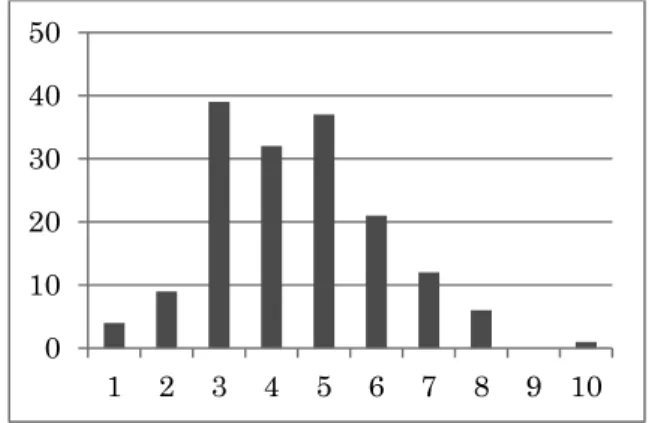
Figure 1: Student Self-assessment of Current-event Knowledge
The majority of students (67%) rated their knowledge between 3 to 5, while only 25%
believed their understanding of current events to be 6 or above. When queried on their interest in Japanese domestic news, 73% (116) agreed or strongly agreed that they were interested in domestic news, compared with 10% (16) who disagreed. No student strongly disagreed. Question 6 asked students to rate their agreement with the statement: “I think it is important to discuss domestic news with my friends”: 71% (114) agreed or strongly agreed, compared to 10% (16) who disagreed. No student strongly disagreed.
4.5 Student Familiarity with Immigration
Questions 7 and 8 attempted to evaluate student familiarity with the subject of immigrants/
immigration. When given the statement: “I have heard the words “immigrant,”“immigration”
and “refugee” in the news recently”: 58% (93) agreed or strongly agreed, with 30% (48) answering
“disagree” or “strongly disagree.” Finally, students were asked to agree or disagree with the statement: “I have often discussed the topic of immigrants/immigration in Japan”: 3% (5) agreed with the statement, while 35% (57) disagreed; 2% (3) strongly disagreed. The results for all questions are given in Appendices B through E.
4.6 Identifying “Immigrant” by Word-association
Question 9 asked students to perform word associations for the word “immigrant,” and provided two examples: chili pepper = red, spicy / Lexus = expensive, stylish. Answers were analyzed by searching for individual characters. Results are shown in Table 7 below:
0 10 20 30 40 50
1 2 3 4 5 6 7 8 9 10
Table 7: Word Associations for the Term “Immigrant”
Frequency Term
15 foreigner
12 poor
9 Europe/EU
8 go away to work
6 poverty
4 America
4 foreign country
4 refugee
3 Hispanic
3 job
3 different culture
Concordance software was used to identify words with a frequency of three or greater.
Respondents most frequently associated immigrants with foreigners, foreign countries, being poor/poverty, and as people who entered the country to work. The association of immigrants with a state of poverty (combining “poor” and “poverty”) was the most frequent answer, indicating an understanding of immigrants as people who are economically disadvantaged.
Respondents who answered with “Europe” sometimes accompanied their response with the word
“separation,” indicating an association of immigrants with the recent U.K. separation from the European Union.
4.7 Defining “Immigrant”
Students were additionally asked to provide a definition in Japanese for the word
“immigrant”; out of 161 students, 158 provided a definition in sentence form (with two having to be translated from English into Japanese for analysis). Answers were compared with the “simple definition” in Merriam-Webster’s Dictionary (2016) for “immigrant”: a person who comes to a country to live there. Definitions were accepted if they 1) demonstrated an understanding of human movement between countries, and 2) an understanding that the movement was done in order to live in the new country.
An example of an accepted definition, as given by a student, is:
People who move (to live) from another country.
The verb 移り住む (utsurisumu), also translated as “to emigrate”, contains the character 住む (sumu), and as such meets the criteria. Next, an example of an unaccepted definition is given:
Compared to refugees, people who are not as in need (in distress).
This definition fails to note either the movement between countries or the status of residency, and as such was not accepted.
Consider the following definition:
People who had previously lived in one region, who emigrate to another region.
This definition satisfies the condition of residency, but fails to distinguish that the movement is between countries. While region may be used in certain circumstances in English to indicate movement between countries (i.e. movement between Balkan regions), the word region (chiiki) is not used similarly in Japanese.
In the following example, the act of moving does not equate to taking up residence:
The act of moving from one country to another country.
While various forms of “to live” were accepted, verbs simply denoting movement were not deemed sufficient.1
Another set of unaccepted definition examples failed to provide a general definition (i.e.
non-specific to Japan):
Foreigners who settle in Japan.2
While this definition correctly defines immigrants to Japan, it fails to consider the term
“immigrant” in a more general sense. Despite the question being unambiguously presented in English and Japanese, it is possible that some students thought they were being asked for a definition of immigrants to Japan only, rather than of immigrants in general. A total of 5 definitions were rejected for this reason.
Correct answers often provided additional information; the accuracy of which was not considered, as long as both criteria were satisfied:
Due to various reasons, people who cannot live in their mother country who move to another country to live.
While the statement that immigrants are people who are unable to reside in their country of birth is incorrect in a general sense, this definition was accepted by virtue of it satisfying both the criteria of movement between countries, and the understanding of immigrants as residing in their new environment. Using the above criteria, 91 students (57%) gave acceptable definitions,
while 70 students (43%) gave unacceptable definitions.
Some answers indicated a confusion between the words “immigrant” and “refugee,” such as the following:
People who are beleaguered (oppressed) by the government.
People who are unable to live safely in their original place, who are forced to move to another country.
While government oppression and public safety are possible factors in immigrants deciding to leave their home country, the above definitions are more descriptive of refugee experience than immigrant.
4.8 Definitional Correctness and News Access
Interestingly, there was little difference in the rates of news access between students who gave accurate and inaccurate definitions. This suggests that student news choices were not a significant factor in developing a basic understanding of who immigrants are (Table 8).
Table 8: Definition of Correctness Compared with Frequency of News Access
Daily 4-6x/wk. 2-3x/wk. > Once/wk.
Correct (91) 42 (46%) 23 (25%) 24 (26%) 2 (2%)
Incorrect (70) 36 (52%) 14 (20%) 17 (25%) 2 (2%)
While 46% of students who gave correct definitions claimed to watch the news daily, a slightly larger number (52%) of students who gave incorrect answers claimed to do the same, indicating that student ability to define “immigrant” was not dependent on the news sources they accessed.
4.9 Emigration versus Immigration
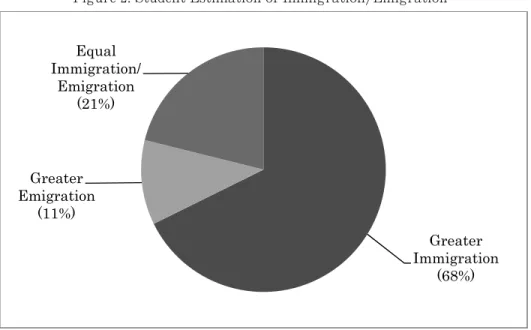
Question 11 asked students how many people they thought were immigrating into Japan on a yearly basis, and question 12 asked how many people they thought were emigrating from the country during the same period. The majority of students (68%) answered that they thought more people entered Japan than exited, while only 18 students (11%) thought that more people were leaving the country. Thirty-four students (21%) responded that the numbers of people entering and exiting were the same.
Figure 2: Student Estimation of Immigration/Emigration
The difference between the total number of estimated immigrants/emigrants was 12,890,303 in favor of those entering the country, while the mean average for immigrants (2,000) was double the mean answer for emigrants (1,000). The average response for immigrants was 228,606, and 9,876 for emigrants. However, one respondent’s answer (10,000,000 vs. 10) significantly distorted these figures. Therefore, the mean averages better reflect student response.
4.10 Perceived Origin of Immigrants to Japan
When asked from what countries they believed immigrants to Japan were coming, respondents overwhelmingly answered that China was the top country, followed by Korea, America, and The Philippines. When asked what country provided the second-most immigrants, Korea was first, followed by China, The Philippines, Brazil, and America. Results for the third choice were more varied, with America, The Philippines, and South Korea receiving the most responses.
Table 9: Origin of Immigrants to Japan
1st Choice % 2nd Choice % 3rd Choice %
China 57 South Korea 36 America 20
South Korea 11 China 19 The Philippines 13
America 8 The Philippines 9 South Korea 11
The Philippines 7 Brazil 8 Brazil 9
North Korea 4 America 7 Thailand 8
Looking at the most recently available Government of Japan statistics (2015a), Chinese, South Greater
Immigration (68%) Greater
Emigration (11%)
Equal Immigration/
Emigration (21%)
Korean, and Philippine nationals comprise the top three groups of foreign residents in Japan.
This does not take into account the historical and political factors that have contributed to the creation of these communities, and tells us little about who is actually immigrating into the country now. See Appendix F for a full list of responses.
4.11 Immigrants Encountered
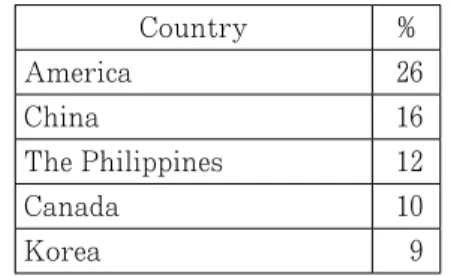
Out of 161 respondents, 76 (47%) answered that they had met an immigrant to Japan, while 42 (26%) responded that they had not met an immigrant, and 43 (27%) answered that they did not know. When asked the country of origin of the immigrant they had met, America, China, and The Philippines topped the list.
Table 10: Encountered Immigrants by Country
Country %
America 26
China 16
The Philippines 12
Canada 10
Korea 9
Given that 57% of students (who provided an accurate definition) demonstrated a clear understanding of who an immigrant is, and that the person administering the survey was a Canadian who fit their definition, the failure of most students to recognize an immigrant standing before them was surprising.
Although only 76 students responded that they had encountered an immigrant to Japan, when asked to list nationality, many students gave multiple answers (resulting in a total of 135 countries). Of the 135 responses, 63 (47%) indicated having met immigrants from Asian countries, while 55 (41%) claimed to have met an immigrant from a country usually defined as part of The West (Western Europe, America, Canada, Australia). Surprisingly, only 4 students (3%) answered that they had met an immigrant from Brazil, despite their making up 8% of the foreign-born population according to the latest available government data (2015a). Immigrants from the above-listed Western Countries (included Eastern Europe) make up only 6%, while Asian residents comprise 82% of the foreign population (Government of Japan, 2015a). The large numbers of students who responded meeting an American immigrant may be partially explained by their attending a university with two full-time American teachers, but may also indicate a general unawareness of Asian immigrants, possibly due to similarities in appearance.
4.12 Student Perception of Cultural Compatibility
Questions 14 and 15 asked students which countries they believed to be most and least compatible with Japan/Japanese culture, and asked them to explain the reasons for their answers in sentence form.
Table 11: Countries/Cultures Most/Least Compatible with Japan
Most Compatible % Least Compatible %
South Korea 22 China 34
America 15 North Korea 12
Taiwan 13 South Korea 8
China 7 Predominantly Muslim
Countries
6
Asia 6 Africa 6
Germany 5 No Country Specified 4
Brazil 5 The Middle East 3
Canada 4 America 3
Europe 3 India 3
None 2 Iraq 2
Although America was chosen second overall, 54% of respondents indicated that an Asian country(s) would be most compatible with Japan, contrasted with 31% for the various countries comprising The West.
When asked which countries/cultures they thought to be least compatible with Japan, respondents overwhelmingly agreed that the neighboring countries of China, North Korea, and South Korea were least compatible, accounting for 55% of responses. Also of note were the 20%
of responses that indicated members of Muslim countries/cultures as being incompatible. A further 8% answered that members of Western countries were least compatible, while 6% said that Africa, without any further delineation, was the least compatible. The complete results for questions 15 and 16 are included in Appendix G.
Considering the reasons for choosing Asian and Western countries as most compatible, a comparison of keywords was employed.
Table 12: Reasons for Compatibility with Japan
Asia The West
Word Freq. Word Freq.
Culture 66 Culture 27
Similar 42 English 10
Friendly towards Japan 19 Similar 10
Asia 14 Civic order/Peace 6
Lifestyle 12 Developed 3
Looking at the above list, the reasons for belief in the compatibility of Asian countries are mainly connected with cultural similarities, including lifestyle, language, custom, food, and cuisine, as well as the friendly disposition of the country towards Japan. However, students choosing Western countries as compatible cited English ability and civic order/peace, in addition to culture and similarities (see Appendix H for full results).
Looking at the reasons given for the incompatibility of East Asians, Muslims, Africans, and immigrants from Western countries, an analysis shows sharp differences between groups.
Table 13: Reasons for Immigrant Incompatibility by Country/Region Word China/Koreas Muslim Countries Africa The West
Manners 24 0 0 0
Problem 19 2 0 0
Thought/Thinking 13 2 0 1
Anti-Japan 12 0 0 0
Culture 10 8 7 6
Relationship 10 0 0 0
History 8 2 0 0
News 7 2 0 0
Abduction 4 0 0 0
Islam 3 15 0 0
Religion 0 13 0 0
Climate 0 0 1 1
Civic order/Peace 0 4 0 0
Lifestyle 0 3 4 2
Adapt 0 1 2 0
East Asian countries, to which the greatest numbers of respondents deemed the least compatible with Japan, were objected to on the basis of manners, problems in their relationship with Japan, cultural differences and differences in thought/thinking. A number of students indicated that their negative impressions were due to news reports, perhaps biasing their perception in ways personal experience had not. Reasons given for the incompatibility of Muslims and Muslim countries were predominantly religious and cultural in nature, and unrelated to international friction or history. The religious traditions of Africans or members of Western countries was not given as a reason, however difference in culture and lifestyle was a recurring theme.
4.13 Merits of Immigration to Japan
When asked what the merits of allowing immigrants into Japan would be, students responded that the greatest perceived benefit to Japan was cultural (136 responses), including
the idea that the country would become more international and experience greater globalization.
The second greatest merit was labor (38), which students collocated with cheap wages.
Immigrants were seen as positively impacting Japan’s declining population (15), however only one student was able to make the connection between immigration and a possible solution for the country’s low birth rate.
4.14 Demerits of Immigration to Japan
When asked what the demerits of allowing immigrants into Japan would be, again, the most frequent response was cultural, although split into two distinct streams. Of paramount concern was the fear of conflict due to cultural differences, including thought, tradition, language, and values. A second stream consisted of the fear that differences in culture would change fundamental aspects of Japanese culture (tradition, customs, language) in negative ways, resulting in a loss of “good” culture. Also of significant concern, was the perception that Japanese society would become more dangerous as a result of immigration, as evidenced by the words “civic order” and “crime.” However, the frequency of the words “terror” and “Islam”
indicate that much of this concern is closely related to a fear of Islam and related terrorism.
4.15 Benefits for Immigrants Coming to Japan
Students saw the benefit to immigrants of immigrating to Japan overwhelmingly in terms of safety, improvements in civic order, reduced crime, and absence of war. Factors such as the quality of food, culture, lifestyle, the nature, and the chance to experience Japanese culture formed the second most popular set of responses. Surprisingly less frequent were student beliefs in the economic improvement of immigrants to Japan. A small number of students mentioned the quality of the Japanese health care system, as well as Japan’s wealth of technology as being beneficial to immigrants.
4.16 Challenges Faced by Immigrants Coming to Japan
When asked what they thought the greatest potential challenges faced by immigrants to Japan would be, respondents agreed that the linguistic difficulty in speaking Japanese was greater than all other obstacles combined. Second was the perception that differences in culture, custom, and manners would present obstacles, with a significant number of respondents citing discrimination, prejudice, and difficulty finding acceptance as hurdles for immigrants to overcome. A distant third theme was related to employment, the cost of living, and taxes. The full results of questions 17 to 20 can be found in Appendices I to L.
4.17 Perceived Advisability/Need of Increased Immigration
The final two questions on the immigration portion of the survey asked students to agree or disagree with the statements, “Japan should increase the number of immigrants,” and “Japan
needs to accept more immigrants in the future.”
Table 14: Japan Should Increase the Number of Immigrants Strongly
Agree Agree Neither Disagree Strongly
Disagree 4 (3%) 41 (25%) 71 (44%) 39 (24%) 5 (3%) Table 15: Japan Needs to Accept More Immigrants in the Future
Strongly
Agree Agree Neither Disagree Strongly
Disagree 5 (3%) 48 (30%) 61 (38%) 40 (25%) 7 (4%)
Although the connection between increased immigration and the amelioration of the negative demographic situation was tenuously drawn, a slightly larger number of respondents acknowledged the need for a more aggressive immigration policy in comparison to the belief that an accelerated immigration policy should be adopted.
5.0 Discussion
In summary, not only were a majority of respondents (57%) able to demonstrate an accurate understanding of immigrant identity, students were also able to correctly identify those nationalities that make up Japan’s immigrant population. However, when asked which immigrants they had come into contact with, America topped the list despite Asians making up 82% of foreign residents (Government of Japan, 2015a). This can be partially explained by the fact that the students have daily contact with American instructors, (the university also employs instructors from Canada, the UK, China, and Korea). It is likely that some students identify “whiteness” with “American.”
Respondents state that they met Westerners almost as much as Asians (41% vs 47%). This may indicate that respondents are often unaware of the Asian immigrants they routinely come into contact with (in their streets and locales, generally). Students did not identify certain Asian countries (Vietnam, Taiwan, Nepal) whose nationals in 2015 entered and remained in Japan in larger numbers than nationals from any Western nation (Government of Japan, 2015b, 2015c). While a large number of students relied on Internet websites (Yahoo News, Line News) for information, a greater number received their news from television, indicating the need for further inquiry into student viewing habits.
Regarding Japan, student perception of more foreigners entering, than Japanese leaving (68% vs 11%), was also accurate. Over the past nine years (2006-2015) the number of foreigners annually entering Japan exceeded the yearly exit number for every year, by an average of 77,089 (Government of Japan, 2015d). Japanese people, by contrast, have consistently exited the
country more than they have entered it (avg. 44,201/yr. over nine years; Government of Japan, 2015d). Interestingly, 2014 and 2015 witnessed major shifts in both trends, with the entrance of returning Japanese nationals exceeding their exit, as well as greatly increased numbers of foreigners entering Japan (see Table 16):
Table 16: Net Entrance to Japan Year Japanese Foreigners
2006 (77,279) 103,465
2007 (95,625) 110,811
2008 (81,817) 57,055
2009 (13,135) (7,506)
2010 (25,340) 2,044
2011 (73,097) (55,620)
2012 (82,472) 76,699
2013 (50,751) 97,675
2014 12,409 171,636
2015 45,100 214,627
Avg. (44,201) 77,089
When students were asked what countries/cultures they thought to be the most and least compatible with Japan, the answers were often the same. Students recognized that Asian countries, particularly East-Asian countries, were the most compatible with Japan―mostly for reasons cultural in nature―while at the same time objecting to these same countries for reasons including “bad manners,”“anti-Japanese sentiment,”“historical and diplomatic problems,” and “differences in thinking.” Members of Muslim countries were also deemed incompatible, primarily due to religious differences.
Students largely failed to recognize the benefits of immigration in addressing the severe demographic problems facing Japan (rapidly aging society; low birth rate (1.46 in 2015;
Nikkei, 2016) ranking near the bottom among world nations (CIA: The World Factbook, 2016)).
Although cheap labor was identified with some frequency, by far the most common reason given was that Japan would benefit from immigration through some improvement in globalization or internationalization. By contrast, conflict due to cultural differences and a degradation of Japanese culture were cited as the greatest demerits to Japan, with increased crime and loss of civic order the second-most frequent reason given. This concern over public safety is contravened by data: steadily decreasing crime committed by foreigners in Japan, beginning in 2006 (National Police Agency, 2015)―despite increased numbers of foreigners taking up residence in the country.
Just as students largely failed to recognize the practical benefits of immigrants to Japan ― such as contributing to the population, labor force, and the social safety net ― only a minority
of students recognized the economic benefits to immigrants, preferring to point out advantages related to civic order and safety. The quality of Japanese culture and Japan’s natural environment were the second-most popular answers, with economic benefits being ranked third.
As this survey was comprised of a limited number of respondents from a specific demographic, the results cannot be said to broadly reflect the attitudes and ideas of the Japanese populace. Increasing both the sample size and the demographic would qualitatively improve the results. Additionally, as students receive news primarily from TV, a survey targeting viewing habits would provide a more detailed understanding.
6.0 Conclusion
Governments of countries experiencing immigration often attempt to understand citizen attitudes towards accompanying demographic, economic, and cultural changes through analysis of survey data. The latest round of the European Social Survey (2014), has included seven questions to measure citizen-perception of immigrants into their country, while the Government of Australia annually conducts the Continuous Survey of Australia’s Migrants (Australian Government, 2014) to track immigrant employment outcomes, as well as demographic and migration characteristics. By contrast, the Government of Japan has little available data to evaluate citizen attitudes towards immigration.
Querying students on the subject of immigration resulted in several notable findings. First, despite the majority of students (57%) demonstrating an accurate understanding of immigration, when asked to respond to the statement, “Japan should increase the number of immigrants,”
only 28% responded affirmatively, with the majority (44%) neither agreeing nor disagreeing.
When presented with the statement, “Japan needs to accept more immigrants in the future,”
the level of affirmation rose only slightly (33%), indicating the tenuous connection made by students between immigration and the various demographic and social problems currently faced by Japan. Given that the problems facing Japan are demographic and related to a shortage of workers, student ambivalence appears difficult to explain.
The reasons for student disinterest in increased immigration to Japan are better understood when considering a majority answered that the primary benefit of immigration to the country concerned globalization, and other similarly vague cultural concepts. Without connecting immigration to practical reasons for developed countries to participate (e.g. boosting declining birth rates, strengthening social security, supplying labor), it is unsurprising that students displayed little enthusiasm towards immigration, and even more understandable when considering student expectation of cultural friction and loss of civic order due to an increased influx of immigrants.
Concerning immigrants taking up residence in Japan, student answers better reflect respondent belief in the safety of their country (and contextually the danger of the “outside
world”), and inherent quality of their culture, than actual immigrant motivations for migration into Japan. When asked what the greatest challenges faced by immigrants would be, students answered overwhelmingly that language would be the greatest hurdle (60%), followed by cultural differences (24%), and discrimination (9%). A preoccupation with the difficulty of the Japanese language is curious considering that a majority of immigrants are from countries whose languages are grammatically similar (South Korea), or share common writing systems (China, Taiwan). For respondents, even after correctly identifying the East Asian origin of immigrants to Japan, the word “immigrant” carries associations that extend beyond this geographical region. While on some level students understand that most immigrants to the country are East Asian, the word “immigrant” definitively becomes associated with groups from other areas.
Students displayed a remarkable accuracy in their understanding of immigrant identity, as well as in identifying the major groups of foreigners residing in Japan. By contrast, respondents were largely unable to list any practical benefits regarding immigrants to the country, and saw the benefits for immigrants of living in Japan largely in terms of increased safety and access to Japanese culture. While a preoccupation concerning Japan’s civic order and the quality of Japanese culture indicates a consistent narrative in public discourse, the overall failure of students to connect immigration policy with its practical outcomes indicates that immigration and immigrants, in terms both of concerns and more general topical information, is not being represented in ways that fairly represent the realities of immigrant contributions to the culture.
Acknowledgements
I would like to thank Todd Tournat for his help in creating the survey instrument, and Miho Tomei for her advice and assistance in translating survey questions into Japanese.
Endnotes
1 Forms of“to live”that were accepted included: 住む(sumu), 移り住む(utsurisumu), 定住 する(teiju suru), 移住する(ijyu suru), 暮らす(kurasu), 生活する(seikatsu suru), 生活を始め る(seikatsu wo hajimeru), 在住する(zaiju suru). Verbs denoting movement: 移動する(ido suru), 移る(utsuru), 行く(iku), やってくる(yatte kuru), 働きに出る(hataraki ni deru), 就 職する(shushoku suru), 向かう(mukau), 来た(kita), 移ってくる(utsutte kuru), 移し変えた (utsushikaeta).
2 While it could be argued that respondents who gave definitions for immigrants in a Japanese context (i.e. 外国から日本にやってきて定住している人のこと(gaikoku kara nihon ni yattekite teiju shite iru hito no koto)), it was not sufficiently clear that they possessed an understanding of who immigrants were in a general sense, which was
what the survey question asked for. It is possible that some of the 5 respondents whose definitions were not accepted correctly understood the concept of immigration.
References
Andreescu, V. (2011). Attitudes toward Immigrants and Immigration Policy in United Kingdom. Journal of Identity and Migration Studies, 5(2), 61-85.
Australian Government: Department of Immigration and Border Protection. (2014).
Continuous Survey of Australia’s Migrants: Cohort 2 Report - Introductory Survey [Data file]. Retrieved from https://www.border.gov.au/ReportsandPublications/
Documents/research/Cohort2-Report-Introductory-Survey-2014.pdf
Ben-Nun Bloom, P., Arikan, G., Lahav, G. (2015) The effect of perceived cultural and material threats on ethnic preferences in immigration. Ethnic and Racial Studies, 38(10), 1176-1178.
Central Intelligence Agency. (2016). The World Factbook: Country comparison: Total Fertility Rate [Data file]. Retrieved from https://www.cia.gov/library/publications/
the-world-factbook/rankorder/rawdata_2127.txt
Davidov, E., Cieciuch, J., Schmidt, P., Meuleman, B., Algesheimer, R., Hausherr, M. (2015).
The comparability of attitudes toward immigration in the European Social Survey:
Exact versus approximate equivalence. Public Opinion Quarterly, 79(0) 244-266.
European Social Survey. (2014). ESS Round 7 Source Questionnaire [Data file]. Retrieved from http://www.europeansocialsurvey.org/docs/round7/questionnaire/ESS7_source_
main_questionnaire_final_alert_03.pdf
European Social Survey. (2016). Retrieved from http://www.europeansocialsurvey.org/
Fairclough, N. (2001). Language and Power (2nd ed.). London: Longman.
Fairclough, N. (2003). Analyzing Discourse: Textual analysis for social research. London:
Routledge.
Fasel, N., Green, E.G.T., Sarrasin, O. (2013). Facing Cultural Diversity: Anti-Immigrant Attitudes in Europe. European Psychologist, 18(4), 253-262.
Foucault, M. (1972). The Archaeology of Knowledge. New York, NY: Pantheon.
Foucault, M. (1984). The order of discourse. M. Shapiro (Ed.). Oxford: Blackwell.
Government of Japan (政府統計の総合窓口). (2015a, December 1). 国籍・地域別 在留資格
(在留目的)別 総在留外国人 [Data file]. Retrieved from http://www.e-stat.go.jp/SG1/
estat/List.do?lid=000001150236#TOP
Government of Japan (政府統計の総合窓口). (2015b). 港別 入国外国人の国籍・地域 [Data file]. Retrieved from http://www.e-stat.go.jp/SG1/estat/List.do?lid=000001153767 Government of Japan (政府統計の総合窓口). (2015c). 港別 出国外国人の国籍・地域 [Data
file]. Retrieved from http://www.e-stat.go.jp/SG1/estat/List.do?lid=000001153767
Government of Japan (政府統計の総合窓口) . (2015d). 港別 出入国者 [Data file]. Retrieved from http://www.e-stat.go.jp/SG1/estat/List.do?lid=000001153767
Hori, M. (2004). Investigating Dickens’ Style: A collocational analysis. New York, NY:
Palgrave Macmillan.
Hori, M. (2011). 例 題 で 学 ぶ 英 語 コ ロ ケ ー シ ョ ン: English collocations learned through exercises. Japan: Kenkyusha.
Immigration [Def. 1]. (2016). Merriam-Webster Online. In Merriam-Webster's Learner's Dictionary. Retrieved November 13, 2016, from http://www.merriam-webster.com/
dictionary/immigrant
Jaime-Castillo, A.M., Marqués-Perales, I., Álvarez-Gálvez, J. (2016) The Impact of Social Expenditure on Attitudes Towards Immigration in Europe. Social Indicators Research, 126(3), 1089-1108.
Kirill, Z. (2014). Nativist but not alienated: A comparative perspective on the radical right vote in Western. Party Politics, 20(2), 286-296.
Markaki, Y. (2014) Public Support for Immigration Restriction in the United Kingdom:
Resource Scarcity, Ethnicity or Poor Origins? National Institute Economic Review, 229(1) 31-52.
National Police Agency (警察庁刑事局組織犯罪対策部). (2015, April). 来日外国人犯罪の検挙 状況 [Data file]. Retrieved from https://www.google.com/search?q=National+Police+A gencyhttps%3A%2F%2Fwww.npa.go.jp%2Fsosikihanzai%2Fkokusaisousa%2Fkokusai%2 FH26_rainichi.pdf&ie=utf-8&oe=utf-8
Nikkei Newspaper (日本経済新聞). (2016, May 23). 出生率、2015年は1.46に上昇 21年ぶり高水 準. Retrieved from http://www.nikkei.com/article/DGXMZO02656230T20C16A5I00000/
Partington, A. (2003). The Linguistics of Political Argument. London: Routledge.
Partington, A., Morley, J., Haarman, L. (Eds.). (2004). Corpora and Discourse. Bern: Peter Lang.
Pew Research Center. (2015, June 4). Broad Public Support for Legal Status of Undocumented Immigrants: Other attitudes about immigration more mixed [Data file].
Retrieved from http://www.people-press.org/files/2015/06/6-4-15-Immigration-release.
Rizova, T.P. (2013). The Perils of Populist Radical Right Parties: The Case of the Bulgarian Attack Party. Journal of Politics and Law, 6(4), 160-173.
Röder, A. (2014). Immigrants’ Attitudes Toward Homosexuality: Socialization, Religion, and Acculturation in European Host Societies. International Migration Review, 49(4), 1042-1070.
Stubbs, M. (1996). Text and Corpus Analysis. Oxford: Blackwell.
Stubbs, M. (2001). Words and Phrases: Corpus Studies of Lexical Semantics. Oxford:
Blackwell.
Teubert, W. (2001). A province of a federal superstate, ruled by an unelected bureaucracy.
Keywords of the Euro-sceptic discourse in Britain. In Musolff, A., Good, C., Points, P. &
Wittlinger, R.(Eds.). Attitudes towards Europe: Language in the Unification Process (pp.
45-88). Aldershot: Ashgate.
Yoshida, R. (2015, November 25) Japan’s immigration policy rift widens as population decline forces need for foreign workers. The Japan Times. Retrieved from http://www.
japantimes.co.jp/news/2015/11/25/national/politics-diplomacy/japans-immigration- policy-rift-widens-population-decline-forces-need-foreign-workers/#.WB6YCcm4WSp YouGov. (2015, February). YouGov / The Times Survey Results [Data file]. Retrieved from
http://cdn.yougov.com/cumulus_uploads/document/f4rr9eo24l/YG-Archive-Pol-Times- results-2502015-W.pdf
第一生命. (2002, February). ―全国の20~69歳の男女598名に聞いた―外国人労働者に関す る 意 識 調 査 [Data file]. Retrieved from http://group.dai-ichi-life.co.jp/dlri/ldi/news/
news0202.pdf
シーグ・リンダ. (2015, January 10).日本は移民政策が必要、労働力確保で中国に負ける可能 性 = 河 野 担 当 相. ロ イ タ ー. Retrieved from http://jp.reuters.com/article/kono-taro- interview-idJPKBN0TT13U20151210
内 閣 府 大 臣 官 房 政 府 広 報 室. (2010, July). 労 働 者 の 国 際 移 動 に 関 す る 世 論 調 査 [Data file].
Retrieved from http://survey.gov-online.go.jp/h22/h22-roudousya/index.html
Appendix
Appendix A: Survey Questions
1.Has all you education up until this survey been in Japan?
学校教育は全て日本で受けられましたか?
2.What is your primary source of news?
主要なニュース源は何ですか?下から選んでください。
新聞 テレビ ラジオ インタネット 他 From this source how often do you get news?
上の選択からどのぐらいの頻度でニュースを視聴しますか?
毎日 週に3-5回 週に1-3回 週に一回以下 3.What Internet news sites do you use?
どのニュースサイトを使いますか?
4.On a scale of 1-10 (one being lowest), rank your knowledge of current affairs in Japan?
あなたは日本の時事について、どのぐらい知識がありますか?1から10点であらわすと何点で すか?(1が最低)
5.I am interested in domestic news.
私は日本の国内ニュースに興味がある。
6.I think it is important to discuss domestic news with my friends.
私は友達と国内ニュースについて話すことが大切と思う。
7.I have heard the words “immigrant,”“immigration” and “refugee” in the news recently.
最近のニュースで移民・移民政策・難民という言葉を聞いたことがある。
8.I have often discussed the topic of immigrants/immigration in Japan.
私は移民・移民政策についてよく話します。
9.What words do you associate with the word “immigrant”? (eg. chili pepper = red, spicy, or Lexus = expensive, stylish)
移民と聞いて、何を連想しますか?(例:唐辛子=赤い・辛い、Lexus=値段が高い・おしゃれ)
10.What is your definition of an immigrant? Write your definition in the space provided.
あなたは移民をどのように定義しますか?回答欄に定義を書いてください。
11.How many immigrants do you think come to Japan each year?
あなたは毎年何人の移民が来日すると想像しますか?(数字で)
12.How many Japanese emigrate to other countries each year?
あなたは毎年何人の日本人が他国に移民すると想像しますか?(数字で)
13.Where do you think immigrants to Japan come from? List the top three countries in the space provided.
あなたは来日する移民はどこの国から来ると想像しますか?(回答欄に1-3位まで書いてくだ さい)
14.Have you ever met an immigrant to Japan?
あなたは日本に定住した外国人(移民)に会ったことがありますか?
If yes, where did this person(s) come from?
会ったと答えた場合、その移民はどこの国から来ましたか?
15.What countries/cultures are most compatible with Japan/Japanese culture (people from which countries/cultures would make the best immigrants for Japan)?
どこの国や文化が日本や日本の文化と相性がよいと思いますか?(どこの国の出身者が移民とし て望ましい?)
Explain the reason(s) for your answer.
その理由を説明してください。
16.What countries/cultures are the least compatible with Japan (people from which countries/
cultures) would make the worst immigrants for Japan)?
どこの国や文化が日本や日本の文化と相性が悪いと思いますか?(どこの国の出身者が移民とし て望ましくない?)
Explain the reason(s) for your answer.
その理由を説明してください。
17.In your opinion, what (if any) are the merits of allowing immigrants to come to Japan (What are the positive aspects of immigration)?
あなたの意見では、日本に移民を受け入れる利点は何ですか?(移民政策の肯定的側面は何?)