Perspectives on Criteria for an ESL Textbook Appropriate for Japanese University Students
Karen Mack
The topic of this essay is compelled by the lack of appropriate texts avail- able to teach basal ESL courses in Japanese universities. There are a num- ber of published articles on how to evaluate and select an appropriate text for an ESL class
(Garinger, Miekley, Weddel, etc.
), but little or no pub- lished information, such as surveys or evaluations, on specific texts useful for an ESL course. Furthermore, there is little information concerning what to do when an appropriate text fails to exist, other than suggesting the use of a combination of textbooks or self
―made supplementary materials
(Wed- del
). Here I wish to propose suggestions of criteria necessary for an ESL text to be used in a Japanese university classroom, in order to stimulate discussion in the field on this issue and encourage publishers to provide texts more suitable to the targeted students of a specific native language group.
Most standard basal ESL textbooks, even very good ones
(Interchange, Jack C. Richards, et al
), are purposely oriented to account for a linguistic and cultural diversity of students. This orientation to a diversity of back- grounds is even encouraged as a criteria in selecting a textbook
(Weddel
). However, this principle of “linguistic and cultural diversity” is still primarily oriented towards students whose primary language is one of the European family of languages, and fails to take into account the specific needs of a student whose primary language is Japanese. Furthermore, ESL textbooks published in Europe or North America tend to be too expensive for Japa- nese students.
―34―
ESL textbooks produced in Japan are not only less expensive, but more importantly have the advantage of being oriented for Japanese students and have more text and instructions written in Japanese, helpful for both the students and those instructors whose primary language is Japanese. How- ever, these texts are often written by a single author, and one whose pri- mary language is Japanese, raising the issue of authenticity in materials. In addition, as they tend to be low―cost publications, they typically have inade- quate supplementary materials such as lacking a workbook for students and CDs for listening and speaking practice, and the study materials them- selves are often overly simplistic. If there is a teacher’s manual supplied, it is commonly written primarily or entirely in Japanese, making the textbook difficult to use for the native English speaking instructor.
An ESL textbook for use in Japan needs to be co
―authored by both a na- tive English speaker and a native Japanese speaker for accuracy and authenticity of materials. A co
―authored text would provide materials appro- priate to the needs and language levels specific to Japanese students, cor- rect and authentic English materials, accurate Japanese translations of those materials, and explanations and instructions in both languages for the students and the instructors.
The authors of an ESL test for use in Japanese universities should have previous experience with ESL teaching and materials in Japanese secon- dary schools in order to create a textbook that takes into account what the students have previously been taught, what the students need to review, and specific difficulties Japanese students have in learning, understanding, and using English. As an example, the subjunctive
(kateiho¯ 仮定法)and conditional
(jo¯kenho¯ 条件法)forms found in English do not exist in the Japanese language, and unlike languages of the European language family have no parallel grammar structures in Japanese. Grammatical forms such as these must be taught very differently to Japanese students than they would be taught to speakers of an European language. Detailed explana-
―35―
tions in both Japanese and English with example sentences of usage in English and their Japanese translations must be supplied to adequately teach such grammatical patterns to Japanese students, regardless of whether the students have been previously taught this at the secondary school level.
A basal ESL text also needs to provide exercises for learning strategies of comprehension in reading and listening such as predicting, using context clues, recognizing organizational patterns, and identifying the main idea versus details
(Garinger, Weddel
). The text must teach students to use cues from morphology, cognates
(loan words adapted into Japanese
), rhe- torical relationships, and context
(Miekley
). Reading and listening exer- cises should also provide opportunities for critical thinking and expressing opinion. Speaking and writing exercises must also expand the students’
ability to express their thoughts in English, as well as reinforce grammar patterns and new vocabulary.
Further important criteria for a basal ESL text include authentic materi- als, current topics geared to the interests of the students, progressive les- sons in increasing order of difficulty, and interactive activities for pair and group work. In order to standardize content and approach across a four
―year ESL program, a four
―year textbook series would assure consistency in presentation for all students at each level, reasonable progression of diffi- culty, and a stepped increase in new vocabulary
(Garinger
).
Below follows a description of the essential text components preferred for an ESL course, with a proposal of the fundamental contents ideal for an ESL course taught at a Japanese university.
Basic Textbook Materials for an ESL Course
―
Core Textbook with CD
―
Workbook
(Homework Text
)―
LL Text and CD
―36―
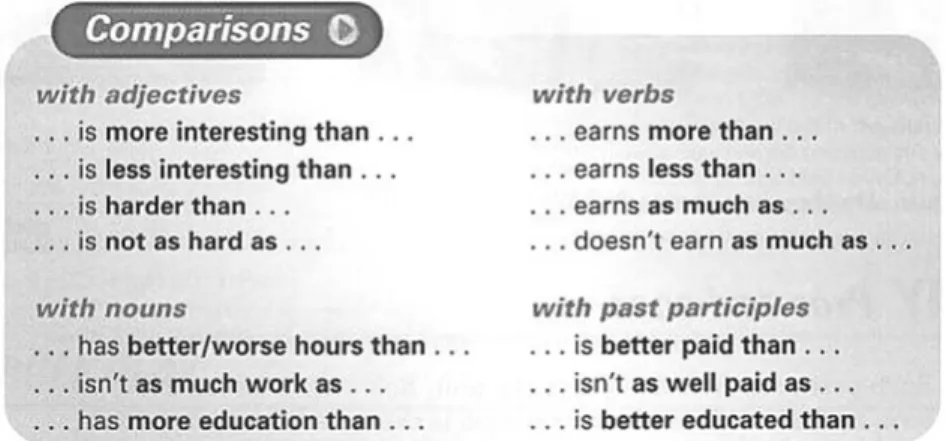
Fig. 1. Grammar Point, from Interchange, p. 11
―
Teacher’s Manual
―
Prepared Exams
Core Textbook with Teacher’s CD for Class Use
The purpose of the basal ESL course taught in Japanese universities is to provide basic language competence in all four categories of English learn- ing, for that reason the core text must cover listening, speaking, reading, and writing. The Japanese university semester consists of fifteen weeks, and a total of 30 weeks for a one year course. The logical organization of such a text would have two parts, one each for the spring and fall semes- ters. If each lesson is to be taught in two weeks, seven units and one re- view lesson need to be provided for each semester.
Each unit should provide two grammar points, one to be covered each of the two weeks. The grammar point needs to be highlighted with example phrases using the grammar point and a short explanation in English. An ex- planation of the grammar point in Japanese can be supplied in the teacher’s
―37―
Fig. 2. Dialogue, from Interchange, p. 11
1. What summer job did Tracy find?
2. What are Mark’s two leads for a summer job?
3. What are the advantages for the first job?
4. What are the advantages for the second job?
5. Which job does Mark think is better?
Fig. 3. Dictated Questions for the Dialogue
manual in greater detail, and prepared in such a manner that it can be printed as a handout for the students if necessary. The grammar point should have several written exercises for the students to practice in class and a vocabulary list of words that can be substituted into the grammar pat- terns to broaden the students’ usage of the grammar point. Prepared vo- cabulary quizzes can be supplied in the teacher’s manual.
The first part of the unit can be introduced with a dialogue. The dialogue needs to utilize and reinforce the grammar point and be short enough so that the students can memorize it. The teacher’s manual can provide a list
―38―
Fig. 4. Listening Practice, from Interchange, p. 12
of four or five questions about the dialogue to be dictated to the students that they then have to answer after listening to the dialogue. The student’s can then role―play and memorize the dialogue. The second grammar point can be introduced with another listening exercise having the students fill out a chart with the information they have heard. Further exercises should be provided for both listening exercises so that students can practice ask- ing and answering questions orally.
Reading and longer writing exercises can be provided as a summary of the unit, and should utilize the same grammar points and vocabulary al- ready introduced in the unit. Reading exercises should grow progressively longer during the course, starting out short with a length of two to three paragraphs for the first semester and by the second semester gradually growing longer from four to six paragraphs. Exercises for the reading les- son should include true and false questions, short questions and answers, and practice making short outlines of the main points of the essay. For the more advanced units, short model dialogues could be introduced for prac- tice learning how to discuss and debate the topic of the reading.
Longer writing exercises should entail at least a short paragraph of ap-
―39―
proximately five sentences, gradually growing longer of the course of the year to nearly a full page of several paragraphs in parallel with the reading lessons. The subject of the writing exercise needs to be both related to the topic of the unit and the reading exercise, and also topical
(current)and of interest to the students.
When making a text for the Japanese audience it should also be kept in mind that Japanese students are often terrified of texts written completely in English. At least for the units of the first semester, instructions should be written in both Japanese and English until the students are adjusted to understanding instructions written completely in English. The instructor could also apply some effort in acclimating the students to understanding instructions written in English, which the students will need to understand in the future for internationally administered language ability exams and more mainstream ESL texts not made for the Japanese audience. Examples of typical instructions and their Japanese equivalents could be supplied in the teacher’s manual to aid instructors in presenting it to the students.
In addition, it would be good if appendixes were added to the student’s textbook with a glossary of the vocabulary terms presented in the lessons, a list of the grammar terms used in the text with their Japanese transla- tions, and common expressions used in class such as “Please open your book to page
―.”
Finally the readings and exams will need to be changed every two to four years. If the exams are not rewritten regularly the students will just study from copies of the exams obtained from their seniors. If the readings are not changed every few years, they will cease to be topical when dis- cussing issues that are out of date, actors the young students have never heard of, or once emergent technologies that have already since become mainstream. It would be nice to have topics specifically related to Japan
―ori- ented issues, such as issues concerning the Yasukuni shrine, whaling in Ja- pan, the bombing of Hiroshima, or Japanese history textbook controversies
―40―
so that the students would have a chance to read about international opin- ions on Japanese issues and also provide opportunities for debate practice.
Student’s Workbook and LL Text with CD
The students need more practice for the lessons than just the ninety min- ute class presentation. The more exercises the students have to write, the better they will remember the grammar patterns and the more likely the lessons will become internalized for more natural usage. It is a great deal of work for the instructor to create homework exercises and grade them if a supplementary student workbook is not supplied with the text. Along with prepared exams, whether a supplementary workbook is provided is one of the main issues in deciding which text to select for a course. The supple- mentary textbook should have written drill exercises of at least two or three pages of practice exercises for each grammar point. In addition the exercises should reinforce the vocabulary presented in the main text and expand the possibilities of usage for the students.
Even with a supplementary homework text of written drill exercises in addition to the core class lessons, the students still do not have adequate practice in listening, speaking, and pronunciation. In the ideal situation the students would have a required paired course devoted to drill practice on speaking and listening exercises related to the core class. However since this is not the norm in Japanese universities, provision must be made to en- hance the students’ listening and speaking abilities. Many mainstream ESL texts do provide review sections in the student text and a supplementary CD for further self
―study. Nevertheless, that is still inadequate. The stu- dents really need at least an hour a week of Language Lab study with a text and CD.
Each weekly lesson for the LL practice should have a box at the top of the text to write the date and time in and out of the language lab, as well
―41―
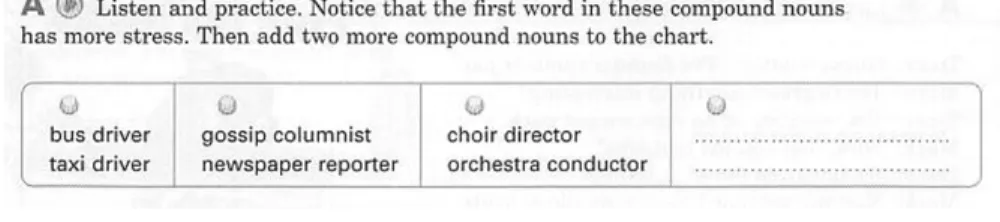
Fig. 5. Pronunciation Diagram, from Interchange, p. 12
as a place for the LL staff to sign or stamp a seal in verification. The CD provides the drill exercises in listening, speaking, and pronunciation, and the corresponding LL text should provide questions and answers and other related exercises, both to help the students understand the oral exercises and to ascertain for the instructor that the students have completed the work.
In addition to the written exercises for the students, diagrams and fig- ures of pronunciation and enunciation should be provided with written ex- planations in Japanese. Instructions for the oral drills and exercises, includ- ing page and exercise number, should be given in Japanese as well as Eng- lish, so that the students can easily find the corresponding exercise on the CD and understand what they are to practice.
Teacher’s Manual and Prepared Exams
On the most basic level the teacher’s manual needs to supply the an- swers to the exercises in the class text and students’ workbook. In addition, thorough grammar explanations and supplementary teaching instructions are very helpful, especially ideas for introducing a new unit in a manner fun and interesting for the students. Other useful supplementary materials in- clude, oral exercises not in the class textbook such as dictation questions, supplementary explanations that can be printed out as handouts to the stu-
―42―
dents if necessary, and similar to the students’ text, common expressions and instructions used orally in class with their Japanese translations. Prob- ably most welcome to the instructor, and again another main point in decid- ing which text to select for a course, is prepared quizzes and exams for printout supplied with the answers.
In the case of Japan, ESL courses are taught by both native English and Japanese instructors, and the latter would much prefer that the explana- tions in the teacher’s manual be given in Japanese. In addition, even for the native English speaking instructor, it is productive to read how grammar patterns and grammar terms are explained in Japanese. However, the native English speakers will want a manual in English, so a manual for use in Ja- pan would be most useful if its materials were in both English and Japa- nese.
Conclusion
Teaching an ESL course in Japan entails specific requirements that should be reflected in the ESL text in order to make it suitable for teaching Japanese university students. The necessity of a ESL text specific to the cultural and linguistic background of the students must also occur in cases other than Japan, which also have their own specific challenges to the in- structor of an ESL course. Whether it is really appropriate for an ESL text to attempt to be oriented to a large diversity of linguistic and cultural back- grounds is an issue that needs to be seriously readdressed. Hopefully this essay will problematize this issue previously inadequately considered, be in- formative concerning issues in regard to teaching ESL courses to students not of European abstract, and encourage publishers and instructors to work together to produce ESL texts more specific to the linguistic and cultural backgrounds of the students being taught.
―43―
References
Cunningsworth, A.(1984) . Evaluating and Selecting EFL Teaching Materi-
als. London : Heinemann.Garinger, D.
(2002). Textbook Selection for the ESL Classroom. ERIC Di-
gest,(Dec). Retrieved on January 11, 2010, from
www.cal.org/resources/digest/digest_pdfs/0210 garinger.pdf.
Miekley, J.(2005) . ESL Textbook Evaluation Checklist. The Reading Ma-
trix, 5(2
). Retrieved on January 11, 2010, from
www.readingmatrix.com/reading_projects/miekley/project.pdf.
Moran, C.
(1991
). Lexical Inferencing in EFL Reading Coursebooks : Some Implications of Research. System, 19
(4
), 389
―400.
Richards, J. C., with Hull, J. and Richards, S.
(2005
). Interchange 3. New York : Cambridge University Press.
Sheldon, L. E.
(1988
). Evaluating ELT Textbooks and Materials. ELT Jour- nal, 42
(4
), 237
―246.
Skierso, A.
(1991
). Textbook Selection and Evaluation. In M. Celce
―Murcia
(
Ed.
), Teaching English as a Second or Foreign Language, 432
―453.
Boston : Heinle and Heinle.
Weddel, K. S.
(2009
). How to Choose a Good ESL Textbook. Retrieved on January 11, 2010, from
http : / / www. cde. state. co. us / cdeadult / download / NCPDRC / HowTo ChooseGoodESLTextbook.pdf.
―44―