Community-based Charity-type Safety Nets against Health Shock:
The Case of Sangkeaha in Rural Cambodia
Kenjiro Yagura
ABSTRACT
Previous studies have revealed that rural households in developing countries attempt to cope with adverse shocks by dyadic risk-sharing with other households or by membership-based insurance arrangements at community level. This article examines another type of risk-sharing arrangements, community-based charity-type safety net, where people give a donation to other members in their community who suffer from hardship, using the case of sangkeaha in rural Cambodia. Specifically, this study examines the extent to which sangkeaha protects people against health shocks, with what motives people participate in it, who benefits more from it, and the effect of rules on people’s participation in sangkeaha. The analysis of primary data collected in Takeo province provides the following findings.
Even though participation is voluntary, sangkeaha can collect large amounts of donations from people in light of the economic situation of rural Cambodia, but the amounts are nonetheless often insufficient to cover the medical costs that recipients incur. In addition, many cases of severe illness and injury are left unprotected even by sangkeaha.
Nonetheless, various motives besides simple altruism seem to encourage them to make donation in sangekaha. Normative altruism is manifested as a motive by people’s perception of merit-making in making donation. Because relationships of mutual help are created among villagers through sangkeaha, people seem to participate in it to conform to the norm of returning favors in the context of both dyadic and general reciprocity. Furthermore, because of the reciprocal relationship between villagers, insurance motive also seem to induce people to make donation.
In line with the expectation for the charity-type safety net, poor people are not discriminated against in sangkeaha. On the other hand, the amount of donation collected and the asset size of recipient has U-shaped relationship, indicating that donation in sangkeaha is induced not only by altruism.
The extent to which people participate in sangkeaha is influenced by rules adopted. In the surveyed villages, the unconditionality rule that any villager is eligible to receive donation increases the participation rate especially in large villages, which indicates that people’s participation can be promoted by making them have the sense of general reciprocity.
These findings reveals the potential of community-based charity-type safety-net schemes for providing protection to rural populations in developing countries, with its advantages of not excluding poor people and marked sustainability. In this connection, the case of sangkeaha indicates
that reported problems of CBHI such as the exclusion of the poorest segment of population and the high rate of drop-out would be alleviated by making the members of a CBHI scheme perceive it as a mechanism of mutual help among them.
However, the charity-type safety net scheme would be introduced only in cohesive communities in which its members have intimate relationships with dedicated voluntary organizers. Because the voluntary nature is its key, what the government and outside NGOs can do to promote the charity- type safety net would be also limited.
Ⅰ.Introduction
For rural households in developing countries, how well they can cope with adverse shocks such as crop failure and illness of family members is extremely important in avoiding descent into poverty.
Because safety nets are scarcely provided by the public sector in developing countries, people must cope with shocks by themselves through measures such as drawing on savings, selling assets, and through migration of household members. Dyadic risk-sharing with other households in the form of loans or gifts is often adopted. The effectiveness of such informal risk-coping strategies has been examined extensively(Alderman, 1996; Fafchamps and Gubert, 2007; Fafchamps, Udry, and Czukas, 1998).
In addition to these self-insurance and risk-sharing arrangements, group-based or community- based risk-sharing arrangements also exist. For example, community-based health insurance (CBHI) has been introduced by NGOs in many countries in recent years (Ekman, 2004; Carrin, Waelkens and Criel, 2005). Funeral associations in some African countries can be called semi-formal insurance schemes that provide a certain level of protection to their members without the involvement of government or NGOs (Dercon, et al., 2006; Mariam, 2003).
A salient issue of concern related to these risk-coping mechanisms is that they are often unavailable to poor people. Self-insurance is an unsuitable option for asset-poor households (Jalan and Ravallion, 2001; Zimmerman and Carter, 2003). Forming a risk-sharing network with other households is also difficult for those who lack the resources necessary to lend help to the partner. In fact, some studies have revealed that poorer households tend to be excluded from such networks (De Weerdt, 2004; Goldstein, de Janvry, and Sadoulet, 2004). Evidence also shows that poorer people are less likely to participate in CBHI and group-based semi-formal insurance (Ekman, 2004; Jütting, 2004; LeMay-Boucher, 2007, 2009; Mariam, 2003) probably because they cannot afford to pay premiums or member fees.
An alternative to these risk-sharing arrangements is community-based charity-type activity for those who confront adverse shocks. Unlike CBHIs and funeral associations described above, this is not membership-based; people donate money or food to other members in their community who suffer from hardship. For instance, some rural villages in Cambodia have such a charity-type activity called sangkeaha, or aid in Khmer (Yagura, 2005), which is generally organized for those who become severely ill. This kind of charity-type safety net is expected to provide protection even to the poorest people in a community because no member fee or contribution is necessary to receive a donation through it.
To the author's knowledge, charity-type safety net has not been studied in the context of development studies. First of all, this type of safety net seems to be rarely found in the contemporary developing world, as the author could find no reported case in neighboring Laos, Thailandand Vietnam.1) Nevertheless, charity-type safety net is worth promoting if it is pro-poor and can provide sufficient protection for people.
A fundamental question in charity-type safety net is how people are motivated to participate in it, or make donation, when receiving protection is not linked with making donation. In other words, in charity-type safety net, people would not have insurance motive or expectation of protection for future adverse shocks, which is supposed to be the major motive for participation in membership- based insurance programs. Naturally, altruistic feeling toward recipients who suffer from hardship can be the major motive, but people may have such feeling only with those who are close to them, not with community members in general.
This argument indicates that charity-type safety net can provide sufficient protection, or attract people’s participation, when people can also have motives other than altruism. As discussed later, people’s motive to make donation in charity-type safety net can vary according to its rules and the way it is implemented, which can change the meanings people attach to their donation and the type and the size of benefits (in a broad sense) they expect to receive by making donation. Therefore, the potential of charity-type safety net can be explored by examining its rules and the way it is implemented as well as people’s motives to participate in it.
Against this backdrop, using the case of sangkeaha in rural Cambodia, this paper examines the performance and the potential of charity-type safety net by linking them with people’s motive to participate as well as its rules and the way it is organized. Concretely, this paper is aimed at examining the followings questions: (1) does sangkeaha provide people with sufficient protection?
(Section IV) (2) what kind of motives can be aroused by the rules and the way sangkeaha is organized and(3) with what motives do people actually make donation in sangkeaha? (Section V); (4) do poor people benefit through sangkeaha on an equality with non-poor people?(Section VI); (5) under what kind of rules is people’s participation in sangkeaha promoted? (Section VII). To tackle these questions, Section II presents theoretical analysis on factors evoking various types of motives to make donation and the effect of motive on the participation and the amount of donation in charity-type safety net. Section III describes how the data used in this paper was collected, the situation of the research site, the history of sangkeaha and how sangkeaha is organized in the surveyed villages. Finally, in Section VIII, the findings of this study are summarized and some policy implications are presented.
There have been few studies of sangkeaha. Yagura (2005) only briefly describes the operation of sangkeaha and its effectiveness as a safety net. Using econometric analysis, Chhair (2012) examines the determinants of the amount of donations to sangkeaha and argues that people make donation more as obligation than charity when the recipient is their relative. But, obligation-charity dichotomy is too simplistic as the motive to donate. Furthermore, questions mentioned above except question (3) are not addressed in Chhair (2012).
Ⅱ.Motive to Donate in Charity-type Safety Net: Theory
1.Types of motives and factors evoking them
A Safety net scheme needs contribution from its participants (members) to provide them with protection when they suffer adverse shocks. Especially, in insurance-type schemes, making a contribution (i.e. paying premium) is the condition to receive benefits. In charity-type schemes, however, making contribution (or donation) is not the prerequisite for receiving benefits.
Nevertheless, providing benefits to members is only possible when people make sufficient contributions.
As making contributions entails cost, people need to have some motives to do so. It is important to understand people’s motives to make contributions because they can have a large impact on the performance of the scheme. For example, in a dyadic risk sharing arrangement, if altruistic feeling is the motive to make a transfer to a risk sharing partner, transfers would be made to the partner whenever he suffers a negative shock even if transfers between partners are unbalanced(De Weerdt and Fafchamps, 2011; Foster and Rosenzweig, 2001). This is a property beneficial to those who are more vulnerable to shocks.
The type of the motive of people to make contributions would depend on the rule of the scheme and the way the scheme is implemented. For instance, people would be more likely to have insurance motive, or making contributions in order to have protection against future negative shocks, when making contributions is the condition of receiving benefits. When those who fail to make a contribution face sanctions of any kind (including informal ones), avoidance of sanction can become a motive to make contributions. In this case, the contribution can be rather regarded as tax.
In charity-type safety net, people are less likely to have insurance motive because receiving benefits is not conditional on making contributions, and therefore other motives would play an important role. Among such non-insurance motives, altruistic feeling toward those who suffer negative shocks would be the major motive.
Altruism can be classified into hedonic altruism and normative altruism (Kolm, 2006). For people with hedonic altruism, the improvement of the welfare of the recipient makes them happy. People would be more likely to have hedonic altruism when recipients are identified and when people have close relationship with the recipients. Making transfer directly to recipients, by which people feel that their contributions really help the recipient, would also evoke hedonic altruism. People make contributions out of normative altruism when they find normative values in doing so. Characterizing (explicitly or implicitly) contributions as having normative value would induce people to have such a motive.
When people perceive reciprocal relationship with other particular members through the safety net scheme, the norm of reciprocity, or the norm of returning a favor, can motivate people to make contributions. This motive explains cases in which a person D makes a donation to R to return the favor R gave to D in the past. The dyadic reciprocity is perceived when those who make a contribution can identify the recipient and vice versa.
Under situations where dyadic reciprocal relationships are perceived by members, people can also have insurance motive. Because of dyadic reciprocity, the amount of benefits one expects to receive
from other members when she suffers a negative shock would depend on whether and how much she gave to other members in the past. Therefore, expectation of receiving larger benefits would motivate people to make contributions. Nevertheless, a large part of members can have such an insurance motive only when the probability of receiving benefits is not too low for them; in other words, when benefits are provided for shocks that are not so rare and when all members irrespective of their attributes such as age and the economic status can receive benefits.
Furthermore, people might be conscious of general reciprocity (Kolm, 2008), or norm of returning a favor to others in general, when any members can receive benefits with a certain level of probability. Under such a condition, one can believe that other members will help her once she suffers a negative shock, and therefore she would feel obliged to make contributions in return for other members, even for those who do not have dyadic relationship with her.
As given above, there can be many motives, and we must recognize that a person can have different motives at one time.
2.Effect of motive on the participation and the amount of donation
This subsection presents a theoretical model to examine the effect of people’s motive on whether and how much people make a contribution in a charity-type safety net scheme̶a scheme in a village through which villagers voluntarily make donation to those villagers who suffer a negative shock of some severity. Making donation is not a prerequisite for becoming the recipient of the donation. A special attention is paid to non-insurance motives, which are supposed to be a great importance in charity-type safety net.
For simplification, the model depicts the decision making of a villager k in two periods. In each period, k earns a fixed income y. In the first period, k does not experience a negative shock but is asked to make a donation d to other villagers (00≤dd<<y). In the second period, y k experiences a negative shock with a probability p (0<p<1) which causes a monetary loss of l, (0<l<y) but other villagers are expected to donate r to her. Savings and borrowing are assumed to be impossible, and therefore k spends y-d on consumption in the first period and y-l+r in the second period if she suffers a shock and y if she does not experiences shock.
Her utility U in the first period is derived from consumption c as well as from non-insurance benefit denoted by m, which represents satisfaction felt by making a donation. The sense of security for the shock is not included in m but is reflected by the increase in consumption (by r) in the second period in case of suffering adverse shock. To capture the effects of non-insurance benefit on k’s decision making, it is assumed that m=μM (d, x), where μ is a parameter determining the magnitude of non-insurance benefit and M is a function linking the amount of donation to the magnitude of satisfaction, and x stands for any variable affecting the relationship between d and m.
In the second period, because k is not assumed to make a donation, only c determines the utility.
In this setting, the expected utility in the two periods for k is given as below:
V=U (y−d, m)+δ{ p [qU (y−l+r)+(1−q) U (y−l)] +(1−p) U (y)}
where, δ(0<δ0≤1)d< is a time preference factor, and y q (00≤0dq≤<d1)y< is the probability that the village y organizes a charity for k when she experiences a negative shock. It is assumed that r=R(d, y) so as
to take into consideration the possibility that other villagers decide whether and how much they donate to k based on how much she donates in the first period and her income level.
If derivatives of any differentiable function F (a, b) is expressed as Fa ≡FF∂aaF≡≡∂∂FaF/F∂aa, Fa ≡Faa∂aF≡≡∂∂aFF2/∂a2a and FabF≡ a
Fa ≡F∂aF≡a∂∂F≡F2∂/F∂ab∂aa, then, it is assumed that Uc>0, Ucc<0, Um>0, Umm<0, and Ucm>0 under the decreasing marginal utility and the complementarity of consumption and non-insurance benefits.2) Md>0, Mdd<0, Rd> 0 and Rdd< 0 are also natural assumptions.
The optimal amount of donation d* for k, which maximizes V, satisfies the following equation:
F a Fa ≡∂ ∂V a F
Fa ≡∂ ∂d=−Uc (c1, m)+Um (c1, m) μMd +δpqUc (c2) Rd=0……(1)
where c1=y-d and c2=y-l+r. The second order differential of V is negative and hence V has a maximum value. The first term of the equation (1) is negative and thus regarded as representing the cost of donation. The second term is positive and represents non-insurance benefits. The third term is positive when Rd>0 and thus represents insurance benefit in the sense that it shows the extent of increase in the amount of donation k will receive in response to the increase in donation she made in the first period. If Rd=0, or when r does not depend on d, she cannot perceive insurance benefit in the scheme.
We will now examine factors affecting the decision of k on whether she makes a donation or not.
Given that V is a concave function, k voluntarily makes a donation (d*>F0)a if ≡F∂alim F≡∂∂FaV/∂ad>0
d→0 . In other words, the following inequality holds when d is close to 0:
Um (c1, m) μMd +δpqUc (c2) Rd>Uc (c1, m)……(2)
This inequality is likely to hold when p, q, or Rd is large, which indicates a large insurance benefit.
However, even when insurance benefit is not expected (that is, the second term of the left hand side of the inequation(2) is zero), k has incentive to donate as long as her utility is increased to a large degree due to non-insurance benefits, like when μ is sufficiently large. As is the effect of altruism shown theoretically by (De Weerdt and Fafchamps, 2011), existence of non-insurance motive would promote people’s participation in a risk sharing scheme. Furthermore, based on the assumption that Umc>0, the first term of the left hand side of the inequation(2) increases with income level, indicating that the larger the income level the stronger the incentive to make a donation. On the other hand, for low-income villagers to have the incentive to donate, μ should be large enough to compensate for the smaller Um. This means that whether one makes a donation or not depend much on the magnitude of non-insurance benefits especially for poorer people.
We will next examine the effect of change in parameters on the optimal donation. As is apparent from the equation (1), d* changes according to the value of parameters (y, μ, x, p, q). To examine the effect of the parameter change, a function G (d, y, μ, x, p, q)Fa ≡F∂aF≡≡∂∂FaV/∂ad is defined. Because G=0 when d=d*, and because Fa ≡F∂aF≡Fa∂∂aG/F≡F∂∂aFad=≡∂∂aVF2/∂a2d≠0, the implicit function theorem tells us that Fa ≡F∂aF≡∂∂adFF*/a∂≡atF=-∂aF≡(F∂∂aaG/F≡F∂∂aat)F≡/(∂∂FaG/∂ad) for each of the parameters t. Notice that Fa ≡F∂aF≡∂∂adF*/Fa∂at and ≡F∂aF≡∂∂aG/F ∂at have the same sign because Fa ≡F∂aF≡∂∂aG/F ∂ad<0. Based on this, the direction of the effect of an increase in k’s own income y is represented by the equation (3):
F a Fa ≡∂ ∂G
a F
Fa ≡∂ ∂y=−Ucc (c1, m)+Umc (c1, m) μMd +δpqUcc (c2) Rd+δpqUc (c2) Rdy……(3)
The sign of the right hand side is undetermined because the first and the second terms are positive while the third term is negative. The forth term is also negative if Rdy<0, or when villagers are motivated by altruism with which they will make larger donation for poorer people (as discussed below). Nevertheless, the overall sign is more likely to be positive when the magnitude of non- insurance benefit, μ, is sufficiently large. In other words, income level of donors and the amount of donation they make are more likely to have positive relationship when they have stronger non- insurance motives.
The increase in μ is assessed by the equation (4):
F a Fa ≡∂ ∂G
a F
Fa ≡∂ ∂μ=−Ucm (c1, m)M+Um (c1, m) Md +μMdUmm (c1, m) M……(4)
The overall sign of the right hand side is undetermined as the first and the third terms are negative but the second term is positive. The larger magnitude of non-insurance benefit does not necessarily increase donation because larger μ means that one can gain a large utility with a small donation.
As is apparent from the following formula, an increase in the probability of experiencing a shock has positive impact on d*:
F a Fa ≡∂ ∂G
a F
Fa ≡∂ ∂p=δqUc (c2) Rd……(5)
Similarly, an increase in q also leads to increase in donation (just replacing p with q in the equation (5)). This result indicates that a higher probability of receiving benefits, which provides people with insurance motive, induces people to make a larger donation.
What x in the function M represents varies according to the type of non-insurance motive. In case altruism is the motive, k’s utility is increased by making donation because her donation increases the welfare level of the recipient, which, for example, can be assessed by recipient’s income. Then, it is reasonable to assume that x represents recipient’s income, z, and that M (d, x)=M (z+d). The impact of an increase in z is assessed by the equation (6):
F a Fa ≡∂ ∂G
a F
Fa ≡∂ ∂z=−Ucm (c1, m) μMz+μ2Umm (c1, m) M2z+μUm (c1, m) Mzz……(6)
Apparently, Mz=Md>0 and Mzz=Mdd<0, and therefore all the terms are negative. That is, as is indicated by previous studies on the effect of altruism on income transfer (such as Cox, 1987), people would make a larger donation for poorer recipients if they are altruistically motivated.
When dyadic reciprocity is behind k’s motive to donate, making a donation increase her utility because it is an act of returning a favor to the partner of reciprocity who had helped her in the past.
Therefore, h, the size of help given by the recipient to k in the past, determines the size of non- insurance benefit of making a donation. The impact of the increase in h on d* is expressed by the equation (7).
F a Fa ≡∂ ∂G
a F
Fa ≡∂ ∂h=−Ucm (c1, m) μMh+μ2Umm (c1, m) MhMd+μUm (c1, m) Mdh……(7)
The right hand side of the equation is positive as long as Mh<0 and Mdh>0. This condition is met in certain set of d and h if M has logistic-curve like shape with respect to d and if the increase in h magnifies the curve, as is depicted in Figure 1 (where Mh<0 and Mdh>0 when d1<d<d2). Such condition is not unreasonable. The logistic-curve like shape is plausible because marginal effect of donation would become almost zero after a donor wholly returns the favor to the recipient. With the size of donation being constant, an increase in h can increase psychological debt owed to the recipient and thus reduce the satisfaction level of the donor (Mh<0). Therefore, the positive correlation between the donation and the assistance the donor received from the recipient is a clear sign that dyadic reciprocity underlies donor’s motive.
1 1 2 2
( ) 1
( ) 2
Figure 1. Relationship between donation ( ) and non- insurance benefit ( ) under varying size of help given by the recipient ( ).
Source: Prepared by the author.
When k has in mind general reciprocity in making a donation, her making a donation is regarded as returning a favor to villagers in general, most of who are expected to help her once she suffers a negative shock. In this case, it is assumed that, the higher the probability that she receives donation ( =pq), the larger the utility gain by increasing the amount of donation she makes. That is, with s≡pq, Mds>0 is assumed. Using the same logic as for dyadic reciprocity mentioned above, with d being constant, an increase in s would reduce the satisfaction from making a donation (Ms<0). The effect of an increase in s is assessed by the following formula:
F a Fa ≡∂ ∂G
a F
Fa≡∂ ∂s=−Ucm (c1, m) μMs+μ2Umm (c1, m) MsMd+μUm (c1, m) Mds+δUc (c2) Rd……(8)
All the terms are positive. As is the case when people make a donation with insurance motive, higher probability of becoming a recipient increase the amount of donation if general reciprocity induces their donation.
Ⅲ.Introduction to
1.Research Site and Field Survey
Data were collected in Treang, a rice-growing district in Takeo province of the southern part of Cambodia. The farms, near the capital city Phnom Penh, are generally small (around one hectare per household). Therefore, an increasing number of laborers have migrated to Phnom Penh as well as other parts of the country to work in recent years.
The survey was administered by the author and assistants in two rounds. In the first round, all but three villages in the district, 151 in all, were visited during December 2009 ‒ January 2010 ( village survey ). Through the village survey, we collected information from the village chief and the sangkeaha organizers of each village about sangkeaha as well as the general socioeconomic situation of the village. In the second round of the surveys conducted during August‒September 2010, we visited 12 villages which practiced sangkeaha. They were selected so that sangkeaha of various types in terms of rule were included in the sample. In these 12 villages, we visited 300 randomly selected households (25 households in each village) ( household survey ) as well as 22 households for which sangkeaha was organized in 2010 ( recipient survey ). We also collected information from sangkeaha organizers in the 12 villages ( organizer survey ).
2.Formal safety nets against health shocks
Most Cambodian people are not covered by formal safety nets against health-related shocks. For poor households, however, the Cambodian government introduced a scheme called the health equity fund (HEF) by which households identified as poor are exempted from payment of user fees at public healthcare facilities. Reportedly, HEF has a positive effect for improving poor people’s access to healthcare (Jacobs and Price, 2006; Noirhomme et al., 2007). Actually, HEF is implemented in Treang district. Among the 300 households interviewed, 24 households were found to have an HEF beneficiary card.
Residents in Treang district can also join a health insurance program which has been managed by an NGO since 2008. By paying a premium every month, the insurance participants can receive healthcare at public hospital and health centers, principally for free. Although the beneficiaries of HEF are the poorest segment of population, this health insurance program is targeted at less-poor people who can afford to pay the premium regularly. Probably because the program has just started in the district, only 9 out of the 300 sample households had joined the health insurance at the time of the survey. Another 10 households had joined but withdrew from it for reasons such as inability to pay the premium and dissatisfaction with the quality of services at public healthcare facilities.
3.History of
According to the village survey, 126 villages among 151 villages surveyed have sangkeaha or a similar activity at the time of the survey, indicating that sangkeaha is widespread in Treang district.
It is not easy to trace the history of sangkeaha because most villages in Treang district were established during or before the French colonial period. Nevertheless, among the 126 villages with sangkeaha at the time of the survey, at least 30 villages had sangkeaha before the Pol Pot era (1975-
79). The other 50 villages started sangkeaha in the 2000s. Consequently, although sangkeaha is apparently a traditional activity, it has diffused most widely and rapidly among the villages in Treang district in recent years.
According to the village survey, the initiative to start sangkeaha was taken mostly by village chiefs and achars. Achars are male (generally elderly) lay persons who are involved in the management of the Buddhist temple (wat) as a member of the wat management committee (achar wat) or who perform ceremonies in the village (achar phum). In most cases, sangkeaha was started in the sample villages because the founders (village chief or achars) had seen many villagers falling into destitute circumstances as a result of illness or other cause.
As discussed later, people generally relate participation in sangkeaha to merit-making, which is highly valued under Theravada Buddhism, the religion followed by most Cambodians (ethnic Khmer). This observation suggests a certain link between sangkeaha and Buddhism. In fact, in about a half of the villages surveyed, Buddhist monks also sometimes participate in sangkeaha (making donations). However, the role of monks in the management of sangkeaha is extremely limited; monks took the initiative in starting sangkeaha in only seven villages.
No involvement in sangkeaha is made by local administration above the village level. In one village, the involvement of an NGO was reported. Therefore, sangkeaha is an activity that is initiated and diffused mostly by local people themselves without involvement of actors outside their own community.
To the author's knowledge, in Cambodia, sangkeaha or an activity of the same sort seem to be found only in limited part of the country, such as Takeo and Kampong Speu provinces (these are provinces neighboring each other). Yagura (2005) is also based on data collected in Treang district.
Cases of sangkeaha examined in Chhair (2012) are also from these two provinces and they are operated in similar ways as sangkeaha examined in the present paper.
4.For whom is organized
Simply described, sangkeaha is an activity by which villagers systematically donate money and goods to those who suffer from hardship for some reason. Although the conditions for which sangkeaha is organized vary among villages, in all but one village, a donation is collected for severely ill or injured people. In some villages, sangkeaha is also used to help impoverished (unrelated to illness) people and those who are weakening progressively because of old age (not illness).
As presented later, donations are generally made on a voluntary basis. In addition, receiving benefits through sangkeaha is not conditional on making donations to sangkeaha for other villagers:
sangkeaha can be organized for anyone who suffers from a hardship for reasons described above even if that person (or that person’s family) has rarely participated in sangkeaha for other villagers.
In some villages, sangkeaha is organized only for those who meet some criteria. For example, sangkeaha is organized only for poor people in 14 villages (not organized for wealthy people even when they become severely ill), and only for elderly people in five villages. In 17 villages, illness and injury of children or infants are excluded from the sangkeaha coverage. In these villages, the reason for excluding children is that it is the parents’ responsibility to take care of their children and illnesses of children are easy to cure and are not protracted. Aside from the villages described
above, 91 villages, or 72% of the villages with sangkeaha, have a policy that is applicable to organize sangkeaha for any villager, irrespective of their age or economic status.
5.Collection of donations
Village chiefs and achars assume the role of organizer to collect donations from villagers in most villages. Donations made to sangkeaha generally follow the procedures for administration described below.
1) Organizers learn of the existence of a villager suffering from some hardship (e.g. a villager who becomes severely ill).
2) Organizers decide whether sangkeaha should be organized for that villager.
3) Organizers announce the sangkeaha implementation to villagers (by a loudspeaker or door-to- door visits)
4) On the day of sangkeaha, villagers visit the house of the recipient to make a donation; organizers also wait there.
Some villages adopt different procedures. For example, in nine villages, organizers visit villagers’
homes to collect donations and take them to the recipient. The donation is made by the household unit: each household makes one donation. The amount of donation is freely determined by the donor except in some villages where the minimum amount of donation is set, as discussed later.
In most villages, the name of the donor and the amount of the donation of each donor are registered in a notebook when making a donation. This notebook is usually kept by the recipient herself, although in some villages organizers keep it. This register is used by the recipient to determine an appropriate amount of future donations when sangkeaha is organized for other villagers; the recipient typically tries to donate as much money or more than the donor villager gave her when she needed it.
Sangkeaha is organized at a village level. Therefore, participants are mainly limited to the villagers themselves. However, in some cases, relatives and close friends of the recipient living in neighboring villages also come to donate.
In no village is making a donation in sangkeaha mandatory in a strict sense. Therefore, people are able to decide by themselves whether to participate in a sangkeaha or not. According to the village survey, informants of 73 villages responded that villagers must participate in sangkeaha (and make donations). However, 26 of these villages have a participation rate (an average share of households in the village that participate in each sangkeaha) of less than 90%; and eight of these 26 villages have a participation rate lower than 70%. These figures suggest that, in reality, donations are not compulsory. In fact, no measure is introduced to force villagers to make donations: according to the organizers survey, no village punishes those who fail to participate in sangkeaha or demand that they donate funds at a later date.
However, 13 villages set a minimum amount of donation per household to increase the donations.
The amount is 1,000‒3,000 riels.3) Nevertheless, this is not a strict rule. For example, in one village, the minimum donation was set to 3,000 riels per household in 2009; even so, donations of less than
3,000 riels are also accepted with no sanction. Nevertheless, the sangkeaha organizer of the village perceived that a large share of villagers tend to donate 3,000 riels or more since the minimum was set.
Table 1. Village-level participation rate ( )
Number of village %
R<50% 3 2.4
50<−R<70 12 9.5
70<−R<90 42 33.3
90<−R 69 54.8
Total 126 100.0
Source : Prepared by the author with the data collected through the village survey.
Ⅳ.Impact of
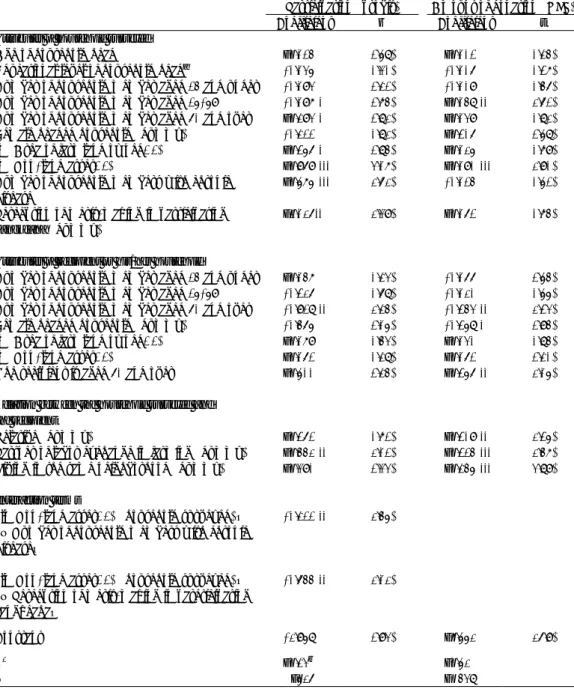
To elucidate the extent to which people participate in sangkeaha in each village, in the village survey, informants (village chiefs or achars) were asked the average share of households in the village participating in each time of sangkeaha. Table 1 presents the result. Although the figures are rough estimates by informants, they show that most households participate in sangkeaha. The participation rate is 90% or higher for 55% of the villages, and 88% of the villages have a participation rate of 70% or higher.
More precise figures of the participation rate were obtained in the 12 villages through the organizer survey, in which we collected information related to sangkeaha implemented in the 12 villages during January‒August 2010. During this period, sangkeaha had been organized for 43 people in the 12 villages, and the proportion of households which participated in each sangkeaha in the respective village, or household participation rate, was 74.6% on average.4) Participation rates vary greatly according to villages, they were greater than 90% in three villages, but less than 50% in three other villages.
In sangkeaha for these 43 people, the average cash donation per participating household was 2,335 riels, and the average sum of cash donation per sangkeaha disbursement was 263,298 riels. This amount is not small. It is equivalent to 20-25 days pay for agricultural wage work in the district as of the time of the survey. However, large differences were found in the amounts of donations among cases. The sum of the donation was only 55,000 riels for the lowest case, although for the highest case 600,000 riels was collected. The average donation per participating household also varied greatly by village: in some villages, each participating household donated more than 3,000 riels on average but in one village, only 720 riels were donated on average.
In addition to cash, rice is also donated in most villages. In the 12 sample villages of the organizer survey, 39.5 kg of husked rice (which is equivalent approximately to 80,000 riels in value) was donated on average per sangkeaha disbursement.
Although the amount of donation described above is not a small amount for rural households in Cambodia, it is still insufficient to cover medical expenses incurred by the recipients in most cases,
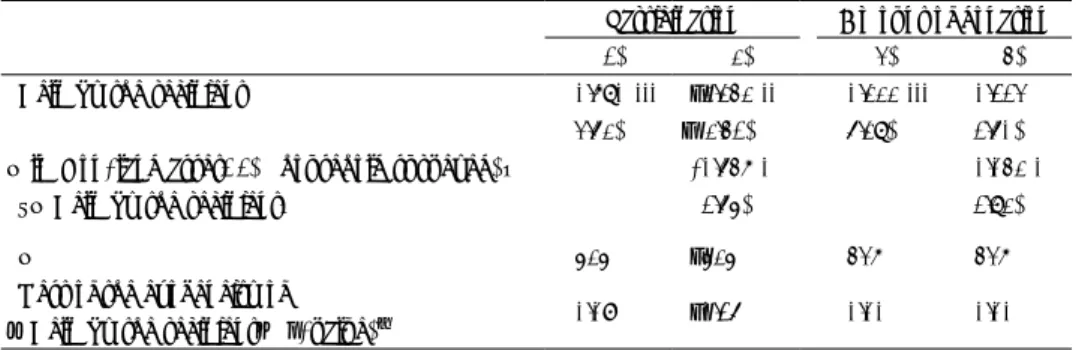
as confirmed by the result of the recipient survey, for which we interviewed 22 recipients (or their family) of the prior two sangkeaha disbursements organized in 2010 in each village. For these 22 recipients, the average coverage rate (donation received/medical expenses) was only 40.8%.
Although coverage rates in some cases exceeded 100% (they received more donations than they spent on medical treatment), the coverage rate was less than 50% for 17 of the 22 cases. The low coverage rates resulted from the large sums necessary for medical expenses. On average, recipients (or their family) spent about 2.5 million riels to treat their illness or injuries for which sangkeaha was organized, although they received only 0.36 million riels through sangkeaha, even if including the value of donated rice.
Furthermore, even if anyone in the village becomes severely ill or injured, sangkeaha is not always organized. According to the household survey, among 54 cases in which any member of household (or family member living separately) became severely ill or injured in 2010, sangkeaha was organized only for eight cases, even though the average medical expenditure for the other 46 cases was as large as 2.3 million riels.
Ⅴ.Motives to give people benefits in
1.Elements evoking the motives of donation
This section examines motives of people to make donation in sangkeaha.
Before empirical analysis, this subsection discusses what kind of motives people are more likely to have in making donation under the rules of sangkeaha and the way it is organized based on the theoretical argument in Section Ⅱ.
First, because of voluntary participation, which is the indispensable element of a charity-type safety net, it is less likely that people make donation in order to avoid sanction and gain insurance.
Instead, altruistic motive would be perceived as their major motive.
As presented in Section Ⅱ, altruism has two sub-types, and the way sangkeaha is organized can evoke both types of altruism. Hedonic altruism is induced by two elements. First, sangkeaha is organized whenever a villager gets seriously ill and therefore villagers clearly know who the recipient is. Second, in most villages surveyed, villagers visit the recipient to make a donation. Under such situation, villagers are more likely to feel sympathy toward recipients and have a sense that their donation really helps recipients.
Normative altruism is evoked by the apparent linkage between the donation in sangkeaha and merit-making, which is highly valued in Theravada Buddhism in Cambodia. According to the organizer survey, organizers of 10 of the 12 sample villages emphasize merit-making when they call villagers for joining sangkeaha. People in the villages surveyed think that they can make merit through deeds of various kinds, and participation in sangkeaha is one of them. In fact, 94% of the respondents in the household survey answered that they were always conscious of merit-making when they participate in sangkeaha. In this regard, however, some sangkeaha organizers reported to the author that one can make merit by making a donation through sangkeaha only if one purely intends to help the recipient. This argument suggests that normative altruism underlies merit- making as the motive.