• 検索結果がありません。

Trend and Prospects of Bioenergy Utilization 6

N/A
N/A
Protected

Academic year: 2021

シェア "Trend and Prospects of Bioenergy Utilization 6"

Copied!
14
0
0

読み込み中.... (全文を見る)

全文

(1)

6.1 Introduction

Today, we are faced with global energy and environmental problems and required to find solutions satisfying the requirements of the three E's, namely energy, environment and economy.

For the global warming problem, among other things, although various economic and technical options have been proposed, each of them can individually produce only limited effects and in fact, we have no choice but to deal with the issue by using appropriate combinations of them, giving due consideration to their cost vs. performance characteristics. Under these circumstances, Japan also needs to advance research and development of diver se global war ming counter measure technologies to secure the bases for unerring, flexible policy implementation.

In this article, bioenergy, which is one of the available options in addressing the global warming problem, will be discussed. Recently bioenergy has been paid much attentions and the Japanese government is also considering revising provisions of the "Special Measure Law for Promotion of New Energy Utilization, etc." (Enforced in March 1997.

Hereinafter called the "New Energy Law") to include bioenergy among the types of new energy that will be suppor ted with gover nment's subsidies.

In Japan, bioenergy utilization was actively studied after the oil shocks, but interest subsided with the continued downtrend of oil prices. Bioenergy, like other new energy, can contribute much in a society where externality such as energy security, environmental preservation, is highly respected.

6.2 Biomass and Bioenergy

6.2.1 Bioenergy

Plants produce hydrocarbons from water and carbon dioxide, using energ y of sunlight (photosynthesis). The chemical energy held in hydrocarbons is the source of bioenergy. In a chain of plant utilization as food or a material for various products, energy held in them will be passed onto various agricultural and industrial products, and then to agricultural wastes, animal dung, waste timber and kitchen refuse.

These plant-origin organic resources are called biomass and energy extracted from them are bioenerg y. Those that are not practical for utilization as energy such as foods, timber and fertilizer are not included in biomass in a narrow sense.

6.2.2 Classification of biomass

Table 1 shows the classification of biomass as a source of bioenergy. Biomass is grouped into two categories, the production resource group (energy crop plantation group) and the unutilized resource group (residue group). Production resource group biomass is mainly plants cultivated for the purpose of utilization as an energy source.

Brazil's sugar cane cultivation as a supply of raw material for automobile fuel ethanol is one typical example of this group. On the other hand, unutilized resource group biomass comprises of unutilized resources left as agriculture, forestry and fishery residues after processing, and biomass found in urban wastes.

When unutilized resource group biomass is used for energy, the benefits are not limited to the energy obtained, but also include waste disposal and environmental preservation. Meanwhile,

6

Trend and Prospects of Bioenergy Utilization

R YOTA O MORI , Environment and Energy Research Unit

A KIHIRO H ASEGAWA , Life Science and Medical Research Unit

M ASAHIRO N EMOTO , Environment and Energy Research Unit

(2)

conflicts with other forms of land use should be taken into account in the case of production resource group biomass utilization.

6.2.3 Bioenergy as a renewable energy

The amount of biomass stock existing in the world is estimated between 1.2 and 2.4 trillion tons, or between 24,000 and 48,000 EJ (exa joule:

1EJ=10

18

J)*

1

. This represents mostly trees growing on the ground, and the amount of oceanic biomass is only one three hundreds of this*

2

.

The annual primary production (flow) of biomass, in the meantime, is estimated at 128.9 billion tons*

3

. This amount converts to about 2,580 EJ/year, or seven to eight times the amount of annual primary energy consumption of the world.

Bioenergy can be regarded as renewable energy as long as biomass resources are utilized in a sustainable manner within the limits of the amount of its annual pr imar y production.

Disorderly exploitation of forest resources or their destruction will deplete the biomass stock.

Of course, biomass resources available for energy production are quite limited due to both technical and economical reasons, and there are also conflicts with other uses. Rather, they normally produce higher added value when the y are utilized for other uses such as food, timber or paper. Estimation of the amount of biomass resources actually available for energy production will be discussed later in Section 6.7.

6.3 Prevention of global warming and bioenergy

The reason why bioenergy is drawing attention as a promising option among global war ming countermeasures is that it is a carbon-neutral

energy source that does not emit carbon dioxide as the net balance.

Of course biomass generates carbon dioxide in the cour se of utilization as energ y such as combustion, but the amount of carbon dioxide generated is equivalent to the amount of carbon dioxide fixed from air in the growth process of the plants that provided the source of biomass. In other words, no carbon dioxide is generated as the net balance. Essentially, the same will apply to the cases where biomass is used as liquid fuel such as ethanol, methanol, biodiesel, etc.*

4

.

Furthermore, biomass, even if it is unutilized as energy, will sooner or later be decomposed by microorganisms in soil into carbon dioxide and water, so the eventual carbon dioxide emission remains constant whether it is utilized as energy or not.

From the above-mentioned reasons, bioenergy, unlike fossil fuel use of which means unilateral release of carbon dioxide fixed underground to air, can be regarded as a clean energy source compared to other natural energy. Effectiveness of introduction of bioenergy as an option for global warming prevention is also mentioned in IPCC's third report on global warming released this year*

5

.

6.4 Trend in Japan

6.4.1 Bioenergy's position in the New Energy Law

In this section, the position of bioenergy in the law system will be briefly reviewed. Article 2 of the New Energy Law provides for utilization of new energy, etc. The specific items of new energy implied in "Utilization of new energy, etc." are considered to be the 12 items defined in the Table 1: Classification of biomass

*Bagasse: residues remaining after the pressing of sugar cane.

Categories Example of biomass resources

Production Terrestrial resources Sugar cane, beet, corn, rapeseed, etc.

resource group Aquatic resources Seaweeds, microorganisms, etc.

Unutilized Agricultural residues Rice straw, rice husks, wheat straw, bagasse*, vegetable wastes, etc.

resource group

Cattle grazing residues Cattle manure, butchery residues, etc.

Forestry resources Logging residues, saw mill wastes, construction wastes, etc.

Fishery resources Residues from fishery processing

Urban waste resources Household wastes, sewage sludge, etc.

(3)

enforcement ordinance (Ar ticle 1 of the ordinance) of the said law, which include solar energy and wind power generation, with items referring to waste power generation and thermal utilization thought to include bioenergy in part, but reference to bioenergy utilization is not explicit as far as the wording of the provision is concerned.

A report compiled by the New and Renewable Energy Subcommittee of the Advisory Committee for Natural Resources and Energy in June this year

*

7

refers specifically to this point and states as follows: "While in its opinion, the current law system does not explicitly mention that utilization of biomass energy is regarded as one form of new energ y utilization nor provides for any administrative measures to encoura ge its utilization, the Subcommittee consider s it appropriate to include biomass in a distinctive manner as one categor y of the new energy defined in the New Energy Law and encourages its active introduction and promotion. ("III. Review of the scope of new energy" of the said report.) In response to this recommendation, revision of the relevant provision is being considered to include bioenergy in the scope of the New Energy

Law. More specifically, granting the following privileges to enterprises approved by the minister having jurisdiction (approved enterprises), among those that are planning to utilize bioenergy, is being considered: loan guaranty provided by NEDO (New Energy and Industrial Technology Development Organization), which is a measure stipulated under the New Energ y Law, or application of the exception rule of the Small and Medium-scale Enterpr ise Investment Foster Company Act (subscr iption of shares or conver tible bonds issued by an approved enterpr ise by the Small and Medium-scale Enterprise Investment Foster Company).

6.4.2 State of bioenergy introduction

Table 2 shows the actual state and future prospects*

6

of Japan's new energy introduction.

The combined new energy accounts for about 1.2% of the entire primary energy supply, while two thirds of it are brought by the utilization of black liquor and waste timber in the pulp and paper production process, which is also recognized as a form of bioenergy utilization.

Although the absolute quantity of energy obtained from biomass power generation is small when

Table2: Energy supply records and prospects of new energy

Supply records in 1999

Forecasts for 2010 / objectives (converted equivalent crude oil volume in 10,000 kl) (converted equivalent crude

Forecasts based

Objectives oil volume in 10,000 kl)

on current trends Power generation sector

Solar power generation 5.3 62 118

Wind power generation 3.5 32 134

Waste power generation 115 208 552

Biomass power generation 5.4 13 34

Thermal utilization sector

Solar heat utilization 98 72 439

Unutilized energy

4.1 9.3 58

(including snow and ice coldness)

Waste thermal utilization 4.4 4.4 14

Biomass thermal utilization — — 67

Black liquor, waste timber, etc. 457 479 494

Total new energy supply

693 878 1910

(composition in the total

primary energy supply) (1.2%) (1.4%) (About 3%)

Total primary energy supply about 590 million kl about about

620 million kl 600 million kl

Source: Quoted from a report compiled by the Comprehensive Resource and Energy Survey Committee*

6

(4)

compared with the utilization of black liquor and waste timber, it is almost equivalent to power generation using solar energy or about 1.6 times the quantity of wind power generation. The objective figure for introduction of biomass power generation and biomass ther mal utilization combined in 2010 is about 1 million kl as the converted equivalent crude oil volume (about 5%

of the new energy).

6.4.3 Incentives for introduction

Granting approved enterpr ises, which are planning for power generation or ther mal utilization using wastes among the sources of bioenergy, special privileges in the form of loan guaranties provided by NEDO (the limit of guaranty: 90% of the amount of eligible loans; the rate of guaranty fee: 0.2% per annum; the annual cap of guaranty offered in FY2000 (available guaranty amount): ¥30 billion) under the New Energy Law or application of the exception rule of the Small and Medium-scale Enterprise Investment Foster Company Act (subscription of shares or conver tible bonds issued by an approved enterpr ise by the Small and Medium-scale Enterprise Investment Foster Company) is being practiced.

Fur ther more, NEDO is of fer ing approved enterpr ises a subsidy cover ing par t of the expenses incurred in introducing bioenergy (percentage of subsidization: one third of the expenses; total amount of the subsidies paid in FY2000: ¥11.49 billion) and enterprises utilizing combustion heat of wastes including paper sludge and waste timber have enjoyed the subsidies.

Besides, NEDO and enterpr ises are jointly conducting field tests to introduce waste power generation, etc., though they are not direct supporting measures for bioenergy introduction.

In the meantime, Japan Natural Energy Co., Ltd., a company established with capital contributions made by eleven major electric power companies in Japan in November 2000, has institutionalized a green power certificate system, under which the company takes an order from an enterprise desiring utilization of natural energy such as wind force, selects an appropriate natural energy power provider to commission it to constr uct and operate a plant, and supplies electric power

generated at such a plant through a local electric power company. The company has so far promoted wind power generation alone as a power generation means utilizing natural energy due to its acceptance by society and the cost, and is supplying to about 20 enterprises power from such sources with a contract to supply 1 to 4.5 million kW per annum per enterpr ise. The company is planning to expand the scope of its activities to include bioenergy, and to promote it actively in the future.

Furthermore, a study to find a desirable form of the RPS system (renewable portfolio standard: a standard system to promote the introduction of renewable energy by using certificates) is now underway at the New and Renewable Energy Subcommittee of the Advisory Committee for Natural Resources and Energy to promote the introduction of new energy including bioenergy.

Under this system, if introduced, the government will issue certificates to enterprises based on the levels of their utilization of new energy in power generation and obligate electr ic power companies, etc., to acquire a certain number of certificates. Certificates may be traded on the market.

6.5 Overseas Trends

6.5.1 U.S.

(1) State of bioenergy introduction

The state of bioenergy introduction in the U.S. is briefly reviewed based on data published by the Energy Information Agency of the U.S. Department of Energy. As shown in Figure 1, renewable energy (including hydraulic power) accounts for 8% of the energy consumption in the U.S. Bioenergy accounts for 44%, indicating that its utilization, rather than solar energy and wind force, is widely practiced. The utilization of biomass, however, is mostly in areas other than power generation and 80% of it is consumed in the industrial sector. By form, wood-origin biomass accounts for 80%, while urban wastes-origin biomass, 17%.

To compare the sources of renewable energy

utilized for power generation (1999), hydraulic

power comes first with an 80% share, followed by

biomass, geothermal and wind force accounting

for 14%, 4% and 1%, respectively. Biomass power

(5)

generation is mostly undertaken by non-utility power providers (such as cogeneration-based small-scale power providers and independent power providers (IPP)) and the biomass power generation facilities combined registered a capacity of 11.01 million kW in 1999.

In the U.S., automobile-use alcohol-blended gasoline (gasohol), which contains up to 10% of mainly corn-derived ethanol, is widely used and accounts for nearly 40% of the total automobile fuel consumption in some of the middle and wester n states. Automobile-fuel ethanol production in the U.S. has increased at a rate of 12% per year on the average since 1980, and reached 1.4 billion gallons in 1998*

7

. Today, ethanol substitutes for about 1% of total gasoline consumption.

Pollution of potable water with MTBE (methyl tertiary butyl ether), which is used as an additive in modified gasoline, has become serious recently and many states are beginning to consider banning the addition of MTBE. Ethanol is the most expected MTBE substitute and may see an explosive increase in demand in the near future*

8

.

(2) Government efforts

In the U.S., bioenerg y utilization is being promoted by the gover nment through the Department of Energy and the Department of Agricultural Affairs from the viewpoints of energy security, environmental protection and agriculture promotion. The Depar tment of Energ y is promoting a biofuel-related R&D program and a

biopower generation R&D program, with a view towards energy production. The Department of Agricultural Affairs, on the other hand, is engaged in the projects of biomass plant breeding and biofuel, aiming at promoting and protecting agriculture.

In August 1999, President Clinton issued presidential order 13134, "Development and promotion of bioproducts and bioenergy" with a view to tripling bioenergy-related products and bioenergy consumption by 2010.

The presidential order proposed the following as specific measures: (1) the government as a whole should invest $240 million in R&D in FY2000; (2) efforts should be made jointly with the private sector to increase production of automobile fuel ethanol; and, (3) an inter-departmental committee should be established to create bioenerg y promotion strategies spanning over the Departments of Energy, Agricultural Affairs and Commerce, the Environmental Protection Agency, and the Departments of Commerce and State Affairs. It claims that implementation of this program is expected to reduce about 100 million tons of greenhouse effect gas emission and 4 billion barrels of imported crude oil, while it will create opportunities for $15 to $20 billion of additional incomes in the rural faming areas.

Some people, however, pointed out that this presidential order is a product of political ambition to win support from farmers before the presidential election. The state energy policy published by the Bush administration in June this Figure 1: State of renewable energy introduction in the U.S. (1999)

(DOE/IEA)

(6)

year*

8

seems to place more emphasis on the increase of domestic fossil resource supply rather than conversion from fossil resources to natural energy. (Science and Technology Trend, a feature covered in the June 2001 issue.)

6.5.2 EU

(1) State of bioenergy introduction

As shown in Table 3, renewable energy (including hydropower) accounts for 5.9% of the primary energy consumed within the EU, while about 60%

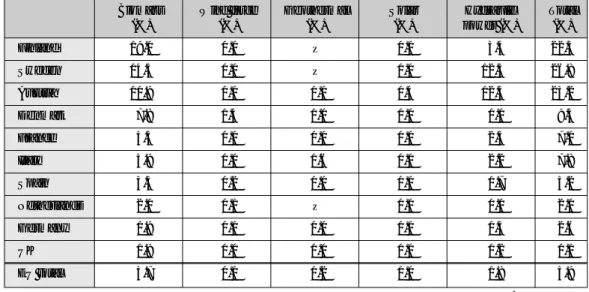
of it comes from bioenergy. By country, Austria, Finland and Sweden registered over 10% figures as bioenerg y's share in the pr imar y energ y composition. On the other hand, large energy- consuming countries such as the UK, Germany and France register relatively low figures as their bioenerg y's share in the pr imar y energ y composition.

Since a greater portion of bioenergy is utilized as heat, power generation has a smaller share in the uses of bioenergy than those of other renewable energy. Nevertheless, bioenergy power generation accounts for 1.4% of the total power generation in the EU (12% in Finland, 4.5% in Denmark, and 3.3% in the Netherlands), which is greater than the 0.6% accounted for by wind power generation and the 0.2% by geother mal power generation.

Incidentally, solar power generation is next to nil.

There are several reasons lying behind this wide spread of bioenergy utilization in the EU including high public interest in environmental issues, large demand for heat for heating purposes, mandatory

green power purchase system obligating power distributors, introduced in many countries, and various incentives offered in the form of tax exemptions or subsidies encouraging renewable energ y introduction. In the Scandinavian countries, where forest industries are prosperous, distr ict heating and cooling systems and cogeneration systems using wood-origin biomass such as wood chips produced in sawmills and forest residues have spread widely. Carbon tax (bioenergy is exempted) has played an important role in spreading bioenergy in Sweden, where the cost of biomass fuel is lower than that of heavy oil as shown in Figure 2*

9

.

(2) European Commission's Efforts

In November 1997, the European Commission released a white paper referring to the European Community's strategies and action plan, "Future of energy: renewable resource energy"*

10

. The action plan proposed in the white paper consists of four objective areas, regional market-related actions, policy reinforcement as the EU, enhancement of cooperation among member countr ies and supportive measures, and defines its goal as the increase of renewable energy's share in the primary energy composition of the EU as a whole to 12% by 2010. It proposes to increase bioenergy introduction from 44.8 MTOE in 1995 to 135 MTOE by 2010, nearly triple. The breakdown of this increase is 15 MTOE by biogas utilization, 30 MTOE by forest residue and forestr y residue utilization and 45 MTOE by energy crops.

Table 3: Renewable energy's shares in the primary energy composition of EU member countries (1999)

Biomass Wind force Geothermal Solar Hydraulic Total

(%) (%) (%) (%) power (%) (%)

Finland 19.0 0.0 — 0.0 3.4 22.3

Sweden 14.5 0.0 — 0.0 12.3 26.8

Austria 10.9 0.0 0.0 0.4 12.3 23.2

Denmark 7.8 1.4 0.0 0.0 0.0 9.3

France 4.5 0.0 0.0 0.0 2.5 7.0

Italy 3.9 0.0 1.6 0.0 2.2 7.8

Spain 3.3 0.2 0.0 0.0 1.7 5.2

Netherlands 2.0 0.1 — 0.0 0.0 2.0

Germany 1.9 0.1 0.0 0.0 0.5 2.6

UK 0.9 0.0 0.0 0.0 0.2 1.1

EU total 3.7 0.1 0.2 0.0 1.8 5.9

Source: Eurostat data

(7)

The "Kick-off campaign" to realize this proposal was started in 1999. In the bioenergy area, the plan names specific objectives including bioenergy based heat supply to 1 million homes by 2003, construction of biogas plants outputting 1,000 MW and installation of bioenergy based cogeneration systems outputting 10,000 MWth heat. As bioenergy-related R&D and introduction support programs, the ENERGIE program (1999- 2002) in the R&D area and the ALTERNERII project (1998-2002) relevant to law-system, administration and market environment improvement, and the promotion of investment support are now underway. The ALTERNERII project was allocated 22 million ECU for the 1998- 1999 period.

6.5.3 Other countries

Brazil has promoted ethanol production from sugar cane and the introduction of ethanol cars as its national policy with a view to stabilizing sugar prices on the international market and to reduce oil imports to save on foreign exchanges. It also uses a large quantity of ba gasse, residues remaining after sugar cane pressing, as industrial fuel. As of 1995, ethanol cars (running with water- added ethanol alone) accounted for 42% of all the automobiles driven in Brazil, while the rest are operated with gasohol containing 22-24% of absolute ethanol*

11

. In recent years, however, demand for ethanol cars has declined due to the lowering oil price, unstable alcohol production and a change in people's taste.

In most of the developing countries in Asia and Africa, firewood is the major source of primary energy. Although it is often observed that the use

of firewood is not reflected in statistics due to its non-commercial nature, one estimation claims that 15% of the world's primary energy consumption and 38% of that by the developing countries depend on bioenerg y consisting mainly of firewood*

12

. Generally, the efficiency of energy utilization is low with firewood consumption in these developing countr ies, which causes incidental problems including forest disruption.

6.6 Bioenergy conversion and utilization technology overview

Biomass can take diverse forms or be utilized in a variety of ways including power generation, thermal utilization and use as liquid fuel. Since biomass is chemical substances, it can be transformed into liquid fuel such as methanol, ethanol or bio-diesel to be utilized as substitution fuel or fuel for fuel cells. This is a characteristic point not found among other new energy, and adds great advantages to biomass in terms of its transportability or storability.

Energy conversion technologies applicable to biomass are roughly divided into two types;

thermo-chemical conversion technology, and bio- chemical conversion technology. In this section, some major technologies belonging to the respective types will be discussed.

6.6.1 Thermo-chemical conversion technology

(1) Direct combustion

This is the most generally practiced method of utilizing biomass, and direct utilization of heat and power generation using combustion heat are Figure 2: Comparison of heavy oil and biomass costs in Sweden

Source: reference material *

9

, 1 krona = ¥12

(8)

included in this category. Typical plants are of a size between several MW and several ten MW. In the Scandinavian countries, wood chips, waste timber and agricultural wastes are mainly used. At coal-fired thermal plants in the U.S. and some EU member countries, mixed firing of coal and waste timber, saw dusts, wheat straw, peat and urban wastes is practiced.

In 1999, the U.S. Department of Energy released the Vision 21 plan, which aims at building a plant by 2015 that can produce not only electric power and heat but also various products including chemical substances and transportation fuel from diver se raw mater ials, and yet emits little substances causing an environmental load. As raw materials supplied to the plant, the plan names biomass together with coal, natural gas, petroleum and urban wastes. (All these raw materials will be gasified before they are fed to the plant.) The plant aims at reducing emission of substances causing an environmental load to almost nil, (reduction of carbon dioxide emission will be achieved through realization of high-energy efficiency, with the use of separation and fixation technologies in combination).

(2) Synthesis of liquid fuel via gasification This is a process to gasify biomass such as wood by heating it with a gasification agent such as air, oxygen or steam, and to obtain a gas mixture (biomass gas) consisting mainly of hydrogen and carbon monoxide. The point is how to produce desirable biomass gas having low tar content, and a variety of processes using different gasification furnaces including fixed bed, fluidized bed and entrainment furnaces have been proposed. Once an adequate biomass gas is obtained, it can be easily converted into liquid fuel such as methanol, diethyl ether and gasoline with established technologies*

13

.

(3) Thermal decomposition and oil conversion

Thermal decomposition is a method to obtain gases and oils by heating dried and crushed biomass in an inert gas atmosphere such as a nitrogen atmosphere. A rapid ther mal decomposition method has become the mainstream of this technology in recent years. In

this method, temperature is raised quickly to minimize the production of combustible gases and char, a solid combustible, and improve the production yield of oil. Meanwhile, a direct oil conversion method is the more appropriate choice, with biomass having a high moisture content. In this technology, biomass is converted into oil by simply placing it under high- temperature, high-pressure conditions without using hydrogen or carbon monoxide, and the operating temperature is rather low compared with ther mal decomposition. Although the method requires a more complicated reaction system, it offers higher energy efficiency than thermal decomposition does for high moisture content biomass*

13

.

(4) Biodiesel

Rapeseed oil, palm oil and sunf lower oil are modified through esterification, etc., to lower the viscosity for use as diesel fuel. Biodiesel fuel can reduce particulates, polymers, SO

X

, acetaldehyde, etc, contained in exhaust gas from levels normally observed with ordinary diesel fuel. On the other hand, bio-diesel, in which three fourths of the cost is taken by the production cost of plant oils, is more expensive than diesel oil*

13

.

6.6.2 Bio-chemical conversion technology

(1) Ethanol fermentation

This is a long established technolog y for producing ethanol from sugar through fermentation using microorganisms. In the case of sugar-containing biomass such as sugar cane, etc., sugar can be obtained directly. On the other hand, ligno-cellulose-based biomass such as wood requires a sugar conver sion process using hydrolysis prior to the fermentation process.

Development of an efficient process to convert

grass and wood, which are not sugar-containing

biomass, into sugar is a key to widening the

hor izon of bioenerg y utilization, and such

technology has already reached a near practical

level. In the meantime, development of

microorganism enzymes that can ferment crude

liquid containing sugars, other than glucose such

as xylose, is underway, with gene recombination

technology also employed in this area.

(9)

(2) Methane fermentation

This includes a process to decompose raw food wastes, cattle manure, agricultural wastes, etc., in an atmosphere lacking oxygen with anaerobic bacteria to fat acids, alcohols, carbon dioxide and hydrogen. Then methane is produced by using methane formation bacteria, and used as fuel at methane gas power plants.

A fermentation method used in this process can be; (1) a wet method to ferment organic materials in a liquid; or (2) a dry method to ferment solid materials conditioned to an optimum moisture level and kept under agitation. Method (2) is quite effective as a means to dispose of wastes, since it can reduce the volume and weight of raw food wastes substantially through the fermentation process.

At waste disposal facilities, natural generation of methane is normally observed and recovery of naturally produced methane is widely practiced in the U.S. Methane fermentation using cattle manure and a gr icultural wastes is being introduced into European countr ies in consideration of the prevention of environmental pollution. Biomass gas plants using cattle manure and food wastes have also been erected in Japan at Bekkai-cho, Hokkaido, and Ya gi-cho, Kyoto Prefecture. Due to the enforcement of the Food Recycle Law (enforced in June 2001) and the Cattle manure Management and Recycle Law (enforced in November 1999), appropr iate management and disposal of these types of wastes are expected to progress in the future. In connection with this, their effective utilization as a source of bioenergy may also be promoted at an accelerated pace in Japan.

6.7 Evaluation of the potential of bioenergy resources

6.7.1 Their potential as resources in Japan

Japan has forest rich with biomass resources covering about 70% (about 25 million ha) of its land area (37 million ha) and about 5 million ha of farming land developed mainly on plains, where biomass production is practiced through agricultural production activities.

According to Professor Shiro Saka of the Energy Science Study Course of the Post Graduate School

of Kyoto University*

11

, Japan is estimated to be producing about 370 million tons of biomass resources annually, about 130 million tons of which come from forest and farming land, while the remaining of some 240 million tons are unutilized waste resources.

According to his estimation, 20% of the total biomass resources annually generated in Japan or 77 million tons can be technically and economically convertible to energy.Although such estimation runs the risk of error due to the susceptibility of results to assumptions such as the forms of use and the evaluation method, the amount corresponds to 127 million tons of carbon dioxide or about 10% of Japan's 1,231 million-ton total carbon dioxide emission in 1997*

11

. In another estimation, about 4% of Japan's primary energ y consumption can be saved, if the unutilized waste biomass resources that can be economically and technically usable are fully utilized*

14

.

(1) Agricultural residue biomass

Since most of Japan's farming land is used for specific purposes such as food production and already assigned to some sort of actual crop production, it is difficult to secure farming land for bioenergy crop production anew. Accordingly, rice straw, wheat straw, rice husks, etc., are considered to be the only agriculture-related biomass available for energy production.

According to Professor Saka mentioned earlier*

11

, among 19.62 million tons of agricultural residues generated annually, 8.55 million tons or about 40%

are considered to be available for energ y production. Assuming the average calorific value of agricultural residues to be 16.3 MJ/dry-kg, the calorific value of rice straw, the energy potential of a gr icultural residues available for energ y production will be about 140 PJ (peta joule:

1PJ=10

15

J) or about 0.6% of Japan's primar y energy consumption.

Incidentally, the following crops may be named, when devoting faming land to growing crops for the purpose of producing energy is considered:

(1) crops that ensure high sugar productivity such

as sugar cane, corn, sweet sorghum, potatoes, etc.,

to obtain liquid fuel such as ethanol; and, (2) fast

growing tree or grass species that ensure high

(10)

biomass productivity including cellulose production such as eucalyptus and Nepier grass.

A number of domestic testing or research institutions have conducted research programs to cultivate sweet sorghum in particular, because it can be grown in a relatively cold climate and is easily convertible to ethanol, and found that it can yield about 50 t/ha of raw stems*

15

.

(2) Livestock grazing residue biomass

With regard to livestock grazing residue biomass, excretion from livestock such as cows and pigs, and fowls such as chickens, is a source available in Japan and the combined annual output is estimated to reach 95 million tons (60 million tons of excrement and 29 million tons of ur ine) (according to the Ministry of Agriculture, Forestry and Fisheries).

Among the excretion, NEDO's survey report*

16

estimates that 25% of cattle manure is available for energy production, and an available resource amount based on this assumption is calculated to be 16.5 million tons, or about 69 PJ, when conver ted into calor ies (1,000 kcal/kg is assumed), which corresponds to about 0.3% of Japan's primary energy supply.

(3) Forestry residue biomass

The annual increment of forest resources in Japan is generally estimated at 70 million m

3

, and it is assumed that forest residues and waste timbers among them are available as resources for bioenergy production.

The "Forest and Forestry Basic Plan" approved by the Cabinet in October 2001 contains "Forecasts of Forest Residues and Recycled Timber" shown in Table 4.

According to these forecasts, forest residue biomass including forest residues and waste timbers used for energy production in 2010 will hit 20 million m

3

. To conver t these wood resources into weight with a conversion factor of 0.5 t/m

3

, 10 million tons per annum of forest residue biomass can be utilized. If 20 MJ/kg, the calorific value of wood-origin biomass, is assumed, the energy potential of these resources will reach about 200 PJ, or about 0.8% of Japan's primary energy supply.

Incidentally, taking trees felled in thinning operations as an example, to examine the actual state of Japan's forestry, thinning was performed on approximately 300,000 ha of forest area in Japan in FY1999, producing about 5.14 million m

3

of logs (according the Forestr y Agency's estimation), but only 2.12 million m

3

or 40% of them were extracted for use as a raw material for sawn timber, round logs and wood chips from forests where logging and hauling were relatively easy. Accordingly, it is believed to be difficult in present Japan to further increase the recovery of these forest residues as a raw material for energy production, supply of which is normally required to be at low cost, and, therefore, utilization will be promoted fir st with sawmill wastes and construction waste timber.

6.7.2 Medium to long-term potential of global resources

As reviewed up to here, biomass includes quite a wide range of materials and its utilization as an energy source conflicts with various other uses.

Generally speaking, utilization as food, timber, fertilizer, paper, fiber, etc., should be given first priority and the satisfaction of these needs is a Table 4: Forecasts of forest residues and recycled timber (Unit: million m

3

)

Current 2010

Generated volume Forest residues 10 10

Sawmill wastes 15 13

Construction waste timber 16 32

Total 41 55

Utilization volume Energy production 7 20

Raw material, etc. 13 24

Total 20 44

Source: Forest and Forestry Basic Plan compiled by the Ministry of Agriculture,

Forestry and Fisheries.

(11)

prerequisite for utilization as bioenergy. Then, how much of bioenergy will be available to human societies in the 21st century?

A group led by Professor Kenji Yamachi of the New Area Creative Science Study Course of Tokyo Univer sity perfor med an analysis of Japan's biomass flow using a biomass balance sheet, and evaluation of energy supply potential from idle arable land over the world using a Global Land Use and Energy (GLUE) Model*

1,14

.

According to this analysis, an actually realizable quantity of bioenergy supply calculated from global residue-based biomass generation volume, with technical restrictions taken into account, would have been 34.4 EJ (excluding about 20 EJ generated with fuel-use wood) in 1990. In 2050, the study predicts that the total quantity of residue-based biomass in the world will be 173 EJ, with energy crops that can be supplied from idle arable land reaching 110 EJ. Combined together, they will provide about 280 EJ, or approximately 70% of the present total energy demand of the world.

In this analysis, it is assumed that all idle arable land will be devoted to energy crop production. It also states that estimation of the energy crop quantity that is supplied from idle arable land can be affected greatly by parameters such as food supply demand from developing countries, while residue-based biomass steadily shows large supply potential regardless of simulation conditions.

In the IPCC's third global warming report*

5

, the supply potential of energy crops in 2050 is estimated at 396 EJ or 441 EJ when combined with residue-based biomass.

6.8 Toward introduction of bioenergy

Japan has been rather backward in introducing bioenergy when compared to other nations. In recent years, however, rapid growing interest in bioenergy has been observed among industry, government and academic circles, and necessary revision of the relevant provisions to include bioenergy in the scope of new energy to which supportive measures are applied under the New Energ y Law is being studied within the government circles. It is undoubtedly a need of

the times for Japan to establish effective bioenergy introduction strategies.

It has been pointed out that the economy, or collection and transportation costs of biomass in particular, is a problem in considering utilization of bioenergy. Although bioenergy has been introduced to a considerable extent in the U.S. and Europe, there is no denying that it is the result of underpinning political suppor t along with preferential treatment in taxation, an order obligating power providers to purchase new energy-derived power, and environment taxes.

Furthermore, it has been pointed out that Japan's rugged topography makes it difficult to utilize its resources, in spite of the affluence of its forest resources, and that the relatively small scale of agriculture and cattle grazing operations and small demand for heat for heating purposes, etc., would work adversely in promoting bioenergy.

In any event, except for abnormal circumstances such as an oil shock, it is hardly conceivable that the cost of bioenergy will become lower than that of fossil resource-based energy without artificial manipulation of a political nature. Since most developed countr ies including Japan are dependent on fossil resource-based energy for about 80% of their primary energy supply, if they are to depart from their present fossil resource dependent society, it is necessary for them to construct a society that is willing to bear a reasonable cost for development and utilization of bioenergy and other new energy.

To spread the utilization of bioenergy on a substantial scale, it is essential to have private enterpr ises' par ticipate in the market and, therefore, it is believed to be of importance to provide political support that allows them to construct economically viable business models, while advancing researches that provide the bases for such political initiatives.

As stated in Section 6.7.1, even a conservative estimate of the energ y supply potential of biomass, limiting its scope to economically and technically usable unutilized waste-origin biomass resources, is about 4% of Japan's primary energy consumption, and this is not a small figure by any standard.

Furthermore, it is important to note that utilization

of bioenergy will bring additional benefits to

(12)

society such as waste disposal and environmental preser vation. In any event, the spread of bioenergy utilization depends on the construction of a society that takes benefits of the external economy such as environmental preservation and saving of fossil resources as its internal value, and the degree of spread will be determined by how much the society recognizes external benefits as its internal value. And this is something purely dependent on our own decision and choice.

The following five proposals are our recommendations to encourage introduction of bioenergy.

(1) Enhancement of bioenergy research Because various types of materials together with varying conversion and utilization technologies are involved in biomass resources, research efforts are being made in diverse areas by industries, univer sities and national or public research institutions (industr ial, academic and governmental research organs), and research achievements are published through a number of academic societies or technical associations.

Although resources input to the bioenergy-related studies have so far been much smaller, when compared to efforts made in the solar energy- related area, another area in the same natural energy category, it is desirable to expand support to industrial, academic and governmental research organs for bioenergy-related studies in the future due to international trends connected to the inter national agreement on global war ming prevention.

In expanding suppor t, naturally thorough understanding of the current institutional system is required, but the first thing that must be done is to hold more detailed and fruitful discussions between the administration side and the researchers' side by releasing exhaustive and systematic information on the development, introduction and spread of bioenergy by the researchers' side.

Discussions between the researchers' side and the administration side may involve a wide variety of topics including: the desirable form and level of social burden sharing to absorb the cost of disposal and utilization of household wastes and cattle grazing wastes; the most effective system for

collaboration between academic societies or technical associations in connection with industrial, academic and governmental research organs; an appropriate fund allocation plan matching the number of currently employed researchers of each research institution; and, support for human resource cultivation and so on.

Because biomass resources involve vast diversity, it is desirable to expand support while running appropriate assessment programs to rate the value of each research work for selection of the research areas that should be bolstered.

(2) Designing a system that gives

consideration to the external economy When compared with solar batteries and wind power generation, utilization of bioenergy will require absorption of much larger running costs such as fuel collection and transportation, plant operation, etc., besides the initial investments in plants.

Take cattle manure for instance, which by regulatory requirement is not allowed to be left for nature to decompose, there are disposal means including a bioenerg y plant using methane fer mentation that is ef fective in ter ms of prevention of offending smell. However, if such means require persons discharging wastes to bear extra costs besides normal disposal costs or provide only poor returns to plant operators, introduction of bioenergy plants will advance at only a snail's pace and a negative picture of them can stagnate research and development efforts as well.

Therefore, when utilizing wastes as bioenergy is considered to be beneficial at least for the external economy, it is necessary to design a system that asks a wider spectrum of society to share the costs of construction and operation of a bioenergy plant in parallel with the promotion of R&D.

(3) Construction of an extensive and

effective biomass raw material collection system

Generation of biomass resources is not distributed

evenly over regions and the effect and desirable

form of introduction of bioenergy will also vary

depending on regional characteristics. From a

transportation cost point of view, it is more

(13)

advisable to construct an energy conversion and utilization plant near the point of raw material generation.

In the meantime, it should also be noted that the scale of a biomass conversion and utilization plant will have significant impacts on its economy. For biomass conversion and utilization plants, as with typical industrial plants, the larger a plant is, the more it becomes economically viable due to the merits of scale. (Of course, construction of an energy plant of several hundred thousand kW capacity using solely biomass resources is not practical in terms of the procurement of raw materials). The IPCC's third global warming report also states that often the economy derived from the scale of a plant (to utilize bioenergy) is more important than additional transportation costs (that become necessar y because a plant is constructed away from the point of raw material generation).

Therefore, it is of importance to select a location where sufficiently large quantities of biomass raw materials can be secured in promoting bioenergy utilization in Japan. At the same time, it is desired to constr uct recover y systems that ensure recovery of intended biomass raw materials in a sufficient quantity and improve the efficiency of sorting and recovery operations at the respective ends.

(4) Promotion of R&D for mixed firing at coal-fired plants, etc.

When dry biomass raw materials are burned in an established thermal plant together with the proper fuel, such as coal, natural gas or oil, for mixed firing, scale merits and economic benefits offered by them can be fully enjoyed, while it is not necessary to absorb the construction cost of a biomass power plant as the primary beneficiary.

In fact, mixed firing is practiced in the U.S. and European countries at coal-fired thermal plants.

Such mixed firing at established thermal plants is believed to be one of the biomass utilization methods minimizing risks, and we should also place more emphasis on this form of utilization in promoting R&D efforts in Japan. Furthermore, in view of a plant operable with multifarious fuel as proposed in the U.S. Department of Energy's Vision 21, it is a research area worth paying more

attention to in Japan as well.

(5) Joint efforts and cooperation with developing countries

Due to conflicts with other land uses, introduction of large-scale energy crop plantations is not regarded as practical in Japan in the foreseeable future, and expanding utilization of existing unutilized biomass resources is a more practical option for us. Meanwhile, when viewed globally, the potential of bioenergy based on energy crop plantations is quite large. Countries in Southeast Asia, Latin America and Africa in particular may find quite high potential in bio-plantations.

Accordingly, although it may take quite a long time before bioenergy produced in these countries take on an important role in the world energy supply system, it is considered to be necessary to render active support to developing countries' efforts for utilizing bioenergy by taking advantage of CDM (clean development mechanism) defined in the Kyoto Protocol.

Many developing countries depend on firewood for their main source of energy, but their present energy utilization efficiency is very low. Since support required to improve their technology to utilize this resource has little technical difficulties and is expected to produce immediate effects in terms of greenhouse gas emission reduction, we should promote it actively.

Reference

*01 Kenji Yamachi, "Baio enerugi" (Bioenergy), Mioshin Shuppan (2000)

*02 H.Leith and W.Whittaker: Primary Production of the Biosphere, Springer-Verlag (1975)

*03 Kyoji Yota, "Chikyu kagaku" (Earth science), 16(2), 78-85 (1982)

*04 Masayasu Sakai, "Baiomasu ga hiraku 21 seiki"

(21st century opened with biomass), Morikita Shuppan (1998)

*05 IPCC Third Assessment Repor t: Climate Change 2001, IPCC (2001)

*06 Comprehensive Resource and Energy Survey Committee, New Energy Subcommittee: New Energy Subcommittee's report: "Kongo no shin enerugi no arikata" (Desirable forms of future new energy development), June 2001

*07 J.DiPardo: Outlook for Biomass Ethanol

(14)

Production and Demand, DOE Modeling and Analysis Report (2000) (http://www.eia.doe.

gov/oiaf/analysispaper/biomass.html)

*08 National Energy Policy Development Group:

National Energy Policy - Reliable, Affordable, and Environmentally Sound Energ y for America's Future (2001)

*09 Tetsuya Iida, "Hokuo no ener ugi demokurashi" (Energ y democracy in Scandinavian countries), Shinhyoron (2000)

*10 European CommissionÅFEnergy for the Future: Renewable Sources of Energy, White Paper for a Community Strategy and Action Plan, COM(97)599 (1997)

*11 Compiled and authored by Shiro Saka,

"Baiomasu, enerugi, kankyo" (Biomass, energy and environment), IPC (2001)

*12 T. Johansson, et al. Eds., Renewable Energy,

Island Press (1993)

*13 Shinya Yokoyama, "Baio enerugi saizensen"

(Bioenergy front), Morikita Shuppan (2001)

*14 Kenji Yamachi, "Baio enerugi heno kitai to kadai" (Expectations on and problems of bioenergy), the tenth Japan Energy Society's convention, keynote lecture, in Kita-kyushu City (2001)

*15 Compiled by the secretar iat to the Agriculture, Forestry, and Fishery Technology Conference of the Ministry of Agriculture, Forestry and Fisheries, "Baiomasu henkan keikaku, Yutakana seibutsu shigen wo ikasu"

(Biomass conversion plan, utilizing affluent bio resources), Korin (1991)

*16 New Energ y and Industr ial Technolog y Development Organization, FY1999 survey report, NEDO-GET-9949 (2000)

(Original Japanese version: published in December 2001)

Table 2 shows the actual state and future prospects* 6 of Japan's new energy introduction.
Table 3: Renewable energy's shares in the primary energy composition of EU member countries (1999)

参照

関連したドキュメント

H ernández , Positive and free boundary solutions to singular nonlinear elliptic problems with absorption; An overview and open problems, in: Proceedings of the Variational

Keywords: Convex order ; Fréchet distribution ; Median ; Mittag-Leffler distribution ; Mittag- Leffler function ; Stable distribution ; Stochastic order.. AMS MSC 2010: Primary 60E05

In Section 3, we show that the clique- width is unbounded in any superfactorial class of graphs, and in Section 4, we prove that the clique-width is bounded in any hereditary

Inside this class, we identify a new subclass of Liouvillian integrable systems, under suitable conditions such Liouvillian integrable systems can have at most one limit cycle, and

this result is re-derived in novel fashion, starting from a method proposed by F´ edou and Garcia, in [17], for some algebraic succession rules, and extending it to the present case

Now we are going to construct the Leech lattice and one of the Niemeier lattices by using a higher power residue code of length 8 over Z 4 [ω].. We are going to use the same action

Here we shall supply proofs for the estimates of some relevant arithmetic functions that are well-known in the number field case but not necessarily so in our function field case..

[5] G. Janelidze, Satellites and Galois Extensions of Commutative Rings, Ph. Janelidze, Computation of Kan extensions by means of injective objects and functors Ext C n in