RECEPTION AND CONSUMPTION OF CONTEMPORARY JAPANESE TELEVISION DRAMAS: MEANINGS AND ATTITUDES AMONG
UNIVERSITY STUDENTS IN MALAYSIA
by
GOH Teck Fann September 2012
Thesis Presented to the Higher Degree Committee of Ritsumeikan Asia Pacific University
in Partial Fulfillment of the Requirements for the Degree of Master of Science in Asia Pacific Studies
ACKNOWLEDGMENTS
I am particularly grateful to Professor Yoshida Kaori, my supervisor and sensei, for guiding and supporting this research. Without her insightful feedback and advice, this research would not have been pulled together. I owe to Professor Yoshida for the countless hours of supervision and discussion in directing this research to completion.
I would like to thank Professor Jeremy Eades, for overseeing the progress of this research during the first three semesters of my study. His honest critiques and constructive opinions helped to shape the direction of this thesis.
I would like to acknowledge all the students from MMU and UM involved in this study for their support. Thanks to the committees of Japanese Cultural Society from MMU as well as Dr.Wong from UM, for giving permission to gather data and for assisting with my field work procedures.
I would like to give my gratitude to all professors in APU, whose classes have offered me new insight on diverse topics and research ideas.
My gratitude also goes to Ritsumeikan Center for Asia Pacific Studies (RCAPS) for funding this research. I also appreciate the opportunity to present on my research progress to professors and fellow graduate students in APU, for this session had provided me with valuable feedbacks. I also owe my thanks to Beppu City for awarding a scholarship which financially helped to manage my living expenses in Beppu.
Thanks to all my dear friends for your continuous support and friendship throughout my studies in Japan. Special thanks to Pei Ling for proofreading this thesis and giving comments to improve my work. I am glad for our shared discussions and experiences on popular cultures and media programs.
Last but not least, I am truly grateful to have the endless support, dedication and encouragements from my parents. Their thoughtfulness and understanding always keeps me motivated to strive further academically and mentally. Without your support both financially and emotionally, I would not have been able to pursue my studies in Japan, which had always been a dream.
i TABLE OF CONTENTS
List of Tables and Figures...iv
Abstract...v
CHAPTER 1. INTRODUCTION...1
1.1 Background...2
1.2 Purpose of Study...5
1.3 Outline of Study...9
CHAPTER 2. LITERATURE REVIEW...12
2.1 Media Theories...12
2.1.1 Audience Reception Theory...12
2.1.2 Hermeneutics...16
2.2 Japanese Cultural Influence in Asia...17
2.2.1 Look East Policy in Malaysia...20
2.3 The Significance of Japanese Television Dramas in Asia...24
2.3.1 On Watching Japanese Television Dramas...26
CHAPTER 3. RESEARCH METHODOLOGY...32
3.1 Data Collection...32
3.2 Multimedia University, Cyberjaya (MMU)...35
ii
3.4 Data Transcription and Analysis...42
CHAPTER 4. MAKING SENSE OF JAPANESE TELEVISION DRAMA..47
4.1 Watching Dramas as Entertainment...48
4.2 The Significance of Viewing Pleasures...53
4.2.1 Characters...53
4.2.2. Originality...55
4.3 A Different Sense of Reality...57
4.3.1 On Watching One Litre of Tears...61
4.4 Seeking Intangible Values...64
4.4.1 Discipline...68
CHAPTER 5. MALAYSIAN STUDENTS AS ACTIVE AUDIENCES...73
5.1 The Depiction of Images of Japan through Dramas...76
5.2 Selective Identification with Cultural Messages...81
5.3 Japanese Dramas as the Cultural Educator...84
5.4 Malaysian as Cultural Agent...89
CHAPTER 6. CONCLUSION...98
6.1 Limitations and Suggestions for Further Studies...103
References...108
iii Appendix B: List of Japanese Dramas Titles...117
iv LIST OF TABLES AND FIGURES
Table 3.1: Focus Group 1 (9th August 2011)...37
Table 3.2: Conversational Discussion (10th August 2011)...38
Table 3.3: Focus Group 2 (11th August 2011)...38
Table. 3.4: Focus Group 3 (21st September 2011)...40
Table 3.5: Focus Group 4 (28th September 2011)...40
Table 3.6: Focus Group 5 (21st September 2011)...41
Figure 3.1: Primary Data Collection...42
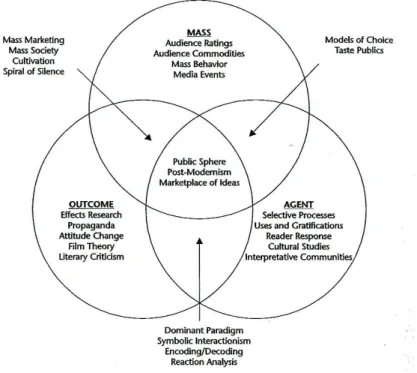
Figure 3.2: Concepts of the Audience (Webster, 2009)...44
v ABSTRACT
Young people, especially university students in Malaysia, are consumers of Japanese popular cultures since they were young. Many grew up watching Japanese anime (animation), reading manga (comic books) that was translated into local language, watching television dramas and films, eating Japanese food and so on. Some also took effort in learning Japanese language in order to get to know more about Japan and its cultures. This thesis examines the audience reception of Malaysian university students who watch Japanese television dramas and aims to discover how these university students work on the engagements of their media consumption.
First, the interpretations of Japanese drama as media text among the students are explored. The primary method used in this research is focus group discussions. This methodology is accomplished with the participation of students from two different universities in Malaysia, in which a total of five focus group discussions and one conversational discussion were conducted. I look at how these students as audiences of Japanese dramas produce meanings out of their consumption and what watching means to them. In relation to the meanings produced out of the media text, audiences are considered active in the sense that they do not passively accept the messages out of their viewing without making identification with the images and constructing their own ideas about the values present in the text.
vi Second, this research considers the local socio-cultural influences towards the meanings produced out of watching Japanese television dramas and the attitudes resulted from this consumption. According to the respondents, watching Japanese drama is considered as an educational material in which they can learn more about Japanese cultures and values. Watching Japanese dramas is said to help facilitate the images and cultures of Japan. The local effort under the notion of the Look East Policy also contributes to creating an atmosphere that promotes Japanese cultures and values to Malaysian audiences. Malaysian university students as audiences play an important role in generating multiple interpretations of transnational cultures by employing the creative process of identification with the knowledge of Japan that they already hold and this creates a space for new understanding about cultures considered „foreign‟. This thesis will contribute to the appreciation of audience narratives and facilitate the idea of using media to enhance cultural understanding.
1 CHAPTER 1. INTRODUCTION
Popular cultures such as food, fashion, entertainment, and media products are becoming increasingly integrated into the everyday lives of the people globally. Our experiences in this modern society are influenced by our consumption of popular cultural products. Japanese popular cultures have become particularly favoured within the Asian region and became widely consumed since the 1990s. McGray (2002) has coined the term „gross national cool‟ to describe the buzz centred on the popularity and global influence of Japanese popular culture. Similarly, Moeran (2000) used the word „corollanization‟ (based on Toyota) to depict the entry of Japanese commodities, advertisements and cultures into Asian markets which enhance the local‟s experience with Japanese products and values. There are so many reasons and ways for people who are familiar with Japanese popular culture to share and discuss their experiences. East Asia and South East Asia have become Japan‟s biggest supporters in terms of cultural familiarity and as a model for economic development. The people within the region play bigger role than the Japanese media industries itself in circulating Japanese media products for consumption. Tourists, businessmen, and students who travelled to Japan play a major role in bringing Japanese cultural commodities and media products back to their respective countries. The Internet too, has successfully provided online users the opportunity to create spaces for sharing media consumption and exchanging ideas and information. More local and regional audiences have become avid users of Japanese media products such
2 as anime, films, music, and dramas. In the 1990s, Japanese dramas were favoured significantly by Asian audiences and its popularity became a phenomenon. As a result, this phenomenon generated much debate and discussions to discovering the reasons for such popularity.
1.1 Background
First, I would like to make a brief distinction between two styles of television drama; soap opera and television drama, as the assumption of these two genres as interchangeable may cause confusion in understanding the characteristics of media text this thesis is analyzing. There are many ways to refer to soap operas – melodrama, soaps, serials, or telenovela. Soap operas began to receive attention from viewers in the 1950s, but it was not until 1980s that researches on soap operas were generated (Allen, 2004). One of the earlier works in describing audience reception is „Watching Dallas‟ by Ien Ang (1985), which examines the opinions of letter-writers about Dallas and looks at how these audiences construct meanings in watching Dallas. A soap opera is considered as a long running serial that often highlights the relationships between expanded characters within a community. A soap opera can have hundreds of episodes and is relatively known as woman‟s program in the past due to the high participation by housewives. The storyline and plot in soap opera can often be quite dramatic as the narrative structure usually involves tensions, scandals, quarrels, family complications, secrets, and unexpected elements that build up as the peak of the storyline, causing excitement and thrill among the audiences. As such, the peak is
3 then preceded by the solution to the problems presented in the narrative and resolution to the dominant dilemma that overshadows the theme of the soap opera. However, sometimes, soap opera can go airing for a couple of years and the span of such extensive storyline takes the narrative away to a more advanced plot. As a result, such soap opera may progress to become completely different than how it originally started. Supporting characters, too, tend to be organized in such a way that they appear for a specific period in certain event and never appear again after their roles have been fulfilled. Even so, events in soap operas are less predetermined and more flexible in terms of their narrative structure. Characters that were gone for a certain period of time can return unexpectedly as well (Allen, 2004). Soap opera is aired more frequently than television drama; for instance, in the US, soap operas are aired for an hour five days a week.
On the contrary, the most significant difference between a soap opera and a television drama is the length of episodes. Each television drama takes form in a specific genre and the narratives typically rely on the main theme to generate relationships between the characters and plot events. Audiences in Asia are more familiar to television drama than soap operas. A full length television drama can have up to average of twenty to thirty episodes and is aired according to seasons. As Japanese television drama is the topic of interest in this thesis, I shall highlight some of its format details. The Japanese television networks air different Japanese dramas each season - winter, spring, fall and summer. The length of episodes in Japanese drama is typically up to ten on average basis and each episode is aired once a week for the duration of three months (Jdorama, 2012). An episode usually
4 lasts for about fifty minutes. Also, the production of Japanese drama takes place usually about two to three weeks before each episode is aired. This gives the production team opportunities for any modification required based on viewership ratings and responses. Japanese drama is known for the variety of themes and topics explored in different dramas. For example, genres can include romance, life and death, friendship, school life, detective, mystery, family, comedy and so on. Most modern Japanese dramas are set in backdrops of major cities like Tokyo. Because Japanese dramas are limited to an average of ten or eleven episodes, the narratives and plots do not involve larger association among characters or complex social connections, focusing only on individuals or groups that are relevant to the genre and overall theme of the drama.
In this study, Malaysian students are defined as the audiences of Japanese drama and for most of the respondents involved in this research, Japanese dramas they refer to are the “trendy” dramas. Trendy drama is also known as a modern styled drama depicting the current reality of Japan and the social issues at present time in the society. Japanese dramas have been analyzed in various researches including matters on globalization, transnational media distribution and consumption, politics, soft power, regionalization, audience reception, comparative cultures and so on. Adaptations of Japanese dramas across different cultures also have been analyzed. For example, Yoshida (2011) analyzes Taiwanese, Japanese and South Korean production of a drama based on the Japanese manga titled Hana Yori Dango and reveals how the drama has been adapted for local tastes. The manga is produced into a television drama in Taiwan
5 in 2001 as Meteor Garden (CTS, 2001), followed by the Japanese version in 2005, Hana Yori Dango (TBS, 2005), and later the Korean version in 2009, Boys Over Flowers (KBS2, 2009). In her research, she examines the circulation and consumption of Hana Yori Dango among local audiences as well as the differences and similarities in the content produced in the three versions. According to Yoshida, each of these dramas provides audiences with a „tool‟ by which they can see themselves as part of „global‟ consumers. She goes on to claim that the outcome of the drama consumption allows them to feel positive about their own image. The findings of her research also enforces Iwabuchi‟s (2002) idea that East Asian communities sense that they inhabit within a „temporal modernity‟ where audiences feel „similar but different‟ within the imageries of another modern society.
1.2 Purpose of Study
Many cultural products from various countries have been introduced in Malaysia for local consumption. Besides cultural influence from the West, particularly the US and the UK, Malaysian markets also relied heavily on Asian products from Japan, South Korea, China, Taiwan, Hong Kong, India, and so on. Many local consumers have looked favourably towards Asian products and cultural influences as part of the Look East Policy enacted in 1982. This policy became a platform for Malaysians to look favourably towards Japan as guidance for nation development. In Malaysia, the country „Japan‟ itself has become a growing familiarity for the locals as evidenced by the popularity of Japanese
6 cultures throughout the country. Young people in Malaysia have been exposed to many Japanese elements since they were young. Children grew up exposed to reading Japanese manga that have been translated into national language, Bahasa Malaysia, watching Japanese animations, movies, and films with the help of multiple subtitles, and using everyday Japanese products such as stationery and home appliances. Young Malaysians relate to Japanese cultural products such as anime, manga or games beginning from their early childhood as part of their pastime activities.
This study looks at Japanese drama as a media product which requires an audience for it to function. This means that media revolves around the active engagement of its audiences. Without audiences, media do not work because its function will cease to operate. In other words, audiences are the active agents of media products and act as individual who interpret meanings and make sense of text and its messages. Different audiences produce different meanings and this allows them to create their own identity based on personal judgments (Puustinen, 2005). One of the basic principles about making meanings out of media is that audiences construct their ideas and opinions based on previous experiences and knowledge in everyday life. People‟s experiences in daily life are structured by their engagements with social and cultural environment which provides a framework for connecting commonsensical meanings and views of the world (Kim, 2008). The behaviours of audiences after particular media consumption have a rather fascinating pattern for observations. Audiences create some kind of relationship with the storyline and characters which help to produce easier
7 identification. In addition, they are able to creatively translate elements in the text for use in everyday life. Such characteristics can be observed based on the idea that the influence of media towards an audience depends on the various social relationships the audience has with their surroundings (Grossberg, Wartella, Whitney, and Wise, 2006).
However, most studies previously were concentrated on exploring the relationships between Japanese television dramas and audiences within a single cultural community in East Asia. For example, the audience reception analysis using the examples of Japanese drama focuses mainly on Taiwanese, Chinese, and South Korean audiences. South East Asian audiences were loosely mentioned through the work of Koichi Iwabuchi (2002). His discussion recognizes the “localization strategies” adopted in the production and distribution of Japanese popular culture (including media products) for Singaporean and Malaysian consumers under the subject of globalization. This indicates that South East Asians recognize Japanese popular culture in terms of its attraction and cultural value but the concept of making sense of media content is not further analyzed. On the other hand, his research focuses on Taiwanese and Hong Kong audiences who watch Japanese television drama to discuss on the reception by the audiences, who claim to identify and relate with the media text. However, there is an attempt by Chua (2008a) to identify South East Asians as audiences of Japanese television drama.
In his discussion, Chua (2008a) recognizes Singaporeans as audiences of Japanese television drama who actively employ identification with the narrative,
8 themes and characters in the text. He goes on to examine how audiences look at the differences between the Japanese and their own Singaporean identity. Chua‟s discussion sheds light on the idea that South East Asian audiences do identify and relate with Japanese television dramas that are considered relatively “foreign” culturally. Hence, developing this research topic will provide a better insight on the role of Malaysian students as part of active audiences engaging in multifaceted interpretations of modern day Japanese television dramas. This research attempts to investigate the interpretation of television drama audiences under the context of audience reception analysis, assuming that every audience produce different meanings out of images and texts. The meanings generated by audiences will be examined to investigate the audiences‟ attitudes towards Japan. This research attempts to answer the following questions. Why is watching Japanese TV dramas considered favourable to university students? How are the messages or meanings that are discovered from drama consumption interpreted into their daily lives? What are the attitudes resulted from Japanese television drama consumption?
With the increasing influence of Japan‟s cultural role in South East Asia, this research is significant in three aspects. First, the research helps to understand the translocal readings produced by audiences living in a multicultural setting. As mentioned previously, Japanese television dramas have reached different audiences of distinctive cultural backgrounds around East Asia and South East Asia regions but multicultural countries have been loosely represented in Japanese popular culture related studies and audience analyses, such as Malaysia, Indonesia, the Philippines, and so on. Second, in 2004 and onwards, researches
9 have shifted the study towards examining the popularity of the Korean Wave and Korean television dramas. There are not many studies conducted recently to discuss on Japanese television drama audiences. The popularity of Japanese television drama is said to have faded by the end of 1990s, while the reception Korean television drama is getting stronger among Asian audiences (Chua & Iwabuchi, 2008). Therefore, this research aims to present the current appeal and characteristics that Japanese drama has towards Malaysian audiences. Third, the result from this research will be able to facilitate the idea of using transnational media to inspire and motivate audiences in appreciating different cultures through the dynamic readings of media text and narratives. For this reason, I find the opportunity to acquire more information and conduct a research in Malaysia to contribute to existing literatures and research about Asian consumers of Japanese television dramas. The existing academic understandings of media audiences will further facilitate my fieldwork and serve as the foundation for creating frameworks involving the influence of Japanese popular culture.
1.3 Outline of Study
This thesis consists of six chapters including this introduction. Chapter Two presents literature reviews of previous studies and works around media and audience reception theories relevant to this study. Chapter Two begins with the argument that audience is no longer seen as a passive receiver of media programs. This chapter presents theoretical understanding on how the use of media is defined by an audience and this establishes a framework to discuss on the active
10 consumption of Japanese dramas among Malaysian audiences. The chapter then evaluates the influence of Japanese popular culture in Asia and look at the characteristics used to describe audiences who watch Japanese dramas.
Chapter Three describes the methodology used in this research. The research data primarily focus on the use of focus group discussion in which university students in Malaysia have participated. The recruitment processes and characteristics of the focus groups are addressed in this chapter. This chapter also explains the analyzing method for the data collected and how this study attempts to define an audience.
Chapter Four analyzes the elements that students are most receptive to in Japanese dramas and discusses on the types of identification that were produced based on their viewing interpretation. In addition, the students‟ narratives on the aesthetic elements and on the intangible messages in the text are discussed.
In Chapter Five, the identification characteristics in audience reception is discussed by associating the local socio-cultural settings and the cultural aspects of the audience narratives. This chapter explains the significance of the cultural knowledge that audiences hold about Japan and how Malaysian students position Japan‟s image as favourable for their own socio-cultural environment. In addition, the idea that local promotion of Japanese cultures and values enhance media reception among its audiences is supported in this chapter.
Lastly, Chapter Six summarizes and concludes the findings on Malaysian students as active audiences and the nature of their Japanese drama interpretations, including the implications discovered out of this research.
11 This chapter ends by pointing out the limitations present during this research and offers suggestions for potential future works.
12 CHAPTER 2. LITERATURE REVIEW
2.1 Media Theories
There is a clear distinction made to the progress of audience reception studies throughout the years. To develop findings on audience interpretation and how they make sense of media texts means that we are making assumption that a media product no longer have a linear effect on audiences. That is, audiences do not respond automatically to media products. In order to react to a specific media text, whether a newspaper, radio, television program, or music, audiences must be engaged in an active process to make sense of various codes that collectively represent a media text. Audiences are continuously active in media engagement process. They look for similarities and differences between themselves and the characters by emotionally relating to the events that happen to the characters as the narrative develops. The process of audience identification with the different personalities among the characters includes empathizing with on-screen activities, actions, and attitudes that support the text. Audiences will have to connect the signs and messages in the media, using their basic understanding of knowledge on how everyday situations function to either accept, reject or find prejudice about the meaning of text itself (Morley, 1992).
2.1.1 Audience Reception Theory
In media studies, many literatures have drawn much attention to the significance of the relationships between media texts and the audiences. The
13 relationship between text and audience is supported by the increasing recognition of audiences as „active‟, leading many other researches to seek the meanings of „audience activity‟ in different cultures (Takahashi, 2010). Audience reception theory primarily focuses on the interpretation and sense-makings among audiences who are constantly in negotiation with the media texts that they have received (Ott & Mack, 2010). The idea here is that even though producers and media industries construct a media text with particular messages intended within a guided framework, it is ultimately the audiences who determine what the messages mean to them or how it is relevant in their lives.
Audiences are capable of translating their use of media for their personal objectives. One of the earlier studies of media reception is the concept of „uses and gratifications‟ research. Uses and gratifications method is used for an attempt to seek the ways in which audiences actively select and use the media for their own purposes (Hodkinson, 2011). Uses and gratifications aims to research about the things individual do with the media instead of finding out media effects on individual (Jensen & Rosengren, 2009). According to Ott and Matt (2010), this method “assumes that individuals consciously consume media texts” (p.223) and that the individual can find something to rework on their everyday lives and do a variety of things with media. For example, audiences claim that they are able to obtain information or even utilize certain facts that appear in the media. Uses and gratifications may provide a good understanding of how audiences are able to use and interpret media, but they do not generate frameworks to connect the communication process before an audience consumes media with the result of the
14 interpretation after the consumption. This brings us to the development of audience reception theory towards cultural media readings such as Stuart Hall‟s (2001) encoding/decoding model.
Hall (2001) presents the idea that there is no necessary association between two processes of communication, encoding and decoding although these two are studied together. During the process of encoding, media text is converted into codes and signs to be interpreted by the audience. During the attempt to decipher the messages, other means of influencing the deciphering process is at work. Decoding takes place when the codes and signs are transformed into meanings understood by the audience. The encoding and decoding process work depending on the individual‟s sense of logic and inclination. Coding operates under a semiotic process, in which codes are operated as connotation and chains of meanings are created, linking one code to another (Grossberg, Wartella, Whitney, and Wise, 2006). For example, when watching a television program, audiences can easily identify with the „code of gender marking‟. One can easily distinguish whether a character is male or female using different signifiers, say height, body structure, hairstyle, dress codes, and so on. However, whichever meanings that audience apply to in the encoding process will not necessarily equalize the outcome resulted after the decoding process. The level of perception that occurs after the process may not be the same as the one before encoding because “codes of encoding and decoding may not be perfectly symmetrical” (Hall, 2001, p.125). According to Ott and Mack (2010), “codes are never neutral in the sense that they are always representations of meaning, not meaning itself,
15 and they reflect the partiality inherent to any representation” (p.225). Taking a look into other factors that may influence an audience‟s process of encoding and decoding is essential. According to Jensen and Rosengren (2009), the analysis on audience reception should include interpreting audience consumption of media text with reference to their socio-cultural surroundings and everyday life practices. Here, the audience‟s position in the cultural community is regarded under the context of personal history, experiences, values and beliefs. This means to say that the result of audience reception analysis is dependent upon the relation of diverse elements including cultural practices and societal structures.
The meaning-making activity under the influence of individual consciousness of the surroundings involves the act of cognition. Television audiences are engaging their minds with the images viewed on the screen and will try to process the identifiable images while translating the interpretation in relation to reality largely determined by the presence of everyday life practices (Grossberg, Wartella, Whitney, and Wise, 2006). Audiences‟ practice of translating media messages can sometimes becomes subversive of the producer‟s intention, bending the intended meanings using the creativity of their engaging minds. Likewise, the process of understanding media messages is an often a contested practice in which people transform and reconstitute their opinions about the state of their personal socio-cultural conditions influenced by the existing conventions within social governance of different resources, capacity and limitations.
16 2.1.2 Hermeneutics
Hermeneutic is a theory which acknowledges that the direct experience of the audience with their surroundings and in their use of the media is significant to analyze their interpretations (Wilson, 1993). The audience‟s personal experience in the past helps to create fresh interpretation in new experiences or events in their present social surroundings. This process allows audience to bring in previous recollection or memories and cause them to interpret different media in a certain way. In his book, „Watching television: Hermeneutics, reception and popular culture‟ (1993), Wilson attempts to analyze and describe the relationships between television consumption and its audiences. In order to understand the relationship between text and audience under a hermeneutic perspective means we need to look into the chain of codes or semiotics which mediates audience familiarity and differences from experiences previously encountered and regenerates new meanings out of new media consumption. In other words, as Ihde puts it, “hermeneutics in its broadest sense means interpretation, and rules give shape to an interpretation” (Ihde, 1986, p.32).
One of Wilson‟s analyses involves the concept of „identification‟. Identification refers to ways in which we assume about roles and give existing attitudes towards elements in the program, such as the characters, settings or even the genre itself. According to Livingstone, identification also involves relating with not just what we see on screens or with our favoured character, but with our realm in everyday life practices from emotions to common practices (Livingstone, 1998). Audiences are subjected to identification in many aspects of media
17 consumption because personal experiences appropriate similarities and differences in reading texts. For example, audience identify favourably with a particular character on screen when he or she finds that they resemble each other in terms of personality or behaviour. On the other hand, when they encounter unfamiliar traits, audience read the text over and over to construct an understanding that brings new existence to the unfamiliarity. Often as a result, identification rapidly mediates what is familiar and common as logical and adaptable.
In a way, „intertextuality‟ as discussed by Fiske (2001) also contributes to the concept of hermeneutics. According to Fiske, „intertextuality‟ refers to the relationship between reading a text and drawing its meaning out to form cultural ways of identifying another text. His study on television introduces sub-elements in text that help audiences generate meanings for the viewers to be familiar with a specific type of knowledge, such as the categorization of genre and the use of thematic images. These groups of elements essentially organize intertextual readings that are central part of the social and cultural characteristics that needs to be investigated as well.
2.2 Japanese Cultural Influence in Asia
Since the early 1990s, Japanese popular culture products have entered markets in Asian countries, particularly nations situated within East Asia (Taiwan, Hong Kong, South Korea, and China) and South East Asia (Malaysia, Singapore, Thailand, Indonesia and the Philippines). Among these popular cultural products,
18 media products are especially well received as people are starting to favour Japanese animation, films, music and even television dramas. The reception of Japanese television dramas became a phenomenon when titles such as Long Vacation and Love Generation grew popular with Asian audiences (Leong, 2002). Thus, different aspects of the popularity have been examined from various theoretical perspectives such as translocal readings of Japanese dramas in different parts of Asia, gender and relationships, the use of digital technologies, and the means of circulation (Iwabuchi, 2004).
According to Iwabuchi (2002), Japanese cultural products can be distinguished by its “cultural odour”. For example, Iwabuchi characterizes the three C‟s; consumer technologies, comics and cartoons, computer and video games as “culturally odourless” (p.27) products that do not produce Japanese elements which will cause the consumers to associate with the image of Japan. An example of a consumer technologies “odourless” product is based upon the everyday use of Sony Walkman. Iwabuchi argues that Sony Walkman does not project the image of “Japaneseness” (p.28) or suggests Japanese lifestyle to its consumers because using Walkman has been closely embedded into contemporary everyday life. Walkman has been consumed globally and the idea that Walkman originates from Japan does not appear relevant. Unlike Sony Walkman, Japanese drama as a cultural product produces “cultural odour” to its consumers due to the elements in the text which allow audiences to identify with distinctive Japanese traits. Even though the narratives in Japanese “trendy” dramas are placed in contemporary settings and modern lifestyle, the characters, language, values,
19 beliefs, and cultures that appear on screen imply Japanese features. Audiences who watch Japanese dramas can easily relate with Japanese cultural influence, by actively interpret text and images drawn from the „realistic‟ depiction of Japan.
In Taiwan, Japanese cultures have influenced the everyday life of the locals. Japanese presences in Taiwan had become a familiar experience as media products, fashion, food, and languages have been already well received. Taiwan has been under the rule of Japan for fifty years up till 1945 which explains why Japanese cultures can be seen influencing Taiwanese cultures until this day and have played an enormous role in the growing trend among Taiwanese consumptions (Huang, 2011). In South Korea, strict rules were applied to ban Japanese cultures from entering the country since the independence from Japanese colonial rule in 1945. The ban on Japanese popular culture was lifted in 1998 and this granted access to Japanese cultural products and media programs to be consumed by the locals. However, even before the ban was lifted in 1998, other form of illegal methods such as piracy is being carried out to distribute Japanese materials into Korea (Lee, 2004). This applies to other parts around Asia. Asian audiences also gained easy access to sounds, images, animations, media, and information on Japanese popular culture within a few clicks over the Internet. In the case of Malaysia, the introduction of one policy influenced and changed the way people view Japan.
20 2.2.1 Look East Policy in Malaysia
The controversial history that Japan and several countries in East Asia and South East Asia shared often develops political tensions that affect the otherwise smooth bilateral relationships within the region, such as the case of Japan-South Korea and Japan-China relations. Japan and Malaysia on the other hand, is described as „friendly and close‟ (Furuoka, 2007). Malaya was occupied by Japan from 1941 to 1945 and taken over back by the British after Japan had surrendered. It was not until August 31, 1957 that Malaya reached independence. Throughout Malaysia‟s post-war development state, there were no clashes or tensions over the historical controversies which could have affected Japan-Malaysia relations. As such, this paved way for a new policy in Malaysia that could have possibly changed the way how most Malaysians look at Japan over the past thirty years.
East Asians cannot help but look more and more eastward, at Japan, as a model for their countries. Malaysia is perhaps less bashful and announced loudly that it intended to look East, to look at Japan mainly for inspiration and guidance.
Mahathir Mohamad (December 2002)
The quote above is taken from the website of the Ministry of Foreign Affairs of Japan (2002) when Mahathir Mohamad, former Prime Minister of Malaysia had given a speech to commemorate the 20th anniversary of the Look East Policy. The Look East Policy was announced in 1982 by Prime Minister
21 Mahathir as part of an initiative for Malaysia to learn from Japan‟s (South Korea and Taiwan as well) experiences on national developments. According to Mahathir, Malaysia could learn from Japan in terms of its economic and social developments, particularly in the aspects of management skills, work ethics, technological know-hows, moral and dicipline. The purpose of this policy is to learn good values from Japan and apply them in the local context. Since the policy was enacted, Malaysia and Japan have shared many cooperative events and projects as partners.
The initial project under this policy was to send and fund several Malaysian students over to educational institutes in Japan such as universities, colleges and training schools. The purpose of this initiative was to allow young Malaysians to learn good values throughout their educational experience in Japan and that their learning experience will be able to guide them in contributing to the nation‟s development. Up to 2009, Malaysian government had sent a total of 12,534 students for both study and training programs in Japan (Embassy of Japan in Malaysia, 2012). In response, Japanese government also sent Japanese teachers to Malaysia. In addition, to further promote the policy, the Institute of Strategic and International Studies Malaysia (ISIS, 2012) established Centre for Japan Studies (CJS) in January 1991. CJS promotes research, dialogue opportunities and supports the education about Japan. Similarly, The Japan Foundation Kuala Lumpur, a non-profit organization promotes the exchange of arts and cultural studies, while facilitating various cultural exchanges between Japan and Malaysia (The Japan Foundation Kuala Lumpur, 2012).
22 At present, the policy is still continuing while Malaysia and Japan is commemorating the 30th anniversary of the Look East Policy (Malaysia, Japan mark 30 years, 2012; Malaysia, Japan commemorate 30th anniversary, 2012). Malaysians too, are enjoying various events and activities organized by local organizations to promote Japanese cultures. One of the biggest Japanese events in Malaysia is the annual Bon Odori Festival held in July (Tourism Malaysia, 2012). The Bon Odori in Selangor was organized by Selangor State Ministry of Tourism with Japan Embassy in Malaysia, The Japan Club of Kuala Lumpur and the Japanese School of Kuala Lumpur. Meanwhile, the Consulate of Japan, Penang State Tourism Development and Culture together with the Bon Odori Committee organized a similar event in the state of Penang. Last year‟s 35th
Bon Odori held in Selangor attracted approximately 35,000 visitors (Low, 2011). Each year, the Bon Odori Festival displayed a variety of Japanese and local cultural performances, dances and food stalls, attracting visitors to come clad in their yukatas (summer version of the kimono). Besides that, the Japan Foundation Kuala Lumpur (JFKL) and Golden Screen Cinemas (GSC) have organized a Japanese Film Festival that takes place once every year in Malaysia. For the duration of one week, an average of ten Japanese films are introduced and screened in GSC cinemas across Klang Valley (areas in Kuala Lumpur and Selangor) and Penang. All the films have subtitles in English and Malaysians can enjoy contemporary Japanese movies at an affordable price. This year marks the ninth year of this event.
23 Yamato, Krauss, Tamam, Hassan and Osman (2011) write about the engagements of ordinary Malaysians with Japanese popular cultures and point out that Japanese cultural products have become a part of everyday life and activities among young Malaysians who access to the products with their own effort. According to their research, many young Malaysians discovered Japanese media products through the Internet and that extensive circulation of Japanese popular culture products such as anime, manga, dramas, and films are available thanks to the online communities. However, the concept of free online distribution also had its limitations as young Malaysians who participated in their research were aware that not everything can be obtained from the Internet for free nor can it satisfy their consumption practices (Yamato, Krauss, Tamam, Hassan and Osman, 2011). For example, the releases of manga with translations over the Internet may be slower compared to the release in Japan and fans who are anticipating this will have to find their own way to obtain the copies. Besides that, fans that have developed a liking towards a certain product may also purchase the original quality item from Japan for collection. Many young Malaysians started to favour Japanese cultural products due to the continuous practice of consumption in their childhood ages, and the gradual exposure to watching Japanese media programs too, becomes a regular practice.
24 2.3 The Significance of Japanese Television Dramas in Asia
The popular culture sphere in relation to cultural economy integration has been discussed using the examples of Japanese television dramas primarily because “they generate most visible and stable consumer communities that facilitate audience research.” (Chua, 2008a, p.104). Chua adds that audiences of television dramas are stable in the sense that they reveal higher commitment in time spent watching dramas compared to listening to music that lasts a few minutes per song or watching films that lasts usually an hour and a half. Since television dramas are usually watched once per week and require the audience to tune in again the week after for the next episode, this practice also requires audience commitment for the narratives, plots or even characters portrayed. To have such effects on audiences, television dramas must be attractive for the audience to justify the need or motivation for continuous consumption. Therefore, to better understand why audiences like to watch dramas, the study of meaning interpretation and audience analysis are essential. A group of academic scholars have been studying on Japanese television dramas in order to facilitate comparisons between the production, circulation and consumption in Asian regions; Iwabuchi Koichi (2004) in Japan, Chua Beng Huat (2008b) in Singapore, Ubonrat Siriyuvasak (2004) in Thailand, Lisa Leung Yuk-ming (2004) in Hong Kong and Lee Dong Hoo (2004) in Korea.
The popularity of Japanese television drama had become increasingly apparent with the release of programs such as Tokyo Love Story (Fuji TV, 1992) and Long Vacation (Fuji TV, 1996), which attracted audiences from all over Asia,
25 notably Hong Kong, Taiwan, Korea, China, Singapore and Thailand (Leung, 2004). Iwabuchi (2008) suggests that Asian audiences of Japanese drama feel „culturally proximate‟ and empathize with Japanese people. He adds that “Japan is perceived as similar but different, different but common” (p.131). He goes on to say that similar physical structures and cultural resemblance bring the audience to become more receptive towards Japanese dramas because it is easier to relate to oneself. Audience interviews conducted by scholars in Taiwan, Hong Kong and Singapore reaffirm the significance of audiences identifying with cultural proximity and relatability in watching Japanese television drama (Iwabuchi, 2004). According to Chua (2008a), Singapore‟s Mandarin Channel too, was able to employ television variety show formulas that adopted similar strategies from Taiwan, which in turn make them feel similar with the shows in Japan as well. However, Iwabuchi (2001) also argues that the notion of cultural proximity is not direct and should not be used in a straightforward manner to determine the reason for the popularity of Japanese television drama. The ways in which audiences identify with the media text in terms of cultural similarities or differences is necessary. Leung (2004) expresses that the ability of an audience to distinguish familiarity and differences in cultural elements enhances their readings and interpretation of the text, making the text more believable and relatable.
Many audiences in Asia tend to discover Japanese drama from other forms of Japanese popular culture such as J-pop (Japanese pop music), anime and manga. For example, many of the students I spoke to during field work admitted that they were led to watch Japanese drama because the drama was either an
26 adaptation from anime or manga, or it featured some of their favourite J-pop artists. The consumption of Japanese television dramas became a hit among its audiences, and this is mainly due to the way narratives have been packaged and presented. Japanese television dramas are said to be appealing because of its modern urban settings, stories of individuals in pursuit of success, struggles, hardships encountered in love, and how the challenges develop into achievements (Ko, 2004). Many Japanese dramas were produced by approaching modern style narrations that shed light on contemporary lifestyles in Japan. Such depiction of drama narratives have been regularly referred to as “trendy” dramas. In a way, audiences are attracted to such textual readings because it represents a way of life associated with their own everyday situation in the present setting (Iwabuchi, 2001).
2.3.1 On Watching Japanese Television Dramas
Most of the experiences in watching television drama seem to appear from complexities within the audiences‟ means of deriving pleasures, enjoyment and emotions. Audiences get inspired from identifying with the narratives, characters, genres, plots, or even the settings in dramas. Audiences are particularly receptive to certain images or messages that they experience in watching dramas. In the case of Japanese television dramas, many fans recall their exposure to narratives and plots involving characters‟ struggles and determination in accomplishing an objective, either in the form of achieving dreams or finishing a given work project.
27 Japanese characters are often embedded with a specific flaw in which they must overcome in order to achieve their dreams. This flaw is often structured as obstacles in working life, studies, romance, or even competitions, and the result of such challenges lead to the repeated messages for the audiences about not giving up, strive hard and stay optimistic in life. Audiences tend to refer to such messages in the text by reflecting them in their own similar experiences. For example, in the discussion about “ganbaru” message that Hong Kong audiences are receptive of, Leung (2004) discovers how audiences favour “life” messages in Japanese dramas. She adds that watching Japanese drama helps individual to cope with challenges in life and apply ganbaru spirit for achievement. The word ganbaru refers to a Japanese motto that motivates an individual to strive forward in an encouraging way. To put it simply, it means to “give one‟s best and do not give up”.
One of the arguments raised about the consumption of Japanese dramas these days is that for the audiences to carry on consuming the media depends on the skills and knowledge audiences have acquired to access the media from different sources (Wong, 2010). The online community involving Japanese drama activities has given audiences new platforms to expand their viewing practices in favour of their convenience. In most interpretive practices, an audience produce different explanation than another audience. When audiences watch an episode, the messages embedded in the drama text rely on the viewer‟s experience and knowledge of the world to derive meanings, and in turn describe them through sharing of opinions, predictions, plot ideas and other varieties (Baym, 2000).
28 Online forums for discussions and similar portals became a place for expressing personalization, characters, speculation, updates, spoilers, and sightings. In the mid-1990s when Japanese television dramas were recognized by audiences who favour the concept of “trendy” dramas, avid audiences sharing similar experiences who wanted to make narratives of their consumptions reaches to other fans online to express personal thoughts and feelings after watching (Hu, 2008).
By looking at television drama scripts and analyze how audiences are able to use their reflexive writing in expressing their interests on Japanese dramas, Kelly Hu (2008) explores the narrative reflexivity of online Chinese fans. Online Japanese drama websites offer a whole new dimension of drama viewing and serve as a digital platform for all drama fans to indulge. Hu‟s analysis of Japanese drama fans reveals an association of narrative interpretation and therapeutic effects in which fans are receptive of deriving meanings in the drama, using its theme, genre, and characters, as well as the emotional scripts portrayed in particular scenes. The characteristics of therapeutic traits in Japanese dramas can be identified as inspiring, comforting, optimistic, and serve as a source of advice for people encountering similar situations. For instance, Hu gives an example from an online Chinese fan, Xiao Yeh, who says, “the magic of Japanese TV drama is amazing. When I came upon difficulties, the mottos from Japanese TV drama would emerge and make the decision for me” (p.118).
Transnational audiences of Japanese television dramas engage the media within an act of distancing and identifying with the characters in the narratives (Chua, 2008a). Audiences who watch imported television programs are able to
29 distant themselves from the culture originated from the production location. The relevance of the program is brought into the local perspective and audiences have to read the text within their own cultural framework (Chua, 2007). In other words, audiences make sense of the program by distinguishing the differences between the products of consumption along their own context of local cultural space. Additionally, such features offered through Japanese drama consumption may generate self-discovery that comes naturally to some audiences. It also means the emergence of cultural messages considered acceptable and that allow audiences to make connections with Japanese cultures along the local structure of social practices.
Chua (2008a) points out that a group of different audiences in the region differentiate themselves from different characteristics of active audiences along “capitalism-driven consumerist modernity” (p.107). The consumerist activities formed in contemporary lifestyle provided opportunities for media audiences to translate their consumption into acquisition of materials or ideal lifestyles for different purposes. According to Chua (2008a), capitalist development in East Asia other than Japan is a rather recent initiative that began in 1960s. Developments at the level of everyday life aim at catching up with modernity and capitalist lifestyle can be seen. Different Asian audiences see themselves gazing at other Asians, particularly Japan as the leading economically developed country in the region (Chua, 2008a). Asian audiences watching Japanese television drama in a sense are gazing the realistic depiction of Japan‟s lifestyle presented in a form of fictitious narration. For example, as pointed out by Chua (2007), Singaporean avid
30 fans of Japanese television dramas became engrossed with sceneries and locations of their favourite drama scenes. The popularity of such response allowed local tour companies to set up tour packages to “trendy” drama sites in Tokyo specially designed for drama enthusiast. By visiting places they have seen on television screens, they are able to re-live the sense of déjà-vu, and experience familiarity all over again guided by the reminiscence of codes in narratives and characters.
In previous studies, the intertextuality of Japanese television drama is centered on Asian values and cultural proximity. Researchers have identified audiences of Japanese television dramas as cultural agents who relate themselves with Japan under the context of Asian distinctiveness. Iwabuchi (2002) introduces the idea of “nostalgia” or the sense of belonging that Hong Kong viewers feel when watching Japanese television dramas. Later, he reasserts the idea of “cultural proximity” in relation to the cultural identification that Asian viewers construct by associating with Japanese dramas and Japan modernity (Iwabuchi, 2004). Similarly, Leung (2002) introduces several aspects of identification among audiences such as trendiness and romance in Hong Kong women‟s readings in Japanese television dramas. Leung (2004) then illustrates how Hong Kong audiences are able to translate the message of ganbaru (to strive and work hard), which is found in Japanese television dramas, into their local everyday practices. On a note, characteristics of what is considered to be relevant for cultural proximity in Malaysia may be different than that of Taiwan, Hong Kong or even South Korea where previous studies have discussed.
31 There is no doubt that Japanese popular cultures have greatly influenced the markets across Asia. Many literatures have significantly proved that transnational media can transcend border and be interpreted across different cultures. However, looking at previous discussions about Japanese drama consumption in Asian countries, audiences that are being represented are dominantly homogeneous, meaning that we read about Japanese media being consumed by mainly by Taiwanese, South Koreans and Hong Kong audiences as opposed to multicultural communities within Malaysia, Thailand or Indonesia. Many of the literatures focus on East Asian audience reception because of the „cultural proximity‟ paradigm and historical significance that exists within that region. The tendency of aligning East Asian audiences based on the idea of closeness in space and culture raises questions about the implications of audience interpretation for South East Asian audiences. Unlike most of the East Asian countries which audience reception of Japanese television drama has been discussed, the settings in South East Asia tend to be more diverse and multicultural; hence, exploring the relationship between the socio-cultural background and foreign media readings is significant. In the next chapter, I will discuss the methodology of this research by presenting the process of data collection and outlining theoretical methods that assist in the completion this research.
32 CHAPTER 3. RESEARCH METHODOLOGY
This research applies qualitative approach to analyze meanings produced by audiences who watch Japanese television drama. Two aspects of audience reception analysis are examined. Firstly, as previously mentioned, the reception among Malaysian university students who have experiences in watching Japanese dramas is explored under the assumption that each student produces different meanings out of media message and text. This helps to understand the dynamic interpretation processes that each student produces as they relate their viewing experience with knowledge they already possess. The meanings that Malaysian students generate are divided into themes and cultural elements based on the examples of Japanese television drama that the students refer to. Secondly, the attitudes of the students towards cultural differences between Malaysia and Japan that are resulted from their interpretation and sense-making of Japanese drama consumption are examined. In this aspect, it is important to take into account the local settings because various elements rooted in everyday life context generate ideological assumptions by the respondents on matters regarding foreign identity, culture and society.
3.1 Data Collection
University students are chosen to represent the subjects in this research because of the following reasons. University is a place where students learn more about the diverse aspects of the social reality based on their choices of subjects in
33 their respective majors. They actively interpret new learning materials and bring new meanings to popular trends. At this level, students become particularly receptive to the cultural trends in the surroundings and are willing to explore on the use of media. In addition, they are perceived to be in the process of determining their future path and jobs in the society upon graduation. At this point, students tend to pay attention to the „reality‟ presented in media programs in order to gain inspiration and new ideas while searching for their future directions and dreams.
The primary source of data in this research came from focus group discussions. Focus groups are significant for my research findings because it helps to promote active discussions among respondents who have different opinions and interpretation about Japanese dramas. Assuming different respondents have different ideas of interpreting Japanese dramas as well as consuming experiences; focus groups allow participants to express their understanding and communicate their behaviours in an engaging manner. Focus groups also help respondents to feel more relaxed and open to communication with groups of people who share similar interests with themselves (Lunt & Livingstone, 2009). The focus group discussion questions were designed to explore the significance of students‟ interpretation in 3 different areas:
1. Overall impression of Japanese TV dramas and its content
2. Respondents‟ narratives on what it means to watch Japanese TV dramas and everyday life around it
34 In the context of focus group discussions, questions were designed so that they do not predetermine answers from the respondents, but to allow unexpected topics to be addressed (Lunt and Livingstone, 1996). The structure of open-ended question and question phrasing allows respondents to discuss about their consumption of Japanese television drama both directly or indirectly in a manner that tells stories of their viewing experiences in the cultural discourse, depending on what theme they value (Grossberg, Wartella, Whitney, and Wise, 2006). This structure also provides opportunity for the facilitator to further pursue clarification from the respondents who answer in a way that opens prospect for a wider range of opinions. During the focus group discussions, I have encouraged the use of examples from various drama titles that respondents have personally watched as this helps to generate more open responses guided by their personal recollection of images and feelings. Throughout the discussion, notes on behavioural characteristics and the overall response of the respondents were taken.
Besides focus group discussions, an online questionnaire was also circulated to both participants and non-participants from the focus group discussions. The purpose of the online questionnaire is to refer to the pattern of consumption among the students and look at the types of Japanese dramas from 2005 to 2010 that they have watched. Research on Japanese drama reception has been declining since mid-2000 and the examples of dramas from 2005 to 2010 helps to examine the characteristic of drama still considered popular among the respondents. On the other hand, secondary data consist of those from existing
35 literatures; journals, articles, books, and related print materials to grasp the theoretical analysis and works of other related media and culture scholars.
In this research, I draw on qualitative data from a total of five focus group discussions and one conversational activity with students from two different universities to assess on the distinctive features out of their sense making in watching Japanese television dramas. The respondents who participated in this research are students from Multimedia University, Cyberjaya campus and University of Malaya, Kuala Lumpur. I participated as the facilitator in all discussions.
3.2 Multimedia University, Cyberjaya (MMU)
To recruit interested participants for this topic, I approached a student activity group called Japanese Cultural Society (JCS). JCS is an official student group in MMU that actively organizes and promotes Japanese cultures and activities on campus. The group also participates in outside Japanese activities and collaborates with various Japanese groups for public events. One of the major events that JCS organizes on a yearly basis is the Japanese Cultural Festival, which highlights Japanese cultures based on exhibition, food fairs, performances, and participatory cultural classes. I have met with three representatives from JCS before I began with the primary data collection to introduce this research and to seek permission formally in order to approach the committees and members of the group. With the approval and assistance from JCS, two types of recruitment methods were used. First, JCS committees were informed of my research project
36 during their meetings and details of interested participants who are willing to join the focus group were noted down. Similarly, an announcement was posted on the JCS committee Facebook event page to invite prospective participants. Second, an announcement was posted on the university online bulletin board on 22 July 2011 for a period of one week under JCS supported activity as only student activities or clubs can have permission to post on the bulletin board. The central criteria for the participating students is that he or she must have experiences in watching Japanese drama, particularly more recent titles from 2005 to 2010.
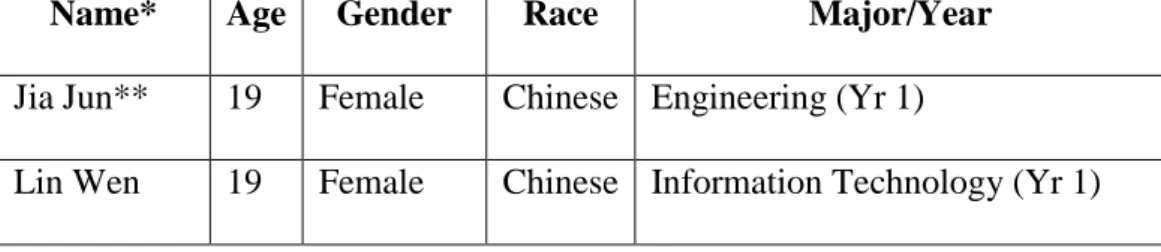
After collecting the details of the interested participants, I emailed them individually and distributed the questionnaire link. A total of sixteen respondents participated in the discussions which took place over the span of three days. The focus group discussions with MMU students were divided into two groups. The first discussion took place on 9 August 2011 and consists of six female and one male student. Languages used during this discussion were English with occasional Malay. A second focus group was conducted on 11 August 2011 with six female and three male students, including one international student from Nigeria, whose consumption of Japanese dramas and cultures had been influenced by JCS and several local fans. Besides these two groups, a conversation in Mandarin between two friends who are fans of Japanese popular culture and dramas took place on 10 August 2011. All discussions were held in MMU classroom with bookings acquired beforehand. In the case of MMU, the discussions took place at night as all participants mutually agreed that they have more time during the evening after classes are over. The discussions were recorded with the consent of the
37 respondents and lasted on average between one to one and a half hours. I returned to the university a week later for an informal lunch and dinner with twelve of the participants in three separate occasions. Additionally, one student showed me her entertainment program collections in her computer files which include English, Japanese and Korean dramas, variety shows, and movies.
Profiles of the Respondents (Multimedia University, Cyberjaya) Table 3.1: Focus Group 1 (9th August 2011)
Name* Age Gender Race Faculty/Year Kristin 19 Female Chinese Management (Yr 1)
Zakri 24 Male Malay Information Technology (Yr 1) Aisha 17 Female Malay Creative Multimedia (Foundation) Jia Jun** 19 Female Chinese Engineering (Yr 1)
Siti 18 Female Malay Information Technology (Foundation)
Sara 22 Female Malay Creative Multimedia (Foundation) Azlina 21 Female Malay Information Technology (Yr 1) *Pseudonym **Participated in all 3 discussions
38 Table 3.2: Conversational Discussion (10th August 2011)
Name* Age Gender Race Major/Year
Jia Jun** 19 Female Chinese Engineering (Yr 1)
Lin Wen 19 Female Chinese Information Technology (Yr 1) *Pseudonym **Participated in all 3 discussions
Languages used in discussion: Mandarin with occasional English.
Table 3.3: Focus Group 2 (11th August 2011)
Name* Age Gender Race Major/Year
Hasmah 24 Female Malay Information Technology (Yr 1) Sofiah 21 Female Malay Information Technology (Yr 1) Azrin 23 Female Malay Information Technology (Yr 1) Elisya 21 Female Malay Information Technology (Yr 1) Nurul 21 Female Malay Information Technology (Yr 1)
Sam 20 Male Chinese Engineering (Yr 2) Azhari 23 Male Malay Information Technology (Yr 2) Jia Jun** 19 Female Chinese Engineering (Yr 1)
Ali*** 22 Male Nigerian Information Technology (Yr 3) *Pseudonym **Participated in all 3 discussions ***International student Languages used in discussion: English with occasional Malay