Page | 1
DETOXIFYING THE POISONED CHALICE
Do the new social responsibility policies for Japanese corporate operations
and government development assistance in other countries represent
progress after a history of controversy?
by
CARTER Philip Edward Harwood
March 2013
Thesis Presented to the Higher Degree Committee
of Ritsumeikan Asia Pacific University
in Partial Fulfillment of the Requirements for the Degree of
M.Sc. in International Cooperation Policy, specializing in Environmental
Page | 2
Acknowledgements
I would like to express my appreciation and gratitude to Dr. Malcolm Cooper for his support from the very start of this project, and for encouraging me to see it through to completion whatever happened. I also thank Dr. Felix Padel for helping me to understand the complexities of modern-day India, and Dr. Susumu Yamamoto for his help in preparing a Japanese-language questionnaire. In addition, I express my appreciation to the Ritsumeikan Trust for their support via a scholarship, without which this project would not have been possible.
Page | 3 Table of Contents Acknowledgments ………...p. 2 Table of Contents ………p. 3 List of Figures ……….p. 4 List of Acronyms ………...p. 5 Abstract ………..….p. 7 Chapter 1 – The Chalice and the Poison ………..…p. 8 Chapter 2 – The Cleanup of Japan's Home Islands ………..p. 20 Chapter 3 – The Corporation and the Sacred Land – The Case of Daishowa-Marubeni International and the Lubicon Cree ………...………..p. 32 Chapter 4 – Mitsui and the Defence of Kudremukh National Park in India …p. 46 Chapter 5 – Japanese ODA and the Orissa Forestry Development Project Loan in India ...……….p. 58 Chapter 6 – Detoxifying the Chalice ………...p. 77 Bibliography ………..p. 82
Page | 4 List of Figures
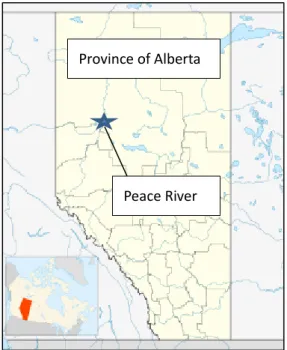
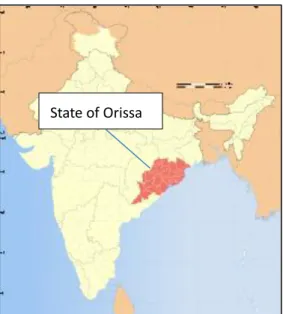
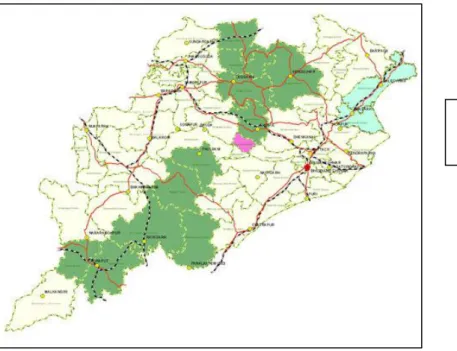
Fig. 1 - Location of DMI in Peace River, Alberta, Canada ………p. 33 Fig. 2 - Location of Kudremukh National Park in India ………p. 47 Fig. 3 - Location of Orissa in India ………p. 59 Fig. 4 - Forest Districts in Orissa ………p. 70
Page | 5
List of Acronyms
ALPAC - Alberta Pacific Forest Industries Inc.
CAMPA - Compensatory Afforestation Fund Management and Planning Authority CAS - Country Assistance Strategy (World Bank)
CBFA - Canadian Boreal Forest Agreement CFM - Community Forest Management (India) CSR – Corporate Social Responsibility
DFID – Department for International Development (UK) DMI - Daishowa-Marubeni International
ESG - Environmental Support Group FDI - Foreign Direct Investment FOE – Friends of the Earth
FPC - Forest Protection Committee (India) FRA - Forest Rights Act (India)
GDP – Gross Domestic Product
JACSES - Japan Center for a Sustainable Environment and Society JBIC – Japanese Bank of International Cooperation
JFM – Joint Forest Management (India) JICA – Japan International Cooperation Agency LAW-E - Legal Action for Wildlife and Environment KIOCL - Kudremukh Iron Ore Corporation Ltd. MMS - Mitsui Mining and Smelting Company MOFA – Ministry of Foreign Affairs (Japan) NGO – Non-Governmental Organization
NMDC - National Mineral Development Corporation (India) NREGA - National Rural Employment Guarantee Act (India) N.W.T. - Northwest Territories (of Canada)
ODA – Overseas Development Assistance
Page | 6 PCB - polychlorinated biphenyl
PFM - Participatory Forest Management (India)
REDD - United Nations Collaborative Programme on Reducing Emissions from Deforestation and Forest Degradation in Developing Countries
SLAPP - Strategic Lawsuit Against Public Participation
UNESCO - United Nations Educational, Scientific and Cultural Organization
Page | 7 Abstract
While Corporate Social Responsibility (CSR) departments have become established in Japanese corporate culture since 2003, there has been a lack of study on how much progress has been made. In addition, important new principles have been established with the Japanese ODA Charter of 2003. The present study attempts to shed light on how social responsibility has progressed in Japanese companies and ODA, and whether the progress can be said to represent a benchmark for other countries to follow.
The history of Japan cleaning up its home islands since the Minamata disaster and associated pollution problems shows that remarkable progress has occurred in the past. This history is recounted along with 3 recent case studies. These are the lawsuit launched by Daishowa-Marubeni International (DMI) against the Friends of the Lubicon in Canada, the case of Mitsui’s attempt to secure rights to mine inside Kudremukh National Park in India, and the JBIC loan for the Orissa Forestry Sector Development Project in India. In each of these cases, an attempt is made to ascertain progress at the present time. The title refers to the need to establish mutual trust following conflicts. I refer to my experience as an environmental journalist over 2 decades, which led me to cover several of these issues at the time they were occurring. It is found that while DMI appears to have made significant progress in terms of CSR implementation, significant problems exist in the other two cases, particularly in terms of transparency. The deeper causes of these problems are analyzed and found to be rooted in the continuing promotion of neoclassical economic principles in economic policy, both in developed and developing countries. Emerging new economic paradigms that may provide a solution are discussed.
Page | 8 Chapter One: The Chalice and the Poison
A personal introduction
They say a writer has to set the scene, but the things people notice depend on what matters to them. For myself, the morning sun is sparkling brightly through the top branches of a tall tree outside of my window, with a clear sky behind it. This makes me smile, for a clear sky is a special occasion during the east Asian monsoon on this mountain side in Kyushu, Japan. Earlier this week, there was continual heavy rain and dense fog. I am not sure of the species of the tree, but it has small leaves that cast a moving dappled shadow on the carpet of my room in the university residence. There is a very slight wind, and I can discern two or three different types of bird singing their ancient hymn to the morning.
I am an environmental journalist, and the natural world is something I notice. I am aware that there are some people who will awake as the line dividing night and day races around the world, who are quite different. They will wake up and even before they have drunk their coffee will switch on the computer to check the financial market news. Should they buy dollars or sell yen? Should they speculate that a promising computer company’s share price will rise over the next few months, giving a chance to make a nice profit if they are smart enough to buy now? What about the red-hot mining sector in India? Is there a chance to make some money there? The things we think about first thing in the morning show what is sacred to us.
In the history of the western civilization, the most sacred occasions are those in which a chalice is used. It is a ceremonial cup used to serve a drink, usually in religious ceremonies such as the Catholic Mass, where the chalice holds wine that mysteriously becomes the blood of Jesus Christ. A “poisoned chalice” is one in which the sacred drink has become toxic, and again this depends to a great extent on the type of drink one is used to.
To a person or government which views the natural world primarily as a way to make money, the viewpoint of an environmental journalist can seem extreme and needing to be suppressed. In Canada where my first writing was published in the late 1980s, the government has now deemed my profession so dangerous that it has effectively banned us from interviewing government scientists (The Vancouver Sun, 2008). Most likely they are worried that we may write uncomfortable things about the Athabasca oil sands project from which they derive their revenue. But if as a result I am a de facto exile
Page | 9
from my country, unable to work there as I depend on access to scientists, then I should consider myself a lucky one. Solzhenitsyn had a worse time of it.
To indigenous people worldwide, the viewpoint that the natural world exists to be exploited for profit is a poison in their sacred chalice of belief. However, in our time the famous Cree prophecy appears to be close to coming true:
Only when the last tree has been cut down Only when the last river has been poisoned Only when the last fish has been caught
Only then will you find that money cannot be eaten (Memorable-Quotes.com, n.d.)
For me, the moment of realization was when the Grand Banks fishery off the east coast of Canada collapsed in the early 1990s (Greenpeace International, n.d.). The disaster was surprisingly rapid, and a major source of fish and livelihood for Canada over several centuries was gone, just gone, destroyed in a few decades by modern industrial fishing. As I write, it has still not recovered, and fishermen are resorting to what is called today “fishing down the food chain” for invertebrates like crab.
At the time of the disaster, I had just started being published as an environmental journalist at a national level in Canada, and realized that the times were now so dangerous that I had to continue even if it was difficult at times. It became my sacred duty in the chalice of my own beliefs as someone with the ability to deal with editors, to participate in tackling what was clearly now an existential threat to humanity. And so I have, for over two decades now in Canada, India and Japan, and it has been hard. Still, I would not have it any other way, and the experience of waking up in the forest in the eastern Rockies without a tent, and the first snow of early winter taking my breath away with its beauty is not one I would have missed. I was returning from the logging protests on the Pacific coast to the resort town of Banff where I had a chance of getting a job for the winter, with my interview tapes, camera and one of the world’s first notebook computers in my pack. The article was published in a national magazine, and I still remember when the editor called me at the hostel I found to stay in and told me “I just want you to know, this is very good indeed”. I put down the phone with tears in my eyes, so much intense experience had gone into it.
Page | 10
By the standards of mainstream Canadian society, I am certainly a failure, for I was unable to amass the nice house and late-model car that would mark me as a “success”, and now cannot even work in that country in my chosen field, due to the action of my government. And yet in my personal story, somehow the challenge of our time is also mirrored. It is about what is sacred for our mercantile culture, with the neoclassical economics that underpins its dealings. This system of economics, which measures the ability of capital to produce goods, has become the default model by which societies are valued.
Rediscovering the narrative voice
We live in an age when science and economics must rediscover the value of humanity at the individual level. The roots of the problem are seen in present-day academia, where a school of thought predominates that unless a thesis follows an extremely strict predefined style, its contents are not worthy of consideration. Writing on research in one of the most human disciplines, that of nursing, Sandelowski (2000) says that a “tyranny of method” has come to predominate and that it is therefore necessary to rediscover qualitative description. Sandelowski points out that descriptive research has come to be regarded as the crudest and lowest-level type of research, given the sophisticated research tools available. Sandelowski goes on to say that this situation needs to be remedied and describes qualitative description as “a method that researchers can claim unashamedly without resorting to methodological acrobatics” (pp. 334-5).
Such a “tyranny of method” also represents a threat to the success of conservation biology, the new scientific discipline that has emerged to tackle the ongoing crisis of loss of habitat and species. Conservation biology stands at a critical crossroads regarding trust, and while scientific studies are important in providing guidance for policy making, in the end conservation initiatives succeed or fail according to the support they receive from local people. Many crisis areas are away from urban centers in regions populated by native communities which have suffered under western colonialism. Thus, there is a problem of trust that arises when western-educated conservation biologists attempt to dictate terms of land management in such regions as it tends to be seen as a further attempt to denigrate the native culture as inferior. The need to include aboriginal people in decision-making and management is addressed in more recent texts on conservation biology such as Primack (2010, pp. 477-492), in contrast to earlier texts which tended to emphasize scientific methodology. In terms of successful application, the Great Bear Rainforest initiative in British Columbia, Canada,
Page | 11
addressed the problem by giving aboriginal people legal standing as experts (Howlett, Rayner, & Tollefson, 2009). In this regard, conservation biologists are learning that traditional knowledge accumulated by people who have dwelt in a region for millennia has in some ways a greater validity than studies by scientists that are often carried out with tight limits of time and budget.
Thus, as the present study involves policy issues that affect the success of conservation biology in regions of Canada and India with many indigenous people, it is not wise to hide behind the assumed superiority of an impersonal style of writing that can easily be interpreted as looking down on these ancient cultures with their stories. Nor will I attempt to justify myself by virtue of my command of esoteric methodologies and statistics, or by carrying out the “right” style of “data collection” to use the dehumanizing jargon in vogue in present-day academia. Rather, by writing in a first-person narrative style, I will try to give a sense of who I am, to give some idea of why I may have seen things in a certain way to those who may disagree with my conclusions. This is in keeping with the direction that conservation biology must take if it is to succeed. The oral traditions of native cultures transfer knowledge in stories, and the central role of personal narrative is recognized by progressive anthropologists such as Preston (2002) in his study of the worldview of the Cree in Quebec, Canada. Conservation biology must recognize and incorporate such human narrative, or risk becoming dehumanized and capable of insensitive actions in the course of conservation initiatives that alienate precisely those communities that are needed for such initiatives to succeed.
This study includes an element of historical review, and the central role of personal narrative has long been recognized by historians. However, in this field also Roberts (1996) discusses how many historians have a viewpoint that only empirical studies matter, and dismiss the validity of stories. In arguing for the validity of narrative history, Roberts reminds us that personal stories are an indispensable element of academic inquiry. In another vein, Louch (1969) also points out the vital role of narrative in history, stating that:
… in narrative we do describe and presuppose (if you will) a world of things that endure through change. We do not verify such claims, but we can illustrate them by much that is common in our experience, simply by reference to the life stories of mayflies, man, and mountains. This is to claim that we directly experience change, and that such experience simply
Page | 12
demands concepts like substance, permanence, and persistence. (Louch, 1969, p. 56)
Further support for the role of narrative in history comes from Dray (1971) who also notes that there has been strong opposition to this view from historians who believe that “narratives, by their very nature, preclude satisfactory explanation of the events which occur in them, and that they necessarily oversimplify the past in characteristic ways” (p. 153).
In this vein, while it is necessary to adopt a first-person narrative style in the present work, I will attempt to do so judiciously. It would equally be a mistake to dismiss the validity of other styles of research and discussion, especially in scientific studies. However, the problems that I will be addressing stem precisely from this trend towards dehumanization in science and also economics and therefore it is appropriate that the style itself be as human as possible. This can only be achieved by recognizing that we as observers are not separate from that which we observe. With this in mind, let us consider the interaction of the dehumanized economic system underlying the present consumerist age, with those tribal societies that are so important to the success of conservation initiatives.
Modern economics and tribal societies
Societies throughout recorded history have engaged in trade, and the major religions set rules that govern it, such as with the charging of interest. Trade has always been an ingredient in the sacred chalice of human civilizations. Neoclassical economics becomes a poison in the chalice when it is causes trade to be the sole purpose of life, pursued with such fervor that it threatens the delicate planetary ecosystem upon which our existence as human beings is based. As with any religious or philosophical system, problems occur when it becomes extremism, denying the validity of other worldviews outside of its own terms of reference. It is not surprising that some of the worst excesses in recent years have tended to be in the suppression, violent at times, of indigenous people worldwide whose concept of the sacred tends to be in opposition to neoclassical economic orthodoxy.
In India, this mindset, literally excluding societies outside of the international monetary system as being “non-societies” which need to be “developed” from their “backwards” condition, has combined with longstanding societal prejudice towards its 84 million tribal people. These people, known as Adivasis, are outside of the Hindu caste system
Page | 13
and have long suffered discrimination. It is a perfect storm, with economic theory giving justification to the foreign capital that rushes in to “develop” the rich lands where they have farmed and hunted for millennia as it does not produce goods traded in the international monetary system. When it is used for mining it becomes valuable, and those brutally displaced from their lands are being “improved” as they were in “poverty” before. The World Bank’s present measure of poverty is someone who earns less than $1.25 per day (The World Bank, 2008) and thus someone who is producing food for his family on the same land as his ancestors and has a home, but does not trade that food, is considered a wretch.
As similar disasters across the world have become increasingly hard to ignore, there has been a move to mitigate the worst excesses of these types of projects, in the concept of “corporate social responsibility” or CSR. However, there is a gap of trust when companies try to implement CSR policies, as what they view as their duty to make profits for their shareholders, known as “fiduciary responsibility”, is seen as more important. The central tenets of neoclassical economics upon which they operate too often remain unchallenged.
In India, displacement of Adivasis has led to a civil war as many of the dispossessed have now joined a Maoist army that controls the forest in many places. As the war grinds on, a stark choice looms. Either companies must resign themselves to the need for conducting their operations with hired thugs and murky dealings with local police to deal with “problems” with locally affected people, or they must review in some way their basic raison d’etre. The prognosis does not seem good, given the present situation in India. Vedanta, having been denied by the Indian Environment Ministry the right to mine for bauxite in the Niyamgiri hills in the state of Orissa, displacing the Dongria Kondh Adivasis, immediately filed a lawsuit challenging the cancellation (Bisoi, 2011). In this, they faithfully followed the neoclassical economic dogma upon which their accounting is based. The mountains have no intrinsic value except in the extent that bauxite they contain can be rapidly extracted to increase India’s production of cheap aluminum goods. They also destroyed any chance of any attempts at CSR implementation being trusted in the foreseeable future, and worsened the prospects of success for peace efforts.
A question about Japanese CSR
mid-Page | 14
1990s to interview Mitsubishi about a controversial pulp and paper mill in Alberta province, Canada. The mill had become the focus of environmental activists over dioxin effluent in the great northern Mackenzie river system that flows north to the Arctic Ocean. The 1980s and 1990s were troubled times for Japanese corporations operating abroad, finding themselves in conflict with environmental NGOs and accused of human rights abuses as they rushed to find resources to fuel the overheating Japanese economy. As an environmental journalist, I was a witness to this difficult period of history and wrote about some cases, but in recent years a question has been forming in my mind through my observations as an ordinary person working in this country. I provided technical editing services to companies, and began to be aware that many of them were implementing corporate social responsibility programs, with strong focus on the environment.
I also noticed that the country had changed in obvious ways, and was no longer a place where, as in the 1980s, foreign residents were said to furnish their apartments with nearly-new furniture and appliances discarded in alleyways by Japanese people. Instead, “recycle shops” were becoming common, selling all manner of used goods. Rather than a de-rigeur culture of only the newest and fanciest being acceptable, even the fashion industry seems to be reflecting a new sense of normality, with jeans being sold with holes already in them and new shoes in shops painted to appear scuffed and used. Japanese automobiles, which had already become well-regarded for reliability, were now becoming symbols of environmentally conscious frugality with fuel-efficient hybrid gasoline-electric drivetrains pioneered here and marketed worldwide. Something was clearly happening, and I began to wonder if Japanese companies were indeed now becoming leaders in CSR, having leapfrogged the rest of the world?
This is the question I hope to cast a cross-light on, and it is not apt to be easily answered. Nonetheless, it is important that an attempt be made, and as an environmental journalist I always believed in drawing attention to potential solutions to difficult problems when I became aware of them. If Japanese corporate practices have indeed become world-leading or are in the process of so doing, then the story should be told. While 2003 has come to be regarded as the starting year for corporate social responsibility (CSR) in Japan (Fukukawa & Teramoto, 2009) as well as the year in which the new Japanese ODA charter was implemented (Kawai & Takagi, 2004), there has been little discussion of whether trust is being rebuilt in other countries. I aim to address this gap by investigating how social responsibility policy has advanced in several controversial cases involving Japanese companies and government ODA, and
Page | 15
how it is being perceived. Such a first-person account has the potential to cast a cross-light on this critically important period of history that may give insight to scholars and others who may be interested.
If the new policies are indeed being well-received in other countries, particularly by human rights and environmental NGOs, then Japanese policy may be said to have leap-frogged from being a target of international criticism to being a potential world leader. To assess this, one critical measure is transparency and the willingness of companies and government agencies to respond to questions in an open and forthright way. Another is to ask NGOs themselves what their impressions are. I aim to carry out such an assessment using interviews and questionnaires to the various parties. In this way, I hope to shed light on the extent to which the poisoned chalice of trust in social responsibility in Japanese corporate CSR and international ODA projects abroad following the bitter confrontations of the 1990s is being detoxified by the new policies, and what remains to be done.
Outline of this study
I will start by focusing on an aspect of Japanese history that is poorly understood and appreciated in the west, by reviewing the major environmental disasters in Japan over the last century. I will explain the changes in law and practice that followed them, leading the country to clean up its own environment in a most dramatic fashion. In this way, I will show why the negative stereotypes so often entertained abroad are in fact far from the truth. As the first country in Asia to industrialize, it has addressed the same problems as the west in a pragmatic way, leading to air that is now relatively clean even in the metropolises of Osaka and Tokyo, and good water quality in most rivers where herons, egrets and cormorants are now found even in urban waterways.
To place present policy shifts in context, it is necessary to understand the reason for the criticism that Japanese companies received prior to its implementation. In the course of my work, I found myself writing about two particularly troubling cases in Canada and India that left me deeply unsettled, as I had difficulty understanding the mindset that could lead to such behavior. I have always tried to believe the best of my fellow man, and yet these events occurred. The first was the persecution by the Japanese pulp and paper company Daishowa of the Lubicon Cree, a Canadian First Nation, through what McKenzie (2001) has described as a “Strategic Lawsuit Against Public Participation”, an abuse of the Canadian legal system. The second was the planned takeover in 2002 by
Page | 16
a Japanese consortium of Kudremukh Iron Ore Corporation Ltd. (KIOCL), with the intention of securing long-term mining rights inside Kudremukh National Park in India. As an environmental journalist, while I was always writing from the viewpoint of environmental conservation, I felt that it was most important to understand the truth in any given case, and that this can only be achieved by speaking to both sides. At times this can be an awkward position to be in, as when I was covering the Clayoquot Sound logging protests in Canada in the early 1990s. I camped out with the protesters at one blockade of a logging road, but then found my relationship with them changed when I crossed the blockade line to talk to the loggers and police who had come to work. Yet it had to be done, and I tried to spend time talking to the forestry company experts and government scientists to understand the different perspectives on the issue.
In both the cases mentioned above, the Japanese companies lost after lengthy and bitter court battles with NGOs which progressed to the Supreme Courts of both Canada and India. I will contact the companies involved in these two cases and allow them to explain what it is they have learned from the experience. In the Canadian case this is Daishowa-Marubeni, and two companies in the India case I interviewed are Mitsui and Nisshoiwai. Again, this is an uncomfortable yet necessary part of finding the truth. The companies will be aware of the role I played in writing about these highly polarized issues and may not respond. If the companies have truly changed their ways however, this is also a story that must be told.
In recent years there has been a tendency to dismiss scholarly discussion in the humanities as irrelevant to a world where manufacturing efficiency and the cruel dictates of the market are seen as the only important things. However, understanding the complexities of a foreign culture is where scholarly review comes into its own, and nowhere is this as true as the complex and ancient societies of East Asia. While I am able to speak, read and write Japanese to a level where I can live here, this only corresponds to sixth-year elementary school where I would not be considered a particularly progressive student. Very few native English speakers are able to reach high-school level in this difficult language with its complicated grammar, over two thousand Chinese characters and three phonetic scripts including the Roman alphabet. Generally these are language specialists who study Japanese in university.
Where there is an urgent need to understand a crucial development in a culture like this one, the scholarly practice known as the literature review comes into its own. I cannot
Page | 17
take the time to learn Japanese language to the level needed, but as I write in the rainy season here in Kyushu in 2011, specialist scholars have already published articles on the advances in Japanese CSR since 2003. I will attempt to review and synthesize what is available as succinctly as I can, and try to interpret what I find in light of my experience as a journalist who faced Japanese companies on these difficult issues in the years leading up to the change. Rather than a separate chapter that claims to be an exhaustive review, I will try and refer to the most significant papers that I have found at appropriate points in the narrative.
At the same time as the new CSR guidelines were enacted to try to clean up the unfavorable image of Japanese companies operating abroad, new ODA guidelines were also introduced in 2003. Japanese ODA had long been criticized by NGOs in Japan and internationally for funding projects with negative environmental and social impacts. Groups such as Friends of the Earth Japan cautiously welcomed the new guidelines while continuing to press for improvements. However, Greenpeace International and other NGOs continued to be critical of what they saw as Japan’s policy of preferentially giving ODA to countries that would support their efforts to resume commercial whaling, and allow whaling inside the Southern Ocean Sanctuary.
Although I lived in Japan, I had not myself written about the whaling issue, seeing it as well-covered by the international media. However, in covering the attempt by Japanese trading companies to mine inside Kudremukh Park in India I had written about the need to protect wildlife sanctuaries as the last citadel in a threatened world (Carter, 2002). The ability to completely disregard these places in the pursuit of profit seemed to me to be a deadly poison in the chalice of belief in the sacredness of the natural world. The cases were similar, and represented a blunt clash of philosophies, one based on neoclassical economics, and the other on a rediscovery of a lost sacred chalice by the environmental movement of our time, whose contents had been taken for granted by the older tribal cultures in which our race has lived for most of its history.
An example of this type of clash related to Japanese ODA is the JBIC-funded Orissa Forestry Development Project, for which funding was applied in 1998 but was finally implemented in 2006. It had come under criticism from Japanese and Indian NGOs at that time as unnecessary, burdening the state with excessive debt, and ignoring the protests of local communities who had not been consulted (Press Trust of India, 2006). It is scarcely possible to imagine a more volatile and sensitive situation for the massive JBIC-funded project to be starting in, against such local opposition. India’s long Maoist
Page | 18
insurgency, fueled by conflicts over mining and rapid industrialization promoted by the World Bank, has been particularly intense in Orissa and there is a considerable danger that the loan may have a destabilizing effect and worsen the war.
Although not well reported in Japan or North America, this long-running civil conflict has taken a vicious turn since 2007, with a number of incidents that caused large-scale casualties. These have included bomb attacks on trains and firefights between security forces and Maoists that have left dozens dead. When writing about the large-scale coal mining expansion in neighboring Jharkhand State since 1997, I myself witnessed the worsening of tensions that led up to Operation Green Hunt, a large-scale deployment of Indian security forces against the Maoist insurgents. The conflict is an environmental war in one way, with its roots in mass displacements of Adivasis to make way for mining projects, who then provide ready recruits for the Maoists.
As this project has not been independently analyzed in the field since its launch, and as such assessment is vital against the background of the worsening conflict, I originally intended to do so by traveling to the region to make a field study of the case, but the Orissa Forest Department refused to give a clearance letter for a research visa. Therefore, I will attempt to make an assessment of the present situation by reviewing published sources and also by interviews by phone and email. The implications in terms of transparency when an aid recipient refuses a Japanese university permission to examine a Japanese loan will also be discussed.
The final task is to try and answer the question of whether trust is being developed in the new Japanese CSR and ODA policies. The present situation regarding transparency and responses of civil society will be discussed, and an assessment made of whether Japanese policy can indeed now be regarded as a model for others to follow. The structural changes to corporate governance and international economic policy suggested by Korten (2010) and others in order to avoid environmental and social catastrophe will be discussed. An assessment will be offered of whether present Japanese practice can be regarded as a step in this direction. I will try and summarize in a way that makes it easy to grasp, as this is an age where the pressure of time makes it hard to read in depth. Perhaps it is in the concept of time that the clash of cultures becomes most important. In the business and technologically oriented society that has become mainstream worldwide, the second and the minute are considered sacred. Time is said to be money. However, this concept is literally a poison in the chalice of older tribal cultures whose
Page | 19
idea of time is formed by the change of seasons. The harsh reality of what modern urban society considers sacred was also brought home in the hours after the Great Tohoku Earthquake and resulting tsunami hit these islands in March 2011. As the thousands of Japanese who had been killed were beginning their journey beyond this world, and even before the tsunami had crossed the Pacific ocean, the business media was anxiously broadcasting the news it considered important. Variations of one headline were echoed across the world: “Japan quake and tsunami causes stock market drop” (thefirstpost.co.uk, 2011) The short, blunt articles had no mention of the human tragedy. So it is that I will attempt the difficult task of reconciling what seem to be diametrically opposed viewpoints. In the process of detoxifying this poisoned chalice, it is not enough to criticize the excesses of our industrial culture, or to hold up indigenous societies as inherently superior. It is more a process of distilling a new concept of the sacred whereby technology and business continue, but including key elements of the worldview of societies which live close to the Earth. The poisoned drink in our chalice that causes our race to drive one species after another to extinction will also kill us as the global ecosystem collapses.
To begin, it is helpful to understand that industrial societies have risen to such challenges in the past. In the next chapter, I will describe how a series of disasters over a period of a century led Japan to become one of the cleanest developed countries in the world despite bitter opposition from the corporate sector.
Page | 20 Chapter Two: The Cleanup of Japan’s Home Islands
Japan’s environmental success story despite implacable opposition from the corporate sector
Introduction
Japan’s path from the “economic miracle” and associated pollution of the post-war reconstruction to the clean environment of today was not an easy one. In the various accounts that have been written such as by Tsuru (2000) the resistance of Japanese companies to accepting responsibility for even the most tragic of pollution cases is made clear. In this most community-minded of countries with its strong Confucianist tradition and delicate visions of nature in its traditional art, this attitude to what Tsuru refers to as kogai, (a Japanese word for environmental pollution that means literally “public harm”) strikes a jarring note. He recounts four major kogai lawsuits in the post-war period that were key to the issue of industrial pollution being addressed so successfully, despite such resistance. This story tells much about the contents of the sacred chalices of different segments of the global community today, and how the issues can be addressed.
Events on the island of Kyushu where I am living are central to the story. Climbing on my mountain bike away from the ocean in the town of Beppu in Oita Prefecture on the east side of the island, a spectacular view unfolds that is a testimony to the advances that have been made. By the time I reach the viewpoint by the broadcasting antennas above Ritsumeikan Asia Pacific University at an altitude of 500m, I can see the full expanse of Beppu Bay. Just to one side of the three antenna towers is a small tea shop called, appropriately, Hikari no Uta, or Song of the Light.
On a fine day, not guaranteed at any time of the year here with the low clouds that move in from the central mountains, it is possible to see the twin orange smokestacks of the Sunflower Ferry that links Beppu to Osaka. Before that, steam can be seen rising from the many hot springs of this resort town, a popular tourist destination. The sea is clean and sparkling, and locally caught fish are available in a shop next to a harbor where small fishing boats are docked.
To the south, the prefectural capital Oita City is visible beyond the triangular silhouette of Mount Takasaki that rises abruptly from the ocean and is a sanctuary for Japanese macaque monkeys. The city has a line of smokestacks that line the shore, some painted
Page | 21
with red and white stripes as if they were taken from a children’s picture book. The city’s steel and chemical plants are still important to the local economy, although there has been a shift to manufacturing industry in recent years.
The history of Oita City in Japan’s traumatic transition to a clean environment despite the presence of such industries is told in a gripping book by the bilingual scholar Jeffrey Broadbent (1999). He describes how 200 fishermen sailed their boats along the shore on a December day in 1972 to confront the prefectural governor over plans to expand Oita’s heavy industry base which would have had negative impacts on both water and air quality. This protest, a courageous challenge at the time to traditional authority, succeeded in getting the plans revised. When I eat local fish, which include migratory mackerel and horse mackerel caught by pole and line and locally cultivated yellowtail (Oita Statistics and Information Center, 2005) and have confidence that they will also make me healthy, I certainly owe those fishermen a debt.
Chisso Corporation and Minamata Disease
However, it was in the town of Minamata in Kumamoto Prefecture on the west coast of this island of Kyushu, that fish from the ocean took on a very different meaning for a generation of people due to the effects of mercury contamination. As the Harvard scholar Timothy S. George describes it in his definitive history of the case (2002), the leader of the effort to attract the Shin Nihon Chisso Corporation chemical factory to the town early in the 20th century received an award for his efforts in 1955 although the first signs had already begun to appear that all was not well. Originally a fertilizer company, Chisso produced chemicals such as acetaldehyde that were important in making the PVC plastics used in film, electrical wire and other products. Researchers at Kumamoto University were eventually to discover the cause of the mercury contamination in the acetaldehyde manufacturing process, where it became converted into a dangerous organic form.
In this fear of environmental contamination of unknown scope, there is a prescient echo of the drama being played out in Fukushima Prefecture on the other side of Japan as I write resulting from the nuclear disaster and radioactive contamination of a wide area following the March 2011 tsunami. The similarity is striking, for small towns across this country have also regarded nuclear plants as a source of prosperity as Chisso was regarded as the lifeblood of the town of Minamata. When an accident occurs, perhaps it is human nature to deny that the town’s source of income can be responsible.
Page | 22
The residents of Fukushima were quickly evacuated after the tsunami hit, and have the best medical treatment the world can offer. The hazards of radiation exposure are well understood today. This was not the case for the residents of Minamata as they began to experience the effects of mercury poisoning from eating contaminated fish. George vividly describes the symptoms of the early victims – numbness, shaking of their hands, and tunnel vision. Signs that Chisso’s factory waste was causing problems had been apparent since 1951, with dead fish and seabirds found near the outflow point into the ocean.
The fact that Chisso failed to respond to such grave warning signs is an indicator above all of how different the chalice of the sacred was in Japan at that time, compared with earlier centuries. Perhaps the strongest historical influence on Japanese cultural values was the Buddhist monk Kukai, more commonly known by his posthumous name Kobo Daishi (774-835 AD). He was the founder of the Shingon sect of esoteric Buddhism which he brought from China, and founded the town of Koyasan on a lushly forested mountain plateau in the Kii Peninsula to the south of Osaka. Kongobuji Temple, the headquarters of Shingon Buddhism, is located there, and the Koyasan homepage states simply that “the whole mountain is considered one large temple” (Koyasan Shingon Buddhism Sohonzan Kongobuji, n.d.). The cemetery surrounding the temple itself has numerous stone monuments placed there by well-known Japanese companies, among the giant cedars of the sacred forest.
In the 1950s however, human sacrifice and the sacrifice of nature had become a price companies were willing to pay as Japan tried to rebuild its industrial society after the war. George describes how Chisso used methods that have become familiar in this age of public relations to cast doubt on Kumamoto University’s research showing that organic mercury was the cause. He states that:
The events of those years show a criminally irresponsible corporation achieving remarkable success at covering up its responsibility and the huge volume of poisons it discharged and at promoting false explanations for the disease. Government at all levels was responsible as well, and for a time research funding had to come from the United States… Minamata emerged at precisely the moment when major development policies were about to be promoted, and it could not be allowed to delay or derail them. (p. 45)
Page | 23
responsible only coming in 1968, the final toll came to include the images of children born with terrible birth deformities that have come to be associated with Minamata disease. Cerebral palsy and mental retardation were also common (p. 149).
The process of gaining recognition and compensation for victims and also fishermen whose livelihoods were affected was a pivotal stage in Japan’s process of awakening to the need to protect the environment. Mercury poisoning cases were not just limited to the immediate area of the Chisso factory, but also appeared in neighboring prefectures as fish migrated. There were violent incidents between members of fishermen’s cooperatives and police, and George describes how Minamata disease eventually came to be recognized at a national level in Japan.
The solutions that were to enable Japan’s eventual environmental recovery did not come quickly, or easily. A second case of Minamata disease in Niigata Prefecture occurred, with methyl mercury this time contaminating fish in the Agano River that were subsequently eaten. Tsuru (2000) describes how the company responsible, Showa Denko Corporation, tried to argue that the Niigata earthquake of 1964 had caused spillage of agricultural chemicals into the river causing the disease. Despite overwhelming evidence to the contrary, they continued to argue this through the trial in Niigata District Court from 1967 to September 1971. The court disagreed, stating that:
Showa Denko did cause the so-called ‘Niigata Minamata disease’ through the utter indifference to the precedent example of the Minamata disease in Kumanoto which could have been known to them if they had listened with modesty to the findings of the Kumamoto University Research Group. (Tsuru, 2000, p. 99)
Tsuru (2000) also notes that the court “affirmed on this occasion the principle that the burden of proof should be placed on the defendant enterprise rather than the accuser”. However, legal action by victims who were not eligible for compensation under the original agreement due to very strict qualifying requirements lasted until 1995, when Showa Denko admitted responsibility, apologized, and agreed to pay compensation. As someone myself who has worked to bring similar difficult issues into the public eye, one particular story recounted by George (2002) sums up the fear and tension of those times. This is the case of W. Eugene Smith, a well-known American photographer who lived in the town of Minamata and documented the disease. Perhaps more than anyone, he is responsible for spreading awareness internationally with his pictures of congenital
Page | 24
Minamata disease sufferers, many with birth deformities. However, he paid a heavy price, attacked by Chisso factory workers in Jan. 1972 while covering an attempt to present a petition on behalf of disease victims to company authorities. Lifted by a group of them, his head was smashed into the concrete “the way you would kill a rattlesnake if you had him by the tail” as George quotes him (p. 233). Smith never recovered from his injuries, suffering loss of eyesight and brain damage, eventually dying in 1978. The W. Eugene Smith Memorial Fund describes his character in these terms on its website:
He set himself to learn the truth – about himself as well as his subjects. In the process, he produced a series of photographic essays, for LIFE and other publications, whose passionate involvement set a standard for what photography can be. Gene Smith was a loner, a driving and driven man, who bucked the system of which he was a part. Some say he sacrificed his career, and himself, on an altar of self-destructive idealism. When he died at the age of 59 in 1978, he had $18 in the bank. But his name had become synonymous with integrity. His work was his memorial. (W. Eugene Smith Memorial Fund, Inc., 2011)
I can empathize with his situation as being an environmental journalist is apparently as ineffective a way to riches as focusing on these types of issues as a photographer. However, I would add that his memorial is far more than his photographic work, for he played a pivotal role in forcing Japan to face the awful price it was paying in its single-minded pursuit of industrial development. The subsequent environmental protection laws that transformed Japan in the years following are also a part of his legacy.
The Ashio copper mine and the start of environmentalism in Japan
However, although the post-war pollution tragedies are remembered as they preceded Japan’s remarkable environmental cleanup from the 1970s, it is often forgotten that the environmental movement in Japan actually started long before, in the 19th century with the Ashio copper mine in Tochigi Prefecture to the north of Tokyo.
According to the excellent paper on the Ashio mine by Shoji and Sugai (1991), the mine, which had been a small operation in the 1600s, rapidly increased production at the end of the 19th century. Japan needed copper to support its industrialization, for which Ashio, was the main source. They connect the mine’s expansion to Japan’s drive to become a colonial power at the beginning of the 20th century, and also blame the capitalistic production system for the environmental problems (p. 21).
Page | 25
However, with the increased output came problems. Air pollution from sulphur emissions was such that,
By the close of 1884, the entirety of the forested areas around the Ashio refinery had been biologically destroyed. … by 1893 sulphurous anhydride from the smoke produced by the mining and smelting machinery had killed all living things, so that natural recovery was rendered impossible and the once tree-covered mountains were turned into an absolute wasteland. (p.26) In addition, heavy metals leaching from slag piles during heavy rains contaminated the Watarase river and soil over a wide area, due to flooding. The resulting fish kills and deaths from poisoning led to a powerful farmer’s protest movement. The leader of this movement, Shozo Tanaka, also made it into a protest against Japan’s militarization and plans for war with Russia (Shoji & Sugai, 1991).
As the farmer’s protest became a national issue, the government responded by establishing the First Copper Poisons Survey Committee, which Shoji and Sugai describe as having recommended building:
… a special area for the accumulation of slag and waste ores, a poisons catchment basin, and drainage for the copper mine itself, and that the water coming from the refinery be neutralized with lime. (p.45)
Although these had limited effectiveness, the government ordered application of similar measures for all copper mines in Japan, with the threat of withholding operating licenses if companies could not pay for them. This led to smaller companies being taken over by larger ones. Various efforts were made to lessen the sulphur emissions in the smoke, such as a smoke stack where the smoke was washed with lime-water before being discharged, but these were not effective.
The government also forced companies such as Sumitomo, which operated the Besshi mine and its smelter in Niihama City on the Inland Sea, to pay damages for smoke-related pollution and take other measures such as suspending operations for 10 of the 40 days of rice- and wheat-growing season, with limits on other days (p. 48). Sumitomo was also driven to find a solution to the problem of acidic sulphur emissions, and eventually did so. As Shoji and Sugai (1991) describe it:
Page | 26
from sulphurous acid gas and used in the production of ammonium sulphate, which is used as a fertilizer. In 1939, Sumitomo finally implemented their total recovery system, but in the meantime the company had to pay over 6 million yen damages to farmers (p. 48).
After the war, the Ashio mine continued to operate until 1972, when its operator Furukawa Mining announced its closure against the background of a strengthening environmental movement and demands for compensation. On 11 May 1974, Furukawa Mining agreed to a compensation package. Shoji and Sugai state that:
The agreement provided that the company pay 1.55 billion yen (about $10.7 million), improve the copper wastes effluent system, improve the quality of the poisoned farmland, and sign an agreement for pollution control. This was the first time in the 100-year history of the company that Furukawa actually paid money to the farmers in compensation for damage done instead of simply providing token donations from time to time. (p. 60)
Efforts to manage the remaining slag pile accumulation systems and prevent them contaminating river water continue, as well as reforestation efforts, although this is difficult and a 3,000-hectare area around the mines remains devoid of vegetation.
For the university summer vacation, I take the ferry the length of the Seto Inland Sea from Kyushu to Osaka, then go for a brief vacation snorkel diving on Awaji Island to the southwest of the city of Kobe, which really marks the eastern limit of this sea with its many islands. In 1994, the north of the island was the epicenter of the Great Hanshin Earthquake that killed over 6,000 people in the Kobe region. Japan is subject to natural disasters as well as human ones.
It is easy to forget, diving in the clear water and looking at the variety of fish there, that it was not always like this. In their book published before the cleanup occurred, Huddle, Reich, and Stiskin (1975) capture exactly what the situation was like:
While the world watches Japan as a multivariate study in chemical pollution, the Japanese watch the Seto Inland Sea. Factory effluents, untreated sewage, and agricultural runoff have transformed this once crystal clear body of water into a chemical soup. Nets that once hauled in fish renowned for their taste and purity now bring up refuse and plastic, while whatever fish catch materializes is suspect of PCB and mercury
Page | 27
contamination. Every year, more and more Inland Sea fishermen abandon their trade and resort to employment in nearby factories. Those who once proudly referred to their waters as “Japan’s Marine Treasure House” have bitterly renamed it “Japan’s Inland Sewer.” (p. 189)
Itai-itai disease and Mitsui Mining and Smelting Company
Contemporary with the Minamata tragedy, another severe case of environmental contamination, this time due to cadmium was occurring in Toyama Prefecture on the Japan Sea coast. As Huddle et al. (1975) describe it, an excruciatingly painful condition known as itai-itai disease began to appear in the lower part of the Jinzu River from 1910. At the time of writing, 200 mainly post-menopausal women had been bedridden with fragile bones that broke if they moved and 130 had died in the post-war period. The disease got its name from their cries of “itai, itai!” (it hurts, it hurts!). (p. 187) The culprit was eventually found to be a mine operated by Mitsui Mining and Smelting Company (MMS) at Kamioka in the upper reaches of the Jinzu River. Waste from the mine, which produced lead, zinc and copper, had led to not only lead and zinc accumulating in bones and tissues of those afflicted by the condition, but also cadmium in exceptionally large quantities.
As recounted by Tsuru (2000), although the Japanese Minister of Welfare made a definitive statement in 1968 linking itai-itai disease to cadmium pollution, MMS dug its heels in and resisted accepting responsibility in the civil lawsuit that began that year. Tsuru makes telling statements about MMS’s attitude as the defendant that could just as well apply to many large resource-extraction companies in recent years. He describes them as “not to be easily humbled”, with a pre-eminent place among Japanese zaibatsu or “big business” companies both before and after the war.
It took 3 years for the trial to come to its conclusion, during which MMS tried to discredit the scientific evidence linking cadmium poisoning to the disease. Tsuru describes the judgment in June 1971 ordering MMS to pay damages was significant in establishing the principle that “the causal relation illuminated through epidemiological research was sufficient for legal purposes” (p. 104). However, MMS immediately appealed, denying that the cause had been established. In August 1972 the Nagoya High Court agreed with the lower court’s verdict and the MMS president reluctantly agreed that they would not appeal further.
Page | 28 Yokkaichi Asthma
Tsuru (2000) also gives a sobering account of the corporate attitudes in the Yokkaichi asthma case, which was the other major pollution lawsuit leading to the eventual cleanup of Japanese industry. Located by the Bay of Ise to the south of the city of Nagoya, in 1955 the city of Yokkaichi became the site of a major oil refinery and petrochemical facility constructed by Mitsubishi-Shell. This became the first stage of an ambitious plan to transform Yokkaichi into an industrial city, with a large-scale land reclamation project along the ocean shore.
By 1963, two groups of petrochemical complexes were operational, and the effects of industrial pollution were becoming evident. While the lung problem that became known as “Yokkaichi asthma” is the most well-known, Tsuru points out that air pollution was not the only concern, stating:
Indeed, Yokkaichi presented an ‘ideal’ (!) classroom case of kogai in a multiple form, for almost every one of the latter-day kogai phenomena – the pollution of air by sulphur oxides, smoke and various dust particles; noise and vibration; water pollution; and offensive odour – began to plague the citizens almost at the same time from around 1960. (p.72)
Two incidents illustrate the company attitudes at the time, and also the complicity of labor unions. In the first, Tsuru describes how a worker for Showa Yokkaichi Petroleum spoke in a union meeting about how he was ordered to switch from normal crude oil to a lower sulfur variety ahead of a visit by the Welfare Minister. However, not only did the union refuse to take action, but reported the worker to the company management, resulting in his abrupt transfer to another city. Eventually, despite opposition from this union, the citizens’ group that was fighting the increasing pollution did manage to succeed in bringing a lawsuit regarding Yokkaichi asthma, against six companies (p. 75).
The second case involved a lawsuit against Ishihara Sangyo Company, which had been discharging sulphuric acid waste water into Ise Bay, killing fish and forcing fishermen to fish outside their legally allowed areas. The lawsuit was brought by Muneaki Tajiri, whose job had been to arrest fishermen who were poaching in this way. Tsuru describes the resistance of the company “elaborately strenuous” in the ten-year trial, which finally ended in March 1980 with the charges upheld.
Page | 29
As summarized by O’Connor (1994) in his interesting study of industrialization in East Asian countries, these locally based environmental campaigns led to landmark changes in Japanese law by the Diet, as the legislative assembly is called. These were key to the subsequent cleanup of the Japanese environment.
Enacted in 1967, the Basic Law for Environmental Pollution Control “set out broad policy objectives and priorities, outlined methods for implementing policy and defined relationships between central and local governments as well as between the public and private sectors” (p. 64). However, O’Connor also notes the controversy over the law making provision for the establishment of environmental quality standards “in harmony with sound economic development”, saying that it was interpreted to mean “in subordination to economic growth”.
This sums up the dispute about what is sacred in our modern society, economic growth or environmental conservation, and also shows why Japan was ultimately successful in solving the environmental crisis in such a dramatic way in its home islands. The key, according to O’Connor, is that the controversial clause was deleted when the Basic Law was revised in 1970, making environmental quality the first priority in an unambiguous way.
While the 1970 session of the Japanese legislature or Diet is noted as the “Pollution Diet” when important legislation establishing the “polluter pays” principle was enacted, O’Connor also points out that it was a part of a process of instituting new laws and standards over a number of years. After a satisfactory statement of guiding principles in the legal framework of the Basic Law and accompanying legislation was achieved, he lists the environmental quality standards implemented over the years from 1968 to 1973. For atmospheric pollution, these included standards for automobile exhaust, sulfur dioxide, nitrogen dioxide and photochemical oxidants. Effluent standards were also strengthened for mercury and PCBs (polychlorinated biphenyls).
O’Connor (1994) states that Japan had achieved “impressive results” at the time he was writing, referring to decreased air pollution, but that progress had been slower where behavioral changes were required. He says that:
The Japanese system of environmental management has tended to evolve from an early emphasis on crisis management and damage compensation (e.g. the four major pollution cases) through an emphasis on ‘end-of-pipe’ pollution control (e.g. wastewater treatment, flue-gas desulphurization and
Page | 30
denitrification units) toward one more concerned with waste reduction and pollution prevention through, for example, the development of cleaner process technologies. (p. 65)
However, while the years since the collapse of the real estate-driven Japanese bubble economy in 1991 have been derided by mainstream economists as two “lost decades”, in fact they have provided an impetus for the behavioral changes that O’Connor saw as lacking. The change is perhaps most visible in the number of “recycle shops” in every town, where used goods of all kinds are bought and sold. The effects of the tsunami and Fukushima nuclear catastrophe are also becoming apparent as I write in the summer of 2011. While the opinion voiced in The New York Times shortly after the waves smashed into the eastern seaboard was that post-tsunami Japan would be characterized by voluntary self-restraint, or jishuku, saying that “anything with the barest hint of luxury invites condemnation” (Belson & Onishi, 2011), so far that is mainly true in terms of the reduced use of power.
In the wake of the shutdown of nuclear plants for safety checks following the disaster, there was a scandal reminiscent of Japan’s troubled past when companies and their workers were the main obstacle to progress being made. Ironically, it was again on the island of Kyushu that up to a hundred Kyushu Electric Company workers posed as local citizens to lobby for the nuclear plant to be reopened before the checks were completed (BBC, 2011).
As I write, it is the Japanese mid-summer festival of Obon, when ghosts of ancestors are said to return to their ancestral homes. I find myself thinking of how the spirit of W. Eugene Smith, the photographer whose injuries at the hands of Chisso company workers were a factor in his early death, must view this. Is the worldwide corporate culture in fact the greatest obstacle to successful addressing the challenges of this time? Is it possible for business practices to be reformed to the point that operations in countries with weak governments and legal systems will not lead inevitably to disastrous outcomes?
In Japan, the progress following the environmental disasters was due to courts being prepared to make groundbreaking judgments against powerful companies, although the lawsuits tended to take years. It has also been the case that companies have needed to be forced to act by strong government action, and on the anniversary of the atomic bombing of Hiroshima, Japanese Prime Minister Naoto Kan was openly calling for an
Page | 31
end to nuclear power, which would have been unthinkable a few short months before (Hoon, 2011). It is likely, given the experience of the last century, that this type of statement from the highest level of government will lead Japan to make another step towards an environmentally sustainable future.
Page | 32 Chapter Three: The Corporation and the Sacred Land – The Case of Daishowa-Marubeni International and the Lubicon Cree
As we have seen, Japan’s success in tackling its environmental problems in its home islands followed a pattern. In each of the major pollution cases, acknowledgment of the existence of a major disaster was fought by the companies involved, often with the connivance of government bureaucracy. However, strong locally-based movements managed to force change over periods of many years, helped by a sympathetic legal system.
This pattern has repeated in the corporate social responsibility performance of Japanese companies operating abroad. From the 1980s through the 1990s, Japanese companies were strongly criticized for their role in deforestation in the tropics particularly. However, by the end of the first decade of the new century, they had greatly improved, to the extent that Noriko Shimizu of Friends of the Earth in Tokyo commented in a telephone interview that Japanese companies were no longer a problem abroad (personal communication, June 2, 2011).
To understand how this change occurred and its extent, I will start by examining the case of the extended legal campaign by Daishowa-Marubeni International (DMI) against the Friends of the Lubicon in Canada in the 1990s. If Japan has indeed leapfrogged the rest of the world and is pioneering progressive corporate practices, it is important to understand the extent of the change and its nature, and to identify its strengths and weaknesses. This happened before 2003, which according to the excellent study by Fukukawa and Teramoto (2009) is “the first year of CSR” in Japanese companies.
DMI and the Peace River pulp mill
The company’s homepage (Daishowa-Marubeni International Ltd., 2012a) describes how the company was established in Canada in 1969. Two Japanese companies, Daishowa Paper Manufacturing Company Ltd. and Marubeni Corporation, were involved in a merger with a third Canadian company, Weldwood. In 1992, DMI acquired the bleach kraft pulp mill in Peace River as part of a takeover of Daishowa Canada’s operations in Alberta. The mill is described as having started operations in 1990, using locally-sourced aspen chips and white spruce chips from regional lumber
Page | 33
mills to produce 480,000 tonnes of pulp annually. The pulp is sold on the international market, and used for high-quality paper products.
The controversial Alberta pulp and paper expansion
In the early 1990s I was living in Calgary, an expansive city in the south of Alberta province. The eastern slopes of the Rocky Mountains rise in the west of Alberta, and the center and east of the province are the start of the prairies, the great plains that stretch for two time zones across Canada to Ontario. Towards the north, the prairie grasslands turn into the boreal forest, which is the most extensive biome on Earth. Mainly located in Canada and Russia where they are known as taiga, the boreal forests encircle the polar regions. During the 1980s, the Canadian boreal forests were coming to the attention of Japanese companies eager to find raw materials to supply that country's bubble economy. Secret negotiations underway with the right-wing provincial government were dramatically brought to light by a piece of investigative journalism that would later win awards. The nationally published article by Nikiforuk and Struzik (1989) explained how, behind closed doors, the Alberta government had given rights to log a vast area of the north of the province to Japanese interests.
A report by Friends of the Earth (1997) explains the situation in Alberta at the time. Big companies paid very little money to cut trees, and the so-called “stumpage rates”, a per-volume fee for timber which has been logged, were “among the lowest in the world”.
Fig. 1. Location of DMI in Peace River, Alberta, Canada Source: Wikipedia
Peace River Province of Alberta