Women-owned micro and small enterprises in
Bhutan : what major obstacles impede their
growth and innovation?
著者
Dorji Lham
権利
Copyrights 日本貿易振興機構(ジェトロ)アジア
経済研究所 / Institute of Developing
Economies, Japan External Trade Organization
(IDE-JETRO) http://www.ide.go.jp
journal or
publication title
IDE Discussion Paper
volume
719
year
2018-05
1
INSTITUTE OF DEVELOPING ECONOMIES
IDE Discussion Papers are preliminary materials circulated to stimulate discussions and critical comments
Abstract
The research identified and examined the major obstacles impeding the growth and innovation of Women Micro and Small Enterprises (WMSEs) in Bhutan. The research was carried out using World Bank’s Bhutan Enterprise Survey data (2015) and in-depth interviews of eighty-one micro and small businesswomen. It was noted that increasing number of Bhutanese women has started to participate in economic activities in the recent years. However, the growth in WMSEs has ensued largely in the form of gain in number but not in terms of business innovation and upward progression in the entrepreneurial ladder. These imply that numerous obstacles continue to impede the growth and innovation of WMSEs in Bhutan. What are these obstacles? How could they overcome these obstacles? Using mixed-method, the research has attempted to answer these critical questions. Through triangulation of the results from the quantitative and qualitative analysis, the study concluded that the obstacles needing immediate attention are poor access to finance; labour shortage; inadequate business skills (managerial, financial and technical); competitions among similar enterprises, lack of proper business premises (location, rent and space), lack of formal education, lack of training opportunities, and seasonality of businesses.
* Chief Research Officer, Socio-Economic Research & Analysis Division, National Statistics Bureau, BHUTAN Email: [email protected]
This version is completed during his visit to Institute of Developing Economies (IDE-JETRO) as a Visiting Research Fellow in September 2017- February 2018.
IDE DISCUSSION PAPER No. 719
W
OMEN
-
OWNED
M
ICRO AND
S
MALL
E
NTERPRISES IN
B
HUTAN
:
WHAT MAJOR
OBSTACLES IMPEDE THEIR GROWTH AND
INNOVATION
?
Lham Dorji *
2
Key words: Women micro and small enterprises, businesswomen, entrepreneurial obstacles, entrepreneurial growth, innovation, access to finance, women-owned MSEs JEL classification: L26
The Institute of Developing Economies (IDE) is a semigovernmental, nonpartisan, nonprofit research institute, founded in 1958. The Institute merged with the Japan External Trade Organization (JETRO) on July 1, 1998. The Institute conducts basic and comprehensive studies on economic and related affairs in all developing countries and regions, including Asia, the Middle East, Africa, Latin America, Oceania, and Eastern Europe.
The views expressed in this publication are those of the author(s). Publication does not imply endorsement by the Institute of Developing Economies of any of the views expressed within.
INSTITUTE OF DEVELOPING ECONOMIES (IDE), JETRO 3-2-2, WAKABA,MIHAMA-KU,CHIBA-SHI
CHIBA 261-8545, JAPAN
©2018 by Institute of Developing Economies, JETRO
No part of this publication may be reproduced without the prior permission of the IDE-JETRO.
W
OMEN
-
OWNED
M
ICRO AND
S
MALL
E
NTERPRISES IN
B
HUTAN
:
WHAT
MAJOR OBSTACLES IMPEDE THEIR GROWTH AND INNOVATION
?
Lham Dorji
Visiting Research Fellow
Institute of Developing Economies, Chiba, Japan
2018
Acknowledgement
At the very outset, I take this opportunity to thank the Institute of Developing Economies (IDE-JETRO) for awarding me the prestigious Visiting Research Fellowship (VRF). This fellowship has been rewarding for me in many ways among which I have, in the course of doing this research, realised the need for more research on women’s entrepreneurship in Bhutan. There is a huge research gap in this area. The very fact that I was able to conduct one of the pioneering studies on women’s entrepreneurship through the fellowship is something I personally take as the IDE’s contribution to promoting rather nascent socio-economic research and scholarship in Bhutan on the subject. As the study’s primary objective is to make visible the issues facing women-owned micro and small enterprises, the research does not end here–more research and advocacy have to follow. The groundwork has been laid at the IDE, and I wish to advance the same research to optimise its relevance and use for understanding the issues and effective policy responses.
I must note that without the support of my research counterpart at the IDE, Ms. Mayumi Muruyama, I would not have accomplished this research. Her disposition to be my research counterpart in itself meant so much to me. She was a constant source of an inspiration and support. She had a lot of patience and avidity to assist me in every aspect of this research. I thank Ms. Mayumi Muruyama and assure her that the research I have accomplished at the IDE shall be advanced and updated. I believe that the research never ends after the report is published; more needs to be done for its findings to have real policy leverage.
I owe special thanks to Ms. Yumiko Ishikawa, Ms. Atsuko Hirakata, and Ms. Yoko Kobori, IDE staff working in the International Exchange Division for going all their ways to make my travel to and stay in Japan secure and comfortable. They were always of great help for me and easily reachable.
I thank Mr. Chimme Tshering, NSB Director for allowing me to attend the fellowship and for being a constant source of inspiration and support to my research endeavours.
A multi-method study such as the present one involve contributions from many individuals. I was fortunate to get support from my present and previous research assistants. Phuntsho Wangdi, National Statistics Bureau (NSB) completed most in-depth interviews in Thimphu and neighbouring districts. Yeshi Wangchuk, my former research assistant and now a teacher in eastern Bhutan took a lot of effort to conduct interviews with women micro and small entrepreneurs in rural areas of the eastern region. Lhamo and Dawa Zam conducted several interviews further west covering the central region. I thank all of them for all their fieldworks, which I know involved lot of hard work and sacrifice. Cheda Jamtsho and Tashi Norbu, my research colleagues at NSB deserve my thanks for facilitating the in-depth interviews and transferring me huge audio files.
I thank Ms. Phuntsho Choden (Ph.D) for helping me sort out some hitches analysing the World Bank’s Enterprises Survey data. Her expertise in the quantitative data analysis, stata programme, and more than these, I deeply appreciated her readiness to provide me whatever support she could to run the quantitative analysis. She worked on the probit model, after I failed to construct a significant model. The overall probit model was significant, but most of the variables that we supposed were relevant did not show significant relationships. We had to leave the idea of using probit model and resorted to a simple descriptive analysis. We are planning to rework on the model together in future.
Finally, I wish to thank all women entrepreneurs who had participated in the in-depth interviews. I cannot publish their names because the list is too long and for some ethical reasons. I appreciated their genuine views and concerns on various issues that impede their business operations, growth and innovation. I consider what they have identified as their major business obstacles as more valid because they have done it based on their real-life experience. I hope the study’s aim to make their concerns noticeable to different policy-makers and actors will produce some good impacts on them and other Bhutanese women.
Table of Content
Acknowledgement ...i
List of Tables: ...i
List of Figures: ...i
Summary ...ii
CHAPTER I: Introduction: Background, definitions, literature review, and methods ... 1
Introduction ... 1
Background... 2
Literature Review ... 5
Conceptual framework ... 5
Characteristics of women-owned micro and small enterprises ... 6
Motivations for women to undertake entrepreneurship ... 6
Start-up obstacles ... 7
Business obstacles: operation, growth, and innovation ... 7
Business aspirations and plans... 10
Policies and strategies... 10
Problem statement ... 13
Study objectives ... 14
Research Design ... 14
Scope and limitations of the study ... 15
Research ethics ... 15
CHAPTER II: Descriptive analysis of quantitative data ... 16
Introduction ... 16
Survey structure ... 16
World Bank’s key findings from the ESB-2015 ... 17
Unemployment scenario in Bhutan... 17
Distribution of women-owned micro and small enterprises across 20 districts ... 18
Characteristics of women-owned enterprises and entrepreneurs ... 19
Types of enterprises ... 19
Number of years in operation ... 19
Enterprise performance ... 20
Innovation ... 21
Age dynamics of women owners ... 21
Education levels ... 22
Biggest obstacles of women-owned MSEs ... 22
Comparison of obstacles between high growth and low growth women-owned MSEs... 23
Reasons for not availing loans... 25
Key findings and conclusion ... 26
Overall scenario of women’s participation in the formal economy ... 26
Characteristics of women-owned enterprises ... 26
Characteristics of women business owners ... 27
Biggest obstacles of women-owned micro and small enterprises ... 27
Conclusion ... 28
CHAPTER III: QUALITATIVE ANALYSIS AND FINDINGS ... 29
Introduction ... 29
Description of the qualitative analysis ... 29
Sampling and selection of respondents ... 29
Analysis of the qualitative data ... 29
Interpretive analysis ... 30
Phenomenological analysis ... 30
First step: Transcription ... 31
Second step: Coding and theme identification ... 31
Third step: Theme identification and reduction ... 32
Fourth step: Creating codebook ... 32
Fifth step: Themes linkages and theoretical models ... 32
Data quality and reliability... 32
Analysis and results ... 33
Demographic profile of respondents ... 33
Type and nature of the business or enterprises ... 33
Nature of business... 34
Business motivations (reasons for undertaking business) ... 34
Overcoming start-up obstacles ... 40
Current obstacles: business operation, growth, innovation, and transformation ... 41
First major obstacle—access to finance ... 42
Difficulty getting good business premises ... 45
Lack of business skills ... 47
Lack of, or lower education level ... 48
Lack of training opportunities ... 49
Work-family conflict ... 49
Labour shortage ... 50
Lack of access to information ... 50
Government regulations ... 51
Business competitions ... 51
Low access to technology and raw materials ... 52
Lack of support from spouses & others ... 52
Storage ... 52
Transportation issues ... 52
Taxes ... 53
Toilet and water ... 53
Business aspirations and plans ... 53
Support expectations from the government, NGOs, and other stakeholders ... 55
Main findings and conclusion ... 59
CHAPTER IV: Triangulation of findings and discussions... 61
Introduction ... 61 Triangulation framework ... 61 Key findings ... 61 Discussions ... 64 Recommendations ... 70 Conclusion ... 73 Bibliography ... 74 Annexure: 1 Codebook ... 81
List of Tables:
Table 2.1: Employment scenario by gender in Bhutan... 18
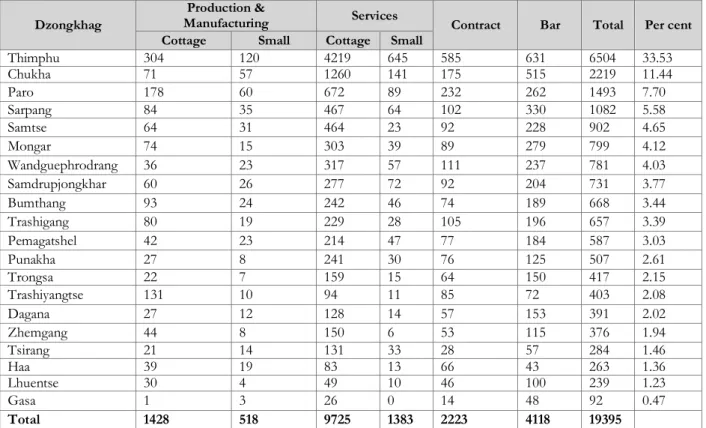
Table 2.2: Distribution of micro and small enterprises across districts (percentages) ... 18
Table 2-3: Number of years in operation of women-owned micro, small, medium and large enterprises (percentage and std. error, bracketed) ... 20
Table 2-4: Performance measure comparison between women-owned MSEs and MLEs (percentage and std. error, bracketed) ... 20
Table 2.5: Difference in innovation between women-owned MSEs & MLEs ... 21
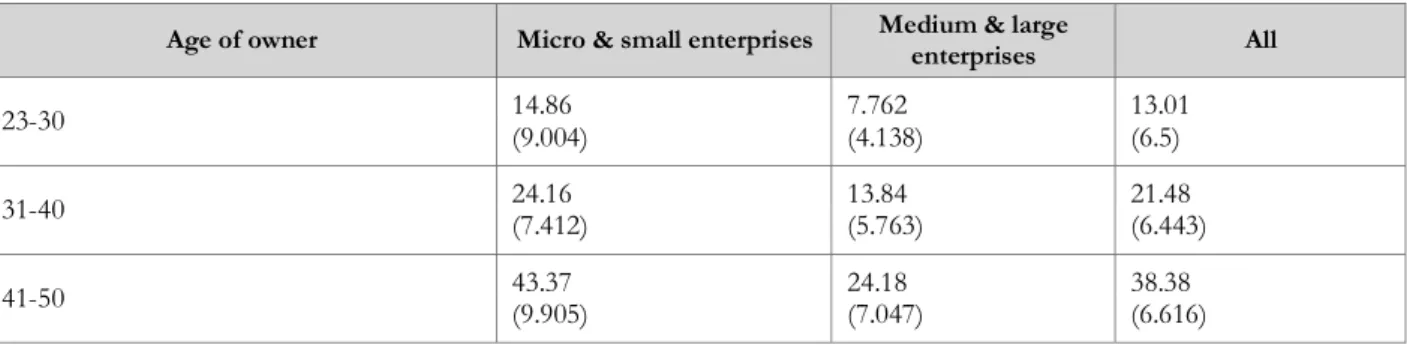
Table 2.6: Age dynamics of women enterprise owners (percentage and std. error bracketed) ... 21
Table 2-7: Education levels of women owners of MSEs and MLEs ... 22
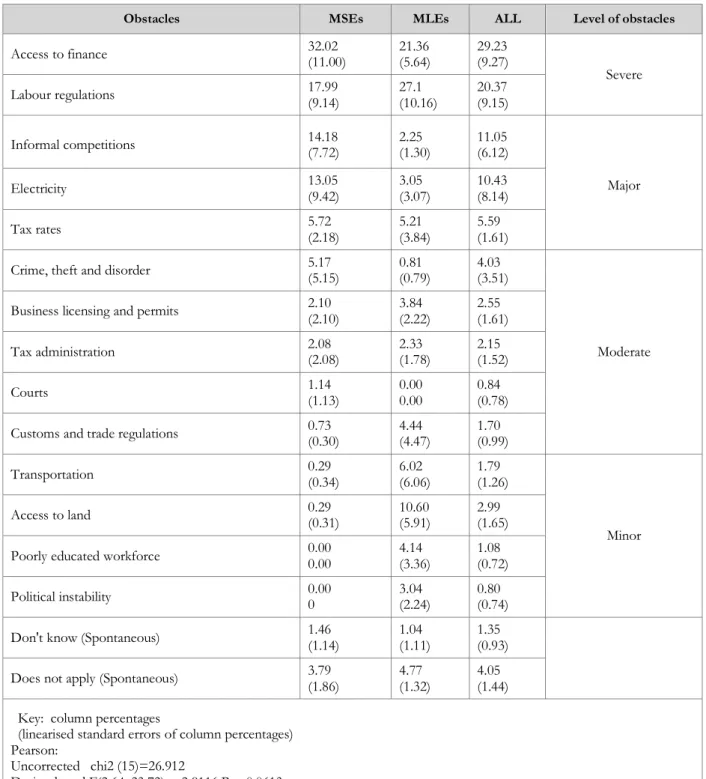
Table 2.8: Obstacles faced by women-owned MSEs and MLEs (percentages and standard errors (bracketed) ... 23
Table 2.9: Comparison of biggest obstacles between women-owned and men-owned (all enterprises) in percentage and standard errors (bracketed). ... 24
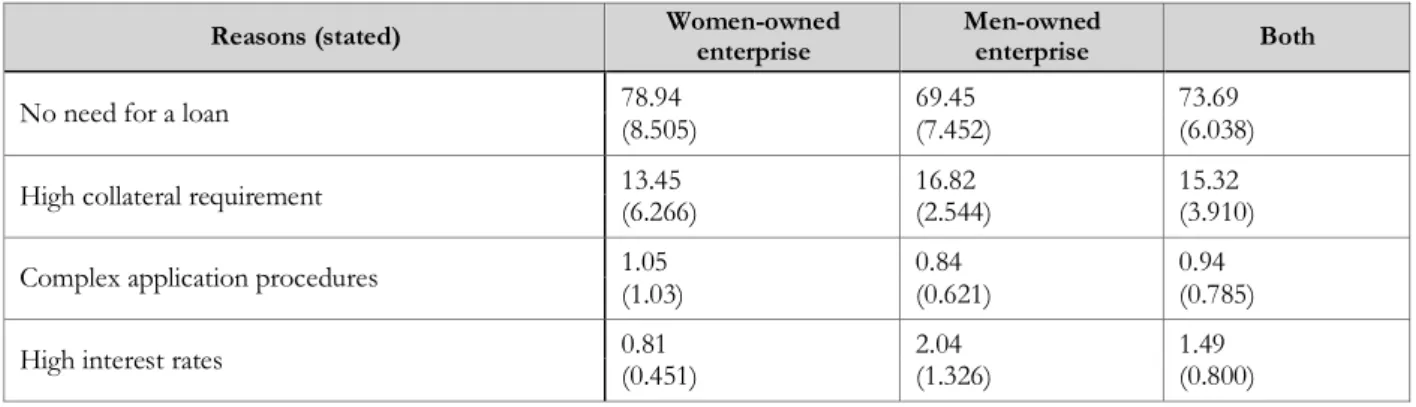
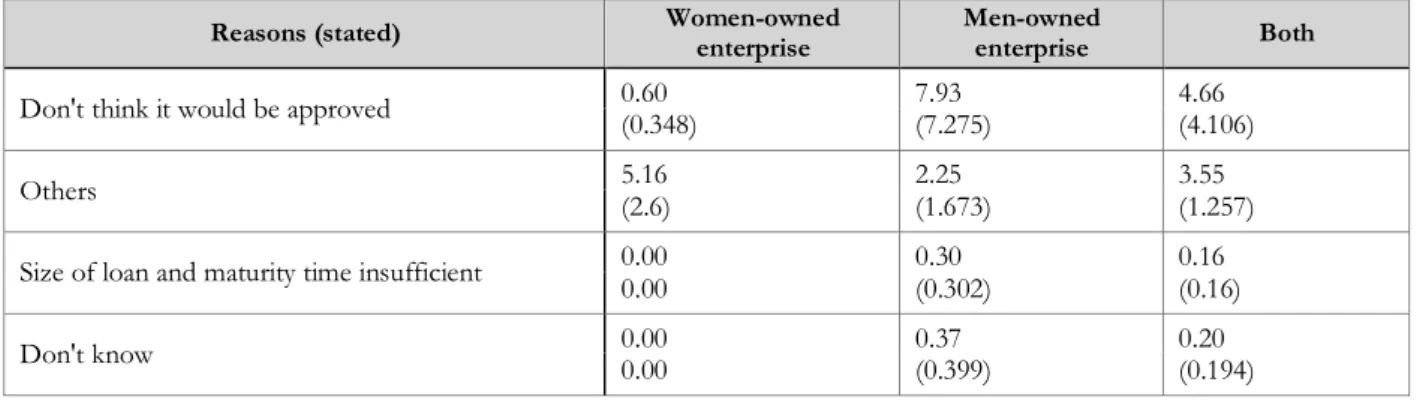
Table 2.10: Reasons for not availing loan by women-owned and men-owned enterprises (in percentages and standard errors (bracketed)... 25
Table 3-1: Demographic characteristics of women participants ... 33
Table 3-2: Types of business undertaken by women participants ... 34
Table 3.3: Nature of women-owned business ... 34
Table 3.4: Motivations for taking up micro and small enterprises ... 35
Table 3.5: Determinants of the ‘Factor Necessity’ ... 36
Table 3.6: Start-up obstacles, categories and percentage of coded segments ... 38
Table 3.7: Obstacles in two categories ... 42
Table 4.1: Matrix table for triangulation of the key results from the quantitative and qualitative analyses ... 62
List of Figures: Figure 2-1: Number of years in operation of women-owned micro, small, medium and large enterprises (percentages) ... 19
Figure 2.2: Comparison of obstacles between High Growth and Low Growth women-owned MSEs (percentage) ... 24
Figure 3.1: Summary of strategies used to overcome major business startup obstacles... 40
Figure 3.2: Qualitative study model for investigation major business operational obstacles ... 41
Figure 3.4: Obstacles of accessing good business space... 46
Figure 3.5: Business aspirations and future business plans ... 53
Figure 3.6: Expectations from the Government, NGOs and others ... 56
ii Summary
This report presents the analysis of multidimensional obstacles impeding the growth and innovation of women-owned Micro and Small Enterprises (MSEs) in Bhutan. Entrepreneurship in Bhutan was traditionally a men’s dominion. Bhutanese men travelled to Tibet and India for barter trade. The time has now changed; many women are joining the world of entrepreneurship and business. The Royal Government of Bhutan (RGoB) has long recognised the importance of women entrepreneurship, especially at micro and small levels for the nation’s socio-economic development. In fact, women’s economic participation holds a huge potential to address a horde of national development issues such as poverty, unemployment, inequitable distribution of wealth, imbalanced regional development, and challenges of gender mainstreaming. Nevertheless, women taking up economic activities are not easy ventures; they face a host of obstacles during business start-up, operation, and in trying to grow and innovate.
The study draws attention to the country’s private sector, which is supposed to spearhead the nation’s growth and development but continue to remain at the nascent stage. As the MSEs constitute more than 96% of all the industries within the private sector, rather a modest performance of the private sector could be largely attributed to underdeveloped MSEs sector. Despite its huge social and economic potentials, the contribution of women-owned MSEs sector to the growth of the private sector remains marginal. Its contribution to GDP is quite nominal (just about 4%). The growth in women’s micro and small enterprises sector has ensued largely in the form of gain in number but not in terms of business innovation and upward progression in the entrepreneurial ladder. This implies that numerous obstacles continue to plague women micro and small entrepreneurs and the enterprises they own and operate. What are these obstacles? How could they overcome these obstacles? This study has attempted to answer these critical questions. The study was premised on the perspective that unless these obstacles are recognised, critically examined, and corresponding policy measures are taken, the country’s efforts to promote the growth and development of women-owned MSEs would always yield mixed results.
Methods consisted the quantitative analysis of secondary data (survey and administrative data) and qualitative data (in-depth interviews of 81 women entrepreneurs) and triangulation of the results from each analysis to obtain more valid findings. The recommendations were based on the triangulation results. The quantitative module included a descriptive analysis of data from World Bank’s Enterprise Survey of Bhutan-2015. The focus of the quantitative analysis was on identifying various structural obstacles originating from the environment within which women-owned micro and small enterprises are operating. Thematic content analysis of the qualitative data (using MAXQDA software) was framed within interpretive- phenomenological framework. It emphasised on determining individual/agency level obstacles. Qualitative data was collected through in-depth interviews with eighty-one women micro and small entrepreneurs. Interviews focused on six major themes: motivations to start businesses, startup challenges, overcoming startup obstacles, operational obstacles in the growth trajectory, aspirations and future business plans, and the support expectations.
The quantitative analysis has listed sixteen environment-level obstacles, among which ‘severe obstacles’ were access to finance and labour regulations. ‘Major obstacles’ were competitions from the informal sector, electricity, tax rates, and crime, theft and disorder. ‘Moderate obstacles’ were business licensing and permits, tax administration, courts, and customs and trade regulations. ‘Minor obstacles’ were transportation, access to land, poorly educated workforce and political instability. The qualitative analysis has identified thirty obstacles among which the severe ones were non-availability of finance, lack of proper business premises, inadequate business skills, and growing competitions among similar businesses. Major obstacles were lack of formal education, lack of training opportunities, and seasonality of the business. Moderate obstacles were: work-family conflict, shortage of raw materials and equipment, government’s regulations, low customer base, transportation issues, and rising price of input materials and services. Among thirty obstacles, the three most important individual-level obstacles were lack of business skills, lack of formal education and work-family conflict. Through triangulation of the results from the quantitative and qualitative analysis, the study concluded that the obstacles needing immediate attention are poor access to finance; labour shortage; inadequate business skills (managerial, financial and technical); competitions among similar enterprises, lack of proper business premises (location, rent and space), lack of formal education, lack of training opportunities, and seasonality of businesses.
In addition, the study has found that main motivations for women to participate in economic activities are not only to earn a livelihood, but also to enhance their social and economic status. Most sampled women entrepreneurs have reported that they were motivated to start a business to meet basic economic necessity: employment, family sustenance, and supporting children’s education. Being single mothers have also motivated many of them to undertake economic activities as means of livelihood. Women entrepreneurs were mostly ‘security seekers’; some were ‘freedom seekers’ and a few ‘satisfaction seekers’.
Lack of access to finance emerged as the most significant obstacle, but at the same time, the demand for bank credit was much lower among women-owned MSEs. The situation of micro-finance mechanism in the country coupled with individual barriers seems to make the access to finance difficult. Loan conditions offered by banks are not favourable for women micro and small entrepreneurs while women's low risk-aversion deter them from obtaining bank loans.
There is a growing competition among women-owned MSEs as they compete to deliver similar products and services rather than developing new ones through innovation. The number of similar businesses has grown to such a level that it even threatens the business survival of the least fit ones.
A substantial number of women entrepreneurs did not have formal education. Being uneducated or lowly educated, most women micro and small entrepreneurs showed an obvious lack of business ideas for innovation, which is critical to the success of the business. Women entrepreneurs’ lack of formal education (or low education) and ensuing lack of business skills have left them with no other options but to keep their businesses at a subsistence level. Most of them want to remain as ‘subsistence entrepreneurs’ and a very few want to be ‘transformational entrepreneurs’. The analysis also showed that most women lack strategic and long-term business vision. Furthermore, going by the views of women entrepreneurs (sampled), most of them were provided with little or no policy and programme support in terms training, upscaling their business skills, and marketing their products and services. They desire to attend business training, but are unaware of those training and even if they know, they are not able grasp the opportunity. This implies that the business training organised by various government agencies and NGOs have not benefited most women in the MSEs sector, particularly those in the informal sector (without trade registration).
The majority of women entrepreneurs expect the government, NGOs and other players to support them overcome their obstacles like lack of access to finance, unavailability of good business premises, lack of business skill, challenges imposed by certain regulations, and in terms of marketing their products. Based on the findings obtained by triangulating the results of two approaches (quantitative and qualitative) and support expectations of women participants, the study has made the following recommendations:
i. Strengthen and expand micro-financing schemes that best suit the need of women entrepreneurs;
ii. Organise regular financial literacy and business programmes aiming at women entrepreneurs with no formal education or low level of education. It is critical that such programmes aim not only to make women entrepreneurs aware of different micro-schemes but also to develop their risk-taking ability. The training should be tailor-made to benefit women entrepreneurs with different socio-economic characteristics;
iii. The education system should produce a curriculum suited to prepare young graduates with entrepreneurial skills. The inclusion of supplementary subjects that would adequately prepare students for self-employment in micro, small and medium enterprise sector is one option. The Non-Formal Education's (NFE) curriculum could underscore business and life skill modules; iv. Set up more marketplaces in the suitable locations in the context of growing number of women
micro and small entrepreneurs in the country. This will resolve most of the minor obstacles like water scarcity, lack of toilet facilities, storage problems, failure to comply with municipality’s regulations, and so on;
iv
v. Marketing support for women-owned MSEs in the manufacturing sector (like innovative food processing and textile units) needs to be given a priority;
vi. There is the need for bottom-up planning and designing various business support schemes. It is important that the government agencies, NGOs, banks, and others need to involve women entrepreneurs at each stage of designing, implementation, monitoring and evaluation of the various support schemes;
vii. Promote women’s access to business associations, networks, and vital business information through support to formation of women’s business associations/groups and advocacy programmes including the use of media;
viii. Review and amend certain regulations that are out-dated and hinder the growth and innovation of the MSEs;
ix. Put in place the system that can maintain women’s business statistics vital not only for research purpose but for policy and programme implementation, monitoring and evaluation;
x. There is no dearth of policies, strategies and regulations pertaining to women’s entrepreneurship, what is lacking is proper implementation. There is the need for a collaborative approach between public, NGOs and private agencies to address the obstacles confronting women-owned MSEs sector.
The report acknowledges that while this study represents a modest step towards making those obstacles visible to policy makers, development workers, and other stakeholders, it has some limitations. Firstly, the quantitative analysis used firm-level data from the World Bank’s Enterprise data (2015), which is little out-dated; and secondly, the qualitative data has smaller representations from the eastern and central regions, and moreover, there were no women representations from IT sector, tourism, consultancy, film industry, etc., which are emerging as the female business domains.
CHAPTERI
INTRODUCTION:BACKGROUND, DEFINITIONS, LITERATURE REVIEW, AND METHODS Introduction
The present study identified and critically examined multidimensional obstacles facing women-owned micro and small enterprises in Bhutan. The government has long recognised the critical role of Cottage (micro) and Small Enterprises (MSEs) for sustainable economic growth, balanced regional development, employment generation, and pro-poor growth that integrate development with equity and inclusion, ecological sensitivity, and cultural richness with development. However, despite being considered one of the five jewels (priority growth area) of the economy and accounting for more than 96 % of all enterprises in the country, the role of the MSEs have been marginal, contributing relatively a small share to GDP (EDP, 2016). The total contribution of micro, small and medium enterprises to GDP in 2014 was 4.4 % (Business Bhutan, 2014). The sector accounted for 11.57% of the total employment in 2016 (66,000 out of 570,231 working age population). Low shares of the MSE sector to GDP and employment are manifestations of the sector’s underdevelopment. Numerous obstacles (structural, social/personal and technical factors) could be impeding the MSE sector (ADB, 2011) in terms of business start-up, expansion, adaptation, innovation, and achieving higher entrepreneurial outcomes.
Druk Phuentshom Tshogpa (Opposition Party) has off late made it explicit that the present government is not doing much to support business community notwithstanding its campaign promise of a major reform in the private sector. The Opposition Party has claimed that small business houses are struggling to survive while nothing substantial is being done to promote their best interests. A very high prevalence of obstacles among women-owned enterprises has impeded their growth and innovation (MB, Subbha, Kuensel, 13 January 2018: 5). There is an immense need for a serious effort to investigate the major business obstacles that negatively affect women-owned and operated micro and small enterprises. These obstacles must be brought to the notice of the concerned authorities and stakeholders and persuade them to take appropriate measures.
Using mixed method, this study aimed to provide both qualitative and quantitative evidence of the obstacles that hamper the start-up, innovativeness, and growth of women-owned micro and small enterprises. It sought to address four important questions: (1) what are the key motivations for Bhutanese women to take up entrepreneurial activities? (2) What are the key challenges women-owned micro and small enterprises face in terms of business start-up, operation, growth, and innovation? (3) How do women entrepreneurs overcome business startup problems? (3) Why do these multiple obstacles prevail and perpetuate? (4) What could be done to reduce the negative effects of these obstacles both in terms of policy and practice? These are the critical questions, both from the policy and programme implementation perspectives.
The report is divided into four chapters. Chapter I begin with the study’s background: a review of the current research area, information surrounding the issues, and the previous studies. The definitions of micro and small enterprises are presented. The chapter further discusses legal, policy and institutional arrangements for the development of micro, small and medium enterprises in the country. It then covers the study’s objectives, research design, scope and limitations, and research ethics.
Chapter II explores the obstacles facing women-owned micro and small enterprises using the quantitative method. The chapter covers the descriptive analysis of the World Bank’s Enterprise Survey of Bhutan (2ESB-015). This firm-level analysis focuses on identifying and examining the environment-level obstacles that restrain the growth and innovativeness of women-owned micro and small enterprises. These obstacles correspond to business infrastructure, finance and market, and legal and regulatory environment.
Chapter III is the qualitative module of the study. The qualitative analysis investigated the individual-level as well as the environment-level business obstacles from the perspective of women micro and small entrepreneurs. The analysis is based on data collected through in-depth interviews of eighty-one women entrepreneurs mainly from Thimphu City and some from other parts of the country. The thematic content analysis was done using MAXQDA (programme for qualitative data analysis) and presented in the
Chapter I: Introduction
2
interpretive-phenomenological framework. The significance of this approach lies in the fact that it was based on the true voices of women entrepreneurs whose narratives contained rich information on their socio-economic characteristics, business startup obstacles, current operational obstacles, future business aspirations and plans, and their expectations of support from the government, NGOs and others.
Chapter IV draws the insights from both quantitative and qualitative analyses. The key results from both the approaches were triangulated to complement, supplement and even contradict each other. The main findings are presented based on which the recommendations are made. The triangulation was done at the results-level rather than at data or methodological levels.
Background
In traditional Bhutanese society, operating a business has been the domain of men. In the past, aspiring women entrepreneurs faced such social limitation in the past, but now the society has begun to accept women’s participation in the economic activities. The general mindset has changed so much so that women who were once considered only suited for family responsibility and home-making are now looked upon as capable of venturing on independent businesses.
From the macroeconomic perspective, the MSE sector has a huge potential for the nation’s economic and social growth and development. The collective impact of the MSEs may become more significant in comparison to large corporations, especially in the area of employment creation, poverty alleviation, and gender mainstreaming. The micro-enterprises, largely belonging to the unorganised sector, are the source of employment in Bhutan only next to the agriculture sector (ROoB, CMIS Policy, 2010). In view of the MSE sector’s huge benefit to the country, it is very important to first identify and recognise the key obstacles facing this sector and second, to work towards promoting the sector. The salient attribute of Gross National Happiness (GNH) development paradigm is to pursue holistic development approach that encompasses growth with equity and inclusion. To that extent, the development of the MSE sector and promoting women’s economic participation through this sector could provide a huge leeway for the pro-poor growth, poverty reduction, and fulfillment of GNH goals (RGOB, CMIS Action Plan, 2012: 12). In 2017, about 90% of all Bhutanese businesses were registered micro and small-scale enterprises (SYB 2017, DSCI). The number of micro and small entrepreneurs rose at a prodigious rate from 14,722 in 2012 to 20,093 in 2017. Micro enterprises alone made up 69.69% of the total registered enterprises, 20.05% were small enterprises, 7.84% medium enterprises, and 2.41% large enterprises (SYB, 2017, DSCI). At present, micro enterprises far outnumber small and medium enterprises in the formal economy. The actual number of informal micro-enterprises can’t be accounted for at this stage, but the number can be a whopping great, as micro-enterprises are spread across the country. This huge variation in terms of the numbers of micro, small and medium enterprises is a clear indication that transitions from micro to small and then to medium-size enterprises have remained nominal. Besides poor transformation, micro and small enterprises, though greater in number, dominates the service sector. Combined, they make up about 66% of the service sector. Just 12% [of them] are represented in the production and manufacturing categories showing evidence of lack of innovation and diversity. Regardless of the numeral strength, the MSE sector remains weak and has yet to generate more economic and employment opportunities (Dorji, Tshering, Kuensel, July 14, 2017). Ever since the government began to focus micro and small entrepreneurship in 1991 with the formation of the Entrepreneurship Promotion Centre (EPC), an increasing number of Bhutanese women have started to undertake micro and small entrepreneurship. This has assuaged the negative attitude and belief about restricting women to their traditional reproductive and family roles and enabled them to break out from their confinement within the limit of their homes. Many women have started their own enterprises–some in response to perceived opportunity, others out of necessity. However, despite a significant rise in the number of Bhutanese women taking entrepreneurship, they still tend to lag behind men. In 2016, the Department of Cottage and Small Industries (DCSI) has reported that 63% of the registered micro, small and medium enterprises were owned and managed by men, 35.53% by women and 1.50% by others (non-nationals). Having achieved 35.53% of women’s participation in the formal business sector was a considerable accomplishment, but the fact that a huge number of women operate their enterprises at the micro level and in the informal economy remains a major concern. A large representation of women in the
Chapter I: Introduction
micro-level and informal entrepreneurial activities implies that due to complex and multiple obstacles, they are not able to innovate, grow, and transform to the formal economic sector and higher-level enterprises. The agriculture and home-based income-generation continue to dominate the economic activities of Bhutanese women (ADB, 2011:2). Women usually undertake gendered enterprises like farm-products shops, small groceries, restaurants, bars, vegetable and food vending, tailoring, home-based food processing, beauty salons, floriculture, local brewing, catering, ticketing, small-scale tourism services, furniture-making, decorations, bakery, hand woven textile, handicraft, petty contracts, small consultancy firms, and so on. Most of these enterprises have low investment capacity and returns, and the entry is relatively easy albeit growing competitions. Bhutanese women entrepreneurs have not been able to venture into traditionally male-dominated areas. The fact that about 96% of all enterprises in the country are micro and small enterprises (DCSI, 2016) suggest their slow transformation and progression towards value-added medium and large enterprise. Bhutanese women entrepreneurs typically tend to operate ‘subsistence enterprises’ rather than trying to innovate and make their enterprises grow and transform. Their desire to innovate, transform, and expand their enterprises, seems to be hindered by a multi-dimensional obstacle like lack of finance, business skills, space, and other structural and individual factors (Kuensel, November 17, 2017). The World Bank’s agribusiness study (2016) has concluded that agribusiness firms in Bhutan (largely owned by women) have progressed relatively little in terms of logistical innovation, Research, and Development (R&D), management and marketing compared to other business categories. Furthermore, the agribusinesses are not well networked, especially with external markets. Most Bhutanese farmers and traders (both men and women) trade with Indian and Bangladeshi traders operating inside Bhutan. This has limited their exposure to the valuable networking crucial for innovation in product types, quality, marketing, and distribution (The World Bank Group, 2016, pp.IX).
Bhutan Association of Women Entrepreneurs (BAOWE) recognised that women are key to the economic well-being and development of the country. But, in reality, 70% of the unemployed population are women (BAOWE website) showing much lesser role of women in the socio-economic development. The view that the MSE sector offers a good prospect, especially for women who are left without wage employment in the formal sector holds a great deal of truth. Micro, small and medium enterprises have as of 2016 employed around 96,000 people most of whom were women (EDP-2016). The main and perpetual problem is that women dominate in the economic sectors that do not offer much scope for innovation (Dorji, Rabsel and Lyon, Fergus, 2016). In fact, there are not many women entrepreneurs who are innovative and niche players. That means a large number of women operates similar enterprises thereby up-scaling unhealthy competition that restrains entrepreneurial growth and innovation.
The Enterprise Survey of Bhutan (World Bank, 2015) reported that among 15 areas of business environment, poor access to finance (24%) remains a severe constraint; other major challenges are labour regulations/labour shortage (23%), tax rates (13%), informal competitors (9.5%), and poor transportation (8.6%). The current credit arrangement favours loans for capital investments and leasing of agribusiness machinery and equipment to large business sector and cooperatives while micro and small entrepreneurs are neglected (The World Bank Group, 2017, pp: IX). The financial capital is a critical factor for business start-up, expansion, adaptation, and achieving higher business outcomes. Most MSEs are home-based, low-volume and low-returns businesses, and have lesser access to credit from banks. On one hand, the country’s financial institutions are reluctant to provide loans to this sector without sufficient collaterals due to a higher perception of risks. In effect, the commercial banks have sanctioned less than one % of the total loan to agro-based and other micro and small enterprises (Dorji, Tshering, Kuensel, May 25, 2017). On the other hand, due to women’s low averse to risks, there is a low demand for credits. Both the issues explain why women-owned micro and small enterprises failed to grow, innovate, transform, and expand.
There is now heightened global awareness about the role women can play in economic development. There is a business revolution across the nations. In Bhutan as well, entrepreneurial interest among women is growing fast though relatively a fewer Bhutanese women own and operate medium and large enterprises. This suggests that there is so much to do to (1) broaden the income generation opportunities for women; (2) close the gap between men and women in terms of their economic participation and achievement; (3) promote formal economic entrepreneurship among women; and (4) facilitate their advancement from
Chapter I: Introduction
4
micro-enterprises to small and then towards medium and large enterprises at par with men. The Global Gender Gap Report (2017) has ranked Bhutan at the 103rd position out of 144 countries in terms of Economic Participation and Opportunity (score 0.622). This means there is a gender disparity in terms of women’s opportunities and participation in the economic activities.
The International Convention on the Elimination of All Forms of Discrimination Against Women (CEDAW) requires the governments to promote the role of women in development programmes and mandates the national governments to develop strategies for eliminating all forms of discriminatory practices against women. Women’s participation in the MSE sector can serve as one avenue for women to serve as the social and economic agents in the societies.
The World Bank’s enterprise survey report (2015) and its agribusiness study (2016) have identified various challenges that Bhutanese entrepreneurs in general encounter, but these studies are not specific to women. Moreover, they do not delve into a wide range of factors that encompass social, political, cultural, economic, structural and individual domains. Other than a few studies conducted by the international development partners, research specific to women entrepreneurship is almost non-existent in the country. This is an indication that less emphasis is given to women-specific research and scholarship. It is only out of necessity as well as the need for sense of achievement, self-fulfillment, and financial autonomy among Bhutanese women that a growing number of them undertake micro and small enterprises and continue to operate and survive their businesses otherwise the country’s efforts promote the growth and innovation among them have always brought about mixed results (Opposition Party). Achieving sustainable, equitable and inclusive economy would require proper understanding of the multiple challenges that impede the growth and innovativeness of women-owned micro and small enterprises. There is a huge knowledge gap in this area. Against these backdrops, the present study aimed at investigating the business obstacles among women-owned micro and small enterprises hoping that this might be useful for the government, NGOs, and other stakeholders to take the most appropriate counterbalancing measures. The study was considered significant because, firstly, it marked one of the pioneering steps towards understanding the challenges and other aspects of women entrepreneurship. Secondly, it is expected to provide evidence that is useful for the policy-makers, NGOs, International Development Partners and other players for addressing women-specific entrepreneurial challenges. Thirdly, the Sustainable Development Goals (SDGs) have potential to make a real difference of gender equality and women’s economic empowerment. Bhutan is in the early stage of gearing its progress towards women-related SDS goals for which studies such as the present one is necessary to understand the real-life situation and problems of women-owned micro and small enterprises. Importantly, the qualitative part of this study was based on the actual voices of women entrepreneurs who best know what challenges they face during business start-up, in trying to grow and innovate, and in moving up the entrepreneurial scale. The study can in its own way serve as the initial requirement of both theory and practice and serve as the groundwork for future research.
Official definitions of Micro and Small Enterprises (MSEs)
According to Shane and Venkataraman (2000), “entrepreneurship is an activity that involves the discovery, evaluation, and exploitation of opportunities to introduce new goods and services, ways of organising, markets, processes, and raw materials through organising efforts that previously had not existed.”
Definitions of micro, small, medium and large enterprises vary across countries. In Bhutan, there were several definitions and interpretation of the MSEs. Before 2012, the Ministry of Economic Affairs used two definitions based on investment and turnover (MoEA 2011:83). This was leading to confusion, inconsistencies, and hampering policy making, implementation, and evaluation of policy and programmes. The Ministry of Economic Affairs (MoEA) has come up with new definitions based on an enterprise’s size of employment and investment. In case of conflict, investment is given precedence over employment. Micro or cottage enterprise is defined as an enterprise that employs 1-4 person or has an investment of less than Nu. one million. Small enterprise is the one that employs 5-19 persons or with the investment of Nu. 1-10 million, the medium enterprise is defined as an enterprise that employs 20-99 people or with an investment of Nu. 10-100 million and a large enterprise is the one that employs more than 100 employees or with the investment of more than 100 million (MoEA 2012: 5).
Chapter I: Introduction
Business growth and innovation are used quite often in the study. The enterprise growth is defined as an increase in the enterprise’s employment or sales. The enterprise innovation means the transformative business processes and practices that enable a business of any size to produce goods and services that are traded in the market more effectively, profitably and competitively. By innovation, it is not a Grand Schumpeterian (1934) Innovation. It means a much milder form of innovation in the entrepreneurial process such as producing unique products, starting a restaurant at a crowded location or doing business little differently.
Literature Review Conceptual framework
Owing to a limited literature on this theme in Bhutan, much of the reviews were done on regional and international literature. The focus of the literature review was more on reviewing what the international literature has identified as the most common business obstacles for women-owned micro and small enterprises, especially in developing countries.
On the conceptual framework, Shane (2003:2) contends that researchers and academia lack central, ubiquitous, and coherent conceptual framework for investigating entrepreneurship. There lack systematic efforts to muster the fragmentary pieces of knowledge about entrepreneurship in one area. Researchers have resorted to examining just one aspect of the entrepreneurial process that is either the characteristics and actions of individual entrepreneurs or the external forces that affects the entrepreneurship. An exclusive focus either on entrepreneurial individuals or external factors has proven largely unsuccessful (Gartner, 1990; Shane, 2003) because entrepreneurial activities take place not by itself but within a specific situation. Identifying and examining entrepreneurship obstacles purely on the basis of external factors (situation within which individual enterprise operate) has failed to provide a complete explanation of entrepreneurship. It is almost impossible to account for entrepreneurship by just examining either the individual entrepreneurs’ characteristics and actions (Carroll and Mosakowski, 1987) or external factors. Therefore, adopting either the environment-centric or the individual-centric approach toward entrepreneurship has remained entrepreneurship research’s Achilles heel. Two approaches can be merged to ameliorate this shortcoming and provide a more comprehensive framework for examining the entrepreneurship (Shane, 2003:p p 3).
Besides Shane’s proposition, Antony Giddens’s (1984) Structuration Theory was deemed relevant for the present study. This theory, just like that of Shane’s, take into account two aspects of the business obstacles: structure and agency and the duality between them. The ‘structure’ here may be referred to the environment within which women live and conduct their businesses which includes socio-cultural and religious environment, business infrastructure, the policies and regulation, and any other environment-level variables. Among the potential external obstacles, the most common ones found in the literature are the structural obstacles like access to: finance, business premise, transportation, electricity, telecommunication, raw materials and production technology, market and the legislative factors (regulations pertaining to the customs and trade, finance, and housing, and labour market). The agency-level obstacles according the structuration theory refers to those obstacles that originate from the individual characteristics of women (family, education, skills, personal goals and interests, and other individual characteristics) and their actions (decision-making, hard work, business skills, and motivations) which can influence in a varying degree their business decisions, style of operation, and the business outcomes (Antony Giddens, 1984).
Given the individual-environment nexus, the best approach to researching ‘entrepreneurship’ is to examine both the ‘structure' and ‘agency’ or ‘environment-individual obstacles’. Keeping in view both Shane’s conceptual framework and Gidden’s structuration theory, this study has adopted the mix of quantitative and qualitative approaches. The quantitative approach focused primarily on the environment-level obstacles and the qualitative approach emphasised on the individual women entrepreneurs and the associated business obstacles.
Chapter I: Introduction
6 Characteristics of women-owned micro and small enterprises
Robb and Coleman (2009), using data from the Kauffman Firm Survey explored by gender, the relationship of startup capital for new enterprise performance in terms of assets, revenues, income, employment, and business survival. They have concluded that women-owned enterprises have a lower level of financial capital and returns compared to that of men. Women, in general, tend to take up micro-businesses because they can be home-based, smaller in size, and low-risked, and require low investment. In a reality, a very few women gamble into bigger businesses in low and middle-income countries.
Most entrepreneurs ascribe smallness and modesty of women-owned enterprises to the shortage of financial capital augmented by a lack of access to credit. It is estimated that women-owned businesses have an annual financing gap of $290 billion to $360 billion in unmet financing needs (Group of Twenty Report, GPFI &IFC, 2013). Women have a lower formal bank account penetration than men in every region, predominantly in developing countries (Global Financial Inclusion Index WB, 2017). Women entrepreneurs start with less capital than men and are less likely to take on (additional) credit to expand their business (Niethammer, 2013).
Motivations for women to undertake entrepreneurship
Hisrich and Brush (1987) have revealed that women’s entrepreneurial motivations or reasons for starting a business are determined by ‘push’ and ‘pull’ factors. The push factors include those factors leading to frustration of not being productive at home or are being dissatisfied with their jobs. The pull factors are women’s desire for autonomy, financial independence, and the most important one the ‘necessity’. Women take up entrepreneurial activities to be their own boss, overcome personal and family challenges, and to earn extra income (Scott, 1986). Schwartz (1979) has studied twenty women entrepreneurs and concluded that women start business mainly to become independent, derive satisfaction, and meet the basic socio-economic necessities.
Stevenson & Jarillo (1990) have concluded that the entrepreneurial motivations are rooted in the individual’s desire to create and exploit opportunity without much regard for the resources he or she need to facilitate the opportunity exploitation. Three important motivation factors that have received the most attention are the presence of opportunity, prior knowledge of business and market, and compelling situation to exploit the opportunities (Baron, 2006). Some researchers have categorised entrepreneurs as ‘opportunity-based’ and ‘necessity-based’, which corresponds to Hessels, Van Gelderen & Thurik’s (2008) and Hisrich & Brush’s (1985) ‘push and pull motivations’. The opportunity-driven entrepreneurs often use their prior business experience and skills to exploit the opportunity, which is brought about by the change in the socio-economic situation in a country (Todd & Javalgi, 2007). These individuals usually leave their jobs or other activities to pursue business (Tominc & Rebernik, 2004) to achieve a higher income, financial autonomy, and social and economic freedom and independence. They are better motivated and skilled in running their businesses (Acs, 2006). Kirkwood (2009) has concluded that the most important motivator for entrepreneurs is the desire to attain independence, which Shane et al. (2003) has defined as “being responsible for one’s own life and decisions instead of being a follower or working for others.” Hisrich (1986) tried to compare the women entrepreneurs in developed and developing countries and found that the women’s quest for economic independence is a significant drive for both, irrespective of the economic situation and poverty rates.
The necessity-driven entrepreneurs, in contrast, take up low-scale enterprises in absence of a job, having to maintain family income, or educate their children. They are prevalent among poor women (Banerjee & Duflo, 2008) who use small businesses as their economic survival strategy. The necessity-driven entrepreneurs usually have no or low formal education, less managerial, financial and other business skills, and their business tends to remain rather small. Other researchers have found that women are more pushed than men to undertake businesses due to family and work-related factors, as women are usually more responsible for the household management (Buttner 1993). They need flexibility in their working time which self-employment provides (Kuppusamy et al. 2010) and becomes an encouraging choice (Levent et al. 2003; Klaper and Parker 2011).
Chapter I: Introduction
Start-up obstacles
Numerous barriers choke business startup. The biggest obstacles are lack of initial funding/finance and family support (Winn, 2005), and poor access to other capitals like business space, infrastructure, equipment, and raw materials (Gundry et al., (2002). The major business startup obstacles according to Van Der Merwe (2003) are lack of financial resources, negative prevailing socio-cultural beliefs and attitudes, gender discrimination, lack of family support, personal difficulties, lack of basic life skills (confidence and communication skills), and lack of business skills. Chandralekha et al., (1995) has identified limited education and vocational training as major startup barriers for women entrepreneurs in developing countries. Most entrepreneurship studies have identified lack of collateral and good credit history (Brown, 1997) and family burden and commitment (Hamilton, 1993) as some major business startup obstacles. Lack of guidance and inadequate business skills are other major stumbling blocks for early entrepreneurs (Mambula & Sawyer 2004).
Business obstacles: operation, growth, and innovation
Multiple obstacles: Studies in other developing countries have found that many specific constraints such
as limited access to key resources, legal and regulatory frameworks, social-cultural environment, and limited mobility hinder women’s entrepreneurial development (environment or situational factors). Many women than men lack the required level of resources, education, and training, including business and technical skills, and entrepreneurship training (individual factors) (Stevenson & St-Onge 2005b).
Shane (2004) has identified several factors that constrain entrepreneurial activities; especially those related to women such as personal income, educational attainment, age, temperament, household burden, capital access, risk aversion, social connections, competitions, and access to a market. Kobeissi (2010) has used five gender-specific variables to determine the extent of female entrepreneurial activities in 44 developed and developing countries. Among its five variables, Kobeissi has found female education, the extent of female economic activities, female earnings ratio, and fertility rate (number of children) as major hindrances for women entrepreneurial activities.
The International Finance Corporation (IFC) (2011) has identified various obstacles facing women entrepreneurs. These obstacles are lack of innovative capacity, lack of managerial training and experience, inadequate education and skills, technological change, poor infrastructure, scanty market information, and lack of access to credit. Shapero & Sokol (1982) has identified low social mobility and social integration of women. Several other studies have shown that women are generally low risk-takers and they do not usually risk high-investment ventures (Goffee & Scase, 1985) as men.
Kumbhar Vijay (2013) in his research article titled “Some critical issues of women entrepreneurship in rural India” has inferred that absence of definite agenda of life, absence of family-business balance, poor degree of financial freedom for women, absence of direct ownership of the property, the paradox of entrepreneurial skill and finance, lack of awareness about capacities, low ability to bear risk, problems of work with male workers, negligence by financial institutions, lack of self-confidence, lack of professional education, mobility constraints, and lack of interaction with successful entrepreneurs are major problems of women entrepreneurs in India. Rai U. K. and Srivastava M. (2011) in their study titled “Aspirations and motives of women entrepreneurs: An empirical study of Varanasi District” have ascertained getting raw material, financial problems, family support and social factors negatively constrain women’s business in Varanasi. Bushell’s (2008) study in Nepal demonstrates that entrepreneurial success among women is dependent on the combination of many factors under social, cultural, structural, and individual domains.
Levels of obstacles: Kiraka (2009) has categorised entrepreneurial obstacles into three levels– macro,
meso, and micro. At the macro-level, the obstacles include: (i) a bureaucratic legal and regulatory framework; (ii) poor physical infrastructures including power and water supply, telecommunication, sanitation facilities, and road and rail network; (iii) multiplicity of taxes (Aikaeli 2007) and (iv) corruption by government officials (Amakom 2006). At the meso level, the business obstacles include: (i) the inability to transform resources into goods and services; (ii) inadequate support in terms of business training and skill acquisition or up-gradation; (iii) unavailability of information on markets, suppliers and partners; (iv) limited
Chapter I: Introduction
8
access to finance owing to lack of collateral, high costs of administering loans, and absence of specially dynamic micro-credit schemes; (v) weak, fragmented, and uncoordinated institutions that support micro and small enterprises; (vi) poor access to markets; and (vii) limited access to support services. At the micro level, the business obstacles include: (i) unwillingness or inability on the part of women entrepreneurs to adopt new technology, partly owing to lack of relevant information and partly due to being erudite about new technology; (ii) low literacy levels among women entrepreneurs that not only affect how they manage their businesses but also limit their ability to access information and training opportunities; (iii) lack of motivated attitudes among women entrepreneurs to invest in the development of their own enterprises (Olomi 2006); (iv) weak business organisation due to a multiplicity of gender-based roles (vi) lack of managerial capacity in business; and (vii) lack of, or informal business plans and the inability to think strategically about the business (Mambula & Sawyer 2004; World Bank 2008) .
Limited access to finance as the major obstacle: The literature review shows the limited access to
business finance as the most severe business obstacle for women-owned micro and small enterprises. They are usually starved for finance irrespective of whether they have sound business and expansion plans or not. Wanjohi & Mugure (2008) have concluded that a lack of access to finance is almost universally identified as the key challenge for women-owned micro and small enterprises. Muhammad Yunus’s (1999) view was that there is no need to teach the poor new skills, but to give them access to credit, which would allow them to immediately put into practice the skills they own (Banker to the Poor, 1999). Bank lending schemes for micro and small entrepreneurs are smaller and often operate as social programmes rather than financial projects. Women entrepreneurs will remain marginalised as long as they hinge on informal financial markets (Berger, 1989).
McKee (1989:997) postulates that reluctance on the part of banks to lend money to women micro-entrepreneurs stems from the fact that they are considered high-risk borrowers. Lack of collateral in property combined with family obligations (women in business often find it difficult to disentangle the business from household roles) makes the banks perceive women as risky borrowers. Hemantkumar P. Bulsara et al. (2014) using the secondary data analysis has found that accessing credit is one of the major constraints faced by women entrepreneurs in Gujarat, India for reasons like lack of collateral, unwillingness to accept household assets as collateral, and negative stereotyping of female entrepreneurs by banks. The pervasive market failures restricting access to credit in developing countries limit the growth prospects of very small enterprises, especially those owned and managed by women (Banerjee and Duo, 2008; Banerjee and Newman, 1994).
In contrast, S. Karlan and Martin Valdivia (2008) showed that the primary barrier to female entrepreneurial success in India is not the limited credit supply, but limited demand from the women entrepreneurs. Kepler and Shane (2007: 9) used data from the Panel Study of Entrepreneurial Dynamics (PSED) and concluded that women are less risk-averse, especially when taking financial risk (Croson and Gneezy, 2009). Women entrepreneurs in developing countries usually have lower growth and expansion possibilities due to lack of financial capital (Fairlie and Robb, 2008). Treichel and Scott (2009) have concluded that women were less likely to apply for bank loans even when the chance of getting their loan rejected is less. Coleman (2002) has concluded that women are less likely to seek capital from outside or scale down their expectations for business, owing to barriers in getting external credit or loans.
Daymard, A (2015) shows that access to the formal credit has no positive effect on female entrepreneurship (with workers) across Indian states. Nonetheless, the researcher contends that this result can be attributed largely due to the existence of informal credit arrangements that are not reflected in the banks’ data. The study concludes that the largest source of credit for successful women entrepreneurs are informal arrangements such as family and friends (20%) compared to 8% provided by banks. McKee (1989) notes that women’s participation as micro-entrepreneurs may fail to grow and expand since much of their enterprises are home-based and fragile with low-investment and low-returns capacity. Unless there is a massive overhauling of policy and programmes to improve the financial resources for women, most of them would remain stuck in the same business level (ibid.).
Business-work conflict: While financing choice and the availability of financial capital are the key factors
Chapter I: Introduction
performance expectations due to business-family conflict. Gurley-Calvex et al. (2000) attribute women’s low business performance to their having to devote a substantial amount of time in childcare, household management, and in fulfilling social norms and responsibilities. Wheeler and Hunger (2013) note that women entrepreneurship doesn’t come easily even with the availability of financial resources; other requirements need to be fulfilled such as women’s ability to identify potential business opportunities, being action-oriented, having management and finance skills, and business knowledge, and women’s ability to conduct businesses.
Studies in developing countries identify several gender-specific challenges. Parasuraman and Simmers (2001) have concluded that traditional stereotyping of sex roles relegates women to be no better than being ‘home-disposed’. They further note that the first factor has to do with the level of education. On average, women entrepreneurs are less educated than their male counterparts and twice as likely as men to be illiterate. The major reasons for this difference are institutional in nature. Marriage institutions discourage investment in women’s education and the division of labour assigns a greater share of household responsibility to girls. The second factor has to do with the opportunity to accumulate savings. Because women have lower levels of education and are segregated into lower paying jobs, they have lower savings to start a business. Third, women spend less time in their businesses than men because they are expected to carry out their domestic responsibilities, including housework, food preparation, and childcare. This also explains why women are more likely to operate their business from their homes or at much smaller scale.
Lack of formal education and business skills: Budhwar and Bhatnagar (2005) identify education as the
most important determinant of women’s entrepreneurial success. Highly educated women are more likely to take risks and succeed in business ventures than women with low level of education. They have concluded that in the Indian context, education can reduce the pressure against women to be confined to homes and increase their chances of overcoming social stereotypes and boost confidence in taking business risks. Some studies show that a woman's fewer years of work experience and less formal education affects her entrepreneurial successes (Chaganti and Parasuraman, 1996; Robb, 2002). Espinal and Grasmuck (1997) maintain that women with higher education tend to perform well in entrepreneurship as equal as men with the same level of education. Van der Sluis et al. (2004) and Kolstad and Wiig (2013) have concluded that education and training improve management and business skills among women entrepreneurs. Education and training further give women entrepreneurs additional score to access credit from the banks (Parker and Van Praag, 2006).
Field et al. (2010a) randomly selected a sample of poor, self-employed Indian women and trained them in basic financial literacy and business skills. After training, they were encouraged to identify their concrete financial goals. The probability of woman taking credit increased after this training. However, the effect of training was found to vary among women belonging to different castes, with women in upper caste showing more positive responses to credit access compared to those belonging to lower caste. This suggests that to no one-size-fits-all policy and programme would work for promoting women’s entrepreneurship.
Business competitions, market, and innovation: Women-owned micro and small enterprises tend to be
large in number. With it comes an increased competition and rapidly changing customer demand. These require the entrepreneurs to have strong market orientation, as the market tends to become saturated due to lack of access to higher value markets and innovation (Shiu & Walker 2007). Kantor (2001) concludes that many women entrepreneurs are located in the low-value markets with a few entry barriers leading to market saturation and competition. Lack of innovation through new product development and poor access to higher value markets could undermine the success of women-owned enterprises. Research conducted by Hogarth-Scott et al., (1996) concluded that micro and small business owners do not deal with long-term marketing issues, but are inclined to market their products and services on ad hoc basis as a result of which the business tends to remain low-profiled.
Labour shortage (skilled and unskilled): Moktan (2007) found that the Bhutanese micro and small
enterprises are usually labour intensive because employing more workers is a huge challenge. Bhutanese women entrepreneurs often avoid employing skilled labour on account of their enterprises being small and higher cost of skilled labour. Hwang and Lockwood (2006) conclude that micro and small business owners face the challenge of hiring and retaining skilled employees owing to a lack of funds and difficulty in