Environment
著者
Leis Adrian
学位授与機関
Tohoku University
学位授与番号
11301甲第17117号
The Effects of Flipped Learning on Output
in the Japanese English as a Foreign Language Environment
(日本の英語教育環境における反転学習のアウトプットへの効果) by
Adrian Leis
A dissertation proposal submitted in partial satisfaction of the requirements for the degree of Doctor of Philosophy
in Educational Informatics in the
GRADUATE SCHOOL OF EDUCATIONAL INFORMATICS/EDUCATION DIVISION of
TOHOKU UNIVERSITY
Dr. Katsuro Kitamura - Chairperson Dr. Taira Nakajima
Dr. Masayuki Kumai January, 2016
© 2016 Adrian Leis All rights reserved
ABSTRACT
Many researchers of second language acquisition seem to agree that English as a foreign language students in Japan tend to be silent in the classroom. Various reasons for this lack of language production have been discussed, such as, low linguistic self-confidence, face-saving acts to avoid possible embarrassment, protection of self-worth, and few opportunities to use the language in an authentic way. With the Ministry of Education, Culture, Sports, Science, and Technology - Japan directing English teachers to conduct their classes with more focus on communication, it is necessary to discover approaches to teaching English in Japan that encourage output from students. The present dissertation assesses the impact the
implementation of flipped learning has on the language production of English language students in Japan. This dissertation has the goal of discovering whether a flipped learning approach is effective in creating salient improvements in students' (1) linguistic
self-confidence; (2) language production; and (3) linguistic proficiency. Multiple tests were conducted over three main studies with the findings from the research suggesting the flipped learning approach to indeed be a convincing way to improve the above three components. A fourth study was conducted related to the use of and authenticity of closed captions, what were discovered to be vital factors in the success of flipped classrooms. The author concludes
the implementation of a flipped learning approach to be highly effective for Japanese English classrooms. Theoretical contributions and pedagogical implications of the findings are also discussed throughout the dissertation.
DEDICATION
This dissertation is dedicated to my wife and children, who somehow always manage to put up with their grumpy husband and father.
ACKNOWLEDGEMENTS
First, I would like to express my appreciation to my advisor, Professor Katsuro Kitamura for his support throughout this research. I would also like to thank Dr. Taira Nakajima and Dr. Masayuki Kumai for their valuable comments, questions, and encouragement, which enabled me to view my research from different perspectives.
I am gracious to the participating students for their insights into the effects of flipped learning. Without your input, none of this would have been possible.
Many thanks also go to my colleagues and friends for their inspiration and help in various ways throughout this study: Simon Cooke, Ben Dyer, Nobuya Itagaki, Jeff Mehring, Sachiko Nakao, Alison Nemoto, Tetsuo Nishihara, Tetsushi Takemori, Akihiko Andrew Tohei, Ben Shearon, Wataru Suzuki, Kiyoshi Takahashi, Matthew Wilson, and John Wiltshier.
Much appreciation also goes to my parents, brothers, and sister for their support and encouragement. Your kind words always strengthened me at the various challenging times during this study and my life in general.
Finally, much love and appreciation go to my wife and children. Without you, this would all be meaningless.
TABLE OF CONTENTS
Abstract ... iii
Dedication ... v
Acknowledgements ... vi
Table of Contents ... vii
List of tables ... xii
List of figures ... xiv
Research Design ... xv
CHAPTER 1 - Introduction 1.1 Introduction ... 1
1.2 The Japanese EFL Environment ... 2
1.3 Introduction to Flipped Learning ... 5
1.4 Flipping a Class ... 8
1.5 Implications of Flipped Learning for Japanese EFL Students ... 11
1.6 Conclusion ... 16
CHAPTER 2 - The Effects of Flipped Classrooms on English Composition Writing in an EFL Environment
2.1 Introduction ... 18
2.2 Literature Review ... 20
2.3 Research Questions ... 26
2.4 The Study ... 27
2.4.1 Participants ... 27
2.4.2 Materials and procedure ... 28
2.5 Results and discussion ... 33
2.5.1 Production ... 33
2.5.1.1 Hours studied ... 33
2.5.1.2 Word counts ... 37
2.5.2 Proficiency ... 40
2.6 Conclusion ... 46
CHAPTER 3 - Dynamics of Effort in Flipped Classrooms in an EFL Environment 3.1 Introduction ... 51
3.2 Literature Review ... 51
3.2.1 Flipped classroom research in EFL ... 52
3.3 Research Questions ... 56
3.4 The Study ... 57
3.4.1 Participants ... 57
3.4.2.Materials and procedure ... 58
3.5 Results and discussion ... 60
3.5.1. Effort ... 60
3.5.2 Proficiency ... 70
3.6 Conclusion ... 72
3.7 Notes ... 74
CHAPTER 4 - Flipped Learning and EFL Proficiency: An empirical study 4. 1 Introduction ... 75 4.2 Literature Review ... 76 4.3 The Study ... 79 4.3.1 Participants ... 79 4.3.2 Materials ... 80 4.3.3 Procedure ... 81
4.4 Results and discussion ... 83
4.4.2 Linguistic Self-confidence ... 88
4.5 Conclusion ... 95
CHAPTER 5 - Intonation Phrases in the Use of Closed Captions for Deaf and Hard-of-Hearing Students in EFL Classes 5.1 Teaching deaf and hard-of-hearing students ... 98
5.2 Intonation phrases ... 102 5.3 Research questions ... 103 5.4 The Study ... 105 5.4.1 Study 1 ... 105 5.4.1.1 Participants ... 106 5.4.1.2 Procedure ... 106
5.4.1.3 Results and discussion ... 107
5.4.2 Study 2 ... 112
5.4.2.1 Participants ... 112
5.4.2.2 Procedure ... 113
5.4.2.3 Results and discussion ... 115
5.6 Notes ... 126
CHAPTER 6 - Conclusions 6.1 Introduction ... 128
6.2 Increasing Linguistic Self-Confidence ... 129
6.3 Increasing Language Production ... 131
6.4 Increasing Authentic Language ... 133
6.5 Weaknesses and Future Directions ... 134
6.6 Conclusion ... 138
REFERENCES ... 142
LIST OF TABLES
Table 1.1 Structure of Lesson and Extra-curricula Activities in Traditional and Flipped
Classrooms ... 6
Table 2.1 Demographics of students in the present study ... 28
Table 2.2 The procedure for the present study ... 30
Table 2.3 Teaching plans followed in this study ... 32
Table 2.4 A comparison of study times for the Flipped Group and Regular Group ... 34
Table 2.5 Number of words produced by students in compositions ... 38
Table 2.6 Comparisons of English composition proficiency in the present study ... 41
Table 2.7 Comparisons of English composition proficiency with ANCOVA adjustments.. 44
Table 3.1 Statistical Descriptions for the Number of Words in the Pre- and Posttest in this Study ... 62
Table 3.2 Average Number of Words in Students’ Compositions ... 64
Table 3.3 Average proficiency scores for written compositions in the present study ... 70
Table 4.1 Comparisons of Linguistic Proficiencies in the Pre and Posttest ... 84
Table 4.2 Descriptions of Upper and Lower Proficiency TOEIC Scores for Pre and Posttests ... 85
Table 4.3 Descriptions of Can-do Variables for Pre and Posttests ... 89 Table 5.1 Comparison of presentation style of passage ... 107 Table 5.2 List of comments related to the reasons behind participants’ choice of video ... 109 Table 5.3 A description of the participants in the present study ... 112
LIST OF FIGURES
Figure 1.1 An example of a one-week program for guiding students to watch the video
explanation in a flipped classroom ... 13
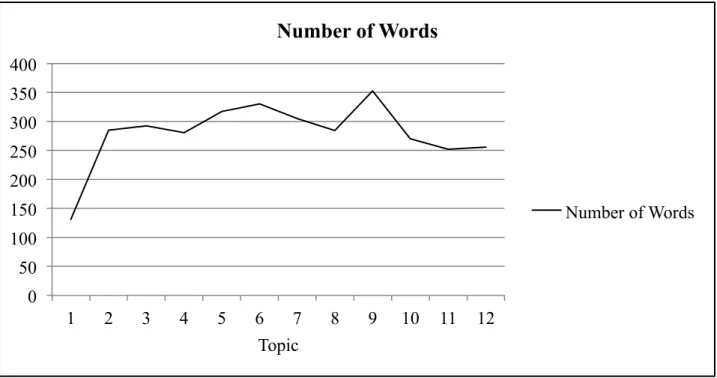
Figure 3.1. The number of words written by students in each composition displayed in a graph ... 66
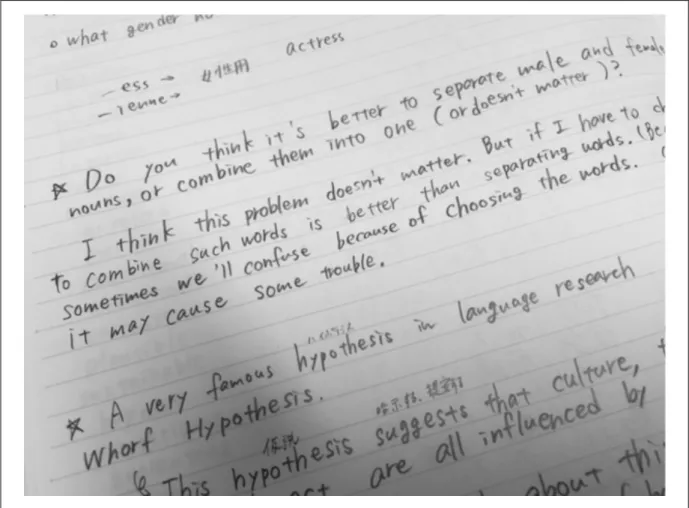
Figure 4.1. One student's notes taken during a video for a flipped classroom ... 93
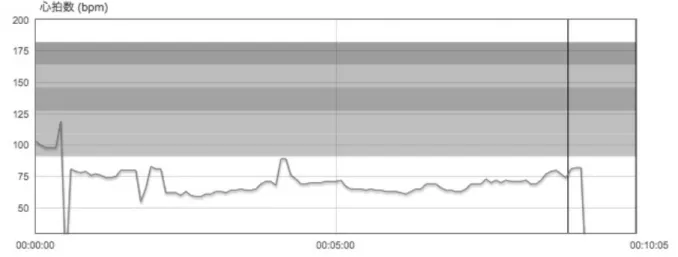
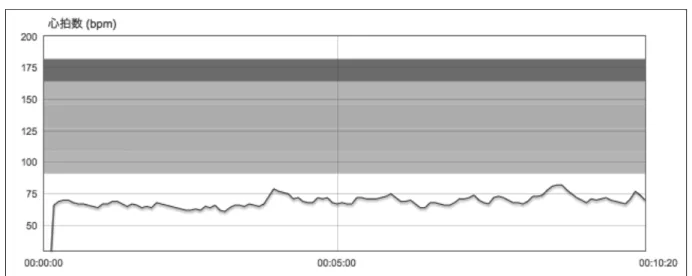
Figure 5.1. Changes in heart rate during the reading test with Participant 1 ... 116
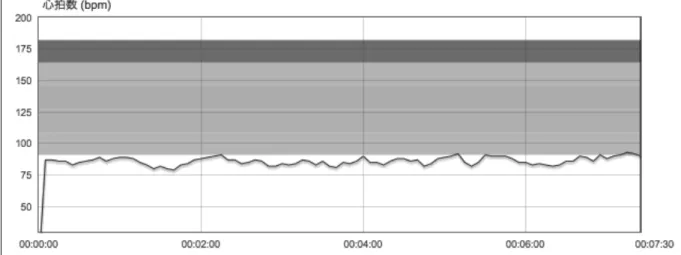
Figure 5.2. Changes in heart rate during the reading test with Participant 2 ... 119
RESEARCH DESIGN
Observations of Weaknesses within the Japanese
English as a Foreign Language Environment
Introduction (Chapter 1)
Many researchers remark on the limited amount of linguistic output from Japanese students of English. Three main reasons for this silence are suggested.
Lack of opportunities for communication in class Too much focus on
meta-linguistic aspects
Lack of authentic language in class
Study 1 (Chapter 2)
Investigation comparing the Flipped Learning Method and
a Traditional Method
Study 2 (Chapter 3)
Investigation of the dynamics of effort in a Flipped Learning
environment
Study 3 (Chapter 4)
Investigation of the effects of Flipped Learning on linguistic
proficiency
Study 4 (Chapter 5)
Investigation of methods of displaying closed captions in
videos for flipped learning
Conclusions (Chapter 6)
The Flipped Learning Method appears to be an effective approach to increasing output from Japanese learners.
Increased Language Production
Because explanations of textbook content were completed beforehand,
more time was spent with students using the language in class. This also
enabled personal coaching and immediate feedback from the teacher.
Increased Self-Confidence
Guided preparation through re-viewable videos with optional closed captions accessible anywhere increased the confidence with which
students approached classes.
Increased Authentic Language
Using closed captions in videos for flipped learning enabled a more
understandable all-English classroom. Timing the closed captions to appear in intonation phrases, also increased authenticity.
CHAPTER 1 - Introduction 1.1 Introduction
One of the oldest proverbs still commonly used in the English language is “You can lead a horse to water, but you can’t make it drink” (The Phrase Finder, 2015). This is especially true for teachers looking to increase the motivation of their students. I believe, however, a further clause can be added to this proverb for teachers: “You have to make the water look delicious.” Although it is often challenging for teachers, especially language teachers, to increase the motivation of their students to learn and produce language, there are many ways this can be achieved. In recent years, the area of Computer-Assisted Language Learning (CALL) has received much attention as a possibility of providing the recipes to make English as a foreign language (EFL) classes tastier for students. The field of CALL is broad, covering many approaches such as Mobile-Assisted Language Learning (MALL), digital textbooks, Massive Open Online Courses (MOOCs), and the use of applications for computer tablets in language learning. In the present paper, I discuss the use of flipped learning - an approach to teaching that has existed for several years but has recently become more prominent with the use of computer technology in a large variety of subjects - and the benefits it brings to the EFL environment in Japan.
1.2 The Japanese EFL Environment
The hesitation for many Japanese learners of English to produce language has been the center of discussions among teachers and researchers for several years. Some researchers have put this down to students’ lack of confidence (e.g., Anderson, 1986), whereas others (e.g., Donahue, 1998; Harumi, 2011) have explained silence in the Japanese EFL classroom as a face-saving act. In Harumi's study, British nationals viewed videos of typical Japanese EFL classes. The silence of the students was perceived as an indication that they were bored, lazy, or simply had no interest in the subject. On the other hand, Japanese nationals regarded the silence as a way of averting difficult situations in which they may make mistakes (Harumi, 2011). Wilson and Leis (2015) suggested the lack of output by Japanese students could be due to students protecting their self-worth; when faced with situations in which they may fail, students would rather attribute their failure to laziness than to inadequate ability. See
Covington (1992, 1998) for more about the Self-worth Theory.
Further studies have also revealed shifting patterns in Japanese students' motivation as possible reasons for the reluctance to produce language in Japanese EFL classrooms.
example, conducted surveys to compare the motivations and attitudes of Japanese and Chinese junior high school students towards learning English. The results suggested that the Chinese students generally displayed more positive attitudes towards learning English over the entire sample as the levels of motivation of the Japanese students tended to wane as they studied the language more. Furthermore, in comparison to the Chinese students, whose motivation appeared to be purely instrumental, the motivational patterns of the Japanese sample were apt to be not so salient, being a mix of both instrumental and integrative. Similar findings were reported in a study of 389 Japanese university students by Yashima (2000), who concluded that the participants identified both instrumental reasons and the goal of building intercultural friendships as the drives behind their will to learn. Japanese students "feel vaguely it will become a necessity to use English in the 'internationalized' society, but they do not have a clear idea of how they are going to use it" (Yashima, 2000, p. 131). The confusion with which Japanese students appear to feel regarding the directions their English studies are heading may be factors contributing to the lack of output from those studying in the Japanese EFL environment.
Other studies have discussed a lack of authentic language in Japanese EFL classrooms for students' hesitation to actively communicate with others in English. In surveys conducted
at Japanese universities by Osterman (2014) and Kikuchi and Browne (2009), for example, students reported that because grammar was concentrated upon too much in many Japanese EFL classes, the language did not reflect what students would use in communication in an all-English environment. Very few students (i.e., 6% in Kikuchi and Browne's study) actually believed that the English they had previously learned would be useful in verbally
communicating with others. Due to the focus on grammar in many Japanese EFL classrooms, according to research by Mack (2012), as many as 66% of students remarked that there were not enough opportunities to interact with other students using English. Experience of
interaction among students is vital for the Japanese EFL environment, as many students struggle to initiate conversations with other students in their first language, let alone a foreign language (Osterman, 2014).
Previous literature on the current attitudes of Japanese students of English, as mentioned above, strongly suggests a need for more opportunities for interaction between students in English or whatever the target language might be. However, much assessment at Japanese academic institutions tends to focus upon reading comprehension and grammatical features of language (Sasaki, 2008; Forsythe, 2015), which appear to have a backwash effect on the attitudes of students as described above. One way of achieving a balance of both
explicit instruction of the target language and opportunities for increased production, whether it be through the spoken or written form, is flipped learning. This paper will now describe flipped learning, discussing research to date, as well the implications of this relatively new approach to teaching in the Japanese EFL context.
1.3 Introduction to Flipped Learning
Put simply, flipped learning is an approach to teaching, in which explanations of a textbook done during class time in a traditional learning environment are provided to students before the lesson time. Then, activities and practice normally completed by students as homework in a regular classroom are done under the direct supervision of the teacher during class time. See Table 1.1 for an example of the structure of a lesson and extra-curricula activities comparing a traditional and flipped classroom.
One theory of how the idea of flipped learning came about can be branched back to research related to peer instruction by Mazur (1997) and later Crouch and Mazur (2001). At the request of his students, Mazur (1997) handed out copies of his lectures notes before class, rather than after class, in order to allow them to concentrate more on what he was saying during the lesson instead of trying to write down the main points.
Table 1.1
Structure of Lesson and Extra-curricula Activities in Traditional and Flipped Classrooms
Time Traditional Classrooms Time Lesson warm up activity Before
class
Lesson preview on own Before
class
Watching videoed textbook explanations via the Internet
10 Warm up activity 10 Warm up activity
60 Explanation of the textbook conducted by the teacher
10 Checking content of the videoed textbook explanations
10 Practice using the focus point of the lesson
60 Discussions or tasks based on the goal of the lesson
10 Summarizing the main points and explanation of homework
10 Summarizing the main points and comments on class performance After
class
Students do homework, review, and prepare for next lesson
After class
Students review and prepare for next lesson
The students in Mazur's class then discovered, however, that he was unconsciously simply reading from his notes, which seemed to be a waste of time for both the students and Mazur himself. After attempting several teaching approaches, Mazur settled on a way that required his students to study the lecture notes before class, which they would then be tested on at the beginning of the lecture. Then, during the lecture time, after confirming students' understanding of the content of the pre-class reading, Mazur had his students participate in discussions. This resulted in the active involvement and participation of all students, even in large classes (i.e., up to 250 students), which would otherwise be a very passive learning environment. Although Mazur's approach to overcoming the traditional passive way of learning was based on science classes, it is valid for all subjects and as Mazur concludes, "we can no longer afford to ignore the inefficiency of the traditional lecture method" (Mazur, 1997, p. 983).
In the early years of the twentieth century, Bergmann and Sams (2012) integrated the idea of providing lesson content as preparation for class with the convenience of online video sharing websites, such as YouTube. Bergmann and Sams argue that in comparison to a traditional classroom environment, a flipped classroom allows more time for personalized learning, an aspect of learning which teachers must prioritize in order to draw the most
potential out of their students (Keefe, 2007). According to Bergmann and Sams, the use of flipped classrooms as a part of blended learning – described by Garrison and Kanuka as “the thoughtful integration of classroom face-to-face learning experiences with online learning experiences” (2004, p. 96) – is essential for teachers and students, listing several benefits to even suggest “we could never go back to a more traditional model of teaching” (Bergmann & Sams, 2012, p. 59). These benefits will be discussed in a latter section of this paper.
1.4 Flipping a Class
Although it may be possible to flip a classroom without the use of multimedia by, for
example, giving students papers with reading material and topics to be discussed during class time based on that reading material, with a great majority of university students owning smartphones (Shearon & Leis, 2015) and these devices proving to be effective in increasing the motivation of students to learn (Leis, Cooke, & Tohei, 2014; Leis, Tohei, & Cook, 2015), it may be more beneficial for teachers and students to flip the class using online video sharing websites (e.g., YouTube). This also brings an added advantage of listening practice for
students, especially with availability of closed captions proving to be beneficial for
2002; Winke, Gass & Sydorenko, 2010; Yang & Chang, 2014) as well as their vocabulary banks (Garza, 1991; Markum, 1999; Huang & Eskey, 2000; Yuksel & Tanriverdi, 2009). A further advantage of using a video-style flipped learning approach comes in the ability to use closed captions in combination with annotated keywords (e.g., using colors or other effects to highlight keywords), which, according to Yang and Chang's (2014) study, enable students to catch the reduced forms of language in addition to clarifying the main points the instructor wants to make in the videoed lesson explanation. Although there are several ways of creating videos to use in a flipped classroom through various online applications or software, one suggestion is as follows:
1. Create a lesson presentation using software such as Keynote or PowerPoint. When creating the presentation, using animation and colors helps make the main points clearer for students.
2. For each slide in the presentation, type a script of what you want to say on a separate document.
3. Use audio recording software such as GarageBand to record your voice as you read the scripts prepared in Step 2.
4. Add the audio to the appropriate slides. When doing this, be careful of the timing of the animation suggestion in Step 1 to be synchronized with the audio.
5. Convert each individual slide into its own short movie using software such as Quicktime.
6. Add each movie created on Quicktime to movie-making software, such as iMovie or Windows Movie Maker.
7. Once all the short one-slide videos have been combined to one longer video, upload it to a video sharing website such as YouTube.
8. Using the closed captions option in YouTube, copy and paste the script written in Step 2 and automate the timing. It is important that instructors be aware that the timing of the captions will need to be manually adjusted to that of the audio recording in the videos. 9. Finally, share the link with students via email or classroom management systems (e.g.,
Edmodo, Moodle or Google Classroom).
The length of videos can vary from short videos at less than five minutes to longer ones at 20 minutes or more. One report discussing the length of videos uploaded to YouTube suggests that, although shorter videos will engage viewers more, there seems to be no salient
difference between 4-minute videos and 10-minute videos (Ruedlinger, 2012). Therefore, it is recommended that instructors aim to keep videoed lessons for their flipped classroom less than 10 minutes. Similar guidelines of making videos no longer than 15 minutes are made by Bergmann and Sams (2012) in their book Flip your classroom: Reach every student in every
class every day, one of the most well-known sources of information related to approaches to
flipping a classroom. For longer explanations, Bergmann and Sams (2012) suggest creating segments with videos being chunked, for example, into five-minute segments.
The idea of flipped learning has many implications for foreign language learners, in particular those studying English in Japanese classrooms. This paper will now discuss the benefits and possible challenges of converting a traditional EFL classroom into a flipped one.
1.5 Implications of Flipped Learning for Japanese EFL Students
Bergmann and Sams suggest flipped learning “has completely transformed our classrooms, how we think about education, and how we interact with students” (2012, p. 59). To support their claim, Bergmann and Sams list several benefits flipped learning brings to the classroom. For example, such an approach allows students to take charge of their own learning, a
define autonomy as the capacity to take control of one’s learning, largely because the contrast of control appears to be more open to investigation than the constructs of charge or
responsibility (p. 47).” With the idea of Promote Learner Autonomy appearing as one of the major roles of teachers aiming to increase the motivation of their students (Dörnyei & Csizér, 1998), this is an obvious positive point for flipped learning. Due to textbook explanations being made available online, they are accessible by students at anytime and any place they wish to do their class preparation, allowing them to control and regulate their study. This may be especially valid for Japanese learners, many of whom use public transport such as buses and trains in order to attend the school of their choice. The availability of lesson explanations online would enable such students to use their commuting time efficiently.
It is, however, important for instructors to beware of the dangers related to the convenience for students of having access to lesson content at anytime and anyplace they wish. Because of the flexibility that comes with flipped learning, students may feel they do not have to watch the videos to prepare for class at a particular time. As a result, they may end up not taking the opportunity to watch the lesson, or watch it at the very last minute, just before class begins, thus defeating the purpose of conducting a flipped classroom. Therefore, it is necessary for teachers implementing flipped learning to give students guidance to
overcome this possible weakness.
In order to meet this challenge, it may be advisable for teachers to set a program (e.g., Figure 1.1) for students to follow, in which they must watch the video, take notes based on issues and discussion points that appear in the video and will be touched upon in class, and contribute to a class discussion board. Using learning management systems (e.g., Edmodo and Moodle) or other management systems (e.g., Google Classroom) will help the teacher easily add and remove videos according to the designated plan. Learners will need to be encouraged to possess strong self-control and self-regulation for flipped learning to be successful. The necessity for learners to develop learning strategies and display
self-regulation has been well documented in previous studies. See Zimmerman (2008), for example, for further reading on self-regulation in learning.
Figure 1.1. An example of a one-week program for guiding students to watch the video
explanation in a flipped classroom. Day 1
Inform students of the flipped
video for the following lesson
Days 2 ,3 Have students watch the flipped
video
Days 4, 5 Removed the video and have
students contribute to discussion board
Days 6,7 Return video for students to view,
leave the discussion board
A further advantage of using a flipped learning approach in the Japanese EFL environment centers around the importance put upon grammar instruction. As discussed earlier in the present paper and in previous studies (Sasaki, 2008; Forsythe, 2015), much of English education in Japanese schools tends to focus upon grammatical accuracy, often resulting in a passive learning environment in which students are provided with few opportunities to produce language. As Bergmann and Sams (2012) opine, using flipped learning in foreign language classes, however, enables students to view the grammatical explanation that will be focused upon in class before the lesson starts. For example, by having students watch a short video made available online related to the second conditional before class (e.g., https://www.youtube.com/watch?v=Z8veS1kKtBE), which includes closed captions for ease of understanding, the teacher could use actual class time centered on
practicing this grammatical form in a communicative way. In short, the “Presentation” of the popular PPP (i.e., Presentation – Practice – Produce) approach could be reduced to a
minimum amount of time, allowing more expenditure on production, an aspect of the PPP approach often neglected in class due to lack of time (Hossein, 2015).
In one of the few studies focusing on the effects of flipped learning for EFL instruction in the Japanese environment, Mehring (2015) reported on the experiences
Japanese university students had while studying an EFL flipped classroom. Mehring
concentrated on students’ opinions and impressions in addition to self-perceived changes in their study habits. The findings included increased active learning among students, answering the calls to overcome the passiveness of education in Japanese academic institutions
discussed earlier in this paper and by other researchers (e.g., Aspinall, 2006; Nakata, 2006). Mehring also reported on his students’ opinions that the use of flipped learning increased opportunities for collaboration and interaction with other students in comparison to a
traditional classroom environment. This interaction allowed for more peer-evaluation, which in turn encouraged self-reflection and the use of meta-cognitive skills among students, helping improve the confidence with which they approached their language learning.
One other study (Leis, Cooke, & Tohei, 2015) discussed the benefits of using flipped classrooms in English composition classes conducted with university students. The study concluded that the use of flipped learning in such classes resulted in more production by the students (i.e., number of hours studied and length of compositions) in comparison to the students being taught in a traditional classroom. There is, however, still much room for research into the effects of flipped learning on overcoming the passiveness of Japanese students in their EFL classes, especially in subjects encouraging student output, such as
composition writing and speaking classes.
1.6 Conclusion
In the present paper, I have discussed the use of flipped learning and the benefits this
teaching approach appears to bring to the Japanese EFL classroom. Despite flipped learning being possible without the use of mobile devices, such technology appears to bring several advantages, such as the convenience of being able to access lesson content at the students' discretion and the possibility of using closed captions to assist learners’ listening proficiency and understanding of lesson content. The use of computer technology in the foreign language classroom has been receiving much attention in the past two decades, and especially with the surge of tablet computers and smartphones since 2010. Although some weaknesses have been discussed by researchers, for example, limited screen sizes and attitudes among students that such devices should be used for fun and entertainment, not study (see Stockwell, 2008), their use has still brought about changes in the way foreign languages are taught.
Although there is an abundance of research related to the use of computer technology for language learning, the number of empirical studies focused on flipped learning, especially in the Japanese context, is very limited. Therefore, there is a clear need for an increase in
such studies to provide strong statistical evidence to support the use of this approach for teaching.
CHAPTER 2 - The Effects of Flipped Classrooms on English Composition Writing in an EFL Environment
2.1 Introduction
A little over half a century ago, Morton (1960) wrote that the then newly-available language laboratories provided opportunities for students to take their learning beyond classroom time and study when it was convenient for them. In the early years of the twenty-first century, teachers are still faced with similar challenges of giving individual instruction and
encouraging students to make more efforts outside of the classroom. Keefe (2007) implores that if teachers are to achieve the principal goal of education (i.e., for students to learn), it is vital to provide an environment in which individual instruction, or personalized instruction, is at the forefront of the way a teacher handles his or her classes. A few years earlier, Baker (2000) had suggested many instructors had attempted to change their teaching style by making classes more student-centered, thus encouraging students to be more active in their learning. This trend can also be observed in second language (L2) learning motivation research. Ushioda (2011), for example, opines that by identifying with students' personal goals and their individual motivational trajectories, teachers are able to influence their drive
to learn over a longer period of time. Davies et al. (2013) suggest that a regular way of teaching, in which the instructor stands at the front of the room and students learn as a group, often does not provide such personalized instruction. Instead, with the use of technology and flipped learning, a teaching approach prominent in recent discussions pertaining to computer assisted language learning (CALL), an environment in which teachers have the opportunity to provide students with individualized instruction and feedback on their learning progress may be achieved.
Researchers, such as Alvarez (2011) and Moravec et al. (2010), describe a flipped classroom as a teaching methodology in which practice exercises and assignments that are usually completed by students at home in a regular classroom are done during class under the individual guidance of the teacher. Conversely, lectures and textbook explanations, which would traditionally be performed by the teacher in front of the classroom with students listening, are instead recorded and made available to students via an online video sharing website, such as YouTube®. This approach to teaching, coined classroom flip by Baker (2000) and inverted classroom by other researchers (e.g., Lage et al., 2000) has allowed teachers and students to take learning beyond the constraints of the classroom, and set the tone for educators in the early years of the twenty-first century. One of the most well-known
examples of a lecture site that can be used for a flipped classroom is the series of instructional videos about a variety of topics made available online by Salman Khan of Khan Academy. Khan (2012) emphasizes that all people learn and concentrate in different ways and at different times. Therefore, it is the responsibility of teachers to provide the opportunity to their students to study at a time and place that best meets their learning styles in an attempt to personalize their lessons as much as possible.
In the present paper, we discuss the use of a flipped classroom approach in an English as a foreign language (EFL) environment, investigating whether students studying under this method tend to study more and its effect in increasing the length of students’ compositions as well as improving their proficiency to write in English.
2.2 Literature Review
To date, the majority of studies examining the effects of flipped classrooms have focused on mathematics or sciences such as biology. A number of these have concentrated on either reporting on how the flipped classroom was conducted or students’ opinions of this way of presenting the text in class. Moraros et al. (2015), for example, looked at the effectiveness of flipped classrooms with 67 Public Health students studying for a Master’s degree. The
majority (i.e., 80%) of subjects found flipped classrooms to be effective, although these perceived effects did not prove to reflect their grades in the course. Moraros et al. did,
however, claim that students who felt flipping the classroom was an effective way of teaching also tended to display more satisfaction with the course.
In one of the few studies comparing a flipped classroom with a traditional classroom environment, Strayer (2012) asserts that as a result of studying statistics using the flipped classroom methodology, students did become more open towards cooperative learning, although they still had doubts as to how learning tasks were presented. Earlier, in his PhD dissertation focusing on the effects of the flipped classroom teaching methodology, Strayer (2007) reported "[s]tudents in the flip classroom both preferred and experienced more innovation and cooperation in their classroom learning experience when compared to the traditional classroom students" (p. 180). This follows the advice of Baker (2000) who called for teachers to encourage more active participation by students in the classroom. Strayer (2007) concluded by adding suggestions to teachers who decide to flip their class, including increasing satisfaction and the comfort level of students by decreasing the array of tasks for learning. He cautions that "the variety of learning activities in the flip classroom contributed to an unsettledness among students (a feeling of being "lost") that students in the traditional
classroom did not experience" (Strayer, 2007, p. 180).
In an investigation of the advantages of using the flipped method while also giving an example of a flipped Chinese as a foreign language class in the United States, Egbert at al. (2014) note several benefits, such as increased capabilities to access authentic language, decreased anxiety among students and more opportunities for teachers to promote learner autonomy by centering choices related to several aspects of the lesson on the students themselves. Although Egbert at al. stress that the flipped approach to teaching is a
recommendable way to create a student-centered learning environment, based on comments from students who had learned under this method, there were times when direct contact with the teacher during the explanation time would have been useful. Therefore, Egbert at al. conclude that when teachers are considering whether to flip their classroom or not, it is advisable to judge "whether the flip meets the needs of the target students" (2014, p. 9).
In a case study discussing the strengths and limitations of flipped classrooms, Herried and Schiller (2013) discuss how the use of videos in class for educational purposes is
especially important in this modern age, and that teachers enable classes to become more student-centered through videos, thus encouraging active learning. Herried and Schiller, along with other scholars (e.g., Bergmann & Sams, 2012), do warn however, that preparation
for flipped classrooms can be very time consuming. This may also be especially true for videos in the present study being used in an EFL environment. Due to English not being the native tongue of the students in the present study, the possibilities of misunderstanding occurring due to insufficient English ability were high. Therefore, captions of what the teacher was explaining, timed exactly with speech, were added to each video in the course described in this paper. Adding and correcting the timing of these captions proved to be the most time-consuming aspect of making the videos. However, the use of subtitles and consequent benefits on language learning has proven to be effective in increasing both the listening ability (e.g., Chung, 1999; Huangu & Eskey, 2000; Jones & Plass, 2002; Winke et al., 2010; Yang & Chang, 2014) and vocabulary acquisition (e.g., Garza, 1991; Markum, 1999; Huangu & Eskey, 2000; Yuksel & Tanriverdi, 2009) of students studying in an EFL environment. Yang and Chang (2014) suggest the use of full captions in combination with annotated keywords (i.e., using colors or other effects to highlight keywords) increased students’ comprehension as well as their ability to catch reduced forms of language even more.
Based on the research discussed in this paper thus far, the advantages of using the flipped classroom methodology do seem to outweigh the disadvantages. Fulton (2012a), for
example, reinforces the idea that this approach to teaching allows the core of the lesson to be available to students at anytime of the day and any day of the year. This way of learning, according to Fulton, is appropriate for the 21st century. With the increased accessibility to smartphones, the in-class use of which has proven to be effective in increasing the amount students study in their free time (Leis et al., 2015), flipped classroom videos can be viewed by students almost anywhere, providing learning opportunities to students whenever they are within range of an Internet connection. This idea that students are able to control when and where they study is vital as self-regulation in learning is promoted through the use of mobile devices, essential in modern flipped classrooms. Self-regulation, not that of others, is highly recommended by many researchers of metacognition, and "it is recommended that instruction encourage students to generate and use their own strategies and self-questions; this approach has been found more effective for promoting independent learning and transfer” (Gourgey, 2001, p. 20). Therefore, the use of mobile devices to access the videos used for textbook explanations in flipped learning encourage a learner-focused approach, one that raises consciousness of each individual's preferred styles and strategies for learning (Dörnyei & Ryan, 2015).
learn or the proficiency of students studying in an EFL environment. This is surprising considering the obvious advantages flipped learning has brought to other fields and that, like movies shown on DVDs, closed captions may be made available to make the content clearer and enhance students' listening proficiency. Kohn and Hoffstaedter (2015) discuss the pedagogical benefits and disadvantages of flipped learning in an EFL context. The use of a flipped classroom approach in cooperation with video conferencing (e.g., Skype) with students from abroad allows students to go beyond the boundaries of the classroom and experience authentic interactions with their language of choice. Flipped learning, however, is as Kohn and Hoffstaedter maintain, rather focused on input. Therefore, it is vital that the instructor incorporate aspects of language learning in a flipped environment that the traditional classroom cannot provide.
In this study, we aim to present a way in which a flipped classroom was used to enhance language learning in a way that could not be done in a traditional classroom, by providing videoed explanations, through the video sharing website YouTube, of how to write an English composition with the added optional function of closed captions to improve students' understanding of the content. Furthermore, we hope to fill the gap in empirical research of flipped learning in an EFL environment thus far by comparing the number of
hours studied by students, in addition to increases in the length of compositions and improvements in proficiency of students studying English writing in a flipped classroom environment and a traditional classroom environment.
2.3 Research Questions
In the present study, the author looks for answers to the following research questions (RQs): RQ1: Do students in a flipped classroom environment show a tendency to study longer and
produce more words in their compositions in comparison to students in a regular classroom?
RQ2: Do students in a flipped classroom environment show a greater increase in proficiency in comparison to students in a regular classroom?
Because the course in this study was focused on improving students’ English composition writing skills, the authors felt that the amount of time spent studying and the number of words produced by students would be an indicator of their intended effort, a factor in learning second languages given much weight in previous studies (e.g., Dornyei &
improved their writing ability throughout the course. A rubric (see Appendix) was created with the components reflecting the focal points of the composition classes (e.g., Introduction, Body, and Conclusion).
2.4 The Study 2.4.1 Participants
A total of 22 Japanese students studying at universities in northeast Japan participated in the present study. The average age was 19.57 (SD = .75) and there were three male and 19 female students. All students in the Regular Group majored in English in their university studies. In the Flipped Group, eight students majored in English education, one student majored in Japanese education, one in kindergarten education and one in special needs education with a focus on teaching deaf and hard-of-hearing students. All students majoring in English took this class for credit required to graduate from the university. However, those not majoring in English took the subject as an elective, suggesting they were motivated to improve their language proficiency. Table 2.1 displays descriptions of the students in the present study.
Table 2.1
Demographics of students in the present study
Group Mean Age (SD) Gender University major
Male Female English Other
Flipped 19.36 (.92) 3 8 8 3
Regular 19.73 (.47) 0 11 11 0
2.4.2 Materials and procedure
The present study was conducted as part of a writing course at two separate universities in northeast Japan. A textbook designed to enhance reading skills was used to allow students to observe the writing styles of native speakers of English. The instructor concentrated on the structure of an English composition during class, with a goal for students to write a 500-word English composition at the end of the course. Due to the required length set by the instructor, this final assignment was not included as part of the present study. Students in the Regular Group were taught with the instructor using Keynote Presentation software. Identical slides were converted into movie format and shared with students in the Flipped Group via
class was taught. Students were required to submit weekly compositions via email. However, to increase the ease with which students could submit these assignments and the instructor could hand out and return them, the Google Docs® add-on Doctopus® and marking add-on Goobric® were incorporated into both classes during Week 6 of the course. The remaining English compositions were submitted and returned using the Doctopus® application.
The present study was conducted over a 10-week period. Two classes were taught English compositions using the same teaching schedule and textbook. In the first week of the study, the instructor had participants watch a short video and then write an English
composition based on their opinion of what they saw in the video (i.e., Pretest) with the number of words written by students in this composition being recorded for comparison later in the study. The two classes were then assigned to be taught in either the Flipped Classroom method (i.e., Flipped Group) or a more traditional way of the teacher using presentation software and explaining the text during class (i.e., Regular Group). The same task conducted in Week 1 was repeated in Week 10 (i.e., Posttest) to investigate the differences both within the groups and between the groups over the duration of the course. During Week 10,
participants were also asked to complete a survey in order to obtain basic demographics and an indication of approximately how many hours they studied each week during the course.
Table 2.2 shows the procedure for this experiment.
Table 2.2
The procedure for the present study
Week 1 Weeks 2~9 Week 10
Pretest Instruction using the flipped method or presentation software during class. Participants were required to submit English compositions each week of the course.
Posttest and survey
It should be noted that the content of classes were identical with the same teaching schedule, textbook, instructor and assessment. The instructor, who was one of the authors in the present study, was aware of the possibility of an unconscious bias in teaching the class expected to perform better, thus extra effort was made to ensure the quality of teaching and amount of feedback based on students’ compositions remained the same. However, the process of teaching differed depending on the group. Table 2.3 shows the teaching plans used within the 90-minute classes for the two groups in this study. During the in-class composition writing time in the Flipped Group (i.e., 55 minutes) and Regular Group (i.e., 20 minutes), the
instructor was able to walk around the classroom, observing students’ progress in their compositions, giving individual instruction and guidance to assist in improving their writing
It is also worth noting that both groups were required to submit compositions on the same topics during each week of the study. The compositions were submitted electronically to the instructor who then made comments based on the structure, which was the main focus of this composition course, and major grammatical errors. Students were also given a score based on a rubric (Appendix) created by the instructor, which concentrated on the principal goals of the course. Students in the Flipped Group were required to submit their compositions at the end of the class, while the deadline for those in the Regular Group was four days after class. As this deadline was chosen, the videos for the Flipped Group were uploaded four days before class, meaning both groups had the same amount of time to write their compositions.
Table 2.3
Teaching plans followed in this study
Flipped Group Regular Group
Time Time Content
20 Greetings and dictogloss activity
20 Greetings and dictogloss activity
10 Confirmation of content explained in the video explanation and homework
45 Explanation of the text book, including suggestions of extra-curricula work and videos related to the lesson topic to watch online, and checking homework
55 Composition writing 20 Composition writing
5 Confirming preparation for next lesson
5 Confirming deadline for submitting compositions and preparation for next lesson
Note. Time is displayed in minutes; the extra-curricula work and videos to watch online
suggested in the Regular Group’s class time were mentioned in the videoed explanation given to the Flipped Group.
2.5 Results and discussion 2.5.1 Production
The first RQ in the present study asks whether students in a flipped classroom environment tended to study longer and produce more words in their compositions in comparison to students in a regular classroom. In order to find an answer to this question, this section will be divided into two parts: the amount of time students studied each week, and the number of words students wrote in each composition.
2.5.1.1 Hours studied
Independent-samples t tests were conducted in order to evaluate the hypothesis that students studying English composition in a flipped classroom environment would study more than those in a regular classroom. The amount of study time was measured by considering the amount of time students studied before class, after class and total (i.e., a combination of the number of hours studied before and after class).
The tests showed significant differences in the number of hours studied before class,
intervals for the difference in means, ranging from 36.16 to 111.11. Similar differences were observed in the total number of hours studied, t(20) = 2.67, p = .014 with a strong effect size
d = 1.14. Again, there were wide confidence intervals for the difference in means, ranging
from 16.86 to 135.87. However, no significant difference was observed in the number of hours studied after class t(20) = .21, p = .839. Table 2.4 shows the results for the three tests.
Table 2.4
A comparison of study times for the Flipped Group and Regular Group
Group Before (SD) 95%CI After (SD) 95%CI Total (SD) 95%CI Flipped 122.74** (51.01) [88.46, 156.99] 46.36 (24.61) [29.83, 62.89] 169.09* (70.06) [122.02, 216.16] Regular 49.09 (9.29) [28.39, 69.79] 43.63 (36.41) [19.18, 68.09] 92.73 (63.58) [50.02, 135.44]
Note. Before: the number of hours studied before class; After: the number of hours studied
Due to students in the Flipped Group being required to watch the video explanations before class, it is not particularly surprising that a significant difference was observed in the number of hours studied before the lesson. In a survey conducted in Week 10 of this study, students were asked to indicate what they did before class. Students in the Flipped Group suggested they used the time to watch the explanation video, look up vocabulary, do homework and practice writing the English composition. The Regular Group remarked that their class preparation time was limited to doing homework and looking up vocabulary. This suggests that the difference in the number of hours preparing between the two groups was a result of time spent watching the video explanations and writing composition drafts. Because the average length of the videos was less than 10 minutes (M = 9:10, SD = 1:59) it can be supposed that students spent the majority of their preparation time thinking about and writing drafts of their compositions for class.
It had been expected, however, that the Regular Group students would study
significantly more than students in the Flipped Group after class; these students were required to complete an English composition as part of homework after class, whereas students in the Flipped Group had already completed the required tasks for the unit. Such a significant difference was not observed. In fact, the Regular Group spent less time reviewing the lesson
and writing their compositions than preparing for class, albeit not statistically significant (i.e.,
p = .708). This low number of hours studied by students in the Regular Group may have been
a result of lack of understanding of the lesson content. Classes for both groups were
conducted entirely in English. However, the videos used for the Flipped Group included the option of displaying closed captions. When students were unable to understand what was being said in the videos, they could read the captions as well as pause or replay any parts of the lesson at their free will. Students in the Regular Group did not have this option and, as a result, anything that was not understood during the class remained that way unless students asked for confirmation. This lack of understanding and inability to review the explanations given in class seem to be major factors in the little time spent studying by students in the Regular Group.
The combined time students spent studying before and after class proved that students studying English compositions in a flipped classroom environment do indeed study
significantly more outside of the class than those in a traditional classroom environment. This may have been a result of those in the Flipped Group being able to clearly comprehend explanations of the process of writing English compositions given in the students' second language. Next, changes in the number of words written by students in their compositions
will be analyzed and discussed.
2.5.1.2 Word counts
Over the ten weeks of the present study, students were asked to write compositions in English based on essay structures and topics discussed in class. In the first and 10th week, the same composition topic was given to students to enable a comparison to be made in the number of words written in each of these compositions. In these compositions, students were required to watch a video about various technological advances predicted for the year 2020 and give their opinion about whether such technology would be good for the environment or not. The students were not given a word limit (i.e., neither maximum nor minimum number) in any of their compositions, therefore the authors deemed that the number of words produced would be a fair indication of the effort they were making in their studies.
Independent samples t tests were conducted to evaluate whether students would produce longer compositions in a Flipped Classroom environment in comparison to those studying in a regular classroom. In the first week of the course, no significant difference could be observed between the Flipped Group (M = 134.73, SD = 39.42) and the Regular Group (M = 133.45, SD = 38.50), t(20) = .08, p = .940. In Week 10, however, the number of
words produced by the Flipped Group (M = 260.45, SD = 49.30) was significantly greater than that of the Regular Group (M = 167.36, SD = 76.75), t(20) = 3.39, p = .003. The
standardized effect size index was very strong (d = 1.44) and the 95% confidence interval for the mean difference between the two groups was 35.72 to 150.46. Table 2.5 displays the average number of words produced by students in the first and final compositions in this study.
Table 2.5
Number of words produced by students in compositions
Week 1 Week 10
Group Mean SD 95%CI Mean SD 95%CI
Flipped 134.73 39.42 [108.25, 161.21] 260.45* 49.30 [227.33, 293.57] Regular 133.45 38.50 [107.60, 159.32] 167.36 76.75 [115.81, 218.92] Note. * p < .01.
In addition to a comparison between the two groups' number of words in Week 1 and Week 10, a comparison within the groups was also conducted to judge increases in the
number of words, or lack thereof by students over the course of the study. Two paired samples t tests were conducted to find if statistically significant differences could be found between Week 1 and Week 10 for each group. The results for the Flipped Group indicated that the mean for Week 10 (M = 26.45, SD = 49.30) was significantly greater than that of Week 1 (M = 134.73, SD = 39.42), t(10) = 7.68, p < .001 with very strong effect sizes (d = 2.82). The 95% confidence interval for the mean difference between the two groups was 89.26 to 162.19. On the other hand, although some increase in the number of words written was observed in the Regular Group in Week 10 (M = 167.36, SD = 76.75) compared to that of Week 1 (M =133.45, SD = 38.50), it was not great enough to be considered statistically significant, t(10) = 1.31, p = .219.
Furthermore, a Split-Plot Analysis of Variance was conducted to measure whether the increase in the number of words produced by the Flipped Group was significantly greater than the increased number of words produced by the Regular Group. The results were significant with the Flipped Group displaying great improvements in comparison to the Regular Group between the Pre and Posttests, F (1, 20) = 9.00, p = .007, ηp2 = .31.
Similar to the reasoning behind the number of hours studied by students, it can be reckoned that the ability to review parts of the lesson that students have not understood has
had a significant effect on students’ production in class. This is especially vital in the present study, in which classes are not being taught in the students' mother tongue. Therefore, without the ability to watch and listen to the teacher's explanations a number of times and have the option of reading closed captions of what is being said, it becomes easy for students to miss important explanations of the class.
2.5.2 Proficiency
The second RQ in the present study looks at how the proficiency of students changed as a result of studying how to write English compositions in a flipped classroom environment or being in a regular classroom. Students were asked to write a composition in Week 1 of the course, and once again on the same topic in Week 10. At the end of the course, in order to measure the changes in subjects’ English composition proficiency, three native speakers of English who were not aware of the purpose of the study were asked to give a score to each composition based on a marking rubric assigned by the authors (see Appendix). The
inter-rater reliability was measured using Cronbach's Alpha Reliability Scale, with the results being deemed reliable for data analysis (α = .878). The same rubric had been used by the authors to evaluate students’ weekly composition and provide feedback. The average scores
for the students’ compositions in Week 1 and Week 10 for each group can be seen in Table 2.6.
Table 2.6
Comparisons of English composition proficiency in the present study
Week 1 Week 10
Group Mean SD 95%CI Mean SD 95%CI
Flipped 11.09 3.19 [9.96, 12.22] 15.55* 4.44 [13.97, 17.12]
Regular 7.67 2.73 [6.70, 8.63] 9.70* 3.88 [8.32, 11.07]
Note. * p < .001; Max.: 25; Min.: 0.
Independent samples t tests were conducted to determine whether learning in a flipped classroom environment is more effective in increasing the proficiency of students' ability than those studying in a regular classroom. The results indicated that at Week 1, the mean
proficiency of the Flipped Group (M = 11.09, SD = 3.19) was already significantly greater than that of the Regular Group (M = 7.67, SD = 2.73), t(64) = 4.42, p < .001 with an effect size index of d = 1.15. This suggests that the proficiency of the Flipped Group was higher
than that of the Regular Group at Week 1 of the study. Therefore, rather than compare the two groups' proficiency at the beginning and end of the study, the authors decided to look at changes of proficiency within each group.
A paired samples t test was conducted to investigate the changes in proficiency within the Flipped Group and whether a significant improvement would be observed. The results, which can be seen in Table 2.6, indicated that the mean average for Week 10 (M = 15.55, SD = 4.44) was significantly greater than the mean proficiency for Week 1 (M = 11.09, SD = 3.19), t(32) = 5.17, p < .001, with a strong effect size (d = 1.15). The 95% confidence interval for the mean difference between the two ratings of proficiency was 2.70 to 6.21.
Second, a paired samples t test was conducted to evaluate whether students in the Regular Group were able to make significant improvements in their English composition writing proficiency. The results showed that the mean for Week 10 (M = 9.70, SD = 3.88) was significantly greater than that of Week 1 (M = 7.67, SD = 2.73), t(32) = 3.72, p < .001, with medium effect sizes reported (d = .61). The 95% confidence interval for the mean difference between the two ratings of proficiency was 1.78 to 5.07. A Split-Plot Analysis of Variance was conducted to measure whether the increase in the English composition
than that of the Regular Group. The results were significant with the Flipped Group displaying great improvements in comparison to the Regular Group between the Pre and Posttests, F (1, 64) = 9.00, p = .020, ηp2 = .08.
A second way of testing the effects on proficiency was conducting a one-way analysis of covariance (ANCOVA). Larson-Hall suggests an ANCOVA as a useful technique to use when “there is some external factor, such as pre-test or TESOL score, which will affect how your students will perform on the response variable” (2010, p. 357). This method has been used in previous studies (e.g., Lyster, 2004; Lim & Hui Zhong, 2006; Fraser, 2007;
Larson-Hall, 2008) in order to remove the differences observed at the pre-test stage. The study by Lim and Hui Zhong (2006) comparing a regular reading class and one conducted in a computer-assisted language learning environment especially resembles the study described in the present paper as it found statistically significant differences in the pretest scores. It was therefore deemed satisfactory by the authors to run an ANCOVA to give an accurate
indication of the performance of both groups, despite the statistical differences observed in the pretest. The ANCOVA shows that when pretest scores for both groups are adjusted to 9.38, the proficiency of students in the Flipped Group in the posttest (M = 14.67) is
with strong effect sizes (η2 = .18) according to the standards of effect size strength for ANCOVA (Green & Salkind, 2011, p. 213). Table 2.7 displays the adjusted scores for the Flipped Group and Regular Group in this study.
Table 2.7
Comparisons of English composition proficiency with ANCOVA adjustments
Group Week 1 Week 10 95%CI
Flipped 9.38 14.67* [13.20, 16.14]
Regular 9.38 10.57 [9.10, 12.04]
Note. * p < .001; Max.: 25; Min.: 0; SPSS Version 22 does not supply standard deviations for
ANCOVA; 95%CI is not required for Week 1 as both scores are adjust by the ANCOVA to be identical.
The results confirm that using a flipped method in an English composition class is indeed more effective in increasing students' proficiency than a regular class. Significantly greater scores were seen in Week 10 for both groups, which indicates that the teacher's instruction was effective in improving writing ability. However, despite the significantly
greater proficiency observed in the Flipped Group at the beginning of the study, the members of this group were able to increase their scores even further which is evident in the stronger effect sizes in the comparison of Week 1 and Week 10 for the Flipped Group. Similar to the discussion related to the number of hours studied and amount of words produced by students earlier in this paper, the ability to play and replay explanations of the structure of English compositions given by the instructor, as well as accessibility to links recommended to students via the videos rather than simply being mentioned in class, may have been vital factors in helping to increase the proficiency of students in the Flipped Group more rapidly than that of those in the Regular Group.
Another reason for the increased study and production by students and more rapid improvement in proficiency seen in the Flipped Group may be personalized instruction, a vital aspect of education at any level (Keefe, 2007). Students in the flipped classroom environment were able to watch the instructional videos at their convenience and digest the teacher’s explanation well before the class. This allowed more opportunities for the instructor to work one-on-one with those students on weekly assignments. In the present study, these weekly assignments were English compositions. As the students were typing their
he noticed in students’ work. Furthermore, it was easy for the teacher to give brief
explanations to the entire class if there were any common errors discovered. On the other hand, students in the Regular Group only received feedback from the teacher a week after they had completed their compositions. What students were writing was no longer fresh in their mind, and they were not able to make any adjustments to their compositions as those in the Flipped Group were. Furthermore, even though the instructor was able to give feedback to the entire class regarding common errors noticed in students’ writing, which also could not be done until days after the compositions had been submitted. The capability of giving
immediate feedback to students during the process of writing the English compositions appears to give a clear advantage to students in a flipped classroom environment.
2.6 Conclusion
In the present study, we have discussed how the use of a flipped classroom, a teaching methodology in which tasks normally done by students alone are conducted under the
personalized supervision of teachers, was effective in increasing production by students made in class and the quality of written English compositions they produced. The capability to review difficult parts of lesson content and availability of removable closed captions, vital for
making explanations clearer for students in an EFL environment, both contributed to helping students prepare for class more effectively enabling the teacher to give personalized advice and instruction as students wrote compositions during class time. Students in the regular classroom, however, were unable review the teacher’s explanations at their leisure and did not have the convenience of the teacher’s words being displayed on a screen. These two factors seem to have the most importance in the success seen in students studying under the flipped classroom methodology.
Flipping the classroom requires students to take control of their learning (Alvarez, 2011; Fulton, 2012b), similar to the definition of autonomy provided by Benson (2001), who states, “I prefer to define autonomy as the capacity to take control of one’s learning, largely because the contrast of control appears to be more open to investigation than the constructs of charge or responsibility (p. 47).” Therefore, the authors had hypothesized that students in a flipped classroom environment would feel more in control of their learning as they could choose when and where they wished to study, resulting in higher writing ability,
demonstrable through measured improvements in the length of and quality of in their writing skills.