On the
Psychological
Researches
of the
Reading
of children
Introduction:
by AKIRA
OKADA
Following
articles
are the psychological
studies
of the
reading
of
children.
There
would be various
kind
of researches
of reading .
A DEVELOPMENTAL STUDY OF A CHILD'S REACTION TO PICTURE BOOKS
FROM 2 TO 4 YEARS OLD PROBLEM:
In this study the writer was going to make clear experimentally what verbal reaction and performance would occur when a picture book is given to a child.
As the writer have already gathered data to certain extent I'll hipothetically suggest the developmental stage concerning a child's reaction to picture book , speak about the effect of contacting with books upon promoting interest toward them and criticize picture books now on sale.
METHOD:
The experimental situation is shown in Pic . 1. There is only one roundtable in an experimental room on which only one picture book is. The subject sits down before a book.
Th experimenter who sometimes becomes a loud reader according by her request and the recorder of her verbal reaction and performance sit down. on both right and left side respectively .
The subject is permitted to react freely to a picture book until she'll be satiated with seeing a picture book or listening to experimenter's loud reading about it when the book is .given to her.
As all procedures in this experimental situation proceeded by non-divective technique the .experimenter did not ask any questions to subject or give her any suggestions. The recorder dried to record as precise as possible all verbal behaviors and all performances made by her This experiment was designed to be given once a week. Because of various reasons, however. 'the experiment was actually given from twice to 5 times a month.
Following items were recorded for condition analysis. I. date
2. duration
.3. temperature & weather • - 4. subject's health condition
5. noisy sounds
.6. the name of picture book 7: the time till satiation
.8. the number or letters a page of a book given 9. the number of pages
Subject's intelligence quotient is 141 which was measured by Dr. YAMASHITA children's .development test.
Her length and weight is above average.
When the writer analysed subject's statement the unit of statement analysed was either a word or a sentence depending upon circumstances, because I analysed them under the basis of a meaningful "GESTALT"
Points of view for analysis are as follows. 1, What page does she read more?
2, How is the order of turning over the leaves of a book? 3, How is verbal reactions?
4, How is performances?
5, How is the relationship between the number of letters in a book and the time till satiation?
6, What is novel verbal reaction? 7, What is novel performance?
8, How does the time till satiation change? and so on
AN EXAMPLE OF ANALYSIS:
analysis page subject's statement
( 2 )
* request page 1 * Read this one
* question * What's this?
* question * What's that?
* explanation * This is a kindergarden .
* association * I'll also bring an umbrella as it is raining . * request page 2 * Sing this song.
RESULTS: (Added in the last part)
HYPOTHETICAL DEVELOPMENT AL STAGE:
The 1st stage continues to two years old in which a child looks at a picture book as a thing. We can find such a behavior as teaching off the cover of book and turning it round and round
The 2nd stage continues from 2 years and 1 month old to 2 years and 6 months.
In this stage a child begins to look at a picture book as meaningful. We can find such a -symptome that the time till satiation becomes longer and that there appears the reaction to letters in a picture book and the statement concerning memory. Still, she doesn't turn over the leaves of a book in order.
The 3rd stage continues from 2 years and 7 months old to 3 years old. In this stage the .subject looks at a picture book as a more meaningful. We can find such a symptome that she asks questions more, that meaningless statement decreases and that the reaction to letters
and numbers of a book increases
The 4th stage continues from 3 years and I month old to 4 years old. In this stage there appears rapid increase of interest toward a picture book. For example, the time till satiation, .questions, the statement about appreciation, criticism to a picture book, comparison with other (materials and experiences and loud reading increase
THE EFFECT OF CONTACTING WITH A BOOK ON READING IN GENER. L <1) The interest toward a picture book increased and independent reading appeared.
(2) The ability to read increased. She could read all letters of HIRAGANA in her 3 years and 10 months old. She could transfer the adility to reading KATAKANA, a kind of letter
and KANJI, chinese characteristics.
<3) We could promote her sociality by group dynamics and interpersonal relationship between experimenter, recorder and subject. We could promote her spontanity, too, because the situatinn was non-directive.
Unless she speaks something, we experimenter and recorder didn't suggest, speak, ask, order and move.
<4) We let her satisfy the need for affection in personality needs, because we parents
( 3
contacted with her until she was satisfied with which brought about emotional stability. (5) What she put the books in order by herself after reading caused a desirable attitude
to take care of them carefully.
(6) We were able to be in the bosom of our family through these experiment.
THE CRITICISM OF PICTURE BOOK NOW ON SALE
We should criticize it from two standpoints, pictures and description. In this paper, however. I want to treat only description.
Let's take up IKKYU-SAN, young priest which is published for 2 to 4 years old children in Japan. The reason why I take up this hear is that the time till satiation was very short when it was given.
The content was too difficult for her to understand because she should understand a light jest, that is, such a relationship that a drum of a horse's skin is to a drumstick, Bachi what a man who wears a fur coat is to punishment, Bachi and the relationship between a bridge. Bashi and one side, Elashi which have the same round, but quite different meaning, There
was two more illustrations besides them in the book.
The book may be applicable to primary school pupils or more higher ones. Of cause, there are many other problems even in a problem of description.
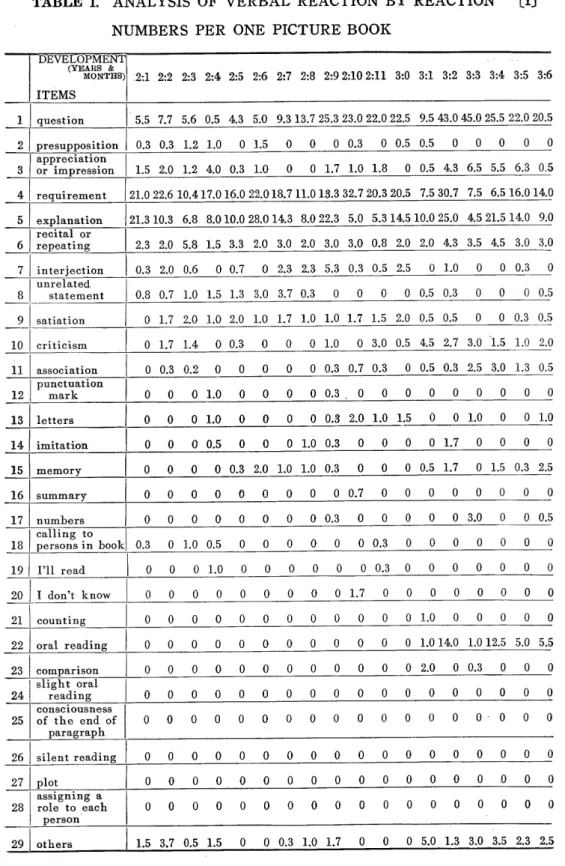
TABLE 1, ANALYSIS OF VERBAL REACTION BY REACTION CI) NUMBERS PER ONE PICTURE BOOK
DEVELOPMENT (YEARS &MONTHS) ITEMS 2:1 2:2 2:3 2:4 2:5 2:6 2:7 2:8 2:9 2:10 2:11 3:0 3:1 3:2 3:3 3:4 3:5 3:6
1 1 question
5.5 7.7 5.6 0.5 4.3 5.0 9.3
13.7
25.3 23.0 22.0 22.5 9.5 43.0 45.0
25.5 22.0 20.5
2 1 presupposition 0.3 0.3 1.2 1.0 0 1.5 0 0 0 0.3 0 0.5 0.5 0 0 0 0 0 appreciation 3 1 or impression 1.5 2.0 1.2 4.0 0.3 1.0 0 0 1.7 1.0 1.8 0 0.5 4.3 6.5 5.5 6.3 0.54 1 requirement 121.0
22.6
10.4
17.0
16.0
22.0
18.7
11.0
13.3 32.7
20.3 20.5 7.5 30.7 7.5 6.5
16.0
14.0
5 1 explanation 121.3
10.3 6.8 8.0
10.0
28.0
14.3 8.0 22.3 5.0 5.3
14.5
10.0 25.0 4.5
21.5
14.0 9.0
recital or 6 repeating 2.3 2.0 5.8 1.5 3.3 2.0 3.0 2.0 3.0 3.0 0.8 2.0 2.0 4.3 3.5 4.5 3.0 3.0 7 interjection 0.3 2.0 0.6 0 0.7 0 2.3 2.3 5.3 0.3 0.5 2.5 0 1.0 0 0 0.3 0 unrelated. 8 statement 0.8 0.7 1.0 1.5 1.3 3.0 3.7 0.3 0 0 0 0 0.5 0.3 0 0 0 0.5 9 I satiation 0 1.7 2.0 1.0 2.0 1.0 1.7 1.0 1.0 1.7 1.5 2.0 0.5 0.5 0 0 0.3 0.5 10 criticism 0 1.7 1.4 0 0.3 0 0 0 1.0 0 3.0 0.5 4.5 2.7 3.0 1.5 1.0 2.0 11 association 0 0.3 0.2 0 0 0 0 0 0.3 0.7 0.3 0 0.5 0.3 2.5 3.0 1.3 0.5 punctuation12 mark 0 0 0 1.0 0 0 0 0 0.3 0 0 0 0 0 0 0 0 0 13 letters I 0 0 0 1.0 0 0 0 0 0.3 2.0 1.0 1.5 0 0 1.0 0 0 1.0 14 I imitation I 0 0 0 0.5 0 0 0 1.0 0.3 0 0 0 0 1.7 0 0 0 015 I memory
I 0 0 0 0 0.3 2.0 1.0 1.0 0.3 0
0 0 0.5 1.7 0 1.5 0.3 2.5
16 l summary I 0 0 0 0 0 0 0 0 0 0.7 0 0 0 0 0 0 0 0 17 l numbers 0 0 0 0 0 0 0 0 0.3 0 0 0 0 0 3.0 0 0 0.5 calling to 18 persons in book 0.3 0 1.0 0.5 0 0 0 0 0 0 0.3 0 0 0 0 0 0 0 19 I I'll read 1 0 0 0 1.0 0 0 0 0 0 0 0.3 0 0 0 0 0 0 0 20 I don't know l 0 0 0 0 0 0 0 0 0 1.7 0 0 0 0 0 0 0 0 21 counting 0 0 0 0 0 0 0 0 0 0 0 0 1.0 0 0 0 0 0 22 oral reading 0 0 0 0 0 0 0 0 0 0 0 0 1.0 14.0 1.0 12.5 5.0 5.523 I comparison
0 0 0 0 0 0 0 0 0 0 0 0 2.0 0 0.3 0 0 0
slight oral 24 reading 0 0 0 0 0 0 0 0 0 0 0 0 0 0 0 0 0 0 25 consciousness of the end of paragraph 0 0 0 0 0 0 0 0 0 0 0 0 0 0 0 0 0 0 26 j silent reading 1 0 0 0 0 0 0 0 0 0 0 0 0 0 0 0 0 0 027 I plot
1 0 0 0 0 0 0 0 0 0 0 0 0 0 0 0 0 0 0
28 assigning a role to each person 0 0 0 0 0 0 0 0 0 0 0 0 0 0 0 0 0 029 others
I 1.5 3.7 0.5 1.5 0 0 0.3 1.0 1.7 0 0 0 5.0 1.3 3.0 3.5 2.3 2.5
( 5 )TABLE 2 (continued) [2J DEVELOPMENT (YEARS &MONTHS) ITEMS 3:7 3:8 3:9 3:10 3:11 4:0 4:1 4:2 4:3 4:4 4:5 4:6 1 guest ion 19.5 10.5 11.5 3.5 6.5 8.5 7.0 17.0 9.0 11.5 14.0 7.5 2 presupposition 0 0 0 0 0 0 0 0 0 0 0 0 3 appreciation or impression 8.5 7.5 4.5 2.5 3.8 3.0 1.5 7.0 3.5 11.5 1.0 2.0 4 reguirement 12.5 2.5 5.5 5.5 10.2 8.0 3.0 5.0 8.0 10.0 6.5 7.5 5 explanation 11.5 9.5 6.5 11.5 6.0 7.0 6.5 17.0 7.5 20.5 0 18.5 6 recital or repeating 1.0 0 0 0 0.3 0 0 0 0.5 0 0 0 7 interjection 0 0 0 0 0.5 0 0 1.5 0 0 0 0 8 unrelated statement 0 0 0 0 0 0 0 2.5 0 0 0 0 9 satiation 1.0 0 0 0 0.5 0 0 0.5 0 0 0 0 10 criticism 1.5 2.5 0.5 0 0.8 3.0 1.5 2.0 0.5 3.0 4.0 0 11 association 1.0 0 0.5 0 0 0 0 0 0 0 0 0 12 punctuation mark 0 0 0 0 0 0 0 0 0 0 0 0 13 letters 0 0 0 0 0 0 0 0 0 0 0 0 14 imitation 0 0 0 0 0 1.5 0 0 0.5 0 0 0 15 memory 2.5 0 0.5 1.5 0.5 1.5 0.5 0 0 0 0 0 16 summary 0 0 0 0 0.3 0 0 0 0 0 0 0 17 numbers 0 0 0 0 0 0 0 0 0 0 0 0 18 calling to persons in book 0 0 0 0 0 0 0 1.0 0 0 0 0 19 I'll read 0 0 0 0 0 0 0 0 0 0 0 0 20 I don't know 0 0 0 0 0 0 0 0 0 0 0 0 21 counting 0 0 0 0 0 0 0 0 0 0 0 0 22 oral reading 4.5 1.0 0.5 2.5 8.8 2.0 6.0 9.5 3.5 3.5 1.0 7.5 23 (comparison 0 0 0 0 0 3.5 0.5 1.5 1.5 0 0 0 24 slight oral reading 0 0 0 4.0 0 0 0 0 0 0 0 0 25 consciousness of the end of paragraph 0 0 0 0 0.3 0 0 0 0 0 0 0 26 silent reading 0 0 0 0 0 0.5 0.5 0 0 1.0 0 27 plot 0 0 0 0 0 0.5 0 0 1.0 0 1.0 28 assigning a role to each person 0 0 0 0 0 1.5 1.5 2.0 2.0 0 0 1.0 29 others 1.0 1.0 1.0 1.5 1.0 1.0 2.0 1.0 0 1.0 0 0 (6)
TABLE 3 ANALYSIS OF OBSERVED BEHAVIOR BY REACTION [3: NUMBERS PER ONE PICTURE BOOK
C 3
DEVELOPMENT (YEARS & MONTHS) ITEMS
2:1 2:2 2:3 2:4 2:5 2:6 2:7 2:8 2:9 2:10 2:11 3:0 3:1 3:2 3:3 3:4 3:5•
1 quickly eaf after turninglleaf 1.6 0 0.2 0.3 0 1.0 0.7 0.3 0 0 0.3 0 0 0.3 0 0 0.3.
2 Satiation 2.0 1.3 1.4 1.0 0.5 1.0 1.0 0 0 1.7 1.0 0 3.0 0.9 0 1.5 0.3 3 association 0,5 0 0 0 0 0 0.3 0 0 0 0.3 0 0 0.3 0 0 0.3, 4 comparing 2 pages 0 0 0.2 0 0.3 0 0 0 0 0.3 0 0.5 3.0 3.7 0 1.5. 1.3, 5 imitation 0 0 0.6 0.5 0.3 0 0 0 0 0 0.5 0.5 0 1.3 1.0 1.5 LT 6
taking firm hold of book for resding 0 0 0.2 1.0 0.3 0 1.3 1.0 2.7 0.7 1.0 1.5 1.0 2.5 0 1.5 2.3, 7 her hands itching to draw 0 0 0.4 0 0 0 0 0 0 0 0 0 0 0 1.0 0 0, 8
turnirg book upside
down 0 0 0 0 0 0 0 0 0.3 0 0 0 0 0 0 0 0 9 ponting out letters 0 0 0 0 0 0 0 0 0 3.0 1.0 8.0 0 0 0 0 1.0
10
making easy turn over the leaves 0 0 0 0 0 0 0 0 0 0 0 0 0.5 1.0 0 0 0, 11 emotional reaction to pictures 0 0 0 0 0 0 0 0 0.3 0 0 0 1.0 0.7 0 0 0 12 checking experi-menters loud rea-ding for indepen-dent reading 0 0 0 I) 0 0 0 0 0 0 0 0 0 0 0 0 0.3 13 laughing 1.0 0.7 0 0 0 0 0 0 0 0 0 0 0 0 0 0 0 14 looking at experimenter's face 0 0 0 0 0 0 0 0 0 0 0 0 0 0 0 0 0, 15
tearing off the
cover 0.5 0 0 0 0 0 0 0 0 0 0 0 0 0 0 0 0. 16
waving body to the accompaniment of oral reading 0.3 0.3 0.2 0 0 0 0 0 0 0 0 0 0 0 0 0 0 17 sigh 0.3 0 0 0 0 0 0 0 0 0 0 0 0 0 0 0 0 18 pointing out pictures 0.5 0 0 0 0 0 0 0 0 0 0 2.5 0 0 0 0 0 19 bending herself for ward 0.3 0.3 0 0 0 0 0 0 0 0 0.5 0 0 0 0 0 0 20 turning book
round and round 0.3 0 0 0 0 0 0 0 0 0 0 0 0 0 0 0 0 21
turning leaf in the
midst of reading 0 0.7 0.2 0 0 0 0.3 0.3 0.3 1.3 1.0 1.0 0 0 0 0 0
22
beating time with
the hand 0 0 0 0 0 0 0 0 0 0 0 0 0 0 0 0 0 23 tracing with finger 0 0 0 0 0 0 0 0 0 0 0 0 0 0 0 0 0 24 looking at cover 0 0 0 0 0 0 0 0 0 0 0 0 0 0 0 0 0 25 identification 0 0 0 0 0 0 0 0 0 0 0 0 0 0 0 0 0 26
time till satiation
(minutes) 15.5 12.0 10.7 6.0 8.0 11.0 13.7 7.0 12.1 11.5 11.0 9.8 13.5 27.0 15.0 20.5 17.0 others 0.5 0.3 0.8 0 0 0 1.0 0 0 0.7 0.3 0.5 1.5 0.9 2.0 2.0 La
TABLE 4 (Continued)
DEVELOPMENT (YEARS & MONTHS) ITEMS
3:6 3:7 3:8 3:9 3:10 3:11 4:0 4:1 4:2 4:3 4:4 4:5 4:6
1
quickly turning leaf
after leaf 1.0 0 0 0 1.5 0 0 0 0 0 0 0 0 2 satiation 0.5 1.0 1.0 1.5 0 0 1.5 0.5 2.0 0 0 0 2 3 association '0 0 0 0 0 0 0 0 0 0.5 0 0 0 4 comparing 2 pages 2.5 4.0 3.5 3.5 2.5 0.3 1.5 2.0 0.5 2.0 0.5 2.0 0.5 5 imitation 4.0 1.0 0 1.0 0 6.3 2.0 0.5 0 1.5 0 0 0 6
taking firm hold
of book for reading 1.0 0.5 0 1.5 0.5 0.3 0 0 0.5 0 0 0 0
7
her hands itching to
draw 0 0 0 0 0 0 0 0 0 0 0 0 0
8
turning book upside
down 0 0 0 0 0 0 0 0 0 0 0 0 0
9 pointing out letters 0 0 1.0 0 2.0 0 0 0 0 0 0 0 0
10
making easy to turn
cover the leaves 0 1.0 0 0 1.5 0.3 0 1.0 0 0 2.0 0 0
11
emotional reaction to
pictures 1.0 3.5 1.0 1.0 0 0 1.5 1.5 2.5 0 3.0 0 2.0 12
checking experimen-ter's loud reading for independent reading 0 0.5 1.0 1.5 0.7 0 0 0 0 0 0 0 0 13 laughing
1 0
0 0 0 0 0.3 0 0 0.3 0 0 0 0 14 looking at experimenter's face 0 0 0 0 0 0 0 0 0 0 0 0 015 tearing off the cover 0 0 0 0 0 0 0 0 0 0 0 0 0
16
waving body to the accompaniment of
oral reading
0 0 0 0 0 0 0 0 0 0 0 0 0
17 sigh 0 0 0 0 0 0 0 0 0 0 0 0 0
18 pointing out pictures 0 0 0 0 0 0 0 0 0 0 0 0 0
19
bending herself
for ward 0 0 0 0 0 0 0 0 0 0 0 0 0
20
turning book round
and round 0 0 0 0 0 0 0 0 0 0 0 0 0
21
turning leaf in the
midst of reading 0 0 0 0 0 2.8 3.0 0 0.5 0 0 0 2.0
22
beating time with the
hand 0 0 0 0 0 1.0 0 0 0.5 0 0 0 0
23 tracing with finger 0 0 0 0 0 0.3 0 0 0 0 0 0 0 24 looking at cover 0 0 0 0 0 1.3 0.5 0 0 0.5 0 0 0
25 identification 0 0 0 0 0 0.3 0.5 2.5 2.5 2.0 1.0 2.0 1.0
26 time till satiation 12.3 18.5 13.0 11.0 17.5 14.5 15.5 18.0 17.0 13.5 20.0 10.5 25.0 others 2.5 3.0 1.0 0.5 0 1.0 0 0.5 0.5 1.0 2.5 0.5 1.0
AN ANALYTICAL STUDY OF THE READING PROCESS BY A
MONOLOGUE METHOD
PROBLEM
The action of reading is a process to grasp a meaning or a thought. Through what process of organization in reading does the thought or meaning grasp from a visual perception of words printed?
The writer is going to analyze it by a monologue method. The aim of this study is to make clear the mechanism of reading process as a series of complex psychological behavior by a monologue method.
METHOD
Subjects are six 5th grades. Their achievement of Japanese as a language is superior. Reading materials are KURIKARA-OTOSHI, a story about Japanese acient war, YUKI TO SHONEN, snow and a boy, HIGAN NO HASHI, a bridge as a merciful prayer to save mankind and Perceua! adventure fromGreek myth.
All subjects have not read these materials until this experiment introduced.
Before these materials were induced the other materials was used to practice an expres-sion of monologue
First of all following instruction was used 'I'll ask you to read a book now. Please reads them without raising your voice. That mean silent reading. Please read grasping a meaning when you read. Please freely express what you think, feel or anything like that in reading and after reading. For example about an auther's idea, your appreciation on it, an appreci-ation of each scenes, appreciappreci-ation of each words used, and soon". These monologues were record ed by a tape-recorder
RESULTS & OBSERVATION
First, The writer will show you a way to analyse monologues. This example is of a sub-iect who read HIGAN NO HASHI. T. is my voice and S. the subject's.
the time elapsed classification of monologue monologue 30' scene well••. I walking felt a journey g pleasantly,
of former years slow p.41
and people is 1'40" auther's thema In old days,n't make there was
war no more.
miserable way with in Japan. We should-2'
scene I felt the mot her may find herself worth living by her son. 5'56'
As you see in CHART 1 we can classify many monologues into several types . In TABLE 1 these types are categorized according by the places of a book on which made monologue. Those are the first half, the middle and the latter half of a story . (1) Monologues in the first half, the middle and the latter half of a story.
they
TABLE 1 Types of monologues in the first half , the middle and the latter half of a story
NO
1
2
3,
4
5
6
7 I 8 I 9
items place in a story Expres-sion Scene The conscio-usness of the, e nd of a paragraphFuture Past Plot Auther's idea Lonfirm-ation of expecta-tion Chang-ing of expect-ation Sum-mation
the 1st half 55.5 2820
128.0
I 22.1 1.1 33.2 1.1
0
0
555.0
middle 55.5 177.0
I
72.0
50.0
I 0 I 22.1
I 22.1
0 I
0
400.0
the latterhalf I 45.5 161.0 39
.0 16.7 0 94.5 83.0 1.1 5.5 455.0
The numbers shown in TABLE 1 are drawn by following equation . number of monologue
x100 number of person(6)x number of story(4)
By this equation we can account average monologue per one person and per one book. The monologue about "Expression" of a story decreases a little in the latter half of a story, but is rather constant through a story: "Expression" , that is, how to use a word appears constantly through a story . It may owe to the reason why subjects can conceive• an appreciation about "Expression" fragmentarily through a story .
The monologue about "Scene" is more in the first half . There are at least 3 monologues• per one person. But it decreases in the middle and the latter half and becomes 2 mon-ologues per, because subjects may deepen their interest about a story as a whole as they go on reading by the end.
"The consciousness of the end of a paragraph" is more in the first half as is the case
of "Scene". The same interpretation as "Scene" may be applicable .
The monologue of "Future", that is, how does a story develop is more in the middle. Getting their idea into shape in the middle they may have a view how does it d
evelop. The monologue of "past", that is, summarizing or looking back what they read is few in the first half and does not appear any in the middle and the latter half . It may owe
to the fact they have more strong interest about what they are just reading and about having a view ever in the middle .
The monologue about "plot" appeares a little in the first half and the middle, but increases suddenly in the latter half and amounts to several times as much as the first half and the middle. It may show us we should read a book to the end in order to understand a plot.
The monologue about an auther's idea is also seen a little in the first half and the-middle, but suddenly increases in the latter half.
What the monologue about a plot and an auther's idea is more in the latter half is. interesting, isn't it? In a reading guidance we will have to treat them after reading a story
as a whole.
The monologue concerning "the confirmation and changing of expectation" imazined by readers at the beginning does not appear in the first and middle half but in the latter half . The number of monologue is greater in the order of the first, the latter and the middle half .. (2) Monologue classified by literary works
TABLE 2 (omitted)
In the TABLE 2 the type of monologue classified by works is shown . The type or monologue has a great , deal in common with 4 works.
There are the greatest amount of monologue about "Scene" except Greek myth and next one is about the consciousness of the end of a paragraph.
In the case of Greek myth the monologue about the consciousness of the end of a para graph is more than that of the scene, maybe, because of the longest story which consists.
of several chapters ancL is written chapter by chapter .
There are, however, some differences between works. There was no monologue about "past"- in YUKI TO SHONEN, no about "the plot" in Greek myth and no about "the confirmation or changing" in HIGAN NO HASHI.
(3) Individual difference of monologue
In TABLE 3 (omitted) individual difference of monologue is shown . It has a great deal in common with 6 person. For example, there are a lot of monologue about "Expression"
and "Scene", while "the confirmation and changing of expectation" is few .
But there appears individual difference. There was no monologue about "consciousness.
of the end of a paragraph" and "past" by S, about "plot" by I, about "plot" and "Auther'e
idea" by 0, about "Future" "Past" and "Auther's idea" by K and about "Auther's idea" by T. We'll have to recognize such an individual difference when we carry out a reading guidance .
AN EXPERIMENTAL STUDY OF ATTITUDE—CHANGING BY READING
INTRODUCTION
The writer was going to clarify experimentally how children's attitude changes and how the condition of children's life and their personality have to do with their attitude-changing when we make them read a book.
METHOD
Reading material is "How to be friends with animals" written by J. HAYASHI MAKI BOOK to., LTD.
Let's explain the paper for evaluation. The evaluation paper consists of 3 group problems in large.
The first group problems are the tests for knowledge about animals in general by multiple choice method. As I thought those problems are prerequisit for the changing of attitude I selected them as the 1st group problems. The technique to count the changed score is as follows.
(changed score)=(right response after reading)—(right response before reading)
The second group problems chiefly concern with attitude and knowledge of respective -animals which are lion, monkey and dog. The test of attitude concerns with like and dislike and the degree of needs for feeding or training animals.
The scores of attitude changed were decided by the place where subjects check before and after reading for each items of the questionir, in other words, by the direction and width •of changing.
Supposing that a deserable response is 5th in 5 responses and a subject check in 2nd step before reading and then check in 4th after reading. The score is +2.
While in the reverse the score becomes-2, because the right or desenable responses are definite acording by the content of the book. As there are 30 problems in this 2nd group 'the summation of scores in each items becomes the changed score of each subjects.
The 3rd group test is of response toward problem situation which seems mostly to be attitude test psychologically. Those are the problems how subjects behave, what is the attitude toward it and why they behave so when subjects comfort with complex problem.
We can count the changed score as the index of numbers of correct answers after and before reading as is the ease of the first group problems. It has 5 problems each of which consist of the attitude toward the situation and its reason why they behave so. Then, the most desirable becomes 10. The changed score is counted the same technique as the 1st group problem's.
Let's explain procedure of this experiment. To the experimental group I delivered pretest paper and let them check. Then, I gave the book of animals to subjects and let them read
freely for a week. That is a compulsory reading for them. After reading I penformed the post-test which is the same problems as the pre-test about which I already mentioned above.
So far as control group is concerned subjects are only given 2 pre- and post test. ( 12 )
Subjects are as follows
BIG CITY LOCAL CITY
EXP. G I CONT.
G EXP. G CONT. G 5th grade 100Subjects ofl50 2 schoolsI1 schoolof 1 school50 of None 8th grade 1 school 50 ofNone 1 school50 of NoneRESULTS & DISCUSSION
(1) On the changed score in the big city.
TABLE 1 The mean & S.D. of changed score in th e big city.
PART 1 PART 2 PART 3
FXP. G M +1.25 +0.12 +1.29 S.D 1.8 0.8 1.93 CONT G M +0.35 0 +0.05 S.D 1.25 0.6 1.35 XX XX
>HShows Significant difference of 1% level
TABLE 1 shows us in any part of the test the score of experimental group is higher than that of control group when we take it together. Especially in part 1 and part 3 we could get stochastically significant defference between 2 groups in 1% level. That means there appears the effect of reading upon their atitude.
TABLE 2 Changed score in each school in big city
Part 1 Part 2 Part 3
Elementary school Exp. G +1.7 + 0.15 +1.4 Con. G +0.35 0 + 0.05 Secondary school Exp. G +0.5 + 0.05 +1.2
TABLE 2 showes us there is no difference between primary school and secondary in part 2 and 3, but primary school get rather higher score than secondary in part 1.
TABLE 3 comparison of sex difference in changed score in big city
Sex Part 1 Part 2 Part 3
Exp. G m +1.4 +0.23 +1.23 f +1.5 0 +1.3 Cont. G m +0.4 +0.1 0 f +0.3 —0.1 +0.1
There was no difference between sexes. (2) Changed score in the case of local school.
TABLE 4 Average of changed score in local city
Part 1 Part 2 Part 3
Exp. G. +1.58 +3.97 +1.64
If we compare this data with that of control group in big city the changed score of local "city is greater than that of the big city. According to TABLE 5 (omitted ) the secondary
school subjects showed greater changed score than the primary ones in all parts of the
attitude tests.
TABLE 6 ( omitted) showed us there was no sex difference in the part 1 and 3, but in the case of part 2 female subjects changed more than male.
(3) Item analysis
TABLE 7 (omitted)
Rate of errors in each problem.
By a sampling method I chose 29 males of exp. g. and 26 males of cont. g. in big city in .order to make up data of TABLE 7.
In part 1 the items which exp. g. showed more desenable change compared with cont. g. were 4 items (5th, 7th, 8th, and 10th). In the item 2, 3 and 9 the score of exp. g. changed
remarkably and cont. g. did too.
The items changed more compared with cont.g. were 3, 6 and 8 of "lion", 5 of "monkey" and 5 and 10 of "dog". In the problems to answer the reason in No. 5 of part 3 greater
change occured.
<4) Case study
In this study I was going to find out difference between 2 groups and factors ed to changed attitude. Subjects are 6 who showed greater score of attitude-changing taken
together part 1, 2 & 3, and 6 who did not show the changing at all. These 12 subjects are
taken from one experimental group in big city.
TABLE 8 Comparison of 2 groups by the Yatabe-Guilford personality test (omitted) Table 8 showes us how largely changed group and smaller one differ from the standpoint
-of personality traits measured by Yatabe-Cuilford personality test.
The numbers are the average standard score which range from 1 to 5. The items which -showed the difference more than 1 point by standard score are of R. and S. The largely changed group was more relaxed and less social intraversion• that is, more social extraversion.
TABLE 9 Comparison by Water-Jar test
This Water-Jar test is the test to measure rigidity in personality in which 3 jars are used :and subjects are examined how they are persistent in using the first equation when they ..are asked to produce decided quantity of water by using 3 jars. The problems consist of 8
( 14 )
Little changed group 5.0
6roblems first 3 of which are solved only by a uniform equation, but the others may be
solved by the other equation besides the former one. The number of Table 9 showes the average number used the first eqnation. Therefore, the larger the number the higher 'rigidity and persistency.
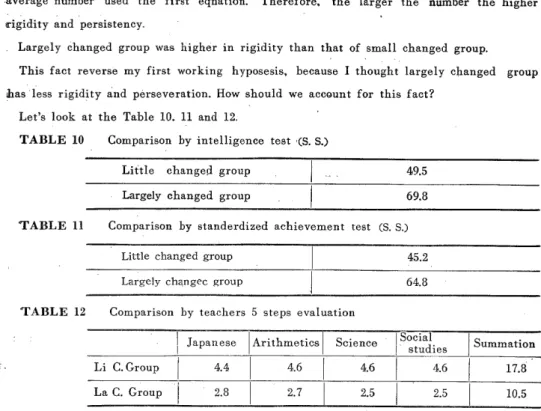
Largely changed group was higher in rigidity than that of small changed group.
This fact reverse my first working hyposesis, because I thought largely changed group has less rigidity and perseveration. How should we account for this fact?
Let's look at the Table 10. 11 and 12.
TABLE 10 Comparison by intelligence test ,(S. S.)
TABLE 11
TABLE 12
Little changed group 49.5
Largely changed group 69.8
Comparison by standerdized achievement test (S. S.)
Little changed group 45.2
Largely changec group 64.8
Comparison by teachers 5 steps evaluation
Japanese Arithmetics Science SocialS I studiesummation
Li C. Group 4.4 4.6 I 4.6
4.6 i 17.8
La C. Group 2.8 2.7 2.5 2.5 10.5
These tables showes us largely changed group is superior in intelligence, achievement and school teacher's evaluation. These subjects have plenty of brains.
Therefore, they may keep using only first equation from the beginning to the end. Small .changed group, on the there hand, was less intelligent and then may repeat trial and error
because of the difficulty of problems and find out easier method. Of cause, the interpret-ation may not be able to take account for from the results of the Water-Jar test. But we :may discuss it from the results of Table 10, 11 and 12.
TABLE 13 Comparison by the environment in their family, by experience of reading books about animals and of raising dogs, by children's behavior such as watching T.V. about animals and so on, by the degree of interesting when read book used in this experiment . <omitted)
In TABLES 13 there appeared differences between 2 groups in two items.
Those are the items whether or not there is any books about animals and whether or not any experiences to watch T.V. or listen to the radio about animals in their family .
What there is any books about animals is a problem of so-called physical environment which does not necessarily concern with subject, but what there is any experience to attend at an animal programs in T.V. to the radio concerns with a behavior of subjecthood . They
( 15 )
may change th at them more
TABLE 14
eir attitude more through such a behavior. The largely changed group attended intensively and positivery.
Comparison by the composition of appreciation
Largely changed group frequency Little cht group per subject changed Der one
appreciation about Expression 0 0
appreciation about Scene 7.5 2.3
appreciation about plot 1.3 0.3
appreciation about authers idea 0.83 0.5
others 0.83 0.67
no appreciation 0 0.17
Summation 10.5 4.0
Kinds of appreciation 2.5 1.67
According to TABLE 14 the largely changed group expressed more appreciation about Scene, Plot & Authers idea, much statement and much kinds.
Greater difference appeared in the appreciation of scene and the summation of frequency. It was may show largely changed group read the book more deeply and appreciate it more deeply, compared with small changed group.
I'll explain about kind of Appreciation. It is 1 kind if it is written only about 1 kind, for example, only about scene, while 2 kinds if written about scene and plot.
SUMMARY
(1) Almost every case, there appeared the changing of attitude by reading.
•
It was more evident in local city than in big. In the case of local city junior high school subjects changed more than primary school ones.
(2) According to Yatabe-Guilford personality test, there appeared the slightest diffenence between two groups. The largely changed group was high in the score of social extraversion
and of easiness.
(3) The largely changed group was superior in intelligence and achievement.
C) one of the factors contributed to subject's changed attitude was the appreach toward an animal program in T. V. or the radio.
(5) The largely changed group expressed their appreciation more about scene, plot and the auther's idea.
A DEVELOPMENTAL. STUDY OF APPRECIATED COMPOSITION AFTER READING.
PLOBLEM:
The appreciated composition is what one read a reading material , appreciater criticize it and, get one's ideas in shape through the ability of expression, that is, the power of com-position.
This study aims to make clear the development of the appreciated composition after reading . METHOD:
(1) Subjects are from 1st grader to 6 grader of about 600.
(2). Reading material. YAGI TO SAKURA NO HANA, a flowering cherry written by SHOZO INO.
(3) Instruction "please write what you thought or felt after reading". RESULTS:
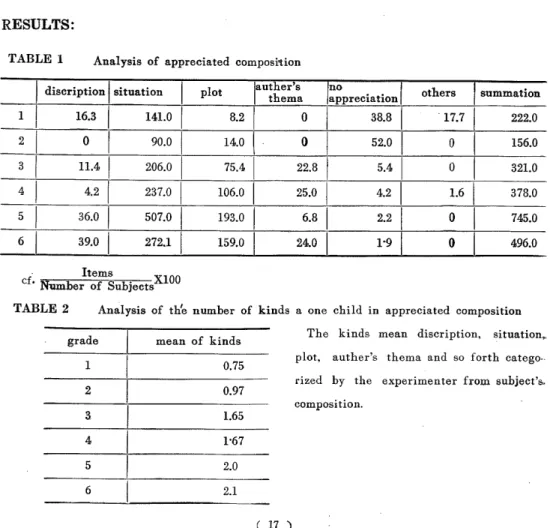
TABLE 1 Analysis of appreciated composition
I scription I situation plot auther'sthema no
appreciation others summation
1 16.3 141.0 8.2 0 38.8 17.7 222.0 2 0 90.0 14.0 I 0 52.0 0 156.0 3 11.4 206.0 75.4 22.8 5.4 0 321.0 4 4.2 237.0 106.0 25.0 4.2 1.6 378.0 5 36.0 507.0 193.0 6.8 2.2 0 745.0 6 39.0 272.1 159.0 24.0 1-9 0 496.0 Items cf . Number of Subjects
TABLE 2 Analysis of the number of kinds a one child in appreciated composition
grade mean of kinds
1 0.75 2 0.97 3 1.65 4 P67 5 2.0 6 2.1
The kinds mean discription, situation,. plot, auther's thema and so forth catego-rized by the experimenter from subject's. composition.
ON THE IMPORTANCE HOW TEACHERS MAKE CHILDREN'S
CONCRETE THINKING ABSTRACT.
PROBLEM:
The writer was going to make clear chiefly the importance of children's abstract think-ing. Concrete thing in reading is almost the same as the literal meaning of a passage spoken
by Dr. W. S. Gray, while abstract thinking corresponds to such concepts as implied meaning by Dr. W. S. Gray.
METHOD:
<1) Control group method
<2) Experimentally trained time: 1 year.
‘(3) Subjects: 100 3rd graders of 2 classes in which the same materials were used.
1/414) A class teacher taught children almost only about KANJI, Chinese characteristics, while B class teacher not only about it but also about implied meaning or related meaning,
r's idea or plot which are classified by me as abstract thinking in reading.
RESULTS:
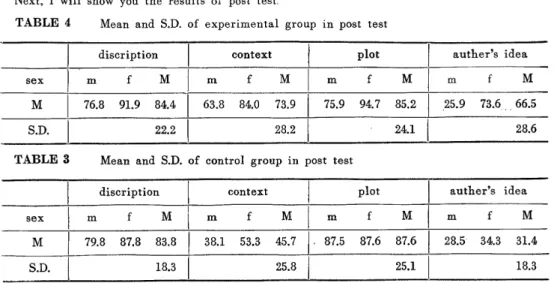
In pre-test by Dr. Sakamotos standardized reading test and the test made by me which co-nsists of 4 sub-tests, discription, context, plot and auther's idea, there was no significa-nt difference between 2 classes.
Next, I will show you the results of post test.
TABLE 4 Mean and S.D. of experimental group in post test
di
discription context plot auther's dea
sex m f M m f M m f M m f M
M 76.8 91.9 84.4 63.8 84.0 73.9 75.9 94.7 85.2 25.9 73.6 66.5
S.D. 22.2 28.2 24.1 28.6
TABLE 3 Mean and S.D. of control group in post test
discription context plot auther's dea
sex m f m f M m f M M
M 79.8 87.8 83.8 38.1 53.3 45.7 I 87.5 87.6 87.6 28.5 34.3 31.4
S.D. 18.3 25.8 25.1 18.3
In the subtest of context and auther's idea there appeared highly significant difference of 1% level after one year training.Working hypothesis was approved.
(18\
COMPARISON OF IMPRESSION BY READING WITH BY SLIDE
PROBLEMS:
The writer was going to compare the impression by reading with by slide through the analysis of conposition and questionair .
..METHOD:
20 6th graders and 20 8th graders were the subjects in this experiment .
After the experiment by P..G.R and analyzer on which co-workers analysed , all children were »asked to write composition on the impression and to respond to some questions . The instruction 'for composition is as follows . "If you were asked to speak about what you look at slide and
-read a book, how do you express? Please write it down in detail."
The working hypothesis was that the deeper the impression the more the plot and so on -are written.
The contents of questionair are as follows.
<{1) To check one of 5 steps , those, are, +2, +1, 0, —1 and —2 which indicate the degree of needs for looking at slide or reading again ,
,(2) To write down what subjects impressed deeply .
43) Whether or not there is an experience of reading the book or of looking at these slide before
RESULTS:
S-R group (in this group stimulus was given from slide to reading) was superior in the degree of reappearing situations, in the number of letters used in their composition, and
in the appreciation of auther's idea compared with RS group when I analyzed the compos
ition by primary school children.
The results were the same as of junior high school children except that the appreciation
of auther's idea was superior in R-S group.
.3. When I analyzed "cue-words' or key word I found the "cue -word" in slide reappeared'
more than in reading.
.4. The need for such experiences as reading or seeing again was stronger in slide than in reading so far as primary school children are concerned .
5. That was not the case in junior high school subjects. They had the need for reexperience
neither in reading nor in seeing slide . The degree of needs not to read or see
again was stronger in slide than in reading.
6. The junior high school subjects had the experience of reading, but no experience of ob-serving the slide.
AN EXPERIMENTAL STUDY OF HOW TO TEACH THE SUBJECT
IN A SENTENCE
THE POSITION OF THE LEARNING OF GRAMMARS IN JAPANESE AS A
NATIONAL LANGUAGE:
The process of communication is as follows.
A speaker or writter expresses motive to communicate by voices or letters.
Those are expressed signs which a hearer or reader accepts, analyse and interprete. In this4 case all that hearer or reader recognised through the expressed signs by spesker or
writter-becomes message.
Let' s probe deeply into the problem of speaker's motive and signalization.
There are at least 4 steps.
First of all, we should reflect own daily life and make a problen consciousness for expre-ssion clear. Cohering the consciousness, we should fix what we want to express as a speaker's-idea, that is, thema. Gathering, selecting, and arranging the materials for expression we-should settle construction and then describe. In description we should take care of letters, w-ords, grammars and a style of expression.
Grammar plays a very inportant role in description because we should make sentences-accarate, recognizing such as relationships of conjunction between word and word, between. sentence and sentence and between paragraph and paragraph.
When hearer and reader recognize these messages they understand them through a following. process.
They begin to understand literal meaning, that is, description which consists of words. Then they graspe the meanings, of paragraphs, integrate them and follow up the comtex of story. Then, they understand the gist or plot which is followed by the understanding of auther's idea, that is, the thema of the story.
When we understand literal meaning we should carefully recognize letters, words, the style of writting and grammar so that we may understand the thema.
In short, the grammar plays a very important role both the process of expressing and of understanding, which is also given a position in description.
The content of learning grammars is vast from which I picked up the problem, of how to make pupiles uuderstand the subject of a sentence.
An experimental study of how to teach the subject in a sentence:
( 90
METHOD OF THE FIRST EXPERIMENT:.
Subjects are 52 3rd graders.
Let's explain abont how to make problems for grouping and evaluating which are made thy the following principles.
1. The subject of a sentence was not always at the top.
2. There was a sentence with no subject besides the imperative word.
73. The sentence which was difficult for pupiles to find not a subject was contained. Those were conpiex and compound sentence, and were the sentence of conversation and poems. .4. There was also the sentence in which pronoun was a subject.
I' 11 explain about the schedule of this experiment and 4 types of teaching method. The 1st day I tested about subjects in sentences and grouped so that we may up 4 equal :groups in th( ir average score.
The average score of each group was as follows.
Group A is 38.8. Group B is 36.9. Group C is 37.9. Group D is 36.8.
In the 2nd day of this experiment, the teaching was given group by group. To group A, B and C I gave a paper for instruction and then.
t(I.) Let them read sentence by sentence.
,(2) The each group instruction was given on which explanation will be given in detail afterwards.
(3) Let them answer the problem of subject.
<4) Evaluating the answers I corrected several errors according by the each group instruction.
30 miuutes lesson was given to each group. About the teaching mathod of each group I will mention rather in detail.
To group A I made them associate a subject with a predicate verb, drawing a line between them. After completing sentences, I let them read the sentences and taught that upper part of the sentence separated before is a subject.
To group B I asked children to guess subjects of sentences after reading each sentences .-and to pay attention to words beside which dots are marked and which locate next to noun
or pronoun. Those words are particles JOSHI, in such Japanese. I Iet them take notice of tnoun or pronoun with such particles as HA, GA and MO which become the subject if those par--tides are joined with nouns or pronouns .
To group C the sentences with underlined predicate verb which are, of caurse, the same problem as group A and B are given. They were taught that subjects are what corresponds -to the status or action presented by the predicate verb , that is, what guessed after thinking
over about what and who are so.
Group D members played who am I?" The hints were 2. For example. ( 21 )
1. I am a sea animal larger than bus.
2. I have much oil. They were taught the "I" guessed by such a question is the subject . In the 3rd day of the experiment, the same materials as yesterdays' were given to the, group A, B and C, and their understanding were chiefly reinforced by teaching and guid-ing the problems which they mistook yesterday.
In this teaching, the new paper with no mark such as dots or underlines were used for-group B and C. The for-group D children played "who am I?" by using problems made by children,
as an instructional materials which were assignment for them.
In the 4th day, the evaluation was performed before which following instruction was used. "I am sure that what you hav e learned about the subject is useful for today's problem.
Try hard by remembering what you studied."
of Course the same problem were given to each group.
RESULTS & DISCUSSION
(1) On teaching method
TABLE 1 Means and standard deviation of each group
M S.D.
group A 41.9 13.4
group B 80.6 12.2
group C 52.0 11.8
group D 44.6 14.7
The best group was group B which showed significant difference of 1% level from the -other group.
This teaching method is traditional one in Japan about how to teach subjects.
They might easily and mechanically learn particles with the subject . Being reinforced the consciousness of subjects from many sentences used as instructional materials
, their un— derstanding might inductively generlize.
Group C was second. In the test situation they should discriminate the subject from the -predicate by themselves. That might difficult for their age.
As they could understand whether or not there is a subject they might have the conscious — ness of subject, but difficult for them to analize the sentence .
Third was group D of which children recieved a deductive and cramming teaching . That might be inferior as a teaching method.
Group A was the last, The teaching method was almost the same as group D in which , children's positive attitude might appear, because a play, "who am I?" was used .
(2) On the analysis of errors
(a) Simple sentences were easier to understand than complex ones
(b) They obtained gratifying results when the subject was at the top of sentences. (c) They could find out whether or not there was a subject of a sentence. (d) There were more errors when subjects were pronoun.
(e) The problems mistaken more by group B, superior group were of subjects with no particles such as HA, GA and MO. It may owe to the weakness of mechanical teaching
of the group on which I was going to as certaining the next experiment.
THE 2ND, 3RD AND 4TH EXPERIMENT:
The duration of learning effect and the effect of problems to evaluate on learning effect
PLOBLEM:
(1) Whether there is an effect of the problems for evaluation on the results of teaching or not?
(2) How is the duration of learning effect of the 1st exseriment?
I am going to clarify those 2 points in the 2nd, 3rd and 4th experiment.
In the second experiment, the same problems for evaluation as the 1st experiment was used after lapse of 3 months, so that I can examine the duration of the effect, while in the 3rd and 4th experiment the different problems from the 1st and 2nd one was given to subjects. in the almost same time as is in the 2nd experiment. Comparing the results from 2nd, 3rd and 4th experiment each other, I was going clarify the effect of the problems for evaluation on the results of teaching.
METHOD:
The procedure of those experiments are almost the same as the 1st one except few points„ Subjects are the same. Pararell group method was used.
The date of the experimemts was after lapse of 3 months from 1st experlment.
The problems for evaluation of experiment 3 and 4 were different from of experiment 1 and 2. Next, I'll explain the principle of making up problems for evaluation detail.
The problems in experiment 2 was the same of experiment 1. The content of problems in 3rd experiment is as follows.
(a) Multiple choice method was used.
(b) Most of the proplems concerning subjects consist of sentences with no particles next to noun or pronoun as subjects.
So far as the problems in 4th experiment are concerned, following principles were applied. (a) most of the problems consist of problems to find children's dynamic understanding on subjects, (b) of problems to guess subjects from predicate verb which are of closed procedure,
(c) of problems to evaluate how to use particles, (d) and of the consciousness of subjects . RESULT:
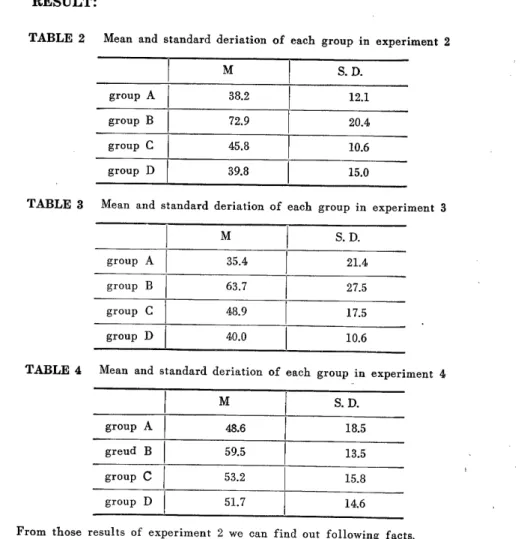
TABLE 2 Mean and standard deriation of each group in experiment 2
1 M I S. D. group group group A B C
38.2
I
12.1
72.9 20.445.8
I
10.6
group D 39.8 I 15.0TABLE 3 Mean and standard deriation of each group in experiment 3 M I S. D.
group A 35.4 21.4
group B 63.7 27.5
group C 48.9 17.5
group D 40.0 10.6
TABLE 4 Mean and standard deriation of each group in experiment 4
1 M S. D.
group A 48.6 18.5
greud B 59.5 13.5
group C 53.2 15.8
group D 51.7 14.6
From those results of experiment 2 we can find out following facts .
The mean is high in the order of group B, C, D and A which is the same as experiment 1. The results of significant difference test were also the same .
(2) The test of significant difference concerning standard deviation shows us that high difference appeared. That is quite different from the fact of the experiment 2.
By the lapse of time individual difference might occure and be clear .
TABLE 5 Analysis of variance
sum of squares degree of freedom unbiased variance Fo teaching method 1,481.7 3 493.9 3.68 problem 190.0 2 95.0 0.72 error 803.3 6 I. 133.9 summation 2,475.0 11 ( 24 )
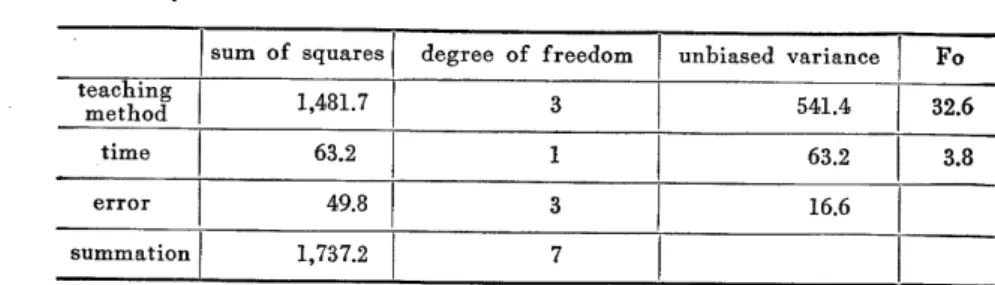
TABLE 6 Analysis of variance
sum of squares degree of freedom unbiased variance Fo
teaching
method 1,481.7 3 541.4 32.6
time 63.2 1 63.2 3.8
error 49.8 3 16.6
summation 1,737.2 7
highly signicant difference of 1% level
(3) As you see in table 5 and 6 there is highly significant difference in the teaching method, but no difference in the "time".
Observing the result of 3rd experiment we can find following facts .
As is the cage of experiment 1 and 2. the mean is high in the order of group B, C, D and A. The results of significant difference test show, however , less difference between
group B and C, while higher significant difference of standard deviation between groups
appeared.
The 4th experiment shows us that the mean is high in the order of group, too, but no significant difference obtains. It may partially owe to an effect of problems for evaluation
on the results of learning though the analysis of variance shows no significant difference
as you see in table 5.
INTRA—INDIVIDUAL DIFFERENCE IN READING PROCESS
PROBLEM:
The writer was going to make this study serve as diagnosis and remedical treatment of child's analytical reading after finding out intra-individual difference .
Next, the writer going to make clear the relationship between achievement of Japanese as a language and the pattern of analytical reading.
METHOD:
Subjects; 60 4th graders
3 reading materials were used which are poems, essay and literary work.
Problems consisted of 4 sub-test which were of discription, context, plot and auther's idea.
The scores of the tests and children's achievement in the lesson of Japanese were classified 4 steps by Quartile Deviation in order to get contigency coefficient.
RESULT:
1. There appeared 18 patterns.
2. There was high interrelation between the score of achievement and of 4 sub-tests. 3. One of the efficient group teachings may be to train the children who show the same,
pattern of reading in the same time.
4. The best group was superior in all 4 sub-tests, while the poorest group inferior in them all. The 2nd group showed much variety of pattern, while the 3rd group showed rather-uniform, but inferior in the problem of Discription.
A Psychological Study of Flexilbility in Reading
The aim of the first study was to measure the development of flexibility in reading which may be observed from two points of view. Those are the effective adjustment of the speed of reading depending upon the reading materials, and the process of reading.
The subjects were third graders, fifth graders and seventh graders. They were required to circle the character they were reading at the sound of a bell which was rung at intervals of thirty seconds. A comprehension test was given after reading using work-type reading ma-terial and recreational material.
On an average, every subject showed the same flexibility. depending upon the reading ma-terials used. (At the 1% level of significance)
The significant difference between third graders and fifth graders was revealed from a viewpoint of effective rate. The significant difference between fifth graders and seventh graders was revealed in the gross rate. The development of flexibility in the process of reading was not clearly observed.
Children with extremely poor eyesight were less flexible in reading when compared childr-en with normal vision.
The purpose of the second study was to evaluate the effect of speed reading training upon flexibility by the control group method. Subjects of the experimental group were nine college students, while the control group consisted of four from the same college. Five kinds of rec-reational and work-type reading materials were used during pre-testing and post-testing in order to evaluate flexibility
The training of speed reading was given five days a week for four weeks. Skimming for 25 sec. was allowed before reading. After reading the subjects were informed of their reading speed and degree of comprehension.
The reading speed increased, (at the 1% level of significance), while no influence upon flexibility was revealed.