A nationwide, multi-center, retrospective
study of symptomatic small bowel stricture in
patients with Crohn's disease.
著者
BAMBA Shigeki, SAKEMI Ryosuke, FUJII
Toshimitsu, TAKEDA Teruyuki, FUJIOKA Shin,
TAKENAKA Kento, KITAMOTO Hiroki, UMEZAWA
Shotaro, SAKURABA Hirotake, INOKUCHI
Toshihiro, FUKATA Norimasa, MIZUNO Shinta,
YAMASHITA Masaki, SHINZAKI Shinichiro, TANAKA
Hiroki, TAKEDATSU Hidetoshi, OZAKI Ryo, MORIYA
Kei, ISHII Manabu, KINJO Tetsu, OZEKI Keiji,
OOI Makoto, HAYASHI Ryohei, KAKIMOTO Kazuki,
SHIMODATE Yuichi, KITAMURA Kazuya, YAMADA
Akihiro, SONODA Akira, NISHIDA Yu, YOSHIOKA
Kyouko, ASHIZUKA Shinya, TAKAHASHI Fumiaki,
SHIMOKAWA Toshio, KOBAYASHI Taku, ANDOH Akira,
HIBI Toshifumi
journal or
publication title
Journal of Gastroenterology
year
2020-01-27
URL
http://hdl.handle.net/10422/00012615
doi: 10.1007/s00535-020-01670-2(https://doi.org/10.1007/s00535-020-01670-2)A nationwide, multi-center, retrospective study of symptomatic small bowel stricture in patients with Crohn’s disease
Shigeki Bamba, MD, PhD,1* Ryosuke Sakemi, MD,2* Toshimitsu Fujii, MD, PhD,3* Teruyuki Takeda, MD,4 Shin Fujioka, MD, PhD,5 Kento Takenaka, MD, PhD,3 Hiroki Kitamoto, MD,6 Shotaro Umezawa, MD, PhD,7 Hirotake Sakuraba, MD, PhD,8 Toshihiro Inokuchi, MD, PhD,9 Norimasa Fukata, MD, PhD,10 Shinta Mizuno, MD, PhD,11 Masaki Yamashita, MD, PhD,12
Shinichiro Shinzaki, MD, PhD,13 Hiroki Tanaka, MD, PhD,14 Hidetoshi Takedatsu, MD, PhD,15 Ryo Ozaki, MD,16 Kei Moriya, MD, PhD,17 Manabu Ishii, MD, PhD,18 Tetsu Kinjo, MD, PhD,19 Keiji Ozeki, MD, PhD,20 Makoto Ooi, MD, PhD,21 Ryohei Hayashi, MD, PhD,22 Kazuki Kakimoto, MD, PhD,23 Yuichi Shimodate, MD,24 Kazuya Kitamura, MD, PhD,25 Akihiro Yamada, MD, PhD,26 Akira Sonoda, MD, PhD,27 Yu Nishida, MD, PhD,28 Kyouko Yoshioka, MD, PhD,29 Shinya Ashizuka, MD, PhD,30 Fumiaki Takahashi, MD, PhD,31 Toshio Shimokawa, PhD,32 Taku Kobayashi, MD, PhD,16 Akira Andoh, MD, PhD,33 Toshifumi Hibi, MD, PhD,16
1Division of Clinical Nutrition, Shiga University of Medical Science 2Department of Gastroenterology, Tobata Kyoritsu Hospital
3Department of Gastroenterology and Hepatology, Tokyo Medical and Dental University 4Department of Gastroenterology, Fukuoka University Chikushi Hospital
5Department of Medicine and Clinical Science, Kyushu University Graduate Schools of Medical Science
6Department of Gastroenterology and Hepatology, Kyoto University Graduate School of Medicine 7Center for Gastroenterology and Inflammatory Bowel Disease, Ohfuna Chuo Hospital
8Department of Gastroenterology and Hematology, Hirosaki University Graduate School of Medicine
9Department of Gastroenterology and Hepatology, Okayama University Graduate School of Medicine
10Third Department of Internal Medicine, Kansai Medical University
11Division of Gastroenterology and Hepatology, Keio University School of Medicine
12Division of Gastroenterology and Hepatology, Saint Marianna University School of Medicine 13Department of Gastroenterology and Hepatology, Osaka University Graduate School of Medicine 14IBD Center, Sapporo Kosei General Hospital
15Department of Gastroenterology and Medicine, Fukuoka University Faculty of Medicine
16Center for Advanced IBD Research and Treatment, Kitasato University Kitasato Institute Hospital 17Department of Gastroenterology and Hepatology, Nara Medical University School of Medicine
Text;AVOID_ENG_JG_Rev3_20191216.docx
Click here to view linked References
1 2 3 4 5 6 7 8 9 10 11 12 13 14 15 16 17 18 19 20 21 22 23 24 25 26 27 28 29 30 31 32 33 34 35 36 37 38 39 40 41 42 43 44 45 46 47 48 49 50 51 52 53 54 55 56 57 58 59
18Division of Gastroenterology, Department of Internal Medicine, Kawasaki Medical School 19Department of Endoscopy, University of Ryukyus Hospital
20Departments of Gastroenterology and Metabolism, Nagoya City University Graduate School of Medical Sciences
21Division of Gastroenterology, Department of Internal Medicine, Kobe University Graduate School of Medicine
22Department of Endoscopy, Hiroshima University Hospital 232nd Department of Internal Medicine, Osaka Medical College
24Department of Gastroenterology and Hepatology, Kurashiki Central Hospital 25Department of Gastroenterology, Kanazawa University Hospital
26Department of Internal Medicine, Toho University, Sakura Medical Center 27Department of Gastroenterology, Oita University
28Department of Gastroenterology, Osaka City University Graduate School of Medicine 29Department of Gastroenterology, Kure Kyosai Hospital
30Circulatory and Body Fluid Regulation, Faculty of Medicine, University of Miyazaki 31Department of Internal Medicine, Japanese Red Cross Ashikaga Hospital
32 Department of Medical Data Science, Graduate school of Medicine, Wakayama Medical University
33Division of Gastroenterology, Shiga University of Medical Science
*These authors contributed equally to this study.
Short title: Symptomatic small bowel stricture in CD
Word count: 3369
Address for correspondence
Shigeki Bamba, M.D., Ph.D.
Division of Clinical Nutrition, Shiga University of Medical Science, Seta-Tsukinowa, Otsu, 520-2192, Japan
Tel: +81-77-548-2899; Fax: +81-77-548-2499 E-mail: [email protected] 2 3 4 5 6 7 8 9 10 11 12 13 14 15 16 17 18 19 20 21 22 23 24 25 26 27 28 29 30 31 32 33 34 35 36 37 38 39 40 41 42 43 44 45 46 47 48 49 50 51 52 53 54 55 56 57 58 59
Abstract
Background: Small bowel stricture is one of the most common complications in patients with Crohn’s
disease (CD). Endoscopic balloon dilatation (EBD) is a minimally invasive treatment intended to avoid surgery; however, whether EBD prevents subsequent surgery, remains unclear. We aimed to reveal the factors contributing to surgery in patients with small bowel stricture and the factors associated with subsequent surgery after initial EBD.
Methods: Data were retrospectively collected from surgically untreated CD patients who developed
symptomatic small bowel stricture after 2008 when the use of balloon-assisted enteroscopy and maintenance therapy with anti-tumor necrosis factor (TNF) became available.
Results: A total of 305 cases from 32 tertiary referral centers were enrolled. Cumulative surgery-free
survival was 74.0% at 1 year, 54.4% at 5 years, and 44.3% at 10 years. The factors associated with avoiding surgery were non-stricturing, non-penetrating disease at onset, mild severity of symptoms, successful EBD, stricture length <2 cm, and immunomodulator or anti-TNF added after onset of obstructive symptoms. In 95 cases with successful initial EBD, longer EBD interval were associated with lower risk of surgery. Receiver operating characteristic analysis revealed that an EBD interval of ≤446 days predicted subsequent surgery, and the proportion of smokers was significantly high in patients who required frequent dilatation.
Conclusions: In CD patients with symptomatic small bowel stricture, addition of immunomodulator
or anti-TNF and smoking cessation may improve the outcome of symptomatic small bowel stricture, by avoiding frequent EBD and subsequent surgery after initial EBD.
Keywords
Inflammatory bowel disease, stenosis, balloon enteroscope 2 3 4 5 6 7 8 9 10 11 12 13 14 15 16 17 18 19 20 21 22 23 24 25 26 27 28 29 30 31 32 33 34 35 36 37 38 39 40 41 42 43 44 45 46 47 48 49 50 51 52 53 54 55 56 57 58 59
Conflicts of interest
SB received lecture fees from AbbVie GK, Mitsubishi Tanabe Pharma Co., Ltd., Kyorin Pharmaceutical Co., Ltd., Janssen, Mochida Pharmaceutical, Nippon Kayaku, Zeria Pharmaceutical Co., Ltd., and EA Pharma Co., Ltd., and research support from AbbVie GK, and MSD Inc. RS received lecture fees from Mitsubishi Tanabe Pharma Co., Ltd., Janssen, AbbVie GK, EA Pharma Co., Ltd., and Nippon Kayaku. TF received research support from Eisai Co., Ltd., and Alfresa Co., Ltd., and lecture fees from AbbVie, Ajinomoto Pharma, Boehringer Ingelheim, Daiichi Sankyo Co., Ltd., EA Pharma Co., Ltd., Janssen, Kissei Pharmaceutical, Kyorin Pharmaceutical Co., Ltd., Kyowa Hakko Kirin, Mitsubishi Tanabe Pharma Co., Ltd., Mochida Pharmaceutical, Nippon Kayaku, and Zeria Pharmaceutical Co., Ltd. HS received research support from Bristol-Myers Squibb, AbbVie GK, MSD Inc., Daiichi Sankyo Co., Ltd., and Zeria Pharmaceutical Co., Ltd. SS received lecture fees from Mitsubishi Tanabe Pharma Co., Ltd., AbbVie GK, EA Pharma Co., Ltd., and Nippon Kayaku. HTan received lecture fees from JIMRO Co., Ltd., AbbVie GK, EA Pharma Co., Ltd., Mochida Pharmaceutical Co., Ltd., Kyorin Pharmaceutical Co., Ltd., and Mitsubishi Tanabe Pharma Co., Ltd. RO received lecture fees from AbbVie GK. KKa received lecture fees from Mitsubishi Tanabe Pharma Co., Ltd. and AbbVie GK. YS received lecture fees from Mitsubishi Tanabe Pharma Co., Ltd. and EA Pharma Co., Ltd. KKi received lecture fees from Mitsubishi Tanabe Pharma Co., Ltd., AbbVie GK, EA Pharma Co., Ltd., Janssen, Nippon Kayaku, and Olympus, and research support from AbbVie GK and Zeria Pharmaceutical. SA received lecture fees from Janssen, Mitsubishi Tanabe Pharma Co., Ltd., and JIMRO Co., Ltd. TKo received lecture fees from AbbVie GK, Ajinomoto Pharma, Asahi Kasei Medical, Astellas, Alfresa Pharma, Celltrion, EA Pharma Co., Ltd., Eisai Co., Ltd., Gilead Sciences, Janssen, JIMRO Co., Ltd., Kyorin Pharmaceutical Co., Ltd., Nippon Kayaku, Mochida Pharmaceutical, Takeda Pharmaceutical, Mitsubishi Tanabe Pharma Co., Ltd., and ZERIA Pharmaceutical Co., Ltd., and consulting fees from Alfresa Pharma, Covidien, Eli Lilly, Ferring Pharmaceuticals, Janssen, Kyorin Pharmaceutical Co., Ltd., Mochida Pharmaceutical, Nippon Kayaku, Pfizer, Takeda Pharmaceutical, and Thermo Scientific, and research support from EA Pharma Co., Ltd., Thermo Fisher Scientific, Alfresa Pharma, Nippon Kayaku, and Asahi Kasei Medical. AA received lecture fees from AbbVie GK, Mitsubishi Tanabe Pharma Co., Ltd., Kyorin Pharmaceutical Co., Ltd., Janssen, Astellas, Zeria Pharmaceutical, Miyarisan Pharmaceutical, Takeda Pharmaceutical, Bristol-Myers Squibb, Gilead Sciences, MSD Inc., and EA Pharma Co., Ltd., and research support from EA Pharma Co., Ltd., AbbVie GK, MSD Inc., and Mochida Pharmaceutical, and consulting fees from Mochida Pharmaceutical Co., Ltd., and Takeda Pharmaceutical. TH received lecture fees from Mitsubishi Tanabe Pharma Co., Ltd., Kyorin Pharmaceutical Co., Ltd., AbbVie GK, Janssen, JIMRO Co., Ltd., EA Pharma Co., Ltd., Mochida Pharmaceutical Co., Ltd., Takeda Pharmaceutical, Gilead Sciences, Celltrion, Nippon Kayaku, Kissei Pharmaceutical, Miyarisan Pharmaceutical, Zeria Pharmaceutical Co., Ltd., and Ferring Pharmaceutical, and advisory/consultancy fees from AbbVie 2 3 4 5 6 7 8 9 10 11 12 13 14 15 16 17 18 19 20 21 22 23 24 25 26 27 28 29 30 31 32 33 34 35 36 37 38 39 40 41 42 43 44 45 46 47 48 49 50 51 52 53 54 55 56 57 58 59
GK, Takeda Pharmaceutical, Mitsubishi Tanabe Pharma Co., Ltd., JIMRO Co., Ltd., EA Pharma Co., Ltd., Eli Lilly, Pfizer Japan Inc, Nichi-Iko Pharmaceutical, and Nippon Kayaku, and research support from EA Pharma, AbbVie GK, JIMRO Co., Ltd., Zeria Pharmaceutical Co. Ltd., and Otsuka Pharmaceutical Co., Ltd. However, none of the above is relevant to this article.
2 3 4 5 6 7 8 9 10 11 12 13 14 15 16 17 18 19 20 21 22 23 24 25 26 27 28 29 30 31 32 33 34 35 36 37 38 39 40 41 42 43 44 45 46 47 48 49 50 51 52 53 54 55 56 57 58 59
Introduction
Crohn’s disease (CD) is a chronic granulomatous inflammatory bowel disease condition characterized by skip lesions and transmural inflammation, and chronic inflammation may affect any part of the gastrointestinal tract. Fibrosis associated with the chronic inflammation eventually results in stricture or obstruction of the gastrointestinal tract. Lesions frequently develop in the ileum and colon, but strictures are more likely to develop in the small bowel than in the colon. Thus, CD patients undergo surgical treatment most commonly for small bowel stricture1.
Treatment options for stricture in CD patients are: pharmacotherapy such as anti-tumor necrosis factor (anti-TNF) antibody or immunomodulator; endoscopic therapy, typically endoscopic balloon dilatation (EBD); and surgery including strictureplasty.2 The efficacy of pharmacotherapy for stricture in CD has not yet been established, and the effectiveness of, for example, anti-TNF antibody therapy, is not consistent, with it being effective in some studies3-6 but not in others.2, 7 Also, the role of immunomodulators for the treatment of stricturing complications in CD has been not explored directly8. It is pertinent to note that pharmacotherapy was effective in the treatment of inflammatory stricture.9
The introduction of double-balloon enteroscopy in 200110 and of single-balloon enteroscopy in 200811 enabled EBD for small bowel stricture, as well as observation of small bowel lesions, using a balloon-assisted enteroscope. EBD has become an important therapeutic option for symptomatic stricture,12 but many previous studies on EBD in CD patients included heterogenous background factors such as the location of stricture (small bowel vs colon)13-15 and the cause of stricture (de novo vs anastomotic).13-16 Also, many were single-center studies, and as such the results were affected by treatment policy and expertise at individual centers.
EBD is minimally invasive and offers a high success rate with a low frequency of procedural complications.17-19 However, patients need to undergo the procedure repeatedly to avoid surgery, and 2 3 4 5 6 7 8 9 10 11 12 13 14 15 16 17 18 19 20 21 22 23 24 25 26 27 28 29 30 31 32 33 34 35 36 37 38 39 40 41 42 43 44 45 46 47 48 49 50 51 52 53 54 55 56 57 58 59
ultimately this reduces quality of life. Several studies have examined factor associated with avoiding the need for surgery by performing EBD,20-22 but clinical course and intestinal resection after EBD have rarely been investigated.
In this study, we collected surgically untreated cases with CD who developed symptomatic small bowel stricture after 2008 when the use of balloon-assisted enteroscopy (BAE) and maintenance therapy with anti-TNF antibody became available. This study sought to reveal the factors contributing to intestinal resection in small bowel stricture in CD patients and the factors associated with outcomes after initial EBD, particularly intestinal resection and EBD interval.
2 3 4 5 6 7 8 9 10 11 12 13 14 15 16 17 18 19 20 21 22 23 24 25 26 27 28 29 30 31 32 33 34 35 36 37 38 39 40 41 42 43 44 45 46 47 48 49 50 51 52 53 54 55 56 57 58 59
Methods
Ethical considerations
This retrospective multicenter study was approved by the ethics committees of the participating institutions. The study is registered in the University Hospital Medical Network Clinical Trials Registry (UMIN000028355).
Study methods and subjects
One of the authors (S.B.) directly contacted gastroenterologists and surgeons at the participating institutions to ask them to report all cases of CD with symptomatic small bowel stricture and no previous history of intestinal surgery seen between January 2008 and December 2017. Data were collected retrospectively from 32 tertiary referral centers and submitted to Shiga University of Medical Science. Patients were screened using records in the participating institution’s databases, such as endoscopy filing systems and/or by retrieving the following ICD-10 codes from their medical history databases: K565 (Intestinal adhesion (bands) with obstruction (postprocedural) (postinfection)); K566 (Other and unspecified intestinal obstruction); K567 (Ileus, unspecified); K500 (Crohn’s disease of small intestine); K501 (Crohn’s disease of large intestine); K508 (Crohn’s disease of both small and large intestine); K509 (Crohn’s disease, unspecified). For patients who were screened, their medical charts were individually reviewed to check whether they actually had obstructive symptoms and were eligible to participate in this study.
The inclusion criteria for CD patients were a medical history from January 2008 to March 2017, development of obstructive symptoms for the first time from January 2008 to March 2017, and confirmation of small bowel stenosis by imaging examinations such as BAE, small bowel follow-through, CT, and MRI. Exclusion criteria were intestinal resection performed before the onset of obstructive symptoms, diagnosis of postoperative adhesion ileus, presence of fistula, and declining to 2 3 4 5 6 7 8 9 10 11 12 13 14 15 16 17 18 19 20 21 22 23 24 25 26 27 28 29 30 31 32 33 34 35 36 37 38 39 40 41 42 43 44 45 46 47 48 49 50 51 52 53 54 55 56 57 58 59
participate in the study. Data were obtained according to a previously defined case report sheet by inflammatory bowel disease specialists or gastroenterologists. These data included a detailed report of the disease phenotype and history and the baseline status of CD according to the Montreal classification.23
Endpoints and definitions
The primary endpoint of this study was the cumulative intestinal resection rate after onset of obstructive symptoms. The secondary endpoint was the effectiveness of EBD and pharmacotherapy in relation to the cumulative intestinal resection rate. We also analyzed the factors associated with intestinal resection or EBD interval after initial EBD. In this study, the observation period was set from the first onset of obstructive symptoms to intestinal resection or censoring.
For those patients who did not undergo endoscopy or whose entire small bowel could not be observed using BAE, the number of small bowel strictures was determined by imaging examinations such as CT, MRI, and small bowel follow-through. Given that involvement of the ileocecal valve at the stricture site may affect the actual procedure and eventual outcome of EBD, the stricture site was divided into two types, strictures with and without ileocecal valve involvement, which were defined as ileocecal valve and small intestinal strictures, respectively. When a patient had multiple strictures, the causative stricture was determined by the physician’s general assessment considering the degree of stricture and/or prestenotic dilatation. The scope of use was the colonoscope or BAE. When the EBD of the causative lesion was successful, it was defined as a successful EBD. The degree of prestenotic dilatation and the progress of symptoms after EBD were used to judge whether the stenosis was a causative lesion. If EBD was attempted but was technically difficult or impossible, the procedure was defined as unsuccessful.
Symptomatic evaluation was scored on a 3-point scale: mild (spontaneously self-limiting); 2 3 4 5 6 7 8 9 10 11 12 13 14 15 16 17 18 19 20 21 22 23 24 25 26 27 28 29 30 31 32 33 34 35 36 37 38 39 40 41 42 43 44 45 46 47 48 49 50 51 52 53 54 55 56 57 58 59
moderate (outpatient department visit required); and severe (intestinal obstruction, hospitalization required). Medical charts were investigated to evaluate the severity of symptoms. Mild symptoms were checked from symptom descriptions at the outpatient visit, moderate symptoms from irregular visit records, and severe symptoms from records during hospitalization.
Statistical analysis
All statistical analyses were performed using Prism, version 8.01 (GraphPad, San Diego, CA), and JMP software, version 14.0 (SAS Institute, Cary, NC). The cumulative surgery-free survival rate was calculated using Kaplan-Meier analysis. The log-rank test was used to determine statistical differences between groups. Cox regression analysis was performed to estimate the risk of intestinal resection. Receiver operating characteristic (ROC) analysis was used to calculate the cutoff value of the EBD interval associated with intestinal resection by identifying the point closest to perfect differentiation. Logistic regression analysis was performed to determine the factors associated with EBD interval. After univariate analysis, all variables with P values less than 0.20 were considered in the subsequent multivariate analysis. We also refer to the literature for the selection of variables. P values were two-sided, with statistical significance set at p <0.05.
2 3 4 5 6 7 8 9 10 11 12 13 14 15 16 17 18 19 20 21 22 23 24 25 26 27 28 29 30 31 32 33 34 35 36 37 38 39 40 41 42 43 44 45 46 47 48 49 50 51 52 53 54 55 56 57 58 59
Results
Study participants
A total of 348 patients from 32 centers were enrolled. After excluding patients who did not meet the inclusion criteria, the remaining 305 patients were entered into the overall analysis. Also, factors associated with intestinal resection after initial EBD and EBD interval were analyzed in 95 patients from 24 centers (Figure 1). The background characteristics of the all patients are shown in Table 1. A total of 129 patients required intestinal resection during the observation period. The indication for intestinal surgery was related to the causative strictures in all cases; 120 cases of small bowel stricture, 6 cases of small bowel perforation, 1 case of abscess, and 2 cases of perforation as EBD complication. For examining strictures, colonoscopy or BAE was performed. Of 65 colonoscopies, 46 procedures were done using the conventional colonoscope, 8 were done using a thin colonoscope, and 11 were done using a long thin colonoscope. Of 181 BAEs, 93 procedures were done using a single-balloon enteroscope, and 88 procedures were done using a double-balloon enteroscope. The proportion of patients who underwent BAE was significantly higher among those patients who underwent EBD than those who did not undergo EBD. All procedures were done using a through-the-scope balloon dilator (CRETM balloon catheter; Boston Scientific Co., Natick, MA).
Factors associated with intestinal resection in all patients
Kaplan-Meier analysis revealed cumulative surgery-free survival at 1, 5, and 10 years after onset of obstructive symptoms was 74.0%, 54.4%, and 44.3%, respectively (Figure 2a). The log-rank test for each background factor showed that sex, disease location, disease behavior at onset, perianal lesion, and smoking status were not significant factors (Suppl. Figure 1a, b, c, d, e). Cumulative surgery-free survival was significantly higher in patients with mild obstructive symptoms (Figure 2b). Prognosis was best when stricture was examined by BAE, followed by colonoscopy, and surgery-free survival 2 3 4 5 6 7 8 9 10 11 12 13 14 15 16 17 18 19 20 21 22 23 24 25 26 27 28 29 30 31 32 33 34 35 36 37 38 39 40 41 42 43 44 45 46 47 48 49 50 51 52 53 54 55 56 57 58 59
was lowest in patients who did not undergo endoscopy (Figure 2c, p <0.001, log-rank test), however, the choice of endoscope did not affect surgery in multivariate analysis (Table 2). Cumulative surgery-free survival did not differ based on location of stricture (ileocecal valve or small intestine) or number of strictures (Suppl. Figure 1f, g), but it was significantly lower with stricture length ≥2 cm (Figure 2d).
EBD was successful in 100 patients and was not successful in 32 patients due to technical difficulties (e.g., unreachable lesions), giving an EBD success rate of 75.5%. The cumulative surgery-free survival was significantly high when EBD was successful; cumulative surgery-surgery-free survival at 1, 5, and 10 years was 93.8%, 72.8%, and 62.9%, respectively (Figure 2e). This result was also confirmed when we limited the cohort to patients who underwent endoscopy (n = 246) with observation periods starting from the timing of endoscopy and not from occurrence of the first symptom (Figure 2f). Procedural complications were seen in 3 patients (3%): 1 with gastrointestinal perforation, which required surgery and 2 with gastrointestinal bleeding that did not require blood transfusion.
The log-rank test revealed that cumulative surgery-free survival was not affected in patients who were already on immunomodulators or anti-TNF at the onset of symptoms (Figure 3a, b), but was significantly lower in those who started immunomodulators or anti-TNF after the onset of symptoms (Figure 3c, d).
Multivariate analysis using Cox regression analysis showed that stricturing, non-penetrating disease at onset, mild severity of symptoms, successful EBD, stricture length <2 cm, and initiation of immunomodulator or anti-TNF antibody after the onset of obstructive symptoms were associated with avoiding the need for intestinal resection (Table 2).
Factors associated with intestinal resection after initial EBD
Although EBD was a significant factor in avoiding intestinal resection, some cases required intestinal 2 3 4 5 6 7 8 9 10 11 12 13 14 15 16 17 18 19 20 21 22 23 24 25 26 27 28 29 30 31 32 33 34 35 36 37 38 39 40 41 42 43 44 45 46 47 48 49 50 51 52 53 54 55 56 57 58 59
resection or repeated EBD. Therefore, we examined the factors associated with outcomes after initial EBD. To include EBD interval as a factor for analysis, we excluded patients with a <1-year follow-up (Figure 1). The background characteristics of patients with successful EBD are shown in Suppl. Table 1. Analysis using the Cox proportional hazard model revealed that severity of symptoms, EBD diameter, location of stricture, and interval of EBD were associated with risk of intestinal resection in univariate analysis (Table 3). Multivariate analysis revealed that longer interval of EBD was strongly associated with reduced risk of subsequent intestinal resection (Table 3).
Factors associated with EBD interval after initial EBD
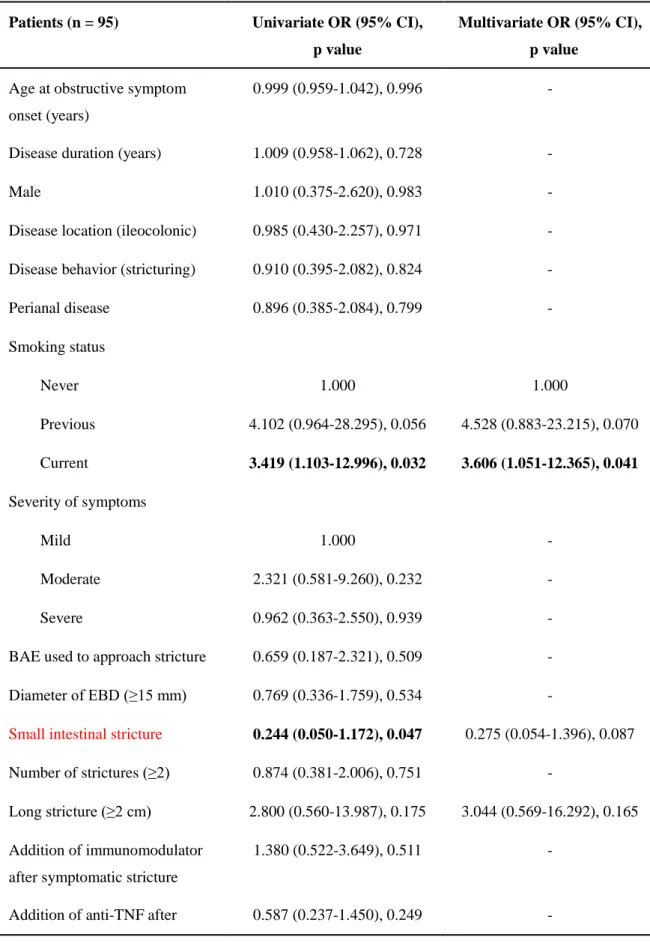
Successful initial EBD does not always lead to better quality of life than surgery if symptoms recur and repeated EBD is required. Therefore, we analyzed the EBD interval, which predicts subsequent surgery, and we also analyzed factors associated with EBD interval. ROC analysis revealed a cutoff EBD interval of 446 days (AUC 0.750). Thus, we compared patients with an interval of ≤446 days between the initial and next EBD (patients with frequent EBD) and those with an interval of >446 days (patients with less frequent EBD) (Suppl. Table 2). Logistic multivariate regression of the patients’ background characteristics showed more patients with a history of smoking among those with frequent EBD (Table 4). 2 3 4 5 6 7 8 9 10 11 12 13 14 15 16 17 18 19 20 21 22 23 24 25 26 27 28 29 30 31 32 33 34 35 36 37 38 39 40 41 42 43 44 45 46 47 48 49 50 51 52 53 54 55 56 57 58 59
Discussion
This study revealed cumulative surgery-free survival in CD patients with surgically untreated symptomatic small bowel stricture was 74.0% at 1 year, 54.4% at 5 years, and 44.3% at 10 years. In successful EBD cases, cumulative surgery-free survival was 93.8%, 72.8%, and 62.9%, respectively. The factors associated with avoiding the need for intestinal resection were stricturing, non-penetrating disease at onset, mild severity of symptoms, successful EBD, stricture length <2 cm, and immunomodulator or anti-TNF antibody therapy added after the onset of obstructive symptoms. After initial EBD, longer interval of EBD might reduce the risk of intestinal resection. It is also suggested that surgery is likely with a dilatation interval of ≤446 days and that the response to EBD was shown to be lower in patients who currently smoked.
Approximately a quarter of CD patients with surgically untreated symptomatic small bowel stricture underwent intestinal resection within 1 year after onset of obstructive symptoms and approximately half underwent surgery 5 years later. A retrospective study comparing EBD with surgery for ileocolonic anastomotic stricture showed that the surgery rate was lower in patients for whom the initial intervention was surgery, but the time to surgery was extended by 6.45 years in patients for whom the initial intervention was EBD; the complication rate was lower with EBD than with surgery (1% vs 8%).24 Given concern about postoperative complications, EBD would be the better option when feasible.
The severity of obstructive symptoms was also associated with intestinal resection. Pellietier et al. reported the efficacy of infliximab in patients with symptomatic Crohn’s disease strictures.4 They included patients with spontaneously self-limited obstruction, cramping abdominal pain, and complete obstruction. However, they did not show any differences in treatment efficacy in terms of prior symptoms. In the CREOLE study, the Crohn’s disease obstructive score (CDOS) was constructed empirically, and a CDOS >4 and the presence of obstructive symptoms for <5 weeks were included in 2 3 4 5 6 7 8 9 10 11 12 13 14 15 16 17 18 19 20 21 22 23 24 25 26 27 28 29 30 31 32 33 34 35 36 37 38 39 40 41 42 43 44 45 46 47 48 49 50 51 52 53 54 55 56 57 58 59
the clinical-radiological prognostic score as independent factors associated with a high rate of success.9 Therefore, a CDOS>4 (i.e., severe abdominal pain for >1 week, mild to moderate abdominal pain every day that was associated with nausea, vomiting, abdominal cramps for >3 days or hospitalization during the previous 8 weeks) was a predictive factor for successful adalimumab treatment. Their results partially conflict with ours, but a simple comparison of the results is not possible because of the different evaluation methods used. Furthermore, the severity of symptoms alone cannot distinguish whether the stenosis is caused by inflammation or fibrosis.
The success rate of EBD in this study was slightly lower than that of previous reports.16, 21, 25, 26 These data seem to reflect the real-world situation as this cohort includes cases from institutions
that are not actively performing EBD. The cumulative surgery-free survival in successful EBD cases in the present study was as high as reported previously,20, 21, 27 suggesting the utility of EBD for small bowel stricture. Fistula at the stricture site,20 unsuccessful EBD,21 stricture size ≥2 cm,22 extent of small bowel dilatation proximal to the stricture,22 and presence of ≥2 strictures27 have been reported to be surgery-associated factors in patients who have undergone BAE. The present study confirmed an association between unsuccessful EBD and stricture length ≥2 cm, but not an association between the number of strictures and surgery. Patients with fistula were not included, and the extent of small bowel dilatation proximal to the stricture was not examined in this study.
A population-based study revealed that surgery is performed less often for CD with the current availability of immunomodulator and biologic agents.28 This study revealed that cumulative surgery-free survival was higher in patients with non-stricturing, non-penetrating disease at onset. Given that patient enrollment started in 2008 in this study, medication such as immunomodulators and anti-TNF antibody might have suppressed the progression of fibrosis at stricture site.
This study found that the intestinal resection rate was lower when immunomodulator or anti-TNF antibody therapy was added in CD patients after the onset of obstructive symptoms. However, as 2 3 4 5 6 7 8 9 10 11 12 13 14 15 16 17 18 19 20 21 22 23 24 25 26 27 28 29 30 31 32 33 34 35 36 37 38 39 40 41 42 43 44 45 46 47 48 49 50 51 52 53 54 55 56 57 58 59
mentioned earlier, the effect of immunomodulator or anti-TNF antibody in CD with stricture is controversial. Findings from the CREOLE study showed that enhancement on delayed T1-weighted magnetic resonance imaging sequences is a factor associated with avoiding the need for surgery,9 suggesting that anti-TNF antibody is effective for inflammatory stricture. However, distinguishing fibrotic from inflammatory stricture is difficult based on imaging findings alone. Given the results of this study, immunomodulator or anti-TNF antibody therapy should be considered for CD patients with a small bowel stricture.
The most relevant factor contributing to intestinal resection after successful initial EBD was the EBD interval. The need for repeated EBD is a clinical challenge. Repeated EBD reduces quality of life. This study found an association between an EBD interval of ≥446 days and intestinal resection. Unlike patients with ulcerative colitis, patients with CD do not require regular endoscopic surveillance. In patients who underwent EBD within 466 days (a little over 1 year), it was suggested that some gastrointestinal symptoms might have been present and that periodic EBD may be required. Also, repeat EBD was required in patients with a history of smoking, indicating the importance of guidance on smoking cessation. Hirai et al. reported that the amelioration of symptoms is related to the maximum diameter of EBD; however, the observation period was short (4 weeks) and information on smoking history was not stated.16
There are some limitations to this study. First, interventions for small bowel stricture varied among the participating institutions. The choice of treatment, such as EBD or surgery, was dependent on the treatment strategy of each institution. Therefore, it is possible that some patients who did not have EBD performed chose surgery by themselves. Besides, our results may be affected by imbalances between participating institutions. Second, attending physicians usually decide the treatment of choice (e.g., the indication for EBD or scheduled maintenance of EBD, and when to initiate anti-TNF antibody therapy), so some patients would already have severe strictures for which EBD cannot be 2 3 4 5 6 7 8 9 10 11 12 13 14 15 16 17 18 19 20 21 22 23 24 25 26 27 28 29 30 31 32 33 34 35 36 37 38 39 40 41 42 43 44 45 46 47 48 49 50 51 52 53 54 55 56 57 58 59
performed in the first place, which may affect the prognostic analysis. Also, some facilities might have scheduled maintenance EBD after the first EBD. Although this study investigated the effect of anti-TNF antibody on avoiding the need for surgery, we cannot exclude the possibility that factors other than patient characteristics included in multivariate analysis are affected. In terms of the treatment, we did not investigate the status of enteral nutrition therapy. Enteral nutrition may delay the surgery, but its long-term efficacy is not proven.29 In a systematic review, it was shown that enteral nutrition may be less efficacious than corticosteroids in the induction of remission in adult patients with CD.30 Third, we used an ICD-10 code search or a search of records in the institutional databases such as the endoscopy filing systems, as a screening tool to extract eligible patients. We evaluated individual candidates by checking the medical chart to determine whether they actually had obstructive symptoms and were eligible to participate in this study. The severity of symptoms was evaluated from the medical charts and findings of imaging examinations such as CT, MRI, and small bowel follow-through. Therefore, there might be some omissions in identifying cases at each institution. Also, there might be uncertain factors regarding the assessment of symptom severity. Fourth, this study includes symptomatic patients only, so the efficacy of prophylactic EBD could not be clarified. Fifth, stricture site was divided into two types, ileocecal valve and small intestinal strictures, in this study because this was a retrospective study and we did not collect information about the distance from the ileocecal valve to the stricture. Therefore, some strictures in the lower ileum may be easily accessed with a colonoscope. Sixth, the patient population in this study comprised rare cases, which are unlikely to be included in a randomized controlled study, and therefore data on a larger number of patients are needed in the future.
In summary, this study revealed the factors associated with cumulative surgery-free survival in CD patients with symptomatic small bowel stricture. To avoid intestinal resection, patients who have short stricture length with non-stricturing, non-penetrating disease at onset should be considered 2 3 4 5 6 7 8 9 10 11 12 13 14 15 16 17 18 19 20 21 22 23 24 25 26 27 28 29 30 31 32 33 34 35 36 37 38 39 40 41 42 43 44 45 46 47 48 49 50 51 52 53 54 55 56 57 58 59
for EBD and anti-TNF antibody therapy even after the onset of obstructive symptoms. EBD is an important procedure in avoiding intestinal resection. Thus, to maximize the effect of EBD, dilatation should be performed with a diameter of ≥15 mm. In addition, smoking cessation should be encouraged to avoid frequent EBD.
Acknowledgement
This study has not received any direct financial support. Although recruitment of investigators to this study was conducted in part at a conference called the AIM Jr meeting, funded by Eisai Co., Ltd. and EA Pharma Co., Ltd., the study design, including development of the protocol, statistical analysis and drafting of the manuscript were performed only by the investigators. Therefore, this study does not have any relationship with Eisai Co., Ltd. and EA Pharma Co., Ltd.
Authors’ contributions
Conceptualization: SB and RS. Methodology: SB, RS, TF, SS, and TKo. Formal analysis: SB and RS. Investigations: all authors. Writing – original draft: SB. Writing – review and editing: SB and RS. Supervision: TF, SS, KM, TS, TKo, AA, and TH. Approval of final manuscript: all authors.
2 3 4 5 6 7 8 9 10 11 12 13 14 15 16 17 18 19 20 21 22 23 24 25 26 27 28 29 30 31 32 33 34 35 36 37 38 39 40 41 42 43 44 45 46 47 48 49 50 51 52 53 54 55 56 57 58 59
References
[1] Sato Y, Matsui T, Yano Y, et al. Long-term course of Crohn's disease in Japan: Incidence of complications, cumulative rate of initial surgery, and risk factors at diagnosis for initial surgery. Journal of gastroenterology and hepatology. 2015; 30: 1713-9.
[2] Van Assche G, Geboes K, Rutgeerts P. Medical therapy for Crohn's disease strictures. Inflammatory bowel diseases. 2004; 10: 55-60.
[3] Holtmann M, Wanitschke R, Helisch A, et al. [Anti-TNF antibodies in the treatment of inflammatory intestinal stenoses in Crohn's disease]. Zeitschrift fur Gastroenterologie. 2003; 41: 11-7.
[4] Pelletier AL, Kalisazan B, Wienckiewicz J, et al. Infliximab treatment for symptomatic Crohn's disease strictures. Alimentary pharmacology & therapeutics. 2009; 29: 279-85.
[5] Pallotta N, Barberani F, Hassan NA, et al. Effect of infliximab on small bowel stenoses in patients with Crohn's disease. World journal of gastroenterology : WJG. 2008; 14: 1885-90. [6] Bouguen G, Trouilloud I, Siproudhis L, et al. Long-term outcome of non-fistulizing (ulcers, stricture) perianal Crohn's disease in patients treated with infliximab. Alimentary pharmacology & therapeutics. 2009; 30: 749-56.
[7] Thienpont C, D'Hoore A, Vermeire S, et al. Long-term outcome of endoscopic dilatation in patients with Crohn's disease is not affected by disease activity or medical therapy. Gut. 2010; 59: 320-4.
[8] Rodriguez-Lago I, Gisbert JP. The role of immunomodulators and biologics in the medical management of stricturing Crohn's disease. Journal of Crohn's & colitis. 2019. [9] Bouhnik Y, Carbonnel F, Laharie D, et al. Efficacy of adalimumab in patients with Crohn's disease and symptomatic small bowel stricture: a multicentre, prospective, observational cohort (CREOLE) study. Gut. 2018; 67: 53-60.
[10] Yamamoto H, Sekine Y, Sato Y, et al. Total enteroscopy with a nonsurgical steerable double-balloon method. Gastrointestinal endoscopy. 2001; 53: 216-20.
[11] Tsujikawa T, Saitoh Y, Andoh A, et al. Novel single-balloon enteroscopy for diagnosis and treatment of the small intestine: preliminary experiences. Endoscopy. 2008; 40: 11-5. [12] Gionchetti P, Dignass A, Danese S, et al. 3rd European Evidence-based Consensus on the Diagnosis and Management of Crohn's Disease 2016: Part 2: Surgical Management and Special Situations. Journal of Crohn's & colitis. 2017; 11: 135-49.
[13] Hagel AF, Hahn A, Dauth W, et al. Outcome and complications of endoscopic balloon dilatations in various types of ileocaecal and colonic stenosis in patients with Crohn's disease. Surgical endoscopy. 2014; 28: 2966-72.
[14] Atreja A, Aggarwal A, Dwivedi S, et al. Safety and efficacy of endoscopic dilation for primary and anastomotic Crohn's disease strictures. Journal of Crohn's & colitis. 2014; 8: 2 3 4 5 6 7 8 9 10 11 12 13 14 15 16 17 18 19 20 21 22 23 24 25 26 27 28 29 30 31 32 33 34 35 36 37 38 39 40 41 42 43 44 45 46 47 48 49 50 51 52 53 54 55 56 57 58 59
400.
[15] de'Angelis N, Carra MC, Borrelli O, et al. Short- and long-term efficacy of endoscopic balloon dilation in Crohn's disease strictures. World journal of gastroenterology : WJG. 2013; 19: 2660-7.
[16] Hirai F, Andoh A, Ueno F, et al. Efficacy of Endoscopic Balloon Dilation for Small Bowel Strictures in Patients With Crohn's Disease: A Nationwide, Multi-centre, Open-label, Prospective Cohort Study. Journal of Crohn's & colitis. 2018; 12: 394-401.
[17] Navaneethan U, Lourdusamy V, Njei B, et al. Endoscopic balloon dilation in the management of strictures in Crohn's disease: a systematic review and meta-analysis of non-randomized trials. Surgical endoscopy. 2016; 30: 5434-43.
[18] Morar PS, Faiz O, Warusavitarne J, et al. Systematic review with meta-analysis: endoscopic balloon dilatation for Crohn's disease strictures. Alimentary pharmacology & therapeutics. 2015; 42: 1137-48.
[19] Bettenworth D, Gustavsson A, Atreja A, et al. A Pooled Analysis of Efficacy, Safety, and Long-term Outcome of Endoscopic Balloon Dilation Therapy for Patients with Stricturing Crohn's Disease. Inflammatory bowel diseases. 2017; 23: 133-42.
[20] Sunada K, Shinozaki S, Nagayama M, et al. Long-term Outcomes in Patients with Small Intestinal Strictures Secondary to Crohn's Disease After Double-balloon Endoscopy-assisted Balloon Dilation. Inflammatory bowel diseases. 2016; 22: 380-6.
[21] Hirai F, Beppu T, Takatsu N, et al. Long-term outcome of endoscopic balloon dilation for small bowel strictures in patients with Crohn's disease. Digestive endoscopy : official journal of the Japan Gastroenterological Endoscopy Society. 2014; 26: 545-51.
[22] Okazaki N, Inokuchi T, Hiraoka S, et al. Findings of Retrograde Contrast Study Through Double-balloon Enteroscopy Predict the Risk of Bowel Resections in Patients with Crohn's Disease with Small Bowel Stenosis. Inflammatory bowel diseases. 2017; 23: 2097-103. [23] Satsangi J, Silverberg MS, Vermeire S, et al. The Montreal classification of
inflammatory bowel disease: controversies, consensus, and implications. Gut. 2006; 55: 749-53. [24] Lian L, Stocchi L, Remzi FH, et al. Comparison of Endoscopic Dilation vs Surgery for Anastomotic Stricture in Patients With Crohn's Disease Following Ileocolonic Resection. Clin Gastroenterol Hepatol. 2017; 15: 1226-31.
[25] Gill RS, Kaffes AJ. Small bowel stricture characterization and outcomes of dilatation by double-balloon enteroscopy: a single-centre experience. Therapeutic advances in
gastroenterology. 2014; 7: 108-14.
[26] Despott EJ, Gupta A, Burling D, et al. Effective dilation of small-bowel strictures by double-balloon enteroscopy in patients with symptomatic Crohn's disease (with video). Gastrointestinal endoscopy. 2009; 70: 1030-6. 2 3 4 5 6 7 8 9 10 11 12 13 14 15 16 17 18 19 20 21 22 23 24 25 26 27 28 29 30 31 32 33 34 35 36 37 38 39 40 41 42 43 44 45 46 47 48 49 50 51 52 53 54 55 56 57 58 59
[27] Nishida Y, Hosomi S, Yamagami H, et al. Analysis of the Risk Factors of Surgery after Endoscopic Balloon Dilation for Small Intestinal Strictures in Crohn's Disease Using Double-balloon Endoscopy. Intern Med. 2017; 56: 2245-52.
[28] Jeuring SF, van den Heuvel TR, Liu LY, et al. Improvements in the Long-Term Outcome of Crohn's Disease Over the Past Two Decades and the Relation to Changes in
Medical Management: Results from the Population-Based IBDSL Cohort. The American journal of gastroenterology. 2017; 112: 325-36.
[29] Akobeng AK, Zhang D, Gordon M, et al. Enteral nutrition for maintenance of
remission in Crohn's disease. The Cochrane database of systematic reviews. 2018; 8: CD005984. [30] Narula N, Dhillon A, Zhang D, et al. Enteral nutritional therapy for induction of remission in Crohn's disease. The Cochrane database of systematic reviews. 2018; 4: CD000542. 2 3 4 5 6 7 8 9 10 11 12 13 14 15 16 17 18 19 20 21 22 23 24 25 26 27 28 29 30 31 32 33 34 35 36 37 38 39 40 41 42 43 44 45 46 47 48 49 50 51 52 53 54 55 56 57 58 59
Tables
Table 1. Background characteristics of the patients
Characteristic EBD performed EBD not performed Total P value*
Number of patients 100 205 305 -
Age at disease onset (years), median (IQR)
26.5 (21.3-35.4) 27.3 (21.3-35.6) 26.7 (21.5-35.5) 0.625a
Age at obstructive symptom onset (years), median (IQR)
35.2 (27.5-42.4) 34.8 (25.8-42.7) 34.9 (26.4-42.7) 0.566a
Disease duration (years), median (IQR) 4.8 (0.5-10.5) 2.7 (0.1-9.9) 3.1 (0.2-10.1) 0.067a Sex (male/female) 77/23 149/56 226/79 0.503b Disease location (ileal/ileocolonic) 51/49 124/81 175/130 0.147b
Disease behavior (non-stricturing, non-penetrating/stricturing)
47/53 87/118 134/171 0.528b
Perianal disease (present/absent) 39/61 69/136 108/197 0.431b
Smoking (never/previous/current) 70/11/19 150/23/32 220/34/51 0.756b
Obstructive symptoms (mild/moderate/severe)
24/17/193 35/36/134 59/53/193 <0.001b
Endoscope used to approach stricture (colonoscope/BAE/not performed)
13/87/0** 52/94/59† 65/181/59
<0.001b
Location of strictures (small intestine/ileocecal valve) 87/13 176/29 263/42 0.924b Number of strictures (single/dual/multiple) 44/24/32 98/30/77 142/54/109 0.127b Stricture length (<2 cm/≥2 cm) 90/10 125/80 215/90 <0.001b
Intestinal resection during observation period (yes/no)
25/75 104/101 129/176 <0.001b 2 3 4 5 6 7 8 9 10 11 12 13 14 15 16 17 18 19 20 21 22 23 24 25 26 27 28 29 30 31 32 33 34 35 36 37 38 39 40 41 42 43 44 45 46 47 48 49 50 51 52 53 54 55 56 57 58 59
Reason for intestinal resection (stricture/perforation/abscess/EBD complication)
21/2/0/2 99/4/1/0 120/6/1/2 0.022b
Observation period (days), median (IQR) 1438 (549-1999) 595 (102-1336) 703 (278-1673) <0.001a Immunomodulator use (never/before symptoms/after symptoms) 37/38/25 122/46/37 159/84/62 <0.001b
Biologics use (never/before symptoms/after symptoms)
37/31/32 100/43/62 137/74/94 0.085b
IQR: interquartile range; EBD: endoscopic balloon dilatation; BAE: balloon-assisted enteroscope
*Comparison between EBD performed and EBD not performed.
**Details of the scope are as follows: conventional colonoscope/thin colonoscope/long thin
colonoscope/single-balloon enteroscope/double-balloon enteroscope/not performed = 7/1/5/41/46/0.
†
Details of the scope are as follows: conventional colonoscope/thin colonoscope/long thin colonoscope/single-balloon enteroscope/double-balloon enteroscope/not performed = 39/7/6/52/42/59.
aMann-Whitney U test, bchi-square test
2 3 4 5 6 7 8 9 10 11 12 13 14 15 16 17 18 19 20 21 22 23 24 25 26 27 28 29 30 31 32 33 34 35 36 37 38 39 40 41 42 43 44 45 46 47 48 49 50 51 52 53 54 55 56 57 58 59
Table 2. Factors associated with intestinal resection for all patients
All patients (N = 305) Univariate HR (95% CI), p value
Multivariate HR (95 %CI), p value
Age at disease onset (years) 0.989 (0.973-1.005), 0.188 - Age at obstructive symptom
onset (years)
0.992 (0.977-1.007), 0.304 -
Disease duration (years) 1.004 (0.981-1.026), 0.694 -
Male 1.142 (0.759-1.719), 0.523 -
Disease location (ileocolonic) 1.083 (0.764-1.535), 0.652 -
Disease behavior (stricturing) 1.324 (0.929-1.888), 0.120 1.449 (1.001-2.116), 0.048
Perianal disease 0.877 (0.607-1.268), 0.486 -
Current or previous smoker 1.433 (0.992-2.067), 0.054 1.329 (0.898-1.940), 0.152 Severity of symptoms
Mild 1.000 1.000
Moderate 2.281 (1.229-4.396), 0.086 2.032 (1.086-3.944), 0.026
Severe 2.142 (1.277-3.857), 0.003 1.963 (1.152-3.576), 0.018
Endoscope used to approach stricture
BAE 1.000 1.000
Not performed 2.492 (1.634-3.800), <0.001 1.235 (0.752-2.006), 0.399 Colonoscopy 1.548 (1.012-2.367), 0.043 1.084 (0.680-1.699), 0.727 Small intestinal stricture 0.825 (0.512-1.329), 0.429 -
Number of strictures 1.029 (0.849-1.247), 0.770 1.079 (0.885-1.315), 0.446 Long stricture (≥2 cm) 3.089 (2.182-4.373), <0.001 2.176 (1.477-3.201), <0.001
Successful EBD 0.350 (0.226-0.543), <0.001 0.485 (0.294-0.779), 0.002
Addition of immunomodulator after stenotic symptoms
0.455 (0.273-0.795), 0.002 0.594 (0.337-0.992), 0.046 2 3 4 5 6 7 8 9 10 11 12 13 14 15 16 17 18 19 20 21 22 23 24 25 26 27 28 29 30 31 32 33 34 35 36 37 38 39 40 41 42 43 44 45 46 47 48 49 50 51 52 53 54 55 56 57 58 59
Addition of anti-TNF after stenotic symptoms
0.599 (0.397-0.903), 0.014 0.612 (0.385-0.947), 0.036
Univariate and multivariate analysis were conducted by Cox regression analysis. Bold indicates statistically significant results.
HR: hazard ratio; CI: confidence interval; BAE: balloon-assisted enteroscopy; EBD: endoscopic balloon dilatation; TNF: tumor necrosis factor
2 3 4 5 6 7 8 9 10 11 12 13 14 15 16 17 18 19 20 21 22 23 24 25 26 27 28 29 30 31 32 33 34 35 36 37 38 39 40 41 42 43 44 45 46 47 48 49 50 51 52 53 54 55 56 57 58 59
Table 3. Factors associated with intestinal resection after initial EBD
Patients (n = 95) Univariate OR (95% CI), p value
Multivariate OR (95% CI), p value
Age at obstructive symptom onset (years)
0.992 (0.951-1.032), 0.701 -
Disease duration (years) 0.996 (0.942-1.045), 0.908 -
Male 0.802 (0.332-2.229), 0.644 -
Disease location (ileocolonic) 1.091 (0.484-2.459), 0.830 - Disease behavior (stricturing) 0.848 (0.376-1.912), 0.687 -
Perianal disease 0.620 (0.239-1.438), 0.287 -
Current or previous smoker 1.093 (0.470-2.831), 0.843 - Severity of symptoms
Mild 1.000 1.000
Moderate 3.267 (1.027-12.255), 0.044 3.323 (0.956-13.389), 0.058 Severe 1.214 (0.420-4.356), 0.733 1.107 (0.367-4.087), 0.863 BAE used to approach stricture 0.653 (0.246-2.252), 0.439 -
Diameter of EBD (≥15 mm) 0.418 (0.161-0.969), 0.042 0.503 (0.189-1.211), 0.127 Small intestinal stricture 0.281 (0.115-0.798), 0.019 0.564 (0.199-1.753), 0.307 Number of strictures (≥2) 0.519 (0.222-1.167), 0.112 0.548 (0.207-1.429), 0.217 Long stricture (≥2 cm) 1.414 (0.333-4.123), 0.575 1.679 (0.370-5.570), 0.459 Addition of immunomodulator
after symptomatic stricture
1.049 (0.405-2.436), 0.914 -
Addition of anti-TNF after symptomatic stricture
0.805 (0.309-1.877), 0.631 -
EBD interval (days) 0.996 (0.993-0.998), <0.001 0.997 (0.994-0.998), <0.001
EBD: endoscopic balloon dilatation; OR: odds ratio; CI: confidence interval; BAE: balloon-assisted enteroscope; TNF: tumor necrosis factor
2 3 4 5 6 7 8 9 10 11 12 13 14 15 16 17 18 19 20 21 22 23 24 25 26 27 28 29 30 31 32 33 34 35 36 37 38 39 40 41 42 43 44 45 46 47 48 49 50 51 52 53 54 55 56 57 58 59
2 3 4 5 6 7 8 9 10 11 12 13 14 15 16 17 18 19 20 21 22 23 24 25 26 27 28 29 30 31 32 33 34 35 36 37 38 39 40 41 42 43 44 45 46 47 48 49 50 51 52 53 54 55 56 57 58 59
Table 4. Factors associated with EBD interval
Patients (n = 95) Univariate OR (95% CI), p value
Multivariate OR (95% CI), p value
Age at obstructive symptom onset (years)
0.999 (0.959-1.042), 0.996 -
Disease duration (years) 1.009 (0.958-1.062), 0.728 -
Male 1.010 (0.375-2.620), 0.983 -
Disease location (ileocolonic) 0.985 (0.430-2.257), 0.971 - Disease behavior (stricturing) 0.910 (0.395-2.082), 0.824 -
Perianal disease 0.896 (0.385-2.084), 0.799 - Smoking status Never 1.000 1.000 Previous 4.102 (0.964-28.295), 0.056 4.528 (0.883-23.215), 0.070 Current 3.419 (1.103-12.996), 0.032 3.606 (1.051-12.365), 0.041 Severity of symptoms Mild 1.000 - Moderate 2.321 (0.581-9.260), 0.232 - Severe 0.962 (0.363-2.550), 0.939 -
BAE used to approach stricture 0.659 (0.187-2.321), 0.509 -
Diameter of EBD (≥15 mm) 0.769 (0.336-1.759), 0.534 -
Small intestinal stricture 0.244 (0.050-1.172), 0.047 0.275 (0.054-1.396), 0.087 Number of strictures (≥2) 0.874 (0.381-2.006), 0.751 -
Long stricture (≥2 cm) 2.800 (0.560-13.987), 0.175 3.044 (0.569-16.292), 0.165 Addition of immunomodulator
after symptomatic stricture
1.380 (0.522-3.649), 0.511 -
Addition of anti-TNF after 0.587 (0.237-1.450), 0.249 - 2 3 4 5 6 7 8 9 10 11 12 13 14 15 16 17 18 19 20 21 22 23 24 25 26 27 28 29 30 31 32 33 34 35 36 37 38 39 40 41 42 43 44 45 46 47 48 49 50 51 52 53 54 55 56 57 58 59
symptomatic stricture
Smoking status was analyzed on an ordinal scale ranging from never to current smoking. OR: odds ratio; EBD: endoscopic balloon dilatation; TNF: tumor necrosis factor
2 3 4 5 6 7 8 9 10 11 12 13 14 15 16 17 18 19 20 21 22 23 24 25 26 27 28 29 30 31 32 33 34 35 36 37 38 39 40 41 42 43 44 45 46 47 48 49 50 51 52 53 54 55 56 57 58 59
Figure legends
Figure 1. Study participants
Figure 2. Cumulative surgery-free survival for all patients
Kaplan-Meier curves depicting cumulative surgery-free survival for all patients (a), stratified by severity of symptoms (b), scope used to examine stricture (c), stricture length (d), and successful EBD (e). The stratified analysis of EBD, which was confined to patients who had undergone endoscopy (n = 246) is also shown (f). P values on each curve were calculated using the log-rank test.
BAE: balloon-assisted enteroscopy; CS: colonoscopy; EBD: endoscopic balloon dilatation
Figure 3. Administration of immunomodulators (IM) and anti-TNF agents and intestinal resection Kaplan-Meier curves for cumulative surgery-free survival stratified by presence of
immunomodulator (a) or anti-TNF therapy (b) at the time of symptomatic stricture onset, and the addition of these agents (c, d) after symptomatic stricture.
2 3 4 5 6 7 8 9 10 11 12 13 14 15 16 17 18 19 20 21 22 23 24 25 26 27 28 29 30 31 32 33 34 35 36 37 38 39 40 41 42 43 44 45 46 47 48 49 50 51 52 53 54 55 56 57 58 59
Supplementary Table
Supplementary Table 1. Background characteristics of patients with successful EBD
Characteristic n = 95
Age at obstructive symptom onset (years), median (IQR) 34.9 (27.5-42.6)
Disease duration (years) 5.3 (0.7-11.8)
Sex (male/female) 72/23
Disease location (ileal/ileocolonic) 46/49
Disease behavior (non-stricturing, non-penetrating/stricturing) 45/50
Perianal disease (present/absent) 37/58
Smoking (never/previous/current) 65/11/19
Obstructive symptoms (mild to moderate/severe) 40/55
Endoscope used to approach stricture (colonoscope/BAE) 13/82 Location of stricture (small intestine/ileocecal valve) 82/13
Number of strictures (single/dual/multiple) 43/22/30
Stricture length (<2 cm/≥2 cm) 85/10
Diameter of EBD (<15 mm)/ ≥15 mm) 50/45
Intestinal resection during observation period (yes/no) 24/71 Observation period after initial EBD (days), median (IQR) 1135 (184-459) Addition of immunomodulator after symptomatic stricture (yes/no) 24/71 Addition of anti-TNF after symptomatic stricture (yes/no) 27/68
EBD interval (days), median (IQR) 332 (155-651)
EBD: endoscopic balloon dilatation; IQR: interquartile range; BAE: balloon-assisted enteroscope; TNF: tumor necrosis factor
2 3 4 5 6 7 8 9 10 11 12 13 14 15 16 17 18 19 20 21 22 23 24 25 26 27 28 29 30 31 32 33 34 35 36 37 38 39 40 41 42 43 44 45 46 47 48 49 50 51 52 53 54 55 56 57 58 59
Supplementary Table 2. Comparison of background characteristics in patients with successful EBD according to the therapeutic response to initial EBD
Patients (n = 95) Patients with less frequent EBD
(n = 37)
Patients with frequent EBD
(n = 58)
p value
Characteristic
Age at obstructive symptom onset (years), median (IQR)
34.9 (26.2-42.8) 35.2 (29.1-41.0) 0.890
Disease duration (years) 4.6 (0.3-13.0) 6.0 (0.7-10.2) 0.572
Male/female 28/9 44/14 0.983
Disease location (ileal/ileocolonic) 19/18 30/28 0.971
Disease behavior (non stricturing, non-penetrating/stricturing)
17/20 28/30 0.824
Perianal disease (present/absent) 15/22 22/36 0.799
Smoking (never/previous/current) 31/2/4 34/9/15 0.029
Obstructive symptoms (mild/moderate/severe)
10/23/4 14/31/13 0.333
Scope used to approach stricture (BAE/colonoscope)
33/4 49/9 0.509
Diameter of EBD (<15 mm/≥15 mm) 18/19 32/26 0.534
Location of stricture (small intestine/ileocecal valve)
35/2 47/11 0.047
Number of strictures (single/dual or multiple)
16/21 27/31 0.751
Length of stricture (<2cm/≥2 cm) 35/2 50/8 0.175
Addition of immunomodulator after symptomatic stricture (yes/no)
8/29 16/42 0.511
Addition of anti-TNF after symptomatic stricture (yes/no)
13/24 14/44 0.249 2 3 4 5 6 7 8 9 10 11 12 13 14 15 16 17 18 19 20 21 22 23 24 25 26 27 28 29 30 31 32 33 34 35 36 37 38 39 40 41 42 43 44 45 46 47 48 49 50 51 52 53 54 55 56 57 58 59
Follow-up information and outcomes Number of EBDs performed during observation period, median (IQR)
1 (0-2) 3 (1-4) <0.001
EBD interval (days), median (IQR) 813 (586-1546) 173 (120-316) <0.001
Observation period, median (IQR) 1943 (1667-2692) 764 (416-1695) <0.001
Intestinal resection (yes/no) 2/35 22/36 <0.001
Patients with less frequent EBD indicate patients with an interval of >446 days between the initial and next EBD, and patients with frequent EBD indicate those with an interval of ≤446 days. EBD: endoscopic balloon dilatation; IQR: interquartile range; BAE: balloon-assisted enteroscope; TNF: tumor necrosis factor
2 3 4 5 6 7 8 9 10 11 12 13 14 15 16 17 18 19 20 21 22 23 24 25 26 27 28 29 30 31 32 33 34 35 36 37 38 39 40 41 42 43 44 45 46 47 48 49 50 51 52 53 54 55 56 57 58 59
Figure legends for supplementary figures
Supplementary Figure 1. Cumulative surgery-free survival for all patients
Kaplan-Meier curves depicting cumulative surgery-free survival for all patients stratified by sex (a), disease location (b), disease behavior (c), perianal lesion (d), smoking (e), location of stricture (f), number of strictures (g). P values on each curve were calculated using the log-rank test.
L1: ileal; L3: ileocolonic; B1: non-stricturing, non-penetrating; B2: stricturing 2 3 4 5 6 7 8 9 10 11 12 13 14 15 16 17 18 19 20 21 22 23 24 25 26 27 28 29 30 31 32 33 34 35 36 37 38 39 40 41 42 43 44 45 46 47 48 49 50 51 52 53 54 55 56 57 58 59