Acta Med. Nagasaki 41: 15-19
Mental Health of Liquidators of the Chernobyl Disaster*
Ludmila KRYZHANOVSKAYA1) and Yoshibumi NAKANO2)
1) Department of Social Psychiatry, Ukrainian Institute of Social and Forensic Psychiatry, Kiev, Ukraine 2) Department of Neuropsychiatry, Nagasaki University School of Medicine, Nagasaki, Japan
It is about one decade since the occurrence of the Chernobyl accident. Although it is generally assumed that many people are still suffered physically and mentally from radioactive contamination, we cannot say that their situation has been fully investigated. For two years, from 1990 to 1992, psychiat- ric influences on the people who had participated in cleaning the radioactive contaminated areas for some period from right after the accident were investigated, and this paper reports on the results of the investigation. The subjects were 274 people (222 males and 52 females): they answered ques- tionnaires and the existence of the listed symptoms was confirmed. Most of the subjects had some kind of psychiatric symptoms, which were mainly asthenic, pseudo-neurotic, depressive, psychopathic and organic, but they were not so significant as to confirm a certain disease. However, they were suffered from negative effects on various social func- tions due to these psychiatric symptoms. We think these symptoms as a whole could be called a post-Chernobyl cerebrasthenic syndrome.
Keywords : Chernobyl disaster, mental health, psycho- social effect
Introduction
More than 10 years have passed since the explosion at the Chernobyl atomic station in 1986. The worst disaster in the history of nuclear power occured at Chernobyl, producing the most serious environmental contamination ever recorded. An estimated 180 tons of uranium fuel remains in the rubble, scattered or fused with melted concrete and steel. Ten tons of radioactive dust coats everything. Hot debris from the Chernobyl reactor covered an area more than 5,000 sq. km. Eleven regions with a population of nearly 17 million people of whom 2.5 million were the children below the age of 5 suffered some degree of radioactive contamination. These children are currently of school age. One of the tragedies of the explosion is that thousands of these children are at high risk for mental retardation and learning disorders.
A new study suggests that the explosion threw out 100 million curies of dangerous radionuclides, such as cesium 137-twice as much as previous estimates. The WHO be- lieves that more than 5 million people in the Ukraine,
Byelorussia and Russia have been affected.
Parts of Ukraine, Byelorussia and Russia are uninhabit- able and will remain so for hundreds, perhaps thousands years to come. The nuclear explosion at Chernobyl has caused and will continue to cause wide political, . social and medical ramifications. Many millions have suffered and will continue to suffer from the consequences of the Chernobyl accident.
According to the Ukrainian Ministry of Health in 1993 more than one-half of the territory in the Ukraine was affected by the Chernobyl accident. About 2.8 million people (excluding the population of Kiev) are now living on the contaminated territory. In 1990-1993 the health status of population indicated that only 28-32% of the adults and 27-30% of the children were healthy. Since 1987, the number of healthy population decreased from 80% to 20% and sometimes less. There is a strong tendency toward accumulation of chronic non-specific diseases among the population (gastrointestinal, cardiovascular and respiratory diseases, and cancer). One of the most tragic consequences is a large increase in thyroid cancer in children.
The victims of the Chernobyl disaster are classified into seven groups suited to the conditions of irradiation. These groups are the following :
1. people who took part in the overcoming of the disaster consequences within the territory where the wrecked reactor is located. This territory presents a round area ringing the reactor. The radius of this area is equal to 30 km. It was named the "30-km zone" or "alienation zone".
People having worked in this zone were named liquidators ; 2. people evacuated from Prypyat' city and other settle- ments located within the 30-km zone ;
3. people evacuated from the territories contaminated with very high radioactivity;
4. people living on highly contaminated territories ; 5. the population of Kiev ;
6. children who had a high dose load on thyroid gland by radioactive iodine ;
7. children of irradiated parents.
The task of cleaning up the 30-km zone was left to some 800,000 workers (they were called liquidators) brought in from different regions of the Former Soviet Union. Many
of them were involved in sarcophagus construction and worked 2-week (on/off) shifts in the "hot zone". Most of them were exposed to radiation for an average of 2 months but sometimes more and often without proper safety equipment and dosimetry badges.
The health management programs for their somatic symptoms have been conducted, but the mental effects of the Chernobyl explosure is still little known. We present the preliminary results of it in this paper.
Subjects and Methods
We planned a systematic survey on the mental health of Chernobyl liquidators in order to clarify the mental and psychological effects of the Chernobyl exposure, adopting methods of social psychiatry and psychology which we had already used. The results will be used as a guideline to mental health service for the Chernobyl liquidators in the future.
The investigations were made 4 and more years after the catastrophe took place, in 1990-1992. All these subjects were admitted and treated in the special hospitals for people suffering from the Chernobyl disaster. They did not suffer from radiation sickness. Most of our patients were sent to psychiatrists for consultation by general physi- cians as having psychological and mental problems.
The clinical and psychological evaluation was made at the Department of Social Psychiatry Ukrainian Institute of Social and Forensic Psychiatry. The examination included the study of neur o-psychiatric status as well a psychological testing.
We used a special questionnaire and psychological tests to obtain the information. The questionnaire included demographical, social, clinical and radiation related questions.
Table 1. Demographic Characteritics of the Subjects
Male Female Total
(n = 222) (n = 52) (n = 274) Age (year, % )
25-34 23.0 21.2 22.6
35-44 49.5 34.6 46.7
45-54 15.8 25.0 17.5
>55 11.7 19.2 13.2
Marital Status (%)
Single 11.3 5.8 10.2
Married 81.5 69.2 79.2
Divorced 7.2 19.2 9.5
Widowed 0 5.8 1.1
Education Level (% )
10 years of school 31.5 19.2 29.2
College education 37.8 57.7 41.6
University education 30.6 23.1 29.2
Results
We evaluated both clinically and psychologically 274 subjects (222 males and 52 females) who were exposed to low doses of radiation resulting from the Chernobyl disaster as shown in Table 1.
We saw the early beginning of the illness among the patients who received the high level of radiation. The doses of our patients depend on the time of the beginning of their work in the contaminated area, and how long they worked there. Eighty percent of our patients began their work in the "hot zone" directly after the catastrophe in April or May. The duration of work in the contaminated area was different: from 2 weeks to 1-6 months and more than 1 year. The information of their doses of radiation was taken from medical documents. Until the disaster most of these patients were healthy and did not have any neuro- logical, psychological or mental complaints. The mean age was 43.3 years.
The first signs of disorders appeared at the end of 1986 among 101 of the 274 patients, next year-among 84 of them. On average, it took 1.5 or 2 years for disorders to manifest.
One hundred and thirty-nine of our patients (53%) had the same multiple complaints : headache, dizziness, fa- tigue or chronic tiredness, poor concentration and lack of attention, memory loss, irritability, sometimes anger, mood swings, emotional instability, anxiety, exhaustion of physical and mental activity, sleep-awake cycle distur- bances, high blood pressure, autonomic and vascular tone dysregulations, feelings of hopelessness, worthlessness, and lack of libido. They had high sensitivities to loud noises, bright light, and high temperature.
The overall symptoms of this syndrome were so alike that we called it post-Chernobyl cerebrasthenic syndrome.
In some cases, the cerebrasthenic syndrome evolved into the encephalopathic syndrome. The pathological changes in these cases include autoimmune, neuroimmune reactions, biochemical and EEG changes, and sometimes brain atrophy with widened cortical sulci and enlarged cerebral ventriculus.
At the same time, most of our patients (90%) had different somatic diseases (gastrointestinal, cardiovascu- lar, respiratory, thyroid and others).
More than 80% had some changes of character and 90%
of patients had low level of self-esteem and self- evaluation, decrease of work results and interest in the job (45%).
Five main psychopathological syndromes were diag- nosed more often : asthenic, pseudoneurotic, depressive, psychopathic and organic. It was very difficult to sort out all these syndromes. We saw patients with a mosaic picture of different syndromes. According to our data, more than half of our patients suffered from the post- Chernobyl cerebrasthenic syndrome.
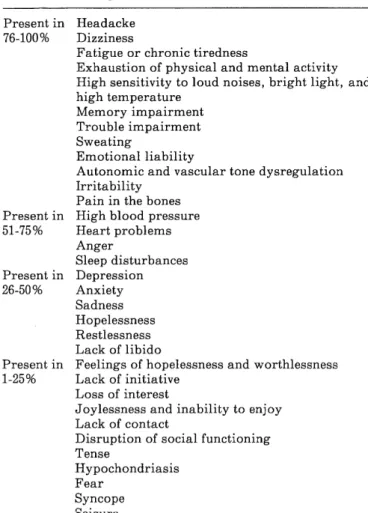
Table 2. Distribution of Positive Ratings on Symptoms among the Liquidators
Present in Headacke 76-100% Dizziness
Fatigue or chronic tiredness
Exhaustion of physical and mental activity High sensitivity to loud noises, bright light, and
high temperature
Memory impairment Trouble impairment
Sweating
Emotional liability
Autonomic and vascular tone dysregulation Irritability
Pain in the bones Present in High blood pressure 51-75% Heart problems
Anger
Sleep disturbances Present in Depression 26-50% Anxiety
Sadness Hopelessness Restlessness Lack of libido
Present in Feelings of hopelessness and worthlessness 1-25% Lack of initiative
Loss of interest
Joylessness and inability to enjoy Lack of contact
Disruption of social functioning Tense
Hypochondriasis Fear
Syncope Seizure
Clinical and psychological findings allowed us to de- scribe specific post-Chernobyl cerebrasthenic syndrome as the first stage of organic mental disorder. Cerebrasthenic syndrome was one of the typical diseases which appeared after the Chernobyl disaster.
Discussion
-Some studies of psychiatric disorders among the Cherno- byl victims-
We briefly review some of the studies of psychiatric disorders among people affected by the Chernobyl disaster.
The dynamic of mental adaptation disorders in chronic stress among the population after the accident at the Chernobyl nuclear power plant was studied by Aleksand- rovskii and others"'). The study was made of the format- ion and dynamics of mental maladaptation in 300 persons living permanently for 4 years in a polluted area of Byelorussia after the Chernobyl acccident. The incidence of chronic somatic diseases was marked, forming the basis for the onset of multiple forms of mental maladaptation.
Before 1991 there were only a few publications dedicated
to the mental effects of the Chernobyl disaster. All the data were kept secret. There were special hospitals where patients were sent and most of them were given the popular diagnoses, vegetative-vascular dystonia, at that time. It was a large sack which included many disorders.
After 1991 some more articles were published2.3,',8,11,12,16.19,20) Five years after the Chernobyl accident there were substan-
tial psychosocial problems in its aftermath"). The interpre- tations of these problems differed. One extreme position defined the whole problem as irrational : "The Chernpbyl psychiatric disaster". The psychiatric label "radiophobia"
was coined to describe the human response. One should be cautious in using psychiatric labels when characterizing such responses, particularly when a large proportion of the population appear to share the response. After all, people were misinformed about the fallout for a long time, and it is not a new observation that when credibility is lost it may never be won back. The other extreme position holds that the psychosocial responses reflect real and objective factors. According to reports at the end of 1991, half of the population living in contaminated areas experienced psychological stress symptoms. Eventually, these stress reactions may produce psychosomatic and somatic illness in some.
Nyagu and her colleguela 14) from Ukraine studied the late effects of psychogenic and radiation factors of the acci- dent on the functional state of the human brain. Ninety- seven persons, victims of the Chernobyl accident, who developed vegetative dystonia (similar to F45.3 somato- form autonomic dysfunction by ICD-10) were examined by
t__ ___1'-s-*'*' -hop __ 1 i. t 7 1 c11131cal , pallyolo ical, and elec 11 roencephalograprly
methods. In the victims of the Chernobyl accident, vegetovascular dystonia was marked by certain clinical and neurophysiological peculiarities in the form of com- bined vegetative disturbances and hypochondriac symp- toms, the signs of organic syndrome with the diffuse changes of brain bioelectric activity and irritation of the subcortical structures.
Zhavoronkova and Kholodoval9.2o> from Russia studied the electro-encephalographic correlates of neurological disorders in the late periods of exposure to ionizing radiation. EEG mapping and three-demensional localiza- tion of epileptic activity sources together with a neurologi- cal analysis were carried out in subjects having taken part in 1986-1987 in liquidation of the consequences of the Chernobyl disaster. The experimental group included 40 right-handed 25- to 45-years old men having received a radiation dose of 15-51 Rem stated officially. The control group consisted of 20 healthy men. Neurological examina- tion of the patients revealed vegetative-vascular and endocrine dysfunctions as well as diffuse neurological
symptoms. In EEG, 25 of the 40 subjects were character- ized by slow alpha- and theta- band foci and paroxysmal discharges in the central-frontal regions; epileptic sources were localized at the diencephalic level mainly in the
midline being shifted to the right hemisphere. In the EEG of another 15 persons delta waves were recorded in the frontal regions at the background of diffuse beta activity.
The sources of epileptic activity of a diffuse character were localized at the basal level of the brain and in the cortex (predominantly) in the left hemisphere. The results obtained together with SPECT mapping and CT data, are suggestive of the type of organic damage of different brain structures (at the cortical and the midline levels) in the patients. The participation of diencephalic structures in the pathological process of the hypothalamic- hypophyseal system being probably connected with adap- tive processes in the CNS.
Neurological, mental, somatic and immune status were studied in 256 patients exposed to ionizing radiation at doses of 10-45 cGy during the liquidation of the aftermath of the Chernobyl accident"). In 61% of them neurocircula- tory dystonia was found, and 39% of them had dyscir- culatory encephalopathy. Asthenoneurosis diagnosed in 97% of the patients was recognized as a key syndrome in 53%.
For a long time there were no any clear criteria for the diagnosis of these mental disorders among the Chernobyl victims. For example the famous Ukrainian neurologist Romodanov and his coworkers" studied the brain lesions in mild radiation sickness. It indicated that all the subjects who had acute radiation sickness of the Chernobyl accident showed disorders of brain funcions 5-6 years later. The patients developed a syndrome of significant dysadaptat- ion that was progressive in nature. The authors proposed to term these changes as postradiation encephalopathy of primary radiation and intoxication genesis.
In experiments on monkeys, Meshkov et al.') found that one of the most serious remote consequences of small doses of ionizing radiation was the development of stable organic changes in various cerebral structures.
The long-term effects of the Chernobyl accident on mental wellbeing 7 years after the event were studied by Kolmakov et a113'. Mental wellbeing was assessed using the 12-item General Health Questionnaire (GHQ-12). The study group comprised 325 person (aged 15-54 years) who had continued to live in the high-fallout area in Bryansk, Russian Federation, classified as a strict control zone with respect to the level of fallout and subsequent radiation protection countermeasures. The control group comprised 278 persons living in a noncontaminated area. The mental wellbeing of women in the study group was poorer than in the controls (age-adjusted means). Based on the GHQ score, a minor mental disorder was detected in 48% of the women in the study group and 34% of the female controls.
The corresponding figures for men were 26% and 28%, respectively. Those living with a partner coped better mentally than the others. Fifty-nine percent of the study group and 14% of the control group wanted to move away from the area of residence, but this variable was not
associated with GHQ score. According to the results, the Chernobyl nuclear power plant accident impaired the long-term mental wellbeing of women living in the con- taminated areas.
Changes in the brain of persons who participated in the cleaning-up of the Chernobyl accident were found by Kharchenko et al'). Computer tomography and magnetic resonance imaging showed dilatation of the ventricular system of the brain, dilatation of the subarachnoidal spaces, symmetrical reduction of the density of medullary tissue round the bodies and anterior horns of lateral ventricles, round third ventricle, near semi-oval centers, as well as solitary or multiple focal reduction of medullary tissue density. Findings permit a conclusion on a complex organic involvment of the brain in subjects who partici- pated in liquidation of the consequences of the Chernobyl power plant accident. The most typical are signs of the hypertensive hydrocephalic syndrome and vascular ence- phalic syndrome with the development of focal postis- chemic malacia of the brain.
The epileptiform reactions of the brain to prolonged exposure to low-dose ionizing radiation were studied by Danilov and Pozdeev4).
There were three points of view on mental and neurologic disorders among the liquidators. The first one was that the most of these disorders were functional-
"
vegetative-vascular dystonia", neurotic, reactive disor- ders, stress, distress, "radiophobia", and post traumatic stress disorders (PTSD). The second one was that the patients (mostly liquidators) suffered only from different stages of organic mental disorders. The third one was that at the first some patients have PTSD, and others neuras- thenia. Later, they have pseudoneurotic syndrome, psycho- somatic disorders, somatoform disorders, hypochondria- sis, anxiety disorders, different depressive syndromes and organic mental disorders.
It was known that organic mental disorders are the most common disorder after physical injury') . In our cases the clinical findings are similar. The consequences are mild with emphasis on symptoms of memory disturbance and headache. Severe encephalopathy (dementia) is an infre- quent but very serious consequence.
Unfortunately, until now we have had no clear criteria for the diagnosis of these disorders. It depends very often on psychiatric or neurologic schools. This problem needs to be further analysed and studied.
Conclusions
Now the diagnosis, prevention and treatment of mental disorders and particularly syndromes related to low doses of radiation and to acute radiation sickness are topics of special interest for Ukrainian psychiatrists and psycho- logists and need to be further studied and analysed. As we
mentioned above, this report is a preliminary one. In completing the analysis, some modification may be added.
However, our results suggest some relationships between the level of radiation (time of beginning of the patients' work in the contaminated area, the duration of work, and the dose) and the mental health condition. We saw the early beginning of the disorders among the patients who received high levels of radiation. All the disorders were non-psychotic and neurotic. It took from 1 year to 2 years for disorders to become manifest. We described specific post-Chernobyl cerebrasthenic syndrome as the first stage of organic disorder. It was the most common diagnosis among our patients. The patients also had different somatic complaints and somatic disorders such as gastro- intestinal, cardiovascular, and respiratory system.
More than 10 years have passed since the Chernobyl disaster, but the effects of exposure are continuing. We have to investigate the long-term sequelae of disorders together with scientists from different countries and try to find objective methods of diagnosing the Chernobyl- related mental disorders. We shall do our best to help patients.
* : This paper was prepared by Ludmila Kryzhanovskaya when she was studying on the above theme at the Department of Neuropsychiatry, Nagasaki University School of Medicine in August, 1996.
References
1) Aleksandrovskii Yu, Rumyantseva G, Szhukin B. The condition of mental desadaptation in extreme situation. Zhurnal nevropatologii i
psikhiatrii. 1989; 5 : 111-117 (in Russian with English abstract).
2) Aleksandrovskii Yu, Rumyantseva G, Yurov V, Martyushov A. The dynamics of psychological maladjusment states of chronic stress in
inhabitants of areas involved in the Chernobyl nuclear accident.
Psychiatrishe praxis. 1992; 19(2): 31-34 (in German).
3) Chuprikov A, Kryzhanovskaya I, Pasechnik I. Mental disorders after radiation brain injury (review). Kiev, 1992 (in Russian with English
abstract).
4) Danilov V, Pozdeev V. The epileptiform reactions of the human brain to prolonged exposure to low-dose ionizing radiation. Fiziologicheskii
Zhurnal Imeni I. M. Sechenova. 1994; 80(6): 88-98 (in Russian with English abstract).
5) Kharchenko V, Zubovskii G, Kholodova N. Changes in the brain of persons who participated in the cleaning-up of the Chernobyl AES
accident based on the data of radiodiagnosis (single-proton emission-
computed radionuclide tomography, x-ray computed tomography and
magnetic resonance tomography. Vestnik Rentgenologii i Radiologii.
1995; (1) : 11-14 (in Russian with English abstract).
6) Kolmakov S, Ilchenko I, Zhukowsky G, et al. The Chernobyl accident and mental wellbeing. A population study. Acta Psychiatrica
Scandinavica. 1995; 91(6) : 396-401.
7) Krasnov V, Petrenko B, Voitseh V. Mental disorders among the liquidators of the consequences of the Chernobyl accident. Social and
clinical psychiatry. 1993; 1 : 5-10 (in Russian with English abstract).
8) Kryzhanovskay L. A cerebrasthenic syndrome appearing after the Chernobyl accident. Vrachebnoe delo. 1992; 1 : 45-46 (in Russian with
English absrtact).
9) Malt U. Traumatic effects of accidents. In : Ursano RJ, McCaughey
BG, Fullerton CS (eds) Individual and Community Responses to Trauma and Disaster : The Structure of Human Chaos. Cambridge :
University Press, 1995; 103-135.
10) Meshkov N, Ryzhov N, Kuznetsova G. et al. The late sequelae of radiation exposures on the neurological status of the body (clinico-
experimental research. Voenno-Meditsinskii Zhurnal. 1993; 4 : 70-73 (in
Russian with English abstract).
11) Morozov A. The dynamic of boderline disorders among the liquidators of the Chernobyl accident. Actual problems of the liquidation of
medical consequences of the Chernobyl disaster. Kiev, 1992: 154 (in
Russian).
12) Napreenko A, Loganovskii K. Boderline neuropsychic disorders in persons subjected to ionizing radiation exposure. Vrachebnoe delo.
1992; 6 : 48-52 (in Russian with English abstract).
13) Nyagu A, Napreenko A, Loganovskii K. et al. Diagnostic and treatment of mental and neurologic disorders among the people
suffering from the Chernobyl accident. Kiev, 1995 (in Russian).
14) Nyagu A, Noshchenko A, Loganovskii K. Late effects of psychogenic
and radiation factors of the accident at the Chernobyl nuclear power plant on the functional state of human brain. Zhurnal nevropatologii i
psikhiatrii imeni S.S.Korsakova. 1992; 92(4): 72-77 (in Russian with
English abstract).
15) Panchenko E, Kazakova S, Safonova E. Nervous disorders in those engaged in the cleanup of the accident at the Chernobyl Atomic Electric
Power Station subjected to ionizing radiation exposure at low doses.
Vrachebnoe delo. 1993; 8 : 13-16 (in Russian with English abstract).
16) Romodanov A, Vynnitskii 0. Brain lesions in mild radiation sickness.
Vrachebnoe delo. 1993; 1: 10-16 (in Ukrainian with English abstract).
17) Rumyansteva G, Yurov V, Martyushov A. The prevalence of boderline disorders n chronic ecological stress. Medical and social aspects of
mental health. Tomsk, 1991: 207-208 (in Russian with English
abstract).
18) Weisaeth L. Psychological and psychiatric aspects of technological
disasters In : Ursano RJ, McCaughey BG, Fullerton CS (eds) Indi- vidual and community responses to trauma and disaster. The structure
of human chaos. Cambridge : University Press, 1995; 72-102.
19) Zhavoronkova 1, Kholodova N. The assessment of brain functional status by EEG coherence parameters in the late period of exposure to
ionizing radiation (the sequalae of the accident at the Chernobyl
Atomic Electric Power Station. Zhurnal Vyschey Nervnoi Deiatelnosti
Imeni I. P. Pavlova. 1994; 44(1): 159-162 (in Russian with English abstract).
20) Zhavoronkova L, Kholodova N, Zubovskii G, et al. The electro- encephalographic correlates of neurological disorders in the late periods
of exposure to ionizing radiation (the aftereffects of the accident at the
Chernobyl Atomic Electric Power Station. Zhurnal Vysshey Nervnoy
Deiatelnosti Imeni I. P. Pavlova. 1994; 44(2): 229-238 (in Russian with
English abstract).