Museum Exhibitions as the Place for Creativity in the National Museum of Ethnology, Japan
著者(英) Shigeki Kobayashi
journal or
publication title
Senri Ethnological Reports
volume 125
page range 103‑118
year 2015‑02‑26
URL http://doi.org/10.15021/00000842
Museum Exhibitions as the Place for Creativity in the National Museum of Ethnology, Japan
Shigeki Kobayashi
National Museum of Ethnology, Japan
1 Introduction
The museum has two different roles, one is for learning and the other is to inspire people. In the museum, we can confi rm known knowledge and acquire unknown knowledge. And also, through knowing and feeling something, our ideas and thoughts may be inspired to grow or change, enabling us to elaborate an idea or devise a concept. The museum is a place where users can learn, be excited, enjoy and be inspired. So the users can utilize museums more positively for fi nding clues for creation and creative activities. In the museum as a place that produces the impetus for creation or the fi eld of creation, new, expanded, and productive signifi cance is found. In this paper, I discuss the present condition of the museum as a fi eld of creativity from the perspective of a person who is in charge of creating an exhibition, using an example of the National Museum of Ethnology, Japan, whose nickname is Minpaku in Japanese, and that is my place of work. Case 1 concerns the Concepts of Exhibition Renewal. Case 2 concerns the Special Exhibition “When Japan’s Tea Ceremony Artisans Meet Minpaku’s Collections:
Creative Art in Perspective”.
Before we begin this paper, the following two premises should be clarifi ed. The fi rst is the relationship between exhibition organizers and users (visitors to museum).
We hope these two have a reciprocal relationship, however, exhibition organizers are somewhat inductive and users develop knowledge and are inspired by organizers.
The second are the problems of the types of creation. Creation can have several types. One is the creation that is supported by knowledge, the contents of which are judged by objective validity, that is, the creation to discover unknown knowledge, new perspectives and new attitudes by rearranging already-acquired knowledge.
Another is the creation without knowledge, that is, the creation by brainstorming.
This is creation that creates something out of nothing as if emerging from nothing for the very fi rst time. However, I will not make any further distinction here.
And, as a supplement, I will add that the Museum Act in Japan places much emphasis on education.
Museum Act; (Defi nition) Article2.
The term “Museums” as used in this Act shall mean institutions established by local public governments, by general incorporated associations or general incorporated foundations,…… The purpose of these facilities is to collect, to keep in custody (……), to exhibit and offer materials on history, art, folks,
industries and natural science for public use serve people’s in an educational perspective, and to conduct necessary business to serve people’s cultural attainments, research, surveys, recreation, etc., and to conduct research and surveys concerning these materials. ... (Present Status of Museum in Japan)
2 Case concerning the Concepts of Exhibition Renewal
2.1 Brief Introduction to Minpaku
Minpaku is a research institute and museum that provides graduate-level training in anthropology and ethnology. At the National Museum of Ethnology, Japan, exhibitions are designed to present the latest achievements of anthropological, ethnological and other related scientifi c research to the public through a variety of media. In doing so, the Museum hopes to enhance public awareness of different cultures around the world and foster greater cross-cultural understanding. Given the substantial changes in global conditions and academic fi elds since Minpaku’s founding over 30 years ago, the Museum began renovating its exhibitions in 2008 (Survey and Guide 2012-13).
The NME or Minpaku was founded in 1974 and opened to the public in 1977.
So, it has been 36 years since it was opened. It stores a large collection of objects, some 280,000 pieces in total. Of these, about 12,000 items are displayed in the regular exhibition. The main building has 2 categories of exhibitions, one focused on regions, such as Oceania, Americas, and so forth, and the other presenting the cross-cultural exhibits, Music and Language (fi gure 1).
Exhibitions have been innovated year after year despite a wide range of challenges. These have taken about 8 years to complete. Some parts of the Japan exhibition have opened this spring. And it will be fi nished in the spring of 2016.
Short History of Renewal
(FY2007 (April 2007) Introduction exhibition
FY2008 (March 2009) Africa and West Asia exhibitions
FY2009 (March 2010) Music, Language, Shared exhibition space, and Navi-Space
FY2010 (March 2011) Oceania and the Americas exhibitions FY2011 (March 2012) Europe exhibition and Information
FY2012 (March 22, 2013) Festival and Everyday Life exhibition in East Asia (Culture of Japan) section
・FY2013 China, the Korean Peninsula, and Japan (Okinawa, multiethnic society) exhibitions are scheduled
・FY2014 South Asia and Southeast Asia exhibitions are scheduled
・FY2015 Aynu culture and Central and Northern Asia exhibitions are scheduled
2.2 Concepts of Exhibition Renewal
As it has been about 30 years since the initial opening, the need has arisen to accommodate the current situation in the world. Backgrounds to the exhibition renewal are as follows: 1. World situation: such as, rapid changes in the world, globalization. Appropriate expression of the exhibition on the regions’ engagement with the world, and with Japan is required. 2. Society’s demand for the museum.
Correspondence with the idea of a society of lifelong learning is expected. 3.
Change in academic paradigm. It is requested to change from the world view of cultural relativism to multiculturalism, from the static view to dynamic view, and to amplify spatiotemporal axes. 4. A new mission as a member institution of the Inter- University Research Institute Corporation of National Institutes for the Humanities (NIHU). The utilization of museum functions for deepening and renewal of sociocultural studies is required.
The Basic Renewal Strategies are
1. Making use of its function as an Inter-University Research Institute, ensuring that exhibitions promptly and accurately refl ect world-class, cutting-edge collaborative research fi ndings of higher quality and quantity. Exhibitions are the results of collaborative research + symposia + public lectures + rendition + thematic exhibitions + special exhibitions. Exhibitions are a contribution to society, and a form of disclosure of fi ndings based on research.
2. Innovating “glocal exhibitions”. “Glocal” is the Japanese idea of glocalization,
Figure 1 A plan of the exhibitions in the main building at the National Museum of Ethnology, Japan. (General Information)
which combines localization with globalization. And it is connected with the idea of “think globally, act locally”. That is, installation of spatiotemporal axes from static comprehension to dynamic understanding, such as history and the modern age, and relationship with the world/Japan. Exhibitions that bring understanding of peoples’ lives. Exhibitions are the sum of the traditional lives in regions, countries and the surrounding world (neighborhood, world and Japan), history, present time, and current situation (present issues). One example of this is to put the year of production and the name of the creator on the information plaque.
3. Development of exhibitions as forums. The aim here is to create a place where exhibitors, culture bearers of exhibitions, and exhibition visitors can participate in mutual exchanges and education. Exhibitions are used to attain deep cross- cultural understanding and to develop sympathy as a person living during the same period.
4. Advanced and integrated systems for access to information. These are enhancement of the Information Zone, which provides overall research information in addition to information about exhibitions in the museum, such as Introduction, Videotheque, Study Area + Research Station, and Research Information Corner.
5. Accommodating diverse requests from the user community. This involves making the museum people friendly, exhibitions friendly to all, and also adoption of the idea of a universal museum, with no barrier to age, nationality/
language, and the presence or absence of impediment. We will meet a variety of requests on the basis of differences of users (inclusive design), such as a secure and safe environment, multi-language, and eye level. And furthermore, we will provide experiences of seeing, listening, touching, using, and creating through a variety of media.
6. Open exhibit production. We will garner cooperation from home and abroad.
7. Consistent update to exhibitions.
The perspective on renewal is summed up as follows:
a. To realize a museum that meets the users’ demands.
b. To enable users to understand the situations of societies and cultures in the world on the whole.
c. To represent the present-day Japanese perspective of the world.
d. To provide solutions for the issues of modern society and life.
e. To establish a consistent research process from collaborative research to exhibiting activity.
f. To grow beyond the introduction/commentary of traditional societies/cultures in various regions in the world.
g. To provide an introduction/commentary of open socioculture of the same era in the world; and to shift to ongoing activities of the museum that continue to raise issues.
h. To further expand and deepen information to be dealt with.
i. To provide information in an easy-to-understand manner.
j. To deal with the diversity of visitors to the museum.
That is, we will attempt to change, from regional and materials-based exhibits to a museum that allows users to view Japan and the world as well as traditions/
histories and current situations in the world.
In the actual scenes, basic frameworks of the exhibition design, which are the visitor’s route, determination of a theme, unifi cation of sign/graphics and so forth, based on the people-friendly exhibition, are maintained.
In addition, for each exhibition, a project team that consists of around fi ve to eight academic staff members is organized. And, taking the present condition into account, each team including experts from both home and overseas determines the most suitable theme. Therefore, each exhibition space focusing on the different themes represents Japan’s present perspective of the world.
As it is, unknown knowledge (the new perspective and concept) is composed, or created, to infuse new enthusiasm into users’ already known knowledge.
At the Oceania exhibition, for example, themes that we newly decided are as follows: • Human dispersal into Oceania • Living off the sea • Living on islands • Contact with the outside world • Expressions of indigenous identity. Former themes were Marine Peoples, Lifestyles, Rituals, and Cultural Movements of
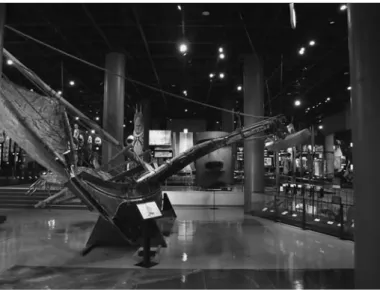
Figure 2 Former Oceania Exhibition with the canoe “Chechemeni”.
Figure 3 Current Oceania Exhibition with the canoe “Chechemeni”.
Figure 4 Current Oceania Exhibition: “Human dispersal into Oceania”.
Indigenous Peoples. Themes that are underlined are new ideas, to which the view of history and contemporary life have been added.
In a former Oceania exhibition, too many materials were exhibited. A large voyaging canoe from Satawal Island in Micronesia was displayed as the symbol of the Oceania exhibition (fi gure 2). This canoe named “Chechemeni” was collected in 1975. In contrast, according to the idea of a universal museum, visitors can approach the canoe and touch it easily and safely in the current exhibition (fi gure 3). History with archaeological results is explained at the corner of “Human dispersal into
Figure 5 Current Oceania Exhibition: From “Living off the sea” to “Living on islands”.
Figure 6 Current Oceania Exhibition: “Contact with the outside world”.
Oceania” (fi gure 4). A wheelchair user is able to approach exhibits easily and safely;
there is even a slope from “Living off the sea” to “Living on islands” to represent landing on the beach (fi gure 5). Modern history is treated at the corner of “Contact with the outside world” (fi gure 6) and contemporary life is explained at the corner of “Expressions of indigenous identity” (fi gure 7).
Lastly regarding this case, I emphasize the importance of developing the Exhibitions as Forums, the Museum as a Forum, one of the main goals (fi gure 8).
In Exhibitions as Forums, the Museum as a Forum is the place and time where the three parties (researchers who create exhibitions, persons presenting cultures, and exhibition users) can enlighten each other through interaction. And we will strive to realize this goal.
Figure 7 Current Oceania Exhibition: “Expressions of indigenous identity”.
Figure 8 Museum as a forum.
3 Case from the special exhibition entitled “When Japan’s Tea Ceremony Artisans Meet Minpaku’s Collections: Creative Art in Perspective”
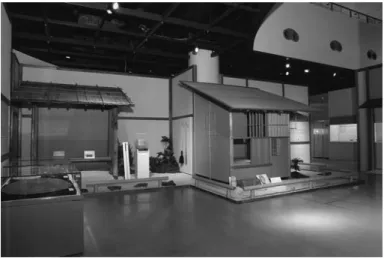
Another possibility of creation or a clue to creativity is discussed here, using the sample of the special exhibition entitled “When Japan’s Tea Ceremony Artisans Meet Minpaku’s Collections: Creative Art in Perspective”, which was held in the spring of 2009 in the NME (Minpaku) (fi gure 9).
The major theme of this exhibition is the creation in the motif of materials housed at Minpaku. On the fi rst fl oor, the creation process by the traditional artisans who provide the major tea schools “Senke” with tea utensils used in the tea ceremony, inspired by exposure to the objects of Minpaku, and their works are on display. On the second fl oor, how Minpaku can serve to aid in creating new works by exhibiting the materials chosen from the exhibition that stimulated the new works are on display. The following is the introduction of the Minpaku side.
The phrase “Japan’s Tea Ceremony Artisans”, which is mentioned here, refers to a special group called “senke jisshoku (
千家十職
)”, which means 10 special artisans for Senke, the major tea schools. These artisans and their works are similar to the “pan se myo (ten kinds of fl ower)” in Myanmar. They used their instincts (直感
) and intuition (直観
), and also nouns to select the materials in creating their new works for the exhibition. They took an in-depth look at objects in exhibition spaces and storage rooms, using the eye of a connoisseur of art (目利き
), discernment to fi nd aesthetic values (目明き
), ability to liken something to artifacts (by visual sense) (見立て
) , and creating ability (fi gures 10 and 11). And, they also referred to the list of index terms (that are nouns) that were selected by searching for the nameFigure 9 At the entrance corner on the 1st fl oor, Chashitsu 茶室Tea-house was constructed.
This is a model of the chashitsu named “Konnichian 今日庵”.
of objects as retrieval keywords.
With the assumption that the change of one’s viewpoint is likely to infl uence what one can see, more diverse and varied viewpoints will broaden the vision. So then, I and the Minpaku selected verbs as retrieval keywords and conducted complete searches using computers. The reasons for using verbs depend on their characteristics. A verb takes a noun phrase and the contents and the meaning are materialized. The verb is not an independent word, so it always connects with other parts of speech. A noun, however, is an independent word, which becomes a subject
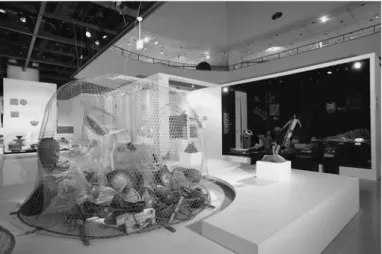
Figure 10 Corner created by Mr. Kichizaemon Raku, the 15th, a tea bowl maker.
He exhibited his many newly made tea bowls with materials, which inspired him to create for this exhibition in a fi shing trap. The title is “A bowl, African dream”.
Figure 11 Corner created by Mr. Seiwemon Onishi, the 16th, a tea kettle caster.
He made a statue of a pregnant woman and exhibited it at the center of many of Minpaku’s collection.
and an object. The second reason is that verbs are highly abstract in Japanese. They are distinguished by Kun (
訓
), or the native Japanese reading and an accent (e.g. a homonym), which enhances fl exibility in thinking by Professor Yoshiho Yasugi.Another reason, for example, is that different Chinese characters are used when describing different actions. The last reason is due to my defi nition of the tool,
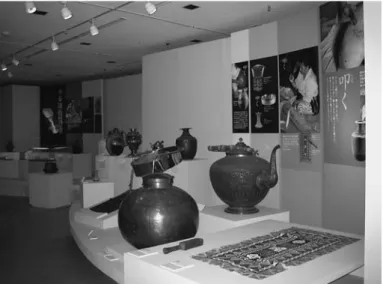
Figure 12 At the “beating” corner, bark-cloth, large containers, steel drum, and stone mallet are exhibited.
Figure 13 At the corner “moulding”. We are surprised that such a unique church ornament is made from clay by delicate fi ngers from Peru.
which is a means to achieve an end.
Eleven verbs that are related to the content of works by the 10 artisans were fi nally selected. They are beating (
叩く
) (fi gure 12), casting (鋳こむ
), molding (捏ね る
) (fi gure 13), chipping (削る
), painting (描く
), applying (塗る
), stretching (張る
), assembling (組む
) (fi gure 14), bending (曲げる
), cutting (切る
), and sewing (縫う
) (fi gures 15 and 16).Each action generally corresponds to the work of the following ten artisans:
Kanamono-shi (
金物師
hardware maker), Kama-shi (釜師
tea kettle caster), Chawan-shi (茶碗師
tea bowl maker), Doburo-Yakimono-shi (土風炉師・焼物師
brazier maker and potter), Nuri-shi (塗師
lacquer ware artist), Ikkanbari-saiku-shi (一閑張細工師
lacquered papier-mache artisan), Hyougu-shi (表具師
mounter),Figure 14 At the corner of “assembling”. This keel pump comes from China.
Figure 15 At the corner of “sewing”.
Sashimono-shi (
指物師
joiner), Takezaiku-Hishaku-shi (竹細工・柄杓師
bamboo work artisan and dipper maker), and Fukuro-shi (袋師
bag maker).And, centering on the 11 verbs, 48 related verbs, (there are many more than 48, if the infl ection of verbs is included) were retrieved thoroughly from among all materials collected and registered in Minpaku (about 258,000 in 2008), and the entries observed, such as manufacturing method, materials, intended purposes and usage. Eleven hundred and four materials after checking 19,000 items from about 220,000 hit items were selected. These were then narrowed down to 156 pieces as exhibits.
As a result of the retrieval, many materials that were unlikely to be hit unless using verbs were found as expected. This result includes: bark-cloth which is made from tree bark, steel drum, stone mallet, church ornament (pottery), bamboo tube harp, wool picture, keel pump, bark-canoe, puppets for shadow play, boots made from salmon skin, and so forth.
The bark-cloth, for example, is closely related to the verb “beating”, the work of Kanamono-shi, or a hardware maker. Simply put, a Kanamono-shi hardware maker makes a container by beating metal, and bark-cloth is made by beating tree bark. That is, these materials are hit by the common verb “beating” through retrieval. The search using only nouns as retrieval keywords, such as metal or container, gets no hits. Therefore, the results show that the establishment of a new viewpoint for retrieval has widened the scope of creation.
And the “pan se myo (ten kinds of fl ower)” such as bronze statue, lacquer ware, stone carving and so on in Myanmar were also exhibited as a comparative example of the “senke jisshoku (
千家十職
)” on the second fl oor (fi gure 17). They were displayed next to the Japanese mask made by 4 artisans of the senke-jisshoku.Figure 16 Boots are made from salmon skin, which is collected from China.
In addition, the layout of the second fl oor was arranged from a straight line to one that is curved (fi gure 18). By making effective use of the curves of display bases in addition to the layout of the materials on the second fl oor, I hoped to express relevance, continuity, overlapping, linkage and fl uctuation that were associated with the keyword verbs that partition off the space (fi gures 12, 19 and 20).
Under the theme of “Artisans and Their Work from Around the World” on the
Figure 17 The “pan se myo” Exhibition.
Figure 18 A plan of the second fl oor.
Figure 19 The display base is curved.
Figure 20 The display base is curved.
second fl oor, what we intended to express based on “considering handiwork through verbs” was an answer to the question of whether the Minpaku can become a mine of potential sources of inspiration for the creative mind. And we wanted to materialize the theme to be considered through “verbs” and to represent exhibitions in the form of a continuous curve. It is interesting to learn that the change of our viewpoint will fi nd different materials in the exhibitions of the museum.
4 Concluding remarks
Does the museum exhibition fully function as a place for creativity?
I consider that museums and the museum activities including exhibition can contribute to cultivating creativity and inspiring people, in addition to acquiring or confi rming unknown knowledge.
References
Kobayashi, Shigeki
2009 Sekai no Monozukuri –Souzou no Kikkake wo Doushi de Kokoromiru (The Manufacturing around the World –An Experiment on Using the Verbs for a clue for creation) in Kokuritsu Minzokugaku Hakubutsukan hen, Cha no Yu no Monozukuri to Sekai no Waza (The National Museum of Ethnology ed. When Japan’s Tea Ceremony Artisans Meet Minpaku’s Collections: Creative Art in Perspective) pp.154-157. Tokyo:Kawade Shobou-Shinsha. In Japanese.
2011 Mono: Jyouhou Shuugou -Jisedai Tenji wa Monokomi da! (Mono: Data Sets –The Next-Generation Exhibitions should be the Mono-Com.) Tenjigaku (Journal for the Exhibition Studies) 49:36-39. In Japanese.
Ministry of Education, Culture, Sports, Science and Technology, Japan and Japanese Association of Museums
2008 Present Status of Museum in Japan.
National Museum of Ethnology, Japan
2007 Kokuritsu Minzokugaku Hakubutsukan ni okeru Tenji Kihon Kousou 2007 (The Ground Design of the Exhibition in the National Museum of Ethnology 2007). In Japanese.
2009 Honkan Tenji Shin-kouchiku no tame no Shishin (The Guidelines for the New Construction of the Exhibitions in the Main Exhibitions). In Japanese.
2012 General Information.
2012 Survey and Guide 2012-13.