
Science & Technology Foresight Center
National Institute of Science and Technology Policy (NISTEP) Ministry of Education, Culture, Sports, Science and Technology, JAPAN
Science & Technology Foresight Center, NISTEP
echnology Trends —Quarterly ReviewScience & Technology Foresight Center of NISTEP
Science and Technology Trends —Quarterly Review 2007.1
Information and Communication Technologies
Promotion of Technological Innovation through Medicine-Engineering Collaboration in Japan
— Industry-Academia-Government Collaboration in OCT Technology as a Case Example —
Outlook on the next steps of
Intelligent transport systems (ITS) technologies in Japan:
for overcoming Social and Environmental problems brought by Automobiles
Environmental Sciences
Recent Moves to Address
the KOSA (Yellow Sand) Phenomenon
— Towards Solutions for a Problem that is an age-old
Natural Phenomenon and has concurrently been Influenced by Anthropogenic —
Nanotechnology and Materials
Trends in Research and Development on Plastics of Plant Origin
— From the Perspective of Nanocomposite Polylactic Acid for Automobile Use —
Energy
China’s Environmental and Energy Problems and the Possibility of Japan-China Technical Cooperation
Monodzukuri (Manufacturing) technology
R&D of CAD Systems Suitable for
Japanese Design Organization Structure
Social Infrastructure
Trends in Research on Turbulence Control Aiming at Reducing Friction Drag
get the full article by clicking titiles. We recommend you read this PDF online, not by printing.
Readers may view, browse, and/or download material for temporary
copying purposes only, provided these uses are for noncommercial
personal purposes. Except as provided by law, this material may not
be further reproduced, distributed, transmitted, modified, adapted,
performed, displayed, published, or sold in whole or part, without prior
written permission from the publisher.
T
his is the latest issue of “Science and Technology Trends — Quarterly Review”.N
ational Institute of Science and Technology Policy (NISTEP) established Science and Technology Foresight Center (STFC) in January 2001 to deepen analysis with inputting state-of-the-art science and technology trends. The mission of the center is to support national science and technology policy by providing policy makers with timely and comprehensive knowledge of important science and technology in Japan and in the world.S
TFC has conducted regular surveys with support of around 2000 experts in the industrial, academic and public sectors who provide us with their information and opinions through STFC’s expert network system. STFC has been publishing “Science and Technology Trends” (Japanese version) every month since April 2001. The first part of this monthly report introduces the latest topics in life science, ICT, environment, nanotechnology, materials science etc. that are collected through the expert network. The second part carries insight analysis by STFC researchers, which covers not only technological trends in specific areas but also other issues including government R&D budget and foreign countries’S&T policy. STFC also conducts foresight surveys periodically.
T
his quarterly review is the English version of insight analysis derived from recent three issues of “Science and Technology Trends” written in Japanese, and will be published every three month in principle. You can also see them on the NISTEP website.W
e hope this could be useful to you and appreciate your comments and advices.T e r u t a k a K U W A H A R A
Deputy Director General and Director of Sicence and Technology Foresight Center National Institute of Science and Technology Policy
F o r e w o r d
Contact : Science and Technology Foresight Center
information National Institute of Science and Technology Policy
Ministry of Education, Culture, Sports, Science and Technology (MEXT) 2-5-1, Marunouchi, Chiyoda-ku, Tokyo 100-0005, Japan
Telephone +81-3-3581-0605 Facsimile +81-3-3503-3996 URL http://www.nistep.go.jp/index-e.html
E-mail [email protected]
Promotion of Technological Innovation through Medicine-Engineering Collaboration in Japan
—Industry-Academia-Government Collaboration in OCT Technology as a Case Example—
Funduscopy equipment based on OCT (Optical Coherence Tomography) technology demonstrates its power in the diagnosis of eye diseases such as glaucoma and is typical of the products developed through industry-academia collaboration in medicine and engineering. The underlying principle was first patented in Japan before any other country by Naohiro Tanno, who was then a professor at Yamagata University, in 1990. As the first instance of collaborative innovation between medicine and engineering, OCT had the potential to become a venture launched by a local Japanese university that might succeed as a business proposition. However, in Europe and the U.S., MIT independently applied the invention for U.S. patent in 1991 and, five years later, released a commercial product. In Japan, the first commercial product was released 14 years after the patent application, eight years later than commercialization in Europe and the U.S. As of 2006, the European and U.S. companies hold a 90% share of the global market.
The technology transfer pattern in this case was different from what the western developed countries call “free-riding on basic research”, a pattern observed during the 1970’s and 1980’s in which Europe and the U.S. created research breakthroughs, based on which Japan did the commercialization and formed profitable businesses. This implies that the environment for developing leading-edge research concerning medical equipment was cultivated in Japanese countryside in the early 1990’s, a praiseworthy development that should bolster our national self-confidence as we aim to establish a nation based on creativity through science and technology.
Learning from the circumstances surrounding the first-generation OCT, Japanese industry, academia and government have cooperated in appropriate implementation of the TLO Law to develop second-generation, high-speed OCT.
Japan, which once lagged behind Europe and the U.S., has caught up and is ready to overtake these competitors. OCT technology is advancing toward the third generation and, in addition to its current implementation in ophthalmology, is expanding its area of application to dermatology, dentistry, digestive surgery, etc., which is creating fresh global competition.
This report introduces the developmental path followed by OCT technology, from its invention to commercialization, and compares the processes of indust ry-academia-government collaboration and medicine-engineering collaboration between Japan and the western countries. The Third Science and Technology Basic Plan envisions that “the core strategies are: development of human resources who can produce excellent research findings, creation of a competitive environment, promotion of science, and creation of persistent innovations through strategic investment; and removal of systematic or operational obstacles to return the R&D
E x e c u t i v e S u m m a r y
1
p.11 Information and
Communication Technologies
benefits to society. Science and technology has a mission to address a broad range of these policy issues for the next five years”; from this standpoint, the report also discusses issues concerning technology transfer from universities and the operational problems of the legal system that are specific to medical equipment development.
In the modern era of technology and business globalization, if the screening process under the Japanese Pharmaceutical Affairs Law continues to consume an unnecessarily long time compared to other countries, Japanese companies will continue to receive approval for clinical trials or product sales abroad before releasing the products domestically. Such a situation would hinder the progress of Japanese medicine and destroy our self-reliance in medical equipment development. Further facilitation of collaborative innovation between medicine and engineering in Japan depends on the further exploitation of the TLO Law and the sophisticated operation of the legal system so that “those that need to be advanced are swiftly advanced and those that need to be withdrawn are withdrawn at early stages”. Physical and financial support to achieve these goals is urgently needed.
(Original Japanese version: published in July 2006)
Outlook on the next steps of Intelligent transport systems (ITS) technologies in Japan:
for overcoming Social and Environmental problems brought by Automobiles
Automobiles using gasoline-fueled internal combustion engines first appeared about 120 years ago. Since then, automobiles have become indispensable. Not only have they contributed to economic development, they have also enriched people’s lives through the joy and pleasure of driving. On the other hand, they are the cause of traffic accidents and have significant impacts on the environment.
A sustainable mobility cannot be achieved without balancing the maximization of the benefits of the comfort and convenience that automobiles bring and the overcoming of problems they are associated with such as accidents, congestion, and environmental impacts. One method used to address this issue is Intelligent Transport Systems (ITS).
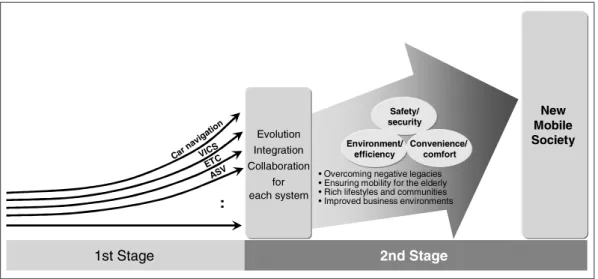
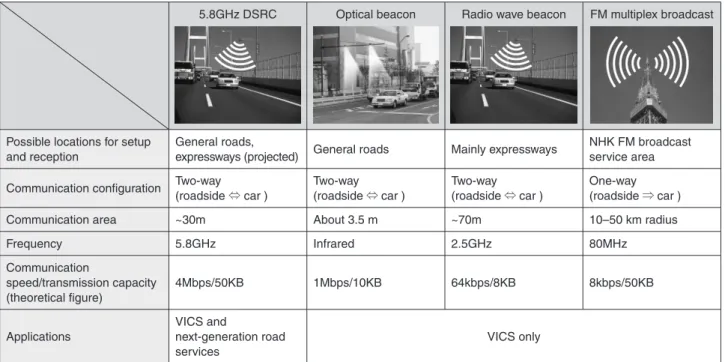
To date, individual systems such as car navigation system, Vehicle Information and Communication System (VICS), and Electronic Toll Collection system (ETC) system have been developed. In order to overcome the problems mentioned above, it is necessary to shift to systems that integrate vehicles and infrastructure by using information and communications among roads, pedestrians, and vehicles.
These systems include Advanced cruise-assist Highway Systems (AHS), IC tag systems, and Traffic Demand Management (TDM). In order to move ITS to this second-stage and bring about its implementation, this report proposes that development proceed from the following perspectives.
(1) Research and development of human-machine interfaces that consider elderly people
People aged 65 and above have a strikingly high death rate from traffic accidents, so research and development that focuses on the elderly is vital. Now, integrated interdisciplinary ITS research covering aspects such as ergonomics and cognitive science as well as information engineering and traffic engineering is
2
p.25
needed. In particular, the automobile driver’s seat requires the most concentrated human-machine interface in daily life. Further research on human-machine interfaces that are easy not only on elderly people but also on world standard users is necessary.
(2) Promotion of social acceptance of ITS implementation
The benefits of second-stage ITS systems involve safety, security, reduced environmental impacts, and other aspects whose costs are difficult to measure.
Greater efforts will likely be necessary in order to gain the acceptance of users and society for the new costs that will be incurred. Industry, government, and academia must work together to promote quantitative comparison of costs versus effects, sufficient assessment before implementation, ex-post evaluation, and information disclosure. Furthermore, just as emission regulations in the past promoted improved automobile performance, the examination of possible regulations, for example, requiring new cars to install ITS devices or restricting the access of cars without the equipment to major urban areas is necessary.
(3) Initiatives that contribute to sustainable development in Asia
As motorization proceeds in Asia, associated social problems such as traffic accidents and environmental impacts will become much more serious than ever before. The advancement of second-stage ITS must be expected to contribute to develop a sustainable transportation systems in Asia. Because second-stage ITS systems involve vehicle-infrastructure integration, they must suit the local traffic conditions and needs. The types of traffic accidents that occur in Japan more closely resemble those in other Asian countries than the primarily vehicular ones of Europe and the USA, so Japan and other countries in Asia can probably develop common ITS technology bases. Such an initiative would also boost the international competitiveness of Japan’s automobile industry.
(Original Japanese version: published in September 2006)
Recent Moves to Address the KOSA (Yellow Sand) Phenomenon
— Towards Solutions for a Problem that is an age-old Natural Phenomenon and has concurrently been Influenced by Anthropogenic —
In the spring of 2006, ferocious KOSA (Yellow Sand) dust storms blew up in China for the first time in four years, causing severe damage and even deaths. To the Japanese, the KOSA (Yellow Sand) is seen as a tranquil sign of spring, as well as the first spring storm. Conventionally, KOSA (Yellow Sand) had been considered a natural phenomenon, but some researchers point out that the rapid expansion of damage in China and elsewhere indicates a major anthropogenic influence. More detailed elucidation of the phenomenon is necessary. At this time, however, the physical and chemical properties of KOSA (Yellow Sand) are not fully understood.
In recent years, people have also begun to look at the KOSA (Yellow Sand) phenomenon as a global environmental problem.
Awareness of the KOSA (Yellow Sand) problem differs among countries. In China, the damage is so severe that people have died, and it is widely recognized that the phenomenon is connected with soil degradation and desertification. In Japan, the public is aware of poor visibility and dust sticking to cars and washed p.45
3
Environmental Sciences
clothes, but researchers clearly recognize the phenomenon as a form of air pollution. Like Japan, Korea has no domestic source of KOSA (Yellow Sand), but it has gained attention due to the weather hazard. In Mongolia, moving sand directly threatens local people’s livelihoods.
The short-term, direct effects of KOSA (Yellow Sand) on the environment and industry are relatively well understood, but much remains unclear regarding long-terms effects such as its relationship to climate change and its role in matter cycling. In Japan’s future initiatives on the KOSA (Yellow Sand) problem, therefore, elucidation of the phenomenon, monitoring, and countermeasures are important basic strategies.
In order to directly affected by KOSA (Yellow Sand) may divide measures against KOSA (Yellow Sand) in originating source areas countermeasures that attempt to control the formation of KOSA (Yellow Sand) by changing the formation and development processes themselves, and countermeasures such as forecasts and warnings that attempt to mitigate damage in affected areas.
In order to promote measures against KOSA (Yellow Sand), Japan must promote interagency cooperation within its government. Multilateral international cooperation is also necessary for source countermeasures and effective monitoring for KOSA (Yellow Sand) forecasts. Sharing of KOSA (Yellow Sand) data held by various organizations, establishment of a KOSA (Yellow Sand) monitoring network, and contributions to each country’s effective KOSA (Yellow Sand) countermeasures is likely to promote international cooperation. In particular, working to acquirement and dissemination basic knowledge of the KOSA (Yellow Sand) problem to citizens and technicians from local governments in originating source areas is the most important step in effectively promoting KOSA (Yellow Sand) countermeasures. Control measures in KOSA (Yellow Sand) originating source areas are an urgent issue.
As industrial activity in Northeast Asia intensifies, the KOSA (Yellow Sand) phenomenon will become even more closely linked to society and the economy than it is now. Responses that address solutions to the issues that face each of the countries involved are necessary.
(Original Japanese version: published in July 2006)
Trends in Research and Development on Plastics of Plant Origin
— From the Perspective of Nanocomposite Polylactic Acid for Automobile Use —
Motorization on a global scale is expected to proceed, and it is necessary to reduce environmental impact at all stages from automobiles development to production, use, disposal, and recycling. To promote the reduction of environmental impact, a sustainable society must be established making use of earth-friendly technologies with particular emphasis on the reduction of global carbon dioxide emissions. This report describes the trends in the research and development of polylactic acid, which is one of the plastics of plant origin presently attracting widespread attention, from the perspective of nanocomposite material for automobile use. Polylactic acid is made by polymerizing lactic acid, which has a structure consisting of three carbon atoms, and is produced from grain sugar. These carbons are originally derived from the carbon dioxide in the atmosphere, so polylactic acid is a carbon neutral material that does not affect
4
p.62 Nanotechnology
and Materials
the absolute amount of carbon in the atmosphere whether it is biodegraded or incinerated.
In the “Third Science and Technology Basic Plan,” the development of innovative materials and components is listed as a theme in the nanobiotechnology field aiming at solving issues on scarce and deficit resources, measures for handling harmful substances, and improvement and conservation of the environment. The
“Biomass-Nippon Strategy” lists promotion of the effective utilization of plastics of plant origin as a target of technologies to convert biomass to products such as plastics.
To apply polylactic acid to automobile components, mechanical properties such as heat resistance and impact resistance must be significantly improved, and it is necessary to develop methods to improve mechanical properties of polylactic acid by adjusting the material structures on the nanoscale, microscale, and macroscale from the viewpoints of composite process, crystal control, and molecular control. One of the major causes that disturbs the application and diffusion of polylactic acid is its high cost, which is several times higher than that of plastics of petroleum origin. Therefore, it is necessary to conduct research and development to significantly reduce the production cost of the purified lactic acid used for polymerization, which accounts for about 70% of the cost required for the production of polylactic acid. Furthermore, taking the global trends in the demand and supply of food into consideration, the effect on the demand and supply of food caused by the use of polylactic acid for automobiles in a large amount must be investigated. According to estimates, it is unlikely that the amount of sugar used for automobile plastics immediately causes a food problem, but it is desirable to make use of surplus biomass resources.
For the broad application of plastics of plant origin in the future, it is essential to control the material structures on the nanoscale, microscale, and macroscale so that sufficient strength and reliability of the material are secured under the service environment of automobiles. The application of polylactic acid to automobile components, which is rather small from the quantitative standpoint, may only be a small step, but it will become a major phase toward the realization of a recycling-oriented society if steady efforts are made to expand the application.
(Original Japanese version: published in August 2006)
China’s Environmental and Energy Problems and the Possibility of Japan-China
Technical Cooperation
As China’s economic development makes rapid progress, its massive energy consumption is also causing serious environmental and energy problems.
Consequently, in its 11th Five-Year Plan adopted in March 2006, China made a shift away from its previous energy policies - which gave top priority to economic progress underpinned by the expansion of energy production - to a policy that focuses on building a resource conservation-oriented society thereby leading to sustained, stable economic growth.
Japan-China energy cooperation has focused on a cooperative relationship prioritizing supply, through such means as the development of infrastructures and resources backed by official development assistance (ODA). However, there is rapidly increasing momentum toward developing a technical cooperative relationship in the areas of energy and environmental conservation. With this
5
p.76 Energy
backdrop, Japan and China jointly held the Japan-China Energy Conservation Forum in Tokyo from May 29 to May 31, 2006. Concerned parties from industry, academia and government met and discussed Japan-China technical cooperation from differing viewpoints.
This report describes the current status of environmental and energy problems in China and related issues, and discusses the possibility of future technical cooperation between Japan and China, taking into account discussions held at the forum.
Both countries share the general opinion that the experience and technology of Japan, which survived two global oil shocks and built the world’s most energy efficient society, should be utilized to help solve China’s environmental and energy problems, and they expect their long-term technical cooperative relationship to develop further. However, problems such as the non-disclosure of core technologies of Japanese corporations and the unsatisfactory protection of consumers and intellectual property rights in China still remain. This is unavoidable in a technical cooperation framework focusing on industrial technologies in the private sector.
However the innovation platform in China has developed in its own way, and offers remarkable examples that Japanese policy maker should refer. Discussions at the Japan-China Energy Conservation Forum focused primarily on industrial technology and participants from China proposed establishing a model research laboratory. Therefore, strategic concurrent discussions on basic research and innovation will give a more concrete form to the desired complementary relationship between the two countries and will help build a smoothly functioning cooperative relationship.
(Original Japanese version: published in July 2006)
R&D of CAD Systems Suitable for
Japanese Design Organization Structure
The manufacturing sector is more internationally competitive than any other industry in Japan. To further reinforce this strength, the Council for Science and Technology Policy has formulated measures to promote what it calls
“MONODZUKURI technology (Value-creating manufacturing, Technologies that increase the value of manufactured products) technology” under the area-specific promotional strategy in the Third Science and Technology Basic Plan, established in 2006. One of the key strategic science and technology areas emphasized in this MONODZUKURI technology field is “technology for science-based KASHIKA (dissemination and accessibility) of MONODZUKURI technology that further advances Japanese-style MONODZUKURI technology,” and computer-aided design (CAD) systems are cited as an essential element of this technology. If the government wishes to maintain and enhance the manufacturing sector’s international competitiveness by promoting the development of CAD systems suitable for Japanese manufacturers’ unique design process, the following issues should be addressed.
(1) The design process consists of, in descending order, workflow of planning, concept design, detailed design, and testing & trial production phases. CAD systems applicable to the planning and concept design phases need to be strategically developed.
6 p.86
Monodzukuri (Manufacturing)
technology
Japanese manufacturers began utilizing CAD technologies in their design process around 1980, with the aim of increasing the competitiveness of their products. Since then many measures have been implemented to improve the designers’ performance through the utilization of the information processing power of CAD systems. However, for technical reasons, current CAD systems are only applicable to later phases of the design process—namely, the final stage of concept design, and detailed design and testing & trial production—, and not applicable to early phases such as planning and concept design. Given that features of a product are often defined in the planning or concept design phase, R&D to produce CAD systems useful in either of these phases is essential.
(2) CAD systems that enable frequent communication across organizational boundaries need to be strategically developed.
In Japanese-style manufacturing, an upstream process designer looks at the entire design process, including its downstream phases. Similarly, downstream process designers send important feedback on quality improvement or other issues to upstream process designers. Such design activities are regarded as the driving force of value creation, such as improving product quality, and are believed to have made the Japanese manufacturing sector highly competitive. However, current CAD technologies are not designed to support frequent communication across organizational boundaries. R&D is needed on an integrated CAD system that (i) enables the designer to consider issues concerning production, maintenance and other downstream processes and (ii) can handle data that allows engineers working on downstream processes to embrace the concepts behind the product structure as envisaged by the designer.
(3) Research is needed to establish theories applicable to planning and concept design.
In Japan there are currently very few researchers specializing in the applied mathematics needed to establish product modeling theory, or engineers with expertise in such applied mathematics. Furthermore, there are only a small number of universities in Japan that offer courses in applied mathematics as fundamental theory for product modeling. Strategic support must be provided to these areas in the future.
(Original Japanese version: published in August 2006)
Trends in Research on Turbulence Control Aiming at Reducing Friction Drag
A turbulent flow is a stream of fluid accompanied by minute eddy motion.
While it has adverse effects on the progress of aircraft and ships by generating friction drag due to air or water and increasing fluid noise, it also brings about beneficial effects by accelerating mixing, heat transfer, and combustion.
Turbulence control that adequately manages turbulent flows, so that the adverse effects are suppressed and the beneficial effects promoted, leads to energy saving, high-quality products, and prevention of environmental deterioration as well as breakthroughs in the transportation and other fields.
Although research on turbulence has long been conducted, progress is relatively slow and it remains difficult to control turbulent flows. However, research on turbulence control is now being carried out extensively and turbulence
Social Infrastructure
7 p.98
control is one of the promising emerging technologies. The background to such circumstances includes the accumulation of basic data on turbulent structures, owing to the increased capability of supercomputers and the development of direct numerical simulation (DNS), and the rapid development of microelectric almechanical systems (MEMS) technology to enable turbulence control. It also represents a driving force, whereby much is expected of turbulence control in terms of energy saving and measures to resolve environmental problems.
Turbulence control is related to diversified fields of technologies and it is difficult for a single organization to solve all the problems and advance research.
Japan is one of the global leaders in individual elemental technologies, including monitoring technologies such as optical sensing, MEMS technologies such as sensors and actuators, and DNS technology. This means that Japan has sufficient seeds for organizing a systematic interdisciplinary research project aiming to achieve turbulence control. For example, a research project called "Smart Control of Turbulence: A Millennium Challenge for Innovative Thermal and Fluid Systems" was implemented for five years from 2000 based on the Organized Research Combination System sponsored by the Ministry of Education, Culture, Sports, Science and Technology. This project saw the participation of multiple independent administrative agencies and universities.
For Japan to remain ahead of the United States and European countries in practically implementing the results of these studies, it is necessary to aid in the research and development of technologies that bring about miniaturization, high accuracy, energy saving, low cost, and long-term stability of sensors and actuators composing the control systems for wall turbulence as well as control algorithms that produce significant effects. Since the development of turbulence control is closely related to the progress of MEMS technology, micro fabrication technology, and control algorithms, it is necessary to transmit research information in a positive manner in order to promote combined research and development with industrial fields that possess mass production technologies.
(Original Japanese version: published in September 2006)
1
Promotion of Technological Innovation through Medicine-Engineering Collaboration in Japan
— Industry-Academia-Government Collaboration in OCT Technology as a Case Example —
KIMIO TATSUNO Information and Communications Research Unit
1 Introduction
The Third Science and Technology Basic Plan[1], initiated in fiscal year 2006, primarily emphasizes the importance of technological innovation. It also emphasizes the importance of interdisciplinary and consolidated research, also emphasized in the previous term, and holds the collaboration between medicine and engineering to be a high-priority issue.
In Japan, the rapid aging of the population and the declining birthrate will eventually create a serious social issue: the lack of a young labor force. To address this issue, the “Revised Law concerning Stabilization of Employment of Older Persons” was enacted in fiscal year 2006, extending the mandatory retirement age to slow the reduction of the labor force and reduce national pension expenses. The success of this policy relies on the health and longevity of older people so that they can continue on the job. Moreover, the maintenance of people’s good health, regardless of their age and sex, should reduce the nation’s continuously increasing medical expenditure. Most of all, if we consider the basics of life, to stay healthy, i.e. to be free of diseases, is a fundamental need for anyone who seeks to live a happy life.
O v e r t h e p a s t f e w d e c a d e s , J a p a n h a s m a i n t a i n e d i t s s t r o n g i n t e r n a t i o n a l comp et it ive ne s s a s a n at ion excel l i ng at
“manufacturing things” such as automobiles, machinery, electric and electronic appliances
a nd mater ia ls[1, 2 ]. T he cou ntr y is a l ready equipped with a high technology development capacity, which is one of the requirements for satisfying the social need for developing medical equipment. Today, the global and Japanese markets for medical equipment are estimated as approximately twenty trillion yen and two trillion yen, respectively. The values of Japanese imports and exports in this area were about the same in fiscal year 1992, but the value of imports has increased rapidly since then, reaching 955 billion yen in 2004 and far exceeding the value of exports (430 billion yen) for the same year[3].
In domestic and international road maps, the development of molecular imaging technology is regarded as the next step after the completion of the Human Genome Project, a step that should contribute to the establishment of molecular libraries and ultimately to the promotion of molecular therapy and preventive medicine[4, 5]. The promotion of collaborative innovation between medicine and engineering is crucial to the implementation of this road map and should be regarded as a top-priority issue in Japan.
The present report focuses on OCT (Optical Coherence Tomography)[6], a growing technology whose development illustrates the perils and promises of this trend. The first patent for such an invention was applied for in Japan by a local university at the peak of the bubble economy in the late 1980s[7]. Even back then, the technology gave a glimpse of its potential to create business opportunities through its application to medical equipment, but Europe and the U.S., although
latecomers in OCT invention, have unfortunately gone far ahead of us in commercialization of the technology.
In Japan, the Law for Promoting University-Industry Technology Transfer (TLO law) went into force in 1998. The Third Science and Technology Basic Plan[1], approved at a Cabinet meeting in March 2006, notes that “S&T system reforms enabled steady progress in industry-academia-government collaboration such as: increase in the numbers of industry- academia joint research, technology transfers by technology licensing organizations (TLOs), and university-derived ventures (the total number of such ventures has reached 1,000),” and that “in order for the activities of industry-academ ia-government collaboration to achieve sufficient results, it is necessary to further revitalize the activities of university intellectual property centers and TLOs and make them more effective,”
suggesting that measures for promoting university startups have already been taken. However, if such measures had been taken a decade earlier, i.e. before the bubble economy in late 1980s, and the significance of public investment in technological innovation had been recognized earlier, Japan would have had an advantage over Europe and the U.S. in the development and commercial exploitation of medical equipment.
Given these situations, we have reaffirmed the significance of the TLO Law and recognized the necessity of examining the current and future state of technology development in Japan, i.e. whether the development of technology (including OCT) synchronizes with the trend of technology transfer promotion and whether there is any obstacle to its future progress. Moreover, as is pointed out by the Ministry of Health, Labour and Welfare[8], we need to expose any operational problems in the clinical trial system or other systems related to the Pharmaceutical Affairs Law that are part of the approval process for new medical equipment products, as such problems may demotivate entrepreneurs and ultimately impair Japan’s global competitiveness in medical equipment development.
The Third Science and Technology Basic Plan[1] envisions that “the core strategies are:
development of human resources who can produce excellent research findings, creation of a
competitive environment, promotion of science, and creation of persistent innovations through strategic investment; and removal of systematic or operational obstacles to return the R&D benefits to society. Science and technology has a mission to address a broad range of these policy issues for the next five years,” emphasizing the importance of evaluating success in terms of concrete results.
From these standpoints, this report focuses on the appl ication of OC T to ophtha l m ic diagnostic imaging systems and chronologically compares its developmental process in Japan and in western countries, from its invention to its commercialization. Moreover, this report introduces the attempt of industry-academia-g overnment cooperation in Japan to recover the initiative, not only in first-generation but also in second- and third-generation OCT technology, a nd proposes some mea su res to promote collaborative innovation between medicine and engineering in Japan.
2 Principles underlying OCT and the course of
its development
2-1 Principles underlying OCT
O C T i s a t e ch nolo g y d e r i ve d f r om t he Michelson interferometer, and its mechanism is roughly described in Figure 1[6]. The light source is a current-injection type semiconductor light source called an SLD (Super Luminescent Diode), which is an infrared light with a wavelength of around 780 nm, 830 nm, 1.3 µm or 1.5 µm that
Reference mirror Reference beam
SLD light
source Beam splitter
Photodetector
Sample interior Object beam
Surface Scanning
Sample scanning
Prepared by the STFC based on Reference[6]
Figure 1 : Mechanism of OCT
can penetrate 1-2 mm deep into a living body and that has a sufficiently high spatial coherence but a low temporal coherence. The beam is divided in two by a beam splitter; the transmitted beam reaches the surface of the test sample, enters the test sample and is reflected or scattered by any scattering object or by any boundary between materials with different refractive indices. This reflected or scattered beam returns to the beam splitter, where it is reflected to the photodetector as the object beam. Meanwhile, the beam initially reflected by the beam splitter is reflected by the reference mirror surface, passes through the splitter this time and reaches the photodetector interfering with the object beam based on the superposition principle.
When the path lengths (the distance traveled by the individual beams after being divided by the beam splitter until being combined again) of the object and reference beams are equal to each other (i.e. at zero path-length difference), the two waves intensify each other, and the intensity of the light received by the photodetector is greater than when the path-length difference is not zero. By performing such measurements with multiple reference -mirror positions and scanning the sample two - dimensionally and perpendicularly to the axis of the incident light, the laminar structure (boundaries of refractive indices) inside the sample can be displayed in a three-dimensional manner.
If light with a high temporal coherence, e.g. a laser beam, is used as the light source, intensification of interference occurs irrespective of the path-length difference, making it difficult to see the laminar structure of the sample. Thus,
the use of a light source with lower temporal coherence gives a higher depth resolution. This is the key to this invention, and the depth resolution can be 10 -20 µm, depending on the spectral bandwidth (about 50 nm) of the light source.
2-2 Process of development in Japan
The first patent on the principle of OCT was applied for in 1990 by Naohiro Tanno, who was then a Professor at Yamagata University[7]. An application was filed only for a Japanese patent and not for a U.S. or any other foreign patent. Meanwhile, the first research paper on OCT, titled “Backscattering Optical Heterodyne Tomography”[9] was prepared for the 14th Laser Sensing Symposium in 1991, and was written in Japanese and not in English. This reminds us of the famous story of Koichi Tanaka, the winner of the Nobel Prize for chemistry in 2002. Since Mr.
Tanaka had never published any paper in English except for one that he wrote for a symposium held in China, his research had not received much international attention until he won the Prize. In earlier times, researchers did not have enough funds to publicize their discoveries to the world or to claim their intellectual property rights, and the importance of publishing research papers in English is here reacknowledged.
At that time, Professor Tanno was one of the key members of Biophotonics Information Laboratories, Ltd. (capitalized by the former Ministry of International Trade and Industry) led by Humio Inaba, who was then a professor at Tohoku University. The project was launched by researchers who were inspired by the idea of X- ray CT (Computer Tomography (theory by A l l a n Cor m ack, appa r at u s by G od f rey Hounsfield)), which was awarded the Nobel Prize in Physiology or Medicine in 1979. They were seeking techniques to view the interior of human bodies or other organisms by detecting transmitted light using laser beams instead of X-rays.
In this project, professor Tanno proposed the idea of using in an interferometer a light source that retains one advantage of a laser light source, i.e. low spatial coherence, but has an intentionally reduced temporal coherence compared with a laser. Traditional interferometers
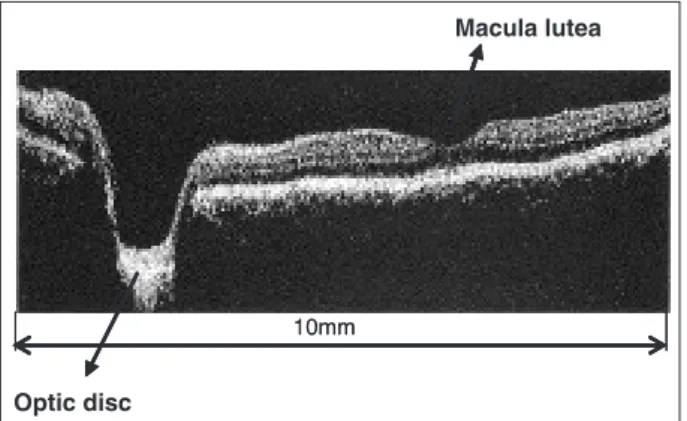
Macula lutea
Optic disc
Figure 2 : Example of a retinal tomogram taken by OCT Photograph provided by Microtomography Co., Ltd.
used l ight sou rces with low coherence i n both temporal and spatial domains, such as incandescent lamps. However, an incandescent lamp is not a point source; it has width, i.e. has a low spatial coherence, and is thus incapable of providing a high resolution at the object plane.
In practice, the resolution can be improved by placing a pinhole behind the incandescent lamp;
however, this lowers the intensity, preventing the photodetector from catching enough light. OCT employs an interferometric measurement that takes advantage of the high spatial coherence and low temporal coherence of an SLD light source, which is the key feature of this invention.
Un l i ke X - r a y C T t h a t d e t e c t s p h o t o n s transmitted through an object, OCT detects the reflected light and enables non - invasive, in -vivo imaging of the tissues in layers close to the sur face of a living body. Since this concept appeared to be too different from the original idea of utilizing the coherence of laser beams, which was the dominant focus in the Biophotonics Information Laboratories, Ltd., it was not accepted by some project members. As a result, the concept of OCT was never regarded as f undamental to the project, and a high priority was not placed on investigating potential applications of OCT such as medical equipment d e velopme nt. Ne ve r t hele s s, i m me d i atel y after inventing OCT, Professor Tanno and his colleagues approached the Faculty of Medicine of Yamagata Universit y and gave seminars several times a year to regularly introduce their technology seed from the engineering side.
The development process of OCT technology in Japan, from its invention to its application i n med ica l equ ipment, is ch ronolog ica l ly shown in Table 1 along with that in Europe and the U.S. Professor Tanno continued to spread his technology seed by introducing OCT technology at the Yamagata Technopolis Foundation and suggesting to local companies the potential application of semiconductors to testing apparatus. However, in terms of actual research activity, since Yamagata University had no doctoral program then, he taught his master’
s students the methods of simulation and other calculation techniques. Although he published his first English paper[10] in 1994, he could not
perform a full-scale demonstration experiment.
While Japan was in the middle of this “blank period”, in 1996, Zeiss - Humphrey Systems, I nc. ( Hu mph rey), a U.S. subsidiar y of the well-established German optical firm Carl Zeiss Meditec AG (Carl Zeiss), released a test model of the industry’s first OCT equipment. Professor Shoji Kishi and his colleagues in the Faculty of Medicine of Gunma University showed an interest in this product and purchased the first model.
They became the first group to collect clinical data in Japan and demonstrated its utility in the diagnosis of diseases of the ocular fundus[11].
Hearing this news, Professor Tanno noticed that the principle used in the OCT equipment was just what he had invented, and notified Carl Zeiss of this fact. With governmental suppor t ba sed on t he L aw for P romot i ng University-Industry Technology Transfer (TLO law) enacted in May 1998, he received financial aid from JST ( Japan Science and Technology Agency) and started to make a prototype in 2000.
In 2001, he received a visit from the CEO of Carl Zeiss for patent negotiation and persuaded the CEO to accept that his Japanese patent had preceded Carl Zeiss’s use of the technique. Carl Zeiss agreed to pay him a royalty on the use of the patent in Japan and to mark their domestically s o l d p r o d u c t s w i t h t h e J ap a n e s e p a t e nt number. Fueled by the success of the patent negotiation, Professor Tanno further promoted the development of the product; in 2001, the project was approved under the Temporary Law concerning Measures for the Promotion of the Creative Business Activities of Small and Medium Enterprises and received grants from the Tohoku Bureau of Economy, Trade and Industry and a Yamagata Prefecture New Industry Creative Type Technology R&D Grant. In 2002, then Professor Tanno, who had become the Chairman of the Cooperative Research Center of Yamagata Universit y, founded Microtomography Co., Ltd., a venture capital firm jointly established by a semiconductor-manufacturing equipment manufacturer, MTEX Matsumura Corporation.
He was appointed the director of the venture capital firm, and Sumio Matsumura and Michiro Hasegawa were appointed the CEO and the director, respectively. In 2003, the product was
Table 1 : Comparison of OCT development processes in Japan, Europe and the U.S.
Year Japan Europe-U.S.
Engineering Medicine Medicine-engineering collaboration
1990 Professor Tanno applied for Japanese patent
1991
Professor Tanno introduced his idea at the Yamagata Technopolis Foundation, and taught the associated calculation methods in a master’s-level course, because the university offered no doctoral program
Professor Fujimoto applied for a patent, published an angiotomogram in Science.
1992 Biophotonics Information Laboratories, Ltd. was founded
Professor Fujimoto received $6 million from Zeiss-Humphrey Systems Inc. (a subsidiary of CZ in U.S.) for promoting collaboration with an image processing group and the Eye Center of the Lincoln Laboratory. He published a fundus photograph in ’ 93 Opt. Lett.
1993
1994 Professor Tanno et al. published their first English paper 1995
1996
Professor Fujimoto et al. published a collection of clinical data. CZ made the first shipment of a test model of funduscopy equipment
1997
Professor Kishi purchased the first model manufactured by CZ
1998 The TLO Law was enacted Professor Kishi et al.
reported clinical cases.
G. Hausler et al. of the University of Erlangen published the principle of high-speed OCT
1999
2000
Professor Yasuno et al. of University of Tsukuba published the FD-OCT method.
Professor Tanno et al. took part in a regional collaborative research project and received grants from JST (MTEX Matsumura Corporation (MTEX), the parent company of the current MT)
Speed-up and multifunctionality of OCT were pursued. Development of next-generation OCT was promoted, e.g. blood flow measurement utilizing the Doppler effect 2001
Professor Tanno received a visit from the CEO of CZ for patent negotiation. MTEX was approved under the Temporary Law concerning Measures for the Promotion of the Creative Business Activities of Small and Medium Enterprises and received a Yamagata Prefecture New Industry Creative-type Technology R&D Grant 2002 MTEX received grants from the Tohoku Bureau of Economy, Trade and Industry.
Microtomography Co., Ltd. was founded
2003 MT received approval under the Pharmaceutical Affairs Law
2004
MT shipped the first domestic funduscopy equipment. Professor Yatagai et al.
launched the “ultrahigh-speed Fourier optical radar microscope for biometrics” project funded by JST
2005
NEDO project “eye fundus blood flow, internal disease examination project” (Kyoto University, Yamagata Technopolis Foundation, Topcon, Nidek, Hamamatsu Photonics) was launched. Professor Yatagai et al. launched “the study concerning application of OCT to ophthalmology” through technological cooperation with Topcon Corporation.
CZ’s market share of first-generation OCT equipment reached 90%
2006
MT proposed the application of spectroscopic OCT to 3D tomography to in vivo oxygen saturation in cooperation with Professor Hidetoshi Yamashita of the Yamagata University Faculty of Medicine and Professor Tetsuya Yuasa of the Faculty of Engineering
MT: Microtomography Co., Ltd. CZ: Carl Zeiss Meditec AG
approved under the Japanese Pharmaceutical Affairs Law, and in 2004, 14 years after the technology was invented and eight years later than its commercialization in Europe and the U.S., Japan’s first OCT equipment was finally put on the market.
2-3 Process of development in Europe and the U.S.
For comparison with the process described in Japan, this section explains the process of OCT development in Europe and the U.S., using Table 1. Professor J. Fujimoto and his colleagues at MIT[12], an institute famous as a base of industry- academia collaboration in the U.S., independently invented a principle similar to Professor Tanno’s invention. In 1991, they applied for a U.S. patent and published the world’s first English paper on OCT titled “Optical Coherence Tomography” in Science[13]. The term OCT currently used among experts around the world is derived from this paper. Professor Fujimoto launched a medicine-engineering collaboration project with an image processing group within MIT and medical scientists at the Eye Center of the Lincoln Laboratory. In 1993, they made the world’s first in vivo tomographic observation of the retina[14]. The professor received $6 million as a grant from Humphrey and vigorously worked on the commercialization of OCT equipment.
In 1996, he took the initiative in publishing a 5-cm-thick book of clinical data collected in trials of optical coherence tomographic imaging[15], which astonished ophthalmologists around the world. At about the same time, Humphrey released the world’s first test model of the equipment. Today, a decade after the product was first released, three companies are engaged in the production and distribution of the equipment, including the above-mentioned two companies and a latecomer, OPI (Opthalmic Technologies Inc.) of Canada. Carl Zeiss and its subsidiary Humphrey command 90% of global market share.
The speedy process of OCT development in Europe and the U.S. can be compared to a football game; the players cooperated in passing the ball (OCT) efficiently, from the defender, to the mid-fielder to the forward player, to take
the shortest distance from the invention to the ultimate goal of market domination. The players comprehensively maintained a good balance between work- sharing and cooperation and worked swiftly to bring the university-launched innovation to practical use. The U.S. is already equipped with dynamic systems to facilitate collaborative innovation between medicine and engineering, i.e. the creation of technology seeds and swift technology transfer, and for collecting clinical data, systems that actually operate night and day. Researchers in Japanese universities and public institutions should learn from the smooth cooperation among industry, academia and government in the U.S. and should strongly support Japan’s original dynamic systems for facilitating collaborative innovation between medicine and engineering.
3 Institutional and operational problems of the system
This chapter focuses on the legal process in Japan that affects the speed of the collaborative innovation between medicine and engineering.
Regarding the developmental process of medical equipment, i.e. R&D (invention)→prototype
→ clinical data collection → application → screening under the Pharmaceutical Affairs Law
→ commercialization → shipment, the TLO Law is applied to the first half of the process;
in the second half of the process, i.e. clinical data col lection and subsequent steps, the Pharmaceutical Affairs Law is applied to screen the products to be put on the market[16]. Although OCT is medical equipment, it is regarded as a pharmaceutical product and must be approved under the Pharmaceutical Affairs Law.
This also applies to the development of OCT equipment; preliminary clinical trials must be performed to collect clinical data demonstrating that the equipment is clinically effective and has no adverse effects. Clinical trials are accompanied by risks, which gives rise to issues of liability for accidents. Thus, screening must be performed with deliberation, requiring a vast amount of time and money. In the U.S., it only took five years for Professor Fujimoto and his colleagues to succeed




![Figure 19 : Pedestrian fatalities as a percentage of all traffic accident deaths Prepared by the STFC based on Reference [36]](https://thumb-ap.123doks.com/thumbv2/123deta/6926795.2265854/42.892.230.665.792.1131/figure-pedestrian-fatalities-percentage-traffic-accident-prepared-reference.webp)

