九州大学学術情報リポジトリ
Kyushu University Institutional Repository
Phylogeography of Weaver Ant, Oecophylla smaragdina, in Bangladesh (Hymenoptera:
Formicidae)
モハメッド マムヌール ラーマン
http://hdl.handle.net/2324/1959176
出版情報:九州大学, 2018, 博士(農学), 課程博士 バージョン:
権利関係:
Phylogeography of weaver ant, Oecophylla smaragdina, in Bangladesh (Hymenoptera: Formicidae)
Md. Mamunur Rahman
2018
Phylogeography of weaver ant, Oecophylla smaragdina, in Bangladesh (Hymenoptera: Formicidae)
by
Md. Mamunur Rahman
A dissertation submitted to the Graduate School of Bioresource and Bioenvironmental Sciences, Kyushu University, Japan
DOCTOR OF PHILOSOPHY
Graduate School of Bioresource and Bioenvironmental Sciences Kyushu University
Japan
2018
i
A BSTRACT
The weaver ant species, Oecophylla smaragdina, is widely distributed from India through Southeast Asia to northern Australia including many tropical Western Pacific islands. The ant is arboreal observed in natural forests, fruit orchards and homestead woodlands, and is one of the important biological control agents. A recent phylogenetic study of O. smaragdina showed that the species is divided into 7 groups based on mtDNA and that the Bangladesh populations belong to SE Asian mainland clade despite of its geographical proximity to India. However, the samples analyzed from Bangladesh were limited and distribution pattern of Bangladeshi populations was not clearly presented.
The present study aims to reveal the phylogeographic aspect of O. smaragdina in Bangladesh including phylogenetic analysis, haplotype network analysis and divergence time estimation as well as hybridization detection based on extensive materials. The sampling was executed according to zonation of 5 areas which are demarcated by 3 main rivers during the years 2013 to 2017. Ninety five colonies from 87 localities of 47 Districts were collected. The molecular analyses were carried out using 2 mitochondrial loci: Cytochrome b oxidase subunit 2 (Cytb) consisting of 507 bp and Cytochrome c oxidase subunit I (COI) consisting of 639 bp.
The possibility of occurring hybridization of O. smaragdina in the zone of contact was examined by using LW Rh of nuclear DNA and microsatellite markers.
The phylogenetic analysis of 84 colonies revealed that 47 are the Indian clade (Indian type) and 37 are the SE Asian mainland clade (SE Asian type). The distribution of mtDNA types showed that the western parts of Bangladesh is predominantly occupied by the Indian type, whereas, the eastern part was dominated by the SE Asian type, and the central parts is the mixture of both types. The haplotype network analysis indicated that a total of 25 haplotypes
ii
were identified in Bangladesh based on COI genes, comprises 13 and 12 of Indian and SE Asian types, respectively. The divergence time analysis in Bangladesh populations, resulted that Indian type diverged ca. 2.2 Ma and SE Asian type diverged ca. 0.20 Ma corresponding to early to late Pleistocene. Two microsatellite markers, MS 6.45 and MS 8.24 possibly detected identical allele between Indian and SE Asian types of Oecophylla population in Bangladesh.
Nuclear gene sequences from LW Rh region showed inconsistency of Indian and SE Asian types from two colonies of the overlapped zone. Discordance between mitochondrial and nuclear DNA genes suggests the possibility of hybridization in the zone of contact.
The results of the study suggest a scenario of dispersal: 1) before Last Glacial Maximum (LGM), the haplotypes observed in Bangladesh would be already established; 2) during the LGM, the Bengal Delta supposed to be vacant for Oecophylla smaragdina distribution because the northern limit of the species would be located down to the south; 3) after the LGM, the isolated populations in southern refuge areas of India and SE Asia extended to south, and in Bengal Delta the Indian type populations came from west and the SE Asian type populations from east; 4) when the Indian type populations and the SE Asian type populations contacted in the Bengal Delta, each of the types already contained several haplotypes of mtDNA, and reproductive isolation is not established.
iii
C ONTENTS
Abstract………i
Contents………..iii
List of Figures………....vii
List of Tables………...x
Appendix ...……….xi
Chapter 1. General Introduction ...………...1
1.1 Background of the study……….1
1.2 Problem statement ………...……….3
1.3 Objectives of the study …….………...7
1.4 Outline of the dissertation …….………..7
Chapter 2. Review of the previous study ..…………..……….…8
2.1 Phylogeographic study …...………...8
2.1.1 Mitochondrial DNA analysis ….………...8
2.1.2 Nuclear DNA for detecting hybridization ...10
2.1.3 Microsatellite study for determining heterozygosity ….…………...12
2.1.4 Phylogenetic tree for inferring phylogeography …….………….….12
2.1.5 Phylogeographic feature in the study at East Asia ……...…….….14
2.2 Taxonomy, distribution and divergence history of Oecophylla …...………..15
2.2.1 Taxonomy of O. smaragdina ………….……….……….……15
2.2.2 Biology of O. smaragdina ……….………...20 2.2.3 Distribution of O. smaragdina and the factors affecting such
iv
distribution …...………...……….………21
2.2.4 Divergence time of O. smaragdina ………...……….23
2.3 Geology of Bangladesh and its importance for phylogeographic study of weaver ant ………...29
2.4 Phylogenetic study of O. smaragdina in Asian continent …………...…….32
Chapter 3. General Methodology ...………..33
3.1 Sampling of Oecophylla smaragdina in Bangladesh ……….………....33
The setting of the study sites ……….………...33
Localities of O. smaragdina sampling ………..……….36
Sample preparation ...…....36
3.2 Molecular studies ……..………..37
Extraction of DNA ….………....42
PCR (Polymerase chain reaction) ……..……….42
Gel electrophoresis ………..………...43
Exostar ………..………..43
Cycle sequencing ………..………..43
Ethanol precipitation ……….……….46
Sequencing ……….………46
3.3 Detailed flow chart of the experiments …….……….47
Chapter 4. Phylogenetic relationship inferred from mitochondrial DNA of Oecophylla smaragdina in Bangladesh ...………53
4.1 Revealing the distribution pattern of O. smaragdina in Bangladesh ……. 51
4.1.1 Introduction………...51
v
4.1.2 Materials and methods ………..53
Sampling and preparation of specimens ………...53
Molecular study ………53
Phylogenetic inferences ………54
4.1.3 Results and discussions ………55
Bayesian phylogenetic tree inferences ……….55
Summary of distribution pattern ………..57
4.2 Haplotypes and its network distribution of O. smaragdina in Bangladesh ...60
4.2.1 Introduction ………..60
4.2.2 Materials and Methods ……….61
Sampling and preparation of specimens ………..61
Molecular data collection ……….61
Haplotype network analysis………..62
4.2.3 Results and discussions ………62
Oecophylla. smaragdina haplotypes in Bangladesh ………....62
Haplotype network study ……….64
Chapter 5. Divergence and contact of Indian and SE Asian types of Oecophylla smaragdina in Bangladesh ……...………..68
5.1 Divergence time estimation of O. smaragdina in Bangladesh ..…...68
5.1.1 Introduction ………...……….68
5.1.2 Materials and methods ………...……….69
5.1.3 Results and discussions ………...….…....70 5.2 Hybridization scenario of Indian and SE Asian types of weaver ant using long
vi
wavelength rhodopsin (LW Rh) and microsatellite markers...75
5.2.1 Introduction ………...………...75
5.2.2 Materials and methods …………...………79
LW Rh analysis ………...79
Microsatellite study ………...80
DNA extraction ………..…....80
Microsatellite PCR condition and primer setting objectives…...81
5.2.3 Results and discussions ………...……...………..83
Nuclear DNA study by LW Rh ………..……....83
Presence of heterozygous colony in L34 and L46 ……..………...85
Microsatellite study ………...87
Microsatellite markers failed to detect identical alleles …..……...88
Detection of identical alleles ………..………....89
Limitation of the study ………...92
Chapter 6. General discussion and conclusions ………...………...93
6.1 General discussion ……...………...93
6.2 Conclusions …………...………...…………...97
6.3 Limitation of the study ………...…………98
Acknowledgements ………...………99
References ………...……….101
Appendix ………...……….117
vii
L IST OF F IGURES
Chapter 1
Fig. 1.1 Summary of the phylogeographic study of O. smaragdina by Azuma et al.
(2006) and Asaka (2010) ……….…....4 Fig. 1.2 Phylogeography of population groups of weaver ant, O. smaragdina with reference to geography modified from Azuma et al. (2006) ………..….5
Chapter 2
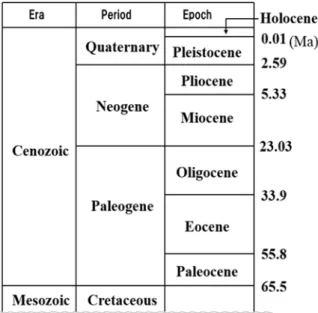
Fig. 2.1 Geochoronologic classification of the fossil species ….………..……27
Chapter 3
Fig. 3.1 Sampling sites of 5 broad areas based on three main rivers in Bangladesh.
The red line across the map showing the river flow that separated 5 broad areas in Bangladesh. In the text, red color indicating the district name from where sampling were done in each area ………...35 Fig. 3.2 Sampling sites of Oecophylla smaragdina in Bangladesh ………...38 Fig. 3.3 Detailed flow chart of the experiments ……….………….50
Chapter 4
Fig. 4.1 Bayesian phylogenetic tree of Bangladeshi O. smaragdina populations as inferred from the mitochondrial gene fragments (1143bp) of the COI (639
viii
bp) and the Cytb (504 bp) genes (substitution model: GTR + I + G 1000000 generations used in MrBayes 3.1.2 MrModeltest 2.3,PAUP*4.0b10).
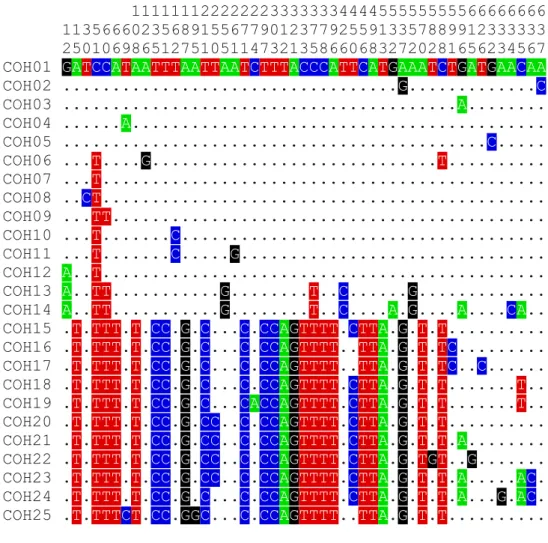
………..56 Fig. 4.2 Distribution pattern of Indian and SE Asian types of O. smaragdina in Bangladesh ………..59 Fig. 4.3 Twenty five haplotypes in Bangladesh and their variable sites with changed
position. The upper three numeric lines denotes the position on longitudinal basis of the each sequence. Each dot represent the identical sequence …..63
Fig. 4.4 Haplotype network of O. smaragdina. Solid colored circles indicate individual haplotype. A single bar connecting two haplotypes corresponds to a single base pair mutation. Each hatch mark on the bar indicate single base pair mutations. Haplotypes belonging to Indian clades are separated from the SE Asian clades by one of the largest number of mutational steps (27) inferred in the network. The locality information corresponding to each
haplotype are represented in table 4.2...56
Chapter 5
Fig. 5.1 Divergence time of Oecophylla smaragdina modified from Azuma et al.
(2006). The red text of the area indicating the Indian and SE Asian group of Oecophylla calculated by Azuma et al. 2006 ………..71 Fig. 5.2 Divergence time of Indian and SE Asian types of O. smaragdina in
Bangladesh ……….73
Fig. 5.3 mtDNA and nDNA inconsistency pattern and the heterozygous status within the cell due to crossing of male and female of different Indian and SE Asian types ………..…..78
ix
Fig. 5.4 In Bangladesh, O. smaragdina types inferred from nDNA by LW Rh compared with the results of the types inferred from mtDNA. L34 and L46 showing the inconsistency in mtDNA and nDNA types………..…84 Fig. 5.5 The inconsistency of the distribution pattern of Indian and SE Asian type of O. smaragdina in Bangladesh inferred from mitochondrial and nuclear DNA analysis. Distribution pattern inferred by mitochondrial DNA analysis were retrieved from (Rahman et al. 2017b). The locality information is the same as mentioned in Table 3.1………...86 Fig. 5.6 Electropherogrum study to find out the sharing allele position of each individuals per colony ……… 87
x
L IST OF T ABLES
Chapter 3
Table 3.1 Detailed locality information of O. smaragdina sampling sites in
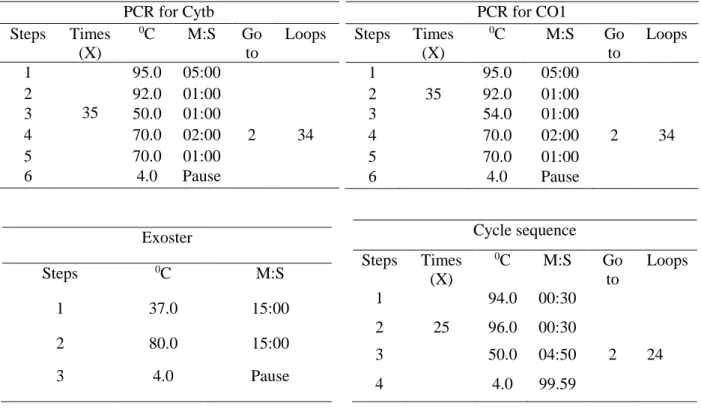
Bangladesh...….……...39 Table 3.2 Primers for amplifying and sequencing mitochondrial Cytb and CO1and nuclear genes. The positions of primers for mitochondrial genes follow the complete sequence of mitochondrial DNA of Apis mellifera (Crozier and Crozier, 1993) ……….44 Table 3.3 The operational status of PCR and cycle sequencing……….45
Chapter 4
Table 4.1 Detailed summary of the distribution pattern of weaver ant in Bangladesh ……...……… 58 Table 4.2 List of haplotypes inferred from COI gene sequences …………..………. 66
Chapter 5
Table 5.1 PCR parameters used in microsatellite analysis ……...………81 Table 5.2 List of loci used in microsatellite analysis of O. smaragdina in Bangladesh
modified from (Azuma et al. 2004) ...………..82 Table 5.3 List of Nuclear DNA haplotypes corresponding to locality ...………83 Table 5.4 Allele record for 10 microsatellite loci on 7 localities. n indicating the number of individuals/ locality …………...……… 90
xi
Appendix
Appendix 1. Detailed locality information with GenBank accession number of sequencing data ..……….117
CHAPTER 1
GENERAL INTRODUCTION
1
CHAPTER 1
General Introduction
1.1 Background of the study
Phylogeography is comparatively a new discipline that deals with the spatial arrangement of genetic lineages, among and within the closely related species (Avise, 2009).
The study of phylogeography combined with classical population analyss deals with historical, phylogenetic components of the spatial distributions of gene lineages, distinguishes between vicariant allopatric divergence, long-distance dispersal or expansion events and investigates the effects of recurrent gene flow in shaping geographical molecular variation (Hewitt, 2004). Mitochondrial DNA (mtDNA) has been widely used in phylogenetic studies, because it evolves rapidly and provides an abundance of genotypic characters, either by restriction fragment analysis or amplification by PCR and subsequent nucleotide sequencing (Randi et al. 2001). The mitochondrial Cytochrome b (Cytb) gene and Cytochrome oxidase subunit I (COI) gene were used in many phylogeographic studies, since this region seems to has a proper substitution rate for analyzing intra species phylogeny of Hymenoptera and some insect-specific oligonucleotide primers are already designed for this gene (Patwardhan et al. 2014). Mitochondrial DNA, in conjunction with morphological data and nuclear-gene (e.g., allozyme) studies, can be a powerful tool for detecting hybridization (Dowling et al.
2015; Dowling and DeMaris, 1993). In addition, comparisons of nDNA and mtDNA suggest that interspecific hybridization has been a persistent feature in the history of this group.
2
Oecophylla (Hymenoptera, Formicidae) is the weaver ant and is a broadly distributed genus. Weaver ants constitute the genus Oecophylla (Formicidae, Formicinae) which consists of only three extant species, O. longinoda, O. smaragdina and O. kolhapurensis. Oecophylla.
longinoda (Latrelille, 1802) is distributed in tropical and subtropical Africa and O.
smaragdina (Fabricius, 1775) in southeastern Asia and Australia including many tropical western pacific island (Bolton, 1995). The recently identified species O. kolhapurensis is distributed in western India (Kurane et al. 2015). Oecophylla originated in the early Paleogene of the Palaearctic realm, radiating strongly during the climatic changes of the Eocene–Oligocene transition (Dlussky et al. 2008). Oecophylla smaragdina and O. longinoda were estimated to be diverged at 13.3-11.3 Ma, while the diversification within the groups of O. smaragdina was estimated between 7.8 to 3.6 Ma, from the middle Pliocene to early Pleistocene (Azuma et al. 2006). Since O. smaragdina is an arboreal species, inseminated queens lifted by the wind than terrestrial ants. Rafting has been considered effective for between-island dispersal of several species of insects (Thornton, 1996), and weaver ants construct light and waterproof nests of leaves which appear to be a preadaptation for rafting dispersal.
Azuma et al. (2002) first analyzed populations of O. smaragdina using molecular data and samples of O. smaragdina from Bangladesh. Including additional populations of O.
smaragdina from India, Southeast Asia and Australia, Azuma et al. (2006) proposed an outline of the phylogeography of O. smaragdina and categorized the sampled populations into 7 major clades: group 1 from India; group 2 from Southeast Asian mainland including the Indochinese and Malayan Peninsula as well as the Greater Sunda Islands; group 3 from the Philippines; group 4 from Flores; group 5 from Sulawesi; group 6 from Halmahera; group 7 from Australia and New Guinea. Hereafter, I call their group 1 as the Indian type and group
3
2 as Southeast Asian type. Asaka (2010) extended the survey of O. smaragdina to South Asia, and collected several samples from India and Sri Lanka. Her phylogenetic analysis showed that all analyzed samples belong to Indian type with low levels of sequence divergence (Fig.
1.1).
Based on those data, Bangladesh is considered a major transition zone between Indian and Southeast Asian populations as Bangladesh populations of O. smaragdina is identified as SE Asian types. This is the unique case of population boundaries without any distinguished geographical borders (e.g., deep sea or high mountains) although the seven groups of O.
smaragdina based on haplotype grouping by Azuma et al. (2006) are geographically bordered by the sea, except the group 1 and group 2 (Fig. 1.2). The major rivers are considered as the geographical border between India and Bangladesh, and as all Indian isolates are found to be Indian type (Asaka, 2010; Azuma et al. 2006), Bangladesh is a major focusing area to find out the border between Indian and SE Asian types. As in Bangladesh, 3 main rivers Ganges, Jamuna and Meghna originated during Pleistocene and crisscrossed throughout the mostly flat territories of the country, these rivers might have some influence of separating the Indian type and the SE Asian type in Bangladesh.
1.2 Problem statement
Azuma et al. (2006) characterized the mitochondrial sequence identity of the Bangladesh populations as the Southeast Asian clade in spite of geographical proximity of Bangladesh to India. So, there might be some barriers of Indian type to reach into Bangladesh, although no such evidence was found. Moreover, Bangladesh is a plane land area with the 3 big rivers
4
Fig.1.1 Summary of the phylogeographic study of O. smaragdina by Azuma et al. (2006) and Asaka (2010)
5
Fig.1.2 Phylogeography of population groups of weaver ant, O. smaragdina with reference
to geography modified from Azuma et al. (2006).
6
separated the Bangladesh geography from India. The river might be the barrier but no such a study was carried out before. On the contrary, rafting method of dispersal along with the nuptial flight is very common in O. smaragdina. So, barrier effect along with the geological history needs to be considered with a strong evidence which is also lacking. Azuma (2006) analyzed the Bangladesh sample from just one locality i.e., Nurbag. However, for getting the actual phylogeographic history, it is necessary to analyze the samples from different parts of the country more comprehensively. Data on the hybridization scenario of Indian and SE Asian types of O. smaragdina in this subcontinent was also lacking. Therefore, with this study, can have a glimpse of the phylogenetic study as well as the hybrid scenario of O.
smaragdina in Bangladesh.
For checking those 3 rivers, Ganges, Jamuna and Meghna as borders, O. smaragdina was collected from 5 broadly categorized area based on three main rivers for phylogeographic analysis. From the analysis if it is found that all populations belong to Indian type, then it can be said that the previous results of Azuma et al. (2006), who showed that the Oecophylla population from area 3 was SE Asian type, will be exceptional.
For analyzing the existing border, if the collected sample from area 1 and area 2 is found SE Asian type, then it can be stated that the river Ganga will be the possible border for separating the two populations. If area 1 and area 2 denotes Indian Populations but area 3, area 4 and area 5 present the SE Asian type of population, then it can be said that, the river Jamuna is the border. If, area 1, area 2 and area 3 found Indian type but area 4 and area 5 as SE Asian type, then there is the possibility of Meghna river as existing border. If all populations from the 5 area found SE Asian type, then it will be clear that the river Ganga is the border as this river separating this two countries. If all population from the 5 area are found to be Indian type, then it can be said that the border is not existing in Bangladesh. It
7
may be the Arakan mountains that separate Bangladesh from Myanmar and also the two populations of Oecophylla as well.
1.3 Objectives of the study
The present study aims to show an evolutionary aspect of the distribution of O.
smaragdina. The first purpose is to test whether all the O. smaragdina populations in Bangladesh belong to SE Asian type or not. If not, the question arises where the boundary of SE Asian type and Indian type is. In other word, the second purpose of the study is to depict the distribution pattern of types at mtDNA level. This could be clarifying the limitation of the SE Asian type distribution in westward. Additionally, the hybridization of SE Asian and Indian types will be verified. Finally the study attempts to propose the probable cause of the revealed distribution pattern of O. smaragdina in Bangladesh.
1.4 Outline of the dissertation
This doctoral dissertation combines 6 chapters. In Chapter 1, the background, justification, hypothesis and objectives of the research are presented. Chapter 2 included some previous studies and their finding regarding the Phylogeography of O. smaragdina.
Chapter 3 focuses on the general methodology of conducting the several experiment for
phylogeographic study. Chapter 4 sheds light on the phylogenetic study, distribution pattern and haplotype network analysis of O. smaragdina in Bangladesh. Chapter 5 describes the divergence time and the hybridization scenario of the two types of Oecophylla smaragdina in Bangladesh. Chapter 6 represents general discussion and the comprehensive conclusion of the study. The last parts outline the acknowledgement, references and appendix.
CHAPTER 2
REVIEW OF THE PREVIOUS STUDY
8
CHAPTER 2
Review of the previous study
2.1 Phylogeographic study
The study of phylogeography combined with classical population genetics deals with historical, phylogenetic components of the spatial distributions of gene lineages, distinguish between vicariant allopatric divergence, long-distance dispersal or expansion events and investigate the effects of recurrent gene flow in shaping geographical molecular variation (Hewitt, 2004).
In molecular phylogeny, the relationships among, usually extant, organisms along with the modified total DNA content due to evolution are examined by comparing homologous DNA or protein sequence. Phylogeography offers the tools to shed light on the evolutionary relationship among different taxa with reference to the structure of population genealogies by demographic history. Moreover, it can also make inferences about temporal changes in the physical and biotic environment of a population using present day genetic data (Beheregaray, 2008).
2.1.1 Mitochondrial DNA analysis
Mitochondria, the powerhouse of a cell plays a crucial role in respiration, genetic illness, aging and self-destruction of a cell (Faure and Casanova, 2006). The genetic material in mitochondria, the mitochondrial DNA (mtDNA) contains genes involved in production of enzymes for oxidative phosphorylation and protein synthesis. Mitochondrial DNA (mtDNA)
9
has been widely used in phylogenetic studies, because it evolves rapidly and provides an abundance of genotypic characters, either by restriction fragment analysis or amplification by PCR and subsequent nucleotide sequencing (Randi et al. 2001). Mitochondrial genome sequence and structure provide evolutionary and comparative genomics information as well as information on molecular evolution, and patterns of gene flow, phylogenetics and population genetics resources. Like other animals, insect mitochondrial genome is a double stranded molecule consists of 37 genes encoding the large and small subunit ribosomal RNAs, 22 transfer RNAs (trnI, trnQ, trnM, trnW, trnC, trnY, trnL1, trnK, trnD, trnG, trnA, trnR, trnN, trnS1, trnE, trnF, trnH, trnT, trnP, trnS2, trnL2, trnV) necessary to translate the protein-coding genes and 13 protein coding genes that are all components of the oxidative phosphorylation process (Faure et al. 2011).
In phylogenetic study, mitochondrial DNA has many advantages. They possess strict maternal transmission with high mutation rate due to limited repair system (5-10 times that of nuclear DNA) (Mauro et al. 2006) and conserved simple structure. These unique properties allow the development of universal primers and easy recovery from small or degraded biological sample due to its high copy number in most cells with a different evolution rate in different regions of mitochondrial DNA. This fact facilitates the monitoring of its transmission along the evolutive lines starting in the early evolution. In the case that one individual is not available for a direct comparison with a biological sample, any sample which comes from the maternal genitor can be a good and usable one (Mauro et al. 2006).
The mitochondrial cytochrome b (Cytb) gene and cytochrome oxidase subunit I (COI) gene were used in many phylogeographic studies, since this region seems to have a proper substitution rate for analyzing within-species phylogeny of Hymenoptera and some insect- specific oligonucleotide primers are already designed for this gene (Patwardhan et al. 2014).
10
The enzyme cytochrome c oxidase I is a very well known protein of electron transport chain and is found in both bacteria and mitochondria. The COI and COII genes code for two of seven polypeptide subunits in the cytochrome c oxidase complex. The COI gene consists of approximately 894 bp. COI and/or COII sequences have been applied to phylogenetic problems at a wide range of hierarchical levels in insects, from closely related species to genera and subfamilies, families, and even orders. The COI gene is slowly evolving compared to other protein coding mitochondrial genes and is widely used for estimating molecular phylogenies and is a good performer in recovering an expected tree (Rawlings et al. 2001). Sequencing both the genes represents one of the largest sequence data sets generated for phylogenetic study of any group and also fulfils the putative phylogenetic accuracy. COI has recently been suggested as a potential ‘barcode’ for insect identification in general.
Cytochrome-b gene (~1,143 bp) is reported as the most useful marker in recovering phylogenetic relationships among closely related taxa but it can lose resolution at deeper nodes (Randi et al. 2001). Although the cytochrome-b gene has proven useful in recovering phylogenetically useful information at a variety of taxonomic levels, strength of its utility can be lineage-dependent and declines with evolutionary depth. Study of the haplotype network based on mitochondrial DNA nucleotide sequences and estimation of time of divergence were also very important for accurate tracing of the phylogeographic study of weaver ant population.
2.1.2 Nuclear DNA for detecting hybridization
Genetic variation within maternal lineages as reflected by mitochondrial DNA (mtDNA) is commonly used to trace ancient population migrations, demographic history, phylogeography and phylogeny. Since in vertebrates mtDNA population genetic analyses is confined to tracing the migration patterns of maternal lineages, a more complete picture of
11
population genetic structure requires analysis of nuclear DNA (nDNA)-encoded markers inherited from both parents. Moreover, being maternally inherited, the mtDNA population diversity reflects maternally directed natal site fidelity, whereas genome-wide bi-parentally inherited nDNA markers assist in quantifying levels of gene flow among subpopulations for both sexes (Bar Yaacov et al. 2012). Ancient hybridization would be most evident in comparisons among phylogenies based on independent character sets, such as mtDNA, allozymes, specific nuclear-gene trees, or morphology (Dowling and DeMaris, 1993).
Biogeographical evidence would often support these inferences, for example, changes in distributions associated with Pleistocene glaciation (Dowling and DeMaris, 1993). However, the more likely outcome would be that the bifurcation between the hybridizing species would simply appear more recent than it actually was, because the hybridization would most likely involve sister taxa. Several points need to be considered with regard to hybridization.
Hybridization is a problem in phylogenetic analysis only if it goes undetected. If hybridization is apparent, its effects can be taken into account and its occurrence incorporated into the historical narrative of the group as it should be. After all, the purpose of the phylogenetic analysis is to determine the evolutionary history of the group, which may have involved reticulate as well as cladistic events. For detecting the hybridization phenomenon, distribution of mitochondrial haplotypes must be compared with those of nuclear genes as only mt DNA cannot detect (Dowling and DeMaris, 1993). However, the nuclear genes need not be explicitly known Mitochondrial DNA, in conjunction with morphological and nuclear-gene (e.g., allozyme) studies, can be a powerful tool for detecting hybridization (Dowling et al. 2015;
Dowling and DeMaris, 1993). More generally, hybridization results in intermediacy of traits determined by nuclear genes and increased variance because the genetic determinants assort independently. The nDNA phylogeny, along with preliminary evidence from amplified fragment length polymorphism data corroborates hypothesis of multiple invasions, providing
12
additional details that elucidate the patterns and processes of speciation in Hawaiian Lauapla.
In addition, comparisons of nDNA and mtDNA suggest that interspecific hybridization has been a persistent feature in the history of this group.
2.1.3 Microsatellite study for determining heterozygosity
Microsatellites, also called short tandem repeats (STRs) or simple sequence repeats (SSRs), are sequential repeats of 1 to 6 base pair motifs that have been used as genetic markers.
Microsatellites have been used to measure population differentiation and hybridization (Butler et al. 2014), to investigate ploidy levels and to reconstruct parentage and pedigrees in wild and domestic populations (Steiner et al. 2011). Microsatellites are comparatively cheap to genotype and can be used with low concentrations of DNA. Furthermore, they typically have more alleles per locus than single nucleotide polymorphisms (SNPs) and thus provide more information per locus (Kronauer et al. 2011). In this study, we have conducted microsatellite analysis for determining the heterozygosity and finding the identical alleles. Azuma et al. (2004) characterized the 13 microsatellite loci for the O. smaragdina, which was found to be useful to analyze the genetic structure of Oecophylla species at both the colony and population levels.
2.1.4 Phylogenetic tree for inferring phylogeography
Phylogenetic tree is used for representing the phylogeographic relationship of groups of organism. The tree is a simple object consisting of two elements: nodes and branches. Branch is a line that connects two nodes. Bootstrap analyses are performed to test the support for branches of a phylogenetic tree. Mainly four primary methods are used for constructing phylogenetic tree. They are distance method (of which Neighbor-Joining is currently the favored implementation), maximum parsimony (MP), maximum likelihood (ML) and
13
Bayesian (BAY) method. Haplotype network is also used to see the correlation pattern raised in phylogenetic tree. This network represents the relationships among the different haploid genotypes observed in the dataset (ie. identical sequences are pooled into a single terminal).
They are usually drawn unrooted, which is quite sensible for within-species data, where the root location is often unknown. Bayesian phylogenetic methods were introduced in the 1990s and have since revolutionized the way we analyse genomic sequence data (Ronquist and Huelsenbeck, 2003). Examples of such analyses include phylogeographic analysis of virus spread in humans (Wilfert et al. 2016), inference of phylogeographic history and migration between species, analysis of species diversification rates (Hoorn et al. 2010), divergence time estimation and inference of phylogenetic relationships among species or populations. The popularity of Bayesian methods seems to be due to two factors: (1) the development of powerful models of data analysis; and (2) the availability of user-friendly computer programs to apply the models. In phylogenetics, the tree topology and the substitution model together specify the statistical model for the data. Different tree topologies thus correspond to different models, while the branch lengths or divergence times as well as the substitution parameters (such as the transition/transversion rate ratio) are parameters in the model. The data are usually a molecular sequence alignment or an alignment of morphological characters (or a combination of both). An appealing property of Bayesian inference is that it makes direct probabilistic statements about the model or unknown parameter.
14
2.1.5 Phylogeographic feature in the study at East Asia
Recently, a great number of phylogeographic studies have been pubslished on insects, plants amphibians, birds, fishes, and several mammals. The result of those study mainly focused on the importance of Pleistocene climate changes and biogeographic barrier such as mountains, rivers, seas and deserts for the diversification, radiation and isolation of the genetic lineage within the species (Riddle et al. 2000). Besides the phylogeographic study (Asaka, 2010; Azuma et al. 2006, 2002) on O. smaragdina, several studies on Asian elephants denoted some phenomenon. Vidya et al. (2009) reported endangered Asian elephant (Elephas maximus), which revealed two highly divergent mitochondrial DNA (mtDNA) lineages, an elucidation of which is central to understanding the species’s evolution. They identified several clades based on the divergence history of Asian elephants and suggested a contraction–
expansion scenario during severe climatic oscillations of the Quaternary, with range expansions from different refugia during warmer interglacial leading to the varying geographical overlaps of the two mtDNA clades. Brandon-jones (1996) reported similar trends of declining the Oecophylla populations and other mammals after Pleistocene glaciation. Their study also discussed the possibility of variation of the Oecophylla types between Indian and Bangladesh. He described the divergence pattern between the Indian and Bangladeshi types might be due to a combination of submergence of lowlands or islands, deforestation caused by cold and drought in inland Asia, and other environ-mental changes.
15
2.2 Taxonomy, distribution and divergence history of Oecophylla 2.2.1 Taxonomy of O. smaragdina
The genus Oecophylla was established by F. Smith in 1860 including two species, Formica smaragdina Fabricius and Formica virescens Fabricius. Subsequently Bingham (1903) designated Oecophylla virescens as type species. The genus is distinct in having triangular mandibles with long apical tooth, palp formula of 5 maxillary and 4 labial, elongate petiole with a low node as well as aggressive behavior and arboreal nesting habit. The latest phylogenetic study (Blaimer et al. 2015) showed that Oecophylla is the sister group of Gesomyrmex, and that the two genera were diverged in 70 to 75 Ma. Presently, 3 names of species are recognized as valid.
(1) Oecophylla smaragdina (Fabricius, 1775)
Formica smaragdina Fabricius, 1775: 828. Type locality: India Combination in Oecophylla: Smith 1860: 102
Formica virescens Fabricius, 1775: 392. Type locality: Australia Combination in Oecophylla virescens: Smith, 1860: 102.
As subspecies of Oecophylla smaragdina: Emery, 1887: 242; Forel, 1915: 95; Wheeler, 1922: 228, Emery, 1926: 52.
Junior synonym of Oecophylla smaragdina: Mayr, 1872: 143, Taylor & Brown, 1985: 127.
Formica viridis Kirby, 1819: 478. Type locality: Australia
Junior synonym of Oecophylla virescens: Roger, 1863:10; Dalla Torre, 1893: 177; Emery, 1925: 52; of Formica smaragdina: Smith, 1857: 53; of Oecophylla smaragdina: Taylor
& Brown, 1985: 127.
Formica macra Guérin-Méneville, 1831: pl. 8, fig.1. Type locality: Indonesia
16
Junior synonym of Oechopylla virescens: Smith 1858:29; of Oecophylla smaragdina:
Roger, 1863:10; Dalla Torre, 1893: 176; Arnold, 1922: 609.
Formica zonata Guérin-Méneville, 1838: 295. Type locality: “Port Praslin”, Australia.
Junior synonym of Oechopylla smaragdina: Roger, 1863:10; Dalla Torre, 1893: 176.
(2) Oecophylla longinoda (Latreille, 1802)
Formica longinoda Latreille, 1802: 184. Type locality: Senegal Combination in Oecophylla: Mayr, 1863: 439.
Junior synonym of Oecophylla virescens: Smith, 1858: 29.
Subspecies of Oecophylla smaragdina: Emery, 1892: 564; Forel, 1907: 15; Santschi, 1914:
128; Santschi, 1919: 345; Emery, 1925: 52; Prins, 1965: 77.
Status as species: Dalla Torre, 1893: 176; Emery, 1921: 102; Wheeler, 1922: 227; Santschi, 1928: 211; Bolton, 1995: 298.
Oecophylla brevinodis André, 1890: 313. Type locality: Sierra Leone.
Subspecies of Oecophylla longinoda: Dalla Torre, 1893: 176; of Oecophylla smaragdina:
Stitz, 1916: 396.
Junior synonym of Oecophylla longinoda: Wheeler, 1922: 945.
(3) Oecophylla kolhapurensis Kurane, Bhoje & Sathe, 2015
Oecophylla kolhapurensis Kurane, Bhoje & Sathe, 2015: 39. Type locality: Kolhapur, Maharashtra, India.
The Asian weaver ant has been represented by a single species, Oecophylla smaragdina, in spite of variations of body color and size. The African weaver ant, Oecophylla longinoda, is
17
similar to O. smaragdina. Indeed, it was treated as subspecies of O. smaragdina by some authors at one time.
According to Wheeler (1922), O. smaragdina is distinguished from O. longinoda by the shape of the petiole as follows:
1) In O. smaragdina, the petiole is very slender; its stigmata is very prominent in dorsal view;
its ventral surface is nearly straight or very feebly convex in profile
2) In O. longinoda, the petiole is stouter and higher; its stigmata is not prominent in dorsal view; its ventral surface is strongly convex in profile.
The third species, O. kolhapurensis, was recently described from India, but the diagnose showed by Kurane et al. (2015) were obscure and the status as species is doubtful. Indeed, an opinion in “AntWiki*” mentioned that the species is “undoubtedly a junior synonym of common and widespread Oecophylla smaragdina.” Although, the statement does not have value as a taxonomic treatment, the species is not taken in consideration here.
The species of the genus exhibits a high degree of variation in worker body color. For example, the workers are light to dark brown in Southeast Asia, but in Australia they are known as
‘‘green tree ants’’ due to the intense green color of the abdomen. Thus there has been a long history of descriptions of infraspecific forms.
Presently 12 valid subspecies names has been recognized:
Subspecies of Oecophylla smaragdina nominal plus
Oecophylla smaragdina fuscoides Karawaiev, 1933. Type Locality: Indonesia (Java).
Oecophylla smaragdina gracilior Forel, 1911. Type Locality: Indonesia (Java).
18
Oecophylla smaragdina gracillima Emery, 1893. Type Locality: Indonesia (Batjan I.).
Oecophylla smaragdina selebensis Emery, 1893. Type Locality: Indonesia (Sulawesi).
Oecophylla smaragdina subnitida Emery, 1892. Type Locality: New Guinea.
Subspecies of Oecopylla longinoda nominal plus
Oecophylla longinoda annectens Wheeler, 1922. Type Locality: Democratic Republic of Congo.
Oecophylla longinoda claridens Santschi, 1928. Type Locality: Ivory Coast.
Oecophylla longinoda fusca Emery, 1899. Type Locality: Cameroun.
Oecophylla longinoda rubriceps, Wheeler, 1922. Type Locality: Democratic Republic of Congo.
Oecophylla longinoda rufescens, Santschi, 1928. Type Locality: Congo.
Oecophylla longinoda taeniata, Santschi, 1928. Type Locality: Democratic Republic of Congo.
Oecophylla longinoda textor, Wheeler, 1922. Type Locality: Democratic Republic of Congo.
In the case of Oecophylla, the infraspecific names were described in 1890s to 1930s. The concept of subspecies at that time is quite different from modern usage (Brown, 1955). Wheeler (1922) compiled these taxa to the date and showed the distinction in key as below.
1. Petiole very slender, its stigmata seen from above very prominent, its ventral surface nearly straight or very feebly convex in profile (smaragdina) - - - 2 - Petiole stouter and higher, its stigmata seen from above not prominent, its ventral
surface strongly convex in profile (longinoda) - - - 7 2. Body ferruginous or testaceous - - - 3 - Gaster and sometimes the head pea-green, head more rouinded and less truncated
19
behind; size smaller, petiole somewhat shorter (Queensland, New Guinea, the Islands Aru and Key) - - - subspecies virescens (Fab.)
3. Integument opaque or subopaque - - - 4 - Integument more or less distinctly shining -- - - 5 4. Color ferruginotis (India, Ceylon, Cochin China, Indonesia) - - -
- - - - smaragdina (typical)
- Smaller and more testaceous, mesonotum and petiole alittle narrower (Java) - - - - - - - -- var. gracilior Forel
5. Large forms, integument slightly shining (Papua, Philippines, Melanesia) - - - subspecies subnitida Emery
- Smaller forms, integument more shining - - - 6 6. Body very shining and slender, color testaceous, head rather elongate - - -
var. gracillima Emery
- Less shining and less slender, head shorter (Celebes) - - - - var. selebensis Emery 7. Ferruginous or testaceous throughout - - - 8 - Brown or black - - - 9 8. Color ferruginous (West Africa) - - - longinoda (typical) - Color paler, more testaceous, petiole shorter, head slightly broader, apical tooth of
mandibles shorter (Zanzibar) - - - var. textor (Santschi) 9. At least the thorax and mandibles black - - - 10 - Body rather uniformly brown (Belgian Congo) - - - var. annectens
Wheeler
10. Head dull red, gaster often brownish (Belgian Congo) - - - var. rubriceps (Forel)
- Head and gaster black or dark brown (Belgian Congo, Nigeria, Liberia, Cameroon, Spanish Guinea) - - - var. fusca (Emery)
Since then, 4 names were added by Santschi (1928) and Karawaiew (1933) in Oecophylla smaragdina. In term of zoological nomenclature these are valid because no one synonymized then. But it is seldom to refer subspecies categories.
Subspecies refers to geographical populations that have some morphological features distinguishing from other populations. Before the biological species concept was established by Mayr (1942), the terms concerning infraspecies (subspecies, varieties, forma, etc.) were confused. Although ICZN describes the rule of trinomen where only the subspecies is a rank below species, Wilson and Brown (1953) argued that subspecies is not a “real taxa”, because of the absence of criteria and thus arbitrariness (see also Mallet, 2007). In ant taxonomy, since both Wilson and Brown were researchers of ants, the application of subspecies were not popular until today.
20
If the population is defined by genetic basis and it links with morphological characters, the naming of population or subspecies name might be important to evolutionary work.
Phylogeography treats with populations, but in the case of Oecophylla smaragdina, the relationship between the named subspecies and populations treated in phylogeographic studies remains ambiguous. The classification of subspecies is not consistent with grouping based on mtDNA (Azuma et al. 2002, 2008).
2.2.2 Biology of O. smaragdina
Oecophylla colonies are arboreal, large and polydomous in nature. Workers show the polymorphic characters with diversified organizing behavior in the colony. They are aggressive in nature and well known for their predatory characters. They are able to protect a variety of terrestrial plants against insect pests. Weaver ants formed their nest in the tree canopy by their unique nest building behavior. Workers construct pendulous bag-like nests from cluster of green leaves which are bound together with silk produced by their mature larvae. (Chapuisat and Keller, 2002). Their prominent leaf nests glued ("woven") together with silk from the larvae, can readily be seen on many trees in open and closed forests, and their large colony sizes, often over 500,000 workers, (Lokkers, 1990), is considered as one of the background of dominating behavior.
Oecophylla smaragdina colony starts the life cycle with a mated queen and laying a batch of about 35 eggs within 5 - 10 days after dealation / shedding her wings (Lokkers, 1990). The development of brood depends on temperature however the optimum temperature is 30°C.
Emerging of larvae occurred about day eight. Pupae follow after day 17 and the first adult worker appeared after 28 days (Lokkers, 1990). Those colonies surviving the founding stage will develop into colonies consisting of at least half a million individuals occupying several
21
good sized trees (Hölldobler and Wilson, 1990). When the queen dies the workers activate their ovaries and produce a last set of male brood before the colony shrinks as worker numbers reduce over the following months (Lokkers, 1990). The colony can live about 8 years.
Schlüns et al. (2009) reported that O. smaragdina promises to be a very interesting study organism because its genetic colony structure deviates from the archetypical case and varies among populations. This is a rare case where colony relatedness is reduced by both polygyny and polyandry at levels specific to each population. Oecophylla smaragdina involves the manner in which nest mates of multiple castes (including larvae) cooperate to construct arboreal silk nests. For crossing gaps, workers form living chains and bring leaves together.
The rest of the workers by the help of mandibles hold final instar larvae for using the silk produced by the larvae at the binding position of the leaves, to fasten together leaves to form the nest walls (Hölldobler and Wilson, 1977). This is considered as one of the key factors of achieving such a big colony and dominating behavior in the ecosystem (Schlüns et al. 2009).
2.2.3 Distribution of O. smaragdina and the factors affecting such distribution
Oecophylla smaragdina is distributed from Australia to tropical and subtropical Asia, India and many tropical islands. Oecophylla longinoda is distributed mainly in tropical and subtropical Africa (Lokkers, 1986; Wheeler, 1922). Among all ant species, O. smaragdina is the most widespread over ocean islands. Behavioral characters of this species along with the environmental effect played the major roles of such distribution. The dispersal of O.
smaragdina without human intervention indicates that the species has the ability to disperse across wide water barriers. In O. smaragdina, the mating swarming has not been observed and
22
described, but only assumed when fertilized queens are found in large quantities in the vegetation. Lokkers, (1990) stated that sexuals ‘take part in aerial swarm mating in north Queensland, but he had ‘never witnessed the release of queens from a nest. Therefore, he suggested that swarming probably occurs under the cover of darkness. With discriminant analyses, Lokkers, (1986) observed the distribution pattern and suggested that both rainfall and temperature have the marked effect for the distribution of Oecophylla, as low temperatures directly inhibit larval development, and both rainfall and temperature levels limit the distribution of the forest-woodland vegetation required by this arboreal ant. Thus, the climatic condition also has the marked impact on the swarming behavior often leading to change in distribution pattern. Wetterer, (2017) and Peel et al. (2007) reported that the climatic condition of this continent has marked influence of some diverged distribution of Oecophylla and also explained the delimiting weather factors for Oecophylla distribution. According to them, the climatic conditions was much variable in this part might cause the behavioral changes in swarming and mating of weaver ant. Wetterer, (2017) based on the history of distribution and climatic condition with a Köppen-Geiger climate map resulted that the vast majority of O.
smaragdina having tropical climates with tropical rainforest, monsoon climate. In arid climatic condition, fewer number of O. smaragdina distribution were observed. However, most of them comes from semi arid areas and majority from India or Australis. The moderate range of distributions were recorded in the sub tropical climate with dry winter and rainy summer.
23
2.2.4 Divergence time of O. smaragdina
Paleontological Information
1) Fossil species
In spite of only 2 extant species, Oecophylla has many described fossil species. Although some were described based on forewings only from imprints, 16 valid species are recognized (Bolton, 2018). The species list of fossils, as shown below, is broadly based on the data from
“Antcat.org”, a database of ant taxonomy and from “Fossilworks”, a web-based portal to the Paleobiolgy Database.
(1) Oecophylla atavina Cockerell
Oecophylla atavina Cockerell, 1915: 485, pl.64, fig. 7 (m) Bembridge Marls, UK (Eocene) [Age range: 37.2 to 33.9 Ma].
Oecophylla perdita Cockerell 1915: 485, pl. 64, figs. 5, 6 (q.m.)
Junior synonym of O. atavina: Dlussky and Perfilieva 2014: 424.
(2) Oecophylla bartoniana Cockerell
Oecophylla bartoniana Cockerell, 1920: 277, pl. 16, fig. 4 (wing) Bagshot Beds, Bournemouth, UK (Eocene) [Age range: 48.6 to 40.4 Ma]
(3) Oecophylla brischkei Mayr
Oecophylla brischkei Mayr, 1868: 31, pl. 1, figs. 12, 13 (w) Baltic amber, Poland, (Eocene). [Age range: 37.2 to 33.9 Ma]
[also Wheeler, 1915]
(4) Oecophylla crassinoda Wheeler
Oecophylla crassinoda Wheeler, 1922: 27. Baltic amber (Eocene) Replacement name for Oecophylla brevinodis Wheeler, 1915: 116
[Junior primary homonym of Oecophylla brevinodis André, 1890: 313.]
(5) Oecophylla eckfeldiana Dlussky, Wappler and Wedmann
24
Oecophylla eckfeldiana Dlussky, Wappler and Wedmann, 2008: 619, fig. 4 (w.q.).
Eckfeild Maar, Germany (Eocene) [Age range: 48.6 to 40.4 Ma]
(6) Oecophylla grandimandibula Riou
Oecophylla grandimandibula Riou, 1999: 130 (alate, sex not indicated) Ardèche, France (Miocene) [Age range: 8.7 to 5.3 Ma]
(7) Oecophylla kraussei (Dlussky and Rasnitsyn)
Camponotites kraussei Dlussky and Rasnitsyn, 1999:74, fig 2 (q.) U.S.A. (Early Eocene).
[Age range: 55.8 to 48.6 Ma]
Combination in Oecophylla: Perfilieva,Dubovikoff and Dlussky, 2017: 399.
See also Dlussky & Rasnitsyn, 2003: 418; Dlussky, Karl, Brauckmann, Gröning and Reich, 2011:452; Archibald, S. B., Rasnitsyn, A. P., Brothers, D. J.; Mathewes, R. W. 2018: fig.
12G
(8) Oecophylla leakeyi Wilson and Taylor
Oecophylla leakeyi Wilson and Taylor, 1964: 93, fig. 2, pl. 2 (w.l.). Mfwangano Island, Kenya (Miocene) [Age range: 20.43 to 15.97 Ma]
(9) Oecophylla longiceps Dlussky, Wappler and Wedmann
Oecophylla longiceps Dlussky, Wappler and Wedmann, 2008: 617, figs. 2, 3 6A (q.m.) Hessen, Germany (Eocene). [Age range: 48.6 to 40.4 Ma]
(10) Oecophylla macroptera (Dlussky)
Camponotites macroptera Dlussky, 1981: 76, fig. 53 (q.). RUSSIA (Middle Miocene).
Combination in Oecophylla: Perfilieva,Dubovikoff and Dlussky, 2017: 399.
(11) Oecophylla megarche Cockerell
Oecophylla megarche Cockerell, 1915: 486, pl.65, fig. 1-3 (q.) Bembridge Marls, UK (Eocene). [Age range: 37.2 to 33.9 Ma] [See also Dlussky and Perfilieva, 2014:426]
(12) Oecophylla obesa (Heer)
25
Formica obesa Heer, 1849: 108, pl. 8, fig. 1 (q.) Radoboj, Croatia (Miocene) [Age range:
37.2 to 11.608 Ma]
Combination in Oecophylla: Mayr, 1867b: 50; Dlussky & Putyatina, 2014: 252, figs. 5A- F, 18A-B, 18E (q.m.).
Attopsis longipes Heer, 1867: 29, pl. 2, fig. 15 (m.?) Croatia (Miocene).
See also Förster, 1891: 442.
Junior synonym of Oecophylla obesa: Dlussky & Putyatina, 2014: 252.
Formica pinguis Heer, 1849: 110, pl. 8, figs. 3, 4 (q.) Croatia (Miocene).
Combination in Camponotus: Mayr, 1867b: 51. Junior synonym of Oecophylla obesa:
Dlussky & Putyatina, 2014: 252.
Attopsis anthracina Heer, 1849: 156, pl. 12, fig. 12 (m.) Croatia.
Combination in Cataulacus: Mayr, 1867b: 58.
Senior synonym of Cataulacus nigra: Mayr, 1867b: 58.
See also: Bolton, 1974a: 87.
Junior synonym of Oecophylla obesa: Dlussky & Putyatina, 2014: 252.
Attopsis nigra Heer, 1849: 157, pl. 12, fig. 13 (q.) Croatia.
Combination in Cataulacus: Mayr, 1867b: 58.
Junior synonym of Cataulacus anthracinus: Mayr, 1867b: 58.
(13) Oecophylla praeclara Förster
Oecophylla praeclara Förster, 1891: 432, pl. 13, fig. 6 (q.) Brunstatt, France (Oligocene).
[Age range: 33.9 to 28.4 Ma]
(14) Oecophylla sicula Emery, 1891
Oecophylla sicula Emery, 1891b: 156, pl. 3, figs. 36, 37 (w.) Sicilian amber, Italy (Tertiary). [Age range: 11.608 to 5.332 Ma] [also Brown & Wilson, 1978]
(15) Oecophylla superba Théobald, 1937