• 検索結果がありません。

Nutrients Consumed by the Inflammatory Bowel Disease Jordanian Patients

N/A
N/A
Protected

Academic year: 2021

シェア "Nutrients Consumed by the Inflammatory Bowel Disease Jordanian Patients"

Copied!
8
0
0

読み込み中.... (全文を見る)

全文

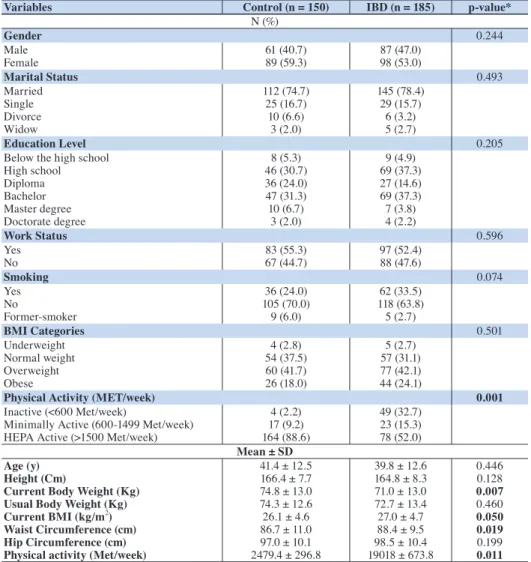
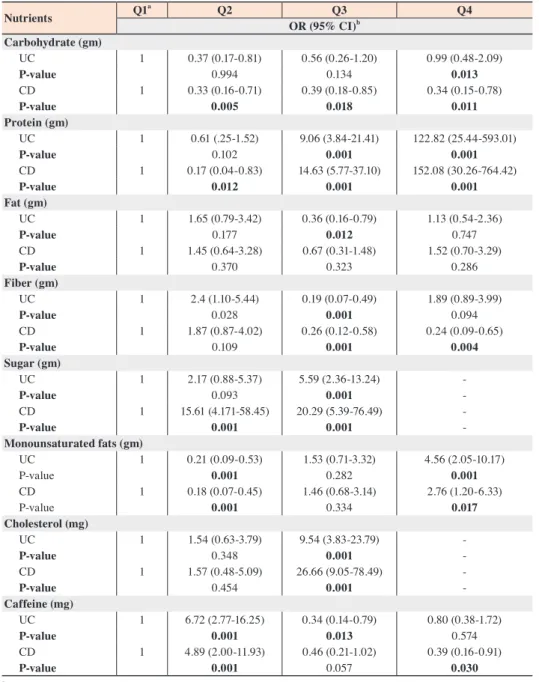
22 Annals of Cancer Research and Therapy Vol. 29 No. 1, 2021. Ann. Cancer Res. Ther. Vol. 29, No. 1, pp. 22-29, 2021. Introduction. Inflammatory bowel disease (IBD) is a chronic in- flammatory disease that affects the colon as in ulcerative colitis (UC) and/or any part of the gastrointestinal tract as in Crohn’s disease (CD)1). While UC causes long-last- ing inflammation and superficial ulcers of the inner lin- ing layers of the large intestine (colon) and rectum, CD is characterized by inflammation of the lining of the di- gestive tract, particularly the ileum, which often spreads with deep ulcers of affected tissues in skipped fashion2).. Several studies highlighted the independent effect of various diets and lifestyle factors on IBD risk, including dietary patterns3, 4), macro- and micro-nutrients intake5), physical activity (PA)6), and tobacco smoking7). Some. risk factors of IBD are not modifiable such as genetic factors, sex and age8). However, dietary patterns, PA, nu- trient intake, and smoking are considered modifiable risk factors that can be targeted to modify disease outcome3, 4).. There is accumulating evidence that associates a di- etary pattern, single micro- macronutrients, and food items to intestinal inflammatory response that may have a therapeutic implication9). Nutrition has an important role in the management of patients with IBD, which can ameliorate macro and micronutrient deficiencies, and may reverse the physiopathological consequences of such deficiencies, and exert an anti-inflammatory therapeutic effect4, 5).. The incidence of IBD is increasing in developing countries, and this can be attributed to changes in dietary and lifestyle factors associated with modernization10). Additionally, incidence and prevalence of IBD is in- creasing worldwide and is considered a global emerging disease10). In Jordan, UC and CD are not uncommon, and occur among all age groups, with a peak incidence in the. Nutrients Consumed by the Inflammatory Bowel Disease Jordanian Patients. Yaser M. Rayyan1), Tamara R. Qalqili2), Awni T. Abu-Sneineh1), and Reema F. Tayyem2). 1) Department of Gastroenterology & Hepatology, School of Medicine, The University of Jordan, Amman, Jordan 2) Department of Nutrition and Food Technology, Faculty of Agriculture, The University of Jordan, Amman, Jordan. Abstract Background: Inflammatory bowel disease (IBD) is a chronic inflammation of the intestine that affects adults more than children, and can be associated with serious long-term complications like colon cancer. Nutrition has an important role in the management of patients with IBD which can ameliorate macro and micro-nutrient deficiencies in these individuals, and may reverse the physiopathological consequences of such deficiencies, and exert an anti-inflammatory therapeutic benefit. Therefore, this study aimed to compare the differences between macro and micro-nutrients intake among IBD cases and IBD-free controls in a selected sample of Jordanian adults. Methods: A case control study was conducted between November 2018 and December 2019. Three hundred thirty-five Jordanian adults aged between 18-68 years were recruited: 185 were recently diagnosed with IBD (100 (n = UC) and 85 (n = CD)) and 150 IBD-free controls. Nutrients intake and dietary data were collected from all participants using validated food frequency questionnaire. Results: The IBD group showed significantly (p < 0.05) higher intake of energy from fat, saturated fat, amount of total pro- tein, carbohydrates, sugars, fiber, MUFA, trans-fat and cholesterol compared to the control group. Besides, the IBD group showed significant (p < 0.05) higher intakes of vitamins A, D, E, B12, C and folate, beta-carotene, retinol, calcium, potas- sium, iron, Omega-3 and Omega-6 when compared to the control group. However, the control group had a higher intakes of vitamin K and caffeine when compared to the IBD group (p < 0.05). Conclusions: Nutrients consumption in IBD patients often changes because of the impaired digestive tract function which may negatively impact the intake and status of macro- and micronutrients. Patients with IBD had a higher intake of some macro and micro-nutrients when compared to the control group, while the control group had higher intake of vitamin K and caffeine when compared to the IBD.. Keywords: Inflammatory Bowel Disease; Ulcerative Colitis; Crohn’s Disease; Nutrients Intake.. (Received January 5, 2021; Accepted January 15, 2021). Corresponding author : Reema F. Tayyem, Department of Nutrition and Food Technology, Faculty of Agriculture, The University of Jordan, Amman 11942, Jordan. E-mail: [email protected]. mailto:[email protected]. 23Nutrients Consumed by IBD Patients. third decade of life11). Jordanians are moving towards a western lifestyle as well, with increasing consumption of processed food and decreased levels of PA12). To our knowledge, this is the first study to investigate the asso- ciation between nutrients intake patterns and IBD among Jordanians. The aim of our study is to compare the dif- ferences in macro- and micronutrients intake among IBD cases and IBD-free controls adults.. Patients and Methods. Study Design and Participants A case-control study design was used to determine. nutrients intake as risk factors for inflammatory bowel disease in a selected sample of Jordanian adults.. In this study, 335 adult Jordanians were enrolled be- tween November 2018 and December 2019. One hundred and eighty-five patients were recently diagnosed with IBD (CD, n = 85 and UC, n = 100). The patients were recruit- ed from three hospitals: University of Jordan Hospital, Zarqa Governmental Hospital, and Al Bashir Hospital. One hundred and fifty IBD-free controls were recruited from the community (the employees and visitors from the University of Jordan Hospital, Zarqa Governmental Hospital, and Al Bashir Hospital, as well as employees working in companies and organizations). However, cases and controls were matched for age and marital status. The inclusion criteria included: adult patients between 18 to 68 years of age, patients who were recently (within 3 months) diagnosed with IBD, Jordanian nationality, and able to communicate verbally and sign an informed consent. Participants who suffer from cancers, acute appendicitis, food allergy, food intolerance, infection, primary intestinal lymphoma, intestinal tuberculosis, anal fistulas; are pregnant and lactating women; and/or unable to communicate verbally were all excluded from the study. Additionally, controls who reported symptoms of irritable bowel syndrome or anal fistula up to one year before the study were excluded as well.. Setting and Study Approval A hospital setting was utilized for data collection.. Hospitals that offer services for patients with IBD were chosen to conduct the study. The outpatient department in each hospital was the setting for data collection. The proposal was presented to the Institutional Review Board (IRB) of each hospital to get their ethical approval. Ethical Approval from each hospital for having a private room with good physical condition to carry out the inter- views was obtained (The University of Jordan Hospital IRB number was 22/2019-4312; Zarqa Governmental Hospital and Al Basheer Hospital IRB number was 3199). A signed consent was obtained before data col- lection from each participant. Collected information was treated confidentially in which only the researcher knew. patients’ names and gave them ID. All used tools and instruments (questionnaires and test tubes) were labeled with patient number. All Patients charts were reviewed and IBD diagnosis was confirmed.. Data Collection Instrument: A two-part package was used for collect- ing data that meet the purpose of the study. The pack- age consists of two structured questionnaires: personal information sheet; Food Frequency Questionnaire (FFQ) for adult13); and physical activity questionnaire14). Face- to-face interview technique was utilized as a method for data collection and the questionnaires were completed by a trained dietitian. Personal Information Sheet: This sheet consisted of questions related to age, sex, marital status, education, employment, health status, current body weight, pre- diagnosis body weight, height, and waist circumferences.. Dietary Assessment: Information on diet was based on a validated Arabic FFQ for dietary assessment which was tested previously for reproducibility13). The FFQ questions have tracked the information on the dietary history of study participants before IBD diagnosis, and to confirm the dietary habits of control participants. The FFQ included 111 questions on food and beverages. The estimated duration of the interview was about 30 minutes for each participant. For better portion size estimation, a standardized food models (NASCO, USA) and standard measuring tools were used (NASCO, USA). Data was collected through face-to-face interviews, how frequent- ly, on average, participants consumed one standard serv- ing of specific food items in nine categories (<1/month, 2–3/month, 1–2/week, 3–4/week, 5–6/week, 1/day, 2–3/ day, 4–5/day, or 6/day). For some other food items, re- sponse categories provided in the FFQ were “never, 1/4 the time, 1/2 time, 3/4 the time, all the time”. Food lists in the modified FFQ questions were classified based on types of foods: 21 items of fruits and juices; 21 items of vegetables; 8 items of cereals; 9 items of milk and dairy products; 4 items of beans; 16 items of meat such as red meat (lamb and beef), chicken, fish, cold meat, and oth- ers; 4 items of soups and sauces; 5 items of drinks; 4 items of snacks and sweets; and 14 items of herbs and spices. Energy (kcal), carbohydrate (g), sugar (g), fiber (g), protein (g), fat (g), saturated fats (g), trans-fats (g), monounsaturated fats (MUFA) (g), polyunsaturated fats (PUFA) (g), cholesterol (mg), Omega 3 (g), Omega 6 (g), vitamin B6 (mg), vitamin B12 (mcg), vitamin C (mg), Beta carotene (mcg), Retinol (RE), vitamin D (mcg), vi- tamin E-α-tocopherol (mg), folate (mcg), vitamin k (mcg), calcium (mg), iron (mg), potassium (mg), sodium (mg), zinc (mg) intakes were all assessed from the whole food items which are included in the FFQ. After completing the FFQ, the selected frequency category was converted to a daily intake. For calculating the nutrient intake, di-. 24 Annals of Cancer Research and Therapy Vol. 29 No. 1, 2021. etary analysis software (ESHA Food Processor SQL ver- sion 10.1.1; ESHA, Salem, OR, USA) that calculates the vitamins and minerals intake based on the food intake was used together with additional data on foods con- sumed in Jordan15).. 7-day Physical Activity Recall (PAR) A 7-Day PAR validated questionnaire, which is an. organized questionnaire, was used to calculate a partici- pant’s recall of time spent participating in exercise over a seven-day period14). This questionnaire helps to divide individual physical activity levels into three categories. Participants were asked to respond to a PAR question based on the way they used to behave prior undergoing coronary angiography.. Statistical Analysis All statistical analyses were conducted using SPSS. version 22.0 (IBM SPSS Statistics for Windows, IBM Corporation). Descriptive analyses were conducted to examine the frequency of different variables. Chi-square. was used to detect the statistical differences among cat- egorical variables. One-way ANOVA test coupled with Least Significant Difference (LSD) test was used to find the difference between continuous variables of cases (UC and CD) and controls. Data were presented as Mean ± SD. The significance level was set at p<0.05. Shapiro- Wilk test was used to assess the normality of the distri- butions of dietary intake variables. Non-normally dis- tributed variables were log-transformed16). Multinomial logistic regression model was used to calculate odd ratios (OR) and its 95% confidence interval (CI).. Results. One hundred and eighty-five (100 UC, and n = 85 CD) Jordanian adults aged between 18-68 years who were recently diagnosed with IBD were recruited in this study. For the control group, 150 IBD-free controls were con- veniently selected to match the cases in age and marital status. Table 1 shows the results of socio-demographic and health characteristics. Average age for IBD cases. Table 1. Socio-demographic and Anthropometric Measurements of the Study Participants: Variables Control (n = 150) IBD (n = 185) p-value*. N (%) Gender 0.244 Male Female. 61 (40.7) 89 (59.3). 87 (47.0) 98 (53.0). Marital Status 0.493 Married Single Divorce Widow. 112 (74.7) 25 (16.7) 10 (6.6) 3 (2.0). 145 (78.4) 29 (15.7) 6 (3.2) 5 (2.7). Education Level 0.205 Below the high school High school Diploma Bachelor Master degree Doctorate degree. 8 (5.3) 46 (30.7) 36 (24.0) 47 (31.3) 10 (6.7) 3 (2.0). 9 (4.9) 69 (37.3) 27 (14.6) 69 (37.3) 7 (3.8) 4 (2.2). Work Status 0.596 Yes No. 83 (55.3) 67 (44.7). 97 (52.4) 88 (47.6). Smoking 0.074 Yes No Former-smoker. 36 (24.0) 105 (70.0). 9 (6.0). 62 (33.5) 118 (63.8). 5 (2.7) BMI Categories 0.501 Underweight Normal weight Overweight Obese. 4 (2.8) 54 (37.5) 60 (41.7) 26 (18.0). 5 (2.7) 57 (31.1) 77 (42.1) 44 (24.1). Physical Activity (MET/week) 0.001 Inactive (<600 Met/week) Minimally Active (600-1499 Met/week) HEPA Active (>1500 Met/week). 4 (2.2) 17 (9.2). 164 (88.6). 49 (32.7) 23 (15.3) 78 (52.0). Mean ± SD Age (y) Height (Cm) Current Body Weight (Kg) Usual Body Weight (Kg) Current BMI (kg/m2) Waist Circumference (cm) Hip Circumference (cm) Physical activity (Met/week). 41.4 ± 12.5 166.4 ± 7.7 74.8 ± 13.0 74.3 ± 12.6 26.1 ± 4.6 86.7 ± 11.0 97.0 ± 10.1. 2479.4 ± 296.8. 39.8 ± 12.6 164.8 ± 8.3 71.0 ± 13.0 72.7 ± 13.4 27.0 ± 4.7 88.4 ± 9.5. 98.5 ± 10.4 19018 ± 673.8. 0.446 0.128 0.007 0.460 0.050 0.019 0.199 0.011. Data are presented as mean ± SD and frequencies (N) and percentages (%) P-value ≤ 0.05 considered significant. 25Nutrients Consumed by IBD Patients. was 39.8 ± 12.6, and 41.4 ± 12.5 years for controls. The percentage of gender distribution was different between the three groups. A significant difference has been found between cases and controls in physical activity. As shown in Table 1 no significant differences were detected in marital status, work status, smoking, and education level. Significant differences in the means of physical activity, current body weight, BMI and waist circumference be- tween controls and IBD were detected.. The mean daily intakes of total energy, macronutri- ents, and micronutrients are illustrated in Table 2. The IBD group reported significantly (p < 0.05) higher in- takes of energy from fat, saturated fat, amount of total protein, carbohydrates, sugars, fiber, MUFA, trans-fat and cholesterol compared to the control group. Besides, the IBD group showed significant (p < 0.05) higher intakes of vitamins A, D, E, B12, C and folate, beta- carotene, retinol, calcium, potassium, iron, Omega-3 and Omega-6 when compared to the control group while the control group had a higher intakes of vitamin K and caf- feine when compared to the IBD group (p < 0.05).. Table 3 shows a protective association between car- bohydrates intake when consumed in higher amounts in the three quartiles (OR (CI95%): Q2: 0.33(0.16–0.71); Q3: 0.39(0.18–0.85); Q4: 0.34(0.15–0.78, respectively) among CD patients. On the other hand, the increase in protein intake was associated with increased risk for patients with CD (OR (CI95%): Q2: 0.17(0.04–0.83); Q3: 14.63(5.77–37.10); Q4: 152.08(30.26–764.42), respective- ly) and an increased risk in two quartiles (OR (CI95%): Q3: 9.06(3.84–21.41); Q4: 122.82(25.44–593.01), re- spectively) of protein intake among UC patients. Fiber intake as well showed a protective effect for patients with CD in the third and fourth quartiles (OR (CI95%): Q3: 0.26(0.12–0.58); Q4: 0.24(0.09–0.65)), respectively), while for the same patients, sugar intake showed a signif- icant increased risk at the second and third quartiles OR (CI95%): Q2: 15.61(4.171–58.45); Q3: 20.29(5.39–76.49)), respectively). Although, MUFA and cholesterol intakes were associated with the increased risk for UC and CD, caffeine intake showed a significant protective effect against UC and CD.. Table 2. Energy-adjusted nutrients intake per day for the study @participants. Nutrients Control (n = 150) Mean ± SD UC (n = 100) Mean ± SD. CD (n = 85) Mean ± SD P-Value. Energy (kcal) 1962.6 ± 497.1 2075.9 ± 322.7 2033.4 ± 247.2 0.078 Energy from Fat (kcal) 368 ± 86.1b 885 ± 92.9a 886.7 ± 93.2a 0.001 Energy from saturated fat (kcal) 174.4 ± 12.9b 183.5 ± 29.7a 181.4 ± 27.9a 0.001 Protein (g) 76.9 ± 5.5b 89.7 ± 12a 90.1 ± 10.6a 0.001 Carbohydrate (g) 224.5 ± 51.1a 209.8 ± 26.5b 199.7 ± 21.8c 0.001 Fiber (g) 21.06 ± 3.5b 23 ± 7.5a 19.7 ± 3.4c 0.001 Sugar (g) 47.7 ± 5.8b 64 ± 19.0a 58.8 ± 9.5a 0.001 Fat (g) 99.5 ± 7.9 99.5 ± 10.6 100.1 ± 12.4 0.856 Saturated Fat (g) 14.5 ± 1.3 20.4 ± 3.3 20.1 ± 6.2 0.949 Monounsaturated Fat (g) 25 ± 3.2c 28.47 ± 5.5a 26.7 ± 5.3b 0.002 Polyunsaturated Fat (g) 18.9 ± 3.6 18.2 ± 3.5 17.9 ± 3.7 0.112 Trans Fat (g) 4.14 ± 1.5a 3.27 ± 2.1b 3.4 ± 1.8b 0.001 Cholesterol (mg) 341.3 ± 50.3a 381.3 ± 127.7b 390.2 ± 95.1b 0.001 Omega 3 (g) 0.6 ± 0.2b 0.81 ± 0.3a 0.7 ± 0.9a 0.001 Omega 6 (g) 5.9 ± 1.1c 7.9 ± 1.5b 8.6 ± 1.8a 0.001 Retinol (RE) 858.8 ± 178.1c 1328.9 ± 196.3a 1602.3 ± 103.9b 0.001 Beta carotene (mcg) 526.6 ± 205.2b 1186.1 ± 664.5a 1220.1 ± 505.6a 0.001 Vitamin B6 (mg) 1.2 ± 0.28 1.3 ± 0.3 1.2 ± 0.3 1.000 Vitamin B12 (mcg) 4.1 ± 1.5b 8.6 ± 2.4a 8.8 ± 2.3a 0.001 Vitamin C (mg) 82.9 ± 18.7c 198.1 ± 211.6a 90.0 ± 50.9b 0.001 Vitamin D (mcg) 0.65 ± 0.3b 0.91 ± 0.41a 0.92 ± 0.3a 0.001 Vitamin E (mg) 6.7 ± 1.9c 9.0 ± 1.8a 7.9 ± 1.7b 0.001 Vitamin K (mg) 71.5 ± 6.3a 62.9 ± 17.0b 61.0 ± 16.8b 0.001 Folic acid (mcg) 437.0 ± 102.6b 626.3 ± 129.7a 601.1 ± 103.9a 0.002 Calcium (mg) 519.0 ± 148.8b 728.6 ± 156.3a 714.2 ± 112.4a 0.001 Zinc (mg) 7.6 ± 0.87c 9.1 ± 2.2a 8.2 ± 1.3b 0.001 Iron (mg) 15 ± 3.4b 15.9 ± 3.4a 15.4 ± 1.7a 0.015 Potassium (mg) 2000.4 ± 273.7c 2473.6 ± 548.2a 2136.2 ± 257.4b 0.001 Sodium (mg) 2736.9 ± 373.4b 2794.0 ± 433.8b 2912.0 ± 344.4a 0.002 Caffeine (mg) 163.9 ± 47.5a 158.2 ± 64.3a 144.8 ± 1.8b 0.024 Vitamin E as α-Tocopherol Folic acid as dietary folic acid equivalents Data are presented as mean ± SD P-value for ANOVA test < 0.05 considered significant Different three letters (a, b, c) mean that there is a significant differences between three variables. 26 Annals of Cancer Research and Therapy Vol. 29 No. 1, 2021. Discussion. The key result of this study is consistent with prior studies for the presence of an association between IBD and nutrients intake. It sheds light on the relationship be- tween IBD, macro and micronutrients intake in a selected sample of Jordanians adults.. We found a significant difference between UC, CD and controls in BMI. Our results showed that BMI was significantly (P-value = 0.021) lower in UC as compared to CD and controls. Several studies agree with our study findings17-19). Flores et al. (2015) found that BMI was decreased in patients with active UC but not in patients with CD, compared with healthy controls19). Ghoshal et. al. (2008) revealed that IBD patients’ BMI was lower than that in non-IBD controls17). However, Mendall et al. (2011) found that obesity at diagnosis was more common in subjects with CD versus UC in support of our find- ings18). Finally, a large cohort of US women, measures of adiposity were associated with an increased risk of CD but not UC20). This can be related to adipocyte derived mediators such as TNF-α, IL-6 and Leptin, well-known proinflammatory mediators21). Obesity is associated with increased levels of intestinal inflammation as measured by stool calprotectin and has been linked to alterations in gut microbiome which in turn likely plays a role in the pathogenesis of CD22).. Our study results showed that diet is one of the im- portant factors that may exert an effect on the IBD risk.. Table 3. Association between some nutrients intake and the risk of IBD. Nutrients Q1a Q2 Q3 Q4. OR (95% CI)b. Carbohydrate (gm) UC 1 0.37 (0.17-0.81) 0.56 (0.26-1.20) 0.99 (0.48-2.09) P-value 0.994 0.134 0.013 CD 1 0.33 (0.16-0.71) 0.39 (0.18-0.85) 0.34 (0.15-0.78) P-value 0.005 0.018 0.011. Protein (gm) UC 1 0.61 (.25-1.52) 9.06 (3.84-21.41) 122.82 (25.44-593.01) P-value 0.102 0.001 0.001 CD 1 0.17 (0.04-0.83) 14.63 (5.77-37.10) 152.08 (30.26-764.42) P-value 0.012 0.001 0.001. Fat (gm) UC 1 1.65 (0.79-3.42) 0.36 (0.16-0.79) 1.13 (0.54-2.36) P-value 0.177 0.012 0.747 CD 1 1.45 (0.64-3.28) 0.67 (0.31-1.48) 1.52 (0.70-3.29) P-value 0.370 0.323 0.286. Fiber (gm) UC 1 2.4 (1.10-5.44) 0.19 (0.07-0.49) 1.89 (0.89-3.99) P-value 0.028 0.001 0.094 CD 1 1.87 (0.87-4.02) 0.26 (0.12-0.58) 0.24 (0.09-0.65) P-value 0.109 0.001 0.004. Sugar (gm) UC 1 2.17 (0.88-5.37) 5.59 (2.36-13.24) - P-value 0.093 0.001 - CD 1 15.61 (4.171-58.45) 20.29 (5.39-76.49) - P-value 0.001 0.001 -. Monounsaturated fats (gm) UC 1 0.21 (0.09-0.53) 1.53 (0.71-3.32) 4.56 (2.05-10.17) P-value 0.001 0.282 0.001 CD 1 0.18 (0.07-0.45) 1.46 (0.68-3.14) 2.76 (1.20-6.33) P-value 0.001 0.334 0.017. Cholesterol (mg) UC 1 1.54 (0.63-3.79) 9.54 (3.83-23.79) - P-value 0.348 0.001 - CD 1 1.57 (0.48-5.09) 26.66 (9.05-78.49) - P-value 0.454 0.001 -. Caffeine (mg) UC 1 6.72 (2.77-16.25) 0.34 (0.14-0.79) 0.80 (0.38-1.72) P-value 0.001 0.013 0.574 CD 1 4.89 (2.00-11.93) 0.46 (0.21-1.02) 0.39 (0.16-0.91) P-value 0.001 0.057 0.030. a Reference tertiles b Adjusted for age, gender, BMI, smoking, physical activity, total energy intake, and education level. 27Nutrients Consumed by IBD Patients. Participants’ food intake showed that intakes of protein and sugar among the IBD group were considerably higher than the control group. However, carbohydrate, fiber and MUFA intakes were significantly different in both UC and CD groups as compared to controls. Also, our results indicate that there was no significant differ- ence between the three groups in total energy intake, fat, saturated fat and PUFA intakes. Moreover, we found that both UC and CD showed a higher consumption of pro- tein than controls (P-value = 0.001). This is in agreement with Hou et al. (2011)23) and Jantchou et al. (2010)24) who reported a high total protein intake specifically animal protein to be significantly associated with increased risk of IBD. Both UC and CD groups revealed a higher con- sumption of sugar than controls in our study (P-value = 0.001). Sakamoto et al. (2005)4) and Racine et al. (2016)25) findings are similar to our study, they found that excess consumption of sugar and products containing refined carbohydrates appeared more in the intake of UC and CD patients than controls. Our UC patients’ carbohy- drates consumption was higher than CD patients, and both of them consumed lower intake of carbohydrates than controls (P-value = 0.001). Tragnone et al. (1995) documented that a higher intake of carbohydrates was found in UC patients more than CD patients26).. Additionally, in the present study, we found that fi- ber consumption was different among the three groups (P-value = 0.001). CD patients consumed a lower amount of fiber compared with UC patients and controls. Hou et al. (2011) showed that the intake of high- fiber diet and fruits was associated with reduced risk for CD23). According to their results, patients with CD should in- crease the consumption of fiber to decrease the disease risk. MUFA consumption also was significantly different among the three groups (P-value = 0.002). UC and CD had a higher consumption of MUFA than controls which is opposite to what is expected. Geerling et al. (2000) found that MUFA consumption was associated with an increased risk to develop UC27). The mechanism of how MUFA can increase the risk is still unclear.. The IBD group showed significant higher intakes of vitamins A, D, E, B12, and C, folate, beta-carotene, reti- nol, calcium, potassium, iron, omega-3 and omega-6 (p < 0.05) when compared to the control group. However, the control group showed a higher intake of vitamin K and caffeine when compared to the IBD group (p < 0.05). Several studies showed that the IBD group had lower in- takes of some micronutrients than the control group28-30). Interpretation of our results regarding the significant higher intakes of these vitamins, minerals, omega-3 and omega-6 can be attributed to the higher intake of protein by IBD cases which is considered the main source of cal- cium, fiber and iron. Additionally, this can be attributed to higher consumption of supplemental minerals and multivitamins by IBD patients.. Our study showed that IBD groups had lower con- sumption of caffeine than the control group, this is con- sistent with Owczarek et al. (2016)31) results; who found that some IBD patients avoid caffeine intake and had a lower consumption of caffeine than the control group. Additionally, Niewiadomski et al. (2016) findings are consistent with our results. They documented that high caffeine intake was protective against IBD (OR: 0.51, 95% CI: 0.3–0.87, P = 0.002)32). Although, no well- known biological mechanism is known for this associa- tion, it has been shown that caffeine can ameliorate acute colitis in intestinal epithelial cells33). They reported that high tea intake was found to be protective against CD, and both coffee and tea were protective against UC in an Asian-Pacific cohort. However, coffee was shown to be protective against UC in a twin study, although this did not remain significant after adjusting for smoking habits. Another association between coffee intake and protec- tion against IBD proposed a role of caffeine in the repair of mucosal injury34).. The present study also showed that the IBD group had a lower dietary intake of vitamin K than the control group, this could be explained by lower consumption of fruits and vegetables by IBD group that are considered the main sources of vitamin K. Duggan et al., (2004)35) and Kuwabara et al., (2009)36) found that UC and CD had a lower dietary vitamin K consumption than control. They hypothesized that lower vitamin K consumption results from undernutrition and/or malabsorption caused by IBD and its treatments or due to lower consumption of soluble fiber which is subjected to fermentation by the intestinal colonic microflora.. This study is the first in Jordan to highlight the as- sociation between nutrients intake and risk of IBD. Our study has several notable strengths. First, the prospec- tive study design and restriction of study population to newly diagnosed cases over the past three months avoids the potential for selection bias of a retrospective study. Second, the use of a validated Arabic FFQ that was mod- ified to reflect food consumption pattern in Arab coun- tries, especially Jordan add to the strength of our study Third, the use of standardized food models and measur- ing tools to estimate portion sizes is another point that can improve the accuracy of the collected data. And last, we confirmed all cases of CD and UC through medical record review and face to face questionnaire, a significant advantage over studies that rely on discharge codes.. Our study has several limitations. First, dietary ques- tionnaire recalled dietary patterns in IBD patients for only one year, which is considered a quite short duration to have a significant impact on the pathophysiology of IBD. However, we believe that the recall period of one year (used in this study) is very likely reflective of the previous years, as most of participants indicated a con- stant dietary pattern during their last 5 years. Second,. 28 Annals of Cancer Research and Therapy Vol. 29 No. 1, 2021. similar to all retrospective studies, our findings do not allow us to establish causality. The third limitation was that the study may not be representative of the overall Jordanian population, but we included three large repre- sentative areas in the country, where a lot of rural areas seek medical therapy in these large referral hospitals.. In conclusion the present study provides evidence sup- porting the presence of an association between macro and micronutrients intake and the risk of IBD. Some macronutrients intake were higher in IBD group as pro- tein, sugar, monounsaturated fat and cholesterol com- pared with controls. On the other hands, higher intake of carbohydrate and trans-fat were found more in controls compared to cases. Micronutrients intake like retinol, beta carotene, vitamin B12, vitamin C, vitamin D, vita- min E, folic acid, calcium, iron, potassium, sodium, zinc, omega 3 and 6 were found higher in IBD group com- pared to controls. On the other hand, control group had higher intake of vitamin K and caffeine when compared to the IBD group. These dietary differences may have a therapeutic impact on the future treatment of IBD, and calls for future carefully designed studies that analyze dietary characteristics, and the interplay between all di- etary macro and micronutrients of interest in relation to IBD.. Competing interests: The authors declare that they have no competing interest.. Author Contributions: RFT and YMR participated in the study conception. TRQ partici- pated in data collection, entry and performed statistical analysis. RFT, TRQ, AAS and YMR interpreted results and drafted the manuscript. All authors drafted the manuscript and approved it.. Funding: This research was funded by Deanship of Academic Research of The University of Jordan.. Acknowledgement: The authors would like to thank Dr Sabika Allehdan for her help in data entry and analysis.. References 1) Vagianos, K., Bector, S., McConnell, J. and Bernstein, C. N. (2007). Nutrition assessment of patients with inflammatory bowel disease. Journal of Parenteral and Enteral Nutrition. 31(4): 311–319.. 2) Ghanma, A. M., Ghanama, R. A. and Hijazeen. (2012) R. I. clinical presentations of inflammatory bowel disease (IBD) among children at King Hussein Medical Center (KHMC) in Amman/Jordan. Skin. 7, 19.. 3) Goh, J. and O’morain, C. A. (2003) Nutrition and adult inflamma- tory bowel disease. Alimentary Pharmacology and Therapeutics. 17(3): 307–320.. 4) Sakamoto, N., Kono, S., Wakai, K., Fukuda, Y., Satomi, M., Shimoyama, T. and Kobashi, G. (2005) Dietary risk factors for inflammatory bowel disease A Multicenter Case-Control Study in Japan. Inflammatory Bowel Diseases. 11(2): 154–163.. 5) Battat, R., Kopylov, U., Szilagyi, A., Saxena, A., Rosenblatt, D. S.,. Warner, M. and Bitton, A. (2014) Vitamin B12 deficiency in in- flammatory bowel disease: prevalence, risk factors, evaluation, and management. Inflammatory Bowel Diseases. 20(6): 1120–1128.. 6) Narula, N. and Fedorak, R. N. (2008) Exercise and inflamma- tory bowel disease. Canadian Journal of Gastroenterology and Hepatology. 22(5): 497–504.. 7) Loftus Jr, E. V. (2004) Clinical epidemiology of inflammatory bowel disease: incidence, prevalence, and environmental influ- ences. Gastroenterology. 126(6): 1504–1517.. 8) Bonen, D. K. and Cho, J. H. (2003) The genetics of inflammatory bowel disease. Gastroenterology. 124(2): 521–536.. 9) Durchschein, F., Petritsch, W. and Hammer, H. F. (2016) Diet ther- apy for inflammatory bowel diseases: The established and the new. World Journal of Gastroenterology. 22(7): 2179.. 10) Loddo, I. and Romano, C. (2015) Inflammatory bowel disease: ge- netics, epigenetics, and pathogenesis. Frontiers in Immunology. 6, 551.. 11) Ghazzawe, E. and Al-Mrayat, Z. (2007) Review of chronic ulcer- ative colitis cases at King Hussein Medical Centre, Jordan Eastern Medierrian Health Journal. 13: 249–300.. 12) Abdel-Razeq, H., Attiga, F. and Mansour, A. (2015) Cancer care in Jordan. Hematology/Oncology and Stem Cell Therapy. 8(2): 64–70.. 13) Tayyem, R. F., Abu-Mweis, S. S., Bawadi, H., Agraib, L. and Bani- Hani, K. (2014) Validation of a Food Frequency Questionnaire to assess macronutrient and micronutrient intake among Jordanians. Journal of Academy of Nutrition and Dietetics. 114(7): 1046–1052.. 14) Sallis, J. F., Haskell, W. L., Wood, P. D., Fortmann, S. P., Rogers, T., Blair, S. N., Paffenbarger Jr, R. S. (1985) Physical activity as- sessment methodology in the Five-City Project. Am J Epidemiol. 121(1): 91–106.. 15) Takruri, H. R., Khaled, Alsmail, Reema Tayyem, Maher Aldabbas. (2020) Food Composition Tables for Jordanian Foods, Zuhdi, Amman, Jordan.. 16) Willet t, W. and Stampfer, M. (1986) Total energy intake: Implications for epidemiologic analyses. American Journal of Epidemiology. 124: 17–27.. 17) Ghoshal, U. C. and Shukla, A. (2008) Malnutrition in inflammatory bowel disease patients in northern India: frequency and factors in- fluencing its development.. 18) Mendall, M. A., Gunasekera, A. V., John, B. J., Kumar, D. (2011) Is Obesity a Risk Factor for Crohn’s Disease? Dig Dis Sci. 56: 837–844.. 19) Flores, A., Burstein, E., Cipher, D. J. and Feagins, L. A. (2015) Obesity in inflammatory bowel disease: a marker of less severe dis- ease. Digestive Diseases and Sciences. 60(8): 2436–2445.. 20) Khalili, H., Ananthakrishnan, A. N., Konijeti, G. G., Higuchi, L. M., Fuchs, C. S., Richter J. M., Chan, A. T. (2015) Measures of obesity and risk of Crohn’s disease and ulcerative colitis. Inflamm Bowel Dis. 21(2): 361–368.. 21) Trayhurn, P., Wood, I. S. (2004) Adipokines: inflammation and the pleiotropic role of white adipose tissue. Br J Nutr. 92(3): 347–55.. 22) Turnbaugh, P. J., Hamady, M., Yatsunenko, T., Cantarel, B. L., Duncan, A., Ley, R. E., Sogin, M. L., Jones, W. J., Roe, B. A., Affourtit, J. P., Egholm, M., Henrissat, B., Heath, A. C., Knight, R., Gordon, J. I. (2009) A core gut microbiome in obese and lean twins. Nature. 457(7228): 480–4.. 23) Hou, J. K., Abraham, B. and El-Serag, H. (2011) Dietary intake and risk of developing inflammatory bowel disease: a systematic review of the literature. American Journal of Gastroenterology. 106(4): 563–573.. 24) Jantchou, P., Morois, S., Clavel-Chapelon, F., Boutron-Ruault, M. C. and Carbonnel, F. (2010) Animal protein intake and risk of in- flammatory bowel disease: The E3N prospective study. American Journal of Gastroenterology. 105(10): 2195–2201.. 25) Racine, A., Carbonnel, F., Chan, S. S., Hart, A. R., Bueno-de- Mesquita, H. B., Oldenburg, B. and Key, T. (2016) Dietary patterns and risk of inflammatory bowel disease in Europe: results from the EPIC study. Inflammatory Bowel Diseases. 22(2): 345–354.. 26) Tragnone, A., Valpiani, D., Miglio, F., Elmi, G., Bazzocchi, G., Pipitone, E. and Lanfranchi, G. A. (1995) Dietary habits as risk. http://www.ncbi.nlm.nih.gov/pubmed/?term=Agraib L%5BAuthor%5D&cauthor=true&cauthor_uid=24231366 http://www.ncbi.nlm.nih.gov/pubmed/?term=Bani-Hani K%5BAuthor%5D&cauthor=true&cauthor_uid=24231366 http://www.ncbi.nlm.nih.gov/pubmed/?term=Bani-Hani K%5BAuthor%5D&cauthor=true&cauthor_uid=24231366. 29Nutrients Consumed by IBD Patients. factors for inflammatory bowel disease. European Journal of Gastroenterology and Hepatology. 7(1): 47.. 27) Geerling, B. J., Dagnelie, P. C., Badart-Smook, A., Russel, M. G., Stockbrügger, R. W. and Brummer, R. J. (2000) Diet as a risk factor for the development of ulcerative colitis. The American Journal of Gastroenterology, 95(4): 1008–1013.. 28) Vidarsdottir, J. B., Johannsdottir, S. E., Thorsdottir, I., Bjornsson, E. and Ramel, A. (2015) A cross-sectional study on nutrient in- take and-status in inflammatory bowel disease patients. Nutrition Journal, 15(1): 61.. 29) Weisshof, R. and Chermesh, I. (2015) Micronutrient deficiencies in inflammatory bowel disease. Current Opinion in Clinical Nutrition and Metabolic Care. 18(6): 576–581.. 30) Taylor, L., Almutairdi, A., Shommu, N., Fedorak, R., Ghosh, S., Reimer, R. A. and Raman, M. (2018), Cross-sectional analysis of overall dietary intake and mediterranean dietary pattern in patients with Crohn’s disease. Nutrients. 10(11): 1761.. 31) Owczarek, D., Rodacki, T., Domagała-Rodacka, R., Cibor, D. and Mach, T. (2016), Diet and nutritional factors in inflammatory bowel diseases. World Journal of Gastroenterology, 22(3), 895.. 32) Niewiadomski, O., Studd, C., Wilson, J., Williams, J., Hair, C., Knight, R., Prewett, E., Dabkowski, P., Alexander, S., Allen, B., Dowling, D., Connell, W., Desmond, P., Bell, S. (2016) Influence of food and lifestyle on the risk of developing inflammatory bowel disease. Internal Medicine Journal. 46(6): 669–676.. 33) Ng, S. C., Tang, W., Leong, R. W., Chen, M., Ko, Y., Studd, C., Niewiadomski, O., Bell, S., Kamm, M. A., de Silva, H. J., Kasturiratne, A., Senanayake, Y. U., Ooi, C. J., Ling, K. L., Ong, D., Goh, K. L., Hilmi, I., Ouyang, Q., Wang, Y. F., Hu, P., Zhu, Z., Zeng, Z., Wu, K., Wang, X., Xia, B., Li, J., Pisespongsa, P., Manatsathit, S., Aniwan, S., Simadibrata, M., Abdullah, M., Tsang, S. W., Wong, T. C., Hui, A. J., Chow, C. M., Yu, H. H., Li, M. F., Ng, K. K., Ching, J., Wu, J. C., Chan, F. K., Sung, J. J. (2014) Environmental risk factors in inflammatory bowel disease: a population-based case–control study in Asia Pacific. Gut. 64: 1063–71.. 34) di Mola, F. F., Di Sebastiano, P., Gardini, A., Innocenti, P., Zimmermann, A., Büchler M. W., Friess, H. (2004) Differential ex- pression of connective tissue growth factor in inflammatory bowel disease. Digestion. 69: 245–53.. 35) Duggan, P., O’brien, M., Kiely, M., McCarthy, J., Shanahan, F. and Cashman, K. D. (2004) Vitamin K status in patients with Crohn’s disease and relationship to bone turnover. American Journal of Gastroenterology. 99(11): 2178–2185.. 36) Kuwabara, A., Tanaka, K., Tsugawa, N., Nakase, H., Tsuji, H., Shide, K. and Kido, S. (2009) High prevalence of vitamin K and D deficiency and decreased BMD in inflammatory bowel disease. Osteoporosis International. 20(6): 935–942.

Table 1.  Socio-demographic and Anthropometric Measurements of the Study Participants:
Table 3 shows a protective association between car- car-bohydrates intake when consumed in higher amounts in  the three quartiles (OR (CI95%): Q2: 0.33(0.16–0.71);
Table 3.  Association between some nutrients intake and the risk of IBD

参照

関連したドキュメント

Background The aim of the present study was to clarify the risk factors of several types of arteriosclerosis lesions in Japanese individuals with heterozygous

To confirm the relationship between the fall risk assess- ment items and risk factors assumed in this study (to sta- tistically confirm component items of each risk factor),

Recent progress in the etiopathogenesis of pediatric biliary disease, particularly Caroli's disease with congenital hepatic fibrosis and biliary atresia.

To investigate whether defects in the SPATA17 gene are associated with azoospermia due to meiotic arrest, a mutational analysis was conducted, in which the SPATA17 coding regions

Although corticosteroid therapy ameliorated the acute inflammatory pericardial in- volvement in this case, we will carefully monitor the patient for constrictive pericarditis or

Conclusions: Past reported cases of situs inversus and cystic kidney diseases were divided into three groups, i.e., gestational lethal renal dysplasia group, infantile or

The significant effect of orally administered glutamine on the histological change in the liver and regeneration of small bowel mucosa illustrates that glutamine

Methods: IgG and IgM anti-cardiolipin antibodies (aCL), IgG anti-cardiolipin-β 2 glycoprotein I complex antibody (aCL/β 2 GPI), and IgG anti-phosphatidylserine-prothrombin complex