西 南 交 通 大 学 学 报
第 55 卷 第 4 期
2020
年 8 月
JOURNAL OF SOUTHWEST JIAOTONG UNIVERSITY
Vol. 55 No. 4
Aug. 2020
ISSN: 0258-2724 DOI:10.35741/issn.0258-2724.55.4.1
Regular article
Environmental Sciences
A
M
ULTI
-C
RITERIA
D
ECISION
A
NALYSIS FOR
S
ELECTING
W
ASTE
C
OMPOSTING
T
ECHNOLOGY IN
M
AKASSAR
,
I
NDONESIA
印度尼西亚马卡萨废物成分选择技术的多准则决策分析
Sattar Yunus a, *, Ramdiana Muis b, Nani Anggraini c, Fitri Ariani d, Zulkifli e a Mechanical Engineering Department, Universitas Muslim Indonesia
Makassar, Indonesia, [email protected]
b Urban and Regional Planning Department, Universitas Muhammadiyah
Pare-Pare, Indonesia, [email protected]
c Environmental Engineering Department, Universitas Bosowa
Makassar, Indonesia, [email protected]
d Chemical Engineering Department, Universitas Bosowa
Makassar, Indonesia, [email protected]
e Department of Agriculture, Universitas Muslim Maros
Maros, Indonesia, [email protected]
Received: April 4, 2020 ▪ Review: June 23, 2020 ▪ Accepted: July 14, 2020
This article is an open access article distributed under the terms and conditions of the Creative Commons Attribution License (http://creativecommons.org/licenses/by/4.0)
Abstract
The city of Makassar is in a coastal area. Cambayya village in Makassar is densely populated and has complex waste problems. Limited land access and narrow road access make it difficult to transport waste. People’s habit of throwing garbage into the sea leads to the accumulation of garbage on the coast of Cambayya and causes various forms of environmental pollution. A form of waste management that uses composting methods is needed to handle organic waste. This study aims to find an alternative piece of composting technology to handle waste coastal area conditions. This study uses qualitative methods, namely Analytical Hierarchy Process which is descriptive, refers to data and utilizes theory as a support. The sample is chosen using the purposive sampling method. Furthermore, the analytical hierarchy process approach and a comparison matrix involving four criteria are used, namely, economic, social, environmental and technical criteria. Thirteen sub-criteria are also used. Stakeholders from the government, community, and academia are interviewed, and direct observation and documentation (evidence in data collection during interviews) are used. This study found that communal composting technology is the most appropriate type of composting for coastal areas such as Cambayya, Makassar, because the amount of waste processed is higher than other technologies such as individual and hallway composter. This reduces the amount of waste disposed at the final waste disposal site, transforming community waste management habits, saving time, increasing the community’s income from the sale of compost.
摘要 孟加锡市在沿海地区。望加锡的康巴耶村人口稠密,废物问题复杂。有限的土地通道和狭窄 的道路通道使废物运输变得困难。人们将垃圾扔入海中的习惯导致垃圾在坎贝亚海岸的堆积,并 造成各种形式的环境污染。需要一种使用堆肥方法的废物管理形式来处理有机废物。这项研究的 目的是找到一种替代性堆肥技术来处理沿海沿海地区的情况。本研究使用定性方法,即描述性的 层次分析过程,它引用数据并利用理论作为支持。使用目的抽样方法选择样本。此外,使用层次 分析法和涉及四个标准的比较矩阵,即经济,社会,环境和技术标准。还使用了 13 个子标准。对 来自政府,社区和学术界的利益相关者进行了采访,并使用了直接观察和记录(采访中收集数据 的证据)。这项研究发现,对于沿海地区(例如,康巴耶,望加锡),公共堆肥技术是最合适的 堆肥方式,因为处理的废物量要高于其他技术(例如个人和走廊堆肥机)。这减少了最终废物处 理场所的废物处理量,改变了社区废物管理习惯,节省了时间,增加了社区从堆肥销售中获得的 收入。 关键词: 废物,多标准,堆肥技术,层次分析法,望加锡
I. I
NTRODUCTIONThe rapid development of cities around the world, aided by the industrial acceleration of the last two decades, has had a major impact on the environment, including in the city of Makassar, Indonesia. This is the fastest growing city in Eastern Indonesia, and the impact of the water, soil, and air pollution caused by this growth can severely affect the health of its residents [1], [2], [3], [4]. Particle pollution and its impact in Makassar city has been reported by research [5], [6], [7]. Regarding efforts to reduce air pollution, research has been conducted on air purification devices, also known as ejectors [8]. Solid waste management technology is urgently needed in Makassar city to reduce the impact of particle pollution.
On the other hand, waste management must carry out supervision on following the waste regulations and policies that have been made. This continues to deal with upholding national and regional issues and maintaining a clean and comfortable city [9]. Regulation number 18 of 2008 article 4 states that waste management aims to improve public health and environmental quality and make waste a resource [10]. This is not in line with the current condition of waste management in Makassar City, which continues to use conventional systems of waste collecting and relies on Tamangapa landfills. Waste generation in Makassar City continues to experience a significant increase. From 1997 to 2009 it increased by more than 37% [11]. The high volume of garbage currently requires the city government to look for alternative waste management in reducing waste production and alleviating the burden of operations at the landfill.
Cambayya Coastal is one of the villages in the city of Makassar whose territory is a coastal area. The road access to people's homes is only a narrow alley with a width of 1-2 meters. In some locations, residents' homes are located directly on the water adjacent to the sea with access via a wooden bridge as a link between houses [12]. This condition makes it difficult to transport communal waste in this area. This results in the unloaded garbage being dumped into the sea. Besides that, in the Cambayya Coastal, they do not yet have an adequate temporary waste disposal site (TPS) for their residents. This very complex problem is at the root of various forms of environmental pollution, including increased water and air pollution and potential flooding in cities.
Based on the description above, a form of waste processing is required as an effort to reduce organic waste. The composition of waste in Makassar City derives from organic household waste, which comprises 67.14% of the total waste [13], [14]. This composition is greatly conducive to composting. Composting is a method to process organic solid material into compost, which has an abundant supply of organic material in municipal waste [15]. Windrow composting is the most suitable composting method for urban waste management [16]. Based on ANP analysis, the dominant waste management technology chosen by respondents was landfilling [17], [18], [19].
The studies that have been conducted have not yet discussed the waste processing technology in coastal areas. Therefore, this study will examine composting technology that is appropriate to the characteristics of coastal areas, because it
involves the relationship between elements. Several types of composting technology on communal, aisle, and individual scales use plastic, iron or concrete materials, each of which has advantages and disadvantages. Decision-makers must be able to make sound decisions by considering the social, economic, environmental and technical aspects of each technology. The purpose of this study is to determine an appropriate composting technology alternative in accordance with conditions in the coastal area.
II.
METHODS/
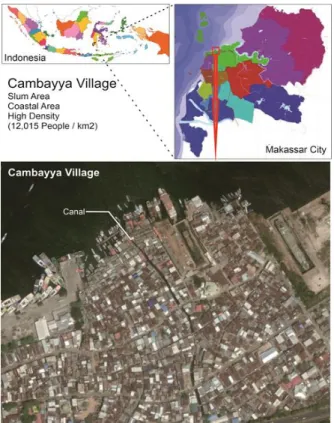
MATERIALS A. Study AreaMakassar is the capital city of the province of Sulawesi. The city of Makassar consists of 14 sub-districts with a total area of approximately 176,000 square km. Makassar has many slum areas, but this study chose the Cambayya Settlement because of its location on the coast, and its division by canals that drain water from large rivers in the upstream area. Figure 1 shows a map of Indonesia with an arrow pointing to the location of the Cambayya coastal study area (5.110958 E, 119.4248602 S). The village is situated close to the old city of Makassar, and the map displays the location of the Cambayya slum area that was divided into permanent and semi-permanent housing, with some houses built on the sea.
Figure 1. Study area at Cambayya, Makassar
B. Research Methods
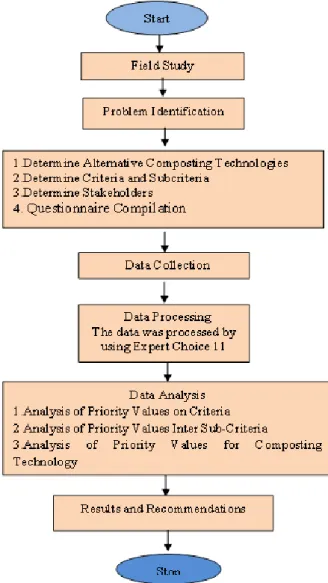
This study uses qualitative methods to determine samples by the purposive sampling method, which begins with a field study as the preliminary study to observe the characteristics of coastal areas including the habits of the community related to waste management. Data collection techniques in this study were collected from observations, interviews and documentation. As a guiding tool, direct interviews with respondents were obtained by questionnaire. The respondents in this study were stakeholders who included academics, practitioners, members of government, and community leaders. A detailed breakdown of the flowchart for each stage of the study from the initial field study to the end can be seen in Figure 2.
To reach the conclusion stage, we used the multi-criteria decision-making method. Multi-Criteria Decision Making (MCDM) as one of the methods used in solving urban waste management problems. This MCDM facilitates the selection of alternatives by evaluating several criteria that influence them so that the AHP (Analytic Hierarchy Process) method is very appropriate to be used in the decision-making process [20]. Analytic Hierarchy Process have been successfully reported used in the lam river Basin of Vietnam for determining of factors contribute to flood formation [21]. AHP (Analytic Hierarchy Process) is a comprehensive thought process so that it is suitable for use in problem-solving that involves many aspects or multi-criteria.
Figure 2. Flow chart on the stages of the study
C. Research Stages
1) Determination of Alternative Composting Technologies
The alternative types of composting technology at communal, hallway, and individual scales are explained in Table 1. Decision makers must make the right decision by considering the social, economic, environmental, and technical aspects of composting.
Table 1.
Alternative composting technology
No Type of composting technology Description 1 Communal composter
Type of composter that can process waste with a capacity of 1000 liters (400-500 people) in each process. The size of the composter has dimensions with a height of 190 cm, a diameter of 155 cm and a length of 290 cm. The composting time is 5-7 days.
2 Hallway
composter
Type of composter with a capacity of 120 liters, can process organic waste from 50-70 people in each process. The size of this composter has
dimensions of 90 x 45 x 45 cm. Composting time is 10-14 days
3 Individual
composter
Type of composter for households with a capacity of 30- 40 liters. The method used is takakura composting method using a basket container. Composting time is 10-14 days
2) Determination of Criteria and Sub-Criteria
Criteria for alternative composting technology to be applied to the Cambayya coastal area were determined by considering the conditions characterizing the site. Various criteria can be used in the selection of municipal-scale composting technology and have been identified for cases in developing countries [22]. The main facets are classified into social, economic, environmental, and technical sub-criteria. These multiple standards form a hierarchical process of analysis, with the top position occupied by the core goal, followed by the primary criteria, sub-criteria, and alternative problems. Stages of research have been compiled as the basis for the preparation of questionnaires and structural data processing (Figure 3). Each sub-criterion is assigned a code name to shorten and facilitate data processing.
Figure 3. Multi-criteria determination flowchart
3) Determination of Stakeholders
Stakeholder groups can be defined as comprising people and organizations that exhibit interest in good waste management and participate in associated activities; these participants include companies, organizations (such as non-governmental organizations), households, and all others involved in solid waste management [23]. Stakeholder-respondents encompass the government, community leaders, practitioners, and academics. The community leaders are the RT heads in the coastal area of Cambayya, and the government is constituted by the district head of Cambayya Village and the Directorate of Research and Community Service (DRPM) of the Ministry of Research. The academics are lecturers in the field of environmental engineering, and the
practitioner-respondents comprise consultants working in the environmental field.
4) Development of the Questionnaire
The questionnaire was prepared on the basis of predetermined multiple criteria and designed with a comparison scale having values ranging from 1 to 9. The alternative links, criteria, and sub-criteria identified are arranged in Tables 2 and 3. Table 2. Questionnaire sample Table 3. Comparative scale Priority intensity (n) Definition
1 Both elements are important
3 One element is less important than
others
5 One element is more important than
others
7 One element is very important than
others
9 One element is completely important
than others
5) Data Processing and Analysis
The data obtained from the respondents were processed using Expert Choice 11. The results of data processing for each respondent were then compiled in Microsoft Excel to derive the average value that represents the overall opinions of the stakeholders. Data analysis included the examination of composting technology criteria, sub-criteria, and alternative priorities of composting technologies.
III. R
ESULTS ANDD
ISCUSSIONThe research involved 18 respondents who represent stakeholders from academia, practitioners, government officials, and community leaders. The results are discussed as follows:
A. Analysis of Composting Technology Criteria
The results of the calculation of pairwise comparison matrices produced synthesis values that signify the priority levels for the criteria, sub-criteria, and alternative composting technology . As previously stated, various criteria can be used in choosing city-scale composting
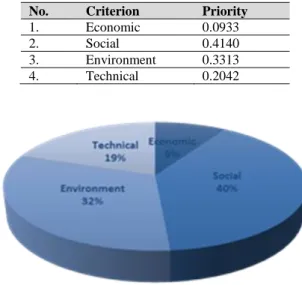
technology and have been identified for cases in developing countries [22]. The findings of the data processing (Table 4) showed that social criteria are the most strongly prioritized factors in determining waste composting technology, with these standards acquiring a value of 0.41. Social criteria are related to local communities that experience the effects of technology existence. The substantial problem faced in the coastal area are the conditions of the people who are not ready to process waste. These social issues must first be dealt with to prepare Human Resource (HR) as the highest priority in the application of composting technology. The next criteria are those related to the environment, to which a value of 0.33 is attached, followed by technical criteria (0.20) and environmental criteria (0.09). The prioritization, as expressed in percentage, is depicted in Figure 4.
Table 4.
Priority criteria values
No. Criterion Priority
1. Economic 0.0933
2. Social 0.4140
3. Environment 0.3313
4. Technical 0.2042
Figure 4. Criteria priority percentage graph
B. Inter Sub-Criteria Analysis
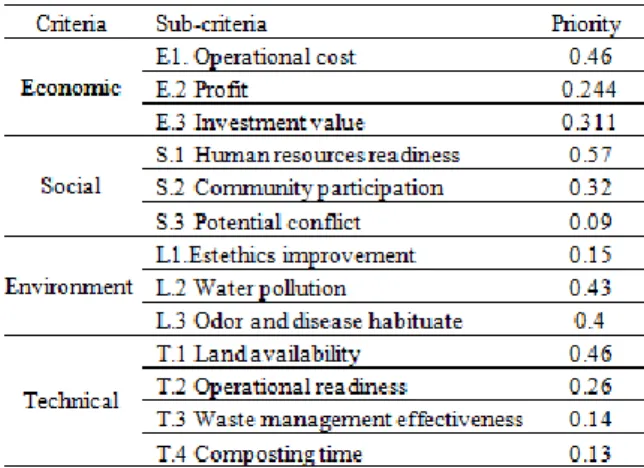
The overall results of the calculation of the sub-criteria are illustrated in Figure 5, which indicates that operational costs (E1), human readiness (S1), water pollution (L2), and land availability (T1) are priority sub-criteria in the selection of composting technology. From an economic aspect, operational costs and maintenance in the use of technology are accorded a high importance, as evidenced by the value of 0.46. Operational costs related to a number of other expenditures on support for operations or composting activities include electricity costs and rent. The second most strongly prioritized sub-criteria are investment value (0.31) and the profit gained from composting (0.24).
Figure 5. Economic sub-criteria priority graph
In terms of social aspects (Figure 6), the readiness of HR (S1) to use technology is regarded as essential, as indicated by the value of 0.57. This readiness covers the level of HR knowledge about composting equipment operation, cooperation in equipment operation, and consistency in providing raw and compost-making materials. Community participation (S2), which is assigned a priority value of 0.32, pertains to the role of a community in managing composting, which entails collecting and sorting raw materials, operating equipment, and maintaining and marketing products. The potential conflict between a community and technology (S3) in the composting process, which has a value of 0.09, is the last priority. Accordingly, the presence of waste management technology causes no possible incompatibilities in the community in terms of land availability, placement, and the management of tools and potential conflicts.
Figure 6. Social sub-criteria priority graph
From an environmental perspective (Figure 7), the highest priority sub-criteria are water pollution (L2), which is assigned a value of 0.43, followed by odor and disease habitat (L3, 0.41) and aesthetic enhancement (L1, 0.15). As regards technical aspects (Figure 8), the highest priority sub-criterion is the availability of land for technology placement (T1, 0.46), which refers to technology selection with consideration for the conditions in coastal areas with limited land and narrow roads. The second highest priority is operational ease (T2, 0.26), which is related to the convenience of operating technology for
composting. The lowest priorities are the effectiveness sub-criteria for processing various types of waste (T3) and composting time (0.13). The values of the sub-criteria are listed in Table 5.
Figure 7. Environment sub-criteria priority
Figure 8. Technical sub-criteria priority Table 5.
Sub-criteria priority values
C. Alternative Priorities for Composting Technology
The selection of composting technology is taken by analyzing the calculation of each criterion for composting technology. Overall, in the opinion of stakeholders, the following assessment results are obtained as in the Table 6.
Table 6.
The results of the calculation (Table 5) show the priority value on economic criteria, is in the composting technology type of communal composter (0.40). Considering that this technology has a high investment and profit value compared to other technologies. The assessment of social criteria obtained the highest value in the composting technology of the type of communal composter (0.36), followed by hallway composter (0.35) and individual composter (0.31). In the environmental criteria, the highest priority is in the composting technology of the communal composter type (0.51), followed by the tunnel composter (0.26) and individual composter (0.25). Technical criteria show that the highest priority value is in the composting technology of communal composter type (0.45), followed by individual composter (0.30) and hallway composter (0.28). The value of sub-criteria alternative composting technology can see in Table 7.
Table 7.
Sub-criteria table towards composting technology
Stakeholder evaluation of each sub-criteria for alternative composting technology (Table 7) shows that the economic criteria, namely the operational cost sub-criterion (E1) have the highest priority value for the type of individual composter. The profit criterion (E2) and the investment value (E3) are the highest priorities when selecting a communal composter. The social criterion, human resources readiness (S1), and community participation (S2) sub-criteria all obtained the highest value regarding the hallway composter. The sub-criteria assessments of the potential community conflict (S3) obtained the
highest value on the communal composter. The environment criterion and technical criterion for all sub criteria shows the highest priority value is the communal composter.
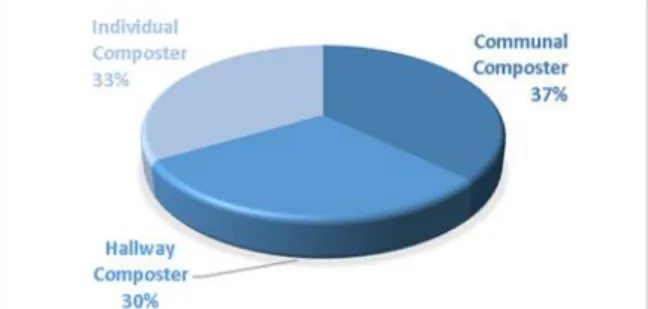
Figure 9. Comparative diagram on composting technology selection
The overall stakeholder assessment, when considering various criteria, shows that 37% of communal composters use technology that can be applied in coastal areas. In this study, it found that composting technology is the most appropriate to use in coastal areas that have characteristics such as Cambayya, sub-district in Makassar, use communal composting technology that has many advantages: it is more easily accepted and applied in the community; it operates in accordance with local culture, so the community is enthusiastic in processing waste compared to other technologies; the amount of waste processed is greater, therefore reducing the amount that will be disposed of at the landfill; people who used to throw waste into the sea have become more accustomed to processing waste; communal composters have a faster composting time compared to other technologies; and there is more compost produced, which increases income as the compost can be sold. Another finding in this study is the results of the compost laboratory testing meet Indonesian National Standards (SNI). In fact, the Cambayya–Makassar community is currently implementing communal composting technology.
IV. C
ONCLUSIONResearch on the choice of waste composting technology, based on 4 criteria, shows the highest priority value is the social criteria with a value of 0.414. This is because social issues must be dealt with first. This could be managed by encouraging consistent socialization and education to prepare HR when applying composting technology. The impact on the environment from applying composting technology would also need to be analyzed. The technical criterion for the land availability sub-criteria is priority should be handle, it would take serious effort because the Cambayya coastal region is a dense residential area. Economic criterion is prioritized last
because it tends to be handled practically. The composting technology selected, based on multiple criteria and the stakeholders’ assessment, is the communal composter.
A
CKNOWLEDGMENTThis research activity was carried out with financial assistance from the Directorate of Research and Community Service (DRPM) of the Ministry of Research, Technology and Higher Education, for that, we express our deepest appreciation and gratitude.