Case Study on Rural Livelihood in Southern Highlands Province
By Yano Rala Belo
March, 2011
This thesis is presented to Higher Degree of Ritsumeikan Asia Pacific University in Partial Fulfillment of Master of Science in Asia Pacific Studies
First and foremost, I would like to thank my supervisor, Prof. Miyoshi Koichi, for putting in me the idea and creating environment to complete this thesis to be qualified for Masters of Science in Asia Pacific Studies. Whatever the reason you offered me this opportunity, your unique style of letting students to explore and learn independently is the value that added to my knowledge.
Also, I would like to extend my profound gratitude to the Japanese Government through the Ministry of Education, Culture, Science and Technology (MEXT) of Japan for the scholarship which enabled me to further my education in the field of International Policy and Public Administration.
To those people who gave me their time to participate in interview and focus group from the two council ward areas, I thank you all and hope this research will do some justice.
I also want to extent my sincere appreciation to Bill for the overall editing to this paper.
Finally, my parents: Yano Belo Senior and Martina Belo. They gave me my name and the life I have now. They are the reasons I did this. Their pride for me is my main goal in life. The only thing I aspire for is that when they lay in their deathbed they would think, “I am proud of my son”. Thank you, thank you, and thank you.
DECLARATION OF ORIGINALITY
I, Yano Rala Belo, hereby declare that this thesis is my own work and has been submitted for the award of higher degree.
Acknowledgment……… ii
Declaration of Originality……… iii
List of Tables & Figures………... viii
Appendices……… vii
List of Acronyms and Terms……… x
Abstract ……….. xii Chapter 1: INTRODUCTION………... 1 1.1 STUDY BACKGROUND……… 1 1.2 Research Problem………... 1 1.3 Research Questions………. 3 1.4 Research Objectives………... 3
1.5 Significance of the study………. 4
1.6 Scope and Limitation of the Research……… 4
1.7 STRUCTURE OF THE THESIS……… 5
CHAPTER 2: LITERATURE REVIEW………... 6
2.1 Concepts and Definitions ……… 6
2.2 Modes of Governance………. 7
2.3 Governance as a state……… 7
2.4 Governance through Market……… 7
2.5 Devolution of Power……….. 8
2.6 Civil Society ……… 10
2.9 Analytical Framework for Sustainable Livelihood………. 14
2.10 Definition……….. 14
2.11 Rational of Livelihood Approach……… 16
2.12 Vulnerability Context……….. 17
2.13 Livelihood Capital Asset……… 18
2.14 Impact of Poor Governance……… 21
2.15 Policy Process………. 22
Chapter 3 METHODOLOGY……… 23
3.1 Research Paradigm………. 23
3.2 Research Design……… 24
3.3 Method of Data Analysis………. 25
3.4 Data Collection……… 26
3.5 Field Work and Interview……… 26
3.6. Focus Group……… 27
3.7 Institutional Mapping……… 28
Chapter 4 Institutional Governance and Reform in Papua New Guinea…… 29
4.1 Country Background……… 29
4.2. Geography……… 29
4.5 Government Machineries……… 33
4.6 Administrative Relation in Papua New Guinea……….. 35
4.7 Governance & Institutional reform………… ………. 36
4.8 Medium Term Plan for Public Sector Reform……….. 37
4.9 Public Sector Policy and Process………. 38
4.10 Major Reform Analysis in Papua New Guinea ………. 39
4.11 Present Situation………. 41
4.12 Political Development……… 41
4.13 Impact on Economic Development……… 44
4.14 Summary for Chapter 4………. 47
Chapter 5 Case Study on Rural Livelihood Community ……… 49
5.1 Overview of southern Highlands Province……… 49
5.2 Governance and Administration Structure of Southern Highlands…. 50
5.3 Powers Transferred to Local Level Government……….. 51
5.4 Source of Provincial Government Grant……… 53
5.5 Special Purpose Authority………. 54
5.6 Situation in Tari District……… 54
5.7 Resource Development and Conflict in Tari………... 56
5.8 Macro Policies Associated to Alleviate Rural Poverty……… 58
5.9 Impact of Natural Resources Policies in Upstream Area……… 62
5.10 Benefits of Legislative Reform Oil & Gas Act……… 64
5.11 Negative Impacts on Women’s Education in Project Area…………. 65
5.14 Livelihood Support Program……… 67
5.15 Changes in Community……… 69
5.16 Community Livelihood Analysis……… 74
5.17 Principle Health Challenge in Non Project Area ……… 76
5.18 Accessibility and Poverty………. 80
5.19 Coping Strategy……….. 84
Chapter 6 Recommendation and Conclusion……….. 86
6.1 Summary of Findings……… 86
6.2 Achievement of Reform Objectives………. 87
6.3 Policy Implication ……… 91
6.4 Area for Research………. 91
6.5 Prospect for the Rural Economy……….. 92
REFERENCE……… 94
APPENDICES………. 98
Appendix: 1 Map of Study Area……… 110
Appendix: 2 Village Profile Form Interview Questionnaire……… 112
Appendix: 3 Interview Questionnaire……… 113
Appendix: 4 Papua New Guinea GDP (1980-2006)……… 114
Appendix: 5 Summary of Livelihood Program………. 115
LIST OF TABLES & FIGURES
Figure 2.1 Core Constituents of Good Governance……… 13
Figure 2.2 Sustainable Livelihood Model……… 15
Table 2.3 Categories of Vulnerability Context……… 17
Table 2.4 Variable of Conditions & Determinants of Pro livelihood………. 19
Figure 4.1 Map of Papua New Guinea……… 30
Figure 4.2 Organization of Government Machineries……….. 34
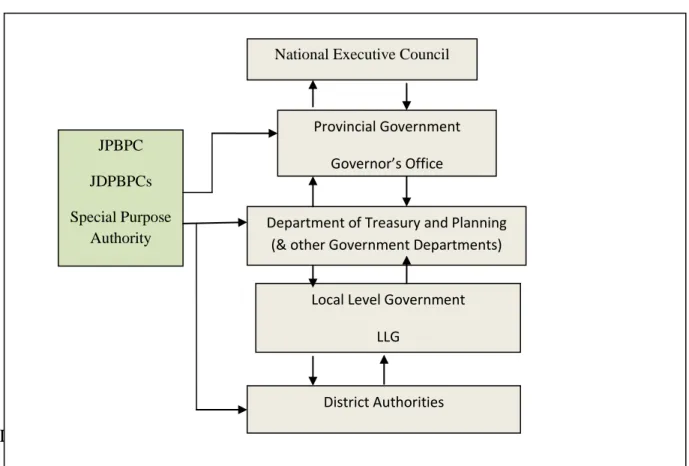
Figure 4.3 Administration Relation in PNG Public Service………... 35
Figure 4.4 Structure of National Reform Policy………. 38
Figure 4.5 CACC in Vertical & Horizontal Formulation………... 39
Figure 4.6 Major Sector Reform Analysis……… 40
Figure 4.7 Overarching Framework of National Development……… 43
Table 4.8 Reform Contributing to Economic Growth……… 46
Figure 5.1 Map of Southern Highlands Province……… 50
Figure 5.2 Decision and Implementation Routes……… 52
Figure 5.3 Governance structure Hela Community Development……… 57
Table 5.4 Macro Policy Associated to Alleviate Rural Poverty ……….. 58
Table 5.5 Project Partnership Matrix……… 63
Table 5.6 Beneficiary & Benefit Stream Flow……… 64
Table 5.7 Formal Education & Literacy Level……… 65
Figure 5.8 Map of Research Site ……….. 67
Figure 5.11 Community Labor Network……… 71
Figure 5.12 Public Motor Vehicle……….. 72
Figure5.13 Rural Water Supply………. 73
Table 5.14 District Level Poverty Indicator……… 82
LIST OF ACRONYMS AND TERMS
AusAID Australian International Development Assistance
AIDS Acquired Immune Deficiency Syndrome
PNG Papua New Guinea
NGO Non Government Organization
UNDP United Nation Development Program
CDF Comprehensive Development Framework
CCR Civil Service Reform
SLA Sustainable Livelihood Approach
DIFD Department for International Development
LPV Limited Preferential Voting
CPC Constitutional Planning Committee
OLPG Organic Law of Provincial Government
OLPLLG Organic Law of Provincial Local Level Government
PSC Public Service Commission
NFC National Fiscal Commission
BPNG Bank of Papua New Guinea
BSP Bank of South Pacific
ANZ Australian New Zealand Bank
SOEs State Own Enterprises
PAC Public Account Committee
JDPBPCs Joint District Provincial Budget Priority Committee
JPPBC Joint Provincial Budget Priority Committee
MP Member of Parliament
ILG Incorporated Land Group
IDFA International Development for Association
MTDS Medium Term Development Strategy
MRDC Mineral Resources Development Company
NLTP National Long Term Plan
CACC Central Agency Coordinating Committee
NEC National Executive Council
The government of Papua New Guinea has expanded its new development activities based on implementing the public sector reforms and forging long term partnership with development partners to achieve greater efficiency, and accountability in the delivery of social and infrastructure service. In this connection, the study has adopted two approaches in order to examine the policies relating to improve governance problems driven by political actors in the state institutions and the devolution of public administrative functions within the various levels of government in Papua New Guinea. The first approach was based on exploring the secondary data while the second approach relied on field work carried out in the selected site of southern highlands province.
Having analyzed all the elements, the financial and legislative reforms have significantly improved the coordination of national policy development departments thereby increasing the government’s ability to reduce its national debt levels whilst addressing economic inefficiencies associated with poor governance and institutional incompetence in the country. Meanwhile, the implementation of the decentralization policies have given the local-level government some significant law making powers including financial and administrative control which impact the livelihood of rural communities through greater efficiency in delivery of goods and service. Although much of the policies have been implemented comprehensively, some reforms have fallen short of achieving their objectives partly due to shortcomings in the political commitment at the national level and the lack of management capacities in the implementation process. Nevertheless, this study has used qualitative and single case study approach and there is more room for indebt studies to analyze and address service delivery constraints.
CHAPTER 1 INTRODUCTION
1.1 STUDY BACKGROUND
1.2 Problem Statement
Since the end of the 1980s, scholars and practitioners of public administration expressed the real concern about the failure of so many countries to reap the fruits of decade of stringent reform. By the early nineties it was widely agreed upon that those countries taking on reform simply didn‟t have adequate institutional depth and capacity. However, until recently the role of well-performing public institutions and good governance become increasingly recognized for poverty reduction and development effectiveness as evident in a number of theoretical and empirical works. For example, Kaufmann, Kraay and Zoido-Lobatan (1999) have proved empirically the close link between the quality of governance and the level of per capita income across countries. Similarly, the World Bank and International Monetary Fund have strongly supported the view that good governance is a key determinant of economic and social development in developing countries. Though the links between governance and economic development has well substantiated empirical proposition, there still remains the puzzling question as to why some countries are „better governed‟ than the others, given that they have access to same level of technology and income.
In the context of Papua New Guinea (PNG), good governance lies at the core of development challenge of which has been the subject of extensive policy debate for the past three decades. It appears that the most critical area for improved governance was to reducing cost and waste in national and provincial government administration and correcting the underlying weaknesses that fail to control and prevent waste. At the same time, it is clear that reforming public institutions is complex and difficult task both technically and politically. Technically, the government‟s ability to achieve reform objectives has been undermined by shortcomings in the policy implementation while politically lacking the ownership to provide the enabling environment to pay of positive results. This has been a grave concern and the government of PNG has implemented number of policy reforms to strengthen the public service machineries within the state institutions.
The new Medium Term Development Strategy (2005-2010) is the recent comprehensive plan seeking partnership with civil society, private sector and donor agencies to address the declining social services associated with poor governance and institutional incompetence. While many of these plans and strategies were implemented successfully, it is still unclear whether these benefits have been translated into tangible development. It is in this connection that this study intends to describe the nature of the reform process, identify the forces that motivated those policies and assess the impact. Special attention is paid to the critical role of the state as the main actor of governance, the internal institutional arrangement, the nature and extent of harmonization of approaches by donors, and an assessment of sustainability of service delivery in Papua New Guinea.
1.3 Research Question
This paper seeks to answer the following research questions which have been developed in the context of Papua New Guinea.
1. How have these policies and institutional reforms been implemented in Papua New Guinea?
2. Have these policy reforms translated on the ground to transform the livelihood of the rural community (case community)?
3. What are the achievements and limitations of the policy reforms implemented in the country?
1.4 Research Objectives
The objective of the research is three-fold based on research questions aforementioned. The first objective of the research is to describe the national reform policies and how it has been implemented in conjunction with the Medium Term Development Strategy (MTDS) for the period of 2005 to 2010. The second objective is to examine the policy reforms and assess their impact on the nation‟s development. The third objective is to examine, through applying Sustainable Livelihood Model on historical data at different levels of government from the state down to district and household weather these difference in political and policy environment affected rural livelihood. Hence, based on these objectives, the conclusion will be such that governance and institutions don‟t impact directly on rural people but create enabling environment for the communities to access the resources needed to improve their livelihood.
1.5 Significance of the study
It is noted that the Government of Papua New Guinea, in cooperation with international organizations and donor countries, has been making great efforts in pursuing its policies in various areas including governance and institutional reform to improve social and economic conditions. However, there seems to be a knowledge gap in academic study pertaining to the impact of central reform on service delivery in the Papua New Guinea context. This policy gap between macro- and micro level often results in policies and institution that do not reflect on the felt needs of rural people for goods and services required to improve their livelihoods. Therefore, this study will make some modest contribution to the knowledge of policy implementers, civil servants, scholars and donors to bridge the gap while implementing national development programs and projects in a timely and effective manner.
1.6 Scope and Limitation of the Research
Although the study has somewhat reached its aims, it has shortcomings. Firstly, the researcher has limited experience to prepare a comprehensive and well-written master paper. Secondly, it can be observed that this study has used the single-case study approach even though the evidence from multiple cases is often compelling and regarded as more robust. The reason is that a multiple case study requires extensive time and resources for a researcher and therefore it was envisage that the way in which the data was treated mainly relying on theoretical proposition as the most common strategy according to (Yin, p.103-104). Thirdly, the time to conduct the field work was relatively short due to unavoidable weather pattern of the tropical highlands of Papua New Guinea. The month of August and September are rainy season and this weather pattern had
occasionally disrupted the field visits and prevented the researcher from collecting adequate data at the research site.
1.7 Structure of the Thesis
The thesis is organized into six main chapters. Chapter 1 provides the background of the research including the thesis statement, the research questions and objectives, significance and the scope and limitation of the study. Chapter 2 provides a brief literature review mostly relevant to following discussion of governance and institutional reforms, while chapter 3 outlines the methodological issues including the research design, data collection, methods and research sites. Chapters 4 consist of the main discussion which includes the description of the country background, and analysis of policy reform at the country level (macro). The next discussion is chapter 5 which presents the case study of a rural community, based primarily on data collected during field work in Papua New Guinea. Finally, chapter 6 presents the summary of findings, policy implications and prospects and potential areas of future research.
CHAPTER 2
LITERATURE REVIEW
This chapter articulates how this research was done based on theories of governance and institutions and thus conceptualizes the application of policy process among entities in the public and private sectors to improve delivery of public service. Based on this approach, a theoretical model has been derived from the theories of governance and institution to underscore the central focus of the study. The literature also provides the theoretical evidence of institutional networks and governance of which positive reforms have paid off in other developing countries.
2.1 Concepts and Definition of Governance
Various authors have attempted to define the term governance. According to Bell (2002), governance is defined as “the use of institution and structure of authority to allocate resources and coordinate in society”. Kaufman et al (1999) define governance as “the traditions and institutions by which authority in a country is exercised”. It is important not to confuse governance with government. Governance is a much broader process than government, which is a subset of governance and may involve state and non state actors.
The preferred definition for this study is the one proposed by UNDP:
[t]he exercises of political, economic and administrative authority to manage a nation‘s affairs. It is the complex mechanisms, processes, relationships and institutions through which citizens and groups articulate their interests, exercise their rights and obligations and mediate their differences. […] Sound governance is therefore a subset of governance, wherein public resources and problems are managed effectively, efficiently and in response to the critical needs
of society. Effective democratic forms of governance rely on public participation, accountability and transparency (UNDP 1997)
2.2 Modes of Governance
It is noted that, governance is not exclusively the responsibility of the state or government. A non-state actor may also play an important role in the governance process. To underscore this point, a brief outline of different modes of governance is in order.
2.3 Governance as a State
This concept is the most widely known form of governance and it is particularly relevant where the government is the major constitutive element of the governing process. It underlies the role of state/government in providing the regulatory environment and institutional underpinning to facilitate efficient market exchange. For example, without courts or laws to interpret the property rights of business, the commercial life will be non-existence. Thus this implies that state governance cut across all modes of governance and is central to the effectiveness of the entire system of governance.
2.4 Governance through Market
Under this mode the balance of governance and coordinating function shifts towards greater reliance on markets, private allocation and contracting in which the economy is largely determined by the force of supply and demand, acting to a larger degree in a self regulating manner. Effective competition in the market depends on the rules of games set by the state governance. It is in this context that the state will be an important constitutive element of any form of market governance.
2.5 Devolution of Power
It is paramount to define the concept of devolution of power in the context of administration decentralization. Given the fact that different scholars and institutions have come up with different classification of power, it is useful to make distinction between these various concepts to see how they can be implemented successfully and mutually coordinated.
Administration decentralization seeks to redistribute authority, responsibility and financial resources for providing public service among different levels of government. It relates to transferable of responsibility for planning, financing and management of certain public function from central government and each agency to field units of government agencies. Administrative decentralization can be further divided into three categories, each of which has different characteristics. They include deconcentration, delegation, and devolution (World Bank‟s Decentralization Thematic Team).
Devolution refers to a situation where central government transfers powers in decision-making, finance and management to quasi-autonomous units of local government with corporate status. Meaning that, they are able to raise their own revenues, and independent authority to make investment decisions. In devolved system, they usually have clear and legally defined geographical boundary over which they exercise an exclusive authority to perform explicitly granted reserve functions. According to Sharbbir Cheema and Rondinelli (2007, devolution is embedded with the belief to improve efficiency in service deliver which enable shortening of decision making and bring government more closely to citizens.
Deconcentration is the least extensive form of decentralization and most commonly found in unitary states. It encourages reform of hierarchical functional distribution between central government and its regional branch office. Thus responsibility for specific functions is shifted to a lower level of administration but still within the central government structure. This concept implies that the government may assume to be closer to the people but powers still remained under the authority of central government (World Bank Decentralization thematic theme).
Delegation is more extensive form of decentralization. In this process, central government transfer responsibility for decision-making and administration of public function to semi autonomous organization. They are not directly or fully controlled by central government, but ultimately accountable to it. Governments delegate responsibilities when they create, for example, public enterprise or cooperation, housing, authority, regional development cooperation. They may exempt from regular constraint on regular civil service personnel and can charge user directly for service (World Bank‟s Thematic Decentralization Team).
Having analyzed the four concepts above, the key notion seems to be the distribution of power away from the center to empower local level government to maintain control over their territories. In Papua New Guinea, the introduction of provincial government was the main mechanism through which the national government implemented its aim of decentralization. This means that leaders at the provincial and local level would make many decisions which affect them and their people. However, despite the enabling nature of devolution of power, adequate decision making power still rest on central government. This is evident by the fact that central government derives its power from national constitution which can supersede the Organic Law of Provincial Government (Organic Law of Provincial Government, 1995). The debates about
devolution/decentralization have taken different twist in the past due to the state as provider in meeting its obligation to society.
2.6 Civil Society
The concept of civil society encompasses wide range of organizations. In a broader sense, it includes nongovernment organizations such as business associations and labor unions in corporatist bargaining with government. It also includes the activities of organizations such as public-private collaboration and power sharing, together with the empowerment and engagement of various forms of community institutions (Senator, 2000).
Civil society organizations are also a part of the international aid architecture in various capacities as donors, as channels or recipients of official donor assistance, and by virtue of their role as watchdogs of the public goods. The World Bank recognizes the important role that civil society plays in public policy dialogue, service delivery, and wider development efforts. The Bank seeks to ensure that it is listening to, and learning from, the voices of the poor and agencies that deliver healthcare to the most underserved communities; improving the effectiveness of its development efforts; and promoting transparency and accountability in the countries where it works. In the countries with weak governance and large aid flows, civil society organizations have increased awareness of the development community in both donor and recipient countries. In Papua New Guinea churches are significant form of civil society in delivering services in the areas of health and education through some formal arrangement with state institution of a state. These faith based organizations are more engaged in community development to empower and create conditions for marginalized citizens to find solution for the social problems (Dickson, 1999).
2.7 Conceptual Difference between Governance, institutions and Organization It is necessary to underline the important distinction between institutions, organization and governance to understand the roles they take on in recreating the livelihood of the people.
Firstly, the words institutions and organizations may be used interchangeably or exclusively and often lead to misunderstanding. The most widely used definition is the one propounded by North (1993), who describes the institutions, “as rules of the game and organizations as the players”. Institutions exhibit both a formal nature (constitutional rules, regulations, laws, rights) and informal nature (sanctions, customs, tradition.). North (1993) characterized the roles of institutions as follows;
They define the range of choices, regulate risks and uncertainty and determine transaction and enhance the feasibility and probability of engaging in economic activity.
They evolve incrementally, linking the past with the present and future.
They provide the incentive structure of an economy and set the tone of societal development.
Organizations, on the other hand, refer to a group or association, formal or informal, in which there are defined and accepted roles, positions and responsibilities structured in some relationship to each other in order to achieve specific objective(s) (Uphoff 1992). Organizations exist to secure and advance the interests of their members within the existing institutional framework, while constantly seeking to influence that framework so as to achieve greater
advantages and benefits. They are found at all levels, extending from the micro (family, community, community-based organization (CBO) to the meso (local, regional, provincial), to the macro (national) and international level (United Nations, World Trade Organization, multilateral organization). They perform a variety of roles and functions in order to fulfill the needs and meet the interests of their members and clients.
2.8 Role of Governance
If the institution is about the rules, governance is essentially about setting, application, enforcement and mediation of those rules. It is important to note that governance is not carried out in vacuum but occurs through institution. It thus follows that the quality of governance is only as good as the quality of the institution that underlies it. The challenge is how to put in place the right governance structure that yields the incentives and constraints with the promotion of good governance. In terms of economic governance, institutions and the constraints that they engender have significant bearing on the manner in which a nation‟s resources are managed by policy makers. For example, if institutions relating to controlling public finance are weak, or dysfunctional they may not be bound to keep within the legislative-determined budgetary limits, resulting in overspending and misallocation of resources. What is critical is that they determine the growth path (social, economic, political, technological and culture) of the society. In other words, representative, robust and effective institutions play significant roles in advancing the development of society and enhancing the quality of life (North, 1990). In line with the definition of governance above, good governance can be materialized if the state is able, through, the power and authority vested in it to allocate national resources, and coordinate economic activities in an optimal manner. The notion of optimal connotes efficiency and effectiveness.
This means governance is conducted within the framework of effective rules and policies that underpin social harmony and sound development.
These constituents of good governance must, however, be measured against certain predetermined criteria. According to Soesastro (2000), good governance is widely identified with the following attributes: transparency, accountability, efficiency and fairness. These are the ground rules of governance, which must be used to assess governance outcomes. Therefore, good governance means not only that the state operates under effective policies and laws, but it also means, more importantly, that it executes those policies and laws of the state in a transparent,
Figure: 2.1 Core Constituents of Good Governance
Created by author (Source: Teauea, 2003)
Good Governance
Effective Legal Institution - Democratic Constitution - Independent and reliable
judiciary
- Adequate resourced Judiciary
Public Oversight & Civil Society
- Parliamentary oversight - Civil Society Media
- International Community
Sound Economic Policy - Effective Monetary Policy - Transparent Privatization - Budget Reform - Procurement Reform
Effective Civil Service - Correcting restructuring - Right Pay Incentive
accountable, predictable, efficient and fair manner. Examples of the channels through which institutions provide the authority and resources, thereby enhancing state capacity, include legislative provisions for fair and democratic electoral processes, effective rules for staff appointment, promotion, and dismissal in the bureaucracy, and the regulations and/or decrees covering performance standards and ethical behavior in the workplace. It also includes a range of institutions that facilitate the efficient flow and effective mobilization of the nation‟s resources, such as a Constitution, the Public Finance Act and a host of financial regulations and decrees.
2.9 Analytical Framework for Sustainable Livelihood Approach (SLA)
The concept of this model is central to this research thus it is necessary to analyze and assess the policies, process and impact of government institutions, non actors of governance (civil society organization , donors) and stakeholder‟s contribution towards sustaining the livelihood of the people. Importantly, the framework clarifies the relative importance of interaction between various forces and factors that affect the livelihood of the rural communities.
2.10 Definition
The most acceptable and widely used definition of livelihood is cited by Department of International Development (DIFD) from the authors (Chamber and Corn way, 1992)
A livelihood is comprised of capabilities, assets (including both social and material resources) and activities required for a means of living. Although livelihood revolves around resources such as (land, crop, labor, cattle, money and social relationship), these resources cannot be
disconnected from the issues and problems of access due to the changing political, socio-cultural circumstance.
Created by author (Source: DFID, 2002)
It can be seen that the framework presents the main factors that the livelihood and typical relationship between these. The arrows are used as short hand to denote variety of connection and their relative importance at which they interact. This inter play of forces can be useful to structure the strategies for planning and implementing the development activities.
Figure: 2.2 Sustainable Livelihood Model
Livelihood Outcome More income Increased well being Reduced vulnerability Improved food security More sustainable use of natural resources Transforming
Structure & Process Structure Levels of Government Private Sector Policies Laws Policies Culture Institutions Vulnerability Context Shocks Trends Seasonality Rural People - H = Human Capital - N= Natural Capital - S= Social Capital - F= Financial Capital
2.11 Rational of Livelihood Approach
It is useful to explain the rationality of the SLA approach due to its relevance to this study;
It is noted that this framework place rural people at the center of the interrelated influence that affect how these people create livelihood for themselves. Closest to the people at the center of the framework are resources or livelihood asset. The arrows within the framework present the main factors that affect people‟s livelihood.
It takes a wider perspective on poverty and recognizes that poverty is not only about income and monetary assets, or lack of them but it is also manifested in the lack of access to health services, education, vulnerability and exposure to risk and lack of power. The key concept of SLA in the context of this paper is to understand the complexity of poverty and provide the set of principles to guide action to address poverty in the context of Papua New Guinea.
Most importantly, the framework presents the vulnerability context for the people in this study. For example, the access to resources is largely influenced by prevailing social institutions, political structure, and cultural environment which agree on the ways in which people combine and use their assets to meet their household needs. At the lower level of government (Provincial and local level government), decentralization is a good example of governing system to distribute power and authority, and is closer to the people in the society. It is noted that decentralization empowers community governments and social institutions which in turn encourage participation and equality in distribution of goods and services. Therefore it is envisioned that the implementation of decentralization will ultimately involved a positive societal change.
2.12 Vulnerability Context
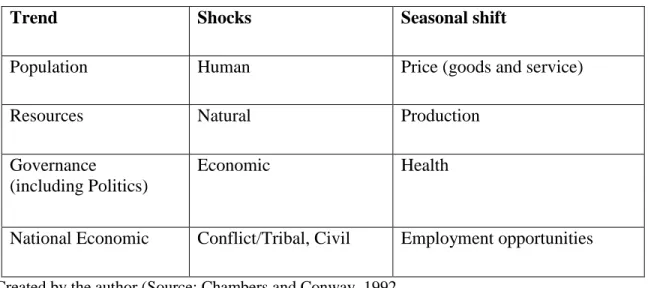
It is useful to define and identify the sources of vulnerability in this study. Vulnerability context in this framework refers to people‟s exposure to external environment factors over which they have little or less control over it. The figure (2.4) below explains the three main categories of external vulnerability factors.
Table 2.3 Categories of Vulnerability Context
Trend Shocks Seasonal shift
Population Human Price (goods and service)
Resources Natural Production
Governance (including Politics)
Economic Health
National Economic Conflict/Tribal, Civil Employment opportunities Created by the author (Source: Chambers and Conway, 1992
Most externally driven changes in vulnerability are a product of activity at the level of transforming structure and process (e.g. policy change). In the rural setting the sources of vulnerability can be lack of access to income earning-opportunity and to health and education services aggregated to affect people‟s capabilities to cope with shock and stress, and in general impede their full participation in the society. Lack of clean water and sanitation combined with lack of health services result in illness and deterioration of people‟s health. Nevertheless, the aim of the study is to widen a full understanding of all dimension of vulnerability context and identify those trends, shocks and aspects of seasonal shift in prices, employment opportunities
and food availability. Thus it is important to understand the constraints and conditions within which the people operate to meet their needs.
2.13 Livelihood Capital Assets
Although the term capital is used by every author in the livelihood studies, all assets are not capital in the strict economic sense. The term capital in the context of sustainable livelihood framework is taken to mean the resources upon which people draw in pursuit of their livelihood objectives. Taking this into account, the present study has utilized five livelihood assets in a framework developed by Department for International Development (DFID) to assess the capital assets of selected villages in Papua New Guinea. The capitals assets are;
1. Human Capital: refers to skills, knowledge, and ability to labor, and good health that together enable sustained livelihood. Human capital is very important as it increase the capability of a person to access other resources (Labor).
2. Social Capital: the social resources (network, membership of groups, relationship of trust, access to wider institution of society) upon which people draw in pursuit of livelihood.
3. Physical Capital: it comprises the basic infrastructure (transport, education, health and communication) and production equipment that enable people to support their live.
4. Financial Capital: Is the resources which are available to the people (savings, credits or royalty payments from resources or pension which enable people to cope with shock.
5. Natural resources: Natural resources that are derived from land, water, wildlife, biodiversity and mineral.
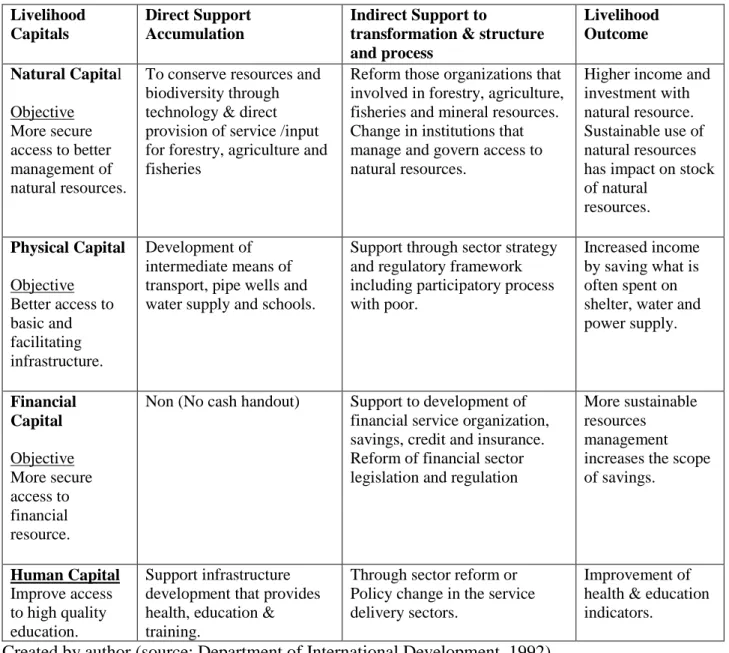
Table 2.4 Variables of Conditions and Determinants of Pro – poor Livelihood Outcome
Livelihood Capitals
Direct Support Accumulation
Indirect Support to
transformation & structure and process Livelihood Outcome Natural Capital Objective More secure access to better management of natural resources.
To conserve resources and biodiversity through technology & direct provision of service /input for forestry, agriculture and fisheries
Reform those organizations that involved in forestry, agriculture, fisheries and mineral resources. Change in institutions that manage and govern access to natural resources.
Higher income and investment with natural resource. Sustainable use of natural resources has impact on stock of natural resources. Physical Capital Objective Better access to basic and facilitating infrastructure. Development of intermediate means of transport, pipe wells and water supply and schools.
Support through sector strategy and regulatory framework including participatory process with poor.
Increased income by saving what is often spent on shelter, water and power supply. Financial Capital Objective More secure access to financial resource.
Non (No cash handout) Support to development of financial service organization, savings, credit and insurance. Reform of financial sector legislation and regulation
More sustainable resources management increases the scope of savings. Human Capital Improve access to high quality education. Support infrastructure development that provides health, education & training.
Through sector reform or Policy change in the service delivery sectors.
Improvement of health & education indicators.
Created by author (source: Department of International Development, 1992)
Based on the contribution of researchers and NGOs, case studies from 19 countries found that government policies and reforms can positively impact the livelihood of people (DFID, 2005). In this connection, there are five main livelihood assets. However, these assets can be classified
under two main policy reforms. The first policy reform is related to direct livelihood support accumulation. These sets of policies aimed at developing capital infrastructure, infrastructure support, financial support and leadership training. Their objective is to provide direct support to the people to improve social and economic conditions, particularly to reducing poverty. The infrastructure such as roads, railways and telecommunication are necessary support services that integrate remote areas to access services in urban centers. When such policy support is not provided particularly, transport infrastructure, this can possibly prevent the poor from accessing education, health and other income-related opportunities. In addition, direct reform policy support can also contribute to knowledge uptake (leadership training) that develops human capital in the society. It is a well known fact that education develops the capability of the people to cope with shocks and stress and thus enables one to access other resources.
The second category of reform policy of the framework refers to Indirect Support of transformation, structure and process. This set of policy reforms refers to institutional reform, organizational change, policies and legislation that provide the enabling environment in their areas of operation. For example, the reform policy relating to conservation of environment pollution in mining areas can support the local people who depend on the affected natural resources. In the case of Papua New Guinea, about 80 percent of the 7 million people live in rural areas, and most depend on subsistence agriculture to sustain their livelihood. As such the natural capital including (forest, agriculture, fisheries, and mineral resources) is critical life-supporting elements to those deriving their life from resources - based activities such as farming, fishing and mineral extraction. These policies have a dirrect implication for the livelihood of rural population in Papua New Guinea.
2.14 Impact of Poor Governance
The impact of poor governance can cause poverty both in urban and rural areas. According to (ADB 2002:33-52) poor governance causes poverty in four main ways. These are political instability, non-transparency in resources allocation, weak public sector capacity, and inadequate access to justice. Three of these causes can be explained as follows.
The first link to political stability in the country is very critical to determine the development at both national and regional levels. All actors in the development process, including economic agents such as investors should create conducive political stability to support socio-economic development. These conditions can lead to an increase in economic growth in the country and are extremely important for poverty reduction.
The second impact of poor governance is non-transparency in resources allocation. Poverty seems to occur because of service delivery. In many villages, the poor do not have access to primary education, primary health care, social development and other public infrastructure such as, water supply, markets and roads, because social services are concentrated in urban areas rather than in rural areas (Asian Development Bank,2002:35).
The third impact of poor governance deals with inadequate access to justice. This is considered to be powerlessness; people don‟t have a voice in the exercise of their rights. In many urban or rural areas the dominant issues deal with rights to land, forest and sea where the ruling elite can take over. The owners of the resources (assets) are afraid to report this to justice official because they have been threatened or by other means denied their rights of seeking legal justice. The traditional rights to land, forest and sea often lead to conflicts between government projects.
2.15 Policy Process
Policy can be defined as course of action designed to achieve particular goals or target. Public policy is made by the government to achieve particular national outcome. Private organization or communities may also form their own policies to achieve their defined goals. However, taken from the standpoint of the SLA, policy cannot be understood in isolation, but must be examined in context and as part of the process. Policy formulation and implementation is mediated through a wide range of institutions and organization. Therefore, the term „policy process‟ refers to making policy, decision-making and ways of putting issues on agenda as matter of public concern along with the way issues are thought of and talked about” (Keeley 2001:5). Policy process encompasses;
Formulation, involving information gathering, analysis and decision-making.
Implementation, generally involving a set of rules, regulations and institutions to achieve the goals of the policy.
Monitoring and evaluation of the formulation and implementation of policy.
The governance mechanism, process and institutions affect the possibility and ways of engaging in Public Policy Management. In this context public policy reform tend to increase the ability of public institutions not only to produce sound policies but also serve as a vessel for societal ambition, combining reliable performance with high level of legitimacy. Participatory policy making is one such approach that requires both the active engagement from the poor and responsive from the state. Therefore, impacts are positive as people in local can voice their concern and make their own choice in more democratic setting.
CHAPTER 3 METHODOLOGY
3.1 Research Paradigm
In his book entitled The Philosophy of Social Research, John Hughes outlined two models or paradigms of social research which were premised on two different methodological positions, the natural science model based on positivism and the humanistic model based on naturalism (1990). A methodology based on positivism would involve a quantitative style of research consisting of research methods such as questionnaires, surveys and experiments. These would result in numerate or hard‟ data (Brewer 2000, p.30). A humanistic methodology based on naturalism, on the other hand, would result in “soft‟ data in a natural language obtained through a qualitative style of research that involves data collection methods such as in-depth interviews, ethnography and participant observation, or the content analysis of personal documents (Brewer 2000, p.30).
In this respect, it is useful to provide the working definition of the two models and distinguish their strength and weakness in the research setting. According to Lincoln (1994) Qualitative research is multi-method in focus, involving an interpretive, naturalistic approach to its subject matter. This means that qualitative researchers study things in their natural settings, attempting to make sense of or interpret phenomena in terms of the meanings people (subject) bring to them. Qualitative research involves the studied use and collection of a variety of empirical materials case study, personal experience, introspective, life story interviews, observational, historical, interactional, and visual texts that describe routine and problematic moments and meaning in individuals' lives. One of the greatest strength of qualitative approach is the richness and depth of explorations and descriptions of which provides insights through discovering meanings to improve the comprehension of the whole.
In contrast, positivism (quantitative, scientific approach) used methods adopted from the physical science that designed to ensure objectivity, generalizability and reliability. These techniques cover the ways in which research participants are selected randomly from the study population in an unbiased manner and use standardized questionnaires and statistical method to test predetermined hypothesis regarding the relationship between the specific variables. The strength of the quantitative paradigm is, it produce quantifiable data that are usually general to some larger population. Contrarily, the greatest weakness of the quantitative approach it decontextualizes human behavior in ways that removes the event from its real world setting and ignores the effects of the variables that have not been included in the model.
3.2 Research Design
Based on the relevance of the two research paradigms, the approach taken in this study is qualitative in nature in which a single case study is useful to describe the policy, implementation process and the impact of the reform. The chronological approach is useful here to trace events which have taken place in individual and organizational settings and how the events caused change to improve policy output or public benefit. The same logic is applied in future; its concern with how and why social phenomena or process in particular way can certainly support ideas might vary in different context. This type of research design can serve an important purpose in doing explanatory case study because if a presumed cause of an event occurs after the event has occurred, one would question the initial causality of the proposition (Yin and Oldsman, 1995).
3.3 Method of Data Analysis
For the purpose of this study the researcher has utilized three steps of data analysis in qualitative research profound by Yin (1994) in a single case study. Though the evidence from multiple cases is often considered compelling and regarded as more robust, it was envisage that the way in which the data was treated mainly relying on theoretical proportion as the most common strategy according to (Yin, p.103-104). The result of this is the collection of data based on research questions taken from previous studies and the analysis of the interviews conducted (i.e. words collected) as well as the review and use of documentation (i.e. annual reports and brochures). As previously stated, this multiple sources of evidence add to the validity of the study. According to the most recent thinking from these authors (Miles and & Huberman, 1994,) about writing qualitative data analysis, the focus is on the data in the form of words which emanated from the interviews conducted. In their extensive writing on qualitative analysis they define data analysis as three concurrent flows of activities: data reduction, data display, and conclusion drawing or verification (p.10).
Data Reduction: this reduction of data is the first step of the analysis that helps to sharpen, sort, focus, discard and organize the data in way that allows for final conclusion to be drawn and verified. They can be reduced and transformed through such means as selection, summary, paraphrasing, or through being subsumed in a larger pattern.
Data Display: the second major activity which the researcher carries out and this means taking the reduced data and displayed it in an organized, compressed way so that a conclusion can be easily drawn.
Conclusion drawing and verification: this is the final analysis activity for the qualitative researcher. It is that the researcher begins to decide what things mean by noting regularities, patterns, similarities, possible configuration, causal flows and proposition.
3.4 Data Collection
Due to the nature of this study with respect to its research design and data collection method, both secondary and primary sources of data were utilized. The secondary data was mainly derived from the relevant government policy papers, particularly the Medium Term Development strategy for the period of 2005 to 2010, and the Organic Law on Provincial Government of Papua New Guinea. The donor policies and strategies, project papers, online reports and published journals were reviewed in order to enhance the depth of the research. However, the primary data collection in particular required a variety of research techniques designed to produce complementary and cross-cutting information for this study. Five main techniques were used for primary data collection; interviews, observation, focus group discussion, institutional mapping and photo elicitation.
3.5 Field work interview
During the field work the researcher collected sustained oral history accounts of livelihood or personal experience that would capture the changes from an observer-actor perspective. The methodology applied was oral interview in which he traced the sample of population living within the project area and outside the mainstream area. It was noted in the study that much of the work was done using a qualitative approach and much has been desired to explore the change which occurred after the intervention of the project. Virtually, the views and opinions of the
community members could not be quantified effectively in numerically terms to translate the meanings and expression of the actual situation of the target community. Therefore, this study has combined the qualitative interviews and observation approach of field work and analyze the raw data using a single case approach. Its objective was to describe the change in the case community after the intervention of the project and the strategies used to cope with uncertainties to achieve their livelihood outcome. Also a particular emphasis was placed on women household member‟s economic activities and their engagement in social institutions such as Women‟s Community Association, community development association and so forth.
3.6 Focus Group
Upon arrival of the researcher, a village meeting was organized to explain the purpose of the study. Then a semi structured questionnaires and village profile forms were distributed among the sample population of the case community in which volunteers were asked to fill out the forms. The profile includes drawing a village map, obtaining demographic data as well as information about available infrastructure (i.e. schools, rural health clinics, water supply and feeder road) and social institutions or organizations supporting those projects. The researcher was acquainted with the local dialect and able to relate oral interviews well with the community throughout the session.
With regards to the selection of the survey village or research site, all samples of the villages were located along the priority roads and national roads on which improvement works were carried out under the Road Rehabilitation Program. The control villages were located two kilometers away from the road access and the upstream project area. The upstream project area is located within the petroleum development license (PDLs) and directly benefits from the royalties from the Hides gas project. The latter part of the session was to organize key informants,
including Local Government Leaders (2 council wards), a District administrator and the community leaders from the respective wards. The focus group also includes the local representatives of NGOs such as Huli Women Association, and Hela Community Development Association (president) of which all have been initiated by the petroleum producers.
3.7 Institutional Mapping
Besides the primary data collection at the local area in Tari district, southern highlands province, this study has also included two weeks of field research in Port Moresby (Capital City) to collect detailed information on institutions and their governance structure for the coordination of reform policies. During this time interviews were arranged and the brochures and annual reports of three selected government organizations were also collated. The interviewees include members of government agencies, donor agencies (AusAID), NGOs, Transparency International and the Ombudsman Commission which the field survey contributed to this research by providing further and more detailed information. At the district level this process involved identifying the stakeholders associated with the projects and outlining the roles, responsibilities and main institutional issues concerning livelihood projects. Cultural, social and political issues were discussed with those people with directly or indirectly associated with the livelihood process.
CHAPTER 4
INSTITUTIONAL AND GOVERNANCE REFORM IN PAPUA NEW GUINEA
This chapter looks at the major reform issues related to governance aspects of public administration in Papua New Guinea. Importantly, it discusses the national reform process and examined the impact of those policies implemented so far. In order to understand the analysis that follows in the subsequent chapter, it is first necessary to examine in some detail the political and administrative context of PNG and the manner in which policy process is organized within departments, between departments, among powerful bureaucratic committees, between ministers and within the cabinet.
4.1 Country Background
4.2 Geography
Papua New Guinea is officially known as the independent State of Papua New Guinea and it is the second-largest island country in the world, occupying the eastern half of the island of New Guinea and numerous offshore islands (the western portion of the island is a part of the Indonesian provinces of Papua and West Papua). It is located in the southwestern Pacific Ocean, in a region defined since the early 19th century as Melanesia. Its capital, and one of its few major cities, is Port Moresby. It is one of the most diverse countries on Earth, with over 850 indigenous languages and at least as many traditional societies, out of a population of just under 7 million (Dorney, 1998).The country is one of the world‟s least explored, culturally and geographically, and many undiscovered species of plants and animals are thought to exist in the interior. Papua New Guinea is richly endowed with natural resources, but exploitation has been hampered by
rugged terrain, the high cost of developing infrastructure, serious law and order problems, and a system of land title which makes identifying the owners of land for the purpose of negotiating appropriate agreements problematic.
Figure 4.1 Map of Papua New Guinea
(Source: Papua New Guinea Post-Courier Online).
4.3 Political System
The Papua New Guinea political system is in the framework of a multi party state. The oldest party, the Pangu Party was formed in 1967 headed by the country‟s first Prime Minister, Sir Michael Somare. The parliamentary term is 5 years and a prime minister is elected while the cabinet is appointed through members of his party or coalition. The first national elections began
in 1964 while the most recent was held in 2007. There were two different electoral systems have been used between 1975 and 2002. The first was the first-past-voting-system adopted from the British electoral system in which winners frequently gained less than 15 percent of the vote while the latter Limited Preferential Voting, is an the alternate version of that formerly used for single winner election in which voters rank candidates in order of preference. Notably, politics in Papua New Guinea (PNG) is characterized by two distinct features.
The first impressive record in PNG is the prolonged existence of democracy as the country in the developing world. It is noted that PNG had 40 years of uninterrupted democratic elections at the national level. Relevant political and social constituencies accept democratic institutions and regard them as legitimate. Elections are conducted on time and transfer of power has taken place peacefully on a regular basis since independence. It is noted that military and police have not engaged in active politics and this record alone makes PNG one of the most successful democracies in the world according to some analysis. The second feature is that despite the broad acceptance of the legitimacy of democratic institutions, PNG has had a politically unstable government for the last 30 years since the independence. It is noted that out of the 12 elected governments since 1977, the government had change ten times of which five governments have been ousted by votes of no confidence; four has been removed through national election and one each through court ruling and resignation (refer to appendix 6).
4.4 State Powers
Papua New Guinea has a unicameral national parliament system, previously known as the House of Assembly. It has 109 seats in the parliament of which 89 members are elected from each district and 20 members are from regional seat. All members of parliament are elected by
popular vote to serve 5 year terms. The power structure of state government includes the legislative, executive and judiciary branches.
Legislative Power. The national Legislative power is vested in both the government and parliament whereby the Prime Minister is the head of the ruling government. The parliament is a single chamber comprising 109 members elected through the new voting system and is the supreme law making body. In addition to its legislative role, the parliament exercises its power to enact laws, including the key budget and passing major reforms in the country. However, following the national election in 2007, the national parliament had 108 male MPs and only one female MP, Dame Carol Kidu. The Prime Minister, Sir Michael Somare, pledged to introduce 4 seats reserved for woman in 2012.
Executive Branch. The Governor General is the head of the state elected by the parliament, acts on the advice of the Prime Minister and the cabinet. At the present, Sir Palus Matane is the head of the state who simply represents Queen Elizabeth II, Queen of Papua New Guinea and of her other realms and territory of commonwealth nations. The Prime Minister chooses members within his party caucus to allocate Ministerial portfolios. Each ministry is headed by a cabinet member who is then assisted by the department secretary, a career public servant.
Judiciary Branch. The constitution declares that the Papua New Guinea Judiciary branch is independent of executive, political or military authority. The Supreme Court is the nation‟s highest authority and the final court of appeal. That means there is no higher court to which appeals of application can be made if a person is not satisfied with the decision of Supreme Court. At the core of government, the National Executive Council is very powerful
and thus makes important decisions for the government. For example, key policy measures such as the Appropriation Bill and statutes proposed by the government are in most cases being enacted by parliament with relative ease. The NEC comprises the prime minister and other ministers with a membership ranging between 25 and 30. At present (2010) there are 28 members, each drawn from four parties in the coalition government. The deputy prime minister is usually a member of the ruling party or the second largest party in the coalition. Senior ministers are also usually drawn from the largest parties in the coalition. The NEC is serviced by a number of cabinet and high powered official committees, who consider issues and advise the cabinet on issues of policymaking. The Governor General, acting on advice from the Prime Minister, appoints ministers and terminates their period in office. All ministers hold departmental portfolios for which, under the Westminster convention, they are responsible to parliament.
4.5 Government Machineries
The machinery of government is comprised of a wide range of public and semi-public organizations that are funded and controlled either directly or indirectly by the government. They are: central government departments which are under direct ministerial control, provincial department under provincial government jurisdiction and independent and statutory bodies.
Broadly, there are 36 departments and about 32 statutory authorities operating within the national and the provincial levels (see Table 4.2) below. These departments are responsible for specific function and perform a range of tasks. Importantly, departments are responsible for providing a range of policy advice to the minister and cabinet on matters that fall within the departments and service delivery. By comparison, the responsibility of the Department of Prime Minister and National Executive Council (NEC), Finance and Treasury (DF&T) and personnel management
has ultimate power over other central government departments and agencies, including provincial departments and statutory bodies. This status is underpinned by extensive powers allowing them to exercise range of central controls on matters of financial management, personnel management, policy coordination and strategic direction.
Sources: Department of Finance & Treasury, 2002 Budget, Volumes I & I
The statutory authorities are established following the recommendation of a cabinet appointment committee not only to provide the government on its policies to service delivery but also to ensure government-owned assets are managed in more transparent and effective way.