Pronunciation for Japanese L2Learners of English through Group work and Peer Review
著者 KUMAR Krishan
journal or
publication title
The Journal of Nagasaki University of Foreign Studies
number 19
page range 37‑46
year 2015‑12‑30
URL http://id.nii.ac.jp/1165/00000338/
Japanese L Learners of English through Group work and Peer Review
Krishan KUMAR
成長の追跡:第二言語として英語を学ぶ日本人のための、
グループワークと相互評価を通した発音の改善
クマー クリシャン
長崎外大論叢
第 号
(別冊)
長崎外国語大学 年 月
Abstract
The ability to be able to emulate the pronunciation of a native speaker is a skill desired by many language learners. This research, the first part in a yearlong study, introduced several sound pairs of English pronunciation for practice to Japanese second language (L ) learners of English, in the CEFR A band, currently studying at university level. They were divided into two groups, a group of and a group of , were introduced to and practiced the sound pairs over the course of several weeks. There were a number of similarities in the resulting change, most notably with the “l/r” and “s/sh” sound pairs. Both groups showed an improvement in their English pronunciation. However, the pair group progressed at a slightly faster rate than the group of despite all students receiving the same materials, contact time and support. The study concludes with the suggestion that teachers should allocate a small amount of time to focus on English pronunciation in their courses. The study will continue with the inclusion of another group.
概要
ネイティブ・スピーカーの発音を真似ることができる能力は、多くの言語学習者から獲得が望まれ ている能力である。本調査では、まず春学期に、CEFR の A にいる 名の日本人英語学習者―大 学レベルの学習水準であり、第二言語として英語を学習している―に、練習のために英語の発音の音 声のペアをいくつか紹介した。かれらは 人のグループと 人のグループに分けられ、数週間に渡っ て、音声のペアの練習と発表を繰り返した。成果には多くの類似点が見られた。特に顕著だったのは、
「l/r」と「s/sh」のペアである。どちらのグループも、発音の上達が見られた。しかしながら、教 材、接触時間、サポートの割合がすべて同じであったにもかかわらず、 人のグループの上達が 人 のグループの上達よりもわずかに速かった。本研究は、英語の授業において教員が発音の指導に焦点 を当てる時間はわずかな時間に留められるという示唆を与えている。今後、同様の調査を他集団で継 続していく必要がある。
キーワード Keywords
English pronunciation, group work, pair work, 英語発音、グループワーク、ペアワーク
Progress Tracking: Improving English Pronunciation for Japanese L Learners of English through Group work and
Peer Review
Krishan KUMAR
成長の追跡:第二言語として英語を学ぶ日本人のための、
グループワークと相互評価を通した発音の改善
クマー クリシャン
Introduction
When studying a foreign language, many language learners aim to one day achieve a level by emulating the range of sounds that phonetically reflect that of native speakers in their target language. However, the teaching of English pronunciation appears to be at two ends of the spectrum, either it is taught as a very intensive and phonetic based feature of English, or, as what appears to be more common, is partially overlooked under the assumption that it will be developed over time via language exposure and acquisition (Lord, 2008). This is a sad truth as, although some teachers do use specialised materials that have activities based around the application of the phonetic alphabet (Elimat & AbuSeileek, 2014), it is not always the case even though learners need a teachers guidance, and influence, in order to study and acquire the different sounds (Celce-Murcia et al., 1996), as the fluency of language appears to be more important than the accuracy of it. Personal experiences as a student of various languages, in two different countries concur with this and thus it lead to the inspirations behind this paper.
Going through pronunciation practice with teachers can be just as engaging as it can be tedious.
Therefore, many researchers have suggested expanding the scope of what can be found in textbooks by introducing ʻ ʼ (Johnson et al., 1991; Chiu, 2004; Attle & Baker, 2007). This has been described as a technique implemented by teachers where they allocate small student groups, and encourage participation and group work among them so that they can improve not only their own learning but that of the group as well (Johnson et al., 1991). Some researchers have even specifically tested group work and its effectiveness on language learning and found that it does lead to improvements (Slavin, 1996; Kewley, 1998;
Burke, 2011). Other researchers have recorded that cooperative work within groups has also lead to improvements in the motivation in learning (Long, 1990) and further opportunities to practice English sounds (Kim, 1999). There can however, be disadvantages to working within a group, such as the equality of contribution or some students domineering over others. Pearson (1998) suggests that grouping students with different skill sets may lead to increased learning and efficiency within the cooperative groups.
This study is the first part of a yearlong study into the progress tracking of students and the attempt to improve their English pronunciation via group and pair practice, and peer reviewing each other.
Aims and Hypothesis
Although this is a yearlong ongoing study this component of the research had two research questions:
1.1 After several weeks of practice, are their any changes within the participantʼs English pronunciation?
1.2 Comparing the students are there any changes between those within the same group?
2.0 Are there any similarities or differences between the two groups? Were there any pronunciation improvements or changes between the two group formats?
It was hypothesised that the group of four would demonstrate a slighter faster progression and slight higher level of improvement in pronunciation, when compared with the pair group, because of the potential increased chance of interaction and support offered by the larger number of members in the group. It was
also hypothesised that the “s/sh” pair would prove the most difficult to acquire due to Japanese lacking the strict “si” sound.
Methodology
Participants and research design
The participants in this study consisted of 2 Japanese second language learners of English, who were placed into two groups, with group A having four member and Group B having two members. All participants selected were specifically chosen because the classes, they are currently taking at university, place them roughly within the CEFR1A2 band (Council Of Europe, 2014); their spoken skills reflect that of what would constitute as what as A2 basic user (ibid).
They were also placed into their groups due to their different skill sets (Pearson, 1998), in order to improve their learning. Two of the participants from Group A displayed greater confidence with their listening skills in a similar way that the other two did with their speaking. Similarly for Group B Participant A was much more confident with speaking where B prided herself on her listening skills, this was reflected in class during the initial selection process.
The data collection (DC) procedures for this research were split into three parts:
DC 1−each student was presented with a short composition (appendix II) that was designed to include many different English sounds. In an attempt to expose them to a variety of sounds, similar sound pairs where chosen in order to test the range of their English pronunciation capability; this was recorded.
DC 2−the groups were then monitored throughout each session when they practiced.
DC 3−each student was then brought back 9 weeks later and presented with the exact same short composition and once again recorded, in order to ascertain whether any improvements were made on the taught and practiced sounds.
The sounds themselves were divided into a ʻcoarticulationʼ (Scoval, 1998, p 44) like practice sound pairs using words of a similar style and nature (appendix 1). The research was conducted, over a period of around 9 weeks, by having the two groups meet twice a week, first on a Tuesday, for around 40-50 minutes, and secondly with a follow-up session/seminar on a Friday, for around 15-25 minutes. The purpose of the Tuesday session was to introduce the new material and briefly review the previous weekʼs content. The Friday session was slightly shorter, with its purpose being to briefly review the material, check for any problems, and concluded with a short practice. As the members of each group were enrolled in many of the same classes, and lived in the same hall of residence, they had constant contact with one another. They were asked to do two things for their non-contact homework. The first part required them to meet up and practice with each other as a group. The second part consisted of the recommendation that they practice standing in front of a mirror and repeating the words out loud. The aim of the primary homework task was to have each group practice and help each other improve their pronunciation via peer review. The aim of the secondary
Table 1: Pronunciation sets per session:
Set 1: “s” and “sh”; ( s &∫) Week 1-2
Set 4: “v” and “b”; (v & b) Week 4-5
Set 2: “th” and “t”; (t∫,!& t) Week 2-3
Set 5: “b” and “p”; (b & p) Week 5-6
Set 3: “l” and “r”; (l & r) Week 3-4 Set 6: “f” and “v”; ( f & v)
Week 6-7 All sets & practice
Week 7-8
All sets & practice Week 8-9
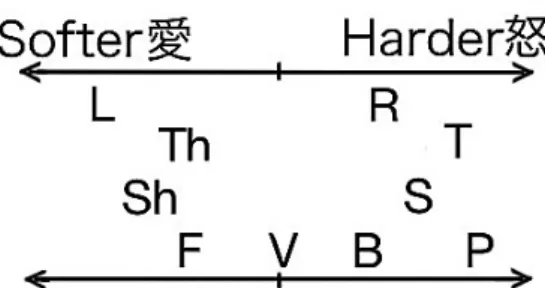
Table 2: Emotions of pronunciation [Taken from Kumar (2014)]
task was to try and encourage a self initiated ʻ ʼ (Abbs & Eilenberg, 1976; Scovel, 1998; Roelofs, 2003), whereby they vocalise the sound, hear it, think about it and then self correct, if necessary.
Instruments and Data collection procedures
The students were presented each week with hand-outs (sample in Appendix I) that showed various pictures demonstrating the sound pairs followed by a list of words that were phonetically similar, for example
“seat-sheet”, “vote-boat”, “fast-vast”. The sets were as follows:
The sounds in each set were first presented to each student via a downloadable, interactive phonemic chart (British Council, 2009) listened to using a computer. The researcher then modelled the vocabulary sets, used in this study, each followed by a short lexical drill section where the participants had to repeat them.
Several pronunciation aids were used to better demonstrate each sound when they are used in a word, such as holding paper in front of oneʼs month whilst saying ʻsankʼ and ʻthankʼ so they could observe the movements /ripples of it, or cross-sectional pictures of the mouth. This aimed to show them how to replicate it for when they then practiced among themselves. They then practiced in pairs briefly, switched partners, and then practiced as a group. This was done for the duration of the session. Their homework was then to practice the sounds and words as a group either in university or at their halls of residence. The follow-up Friday session gave them the opportunity to have additional practice time with the researcher as well as address any problems they may be having. After all the sets were completed the students were then required to review everything and their pronunciation was practiced in their groups in the form of short sentences and tongue twisters. In order to give them a visual idea of the emotion behind each sound, the following chart, from Kumar (2014) was shown to them:
This was deemed appropriate because throughout the sessions, the sounds were presented as “happy/
loving” and “angry/annoyed” sounds, rather than simply a “sharp” or “soft” sound. The Japanese characters for “love/愛 (ai)” and “anger/怒 (okoru)” where used to present an emotional feature something that could not be located in the literature.
Limitations of the study
The total contact time was only just over an hour each week with group, which limited the teacher to student practice time. They were asked to practice in their own time, however, although they were occasionally seen around campus practicing, whether they actually did any serious practice was left down to word of mouth. The short composition presented to them at the beginning and end of the data collection period contained a number of phonetic sounds that were not covered in this part of the study, which may have lead to some confusion. In retrospect, the students should have been asked to keep a study diary of what sets they practice, when and for how long they practice, something that will be implemented in the next part of the study.
Findings and evaluation
Research Question 1.1 and 1.2 Group A
The four participants within this group (Participant K, Participant S, Participant N, and Participant T) did not differ that much from one another. Participant S and T both struggled with trying to produce “s/sh”
pair and, even though they demonstrated some improvement at the end of this part of the study, they still had difficulty. All members of the group initially had trouble with the “t/th” sounds as the “th” sound they produced was more akin to the softer “sa” sound found in Japanese. However, they were able to overcome this. One feature that they all agreed was beneficial for their understanding of how to form sounds, was when a demonstration was made by holding a small paper in front of the mouth and overstress the creation of the sound; such as saying the words “thin” angrier (harder) and “sin” happier (softer) than how it would naturally be said. When they were peer reviewing each otherʼs practices they regularly used this technique and found it highly useful. They even began applying it to other sound pairs and began using it as a basis to test the production of each produced sound. Each member, despite having slight variations with certain pronunciations, seemed to be almost evenly matched with regards to their pronunciation development.
However, the main limitation of this group was that they did not always practice as a group of 4, and had no structure as to how they interacted with one another. Even though the contact time was limited, this lack of structure sometimes lead to them discussing their past English language experiences, or why they found the vocabulary difficult rather than focussing on pronunciation practice.
Group B
As a group they were very focused and diligent during the pronunciation practice sessions. After each sound was presented and demonstrated to them, they would first try to mimic it, then face each other
without being prompted and begin practicing with each other. Both participants struggled with the “v/f”
sound pair. The “f” sound is present within the Japanese language, albeit in a very limited capacity where it is expressed as air being exhaled though the mouth in a pattern akin to blowing out a candle. The “v” is found but it is a recent addition to the Japanese language due to foreign influences, however, it tends more towards the sound of a “b” than that of an English “v”. Participant 1 had a great deal of trouble but was always quickly supported by participant 2 who would try to model it for her. These close interactions made them progress quickly with many of the sound pairs, even though they were unable to completely accurately articulate the
“v/f/b” combination at the conclusion of this part of the study. They both however, noted that these sounds were difficult for Japanese people and both requested additional practice.
Research Question 2.0
It was initially thought the group of four would have improved more that the group of two. All participants in both groups noted that the English “l” and “r” sounds were the most difficult to distinguish unless they either knew the word in question from the context, or if the difference was overly emphasised;
something not usually common in everyday speech. This was confirmed when the words “right” and “light”
were used, as they had difficulty separating them despite knowing what they meant.
The sounds that both groups struggles with was the “s” and “sh” sound as, they all tended towards the
“sh” sound and found it extremely difficult to mimic the hard “s” sound.
When presented with the words “ship” and “sip”, they found it very difficult to produce them separately of one another. The following word, “sit” and, in the context of a sentence, “We sit down”
was written down. When asked to vocalise what was written, they all produced the undesirable word
“sh~t” instead of the desired “sit”. When the sentence tense was shifted to the past, “sat” and “We sat down”, there were no pronunciation problems among any participant. This could be attributed to the Japanese language lacking the firm ʻs+iʼ pronunciation found in English, as in their native “s” sound is phonetically limited to “sa”, “shi”, “tsu”, “se”, and “so” range.
Another interesting find within both groups occurred when they were presented with the “v/b” and, a few weeks later, the “f/v” pairs as they found them equally difficult. However, when “v”, “b” and “f” where combined, group A found this triple combination easier to produce than group B. It was theorised that the lip /mouth shape change required between the three sounds was possibly responsible, however why this exactly happened is unknown, therefore it will be tested in a future session to determine if there is any reason as to why this particular combination was difficult for one group but easier for another.
The only set that both groups did not have problems with were the “b/p” set, as this could be attributed to both sounds being separately present within Japanese. After listening to how they speak and form the various sounds, a chart was constructed including the emotional emphasis that was throughout each session.
Elements were adapted from Kumar (2014) except the facial pictures were dropped and the words “harder”
and “softer” were included. The Japanese characters (for emotions and not for a translation of the words) were kept to give them an emotional frame of reference. When this was initially presented to them, they were not sure of how to use it. However, once the “soft to hard” and “happy to anger” to progression was
Table 3: Emotional stress for pronunciation sets
demonstrated they all noted that it was a useful table of reference to help give them a visual representation of the different sounds:
The above table aims to show that certain sounds have different levels of emotional stress. For example,
“th” and “f” are inline with one another implying that the sounds require a similar level of stress. As the research continues, it is anticipated that this table will be expanded upon to make a more detailed and more accurate tool, with the hopes of assisting students and teachers with English pronunciation.
Conclusions and Further Research
The pair group actually faired better than the group of four. This was a surprising turn of events as it was initially hypothesised that the larger group would improve more. This may be attributed to the close contact, as the allocation of time between two people is potentially more per individual than within a group of four. The “s/sh” sound pair, as predicted, proved to be the most difficult yet the increased focus on it lead to other sound pairs suffering. An interesting element of this research occurred when many of them were able to perfectly pronounce certain pairs only to then fail to do so when then had to repeat them but this time within the context of a sentence or a paragraph. This research has shown how pronunciation can be improved effectively. Pronunciation is just as important as the fluency of speech, and therefore, teachers should give it more attention during their conversation class time.
This project will continue for the next several months, and during that time the participants will be exposed to many more comparative and singular sounds from the International Phonetic Chart (IPA). They will also be presented to more materials that will encourage them to practice the sounds that were introduced in this study, and those to come. A restructure of the groups and the inclusion of a single participant will be introduced to add an additional perspective to this research.
Notes
Note 1: Common European Framework of References for Languages: Learning, Teaching, Assessment (See references)
References
Abbs, J. H., & Eilenberg, G. R. (1976). Peripheral Mechanisms of Speech Motor Control. In N. J. Lass (Ed.), Contemporary Issues in Experimental Phonetics (pp.139-170). New York: Academic Press, Inc.
Attle, S., & Baker, B. (2007). Cooperative Learning in a Competitive Environment: Classroom Applications.
, (1), 77-83.
British Council. (2009). . Retrieved May 16, 2015, from Teaching English: http://www.
teachingenglish.org.uk/article/phonemic-chart
Burke, A. (2011).Group Work: How to Use Groups Effectively. (2), 87-95.
Celce-Murcia, M., Briton, D. M., & Goodwin, J. M. (1996).
. Cambridge: Cambridge University Press.
Chiu, M. M. (2004). Adapting Teacher Interventions to Student Needs During Cooperative Learning: How to
Improve Student Problem Solving and Time On-Task. (2),
365-399.
Council Of Europe. (2014).
. Retrieved August 11, 2015, from Education and Languages, Language Policy: http://www.
coe.int/t/dg 4/linguistic/source/framework̲en.pdf
Elimat, A. K., & AbuSeileek, A. F. (2014). Automatic speech recognition technology as an effective means for
teaching pronunciation. (1), 21-47.
Gick, B., Wilson, I., & Derrick, D. (2013). . Chichester: Wiley-Blackwell.
Johnson, D. W., Johnson, R. T., & Smith, K. A. (1991).
. The George Washington University, ASHE-ERIC Higher Education Report No.4,Washington, DC.
Kewley, L. (1998). Peer Collaboration Versus Teacher-Directed Instruction: How Two Methodologies Engage
Students in the Learning Process. (1), 27-32.
Kim, K. H. (1999). A project work in English pronunciation. (3), 321-339.
Kumar, K. (2014). Fossilization Errors in Intermediate Japanese L 2 Learners of English Speech: A Small-Scale
Inquiry. [長崎外大論叢], 161-172.
Long, M. H. (1990). Task, Group, and Task-Group Interactions. In S. Anivan (Ed.), (pp.31-50). Singapore: SEAMEO Reginal Language Centre.
Lord, G. (2008). Podcasting Communities and Second Language Pronunciation.
(2), 364-379.
Pearsons, O. S. (1998). Factors Influencing Studentsʼ Peer Evaluation in Cooperative Learning.
(4), 225-229.
Roelofs, A. (2003). Modeling the relation between the production and recognition of spoken word forms. In N.
O. Schiller & A. S. Meyer (Eds.),
(pp.115-158). Berlin: De Gruyter.
Scoval, T. (1998). . Oxford: Oxford University Press.
Slavin, R. E. (1996). Cooperative Learning in Middle and Secondary Schools. (4), 200- 204.
愛 (Happy sound) 怒 (Angry Sound)
Sh sounds S sounds
. ship sip
. shale sale
th sounds t sounds
. thin tin
. they tray
L sounds R sounds
. light right
. lane rain
. lace race
v sounds b sounds
. very berry
. van ban
. vat bat
b sounds p sounds
. big pig
. buy pie
. bay pay
f sounds v sounds
. fan van
. fine vine
. fat vat
Appendix -Appendix I
Pronunciation Sample
Samples taken from the weekly hand-outs:
Tongue Twisters [Focus on the sounds, not the words or their meanings]
Right grammar, light glamour.
Freshly fried fresh flesh.
Six thick thistle sticks.
Selfish shellfish.
The weather is wetter here than there.
- Appendix II
Pronunciation practice sheet designed to use as many conflicting sounds as possible:
Please read this:
I had a walk in front of the place where I work. I like to walk where I work.
I looked up at the rustproof roof of my workplace and there was a lovely, mellow yellow and silver balloon floating beside it.
I noticed that behind my company was a small hill. There were three trees on top of it. I thought that itʼd be a great place to go.
Tomorrow, I will look at a book and cook a real veal meal, with some very merry berries, sit and see ships in the harbour.
I wrote a note about my vote that I left in my coat on a boat in the moat.
I need to go get good, grand, gold goats that eat glass coloured grass and watch white bright lights on the right night.
Can you hear it here? How can a clam cram in a clean cream can? I have two tombs too many. Yesterday I ate my dessert in the desert. I spent time doing a mime eating a lime
Before we sank we thanked them because they thanked us.
Thank you Finished
![Table 2: Emotions of pronunciation [Taken from Kumar (2014)]](https://thumb-ap.123doks.com/thumbv2/123deta/6826346.2235316/6.892.114.776.343.465/table-emotions-pronunciation-taken-kumar.webp)